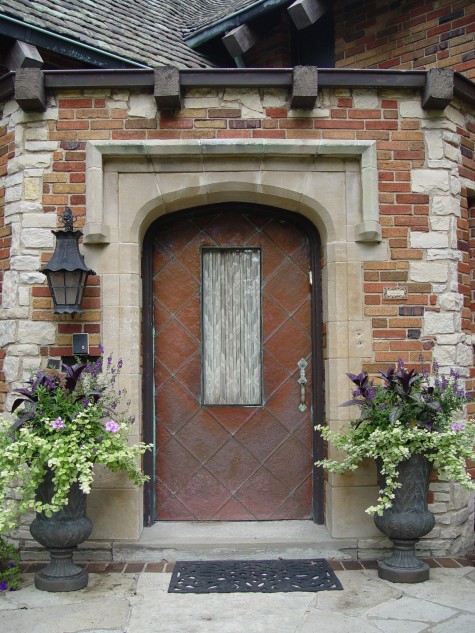
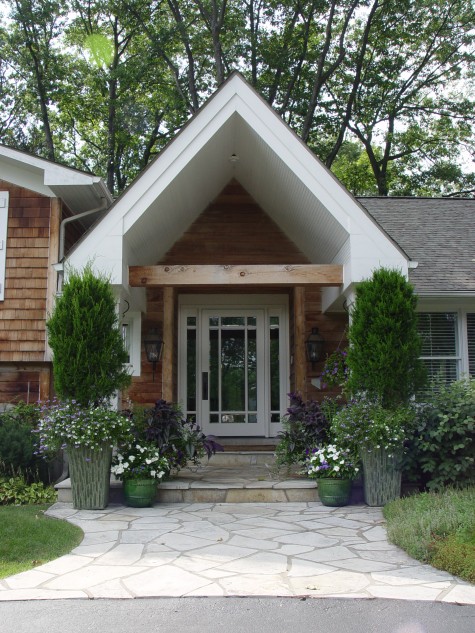
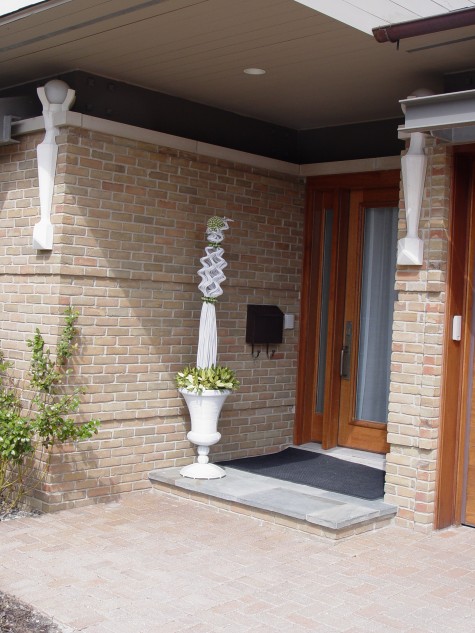
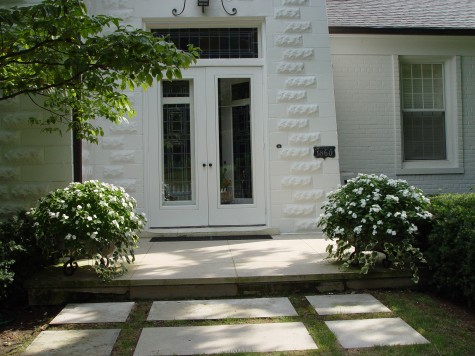
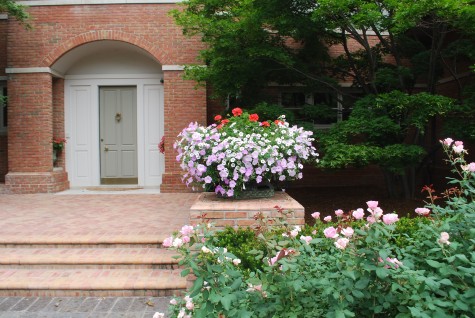
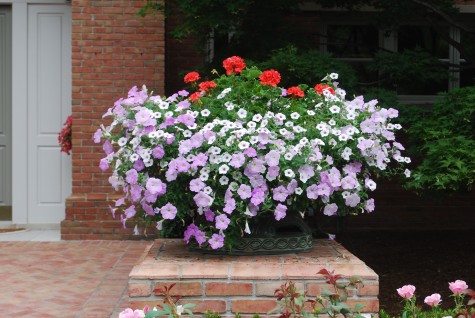
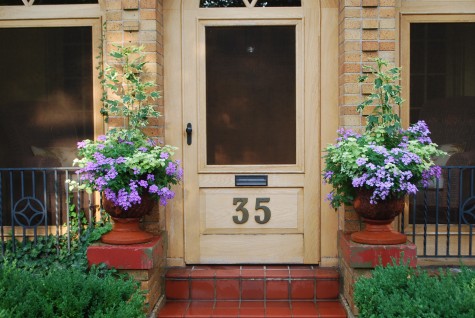
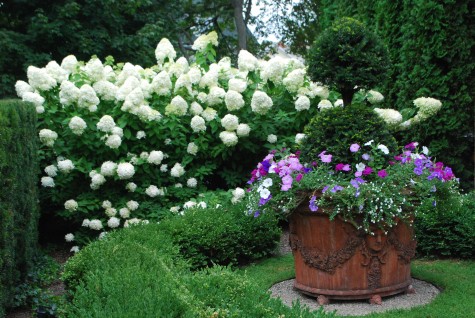
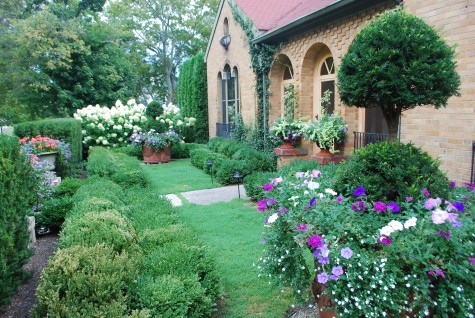
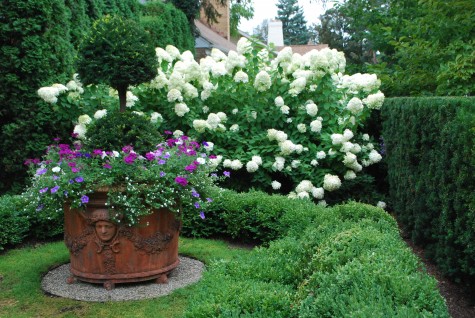
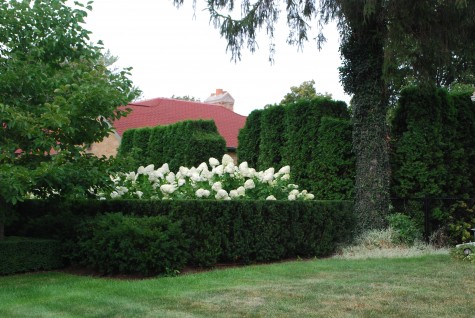
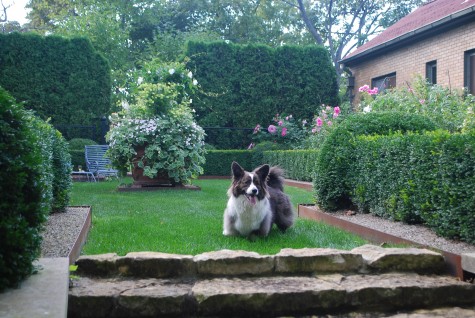
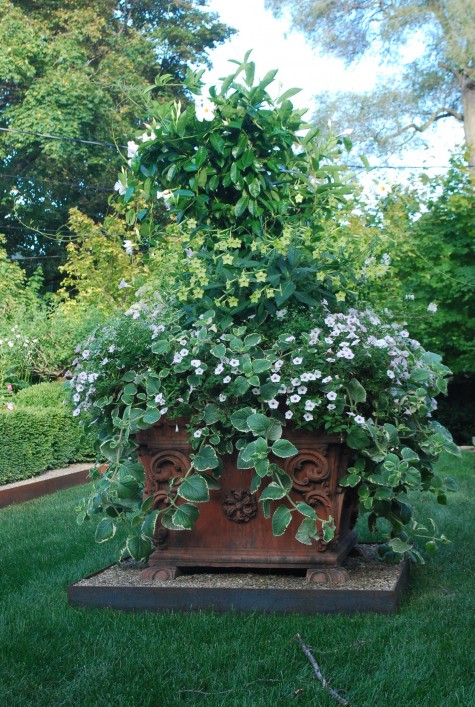
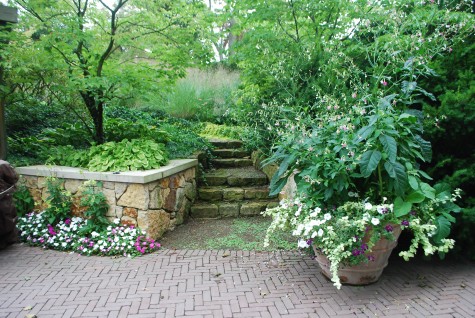
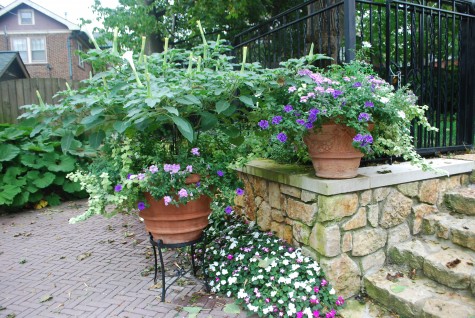
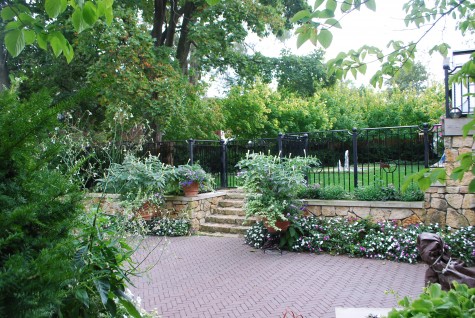
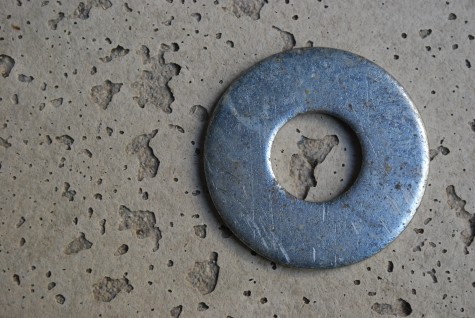
 If you garden long enough, you are bound to have a few dirty tricks up your sleeve. Little things that solve gardening problems, make the work easier, or more efficient-or more beautiful. So what are we looking at here? I place galvanized metal washers from the hardware under any pot that sits on a hard surface-whether it be a bluestone terrace, concrete walk, or wood deck. Pots that stay out all winter in Michigan need to drain. Water trapped in the bottom of a pot expands when it freezes; the force of this expansion can break just about any material. A pot with a very wide base may need a small stack of washers; whatever it takes to keep water draining freely can prevent winter damage or breakage. Some soil mixes are compost based; that compost can stain a stone or wood deck, if that dirty water is trapped underneath it for any length of time. A deck surface under a pot that never dries out will leave rings that are the devil to get rid of. Elevate your pots-even if that elevation is only 1/4 inch.
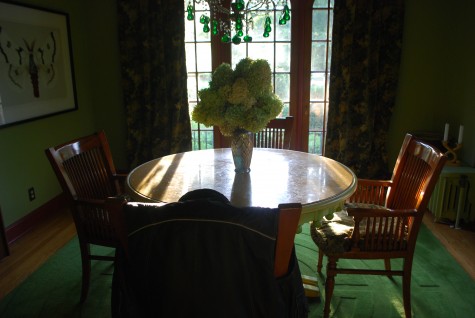 There are many techniques and theories for drying hydrangeas-all of them work, provided you pick the hydrangeas at the right time. The flowers need to be mature, and on the verge of drying. You can place them in water, or not. You can hang them upside down if you are so inclined, but there really isn’t any need. Drying hydrangeas is about timing, not technique. Dry hydrangeas are actually quite beautiful in the house-provided you do not put them in a spot that gets strong light. It is a good trick- having a bouquet of flowers that will last until you tire of it.
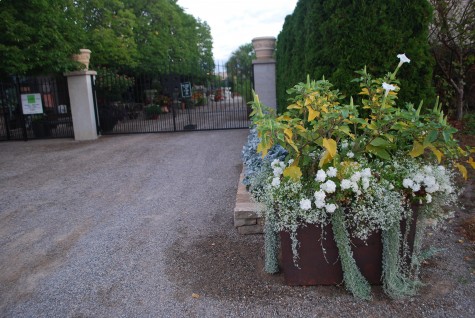
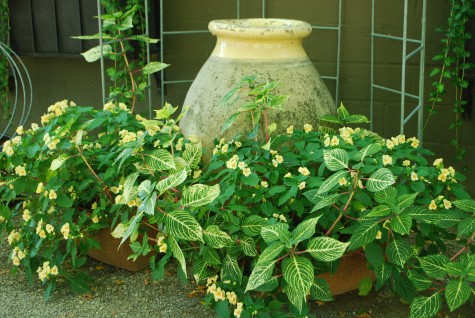 There are several tricks being addressed in this picture. Very shady places in a garden can be gloomy-stay away from dark colors. Light or chartreuse green, and pale colors light up the shade, naturally. The pale yellow in the Biot pot rim, the yellow impatiens, the yellow in the irisine leaves-monochromatic color schemes are serene. Plants cost the same-no matter what color they are. Should you attach value to a planting that accurately reflects the mood you are trying to create, the sum total of the value of your garden can vastly outweigh your capital expenditure.
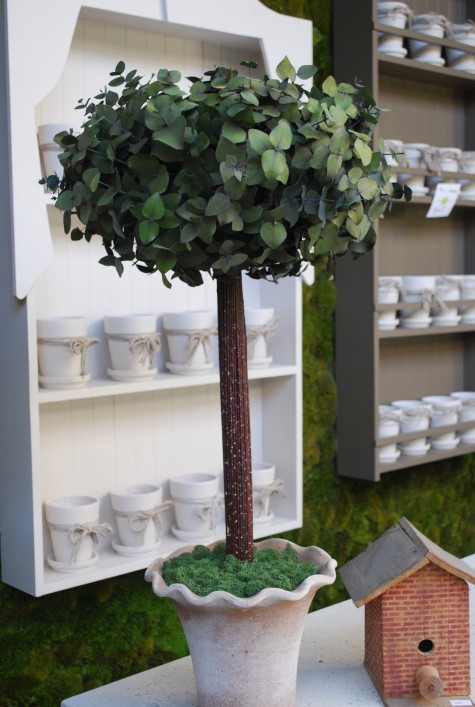 I have no interest whatsoever in having plants in my house. I do not want to recreate the outdoors inside; I am glad they are different places. But those spots that would so be improved with some green rarely have enough light to sustain life. Straggly houseplants struggling to survive-depressing. A preserved eucalyptus topiary can be made by hand from natural materials, and never need any care beyond an occasional dusting. The dirty trick-use your ingenuity, imagination, and creativity to go around a problem you cannot solve. As much as you might love to have a green plant flourishing on your fireplace mantle, plants have requirements. What you require is an entirely different matter.
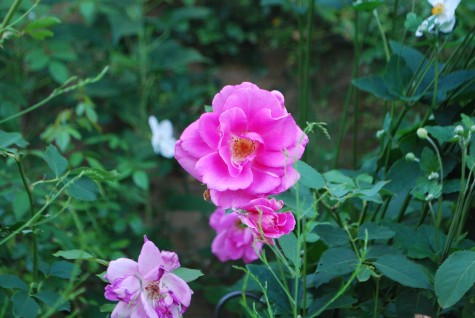 I love a rose in bloom as much as the next gardener. Does this make me a rosarian? No. I am still nothing more than a girl who loves roses. If I am not willing or able to devote to a rose garden what a child would require, then I need a trick or two. There are a few roses that ordinary gardeners can keep-this Carefree Beauty is one of them. I really do nothing except put down a little rose tone in the spring, and water. My second trick-read and absorb what other people who have devoted there lives to learning about the cultivation of a class of plants. Thanks, to Julia Hofley, I know about the book “Right Rose Right Place”-written by rosarian Peter Schneider; he gardens in my zone. Not in England, or California. Knowing when and from whom to learn is a good trick. A one trick gardener limits themselves.
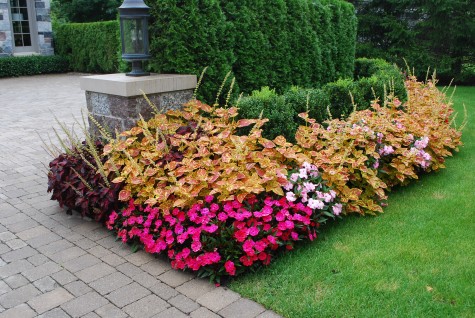 Intense and jewel like colors look rich and sumptuous. But the real dirty trick here is the treatment of the coleus. This gardener has not pinched and pruned as most garden books advise; coleus flowers are nothing much to make over. In spite of popular gardening sentiment, she let her coleus grow and bloom. The look of those wand like flowers over the bulky foliage is good. The dirty trick-take no one else’s word for what is beautiful. Accepted practice is nothing more than accepted practice. Experiment; your garden is a lab, a vehicle with you at the wheel.
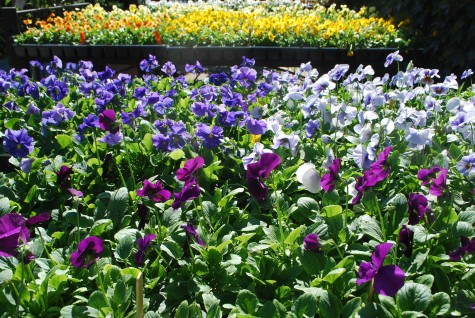 When your containers are going down in the fall, when you loose a prized stand of delphinium, when a garden fails to please and you are on the verge of paving and grassing over everything-plant. Plant something. The process of deciding what would be good, choosing the material, digging the hole, and watering it in-that life that goes in the ground that you must look after takes your mind off your own life, and focuses it on another. You owe it to your garden to allow yourself to be tricked.
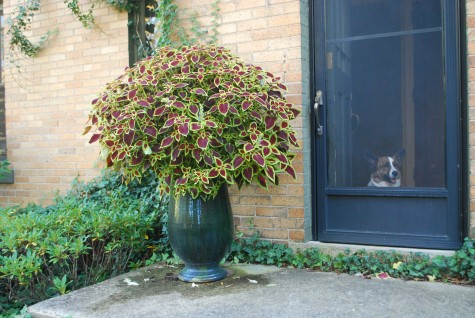 Three little sprigs of coleus with a few roots went into this French pot. The opening is so small-there was not room for plants of any size. I just grew them on. A gardener makes things grow. A seed or a start in the dirt-tended plants grow faster than you think. If that gingko tree at your local nursery is just too pricey-they do grow from seed. Home grown-the best dirty trick.
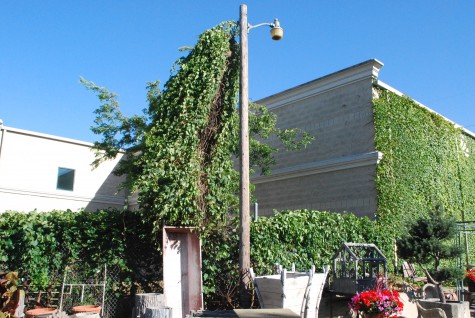
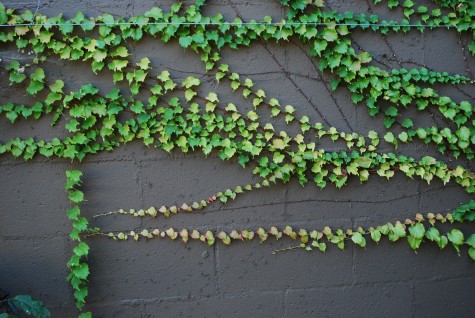 A concrete block wall-not so beautiful. Paint it a dark and rich color, and plant some parthenocissus tricuspidata. The wall will look good while that Boston ivy is taking hold.
 Transforming tricks work best in the beginning. Radically pruning an overgrown burning bush planted too close to the sidewalk is a tired trick. Good gardening tricks need to be fresh.

These deer statues from the fifties-perhaps you remember them. This chipped face buried in this mass of juniper-a brilliant dirty trick. There are so few objects of no interest-just placements lacking invention. Any garden invention means a dirty trick is on the way.