Archives for 2010

I Am Available


I am available if a sidewalk or driveway made of wood bricks might interest you.
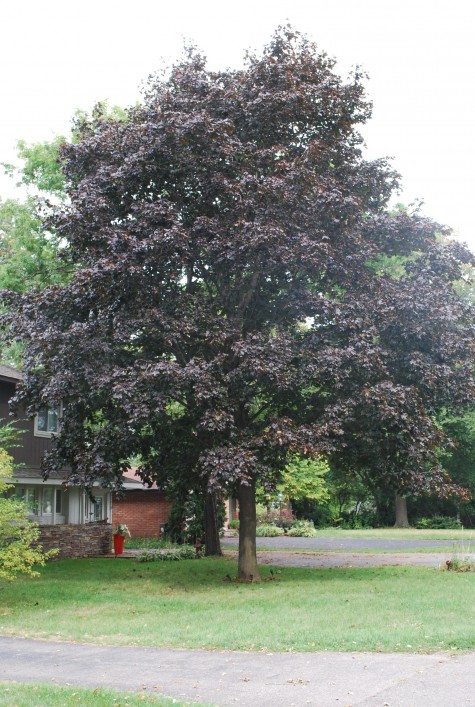
 I am available if you have the nerve to get the green out, and plant a red room somewhere in the landscape.  Crimson King maples, red barberry, Black Beauty Sambucus, Salix melanostachys, heuchera Black Beauty, sedum Voodoo and Hibiscus Red Shield; everything would of course be mulched in red pine bark. 
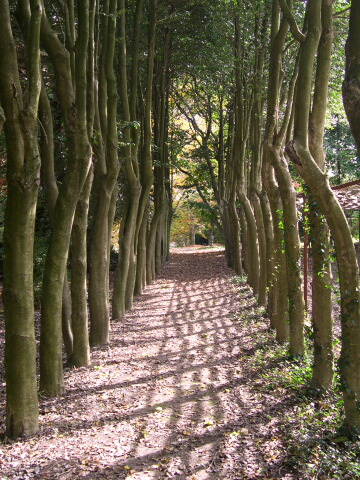
I am available if you are game for planting a fence, or pergola of trees inappropriately planted very close.
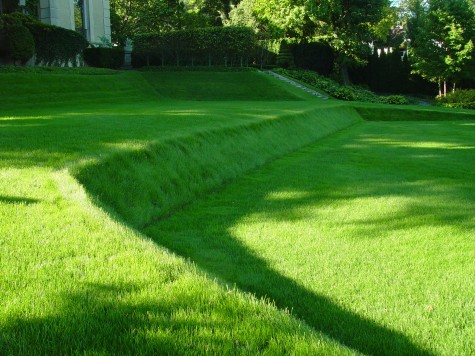
I am available if your idea of landscape means intersecting planes of grass. 
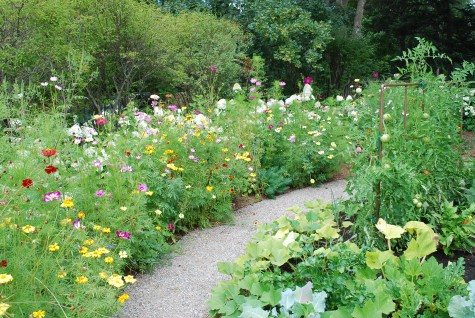
I am available if a meadow with that graceful roadside weed look is just what you’re after.
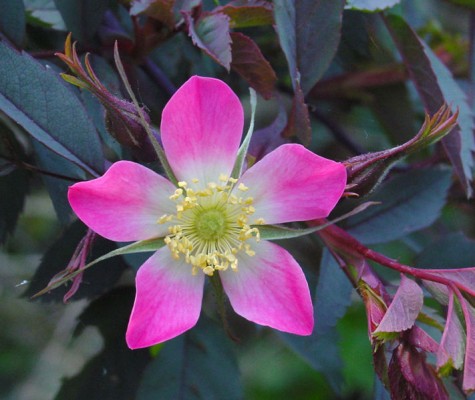
I am available if you want wild or species roses everywhere- rosa rubrifolia, rosa complicata, rosa canina,  and rosa sericea in that meadow.
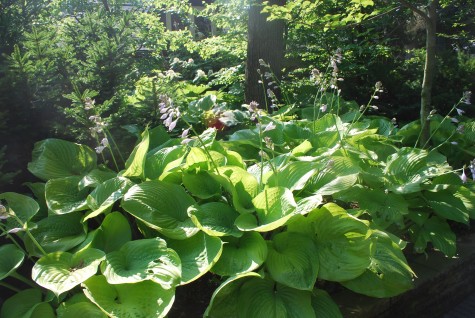
I am available if you are wild for a shady wild garden.
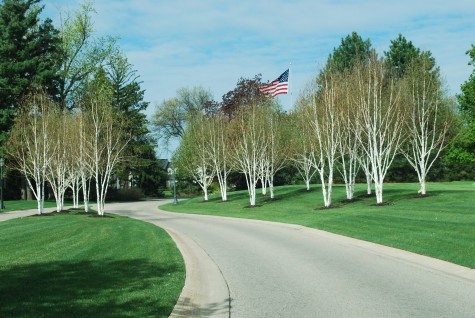
I am available if you are willing to tend Himalayan white barked birch.
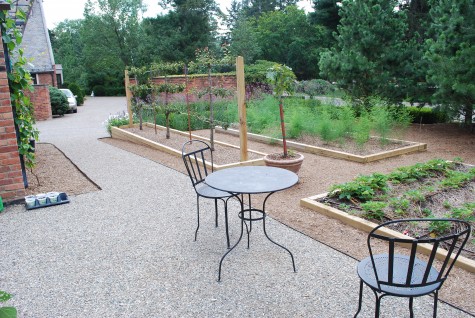
I am available if the sound of gravel underfoot sends you. 
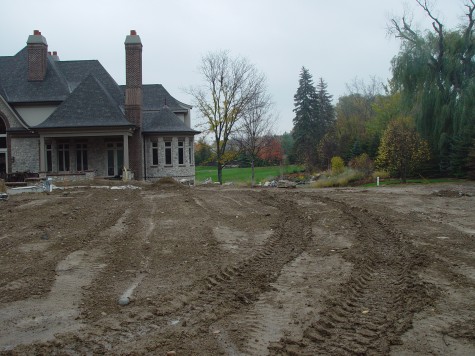
I am available, should a clean sweep be on your mind. 
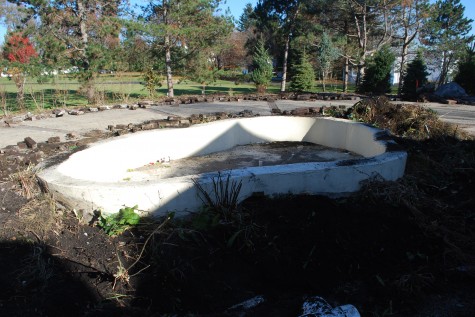
I am available if you steward an oozing bog, a desert, a Cousin It landscape, a weedy gravel pit or a bark garden -bring it on.
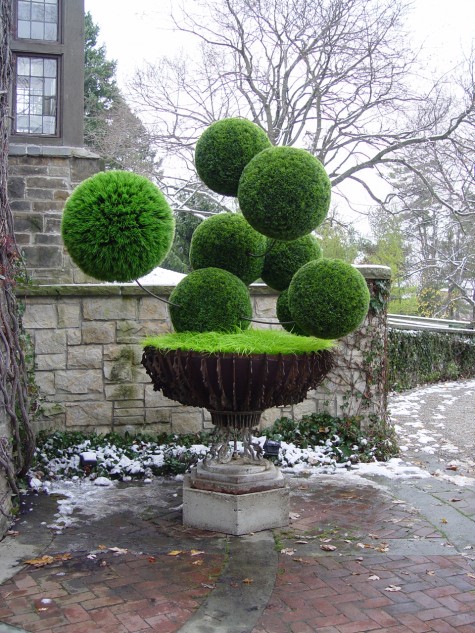
I am available should you fancy a maze, a topiary sculpture, an ornamental iron tomato cage, or cabbage finials on your fence posts for Halloween. It is possible to experience the garden in an infinite number of ways. Nature and not natural make that possible. This is part what I like so much about what I do-if I am open, there is always something fresh, exciting or provocative that can happen. 

Keep me in mind.
September Favorites


I think its fall.  I am begrudingly letting myself notice the signs of the change of the season.  My transition from summer to fall is an bumpy one; who wants to let go?   I invest an inordinate amount of energy, hanging on.  I do not fault myself too seriously for this.  I just give this phase a wide berth.  Sooner or later I do let go, tune in, and celebrate what is happening now in the garden.

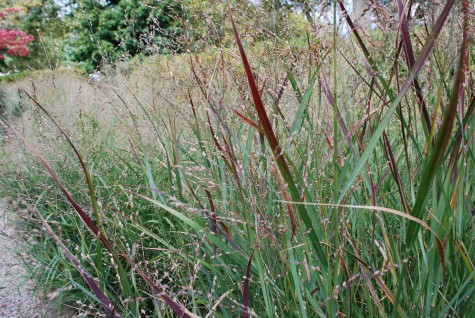
The ornamental grasses beautifully representing their seed heads and maturing foliage-breathtaking. I regularly plan panic grass; I love spectina pectinata in wet spots.  Micanthus gracillimus is one pretty perfect plant.  Impossibly thin blades contrast so beautifully with the mass that a good sized colony will make. Grasses need enough space so they can wave around in the breeze. Grass dancing is a very good look.    

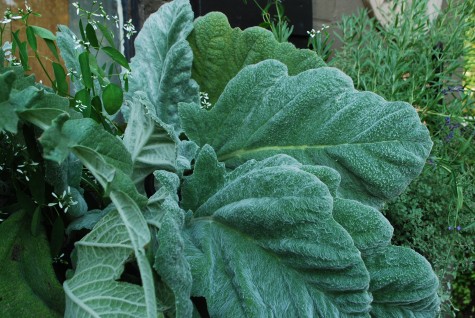
Salvias shine in the fall.  Salvia artemis-noted for its giant felted leaves may not be so winter hardy, nor does it suffer any overwatering.  But it shines come September in a container.  I almost never have any luck with it in the ground.  Any of the big growing salvias come in to their own in September; Indigo Spires and Purple Majesty are just two of hundreds of cultivars.  Though it might be tough to warm up to a late flowering salvia in May-think ahead to your fall.

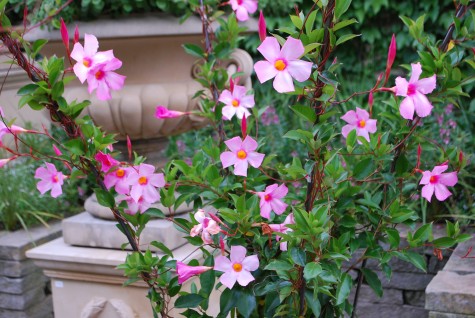
All of my mandevilleas are beautiful right now.  They take lots of time, and lots of heat to come on.  They have not been one bit fazed by own cold nights.  Their large single flowers are striking, and newer varieties have glossy and disease resistant foliage. This plant is the best it has been all summer; I am toying with taking it in for the winter.

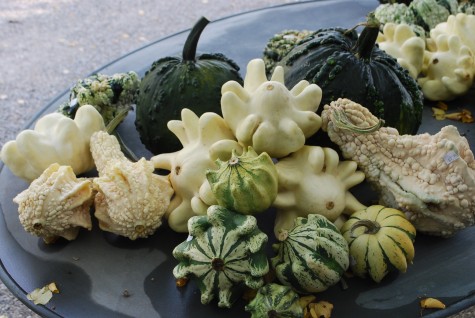
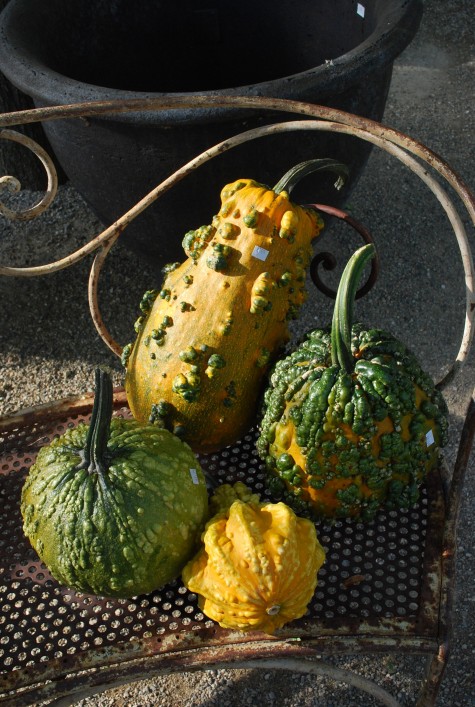
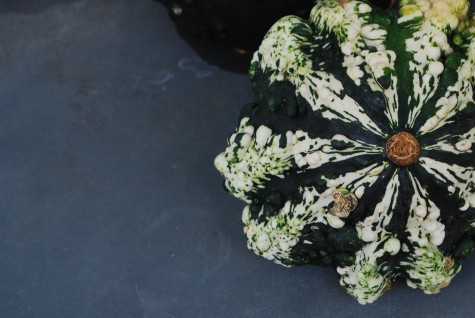
Rob went to an antique show in Ann Arbor this past weekend; he came home with gourds.  Most of them are green and white. The white fingered gourds are called “White Crown of Thorns”.  The winged beauties-“Autumn Wings”.  Rampant cross pollination produces unique forms and colors.  They make great ornament on a garden table or bench.    

Rob tells me this long chubby orange and green variety is called “Lunch Lady”.  These warty fruits are a different kind of beautiful.  Every grower of gourds has a distinctly different crop.  No wonder there was a gourd festival in Imlay City this past weekend; the first annual Michigan festival of Gourds was sponsored by the Michigourders Gourd Guild.   

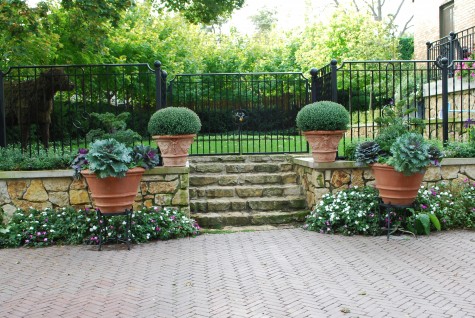
 Years ago a house manager of a client expressed surprise that I had brought hardy mums to plant.  He explained that given all the signs for hardy mums he had seen everywhere, he assumed it was a person running for office.  My telling of this event doesn’t begin to express how funny this was.  Chrysanthemums are a staple fall plant-you can find them everywhere.  I like them best as big green balls.  Mum balls.  They are so gorgeous at this stage.

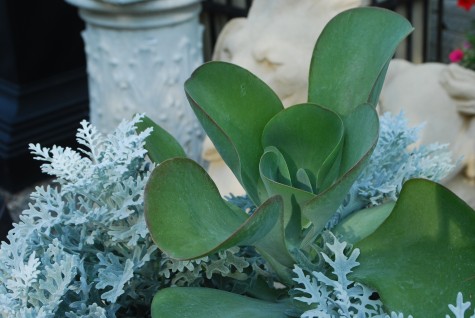
Kalanchoe thyrisflora “Flapjack” has big paddle shaped leaves, and grows to 2′ tall.  It is monocarpic, meaning it dies after it flowers.  However they are willing in the offset production department.  I like them for fall pots; the edges of the leaves will turn burgundy red with some cold, and they are fine down to 25-30 degrees. I usually bring them in once the night temps approach the mid thirties. 

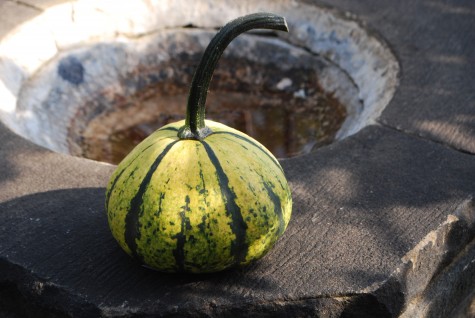
This little gourd is all the better for its stem. What garden table would not look all the better for a little gourd ornament ? 


I may grumble about the change of seasons, but the fact is our gardening year is a play in four acts.  We get a change of scene and costume.  We get a new twist on an old plot.

It Is So Easy

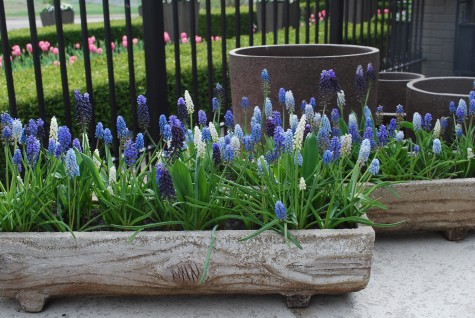
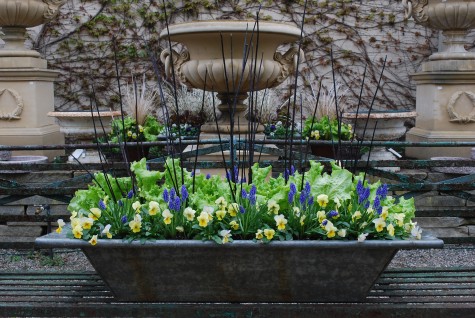
There is only one thing in this world that is easier than planting spring flowering bulbs-that would be not planting spring flowering bulbs.  I have never really been able to determine why. I know it is hard to believe those brown orbs will ever amount to anything. Granted planting in cold and blustery weather is not my favorite.  It is true that all you have to show immediately for your work is what appears to be disturbed ground.  But from the first eranthis in March to the June blooming Globemaster alliums,  any spring is all the more gorgeous for the bulbs.  The muscari mix in these two troughs-a Christmas present to Rob.  When I saw them in bloom, I could have kicked myself for not planting a single bulb at home. I had the better part of three months to regret my omission.  I was determined not to make that mistake this fall.   

As I hate having no recourse given what I forgot to do the previous fall, I plant pots with spring bulbs for the shop.  There is no end of information about forcing bulbs, but forcing refers to tricking the bulb into growing and blooming before its natural bloom date.  I like flowers in season; I do not want Lily of the Valley in December.  I just like the option of moving a pot of bulbs around to the front porch, if that suits me.  So I pot up bulbs, and winter them in our unheated garage.  I am careful to get them right outdoors whenever things seem to be stirring.  

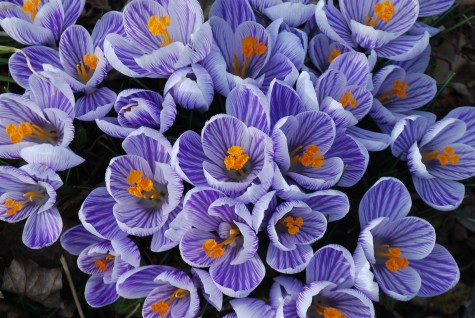
Crocus can be up out and done in a blink of an eye, but that is no reason not to have them.  I have had my litlle patches come up and bloom faithfully for 15 years.  That counts for a lot right there. I like getting down on the ground, so I can see the flowers.  Having the soil so close, I can smell the spring coming out of the ground.  It is a fragrance that defies description, but if you are a gardener you can probably conjure up that smell out of thin air. Crocus bulbs are little; you can practically push them down 3 inches with your thumb.   

Planting spring bulbs in little pots means I am able to use them in bigger spring combination pots.  Grape hyacinths are a great choice for this, as they last so long. In a perfect spring, all the flowers on the bulbs go into the fridge each night.  The only enemy of the spring bulbs is early and relentless heat.  I prefer to be optimistic; I have 5 varieties and mixes of muscari on order.  What you see above is John Sheepers Muscari Magical Mixture; it is well named.     

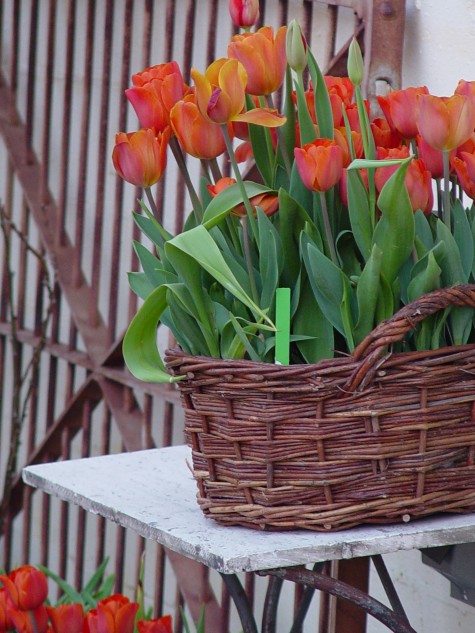
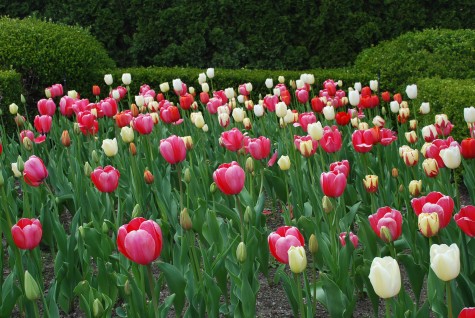
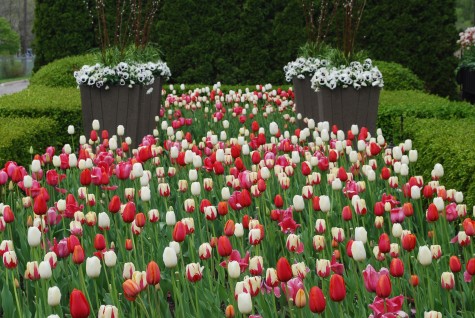
The species and various hybrid tulips make it possible to have tulips in bloom for at least 2 months.  10 tulips all planted in a bunch makes a great in ground bouquet.  It takes 2500 tulips to fill the beds in front of the shop.  We use a planting technique that works well for planting large numbers.  We lay out four or five rows. Each spot for a bulb gets stabbed with the trowel held backwards.  We open that slot slightly, drop the bulb in the slot, and firm the soil.  We do not dig holes six inches deep, and place the bulb in the bottom, nose side up.  This takes way too much time to no better end.  Daffodils like to be really deep.  I have a team of two handle the planting; one person pushes a shovel- blade flipped backwards and held exactly perpendicular to the ground- all the way into the dirt.  When he pushes the shovel handle away and pulls up, a slot is created.  Person 2 places the bulb in the slot; person 1 tamps the ground.  This is much quicker than digging a hole.

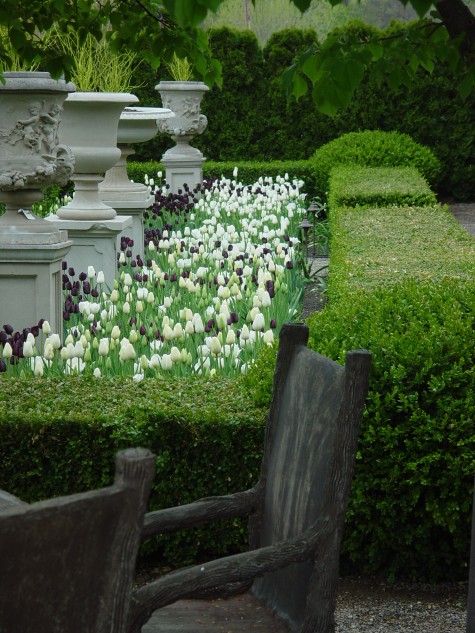
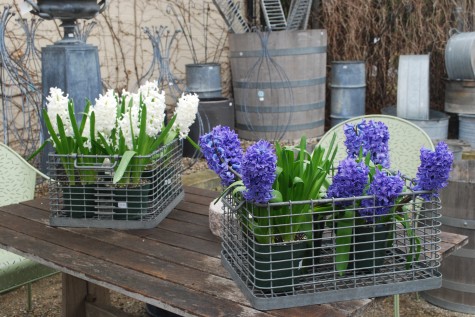
The most arresting and spectacular bulb display I have ever seen was in Chicago on a University campus this past spring.  Some brilliantly obsessed bulb afficianado had planted many hundreds of dark purple, dark red violet, and lavender hyacinths in a mix-shoulder to shoulder.  It was breathtaking, and romantic-all those flowers so close together.  It was a display I feel compelled to recreate for myself.  Hyacinths are beautiful at every stage of their development.  This makes them a good choice for a container bulb planting.    

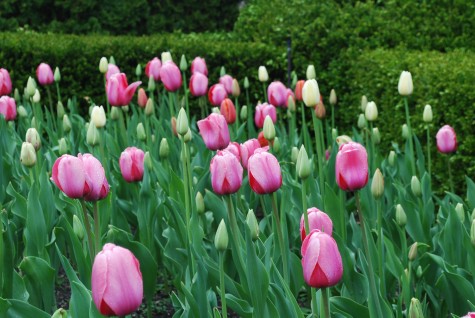
I usually plant 3 or 4 tulips in a mix in the shop garden. I like to vary the heights of the flowers, and the bloom time.   I like the informality of the mix.  The garden has more than enough formality going for it in the boxwood. I like the flowers up and down, rather than aitting on top. This Darwin tulip, Pink Impression, was the first to bloom.  It lasts unusually long for a Darwin.  The garden is beautiful at this stage too; the color and texture of the leaves and buds is a lot to look at.    

The red Darwin Oxford, and the single late white tulip Maureen are both on the way. Barely getting started are the white flamed red and cerise single lates-World Expression.  It might be my favorite tulip. There would be a moment when I would have tulips as far as the eye could see.  Well, pretty far, for sure.  Before your fall gets away from you, you might want to put some of those brown knobs in the ground.  You will be happy you did, come spring. 

A Michigan Gardener, Part 2


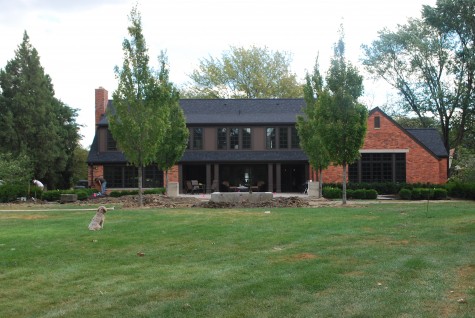
You may remember this photograph from a post I did a few weeks ago called ” A Michigan Gardener”.  If you knew my client, you would understand how until he could have the entire landscape, he would have nothing.  The design had been drawn and presented for quite some time; out of the blue, they were ready.  

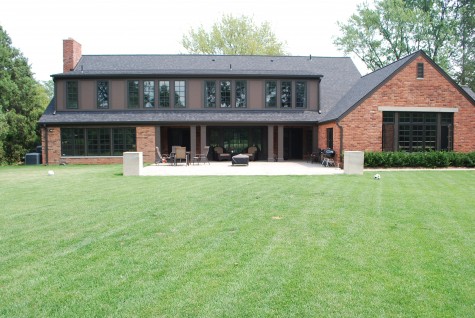
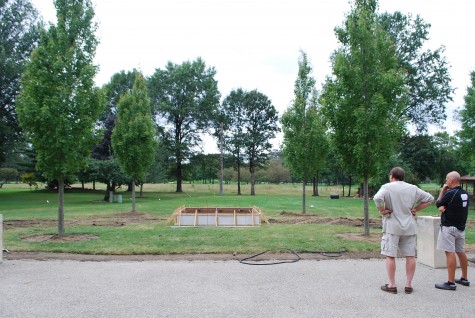
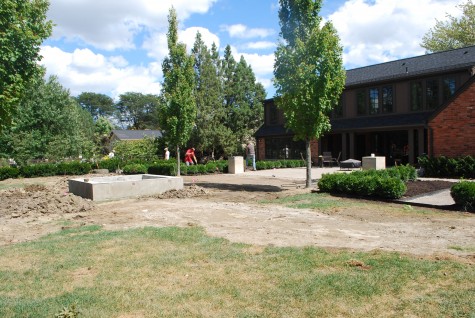
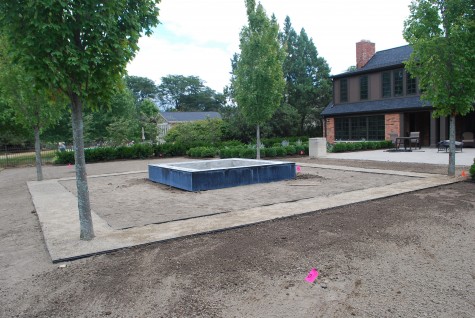
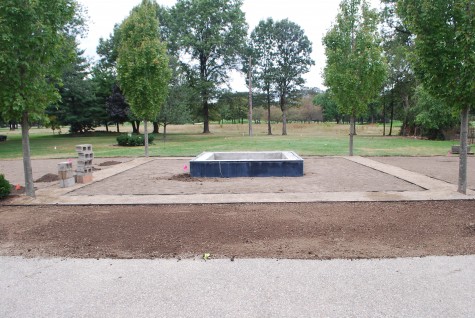
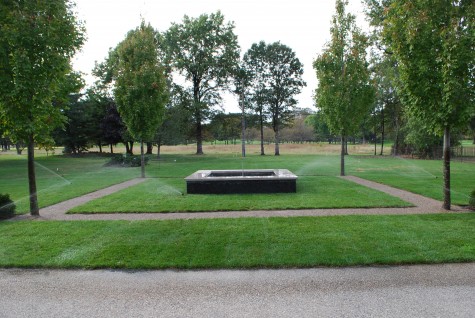
They have a unique situation; their property backs up to a golf course. They are able to take their golf cart out of their garage, and drive to the first tee.  Their love of golf is another story all together; preserving their view of that course was my main concern. I wanted a very strong foreground element that would hold its own against all that golf course acreage,  and a landscape that would frame, and not obstruct those beautiful views out to the course.  Central to the design, 4 Bowhall columnar maples, which would be inset in a picture frame of decomposed granite.  In the center, a fountain.

A fountain-this sounds so simple.  It is, once every dimension is carefully thought through.  Once all the proportions and construction are sorted out. Even the smallest most simple self contained fountain is a great addition to a garden.  A fountain of this size would be a place to congregate, and entertain.  My clients are young, and appreciate modern design.  But they did not want to be limited by a “modern” definition-they wanted a landscape which would please and suit them.  This means a landscape that allows them to easily entertain outdoors.      

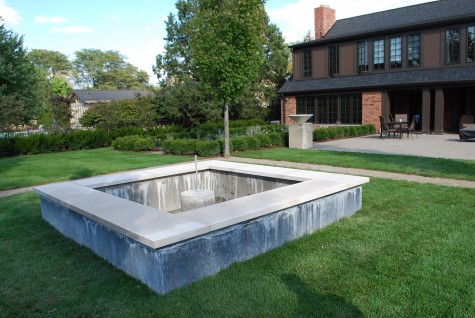
The fountain footprint is 10′ by 10′.  My clients have 2 young children and very busy lives-I insisted that this fountain be constructed and cleaned as if it were a swimming pool or spa.  When I make much of a central landscape feature, it only makes sense to cover the maintenance. My client contracted Gillette pools to construct this reflecting pool; Buck built the acid washed steel surround.  Transporting that welded box to and from the galvanizer, and to the site-at which point 8 men carried that 900 pounds of steel box and dropped it over the concrete shell-a big deal.  Once the surround was in place, the frame of decomposed granite was installed. 

I played with no end of possible dimensions for the fountain, as did my clients.  I envisioned the limestone cap at seat height.  The kids in the fountain on a hot day.  A coping wide enough to accomodate a plate and a glass of wine.  The limestone cap-two inches larger than the walls, inside and out.  A low profile.  The golf course, and everything that park- like view represents to my clients-keep that intact. There would still be a wide expanse of lawn.  That large lawn space visually melds their property to the golf course property.  Most of the formal landscape is close to the house, and off to to the sides.       

The attendant landscape is clean and crisp.  It provides privacy from the adjacent homes.  Perennial gardens with a limited plant palette will provide interest throughout the summer.  White Knockout roses, dwarf Russian sage and shasta daisy “Becky” will be easy to maintain; this is my client’s first foray into perennial gardening, and I want him to be successful.  My client tells me he did not exactly know there would be perennials.  I did label certain areas on the plan as “garden”.  I will admit I did not discuss that much with him.  I am not only sure he will be able to handle it, I am even more sure he will really enjoy it.  His interest in landscape and garden is genuine-that is always easy to spot in someone.  The maples, the granite picture frame, and the lawn celebrate the fountain still under construction.  The work should be complete by week’s end. 

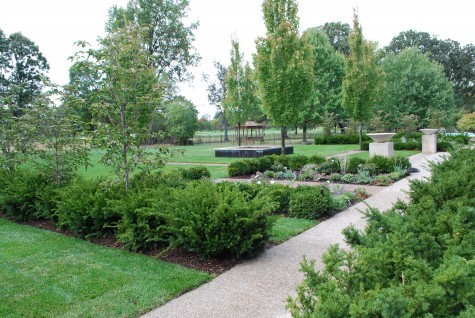
In my opinion, a big measure of the success of this landscape has to do with the views from the golf course.  I had an interest in my clients sustaining privacy from the course.  Sometimes privacy has less to do with walls, and much to do with invisible.  Every element and plant hugs the ground, but for the maples. Ros of yews on either side are punctuated with Venus dogwoods; someday those trees will be spectacular for 6 weeks in the spring.  Fot the rest of the year, they will gracefully provide screening from the neighboring homes.  

We brought in soil, and graded away from the house. The lawn always comes at the end of the landscape project, but it is very important. Lawn describes the shape, drop and drift of the land. The lawn plane is to my mind, beautiful.  Those trunks of the Bowhall maples bring the golf course landscape up close.  The fountain vase-coming up.     


Venus dogwoods, yews, boxwoods, and sparsely furnished perennial gardens round out the landscape around this fountain.  A formal landscape concept has a decidedly modern execution. Always on my mind is how I can apply and go on from the history of design to projects from real people who engage me. The fountain will have its vase and jet installed this week.  More to follow.