The Roundabout

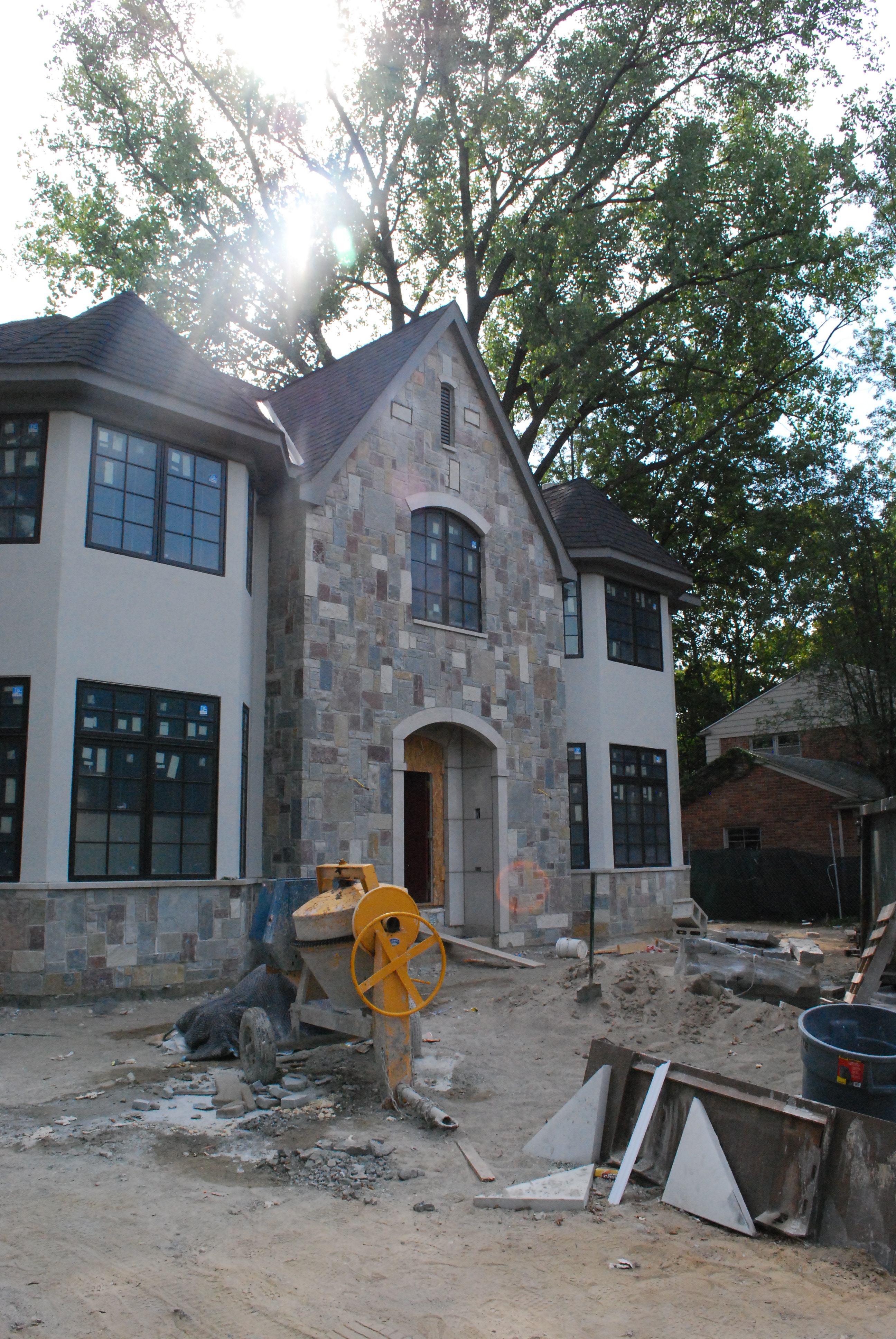
new-house.jpgBig houses on very small properties-a given, in urban areas.  A very small property that is hosting a very large house presents a special set of design considerations.  The entire space is  instantly visible.  This makes it very difficult to create a sense of mystery, or discovery.  There are few opportunities to create “rooms”, each with their own distinct atmosphere.  There is a single view, and few options to generate other views.  It is easy for a large structure placed in a small space to look uneasy or unsettled.  Big buildings loom over small spaces.  They block the light.  They are the dominant landscape feature with a capital L.
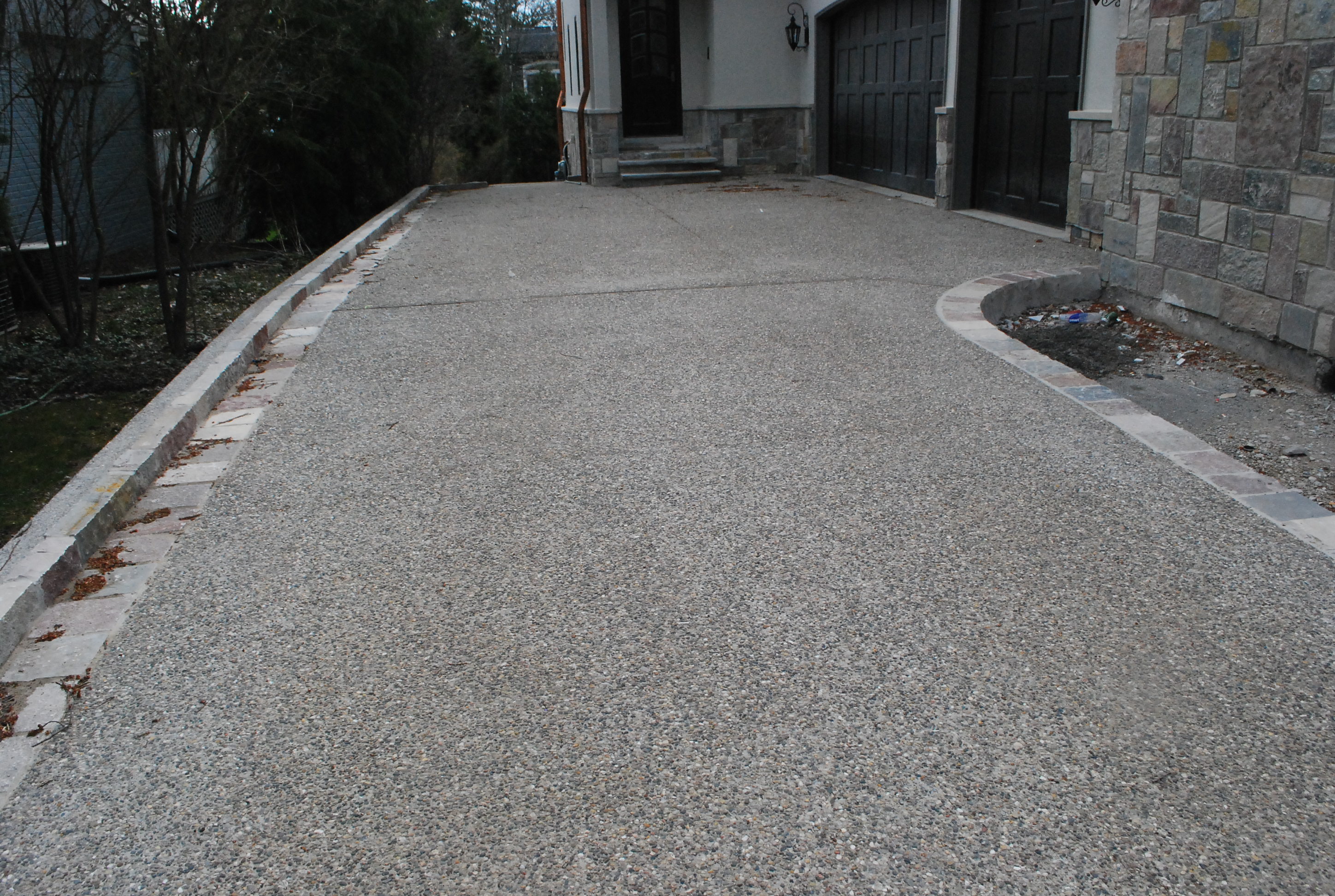
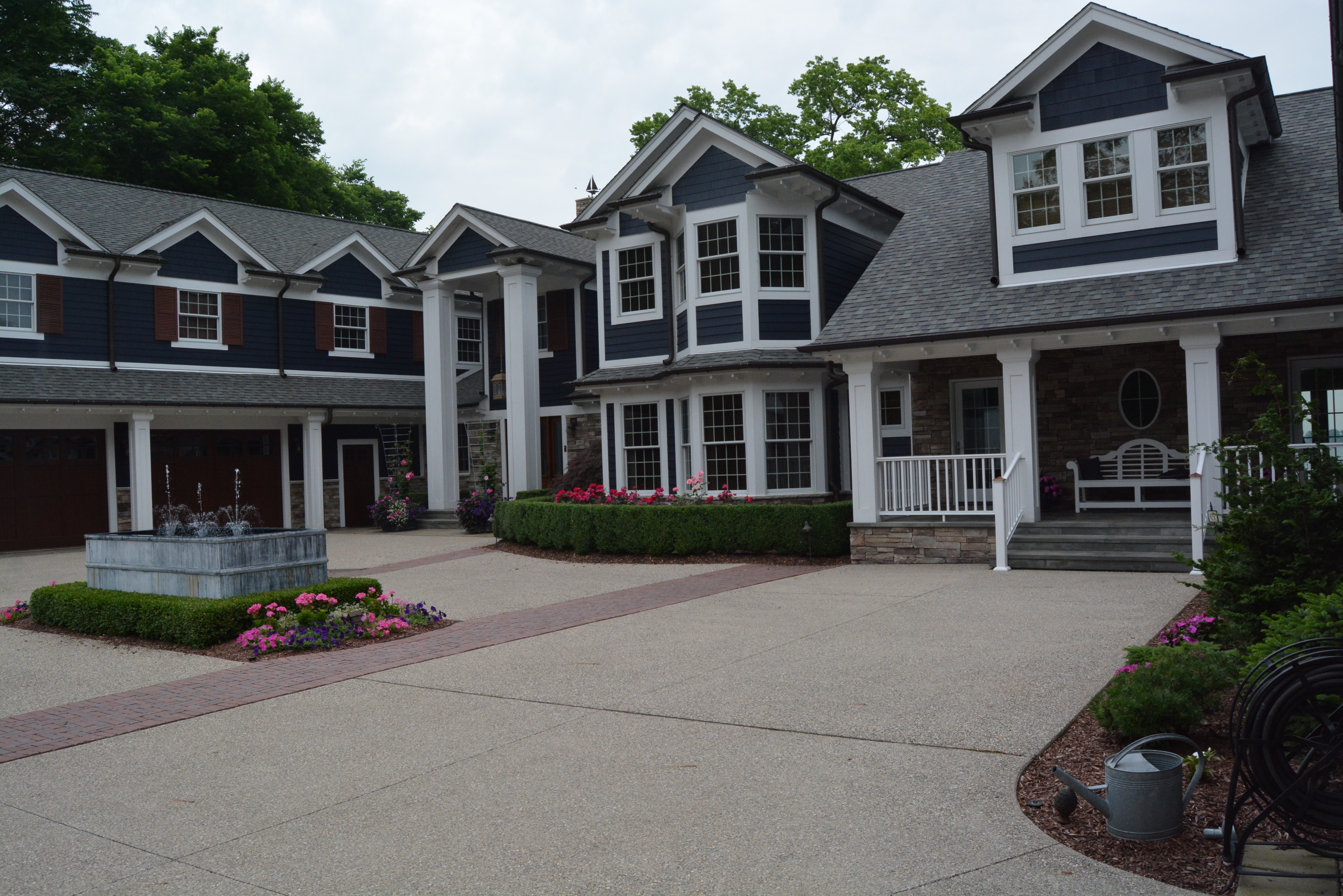
concrete-aggregate-driveway.jpgThis particular property is very narrow.  Critical to a successful landscape design is an assessment of how the house sits relative to the grade.  This house is set very high, given that the client wanted window wells that would add light to the basement level rooms.  This meant that a retaining wall and curb was necessary to create a driveway which is level.    A driveway would necessarily be a big feature of this landscape.  There is no room to make it a secondary feature.  Given the stone on the house, I designed a concrete aggregate driveway with a stone curb.  Why so much fuss over a utilitarian feature?  When the driveway occupies a big part of the front yard landscape, that driveway needs to be functional and beautiful.
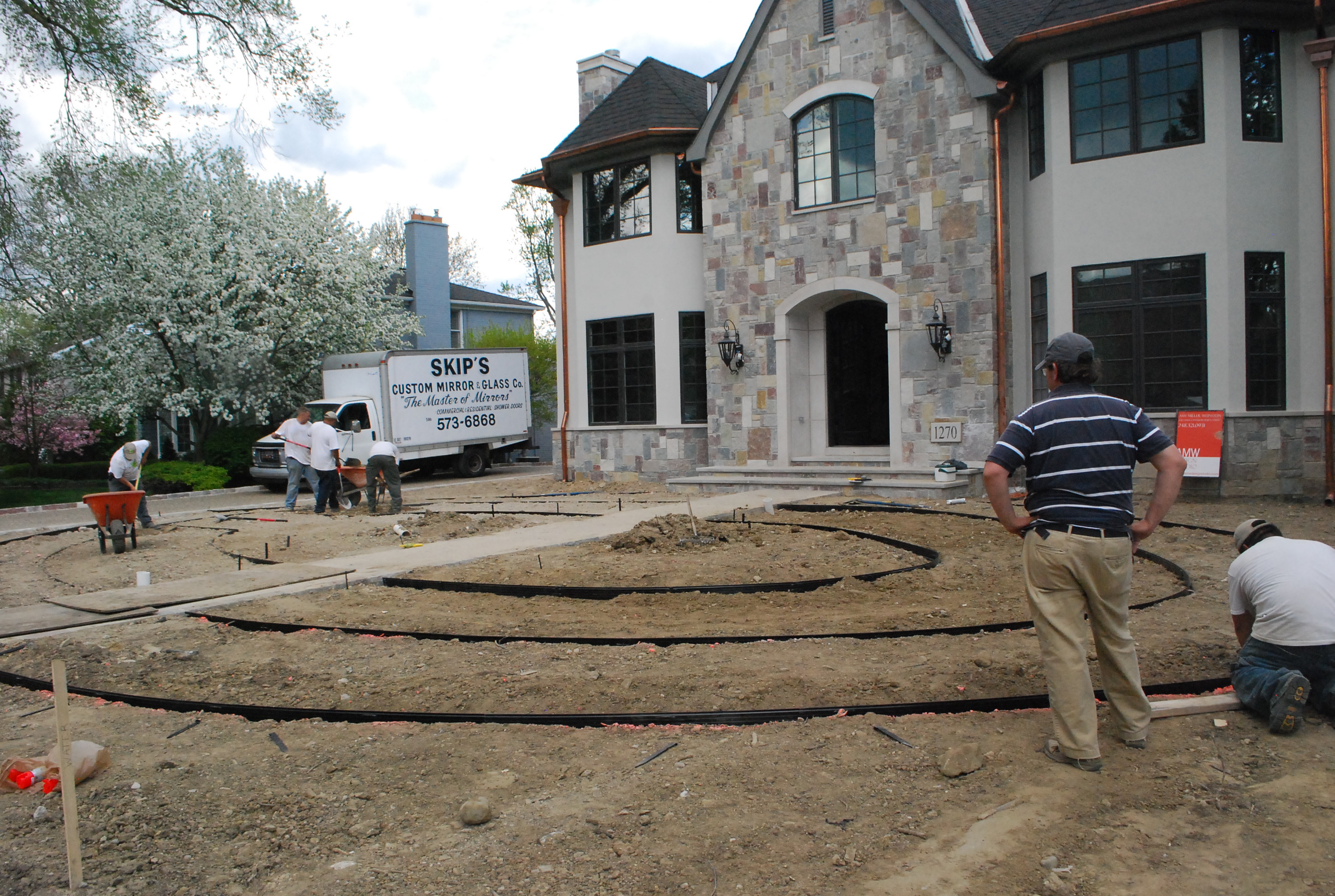
 

landscape-design.jpgI like a front walk which begins at the sidewalk, and ends at the front door.  That route may be direct, or meandering.  It is also nice to have a walk from the driveway to the front door.  This is a matter of convenience.  The idea of pair of walkways in this small space seemed overpowering.  I was thinking about a landscape which would be based on an ellipse.  Much like a roundabout that enables traffic to flow, without stopping and starting.  Though I am nervous approaching a roundabout, I find the process goes smoothly once I am in it.  A gravel ellipse would touch the concrete aggregate drive such that a path from the drive to the front door would be visually unobtrusive.
an-ellipse.jpg

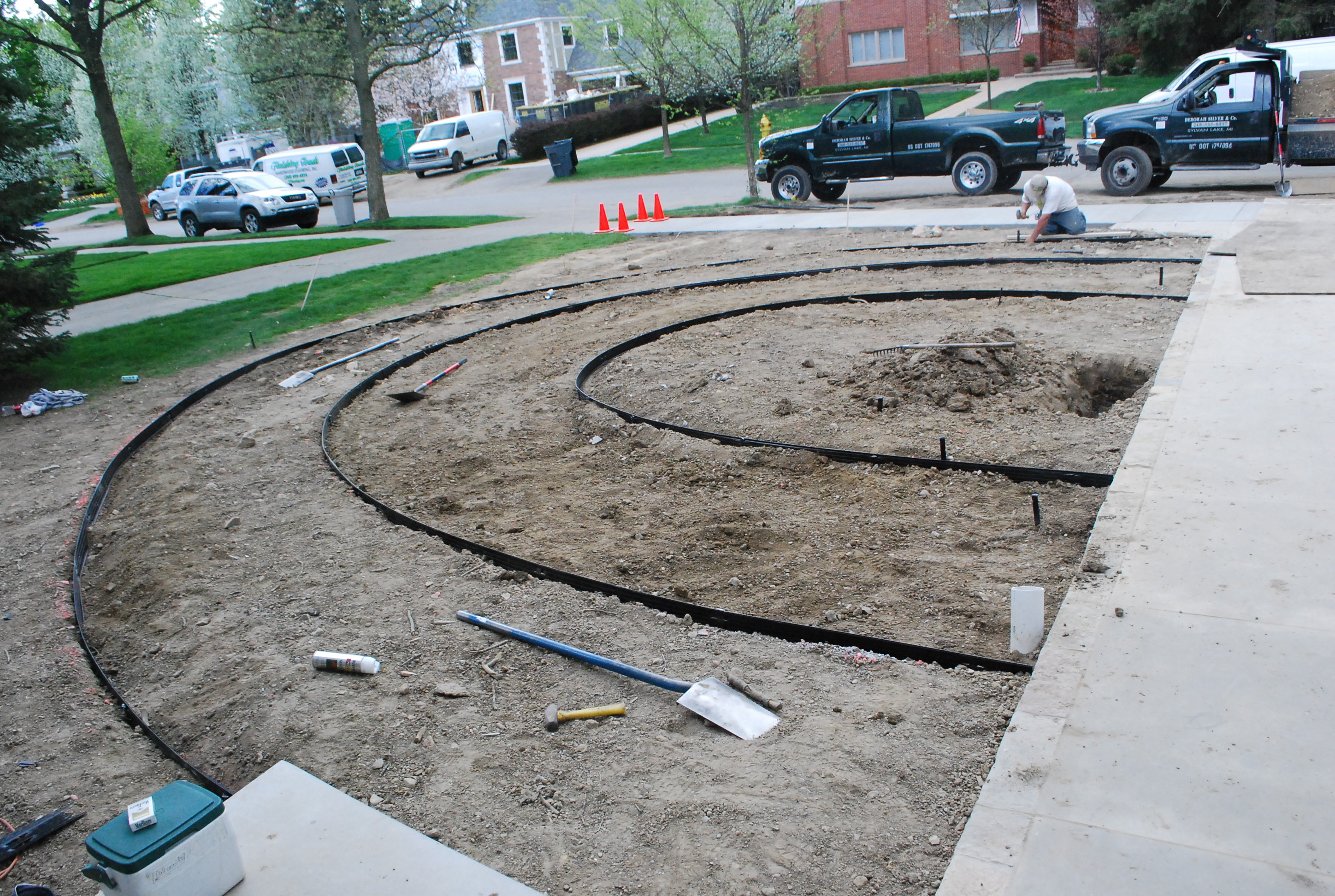
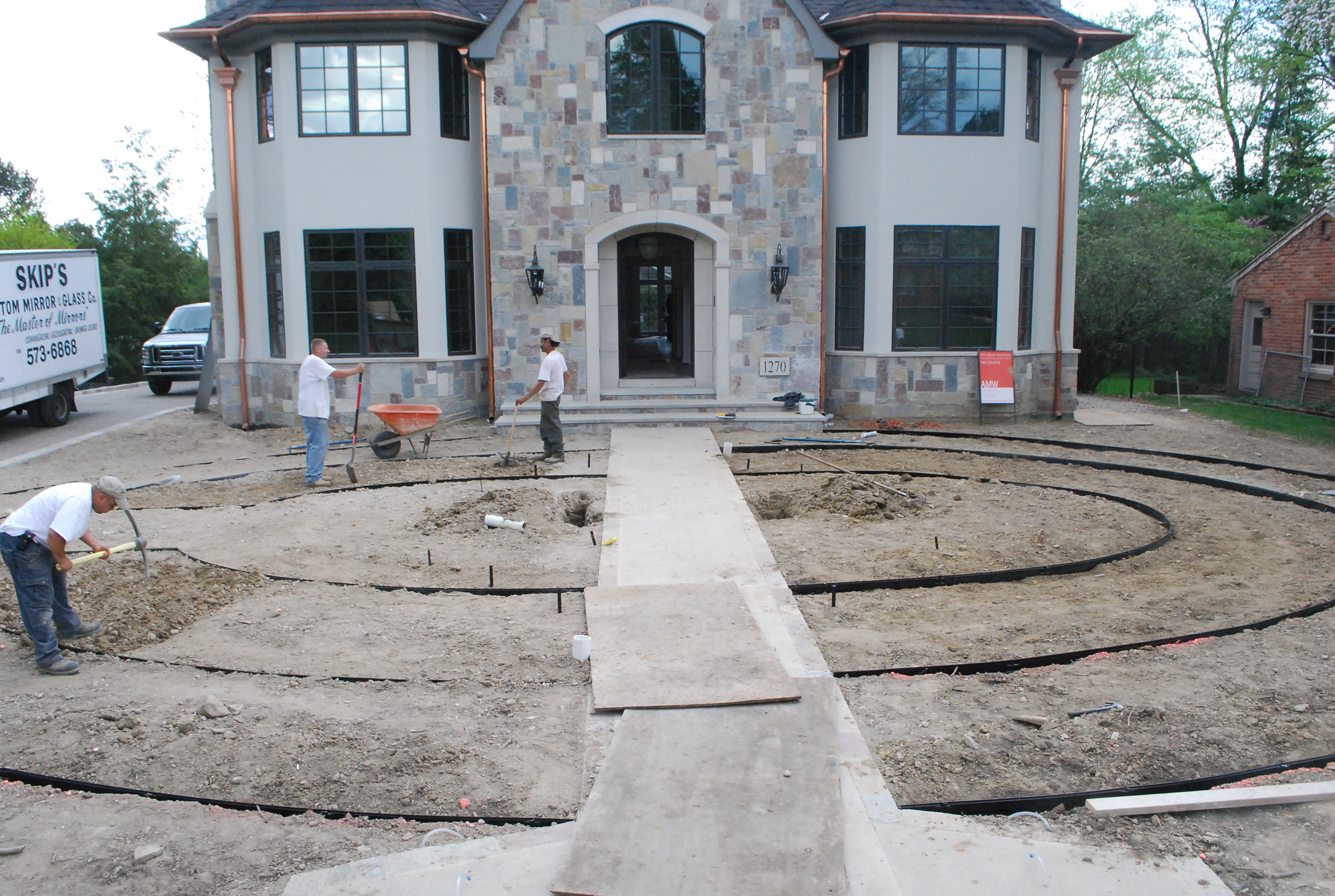
The gravel ellipse would be bordered on each side by garden.  This would help to keep the gravel surface out of view from the street.  The elliptical ring with the blue handled  flat shovel pictured above would have a gravel surface.  The innermost ring would be grass.
an-ellipse.jpg

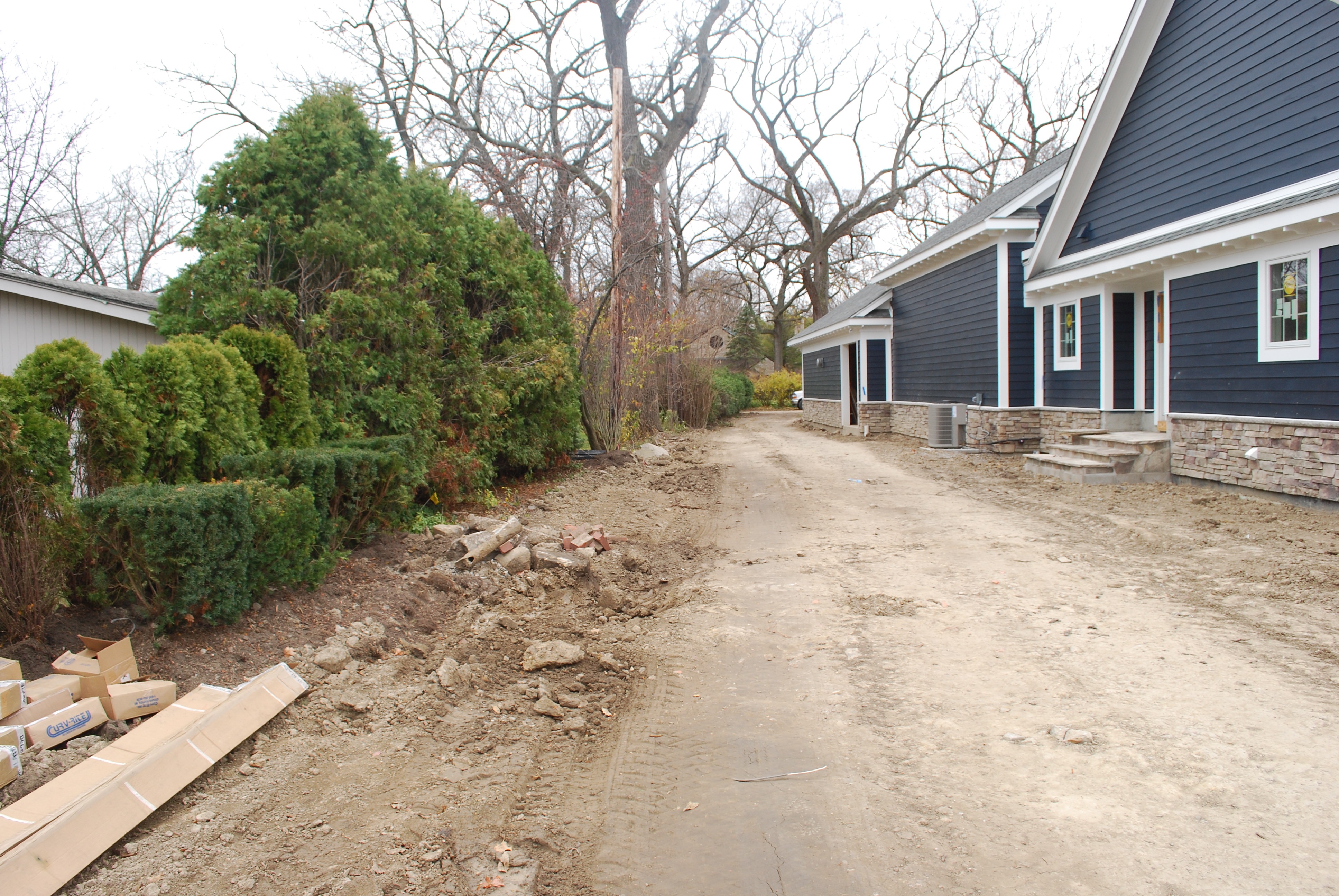
The property had been overrun with trucks over the course of the construction of the house.  Given that the soil had been compacted to an extreme, we dug into it with pick axes and shovels.  We would eventually work some compost into the soil, but I subscribe to the idea that plants will thrive if they like the existing planting conditions.
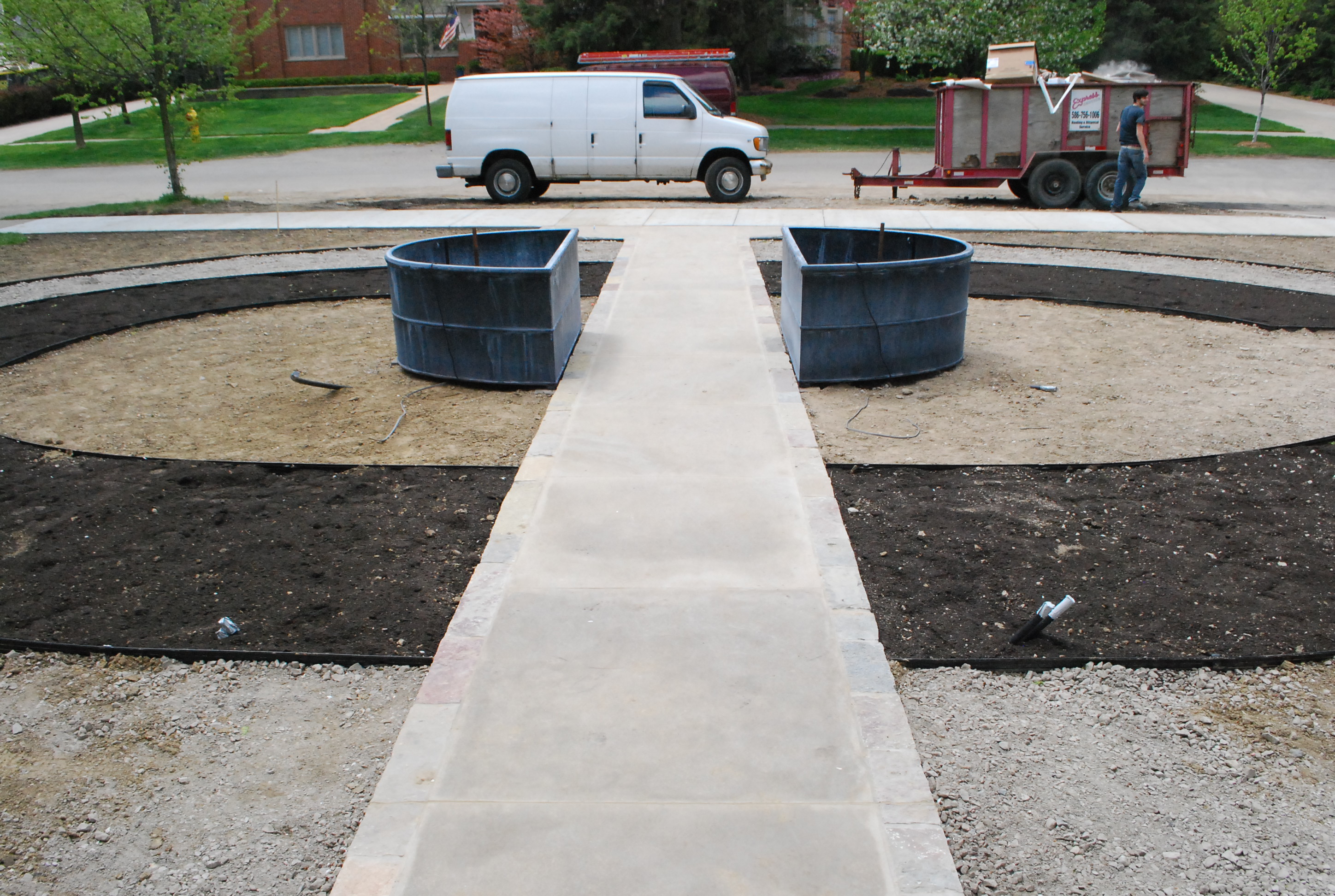
elliptical-fountains.jpgA pair of half elliptical fountains would be installed in the center of the garden. As much sculpture as fountain, they provide a focal point for the landscape. They could be planted with water plants, or not.
 

landscape-design.jpg

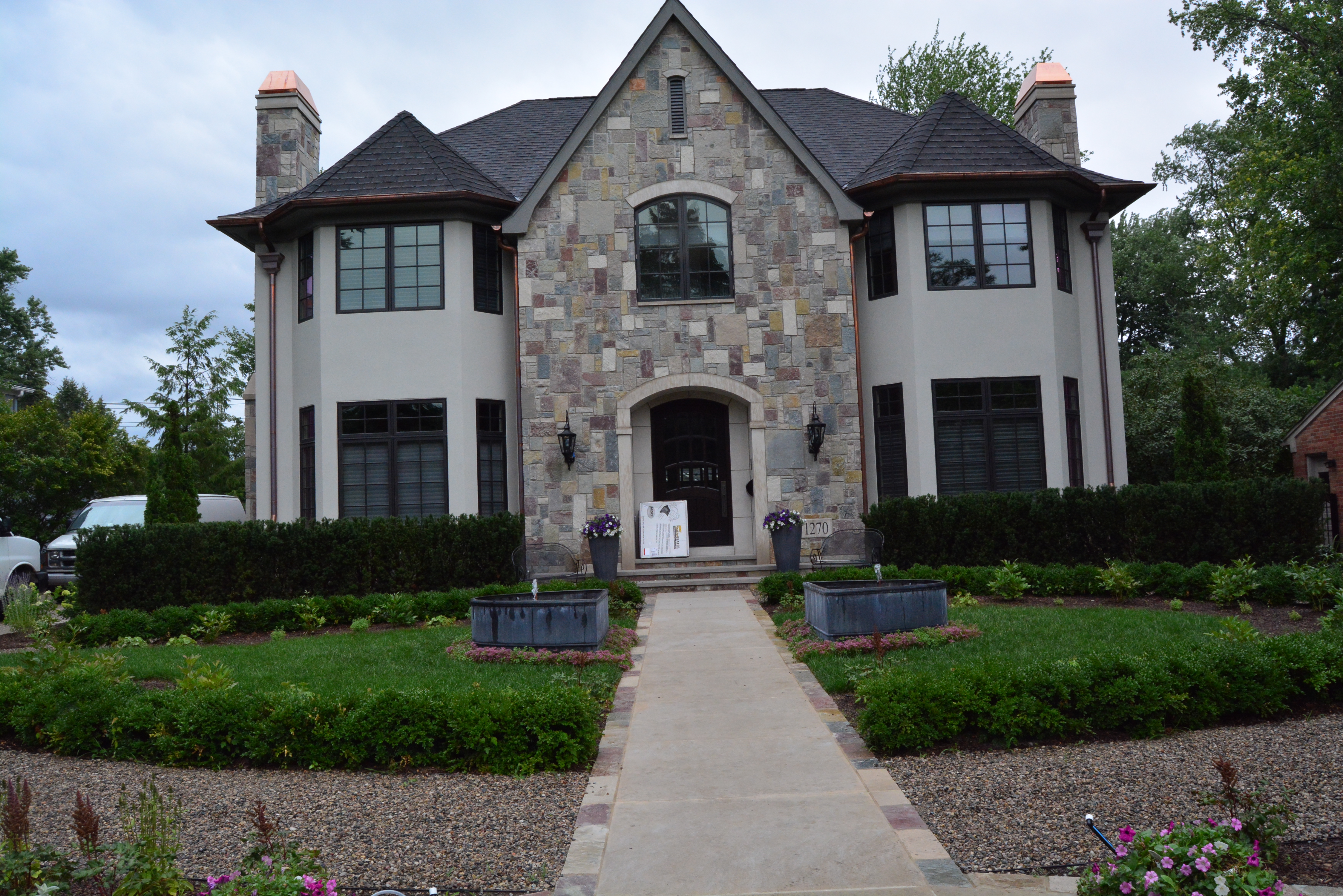
The big gestures are strongly horizontal, in contrast to the strong vertical lines of the house.  Once the arcs of Hicks yews adjacent to the house have a chance to settle down and grow in, they will be maintained at a height below the ground floor windows. The gravel path from the drive to the front door is already invisible from the street. The yew, boxwood, and a pair of DeGroot Spires arborvitae will provide evergreen interest over the winter months.
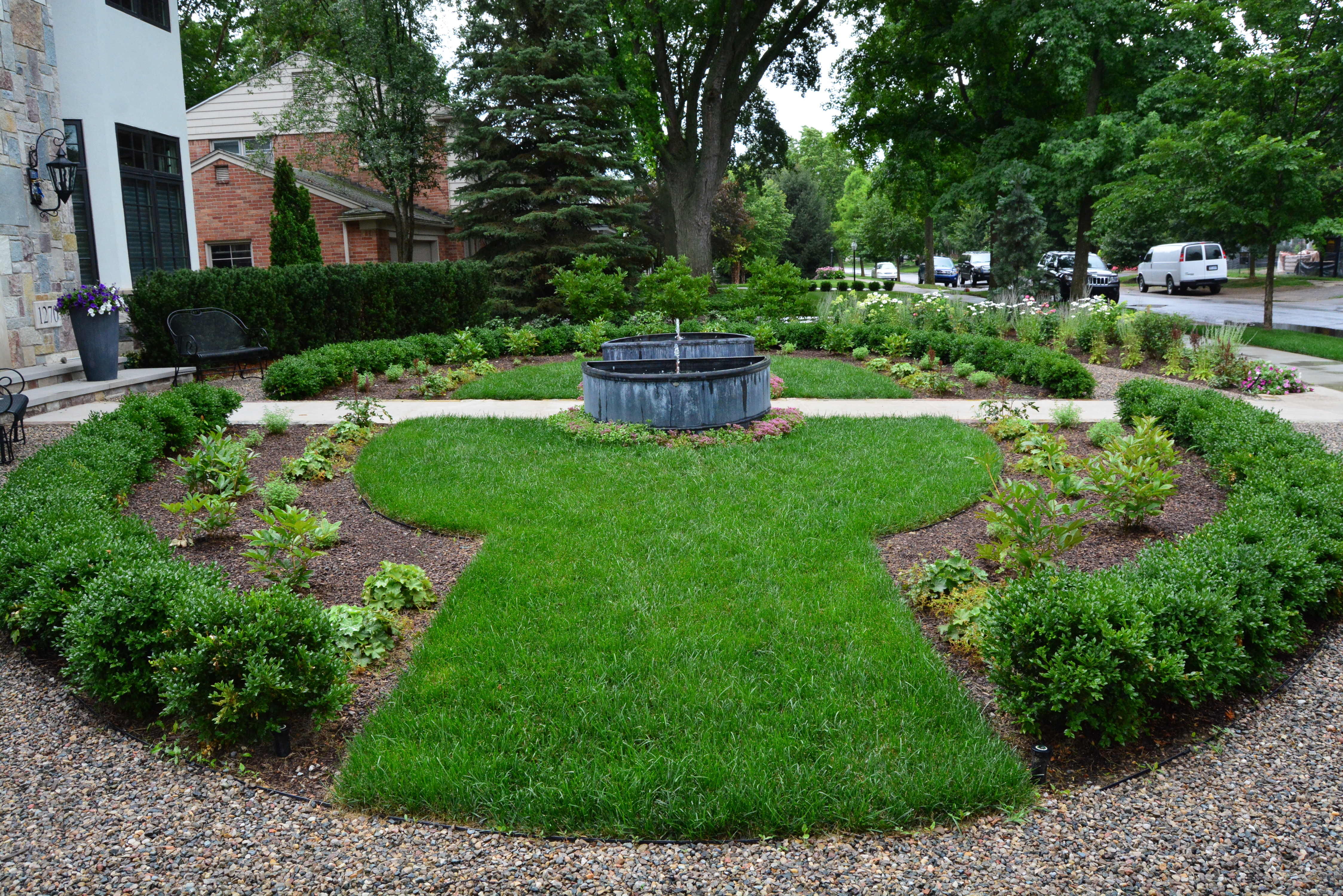
lawn.jpgThe garden adjacent to the lawn features plants that grow three feet tall, or less.  This garden will be dominated by peonies.  Beautiful in bloom, the make compact and glossy leaved shrubs that look good all summer.  The plants are spaced such to permit the additional of taller growing annual plants.
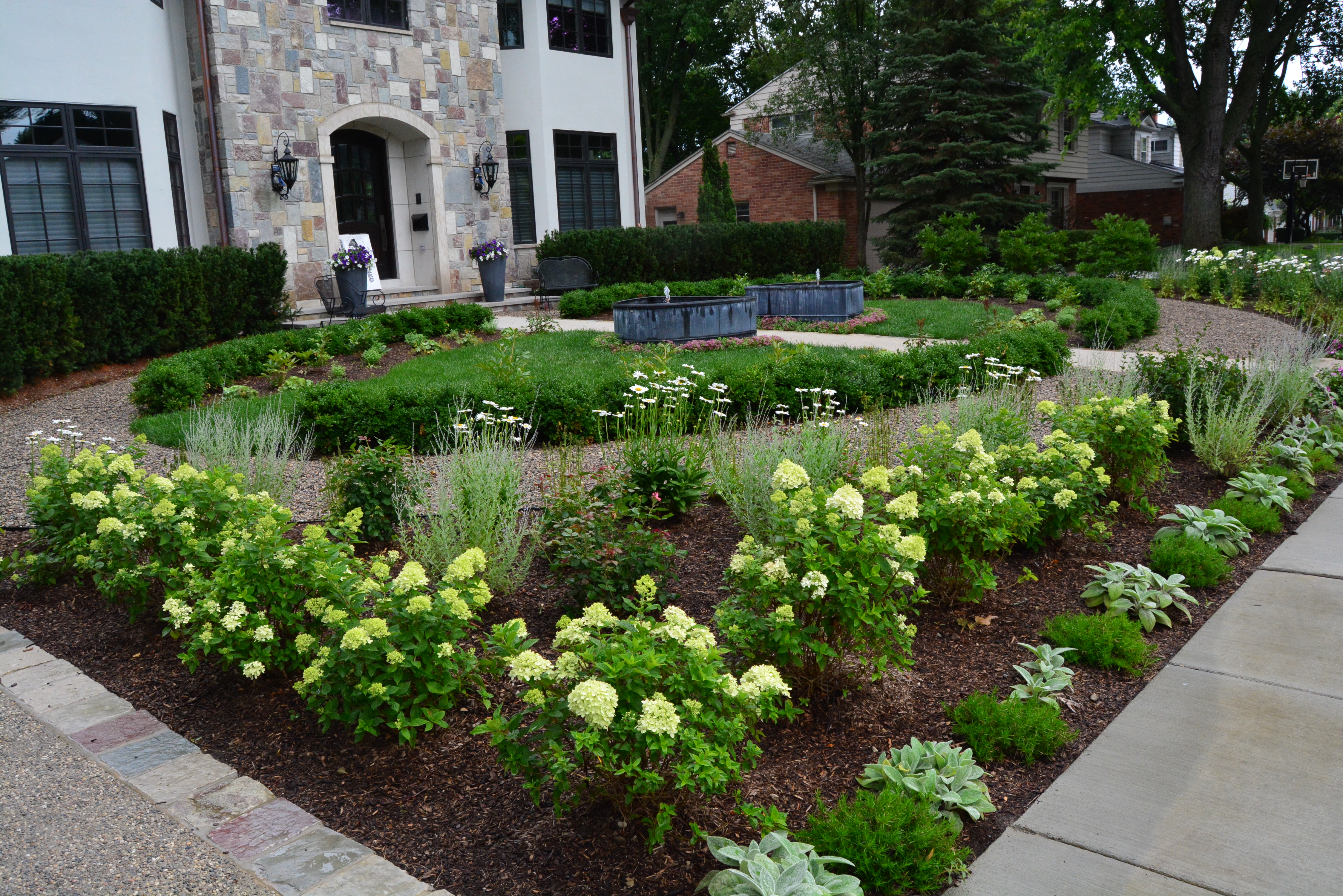
landscape-design.jpgThere is a mix of plants. The outside garden will be taller, once it grows in.  The Little Lime hydrangeas grow 4-5 feet tall, as will the roses. Russian sage and shasta daisies are bordered in the interior by stachys hummelo and Visions in Red astilbe.    This garden will provide a sense of privacy and intimacy for the inner fountain garden.  Adjacent to the sidewalk, a buffer of lamb’s ears and moss phlox. On the lot line, a single Vanderwolf’s flexible pine, a few magnolia stellata, and a grouping of fothergilla gardenii.  A few lilacs, a favorite of the client, were placed where they would have room to grown.  The lilacs are faced down with lespedeza.   Euonymus “Moonlight” is planted behind the yews.  A stand of “Goldner’s Bouquet” daylilies were planted on the south side of the house.
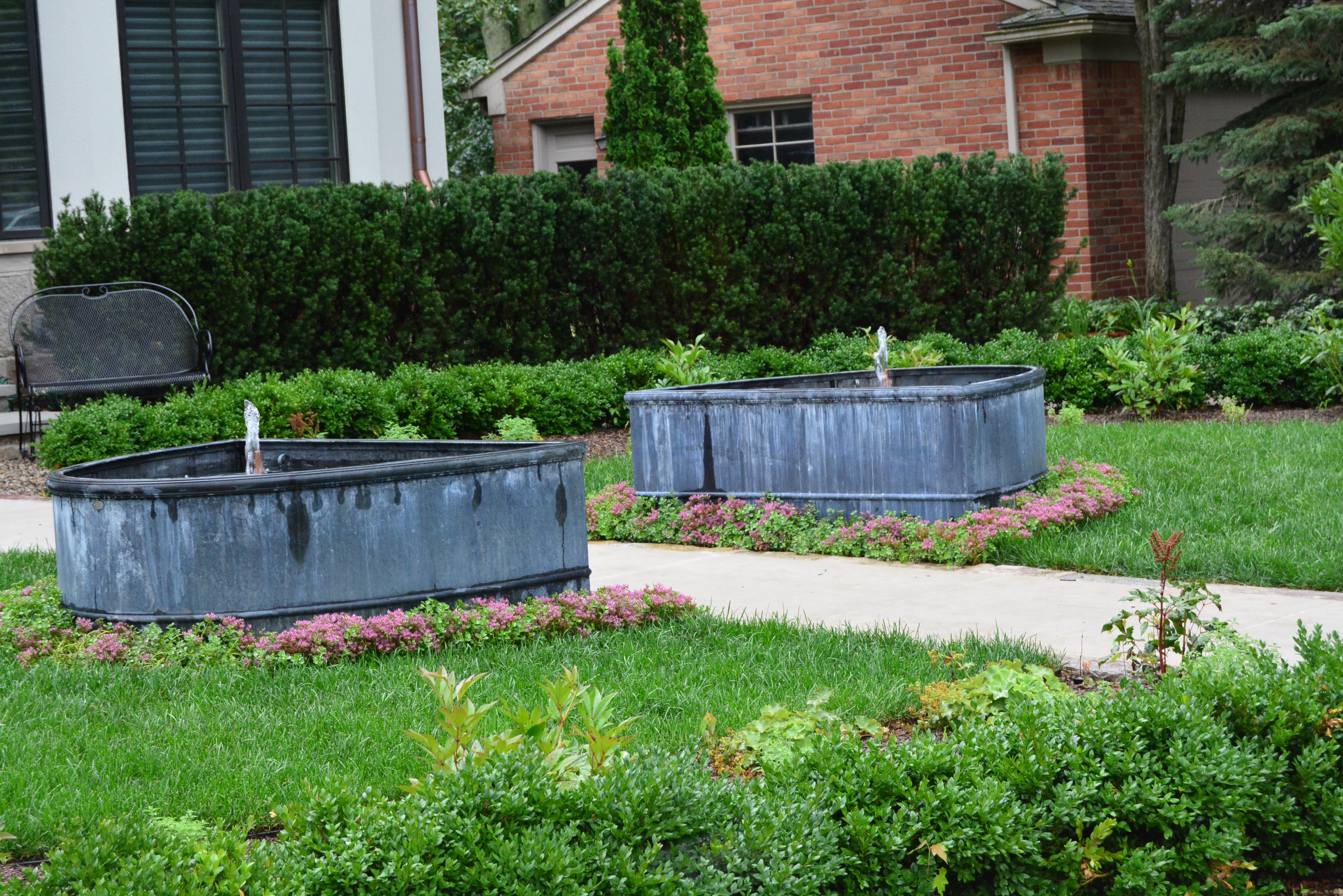
elliptical-fountains.jpgBordering the fountains, a frame of sedum John Creech will help to keep the lawn mower at bay.  Interestingly enough, it is remarkably tolerant of the overspray from the fountains.  This landscape has only one organizing idea.  But rather than a beginning and an end, there is a roundabout.
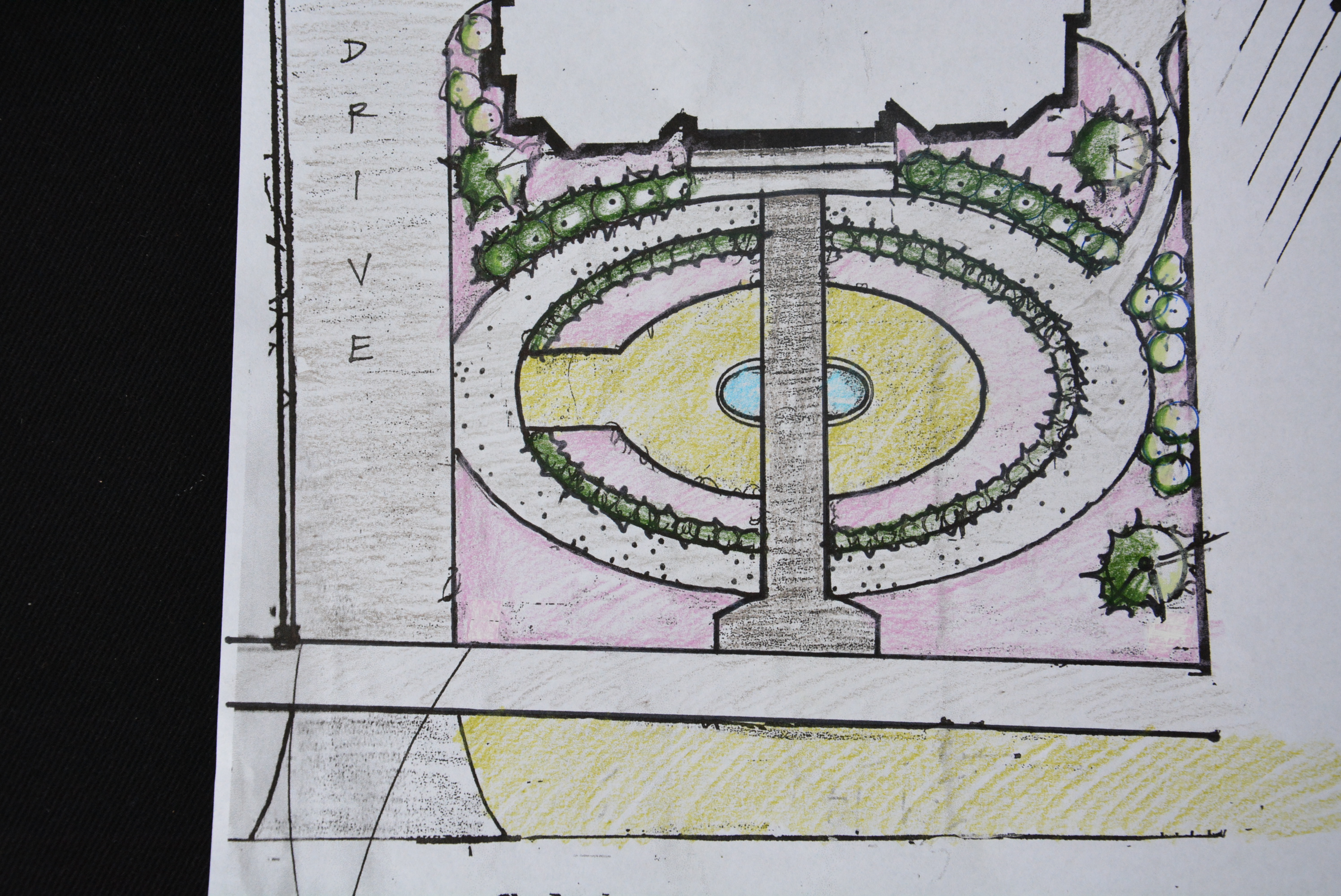
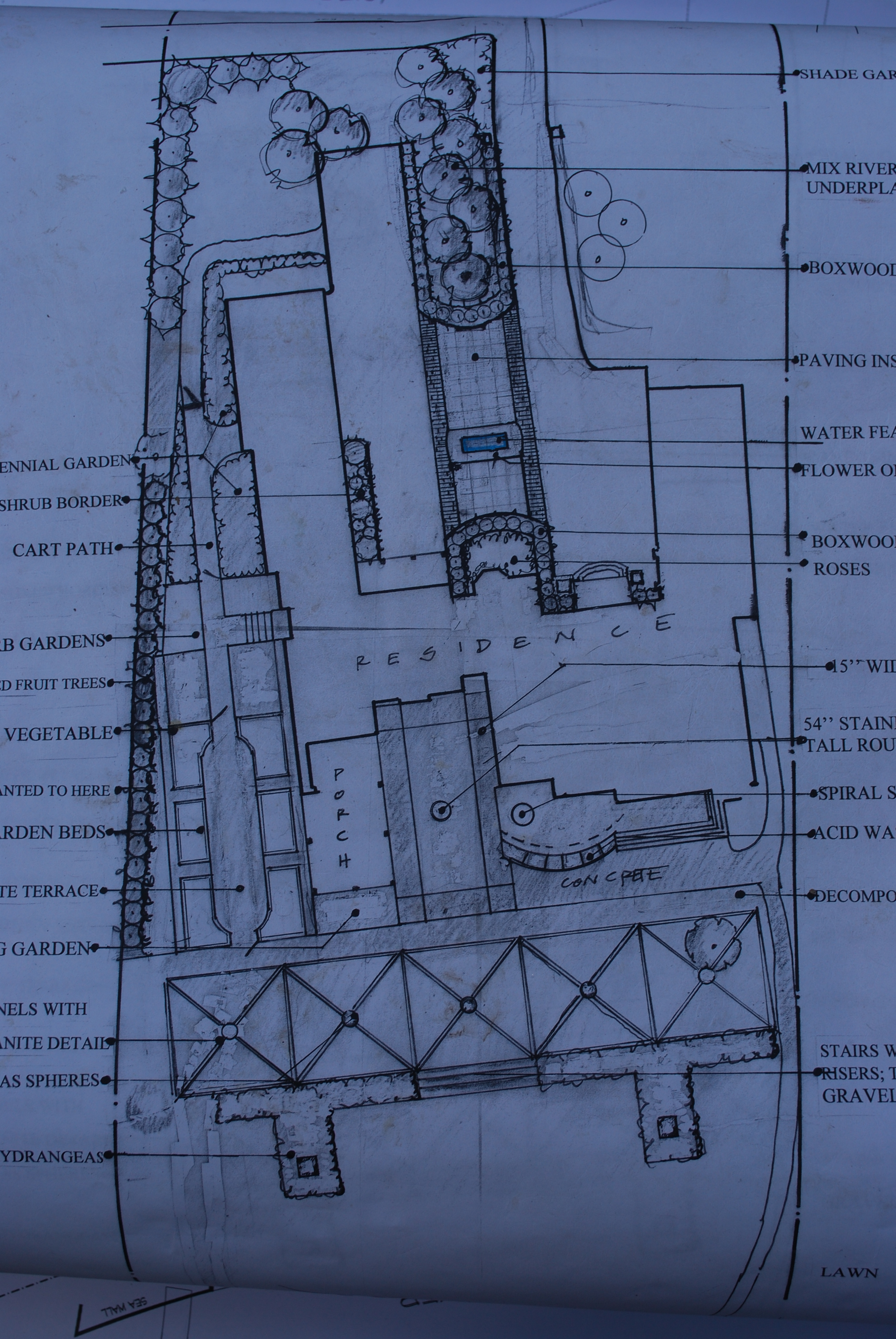
schematic-=landscape-plan.jpgA schematic landscape plan is a simple series of shapes that indicate what goes where, and how one travels from one place to another.  If the landscape plan works well on a structural level, then the additional of the plants will bring a sculpture to life that is pleasing to the eye.
Four Years Later

landscape-plan.jpg
Six years ago I submitted landscape plans to a client with an island home.  Five years ago, they brought the property next door, and added on to their existing home. Four years ago, we installed a landscape per a second plan.  This property was 75 minutes away from us.  Despite the difficult logistics, we did install a landscape from start to finish.  In 2010, I attended a summer party given by the client-for all of the contractors that worked on their project, and their families.  That was my last visit-until earlier this week.

landscape.jpg
The original plan called for 3 curved steel planter boxes that would fit the curve of a blue stone terrace on the lakeside.  They decided earlier this year to go ahead and have them made.The delivery of the boxes was a chance to see how the landscape was settling in.  What a pleasure it was to see that the plants looked healthy and robust.

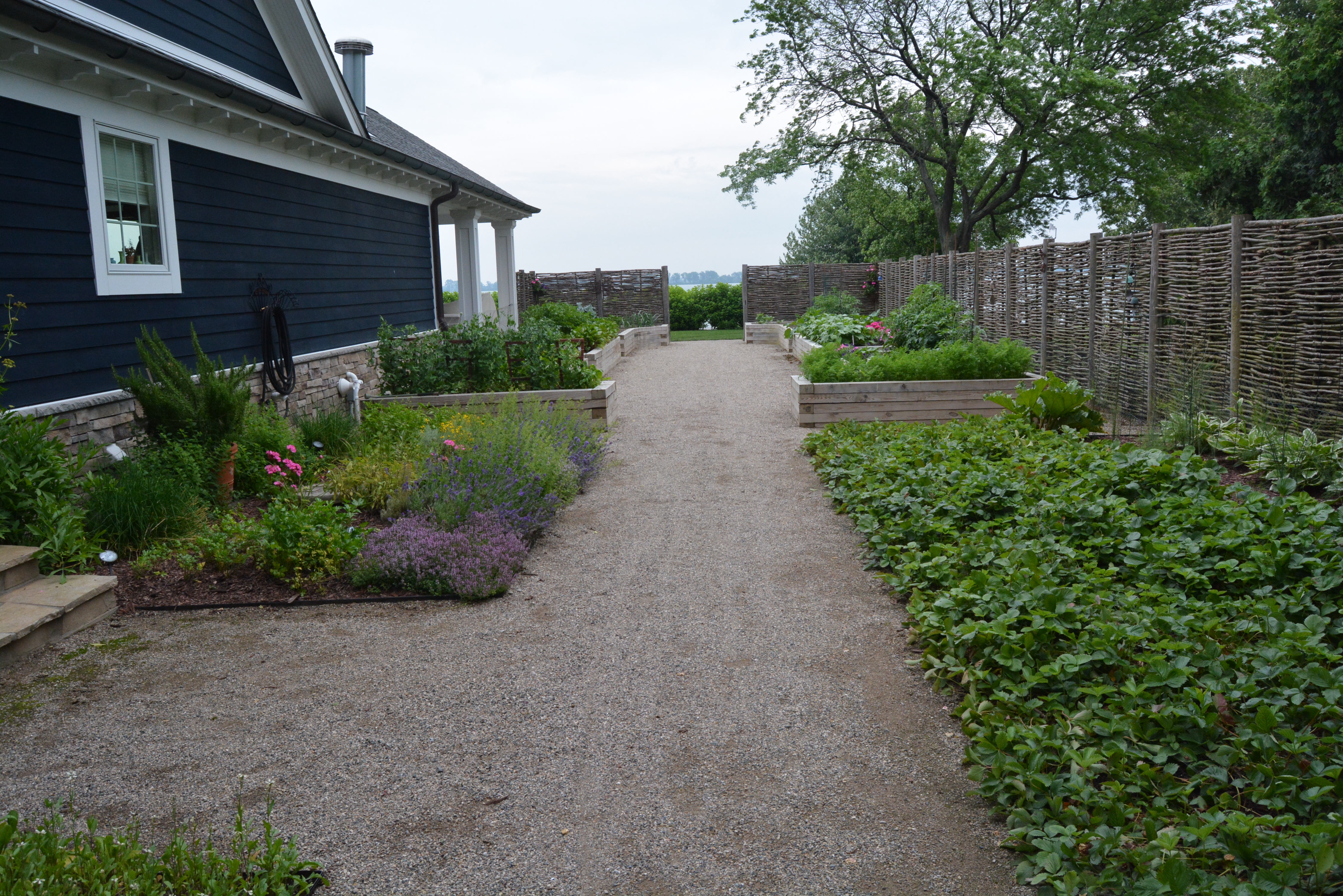
the south-side.jpgEvery square foot of the vegetable garden was being used.  The in ground beds had been planted with strawberries, asparagus, and herbs.  The raised beds were planted with all manner of vegetables.  Vegetable gardens are working gardens, the purpose of which is to grow food.  This sounds easy enough, but growing vegetables successfully is hard.  The plants themselves are not always so beautiful.  Roses and tomatoes are grown for the flowers and fruit, not for the beauty of the plant.  It seems like bugs and disease have a special affinity for vegetable plants.  This vegetable garden with raised beds is an orderly space, even if the vegetable plants themselves are not.
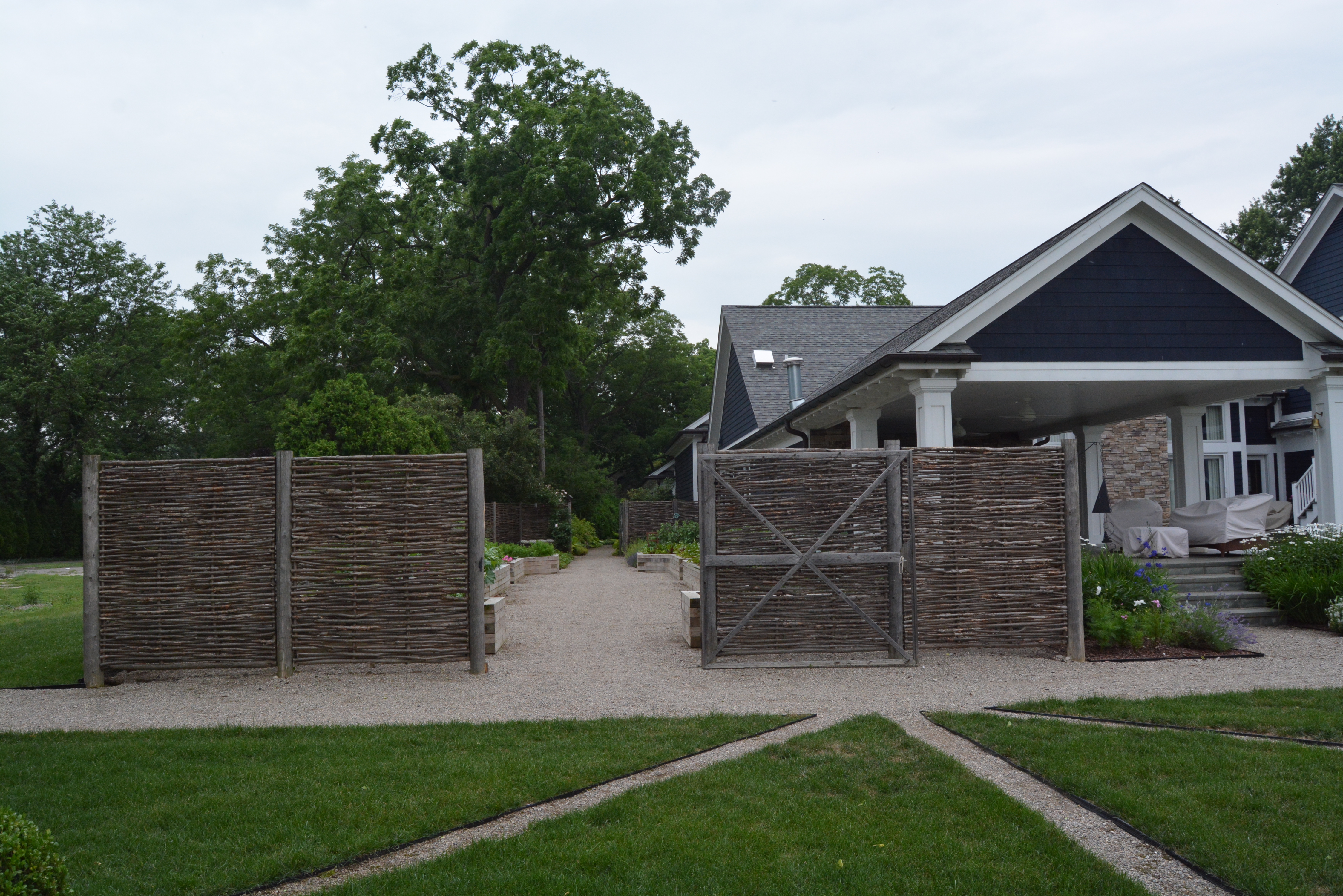
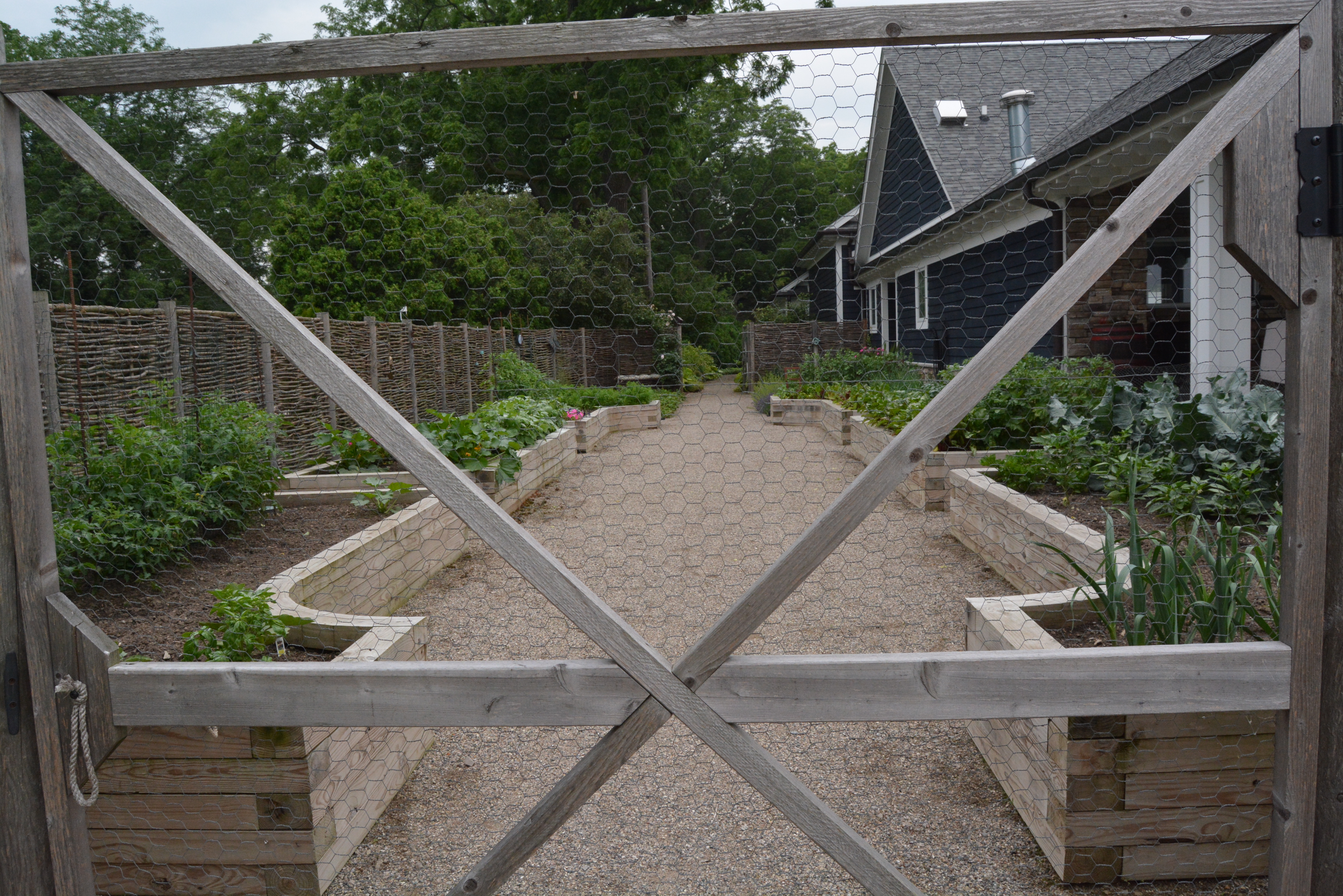
the-vegetable-garden.jpg This garden is enclosed, primarily to keep the wildlife at bay.  But the fencing adds much to the look of the garden.  The gate is an exact reproduction from a family vegetable garden in Italy.  The landscape is very much looking like it belongs to them.
growing.jpg
vegetable garden
garden-latch.jpg
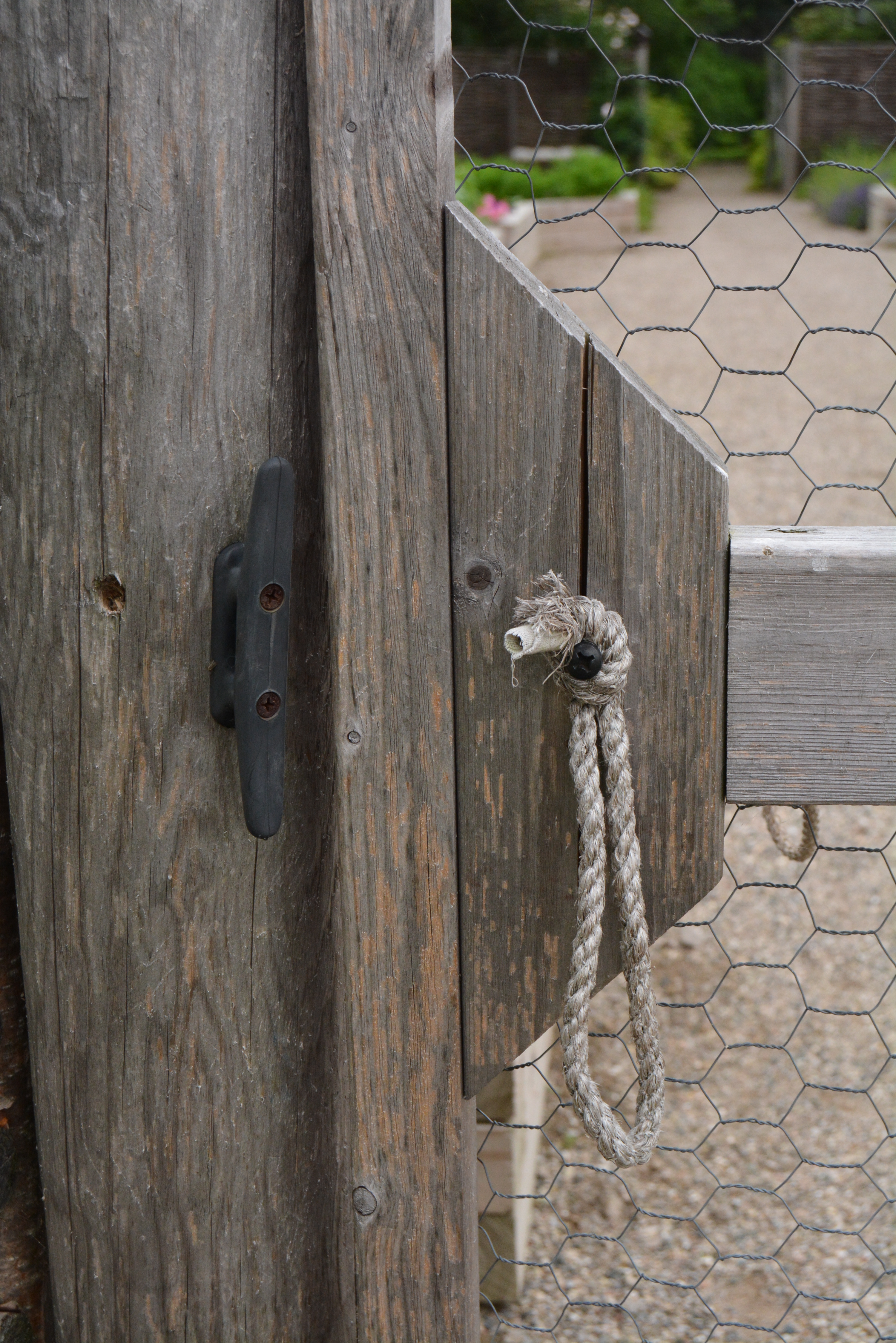
gate latch

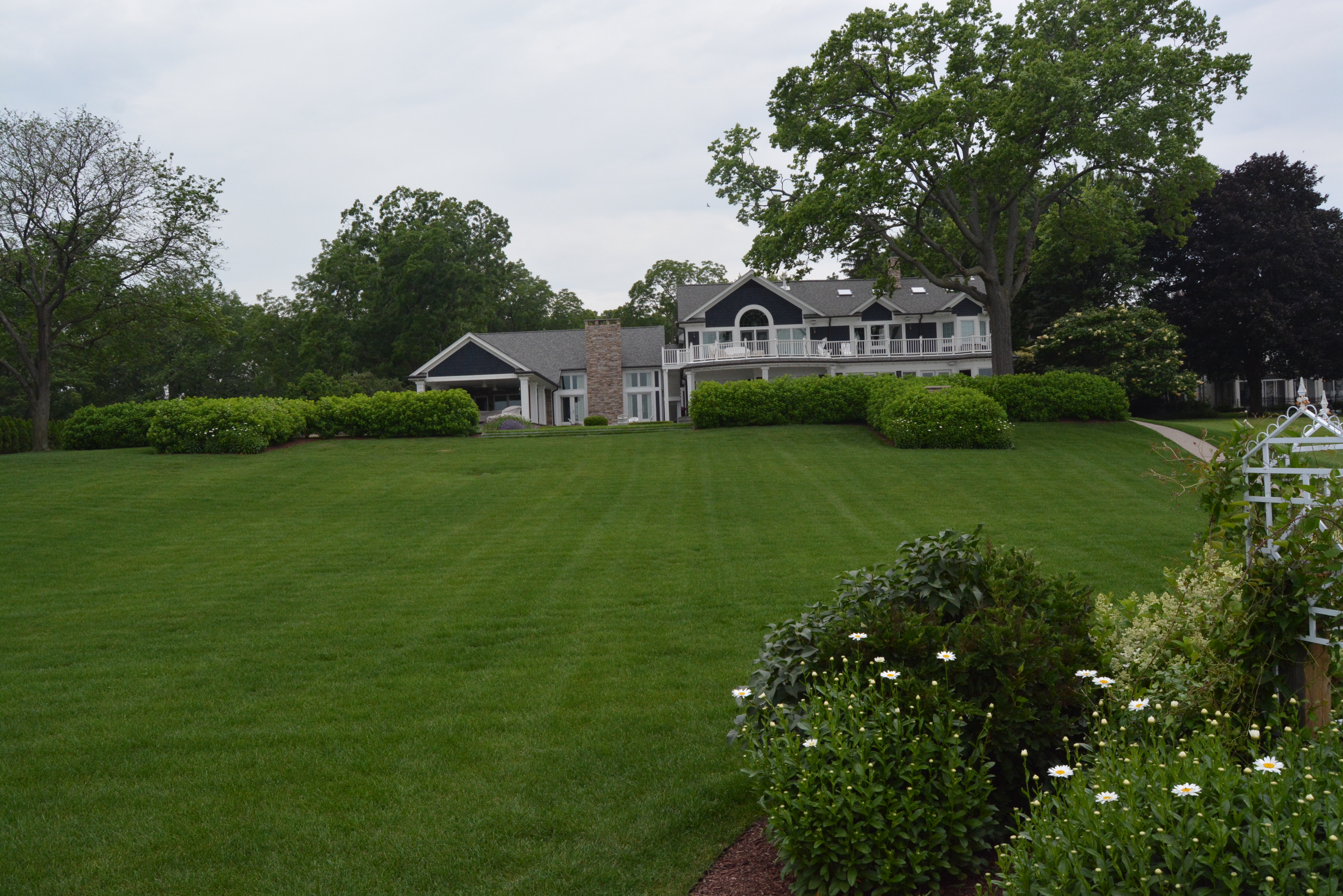
lawn-plane.jpgWe look after the landscape during the course of installing a big project like this.  But the day comes when the installation is finished, and a client has to take over the care and maintenance.  The areas that require the most care are small-manageable. The landscape was designed for clients that like to use their outdoor spaces for entertaining.

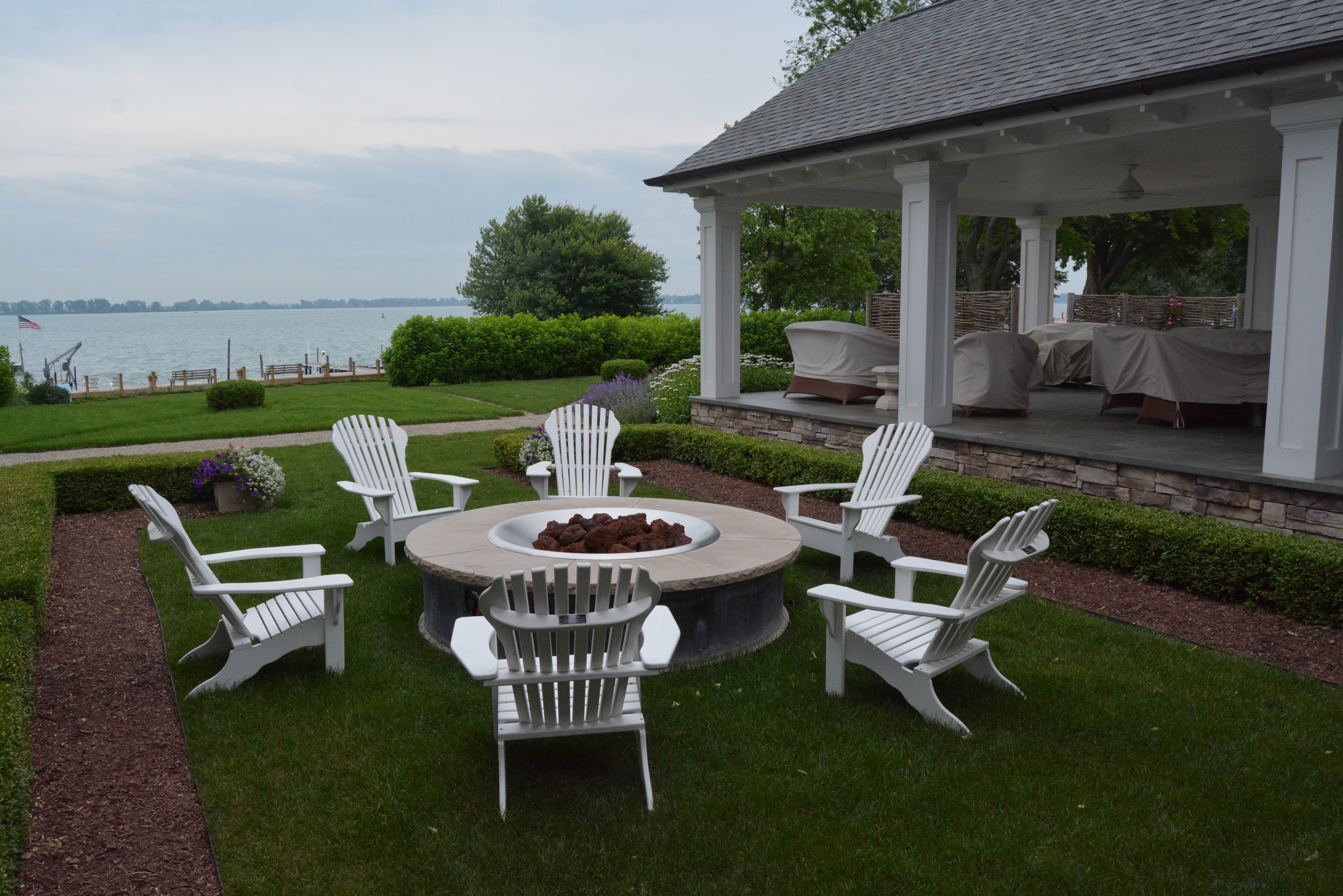
firepit.jpgI vividly remember when this particular spot was a muddy and mucky mess.  Installing the fire pit in late November-challenging.  Today, this space gives no hint of that construction history.

lakeside-landscape.jpgview from the river

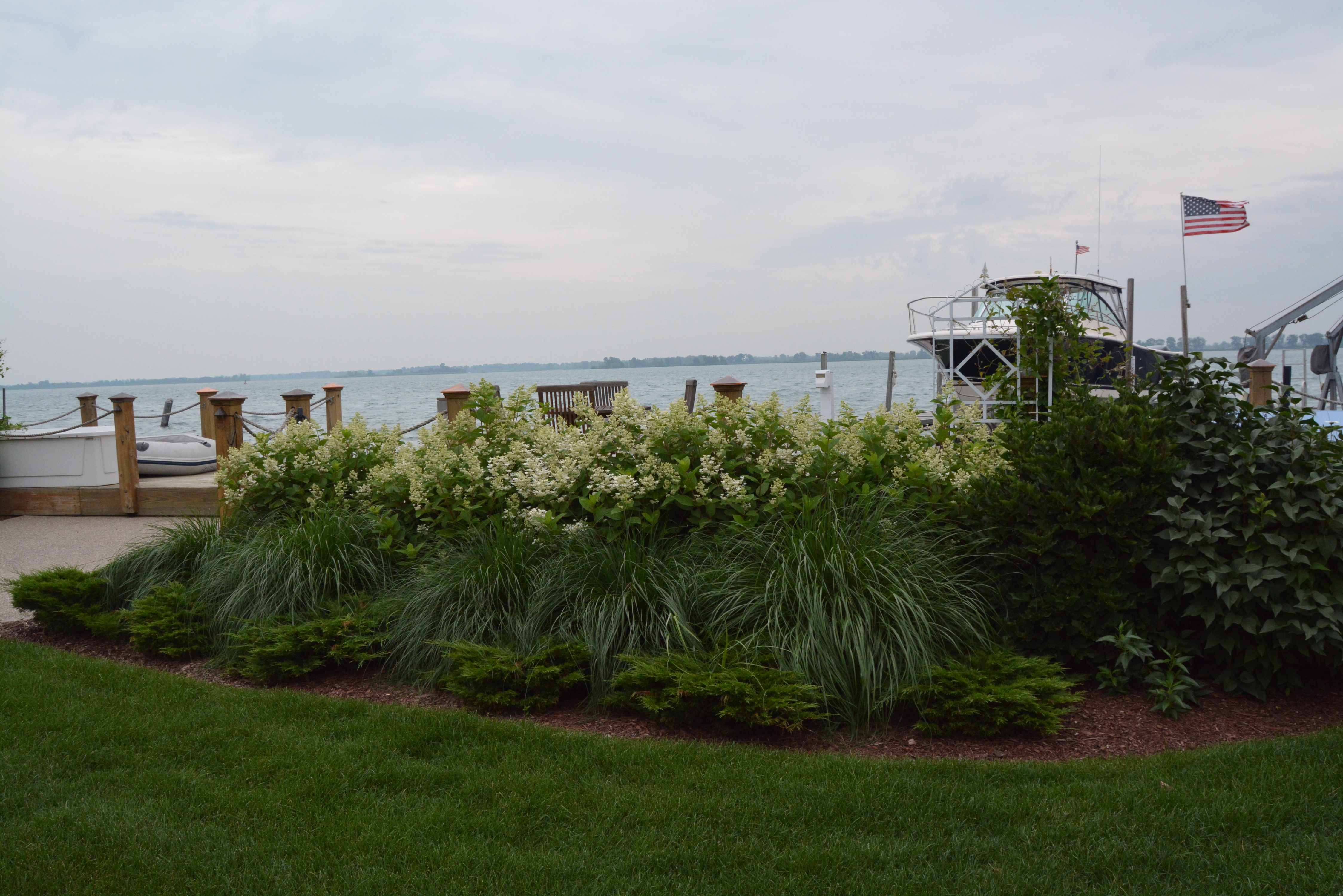
waters-edge.jpgThis dockside garden was planted after my work here.  It is simple, and has great texture and mass.

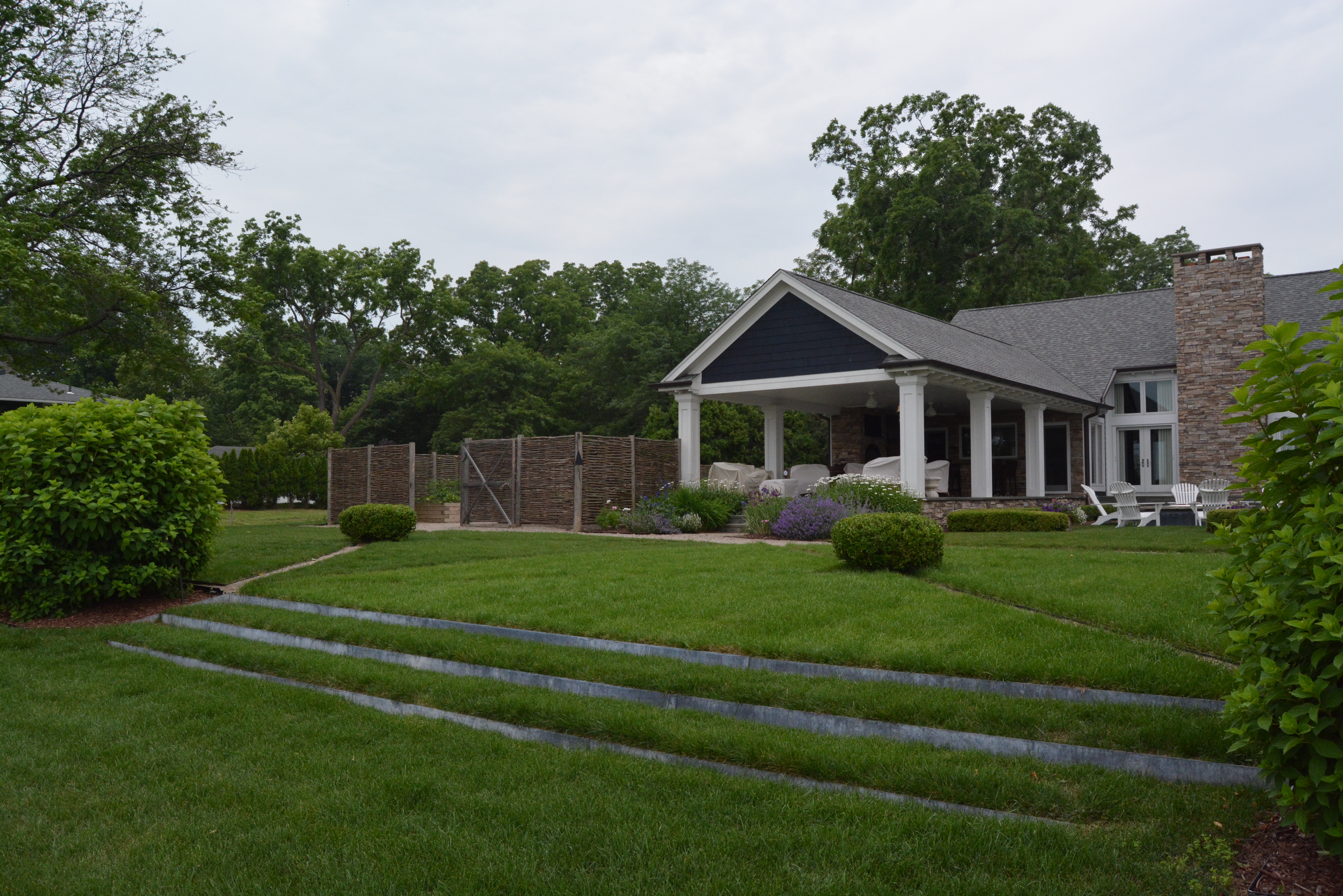
steps.jpgWe did do a lot of work grading here.  My clients did want a lawn area that was easier to navigate.  The long steel step risers are only 4 inches in height. This is a landscape feature that adds interest, and is very little maintenance.
November-2009.jpg

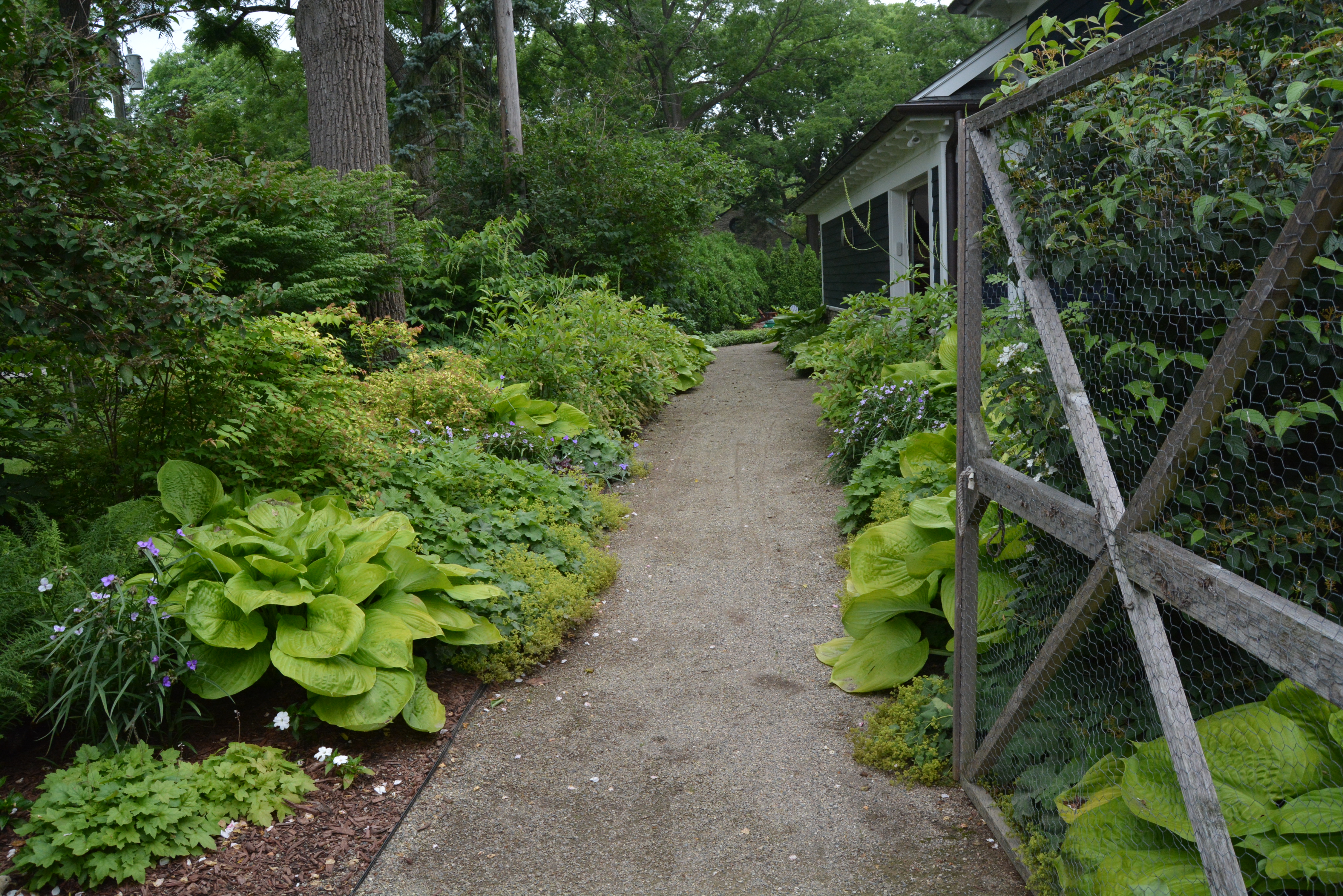
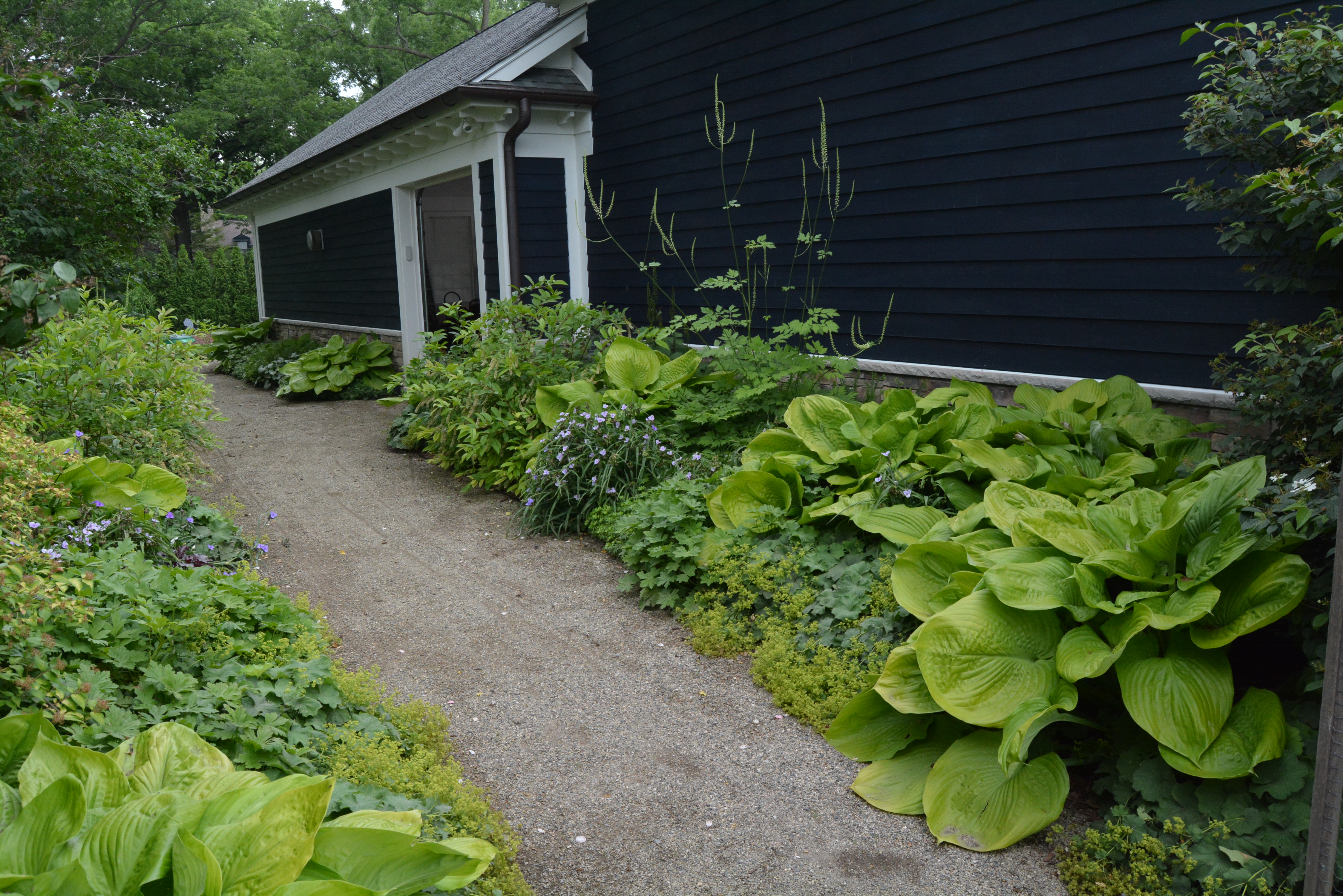
This shady garden area was a major roadway for construction vehicles of all kinds, for almost 2 years. I was worried we would have a devil of a time getting anything to grow.  When we were finally ready to plant this side, the soil was just about impossible to dig.  We incorporated generous amounts of compost into the top 8 inches of soil-with pickaxes and the forks on our front end loader.  This picture was taken in November of 2009.

south-side-garden.jpg
This picture was taken a few days ago.

perennial-garden.jpg
It takes time for a landscape to begin to come into its own.  This one is well on its way.

Blanketed

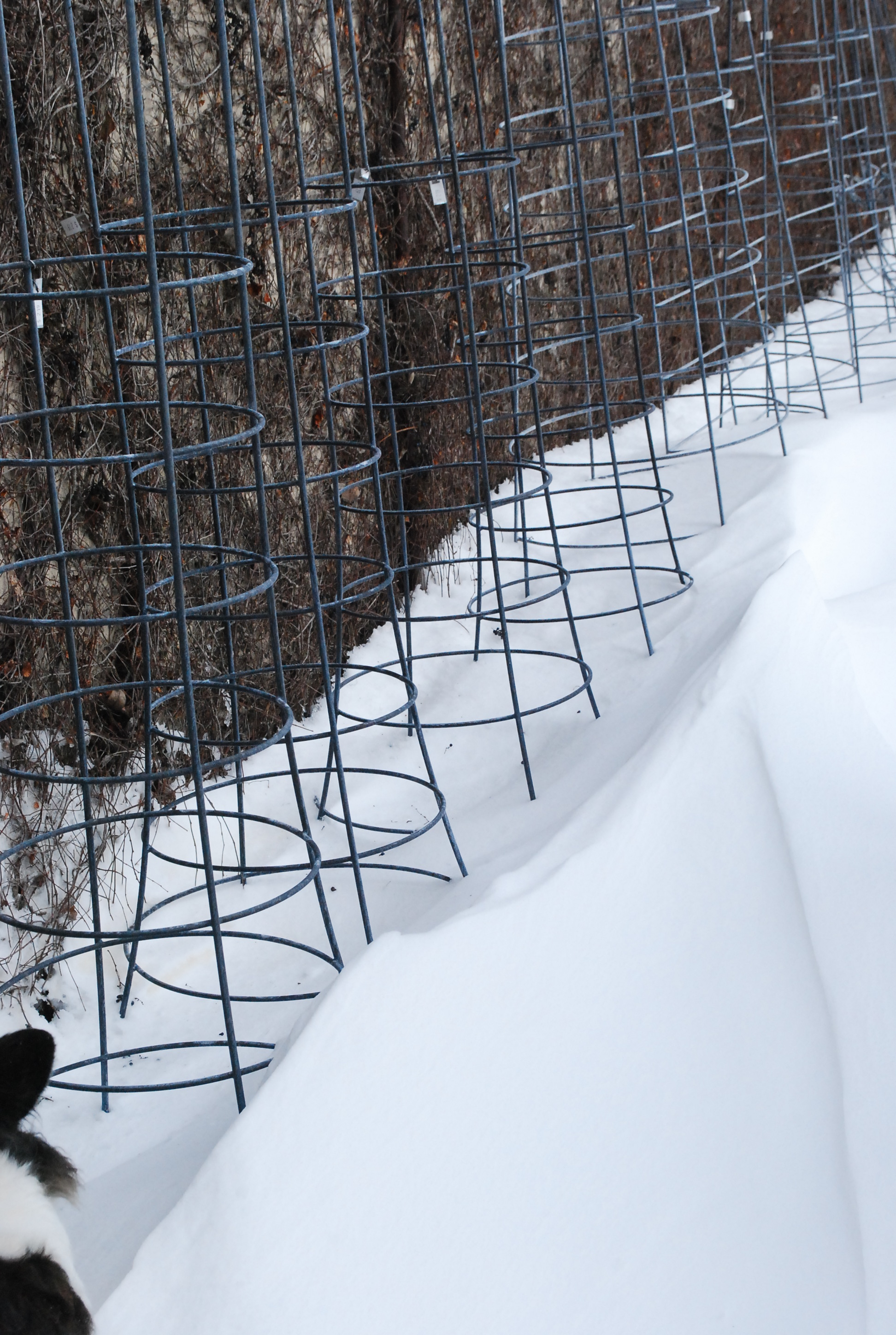
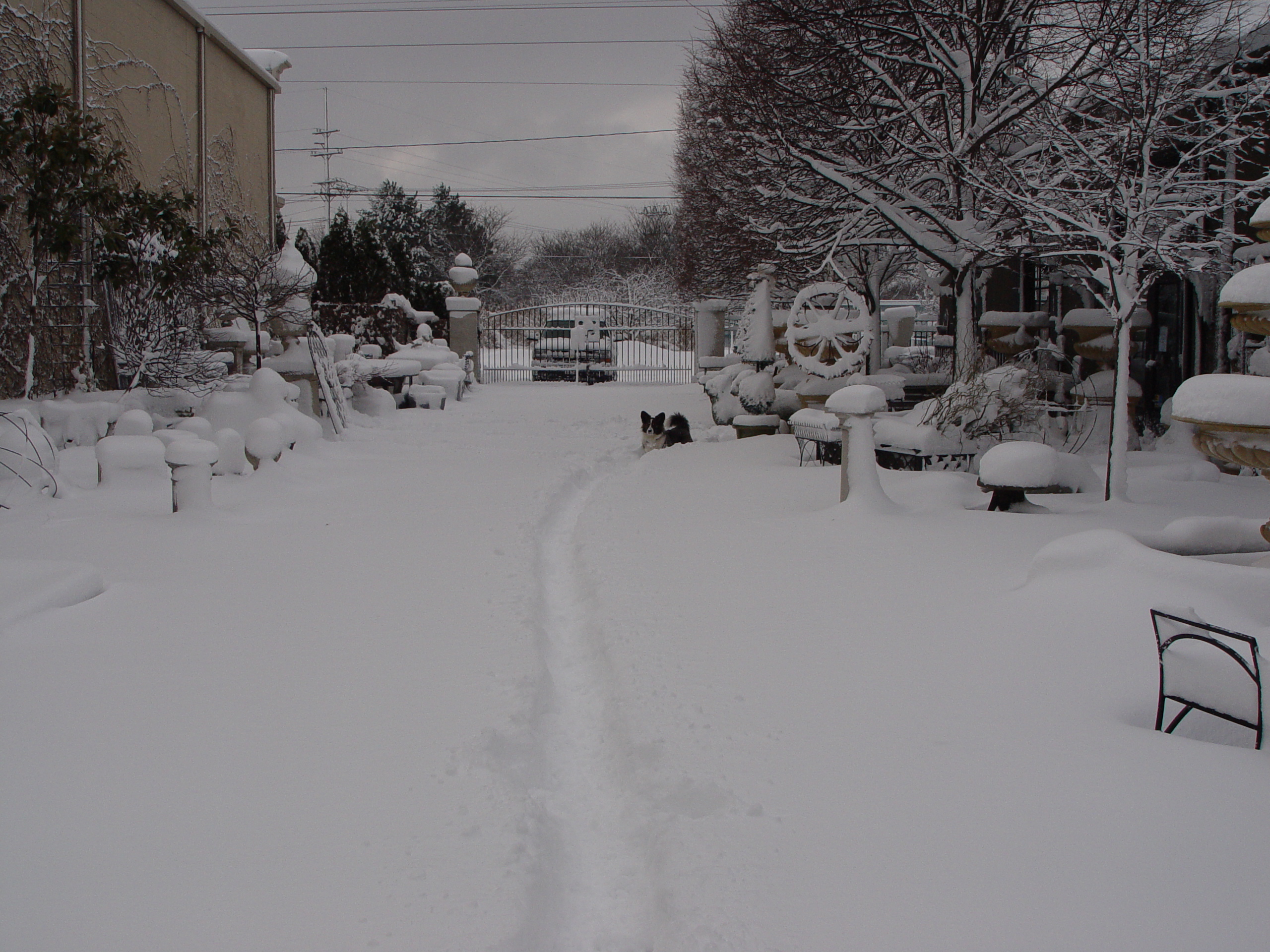
snow-day.jpgI know how deep the snow is the moment the corgi legs disappear-8 inches.  The snow we had last Friday-as you can see, just about 8 inches.  A decent show. Not at all like the overwhelming snow dumped on the northeast.  If you are digging out of 18 inches or more, you have my concern and sympathy.  However, our modest 8 inches transformed the landscape.  All the little bits and pieces close to the ground disappeared from view.  The shapes of the snow were governed by the wind.  All that could be seen-the big picture.

light-and-dark.jpg

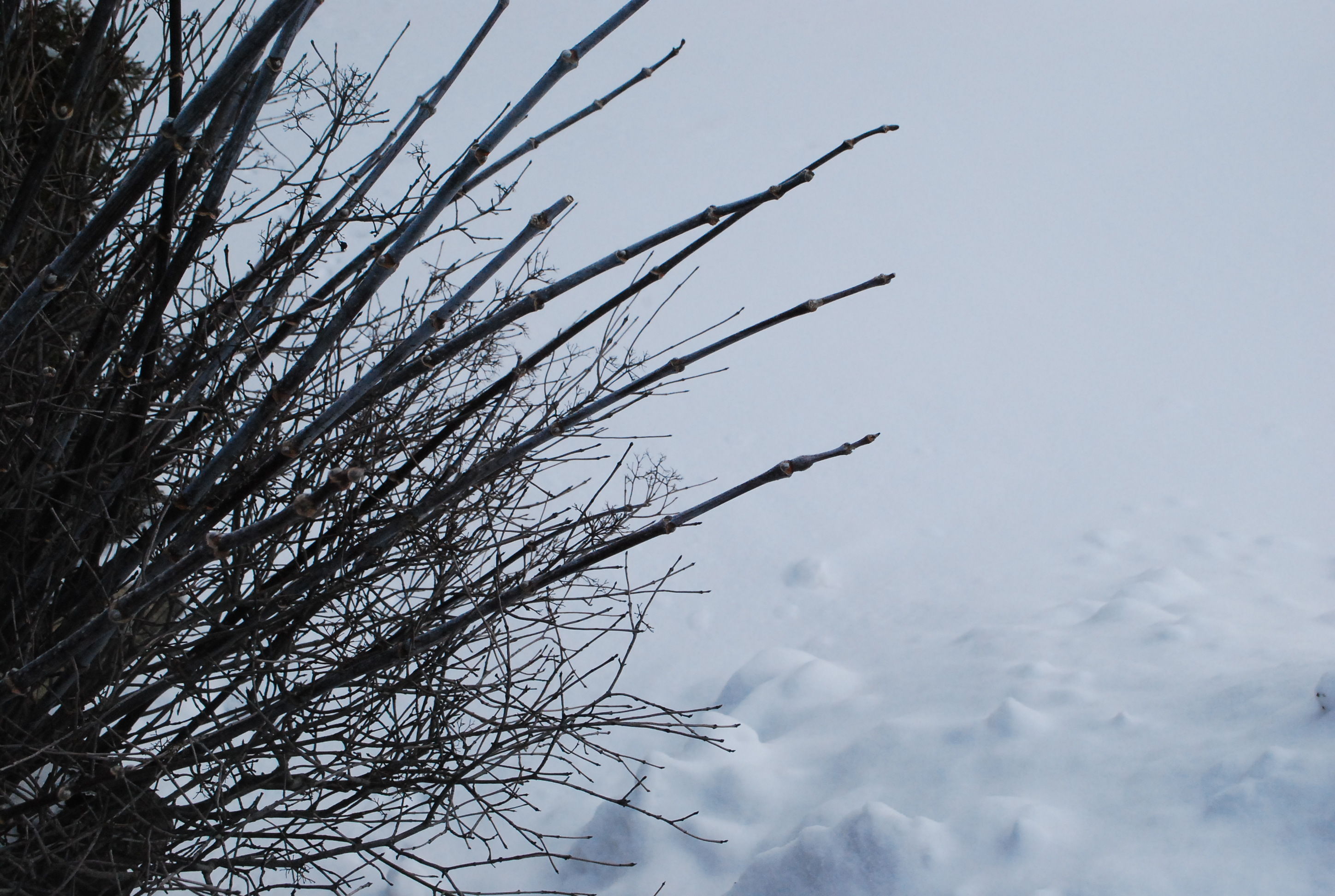
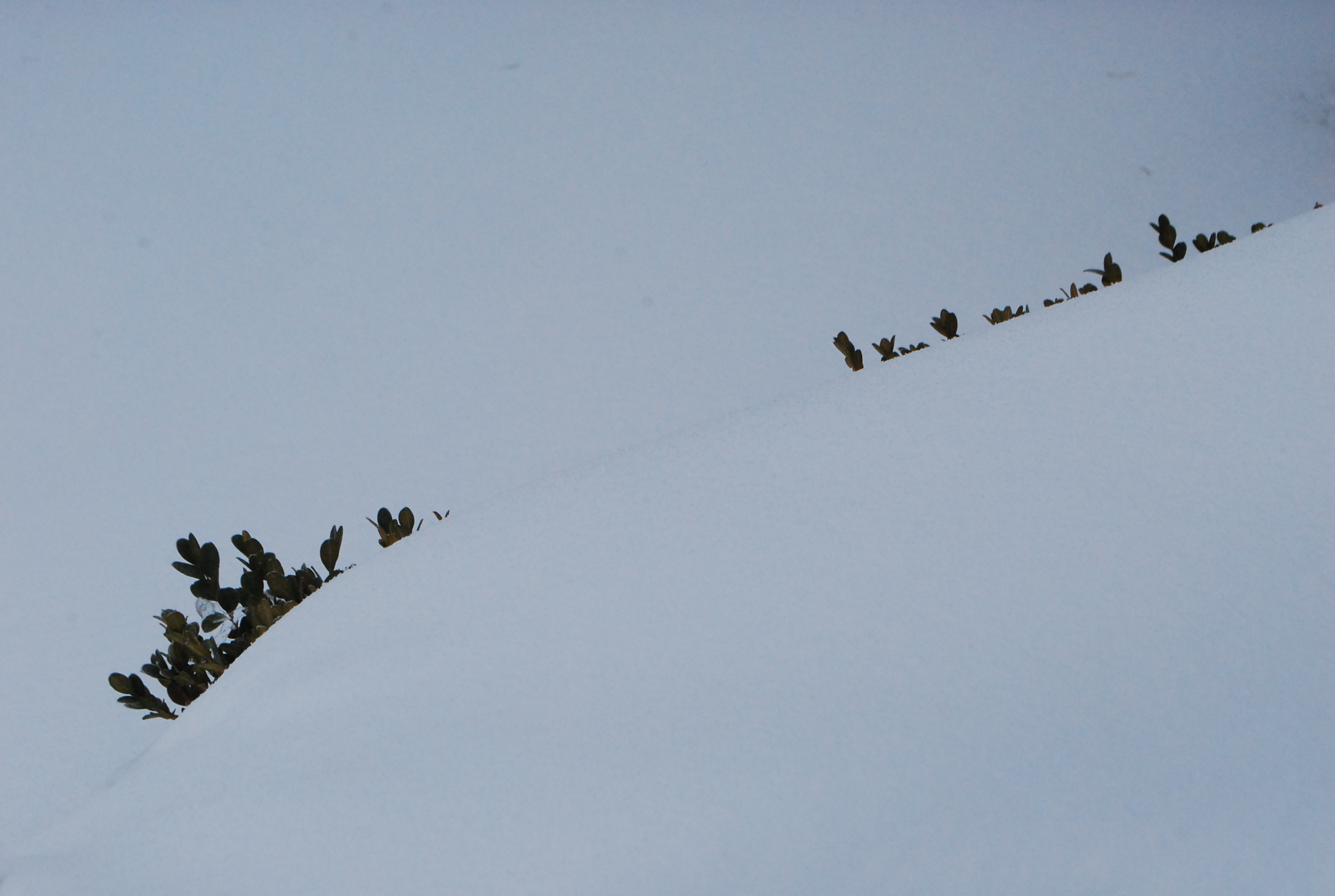
Much of what a good designer provides resides in their ability to focus on the big picture.  The simple picture- the important and pertinent picture.  This is not an easy or God given ability.  It takes work to develope an eye that sees like this.  I find my experience as a gardener, my long standing interest in design, and my abiding love for the natural world enables me to help clients-some clients better than others.   As for my own landscape-I am floored.  I can barely help myself.  I focus on the details that either don’t matter, or are too early in the process to matter. That said, I understand why people who love the garden enough to want good design call me.  A landscape is a big investment emotionally, and financially.  If you love it, and if you plan to put any amount of money to it, you can’t afford not to hire someone to help frame the big picture.  This recent 8 inch blanket of snow has me thinking about those issues.  The above picture has no scale or reference.  No relationship to anything else.  The twigs might be photographed against the sky.  Or the ground.  Where are we here?  A little visual vertigo is at work here.  landscapes without any point of view give me the same feeling.   The designed landscape is composed.  It has an idea.  It has stars and supporting cast members that interact.  It has a back story.  There is tension, rhythm and release.  There are places to be, places to see, and a mean by which to navigate both physically and visually.

shapes.jpg

Falling snow and wind creates shapes and spaces.  Plateaus.  Mountains-and voids.  Heavy snow creates a momentary landscape.  An utterly simple landscape.  The landscapes created by nature have plenty to say to those of us who design landscapes.  Great landscape design addresses shapes, mass, line, volume, texture, color-and use. Though natural shapes made by the snow are driven by climate, weather, ecology and topography, the design elements are the same.

line-in-the-snow.jpg

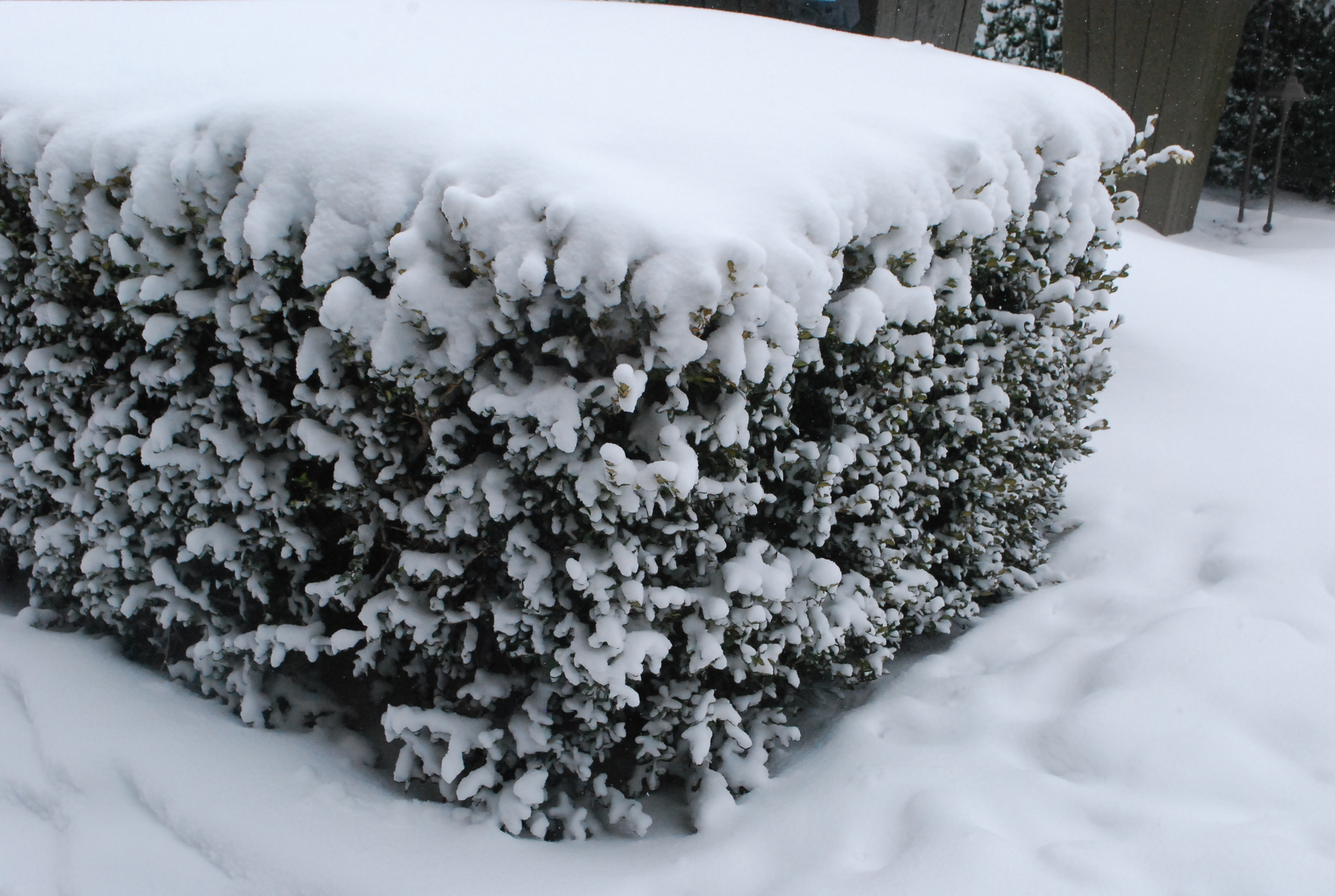
The back edge of my boxwood hedge had just a few sprigs showing after the storm.  It is easy to see the shape, even though most of the detail is buried in snow.  This photograph is graphic.  Black and white.  There is no visual description of the space.  No variation in color.  No shadows.  No point of reference.

described-by-snow.jpg

The snow that covered the base of this topiary form was just enough to describe what lies beneath it. The shadows and volumes describe a shape-and a space. There is visual interest.  How might this translate to the landscape?  A slightly sunken circle of groundcover will have much more visual impact than a circle of groundcover set at grade.  If you mean to install a circular shape, do it accurately.  Lopsided execution is irritating.  A circle of groundcover on a slope-be sure you intend to feature an ellipse.   A shape such as the snow describes here would have to be planted with a very finely textured and low growing plant, for the shape to read.

textured-by-snow.jpg

The thoughtful use of mass and texture in the landscape can create and sustain great visual excitement.  The smooth texture of the horizontal layer of snow in contrast to the interplay of snow describing the shapes of the leaves in the vertical-beautiful.  The upper mass of snow is connected to the ground level mass of snow by a vertical and highly textured shape.  This snow composition features volume.

circular-shapes.jpg

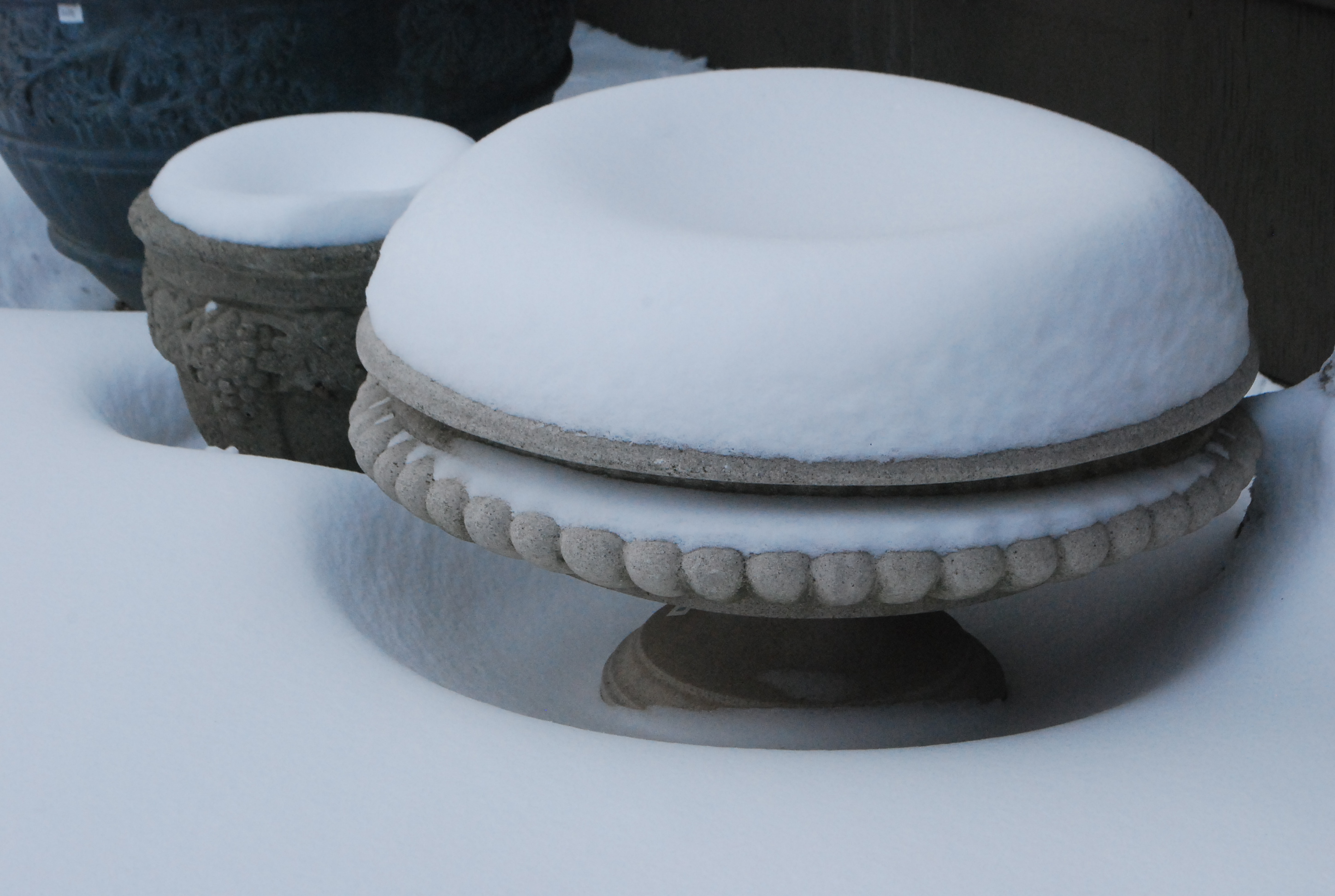
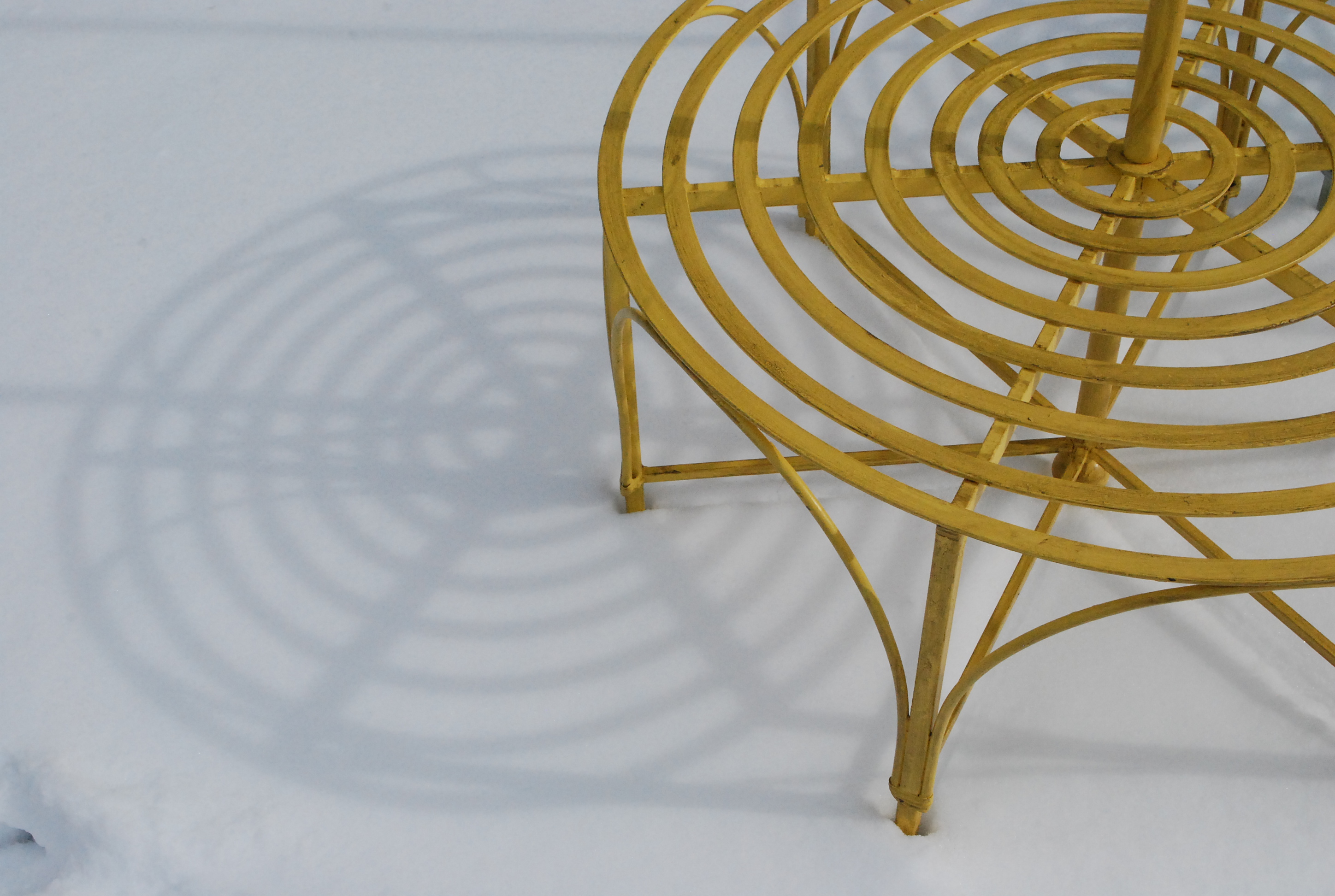
The repetition of shapes, or the discussion of a single shape, makes a stronger and clear statement.  This urn has several layers of circles.  One layer is defined by repeating spherical shapes.  The base is round.  The snow clings to the circular rim of the urn.  Your eye understands that the urn has a rim, and an interior well.  The snow in the center sank under its own weight.  The sunken shape-a half sphere.  The wind whipped the ground snow in a wider that perfect circle around the base.  There’s a visual discussion of circles and spheres going on here that is striking.

layered-space.jpg

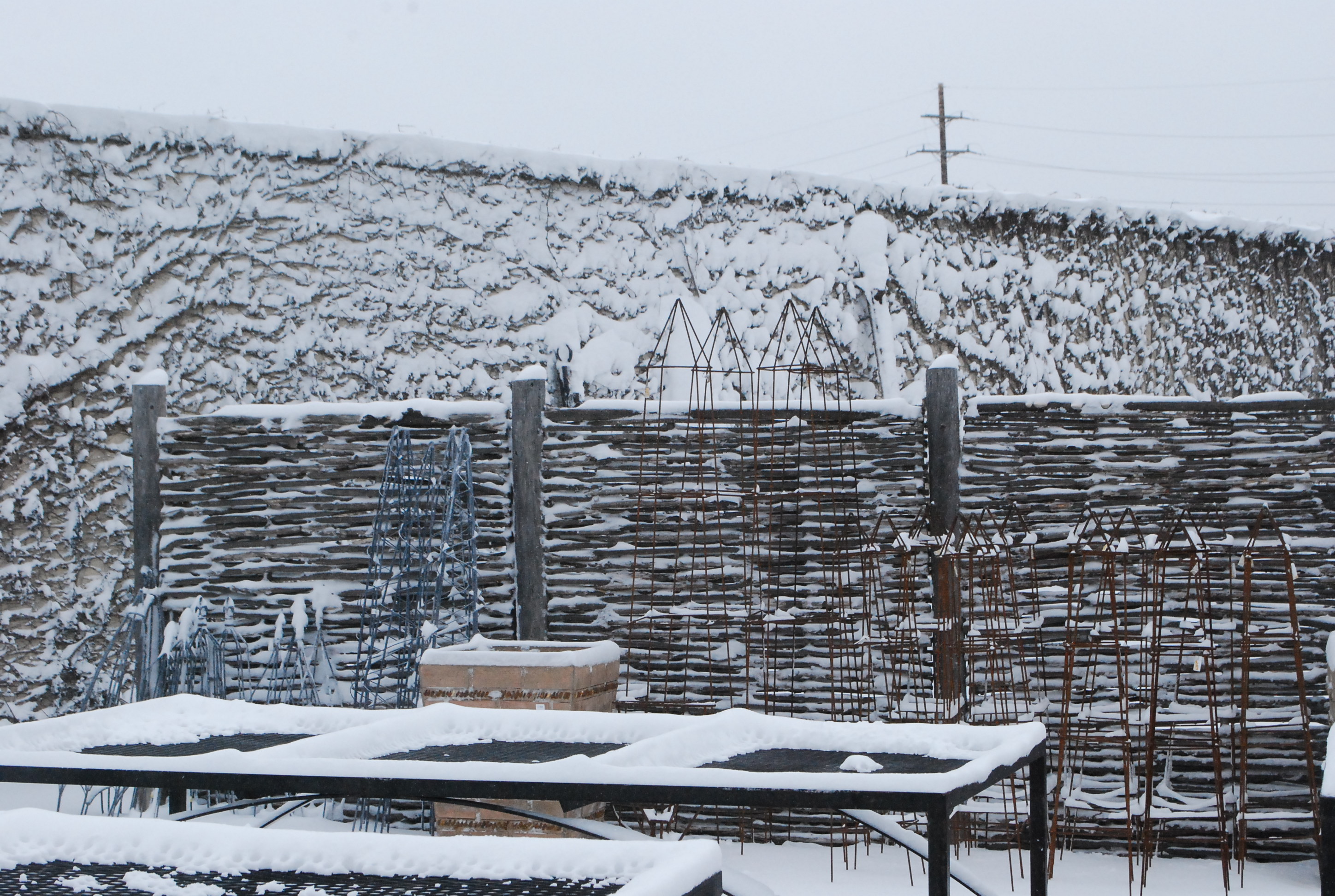
The relationships between shapes, masses, lines, textures and space is made so clear by the snow.  I know what walls, fences and tables are.  I know what objects these words describe.  But the snow makes me see them as shapes.  I know that the partial table is near to me, and the wall is further away.  And that the electric pole is very far away.  God landscape compositions make a visual description of the space being viewed.  Though it is very hard to describe in words how a composition can be spacially rich, a snow storm can help me see it.


color.jpg

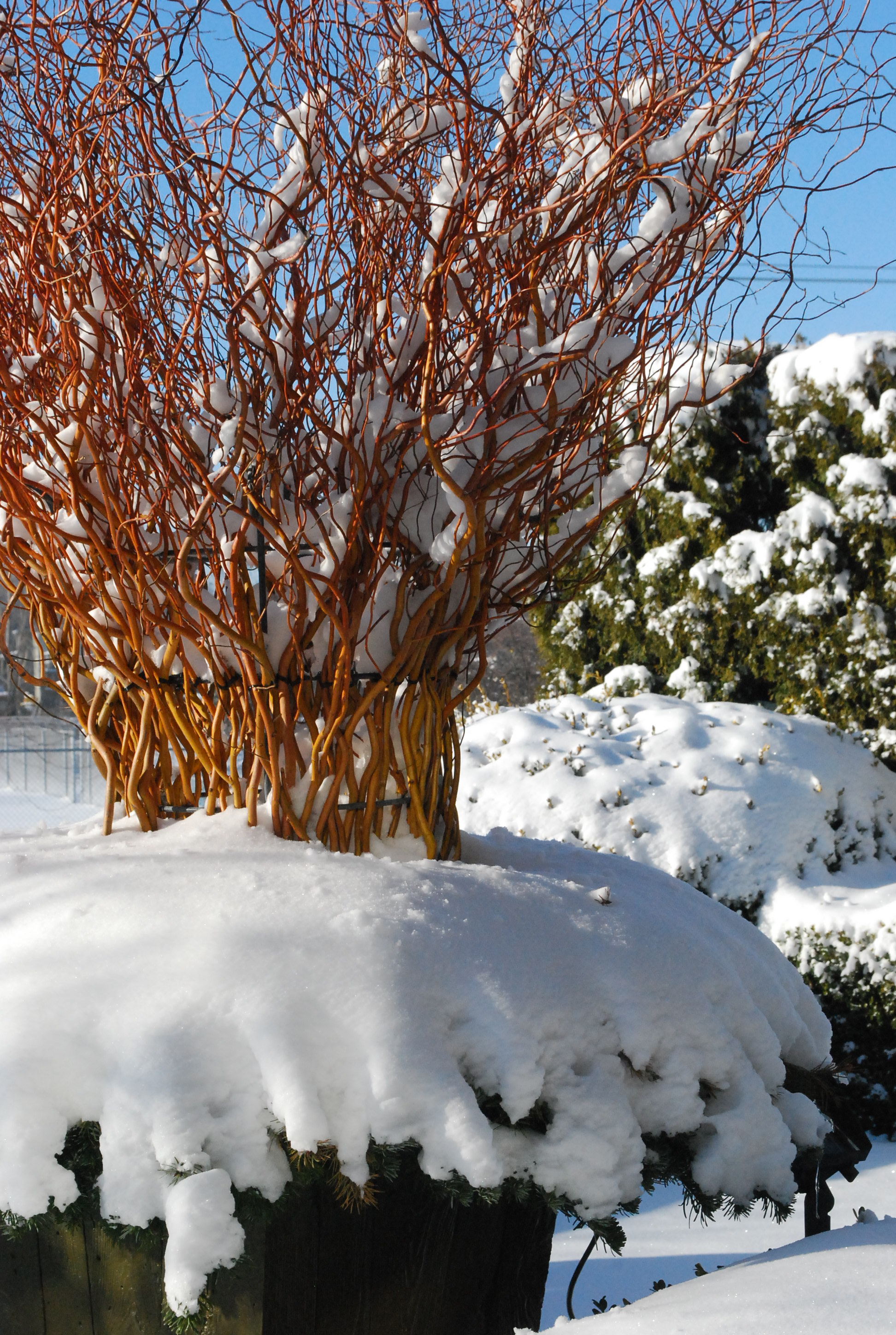
Color is a very important element of the landscape.  How light affects color is an equally important element.  The blue sky behind the copper willow makes that willow glow.  The blue sky relates to the blue shadows on the snow.  The out of focus blue gray fence in the center left of this picture helps the composition to work spacially, edge to edge.  Edge to edge?  This picture has 4 sides that frame the view.  There are many ways of framing a landscape view.  Trees.  A pergola.  A pair of pots.  A fence with its gate open.  Framing the view is an invitation to enter, and interact.  Where would you frame the view?  Up close?  Far away?  These are decisions that need to be made deliberately.

surface.jpg

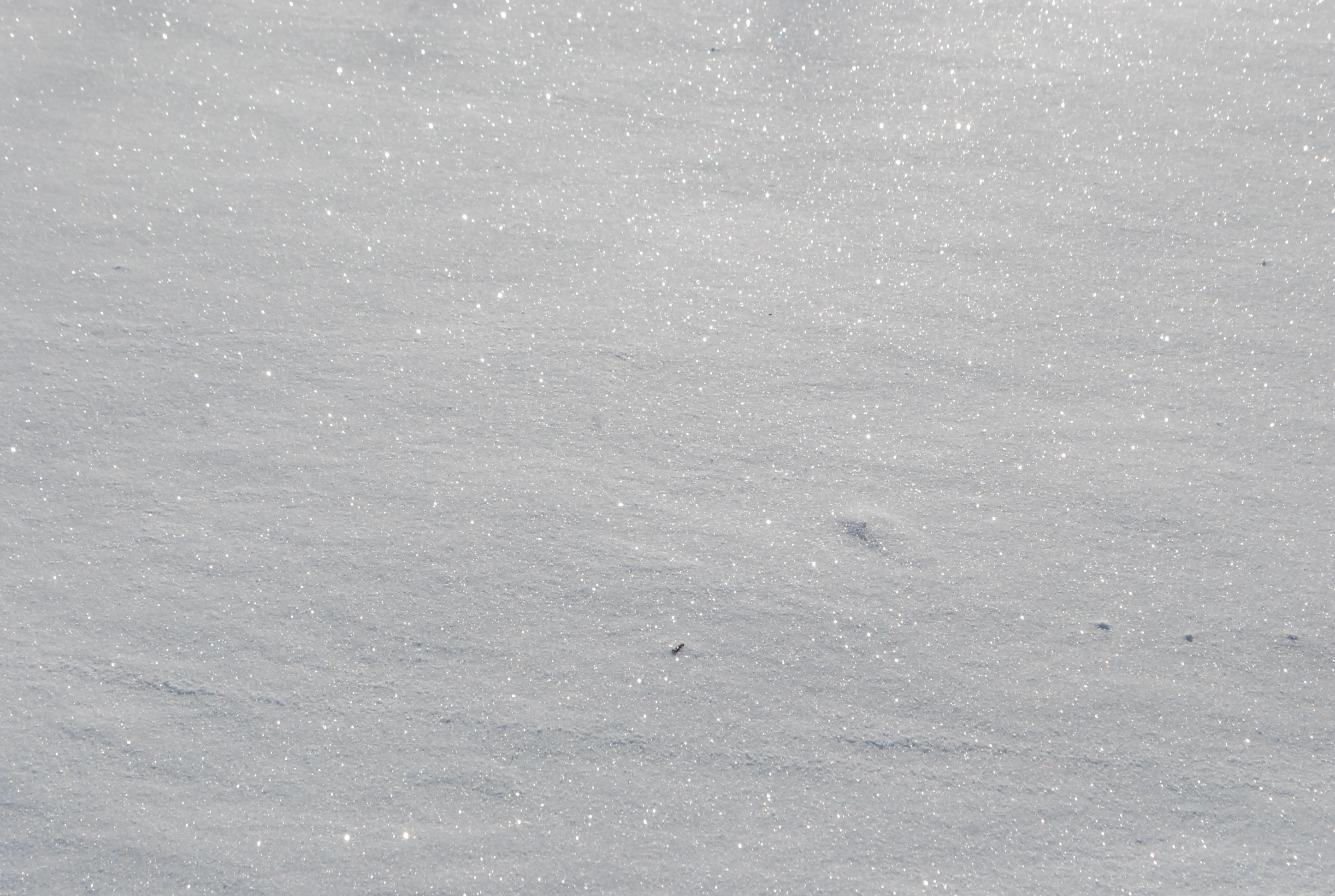
So many elements in the landscape have interesting surfaces.  In this case, snow reflecting the sun.  Stone, leaves, sky, flowers-every element in the landscape has a particular surface.  The relationship of one surface to another tells a story.  All the same surface-as in what was created by the snow we had-enchanting for the first three days, and thereafter monotonous and stifling.

repetition.jpg

Checking out the compositions created by our snow-engaging.

echo.jpg

It does make me really crabby if the mailman walks across the snow in my front yard to get to the mailbox.  I actually asked him to use the sidewalk.  I am sure he thought I was nuts, but I don’t care.  Experiencing that snow exactly as nature engineered it is the best part of the winter season.  I do not disturb any snow unless I have to.  Who knows how many days it will take for the visual lessons to sink in.

path.jpg

If you are digging out, I am sure you are thinking about the most efficient way to get from one place to another.  Milo is pretty good at designing paths.  His snow paths have to do with how fast and efficiently he can make the left turn coming out of the front door, to a destination down the driveway.  That curve is is particular to him.  In much the same way as a landscape design is particular to a certain gardener.

Monday Opinion: The Editors In Chief

Editing is a very important element of design.  Given a manuscript for a book, an editor may make suggestions about how to distill the message by editing the text.  An idea which takes too many loose and wandering paragraphs to fully explain will only appeal to the most devoted and hard working of audiences. Ideas that are simple and well crafted get attention.    

All of those distracting visual and written elements need to be swept off the page.  Clear, direct, concise, organized and distilled makes for a strong presentation. Distillation makes grappa, moonshine, and port much more potent.  Potent can refer to a taste, a smell, an idea or a vision.  A fully staged production of a ballet, a string quartet,  an opera, or play-visually potent.  One small painting by Lucien Freud could fire up, light up, an entire museum gallery.   

The written word can be especially potent.  A novel that is convincing and believable is a world unto itself, quite unlike any other world.  I am sure those sentences crafted by great writers have undergone numerous revisions.  When I read a novel, I am enchanted by the world that unfolds.  I am not privy to the editing.  While that process is interesting, I like a composition that at least makes reference to a finish. The visual word can be just as compelling.  A landscape that seems scattered and tentative might benefit from editing.  Getting rid of this, or grouping these with those, can help make a clearer and stronger statement.  Of course I have a point of view here.  I am drawn to landscapes that are simple, yet manage to aspire to the mysterious, the romantic, or the austere.  A critical eye put to every aspect of a plan from the grading to the plants to the planting gets rid of every element that is not essential to the design narrative. 

Who edits for me?  Clients, of course.  Clients have busy lives, and very real concerns.  They are the most important part of the design process.  Friends and children have an uncanny ability to spot a weak moment.Colleagues on whom I depend can spot trouble.  Close to nothing gets by my landscape superintendent.   They encourage me to edit my plan, for the sake of a clear and clean installation.  I can depend upon them to edit.  And then there is the editing from nature.  That is the toughest exam any design will ever face.