The Dogs At Chase Tower

holiday-dogs.jpg

My company Detroit Garden Works is in the garden ornament business.  We buy and sell ornament for the garden – new, vintage, and antique and repurposed, from sources in the US and Europe. What is a garden ornament?  Any object deliberately placed in a landscape or garden.  This definition would include pergolas, sundials, sculptures, bird feeders, benches, trellises, staddle stones, topiary forms, grapevine or stone spheres.  Fountains and water features.  Found objects, fencing, topiary plants.  Espaliered trees, arbors, and stone cisterns.  Tables and chairs.  Rain water collection barrels and boot scrapers.   Containers are garden ornament.  They may be handmade Italian terra cotta, or galvanized buckets.  They may be old apple or tulip crates.  They may be contemporary Belgian stoneware, or cast stone versions of classical garden urns.  They may be lead, or steel containers from Branch.  They may be concrete, or wood, or cast iron.
holiday-decor.jpg

A garden ornament may be as modest as a gazing globe on a steel stand, or as elaborate as a waterfall and pond.  No matter the subject or scale, a garden ornament makes a statement about the taste and interests of gardener in charge.  The inclination to ornament or decorate a space is natural.  People decorate their houses with objects that help to create that atmosphere which feels like home.  How a home is furnished says something about the taste, values and priorities of the person who lives there.  There may be objects treasured for their history.  One person might decorate their place with art, and that art could be sculpture, or paintings, or quilts or hand painted china.  Buck collects vintage doll heads, typewriters, scientific instruments, and accordions.  His personal spaces are just like him, as they reflect who he is, and how he sees things.

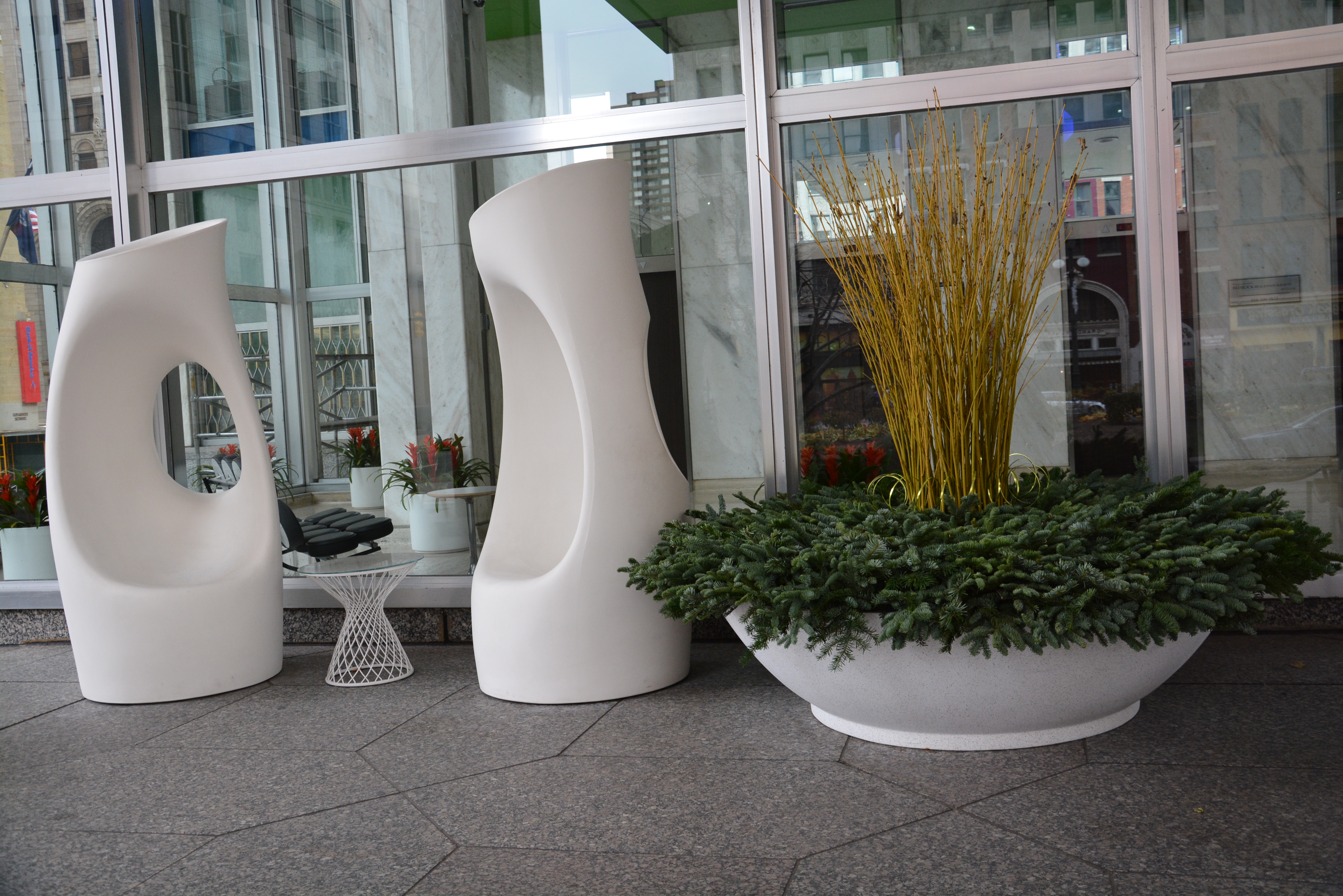
the-dogs-at-Chase-Tower.jpg

A landscape or garden is no different.  A garden endowed with ornament says something very personal about the garden maker. An ornament can infuse a landscape with an atmosphere of history, mystery, or whimsy.  There are no end of gardens where roses are growing.  But the garden that has roses growing in profusion over a picket fence has a much different feeling than the garden that features roses trained as single ball topiaries, planted in orangerie boxes. A 19th century cast iron bench is not just a place to sit.  It is an expression of an aesthetic much different than what is created by 3 rough hewn slabs of granite assembled as a bench.

winter-setter.jpg

So why this discussion of decoration?  Once the plants in the garden shed their leaves and go dormant, a landscape with no ornament can be bleak place indeed.  I am thinking about this, as we have just begun our winter and holiday decorating.  Topiary forms, arbors, and pergolas will get lights wound around them.  Doorways will be festooned with garland.  Containers will get winter coats and hats.  Wreaths will be decorated, and hung on the front door. Lights in every shape and color will be hung from the eaves, or stuffed into the pots.  A bench will get a cushion of fresh greens.  The trees will be hung with grapevine and light garlands.  A Japanese maple decorated with glass drops will glitter all winter long.  A sundial will get a wreath boa.
airedale-moss-dog.jpg

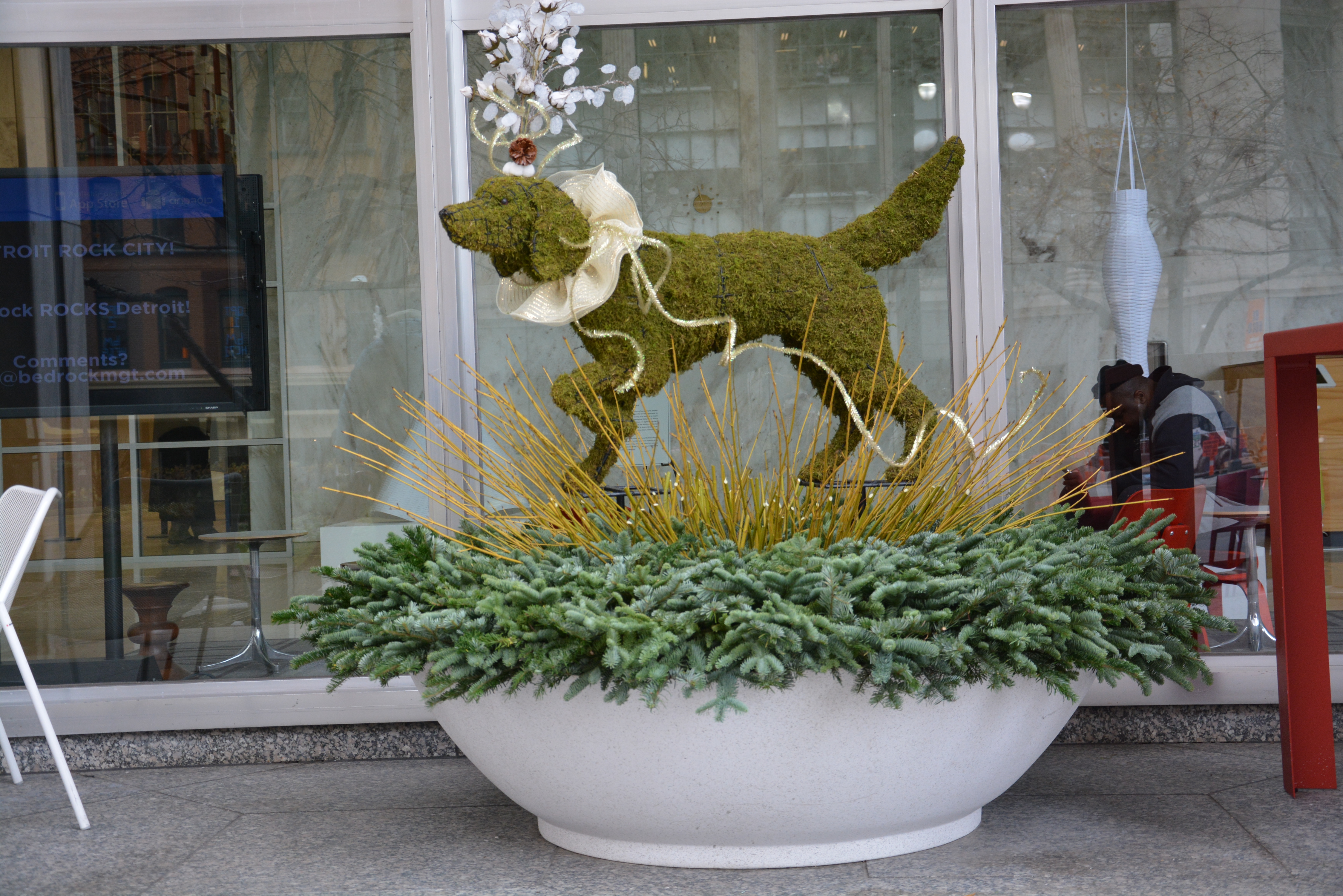
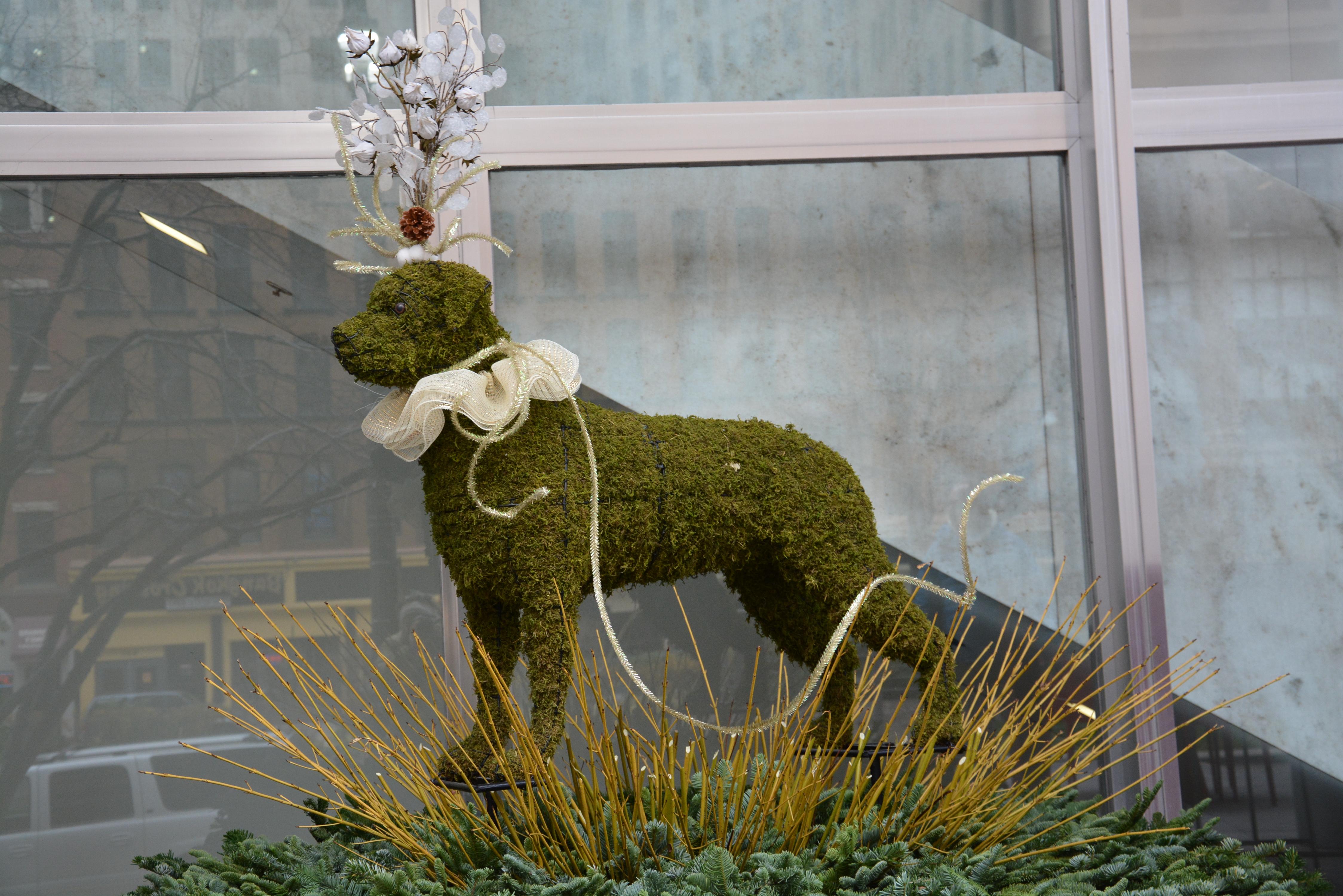
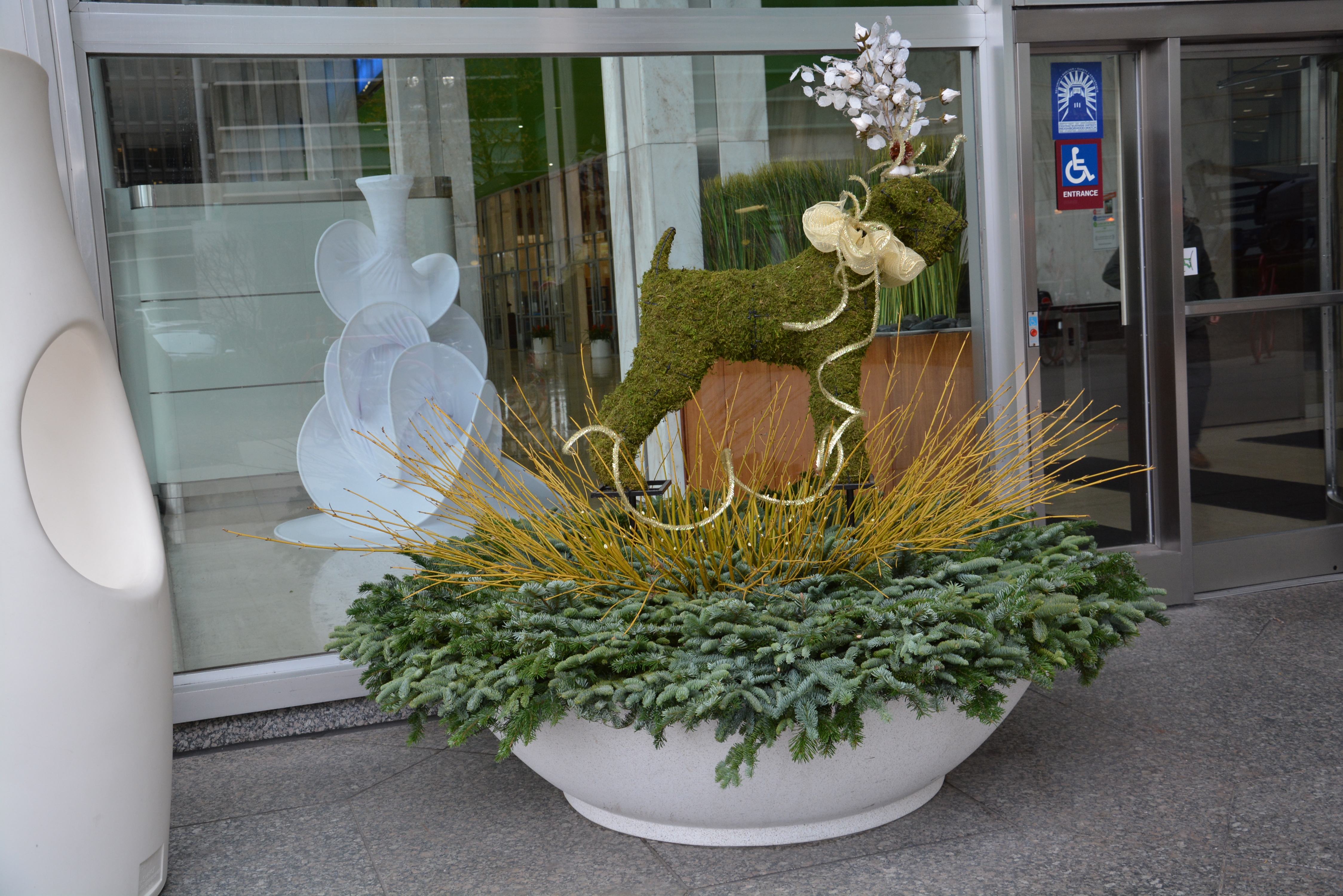
As for the dogs at Chase Tower, they have a carpet of greens.  The dogs look like they have just paraded through a stand of yellow twig dogwood, their leashes trailing behind them.  They have topknots and collars that are one part holiday, and 2 parts winter.  Is this really what was in my mind when we decorated these pots?  Yes.  Decorating that tells a story will have an impact.  There is an amusing and charming story being told that will make the winter a little easier to bear.

winter-dog-detail.jpgSee what I mean?

holiday-container.jpg

I do see the decorating outdoors for the holiday and winter as a form of gardening.  A trowel or garden spade is useless this time of year.  The sight of them on the shelf, dusty rather than dirty, is irritating.  On the other hand, a pair of pruners and a spool of good garden twine might be all the tools you need to decorate the garden for winter.

moss-chow.jpg

Woof!


The Morning News At Branch

shipping-cradle.jpg

first-crate.jpg

corners.jpg

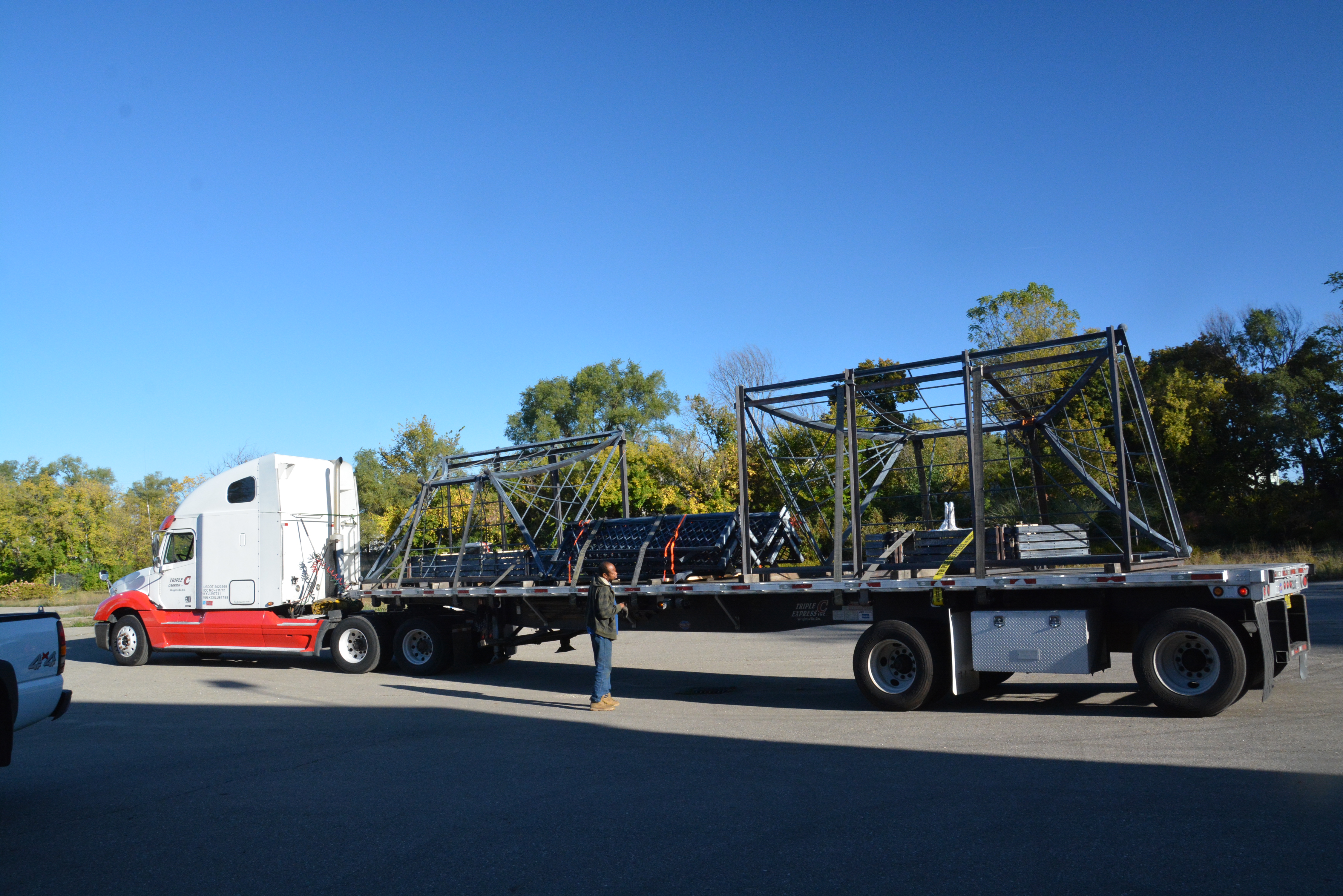
loading-the-pergolas.jpg

corners-loaded.jpg

roof-crate.jpg

loading-the-roof.jpg

last-crate.jpg

ready.jpg

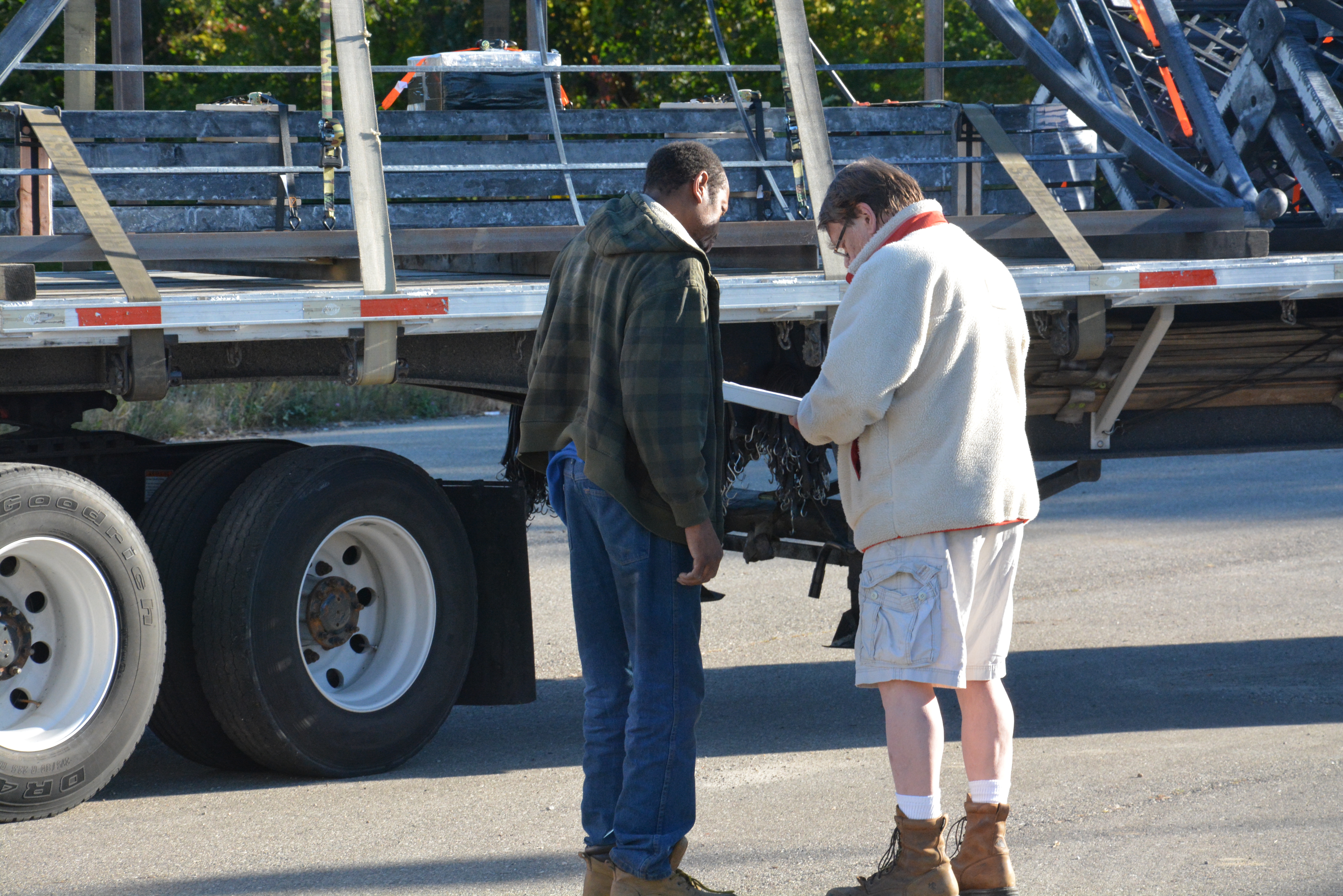
the-papers.jpg

thanks.jpg

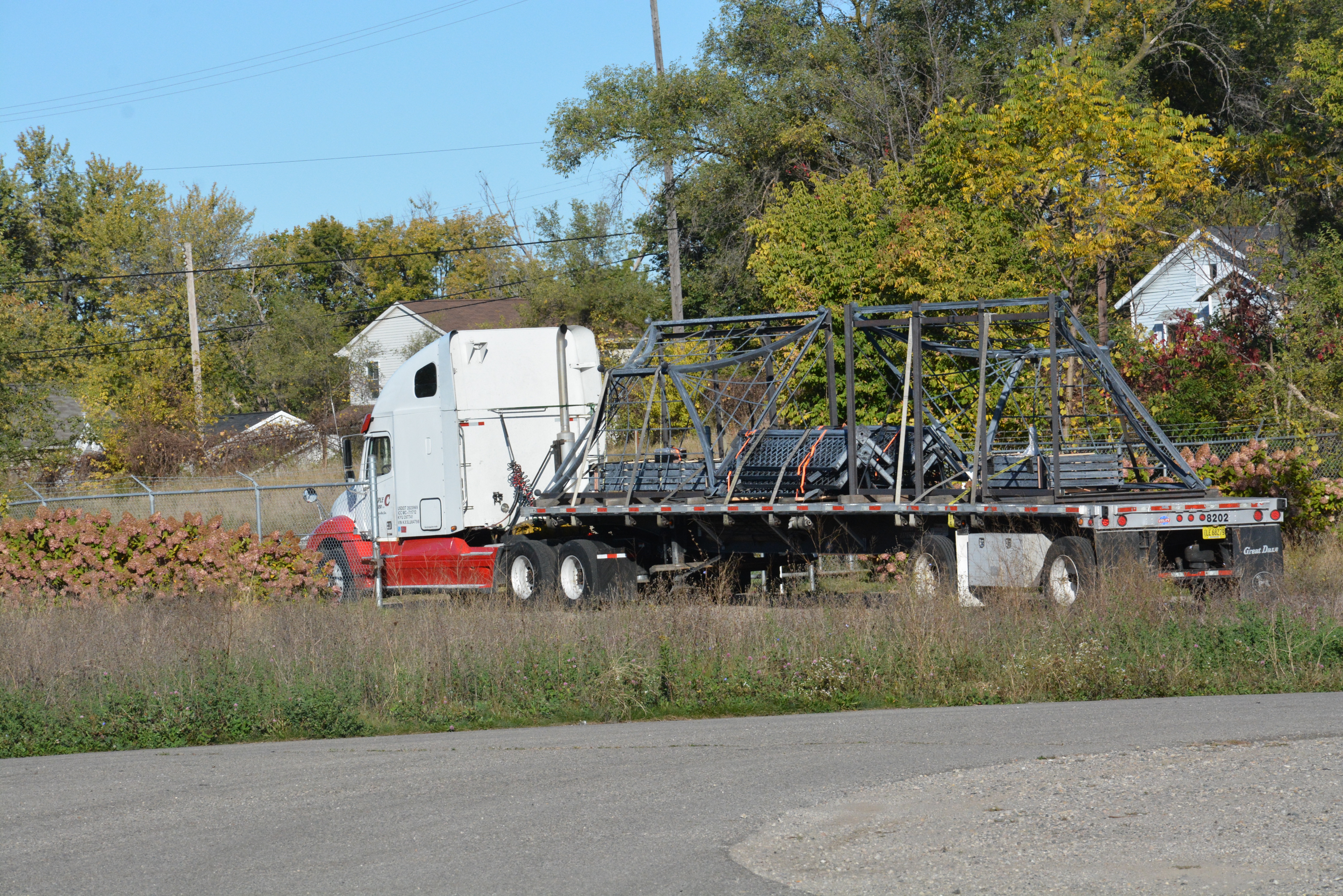
bon-voyage.jpgbon voyage.

A Small Space

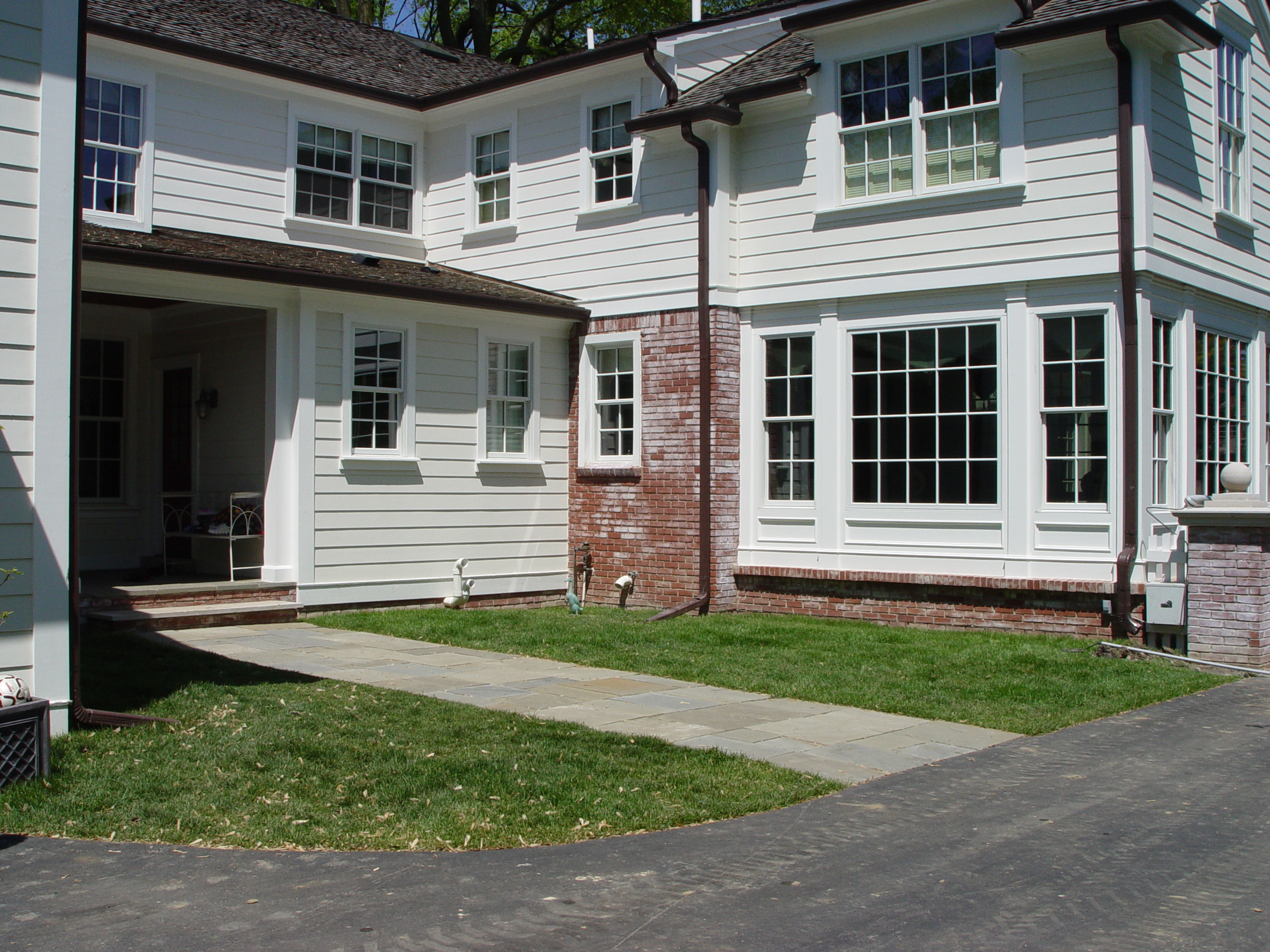
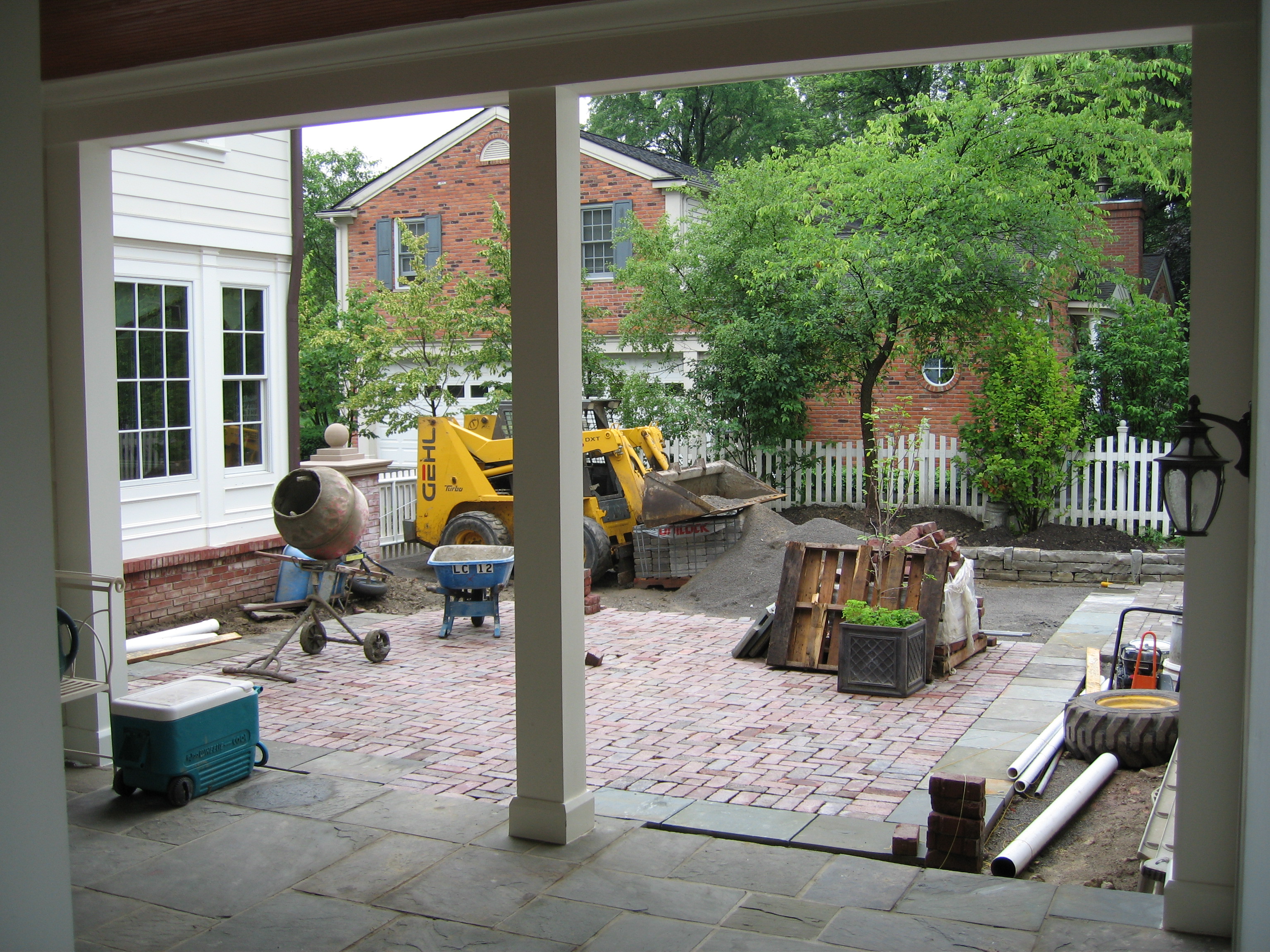
Everyone is plagued by it.  An awkward or small space.  The space that is what is left over after the invention of a more important space.  A closet, or a kitchen cabinet that is deeper than your arms are long, or way over your head.  The airspace underneath the stairs that asks for a piece of furniture that has yet to be imagined, much less made. The above picture details the problem.  A portion of the driveway on the way to the detached garage maroons a small space.  The overscaled bluestone walk to the side door chops the small space in even smaller bits.  On view, the dryer vent, the automatic gate mechanism, a hose bib, exhaust pipes, and a roof drain.  The windows are both high and low.  The two story house looms over this little space, as there is nothing going on at grade that would ground the eye.    

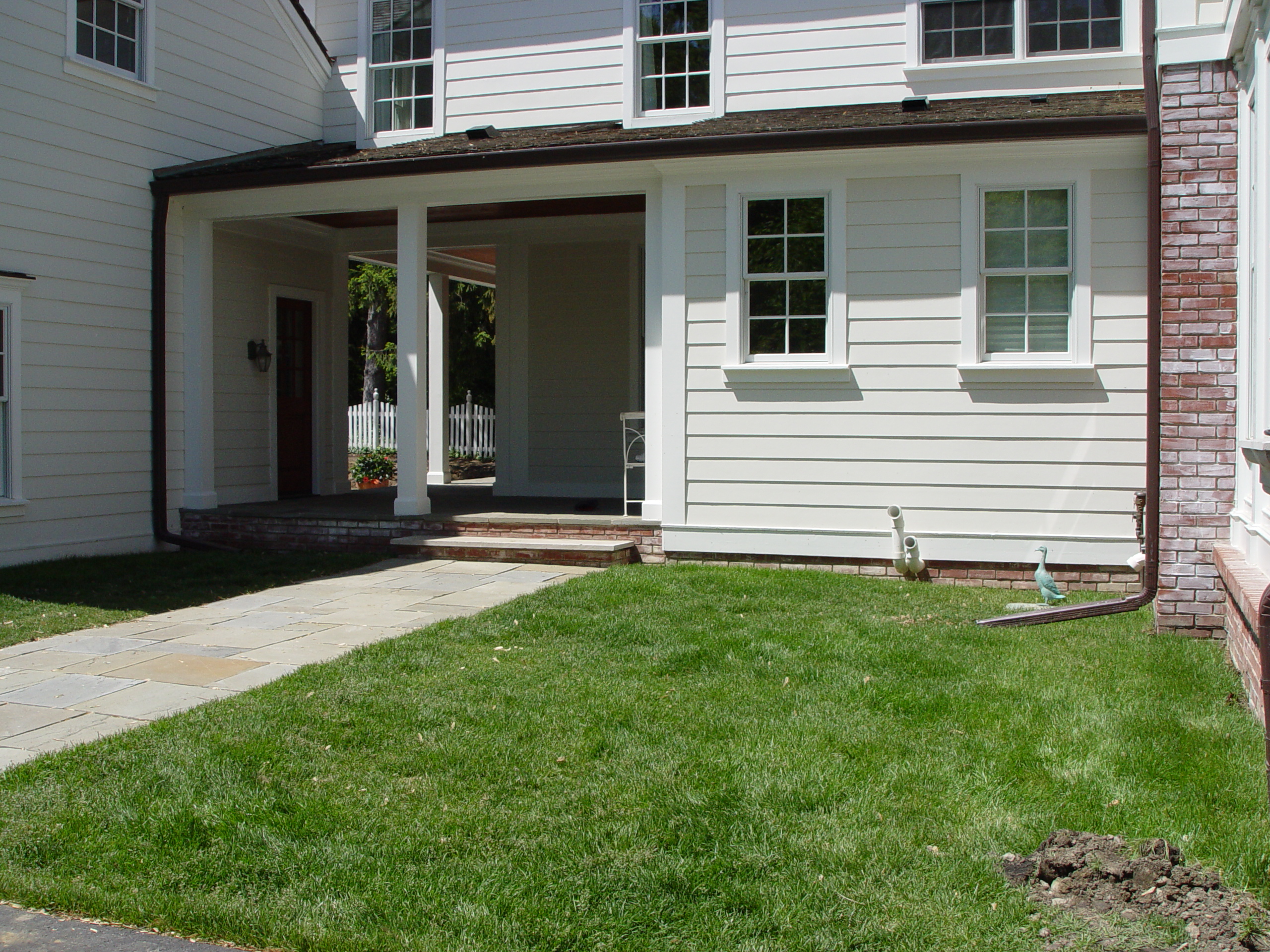
The view in the opposite direction tells the rest of the the story.  An L-shaped covered walkway to the garage that wraps around into a covered rear yard porch has produced this small but highly visible space.  No doubt this is a daily drop off or drive by.  The bottom of the garage window barely pictured on the left, is within 12 inches of the ground.  Given the numbers of different materials and angles and shapes, no wonder my client grassed over the ground. 

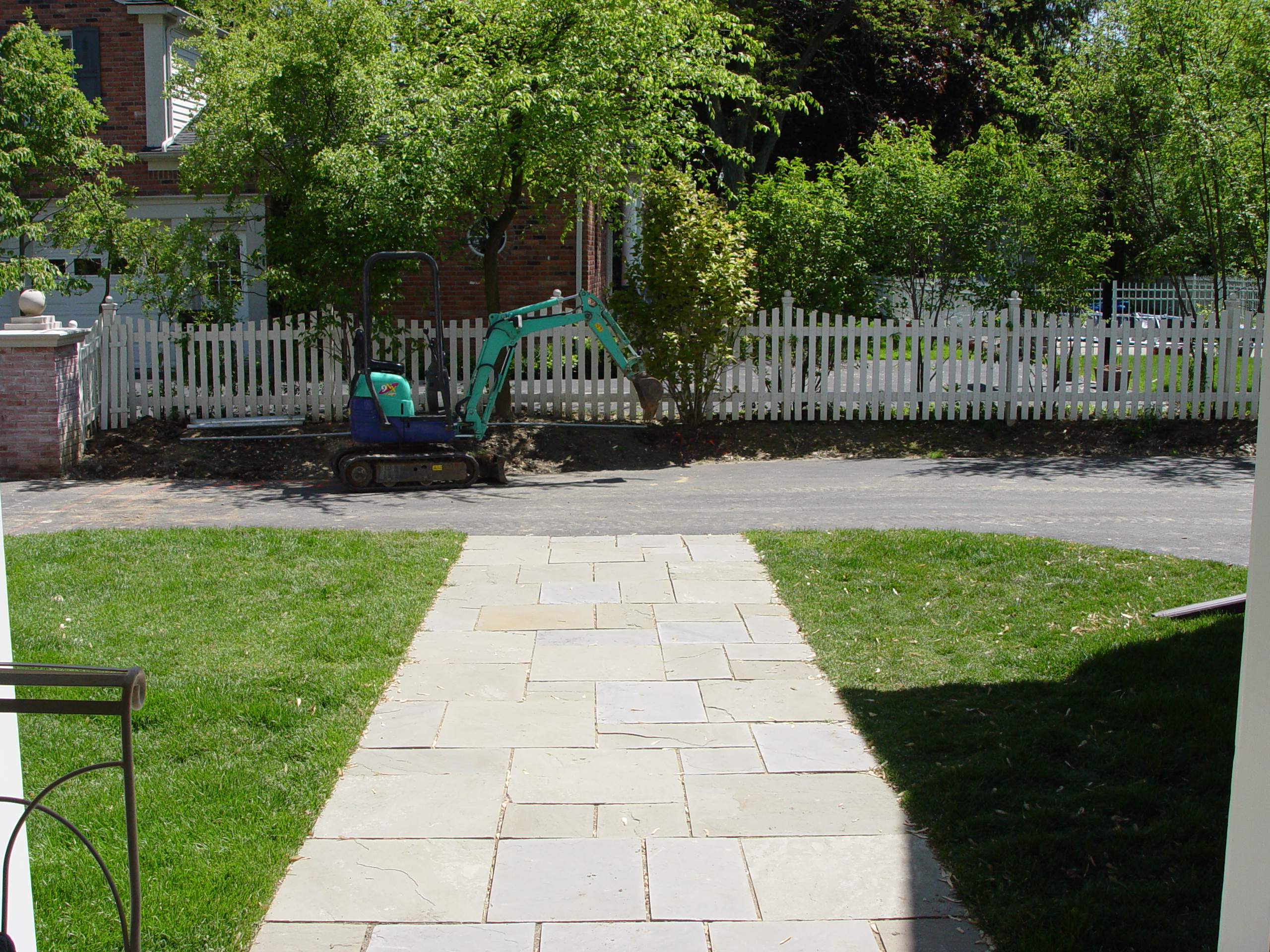
A driveway is a utilitarian gesture meant to easily accomodate motor vehicles coming and going.  It is rarely the most beautiful part of a landscape.  It is a necessity that frequently follows the fastest and most direct route from the street to the garage.  That does not mean that short trip cannot be a visually interesting one.  Given that the driveway comes so close to the house, it seemed like a good idea to pave it with a more architectural and beautiful material.  The proximity of the driveway to the fence line behind it presented another problem.  What landscape gesture could possibly be made in a space this shallow? 

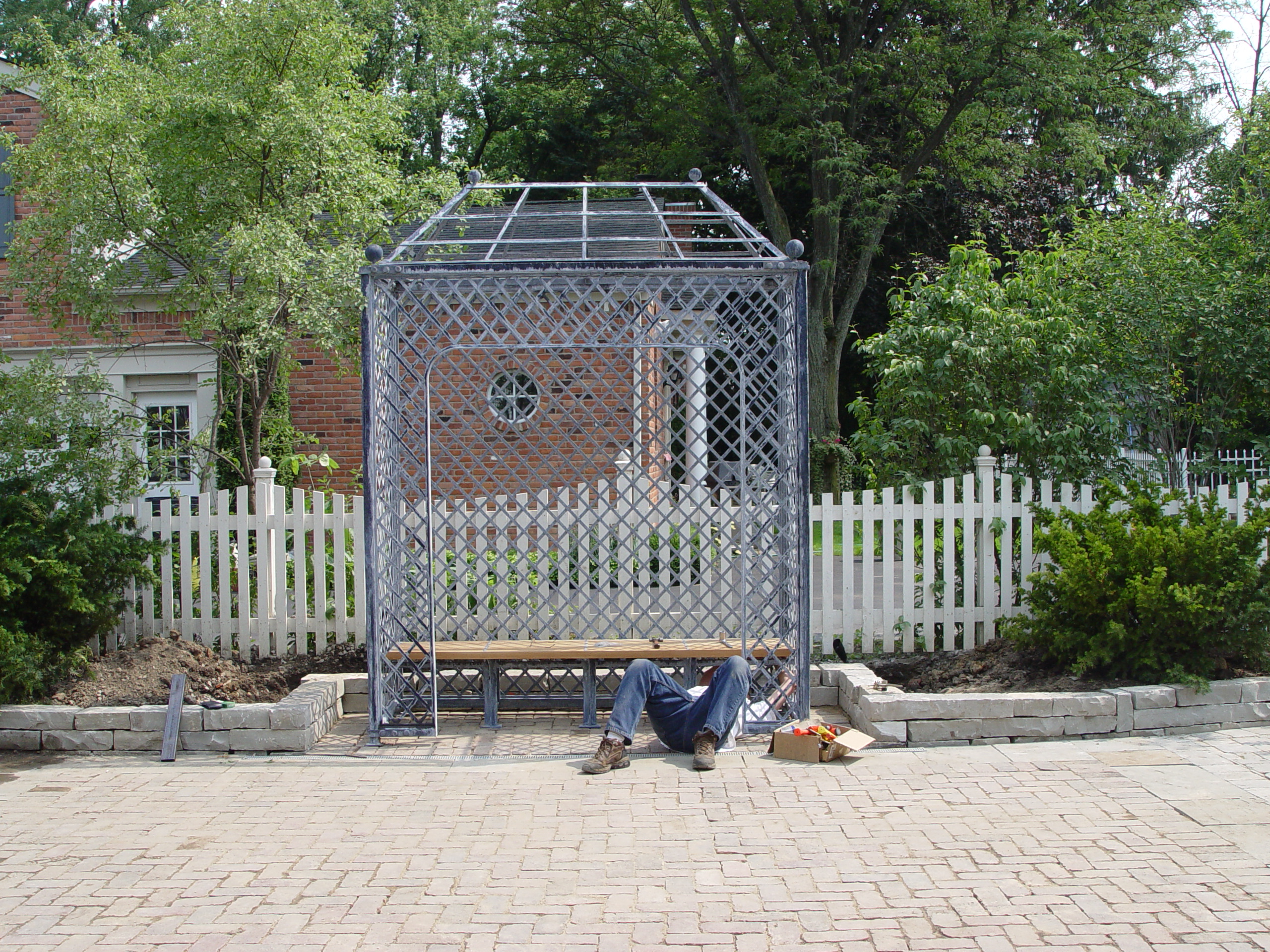
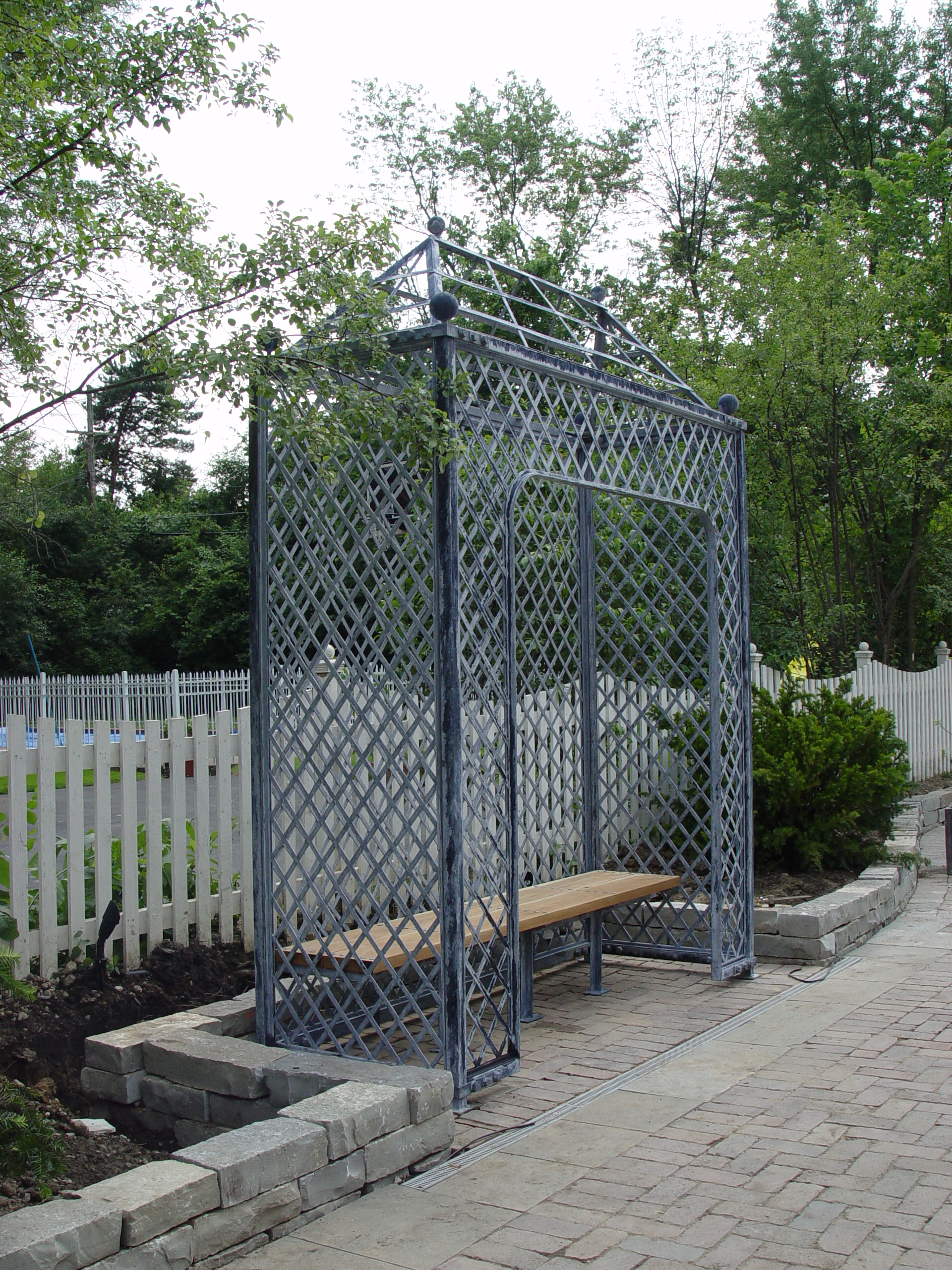
Sandwiching plant material between the driveway and the fence seemed like a short term solution at best.  Anything large enough to screen the property and garage in the neighboring yard would not like growing in such a restricted space.  The space directly opposite the porch steps was the narrowest spot.  We would try some multitrunked yellow magnolias.  But for the narrowest space, we built a car stop.  A smaller and more handsome version of a bus stop.  The steel lattice would screen the neighboring yard from view.  A bench would be built that oriented the view towards the house. 


This existing asphalt drive was removed in favor of a brick drive in a herringbone pattern. A herringbone pattern interlocks securely, and can handle vehicular traffic.  But the big move was to remove the grass and bluestone walk, and build a brick terrace that exactly matched the new material and pattern of the driveway.  This stubbornly unlovely spot has become a rather spacious terrace, thanks to the square footage added from the driveway.

An oak bench was installed inside the car stop. 

A brick landing for the car stop was built at the driveway grade.  A low dry stack stone wall would  permit the maximum width and depth of soil space for a pair of shrubby magnolias.  Amazingly, the house and driveway had been originally set below the grade of the perimeter of the property.  There were water problems.  Quite a bit of drainage work had to be done here.     

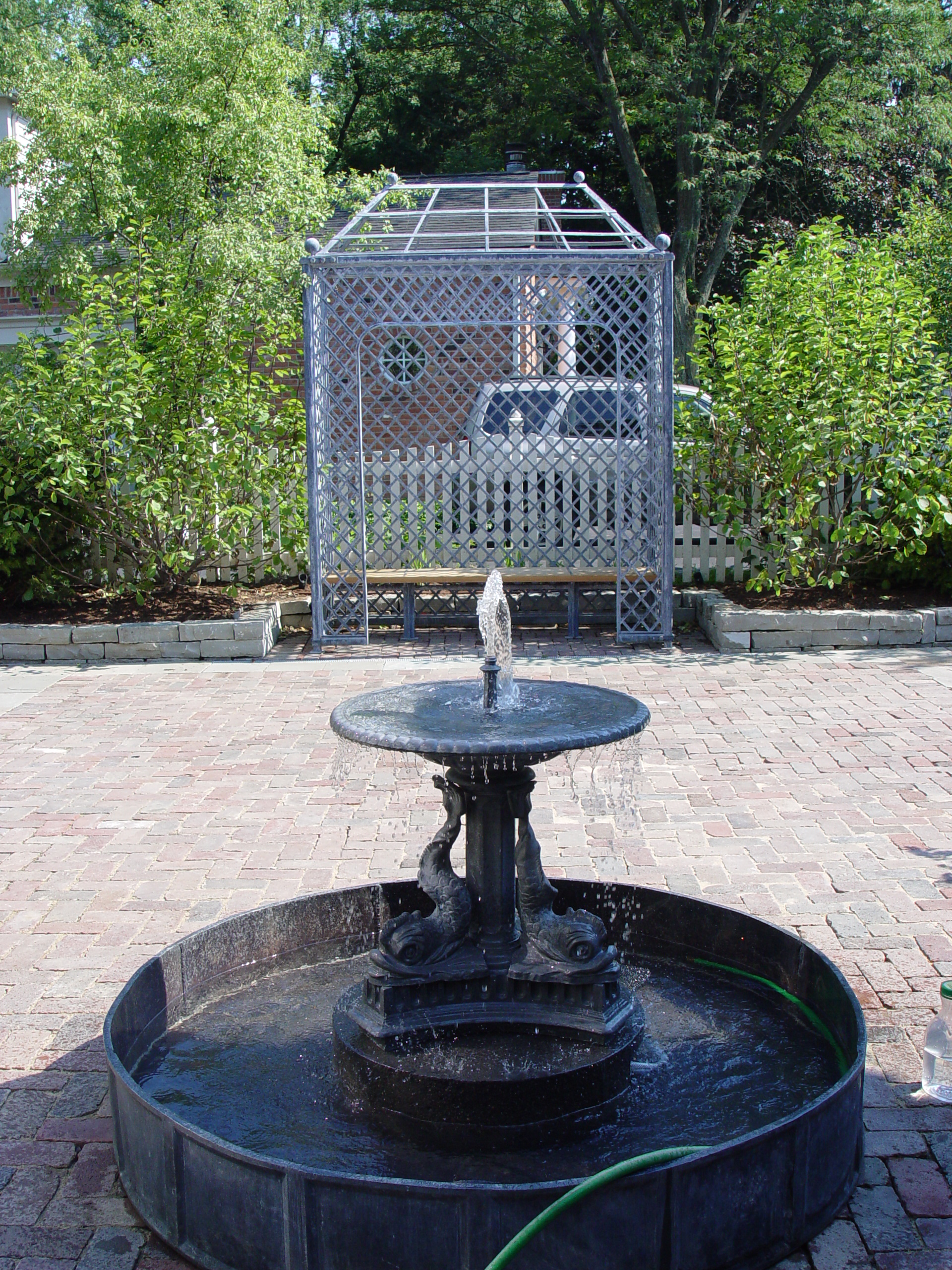
An English lead fountain with all of the supply lines running under the terrace was centered in the space.  The view of the neighbor’s car is not quite so prominent.  Once vines grow over the car stop, it will fade even further from view. 

The perimeter was planted with a row of large taxus densiformis, and nothing else.  They seemed to work well with all of the varying heights of the windows.  The bluestone from the walkway was repurposed to provide an edge for the brick terrace. Immediately, there was a good spot for another bench.  Who knows what other ornament or pots might be added later.  What once was an awkward space has become a market square of sorts for this family’s comings and goings.    


Structure


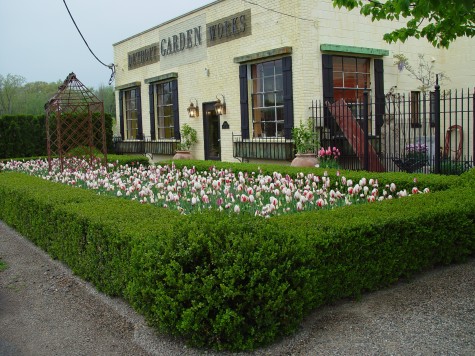
Structure in a garden, whether formal or informal, symmetrical, or asymmetrical, visually subtle or strong, is a very important element of garden-making.  A structure implies some element that is enduring.  The most elaborate sand castle will wash away with high tide.  Concrete that is not steel reinforced can crack.  A house of cards can be blown over.  Regularly, certain elements in my garden are blown over.  The annuals last but one season.  The hyssop peters out.  Roses and lilacs without regular maintenance age, and fade.  But those plants that provide structure-the evergreens, and the trees, endure, and grow to a great age.  This boxwood rectangle with its boxwood balls at the corners was planted in 1997.  It will be but 14 years old this year, but it has endured many changes of season, fungus, leaf miners, and heavy pruning.  It provides structure to this garden-the rest of which changes every season.  Tulips in the spring, annuals in the summer-the fall and winter have a still different look.  The boxwood is a living architectural, structural, element.  It provides the garden with a framework that makes a home for every other element.  In 2005, a steel gloriette arrived from France; you see it pictured here.  Still stuck in the roof, the gnarled remains of a giant wisteria. Like the wisteria and its gloriette, the spring tulips have a structural picture frame of boxwood that celebrate them.             


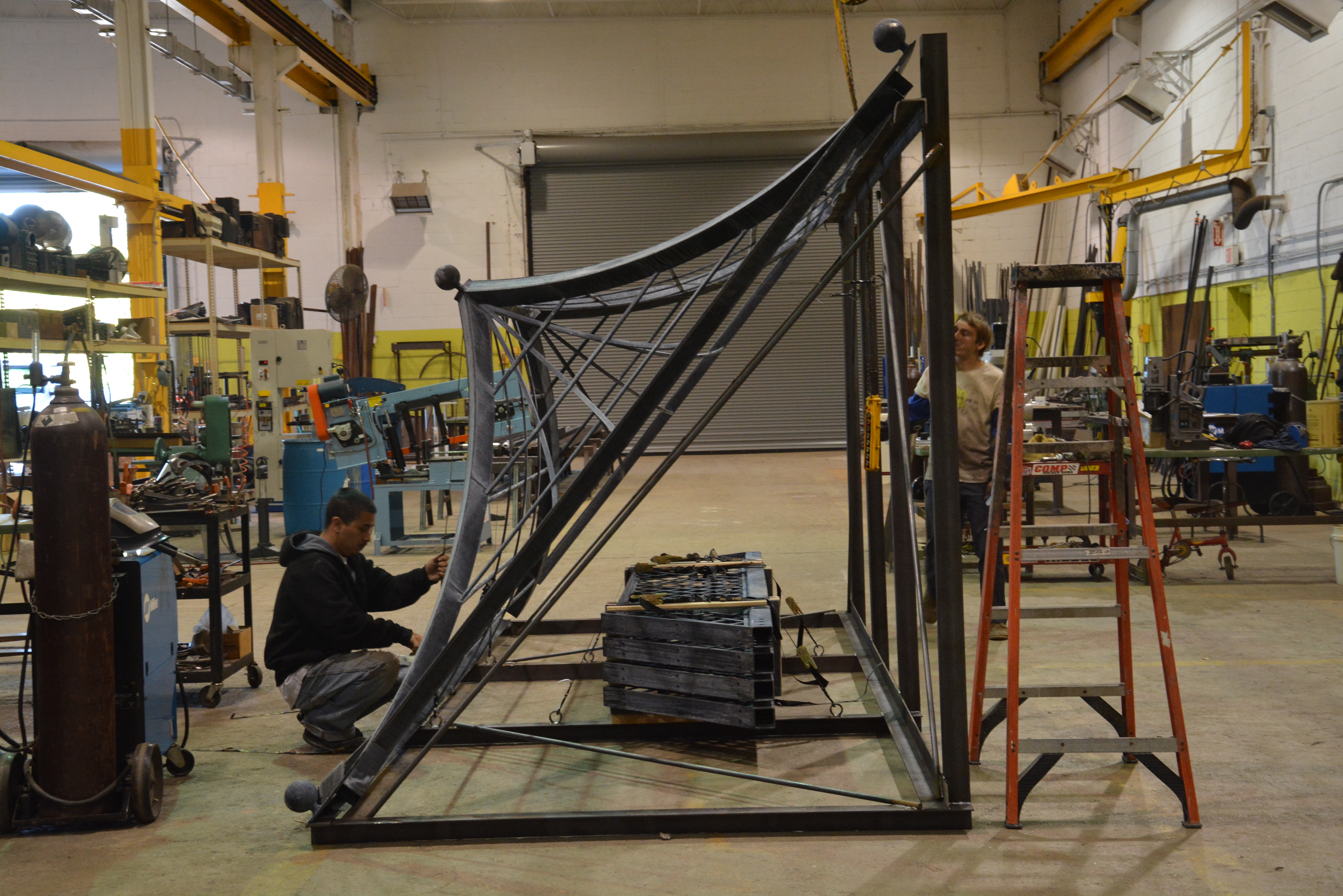
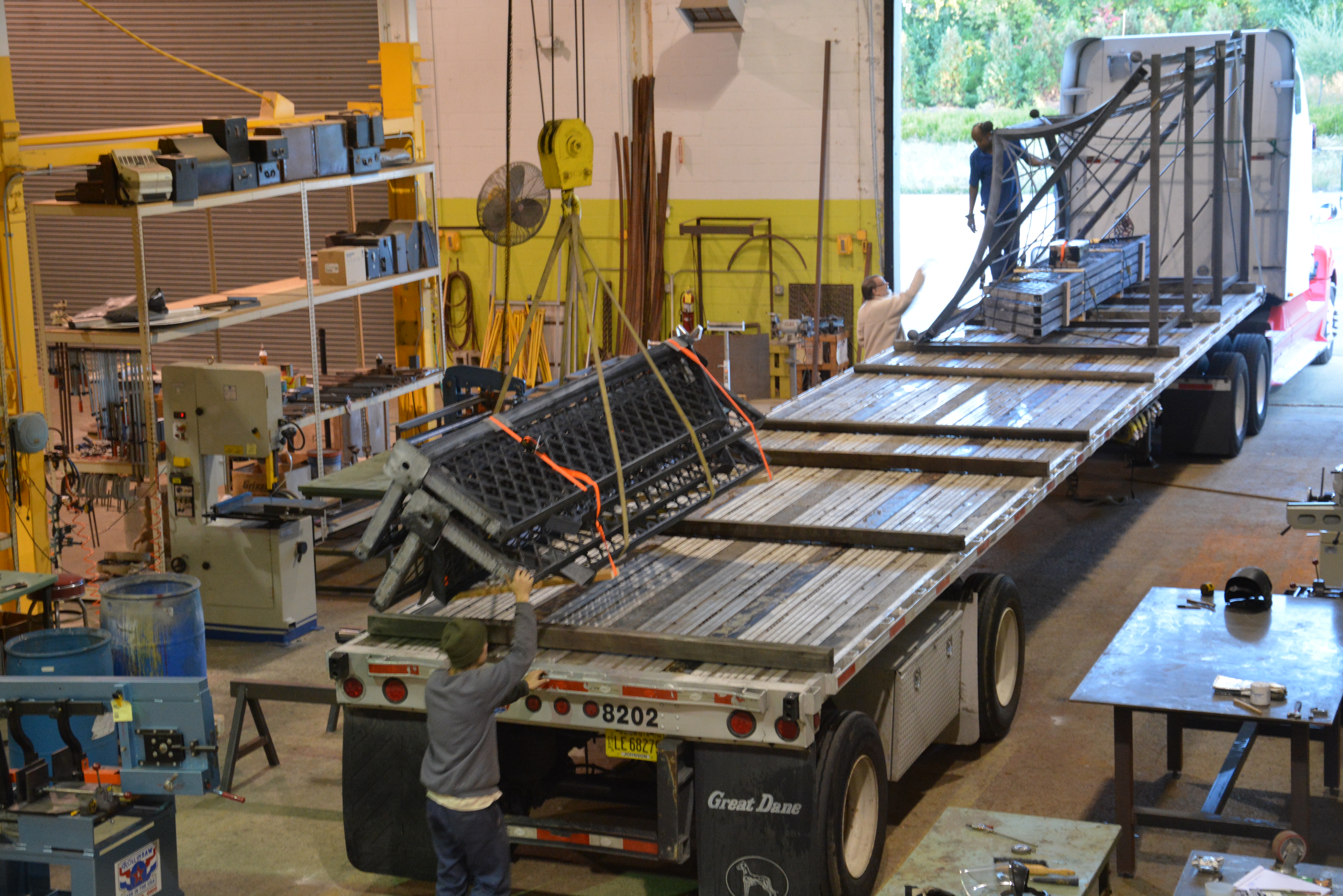
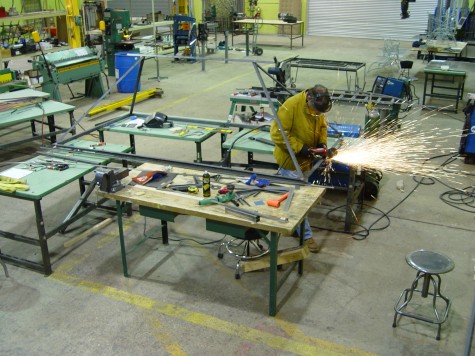
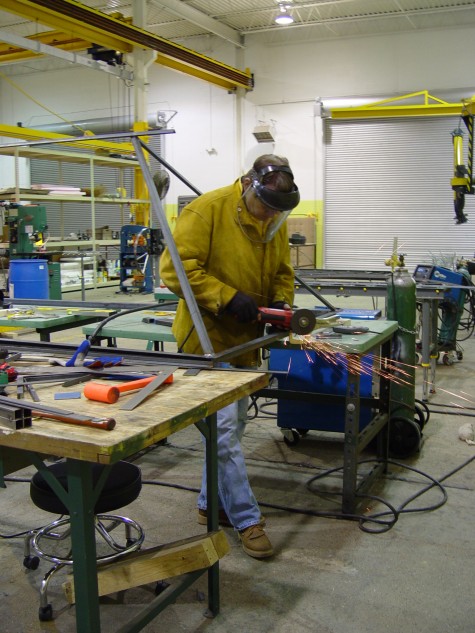
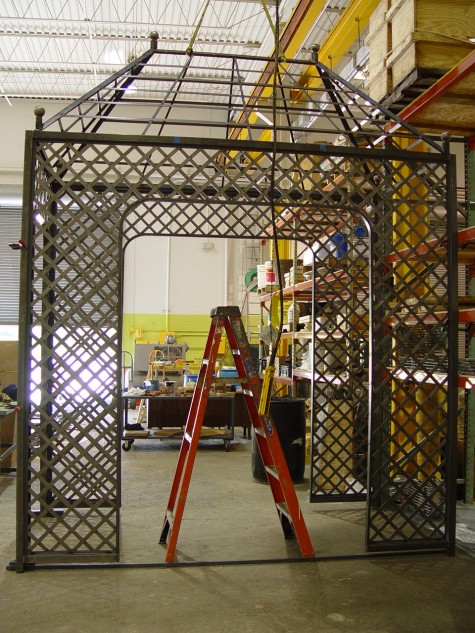
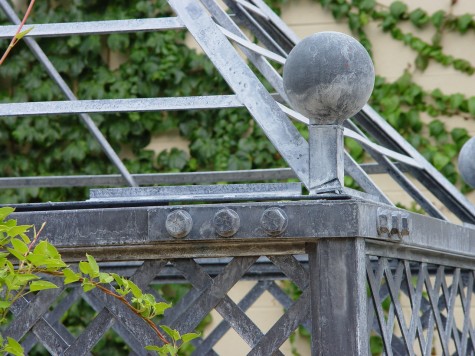
A gloriette provides shelter-as does a house for a family, a library for a reader, a road for a traveller, or a grocery store for a cook.  I decided to build a gloriette, in an expanded dimension, for the shop.  Buck obligingly drew one up in a retangular shape, and set immediately to making the roof.  The angle iron pictured here is a stock steel shape.  What he does with that angle iron is create a structure that will endure.  Structural elements in gardens stand in stark contrast to what is ephemeral.  Seasons come and go.  Perennials thrive, and fade.  As much as a garden is about change, and constant effort, more permanent elements provide comfort.  The hedges I planted 15 years ago make me feel like my life as a gardener has meant something; what I did in my garden when I was 45 persists.   

The gardens of my twenties and thirties do not exist anymore, but for the trees, and the evergreens.  They have persisted in spite of an ownership without a gardener.  The structure they provide still organize a property that is not much looked after.  I regret that I gave that property up.  The structure still in place-a comfort.   

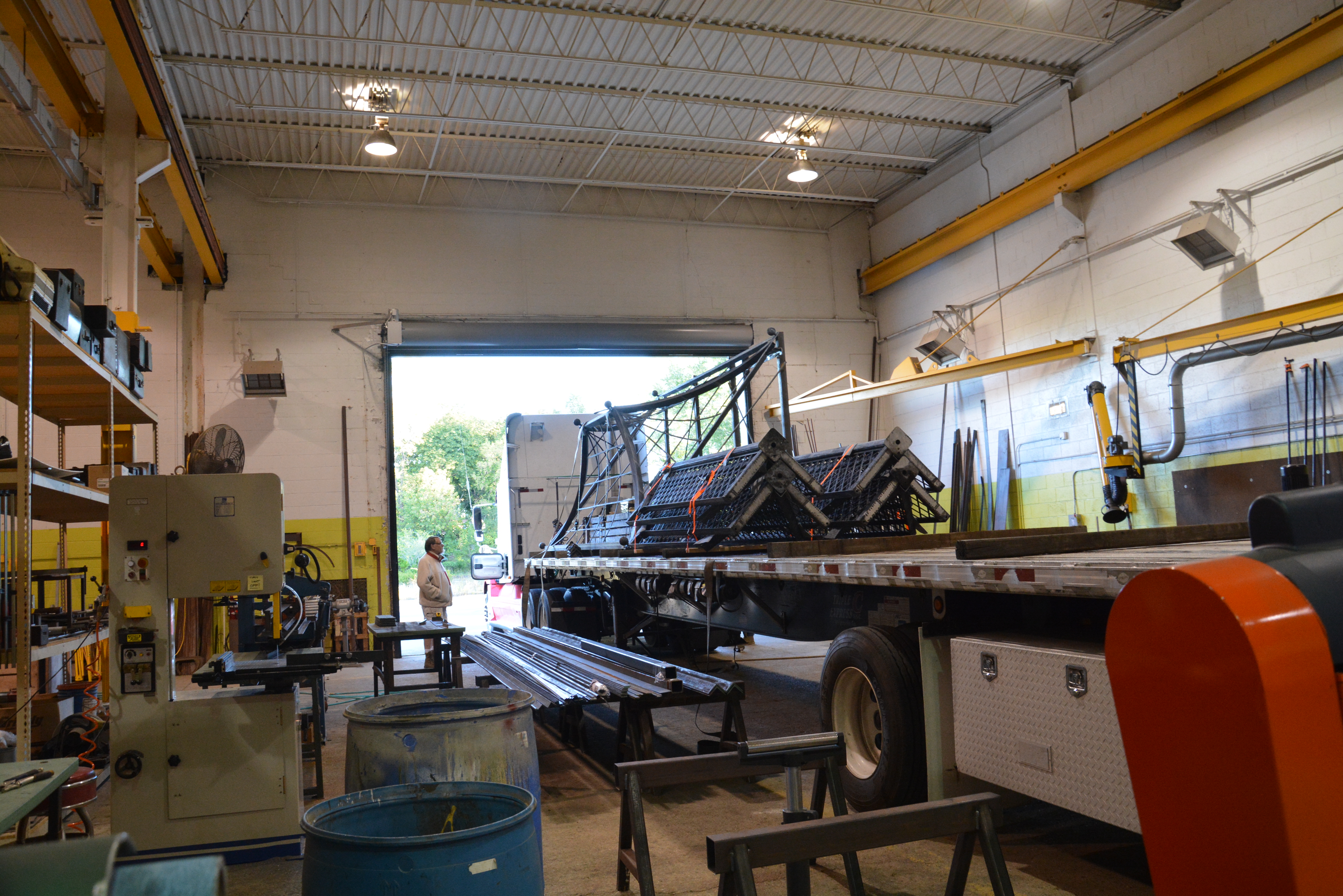
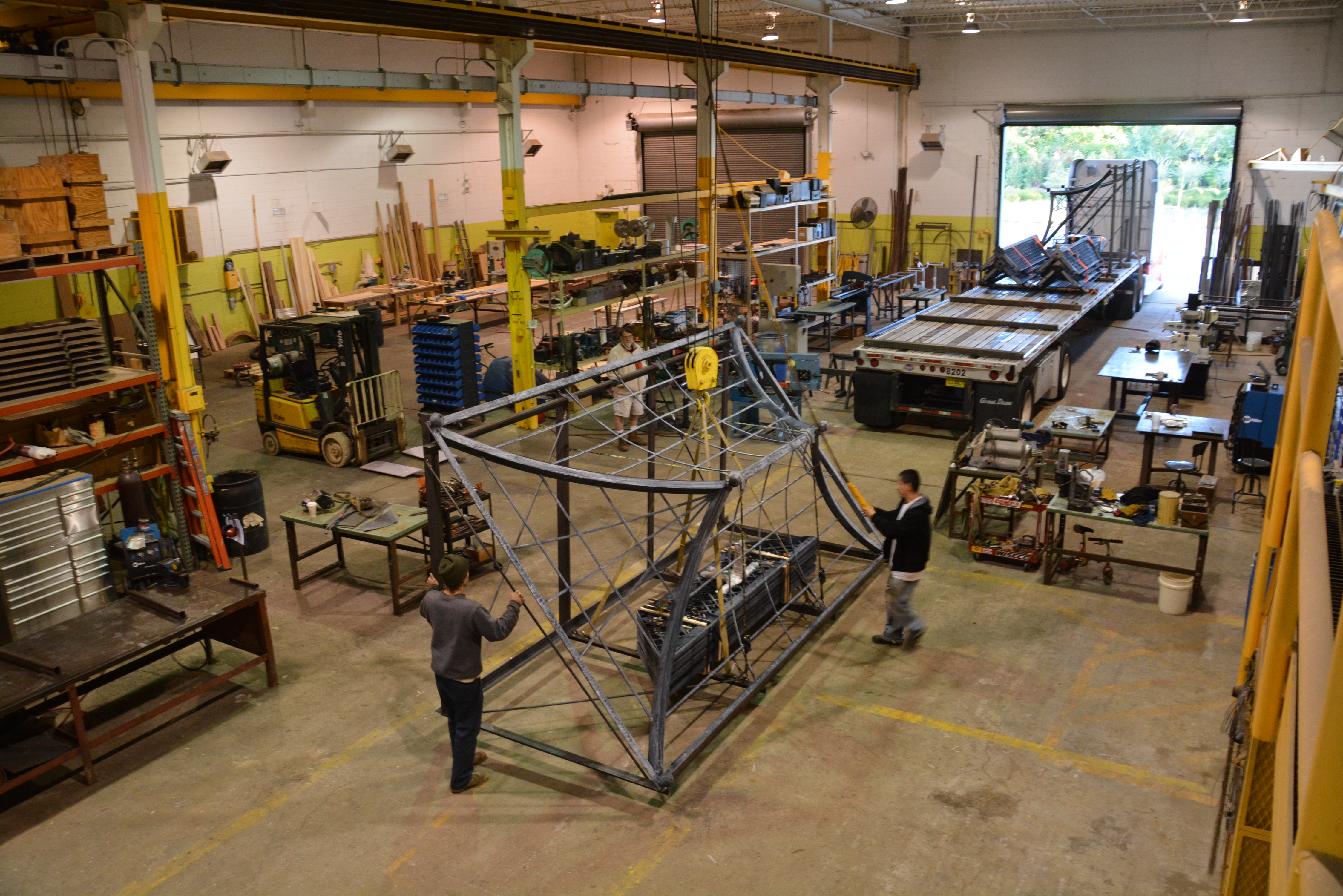
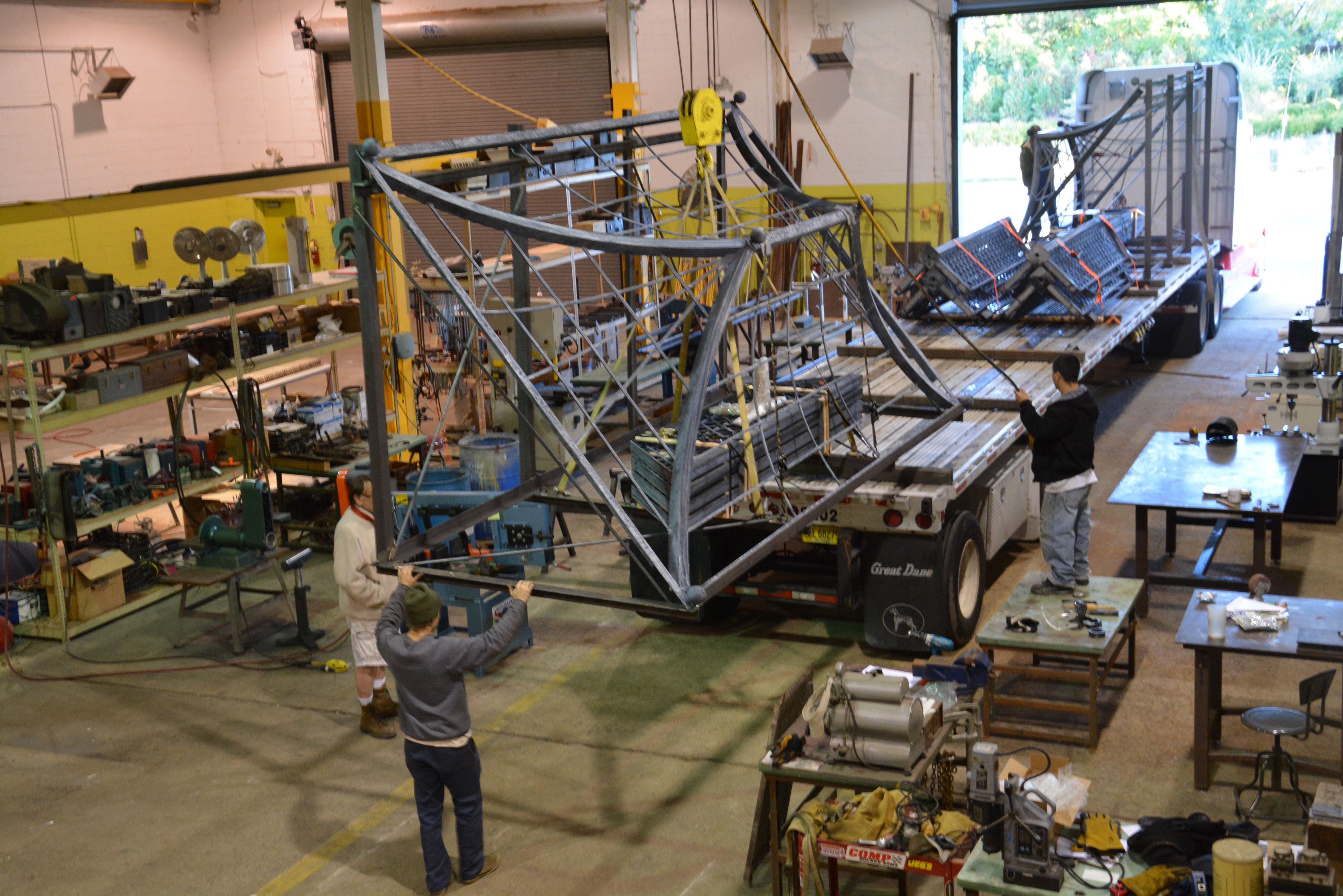
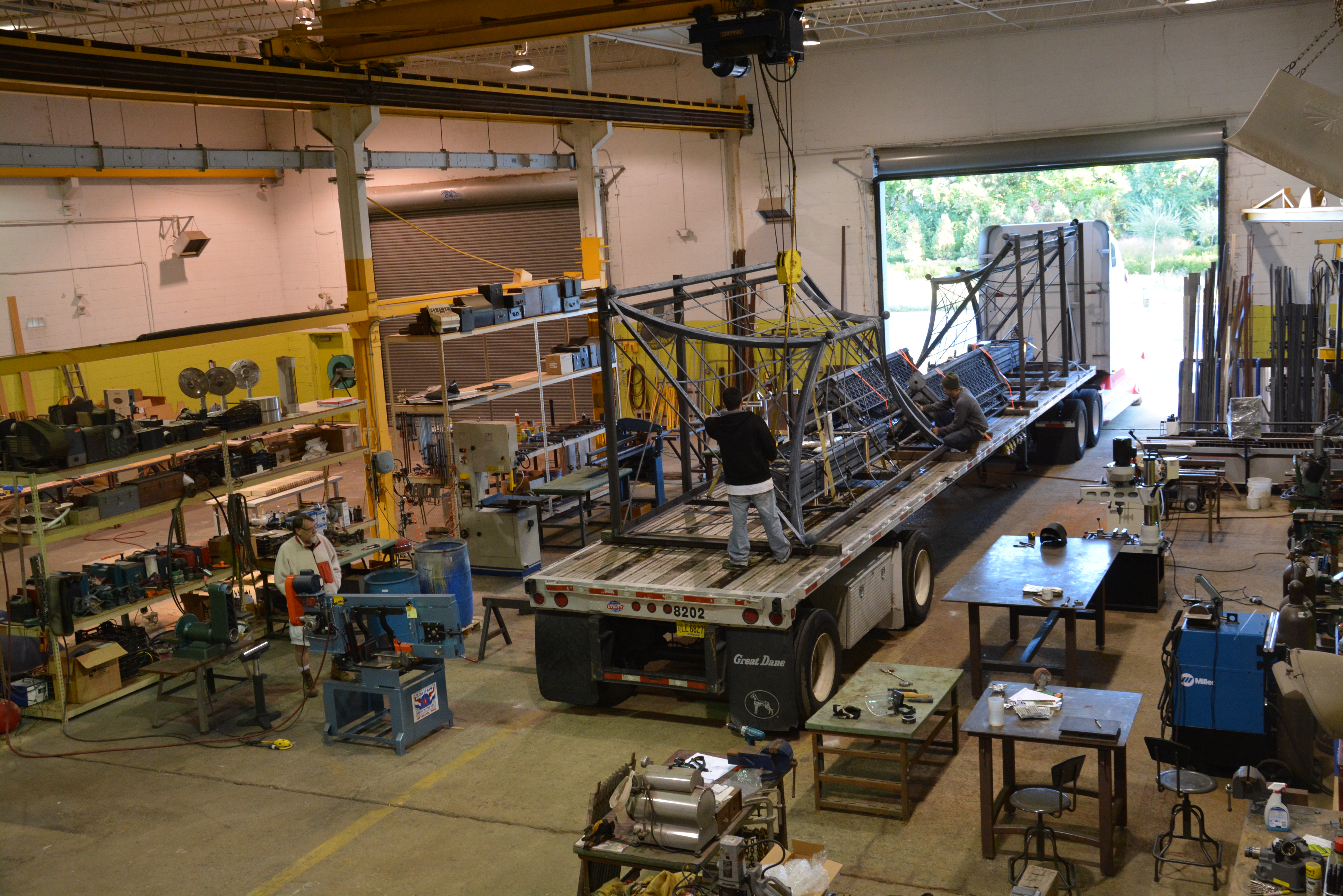
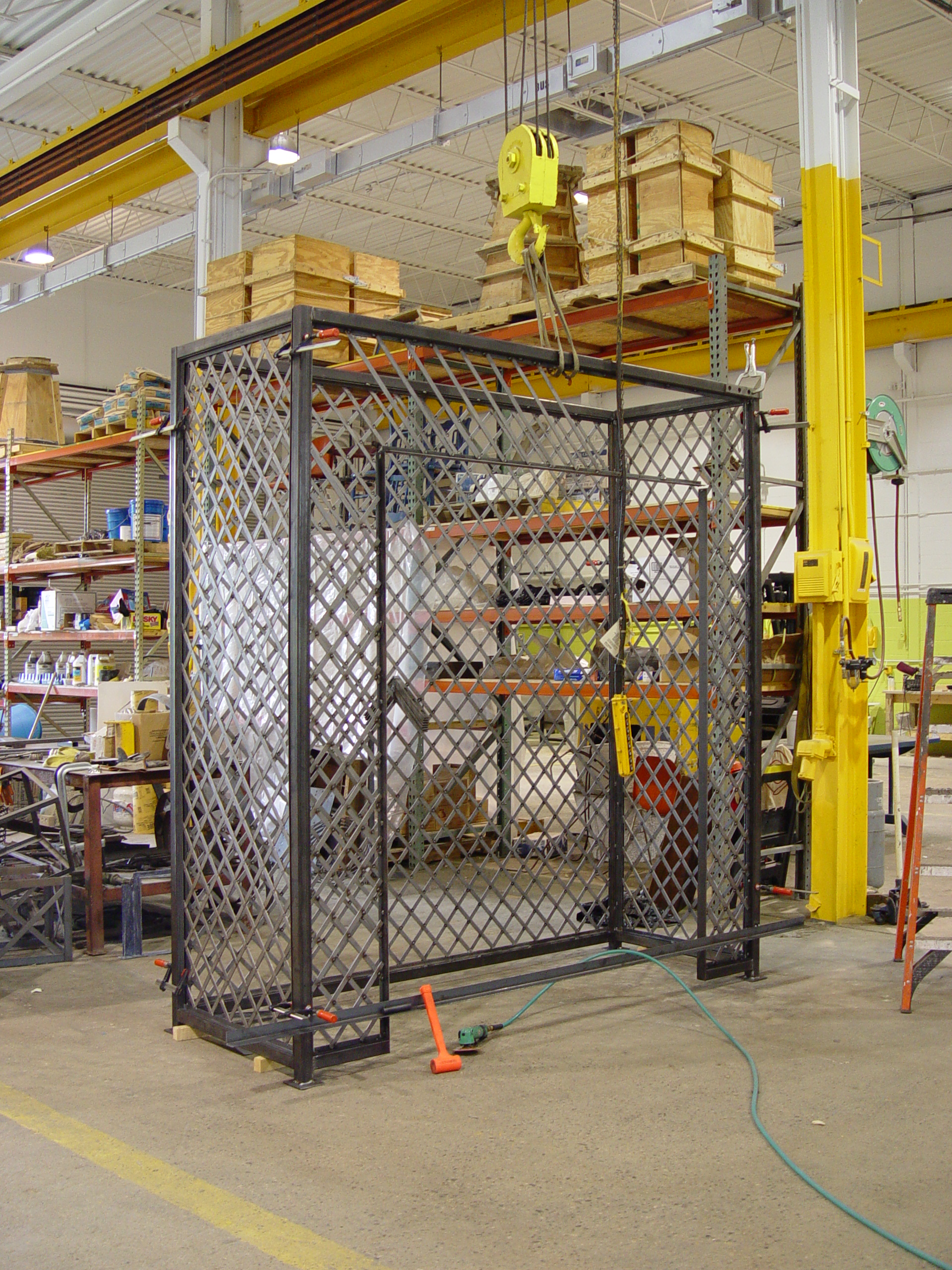
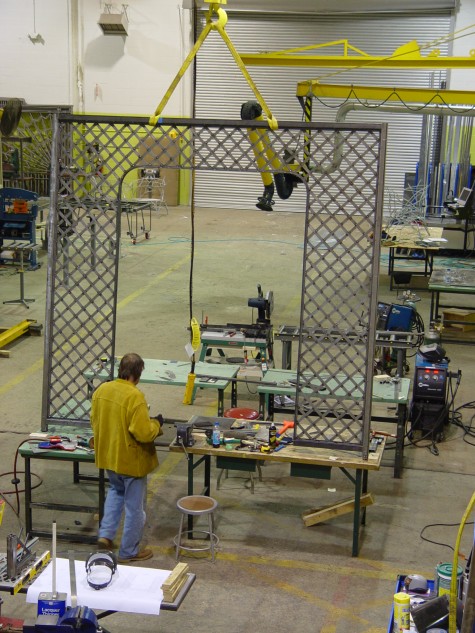
Buck builds giant structures, with the help of a bridge crane.  This single panel of the gloriette under construction dwarfs him.   Plenty of structures both man-made and natural, make me feel the same way.  The Grand Canyon, Yosemite, the Taj Mahal, the Washington Monument, the Lake Michigan dunes, the redwood forests-you get the picture.  My house has been standing in the spot I now occupy- uninterrupted- since 1930.  I like this.  I very much like an idea bigger than me, a world view that makes me just a member of a big group-what gardener doesn’t?           

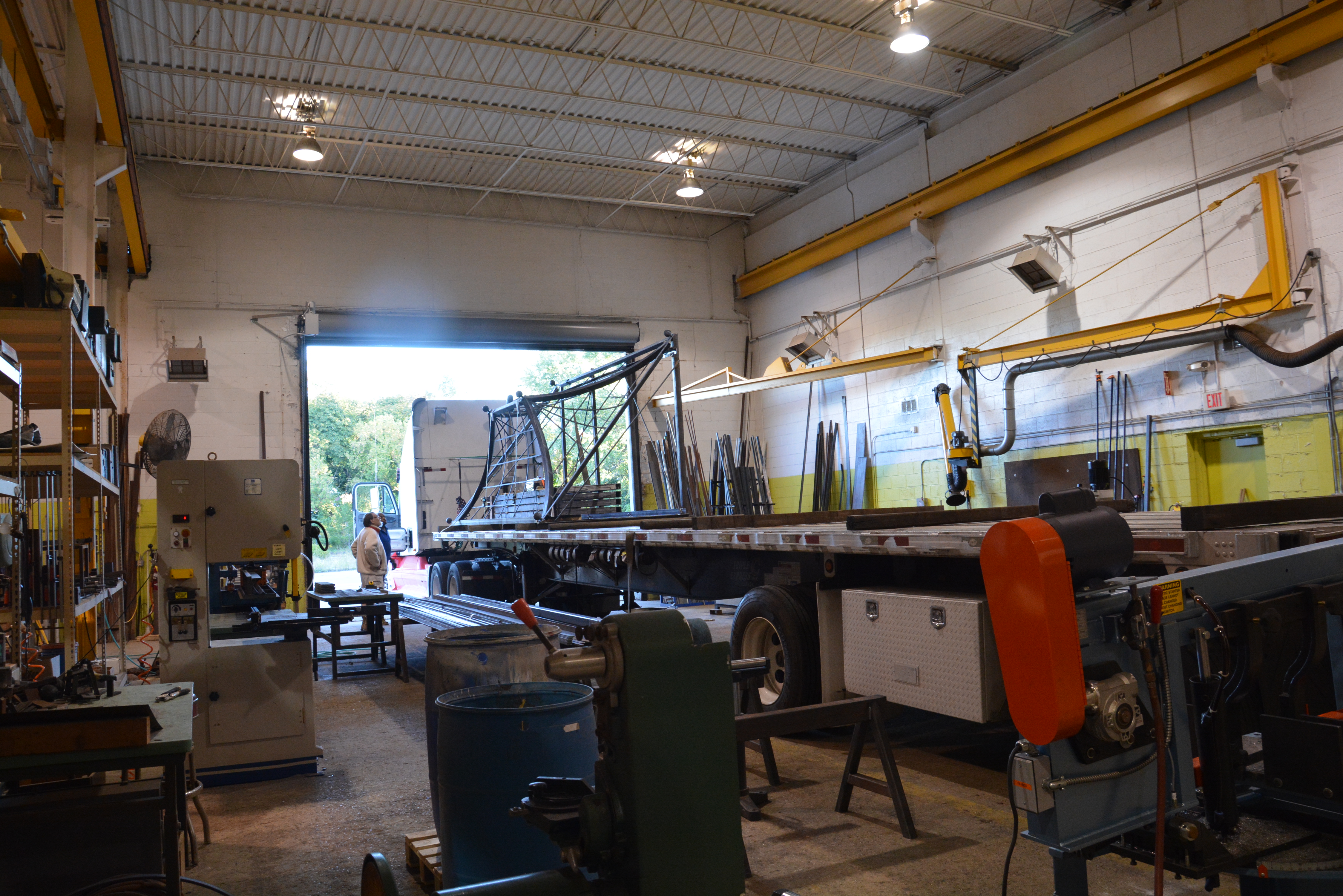
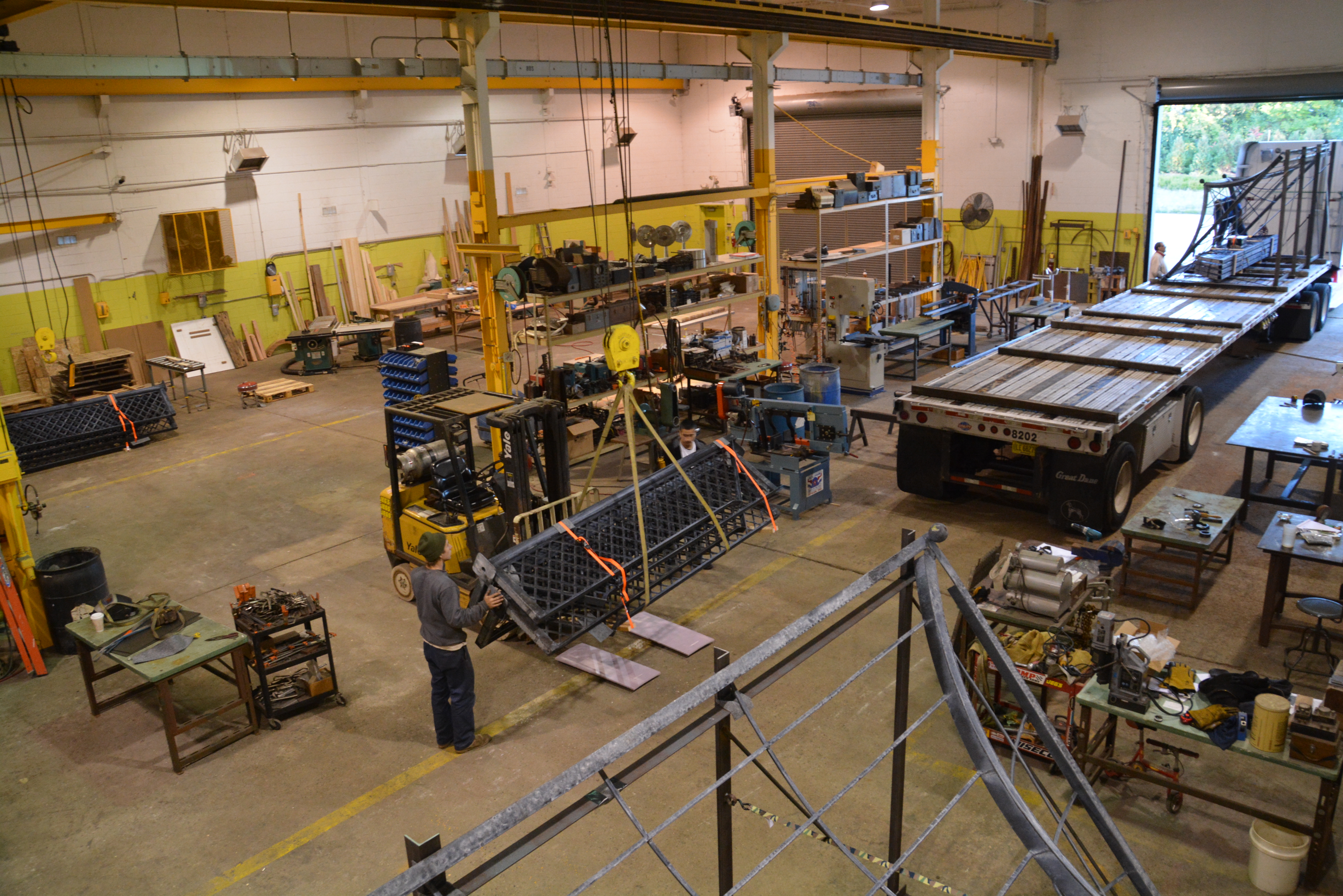
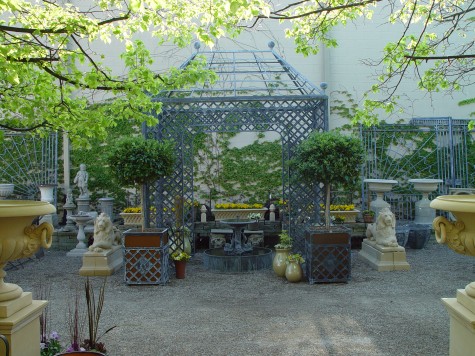
This modern version of my square French gloriette is long, and very tall.  I imagined that anyone who might place it in their garden would want a home for climbing plants that would get them skyward where they want to be.  I imagined they would want to walk underneath, and perhaps sit with a solid roof over their head.  The Branch Studio has close to 30 foot tall ceilings-room enough to build a structure within a structure.  

The first season I had the gloriette at the shop, we dressed it very formally, with associated tall lattice boxes, and an English lead fountain. Looking good, Buck.  I so like how the lower branches of the shop lindens frame the roof of the gloriette.  The woody structure and the steel structure overlap in a graceful way. 

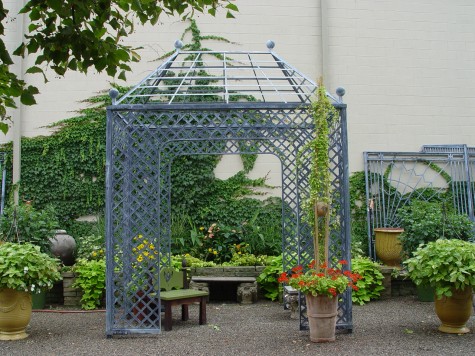
The second summer, we dressed the gloriette in a far less formal way.  Rob’s Italian pot with a bamboo pole plant climber curved out with a wedged wood sphere-this is a great look.  This treatment spoke up; we sold the gloriette.

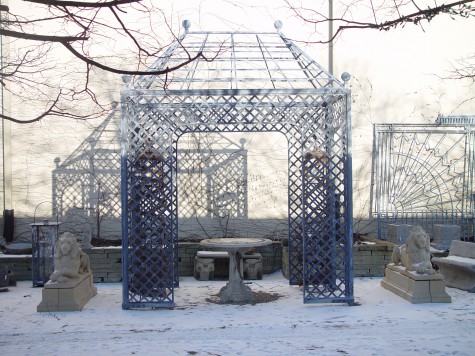
My garden is actually quite handsome in the winter, for its green structure.  I know there will be something there, once the snow melts.  The gloriette likewise had considerable impact in the winter.  The shadow on the wall behind it-so beautiful.  Creating structure in a garden asks for everything.  All of your thought.  All of your effort.  All of your history.  All of your resources.  This spring, gardeners everywhere will be buying beech trees.  Trenching for hedges.  Setting walkways.  Installing fountains.  Building gates, pergolas, and benches.  Planning to provide structure. Are you ready?  


Every year I think about a cottage.  Were I ever able to afford one, I would have no garden.  I would move in, and do nothing outdoors except go there and look.  In the woods, I would encourage the existing trees right up to and onto the foundation.  Were I on the water, I would slog through the sand, and appreciate the reeds.  Were I in the Smoky Mountains, I would put the smallest structure possible in a trillium field.  If I ever had a cottage, what nature had in store for me would be more than enought to make me happy.  Lacking a cottage on a wildly beautiful piece of property,  my home landscape asks for structure.  Steel and green.  Sounds good to me.