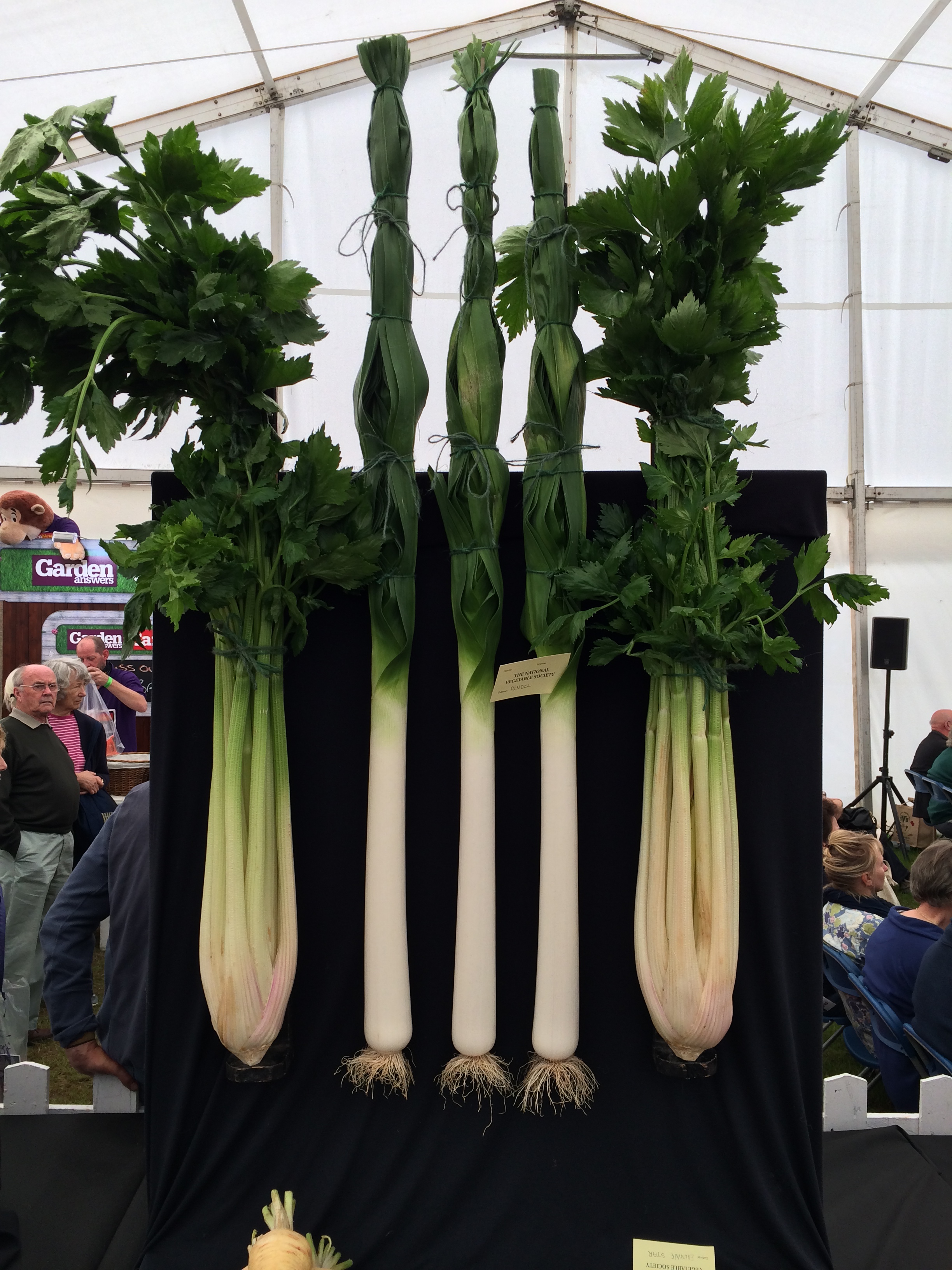
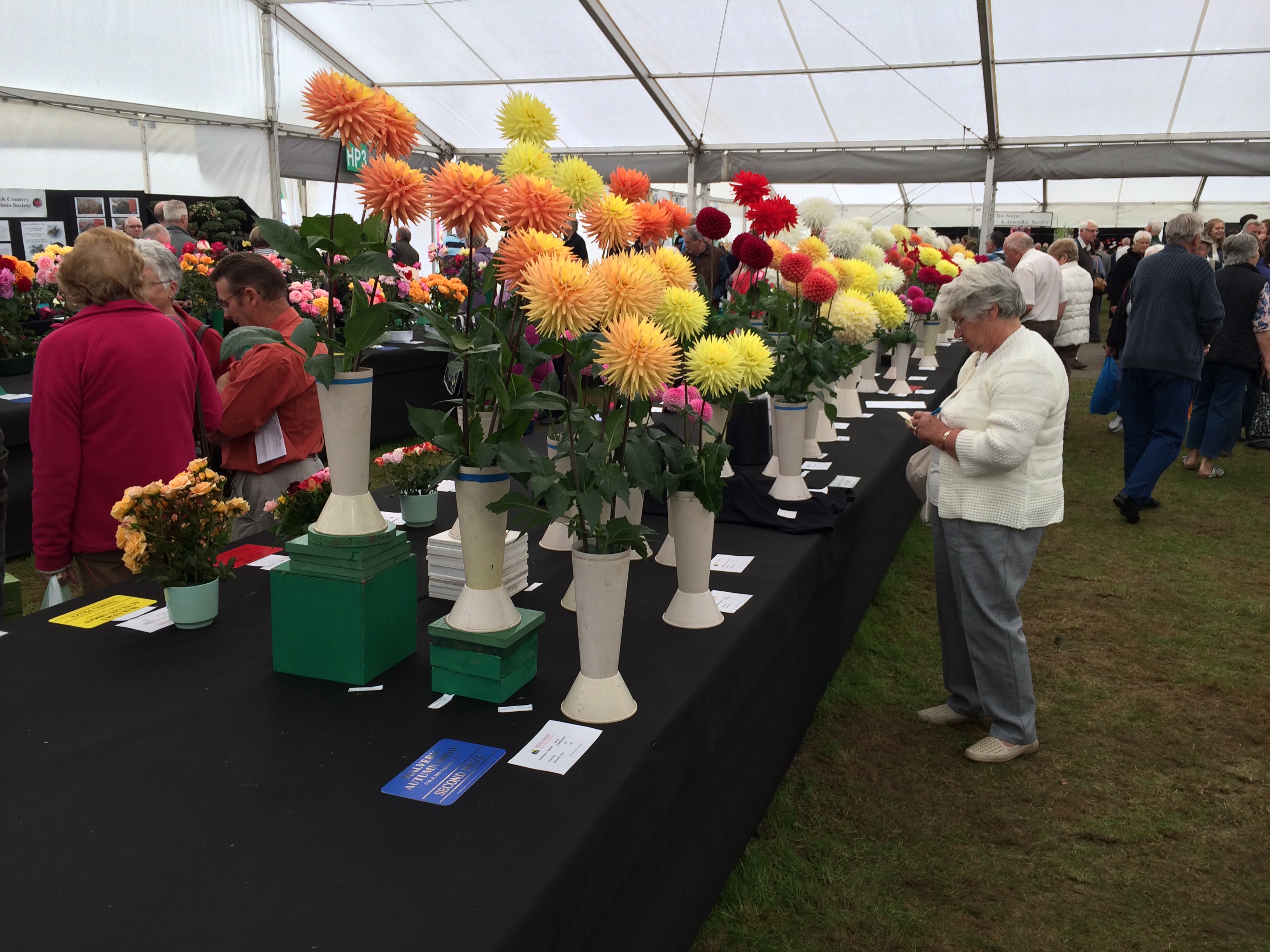
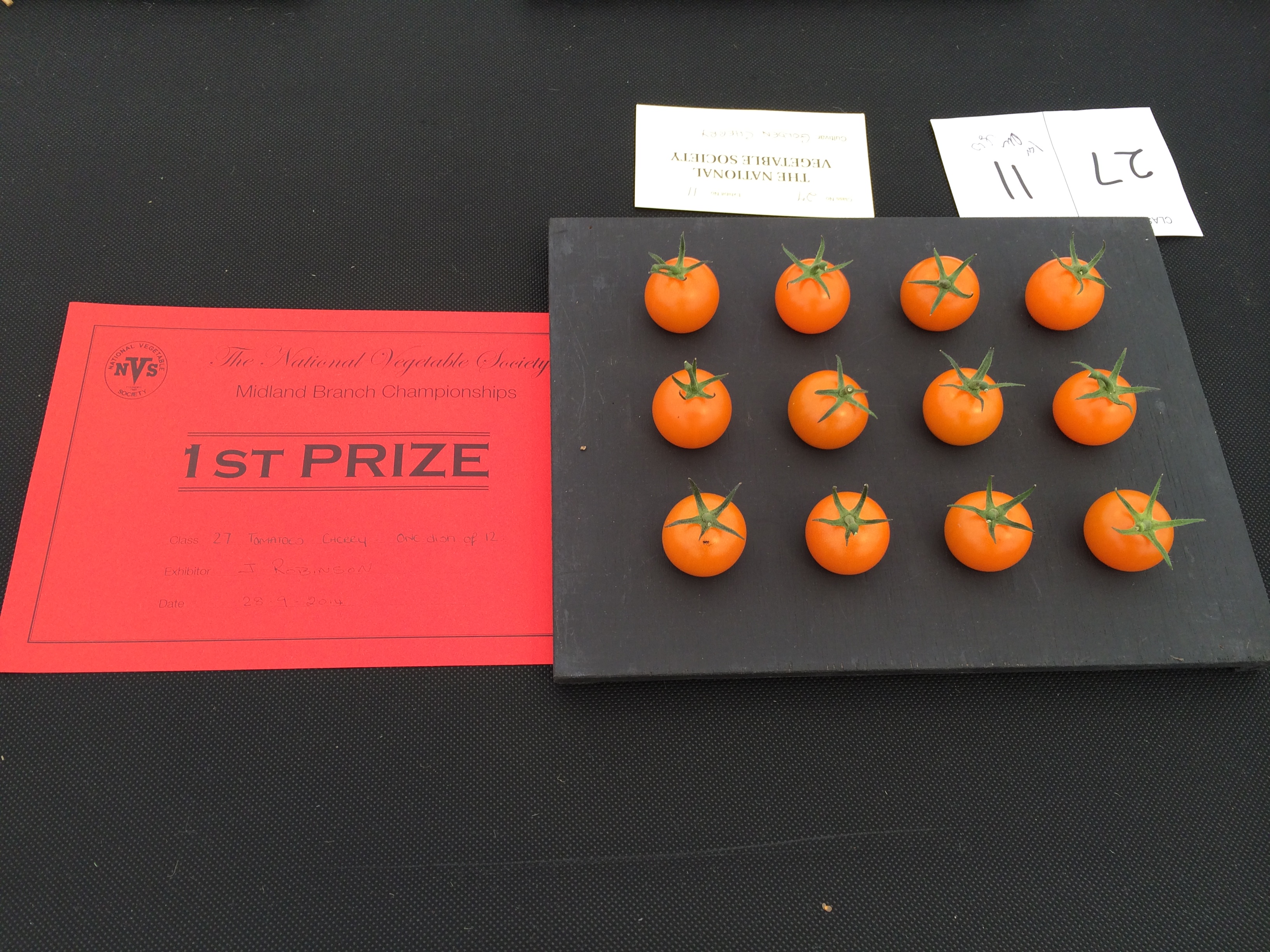
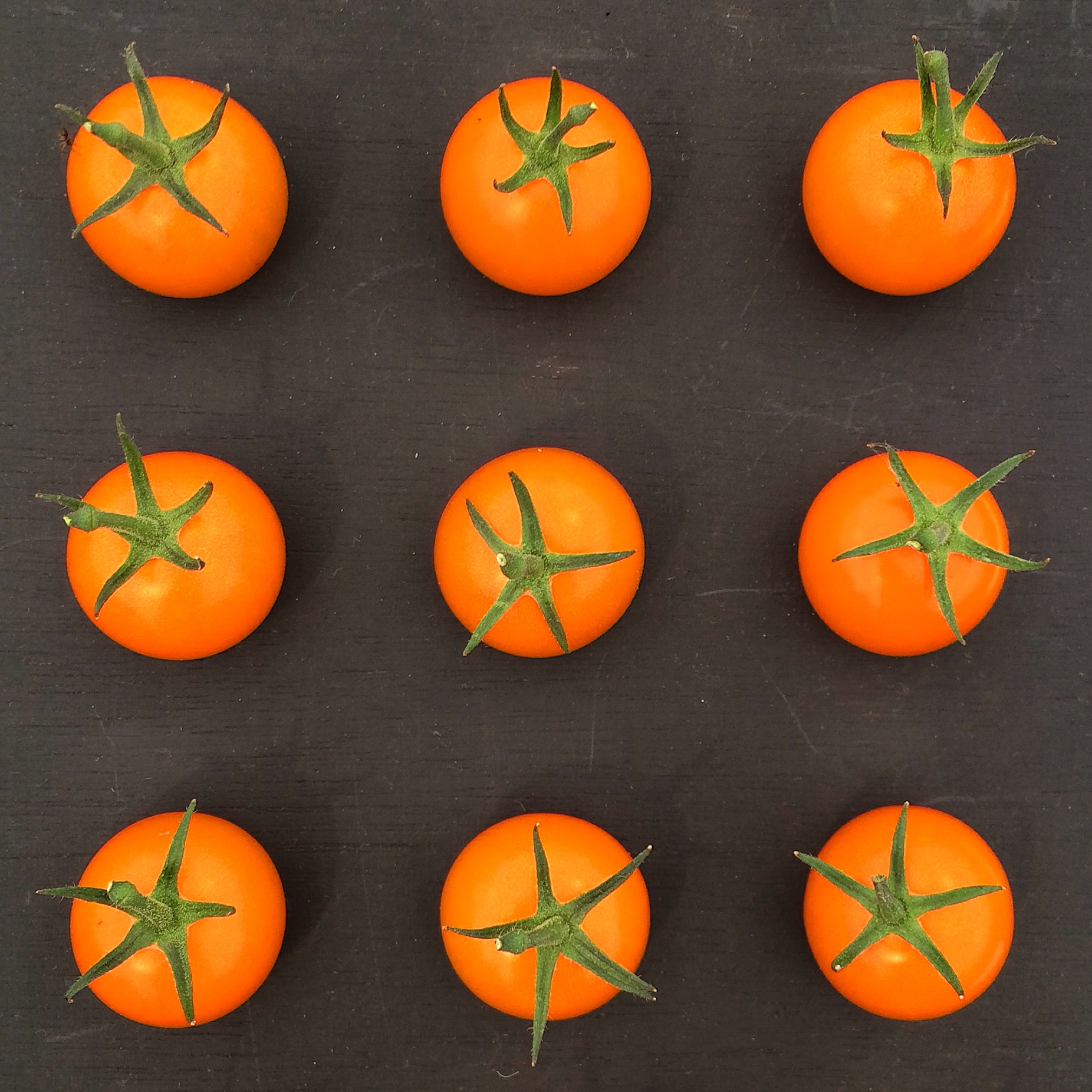
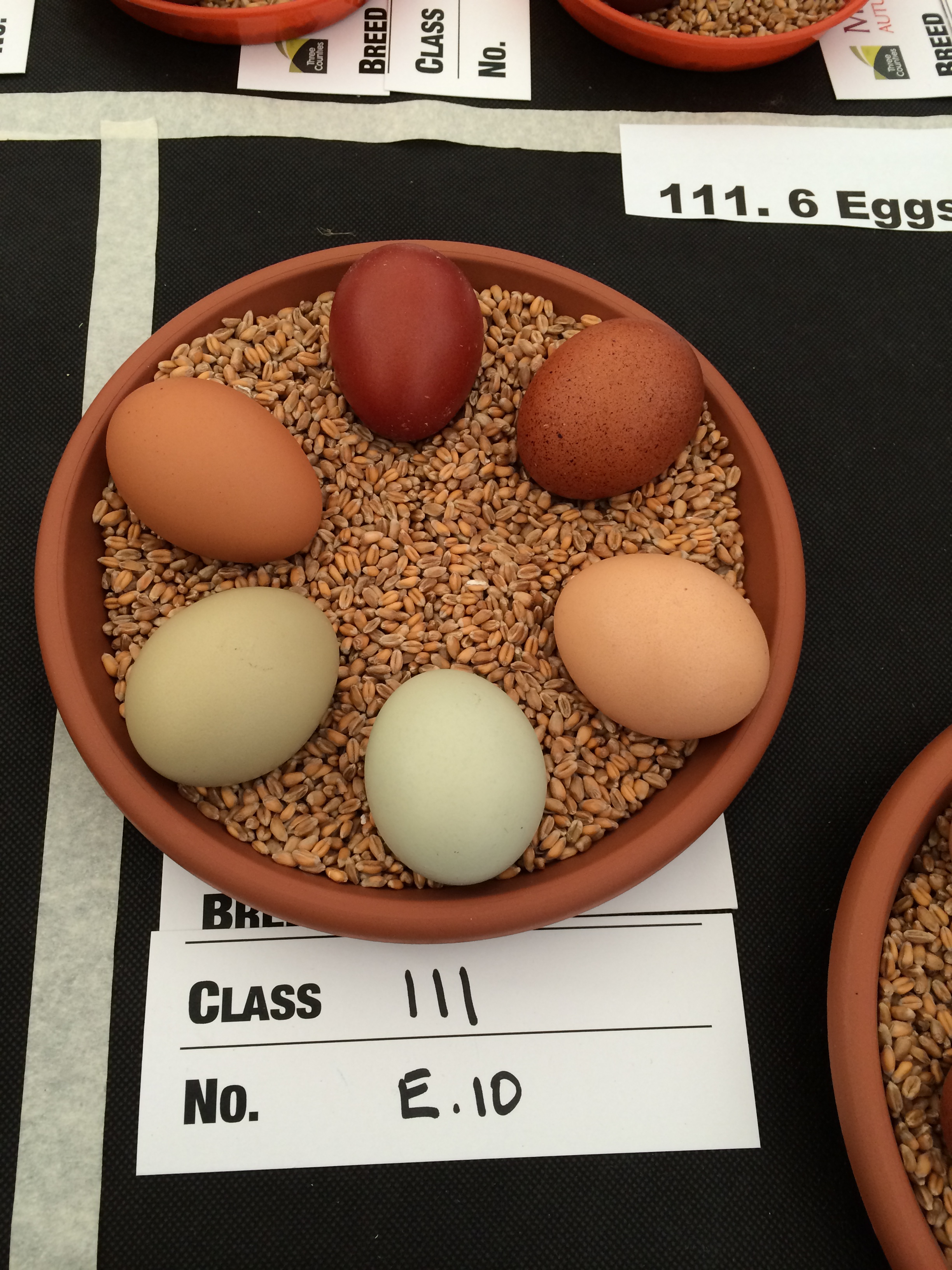
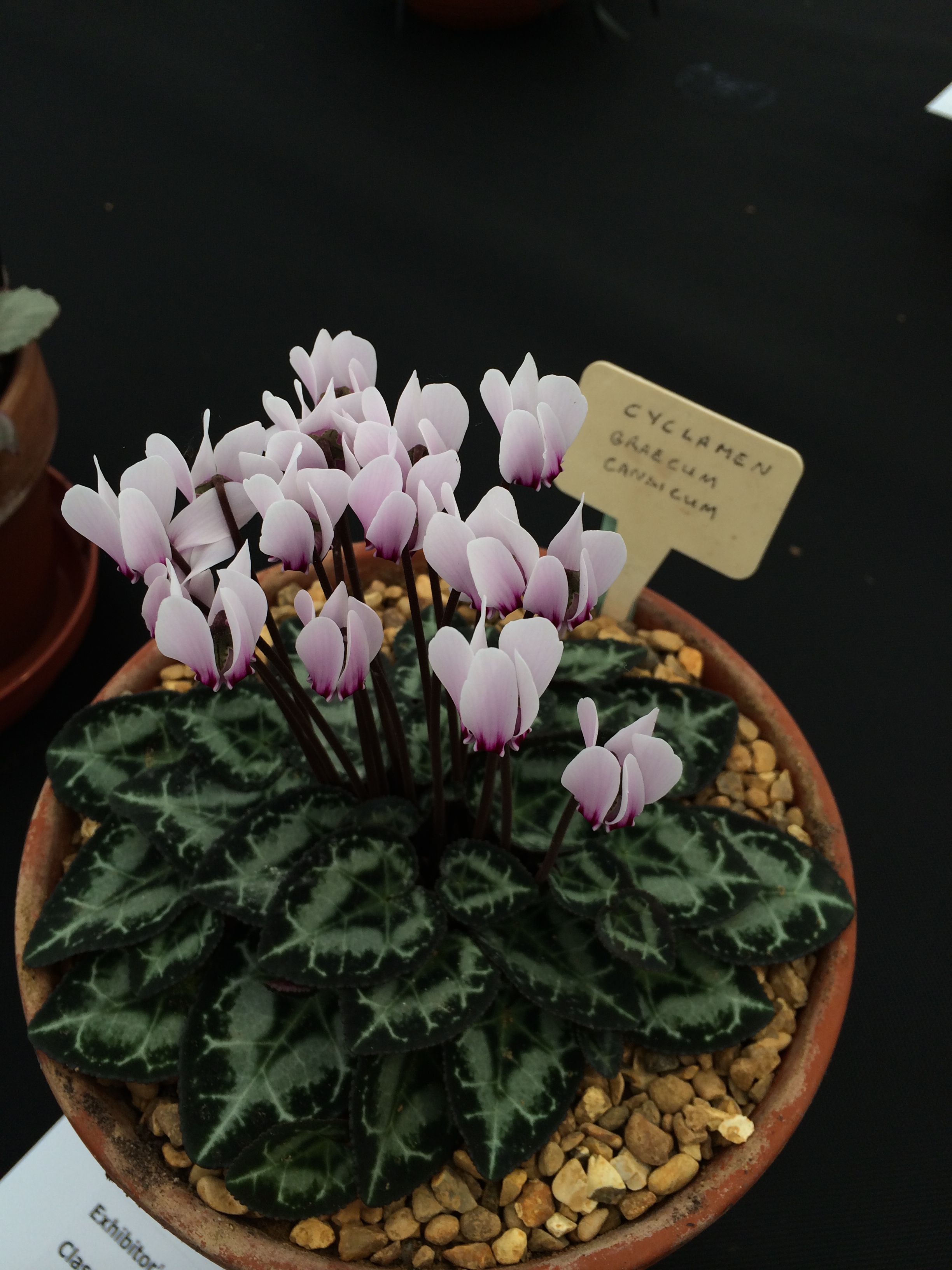
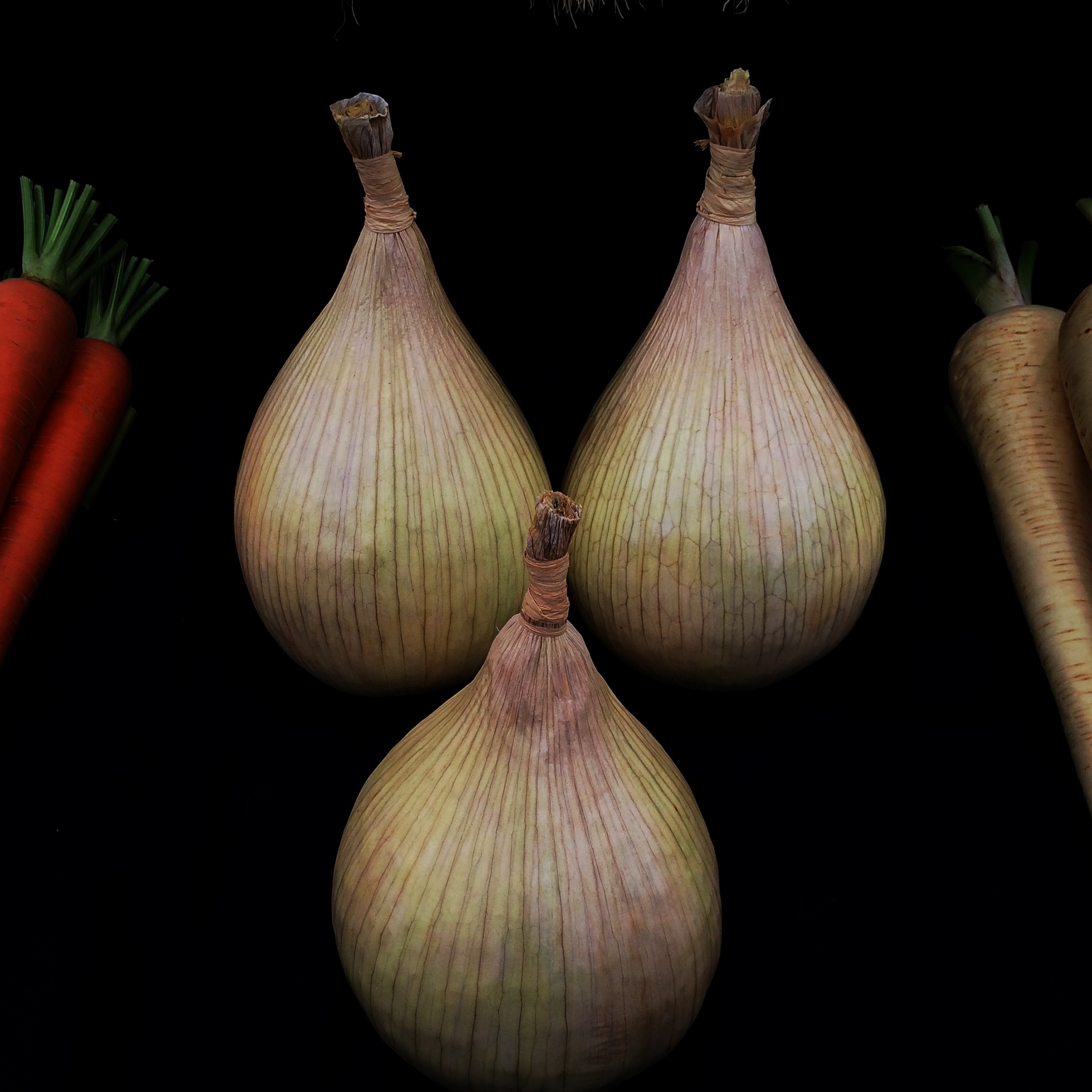
 The following are Rob’s pictures from the Malvern Autumn Show in England, one part of which was the National Vegetable Society’s Midland Branch Championships. Every flower vegetable and egg – exhibition quality gorgeous.




Deborah Silver is an accomplished and experienced landscape and garden designer whose firm first opened its doors in 1986.
The following are Rob’s pictures from the Malvern Autumn Show in England, one part of which was the National Vegetable Society’s Midland Branch Championships. Every flower vegetable and egg – exhibition quality gorgeous.
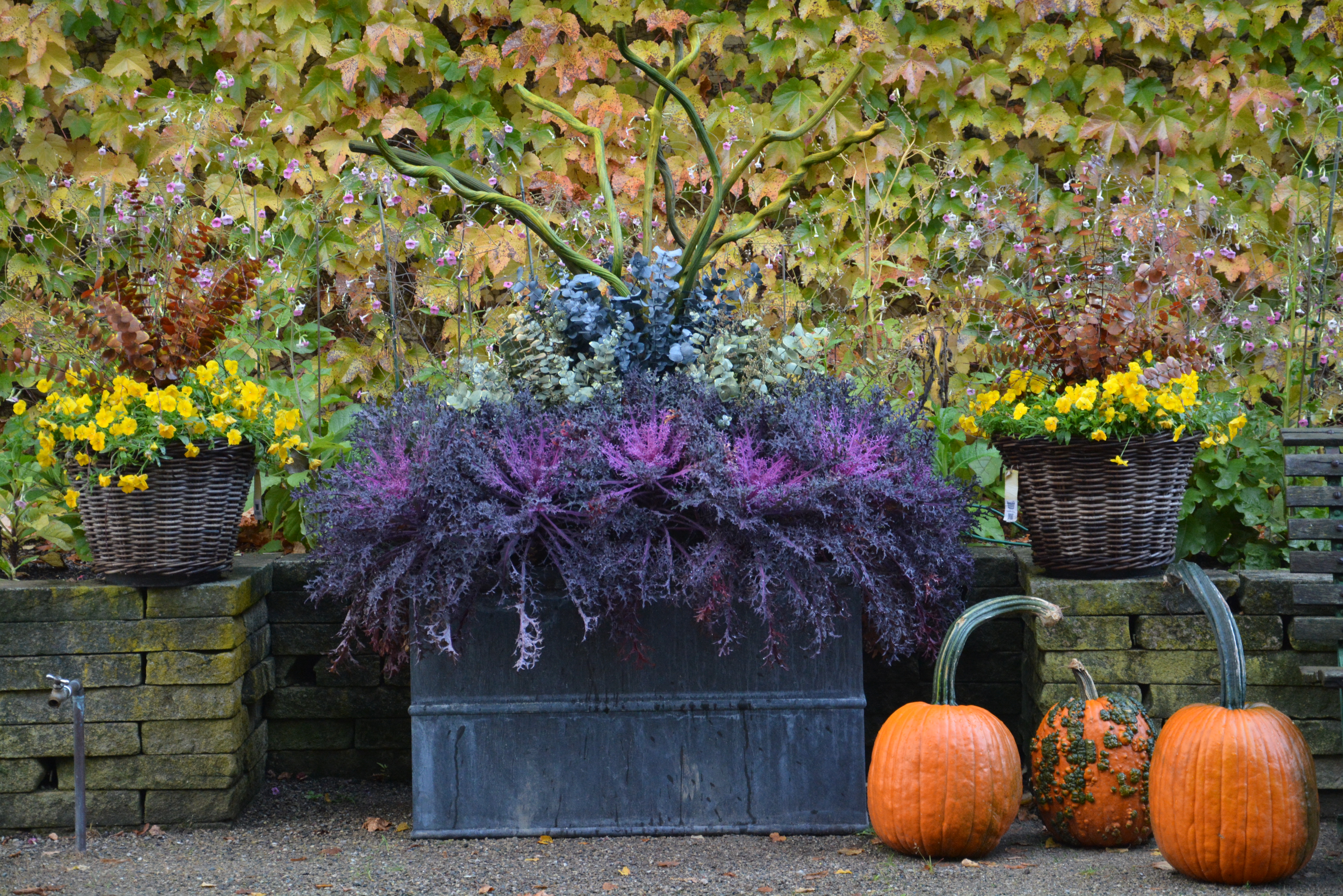 Fall is an incredibly beautiful season in Michigan. The sun low in the sky, and the morning fog makes every color intensely saturated. The leaves changing electrifies a fall palette of color in the landscape in a way that no flower could hope to achieve. The sugar maples are brilliantly fiery; the hydrangeas are a muted shade of brown and pink. No season celebrates color like the fall. We are in the early stages of that transition from summer to fall. This is a season that I follow closely, as I do not wish to miss one moment of it. The materials available for fall are spectacular in color. The ornamental cabbages and kales intensify in color as the temperature drops. The pumpkins and gourds are impossible to resist. Everything about them speaks to the harvest, and to fall color.
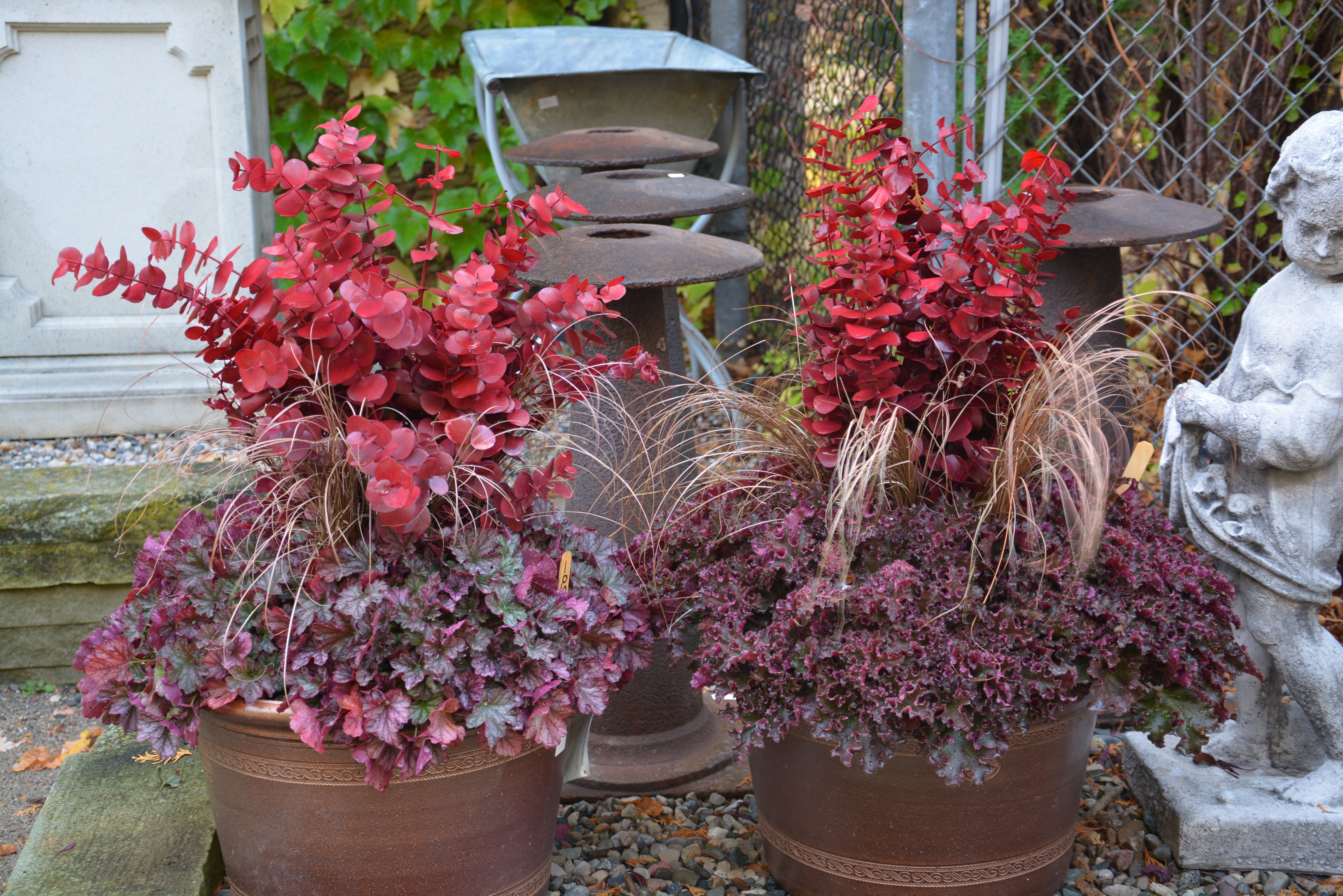 These pots are planted all around at the bottom with heuchera. I am not so much a fan of dark leaved coral bells in the summer garden. They are shockingly gloomy to me in the heat of August. In the fall, they shine in containers. These dark colors are so beautiful on a rainy fall day. I see many more growers offering large heuchera plants for sale in the fall. There are so many foliage plants with great color available. No doubt I associate and welcome certain colors with certain seasons. This is a luxury enjoyed by a gardener in a four season zone.
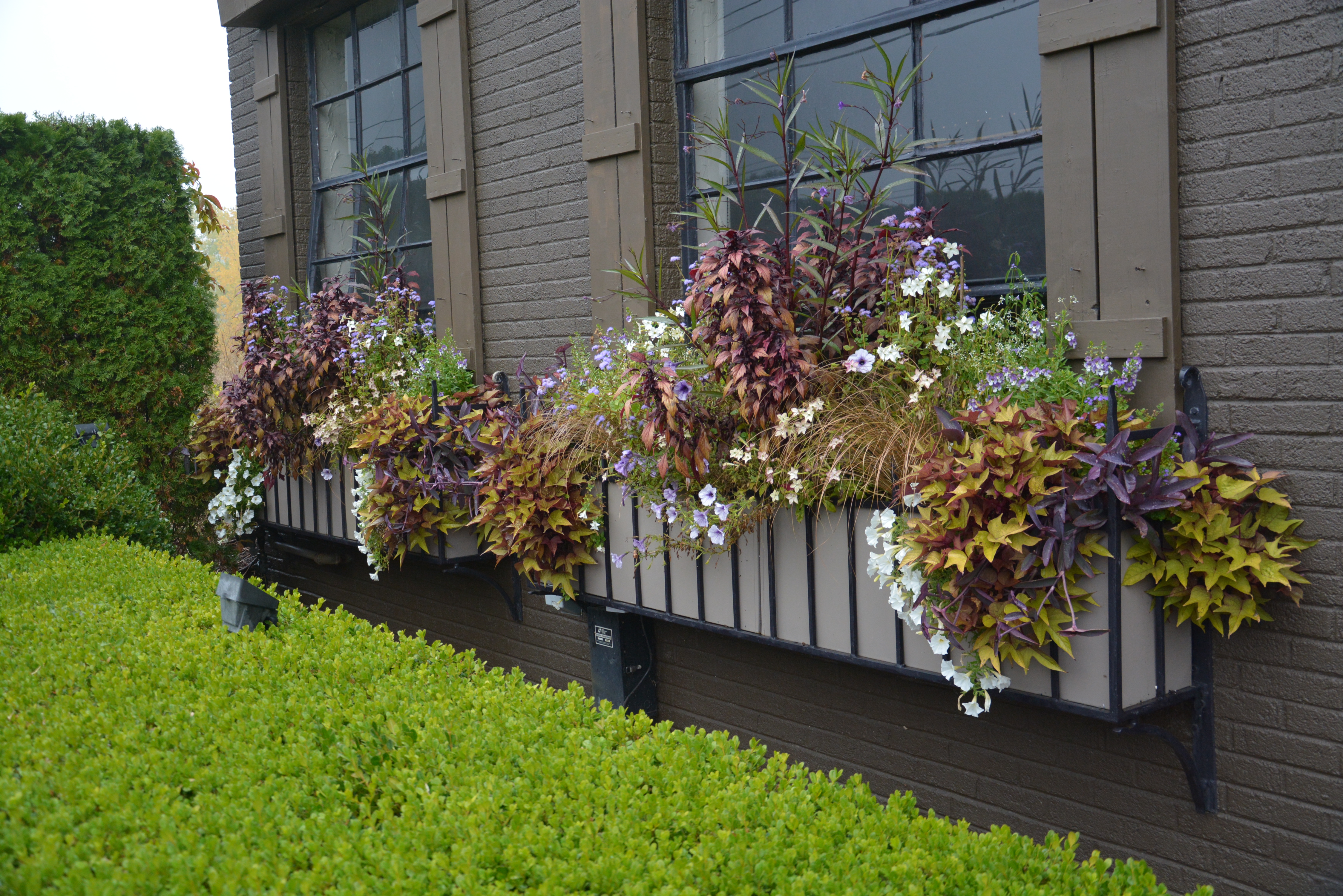 The window boxes in the front of the shop are showing signs of fall color. I so appreciate those years when the fall comes slowly, and the killing frost is late. The brown potato vine and the coleus are singed with cold. The color in these boxes is changing with the season. It is easy to replace certain very cold susceptible elements in a summer container with more cold tolerant plants. But letting the fall season work its magic on a a summer planting can be quite beautiful.
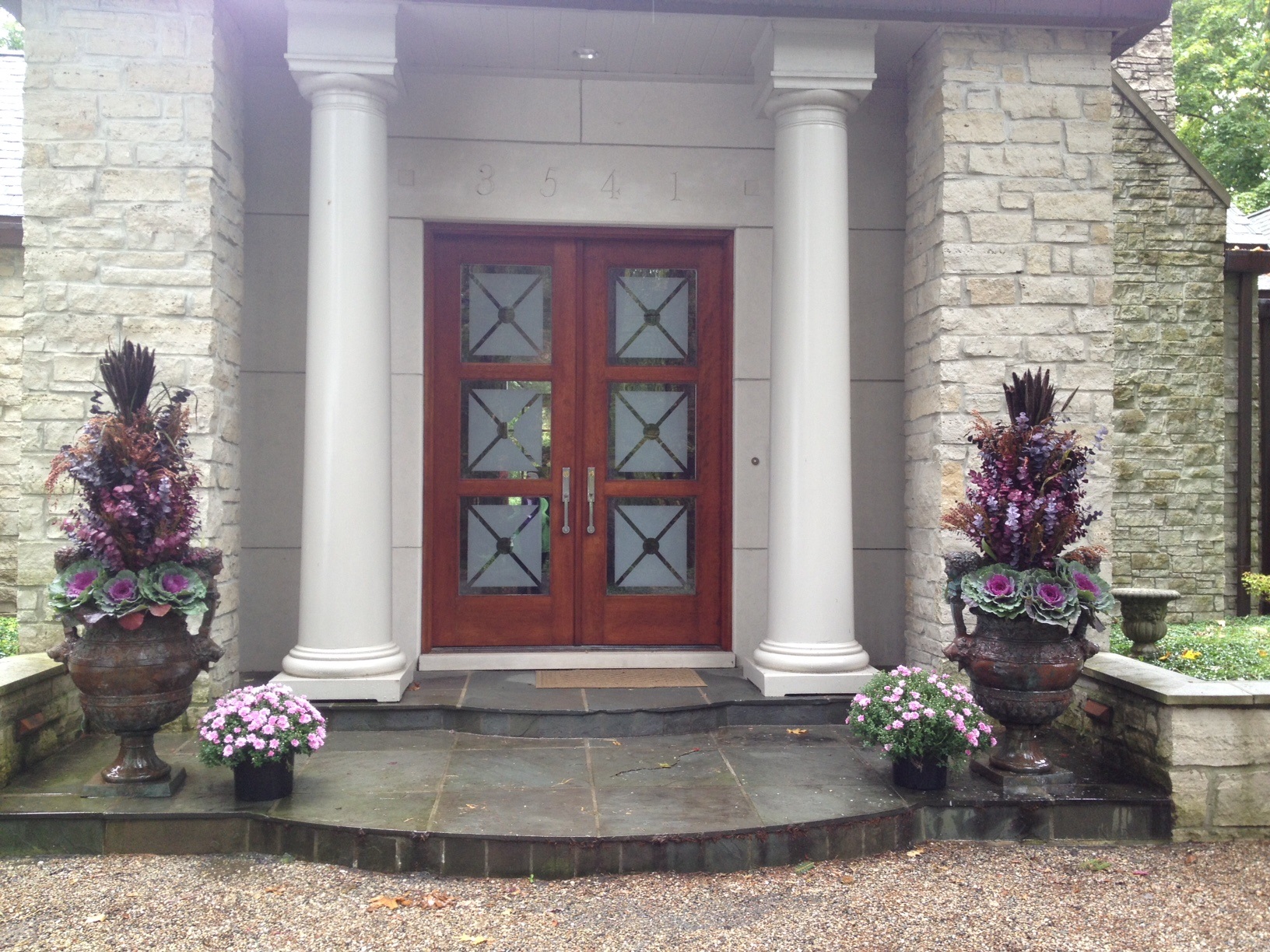
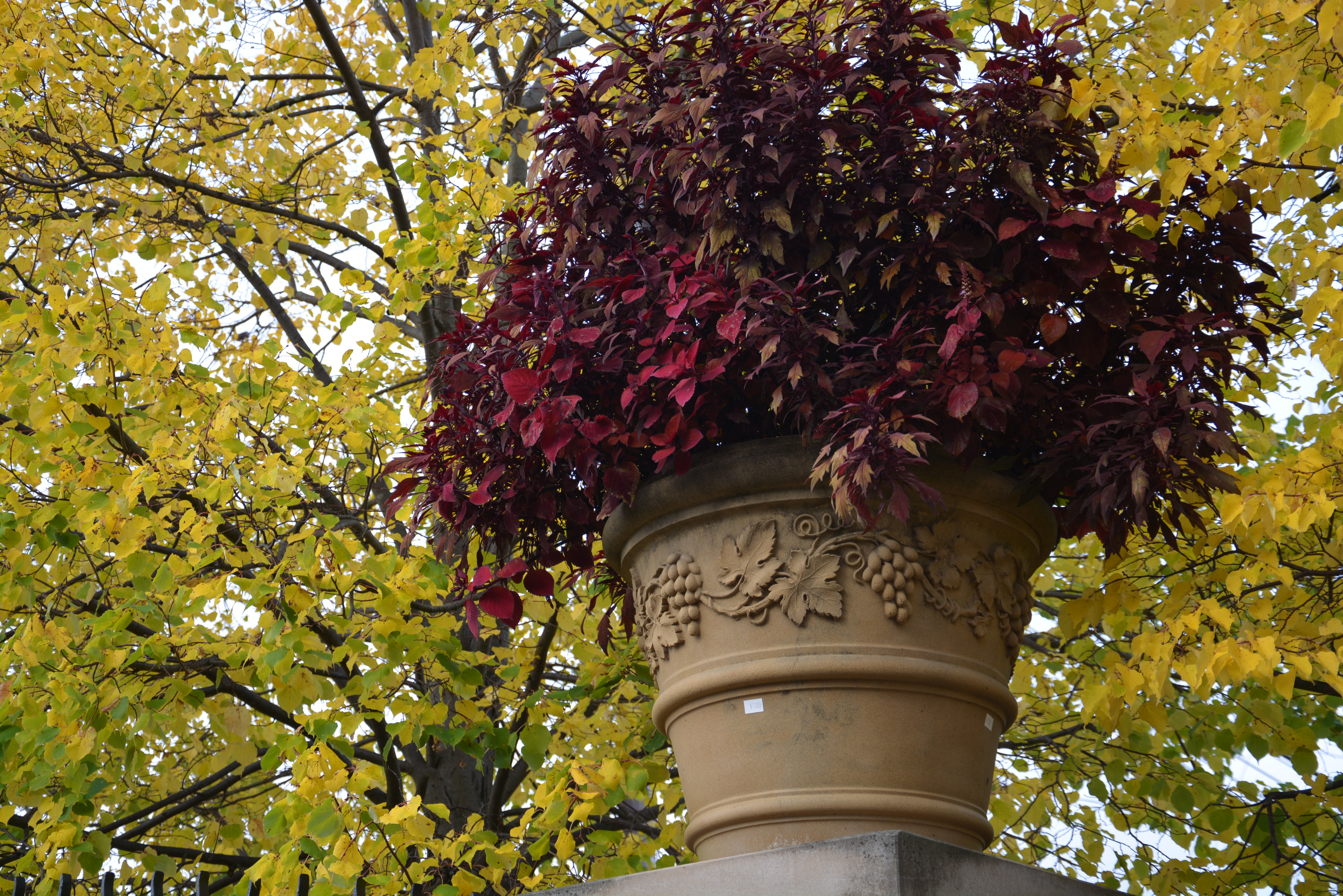
These urns sitting at the front door empty would be just lovely. But planted for fall, they have a warm and welcoming appeal . 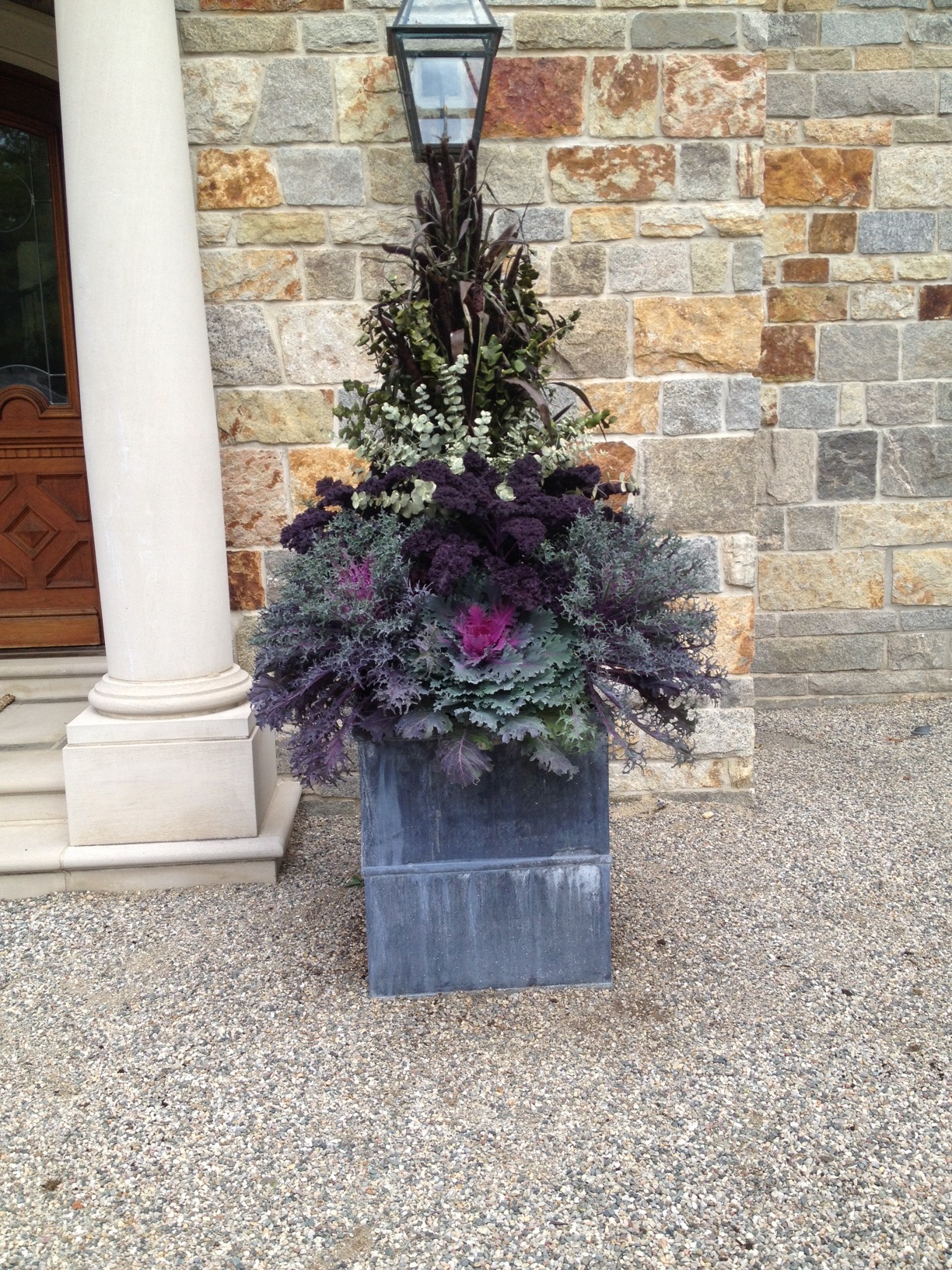 Red Bor kale is one of the most versatile of all fall container plants. They are tall enough to make a vertical statement. The crinkled dark purple leaves darken more as the temperatures get cooler. They are less rigid in shape than the other cabbages and kales, making it easy to fill in the gaps between the other plants.
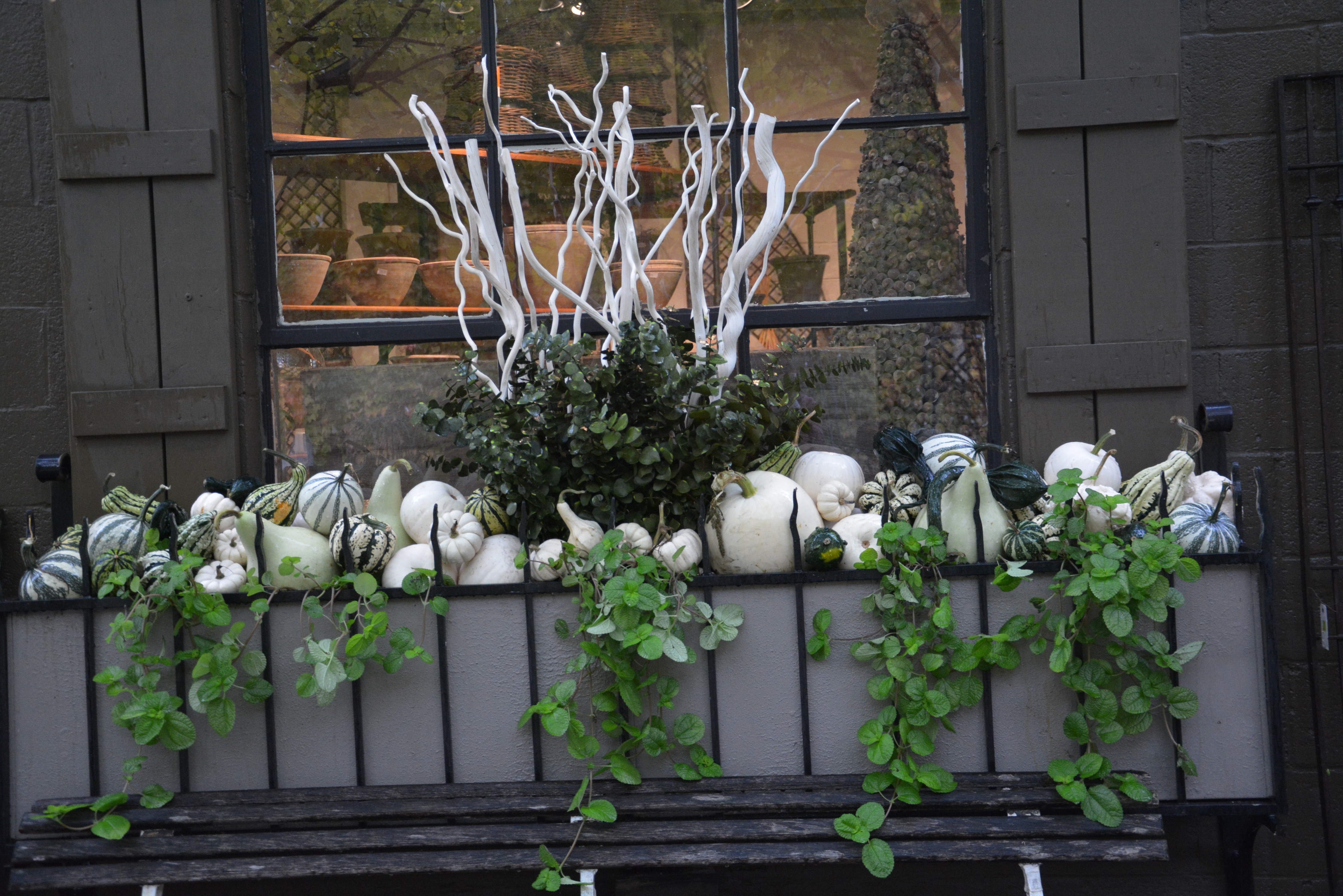 Not every fall arrangement needs to be standard issue orange and yellow. There is an astonishing number of white and green pumpkins and gourds to be had. Every grower has something a little different. Every fall I see gourd shapes and color combinations I have not seen before. An arrangement of pumpkins and gourds in a window box is as lovely a celebration of the fall as a boxful of foliage and flowers.
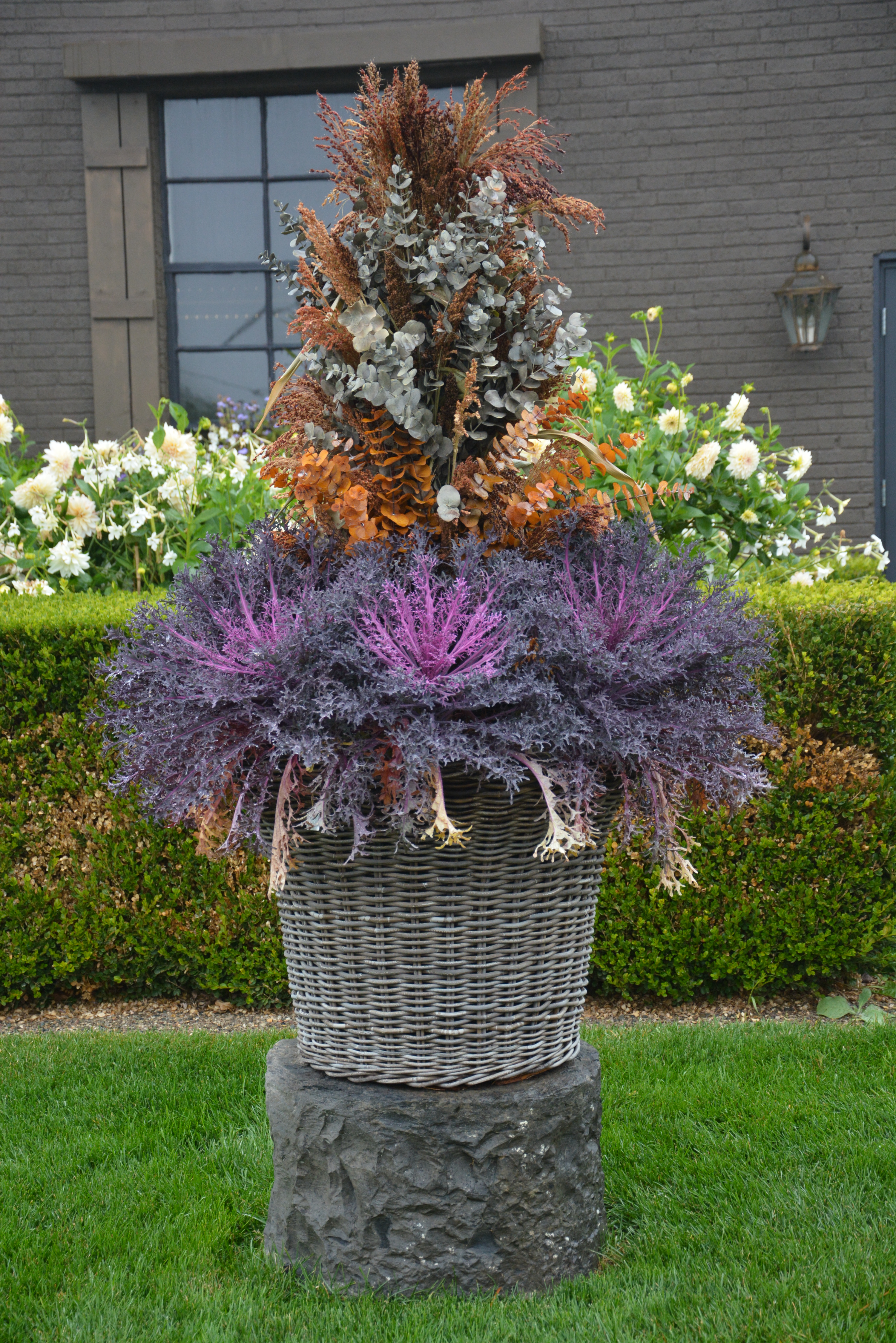 pots at the shop
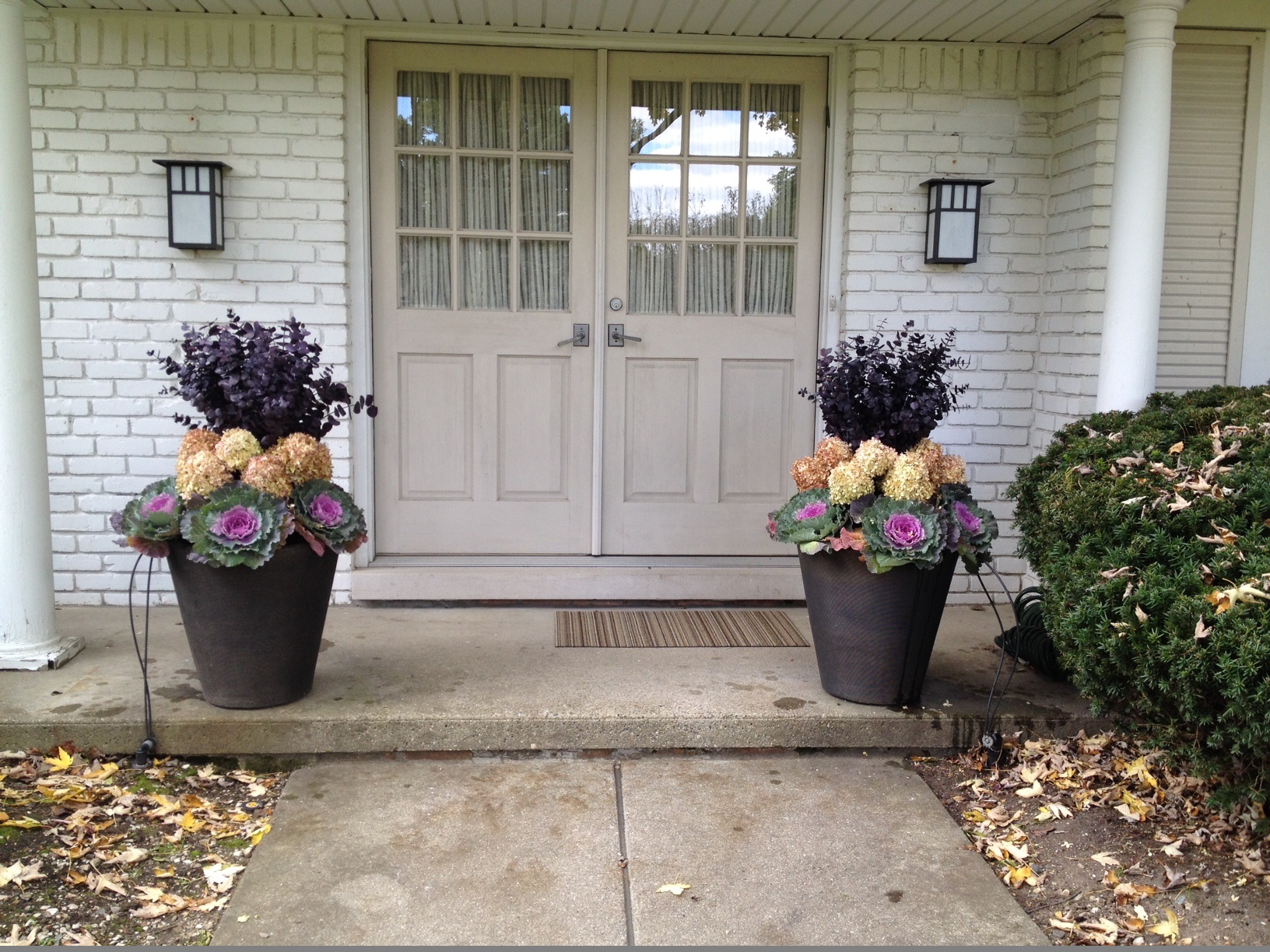 fall pots with dry hydrangeas
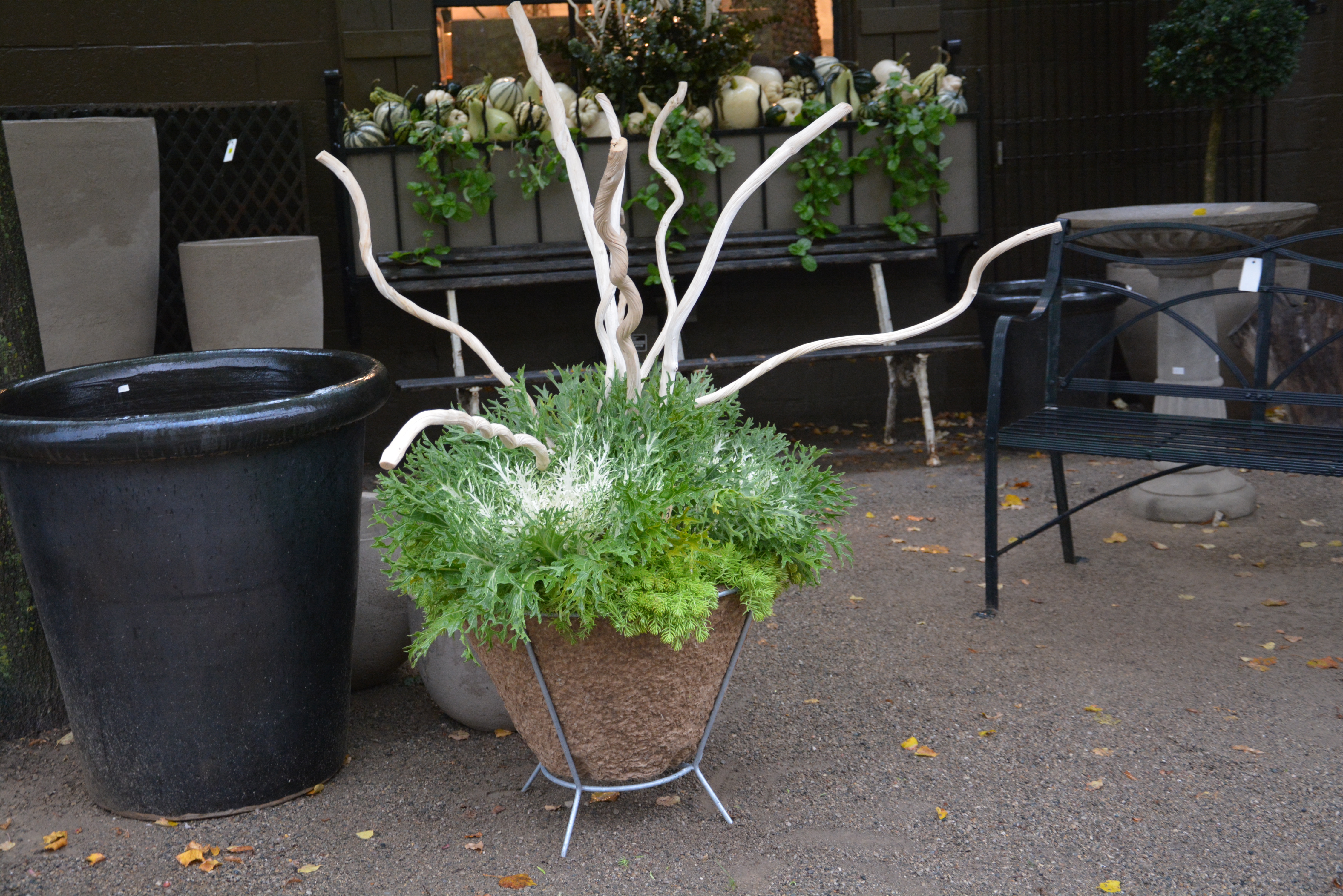
White kale and dry banana stems
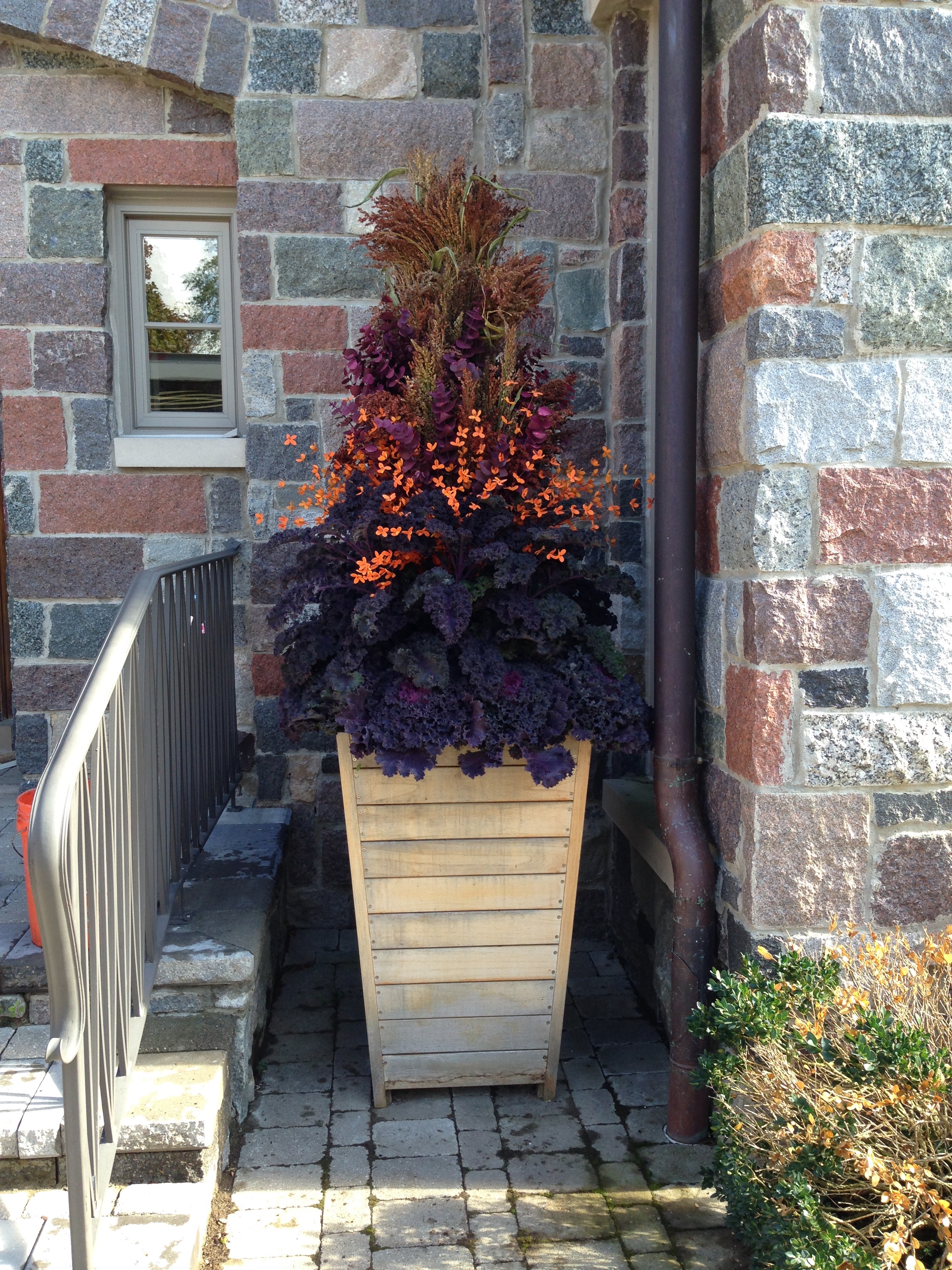
fall container with broom corn, plum eucalyptus, orange floral picks, red bor kale and red chidori kale.
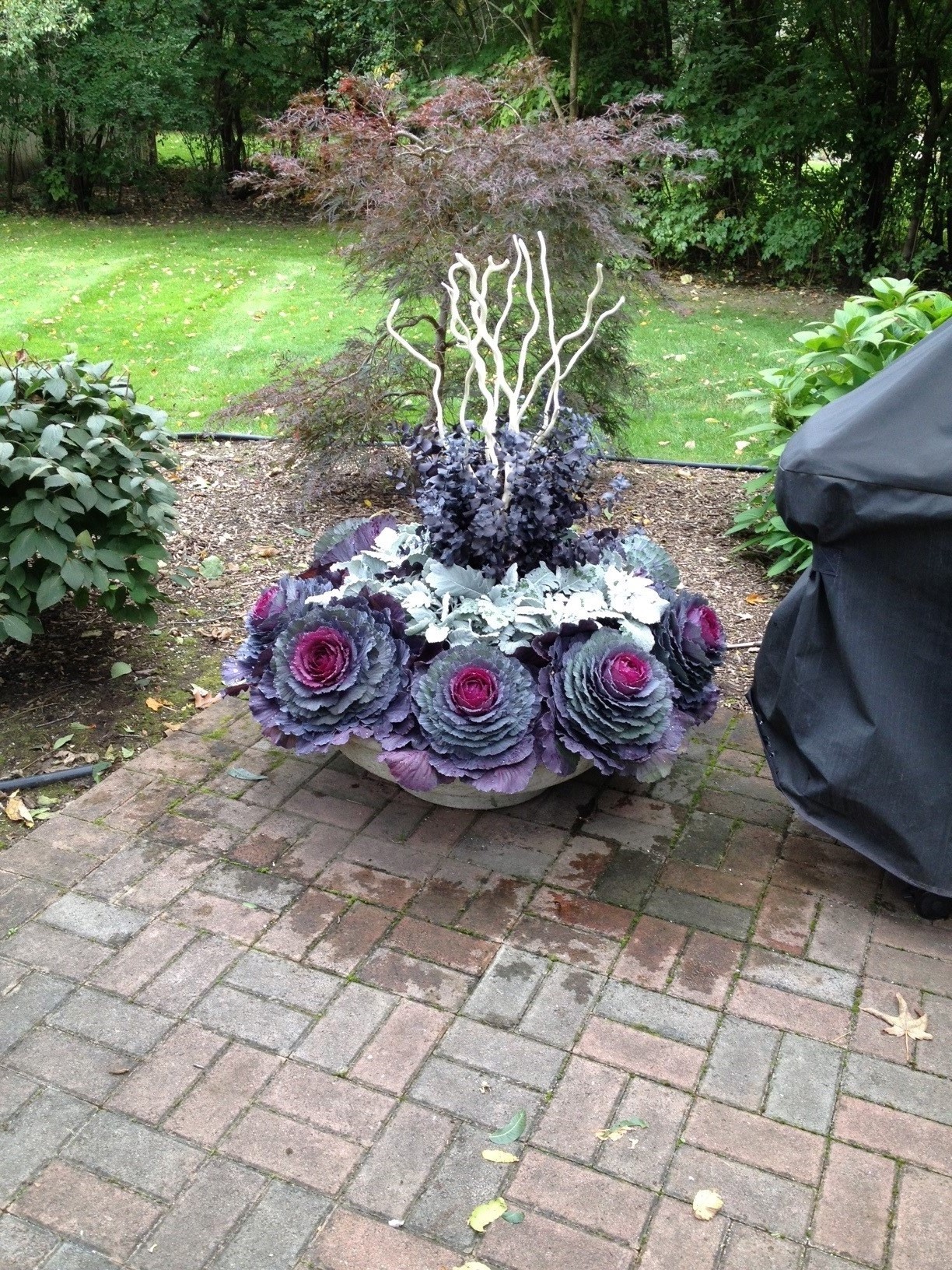 red cabbage, cirrus dusty miller, gray eucalyptus and white banana stems
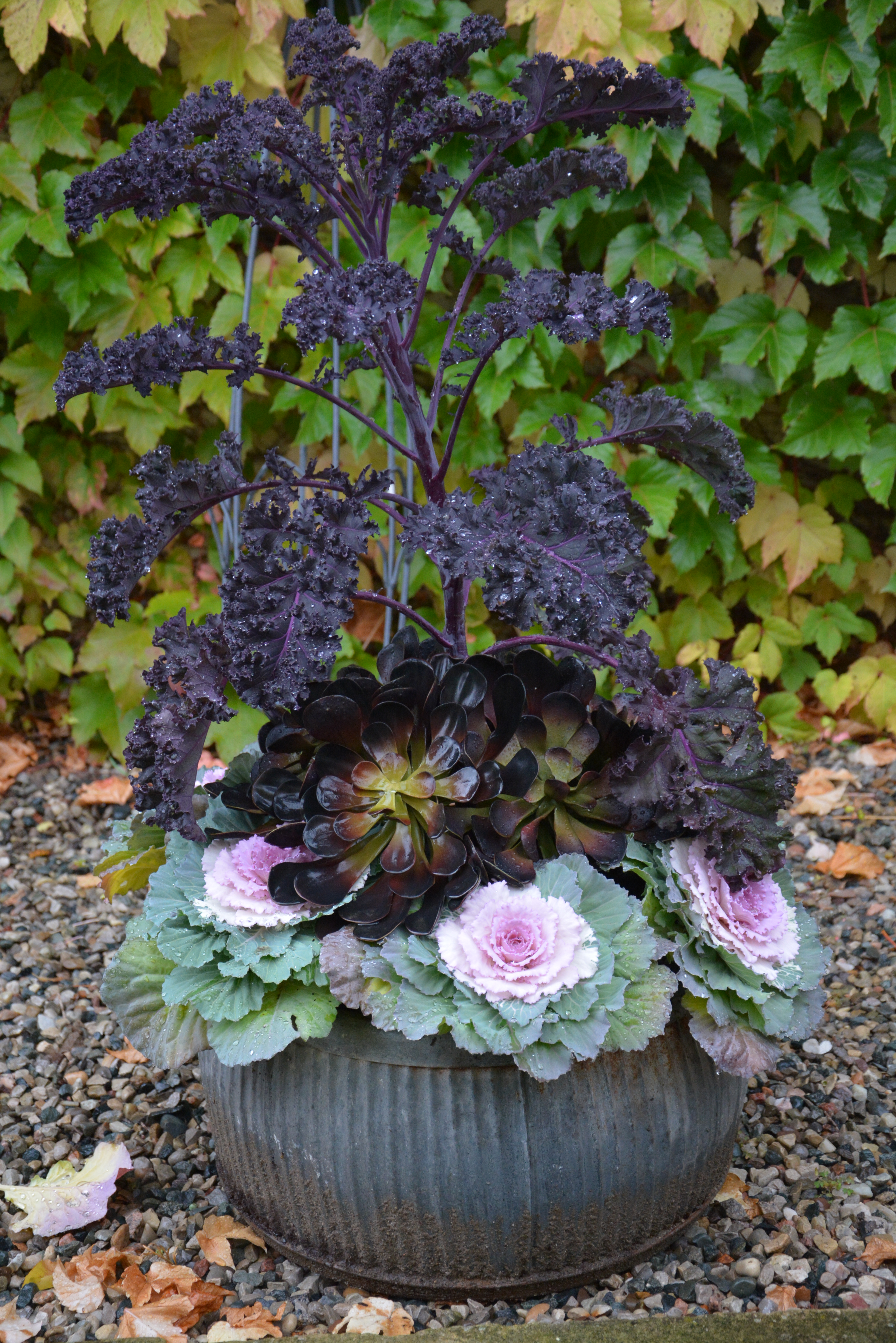
Red bor kale, pink cabbage and succulents
 How I am enjoying this beautiful moment.
 Don’t ask me for the particulars, but I do recall seeing a spot on television recently featuring lots of young people studying engineering. Engineering? It never seemed to me that a career in engineering was anything but sleepy-just one short step up from accounting. But these young people had solving the problems of the world on their mind. Their projects were as diverse as they were complicated. An artificial limb powered by nerve impulses, salt water desalinated for drinking. Housing simple enough to put up in just a few hours. I was impressed-enough to rethink my casual disdain. In fact, every project requires some engineering. A landscape design may require a grading plan, a drainage plan, a footing or a wall. It may require sleeves under a driveway, or lighting. It may require a flat plane of ground, or a slope that descends on a certain angle. Projects with the most modest of goals have than engineering phase. Cut flowers for an event of a certain scale and feel proved to need some careful engineering.
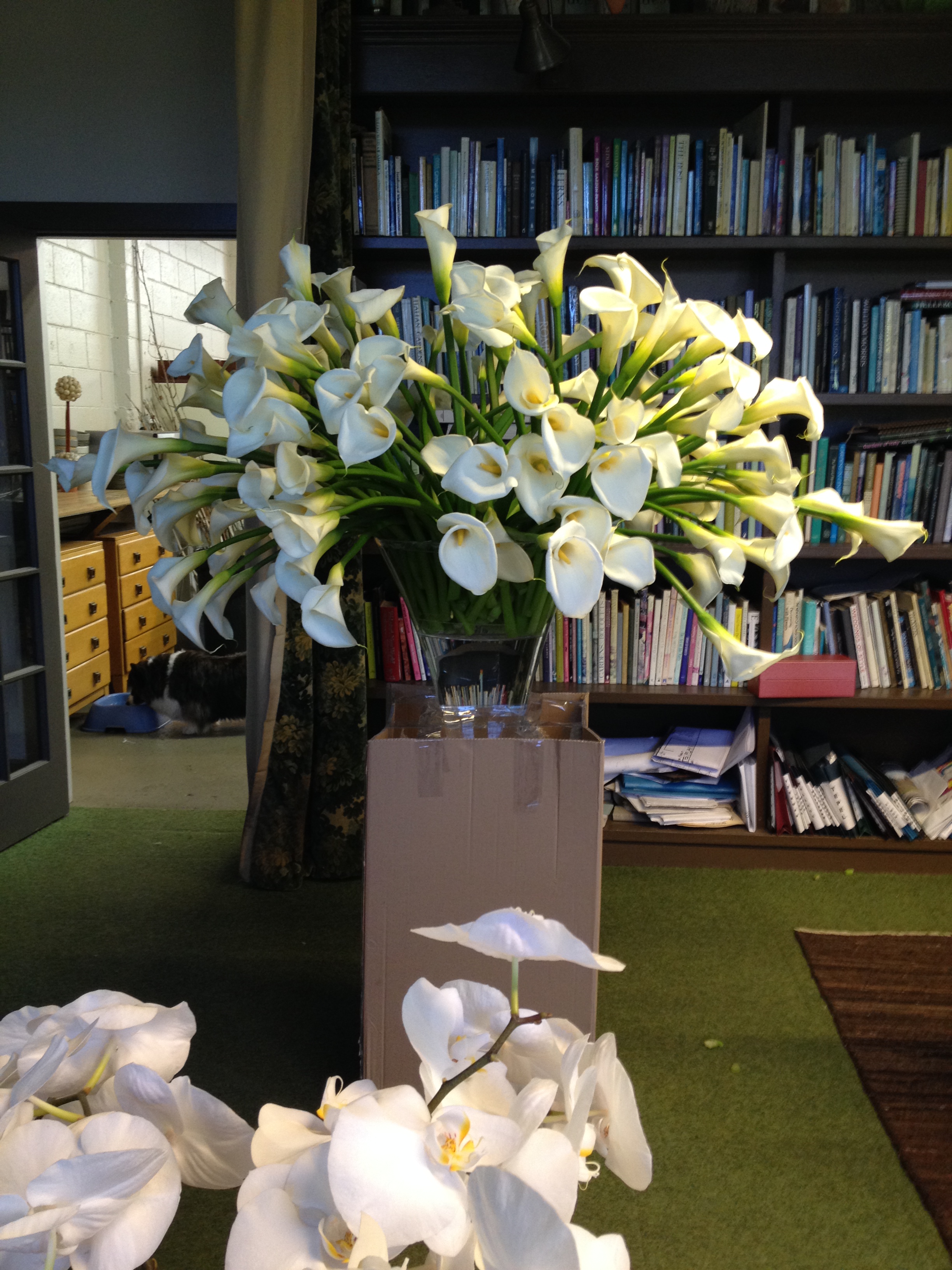 Any cut flower arrangement 6 feet tall and as wide asks for some engineering in advance-yes. Add to this call the fact that the flowers in question were calla lilies. Arranging callas in a small vase is a challenge. Consider their requirements. Their thick fleshy stems resent water that is too deep. They are not a good choice for a long term arrangement. The juicy stems split, give way and go down long before the flowers. Heavy, long stemmed flowers have a mind of their own. What was my idea to arrange armloads of callas in the top of a glass vase sitting 48 inches off the floor? The opening of the vase was big – 18″ in diameter.
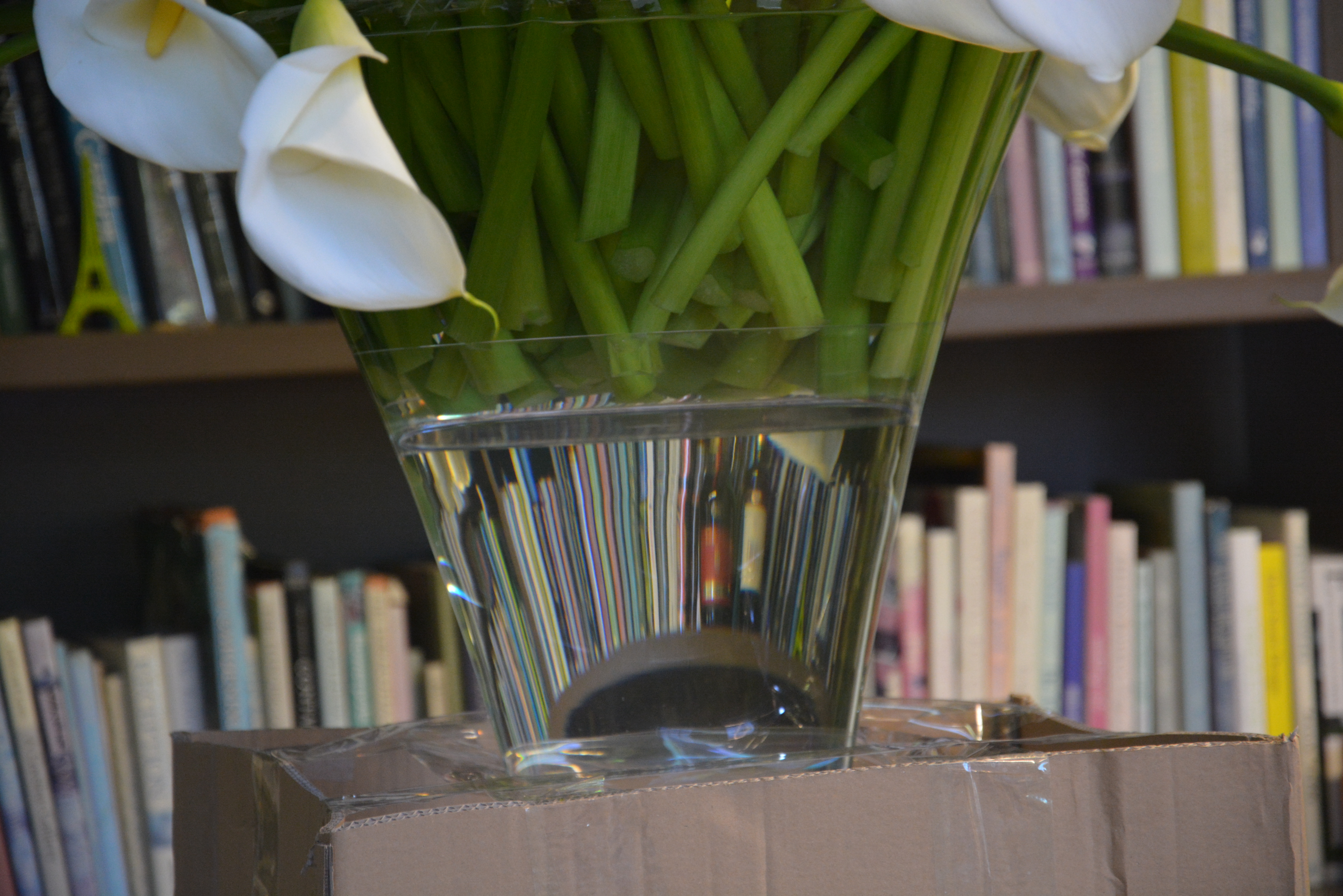 I have Sunne to thank for this engineering idea. The long time manager and special events coordinator for Mary’s Enchanted Garden in downtown Detroit, she brought years of experience in the floral industry with her when she came our way. A clear plastic saucer of just the right diameter was placed into the vase full of water, and wedged level and tight. This sounds simple, but it took a number of tries before Rob got it right. The calla lilies would have the shallow water they prefer.
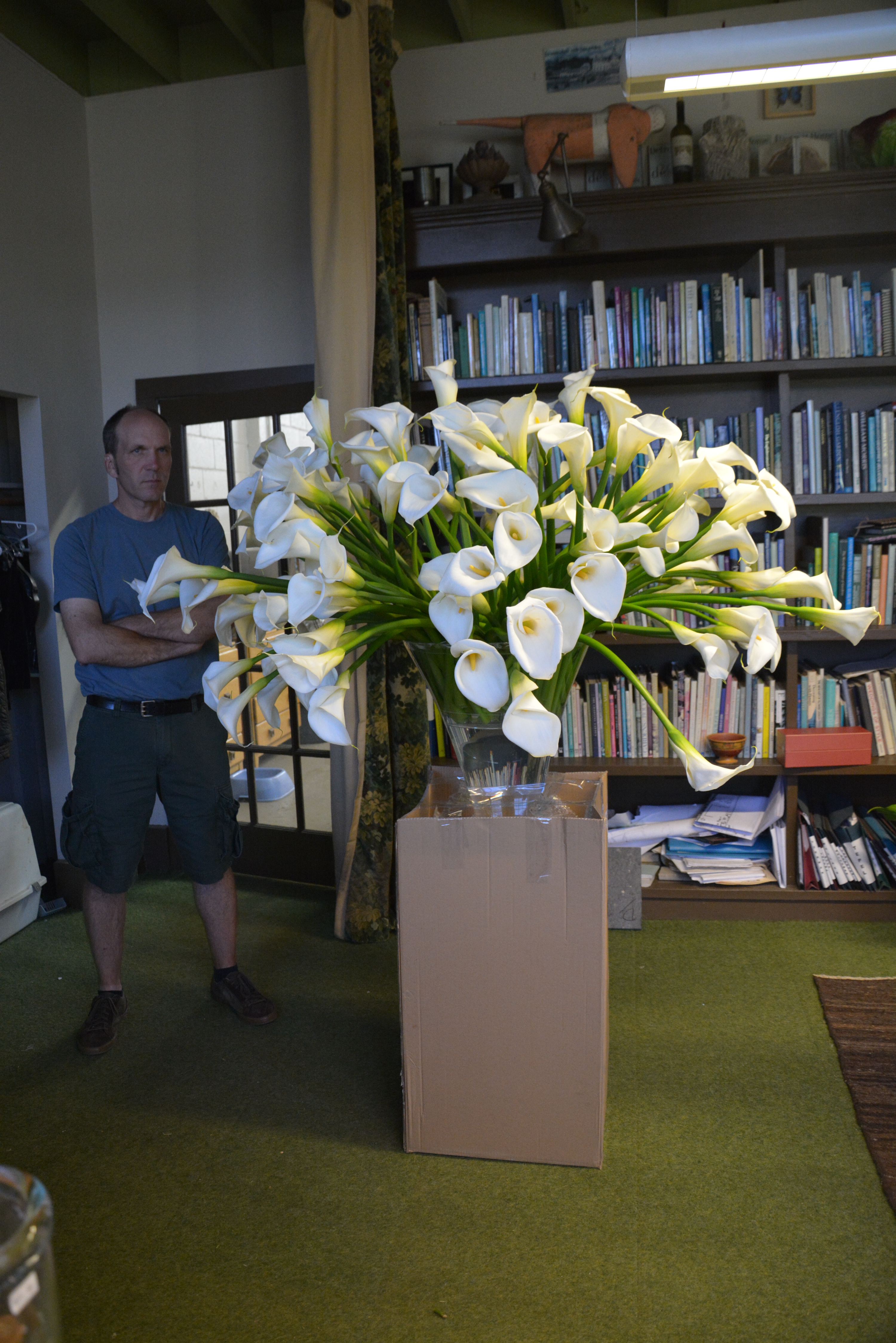 What came next was more about construction than arranging. Each stem was placed with the idea of creating a structure that would be stable and self supporting. After all, this event was not to take place in my office. This would need to be transported, and transported without a hitch. Callas have a naturally curving stem. The early stems were placed with the natural curve down, so the faces of the callas were turned up. Calla stems can be straightened with repeated pulling all along the length of the stem, but that takes a very skilled pair of hands that exerts just the right amount of pressure.
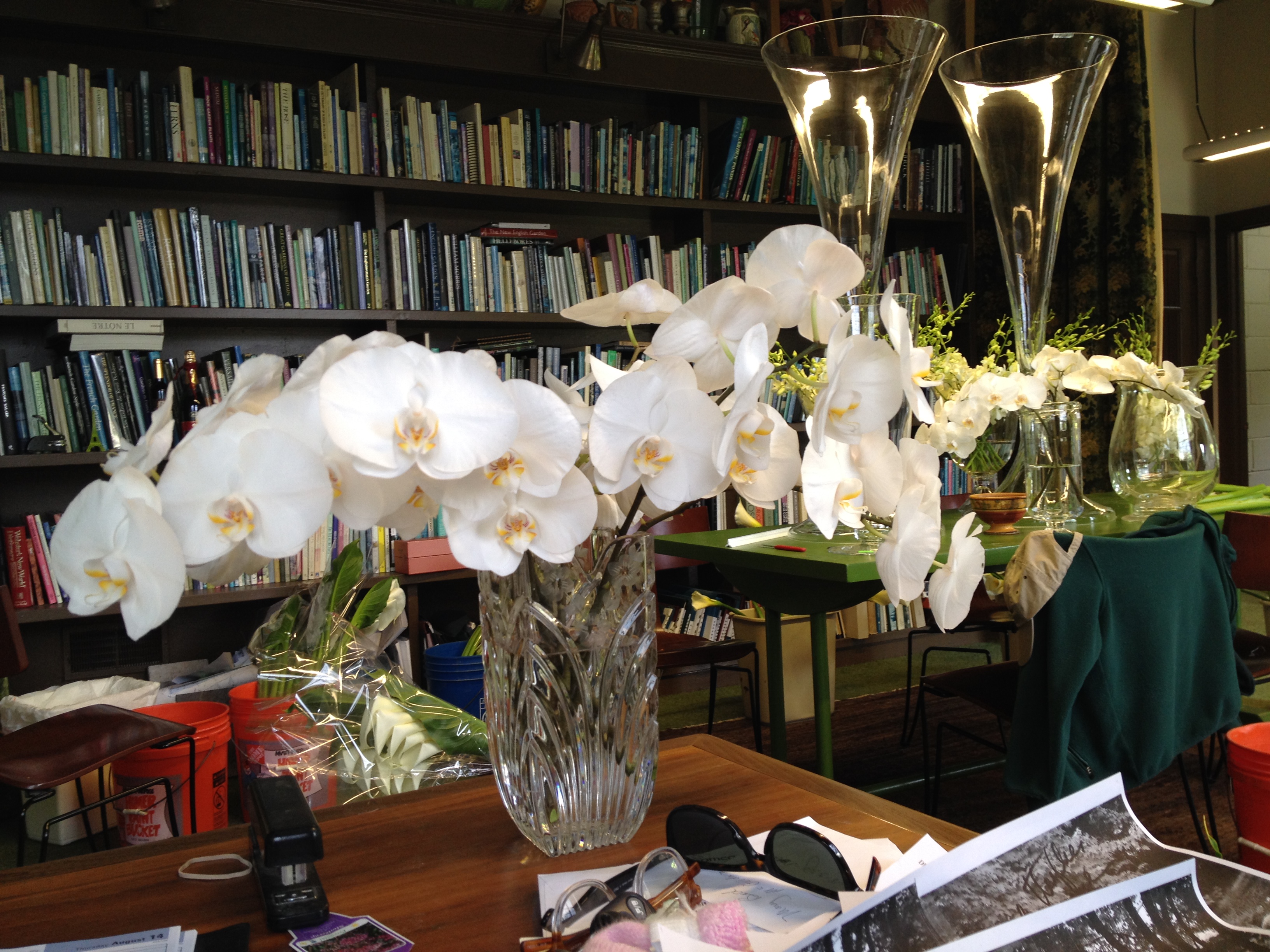
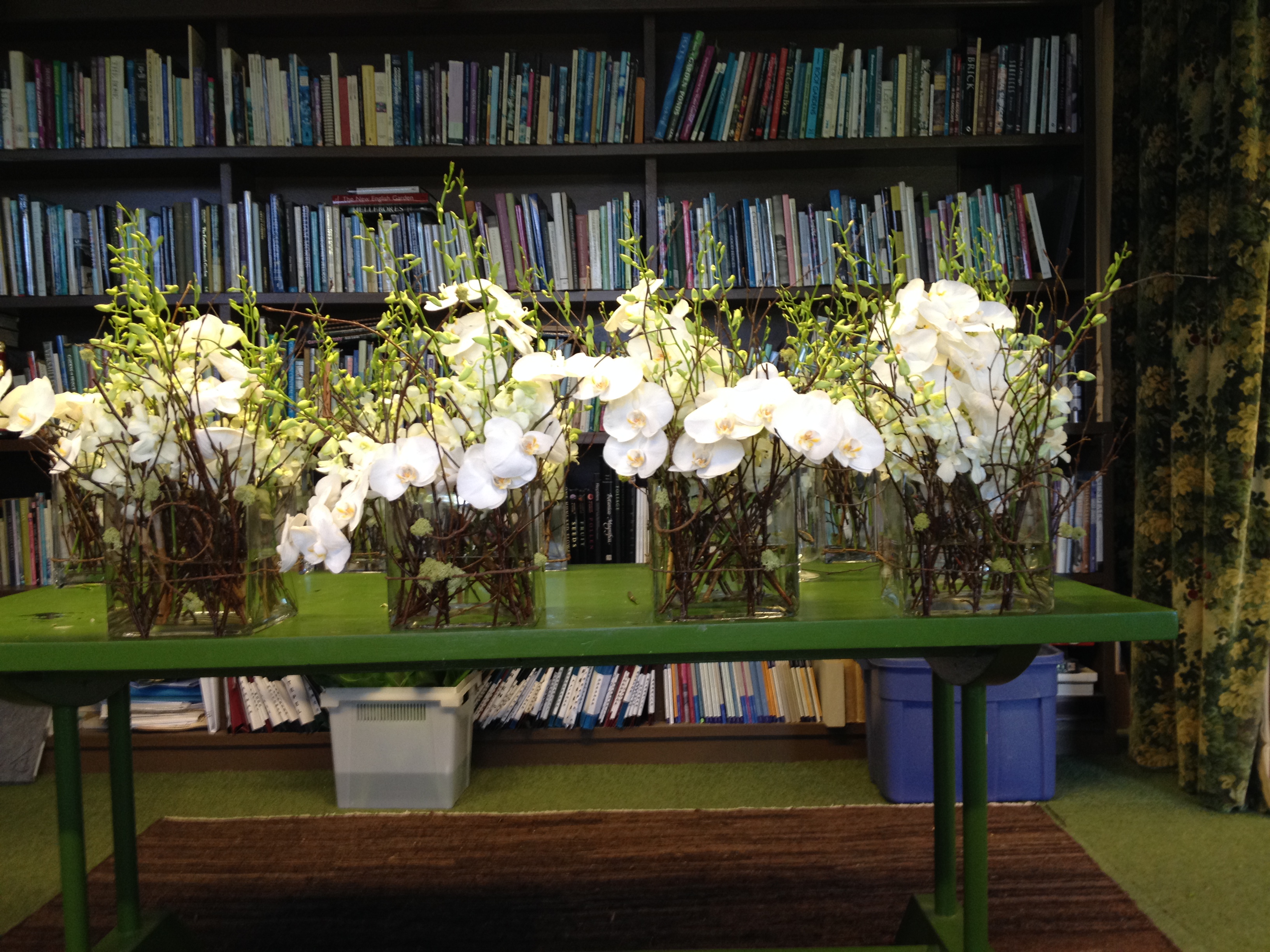 Other arrangements included white phalaenopsis, green cymbidiums and white dendrobiums. All of these flowers are orchids. The flowers of the white moth orchids are exceptionally delicate, and come packed in white shredded tissue. Each curving stem may have 6 or 8 flowers. These stems were supported by a series of birch twigs, placed inside and outside the vases.
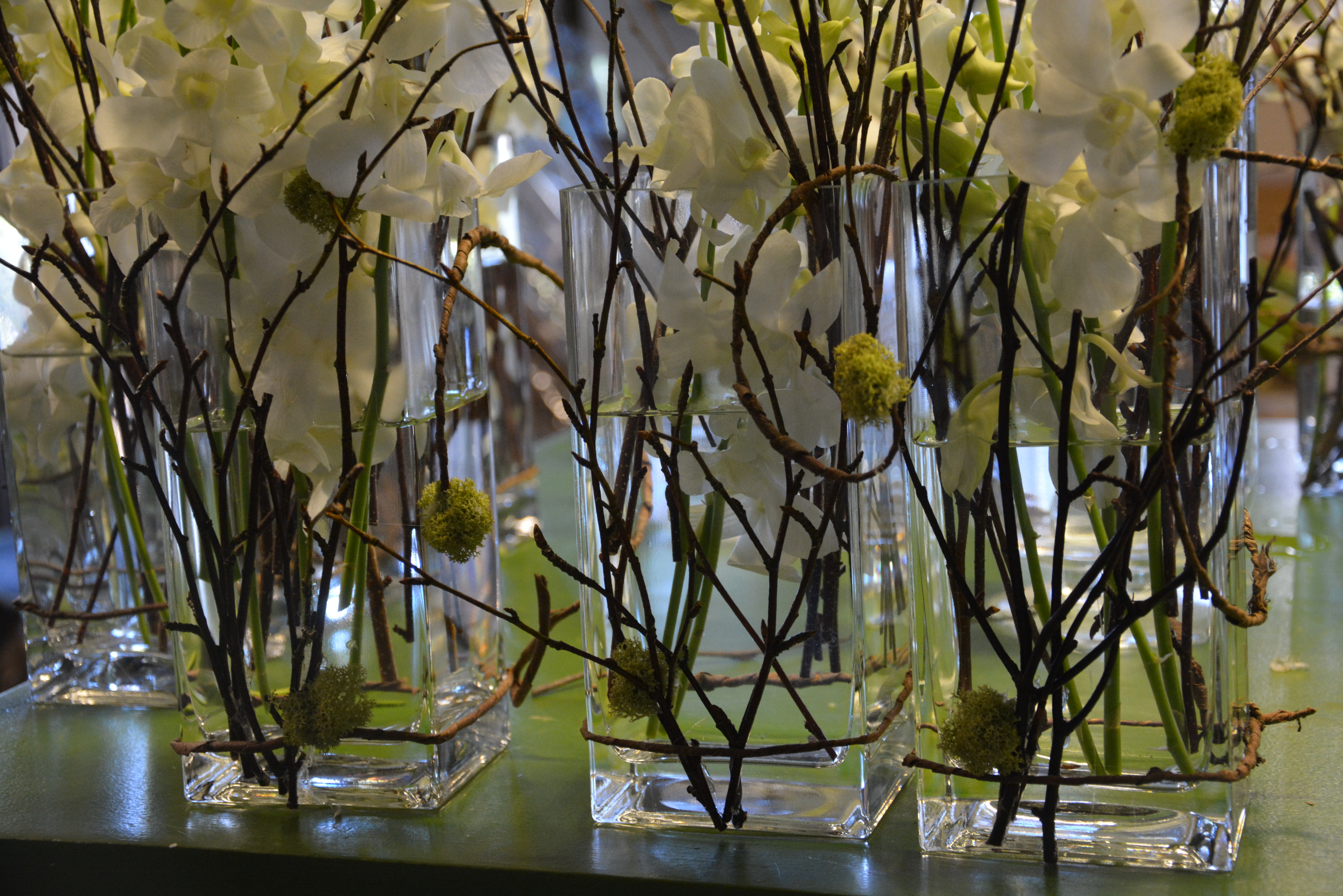 The twigs provided structure and support to the orchid stems. Their dark vertical shapes are in stark contrast to the curves of the flowers. Bark covered twine and moss completed the look. Next up, engineering the transport.
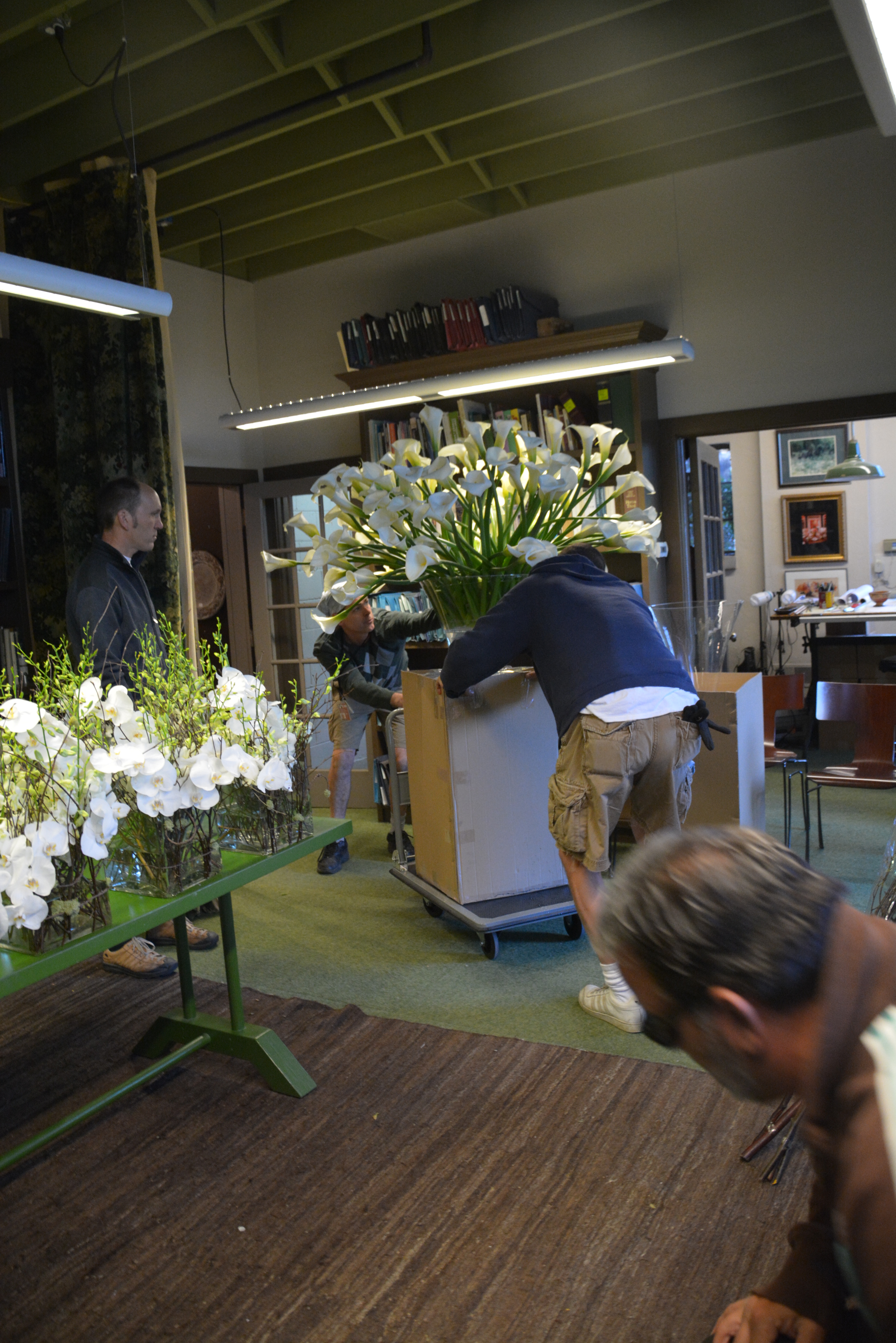 A platform dolly is a huge amount of help, but in the end, there is no substitute for the human hand. We had stuffed the box that held the calla vase with bubble wrap, but there would be a lot more to do before this arrangement would be road ready. The weight of the water in the vase was considerable, but the weight of the callas made the entire affair extremely top heavy. There were a lot of skilled hands on deck for this part.
 As I expected, water sloshed out of the top of the vase getting it from my office to the lift gate of the truck, but it wasn’t much. Much to my relief, the callas looked serenely indifferent to all of the bumps getting through the shop to the truck. Phase 2 of the engineering was about to get started.
 The time it took to remove the box from the vase, screw 2 by 4’s over the blanket-wrapped foot of the vase, wrap the upper portion of the vase in bubble wrap, and secure the arrangement to the walls of the truck with straps was a considerable amount of time.
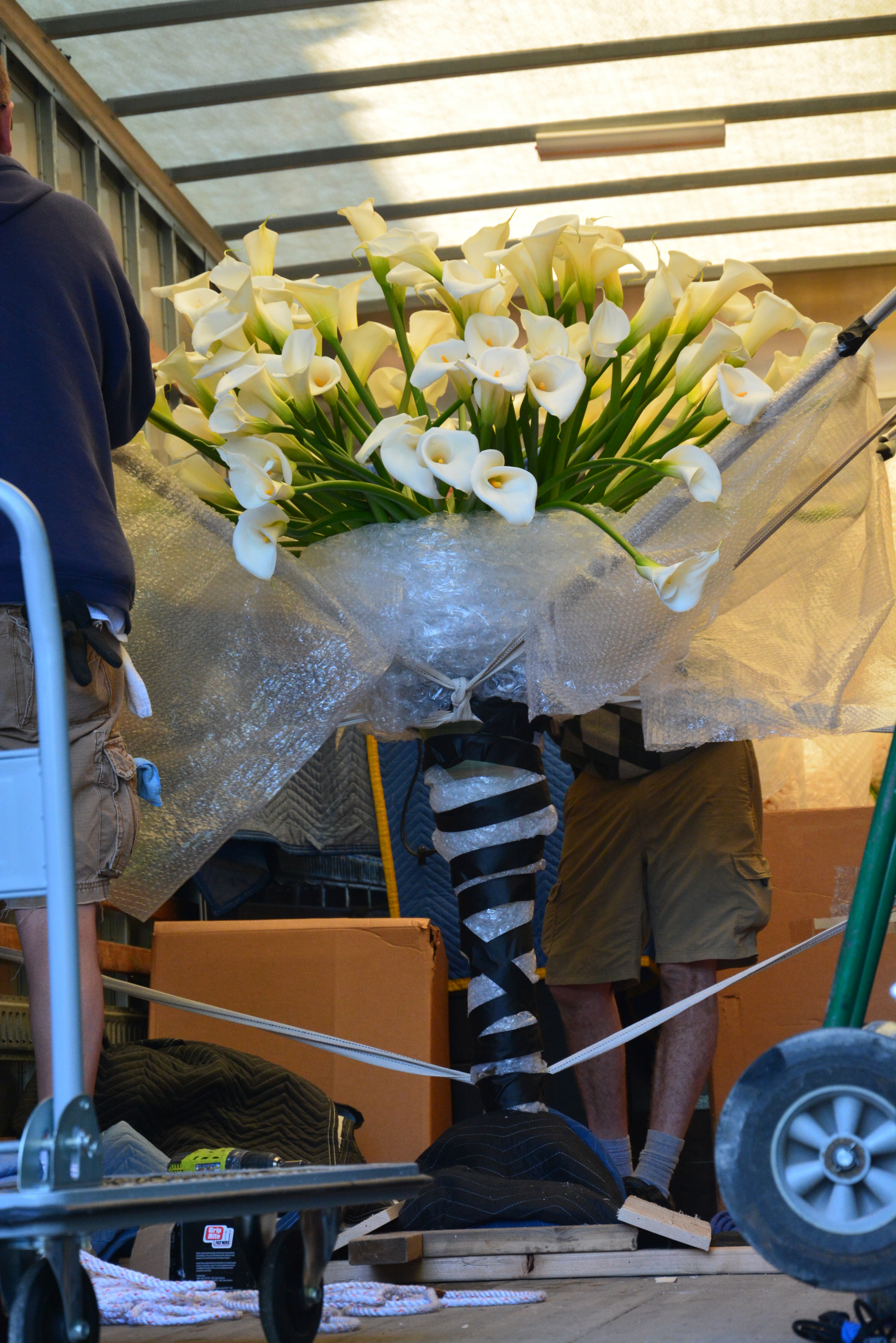 The juncture of the vase to the foot was very small, and vulnerable. Great care was taken to protect it. Fine textured bubble wrap insulated the flowers from the straps. All the engineering here was geared towards making sure the arrangement would not move in the truck.
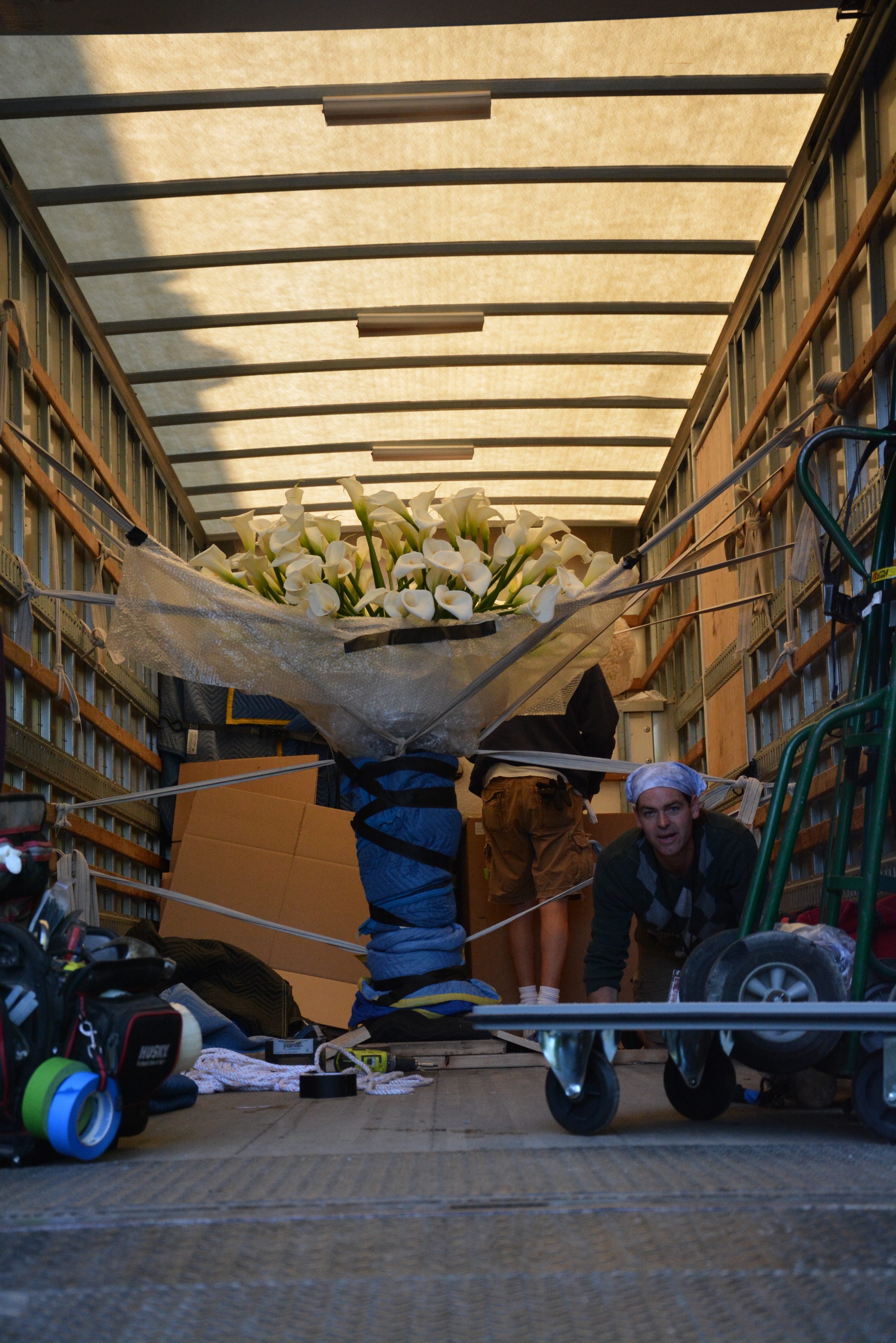 The big vase was finally ready to transport. I was sure the vase would ride up and down in tandem with the truck. That said, I was glad it would not be me driving.
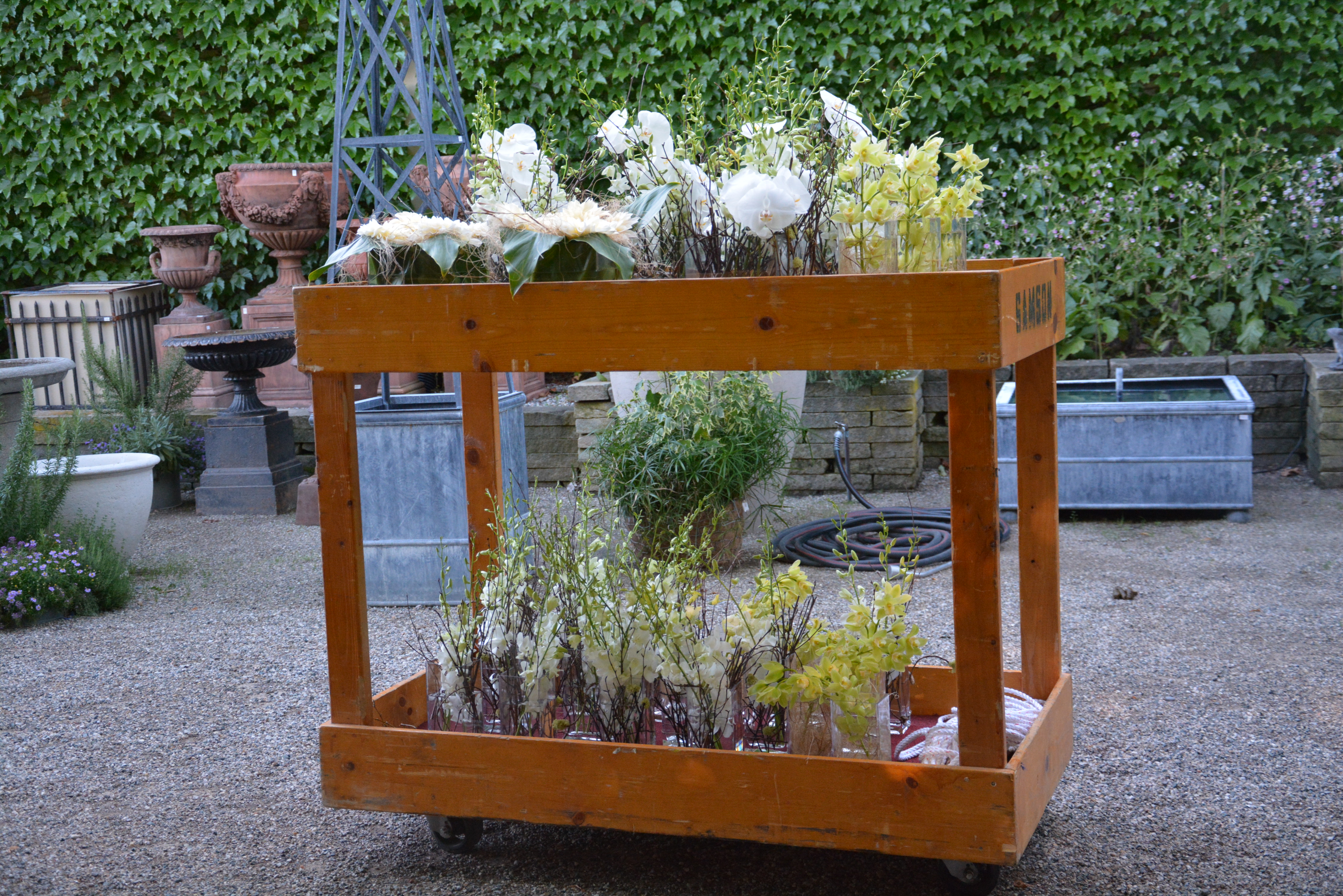 All of the smaller arrangements would ride on a two tiered padded cart. Just before loading, every empty crevice was stuffed with bubble wrap. The cart would be strapped to the wall of the truck. It should be clear that the engineering involved in this project was the most important element.
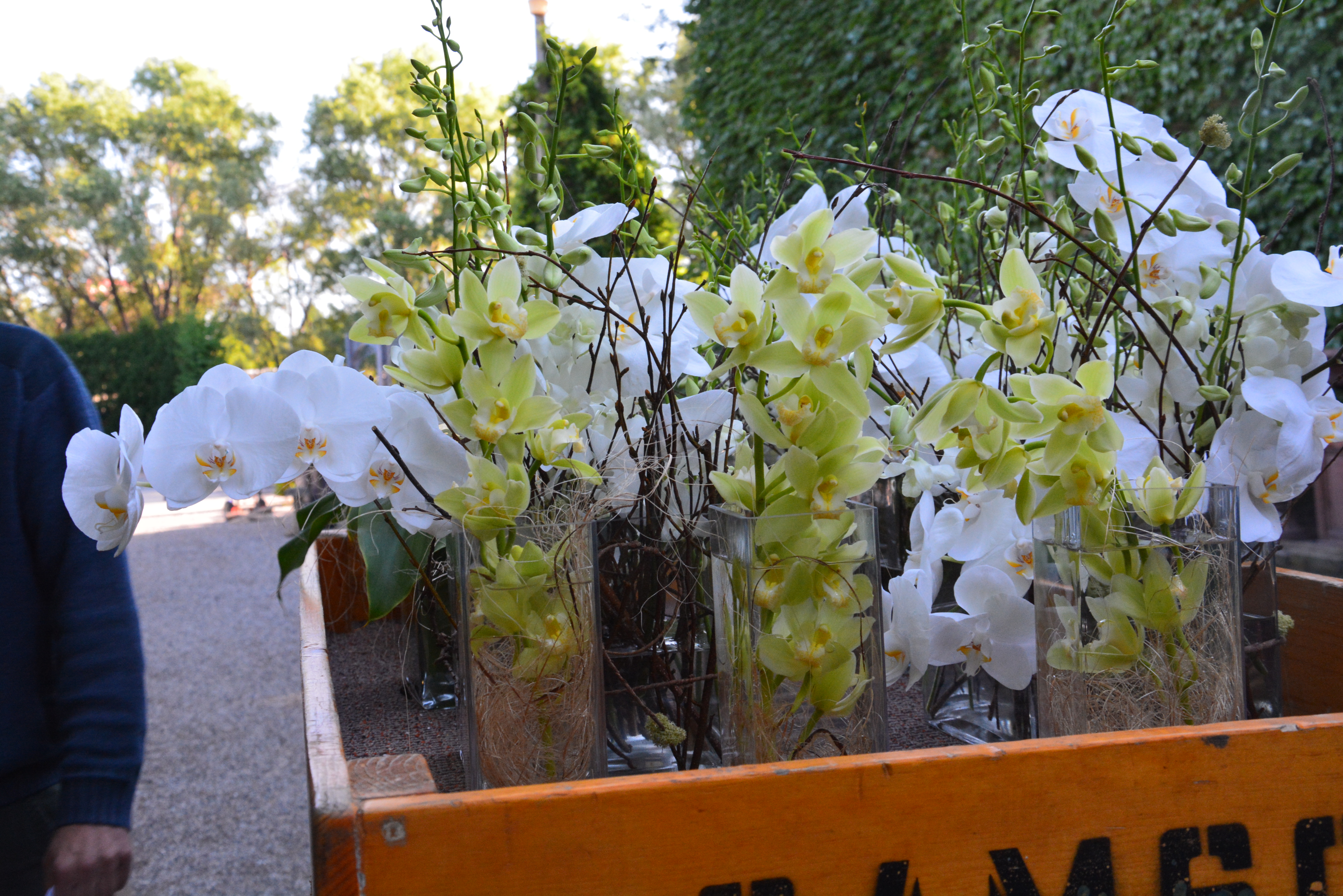 I am happy to report that all the flowers got to their destination safely.
 The time and thought that goes into the engineering of any project is time well spent.
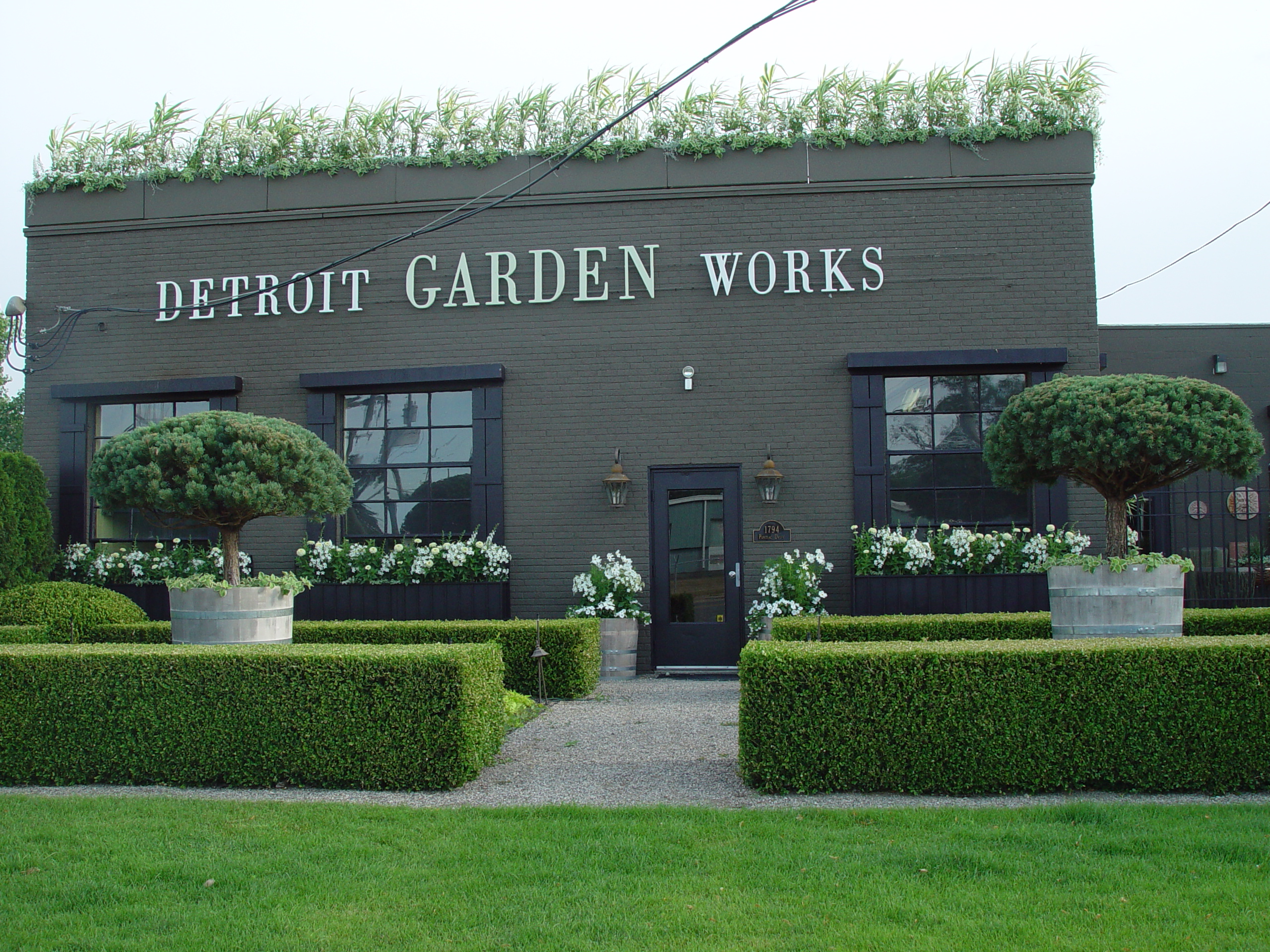 Boxwood is one of the most versatile and robust growing evergreens available for planting in my zone. There are a number of great cultivars. Green Velvet matures at 3′ by 3′, and keeps its great color all winter. Green Mountain is virtually identical to Green Velvet, but grows to 4′ tall by 3′ wide. Buxus microphylla koreana, pictured above, is hardy in this full south sun location, and can grow to 5′ by 5′. The winter color is a dull orangy bronze. Winter Gem boxwood is incredibly hardy, and grows slowly to about 4′ by 4′. The leaves are smaller, and narrower than Green Velvet.
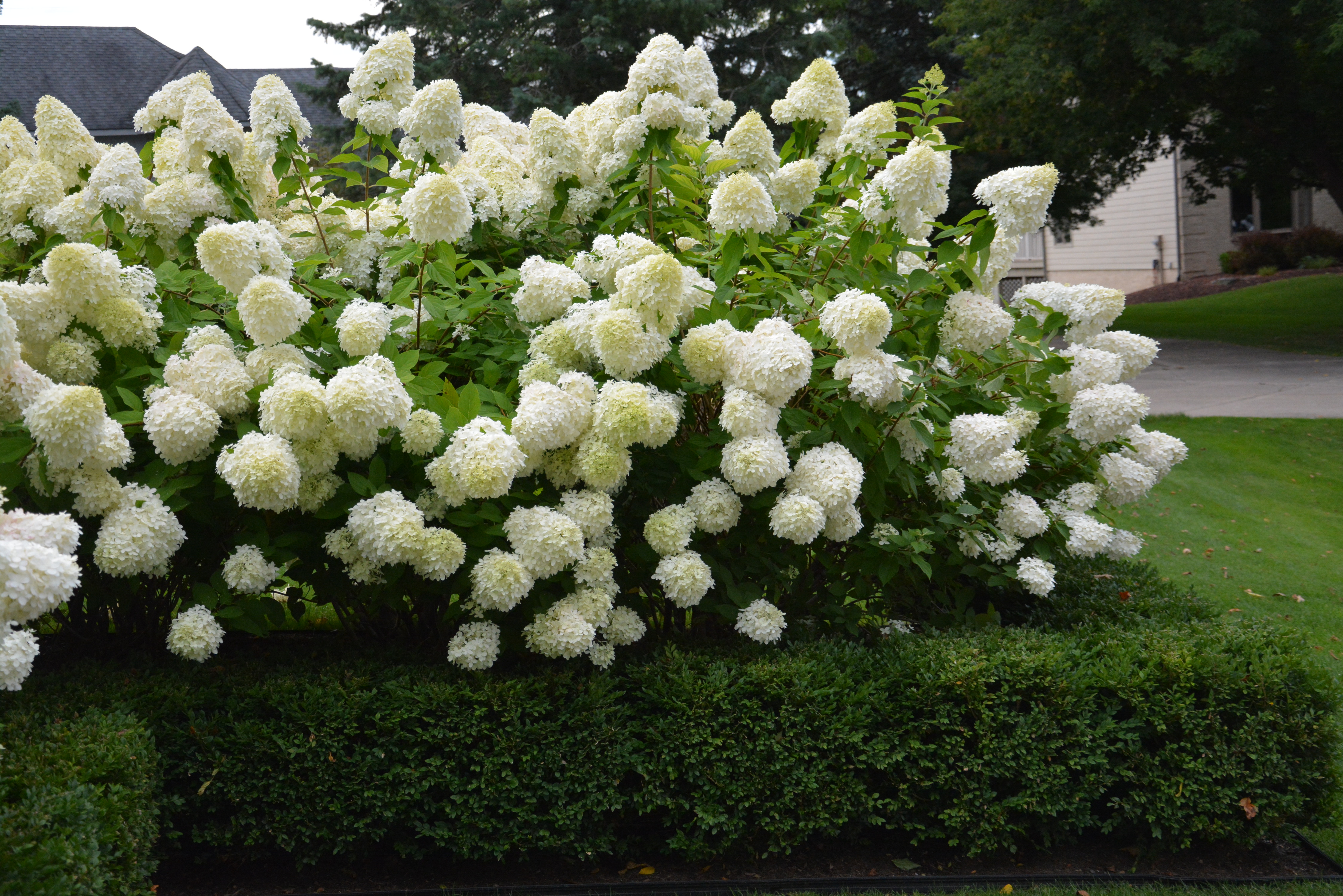 There are lots of other hybrids available. Vardar Valley is an outstanding hardy cultivar of buxus sempervirens. It matures at 1′ to 2′. The leaves have a distinctive blue green color. As it is a slow growing variety, it is not routinely offered for sale at local nurseries. Most of the boxwood sold in my area is grown in regions where the season is long enough to permit 2 flushes of growth per season. This means nursery can get a salable product faster. Boxwood is graded by width-not by height. A boxwood takes about 7 years to grow to an 18″-24″ size. This makes them relatively expensive to buy, compared to other ornamental shrubs that grow quickly.
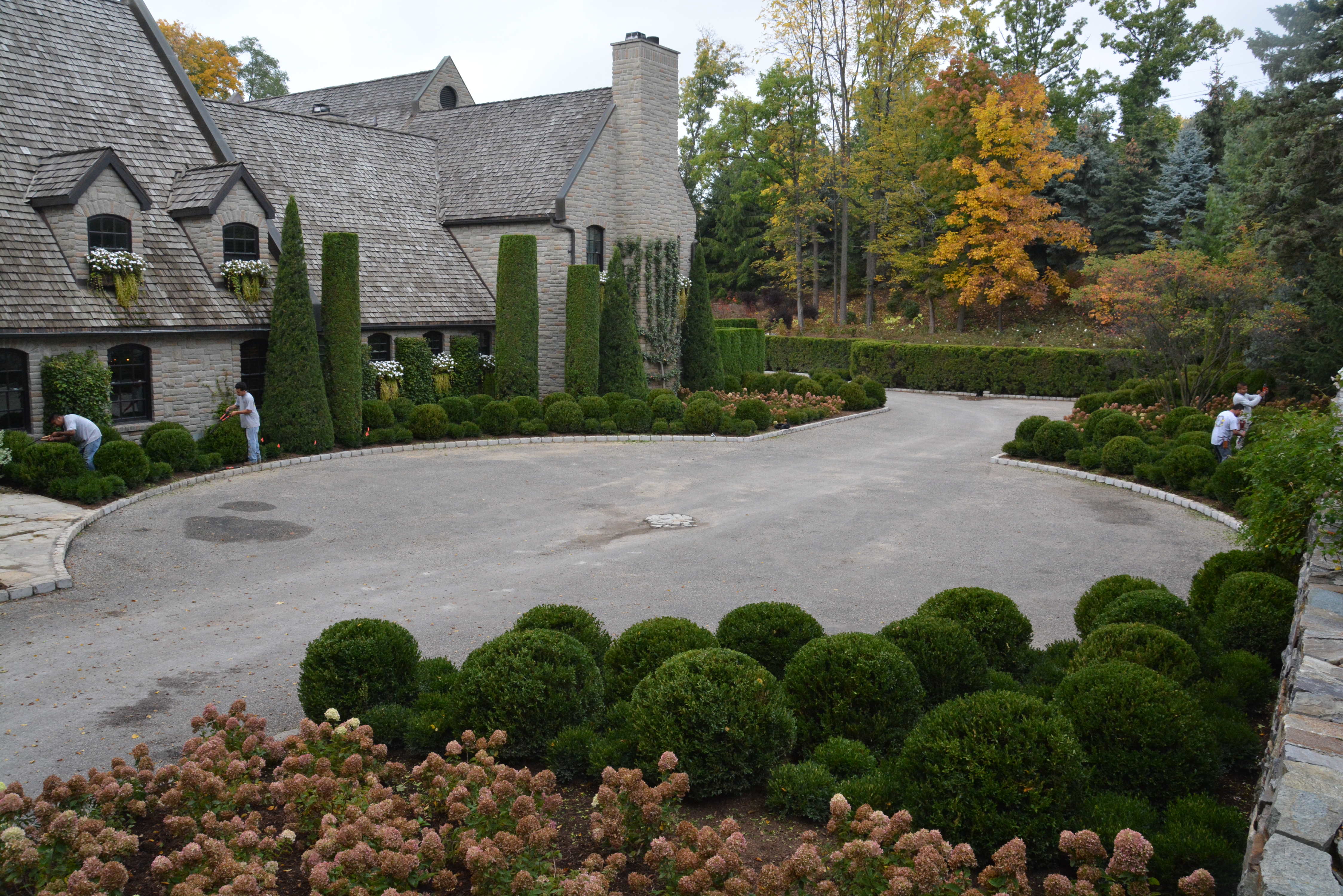 Boxwood is indeed a versatile shrub. They make great hedges, as their growth is uniform, and they are very tolerant of pruning. That tolerance makes them an ideal subject for living sculpture. Boxwood pruned into spheres, squares, cones and cylinders are striking and delightful. The large boxwood in this landscape will be kept pruned in spheres. The small boxwood will be allowed to grow together, and will be pruned flat. This garden will have a much different look in a few years. All of these boxwood are Winter Gem. The fine textured foliage makes them ideal for pruning into a formal, strictly geometric shape.
 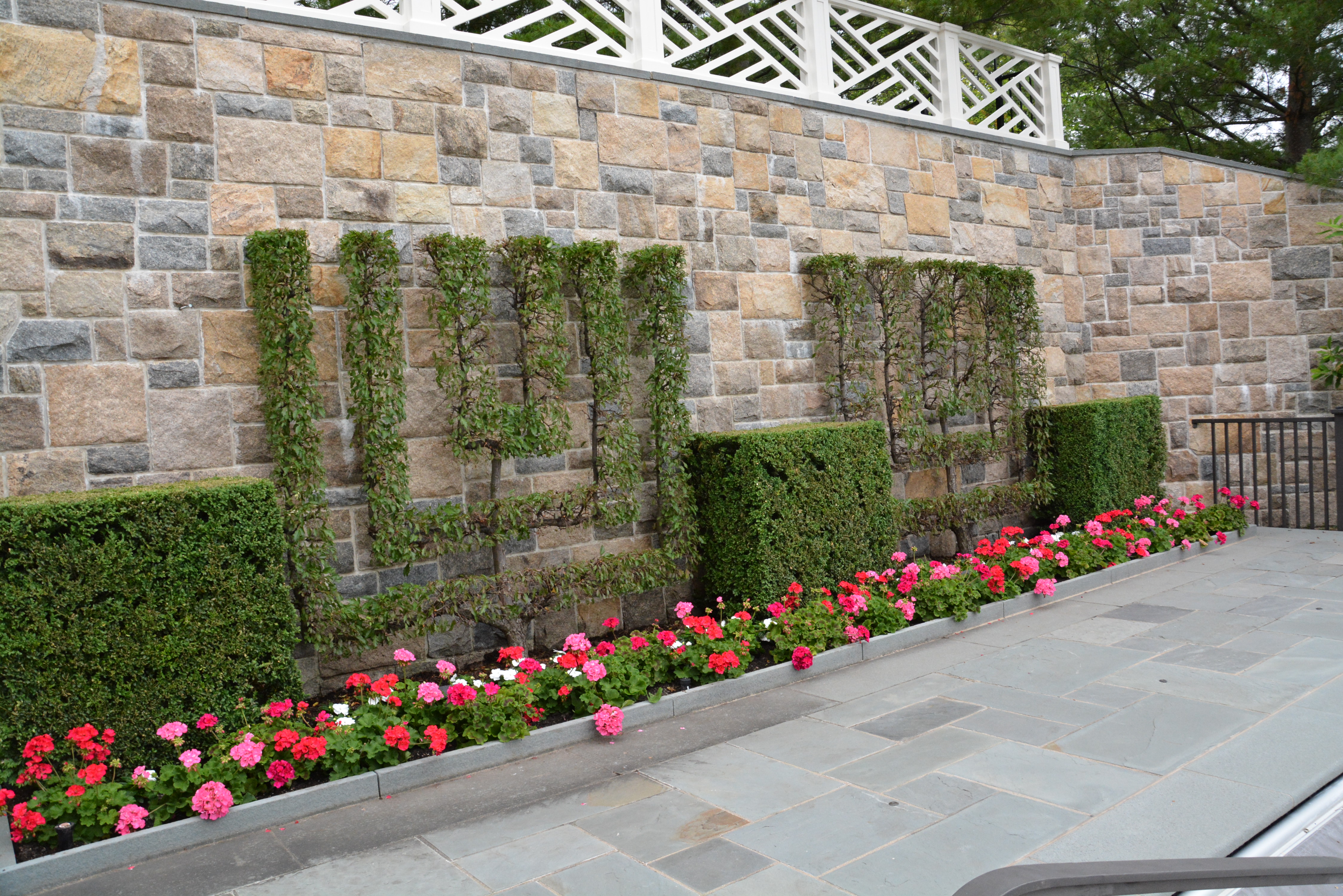 Boxwood are quite friendly to other plants. Provided care is taken in the selection of a cultivar for a specific site, they will stay in bounds. These boxwood rectangles are a beautiful foil for the clipped espaliered crab apples. If the face is pruned on a very slight angle out from top to the bottom, they will stay green all the way to the ground. A boxwood which is hard pruned into a specific shape will stay green on the interior.
 Boxwood makes a fine tall ground cover under a tree. They are quite shade tolerant. A small landscape such as this is all the more interesting for a change of level. These boxwood are a welcome visual intermediary between the ground plane, and a linden which has grown to substantial size. That they are shade tolerant means they can be sited in lots of places. Naturally grown boxwood make a lovely backdrop for ferns, hostas and shade tolerant perennials. A boxwood provides a green backdrop for the earliest of perennials to appear in the spring. The small textured foliage makes them a great companion for the bigger textured hellebores, and European ginger.
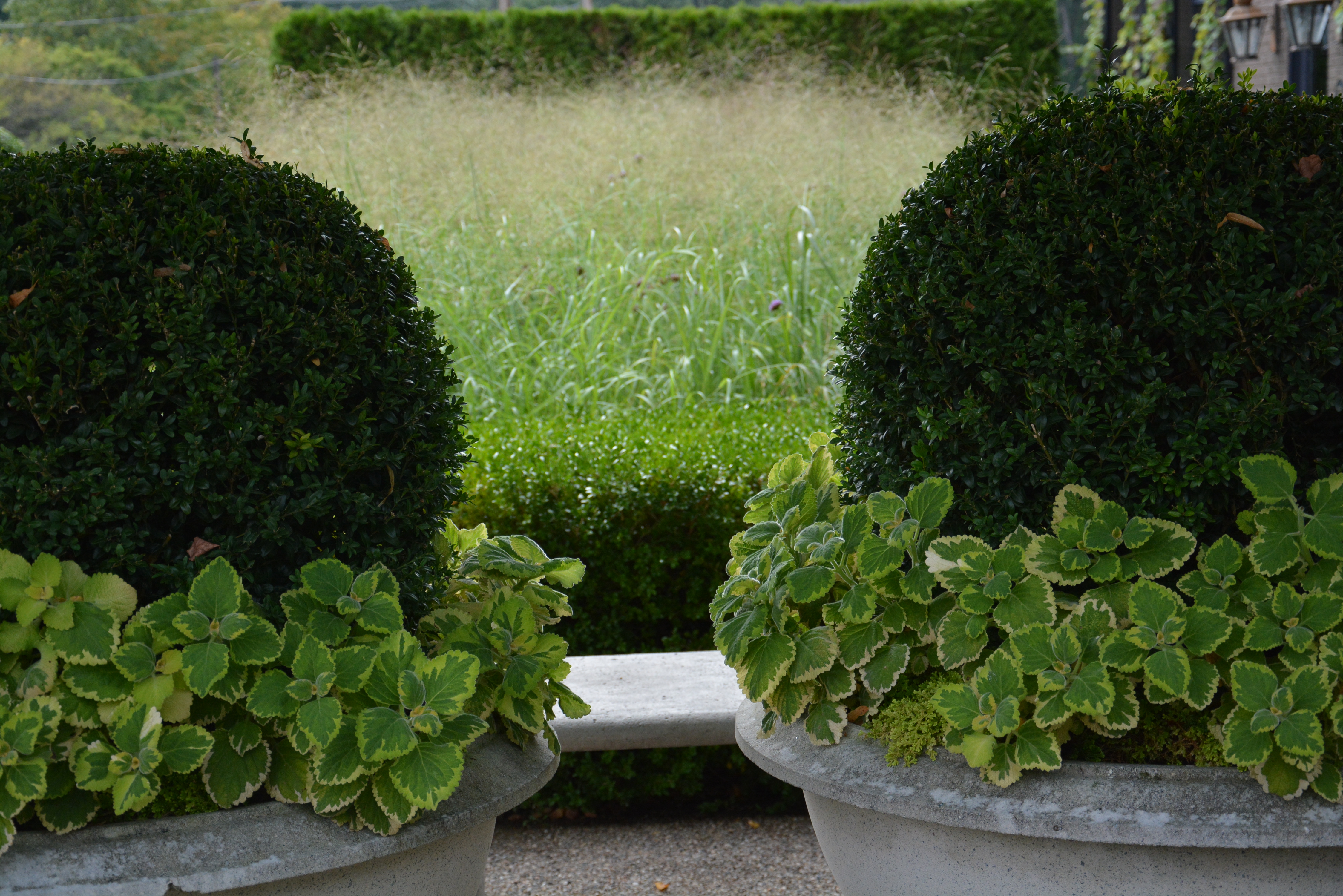 A boxwood would go so far to oblige a gardener who wishes to grow them in containers. They do need large enough containers so there is room to grow. The root ball of a decent sized and well grown boxwood might be larger in diameter that its leafy component. Boxwood in containers need special attention to proper watering. They need to be well watered prior to freezing weather. They will rely on water stored in the stems and leaves to survive they winter, as the water in the container cannot be absorbed when it is frozen. Boxwood in ground has much more widespread moisture available to its roots, especially given how long it takes for the ground to freeze to any significant depth. A boxwood confined to a pot needs regular water.
 Pruning boxwood takes more than a good eye. A great job invariably involved the setting of level lines. Relatively level boxwood has a forlorn and unfinished look. This boxwood has been pruned level with the horizon, even though the driveway drops down to the street. The boxwood at the bottom of this drive is quite a bit taller than those plants at the top. Level boxwood has a serene and solid look to it.
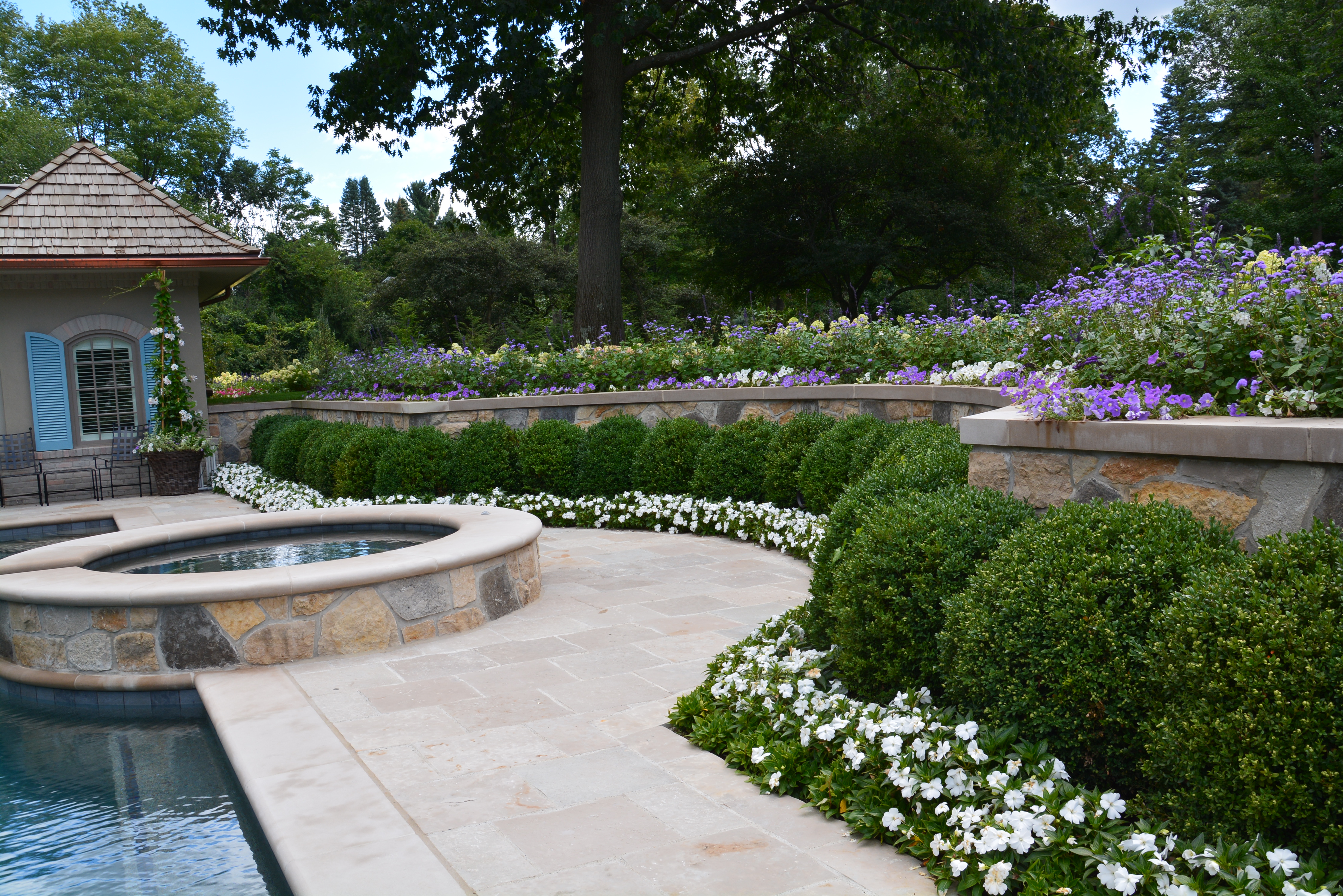 Boxwood can help provide structure to a garden. This densely growing shrub provides a simple and strong contrast to the garden elements. This pruning is loosely formal, and softens the stone wall behind them.
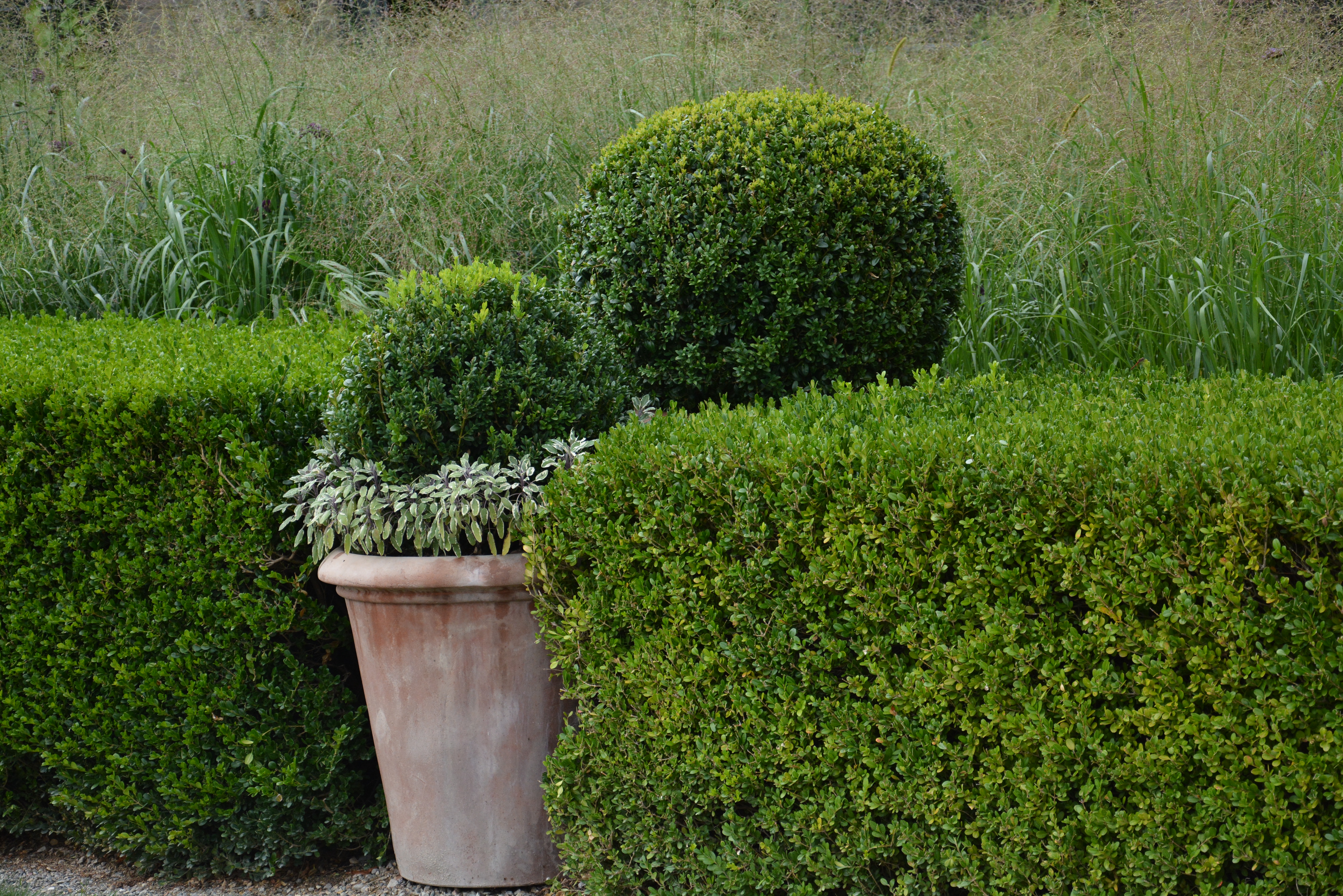 I have written about boxwood plenty of times before – I do like them. It was painful to see how many boxwood in my area were severely damaged or killed outright by our last winter. Some were crushed by the huge snow loads. Others in more exposed locations were damaged by the extreme cold. That cold, in conjunction with sun and wind burned the leaves. Leaves that were completely desiccated, died. It took the coming of the spring weather to see how terrible the damage truly was. Some of the boxwood at the shop died outright. The damaged portions will take years to recover.
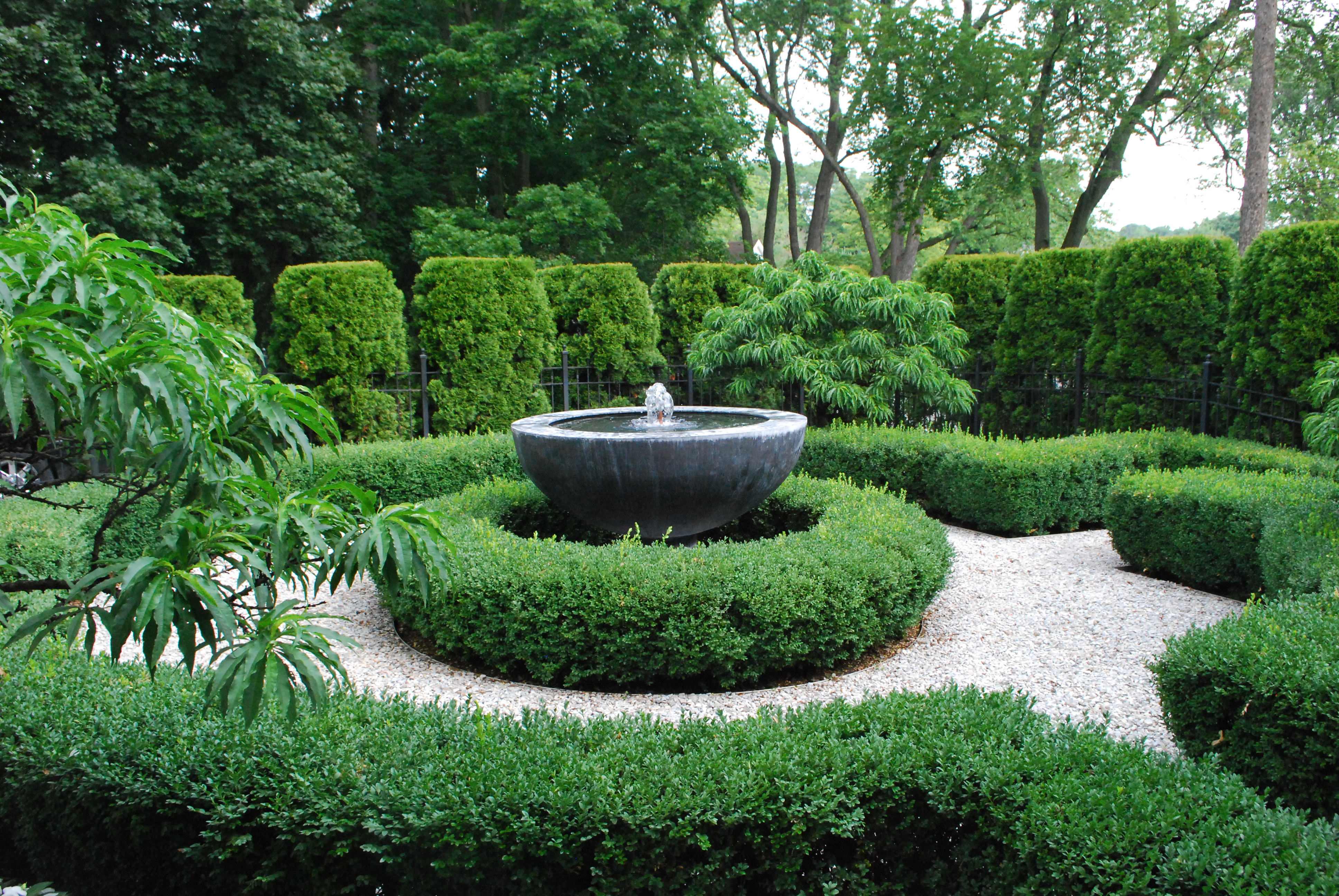 If you have ever hung a boxwood wreath on a shaded door for the winter, or used cut boxwood in winter pots, you know those stems will dry out, but stay green until the temperatures moderate. Like many evergreens, by the time a boxwood shows signs of stress, it is too late to remedy the problem. Now that fall is approaching, I would urge anyone with boxwood in my zone to spray them with an antidessicant. An antidessicant is a waxy coating with will slow the evaporation of water from the leaves in the winter.
 I have heard talk that this winter looks like it may be a very cold winter. Something like last winter. Though boxwood is hardy in this zone, extreme cold, sun, and drying winds can damage them. Though a boxwood may grow out of winter burn, that look is unsightly come spring. If your boxwood are 15 years old, it will be very expensive to replace dead plants with new plants of the size you already own. Last winter was dramatic evidence that winter protection for boxwood is a good idea.
  I recommend Vapor Gard. It is widely used as an agricultural antidessicant. The main ingredient is pinolene, a natural polymer made from pine pitch. It can significantly reduce winter burn. You can buy it, dilute it 1 part to 20 parts of water, and spray it on your boxwood. If you have lots of boxwood, your tree care company can spray this for you. It is best done on a dry day, before the weather drops regularly into the low forties. The polymer coating will protect those leaves over the winter, and help them retain moisture. Vapor Gard is a natural and non toxic spray widely used on crops, including cherries. It is an easy way to protect your investment. Do read the label-it is not appropriate for every and any plant. I plan to spray all of my boxwood with it soon; one application will protect them the entire winter. The boxwood pictured above from this past spring-heartbreaking. Interested further? http://www.cdms.net/LDat/ld06L002.pdf