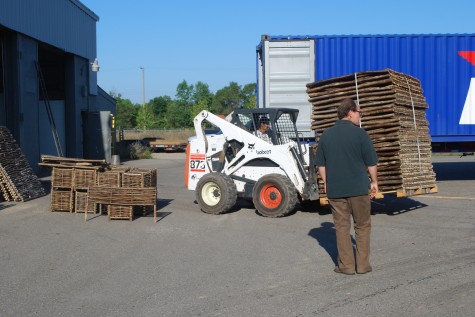
 Wattle, or hurdle fencing is a traditional garden or livestock enclosure made from either willow or hazelwood. Last week we took delivery of a forty foot long container of Belgian made fencing. Though I am making a point of shopping my own country, I am especially attracted to Belgian garden ornament. Rob says the Belgian climate and topography is a lot like the Midwest. My most favorite landscape photographer Lynn Geesamon has photographed all over the world. Her images of Belgium so strongly resonate with me, as I do think they remind me of my native landscape. Some of her images can be seen at www.edelmangallery.com.
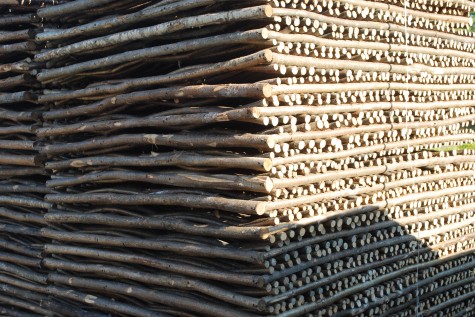 A garden ornament does need to look like it belongs to the garden in which it is placed. It takes some doing to bring these twig structures from their place to mine, but it is worth it. They are heavy, chunky and sturdy-and beautifully constructed. Each five by six foot panel weighs 100 pounds-substantial. We buy peeled cedar fence poles from a company in the upper peninsula of Michigan. This material has a very local feel.
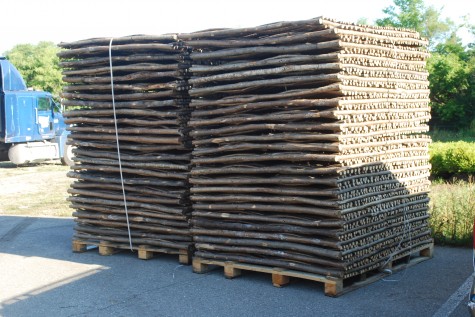
These panels are made of hazelwood branches with the bark intact. This makes a very long-lived and weather resistant panel. This natural material is friendly to climbing plants. There are plenty of places vines to get a foothold. They are such a great backdrop to any green living thing. The twig brown color compliments any planting scheme.
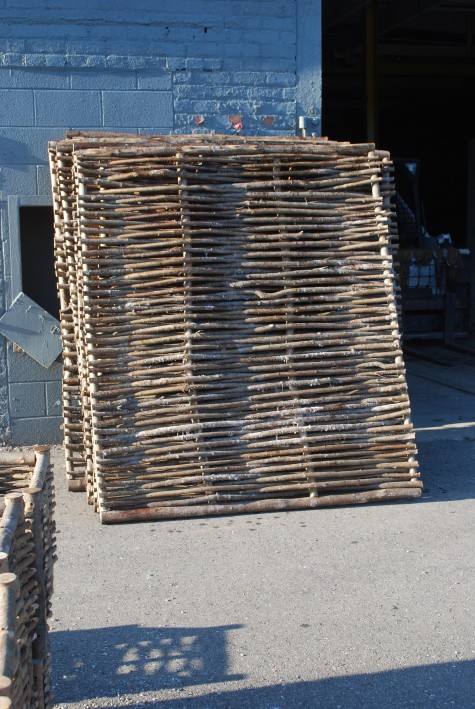 The woven branches have a great texture, and cast good shadows. The surface is lively and warm. Burt told Rob he sold Italian shoes for 25 years, before opening his twig panel business. It is easy for me to see why he would do this; it must give him great satisfaction to be making objects that celebrate the beauty of the natural world. Rhododendron root furniture, log furniture, twig trellissing-all of these things have a primeval appeal.
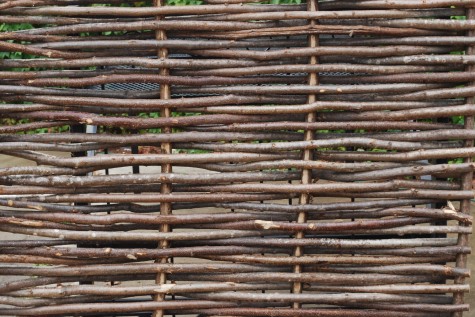
They are dense enough to provide great screening. Some places that require screening do not have room for plants; these panels have a very slight profile . I imagine they would look great installed between a pair, or a run of trees.
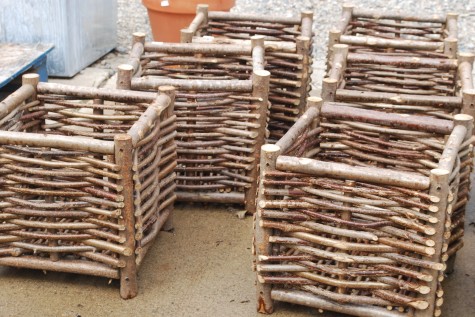
The twig boxes they make are down to earth charming. I usually line them with a galvanized sheet metal liner for longevity. They would dress down an ivy topiary, or dress up a planting of geraniums and strawberries.
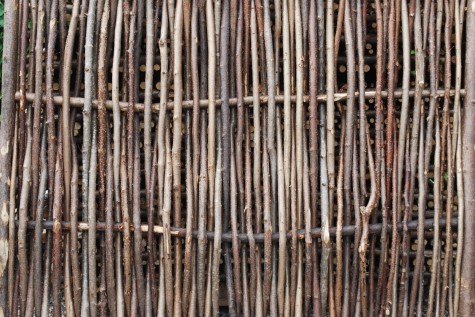 Positioned with the twigs in the vertical, the panels have a different quality about them-more sculptural and sinuous. I had a client tell me she loves the beauty of ordinary materials. Things people make of ordinary materials can be anything but ordinary. A material like this is just waiting for an inspired placement.
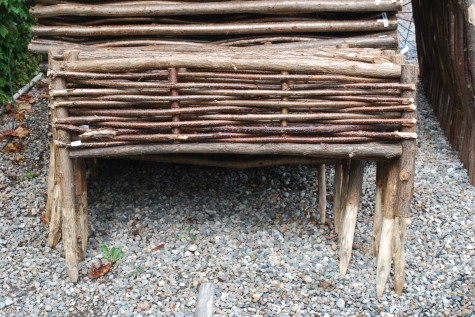
The little panels would make great edging for an herb garden. Four panels lashed together would make a box fit for a giant rosemary, or 4 eggplants. They would be great for keeping my corgis out of a treasured planting. This work reminds me that there are so many natural materials around me that could be put to use or ornament in my garden. I have only to see them. Seeing the beauty in ordinary things-I am thinking about this today.
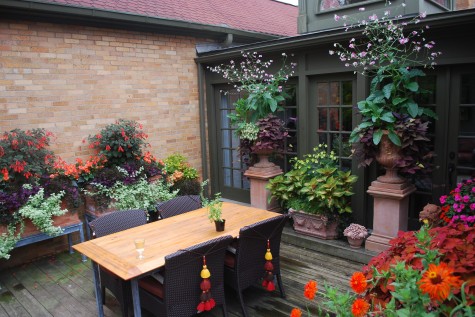
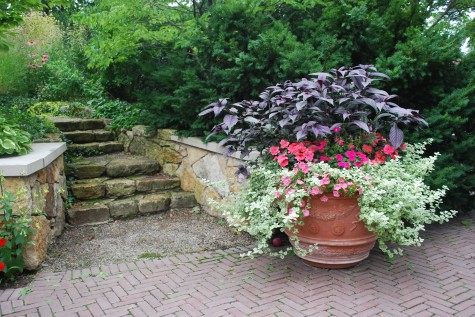
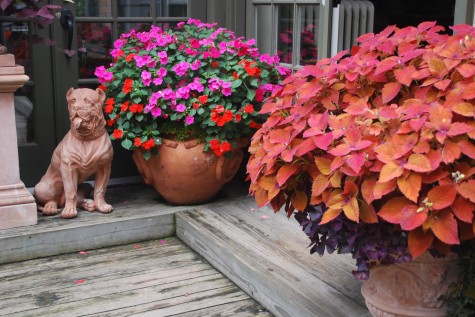 I like the fireworks going-on feeling of my terrace pots this year. Most of that has to do with how they have grown. I picked the colors and plants yes, but nature has proved unusually cooperative. We have had cool temperatures all summer, and now, regular rain. The usual bugs and disease must be at someone else’s house.
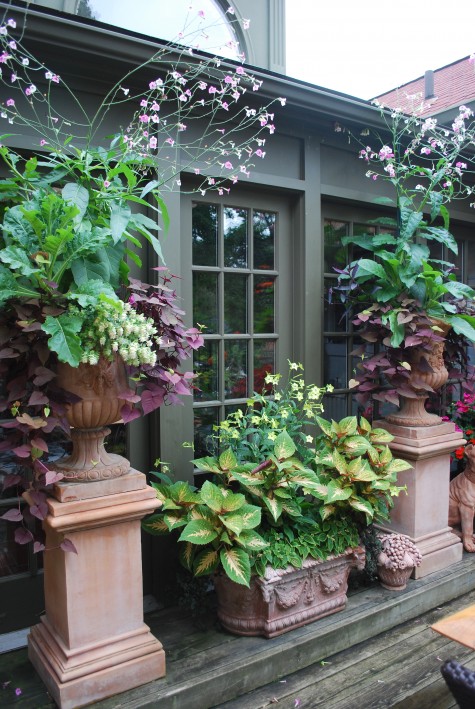
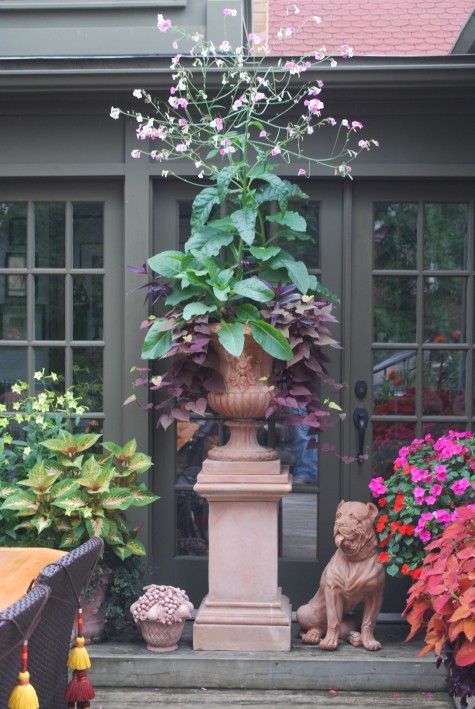 The Mital terra cotta gargoyle pots on their pedestals have never looked so rowdy and profuse. I grow nicotiana mutabilis every year for exactly the reason you see here. The showy oregano in this pot gave up and died, but I hardly notice. Besides, this pair of pots started out mismatched-I like that they will end up mismatched.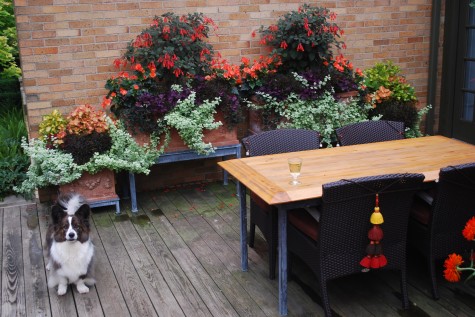
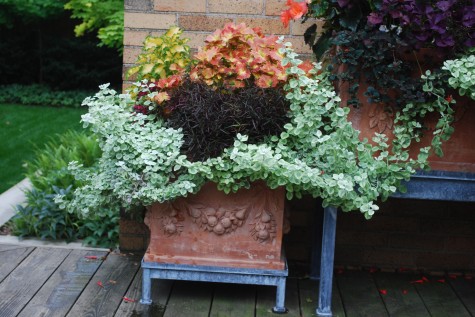 These two licorice plants have made a flared skirt of themselves. The shape is especially attractive with the garland pattern on the pot. Did I plan this part-absolutely not. Anyone who gardens gets to enjoy the unexpected.
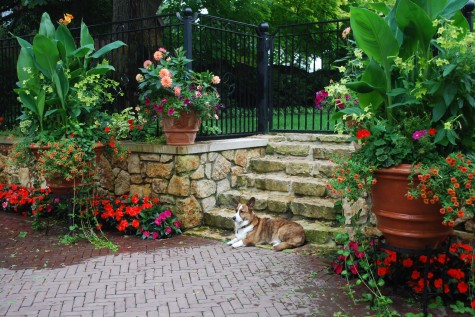 The New Guinea impatiens this year are unbelievably gaudy-what fun. Even my million bells, which usually sulk as I have very alkaline water, are cooperating. My dahlias do not have mites or mildew. The cool weather has slowed the flower production on the cannas, but the foliage alone is well worth having.