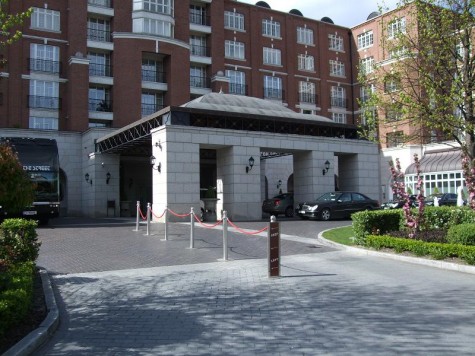
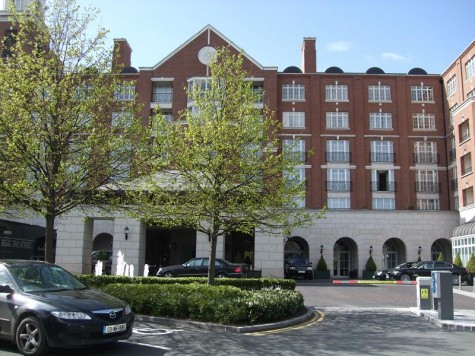
Anderson Miller Ltd., a noted local firm specializing in hospitality design, asked if I would be interested in a landscape renovation project for one of their clients-the Four Seasons Hotel in Ireland. How pleased I was to be asked! They were in the process of redesigning the interior spaces of this beautiful old hotel, and were interested in including the landscape as part of the scope of their project.
Moments after saying yes, I was worrying. I know not one thing about horticulture in Ireland, and I certainly was not at all confident that my views about a successful hotel landscape would mean much of anything. But Anderson Miller had very definite ideas about where they wanted to take their project, so I had a welcome set of parameters. They were looking for a very fresh, and contemporary approach that would leave no doubt in anyone’s mind that the only aspect of this hotel that was traditional was its vintage architecture. Pam Anderson was interested in a use of topiary that would have a contemporary and sculptural appeal. And she liked my steel spheres. Make something from these elements, she said.
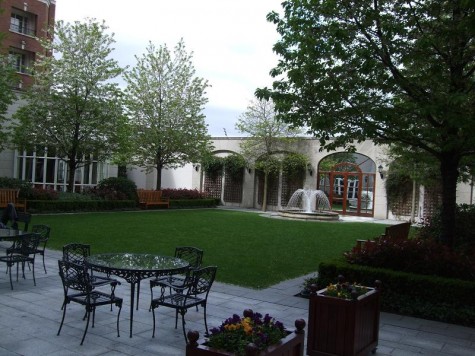
The hotel surrounds a large courtyard space, open to the sky. A small fountain, backed by a large mirrored wall trellis anchored one end of the space. This look did not seem historically pleasing; it seemed dated. Mature lindens ringed three sides of the space; these I liked. They were the only large scale landscape element, and they were definitely worth keeping. I hope some day to see their canopies pruned into very large spheres.
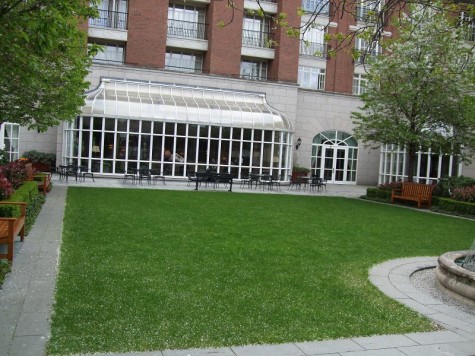
The opposite end of the space featured a conservatory occupied by a hotel restaurant, a terrace, and some iron garden furniture. Guests of the hotel did not particularly use the space; it did seem sleepy, and not especially inviting.
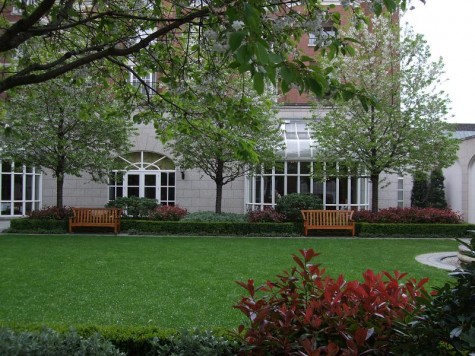
The other two sides of the courtyard featured a boxwood hedge punctuated by wood benches; I would call this a sideline landscape that was lacking a main event. Good landscapes do engage visitors. This landscape needed not only a reason to encourage visits, but a plan view that was beautiful; each room on the interior of the hotel has a window, with a view to this space. Thus a landscape that was also a sculpture seemed like a good idea.
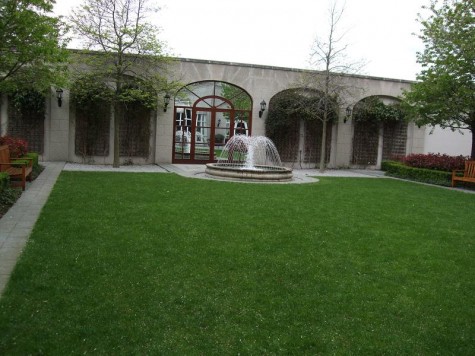
The center of the space is a giant lawn; this seemed a good place to start. A sculpture which would read from many stories above ground needed to be simple but interesting. It also needed to be large enough for people to interact with it. It will not be easy to read what I have written on the drawings below, which is a good thing. The shapes and spaces are what is important to see here, not the words.
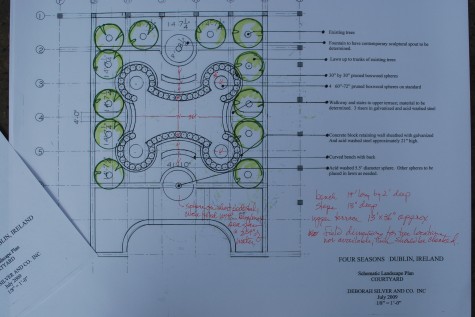
My schematic drawing details an elevated interior garden space, bounded on all sides by curved steel retaining walls, 21″ tall. This elevated garden is accessible on the east and west sides by three widely curved steps. The north side features a curved bench some sixteen feet long with a great view to the fountain. That bench can provide seating for a whole group. The fountain I like; the center sculptural element needs to be something much more interesting. The existing lindens, whose shape is ringed in chartreuse, will have a much more sculptural feeling, set in lawn right up to their trunks. The upper level landscape repeats the curve of the steel retaining with hedges of 36″ diameter boxwoods pruned into spheres. The four large spheres in the drawing-72″ diameter boxwood spheres on standard.
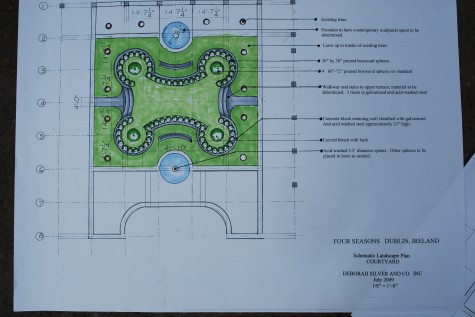
The blue sphere at the south end-a pool of blue tumbled recycled bottle glass set in three or four inches of water, with another large meeting-sized bench. The centerpiece-a six foot diameter strap steel sphere. This color version speaks much to the overall impression of the garden. Big spherically shaped lindens. Medium sized spherical boxwood on standard. Curving shapes of small spherical boxwood that remind me of strings of pearls. The center space would be a beautiful place for a cocktail party, with bar tops scattered around, or set for a dinner on a long series to tables put together for a specific occasion. The steel finished to look like lead will have a beautifully curving and contemporary appearance from the ground level. Two species of plants, lots of lawn on two different levels, and some sculpture. All it will need is some people to be invited to the party. The news I heard today is that Mr. Sharp, the founder of the Four Seasons, and a legend in the hospitality business, likes what he sees here. This has made for a very good design day for me, yes.
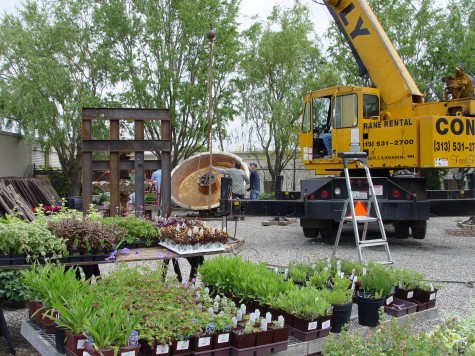
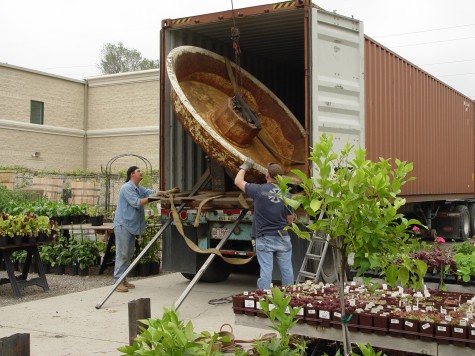 The biggest headache? The basin was too large to sit flat on the floor of the container that would bring it to the US. So, some 6 weeks and plenty of money later, cast iron crates had been welded up for the basin, and fountain. The fountain centerpiece had rusted tight to the basin; it was after all, 130 years old. The centerpiece was painstakingly removed with the help of an acetelyene torch, and then welded to its custom made steel crate.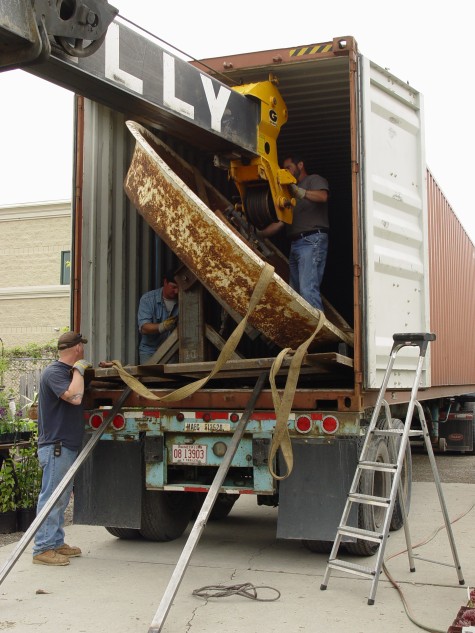
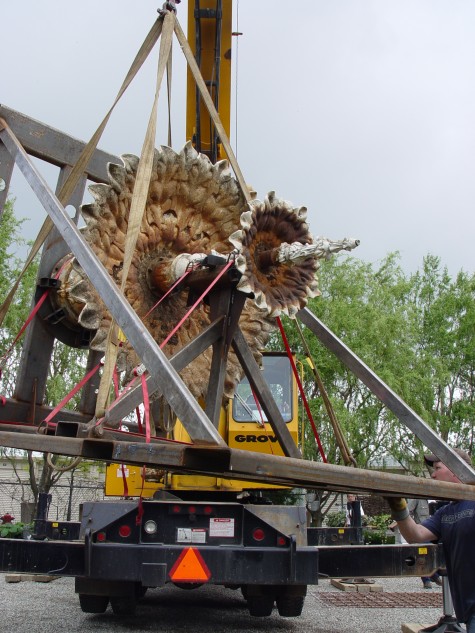 It was an operation the likes of which I have been involved in rarely; the entire day went to uncrating, and positioning that fountain. The crane people were incredibly professional and focused. At some point during the day I actually looked at what had been the center of so much commotion. It is one the most beautiful large scale fountains I had ever seen. The pattern of the cast iron leaves is as beautiful on the inside as they are on the outside-this a hallmark of very fine ironwork.
 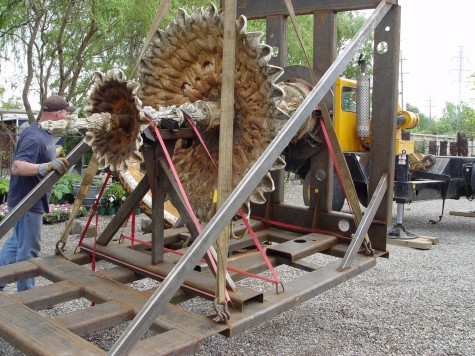 The torching and unbolted to free the pieces from their steel crates was slow and tedious.
 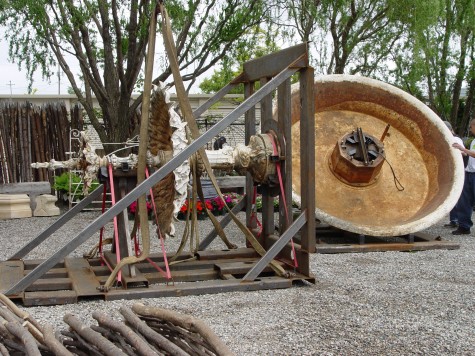 What was I thinking, that I had to have this? I had scared myself, no doubt. But today I would say once in a while something comes along that makes you feel like speaking up. Who wants to spend time contemplating their lost opportunities?
 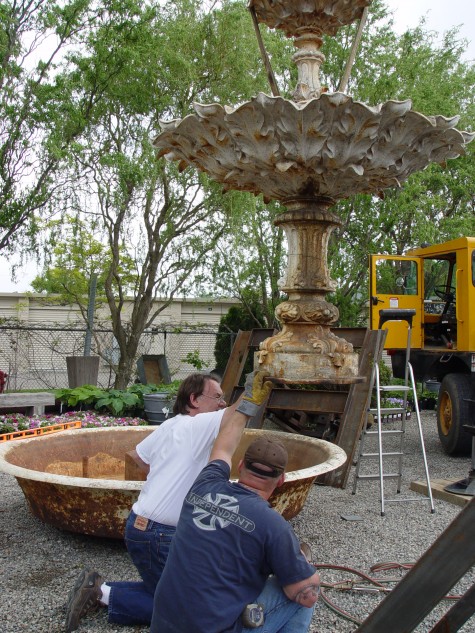 Buck helped out getting the basin set perfectly level, as we knew there would be no moving it once it was placed-except to a new home. The boom crane held the fountain piece aloft until both pieces were perfectly aligned.�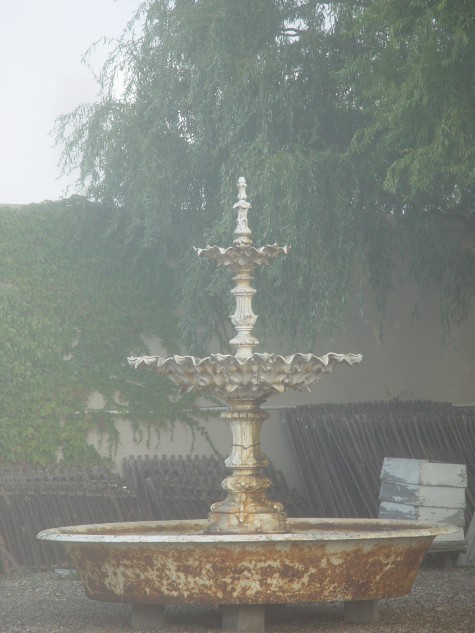
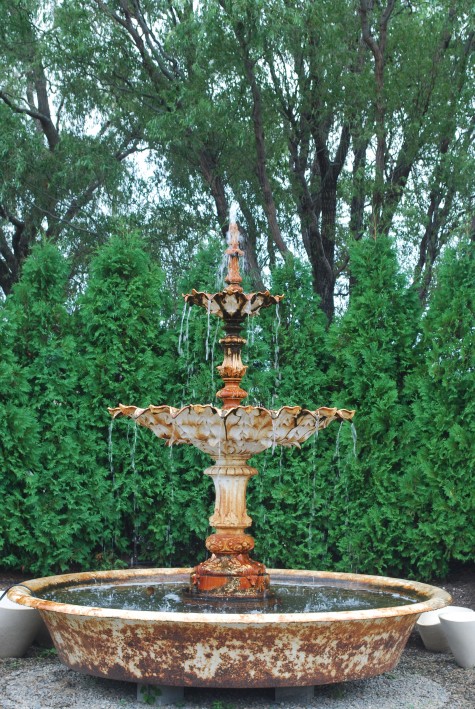 In the meantime, it is my pleasure to look at it every day. In spite of everything it took to get it to me, I know when the day comes, it will be very tough to give it up. Funny, that.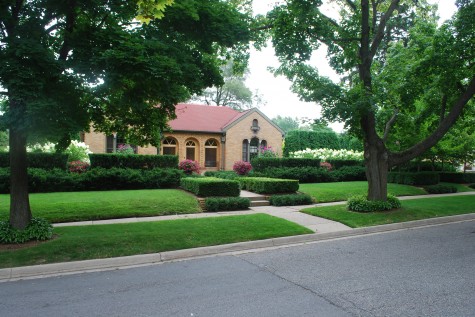
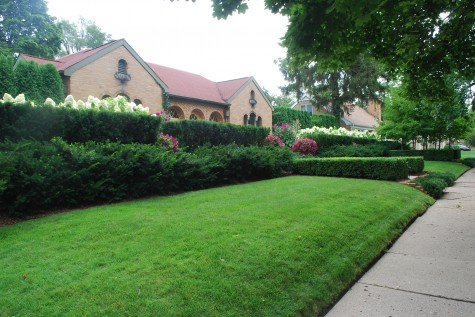 For the better part of six years I did nothing to this yard except bark the existing perennial beds, and mow the grass. It took all my energy to handle my work-or so it seemed. I am embarrassed to say that somewhere along the line I got an anonymous postcard in the mail: “It is hard to believe that a person whose career is landscape would have weeds six feet tall in her front yard”. No matter the delivery, the person had a point.
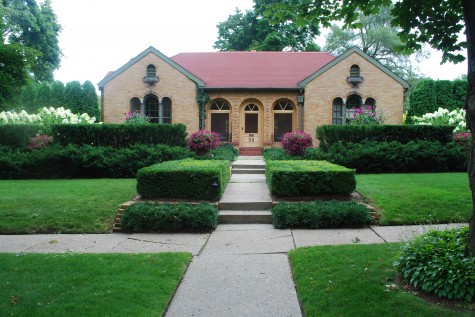 But perhaps even more importantly, I was ignoring the fact that whatever I did at home would need time to come of age-and that perhaps I would want to still be around to see that. Planning my own landscape was agonizingly slow. I had no problem designing for others; I was a wreck designing for myself. Slow turned out to be fine; who can do everything at once anyway? Getting started-that was the key.
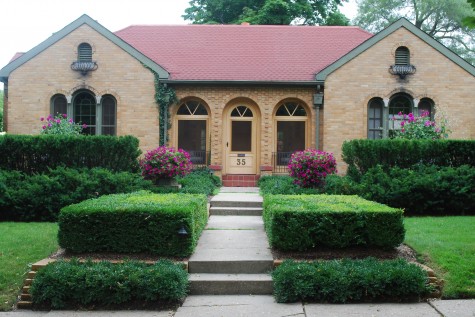 The one hundred Hicks yews across the west and down the north side came first. Given the slope of my property from the south to the north, time would prove to be an essential element. The hedge is 4 feet tall on the south side, and nine feet tall on the north side-but every one of them is level with the horizon. This hedge took eight years to grow in.
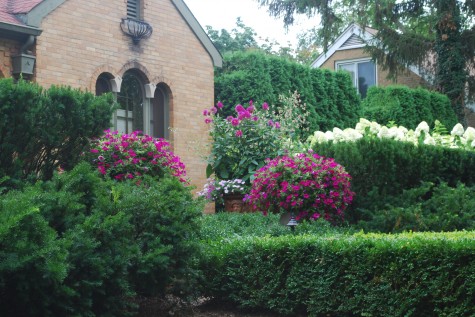 The boxwood was even slower growing; the 18″-24″ plants I put in the ground were already seven years old when I planted them. The shaggy densiformis yews are the newest evergreen addition; they have only been in four years. I like all this evergreen; I can successfully maintain it. I knew I could never devote the time needed to a big perennial garden-why come home and be frustrated about what isn’t done? Two giant blocks of Limelight hydrangeas, and 6 pots of flowers give me perennial garden pleasure, in a manageable form.
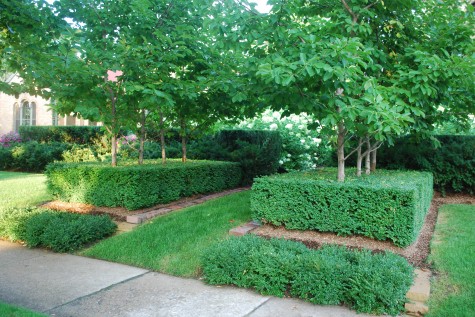 I planted this city-mini allee of Yellow Butterflies magnolias for Buck-he loves yellow. The boxwood is a big evergreen groundcover. The petals falling on this boxwood is one of my garden’s best spring moments. The mini-boxwood strips in the foreground-this year’s landscape project. The slope of the ground here made it difficult to mow the grass. The magnolias have grown considerably, and the shade they cast was not optimal for lawn. Wall stone behind them retains the soil, and in a few years, will be invisible.
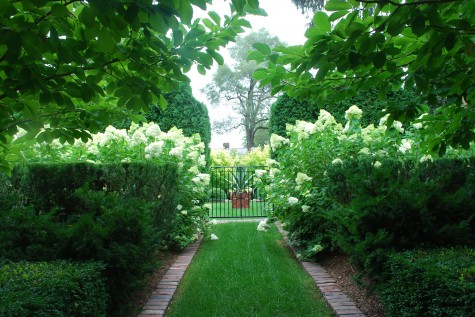 The magnolias were planted to frame the view to the side yard. It is hard arrange a long view on a city lot, making visual use of the neighbor’s mature elm adds much to the illusion of distance.
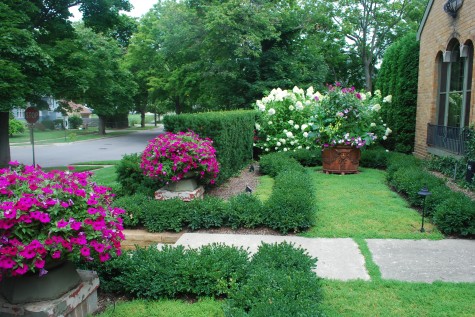 The big Yew hedge divides my public landscape, from the house landscape. The big pots are centered in front of big panels of windows; I have good views from inside. The ground is carpeted with herniaria glabra-rupturewort. This plant grows like thyme, but is much more water tolerant.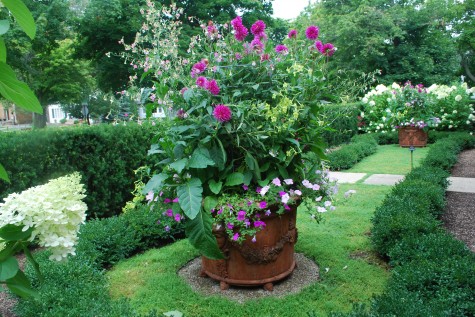
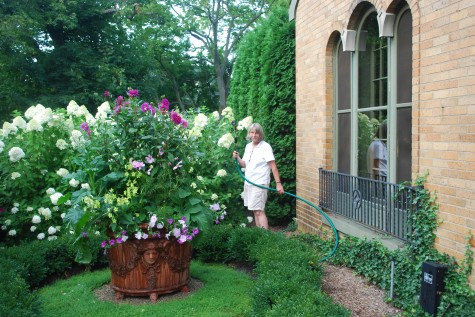
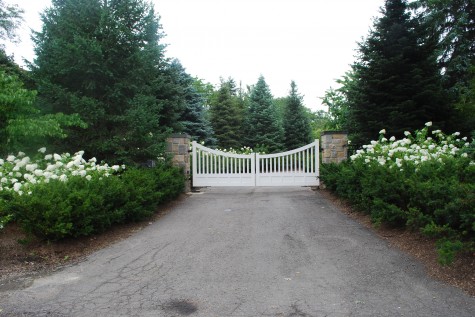
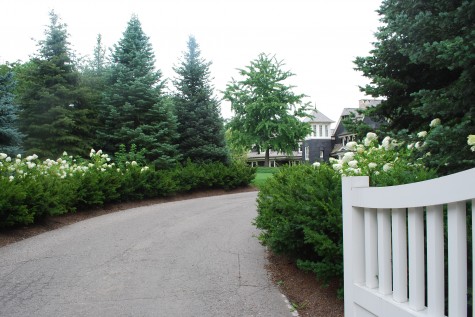 The entrance to the property has a beautiful view-in large part sparked by my client. Designers who do not listen to their clients miss plenty. I did design the drive especially to court the view; my client went over this plan again and again, until we both were happy with it.
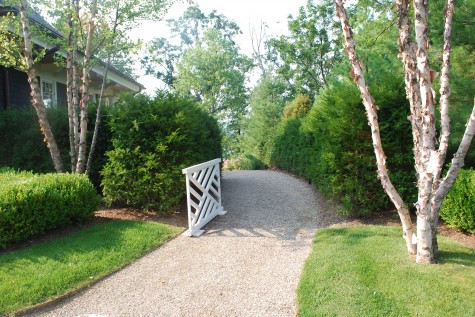 A decomposed granite walk leads to the rear yard; the gate is still in the design phase. A good walk intrigues a visitor. Vis a vis the curves in this walk-what need is there to telegraph every move a landscape makes from the start? A well designed walk anticipates interest, before the landscape delivers.
 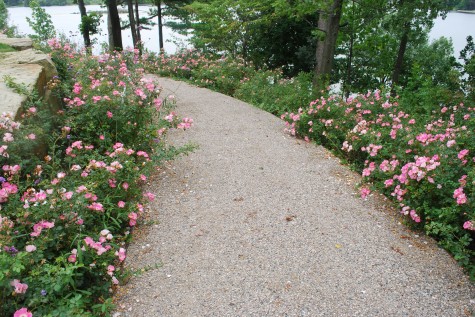 This long walk to the rear is fringed by the Griffith Buck rose, Carefree Delight. No kidding, a carefree wonder. This rose blooms and grows profusely, with little or no disease, in full sun, or part shade. This hedge performs equally, in spite of differing sun conditions, and fierce winter winds off the lake. I know a planting of them near me done by a friend-some 12 years old. Gorgeous. Carefree Beauty is my favorite rose; Carefree Delight delivers spectacularly; it is everblooming, adaptable to less than optimal siting, and happy to boot.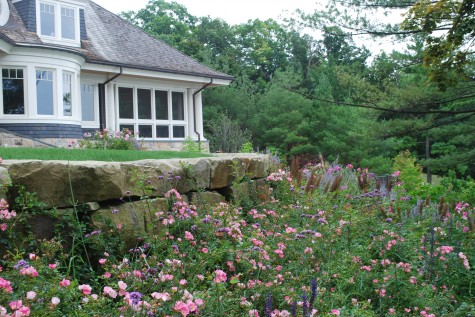
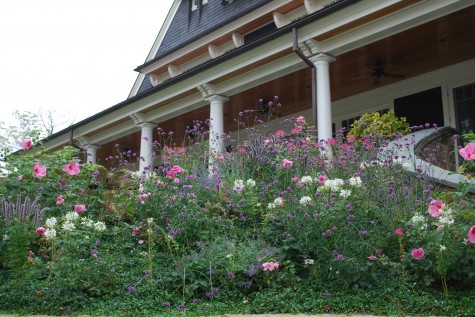 This wild summer garden is in remarkable contrast to the architecture of the house. It is, to my mind, a successful relationship. At the risk of repeating myself, I think the dynamics of a relationship far outweigh this part, or that part-taken individually.