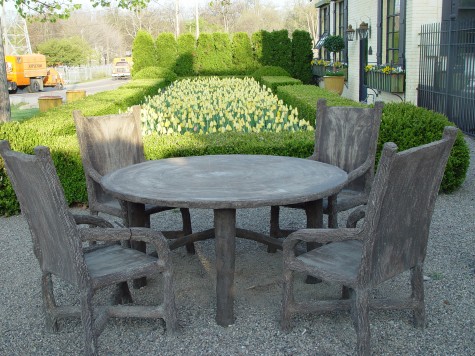
Deborah Silver is an accomplished and experienced landscape and garden designer whose firm first opened its doors in 1986.
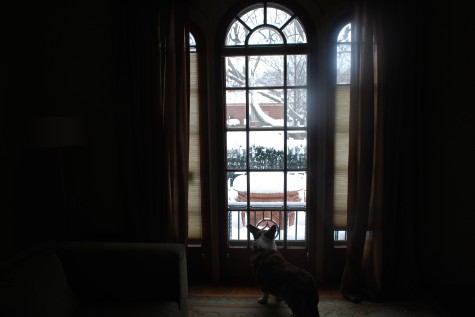 What does winter mean? Housebound. Even Howard gets stir crazy. The cold, the snow, the blustery winds-these things force me inside. My house, which usually seems large enough to live in, and more than large enough to clean, is the moral equivalent of a hamster cage in winter. I take three steps, and a wall looms. In self-defense, I am studying my views from inside out. I pace from one room to the next-this a condition from which there is little relief. But today I am not only pacing, but thinking about the views from my rooms. Placing a container that is good looking piled high with snow improves this view.
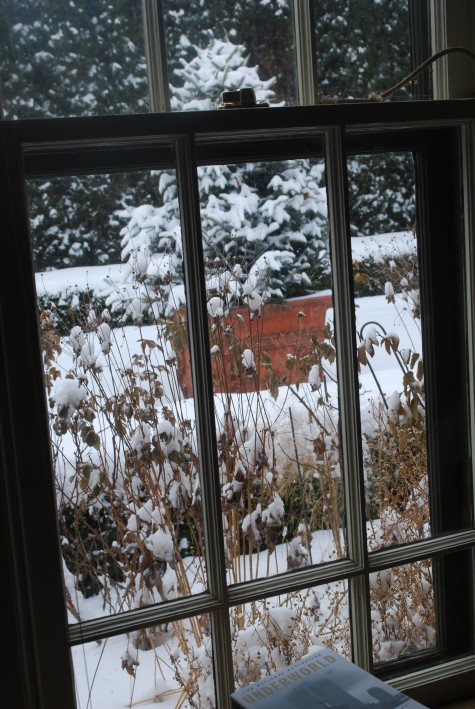 I am happy that my rose and perennial garden I thought to spare a full fall cut back. I like seeing the frail brown sticks out my window. My winter view has texture, mass, light and dark. I like a congested, visually lively, winter perennial landscape. I could write on like a fool about this. But suffice it to say, from indoors, I like to see something going on.
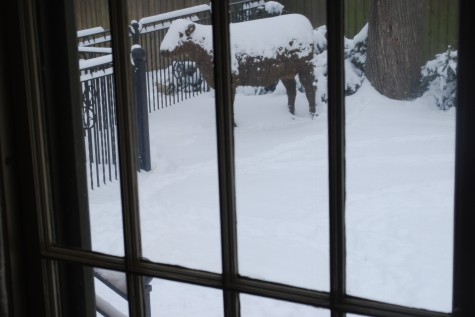 Lady Miss Bunny, my steel and moss sculpture patterned after a breed of English cow, stands out my bedroom window. She weathers. Every morning and every night I check her out-some winter days I wonder how she manages. I like seeing her there, on duty. Never mind the rain, the wind, the snow, the sleet-I see her the last before I climb into bed, and the first thing when I get up.
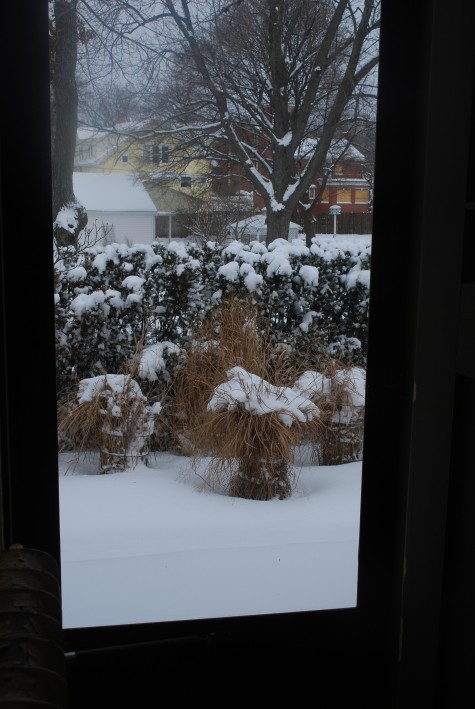 My kitchen door is full length glass- the largest uninterrupted view I have from indoors. A yew hedge is faced down with the thatched remains of some large clumps of panic grass, and not much else. This view could definitely stand some improvement. I am equally at ease choosing something that has great appeal, with no location in mind, as I am able to keep a spot in mind that needs something. Something center of interest that works well in the summer in this spot no doubt will improve my winter.
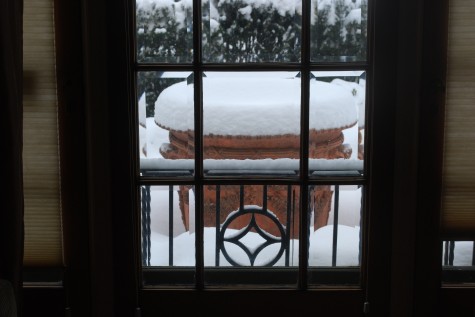 The pattern of the window panes figures in the view. What I see standing up is different than what I see sitting down. But what I see as the biggest issue-designing the views out such that privacy is maintained. I have been in homes with lots of windows, where the drapes are always drawn. Those drapes work to insure privacy inside, but they also keep people unnecessarily cooped up. I have designed my landscape such that I am able to see out, without being the object of someone’s attention from the street.
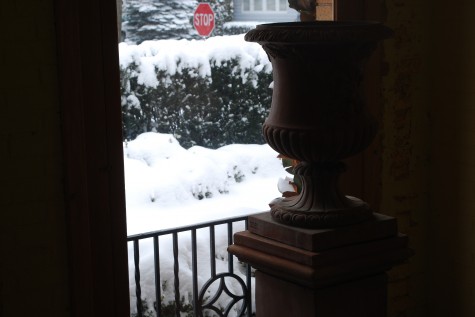 My enclosed front porch is almost entirely glass. One has to come through the porch door, to get to the front door. This architectural feature provides for privacy from the outside to the inside. In addition, my five foot tall yew hedge runs along the entire north and south side of my corner lot some 11 feet out from the house foundation. The hedge is the backdrop for the public presentation of the landscape from the street. It is likewise a backdrop for my view out. No one outdoors can see me standing in the window, nose pressed to the glass; this is a good thing.
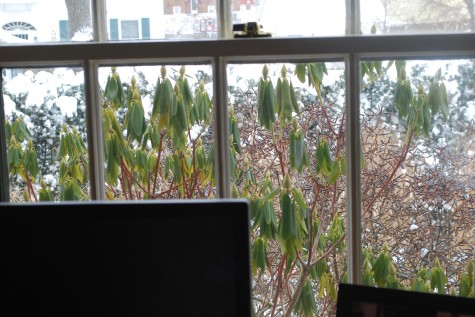 My office at home has windows on three sides; the space can be very chilly on a cold day. But I more value being able to see out. The landscape here is layers of yew, grasses, and rhododendron through which I can see. They screen my window from the outside. I am incidentally able to tell fairly well what the outside temperature is, based on the degree of droop of the rhododendron leaves.
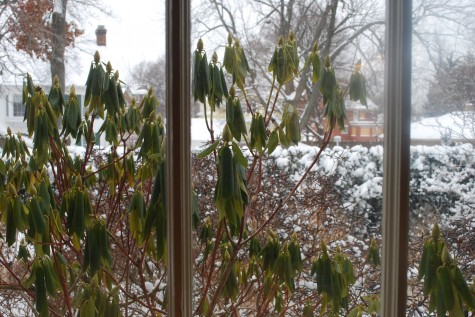
If it is not clear whether your views screen from one side, and permit views out from the other, photograph them. The lens of a camera has no emotional investment or judgment about what you have-it is a machine that records what is there. You will be able to tell what is not there. Now might be the best time to be planning for better views from your rooms.
![securedownload[2]](https://deborahsilver.com/wp-content/uploads/2010/02/securedownload21-475x315.jpg "securedownload[2]") I have seen plenty of walls in my career that have taken my breath away; surely there are countless and untold thousands of other beautiful walls I might not ever see. I cut an article out about the stone wall at the Picasso Museum in Antibes many years ago-I am still crazy about it. Janet has been there many times; her entire expression changed, just talking to me about it. But no stone, concrete or brick wall could ever compare, in my mind, to a green wall. This nursery row of espaliered katsuras is just about the most beautiful thing I have ever laid eyes on. I could keep on looking at this, as long as I was able to keep on gardening.
I have seen plenty of walls in my career that have taken my breath away; surely there are countless and untold thousands of other beautiful walls I might not ever see. I cut an article out about the stone wall at the Picasso Museum in Antibes many years ago-I am still crazy about it. Janet has been there many times; her entire expression changed, just talking to me about it. But no stone, concrete or brick wall could ever compare, in my mind, to a green wall. This nursery row of espaliered katsuras is just about the most beautiful thing I have ever laid eyes on. I could keep on looking at this, as long as I was able to keep on gardening.
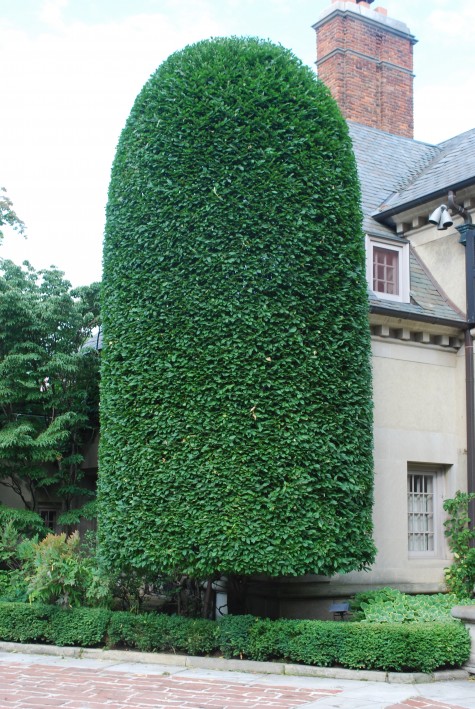 Janet has some gorgeous walls of her own-green, and otherwise. This old carpinus so beautifully shaped and trimmed is a lot of things. Green punctuation. Green sculpture. Some days it reads to my eye as a brief green wall. Were you ever able to see the giant glass window behind this wall, from which a beautiful shade garden can be viewed, you would understand the part played by this carpinus. It makes for enclosure, solitude, privacy.
 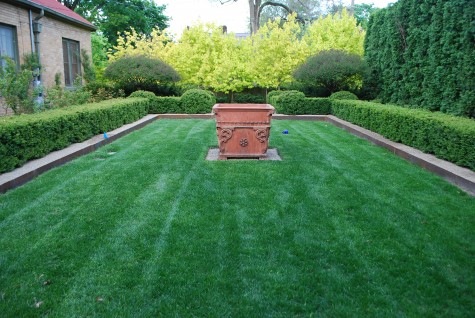 The bricked south side of my house encloses my interior space, but it functions in my garden like a wall. That wall radiates heat to my roses and Japanese anemones. The corresponding green wall to the north-Thuja “Nigra”-a dense arborvitae with a uniformly vertical habit. It corresponds in heft and height to the wall of my house. It creates one of the four edges of the composition of this garden space. Not incidentally, it shields me from a view of the two story house next door. My private garden-just what I want, when I get home.
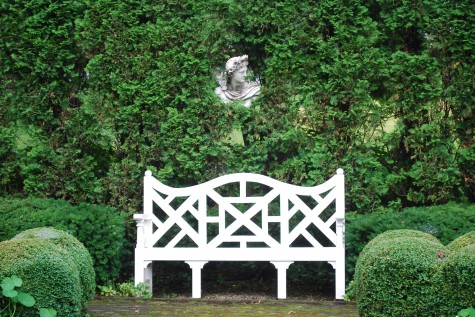 Green walls do not only screen untoward views. They provide living enclosure to private garden spaces. This classical bust, positioned to peer through a green wall is quietly and beautifully wreathed, framed, in green.
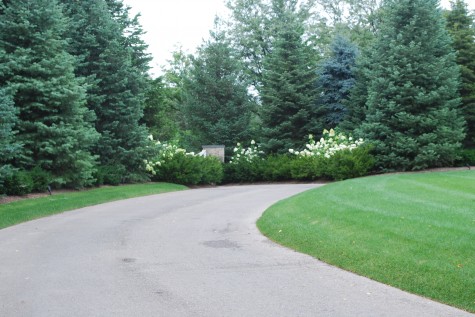 Not all green walls need be so formal and planar. Irregularly and thickly placed evergreens can enclose a garden space in a more natural way than a flat wall. Though I am delighted to see or read about the great European gardens, designing in the round is a luxury. I have a small space upon which to garden, as do most clients I have. My clients with properties 8 acres or better-not so many. Green walls are most definitely a part of my design vocabulary. I have no problem planting small plants in anticipation of a green wall; plants grow.
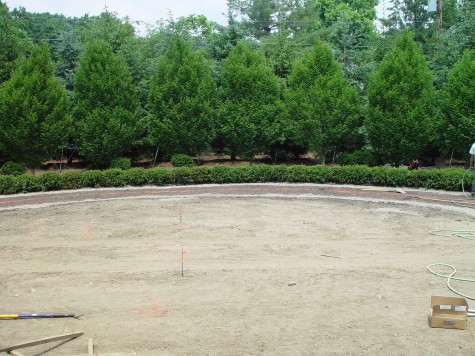 Only once have I had the occasion to plant carpinus of this size. Their planting and care consumed me for three years, until they established properly. Behind them, another wall of spruce. Behind and beyond those spruce, properties with no stewards. That view, once it disappeared, never intruded again on my clients delight in their garden. My arborvitae were seven feet tall when I planted them-I waited, and was rewarded with a beautiful tall wall-faster than I thought.
![securedownload[5]](https://deborahsilver.com/wp-content/uploads/2010/02/securedownload5-475x356.jpg "securedownload[5]") Espaliers trained from London Plane trees-this is a very big gesture. When the day comes that all those favoring big gestures in the landscape need to line up and congregate, I will get up and go. This swooping green wall is defined by trees whose trunks have calipers suggesting considerable age-the green has yet to grow in.
Espaliers trained from London Plane trees-this is a very big gesture. When the day comes that all those favoring big gestures in the landscape need to line up and congregate, I will get up and go. This swooping green wall is defined by trees whose trunks have calipers suggesting considerable age-the green has yet to grow in.
![securedownload[1]](https://deborahsilver.com/wp-content/uploads/2010/02/securedownload11-475x633.jpg "securedownload[1]")
Patience by no means is one of my strong points. Unless there is a garden at issue. I have infinite patience for the growing of the green-as do most gardeners. Green walls? Should you have a place for one, or several-spring is coming.
![100_2166[1]](https://deborahsilver.com/wp-content/uploads/2010/02/100_216611-475x356.jpg "100_2166[1]") One of the better parts of my work is buying trees; I buy lots of them. They may come from Oregon, or North Carolina, or Tennessee, or Macomb township just a few minutes from me. I do not own a nursery; I buy trees for specific projects. I choose based on what a client space and environment demands. The branch structure on these beech give me a great idea of their eventual shape. Jim’s son in the picture-I have a good idea of the size of these trees. As much as I would want to have one gorgeous specimen of every tree hardy in my zone, I have to make choices. These oval growing beech-perfect for a spot I am looking to plant.
One of the better parts of my work is buying trees; I buy lots of them. They may come from Oregon, or North Carolina, or Tennessee, or Macomb township just a few minutes from me. I do not own a nursery; I buy trees for specific projects. I choose based on what a client space and environment demands. The branch structure on these beech give me a great idea of their eventual shape. Jim’s son in the picture-I have a good idea of the size of these trees. As much as I would want to have one gorgeous specimen of every tree hardy in my zone, I have to make choices. These oval growing beech-perfect for a spot I am looking to plant.
![100_2191[1]](https://deborahsilver.com/wp-content/uploads/2010/02/100_21911-475x633.jpg "100_2191[1]") Some trees can screen an untoward view. Other trees provide shade from the summer sun. Trees have function; a well placed tree can cut the temperature inside a home by plenty on a hot July day. Trees also delight the eye in a landscape, via their shape, stature, bark, blooms, leaves, berries. They are the giants of the garden-proper placement is essential. These cooly columnar European green beech would do a great service screening a neighboring play structure in a very narrow space-their architectural shape and bearing-a big plus. A straight European green beech-step aside, and provide lots and lots of room, and an equal amount of time.
Some trees can screen an untoward view. Other trees provide shade from the summer sun. Trees have function; a well placed tree can cut the temperature inside a home by plenty on a hot July day. Trees also delight the eye in a landscape, via their shape, stature, bark, blooms, leaves, berries. They are the giants of the garden-proper placement is essential. These cooly columnar European green beech would do a great service screening a neighboring play structure in a very narrow space-their architectural shape and bearing-a big plus. A straight European green beech-step aside, and provide lots and lots of room, and an equal amount of time.
![DSC_5337[1]](https://deborahsilver.com/wp-content/uploads/2010/02/DSC_53371-475x317.jpg "DSC_5337[1]") White pine is the state tree of Michigan. In woods of age in the Upper Peninsula of Michigan, their open growth and gorgeous towering shapes are all anyone would ever need in a tree. Should you have acreage, that is. Sheared native white pine is just that-sheared. Columnar white pine is very unlike our native species. Elegantly tall and narrow, they can give a garden stature without bulk. I have seen white pines in Michigan that could easily shade my entire property-they are not for me. This edited version I could much more easily find a home for.
White pine is the state tree of Michigan. In woods of age in the Upper Peninsula of Michigan, their open growth and gorgeous towering shapes are all anyone would ever need in a tree. Should you have acreage, that is. Sheared native white pine is just that-sheared. Columnar white pine is very unlike our native species. Elegantly tall and narrow, they can give a garden stature without bulk. I have seen white pines in Michigan that could easily shade my entire property-they are not for me. This edited version I could much more easily find a home for.
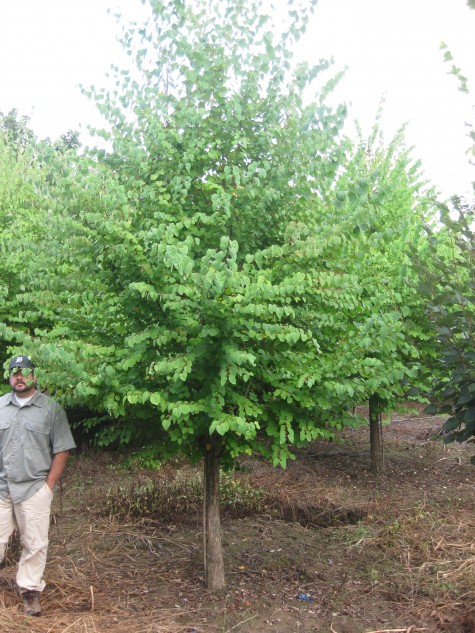 I have a great fondness for Katsura trees. Known formally as Cercidiphyllum Japonicum, their shape and quiet density make them one of my favorite trees. They have no blooms of note, but they do have extraordinary heart shaped leaves that are blue green, with veins decidedly purple. This coloration is unique to this species. These trees have been pruned; the effect is dense, and topiary-like.
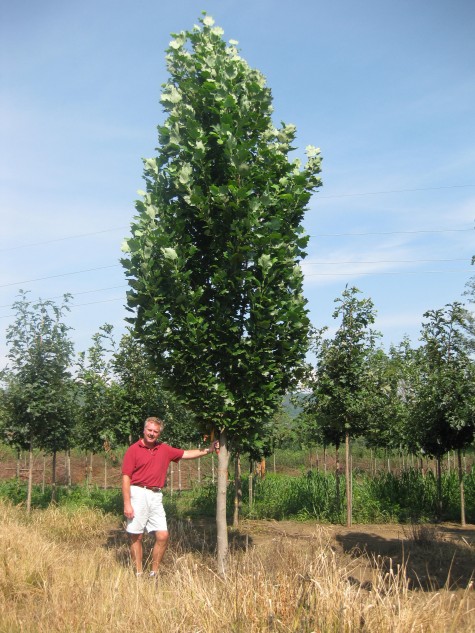 Liriodendron tulipfera, or tulip tree, is one of the largest growing trees in North America. Their green and orange tulip shaped blooms are lost on most. The trees do not begin blooming until they are old, and very tall. You need to stand off, with a spyglass, to appreciate this blooming part. I have a client with screened porches high in the air-I should talk to her about these trees. The columnar tulip tree you might be able to handle. The same smooth grey bark, the same luscious palmate leaves-in a narrow version.
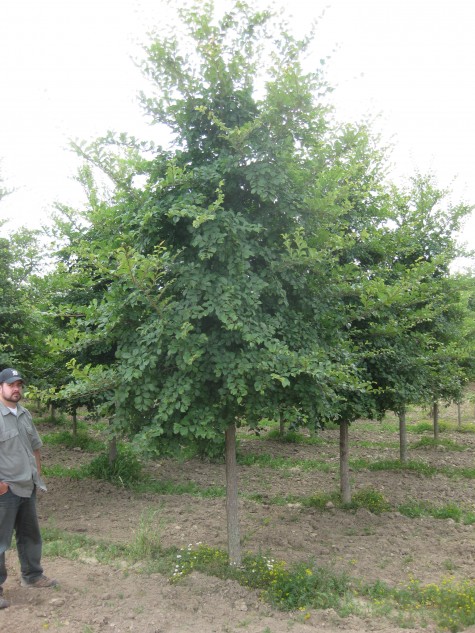 This untrimmed katsura presents very differently than those that are pruned. Many trees are seed grown, producing great variation from tree to tree. If you are looking for a tree, look in person. Even a young tree will give you a hint as to what it will become. Make friends, then buy.
![securedownload[2]](https://deborahsilver.com/wp-content/uploads/2010/02/securedownload2-475x315.jpg "securedownload[2]") These espaliered Bradford pears I am considering buying-with no project in mind. I think I might just have to have them. They are old enough to stand on their own-no structure needed. This winter aspect makes my heart pound. How they catch the snow-so beautiful. It is a sign, when you don’t think you can live without something. These trees have that feeling.
These espaliered Bradford pears I am considering buying-with no project in mind. I think I might just have to have them. They are old enough to stand on their own-no structure needed. This winter aspect makes my heart pound. How they catch the snow-so beautiful. It is a sign, when you don’t think you can live without something. These trees have that feeling.
![securedownload[1]](https://deborahsilver.com/wp-content/uploads/2010/02/securedownload1-475x315.jpg "securedownload[1]")
Come spring, they will enchant a space. Most of the trees I have pictured here would work in small gardens, or tight spaces. No need to deny yourself trees. Gardeners can be so funny. First off, they want the plants they can’t have. Take the time to figure out exactly what it is you like. Once you figure out what it is that moves you about a plant, or a tree, I am sure there is something out there that will be just perfect.