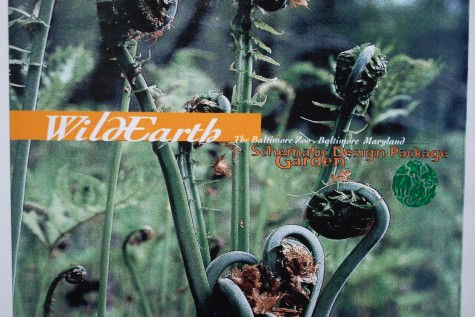
 A number of years ago I was fortunate enough to be a member of a team charged with submitting a schematic plan for the redesign of the Baltimore Zoo. One of the oldest zoos in the country, it featured giant iron cages for the animals, and a system of roads such that visitors could drive by the exhibits. This antiquated and self-defeating organization was kept company by an infrastructure beyond repair. The team assembled was a large one; architects, exhibit planners, zoo exhibit architects, engineers, teachers, zoo scientists- all had to work together to form a viable schematic plan.
 Why me? The idea was to give the zoo a second, different and compatible attraction-a botanic garden. Our group did visit the Cincinnati Zoo early on; what an incredible place this is. Some exhibits were based on the flora and fauna of a specific ecosystem. We were locked up; the animals had fairly free range of a habitat. Each exhibit made much of identifying all the plant material being used. Some exhibits featured recordings of the sounds of the animals. Other exhibits featured the most amazingly realistic concrete trees and steel lianas I have ever seen; zoo animals can destroy a natural habitat very quickly.
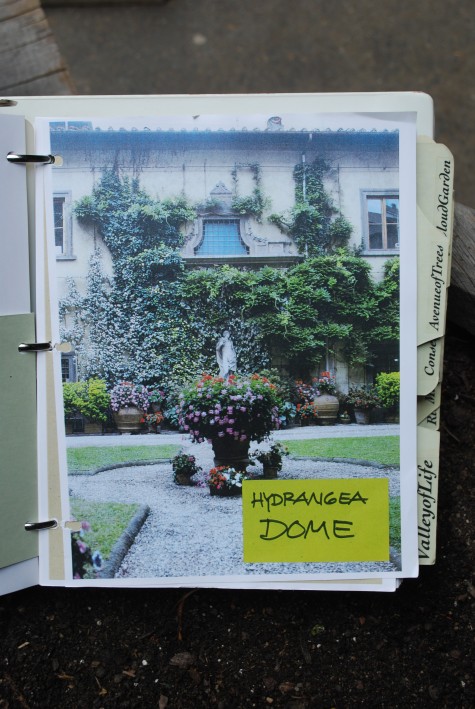
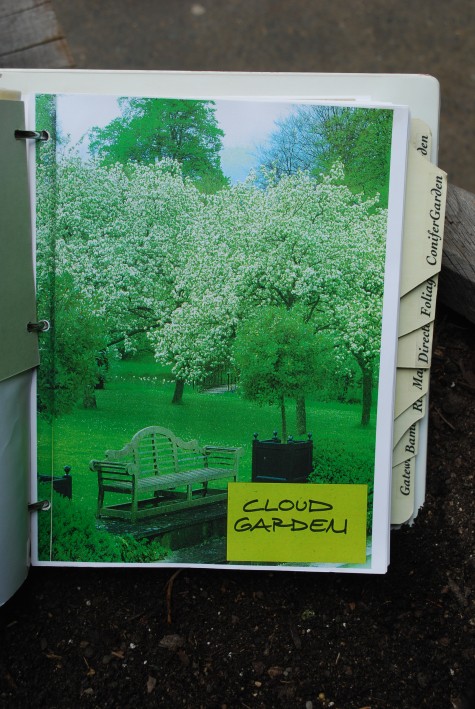 My part was to design landscape areas that would provoke the interest of any visitor. A zoo is a very expensive place to maintain. They need a substantial number of new and repeat visitors to stay afloat. It was not enough that the landscape be beautiful-it needed to entertain, enchant-and teach. A steel dome covered in climbing hydrangea would certainly attract attention. The cool leafy interior would enchant any child, and teach them about climbing plants. My cloud garden put every visitor on a catwalk winding through the garden-in the clouds, as it were. A meadow below of plants whose flowers and seeds were cloud like-entertaining. Of course I envisioned lots of butterfly weed.
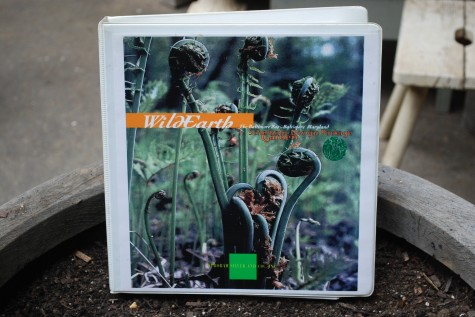
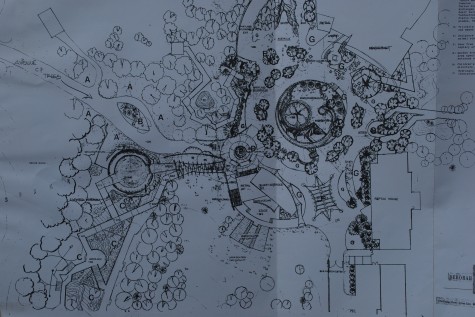 This project had many prints associated with it. This master print reveals that the zoo would have a center named Wild Earth. This large piazza would have places to sit, to have lunch, and environments for children to play. Each major habitat of the new zoo began, and ended in the center. This master plan took great pains to engineer the experience to appeal to all the senses, and the intellect. The big idea-the importance of our wild earth.
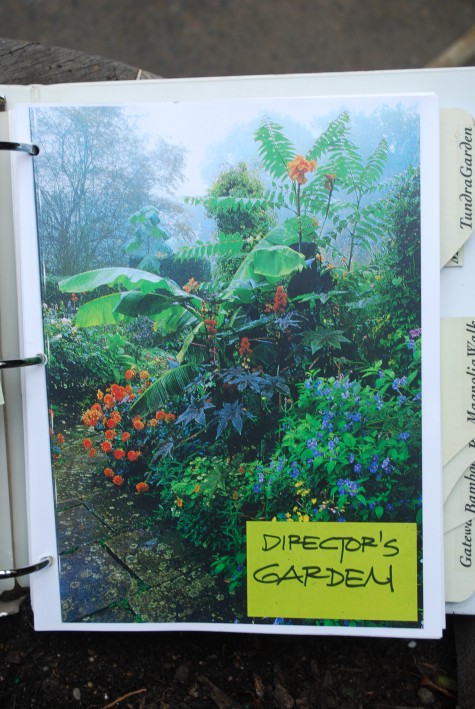 The Directors Garden is an annual garden display. This garden would be planted new every year by the group, nursery, or design build firm chosen by the zoo director. Its placement and size would attract attention from a distance. The spoke walks radiating from Wild Earth needed an element in the distance that would encourage people to walk, and explore.
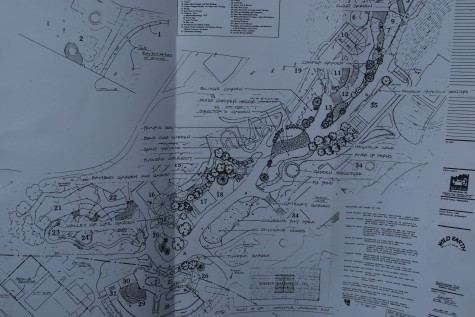 Each of the named gardens were interspersed and integrated into the animal habitats. This print is an overview of one of the zoo spokes. It is most valuable in detailing the flow of the space. The prospect of large numbers of people demands ease of travel, with plenty to look at along the way.
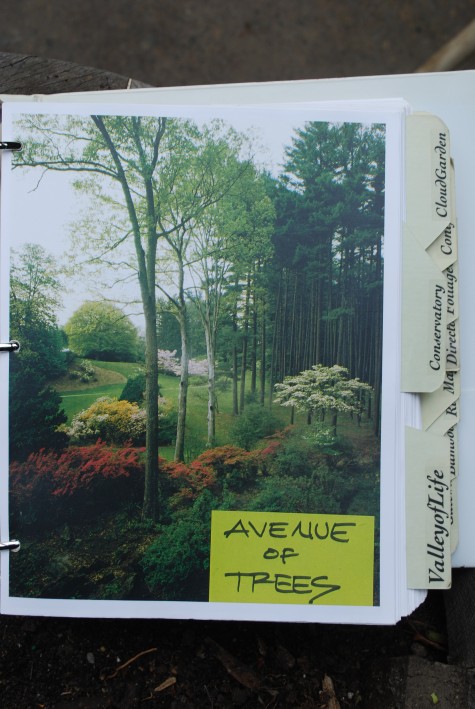 This design work was done very differently than most things I do. The prints were accompanied by all sorts of visual materials that helped to illustrate the concept. The avenue of trees print came with detailed botanical information on a number of tree species that might be worth including, and why. As I would not contract the work, the schematic plan needed as much information as possible-both visual and written-in support of the intent. In the end, I knew a collection of specimen trees would be planted. At this point, the main idea was an avenue from which to view the collection. This garden would be located on both sides of the car approach to the zoo, with plenty of walking paths for those wanting to go for a closer look.
The development of a schematic plan is very exciting work. This beginning work is just that-about beginnings. This schematic plan ran to hundreds of pages-mostly musings about what I imagined could be. Later there would be budgets, timelines, and construction documents. But dream time I did have.
 A good bit of my working life revolves around prints. A print is any mark made on or impressed into a surface-like these footprints imprinted in the snow. My boots aside, I draw prints. I explain them-I work off them. The drawing/print of the landscape is a two dimensional means by which I am able to explain my ideas about a sculpture with a client. Installations are done from prints that are drawn to scale. A print which is drawn exactly the same size as a property would need a piece of paper as big as that property; I doubt I need to detail the problems that would arise with this. So one foot of length on your property would be represented by 1/10th of an inch on my print. A properly scaled, flat, and miniature version of my idea is what you would get from me.
 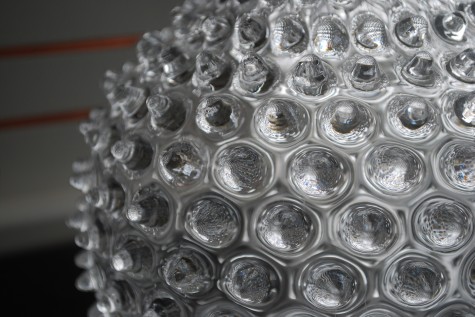 Prints are not easy to read, if you have not had practice. Prints are lines and shapes that make patterns. A pattern you might see if you were flying over your property. Who does that? Google Earth can provide you with a print that has recorded the patterns evident on your property. Look up your property-there may be something there that inspires you. The hobnail glass pictured above has a distinctive pattern, but also a volume, a sculptural shape. Each circle is in fact a tuft of glass; the location of each tuft in turn describes the curve of this pitcher. A print of the pattern of this glass would give you the plan view-the view from a bird flying over. Flat and circular, the pitcher shape in outline. The sculpture which is this pitcher is another story- entirely.
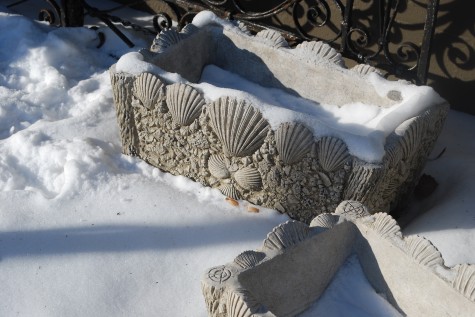 This concrete pot is made from a mold. The mold material records a three dimensional surface in every detail. I have seen the production print for this pot; I could barely follow it. It was very much like trying to read words from a language not my own. Where am I going with this? What a first rate landscape designer has to offer may be more than worth your while-or not. But for sure, you need to read their print. But that big fluid and certainly sculptural situation which is your property-no print truly describes that. Get involved with your designer. Speak your peace, and then some.
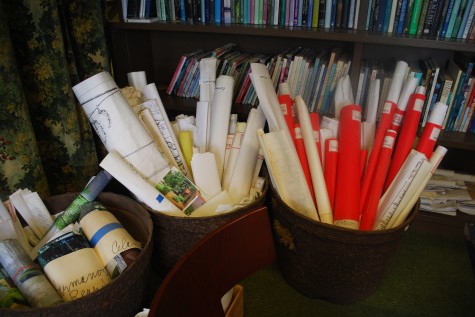 Steve tore apart my entire office, to clean and paint. Over the course of 25 years, I have amassed a goodly number of prints. He stuffed them into a number of fiber pots. Good, bad, or indifferent, there are lots of them. He wants me to go through them, and decide which old prints I want to keep. I have not told him yet, but I want to keep all of them. These marks on a lot of pages add up to a life. Many times I stuff mud stained prints into my back pocket, and work with what is in front of me. But those original prints-I save them. The print is but a mark recording intent-nothing more. Intent-this counts for a lot, from my side of the aisle. The skill of the drawing-don’t be fooled. Beautiful landscapes are about a lot of things-but gorgeous drawings of poor designs most certainly exist. My drawings are simple-but they involve some doing that might require years.
 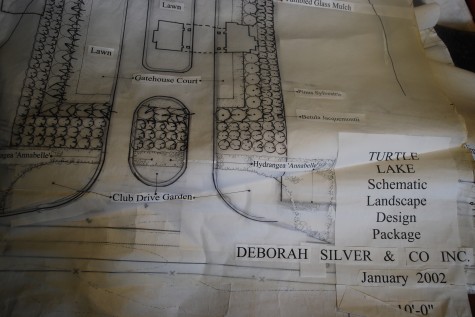 I think, design, and draw for a living. This is how I buy groceries, and pay my mortgage-but enough about me. Should you be designing gardens for yourself, I would encourage you to put a pencil to a page. What is in your heart-draw this. Take your mortgage survey and blow it up. Look at your spaces, your edges, how your house sits on your property. Loosen up. Make marks on the page. A print is a drawing-not a committment to build. Make lots of drawings. Sleep on everything you draw. Erase, and start over. Don’t bother to diss your drawing skills. No beautiful garden was ever about skilled drawing.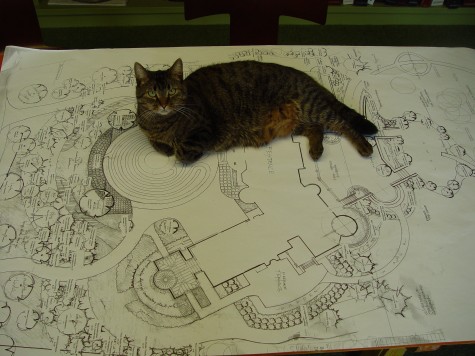
 Though the shop garden is very much frozen in time, there is work under way, under ground, in anticipation of spring. We planted 2600 tulips in this garden last fall. Each and every one of those bulbs is programmed to wake up and grow, come the spring thaw. Everything needed to grow and bloom is stored and waiting inside that bulb for that moment when the switch flips. Though it seems hard to believe, tulip bulbs do not freeze solid through and through. Planted some 8″ below the surface, they spend the winter chilled to right around 32 degrees. They need that hibernation time to properly spring forth.
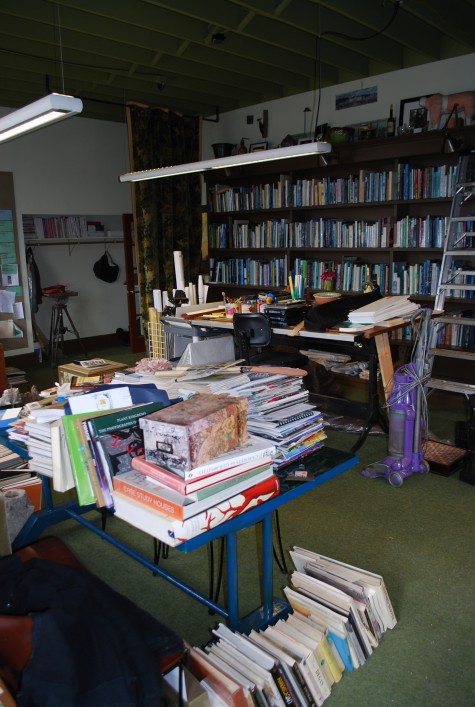 Inside the shop, it takes plenty to get ready for spring. We do a spring cleaning in February; once spring actually comes, there is no time for that. I do not mind that I have missed this part at all. Steve took every book off the library shelves, dusted them, cleaned the entire space, repainted the room, and put it all back together-all I had to do was choose the colors. Green for the walls of course-but a very light green this time. The room looks light and airy now. For the shelves and trim-what I call Belgian chocolate.
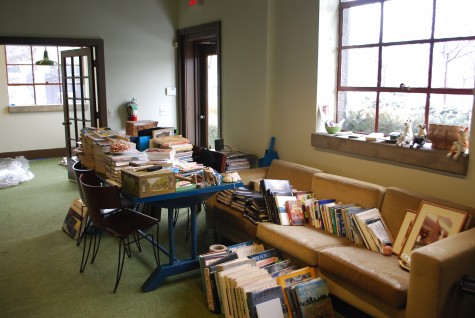 The floor of my office is courtesy of Flor-the company that makes carpet tiles in all kinds of colors and textures. This series is called house pet-it is so easy to pull up a stained square, and replace it with a new one. Gardening being the dirty business that it is, I think I am due for all new squares. Having a project indoors helps the winter fly by.
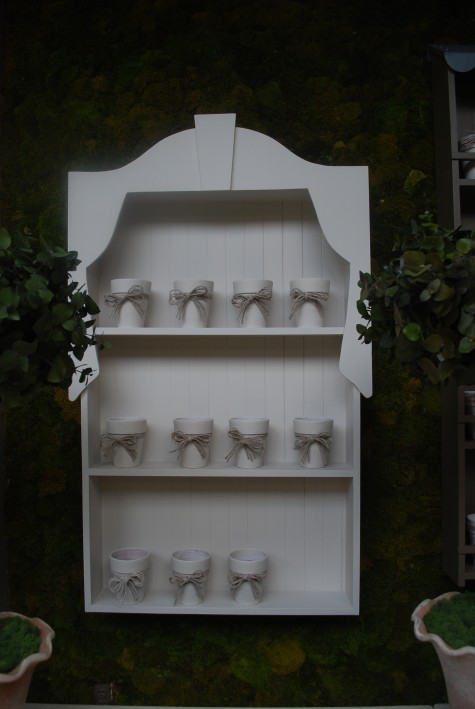 The auricula theatres got new outfits as well. The best fun was finishing the terra cotta pots. Each pot was primed in UGL basement waterproofing paint. This gave the pots a substantial gritty texture. This also keeps the top coat of paint from peeling off, once the pot is a home for wet soil. Each pot got a jute knot or bow. With the finish coat of ivory paint we soaked the bows in thinned paint; I like the look. I could see these pots planted with small growing herbs-or succulents-or even miniature ferns.
 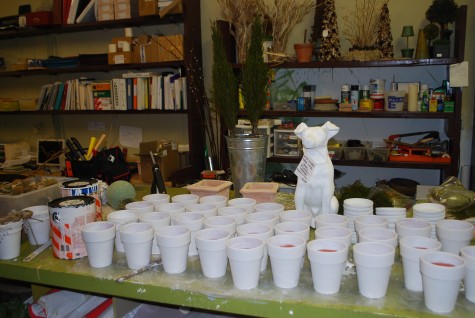 They layout table was handy for painting the pots. I could never again do without a table at a height comfortable for me to stand and work. This we made with a 4 by 8 foot sheet of exterior grade plywood. The top is held up by a pair of shelves four feet deep. These shelves hold long blueprints that I need to store.
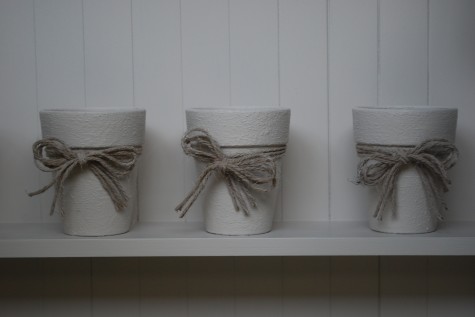 The little pots look great. Machine made terra cotta pots can be finished in so many ways, when you tire of that orange clay. This shape is called a rose pot-they are taller than standard terra cotta pots. They are great for growing plants with long root runs. Bareroot roses that are potted up for sale at nurseries are generally on the tall side. Large rose pots are also great for growing tomatoes. Rose pot and long tom are interchangeable common names for pots taller than they are wide.
 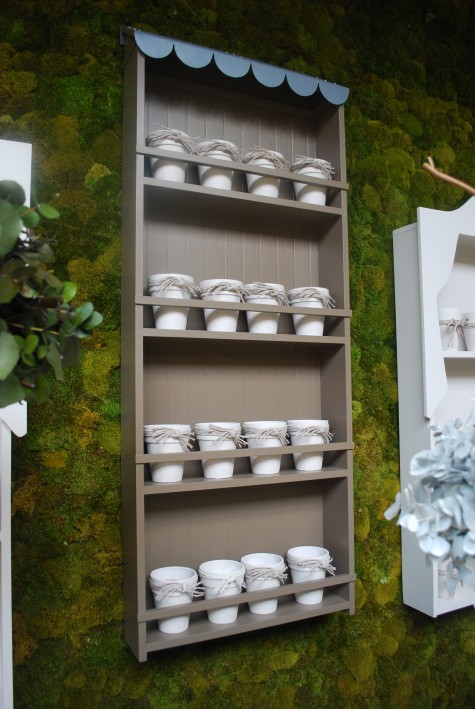 One of the plant theatres got a coat of Belgian chocolate paint.
 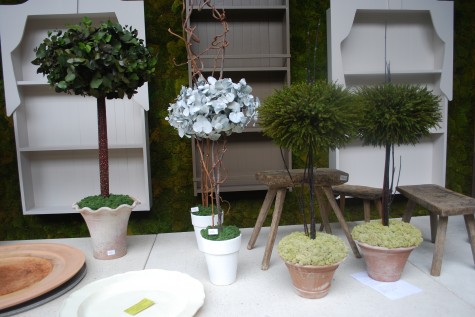 Pam has been making small topiary sculptures from preserved eucalyptus and other preserved greens. The trunks are made from cedar whips, kiwi vine, and fresh blacktwig dogwood. They are great for spots indoors asking for something soft, that will not support plant life. As I have no interest in house plants, these suit me fine.