 If you read this journal regularly, you know I own a fabrication company known as The Branch Studio. We manufacture garden ornament, boxes and pots for the garden. We also manufacture custom steel ornament, pots and fountains for private clients and designers nationwide. This weekend, Rob has organized a sale of Branch prototype pots at Detroit Garden Works. They are available for sale at or below our cost to manufacture them. I am sure you have questions, so let me explain.
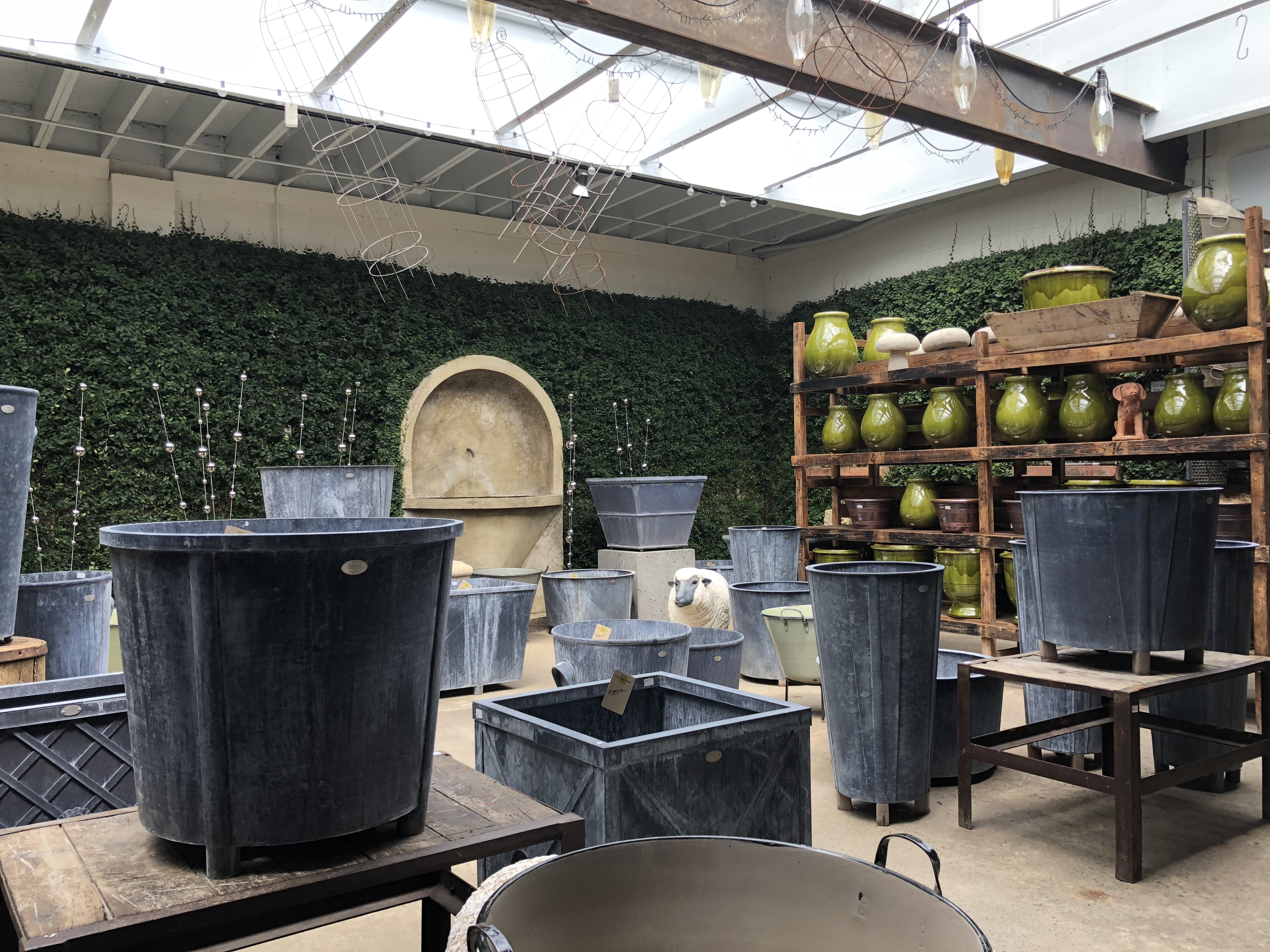 Any company that designs a three dimensional object intended for production begins with drawings on paper. Some designs get test built in paper or foam core board. I cannot imagine how architects take a set of drawings for a building and review them, imagining in the third dimension. Some architects make a practice of building models of buildings they are proposing. I have seen pictures of some that are beautiful in their own right. Buck and I have a much more low key process. We talk, and we trade sketches. As I am a designer, and he is a fabricator, there are fireworks. He wants a design that once fabricated is sturdy and serviceable. He wants a fabrication process that is smooth and reasonably quick. I want a design that is beautiful, properly proportioned, and with just enough detail to make it memorable. It is difficult to determine if a design for a container detailed on paper meets all the criteria that both Buck and I require to put that design into production. So we manufacture the idea, and take a good long look at the result. A prototype from Branch is an idea that gets spelled out in steel.
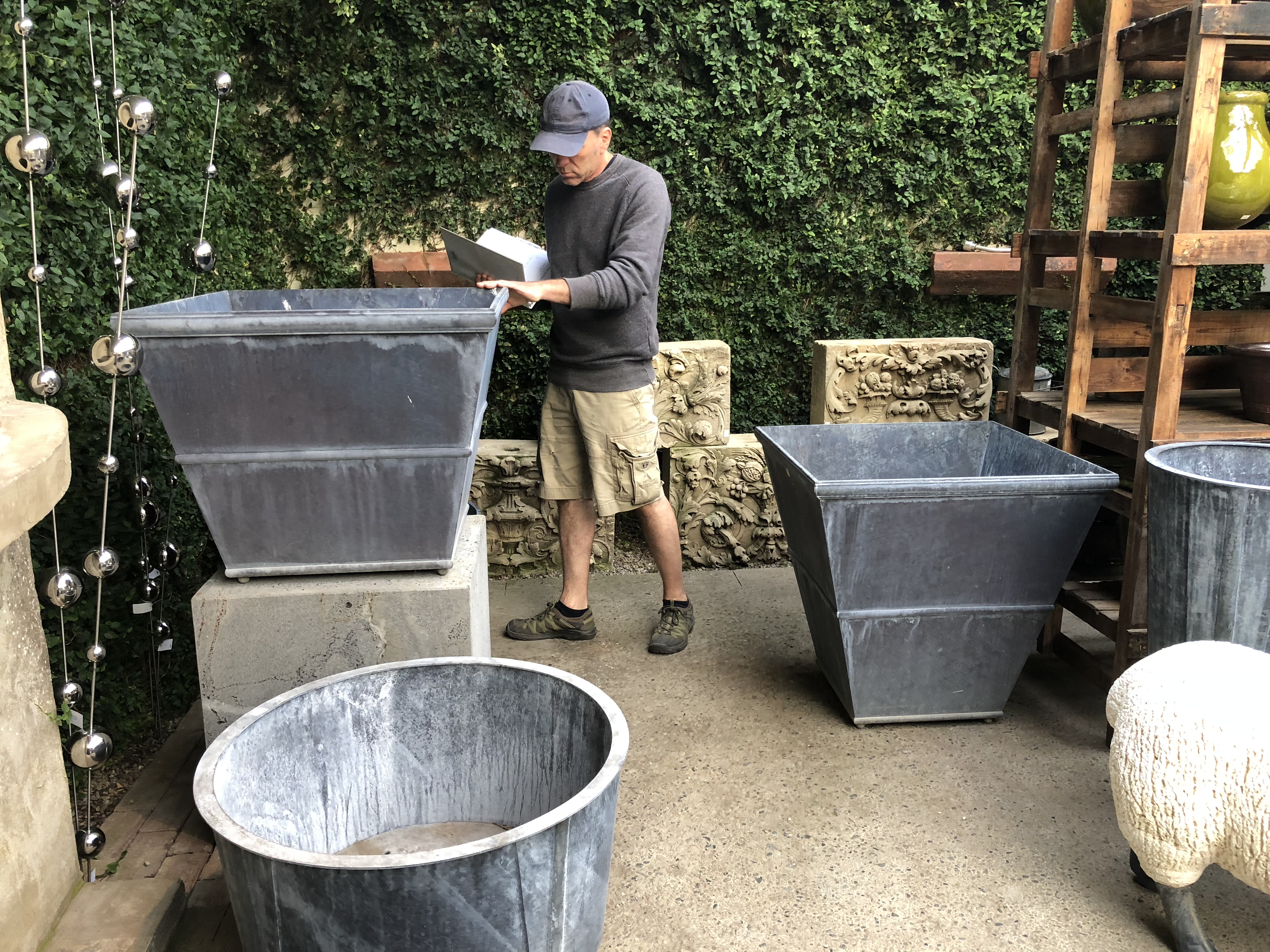
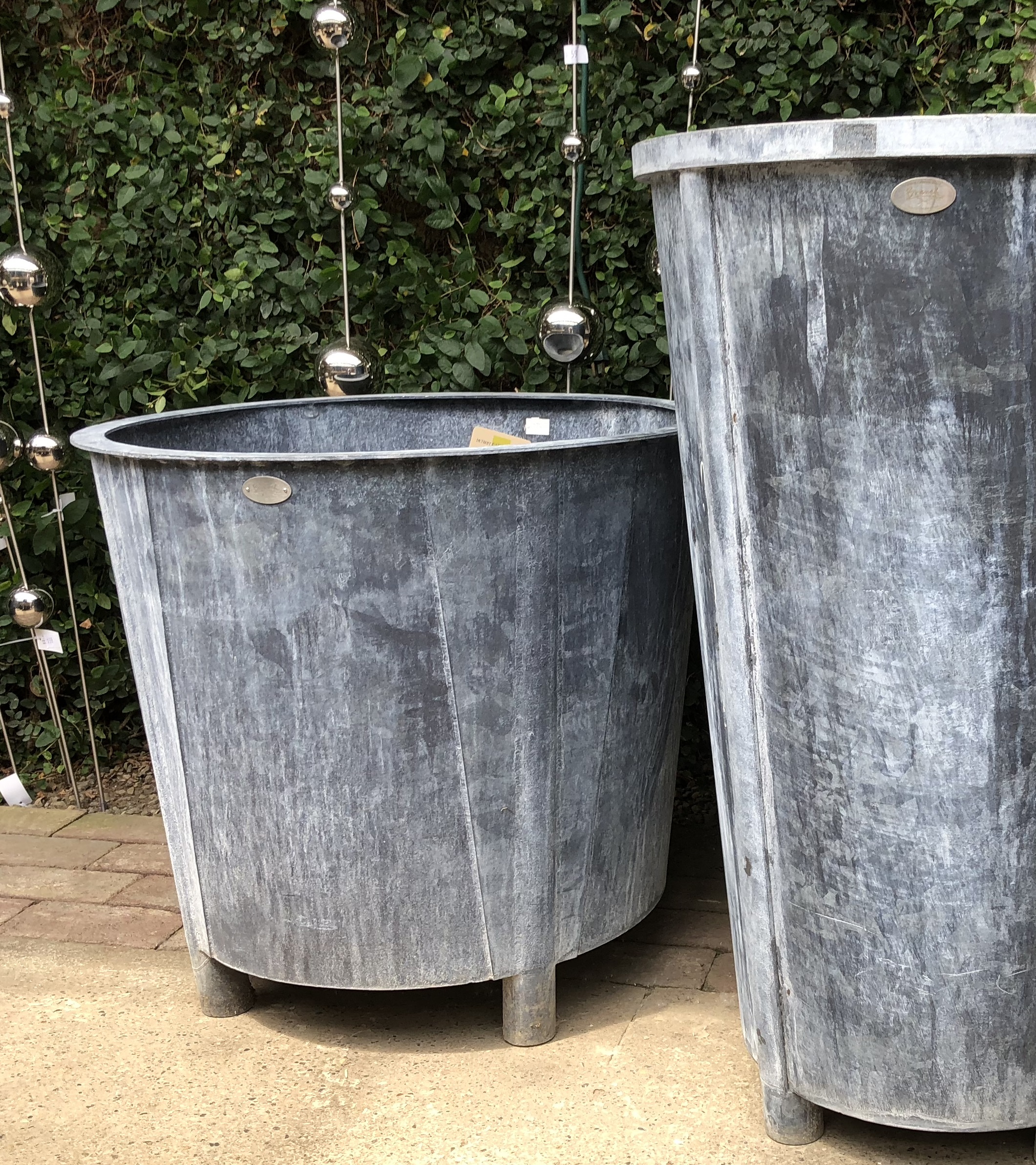 We were interested in a few designs for more contemporary garden pots to round out our collection of garden boxes. The round Barry tapers began with a half-oval rib detail that culminated in a round steel leg. The V-shaped flanges on either side of that vertical rib seemed like a great idea, visually. I find that many contemporary garden pots to be dry and lacking interest. Shape is an integral part of contemporary design for garden pots, but a shape without some detail seems blank and wanting. During the production of this prototype, Buck had several issues. The subtle V flanges were flat, which made it very difficult to weld them to the curved surface of the round body of the pot. It was not possible to curve those small pieces mechanically by rolling them prior to welding them on. Once the flanges were welded on to these tapered curved pots, the welding process threw the the top of the pot out of round. The flange sections were flat, and the rest of the container round. Viewed from above, the shape wobbled. Not pretty, this. The addition of a thin flat round ring welded onto the top of the pot to cover the the out of round result worked, but it seemed of too meager proportion to the rest of the pot. In addition, welding the flanges to the surface of the pot took an incredibly long time. Of course I was interested that the flange that look like it had melted over the vertical rib. As Buck informed me, steel does not melt over anything. The V steel flanges were good looking, but just too labor intensive to create. It took Owen upwards of an entire day to weld the flanges for a single pot. A detail that takes an entire day to weld is too fussy. The picture above tells the story. The pot on the left features the subtle detail of the flanges. The top rim is too thin. The revised pot on the right has no flanges, and a rim with substance. The revised pot, which we have put into production, is simple and substantial.
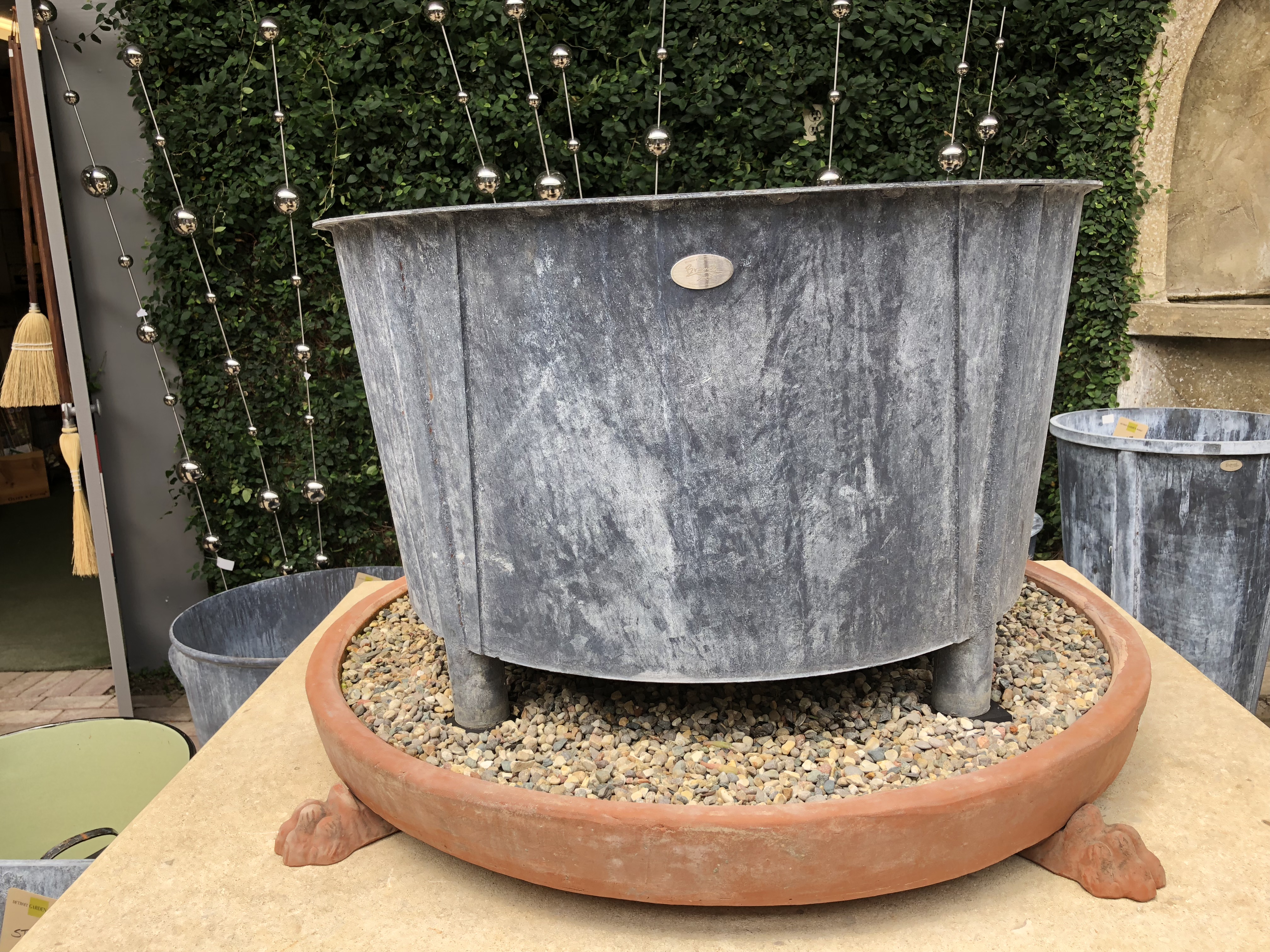 Rob decided to relieve Branch of a various prototype pots they had made over the last year by staging a prototype sale. Most of all of these prototypes are available for less than what it took to produce them. I could say that I have mixed feelings about that, but I don’t. It takes time, effort, and no small amount of investment to move an idea along. I will say that it is hard for me to let go of the prototypes we have available with my beloved flanges. But so be it. Any person who purchases a Branch prototype gets a one of a kind garden pot at an incredibly good price. Then good news for us? We can go on designing, and we can manufacture new ideas.
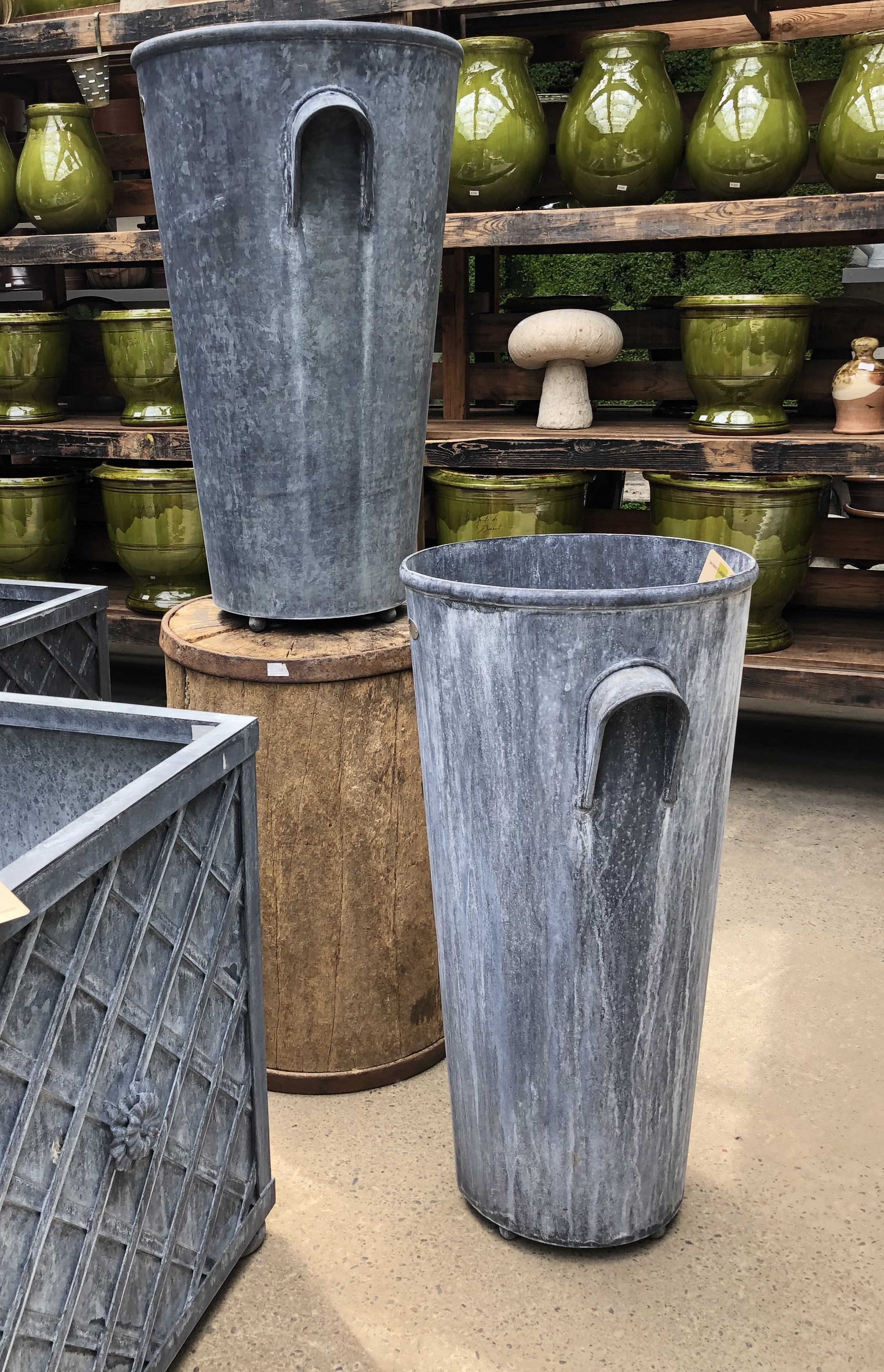 The Dean pots. We love the farm and cottage look of them. But farm and cottage style suggests a price that is equally down to earth. These Dean pots cannot be made for what it cost to manufacture a galvanized metal washtub.
 These small Jackie boxes have an experimental finish that Buck calls a polar finish. A second wash after the galvanizing process brings out the white in the finish. These prototypes are about a finish we decided not to pursue, but that does not mean there is any defect in the finish. Someone out there may quite like them.
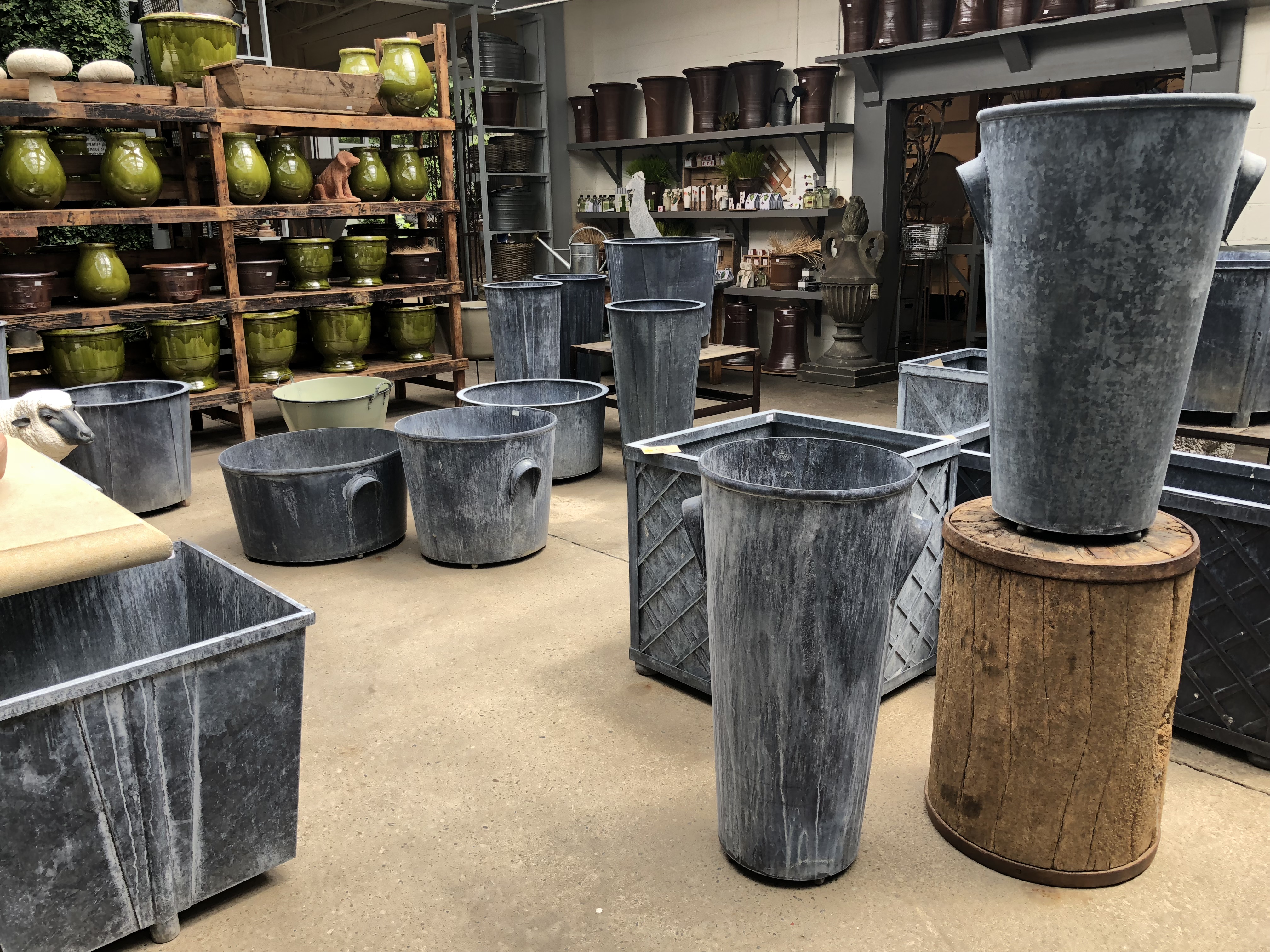 So pleased to see so many Branch Studio prototypes together in the same place. Today, 7 experimental pots found new homes. I a so pleased about that.
 Seeing how Rob has arranged the new contemporary stock boxes intermixed with the contemporary Branch Studio prototypes – terrific. You can see what changes have been made. And as we will not produce them again, they are one of a kind pots.
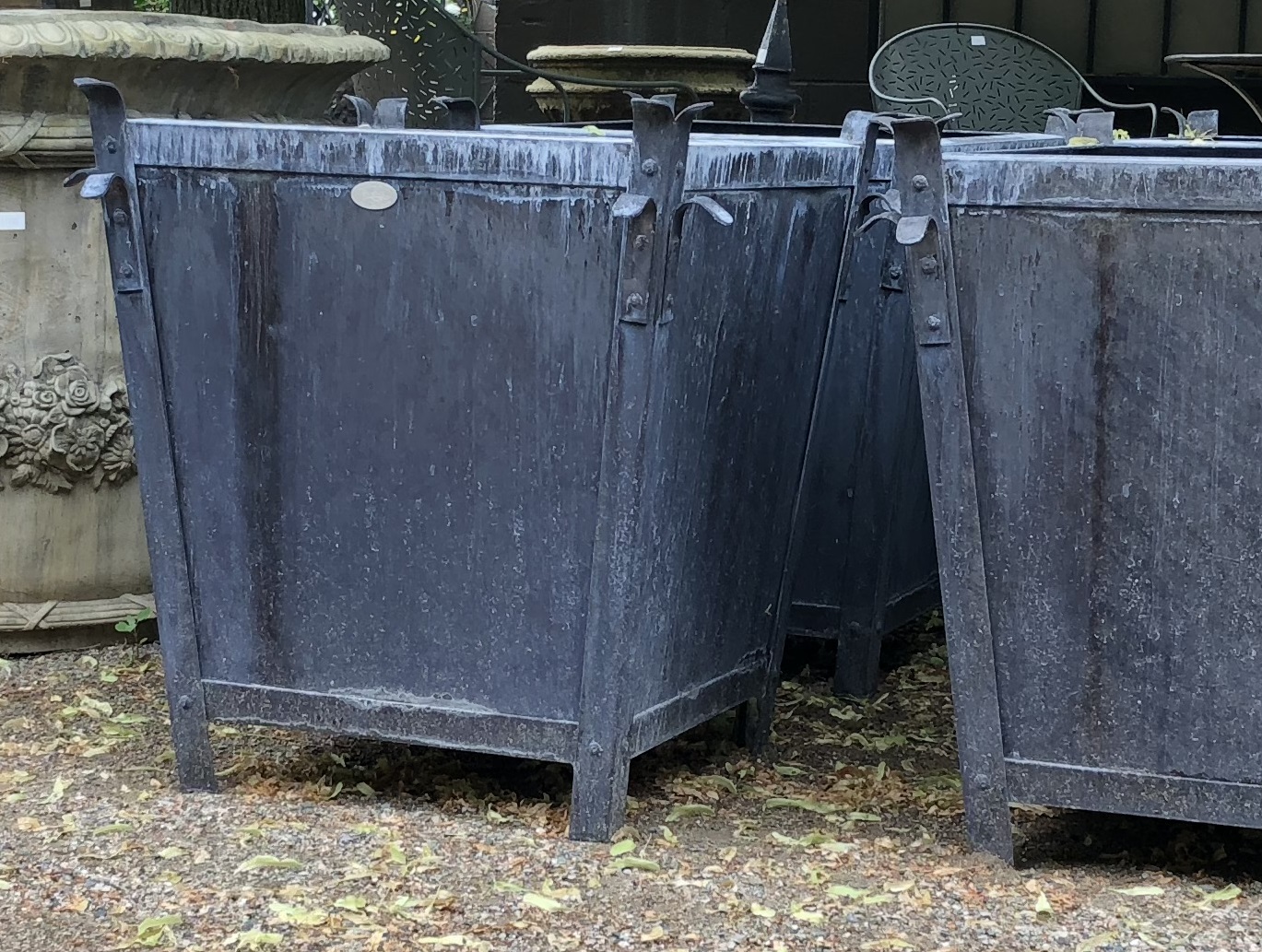
We have a new design we are looking at-Branch produced 4 of them. We are calling them the framed tapers. They are loosely based on a pair of pots Rob brought back from France. He really likes them, so we’ll see if other people do too.
Interested?