A Tree Farm

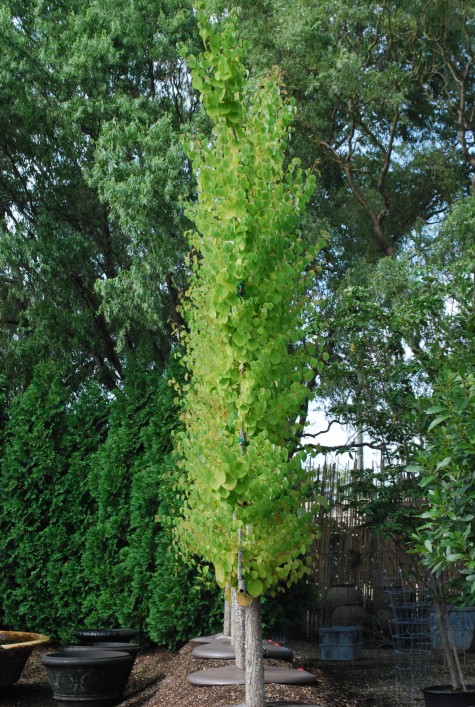
Many farms lie fallow over the winter.  If I am shopping for trees, winter is prime time.  Evergreen trees are especially attractive in northern landscapes, as we have as much winter as we do any other season. Rows of them, lined out like crops, are beautiful to see.  It is easy to see the strength of the shape of a deciduous tree while it is leafless.  My first exposure to espaliered trees was courtesy of Al Goldner while I was working for him.  He was a landscape designer with a big love for plants-any kind of plant.  But he loved espaliers enough to grow them himself on his farm in Howell.       
I have written before on the history of espaliered fruit trees.  Trained by regular and judicious pruning to grow against a wall or fence meant lots of fruit could be grown in a very small space.  It is rare to find places where espaliers are grown-we know of just a few.  The trees on this farm are beautifully grown in the classic French style.  Row after row of trees are grown here on galvanized cattle fencing attached to oversized wood posts set in concrete.  The grid of the wire fencing makes it easy to see the precision and care with which these trees are grown.   
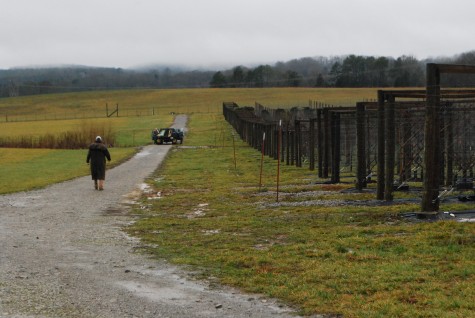
No tree is sold before its time.  This means the intended shape is completely realized, and the trunks and branches have grown to a size such that the tree is easy to maintain.  This takes years of growing and training.  There is the pruning of both the branches and the roots, and the training of the arms.  Trees must be shifted into larger pots as they grow.  Each pot is set into a pot sleeve set below grade, which helps to conserve moisture and keep the tree securely upright.  Billy is outdoors most every day, looking after them.  
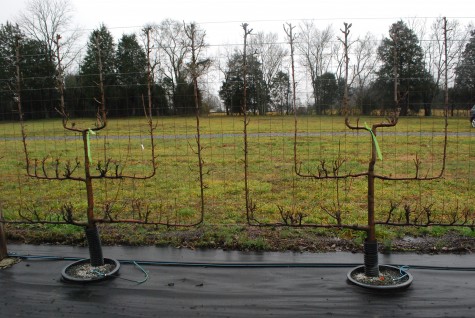
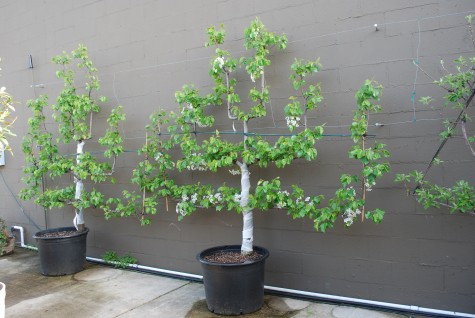
This pair of espaliers is grown in a classic candelabra style, with one signature feature.  Each horizontal branch is turned and tied into an upright position, creating a U-shaped transition from horizontal to vertical.  I prefer this growing method over a horizontal branch that is topped, and a vertical branch created from a resulting break.  This makes for a graceful winter shape, as each candelabra arm is an entire and unbroken branch. Each L-shaped branch will always be a larger diameter where it meets the main trunk, and smaller at the vertical tip. Both of these candelabra espaliers are Kieffer pears; they will tolerate a less than sunny placement. The vertical branches can be topped, if the tree is placed on a wall.  These trees have been grafted onto dwarf rootstock. Alternately, the vertical branches can be allowed to grow as tall as 20 or 25 feet, providing the arms are anchored to the wall or chimney behind it.  
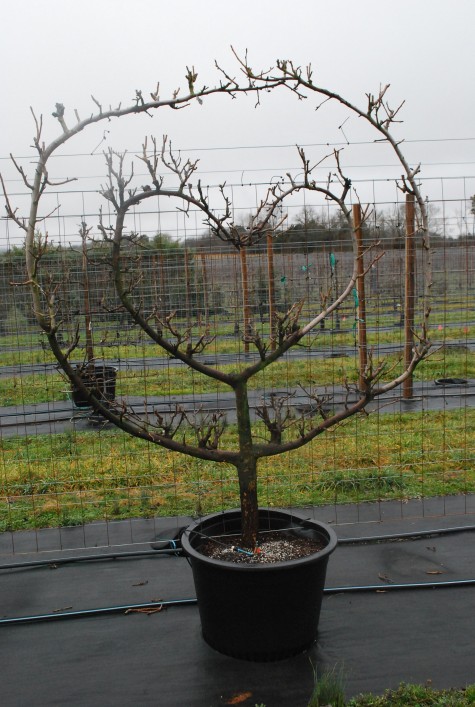
The encircled heart is likewise a signature form.  This shape is much more about romance, than architecture, or the efficient production of fruit.  Notice that the tree is planted in the rear third of the pot.  This makes getting the trunk close to a wall easy.  Years ago we bought bareroot espaliers, and potted them ourselves.  Fruit tree roots do not grow symmetrically around the trunk.  These espaliers are grown in a container the entire time they spend at the farm.  Yearly root pruning means they are shifted from 15 gallon pots to 25 gallon pots only once.   
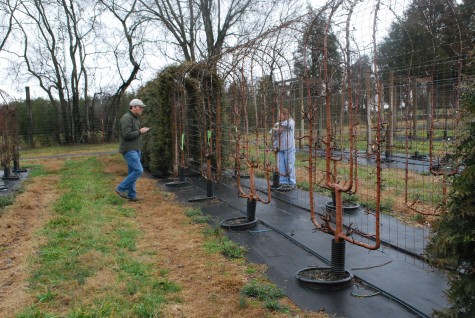
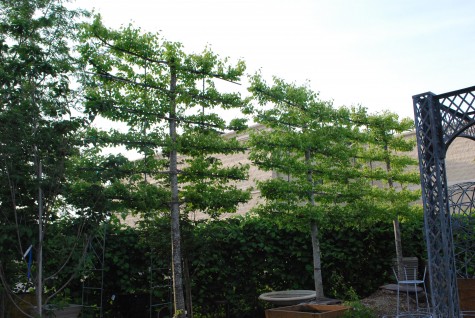
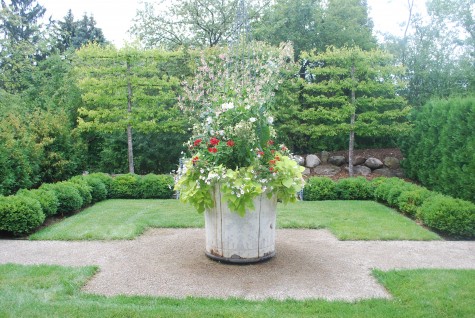
This is one of my favorite purchases-a tunnel/arbor of Golden Galaxy crabapples grown in a two-tier candelabra style.  They take even longer to grow to a finished size, as they need to be 9 feet tall before they are trained overhead.  Though these trees have been grown to form a 6 foot wide tunnel, they can be placed as far apart as needed, and grown to size.   Having white flowers in the spring, and gold fruit in the fall, these trees would be a spectacular addition to any landscape.   
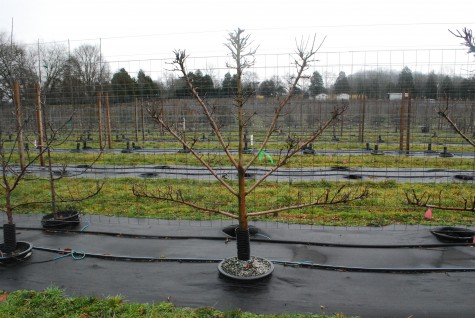
The fan shape is another classic espalier shape.  We spoke for a pair of them-one Gala apple, and one Seckel pear. They are very adaptable about growing to fit a very wide wall, that is not so tall. Or a tall wall that is not so wide.  Part of the fun of growing an espalier is custom training the growth in a pattern specific to its location.    
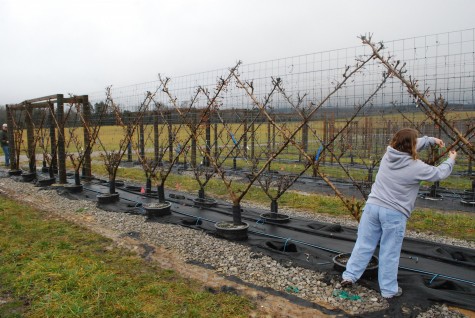
A series of trees grown such that their arms overlap to form diamond shapes is known as a Belgian fence.  This group of trees will stretch between 50 and 60 feet; the diamonds are 6′ by 6′.  I love the large scale of this fence; the diamonds will be easy to read even when the trees are in full leaf.  This fence, like the arbor, is grown from Golden Galaxy crabapples. 
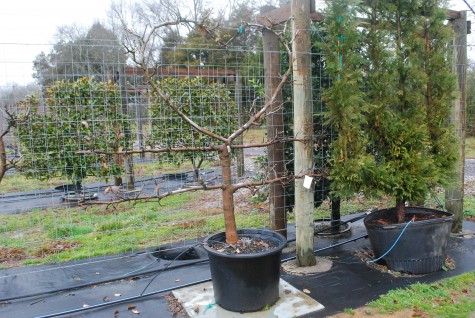
This heart which we bought a few years ago had problems from the start which we were unable to correct.  We exchanged it for another heart.  I am not one bit surprised that Billy is growing it out of its trouble, into a new shape yet to come.  I would not be at all surprised to fall for it a second time around.   
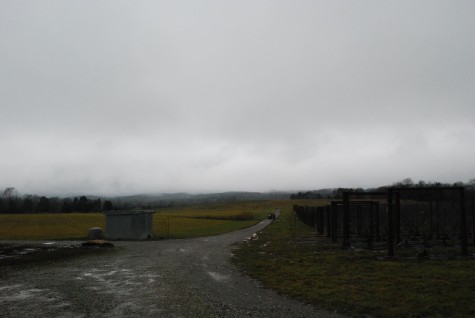
We had two dry hours between storms- we took advantage of that.  26 strikingly beautiful trees will be on their way here, come early spring.
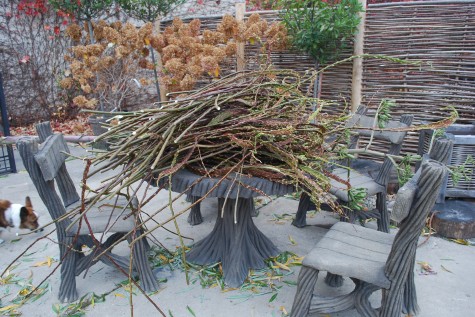
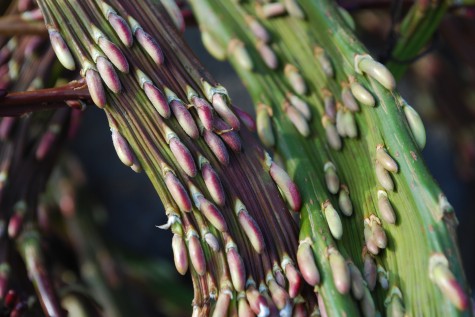
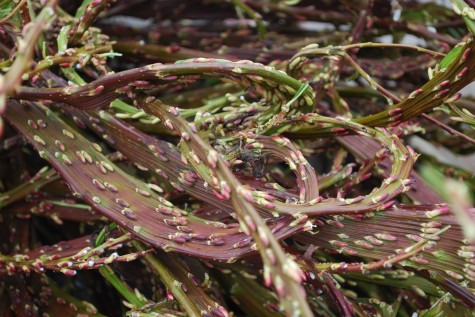
At A Glance: Fan Willow Branches


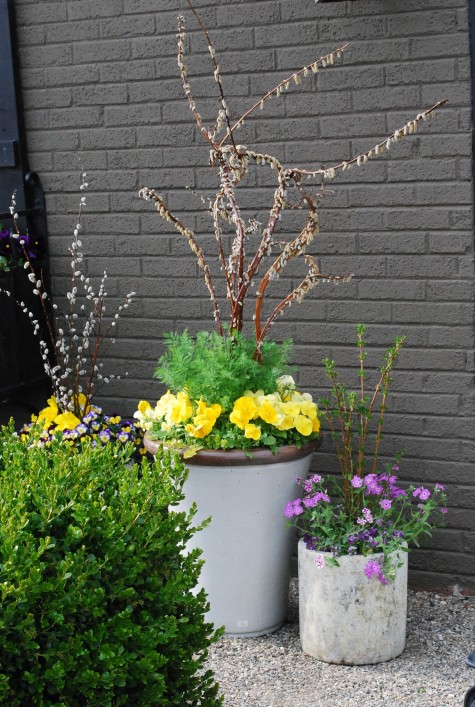
Spring container planting with fresh fan willow


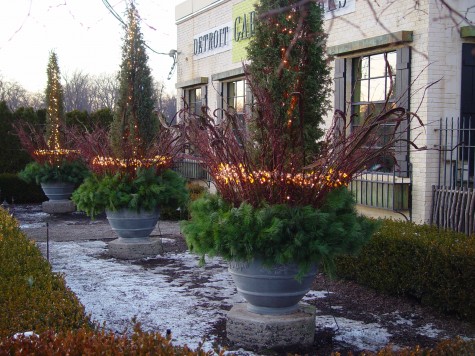
Winter containers with fan willow

Limelight Time

You have heard plenty from me over the past few years about hydrangeas.  OK, I am crazy about them.  I am reluctant to address the topic once again-but the summit of my summer is all about the coming of the hydrangeas.  Hydrangeas figure prominently in any American garden.  I do not plant Annabelle hydrangeas anymore.  Their ball shaped flower heads flop to the ground, unless they are rigorously staked.   Love the Annabelles?  Plant them on top of a wall-their drooping stalks and flower heads will soften that space.     

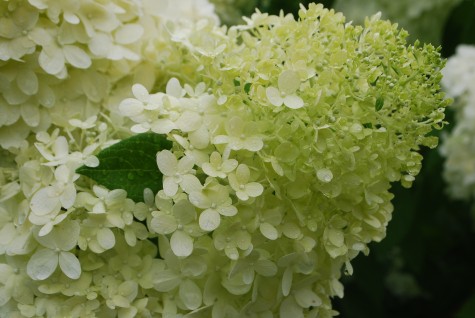
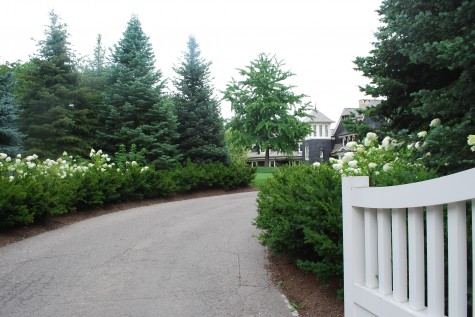
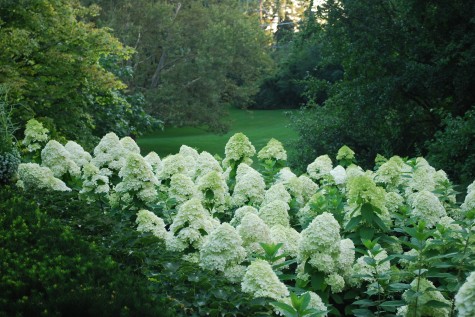
Limelight hydrangeas are a hybrid of white blooming hydrangeas that require much less of your time and effort.  They stand up straight, they bloom in August in my zone for what seems like months.  The blooms acquire a pink tinge as they begin to age; they may deepen to rose pink in the late stage.  Here, they happily fill in the space between the densiformis yews, and the tall evergreens. This entrance is very inviting on a summer day.   

Limelight hydrangeas are strongly growing shrubs.  They soften the evergreen structure of a landscape.   They adapt to almost any pruning style.  I have pruned them to within 14 inches of the ground, and had good flowering, and shorter height.  All they need is a good set of buds above ground to develop.    

Lots of hydrangeas available now in nurseries local to me are shy bloomers.  Pink or blue hydrangeas in my zone-sometimes they oblige, and sometimes not.  I so love hydrangeas blooming in the summer, and I favor those varieties that perform.   Should you be looking for a considerable summer show, look no further.  The greenish white blooms compliment any color scheme you might have in mind.    

The Limelight hydrangea panicles are tall, and cone shaped. They make a big statement, planted in blocks, or rows.   

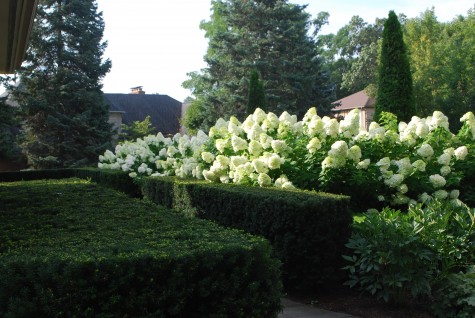
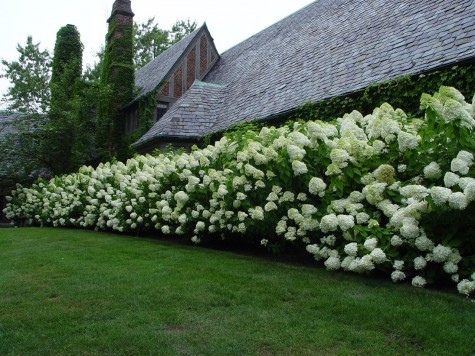
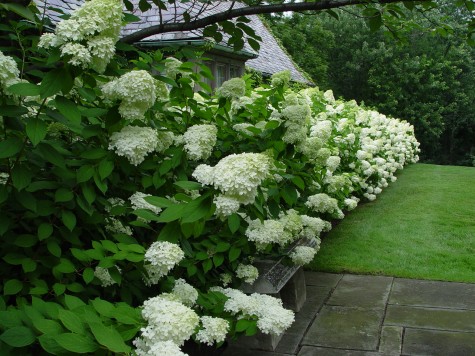
This hedge of Limelights is three staggered rows, planted 30 inches apart; it has been pruned lightly.  Most of the pruning is done on the top branches, so the side branches still get enough light to flower.  I so love those plants that ask for so little, and deliver so much.  Not interested in a garden extravaganza such as this?  One Limelight is equally as effective.     


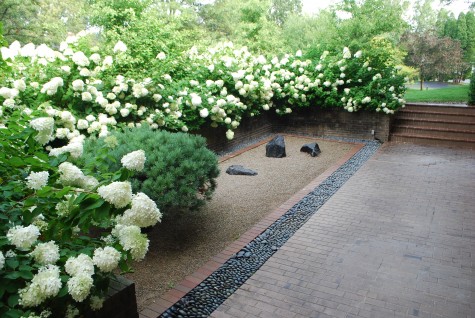
It is high summer in my zone.  I have 2 big blocks of Limelight hydrangeas on my small property.  Those blocks are making a very big statement today.  They grow so fast-buy little ones.  Plan and plant them wherever you need a plant 5- 7 feet tall.  Plant them wherever you need some summer romance.  I can promise you this-Limelight hydrangeas will endow your garden with a little late summer magic.

Trees For Very Shallow Spaces

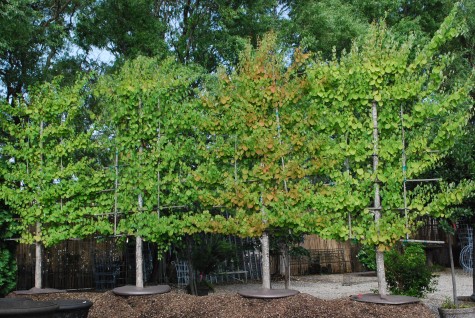
I have written about espaliered trees before.  Proper pruning is an important element of good garden maintenance.  But espalier-making is the intersection of the science of how things grow with the art of gardening. Interested in a little something about that history?  Search the post Palmette Legendre for my short take on the practice of growing trees in two dimensions.  The posts “Green Walls”, and “the 2010 espaliers” further that discussion.  Given this week devoted to some thoughts about trees and the spaces they require, espaliered trees come to mind.  These four old Katsura trees have been patiently trained for many years to grow wide and flat.  As you can see, some of the arms have outgrown the stakes that keep them horizontal.  They will continue to grow vertically, until I retie them to their training stakes.   They are ready to make a flat green wall  in a very narrow space.    

Viewed from the side, the trunks and foliage of these katsuras occupy barely 2 feet of space. The rootballs are more than twice the size of the tops.  A grower in Oregon grew these incredible trees, given enormous patience, and a great love of plants.  A great deal of work was needed to train these trees into this shape.  Cercidiphyllum, or katsure, had a broadly oval natural shape. Changing that shape involves training from a very early age.     

I bought old espaliered lindens from the same grower.  I had to have them.  I paid to dig, ball and burlap, and ship 14 espaliered trees across the country in a refrigerated truck.  Nuts, yes. Think of me what you will, but these old espaliers are extraordinarily beautiful plants, and almost all of them are spoken for now. Most of the espaliers I buy are young, and of small caliper.  They need  a support system in order to maintain their shape.  Many espaliers are grown against a wall, for this reason.  These trees are old enough to be a wall.  It is hard to see in this picture, but the horizontal arms are  being held in place by vertical stakes.  These stakes maintain a uniform distance between each arm.Three of the old linden espaliers got placed in a small side garden.  The grade behind them rises steeply; the property line is barely 3 feet beyond the espaliers.  Once the arborvitae grown, this garden will feel like a room with the sky for a ceiling. This is a garden in the process of becoming a place to be.  A decision will need to be made fairly soon.  If the horizontal branches are not kept pruned, the green stripes will become a green plane.Almost any tree can be trained in two dimensions.  These crabapples have been pruned in a classic candelabra form.  The vertical stakes holding the arms in place are attached to wires, which are held a few inches away from the wall with bolts.  This permits good air circulation on the backside of the branches.

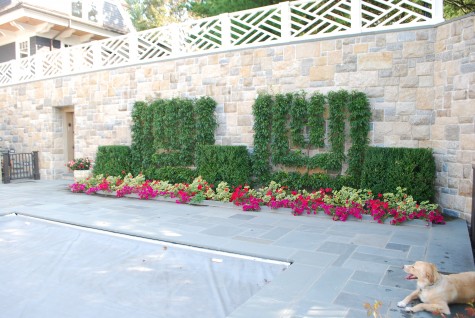
This is the third year in the ground for these crabapples.  They dress up this massive stone wall without obscuring it.  The total width of the bed from the wall to the bluestone terrace is 4 feet.  In the absence of any green, this space would feel a little too desolate.  Alternating with the espaliers-blocks of Green Mountain boxwood.  They naturally grow taller than wide. 

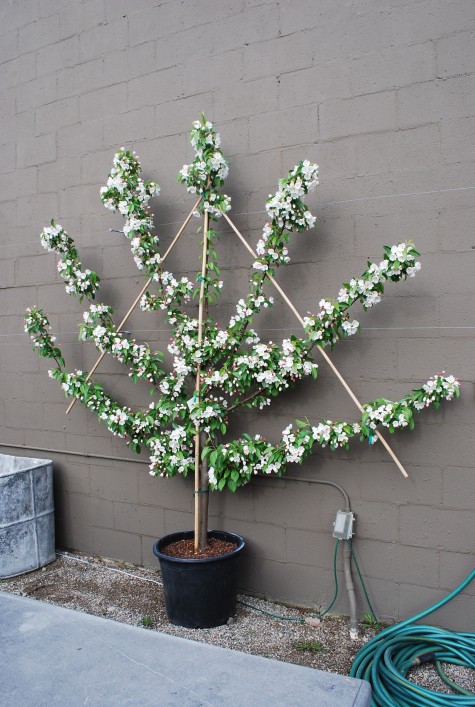
This crabapple has been trained in a fan shape.  Each arm radiates out from the trunk in a symmetrical fashion.  Growing an espalier in a symmetrical shape requires the selection and training of that branch which appears in exactly the right spot.  I would be much better at keeping up an espalier that had been trained for a few years, than starting one from scratch.    

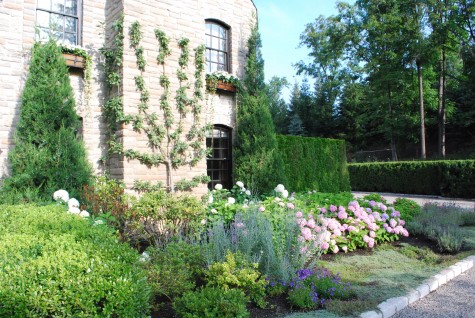
This fan espalier has been trained one step further.  In addition to fanning out, it has been trained to grow over the sides of the chimney.  Young tree branches are flexible, and will adapt to this training.  Once the twigs attain some size, the shape often becomes self-supporting.  It wil be very interesting to see the shape of this tree in 10 years. 


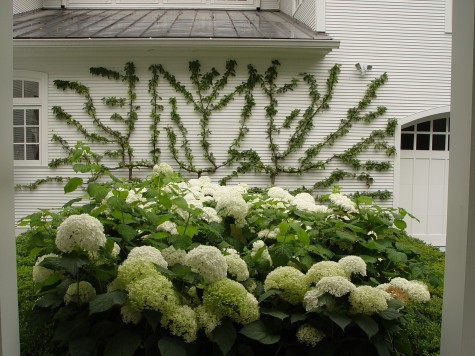
This espalier has an entirely free form shape.  Taking up little more than 2 feet on the face of this wall, it is a striking addition to this garden.  The combination of the narrow wood clapboard, the espalier, and the Annabelles in bloom makes quite the picture.

Driving up the street to this property for the first time, I was struck by how this giant bare wall seemed to be asking for something.  As maintaining access to the lake was a very important issue, an espalier of some kind seemd like a good idea.

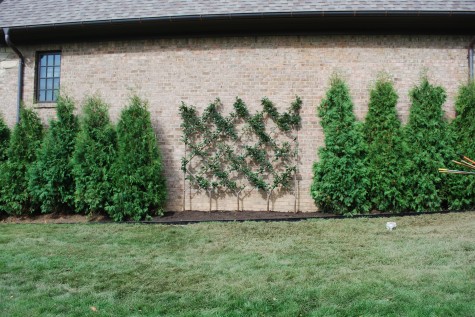
These 5 trees are trained in an espalier pattern known as a Belgian fence.  When these apple trees were a single whip, 4 feet tall, they were pruned down to within a foot of the ground.  When a pair of branches emerged at that cut, they were potted, and staked to create the beginning of a lattice fence.  Given another 10 years, they will cover this section of wall, and provide plenty of apples.  Were I a young gardener, I would make it my business to espalier something-for the fun of it now, and the beauty of it later.