The Garden Designer’s Roundtable: Plants and Memory


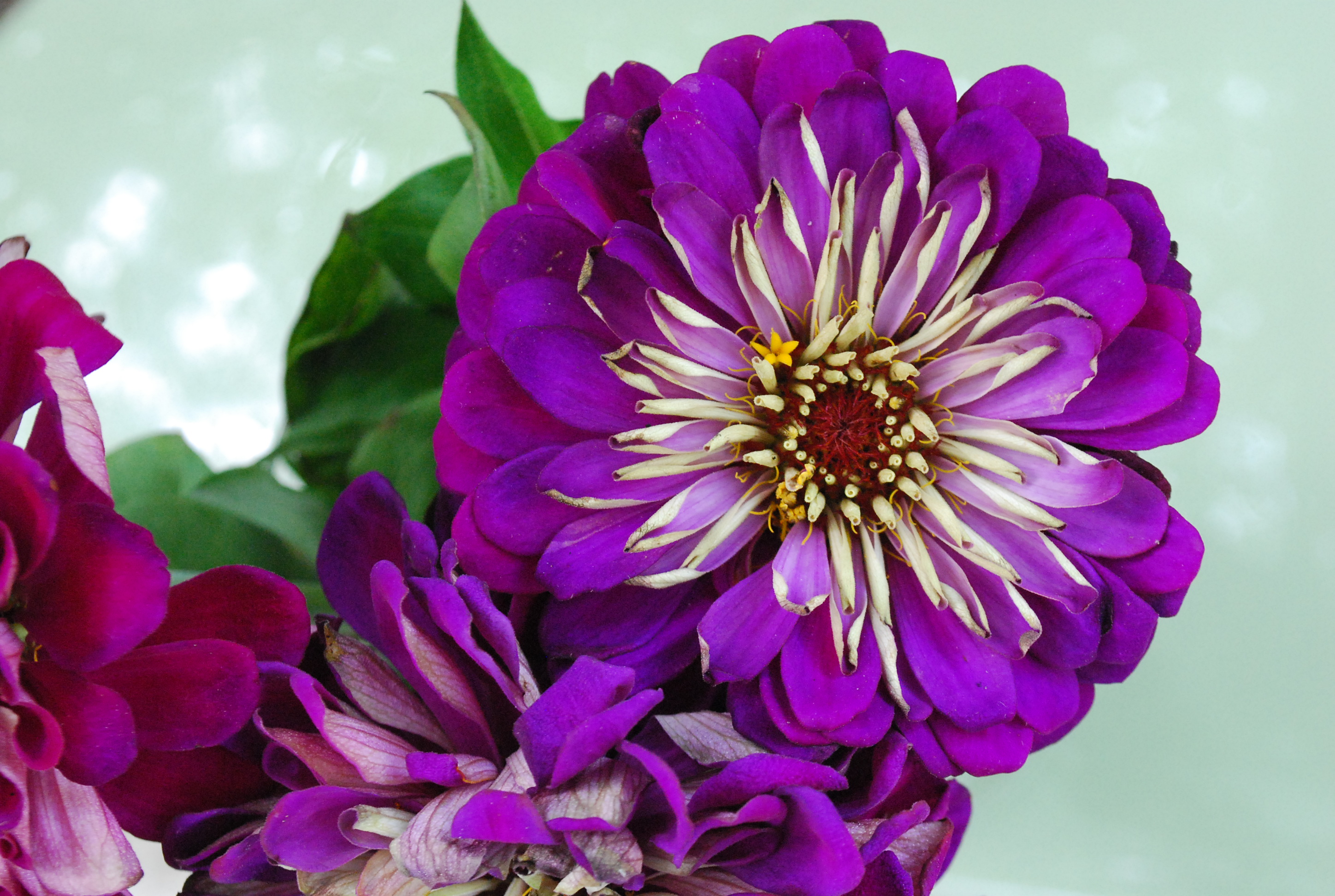
A memory can be triggered by many things.  The smell of lilacs in the spring.  The fragrance of a rose.  A mass of daisies, blooming.  Plants that bring memories flooding back to me mostly have to do with my mother’s garden.  Roses-oh yes, so many roses.  A gingko tree, grown from seed to a spectacular size.  Tomatoes, lettuce, and herbs in pots.  Orchids, hanging from the trees. And the zinnias she grew from seed.  I never see a zinnia without thinking of her. 

But my memories of her aside, the big old evergreen trees that it has been my pleasure to meet make me feel zero at the bone.  Zero at the bone?  A feeling which is primeval.  Elemental.  For me, giant old trees evoke memories that are not tied to specific events.  They may provoke memories of which I am only dimly aware. 

I am sure this sense of belonging to the primeval forest is why it is so difficult to take down a big tree.  Even a damaged or sick old tree.  This client was very attached to a pair of old and weary Norway spruce planted just a few feet from the foundation of the house.  Taking them down was not an option.  Planting more of them at the road, a fitting tribute.  I always admired her reluctance to interfere with with a chain saw.  The landscape had an aura that would not have been possible without those old trees.     
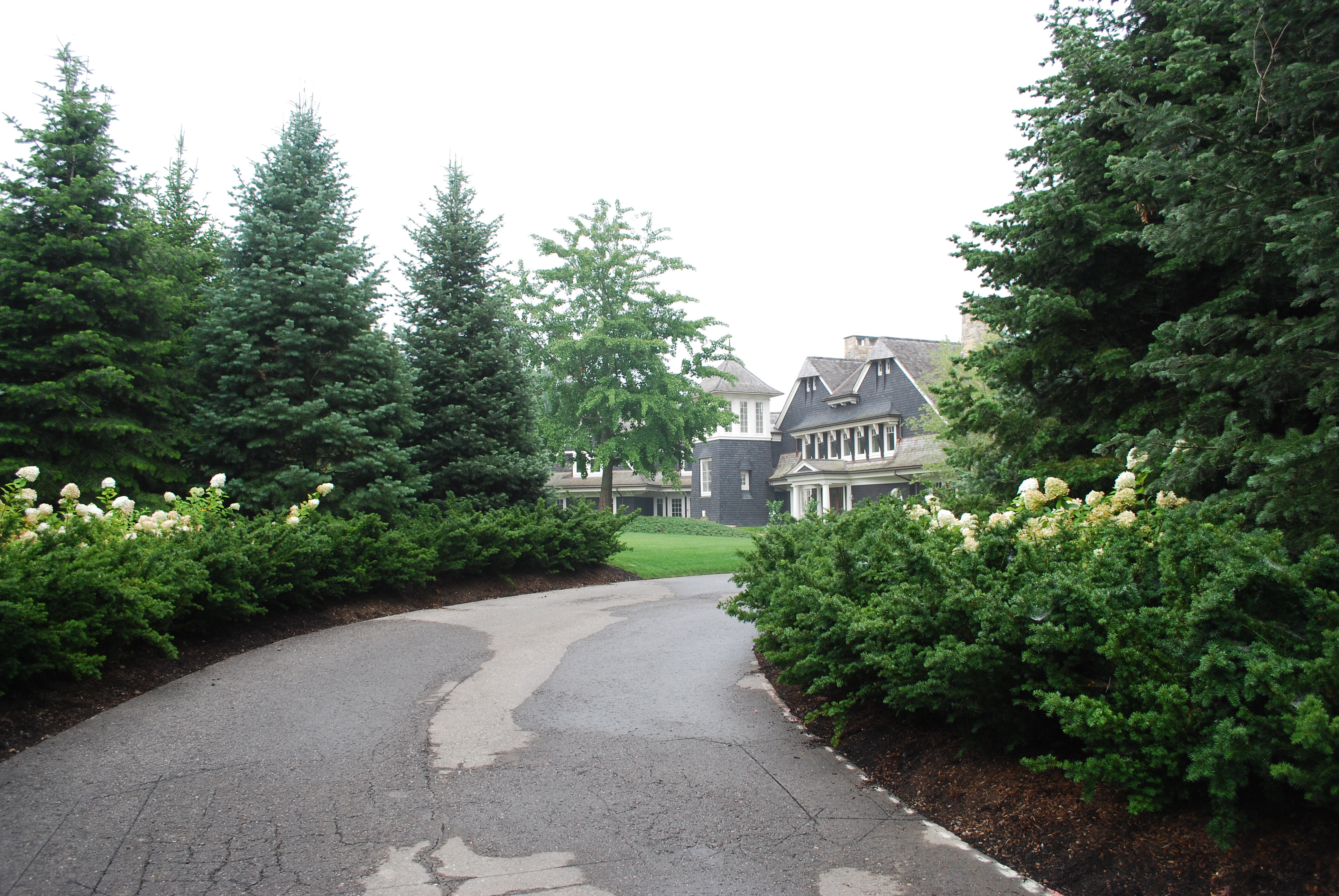
 

These trees may be many years away from  evoking a memory of the primeval forest, but the impulse was there to plant them. 

Giant old trees whose life spans many gererations of people are as rare in urban areas as they are revered.  Old large properties that have never been clear cut to make way for neighborhoods provide homes for old trees.  The steward-gardener who takes great pains to look after them is a person for whom those trees evoke a memory.  In my area, there are old cemeteries whose old trees are spectacular.  Many cities have parks, and for good reason.  Exposure to an old, natural or archetypal landscape is comforting, and thought provoking.
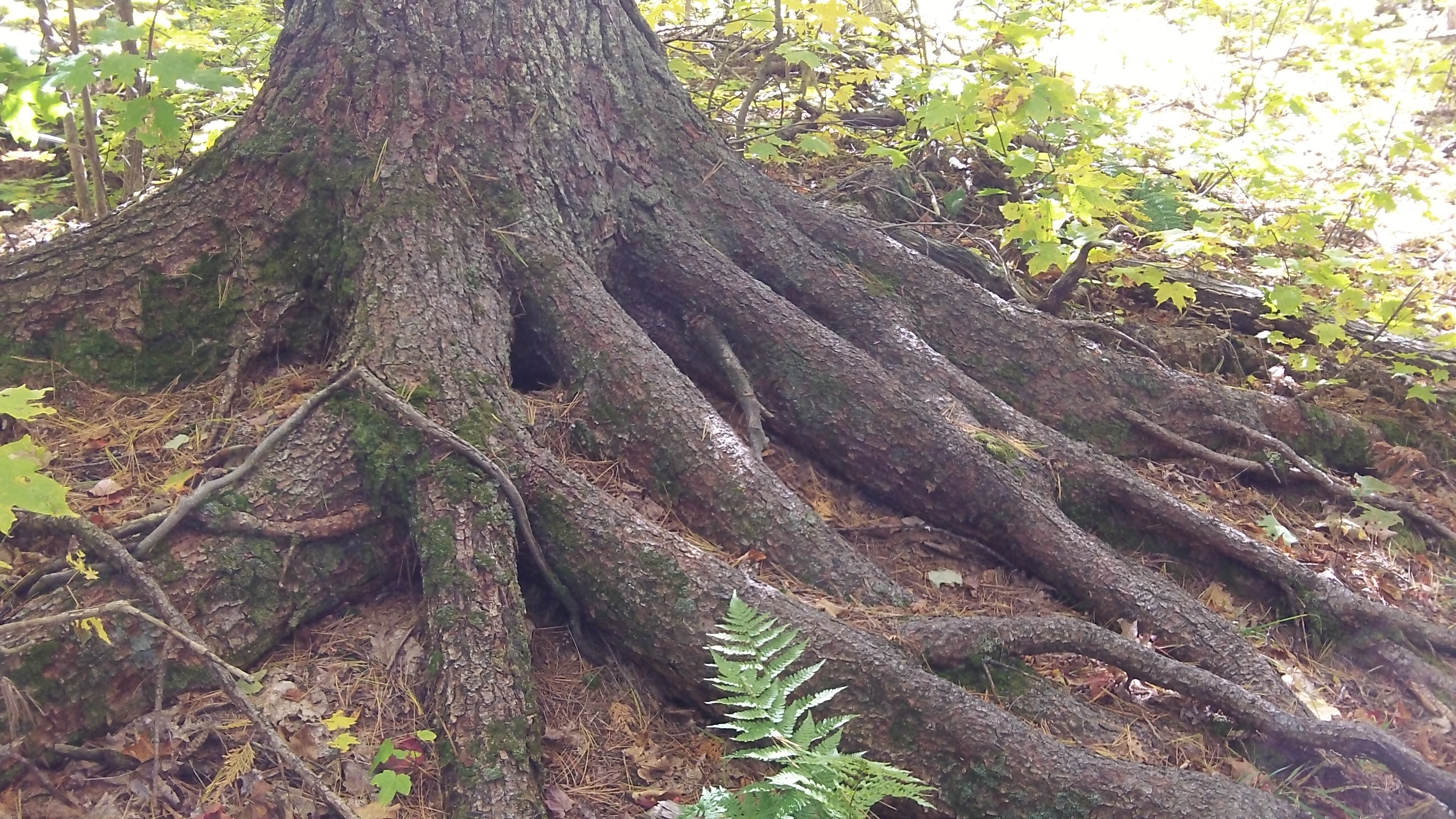
The Estivant Pines nature sanctuary on the Kewenaw Peninsula in the upper peninsula is a protected home to many old pines.  Pictured in the Michigan Nature Association blog, this is the trunk of one of the largest and oldest of those pines. The preservation of these old trees is the result of the work, patience and determination of many-all of whom have a memory that is important to nurture. 

This post is but one of many featured at the Garden Designer’s Roundtable today on the subject of memory and plants.  My special congratulations to Andrew Keys, whose book   Why Grow That When You Can Grow This   has just been published on this very topic.  If the book is as exuberant and sassy as he is, it should be a great read!    

Andrew Keys : Garden Smackdown : Boston, MA

Genevieve Schmidt : North Coast Gardening : Arcata, CA

Jocelyn Chilvers : The Art Garden : Denver, CO

Lesley Hegarty & Robert Webber : Hegarty Webber Partnership : Bristol, UK

Mary Gallagher Gray : Black Walnut Dispatch : Washington, D.C.

Rebecca Sweet : Gossip In The Garden : Los Altos, CA

Susan Cohan : Miss Rumphius’ Rules : Chatham, NJ

Susan Morrison : Blue Planet Garden Blog : East Bay, CA

Thomas Rainer : Grounded Design : Washington, D.C.

Rochelle Greayer : Studio ‘g’ : Boston, MA
 

100 Boxwood

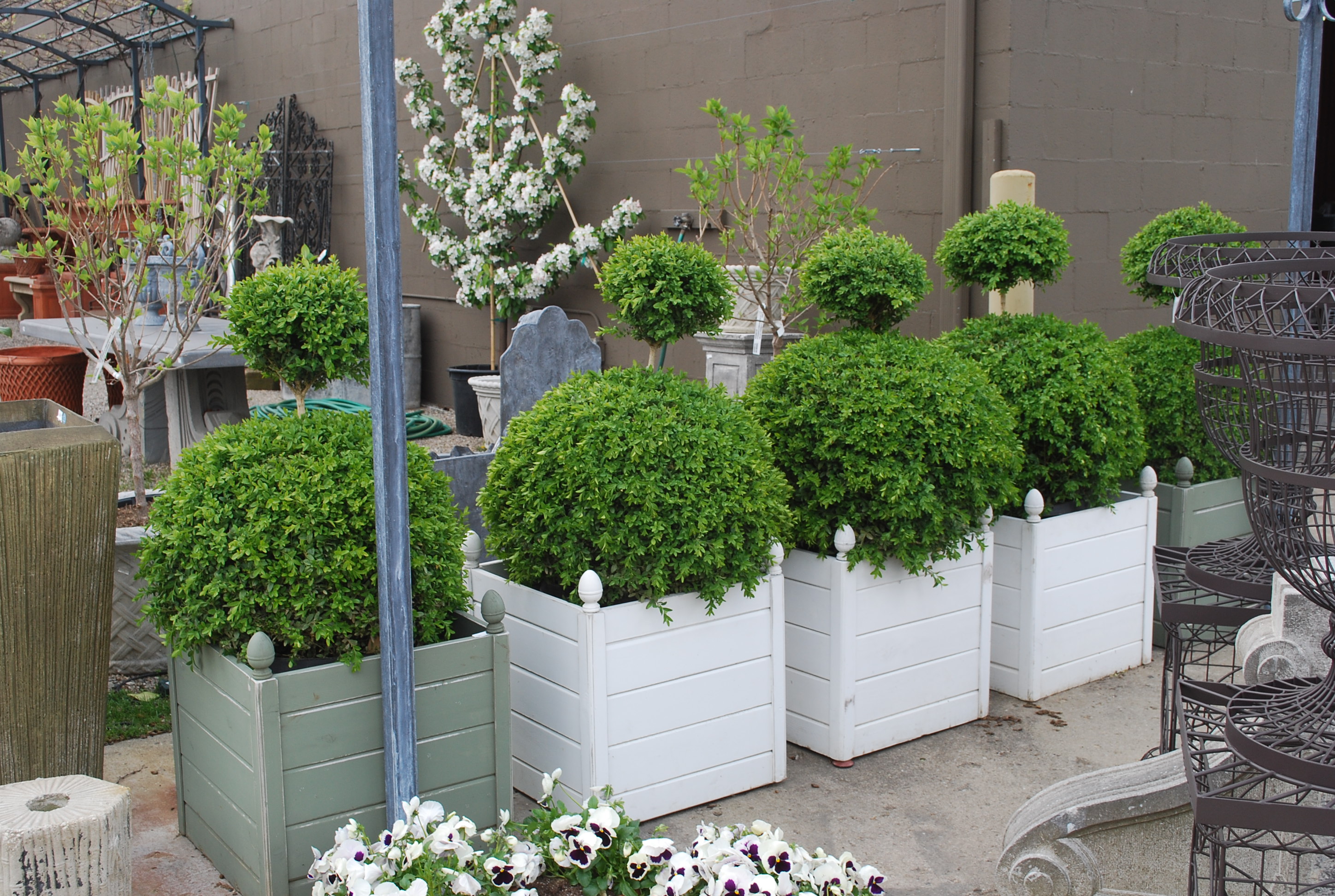
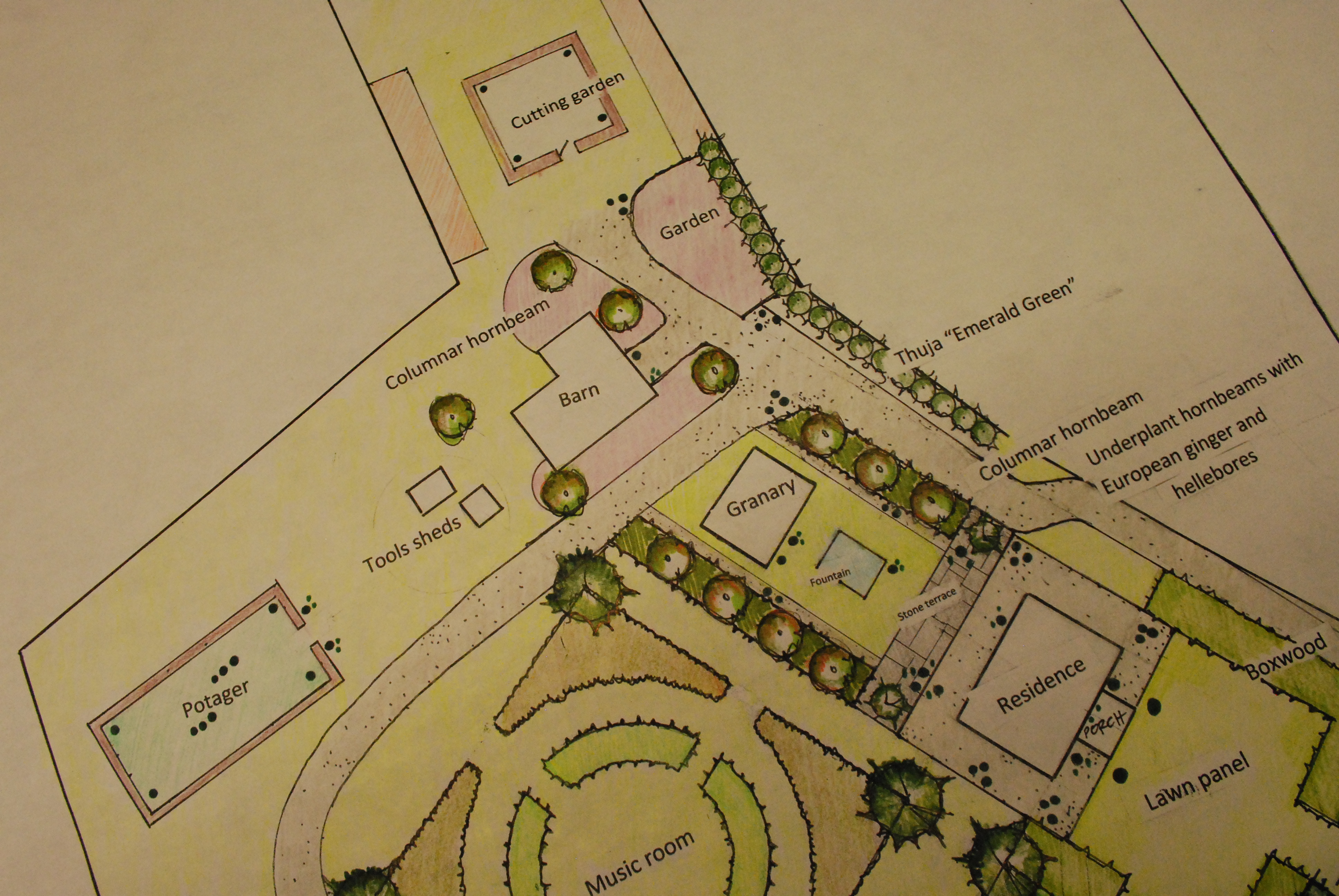
 Concerning my schematic plan from yesterday-my clients one comment was that I needed to add 100 boxwood.  All of said 100 boxwood will be in pots.  The placement and configuration of 100 pots of boxwood every spring will be the first work of their gardening season.  They will haul them out of storage on a huge dolly (which they have already purchased), and discuss and decide where to place them.  Boxwood in all different sizes, some of which are topiary plants with distinctive forms,  in a collection of gorgeous pots.  They are both adamant, and thrilled about the idea of 100 boxwood in pots.  Far be it for me to deter their enthusiasm.   I did amend the schematic plan with a lot of green dots-although I think all of my dots only add up to 72.  I have no doubt they will be able to place their 100 pots-and have a good bit of fun doing it.

topiary boxwood

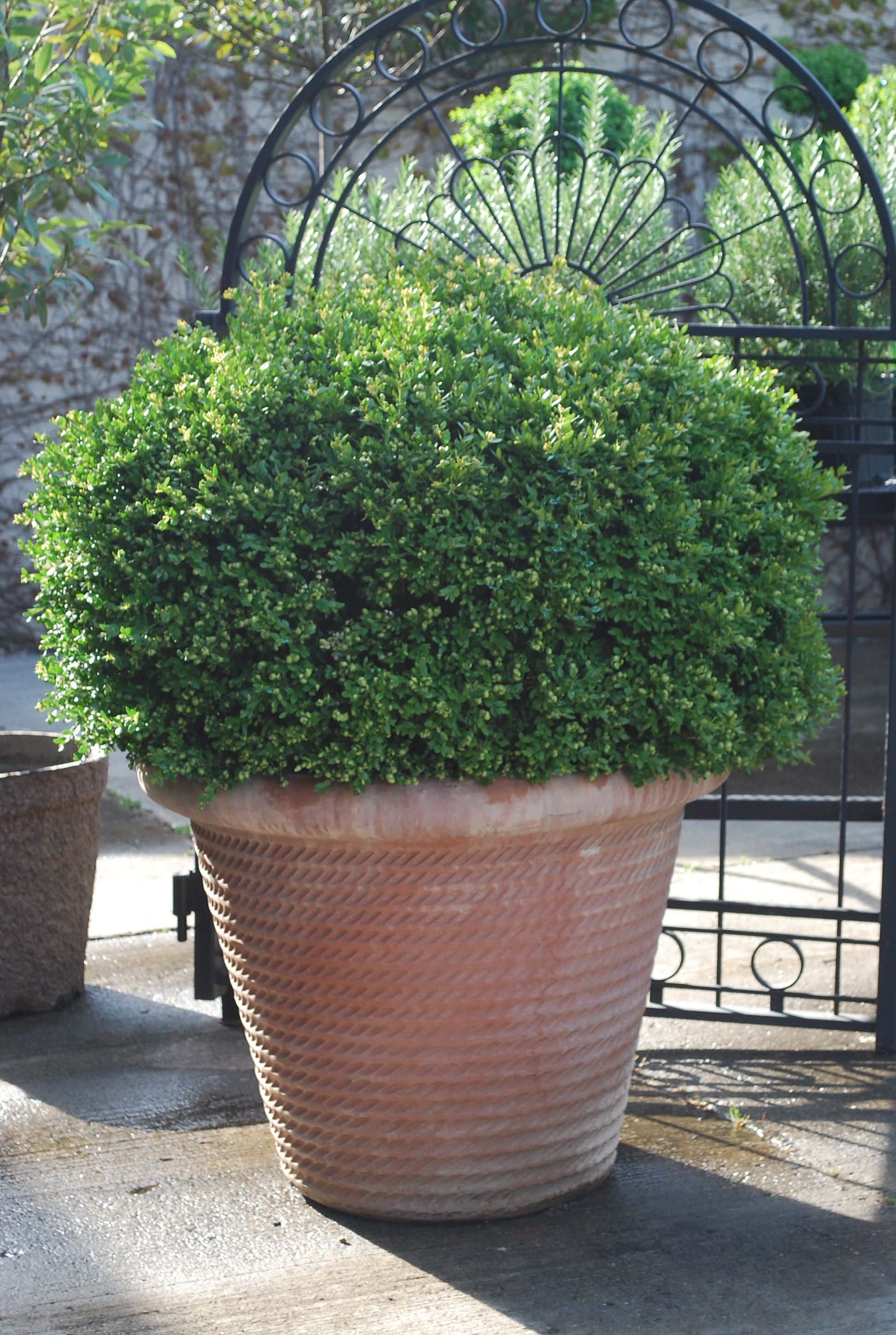
They already own a pair of these handmade French terra cotta pots planted with these boxwood.  The boxwood-buxus microphylla-was 52 inches in diameter when they acquired them.  They have been in these pots for 5 years.  I am not sure how many other boxwood they own, but they do have a substantial collection of plain handmade Italian terra cotta pots.

topiary boxwood

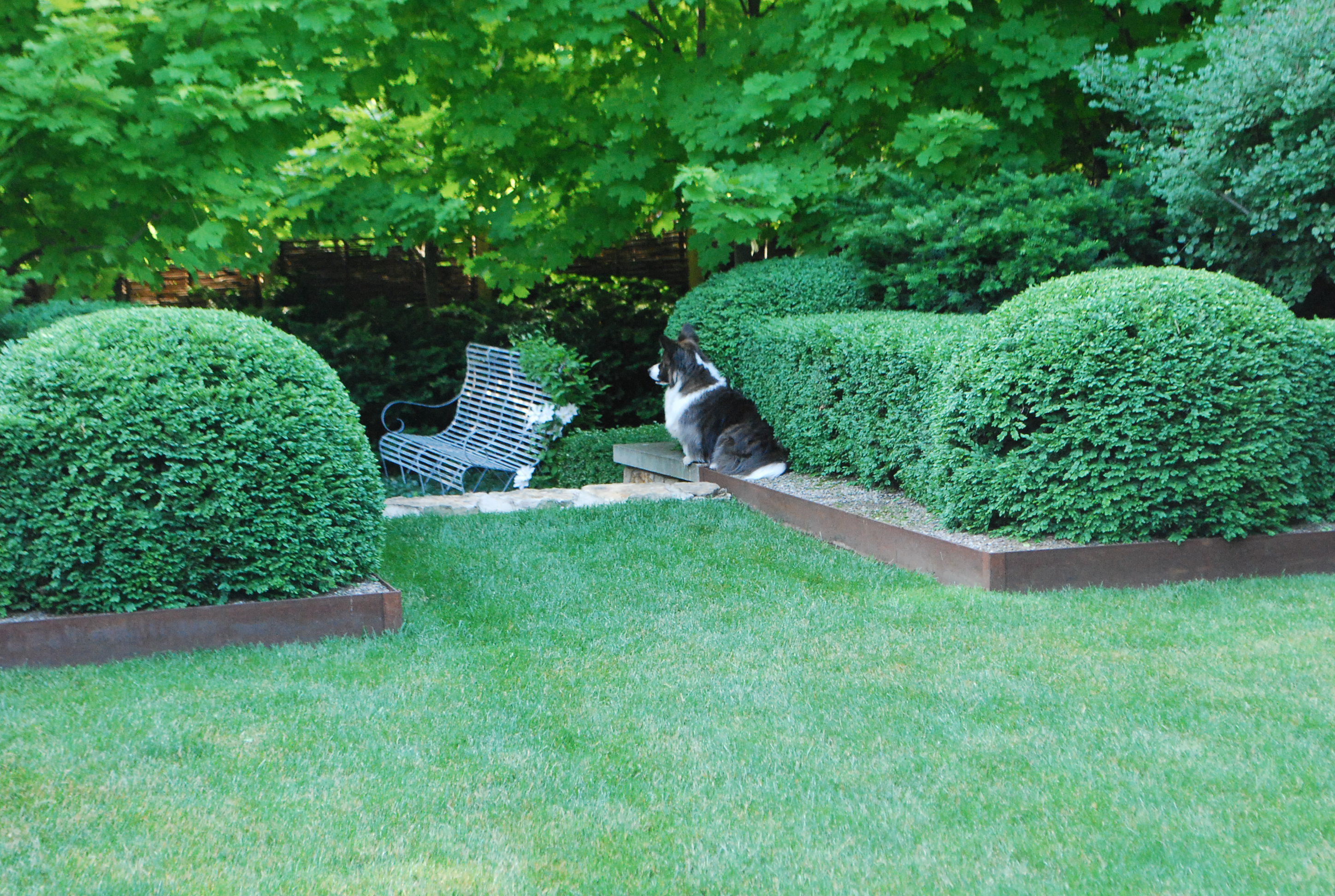
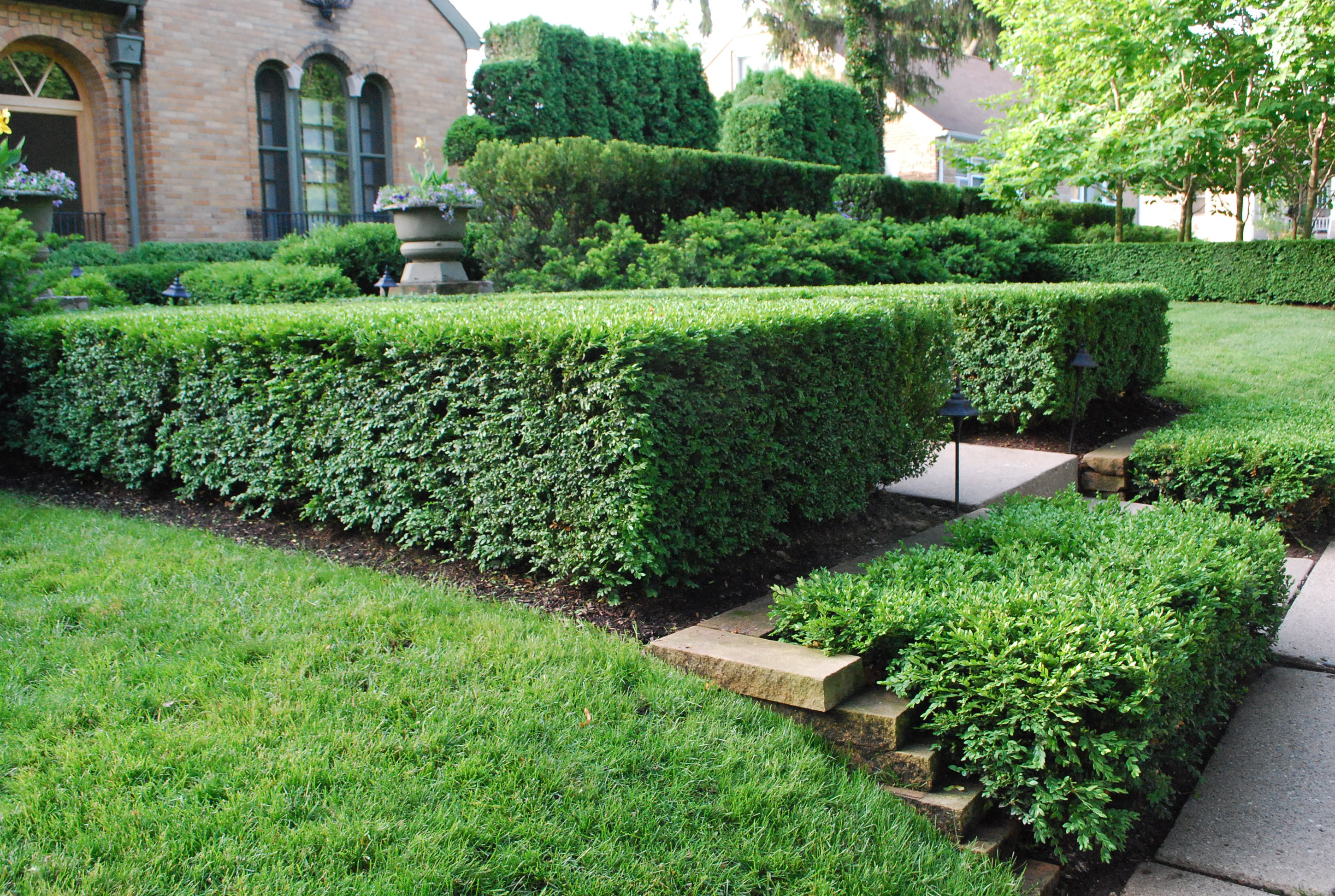
I will admit to a love for boxwood.  This plant speaks to no end of beautifully designed landscapes world wide.  This broadleafed evergreen graces landscapes all over this planet.  I love them pruned, wild, hedged, and in pots.  In my zone, they provide great shape, form, and color-year round.   

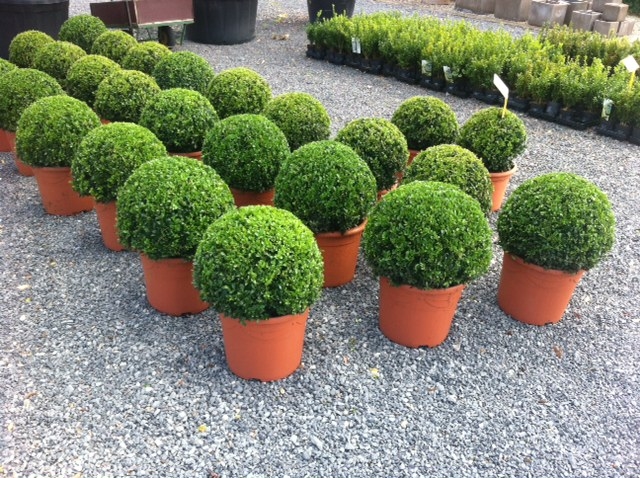
Growers all across the US grow boxwood in every form imaginable.  They are available 12 inches tall.  They are available 36 inches tall.  They are grown by some growers as a uniform crop.  Other growers grow them on, and trim them into spectacularly beautiful shapes. 

Clients who indicate they need to have 100 boxwood planted in  pots are clients of an unusual sort.  These are clients for whom the garden is all about romance.  What does their request mean to me?  A really good day. And a lot of thought about what a garden means.  Long after the end of the business day today, I am considering planting all of my pots next year with boxwood. Though I am unlikely to follow suit, their committment to such an extraordinary level of  romance has me thinking.  The story of a landscape dramatically colored by romance-love this.         


Growing Topiary Plants

topiary evergreens
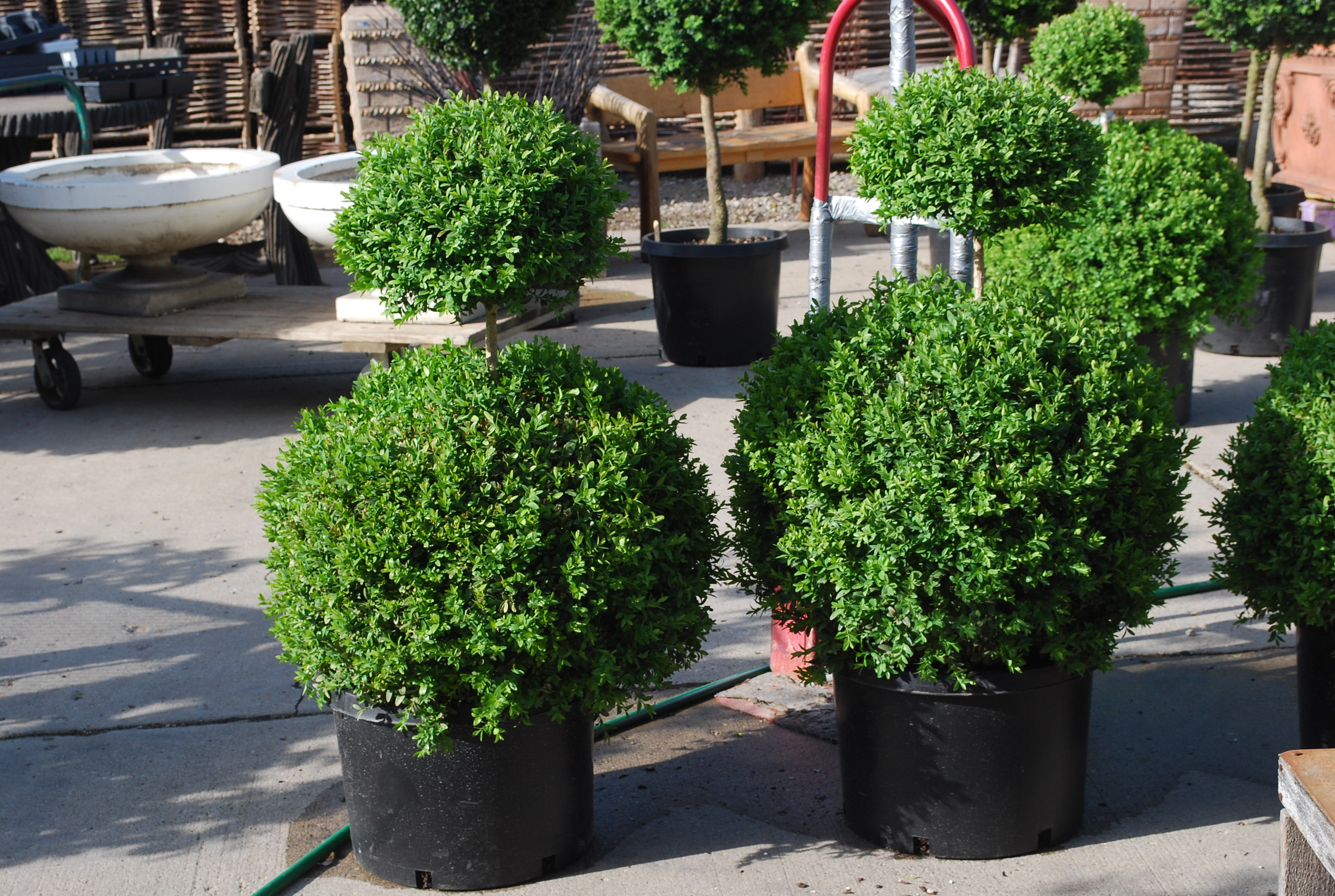
I had so many calls, emails and comments about the topiary nursery in my previous post- wow!  I could thank you for that attention, but it wasn’t me who grew those plants.  It is a very special person with an extraordinary and singular vision.  People with vision-there is always something worthwhile to take from their efforts.  His palette of plants is quite spare.  His patience with the process I call growing is unlimited.  And his ability to prune is superb.  These boxwoods of his in 3 gallon pots are plants that have been given a very good start.  Any gardener could take this pot home, and resolve to grow that boxwood on.       

Another grower we buy from makes a point growing this particular form.  These boxwood with tufted top knots are charming and distinctive.  Anyone willing to take one on, and commit to growing and pruning would in just a few years have a boxwood topiary worth talking about.  To get to this stage, the nursery spends 10 years.  They are happy to hand what they grow off to you.  Are you game?

Most of my boxwoods are 21 years old.  7 years old at purchase, and 14 years in the ground.  I water and feed them.  But I would not dream of touching them with a pair of shears.  I am a serviceable pruner-not an inspired one. I am fortunate to have someone in my community who makes a specialty of pruning.  Mindy and her group of 7 takes an entire day to prune my evergreens.  The day they come-the best day of my gardening year.     

boxwood topiary

Gorgeous topiary trees and shrubs are first and foremost about the years, and the good care.  The years devoted to growing them on.  Transplanting large topiary material comes with no end of peril.  Transplant shock is routine.  They are very expensive, given how long it has taken to grow them to a subtantial maturity.   Once the plant is in place, the work begins.

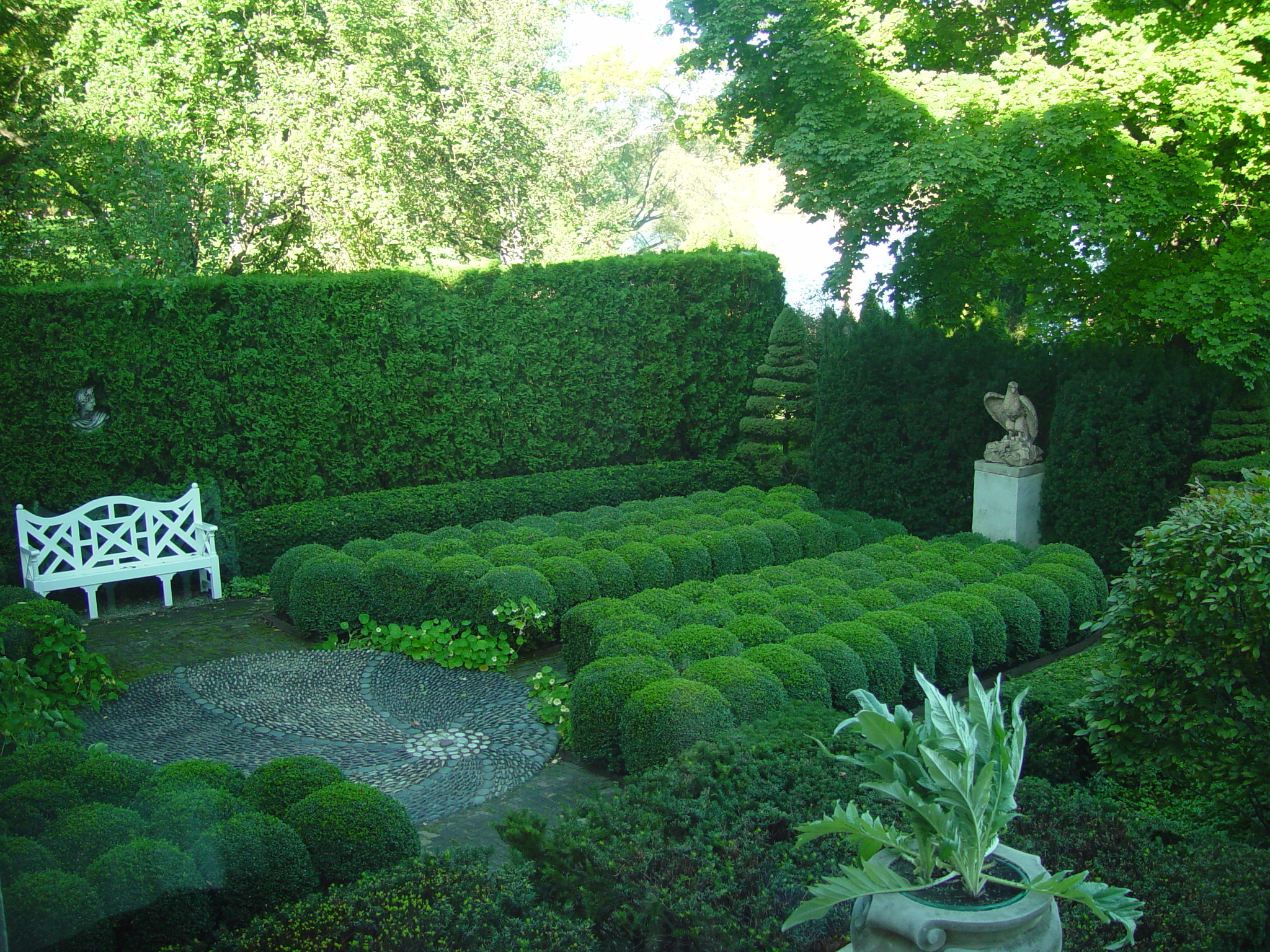
It was many many years ago that I planted this topiary garden.  The first year was no cause to throw a party.  But a client with vision was determined to take relatively small plants, and grow them into plants of note.  She saw to the water, the feeding, and the pruning.  In my zone, in a good year,  boxwood flushes on an average of 6 inches.  Six inches seems like not much, but 6 inches times 10 years-a big flush.  Years later, her plants are gorgeous-gorgeous enough to make any gardener blush. 

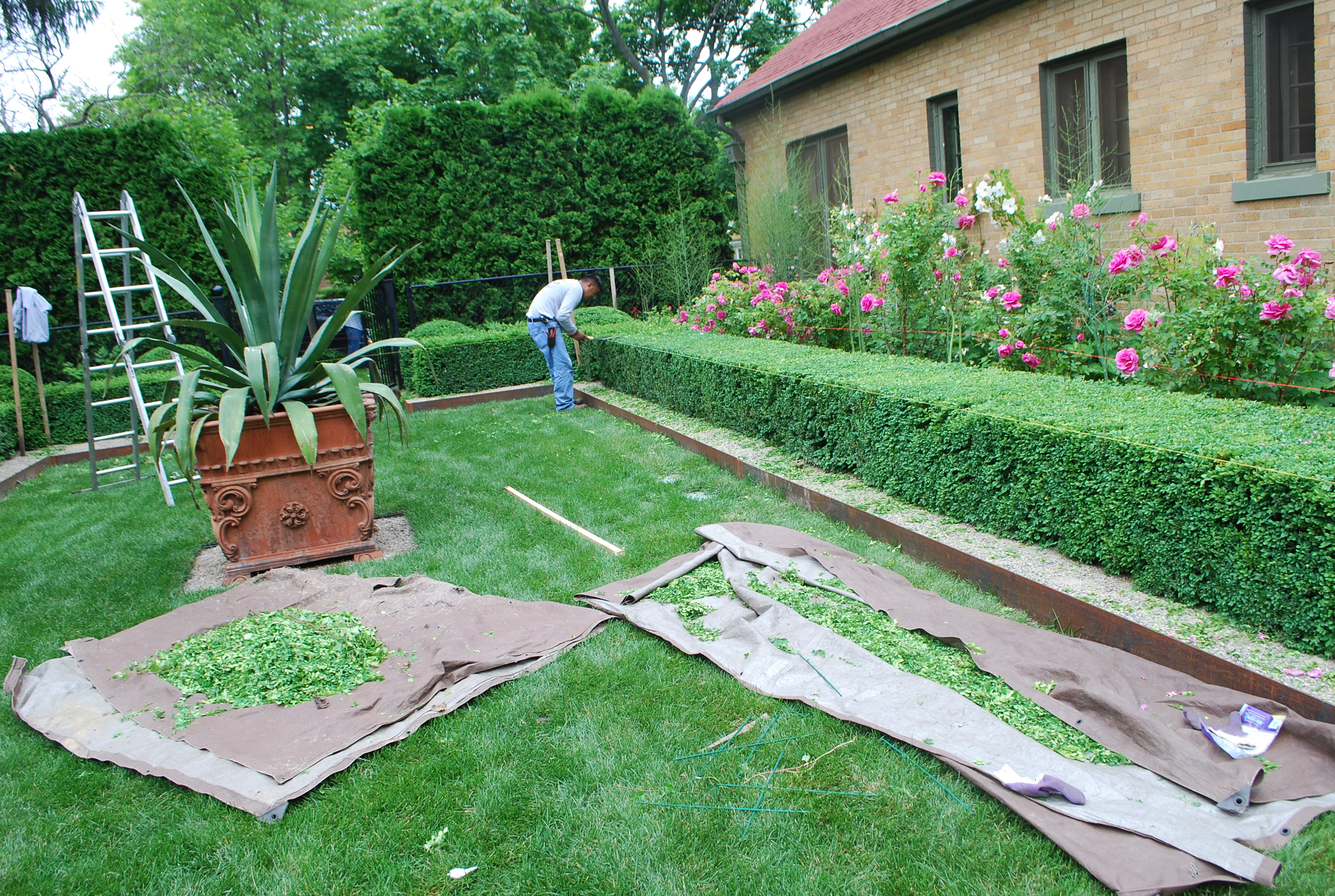
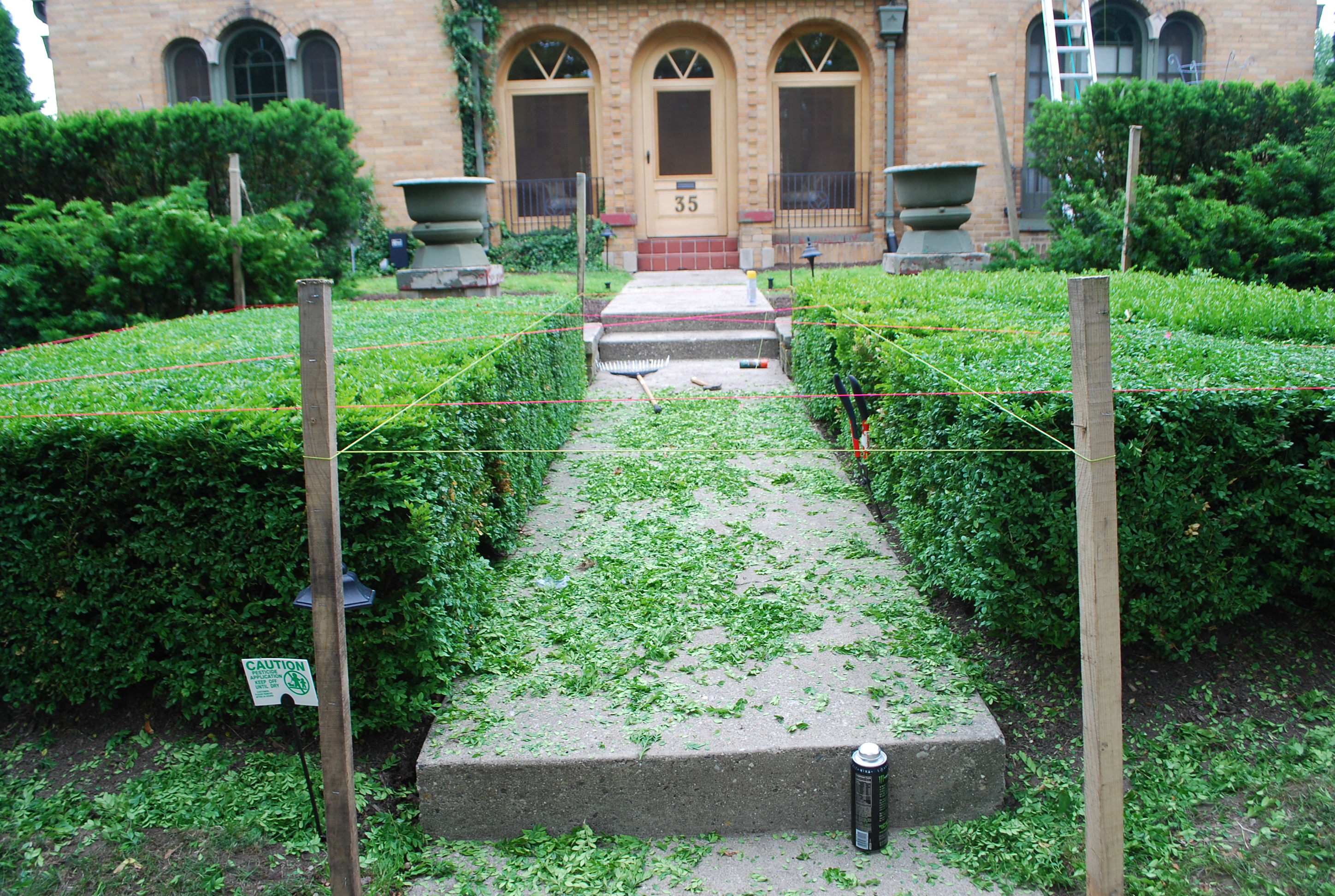
Mindy prunes with a forest of stout stakes, and a network of level lines.  Her group clips with hand shears.  I cannot imagine how many times in the course of a day those shears open and close.  The sound of that work-I cannot describe in words how beautiful this is.  They take the time it takes to do the work properly.    

pruning boxwood

To the last, her crew is entirely modest about their skills.  They focus on the plants.  Any gardener could make it their business to learn how to do this.  Though in my heart I believe she is gifted, I would try to replicate her care, if I needed to.  Great topiary plants are about the relationship between the stalwart start of a plant, and a gardener.  Buy a plant.  Resolve to train it-just how you envision it.       

pruning carpinus

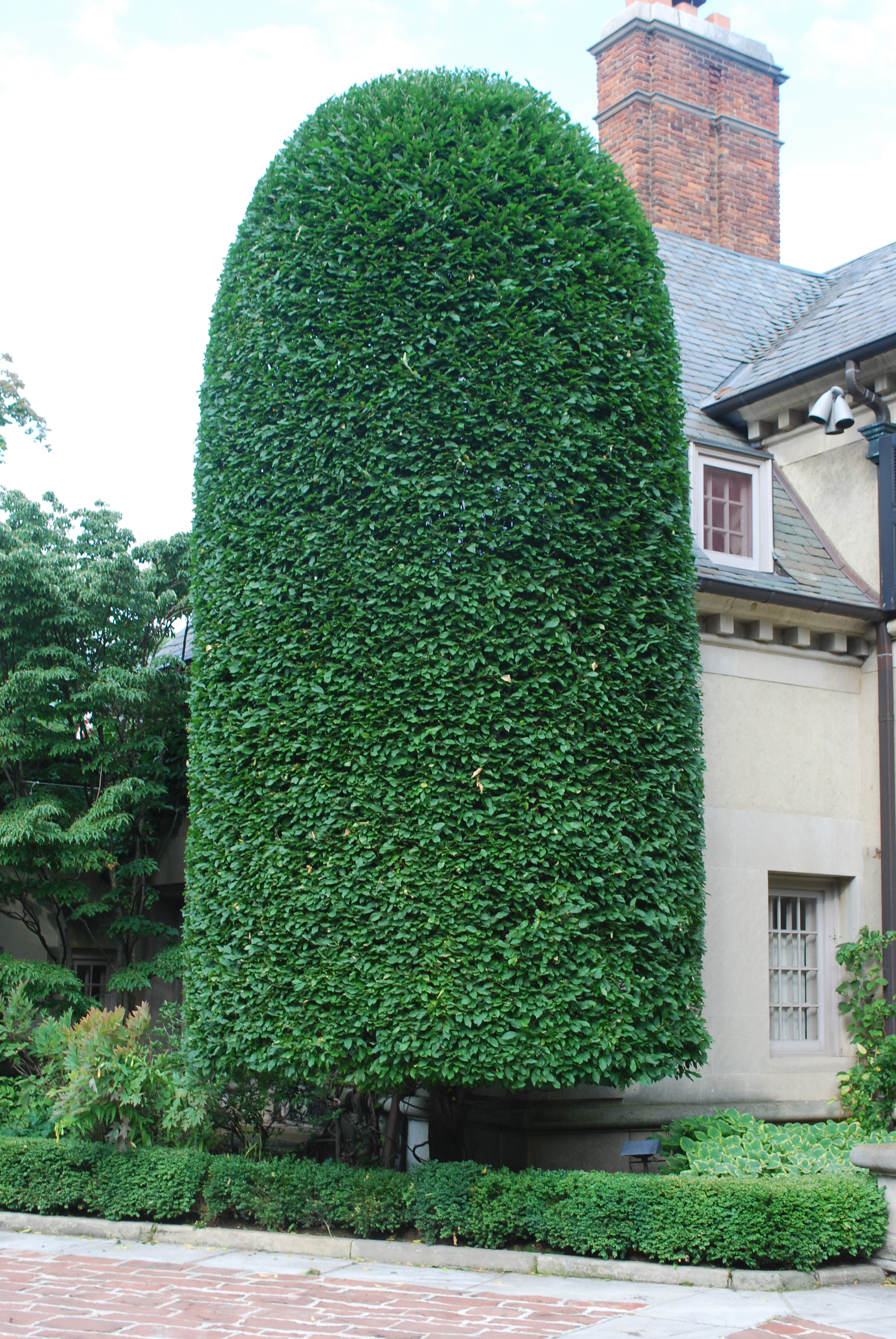
I was young, when I planted this tree.  It bore no resemblance to this, the day it went in the ground.  It is as grand and gorgeous a topiary carpinus that has ever been my pleasure to see. It is as beautiful as any topiary tree anyone might see anywhere.  The form of this tree was many years in the making.  The pruning is amazingly precise.  The company who prunes this not only has skilled people, it has big equipment.  What an extraordinary job they do of the pruning.

Mindy looks after this property.  Every hedge is perfectly pruned.  The topiary evergreens not shown in this pictuire are in excess of 20 feet tall.  Did we move plants in to this landscape, full grown?  No.  Beautifully grown, hefty specimens got planted.  Every year she works on establishing the forms.  Every year, they are bigger, and better.

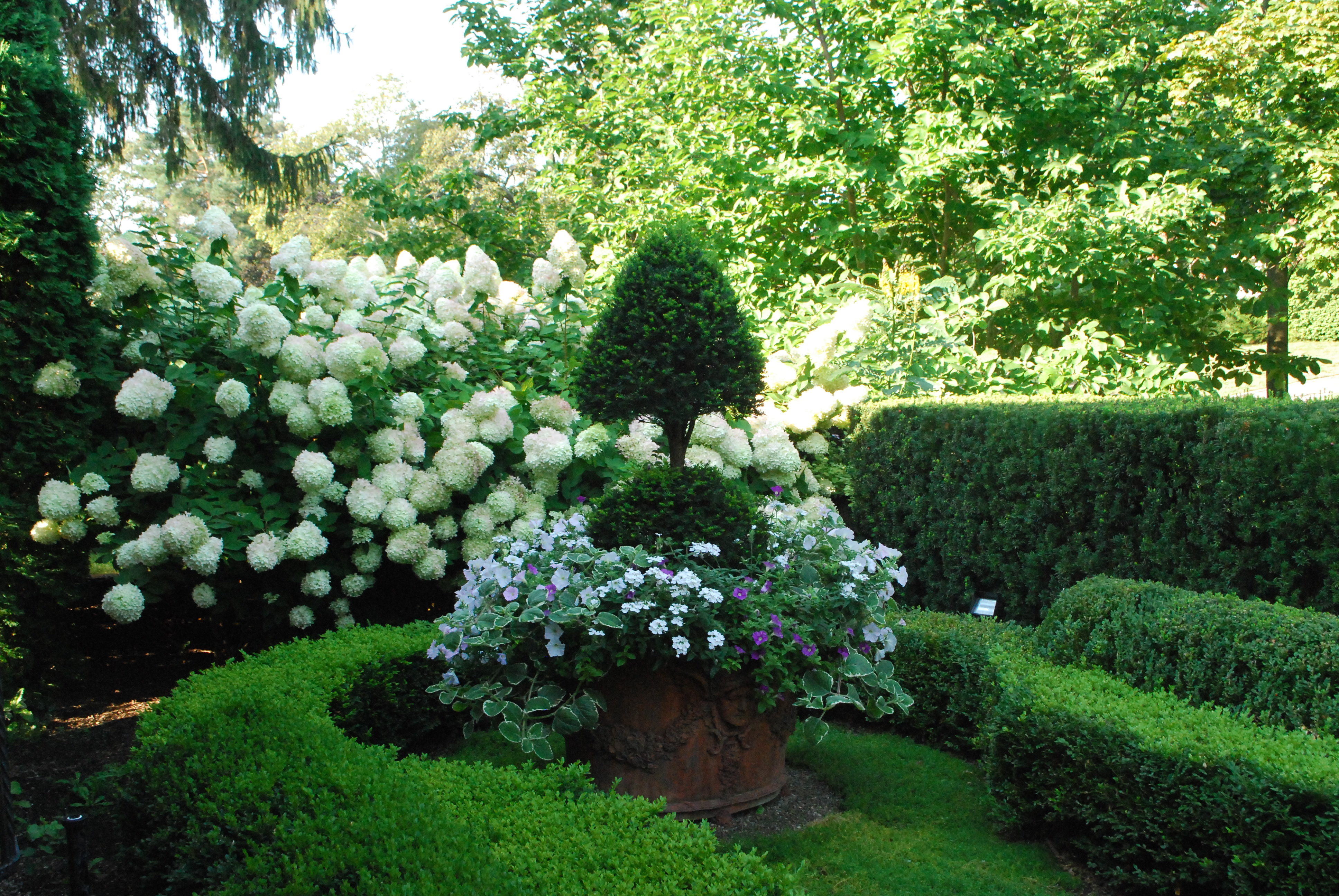
My yew topiaries in these pots are but 3 years old.  The boxwood surround is but 3 years old.  Given another 10 years, we will have something to talk about.  In the meantime, I see to the day to day. I can safely say that the process of growing enriches my gardening life.  I like the dailies perhaps more than the finish.  

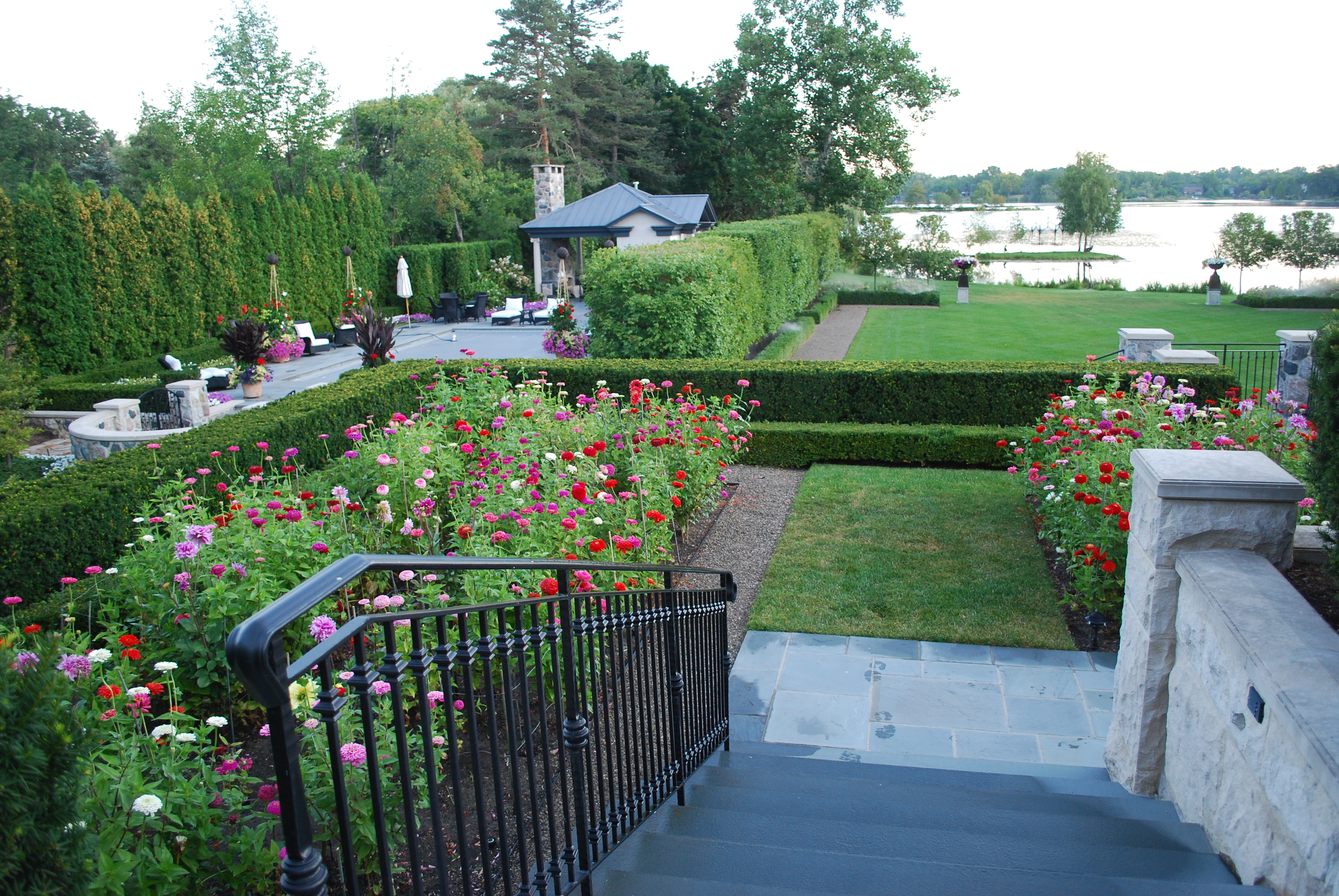
The hedge maples on standard in the back right cewnter side of this landscape-they have been growing on for years.  Every year, that pleached hedge of trees looks better.  One day they will fill in completely from side to side, and front to back.   The land drops from the house to the lake.  The trees nearest the water are much taller than the trees on the near side.  A lvel pleached hedge on sloping ground-years in the making.  The day they fully pass muster-a day to celebrate.  Great gestures in the landscape take time.

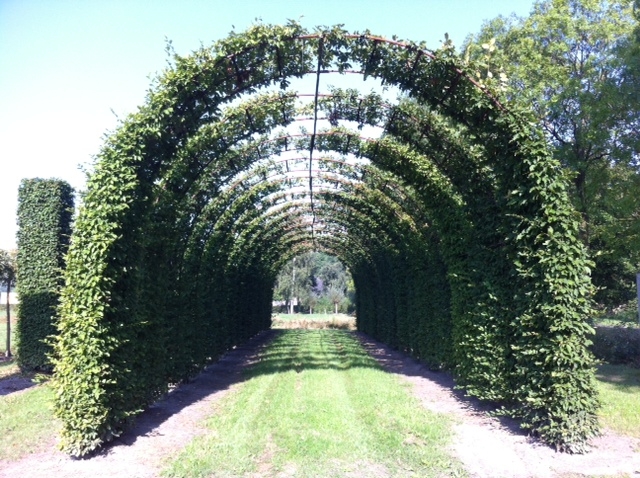
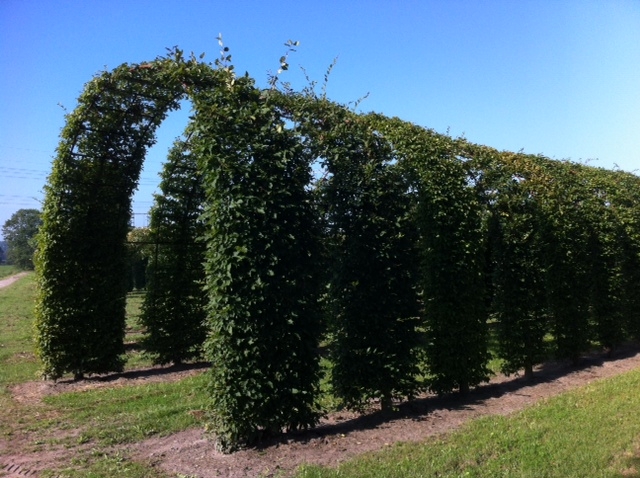
This beech arbor is but a few years along.  It will take another 5 years for it to fill out.  My advice to you?  Buy two small beech.  Plant them opposite each other, far enough apart,  where they will be perfect, 15 years from now.  Today is the best day to start to grow a topiary.  Planting small plants does not mean your vision is small.  Planting small plants with an eye to the future-a big vision.

Level with the horizon-is this not beautiful?  It took more than a few years to get here.  I can attest to that, as this is my yard.  Visit your local nursery.  Scrutinize what trees and shrubs might grow into something extraordinary, given your care and some time.  Take the time to source a great pruning company-or make it your business to learn how to prune.  For my clients-I source the best plant material that I can find.  I have no trouble placing those extraordinary plants.  At the same time, I buy those smaller plants that I imagine, given a few years and a lot of care, will prove to be garden makers.  I hold and grow those small plants-waiting for the right and so sparkly client to come along.  Those extraordinary large and full grown plants moved to a new home, I love this process.  Placing those smaller plants- with such a great future ahead of them-even better.

Those Who Grow

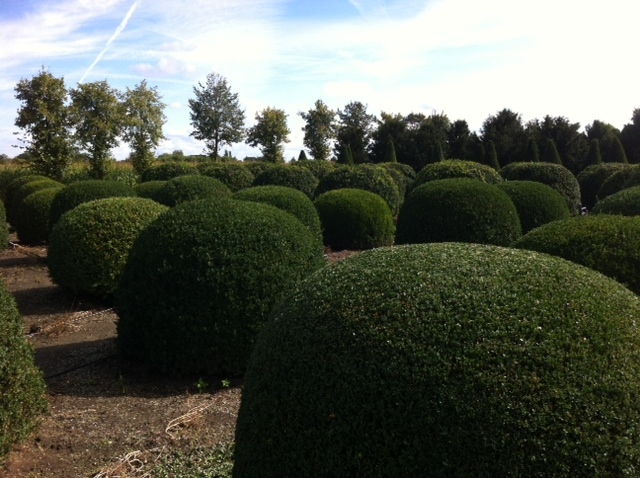
boxwood spheres
I fancy myself a gardener.  That is, my life revolves around making things grow.  A landscape design evolves from an idea, to a schematic plan, to a garden that gets planted.  Once it is planted, there is a gardener who will see that it grows.  A small tree grows up, and creates an atmosphere all its own. A perennial garden takes hold,  gains weight, and blooms.  Pedestrian ideas die on the vine, and are replaced by those that have lively quality to them. Those who grow-I instantly think about all of the gardeners it has been my pleasure to meet.  But those who grow professionally are gardeners of a different sort.  What and how they grow is not only an inspiration to gardeners.  From start to finish, the life of a landscape is the story of its plants.  Outstanding plants are not only irresistible, they are unforgettable.  

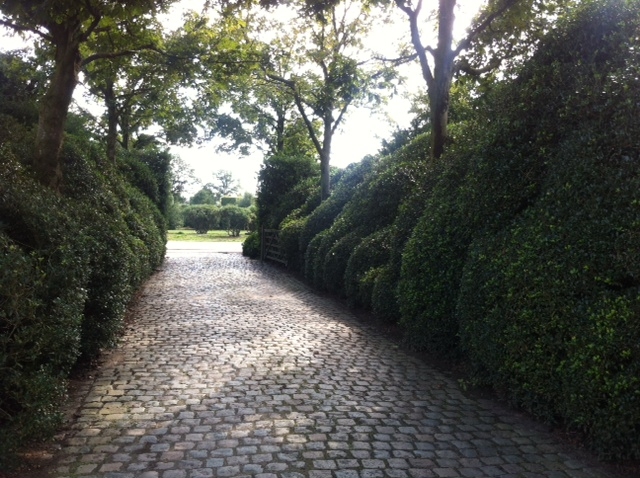
The entrance to this nursery speaks volumes to the point of view of the grower in charge.  The paving stones set horizontally in the drive are an invitation, a request to slow down.  The cloud-pruned yews spilling over the edges of the drive-stunning.       

This nursery is devoted growing a select group of plants.  Woody plant material painstakingly pruned into shapes.  Not every plant responds to shearing.  This gardener has a special interest in those plants that handle this kind of pruning with aplomb.   

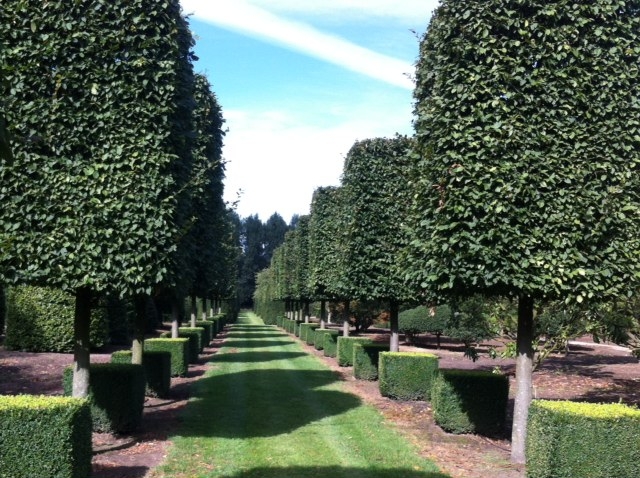
These plants are beautifully grown.  They are spaced such that every one gets its fair share of sun and air.  Each boxed tree matches its neighbor-the branching is the same distance from the ground from the first to the last.  Each box is pruned to the same size, tree after tree.  The boxwood cubes are no different.  The size and shape is utterly uniform.  Alternately the trees and the shrubs is not only exquisite to see, it makes the most efficient use of the space. 

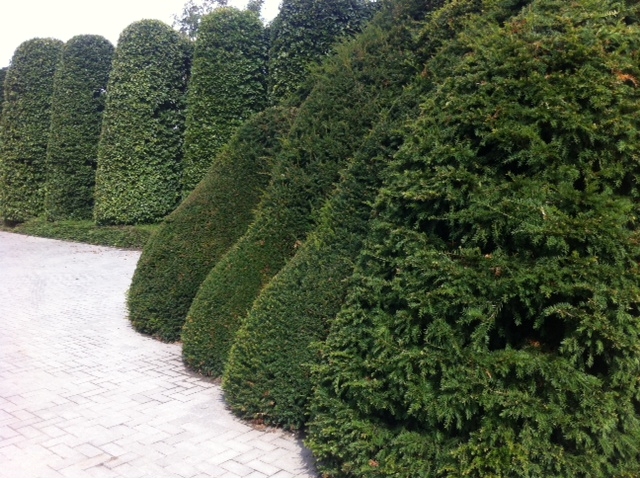
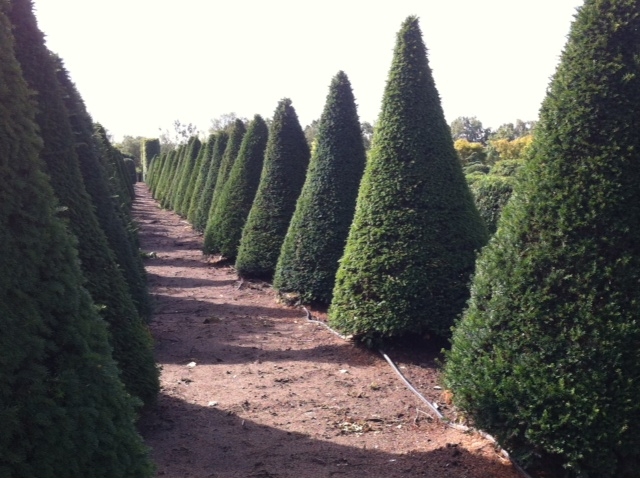
Growing yews like this takes many years, enormous skill, and incredible patience.  Unlike a nursery where the stock turns over quickly, this grower has invested lots of time and a lot of land to the cultivation of a few great plants. 


Even in climates with long growing seasons, plants of this stature take years to grow.  The pruning is an ongoing process, a little at a time.  The yew clippings on the ground-no longer than 6 inches.  Even the clippings are uniform in shape and length. 

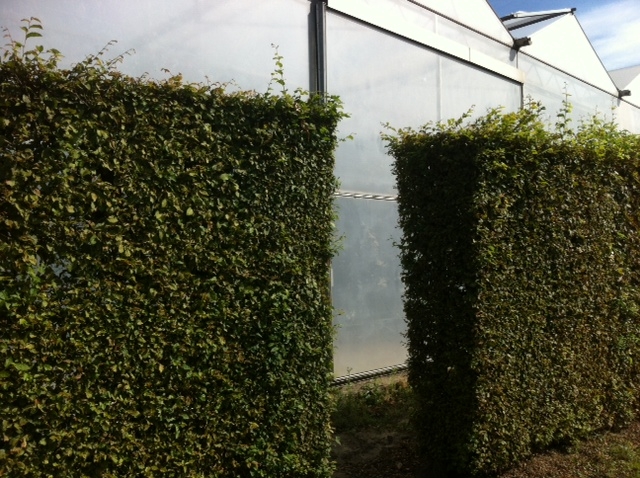
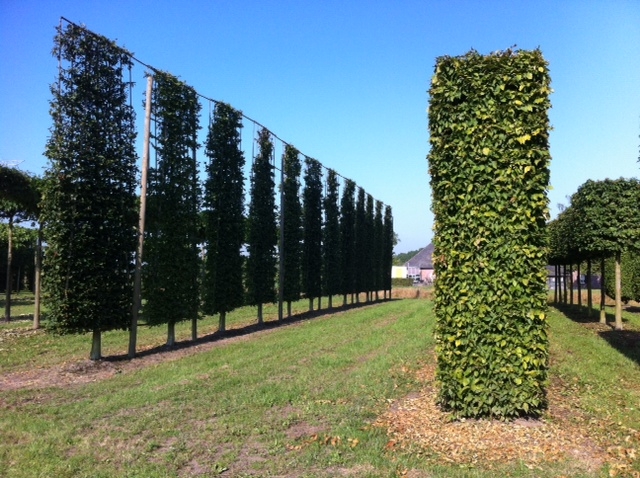
Some of the hedging plants are grown in sections.  I am sure when the section is dug, each individual plant is labelled as to its position in the row.  The overall shape made by the group-striking.    

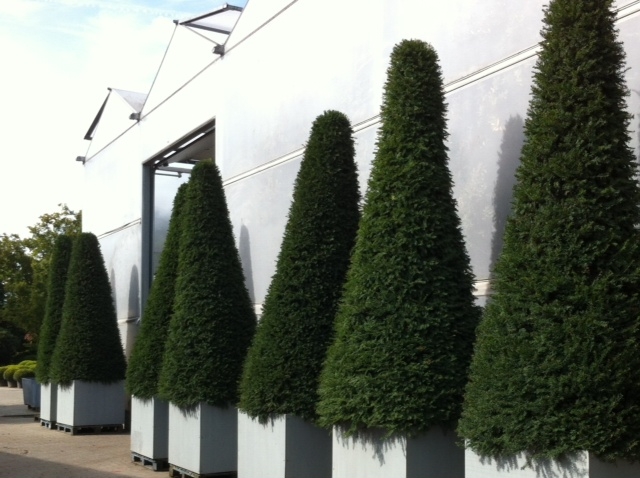
A collection of individual specimen evergreens grown in boxes makes the transportation to a new home somewhat easier.  Just to speculate about what one might do with one, or two, or 4 plants of this caliber-a pleasure.  

These carpinus are being trained into arched shapes.  The fact that they have foliage all the way to the ground suggests that the training began when they were very small plants.  Trees in ground like this are regularly root pruned, which makes the task of transplanting easier.  Pruning the roots means a dense fibrous mass of roots will help keep the root ball intact when a plant is dug.  Though it may seen counter intuitive, moving a tree the first time is the most harrowing move of all. The roots that get cut eventually sprout multiple roots at the cut.   Every successive move is easier, as the development of a dense root system aids in the transplant process.

The ability of a plant to make densely fibrous and compact rootballs plays a large part in whether it is commercially grown.  Certain types of junipers are difficult to transplant, as their rootballs have a tendency to collapse.  Even container grown roses need to be transplanted with great care, for the same reason. These topiaries and espaliers are grown from just a few species-yew, boxwood, carpinus, and beech.

I think all of these plants are beautifully sculptural-I would have any of them.  But whether or not formally pruned trees appeal to you or not, the care, committment and vision with which they are grown is obvious.  Yes, these trees are expensive-just any other gorgeous one of a kind sculpture.  Where do you find trees like this?  Anywhere you find a grower with a big love for growing.  No small part of their beauty is how they suggest that any gardener with a small plant and an equally big love for growing could create one of their own.