Time For The Limelights

limelight hydrangeas

Summer blooming hydrangeas appeal to almost every gardener.  Each flower head is substantial.  Comprised of hundreds of tiny florets, a single cut stem is a bouquet that celebrates the beauty of the summer season. One shrub in full bloom delights the eye.  There are no end of cultivars-some white, some pink, some blue on occasion. They are broadly tolerant of a variety of conditions, but appreciate their fair share of sun, space, and water.  I plant Limelight hydrangeas, and the new dwarf version, Little Lime, more than any other variety. They are vigorous growers, and bloom reliably.  

summer flowering hydrangeas

My zone is a little too chilly and unfriendly for a good many hydrangeas.  This is just me talking, but I only have one westside client who has been successful in growing blue hydrangeas.  Her success is a mystery to me.  The pink flowering varieties, available in my zone are easy to grow, but so reluctant to bloom.  Sporadic bloom on a sizeable shrub makes me look like I don’t know how to garden.  My clients on the east side of the metropolitan area have no problem cultivating pink and blue hydrangeas. I can’t help but think Lake St. Clair mitigates seasonal extremes. 
hydrangea hedges

 I am satisfied to grow the hydrangeas that do well in my area.  This means Annabelle,and Limelight.  White hydrangeas, these.  They are easy to grow, and so willing to bloom.  Come June, the Annabelles delight every gardener with their snowballs.  My favorite place to site them is on a slope, as they are stubbornly floppy in habit.  Come the first of August, the Limelights transform the garden.    white flowering hydrangeas
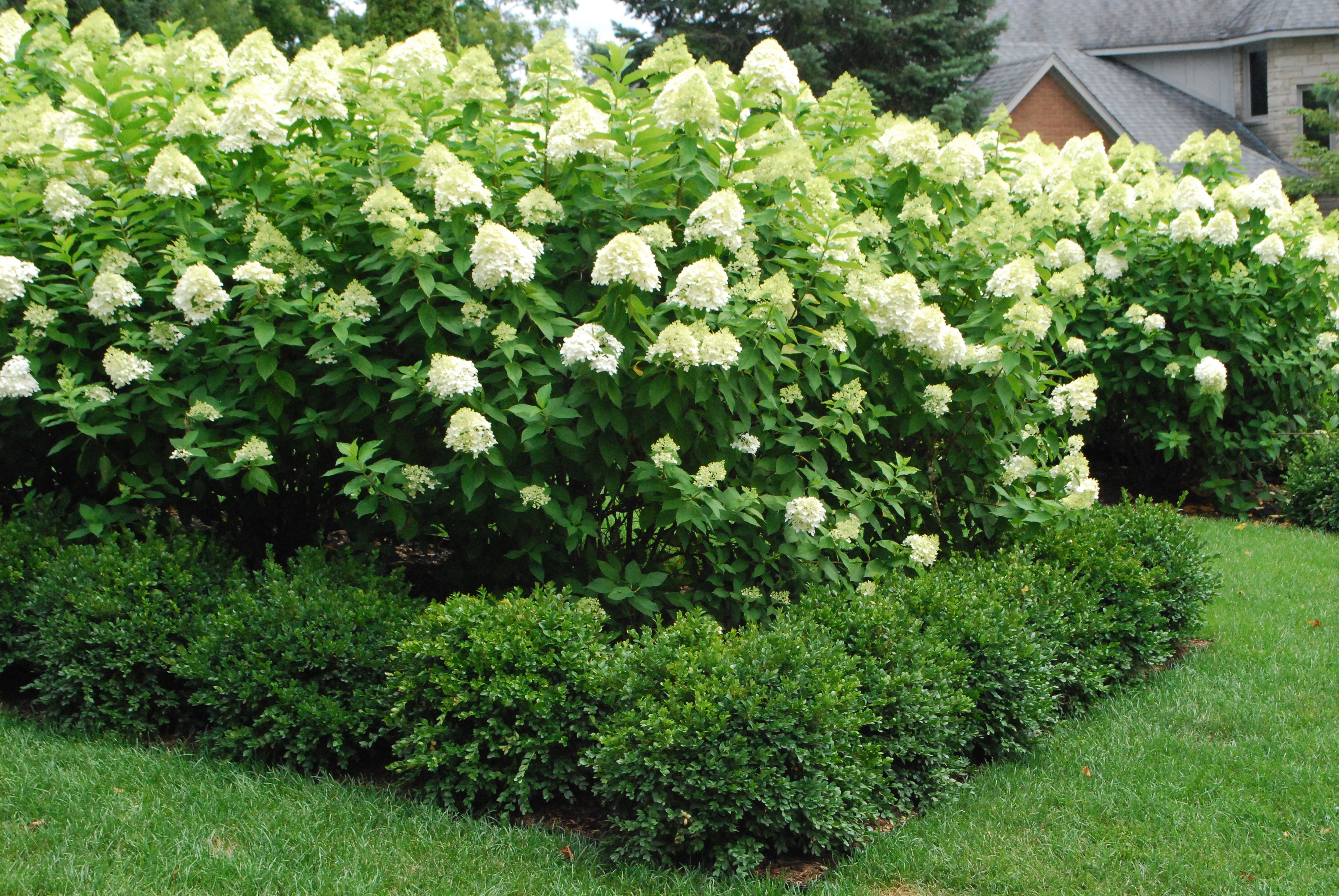
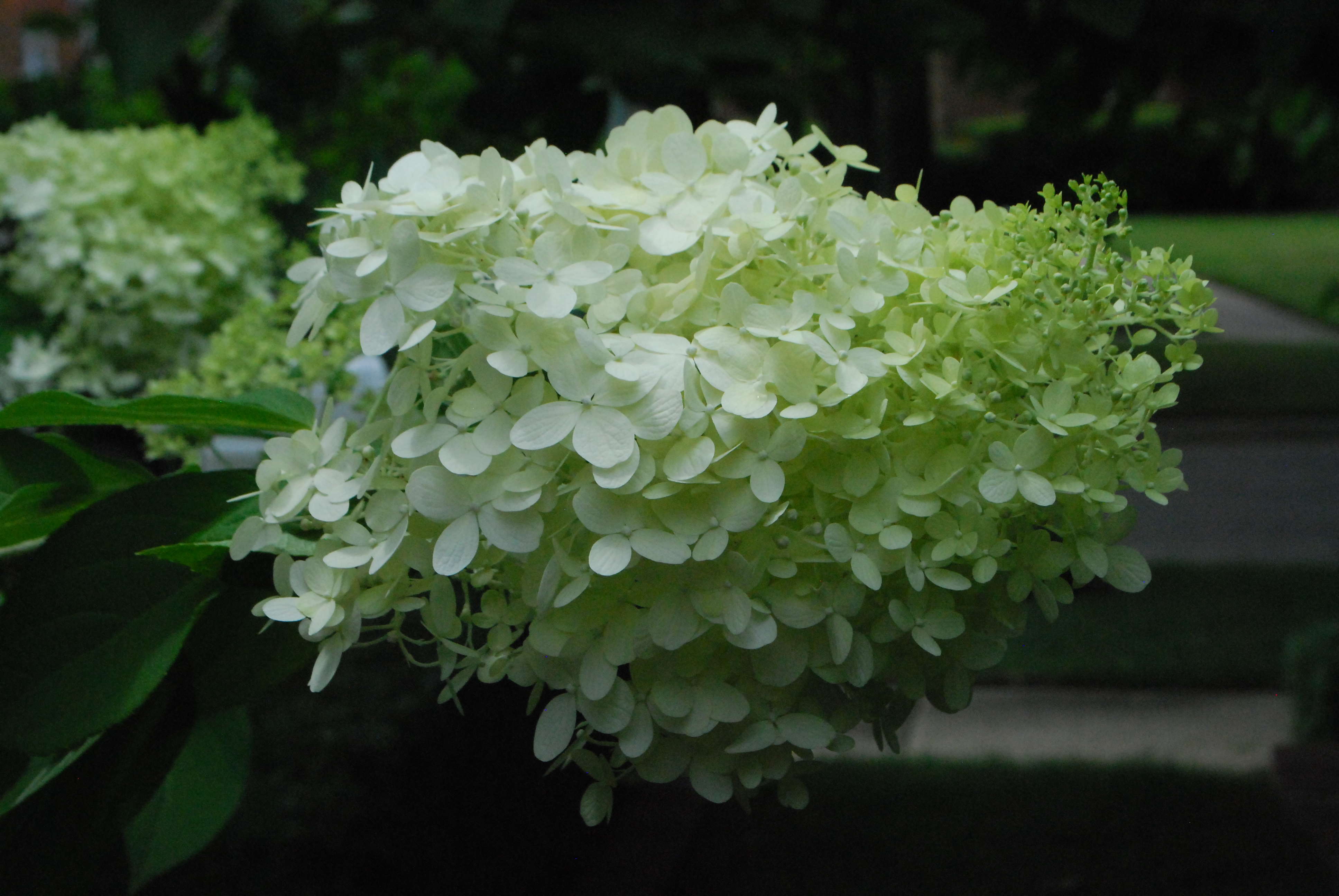
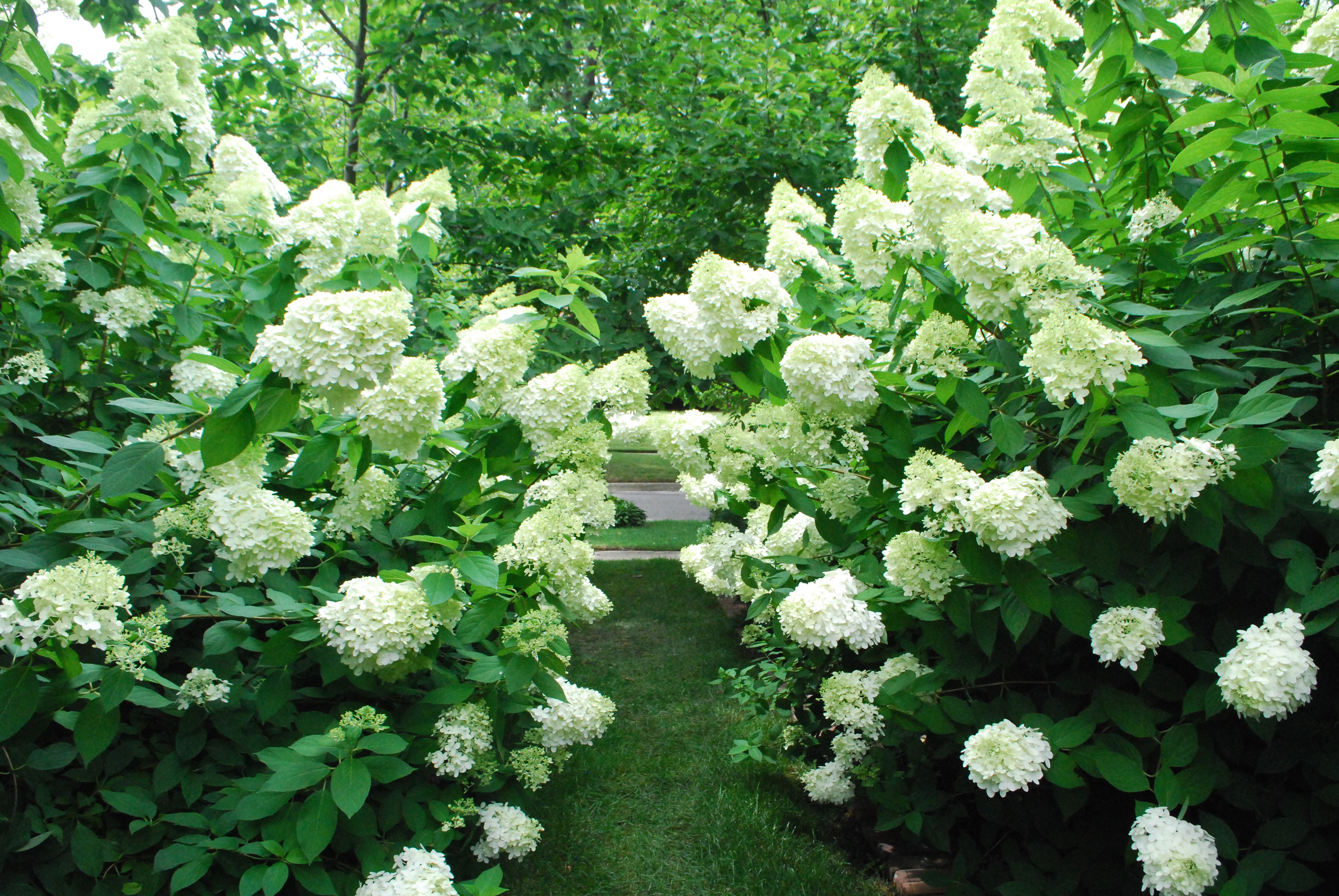
Their greenish white conical flowers develope over a period of a few weeks.  Chubby, luscious,  and very large, the showy flowers dominate the summer landscape.  I have 25 or 30 of them in the ground at our landscape yard.  They are planted in gravelly soil, and make due with whatever water comes from the sky.  They are a quarter of the size of these plants; the flowers are tufts.  Plant hydrangeas in compost enriched soil that gets regular water.   
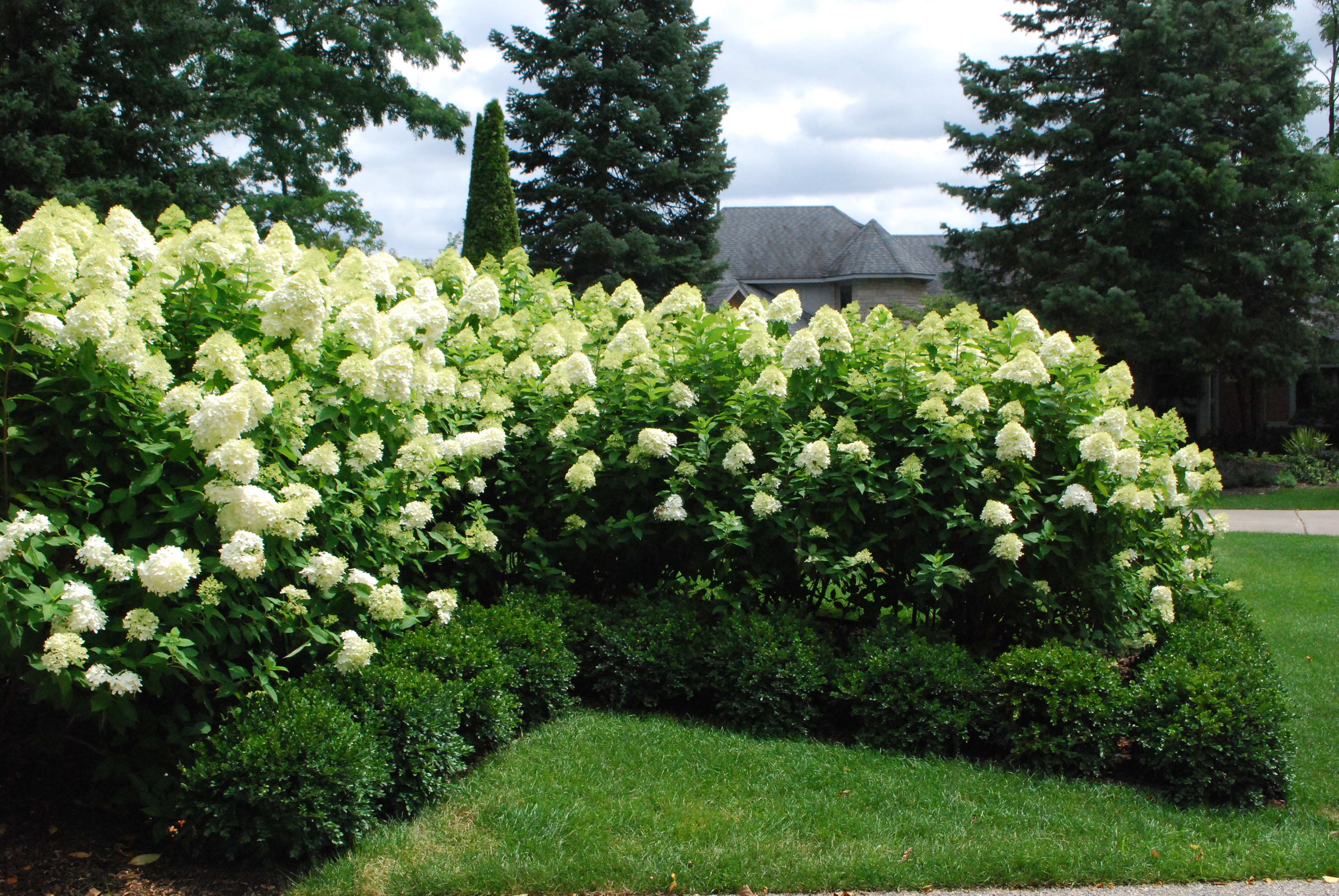
great shrubs for the landscape

 Large growing hydrangeas can be stalky-leggy.  Skillful pruning in the early spring can help keep them green and blooming to the ground.  But a good underplanting gives them a very finished look.  I like to face down most large growing shrubs with a smaller growing shrub or perennial.   Boxwood does a great job of concealing those inevitably gawky Limelight legs.  They do a better than great job of giving the hydrangeas some winter interes

hydrangea limelight

 This block of limelights is wedged in between a hedge of yews, and an L of boxwood.  In a different, cooler, and more rainy summer, the tops of those yews would be dark emerald green, rather than the color of toast.  But the lime green second flush of growth on the boxwood is a beautiful textural contrast to the hydrangeas.  No legs on display here.
white hydrangeas

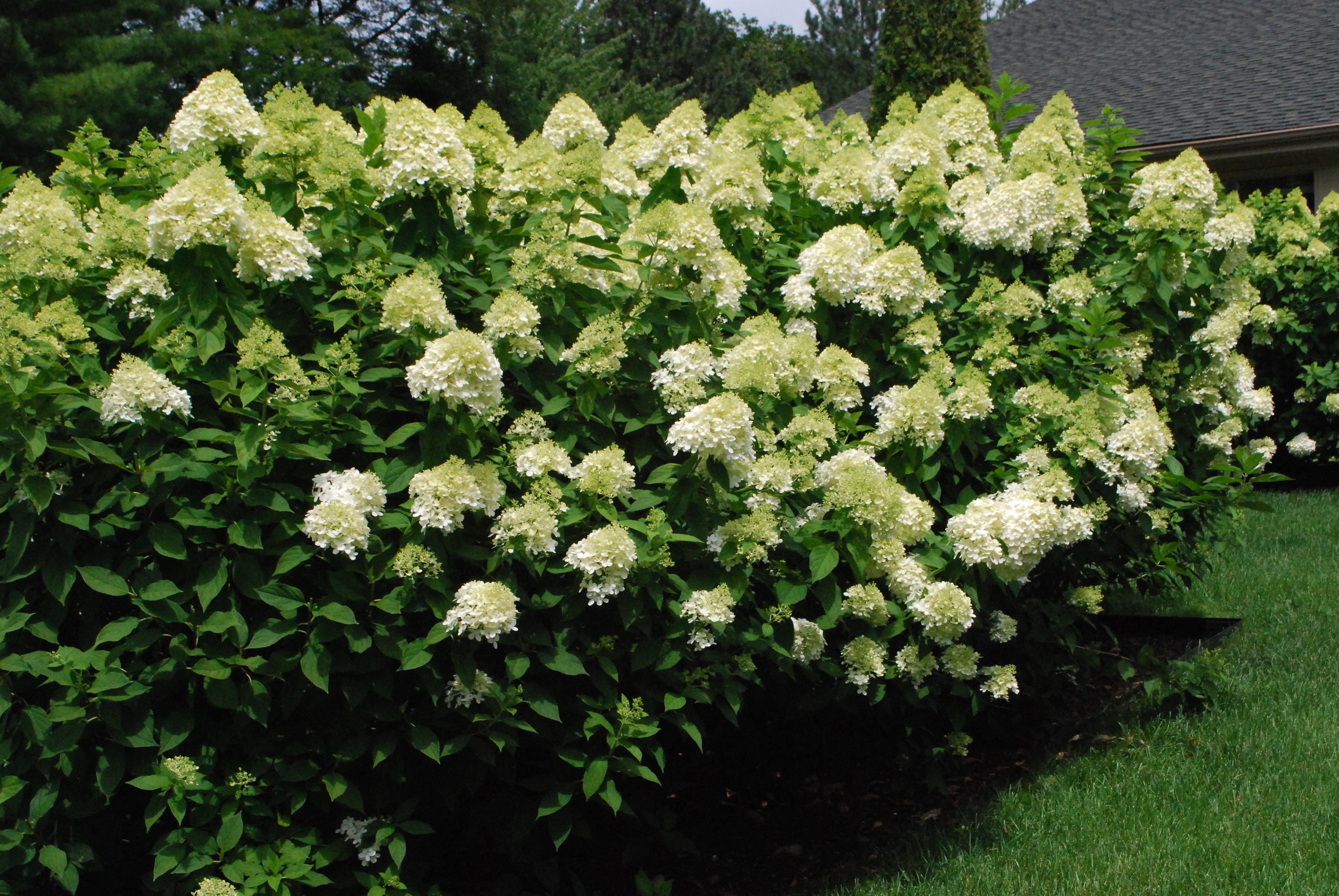
 I prune my hydrangeas as soon as the buds swell in the spring.  I give them a shag haircut, by shortening the long branches on the top. I rarely prune the bottoms.  Heading back the long top branches allows light to reach the bottom. Good foliage and flowers requires good light.  It is so easy to see in this picture that the heaviest bloom is occurring where there is the most exposure to light.   
white blooming hydrangeas

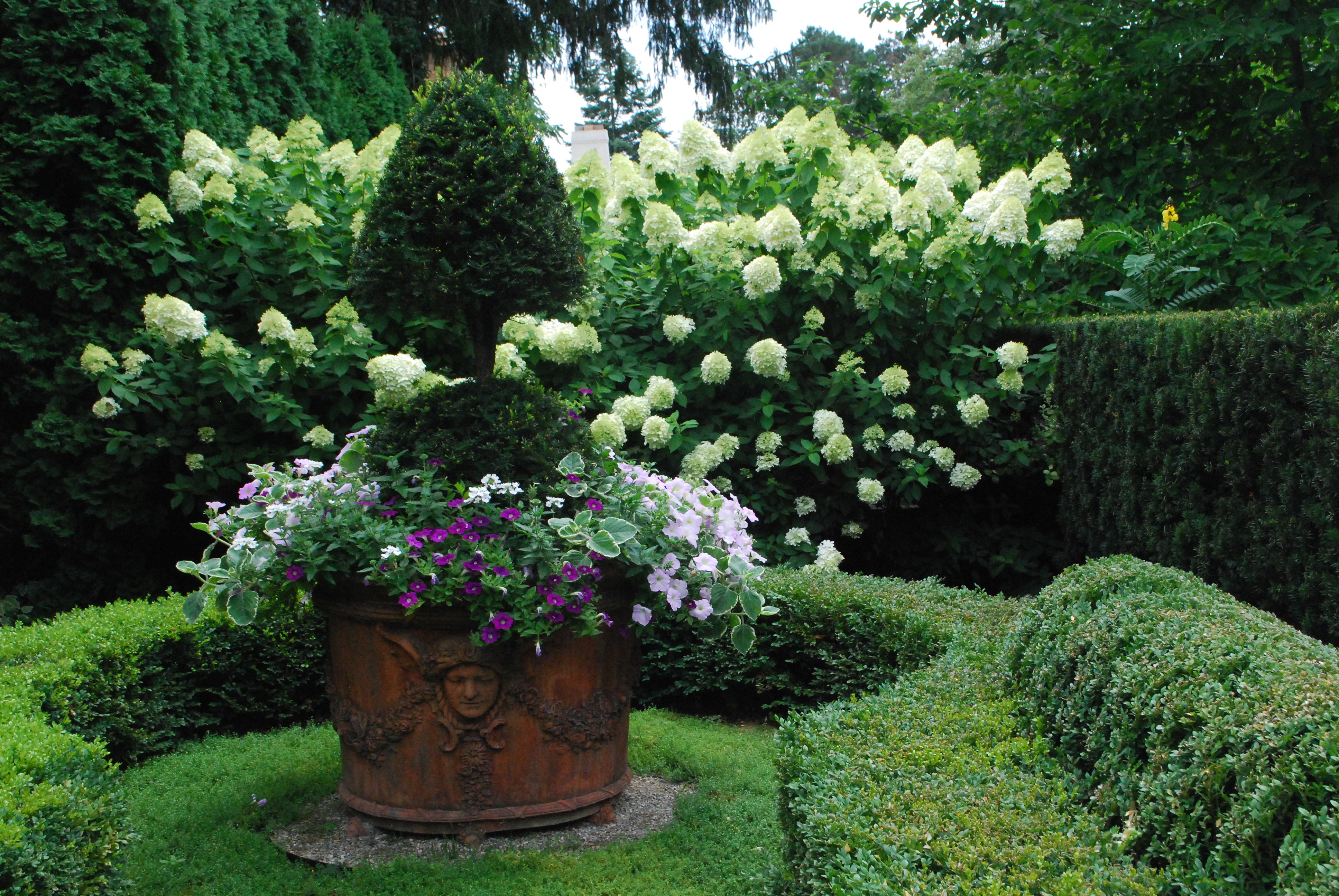
 Limelights can be pruned as low as 24″-30″ in early spring.  Hard pruning produces fewer, but larger flower heads.  I prune my hydrangeas lightly, as I like them tall, and I like lots of flowers. They make a beautiful backdrop for this pot in August.  They hydrate the look of my summer landscape.
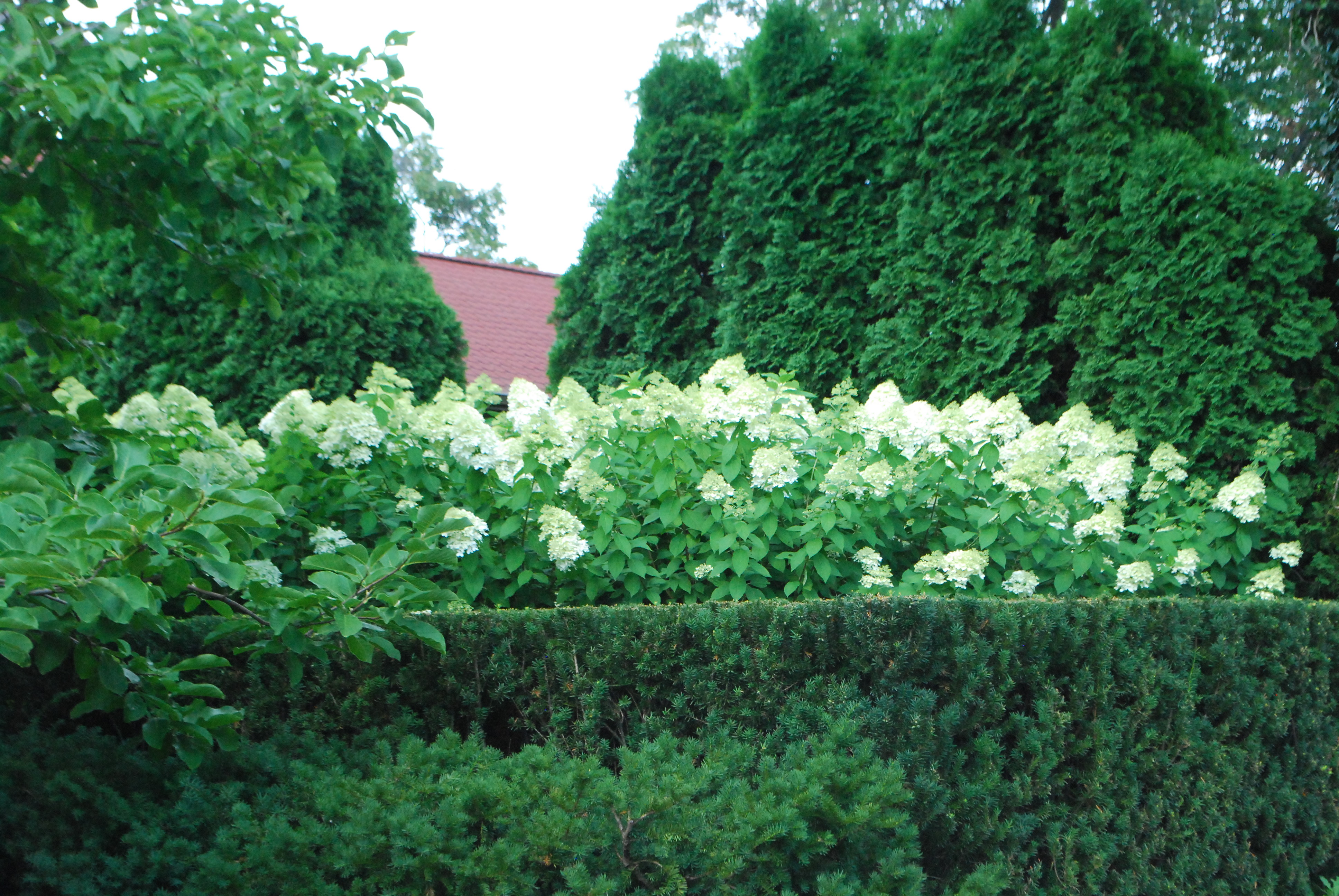
My blocks of hydrangeas are sequestered behind a pair of yew hedges-one formally pruned, another left shaggy.  Thuja nigra backs them up, and sets off the white flowers to good advantage.  This is the juciest moment I have had to date in my garden all season-you bet I am enjoying them. 


The Last Day Of My 61st


By coincidence, Melissa from M and M Flowers came to do her yearly pruning on the boxwood on the last day of my 61st year.  As this is just about my favorite day of the gardening year, I felt my previous year was coming to a close in a way that made me very happy indeed. 

topiary yews


pruning boxwood


green velvet boxwood


isotoma fluvialitis

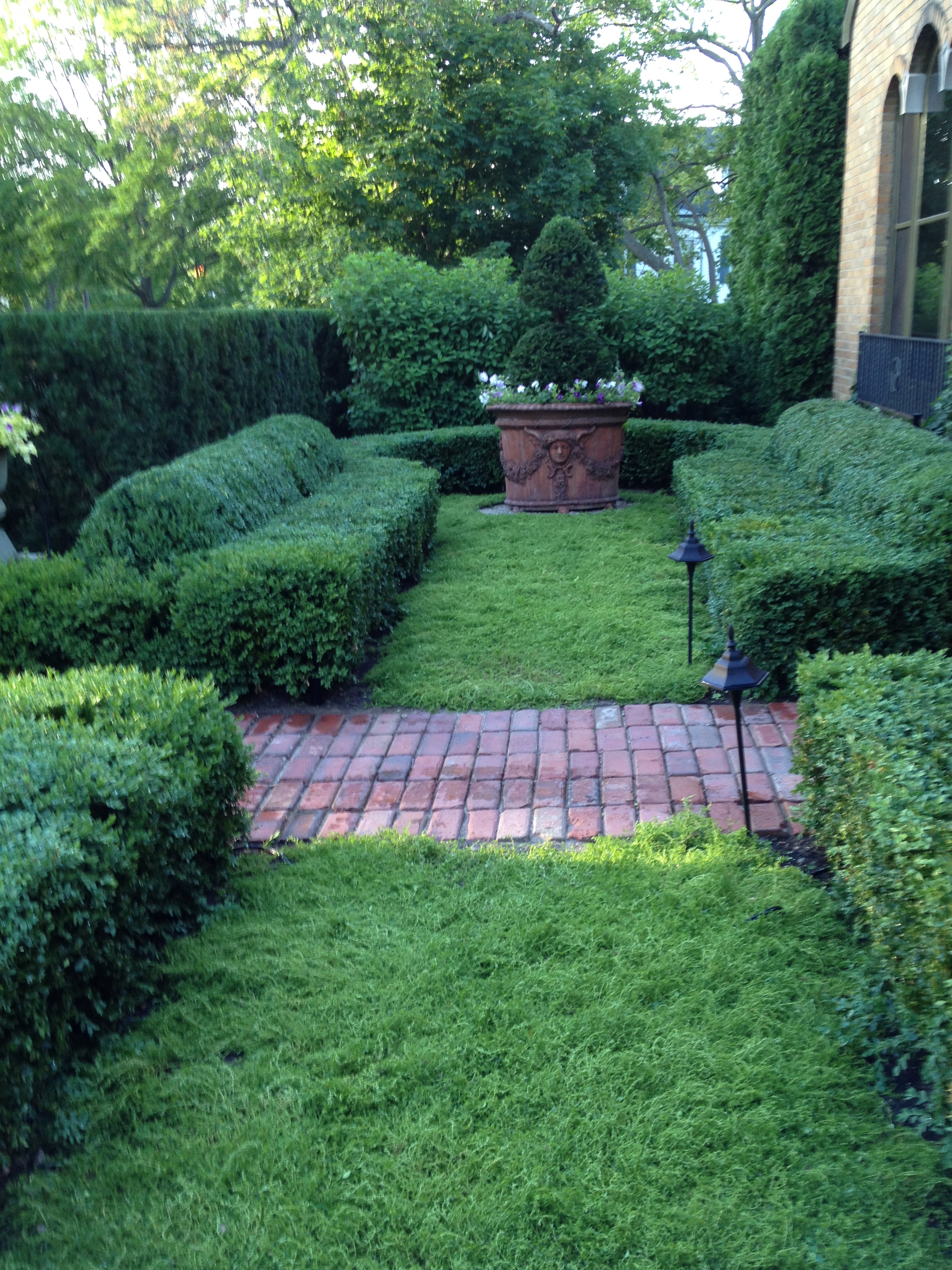
My garden is a place very near and dear to me-it looked beautiful last night.  Spotless.  As is her usual way, the boxwood is beautifully pruned.  Her crew did not finish until almost 7 pm. All my thanks, Melissa and group.


They Don’t Like Me


catawba rhododendron

I shouldn’t take it personally.  They don’t like much of anyone who gardens in my zone.  Why should they?  If you look at a map that details where rhododendron catawbiense in native, you’ll see the Appalachian mountains from West Virginia extending as far south as Alabama.  I do not garden in the mountains, nor is my climate remotely like West Virginia.  One neoighborhood in my area features big stands of old oak trees.  The rhododendron are passable there.

pink azaleas

I have seen rhododendrons in private gardens in Philadelphia that grow to great heights, and great widths.  The shrubs are thickly foliated; the glossy leaves healthy and robust.  A big shrub in full bloom is a sight to behold.  Even in a good spring, those massive flower heads with their seductively beautiful individual florets are fleeting.  But if they did not flower, a broad-leaved evergreen is a plant to be coveted-especially if 6 months of winter is part of your yearly gardening program.

rhododendron catawbiense

There are otherworldly gardens in Scotland and England that feature extravagantly happy and healthy stands of rhododendron.  So what do they want that I do not have?  Just about everything, as it turns out.  They want an acid soil, lots of organic material, lots of sun, but protection from winter winds, regular moisture and perfect drainage.  As imposing as they are is in every way equal to how particular and demanding they are about soil type and ph, and siting.

American dogwood

In general I subscribe to that school of thought that says if you you don’t have it to begin with, you chances of making it happen are slim to none.  I do not believe I can create an Appalachian mountain weather and soil zone in my yard that would fool rhododendrons into believing they had been planted in West Virginia.

When I was young, I put huge effort into to amending soil, in the belief that it was within my power to fool the plants.  Plants are actually very specific about what they need, and if they don’t get it, they will not prosper.  The right soil, siting, light, mositure, drainage, weather. When you match the plant to the existing conditions, you get romance.  Real romance.  Now, I try very hard to match the plant to the existing conditions.  Plants planted where they do not want to be sulk, decline, and die.  This is not a good look for a landscape or garden. 


 Can I really turn my basic heavy clay Oakland County Michigan soil into an acid soil native to the open Appalachian woodlands?  Not really.  But that does not mean I do not lust after a beautifully grown rhododendron in my own yard.  Lots of other people have the same idea.  My local nurseries are stuffed with row after row of rhododendron, and azaleas, even though they mostly languish here.  Rhodies are easy to dig, being shallow rooted.  And those flowers are close to irresistible.

pink azaleas

The flowers are incredibly beautiful, and the leaves so handsome-who wouldn’t be captivated by the thought that they might make one grow and prosper?  I had a client once who spent a fortune every year replacing and coddling them.  We bought big ones, tall ones, short ones dense from regular pruning-I was so relieved the day she gave them up.  Who wants to get a failing grade in rhododendron 101, year after year?

red rhododendron

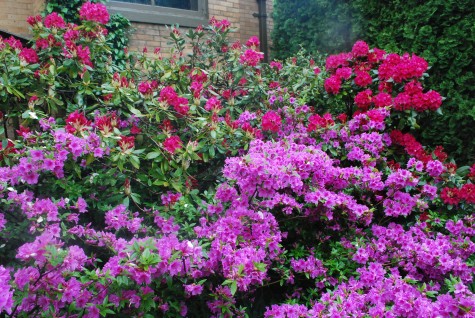
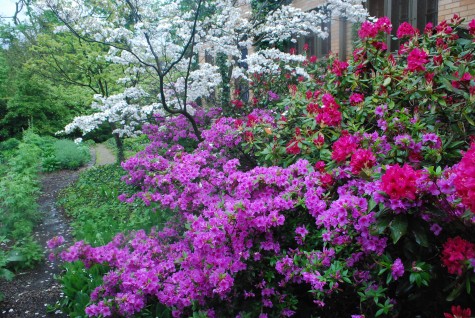
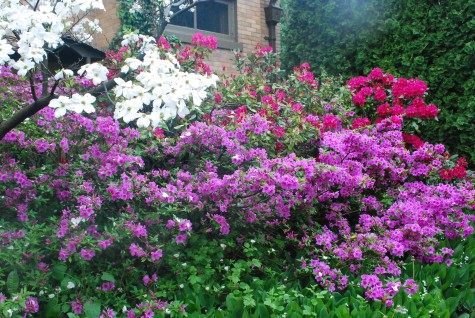
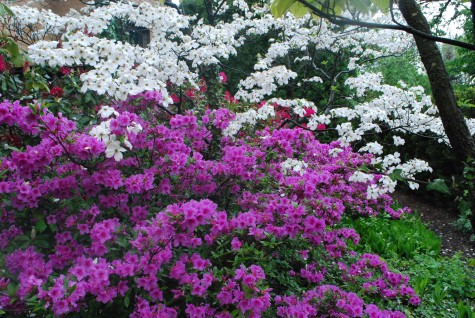
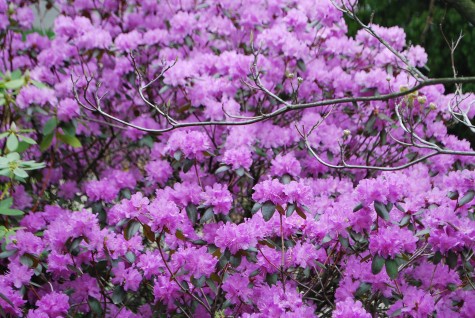
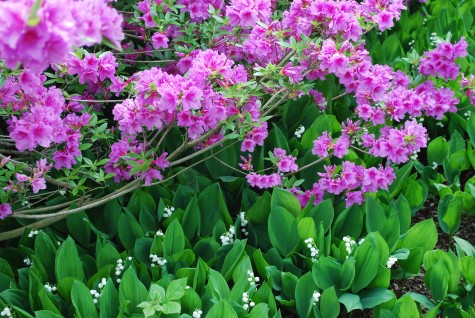
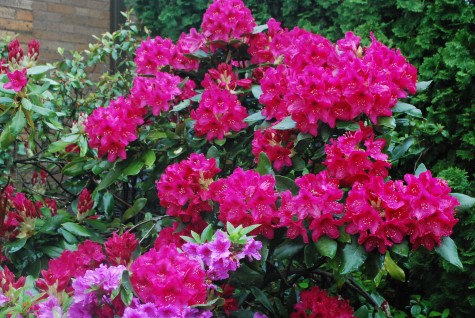
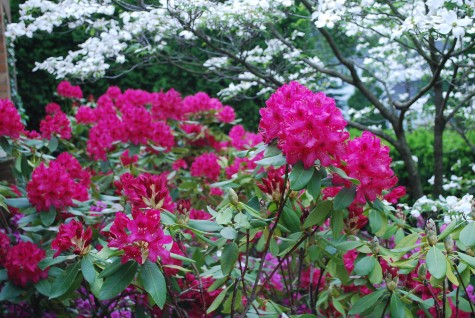
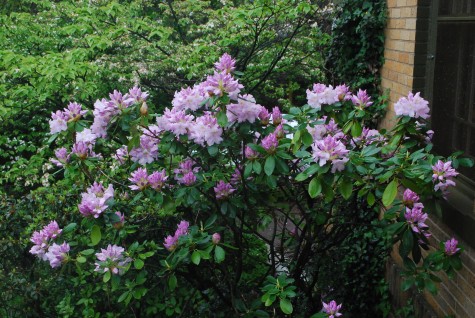
This said, I have a number of rhodendron in my yard. I inherited a group of a Rhododendron catawbiense hybrids that are red-I do not know the name.  The color is electric. They must be 20 years old by now.  2 years ago Melissa from M and M Flowers pruned them back hard-they had become very leggy, as old rhododendron do.Last year, I had very few blooms-I suspect they were pouting.  This year, they are stellar.  Why-I have no idea.  They are planted on the north side of the house.  They get almost nothing in the way of sun, which would encourage good blooming.  I am quite sure the soil is basic.  I use no chemicals in an effort to change the ph-this I could not stomach.  I don’t feed them.  They are surrounded by pink azaleas of an equal age, with a groundcover of lily of the valley.  I have no idea what the soil and drainage is like here-I have never waded in to check.


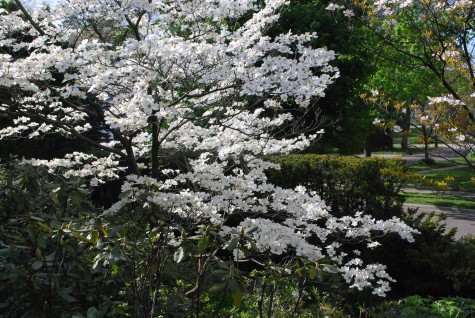
I leave them be.  As rhododendron are very shallow rooted, I am sure they appreciate that I am not poking around.  This part of my landscape is that which came before me, and I do not disturb it.  Right now, I have a show-some fading dogwoods, the red rhododendron, a stand of hot pink azaleas, and a lush carpet of lily of the valley.

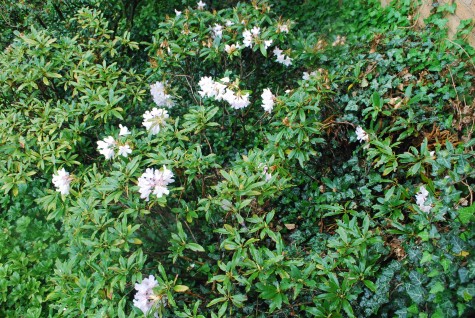
I did loose one a few years ago.  The group of three PJM cultivars I planted as replacements have looked like the devil since day one, and still do.  Whatever.  They have not grown one inch in three years.  Unhappy?  Oh yes. 

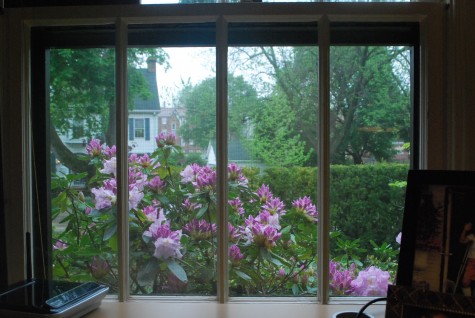
A Rhodendron catawbiense “Boursault” is blooming outside my home office window right now.  It is the so called “iron-clad” rhododendron.  I moved my computer screen to the side a few days ago, so I have an unobstructed view of it. Right this minute-it is breathtaking.  I would guess it is 8 feet tall, spindly and leggy-but it is blooming to beat the band. 

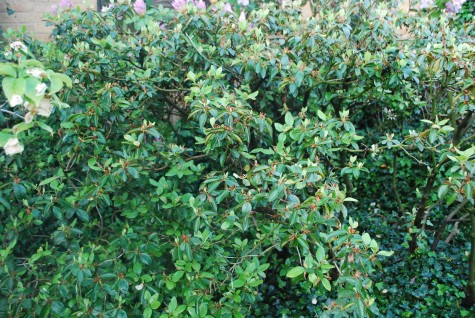
I do have a cluster of PJM rhododendron roaring back from a hard pruning two years ago.  The bloom this year-who knows what it might have been, but for a perfectly timed frost. I am mildly surprised that I have never touched this north side garden since I moved here 16 years ago.  But the fact that these displaced plants do as well as they do asks for a little respect. 

I leave them be-these West Virginia natives of the Appalachia stuck in a city garden in Michigan are doing the best they can.  I truly appreciate their effort.  I did have a bout with black vine weevils a few years back-I did treat for this.  Those bugs have not been back.  The highlight of this spring, with its round after round of disappointment from wretched weather, belongs to my rhodies.         


Flowering Trees

paperbark maple


Every spring, I swing by my Mom’s house last house.  She died in 2002-so yes, this yearly visit is a pilgrimage of sorts. I had occasion to visit a regular client in the same neighborhood about what we would do this year, so I drove through the neighborhood. The landscape looks entirely different than when she owned it, save for an old record breaking size paperbark maple on the left side of this photograph.  She grew this tree from a twig start from Musser Forest (do I have the name right?)-I am guessing better than 25 years ago.  Paper bark maples are highly esteemd for their shaggy, cinnamon colored bark.  Why am I talking about it?  The girl that grew this maple taught me how to garden-and to love trees.

dawn redwood  This dawn redwood down the street from my Mom’s old house is an astonishing tree.  It is thriving in an urban neighborhood, just a few feet from a driveway.  The driveway of a gardening person, I might add-the yard always looks well cared for.  In my twenties, I loved visiting this tree before or after I visited my Mom.  Sometimes we would walk down the street to look at it together.  Forty years later it is still well worth the visit.  The woody trunk and branches are beautifully sculptural.

weeping cherry

As for ornamental, or smaller growing flowering trees-what do you make of them?  Some years, I cannot get enough of them. That cloud of spring pink is intoxicating.  The cherries, apples and crabapples have thousands of small blooms that flutter in the slighest breeze.  They can also be swept away in an afternoon, if the wind is strong enough.  They bring ballerinas and tutus to mind.  The flowers are just plain pretty, and that is sufficient reason to grow them.  Maybe more importantly, those blooms are seductive.  They may encourage a not so gardening minded individual to actually purchase and plant a tree.  Who knows where that could lead.  A few years later, perhaps they might be planting katsuras, or weeping Japanese white pines.  I love them the most for this reason.

bradford pearsA neighborhood street lined with Bradford pears  is a good spring look. This is a large growing ornamental tree whose fruit is small, and better suited for birds than people.  Bradford pears are highly susceptible to wind and storm damage.  Plant a good cultivar, such as Cleveland Select, and give it room.  They are not so broad, but they may grow as tall as 60 feet.

I have no idea what this pink flowering tree is, but it is certainly exuberant, blooming in front of a red shingle house. I like the nerve of this.  It takes the edge of of all of that sugary sweetness.  Some years, flowering trees strike me as silly. Somehow a petunia handles being pink much better than a tree.  All that frou frou and fluff, on a tree, for heaven’s sake.  But the fairy tale part of the tree is very short lived.  The bloom span might be two weeks, in the longest and best spring ever.

yellow magnolia

Every last bud on my 8 Butterflies magnolias frosted off a few nights ago.  I imagine this tree in my Mom’s neighborhood suffered likewise.  Magnolias are much more dramatic in bloom than cherries or crabs.  The individual flowers are much larger.  In the years when the flowers frost, there is a whole season ahead in which to enjoy a tree that has beautiful bark, leaves and attractive structure.

This dark foliaged crabapple lives in the traffic island across the street from my shop-I can see it out my office window.  Every year it virtually defoliates by late summer-usually from drought and fungus. Once in a white we will clean up around the base, and prune.  But every year in the spring it is a happening.  This showgirl has a heart of steel.

This is a fairly large tree-I have no idea what it is.  It’s the wrong shape for a Bradford, and it looks too symmetrical to be an apple.  But it is breathtaking in bloom, whatever it is.

weeping cherry

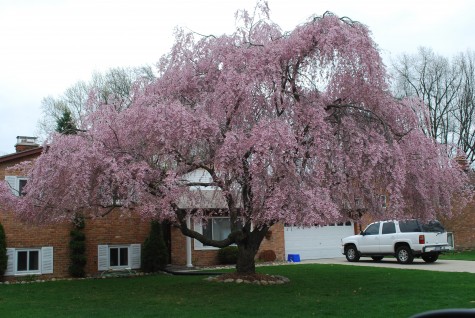
Weeping trees leave me cold.  But I rather like how this tree is trimmed on the bottom.  And it certainly is willing to bloom.  Such a stark landscape for such a tree with such a romantic air.

pink flowering trees

My favorite part of small growing flowering trees?  They lend themselves to being planted in groves, blocks, or swirls. They are quite comfortable being the star of a show.  The flowering branches are great in a vase.  All this pink?  Just a little fleeting frosting.