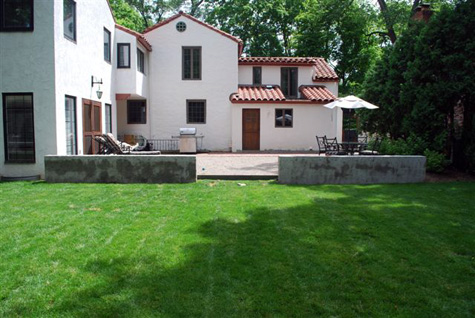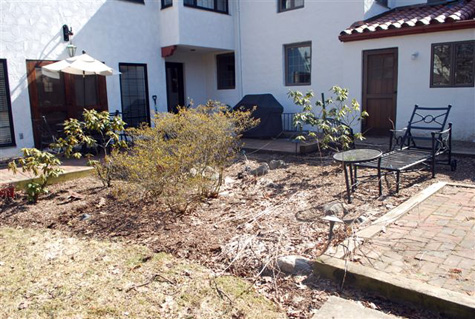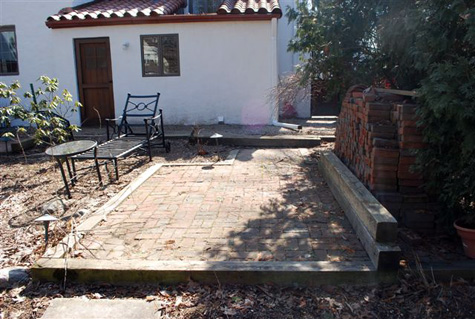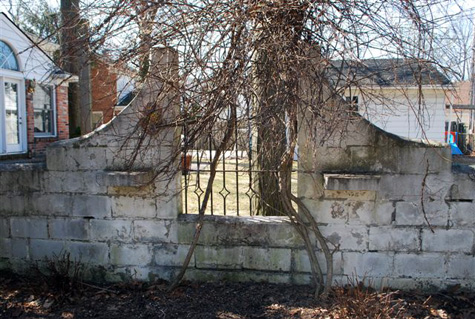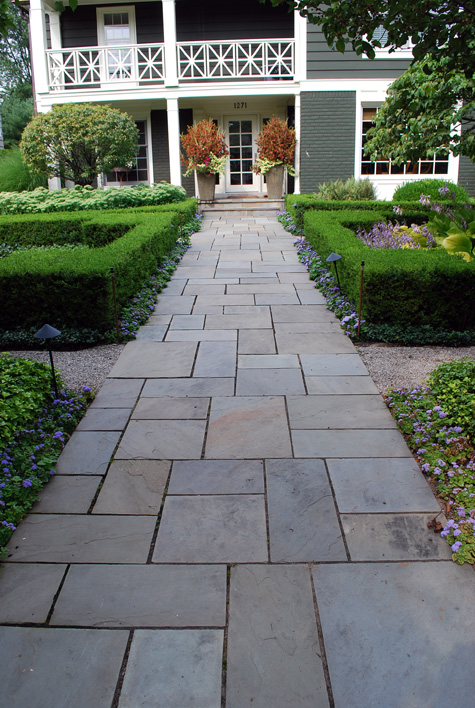
This client had an existing landscape notable for its good bones. Sited on a small urban lot, it had good screening from the neighboring properties. But what I liked the best were the long bluestone walkways. The view from the sidewalk was marked by a beautifully done walk, flanked by four boxwood parterres. Though they cannot be seen in this picture, lindens and yews do a great job of enclosing the property at the sidewalk, and focusing the eye on the long view to the porch. I could not have done this better. My only addition, a pair of hand carved concrete pots with just enough of a contemporary feeling to provide some compliment to the architecture of the house. The striking color of this house transforms it; this is the hand of her interior designer Ann Heath, whose design firm Duncan Fuller does better than beautiful work.
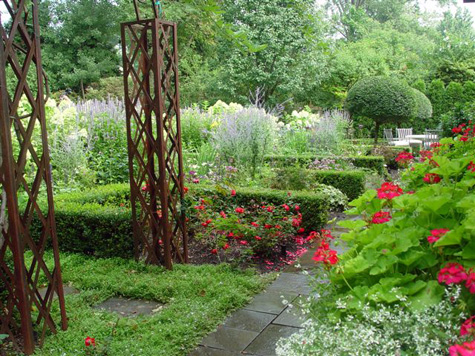 Another long bluestone walk set parallel to the house runs almost the entire length of the rear yard. The boxwood you see in this picture had been planted parallel to the walk. I dug every last one of them up, and replanted them in runs perpendicular to the walk. Why? The walkway strongly makes a description of that north/south direction and dimension-planting boxwood next to it doen’t make it stronger, or more interesting. Replanting the boxwood perpendicular to the house, encourages visitors to the garden to slow down, and view the gardens. The boxwood is associated with the gardens now, and makes those areas stronger visually. The walk needed no such help.
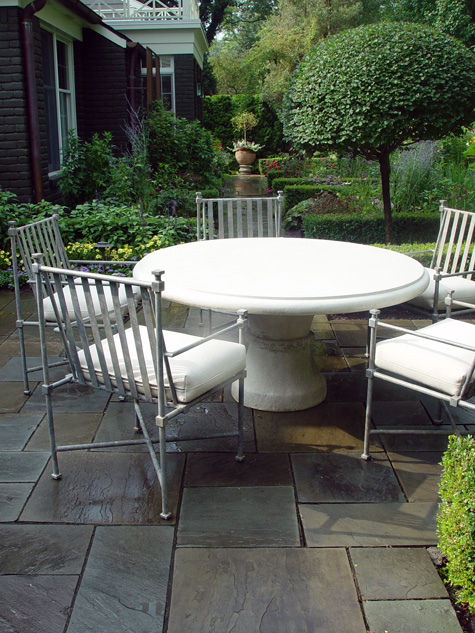 Each end of that walk has its center of interest. A beautiful hand made Italian terra cotta pot on a pedestal can be viewed from the dining table at the other end. Guests entering the garden from the south see the dining table centered in their view. This announces the location of the terrace, and presents that table as a sculptural element, in addition to its function.
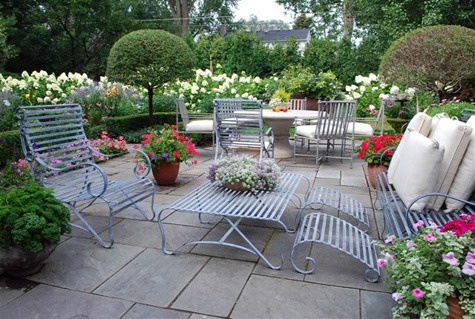 The terrace furniture is kept company by a number of planted pots. These pots help make the larger garden an integral part of the terrace. The Palabin lilacs on standard are a crisp contrast to the profusion of the garden and pots.
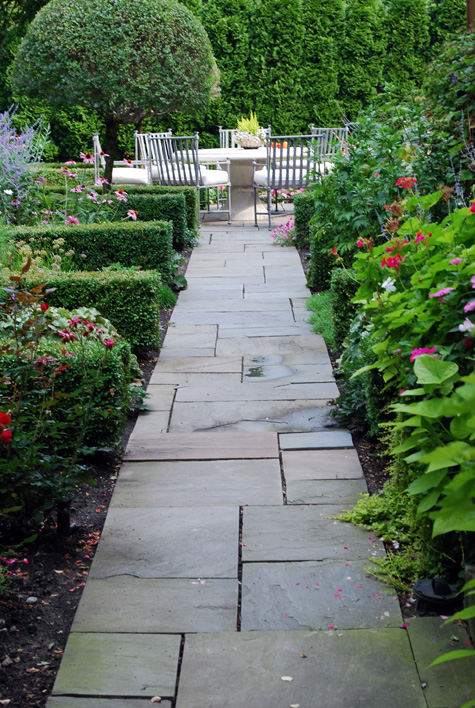 This long view is inviting; the boxwood placement invites lingering. This is much the same idea as a wedding coordinator instructing the bridal party how to take their time getting down the aisle. There is no need to rush.
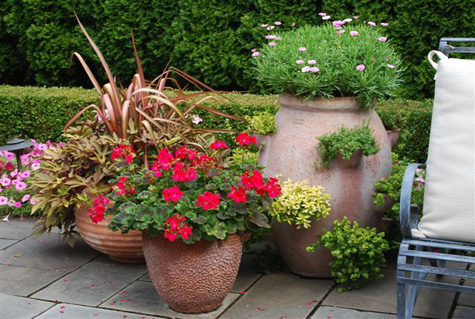 I have talked plenty about how much presence and personality great pots can add to a landscape. They help to create a sense of intimacy on a terrace. They are just plain good to look at.
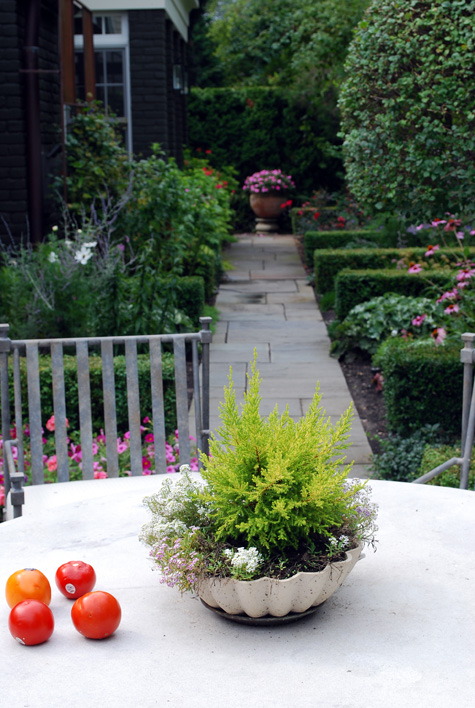 The bones of a garden are so important. This arborvitae screen at the end of this walk, and the walk itself ,are always there, functional and well-designed. This structure will be transformed by weather, season and light; there is interest there. In this landscape, the supporting cast members along the way make this garden much more than just about getting from one place to another.
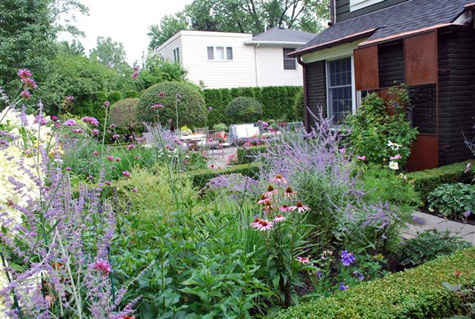 It’s impossible to tell that I am standing in the soccer lawn, taking this picture. This small property has spaces for a whole family. Limelight hydrangeas back up the garden, and help keep the soccer ball on the lawn field, and out of the garden.
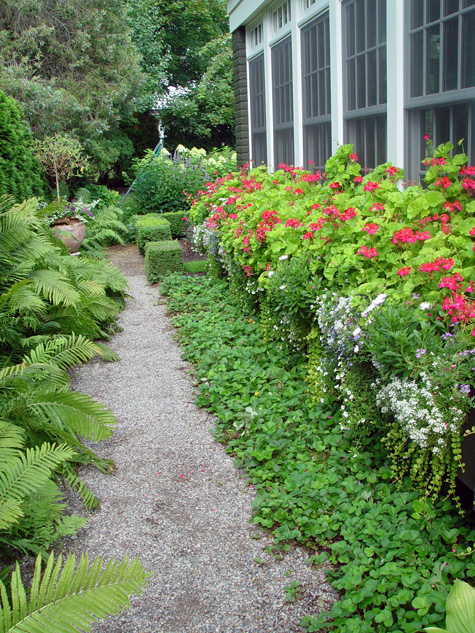 The short south side walk is decomposed granite. Window boxes of painted galvanized sheet metal run the entire length of what is a sun porch. This part of the garden is viewed primarily from inside; the flowers in the window bring a whole other dimension to the interior space. These Persian Queen geraniums bloom profusely in this sunny protected spot. Fragaria “Lipstick” carpets the ground under the boxes.
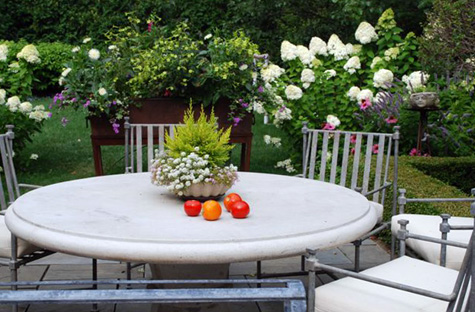 For anyone who might love flowers and lots of them,, this garden is a delight.
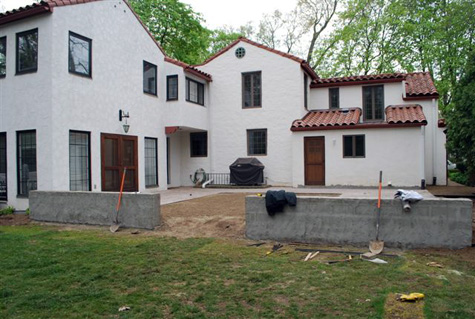
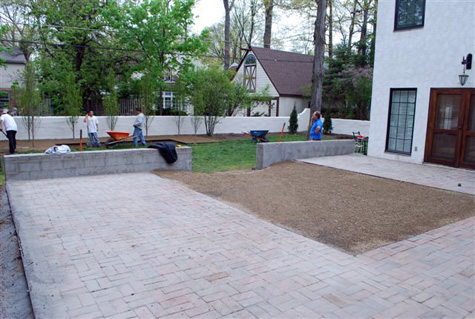 We needed a riser for the one step down into the yard. A 14″ wide by 9′ long piece of 1/4″ steel, buried, and snugged up against the new wall would do a clean and simple job of it. Once that steel was installed, the decomposed granite would be leveled right to the edge of the terrace. We adjusted the grade as the base of that step to make the transition to the lower level an easy one.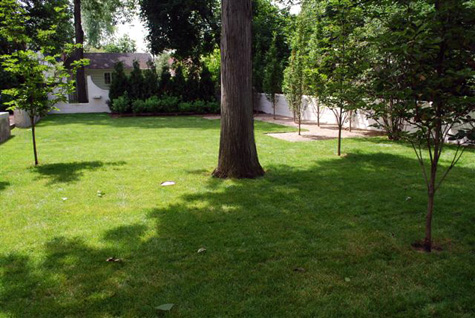
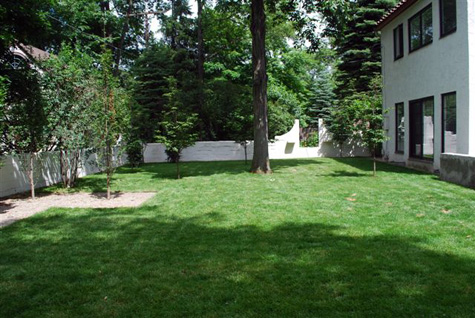
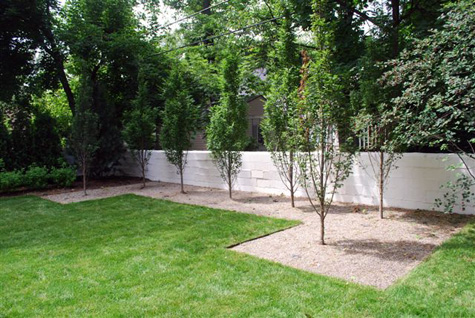
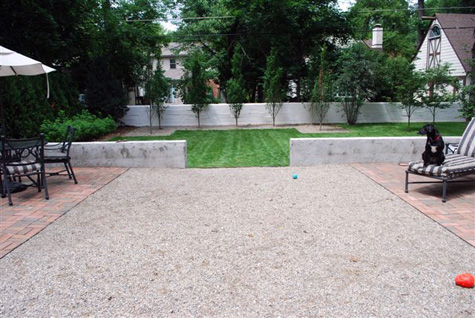 This view from the new terrace is my favorite. There is a simple overall shape, which unexpectedly drops down in the center to a lower plane. What is brick in the upper terrace reverses to granite in the lower; this is a change in material that does not interrupt the big organizing idea, but makes it more interesting.