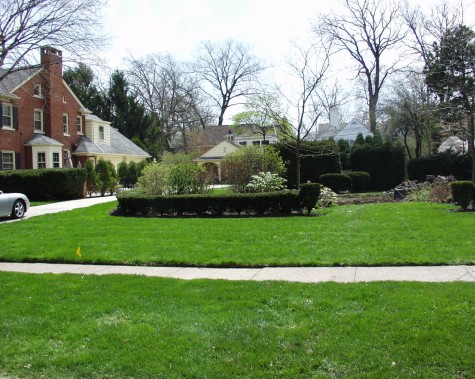
Eight years ago a client came in with a plan to renovate the side lot adjoining his 1920’s vintage house. This part of his landscape had been a series of free flowing beds of flowering shrubs and perennials, edged in a volcanic rock I call Castelia stone. Named for the town in Ohio where it occurs naturally, I see this stone in fountains, etc, at homes of this period.
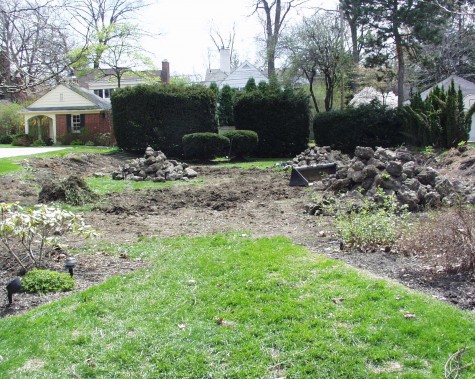
The land dropped dramatically from the grade of the existing driveway.The plan called for hauling away all of the Castelia stone, and installing a terrace of concrete pavers. Alarmed by this, he thought a second opinion might be in order. The stone was no doubt spectacular, and there was a lot of it.
The design issue of the day? How could that stone be featured in a landscape that would be beautiful and appropriate to the house.? After hauling away ten yards of debris from overgrown shrubs and scrub trees, it became apparent that stone could be the key to solving the grade issues.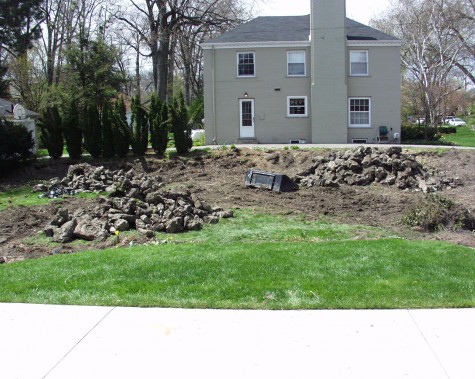
The land was a giant dish, bordered by my client’s drive, and his neighbors drive. This stark view to the neighboring home was the dominant visual element. I told my client I thought a formal sunken garden would be in order-an idea in which the existing stone would play a prominent role. Sinking the garden down 20″ would also make the job of screening the neighboring house easier.
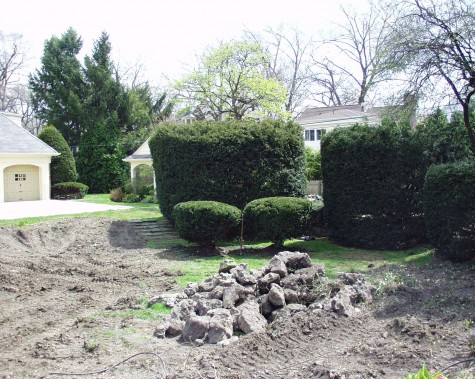
An old flight of steps, now blocked by a yew of great age, had been the only access to this area of the garden. The decision was made to orient the new sunken garden around a side terrace adjoining the house, and plans were made to allow for good access to the space.
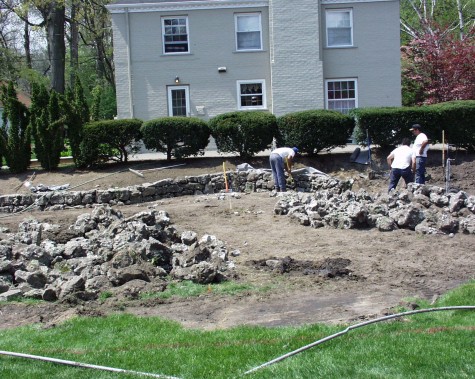
It is one thing to use materials that existed in an old landscape; it is another thing to use it in such a way that it appears to have always been there. The client was interested that the new landscape seem like it had been built on top of the old one. We transplanted a row of old yews that had been a foundation planting across the front of the house to the lot line adjoining the neighboring house. We then sloped the soil down to a 20″ tall retaining wall of the old stone.
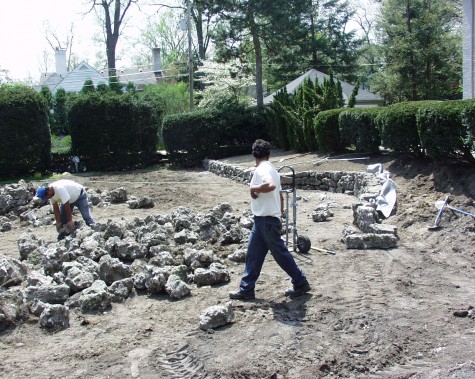
Each stone was fitted into the wall by hand and by eye. The use of any power tools to force a fit would have interfered with the illusion of age. The evidence of modern tools would have immediately dated the wall as a contemporary construction.
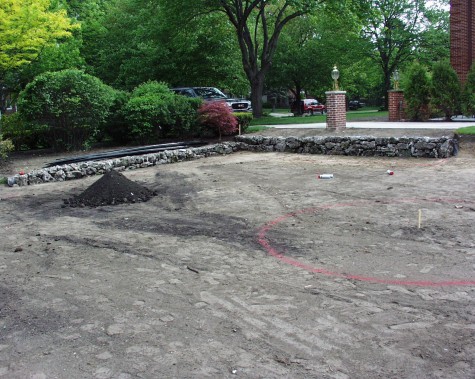
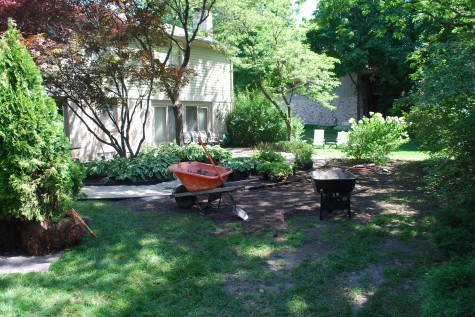
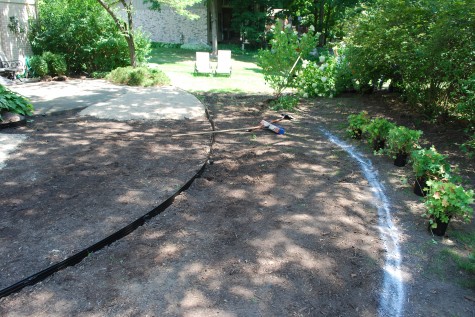
The ground was graded and regraded; soil was brought in to fill areas that were low; the ground plane was topdressed with topsoil in anticipation of the lawn.
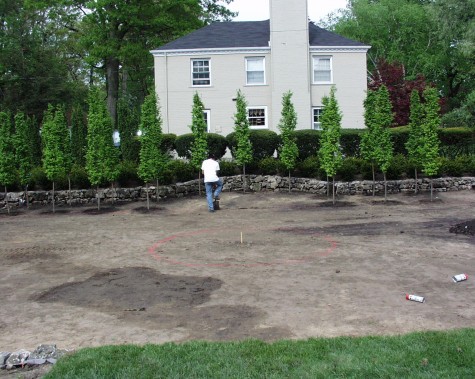
Densiformis yews were planted solidly on the slope down from the neighboring drive. This gave the background landscape a bit of a contemporary feeling. The French word bosquet refers to a densely planted block of trees, which when grown in, provides an architectural element similar to a pergola. These 25 gallon potted columnar carpinus planted as such would make an allee across the back of the garden, and would eventually screen the house next door.
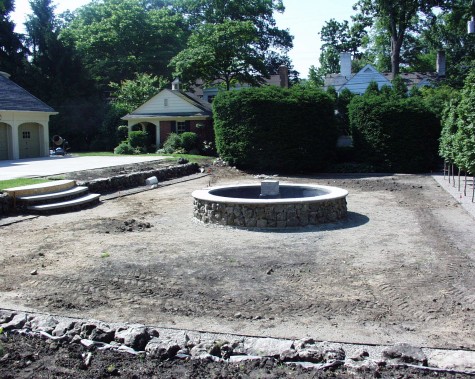
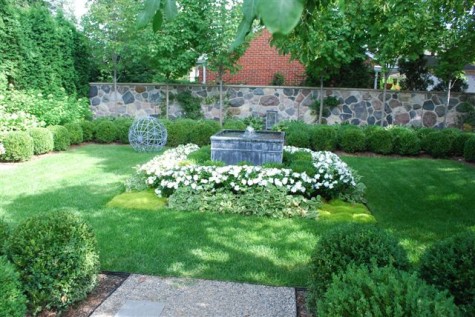
It was decided that a fountain, whose basin would be faced the in the same volcanic rock, would anchor the space.
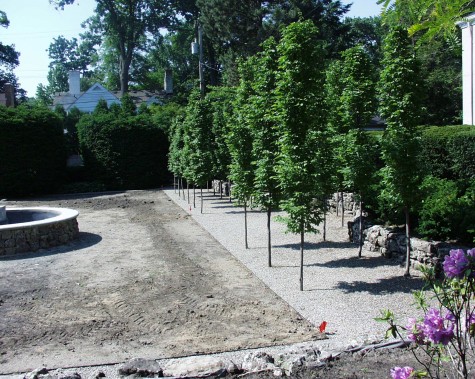
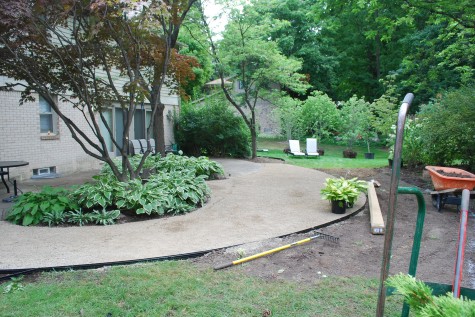
Edger strip was installed, and decomposed granite provided a hard surface under the bosquet. This treatment also formalized the edges of the lawn panel to come, and celebrated the irregular surfaces of the stone.
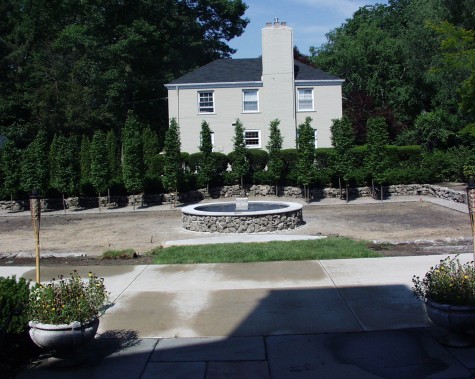
The radius of the fountain dictated the radius of the center of the bosquet. The center would have room for garden furniture.
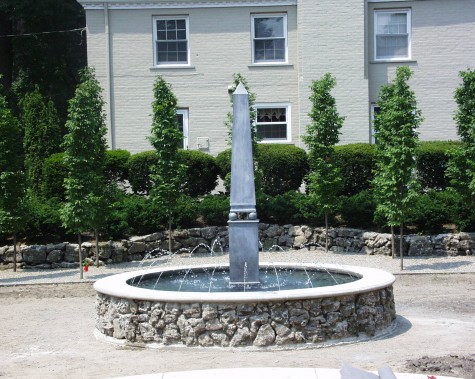
A contemporary European lead obelisk is a striking contrast to the stone. A lawn panel is all that is missing now.
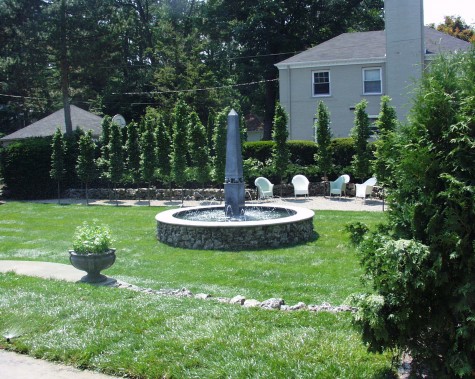
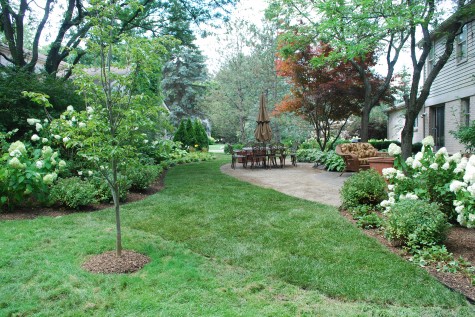
The resulting landscape is a great place to view whatever the weather, and a great place to entertain. Its composition makes much of the relationship of old materials, and my client’s more contemporary design sensibility.
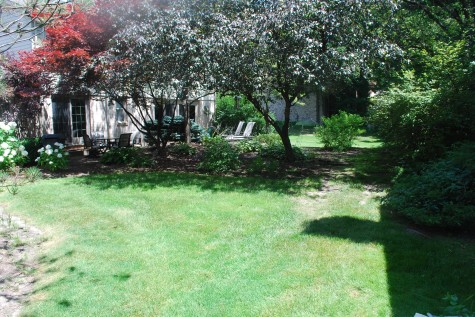
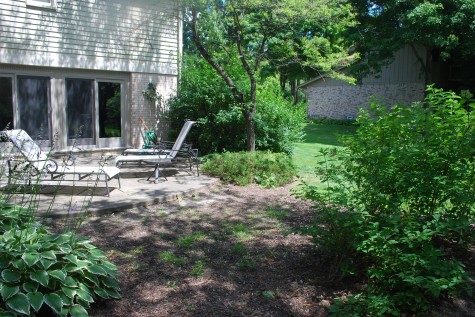
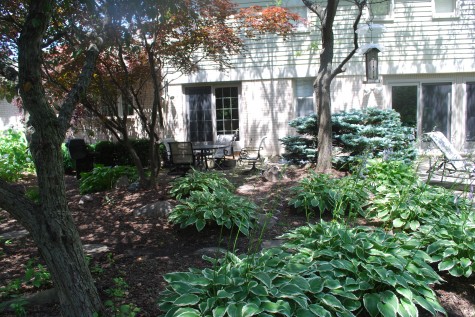
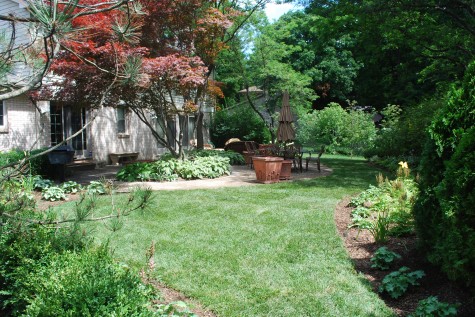
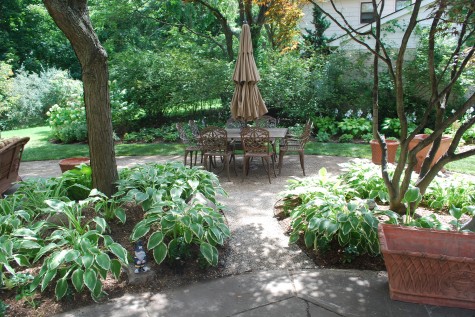
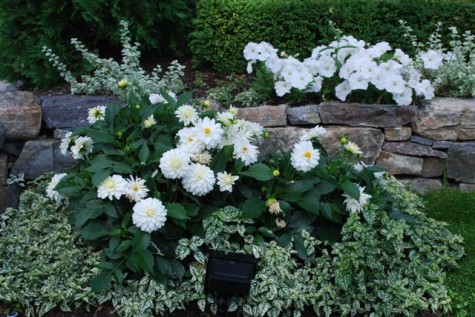
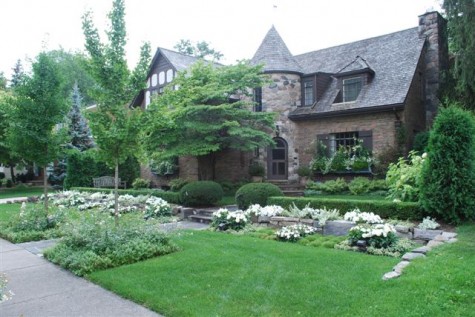 These clients have lived many years in a lovely old Tudor style house built in the 1920’s. However, they both have a love for clean, modern and edited lines. Working with them has produced a garden that has elements both friendly to the architecture of the house, and their point of view. They were both clear that a green and white garden would suit them best.
 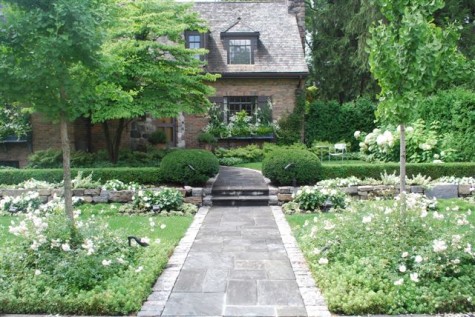 The landscape of the front of the house was already in place when I met them. My input involved the sizes of the flower beds, and the construction and installation of the window boxes. The profusion of flowers is decidedly English in feeling, but the green and white has a crisply contemporary flavor. The strong, dark green horizontal line of the boxwood hedge contrasts and compliments the mass of the oval yews. This element is balanced by the four columnar gingkos that frame the walk at the street. The simple steel windowbox is a focal point at the visual end of the walk.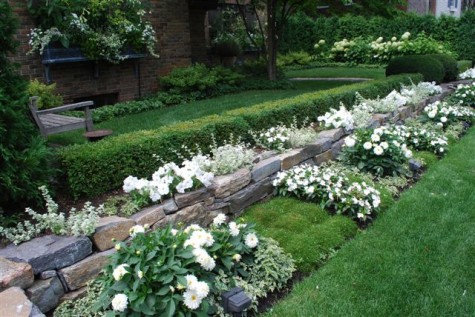
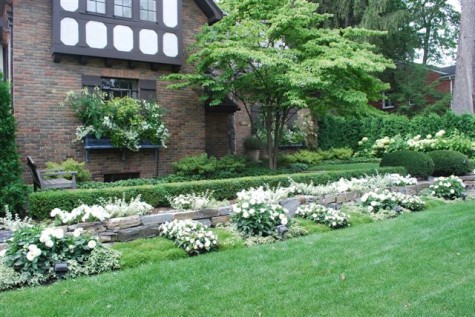 The upper level is planted more freely, with variegated licorice, white petunias and more polka dots. This bedding plant scheme derives more visual interest from its texture and layout than from the plant species.
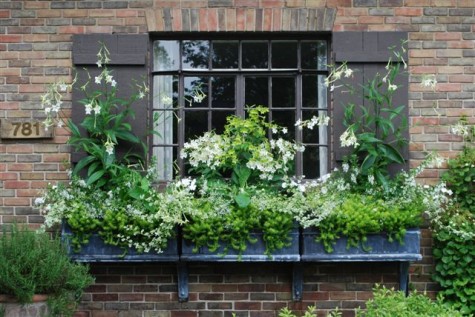 The window boxes are lush with green angelina, euphorbia, and licorice. The angular nicotiana alata white frames the more orderly growing Perfume nicotiana series in white and lime green.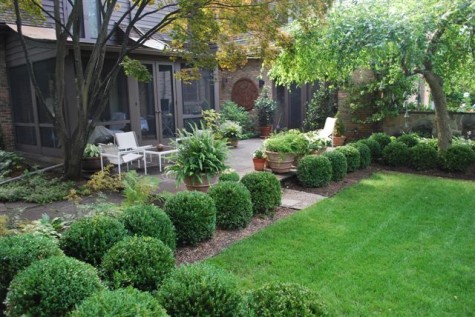
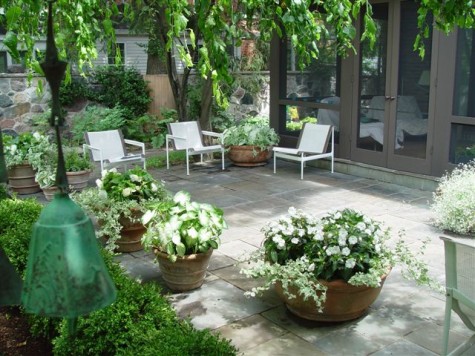
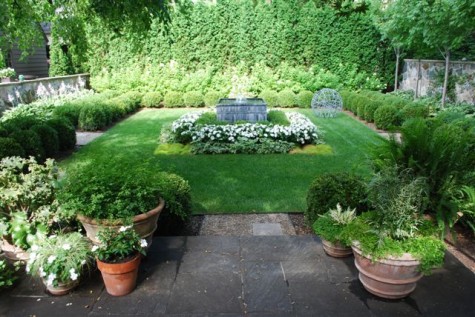 A custom made steel cistern positioned on axis to the porch, and the side walk organizes the space. It was constructed with legs tall enough to hide the fountain pump, but also to provide for the eventual height of the boxwood surrounding it. Bordered in boxwood, a run of limelight hydrangeas provides another level of interest against the green arborvitae wall.
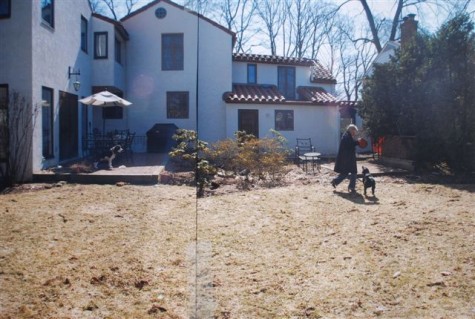 You may remember my post from July 21, Renovation Part II, a discussion of what finishing touches were yet to come in this project. If you missed that, I will recap. This beautiful Mediterranean house was in need of a landscape renovation; the new owner is a designer herself, and what she had, she knew would not do.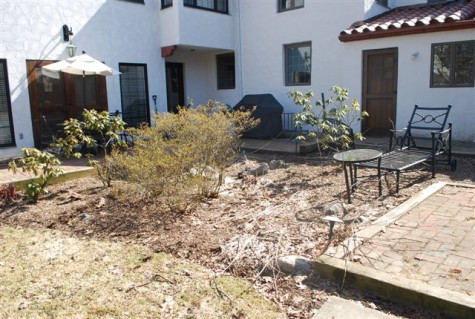
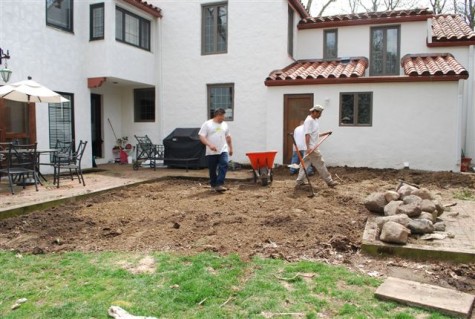 We removed all the plants, and brick, and graded out to the edge of the house; it is too awkward to step down in the middle of a terrace. In other words, we started over.
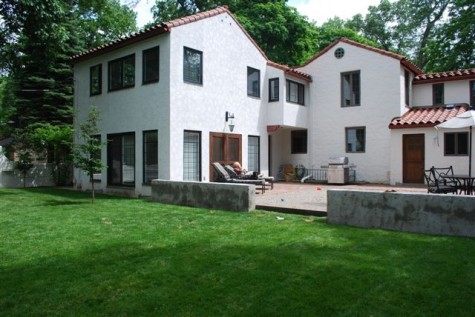 The new and larger granite and brick terrace stepped down into the lawn; a new stucco wall made for extra seating for guests, and made the suggestion of enclosure.
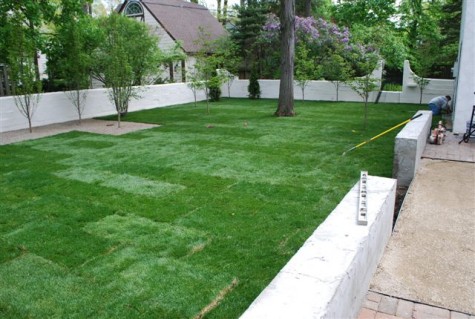 The new rear yard landscape made much of the repaired and repainted stucco wall . A grove of trees in the lawn, a formal arrangement of trees mulched in granite, and grass. Simple and striking.
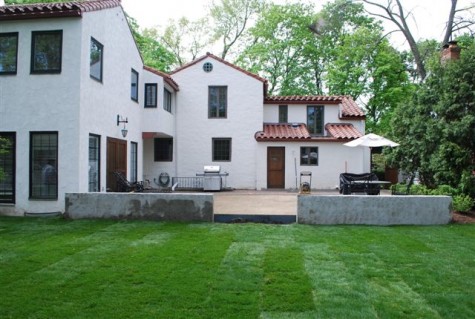 But what else did this landscape need in the way of finishing touches? Inspired by the Spanish flavor of the architecture, I thought some ironwork might be in order.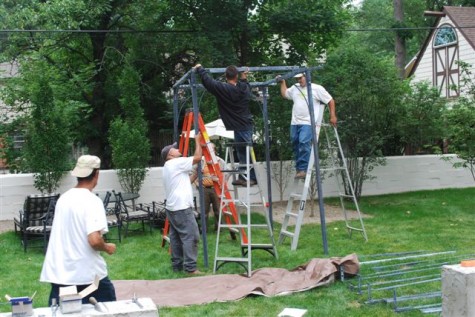
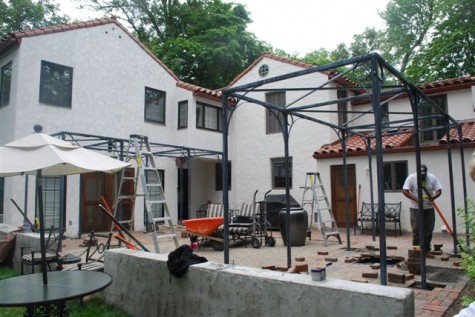 I especially like how the terrace will have two shady cool areas, with a sunny space in between them.
 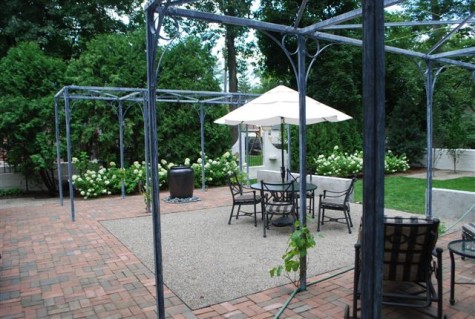 Finishing touches like this can make all the difference in the world; this space looks inviting and comfortable. A place to have dinner, a place to read in the shade, a place to entertain-all good things to plan for.
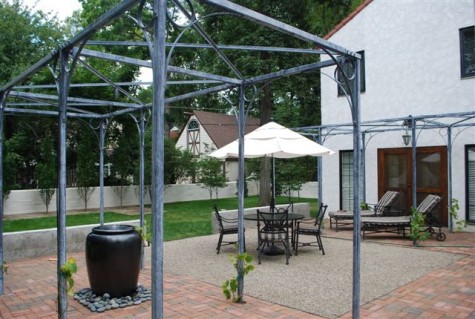 The last touch – a self-contained fountain jar. The reservoir to recirculate the water was installed underground. My client opted for a water jet barely visible. Lighting was unobtrusively installed in the pergola roof, illuminating the fountain at night. I can imagine how it will look and sound once there are grapes overhead.
 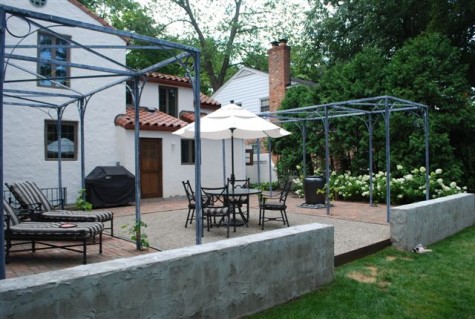 A new umbrella is on the way. Maybe there will be holiday lights this winter. Maybe next summer there will be some pots. The finishing touches phase transforms the designed landscape into a landscape for living.