Full Circle

Yes, this is the third time that I am writing about the light rings.  I think I have good reason.  Any design idea begins in a seed-like form.  There are no specifics or details-just the idea.  That idea has to grow, develop, and mature.  Any design idea that that annoys me by the third pass, I try to let go.  The annoyance means the idea was not big enough to begin with.  After writing yesterday’s essay, I thought I might want to take my own advice.  Was there a place that those light rings might add to the shop lighting in a substantial way?  
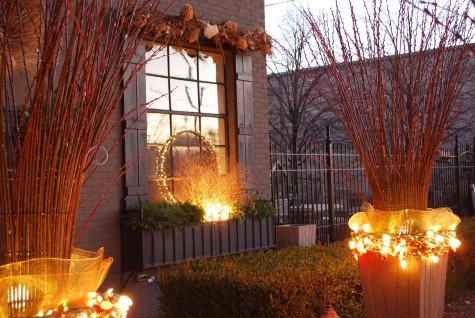
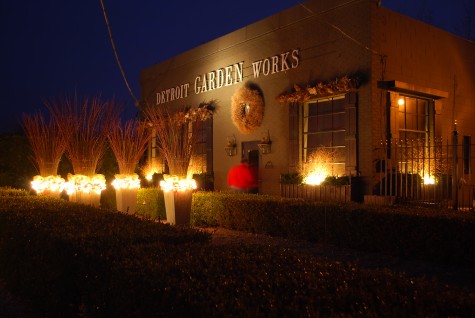
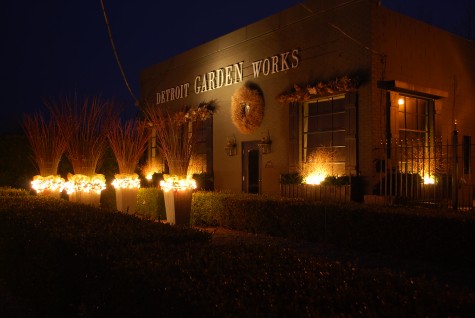
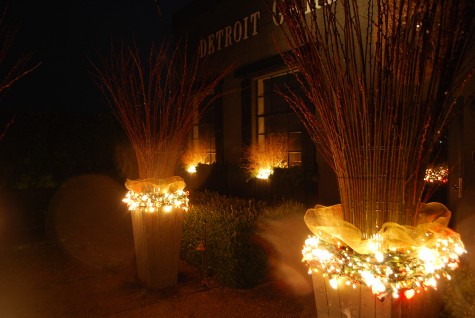
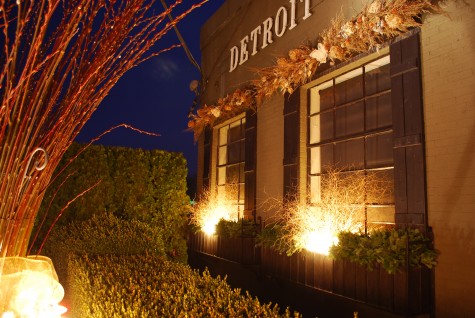
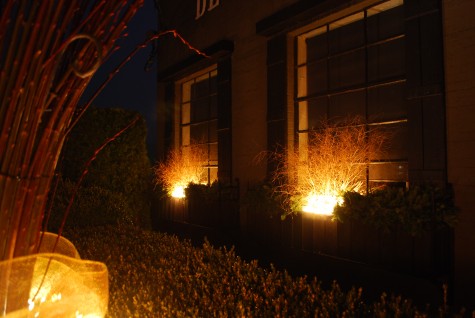
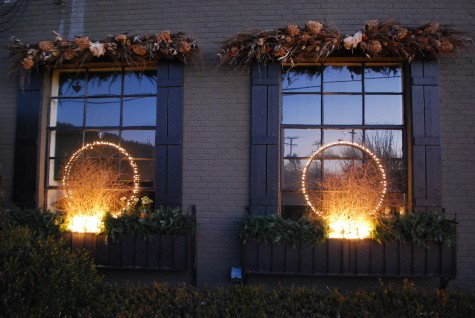
It was not that tough to figure out.  The idea had been looking me in the face for weeks.  The rings in the window help to fully illuminate the asparagus stems.  They light the underside of the medallions above the window.     
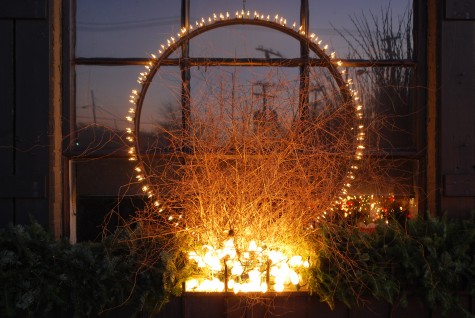
The circular form frames the asparagus, and is a distinctly contrasting form.  Does all of this go through my head?  It does.  Understanding your own visual process is important to creating a clear and strong expression.  It may take longer than one or two or five passes.  I like to take the time, even when I have no time, to let a design project speak back to me.  What you imagined has to all be there in plain view.  If it isn’t, the project isn’t finished.   
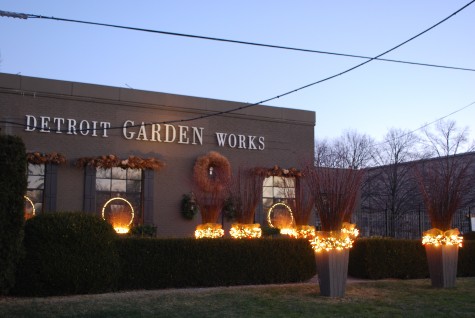
Though I may have an idea which organizes a project, I rarely am able to design start to finish in one fell swoop.  My clients are by and large patient people.  If they are not, it is just part of my job to explain how patience can make a satisfactory project supremely satisfying.   
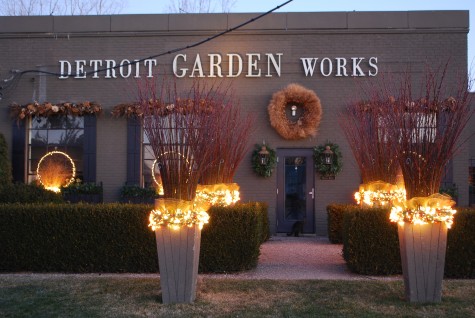
I did not mention the greens around the lights, which I added halfway through the project.  They are cozy looking, and they repeat the green in the boxes in another place, and on another level.  The greens mediate between the lights, and the sticks.  They frame the door in a friendly way. They have a circular, wreath-like shape.
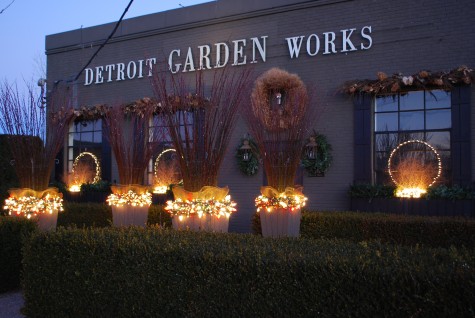
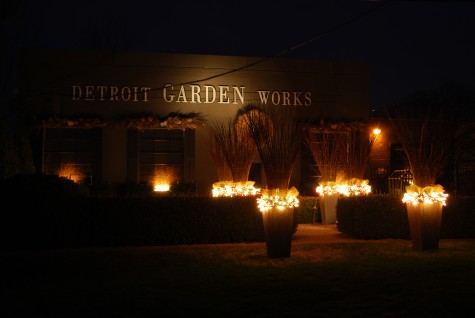
The shop holiday decor now has a level of finish that keeps on pleasing my eye.  This is my view, many times over in the course of a day, or a week.  This makes the resolution of that view important to me. Those light rings, as simple as they are, add a lot to the view.  The steel topiary forms in the pots to which the willow is attached, and the steel topiary forms in the windows add as much to this winter garden as any other element.  I wonder how I might apply the same idea to a summer garden here. 
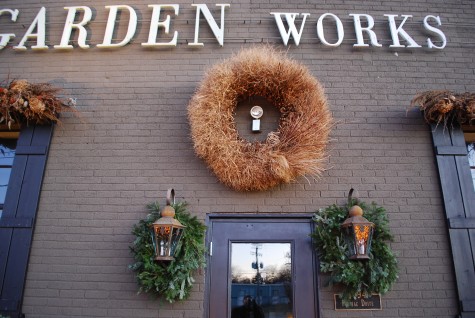
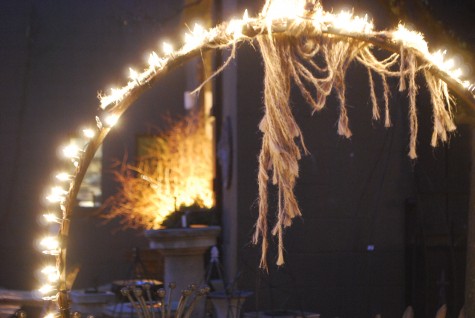
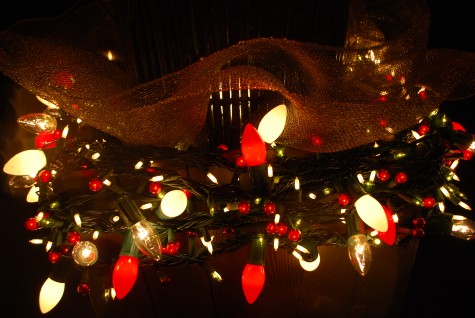
The structure of the light rings echo the wreath over the door, and the circles of greens around the lights. circular forms.  The lights have pompom tops-I have never really noticed that before.  The emergency light inside of the wreath-I notice that all the time.  Maybe it is time to paint the housing the same color as the wall.
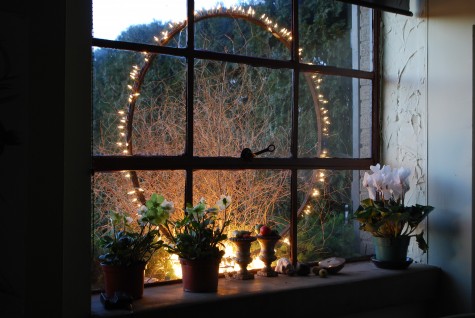
The light rings in the window have greatly improved the view from inside-this I did not anticipate.  The windowsill behind my desk has a totally different look now.  It is a look, with structure.
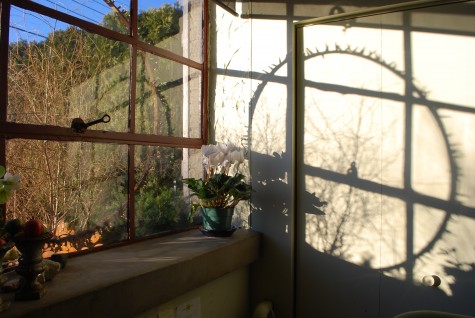
What began with the willow over the topiary forms has now come full circle. 
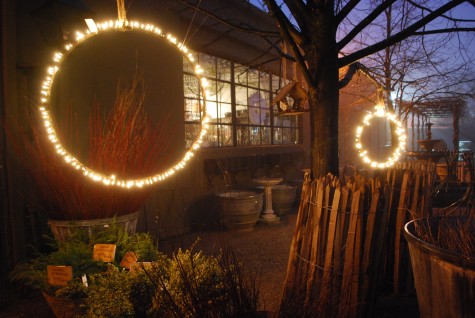
 

Topiary Forms In Winter

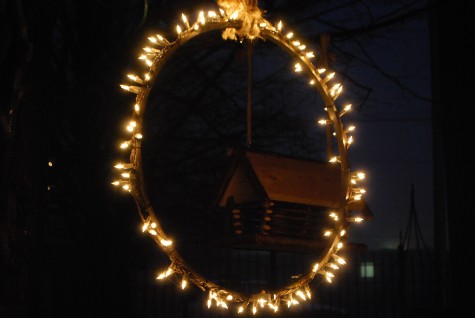
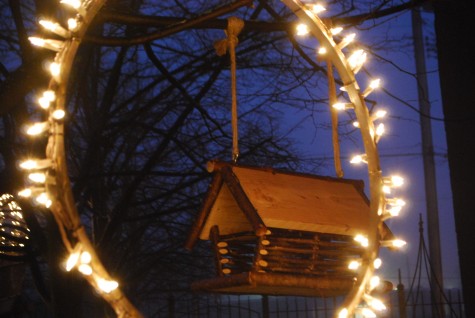
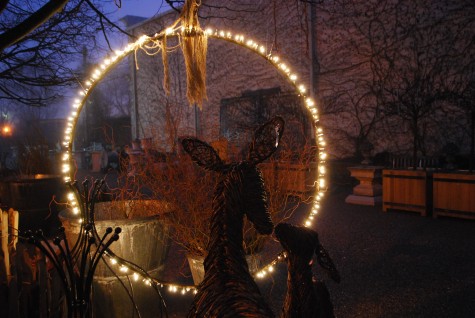
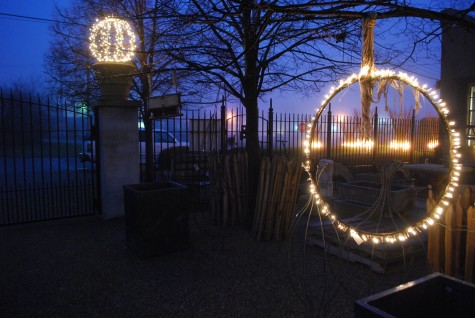
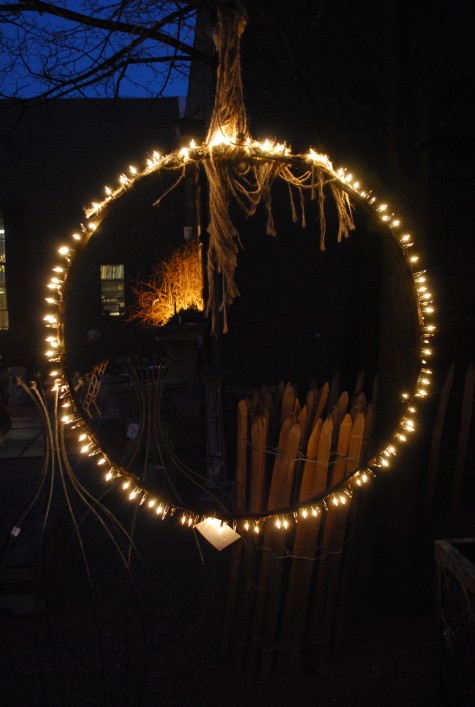
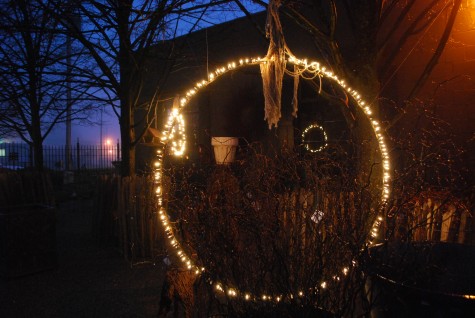
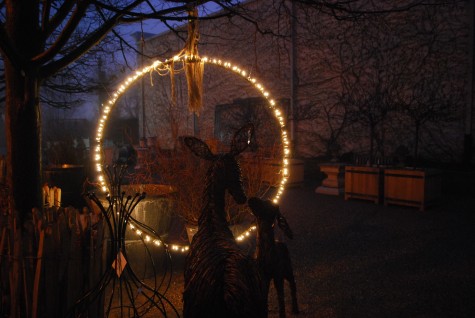
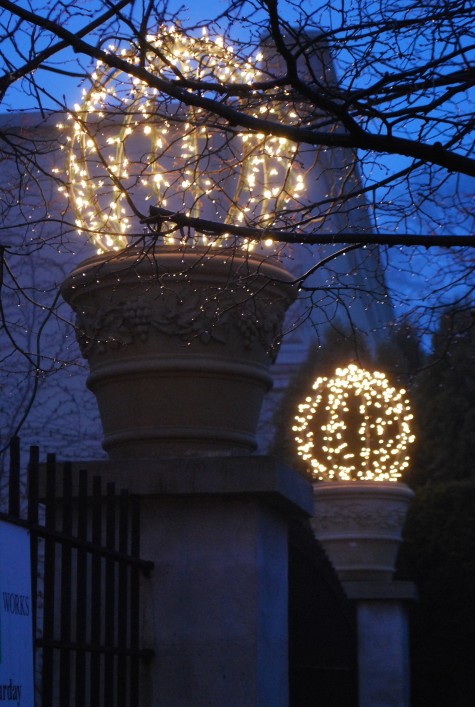
Yesterday’s dawn was wet and foggy.  Beautiful weather like this is rare here in late December.  That fog was making the visual most of Rob’s light rings.  Formally drawn and constructed geometric shapes are so compelling in the landscape.  A circle has no beginning or end; it is complete.  It is a very stable shape; it completely encloses a space, or a view.  A working circle is a wheel, whose invention revolutionized how people live.  This lighted circle is working in a different way.    

It illuminates a space, and frames a view.  It is a topiary form of light.  The light is focused-a far cry from the diffuse light that comes from the sky.  We see very little in the way of sunlight this time of year.  A lighted garden is never so welcome as it is in the winter.  Expressions of topiary in the landscape has a long history.  Fruit trees trained into a two-dimensional shape are called espaliers, after the French monk who invented this method of pruning. The Chicago Botanic Garden has an extensive display of espaliered trees, and landscape sculpture created from living plant material.  Any plant grown and trained into a shape is a topiary.  This would include bonsai, the boxwood at Dunbarton Oaks pruned into continuous cloud shapes, the topiary guard house at Fluery-en-Biere, the topiary pyramids at Mormaire, the spectacular thuja pergola at Chateau de Hautefort.  A good part of their majesty is their age, and the faithful care they demand and recieve. 

A rigid topiary form is useful for training plants into a geometric shape.  Arborvitae planted in proximity to an iron arbor can be pruned into that arbor shape, given enough time.  Young fruit trees trained over an iron arbor will eventually mature into that tunnel shape, and no longer require support.  A row of trees pruned into triple cordons will eventually make a living fence that is free standing.  Vines can be trained onto a topiary form as well; we have had beautiful triple ball ivy topiary sculptures on occasion.  The rigid form is a guide that insures that the shape is pleasingly and regularly geometric.

Vines permitted to scramble over a topiary form is a different, but just as pleasing look.  Old trees can provide a very sculptural support for an old Baltic ivy vine, or a climbing hydrangea. A rock pile, or a gate post can give form and support to a clematis.  Willow or bamboo tripods are good for growing beans, tomatoes, or morning glories.  Topiary forms whose primary job is to provide support for a lax growing plant are called plant climbers, or tuteurs.  

For a number of years Monrovia sold juniper ring topiaries. They were surprisingly attractive, easy to keep trimmed, and they were amenable to being grown year round in pots.  Should you have to have a juniper, this is a pretty way to own one.  I have seen angel vine, myrtle, miniature ivy varieties, boxwood and pyracantha trained on a topiary ring.  Once that ring form is rotated in space, you have a spherical form.  The same aforementioned plants can be just as easily trained on these forms.  Vining plants can be wound on the ribs of the sphere, or allowed to scramble over and cover the form.    

A topiary form is the fastest way to grow a topiary. A 6′ diameter boxwood sphere takes a long time to grow into its finished shape.  The boxwood spheres at the corners of the boxwood rectangle in front of the shop are 13 years old; they came to me 30″ by 30″.  As they have no rigid form inside, they have to be hand pruned by eye into a sphere.  I leave this job to Mindy; my handpruned spheres invariably have flat spots.

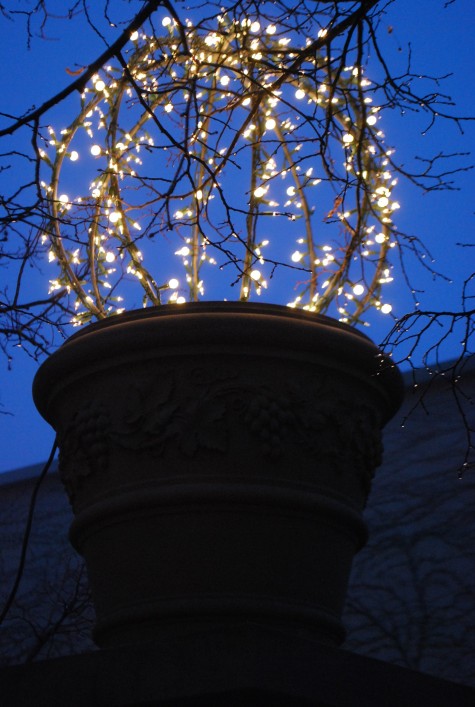
A topiary form may also be the fastest and most striking way to create a light sculpture.  The only requirement-a sturdy form, and holiday light strings with brown cords. The light they cast this foggy morning convinced me a topiary form can mean as much to a winter landscape as it does to a summer one.  The pot on your front porch with a topiary form that provided a home to a mandevillea over the summer can light the winter landscape all winter long.  

Other people have had the same idea about Rob’s light rings.  He tells me this morning we have sold 58 of them this season.  They are so beautiful hanging from our trees on the driveway.


They do an incredible job of softly illuminating a wide area, and vividly illuminating an intimate place.  I am just now thinking we need some in the front windows of the shop.  I may be late getting to this idea, but the winter will be long. 

If your topiary forms that spend the winter in the shed, you might want to rethink that.  They could bring some light and warmth to your winter landscape. 

On this the darkest day of our year, what would I do without this light?


The Holiday Landscape: Design Details


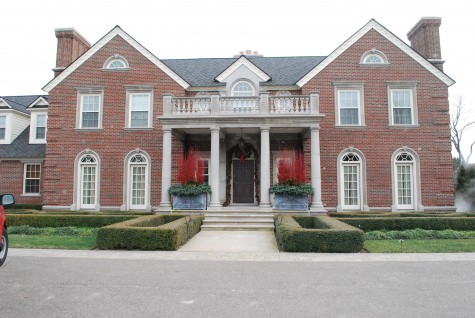
Any design – whether it be landscape, garden or holiday design – pertinent to the front door involves much more than the door.  A front door comes with a house, that has a certain shape and size.  That door comes with a stoop or porch.  There is a walkway that gets you to that door.  There is a landscape that accompanies  that walk to the door.  Some doors have a portico, or a roof, or no shelter from the sky whatsoever. Some front doors are on the side of the house. Consideration of all these factors plays a big part in successful holiday design.  This is a house of considerable stature.  The drive court, walkway, and portico are all of a massive scale.  The house is a long way from the street.  Big and bright helps to make a holiday statement in proportion to all of the other existing elements.

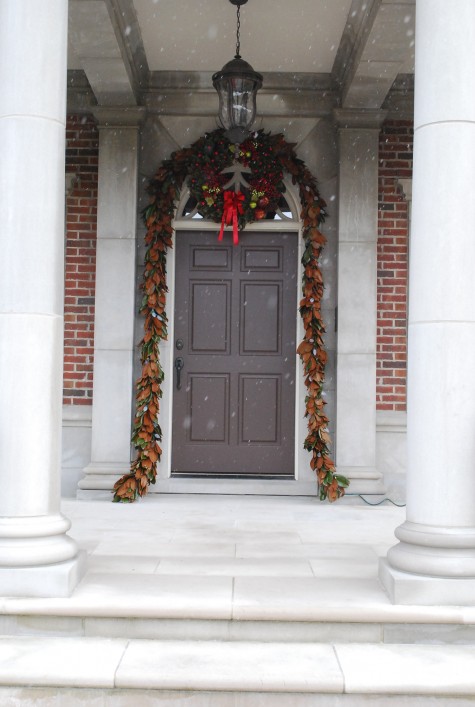
The portico is massive, and supported by massive columns.  The door is somewhat dwarfed by the structure over head.  A garland, and integral wreath over the door visually lowers the ceiling.  The is a friendly gesture aimed at creating a more human scale.

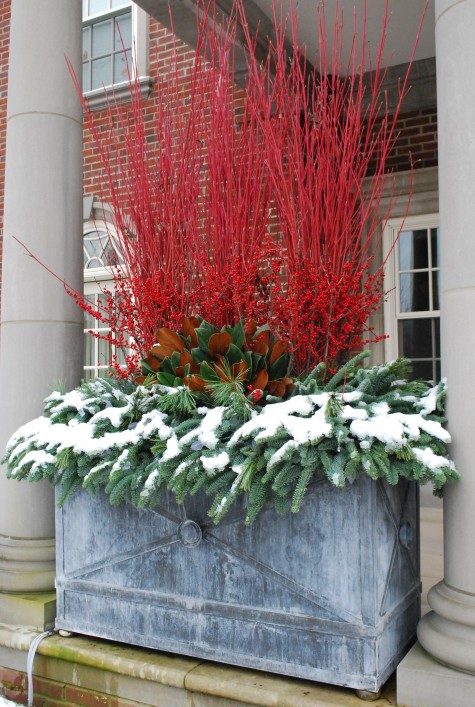
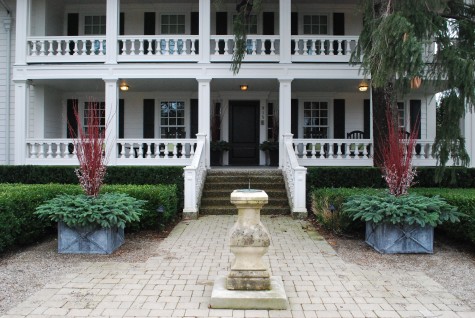
The rectangular pots are large, and were designed to fit in between those columns.  A thicket of Cardinal red twig dogwood and berried Michigan holly stems makes a holiday statement that is visible from a long way away. There are but a four elements in these boxes, but there is a generous amount of each. These boxes also make that porch a more private space.   

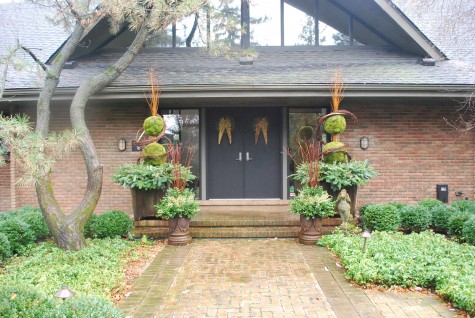
This pair of front doors are painted a very dark grey.  The porch is wide, and very simple, as is the brick walk.  A pair of Belgian oak boxes are kept company by a pair of antique English chimney pots, and a single concrete French poodle.  The double ball moss topiaries with their twig top knots and vine swirls are 7 years old-they look great with that poodle.  This fall I added a new layer of moss to the old.  As the boxes are so large, I had no worry that the moss balls would be too big, given a new moss layer.  We stuffed mixed greens into the big boxes, and borth green and variegated English boxwood into the chimney pots.  A smaller scale green is a good choice for a smaller container. 

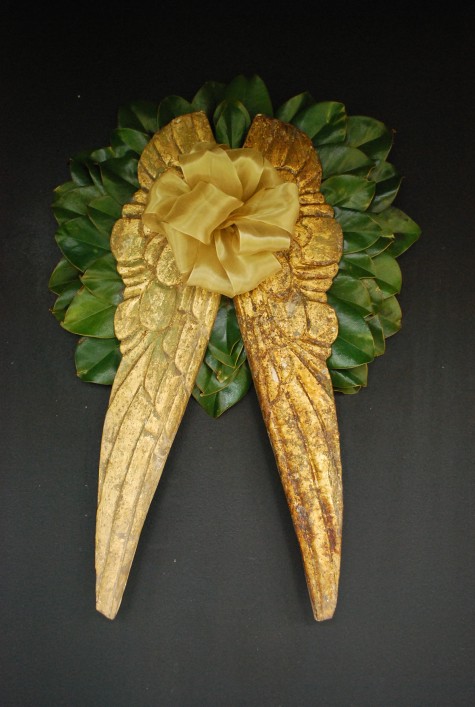
The dark doors asked for a detail that was light, or sparkly, or both.  I glued a pair of vintage gilded angel wings together via a wood plant label.  Short screws through both layers insured the wings would stay together.  A square of foam core board glued to the back was a base for a few layers of magnolia leaves.  A gold metallic bow in the middle speaks to the season.  This detail can be changed after New Years, as the pots will look welcoming all winter long. This detail endows the front door with the greetings of the season.

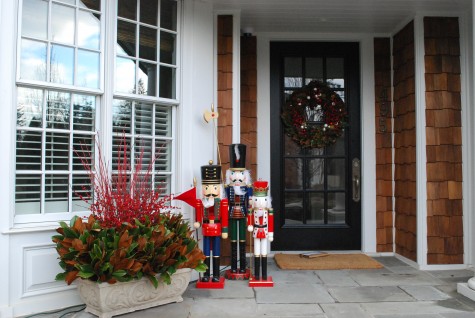
An asymmetrical placement of a front door asks for an asymmetrical treatment.  A low concrete planter with magnolia and red twig dogwood provides a compact landscape for a trio of nutcrackers.  The magnolia wreath on the front door-a third element providing holiday interest. 

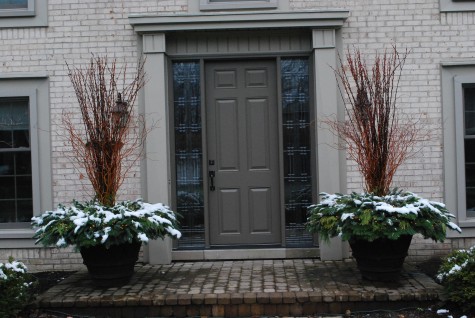
These clients requested a winter theme for their containers.  The pussy willow centerpieces repeat the dark chocolate stain color of the concrete pots.  The curly willow provides a little loosely described volume without interfering to the access to the door.  The decor is very simple and understated, just like the door.  

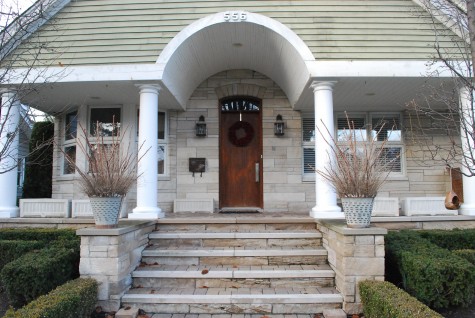
This front door is part of a large porch which extends across the full width of the house.  The pots on either side of the door are always in shadow, given the roof of the porch.  A pair of pots integrated into the landscape provides an opportunity for winter interest at the half-way point from the sidewalk to the door.  These pots also provide a frame for a stately antique English sundial. This front yard brick terrace is a room of its own.  The stairs are a transition from that public space, to the more private porch space.  The central design issue here was all about making a drastic change of grade from the front yard to the front door seem graceful.

These containers are generously sized, and for good reason.


The house is tall, and a considerable distance from the street. The walkway to the front door originates at the driveway, and is laid parallel and close to the front of the house.  There is a vast amount of lawn between the street, and the front door.  These large pots with large winter arrangements provide a winter outfit for the entire house.

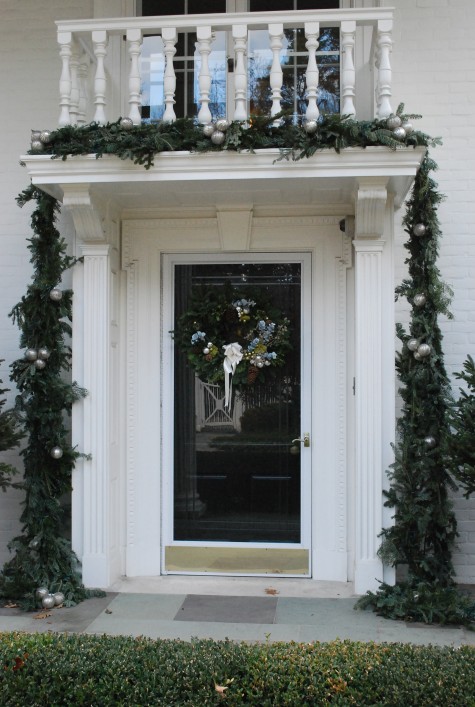
This front door has a small and intimate portico; the holiday garland makes much of this.  A holiday wreath on the glass storm door completes the look.


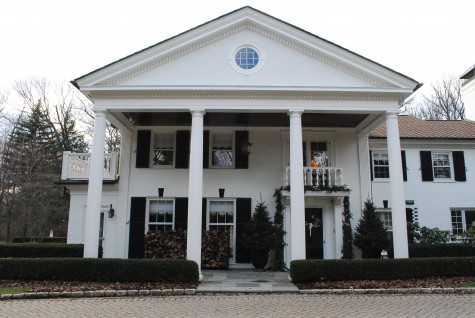
From the street, an entirely different feeling is at work.  A massive portico covers the front door, and its personal portico.  A pair of Christmas trees set in black ceramic pots make that door seem more important.  The firewood stacked outside and to the left of the front door adds visual interest, and balance, to the treatment of the doorway.  It is important to make much of the front door.  It is the friendliest gesture you might make to your guests.

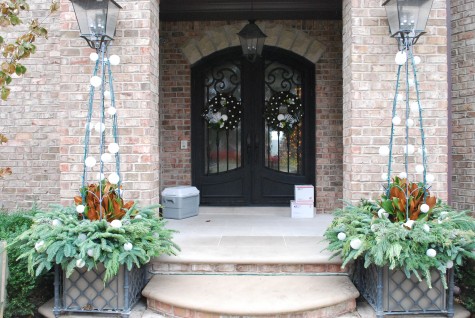
This recessed front porch features a pair of wreaths hung from the iron fretwork of the pair of front doors.  The white glass ornaments in the wreaths echoes the white light covers on the tuteurs in the boxes.  A trio of coach lights makes this front door, and all that goes with it, seem all of a piece.

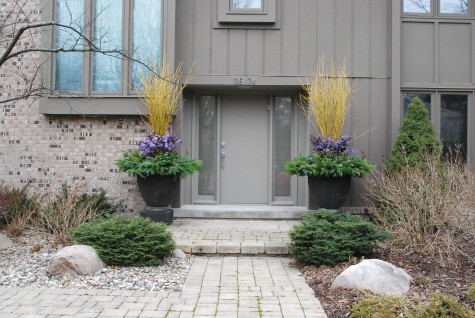
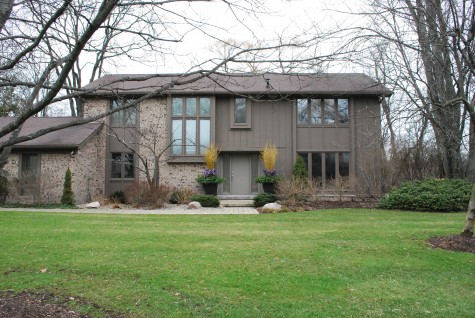
This big and rangy contemporary house features a very geometric and formally clipped landscape.  A pair of galvanized pots stuffed with Rob’s signature branches and weeds is a surprising effective foil for all this architecture.  The big idea here?  Study what you have.  Make no plans to cope.  Plan to shine.

At A Glance: December 16, 7am

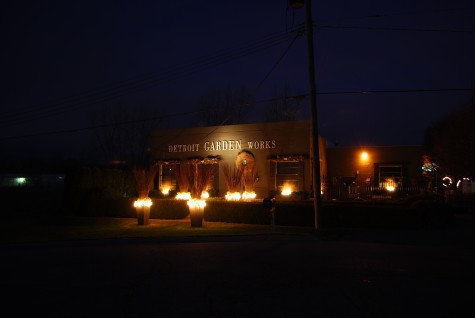
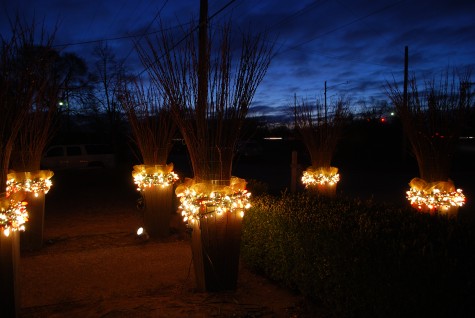
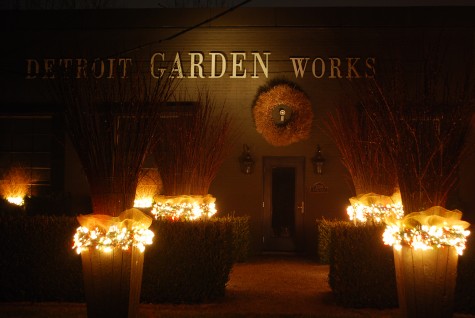
Steve and I both get here before daylight, so we can talk about the work for the day. This morning was no exception. That red coat of his looked great.  I was out photographing our holiday decor, now that everything is finished.  Rob is a little tired of me telling him how much I am enjoying this, but you may not be able to drop by before 7am, or after 6pm.   These pictures provide a taste of how it looks.  

The lights at night provide wholly different visual experience than the daytime view.  It will be a good while before I tire of coming to work to this.


Howard and Milo are barely visible in the doorway-I feel quite sure they like this time of year too.