More Romance

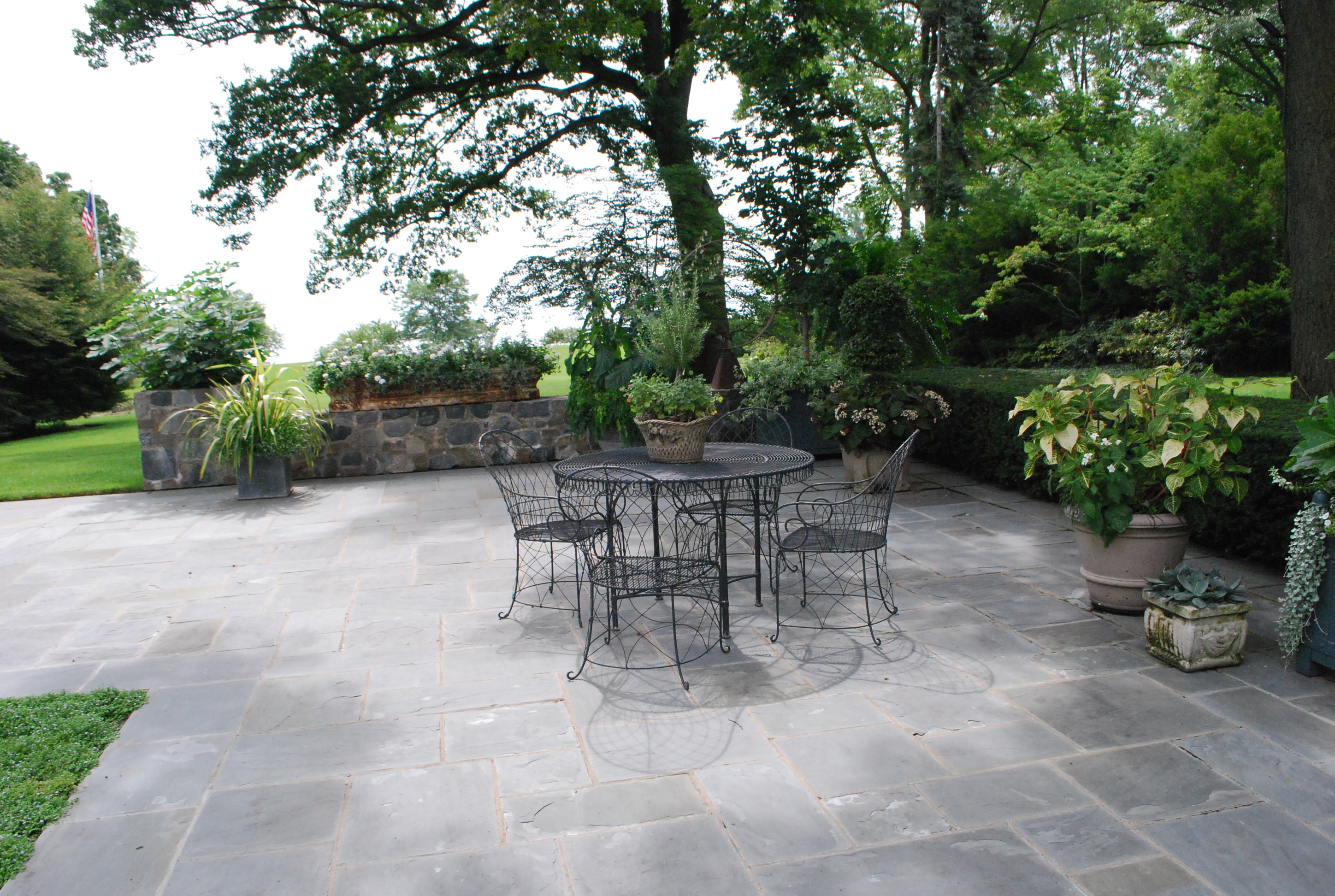
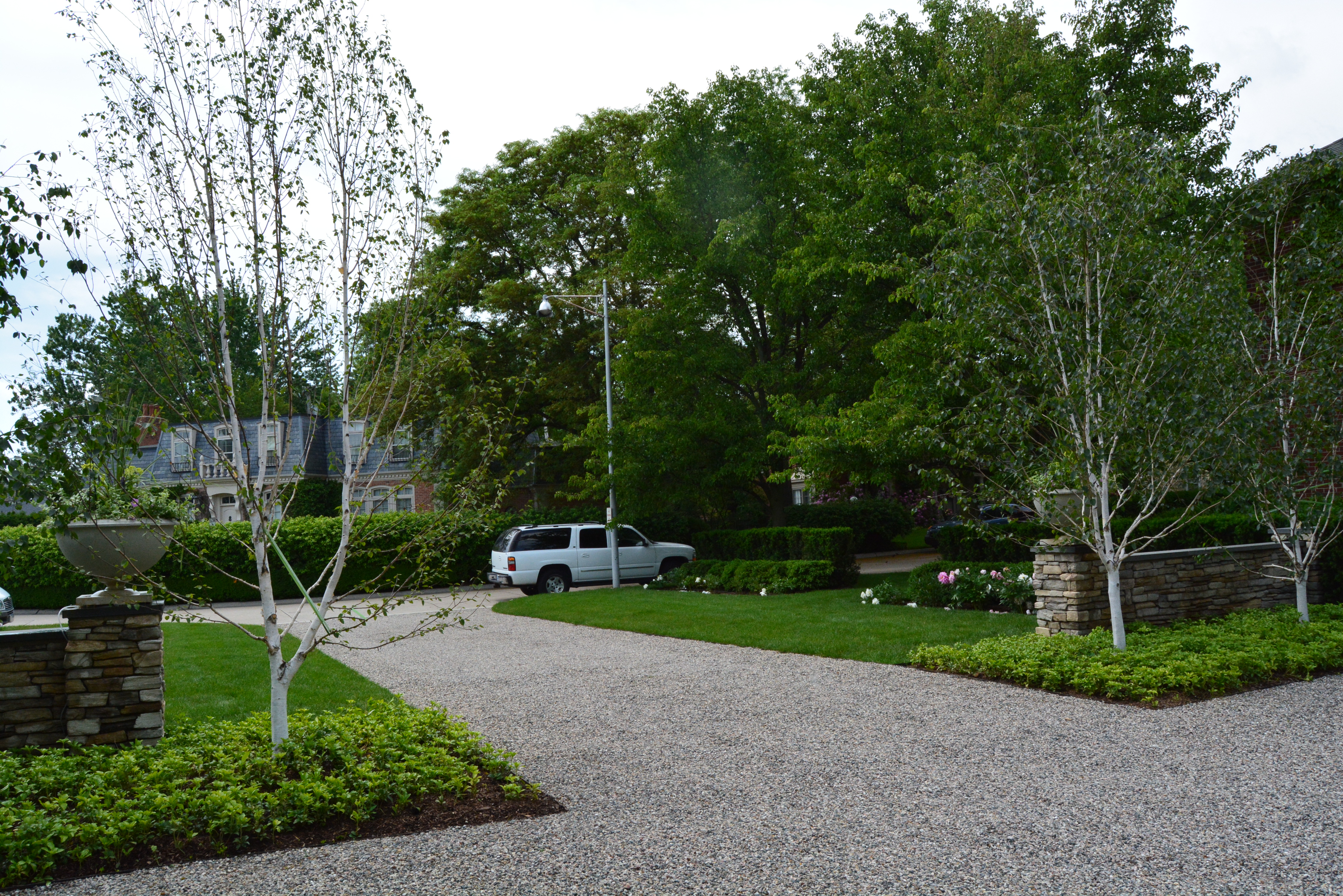
gravel-driveway.jpgI spent the better part of the day planting containers for a client who engaged me to design and install the landscape for her new lakeside home-last year.  Most of what I saw in ground today is a year old.  I was more than happy by what I saw.  I credit the degree to which her plantings have taken hold to the grading, the drainage work, and plant choices that matched her existing conditions.  I know am posting many too many pictures.  But perhaps the oversized collection of pictures will give you a feeling for the overall landscape.  Many of her John Davis climbing roses are now over my head.  The romance of that was considerable.
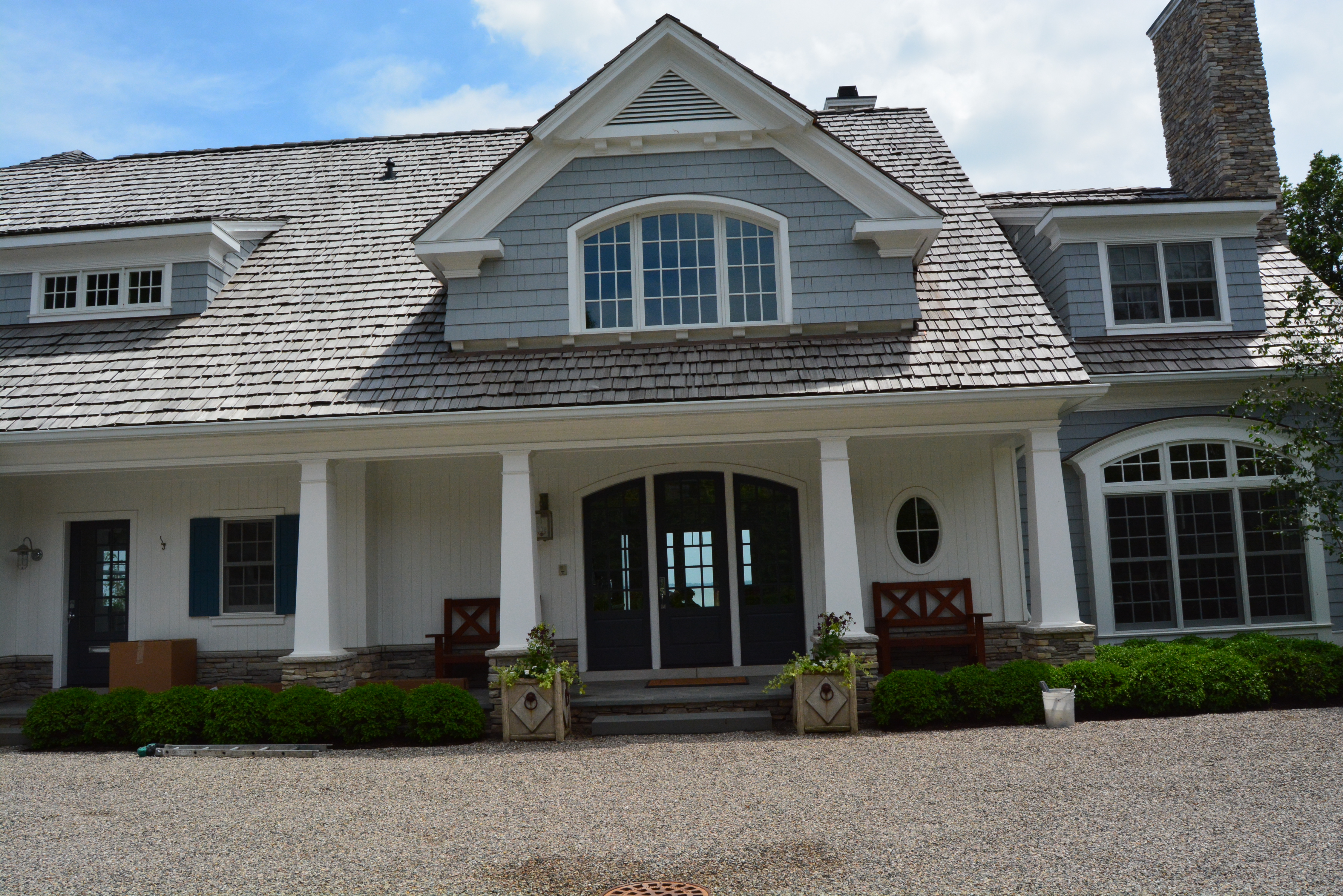
front-door.jpgBuck built the ipe benches specifically for this porch.   The concrete pots are our interpretation of an original French faux bois box.
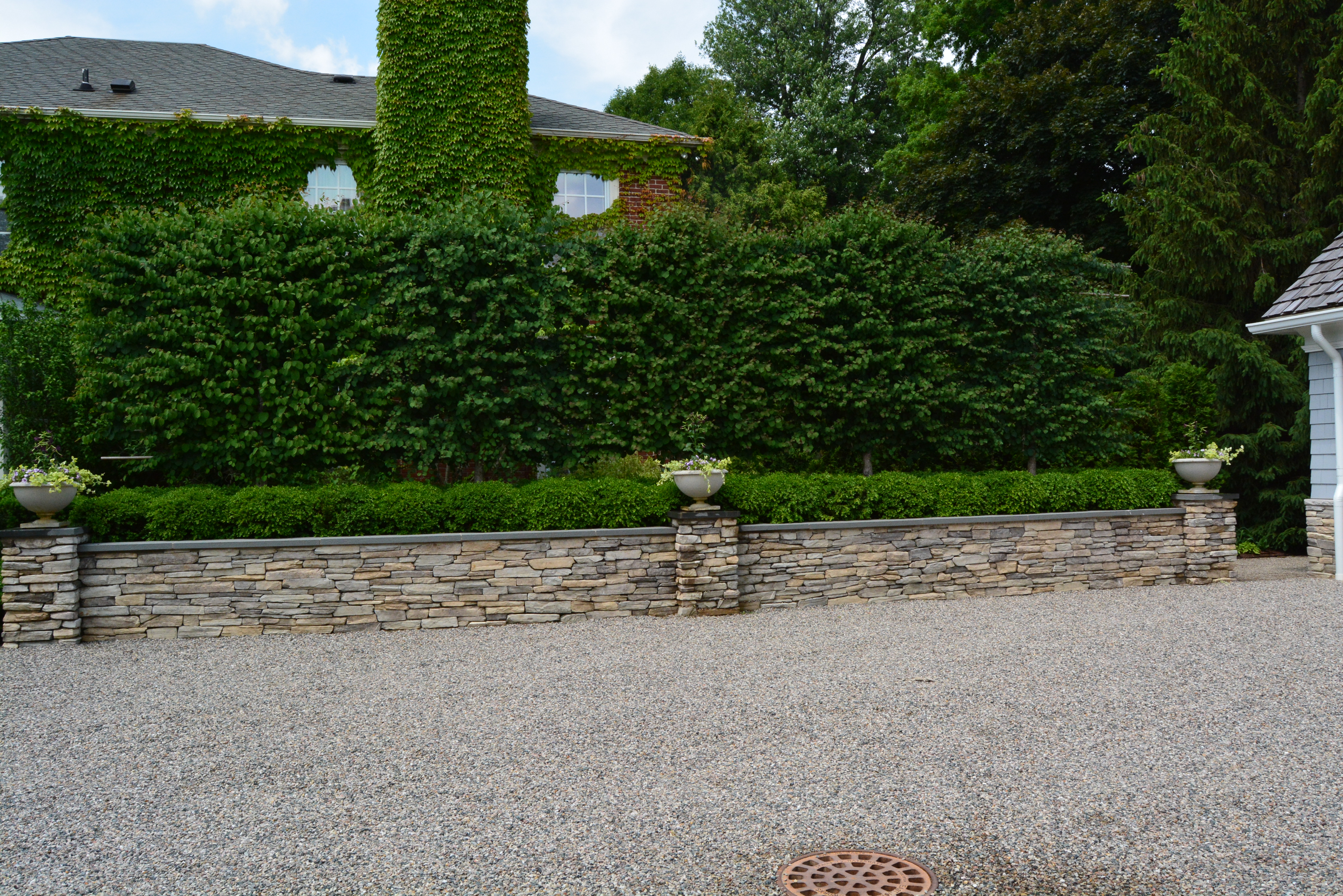
katsura espaliers.jpgThe espaliered Katsuras in this 36′ foot long raised stone planter provide screening from the house next door, in a space barely a foot in depth.  These espaliers are well on their way to making a green wall.
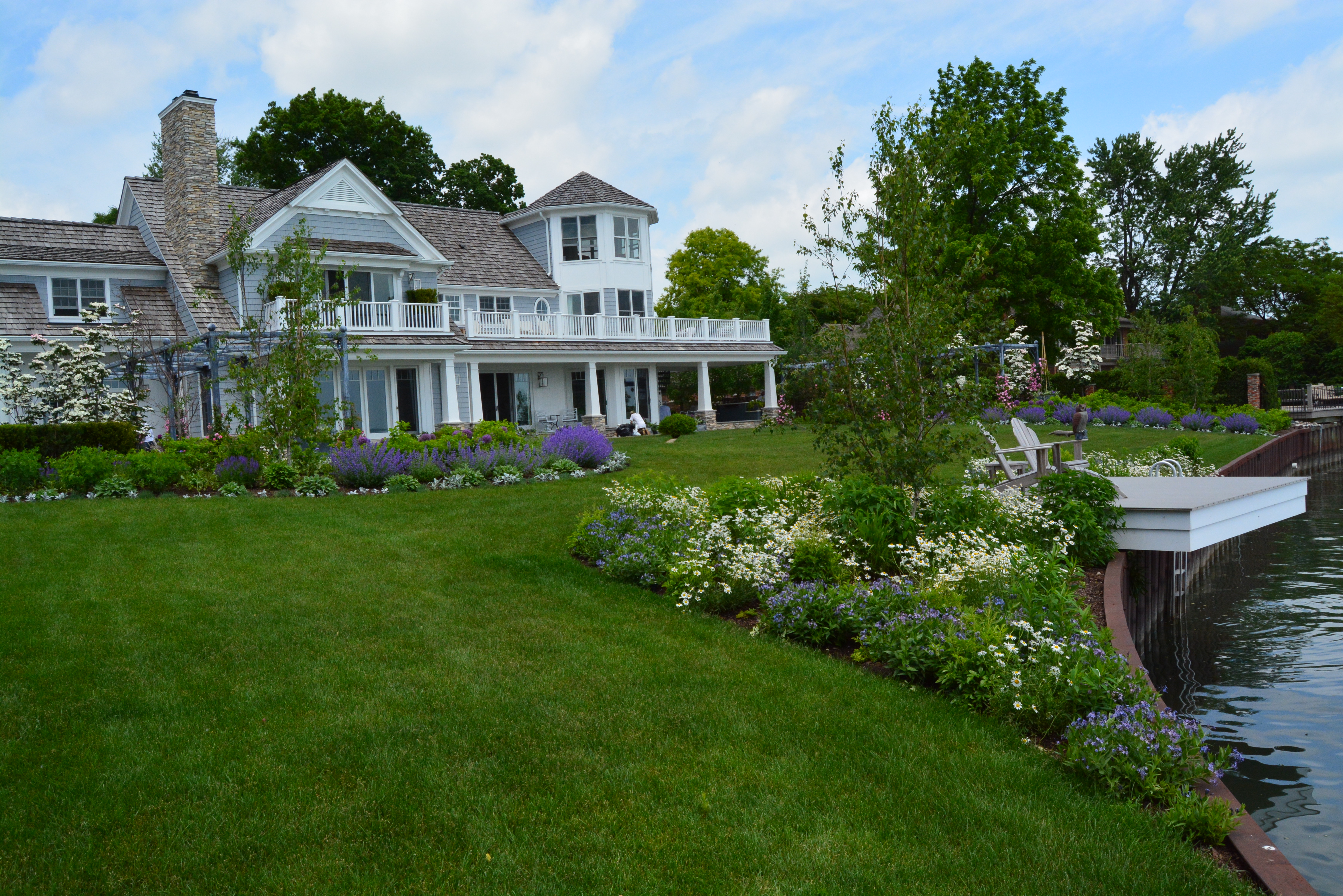
lakeside-landscaping.jpgThe lakeside has a pair of perennial gardens, endowed by patches of little lime hydrangeas, and some birch.
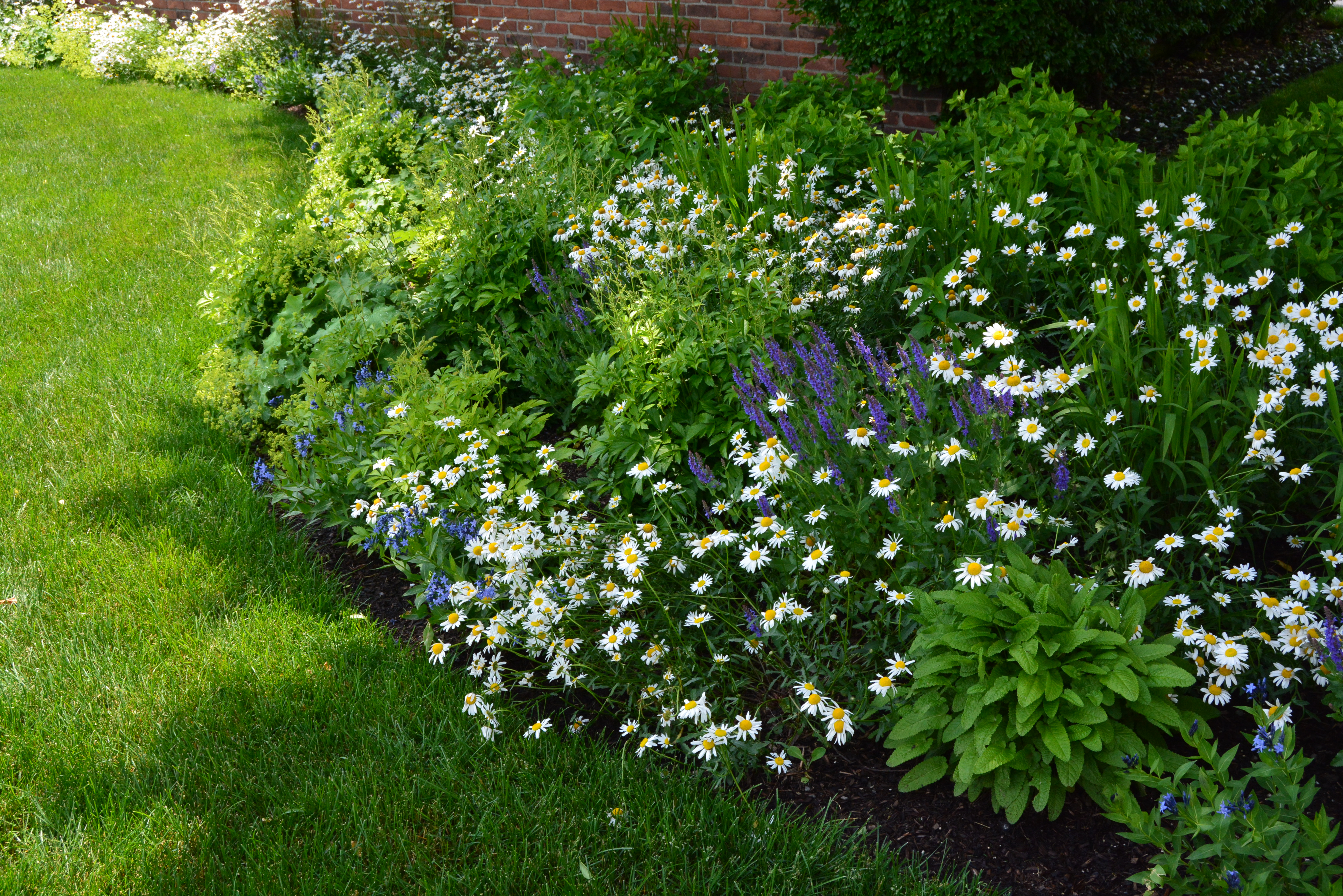
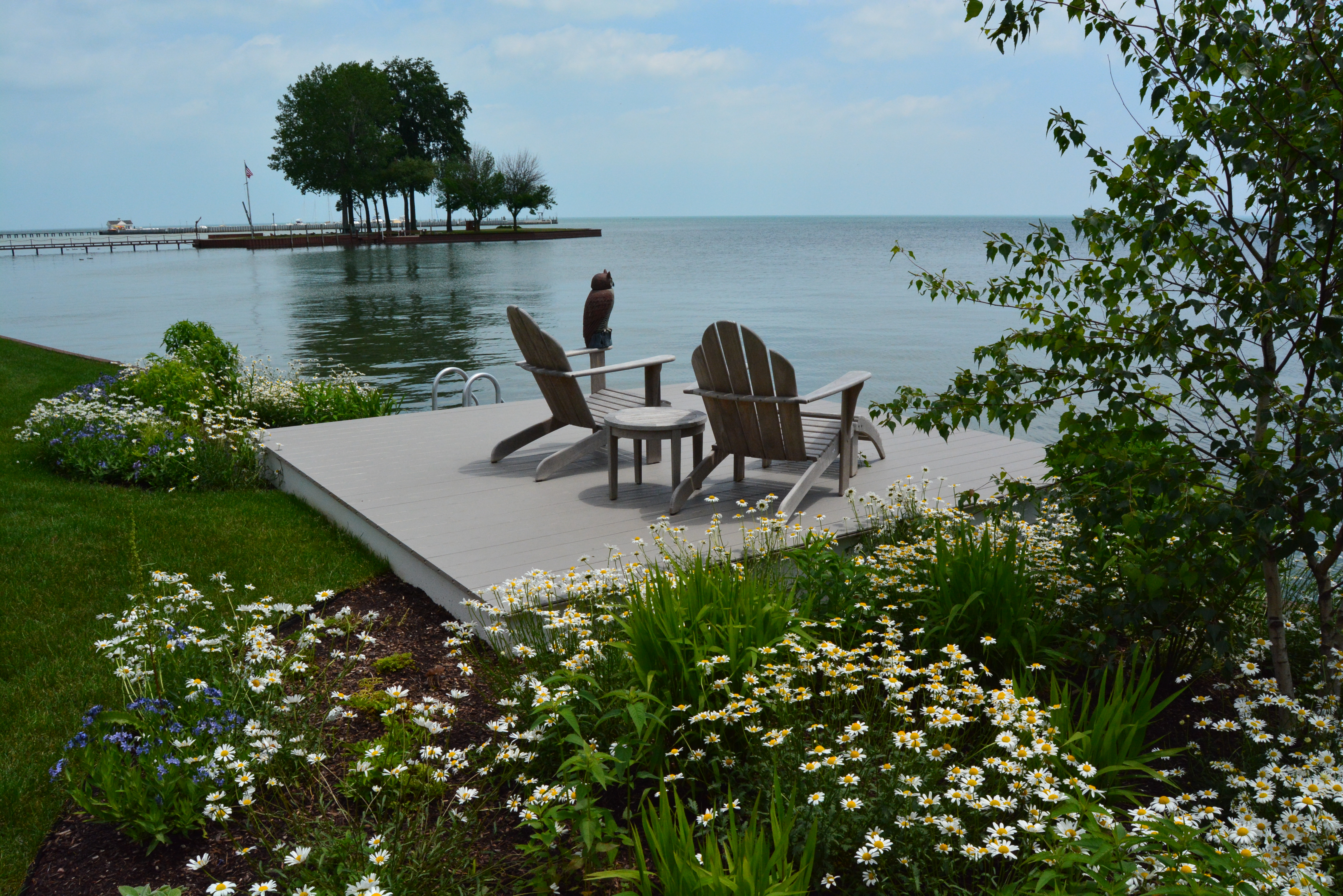
wet-meadow-garden.jpgNear the water, several meadow areas planted with chasmanthium latifolium grass, wild daisies, and amsonia Blue Ice.
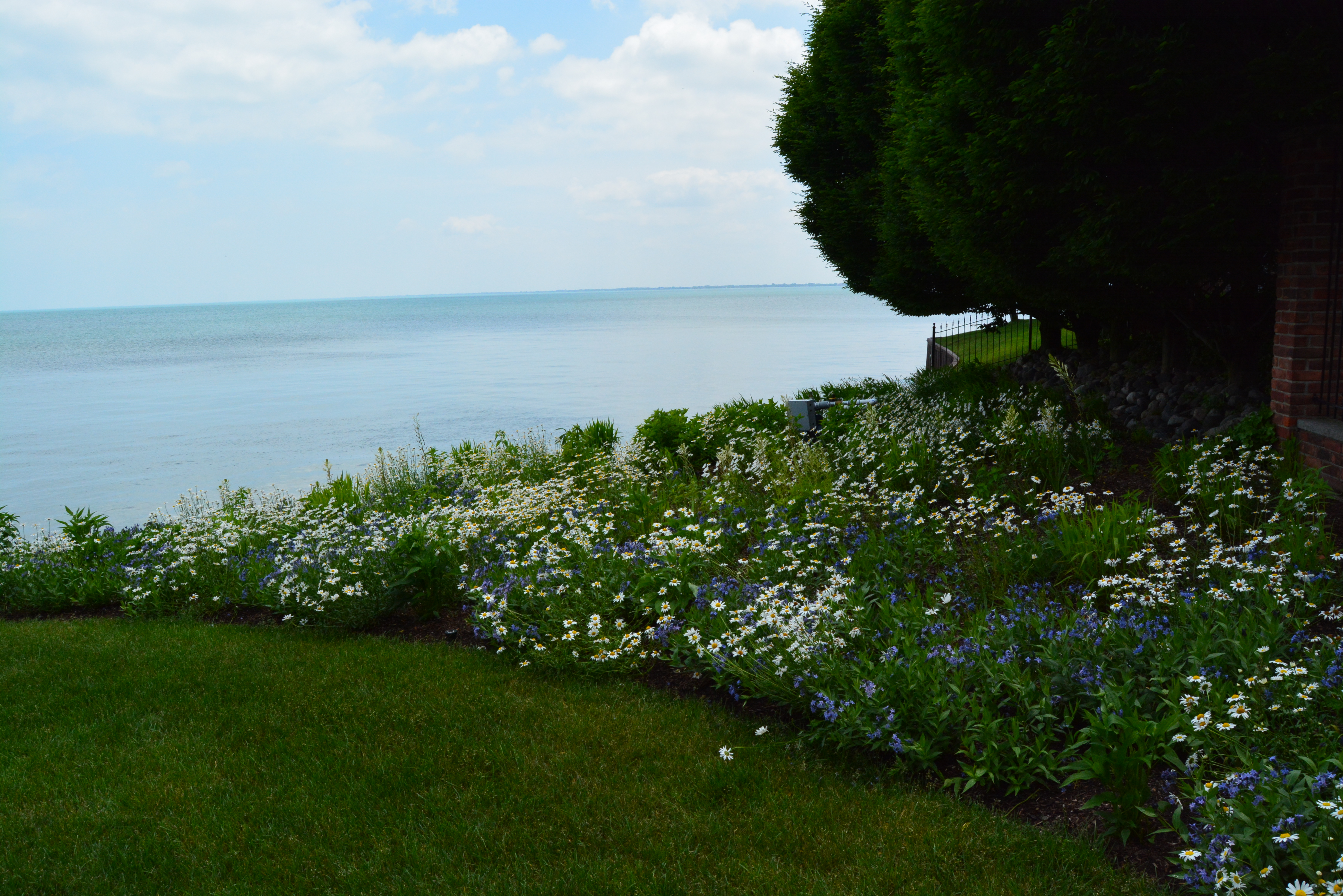
wet-meadow.jpgThe meadow garden

dock.jpgLater in the season, the meadow will feature monarda and asters.  Last fall, we planted lots of blue and white camassia-for this spring.  Some of them are still in bloom.
early-summer-garden.jpg
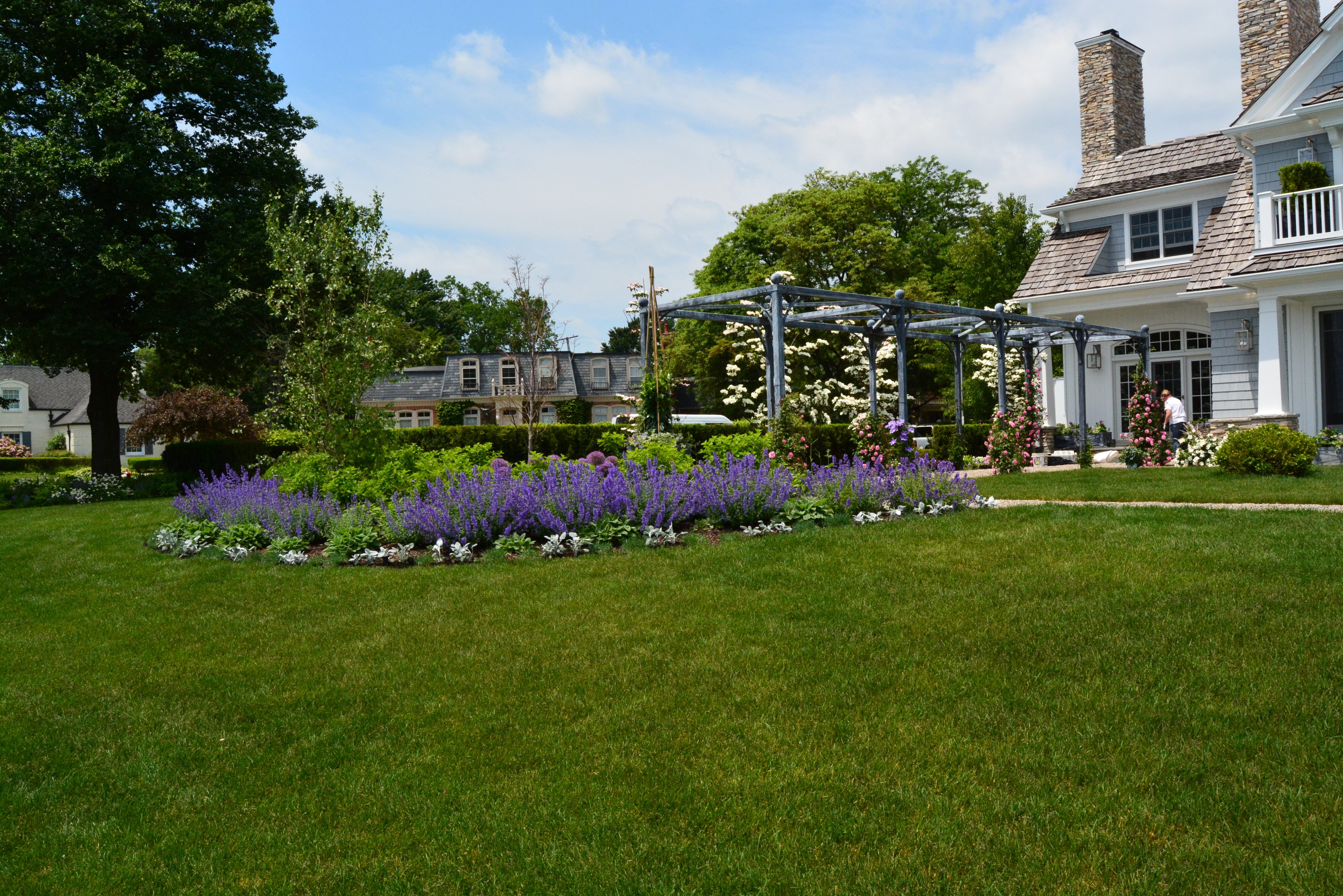
The more formal perennial gardens feature nepeta, stachys hummelo, and phlox.

perennial-garden.jpg)
The alliums-we could have planted many more.
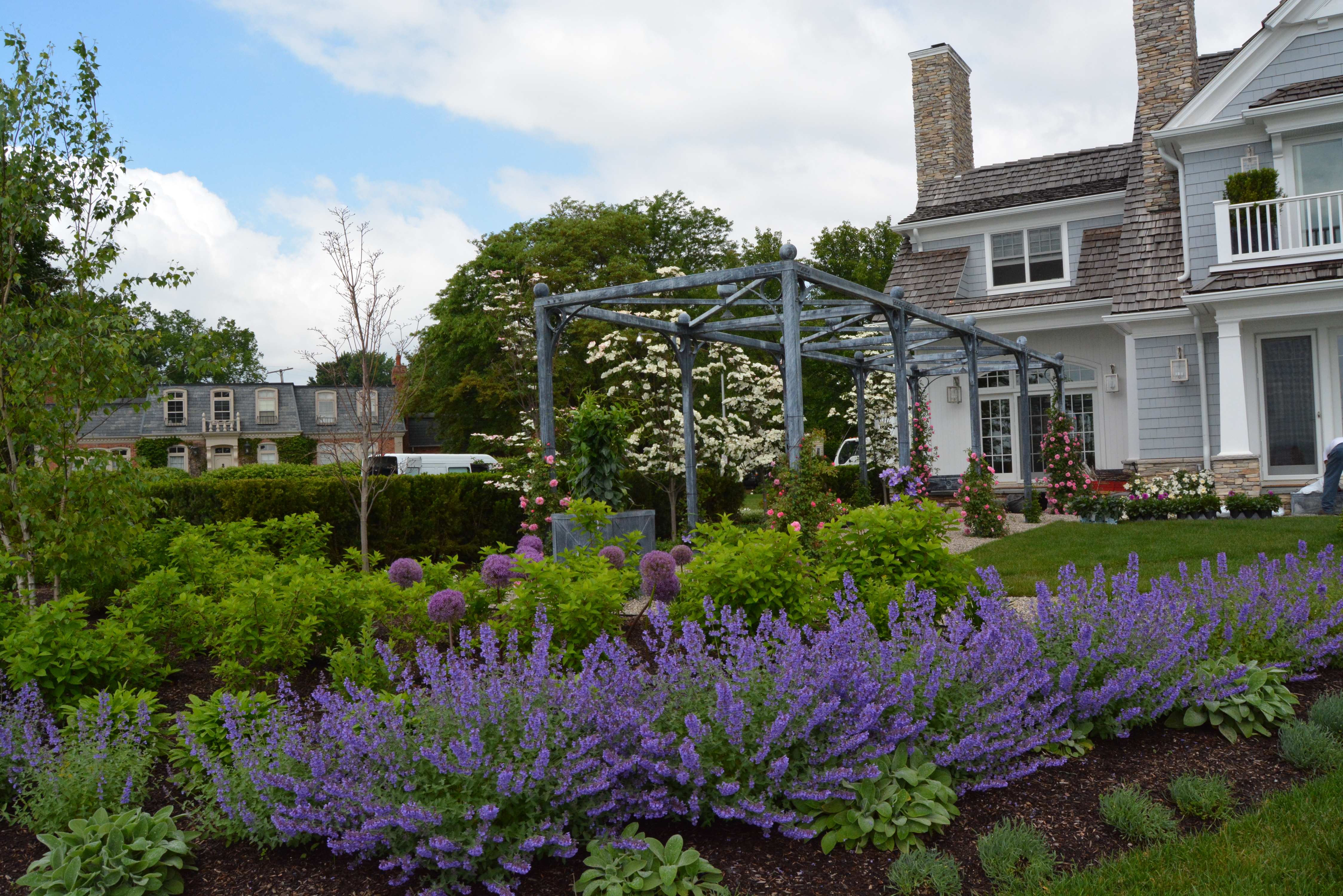
nepeta-blooming.jpga view of the garden

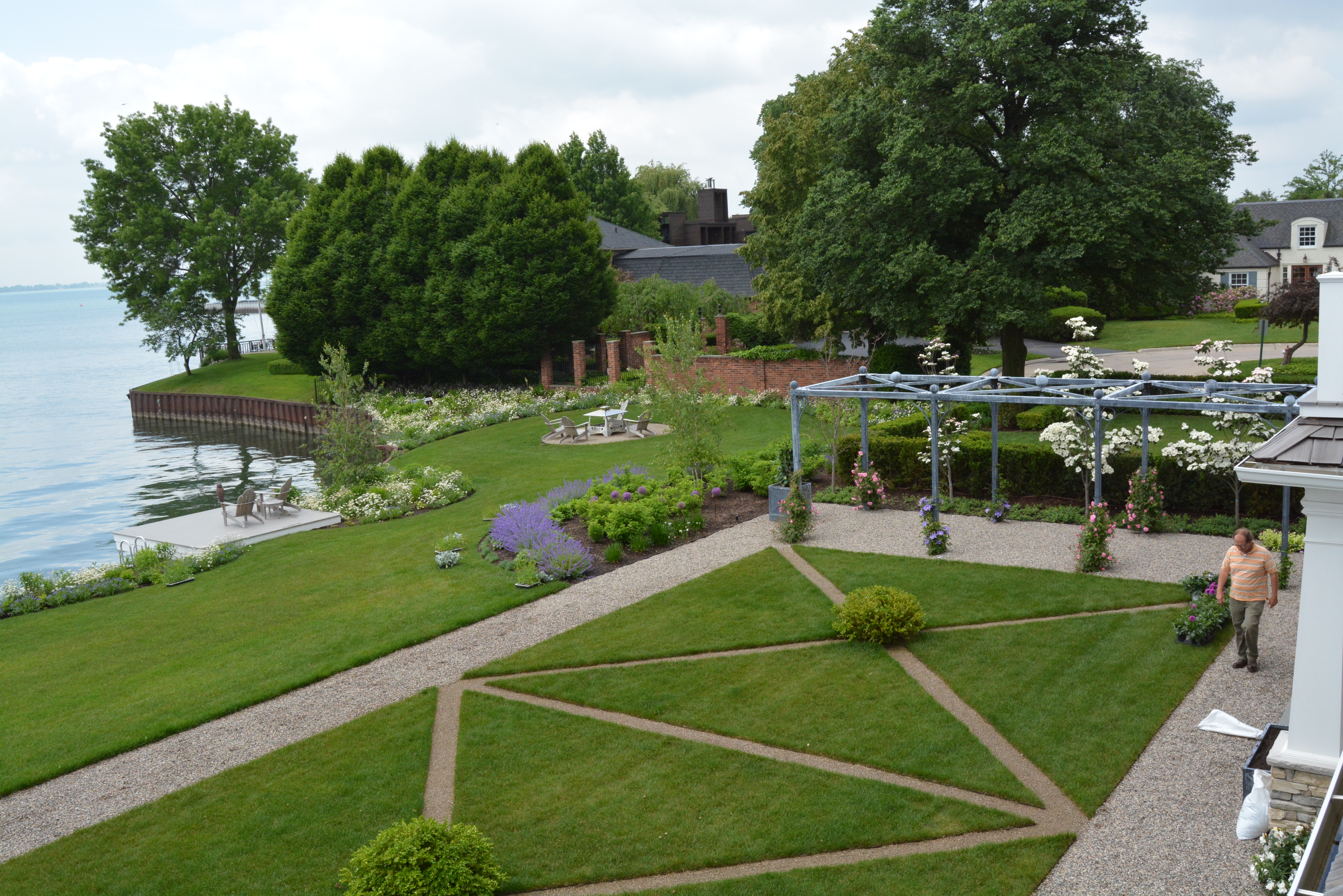
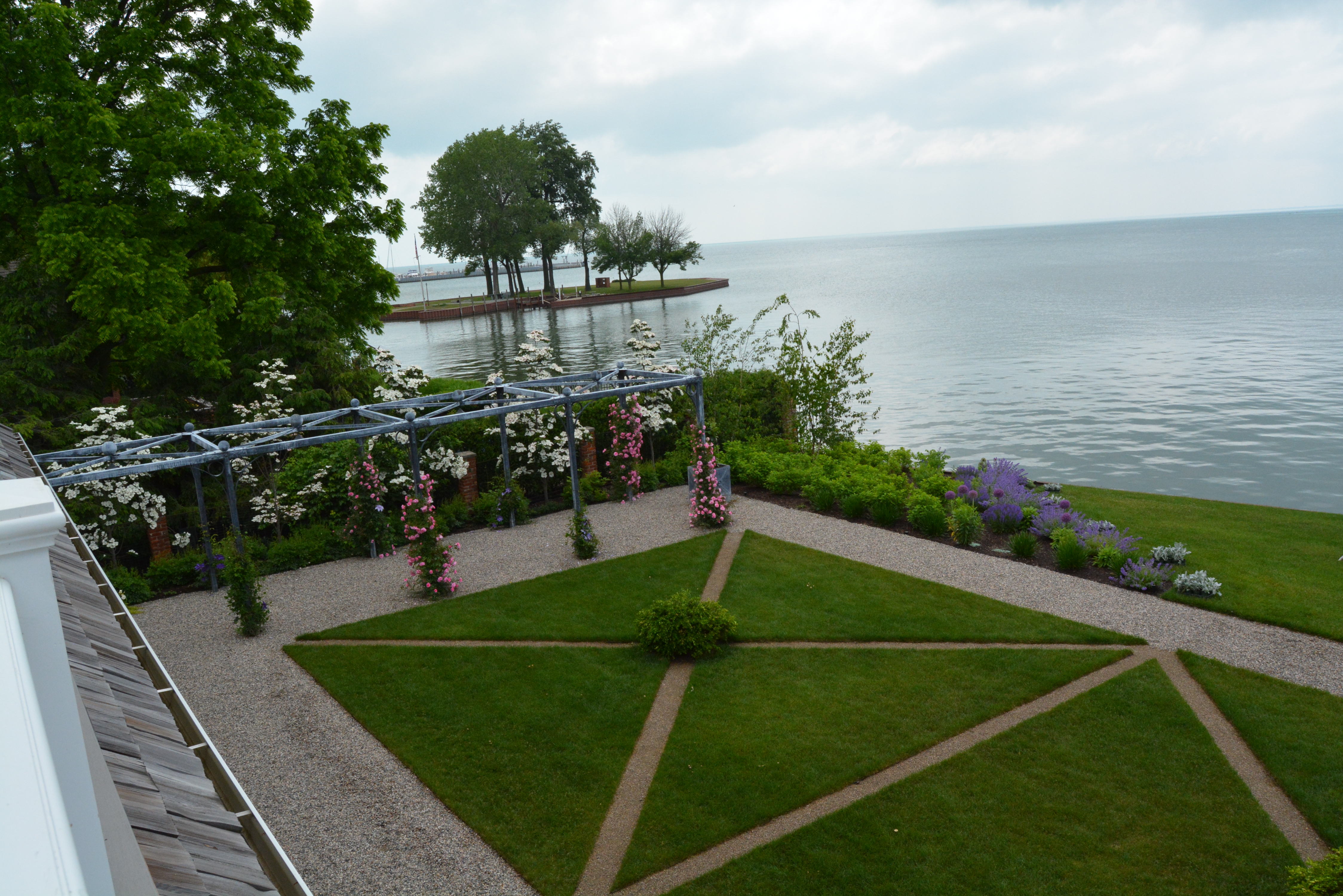
lakeside-landscape.jpgIt is easier to see the design of the lakeside landscape from the second floor balcony.  Very formal landscape elements contrast with less structured gardens.

meadow-garden-and-firepit.jpg
Even informal gardens benefit from beautifully generated curves.
lawn-plane.jpg
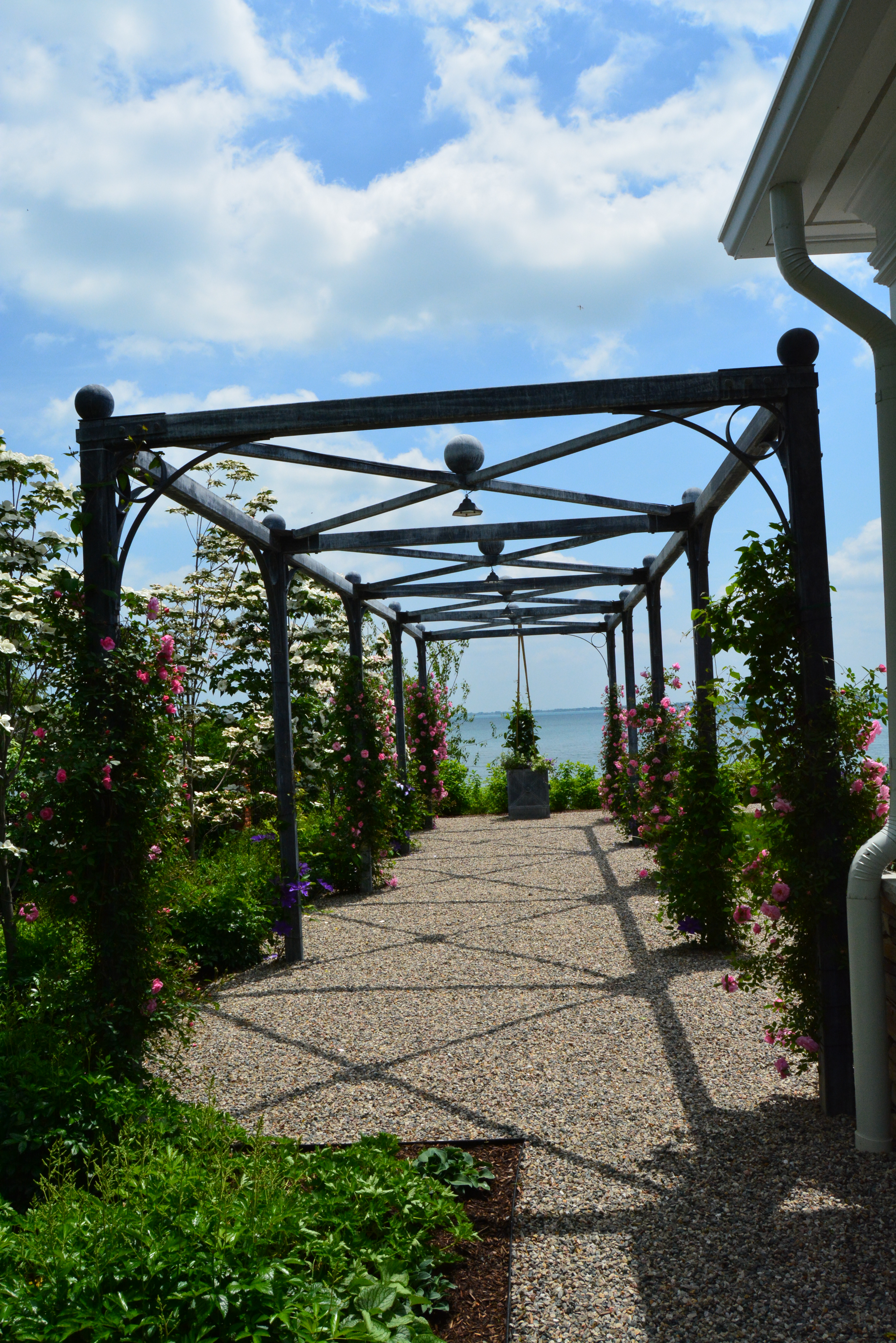
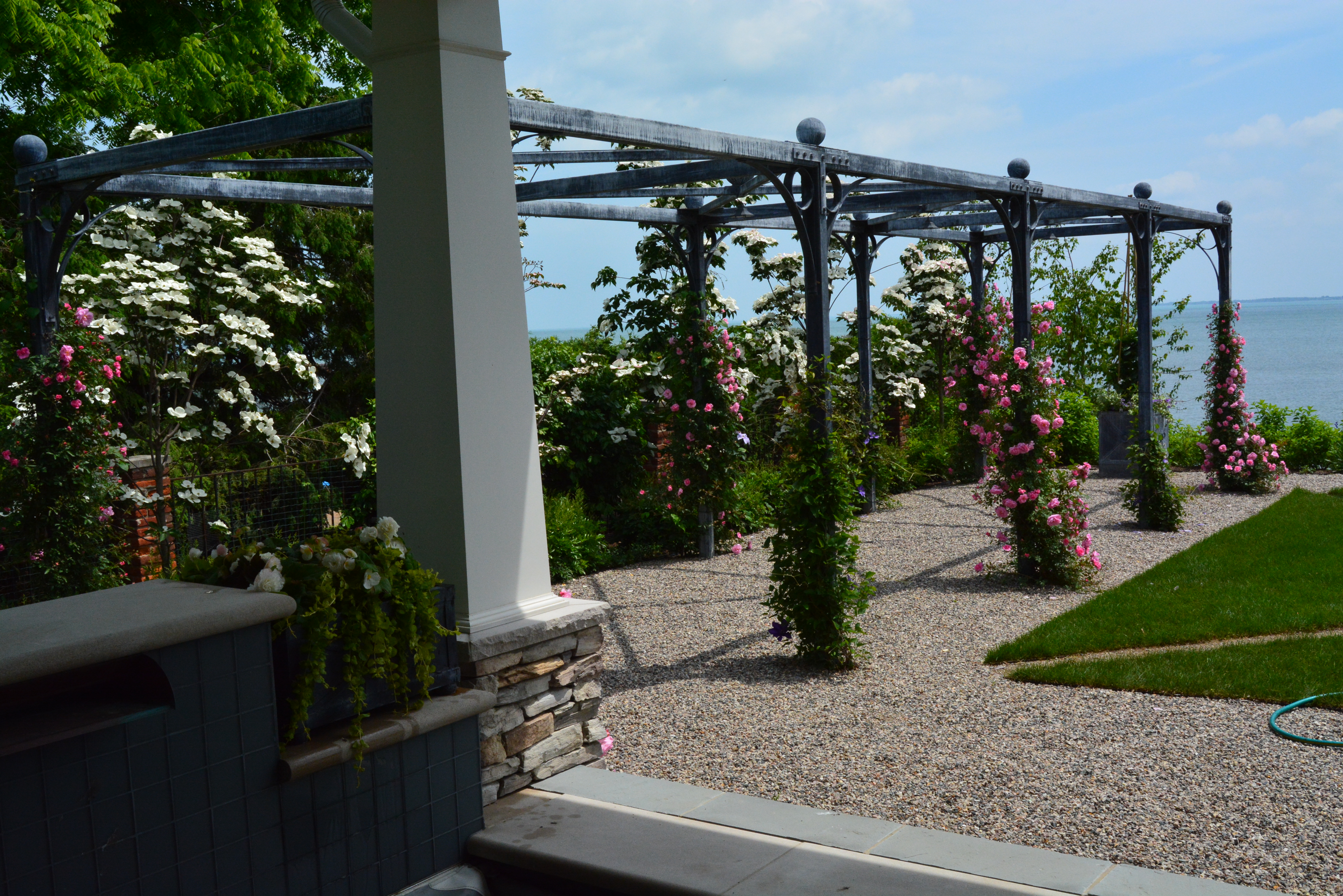
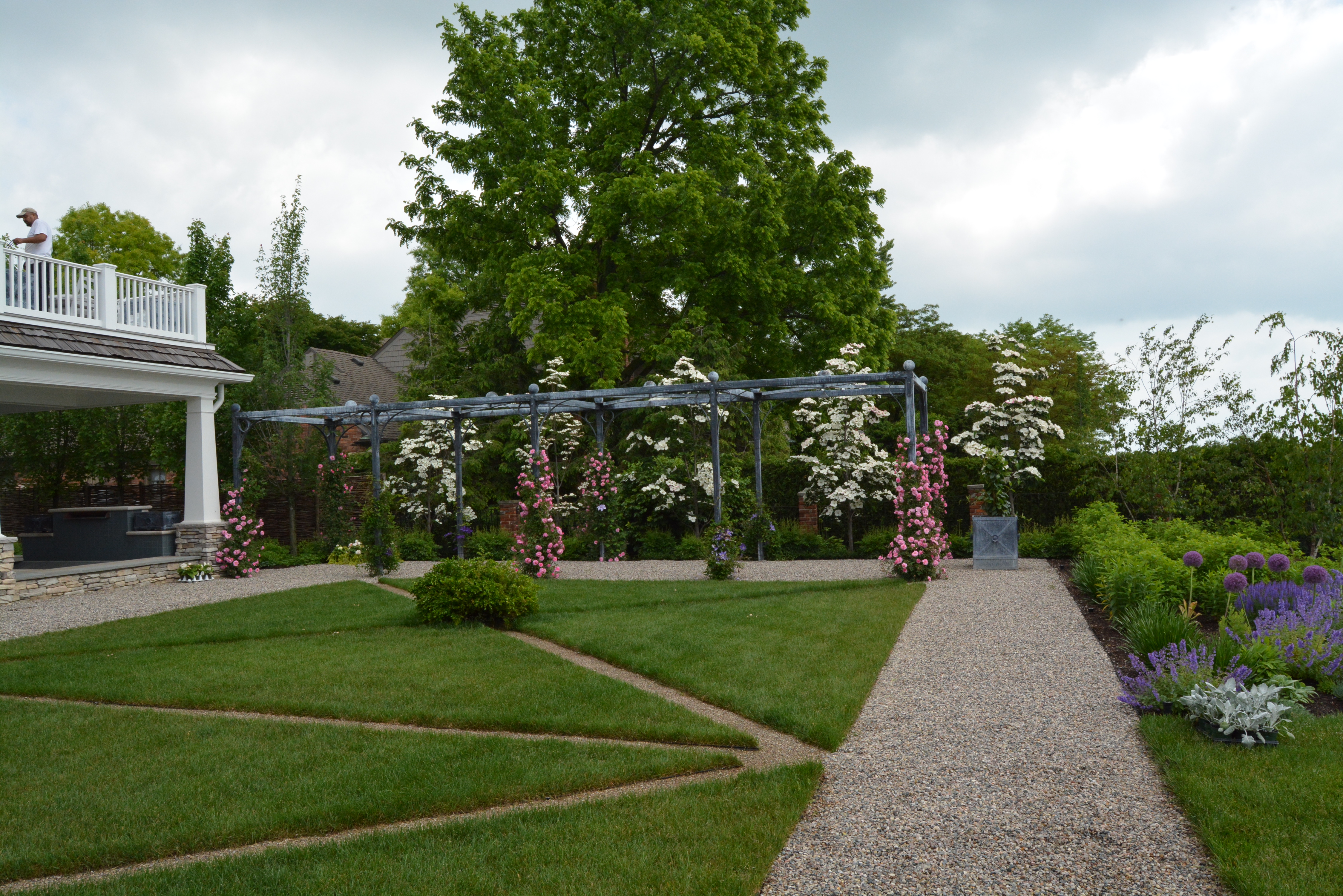
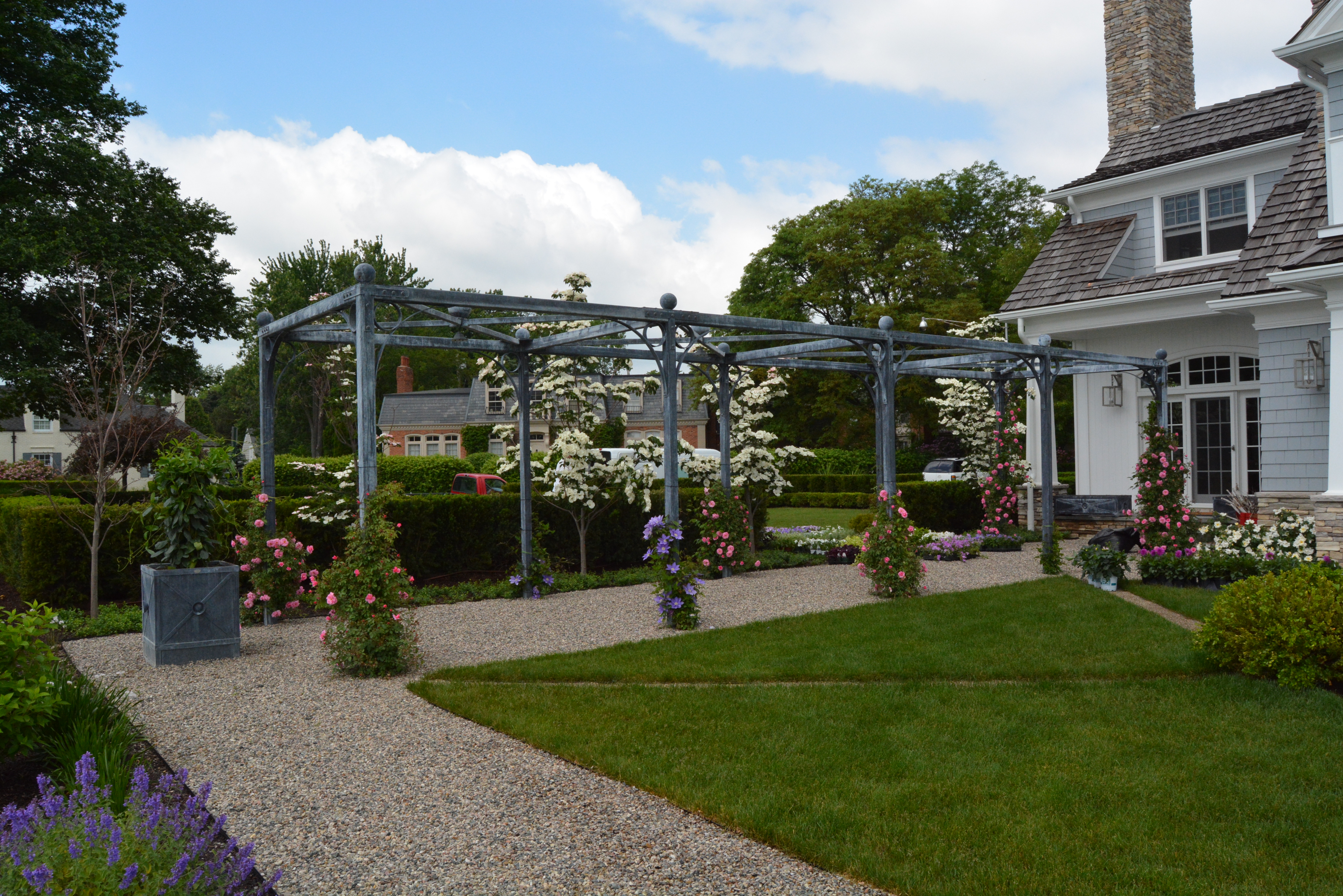
The roses and clematis on the pair of pergolas-they are obviously very happy.  I am astonished at how much growth they have put on-in just one year.  This willingness to settle down and grow makes me feel like the selection and siting of plants was correct.  And that the maintenance has been good.
pergola-garden.jpg
There is plenty of romance going on here.
roses-on-the-pergola.jpg
roses and clematis

steel-pergola.jpg
pergola garden

pergola-garden.jpg
The June garden is represented by large flowered clematis, and John Davis climbing roses.

pergola-garden.jpgVenus dogwoods blooming

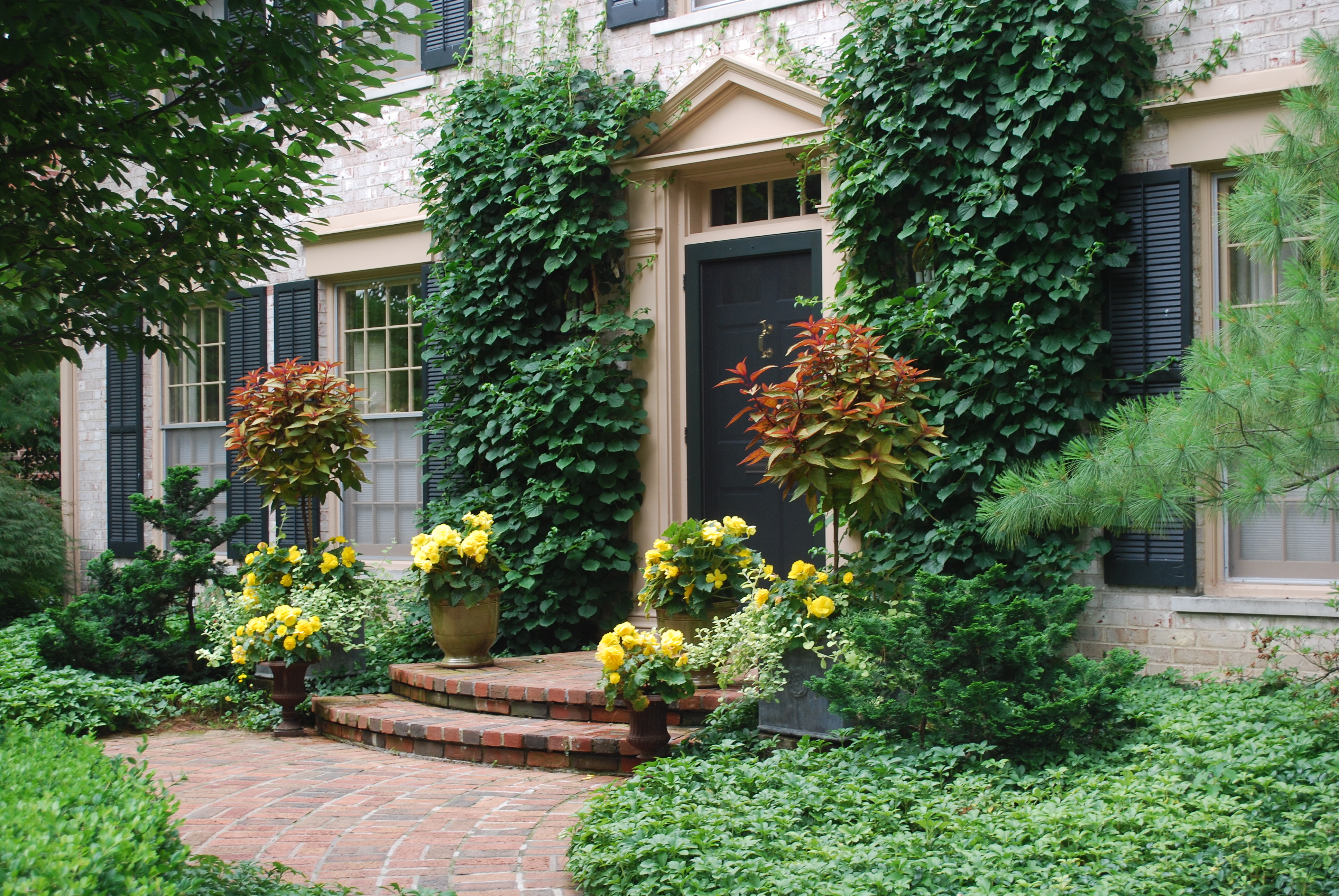
annual-planting.jpgcontainer planting at the front door

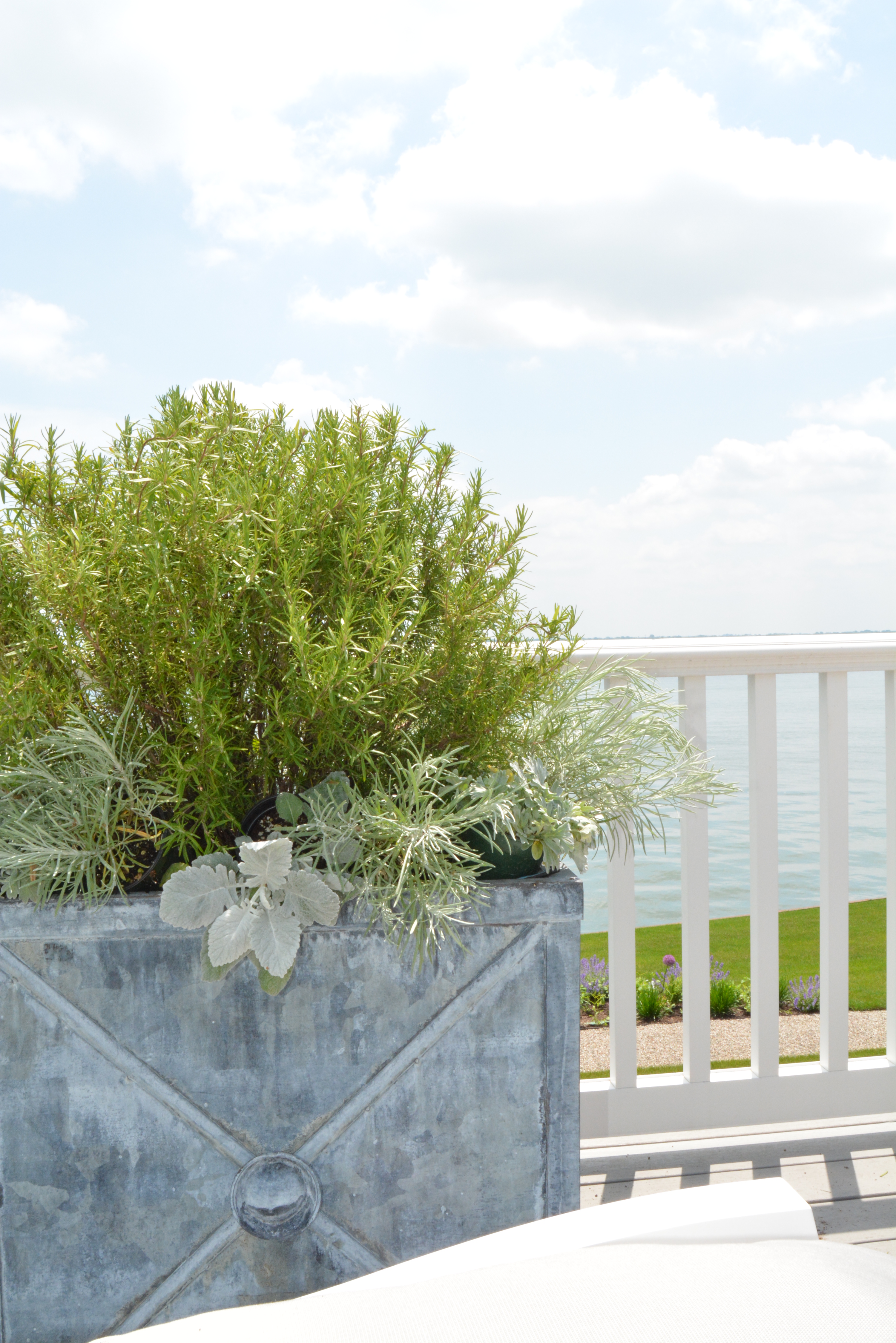
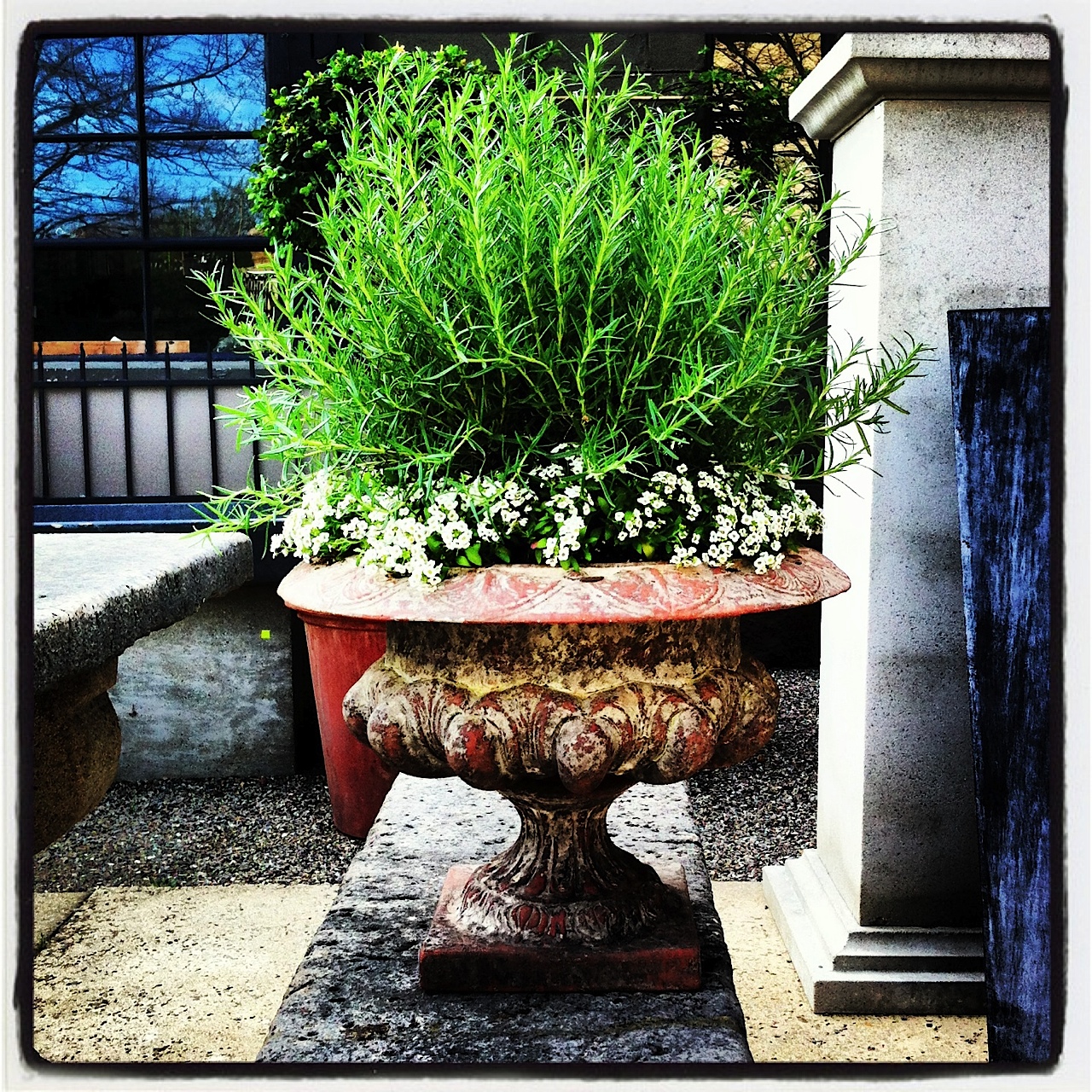
rosemary-on-the-roof-terrace.jpgrosemary, on the second floor terrace.

side-garden.jpgThis semi shady side garden is simple.  The privacy afforded the second floor terrace is courtesy of 14  6″ caliper Bowhall maples. All of them seem to be taking hold, just fine.  All in all, I am very happy about what I saw here today.  Planting the pots-my pleasure.
 

The Spring Season

rosemary-planter.jpgIt’s hard to pick a favorite, but the spring season has an aura like no other.  Any plant, whether it be a tree or summer flowering shrub, a bulb or a perennial, responds to nature’s call to break dormancy, and grow.  From the biggest maple to the smallest hepatica, the plants are growing.  There is a lot of commotion in the air.  The plants are not pacing themselves, as they do in the heat of the summer.  They are not slowing down, as in the fall.  Or asleep, as in winter.  It’s full speed ahead.  The atmosphere in the garden is fully charged, electrified by all that energy being brought to bear-all at once- on the landscape. Rob has been taking instagram pictures the past few days.  The options for filtering and electrifying color makes this spring container really feel like spring.

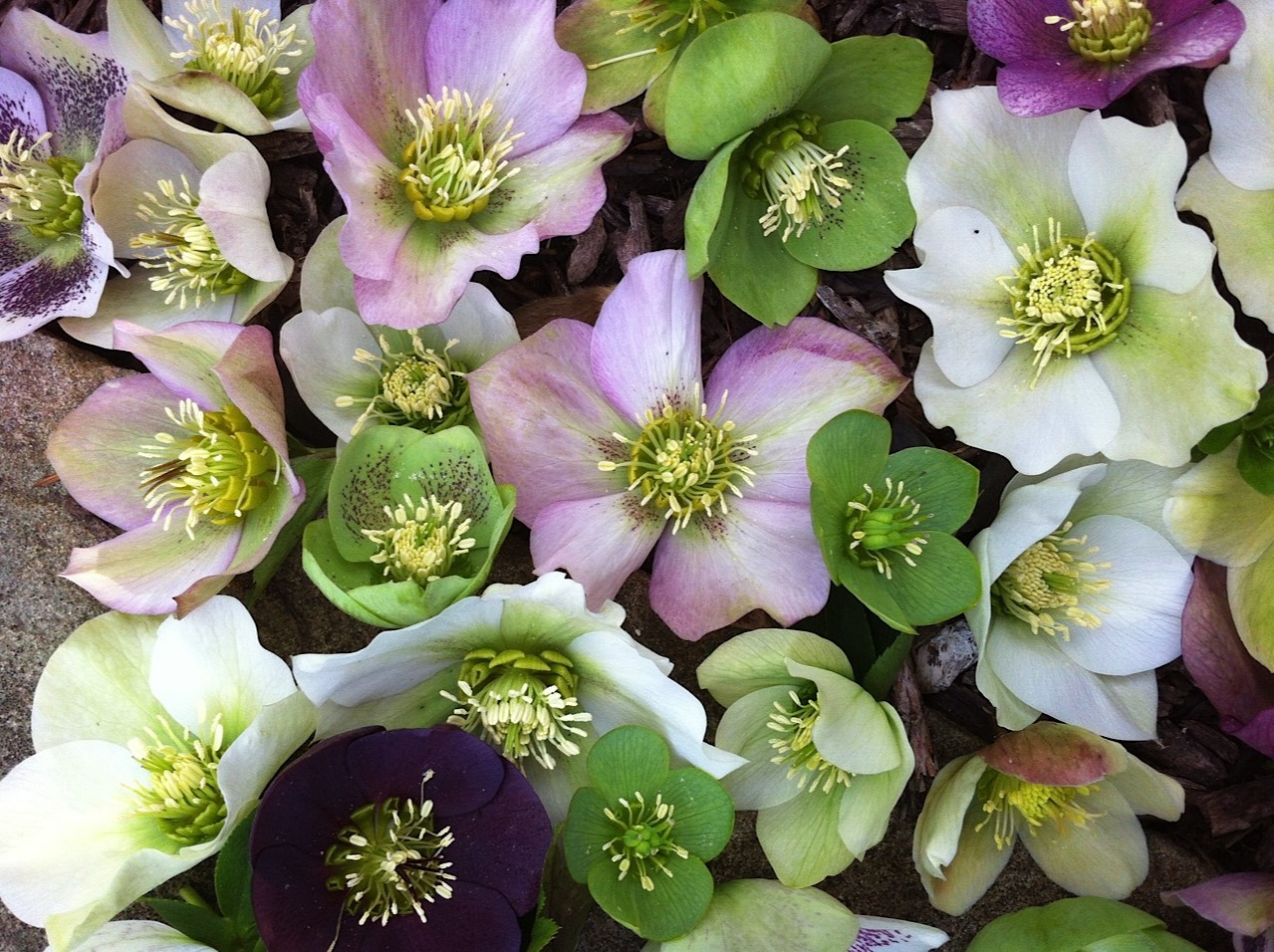
heritage-mix-hellebores.jpgEach of these hellebore flowers tells a story about my collection.  I have a fair number of plants.  I especially appreciate the form of the flowers.  But what I love about them the best is that they make a grand show in the spring.  The hellebores coming into bloom are like the bells of spring ringing out.  They are quite hardy.  Old clumps are large; the foliage is evergreen until mid winter for me.

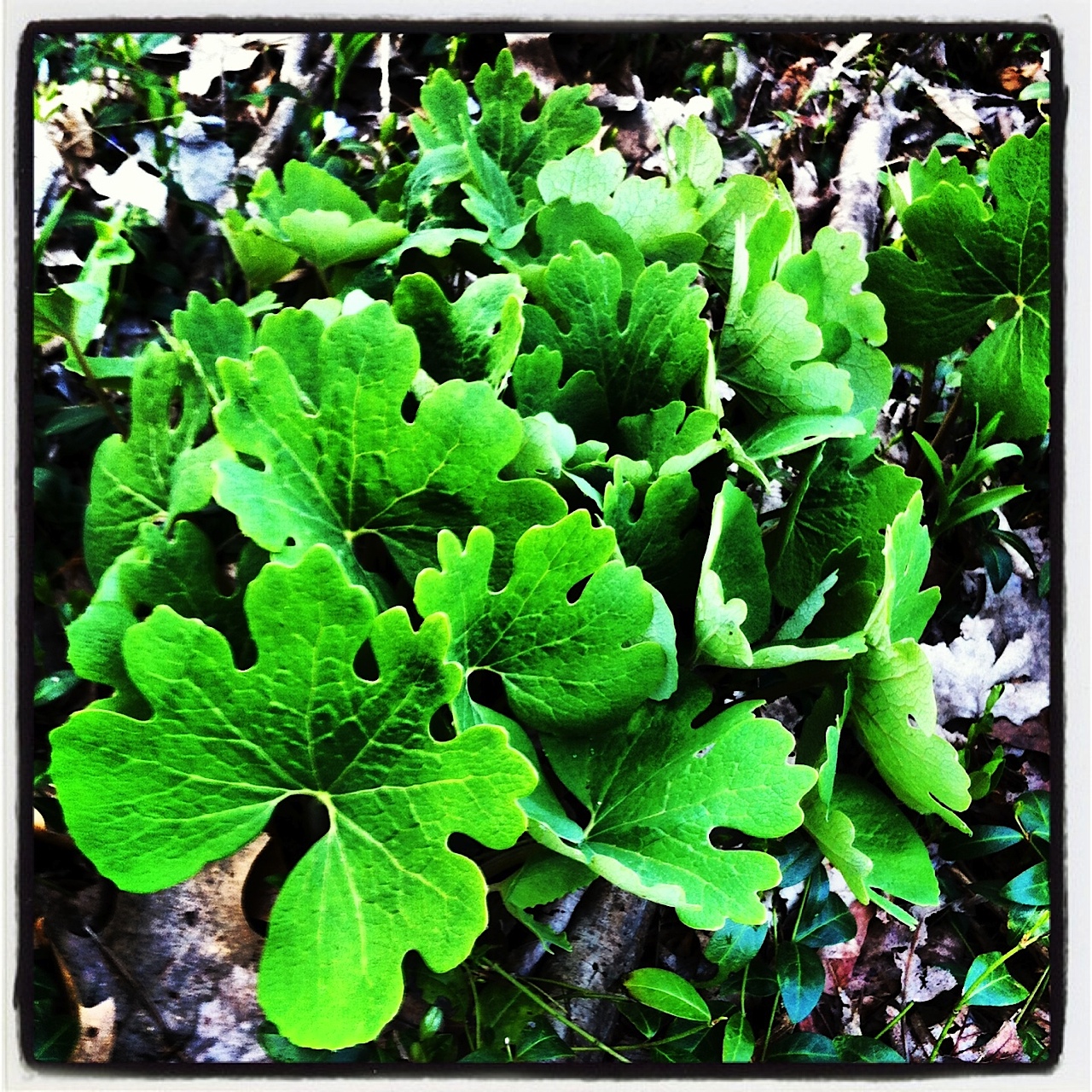
bloodrootSanguinaria, or bloodroot, is a native Michigan wildflower. A single leaf rises out of the ground, entirely curled around a single flower bud on its own leafless stalk. What a story this is, yes?  The single white flowers are open for a few days at best, before the petals drop.  If you do not check the emerging plant often in the spring, it could be you will miss the flower altogether.  The small leaves are strikingly shaped and veined. Soon after flowering, the plant will go dormant until the following year.  The spring season can be fraught with icy and windy weather.  Though it is the same length as all of the other seasons, spring seems to come and go in an instant.  The time of the bloodroot- hours.

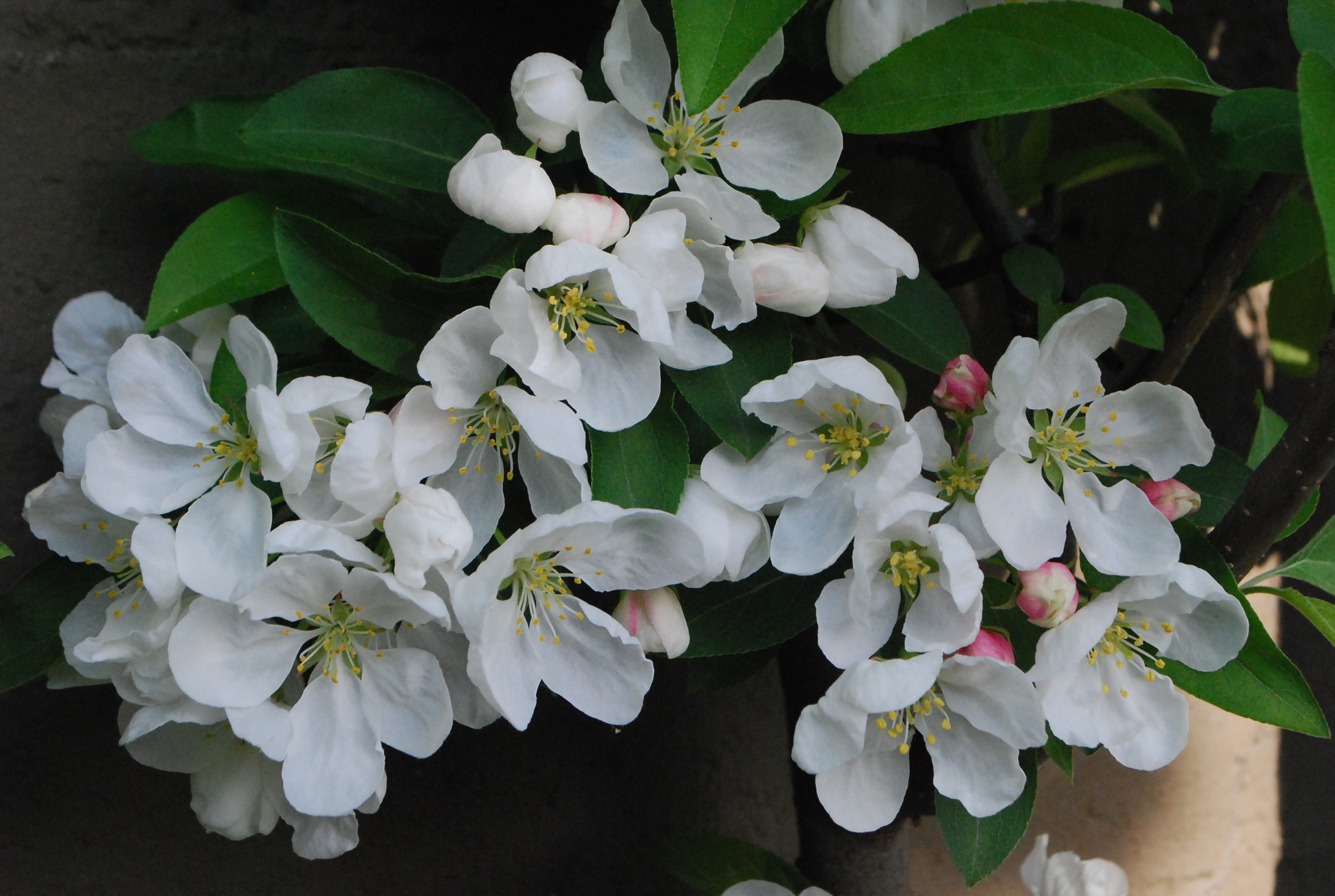
Donald-Wyman-crabapple.jpgThe crabapple “Donald Wyman” has bright pink buds, and a profusion of white flowers.  A crabapple blanketed in flowers is one of spring’s most breathtaking events.  In a cool spring season, they are a delight to the eye for a week or better.  The teardrop shaped petals-how do they manage to stay attached on a windy spring day?  Crabapples in bloom-glorious.

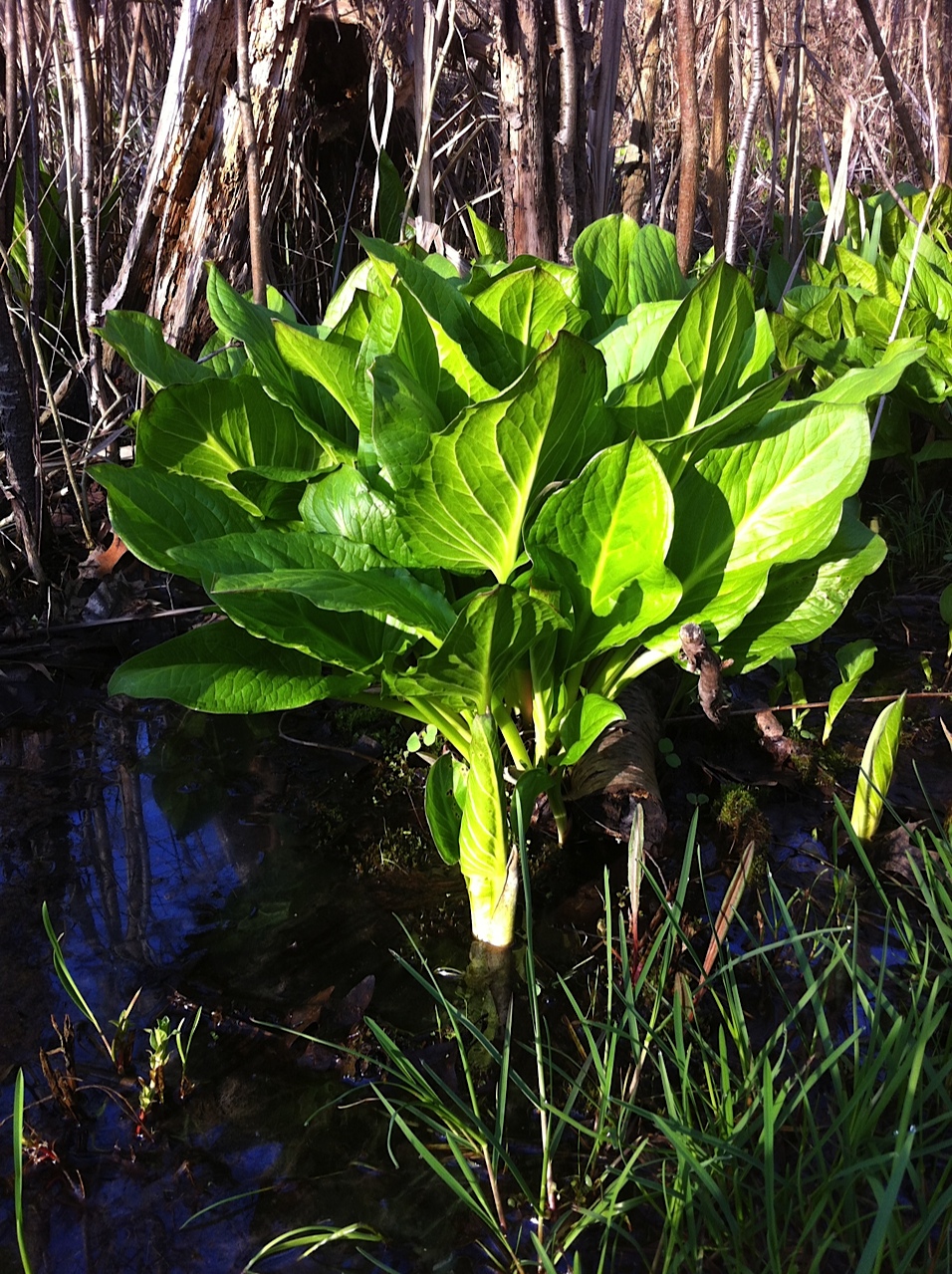
skunk-cabbage.jpgIn swampy areas, the skunk cabbage forms massive leafy clumps that look good enough to eat.  However, skunk cabbage is poisonous to mammals.  The plants will warn you.  The leaves when disturbed smell like rotten meat.  This spring beauty has luscious looks, but should be admired from afar.


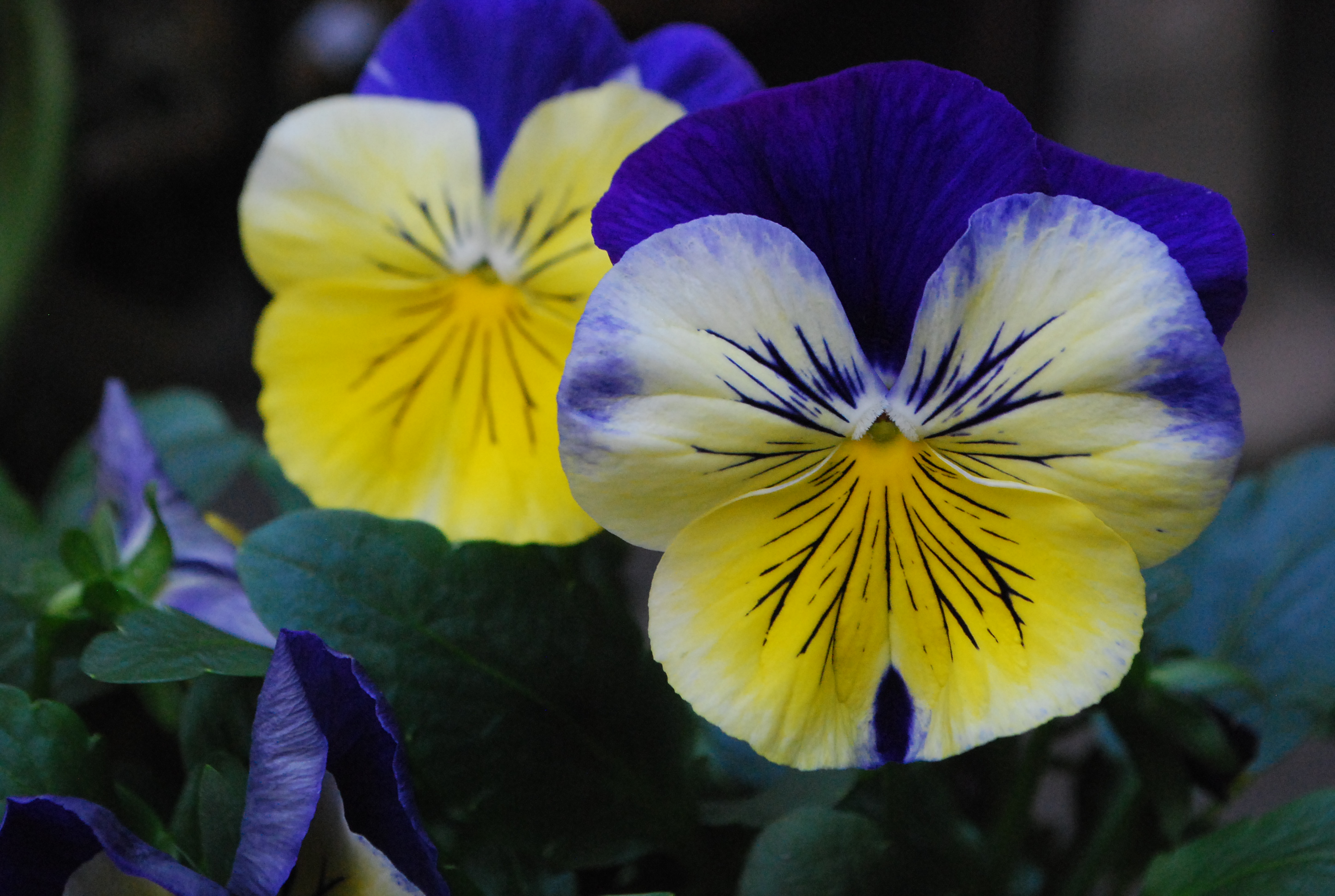
whiskered-pansy.jpgToday’s pansies and violas look much different than their more self effacing ancestors.  This particular bicolor pansy, with its distinctive dark whiskers, is saturated  with intense color. This is spring blooming at its most robust. Though the pansies and violas do not really pick up steam, and flower heavily until the beginning of June, each individual face announces the coming of spring in the most cheery way imaginable.  They are so unlike any other flower in form and color.  Fault me if you wish, but a pansy in August would be out of place.  They belong to spring.

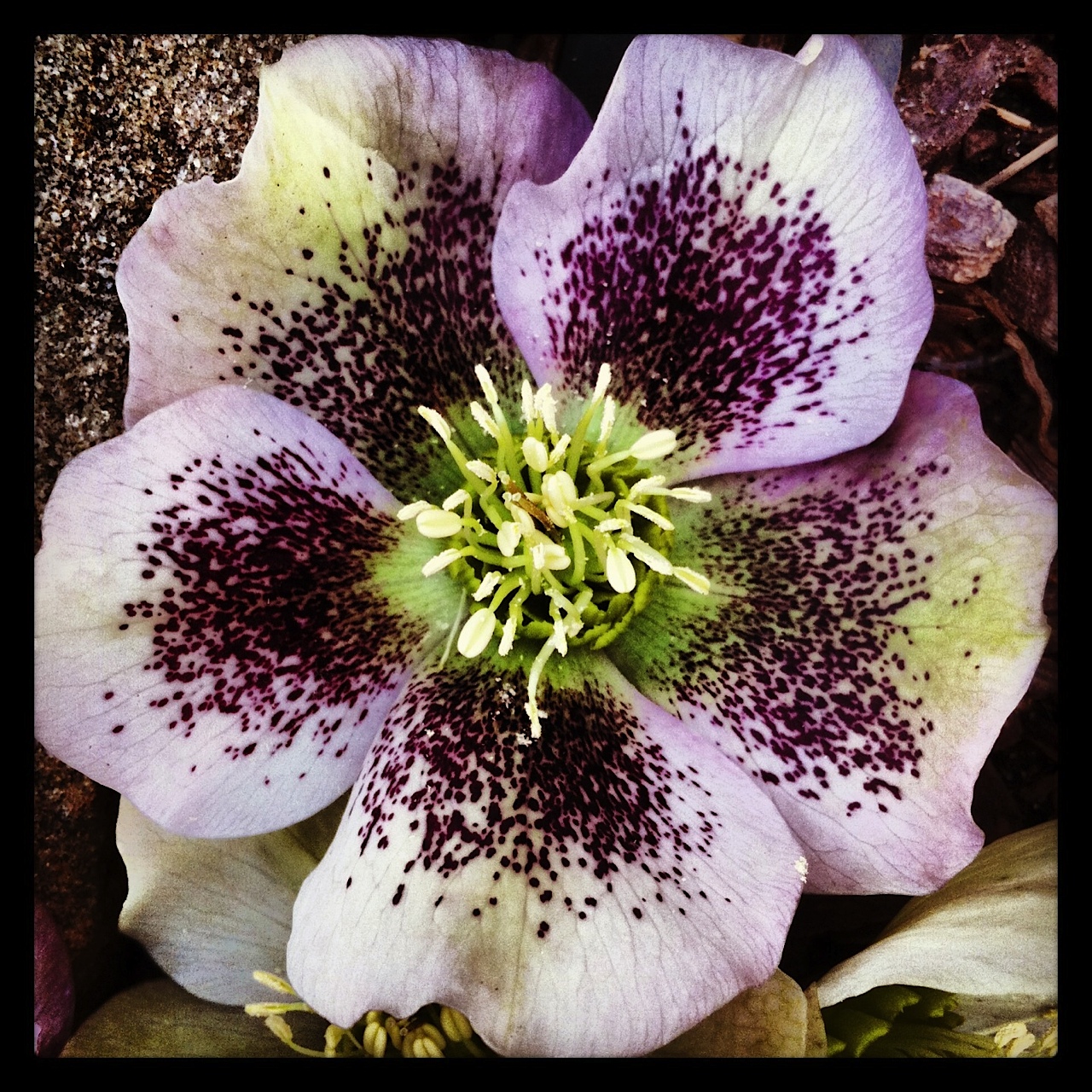
hellebore-bloom.jpgRob’s instagram photograph of a dark speckled hellebore proves that spring can also be moody and sultry . Rainy and chilly. It also makes the point loud and clear that the atmosphere of a landscape can be altered by light and color-to spectacular effect.  Creating a mood, or an atmosphere in a garden is one of the most difficult aspects of landscape design.  It cannot be taught, nor can it be forced.  It can be aspired to.  Spring is that season that every gardener can turn loose of the past, and start fresh.  The sap rises in the plants and the gardeners alike.

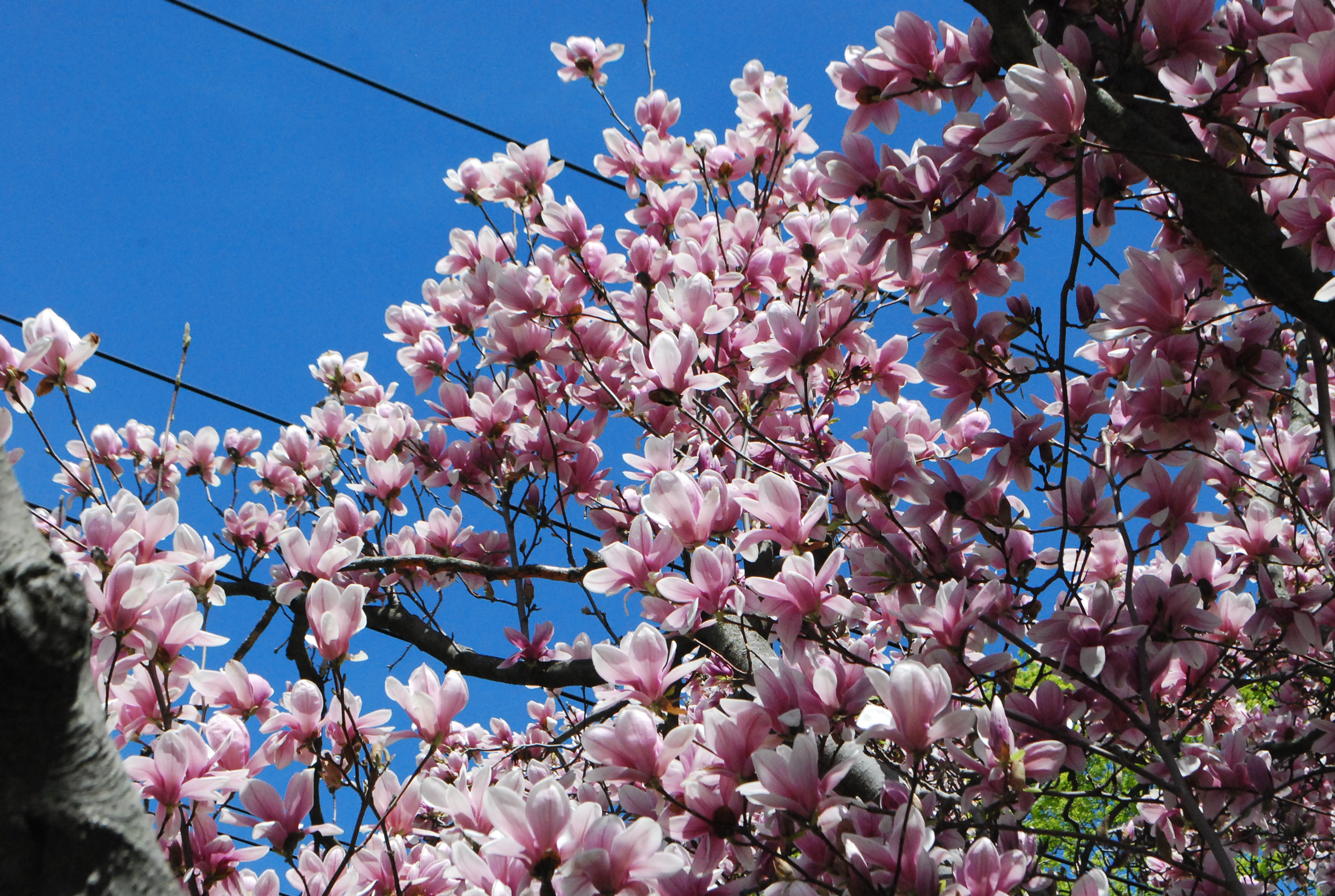
saucer-magnolia.jpgThe saucer magnolia features very large flowers of great substance.  The queen bee/Sarah Bernhardt of the spring flowering trees, this magnolia likes cool spring temperatures, but not too cool.  Warm spring temperatures, but not too warm.  A good bloom demands next to perfect conditions as if it were a God given right.  It seems like every Michigan spring features some weather element or another which causes all of the petals to fall to the ground in a heap.  A thick mulch of magnolia petals on the ground-that would be our spring.


Fenced

2008 Panaretos Spring 4-24-08 (3)
A fence is a garden structure that is easy to identify.  A fence is a vertical element in a garden that separates one space from another.  Twin fences with soil piled in between is an effective noise barrier.  How so?  Only soil absorbs and blocks sound.  Plants and single layer fences do nothing to mitigate sound.  An impossibly tall berm at the road is a fence of a green sort.  It separates a personal and quiet space from a noisy and public space by filtering out the sound.  Many communities permit the installation of what is known as a privacy fence.  No matter the material, any fence of a substantial height (in this case, 6′ tall) provides a physical separation from adjacent properties.  Those people who live in urban areas value their privacy.  A fence is a simple structure that takes up very little space-in the interest of establishing a boundary.  Your yard and my yard have a barrier in between that allows each of us to live our private lives.
April 25 2013 (15)
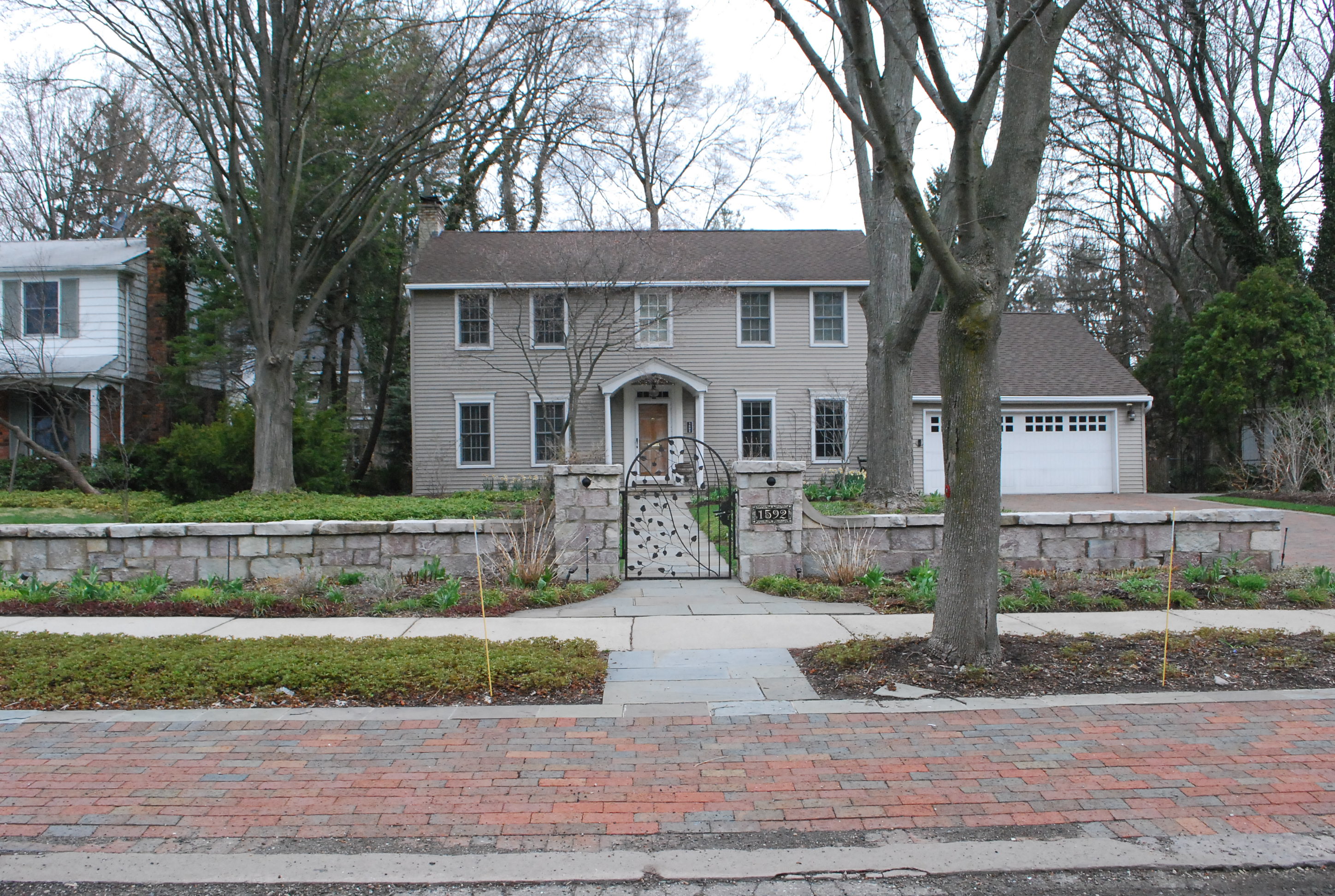
Those people who live on vast ranges of land in Texas value a separation that keeps their cattle from wandering off their property.  Electrical substations fence their properties to keep unsuspecting others from injuring themselves.  The Berlin wall was an elaborate fence which came to symbolize a barrier to freedom.  A firewall on my computer-a digital fence constructed to protect my computer from harm. A fence is a person who is a middleman between two parties.  The fence is a barrier, or a facilitator, depending on the circumstances. Other fences are purely decorative in how they define a space.  A low wall, should it be long enough, qualifies as a fence. This wall/fence does not provide privacy.  It does not entirely enclose a space.  It makes a beautiful and very friendly statement about the separation between the public street and the private home.

April 25 2013 (16)
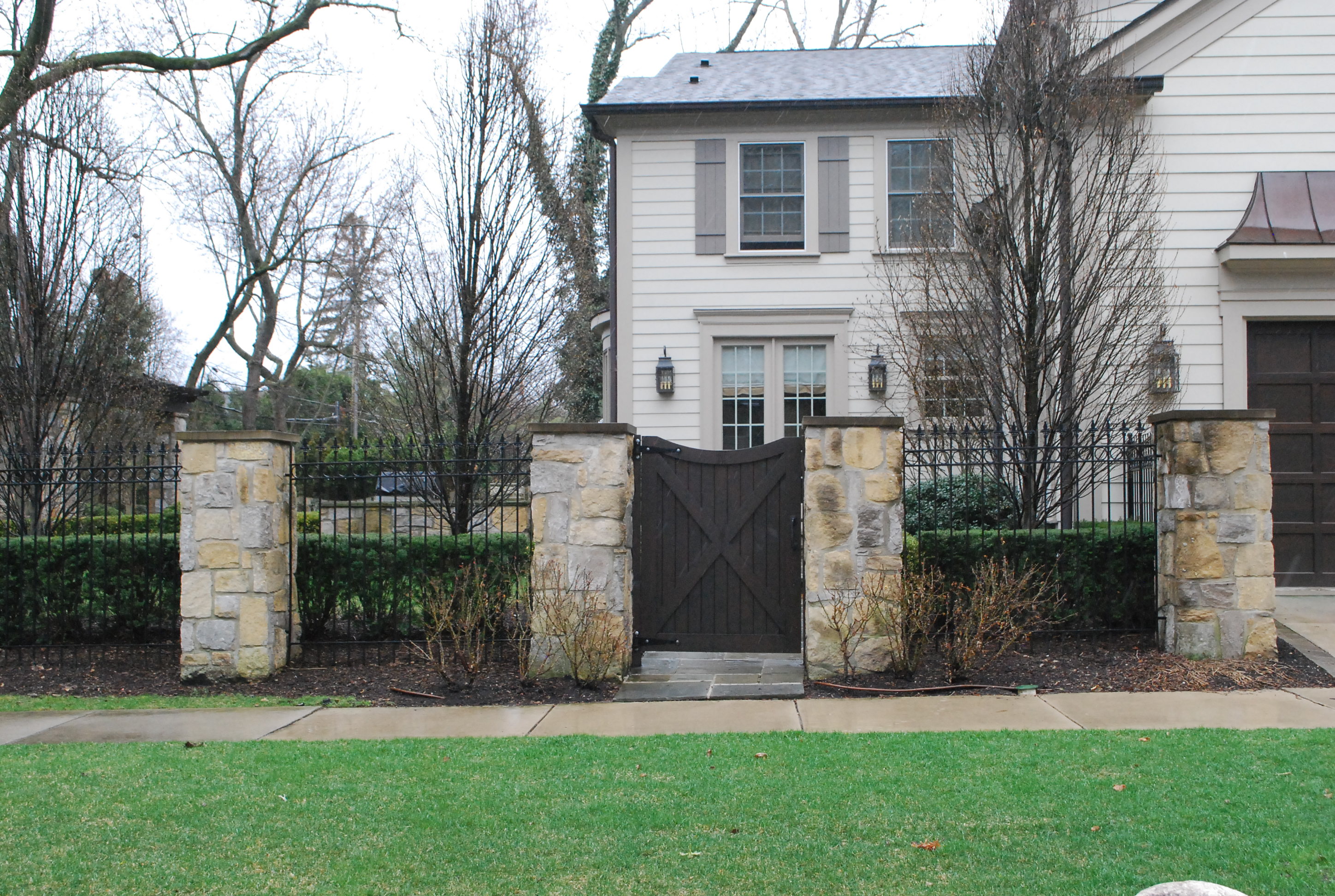
Iron fences designate a separation, but permit lots of light, and a view through.  These pillars are massive, and the gate is solid and painted a dark color.  The black iron fence can barely be seen, but for the hedge of yews planted on the inside.  Why so much discussion about this particular fence?  The choice of materials, the color, and the size make a visual statement about privacy.
April 25 2013 (18)
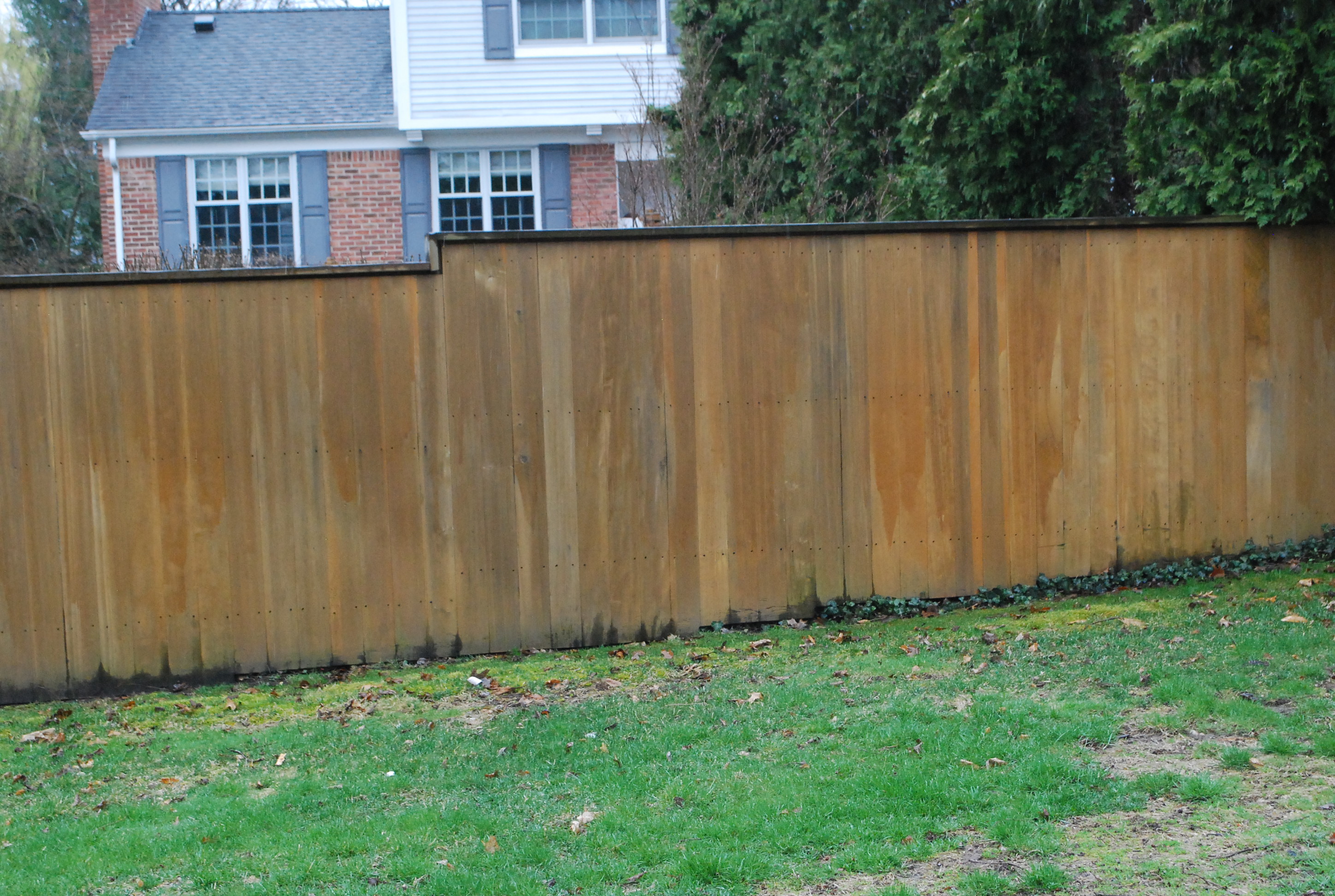
Like the home in the previous picture, this property is a corner property.  Other homes on the block have private back yards courtesy of the house itself. This fence is solid from top to bottom, and has a very contemporary feeling.  Make sure that wood fence is installed slightly elevated from the ground plane. A garden fence made of wood needs to shed water and dry quickly.  A fence in constant contact with the soil will deteriorate much sooner than it needs to.
balcony railing

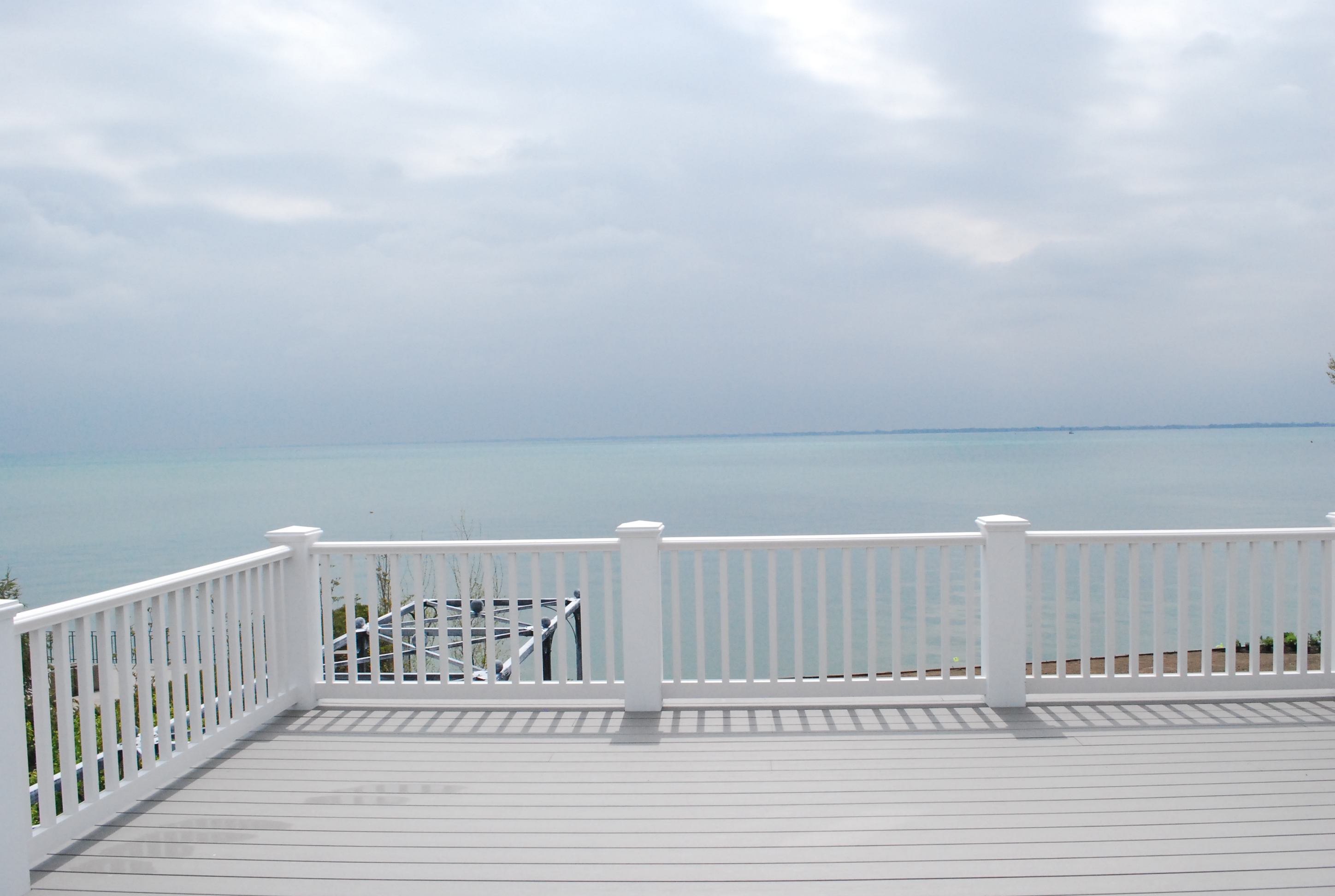
This second floor balcony terrace has a fence which is primarily about safety.  White or light colored fences usually stand out architecturally, but this fence has a landscape of water and sky behind it.  This white fence in a green landscape would make a much more emphatic architectural statement.

cedar fence

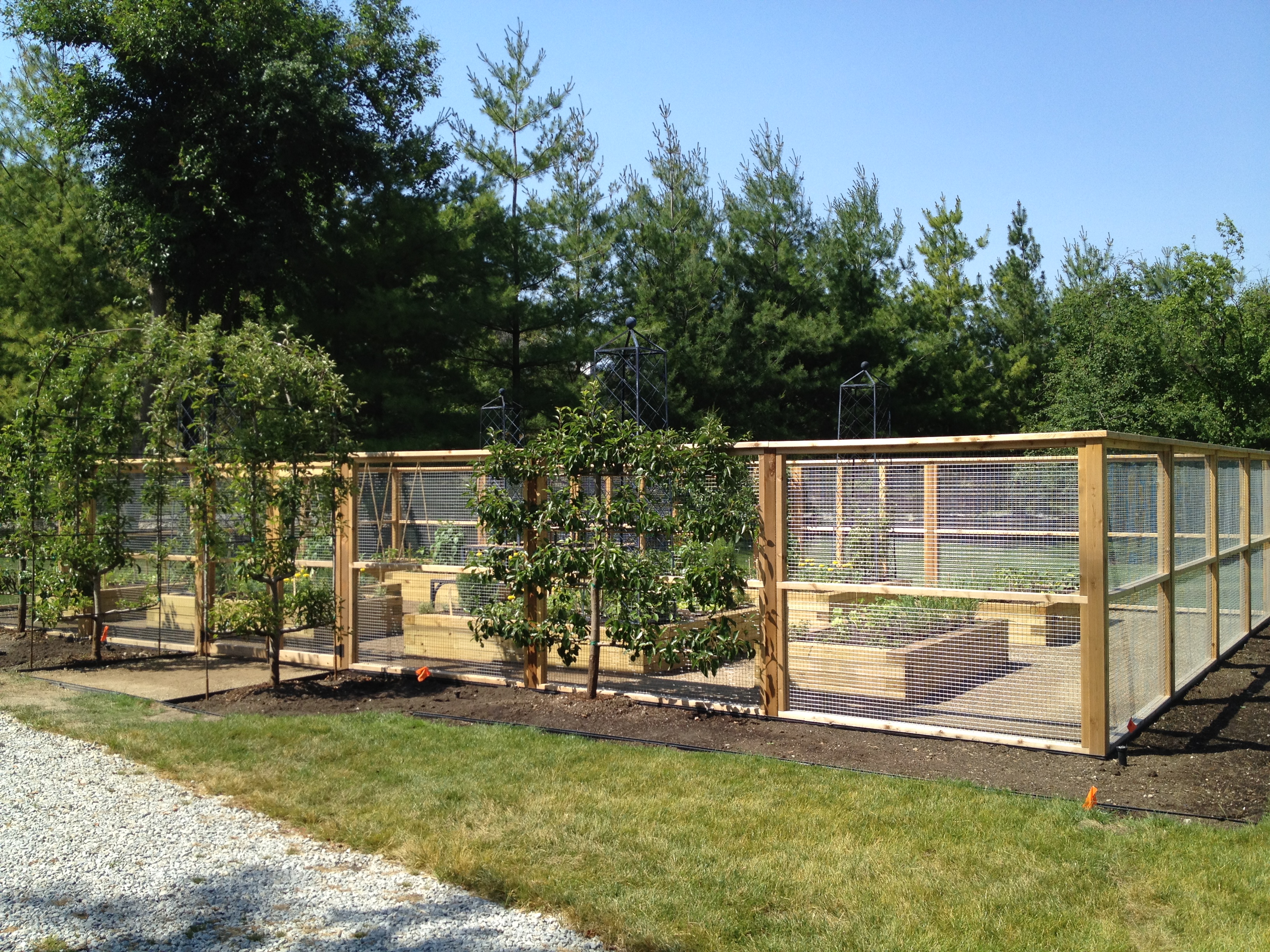
This vegetable garden is entirely enclosed by a fence of cedar, and galvanized steel mesh. The idea here is to protect herbs and vegetables from the wildlife. The height of the fence is meant to keep the deer out.  The depth of the wire fencing below ground is meant to deter ground hogs and rabbits.  Keep out.
cedar privacy fence
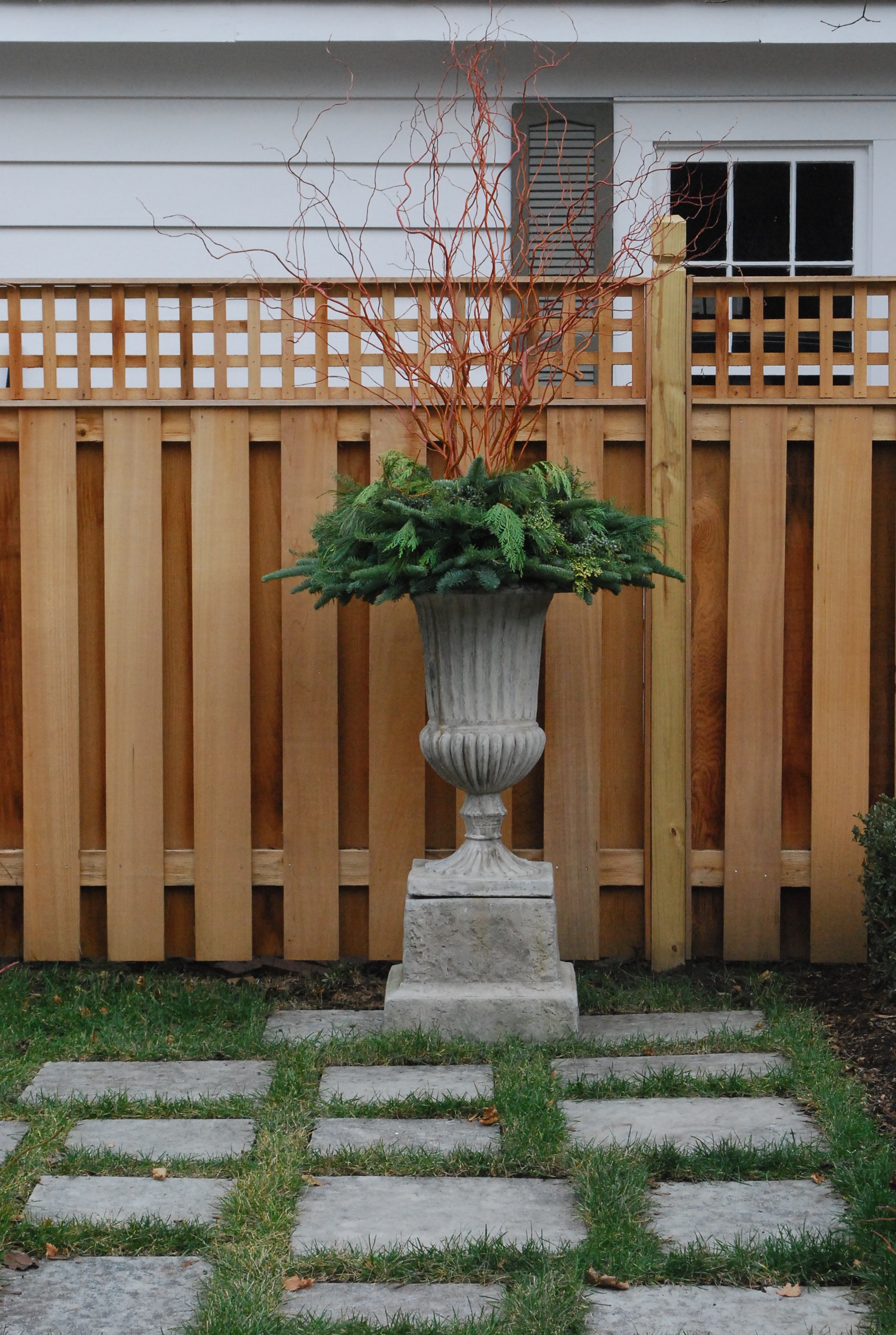
Fences of a clearly decorative design satisfy the need for beauty and visual interest as much as a need for privacy.  Cedar is a highly rot resistant and evenly grained wood that can make a fence as refined in appearance as a piece of furniture.  The design of this fence is especially pleasing, given the stone and grass path below.

espalier fence

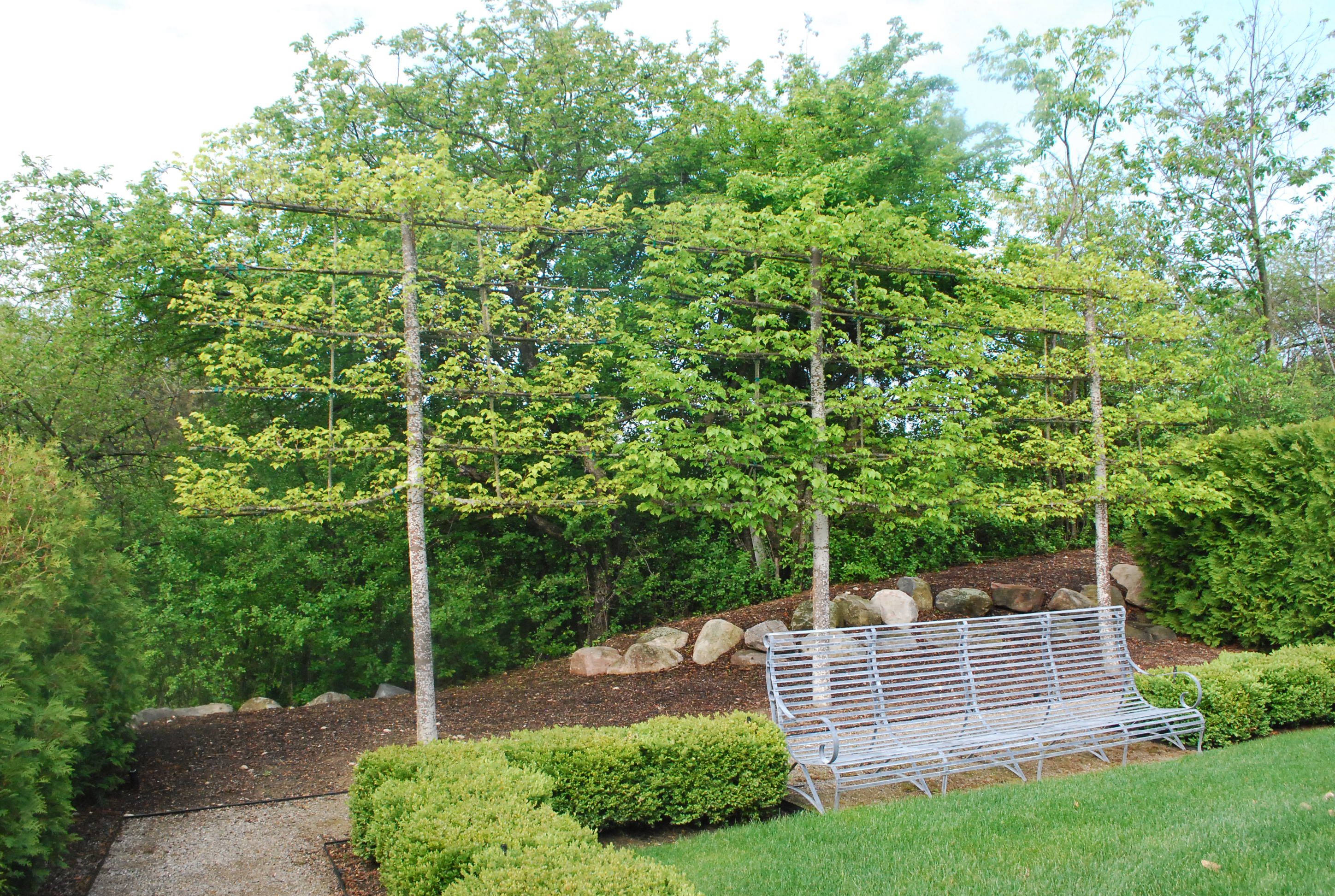
Espaliered trees can provide a green fence.  In a tight space that needed screening up high, a fence of espaliered lindens was a good solution.  The property next door is vacant, and unattended-the property line is in front of the boulders.  Were it to be sold and developed, a new house could be very close by.  Anticipating the need for privacy permits the time it takes for a green fence to grow.   The major horizontal arms have numerous small branches which will eventually grow together to form a green wall.  This fence needs more care than most, in the form of yearly, or twice yearly pruning.
pool fence
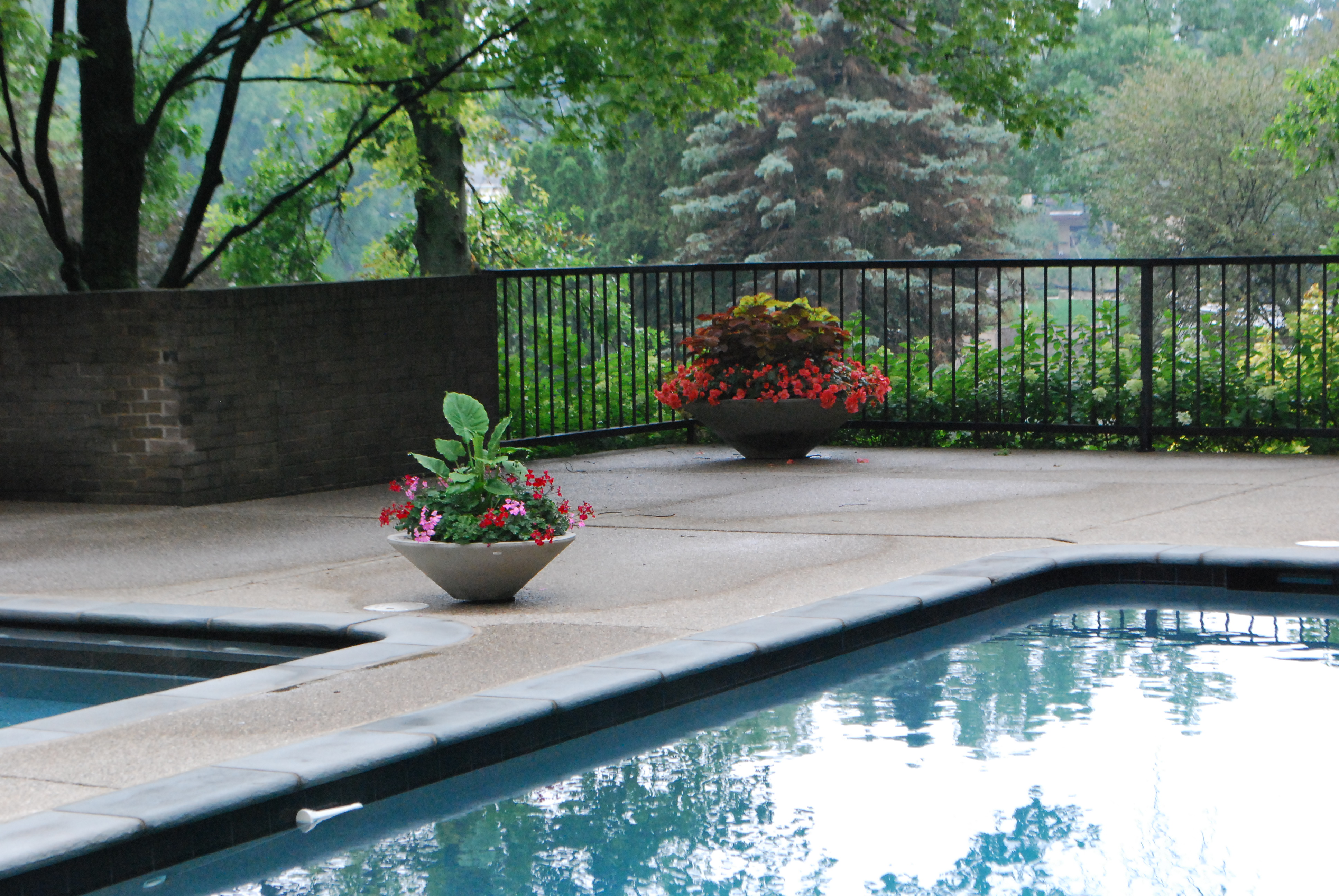
Pools require fences of a certain height, and a certain density.  An iron pool fence in my area requires a picket every 4 inches.  Most communities have rules about fencing swimming pools, as they can be dangerous to a child.  These fences are not about privacy-they are about safety.  The hydrangeas on the far side of the fence will eventually grow between the pickets.  The fence itself will disappear from view, with its ability to enclose and protect unimpeded.

steel fencing
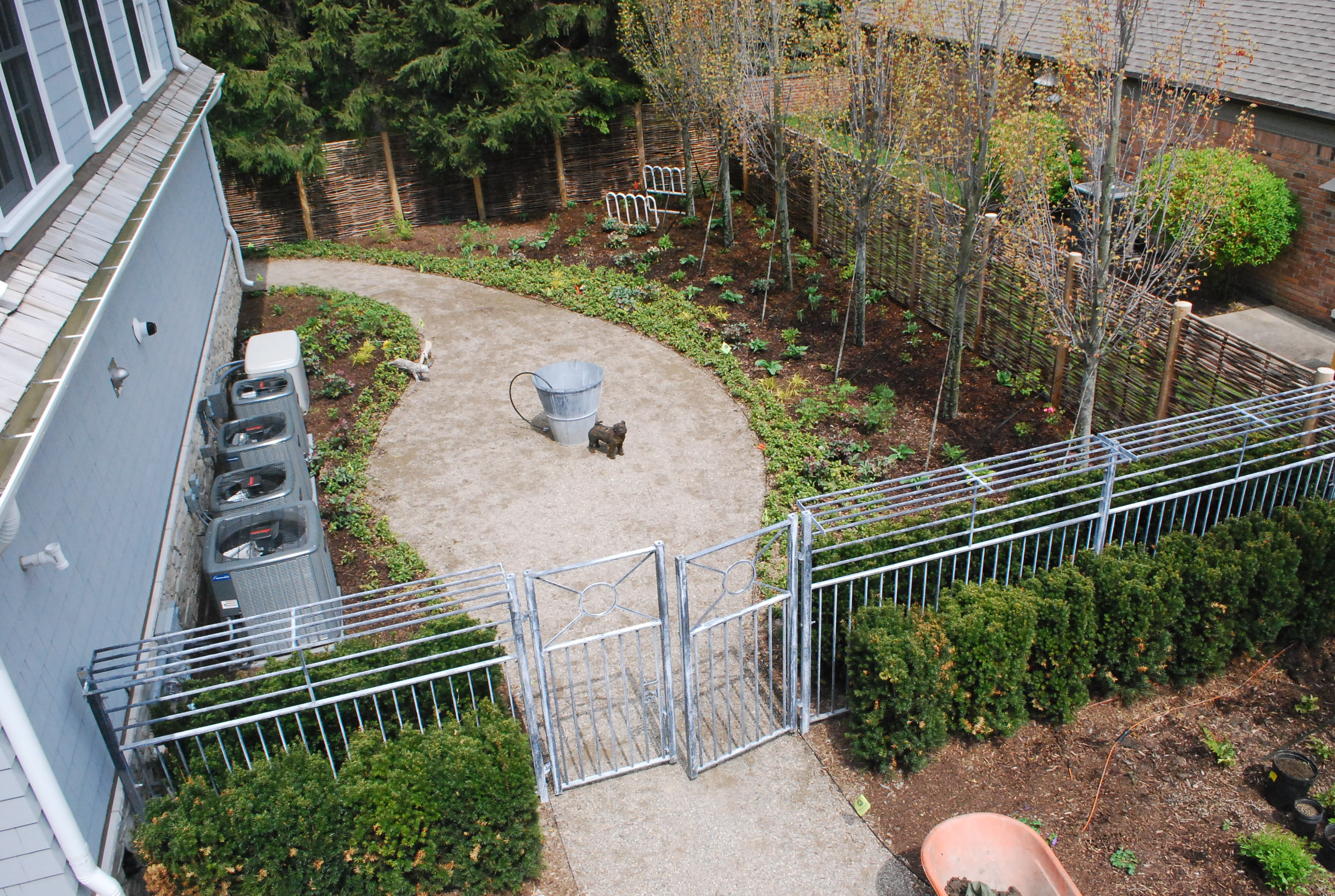
This garden/dog run has a hazel wood privacy fence along 2 lot lines.  The Bowhall maples will eventually provide a green screen for the second floor windows.  The iron fence encloses the dog run, and is meant to deter coyotes.  Coyotes run at, and leap over a barrier.  The 18″ wide shelf at the top of the fence, and the yew hedge at the bottom, is a strong deterrent.

twig fencing

I have only seen a fence such as this once.  It is beautiful and dense.  Fencing from natural materials are easy on the gardening eye while entirely functional.

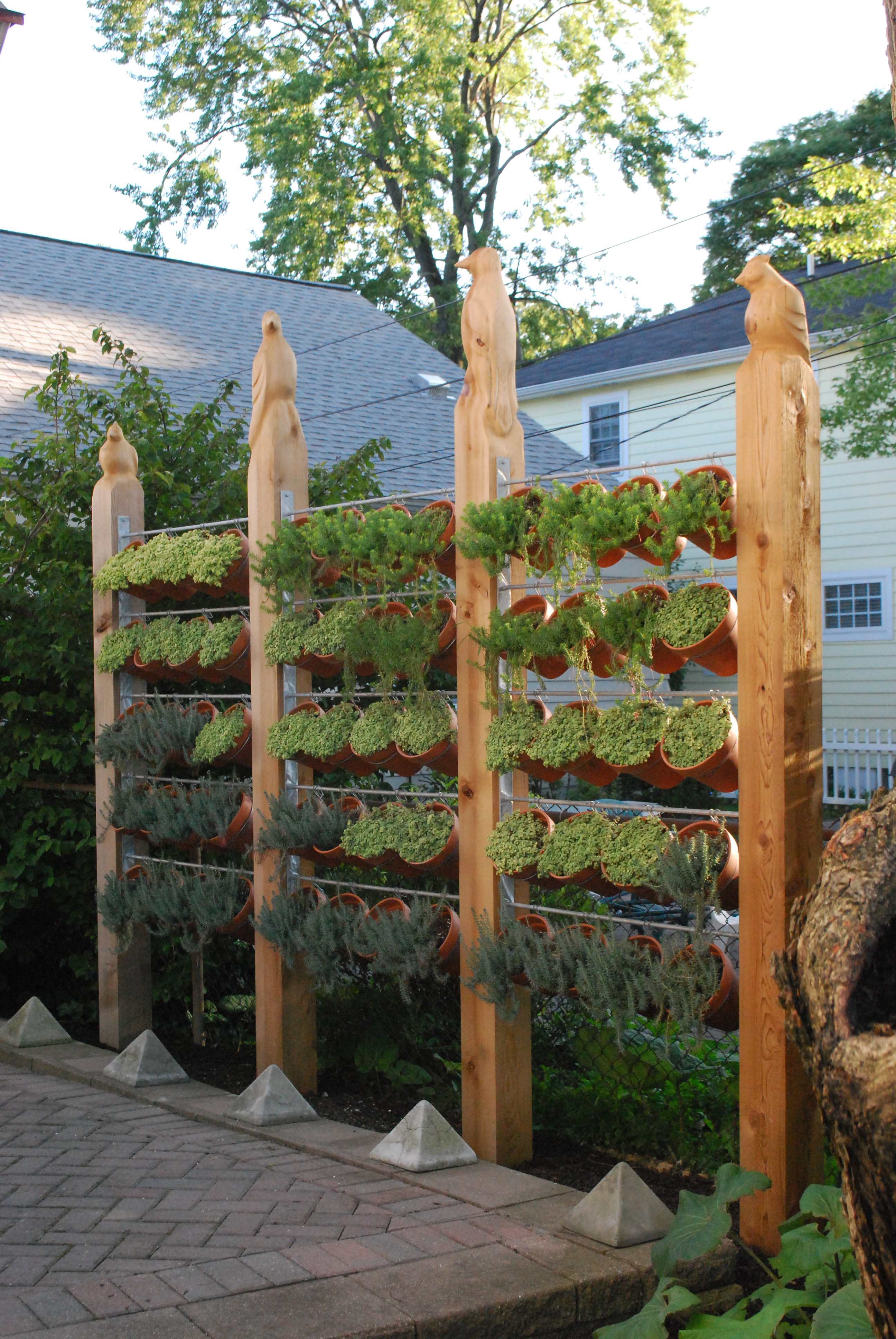
vertical-garden-fence.jpgBut of any fence I have ever seen, this has to be one of the most inventive and original.  Designed and built by Barry Harrison, partner in Art-Harrison Design Studio in Royal Oak, it satisfies both a need for privacy and a need for green.  The cedar posts with integral bird finials were hand carved by Barry himself.  It’s easy to see that these pots of succulents would be tough to overwater. This is sure evidence that even the most utilitarian element in a landscape can have great visual appeal.

Garden Designer’s Roundtable: Transitions

stone-stairs.jpgTransitions broadly refer to change.  A change in status, as in child to teenager.  as in working person to retiree.  As in winter into spring.  The moment in the garden which is neither winter nor spring, neither summer nor fall, neither fall nor winter-these are transitory periods.  Change of any kind implies challenge and uncertainty.  As a designer, I am routinely asked to address the change from one level to another.  If you have ever climbed a steep set of stairs, you know how much effort is involved to make the transition from one level to another.

stone-stairs.jpgA beginning college course in calculus is just that-a beginning.  Advancing from one level of proficiency to the next is greatly helped by a friendly transition process.  The effort it takes to move to the next level-considerable.  Steps in the landscape were invented to make that transitory experience as easy and as interesting as possible.  When I am in New York, and zooming up an elevator, I wish for a transition from the first floor to the 28th floor with some grace and style.

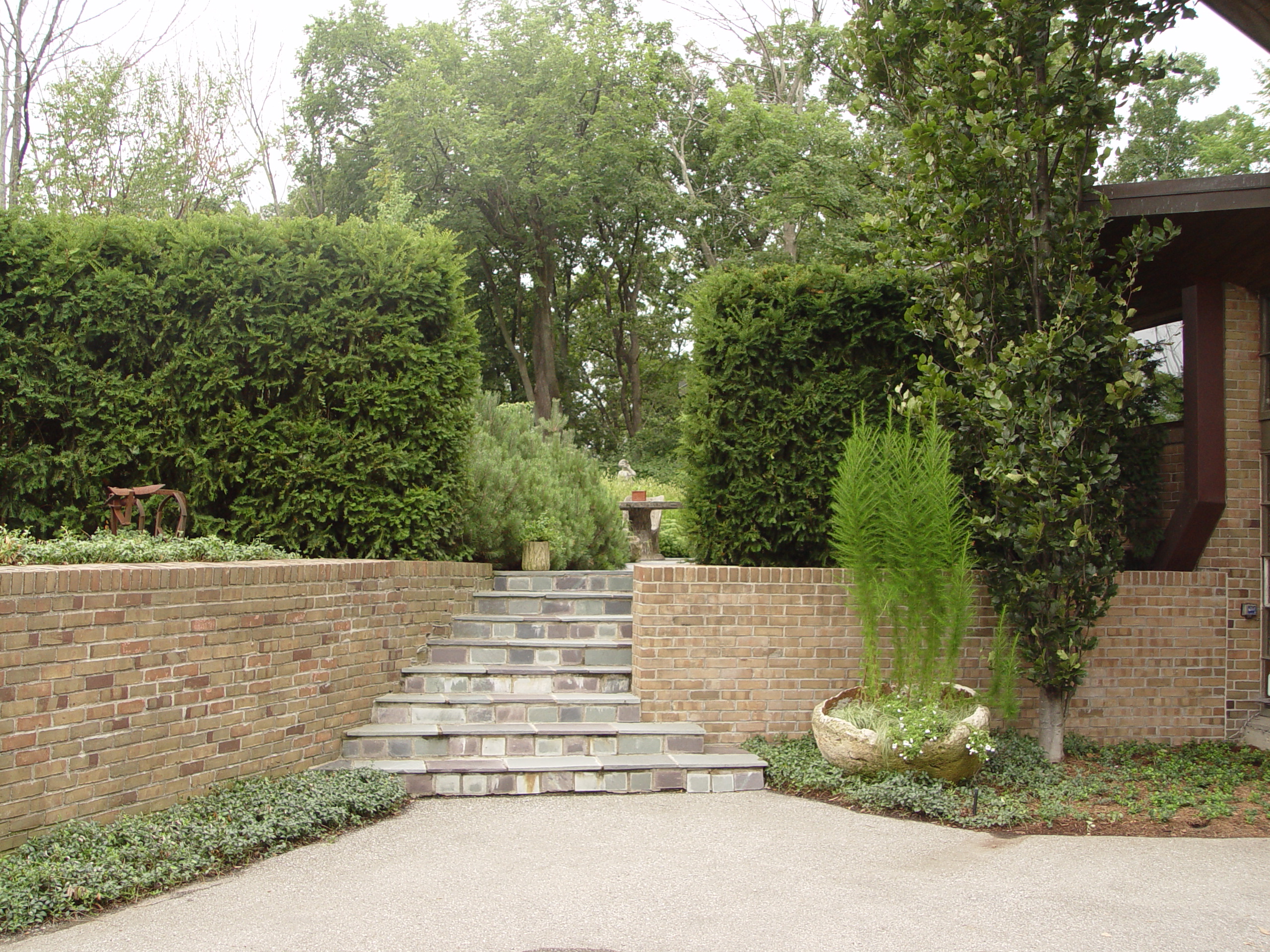
bluestone-stairs.jpgSometimes long flights of steps from one level to another  are unavoidable.  I try to make that trip as visually interesting as possible.  This makes the transition from one level to another an experience-not a chore.

transition.jpgThe transition from the public landscape to the private and personal landscape can be brief and substantial-as in a wall.  A hedge.  A gate.

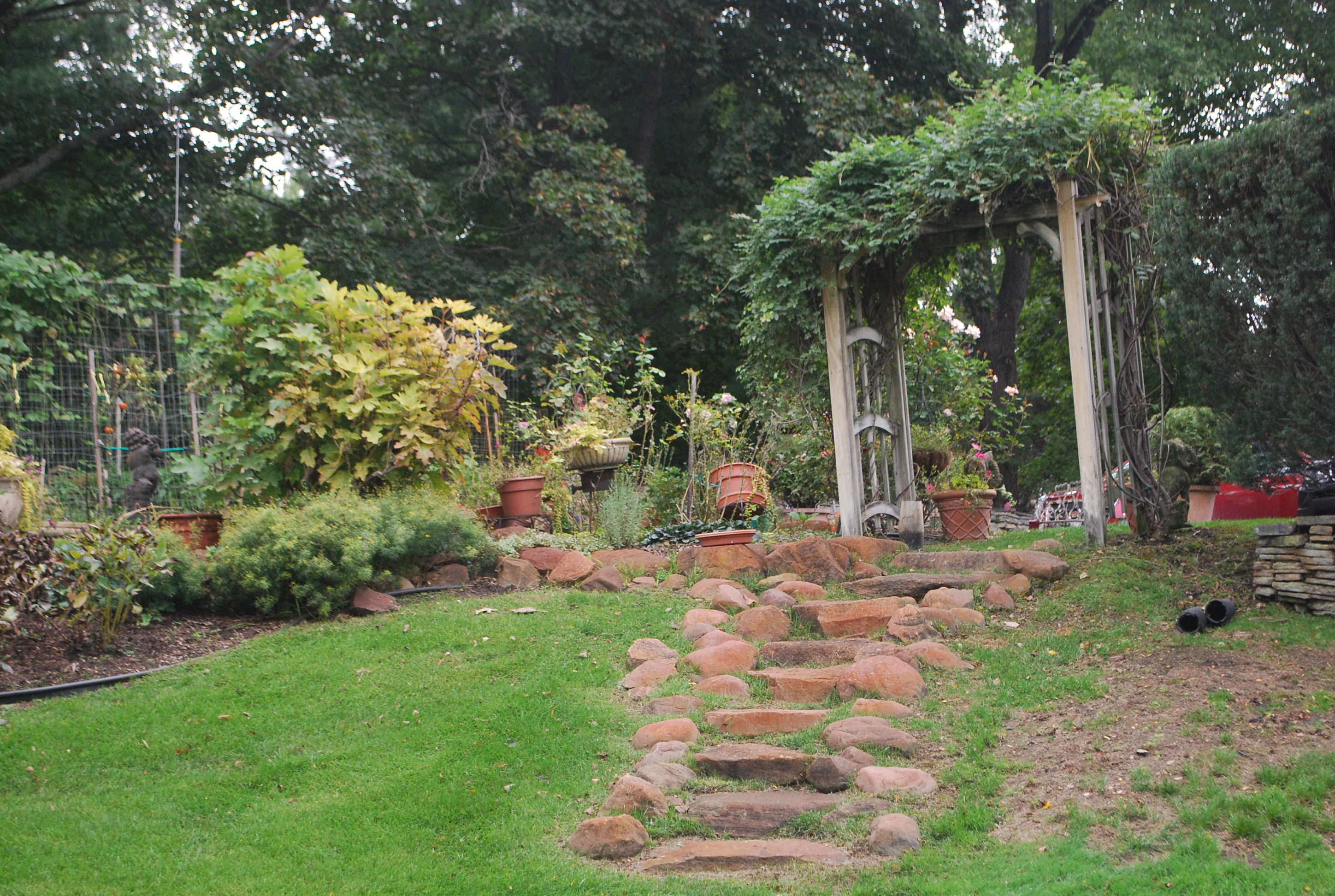
slope.jpgA subtle transition in grade can be dealt with in a number of ways.  Short flights of steps endow a long and gently ramped soil, with a little lively punctuation.

brick-porch.jpg
The walk to the front porch is traveled by good friends, family, and UPS.  The front porch-a formal transitional space that gives friends, family, and delivery people a moment to collect themselves.  A little time to compose themselves.  A little time to shed the cares of the day, and focus on the moment.  I like big wide and ample  porches.

slate-stairs.jpg
Any transition from one level to another asks for an inventive solution.  An invitation to move from one place to another-both physically and emotionally. The time it takes to make a change from one place to another-transitions in the landscape need to be big and generous.  Transit implies a movement from one space to another.  That transit space needs as much patience as any other space in the landscape.

sculpted-ground.jpg
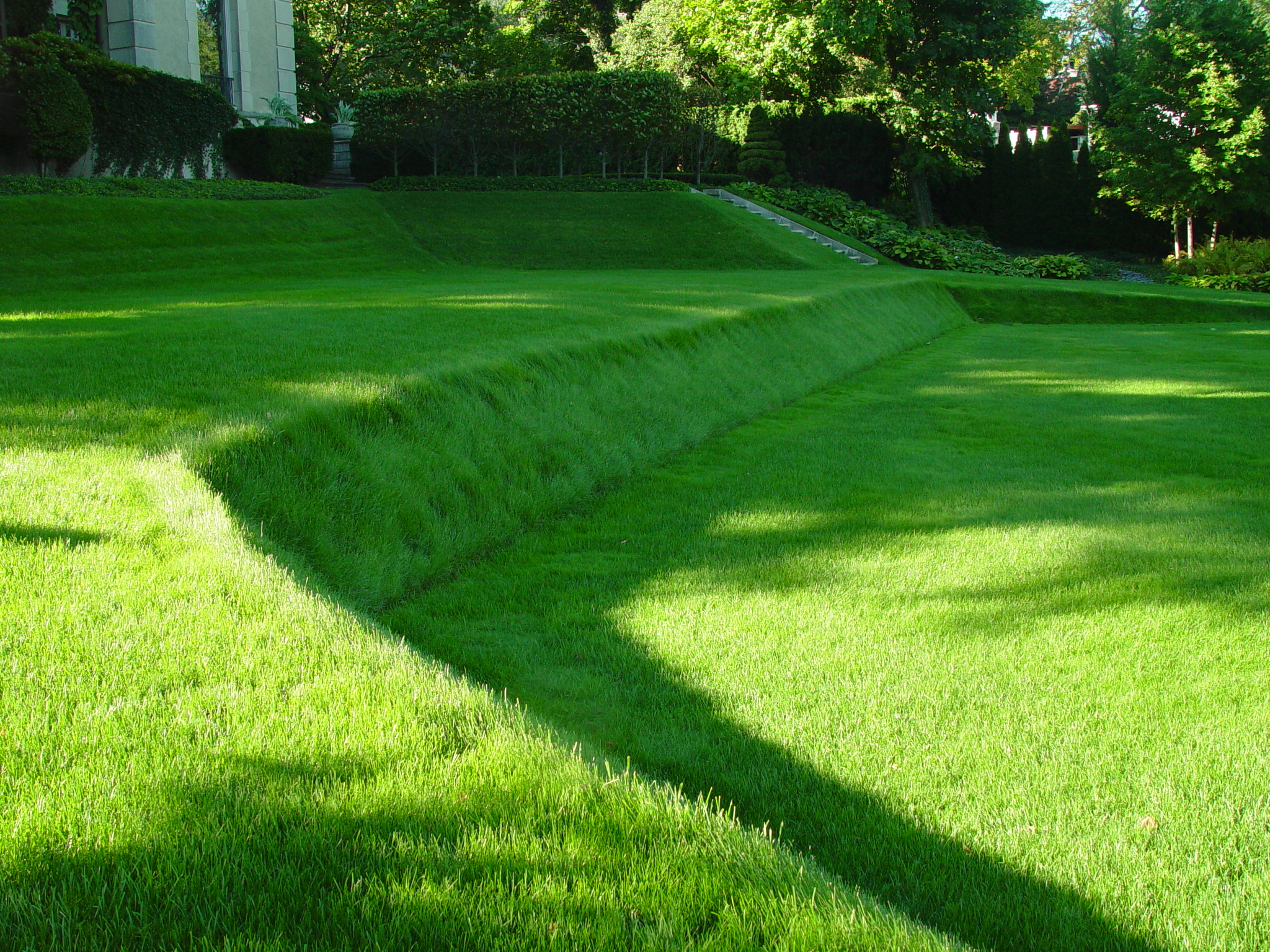
A steep slope  is not so friendly to people.  Some slopes can be addressed with steps.  Some slopes can be addressed with soil graded into tiers, and grassed. Any transition in the landscape needs to be addressed thoughtfully.   Imagine yourself at that transitional moment.  Design with that moment in mind.

I am keen to read what other members of the roundtable have to say about transitions-please join in!

Jocelyn Chilvers : The Art Garden : Denver, CO

Scott Hokunson : Blue Heron Landscapes : Granby, CT

Mary Gallagher Gray : Black Walnut Dispatch : Washington, D.C.

Debbie Roberts : A Garden of Possibilities : Stamford, CT

David Cristiani : The Desert Edge : Albuquerque, NM

Jenny Peterson : J Petersen Garden Design : Austin, TX