Sunday Opinion: A Life Span

Everything in the garden has a lifespan.  This is a polite way of saying that every living thing lives their life, and eventually dies.  The redwood trees in California, and the old yews in England, among other ancient plants, are prized by many not only for their size and shape, but their astonishing longevity.  The Wollemi pine trees-of which there are 40 trees in some unknown location in Australia-date back thousands of years.  The National Geographic has made a big issue of protecting first, and secondarily propagating these trees.  Their sales of new starts of Wollemi Pines helps to cover the cost of their protection. They grow no where else on this planet, but for a remote valley in Australia.  Yes, I did buy small starts some 8 years ago-why wouldn’t I?  Both of my Wollemi pines belong to my landscape superintendent-Steve Bernard.  They were a gift.  They are at this moment, thriving.  As is our relationship.  We work together.  But not every plant thrives.  Plants which have lustily grown for years eventually die.  Some plants die just days after they are planted.  Do I have an explanation for this-not really.  The life and death in a landscape is an issue both Steve and I deal with every day.

Landscape clients want me to guarantee that the plant material I put in the ground will live-for at least the warranty period.  For one year, I am asked to stave off death.  I oblige, in spite of the fact that the life of a landscape and garden depends more on nature than me.  I do what I can, but I am rarely in charge. Some plants thrive in spite of my skepticism.  Other robust plants inexplicably die, leaving me with lots of questions and not so much comfort.  Anyone who gardens knows that every plant has a lifespan.  Every gorgeous moment in a garden is just that-a moment.  And that which is treasured is ephemeral.

I have a few plants that are original to my garden from the day I moved in.  A magnolia, some dogwoods, a pair of picea mucrunulatum, some rhododendron, a norway spruce some 40 feet tall,  some azaleas, and some challenged maples in the tree lawn.  But these plants are not centuries old. They are at best 90 years old.  Ninety years old is a blip that one blink will miss, in the history of our planet.  Every gardener needs to realize that their influence is short.  And not necessarily what nature values.  Peonies and asparagus are very long lived.  Trees that have a good siting and thoughtful planting live a long time.  As in my lifetime.  Perennials live but a very short time.  Foxgloves are beautiful, and short lived.

The lifetime of the planet-vastly more years than mine.  I understand that eventually, and sooner rather than later, I will wear out and die.  The numbers of perennials and annuals in my garden that will wear out and die before me-considerable.  Lots.  The trees that will mature and finally die-they will be much older than me on the day of their demise. My gardening is but a brief moment in a scheme that is long, substantial, and just about impossible to predict.

Does the prospect of a limited lifespan to my landscape worry me?  Not really.  A beginning and an end to anything significant in the landscape is beyond my grasp to orchestrate.  I spend an extraordinary amount of time in an effort to keep every plant in my landscape happy and healthy.   Every gardener, just like me, learns, and leans into the natural demands of a life span.  Leaning in-what every gardener knows how to do.

Monday Opinion: Sharing

Gardener/readers write me on and off, astonished about the degree to which I am willing to share my knowledge and process.  Why wouldn’t I?  I was raised to believe that sharing with others was good.  If you are like me, you grew up with a Mom who encouraged sharing.  Share a toy.  Share you seat on the bus.  Loan your sister your prized sweater. Share the letter your teacher sent home with you with your Mom – this would be a Mom talking.  Share your questions, hopes, fears, and aspirations.  That call to share had another call attached to it.  Share, with the idea that you might help.  If you are able to share such that you can help others, help them.  I arrived on this earth endowed with plenty of infantile selfishness-it took a Mom to temper that.  Did I really want to share my prized baloney and mustard sandwich on white bread with a classmate who had no lunch?  Not until I was instructed that sharing was a very special kind of giving.  A kind of giving that was part and parcel of being a decent human being.  My Mom assured me I would feel good about it.  And that what I got out of the giving was in the end,  irrelevant. This also from my Mom.   I may have had no relationship whatsoever with that kid who had no lunch.  I may not even have known her name.  But if I could get by with a half a sandwich, which of course I could, it was incumbent upon me to share the half I could do without with another.  It was the right thing to do.  And it did, incidentally,  feel good.  Now, the sharing seems effortless.  I am by no means the exception.  I believe that people come by the instinct to give and share, naturally-don’t you?

The right thing to do-what is that?  Every gardener, and landscape designer, comes face to face with this question over the course of a project.   I like to share the design process with a client, just like nature reveals herself to me.  In a genuine design relationship, lots of things are shared.  Needs, dreams, concerns, budgets-there are lots of topics to cover.  The client’s issues are invariably more important than mine.  A beautiful design that does not work for a client is not necessarily a beautiful design.  It is a design the heart of which fails to engage a client.  This is a polite way of describing a dust bin.  Just my opinion, this.

In the shop, we try to share the best advice we have available.  A client with whom we do not share our knowledge is a client who has not gotten from us what they should.  No matter my willingness to share, there are those times where we fail. I take that failure personally.  We should be able to give timely and sound advice.  That given, there are those times when what gets said doesn’t get heard-or what was heard bears no resemblance to what was said.  This happens all the time.  Communication is the art of life, is it not?  Some things that go wrong in the garden can be squarely attributed to the nature of the season.  Other things that go wrong might be attributed to a casual share, without any depth, or an insincere communication.

I have this communication problem on occasion with my garden.  I may plant what I want, without listening to what has been shared with me by nature-about my weather, my zone, my seasons, my soil-you get the drift.  I am eminently capable of being insincere with nature, as I don’t really want to answer to her.  What I do not hear can come back to haunt me.  Yes, usual sharing implies another who is engaged, and listening.  Nature does neither.  Nature has no need for a relationship with me. I am a small part of a much bigger scheme.  She has no time for me.  The entire burden of a successful relationship with nature depends on me.  How tiresome is this?  A gardener of the true sort establishes a fluid truce with nature-this is a kind of sharing.  Sharing, with the primary responsibility clear from the start.   Sharing as I usually experience it as a designer is a person to person pursuit.  That sharing works some times-other times, not.   Most people have shared something at one time or another that has not been heard.  Operas have been written and performed for centuries about this.  It is tougher than it appears, sharing in a real and thoughtful way.

The most difficult moment in the landscape design process comes at the beginning.  You have a design to present.  You have a conceptual plan to share.  Taking enough time with this part is essential. The design is a collaboration-there is the sharing of information that goes back and forth across the table.  That sharing may take a lot of time to transform into a final plan.  Once there is agreement on the big issues, there are lots of details to share.  Secondary but so essential to sharing-patience.  Patience is not my long suit, but I try.  Patience can also be overrated.  Knowing how to bring an unfounded worry to a close is a way of sharing that is caring.

The second most difficult moment is that moment when a project is done.  You will no longer be there every day, working on this part, but watering and tending that other part that is finished.  Some clients can see instantly that moment when an installation becomes their garden-they say thank you much, and push off on their own.  Bye Bye.  Other clients are less confident.  You may need to drive by, regularly.  Sometimes it’s important to keep on sharing until there is no more need.  Am I good at this?  Sometimes.  Other times, I call the memories of my Mom in- to give me a hand.

I would share anything I know about horticulture or design with anyone.  What I know is just my experience-nothing more, and nothing less.  Is my knowledge special?  Not particularly.  What works for me is different than what works for lots of other gardeners.  As much as things in the garden fail, lots of things work.  Designers would do well to keep that in mind.  There is no one way.  There are lots of ways.  Do I worry that someone else might duplicate my work from something I shared with them?  No.  My eye is my eye-this part of me is not transferable, nor can it be replicated in every detail.  Lucky, this-for everyone involved.  Anyone who might try to replicate my work will eventually be frustrated and unsatisfied.  Hungry.  Every person with a sincere interest in the landscape needs to rely on their own vision to finish a garden, or a landscape, or a moment.  Every landscape I design and install needs a client to eventually sweep the scene with what is all their own.  Having had good advice and design help, eventually being left on one’s own is a very good place to be.    There is so much satisfaction to be had from one’s own invention.  Some create gardens on their own.  Some create landscapes via a relationship with a designer. All sincere paths to good design are good paths.

Whether you are a landscape designer, or landscape architect, or a passionate gardener,  I will respect you enough to assume that you are a creative person whose job it is to imagine a project, and research anything you need to bring that project to fruition.  I assume you are able. There are no shortcuts.  Take the time, and do the work you need to do.  The work you put to any project will, in the end, reward you.  What someone has shared with you is not necessarily the gardening gospel.  It is a point of view.  And not necessarily your point of view.  Trust your eye.  If you cannot trust your eye,  look outward.  Most importantly, look inward.

I have a big interest in good gardening outcomes.  World wide, there are so many beautiful landscapes and gardens that support that idea.  Your computer is a means by which you can learn.  What is out there being shared?  Garden Design by Carolyn Mullet-I read her facebook page every day.  The time she takes to share-extraordinary.  Her editing, and choices of a topic to share-equally extraordinary.

What comes of your exposure to the work of others is that germ of an idea that might inform your own garden.  Respond honestly and passionately to the work the work of your designer.  In the interest of a better outcome-share what you can.  Listen when you have a mind to.  The aura created by that sharing all around – beautiful.

Grading The Garden

retaining-wall.jpg

The internet has made it possible to see landscapes and gardens from all over the world.  19th century English gardens.  Gardens of the Italian Renaissance.  Landscapes indigenous to the south of France.  Contemporary landscapes in Holland, Brazil, and California.  Ancient landscapes in Mexico and Egypt.  The moon?  It has a landscape that has been recorded.  Should you be interested in landscapes in Australia, Morocco, St Louis, Paris, Louisiana, Scotland or Japan-the pictures are there to see.  The essays are there to read.  Gardens in every country and every city, world wide.  What is available to see and read about has no boundaries.

grade.jpg

I am sure I am not the only person that finds this wealth of information both visual and written astonishing.  The volume of information available about the landscape past and present is more than I could ever in 5 lifetimes attend to and absorb.  I do search topics on my own that interest me, while try not to loose sight of the fact that the internet is an electronic highly edited representation of those best bits of a garden.  Great garden photographs and great gardens are not necessarily one in the same.

stairs.jpg

As for grading one garden better than another-I don’t do this.  What would be the point?  A landscape or a garden is a highly individual expression.  Comparing one to the other is of dubious value.  I like most every garden that I have the opportunity to see and absorb.  Every garden has that moment or that gesture which is well worth thinking about.  A well known landscape infused with considerable history?  There is much to learn, and respect. A little well tended garden in my neighborhood that pops-I admire this.  Maybe as much as I admire Hidcote, I equally admire the gardeners in my neighborhood who have the idea to design, plant and maintain.  The true test of a beautiful garden has to do with sincerity, and persistence.

new-stairs.jpg

As for a list that defines the top ten gardens in the world-really?  I find it very difficult even to pick favorites.  Not that there is any need for such a list.  No one takes on the work of a garden for a good grade.  They take it on in pursuit of a life that values the natural world.  Each person individually interprets what it means to garden, given their space and circumstances.  All of the gardens worldwide the size and scope of mine contribute in a big way to a better world.  That person with a passion for orchids, and that person who grows food, and that person who plants trees or meadows-each one has something to contribute.  It could be the best garden in the world is one’s own.  What can be learned from tending a garden day to day and year after year is considerable.  I have a strong and sentimental relationship with my own garden.

stairs.jpg

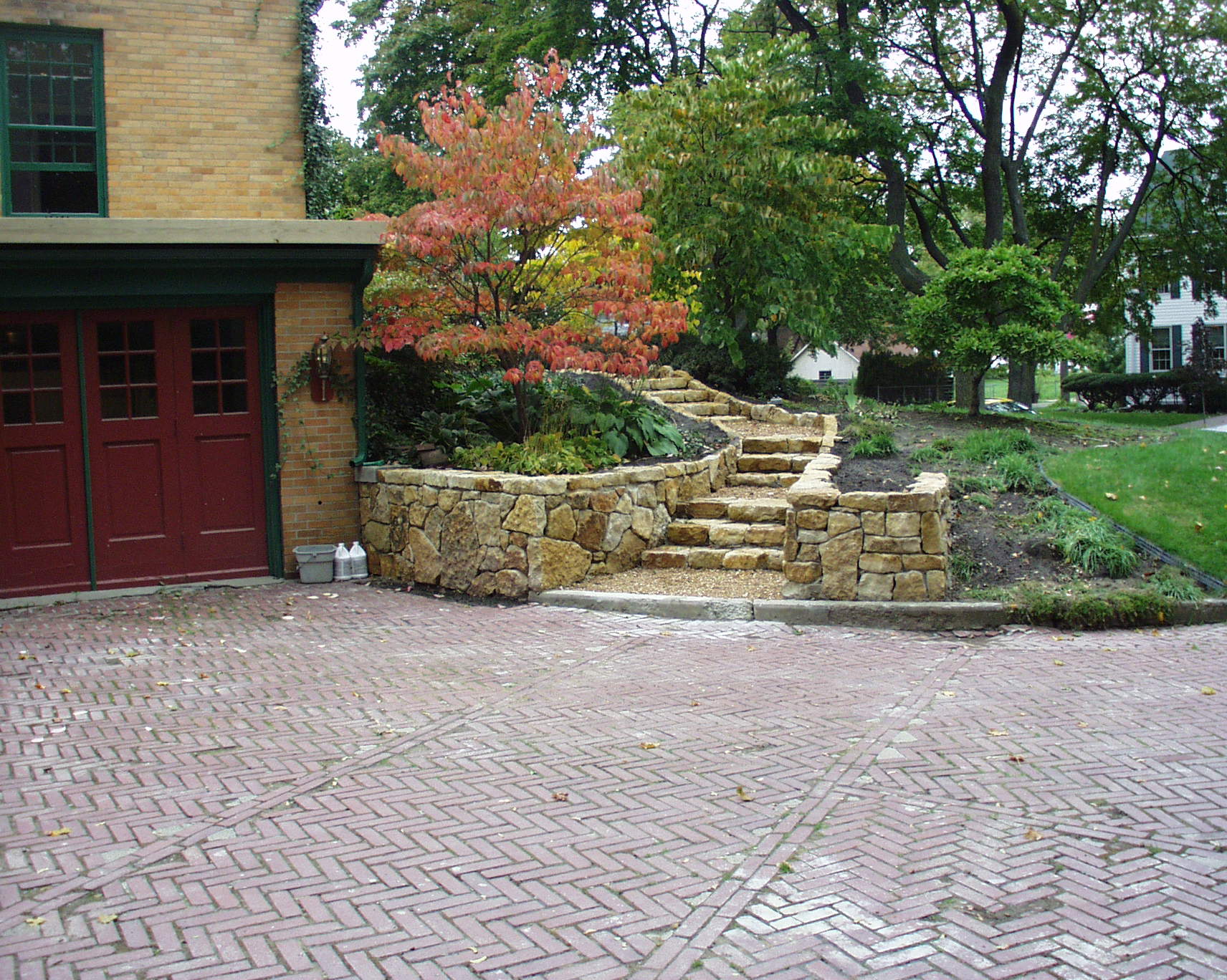
Grading does interest me in another way- grading the ground, that is.  Up and down.  Level.  Above grade.  Below grade.  Let’s assume that ground level is one grade.  Above ground is another level.  Below ground is yet another grade. When I bought my house and property, the topography was hilly.  Lots of slopes.  Not so many flat places.  Getting from one place to another involved climbing up and skidding down.  A series of low stone walls and stair cases made the property much easier to navigate.

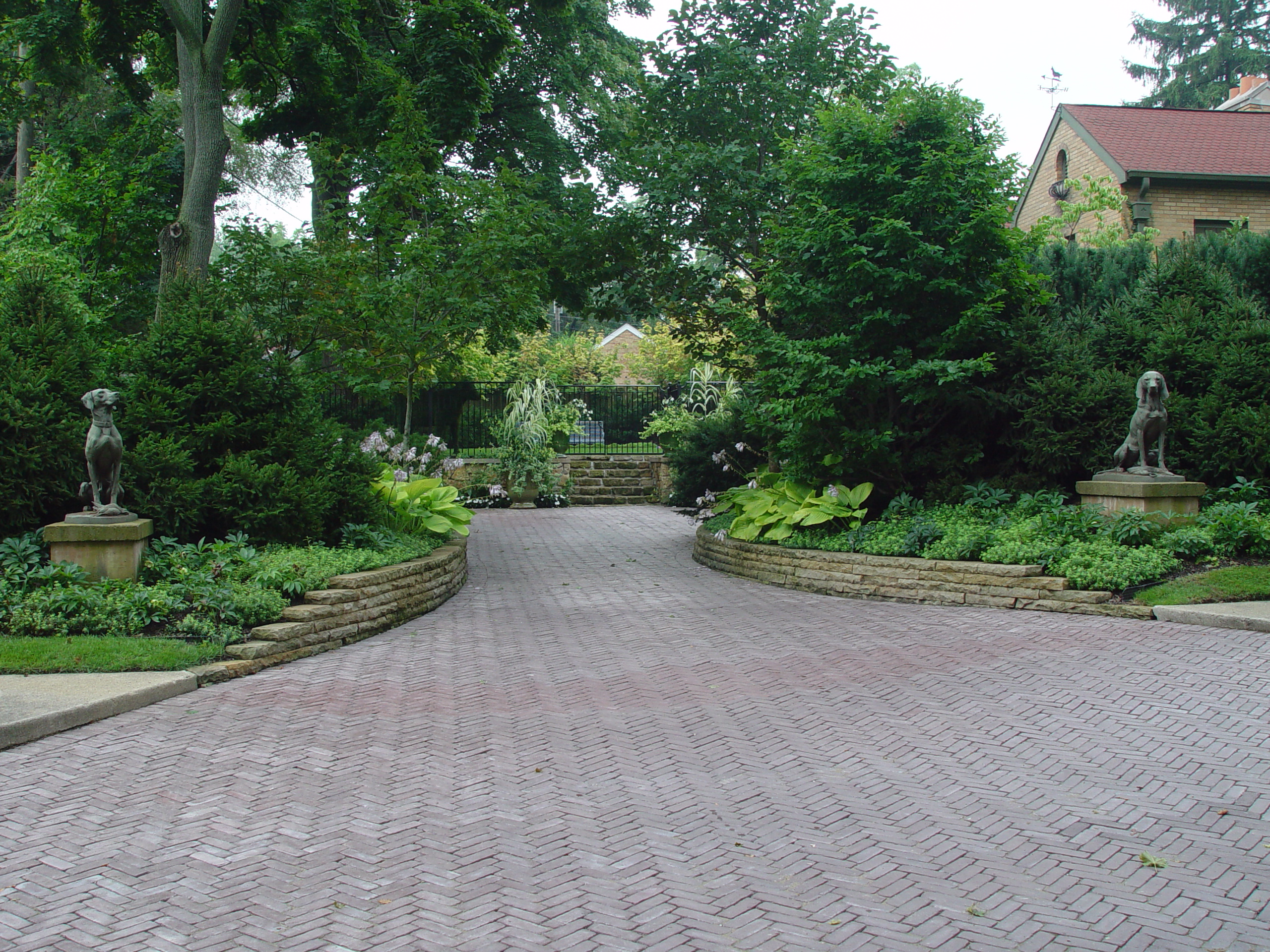
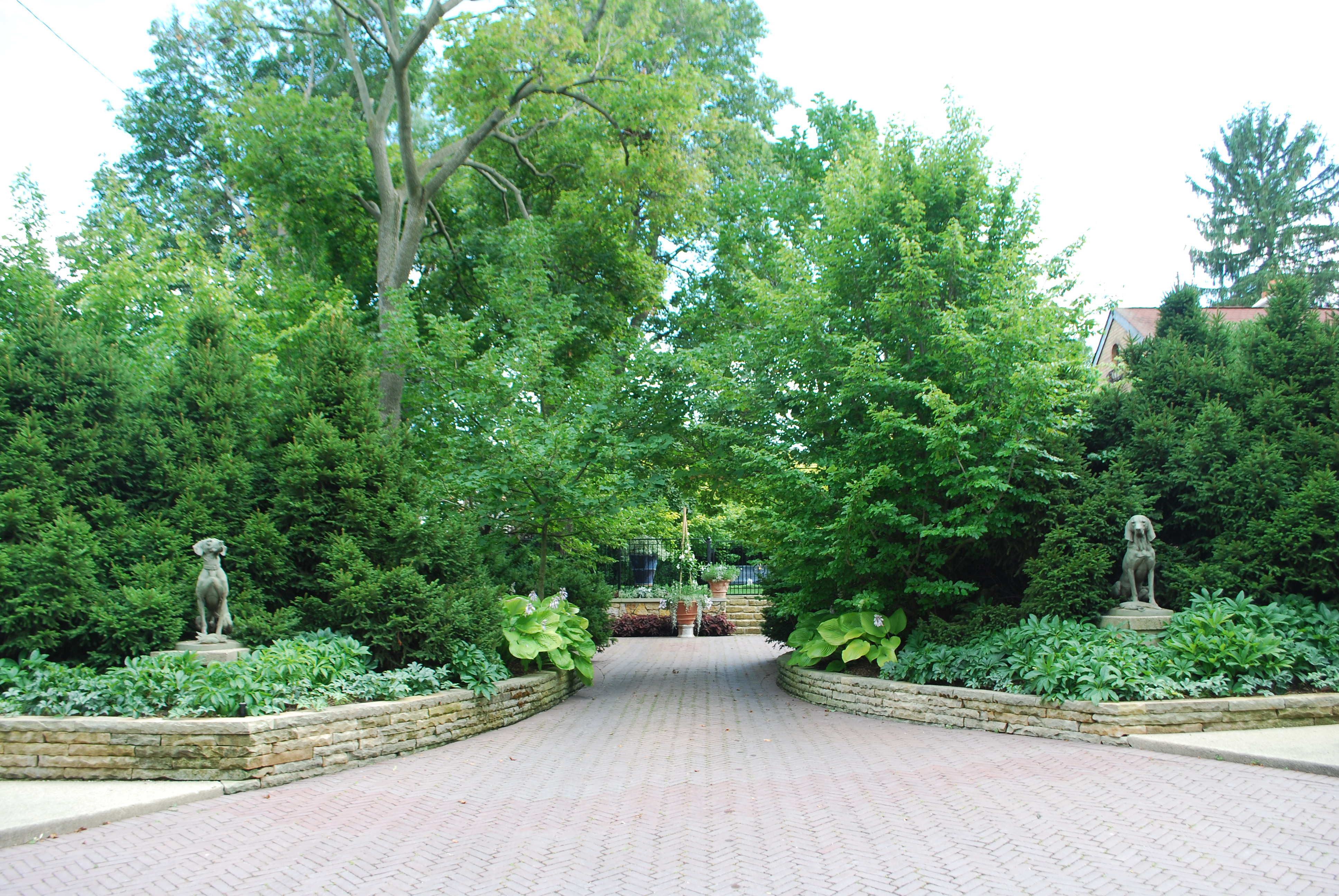
driveway.jpgA stone wall and staircase made the business of moving from the driveway grade to the upper level side yard quick and compact.  The upper level lawn was 3 feet above the grade of the driveway.A slope that would permit that change of grade would take up lots of room.  A small property like this benefits from the visual interest provided by changes of grade, and a mechanism for achieving that change quickly and gracefully.     In a hard rain, soil from the slopes on either side of the driveways would wash onto the driveway-in spite of a covering of grass.  How could I tell?  The abundance of weeds and grass growing between the driveway bricks.

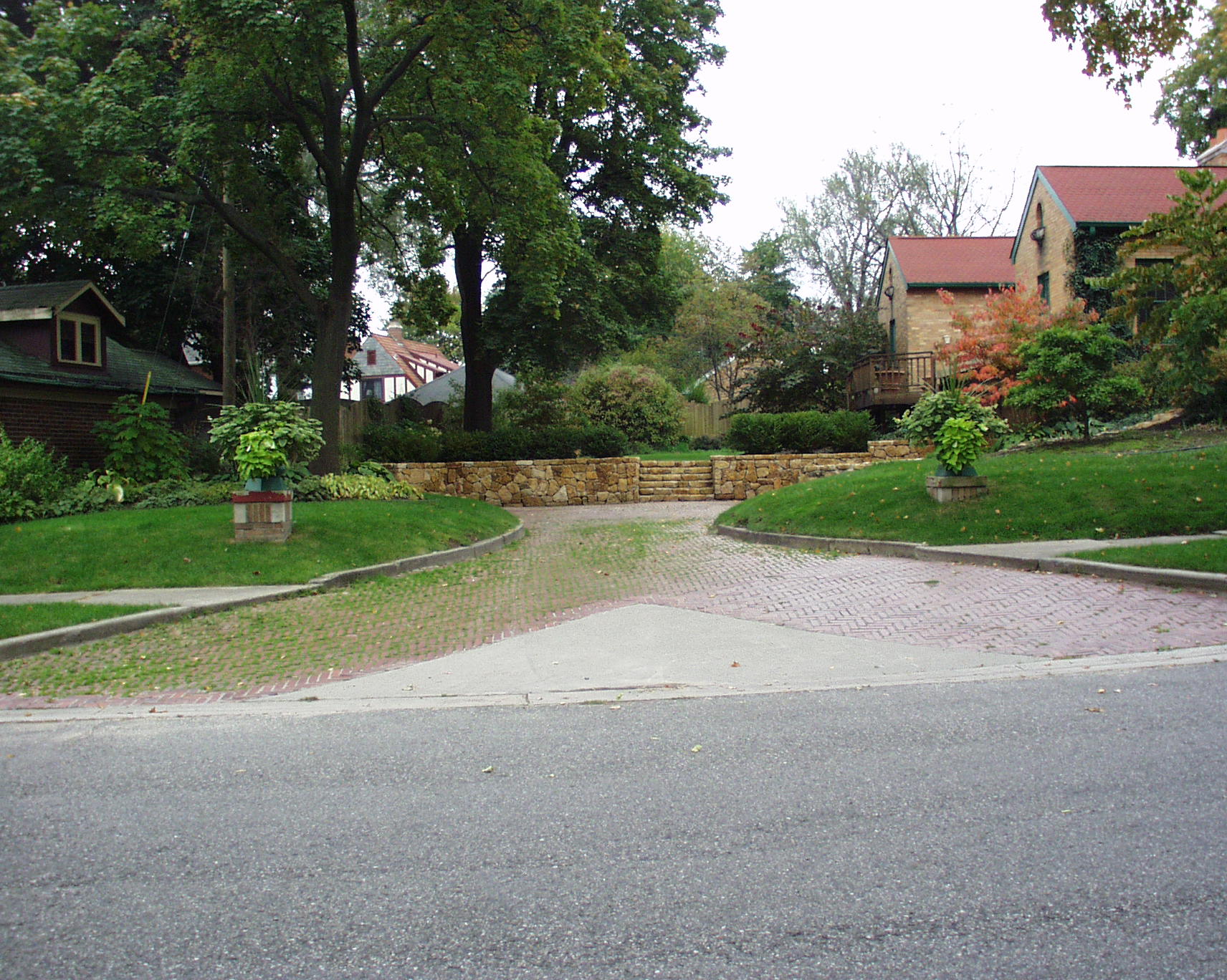
driveway.jpgThe obvious solution was to retain the soil with a low dry stack wall. The wall was built tall enough to capture the steepest part of the slope.  No more soil erosion meant no weeds in the drive.  It would be a few years before I would tackle the slope on the street side.

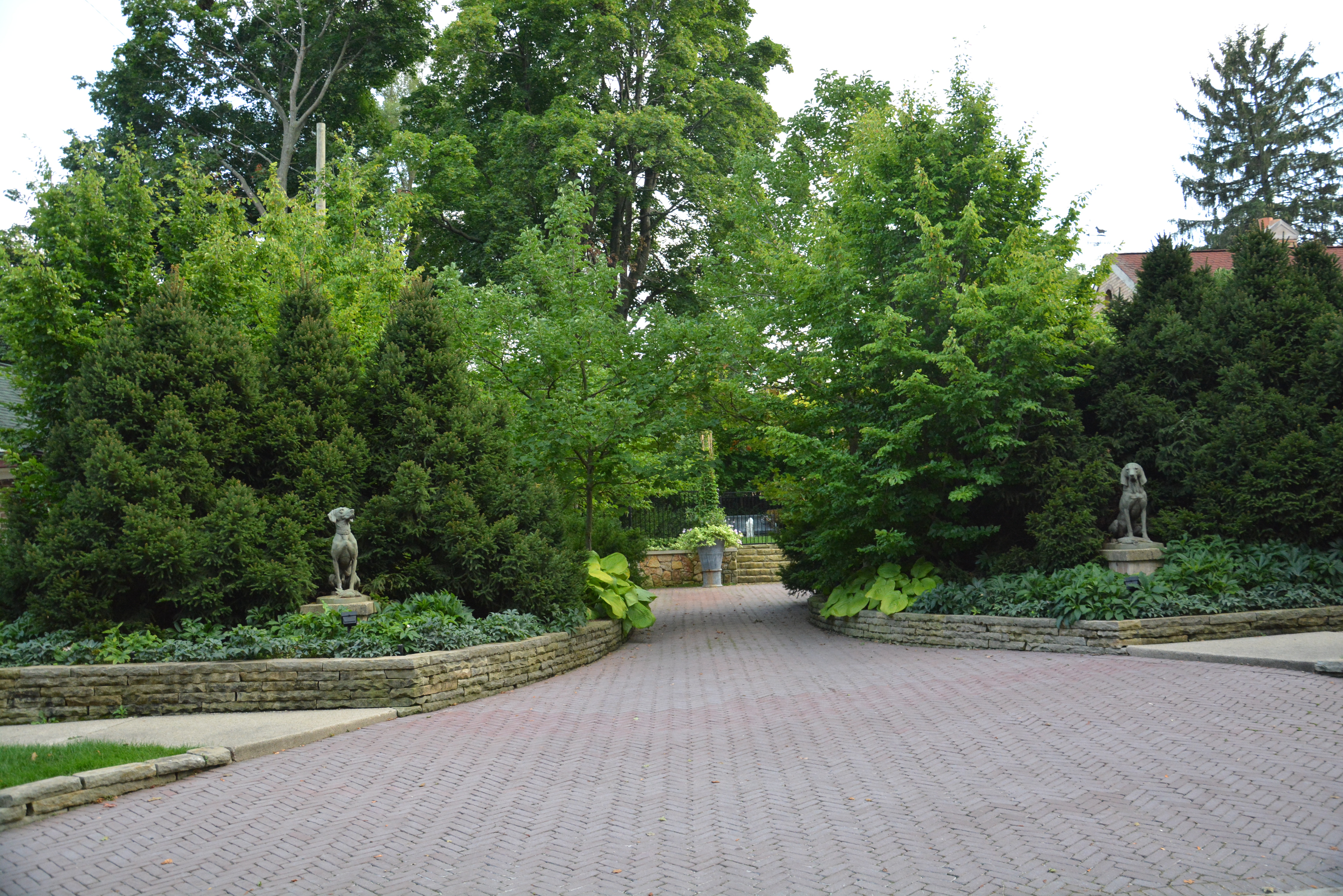
new-walls.jpgOnce the grade was contained on the street side with a wall, my hellebores grew much better.  Rain would soak in, rather than running off.  How can you tell that the grade slopes from right to left?  The left wall is 2 more courses high than the right wall, though the tops of the walls are equal and level with the horizon.

driveway.jpgHow many years are we looking at here?  I would guess 10 or 12.  When I drive up after work, I like what I see. Not just layers of plants, but lots of levels, up and down.

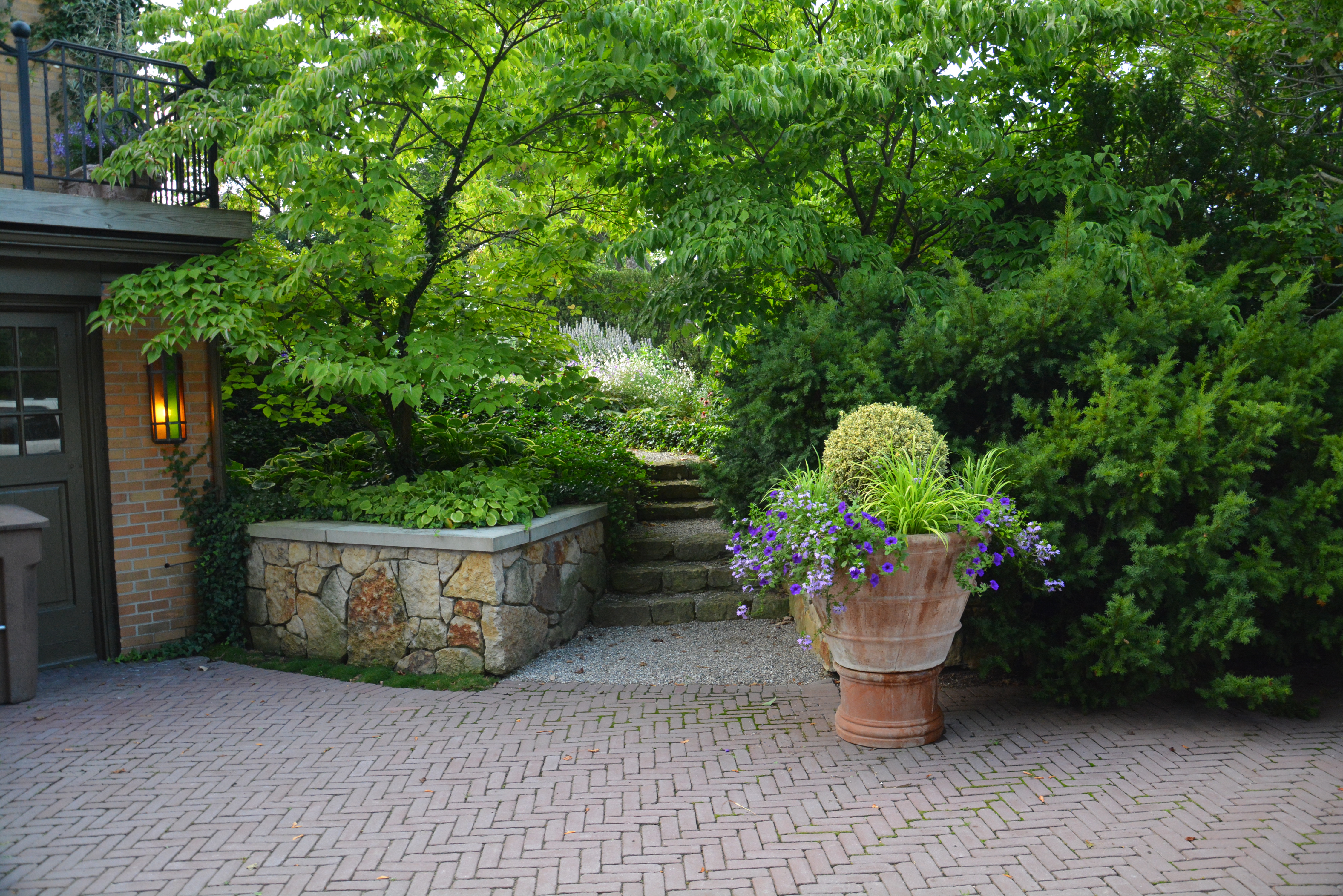
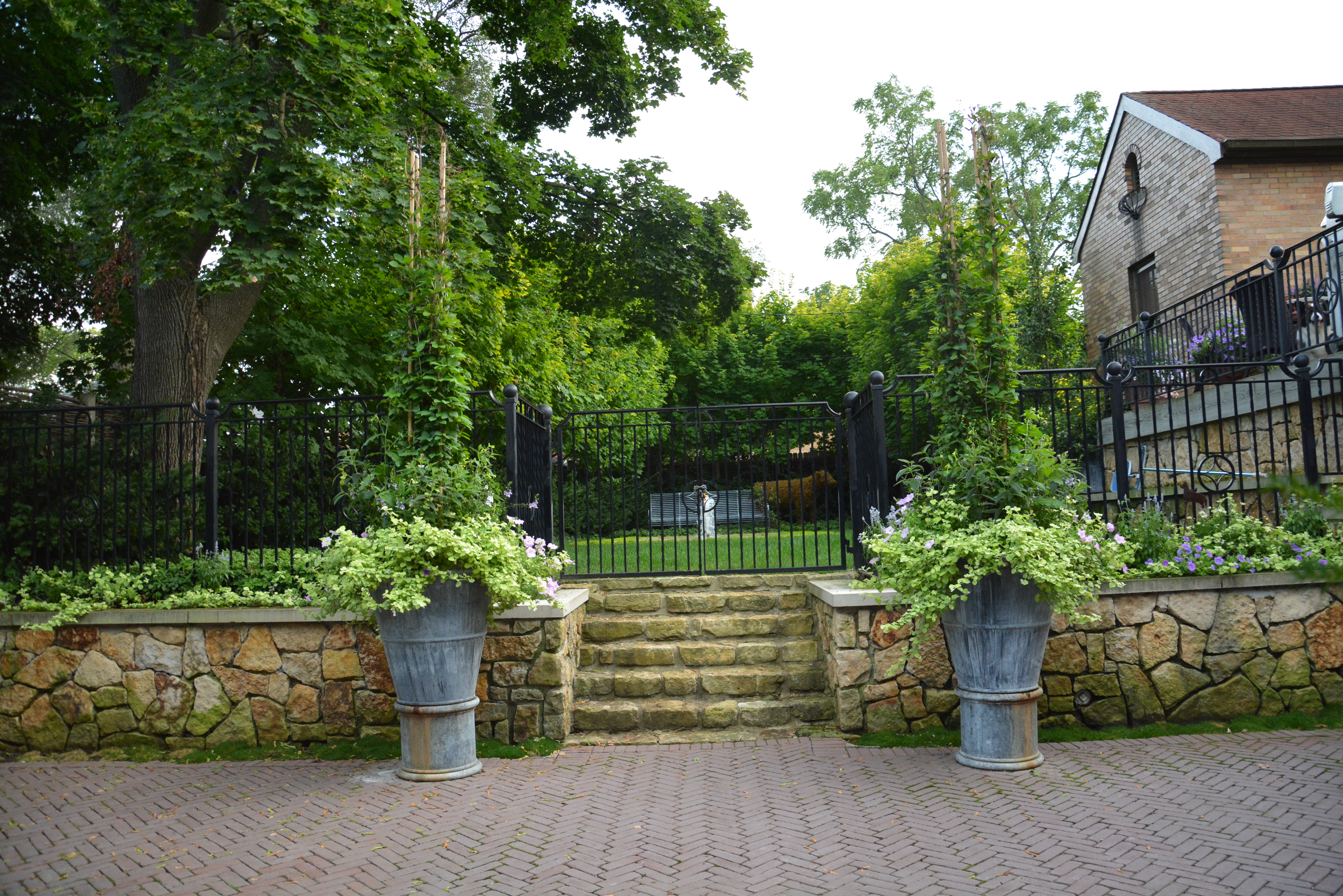
stairs.jpgThese 6 steps can be a challenge, if you are carrying a 40 pound bag of soil. But this area was graded specifically to make an inviting entrance to the garden.

The Landscape Plan

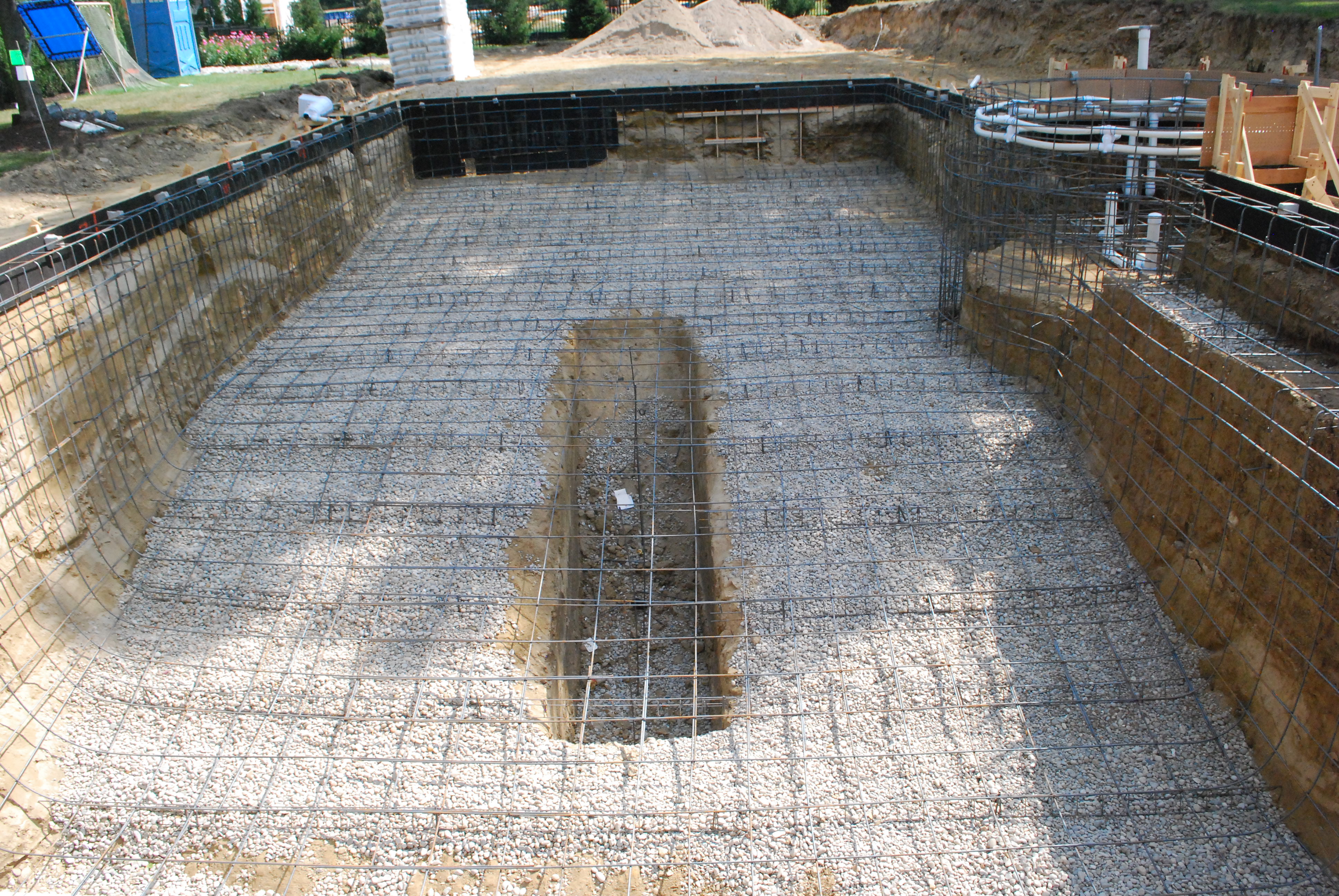
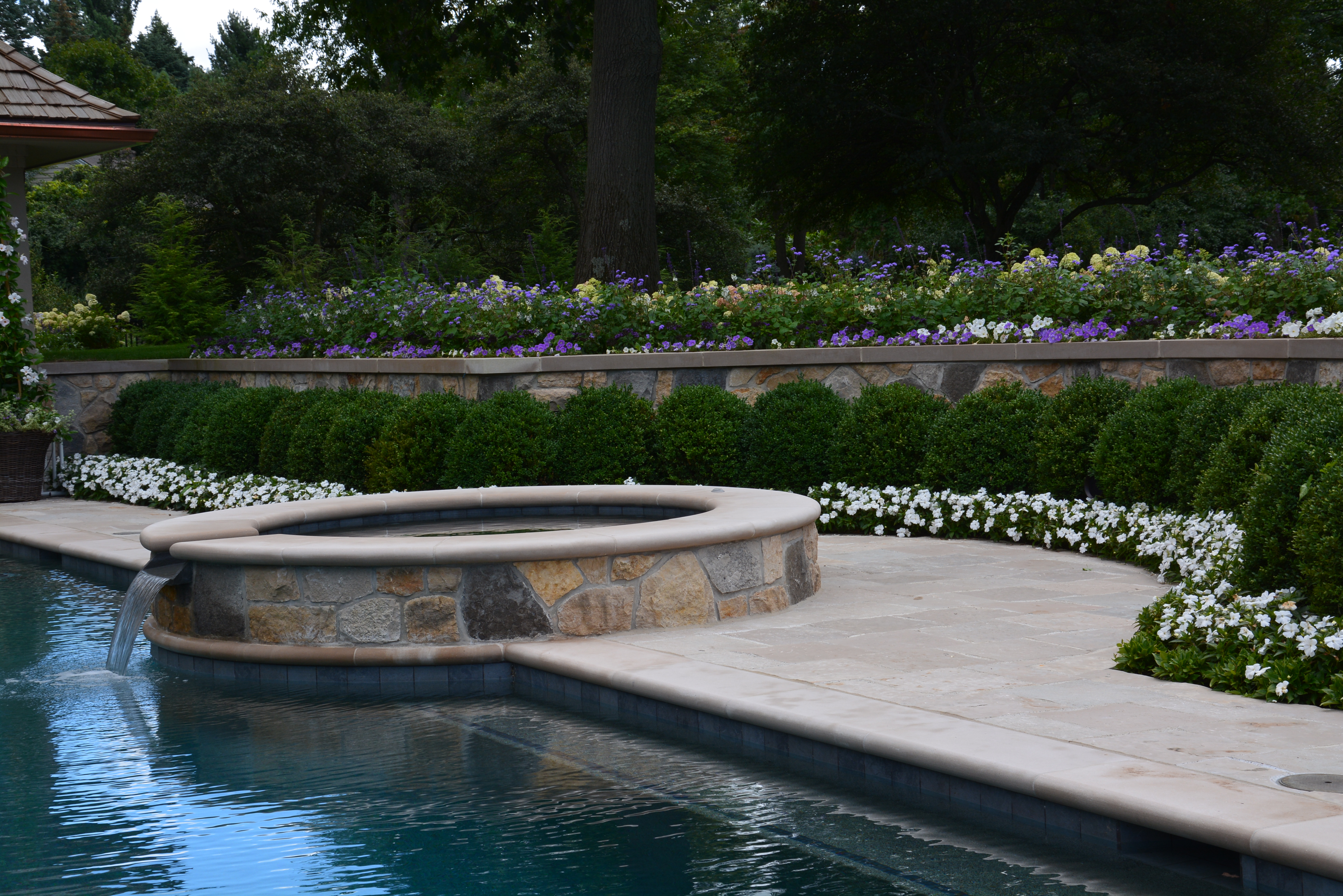
Sept 6, 2012.jpgIn September of last year, a plan for a pool, pool house, and landscape was approved and awarded a permit to build.  Those drawings, and the concept for the pool house-time consuming to produce. There are ideas, drafts, and more drawings.  There are lots of meetings.  A client, with a Capital C.  An architect.  A pool contractor.  A building contractor.  And planning with a big P.  A big organizing idea is essential. These clients wanted a pool, and place to entertain family and friends.  This meant siting the pool near the house and existing terrace.  A home, terrace and a pool when sited properly make the flow of traffic in the space easy and comfortable.  The pool, pool house, and surrounding landscape needed a flat place to be, despite the existing slope from the yard towards the house.  Sloped sites are good for mountain climbers, hikers, and short visits.  A landscape that invites people to linger asks for a flat, or near to flat grade, to navigate.  To sit.  To congregate. The idea to create a level landscape with a close proximity to the house was the organizing metaphor for the design. A primary or seminal idea will provide a foundation that connects every other gesture to the whole.

Sept-13-2012.jpgOnce the space was graded flat, the construction of the pool began.  The soil that was available as a result of the excavation of the pool was repurposed on site in a spot that would afford the client more flat space.  These clients planned to spend a lot of time in the landscape.  They did not have the idea to view it from afar.  They wanted plenty of room for any activity that involved people.

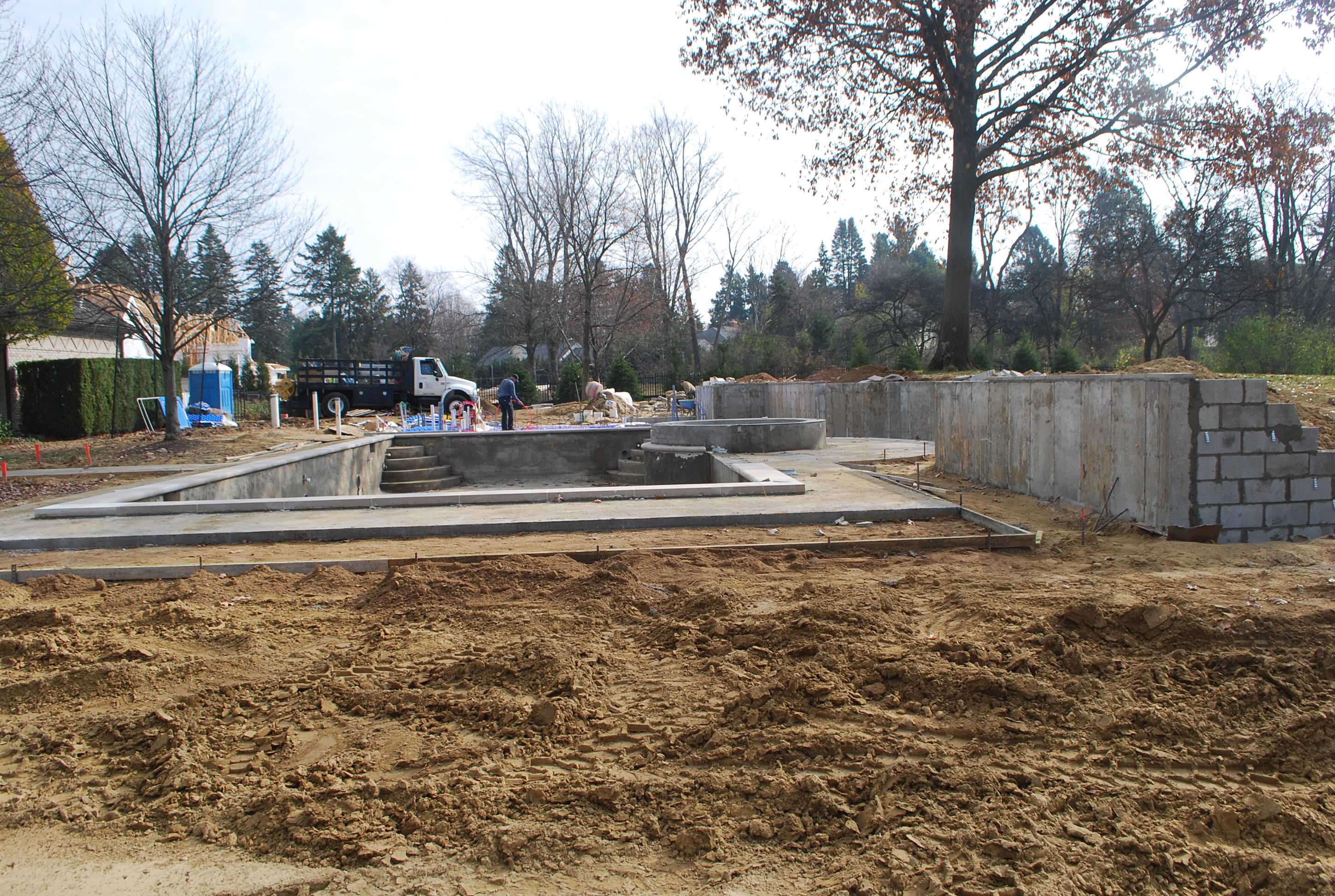
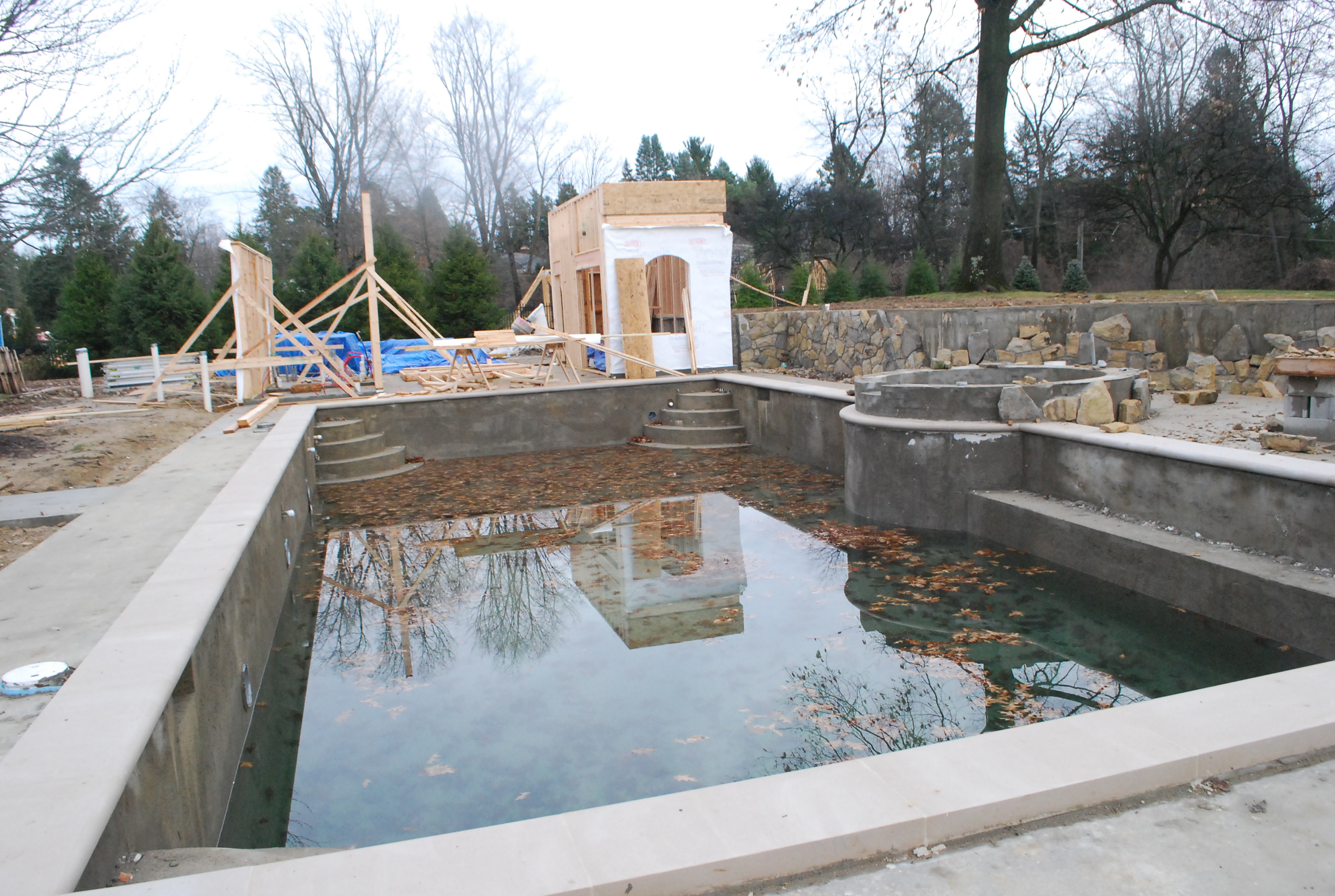
November-2012.jpgOnce the pool walls were installed, the retaining walls that would hold back the sloping ground were installed. These concrete walls had footings installed down 42″ below grade.  This is standard in my zone.  A footing 42″ below ground means frost will not heave or damage the wall.  The wall has a purpose-holding back all of that soil on the upper level.

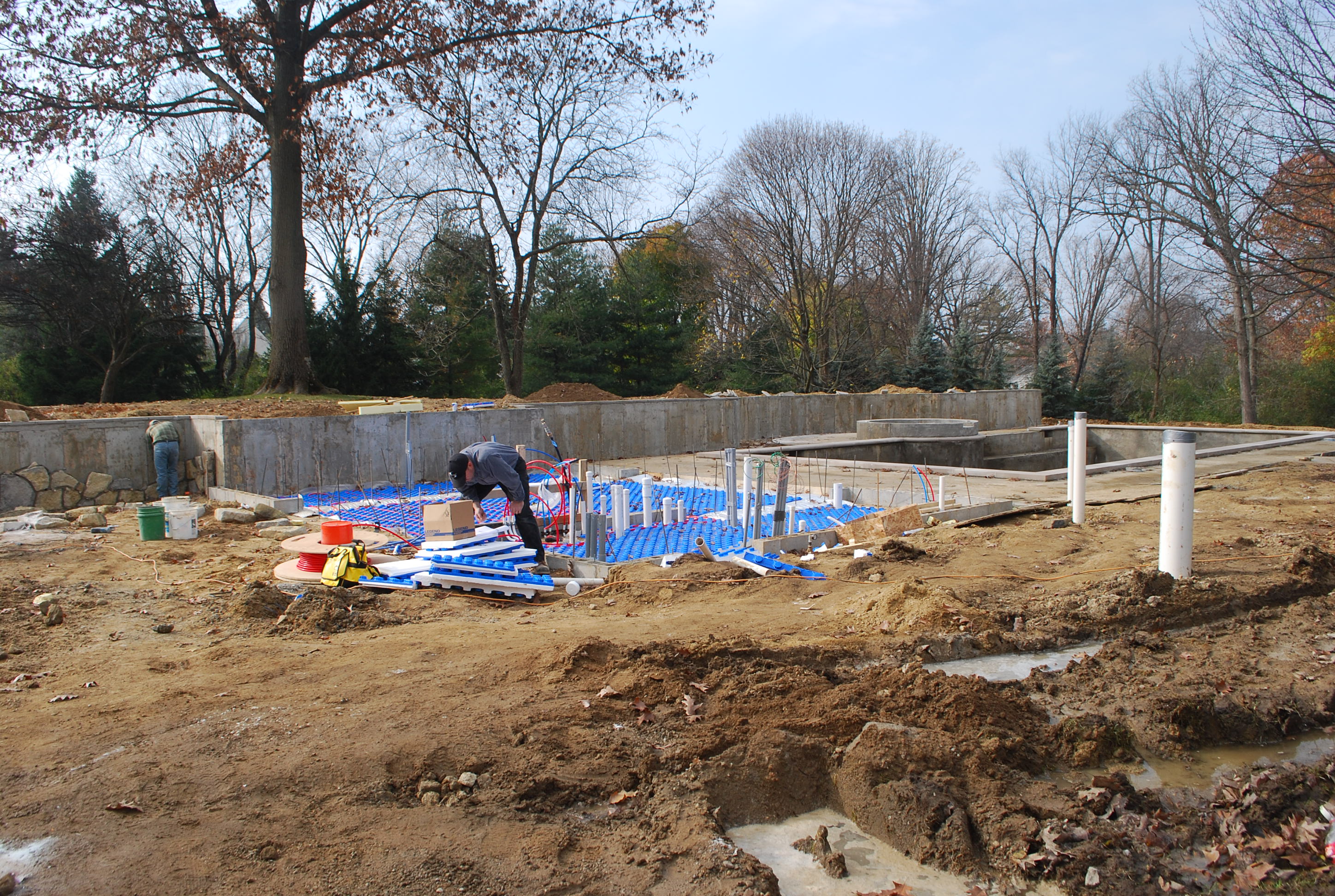
November-9-2012.jpgThe foundation for a pool house included the apparatus required for heated floors.  That came first.  The pool house itself would be constructed with solar panels on the back side of the roof that would heat the space in the fall.  Details like this makes a landscape in a climate like ours enjoyable early in the summer season, and late into the fall.

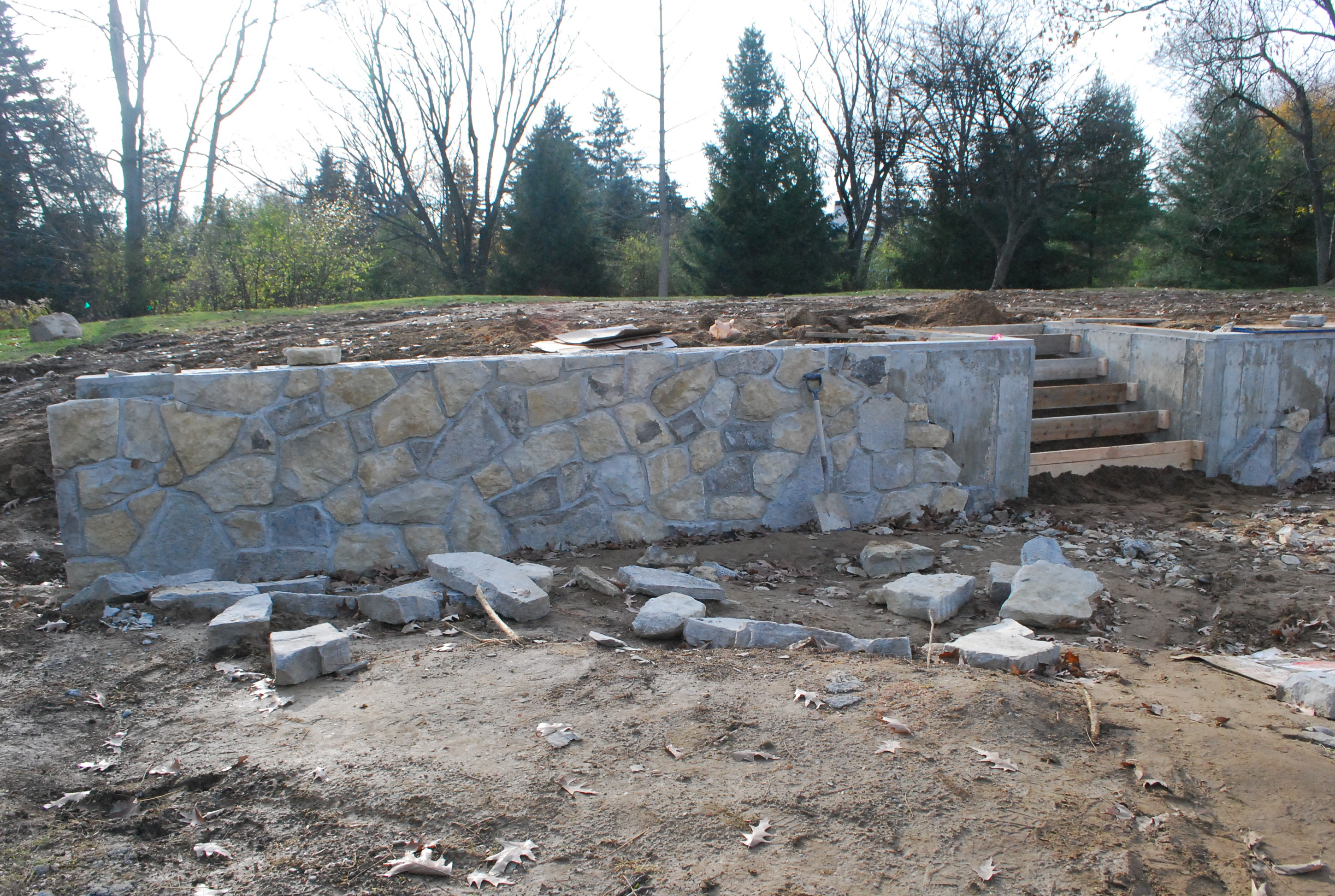
November-14-2012.jpgThe concrete retaining walls needed a skilled stone mason to transform them from the necessary to the beautiful.  Steve Templeton, owner of Templeton Construction, managed all of the construction with  grace, speed, and aplomb.  The dirt and disarray notwithstanding, these walls were beautifully conceived, and solidly constructed.

December-2012.jpgThe construction of the pool and pool house was an affair handled start to finish by my clients, and Templeton Construction.  My part?  I watched. My design work was long finished.  The landscape installation-to come.


March-25-2013.jpg

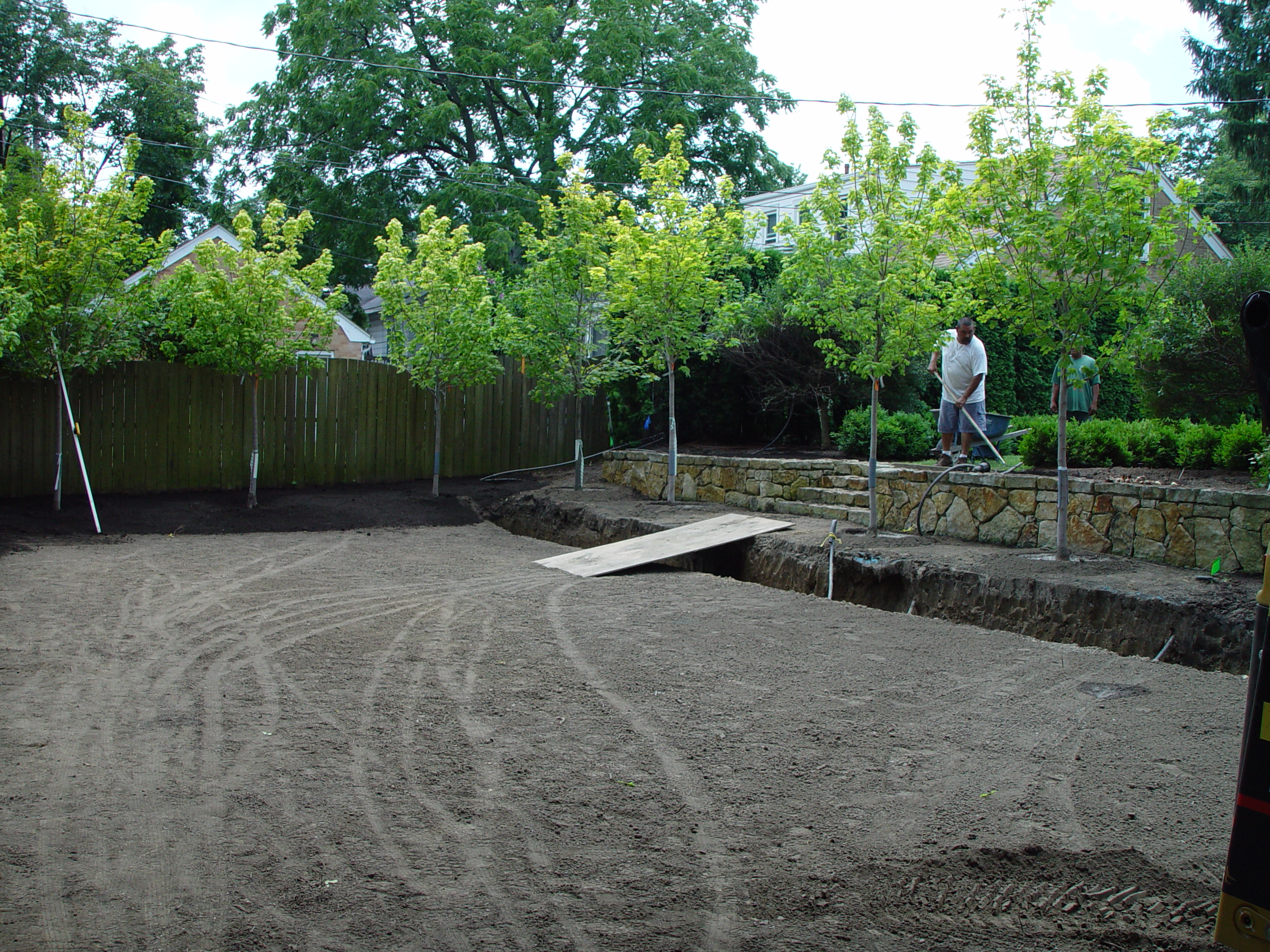
By the time that March of 2013 arrived, the big ideas were beginning to take shape.  Some parts of the landscape took place into the late fall months, notably the finish grading and seeding of the displaced soil.  The first order of business in the landscape was the installation of the large trees.  They had to be planted first, as once the rest of the landscape was finished, there would be no access for the equipment necessary to handle large trees.

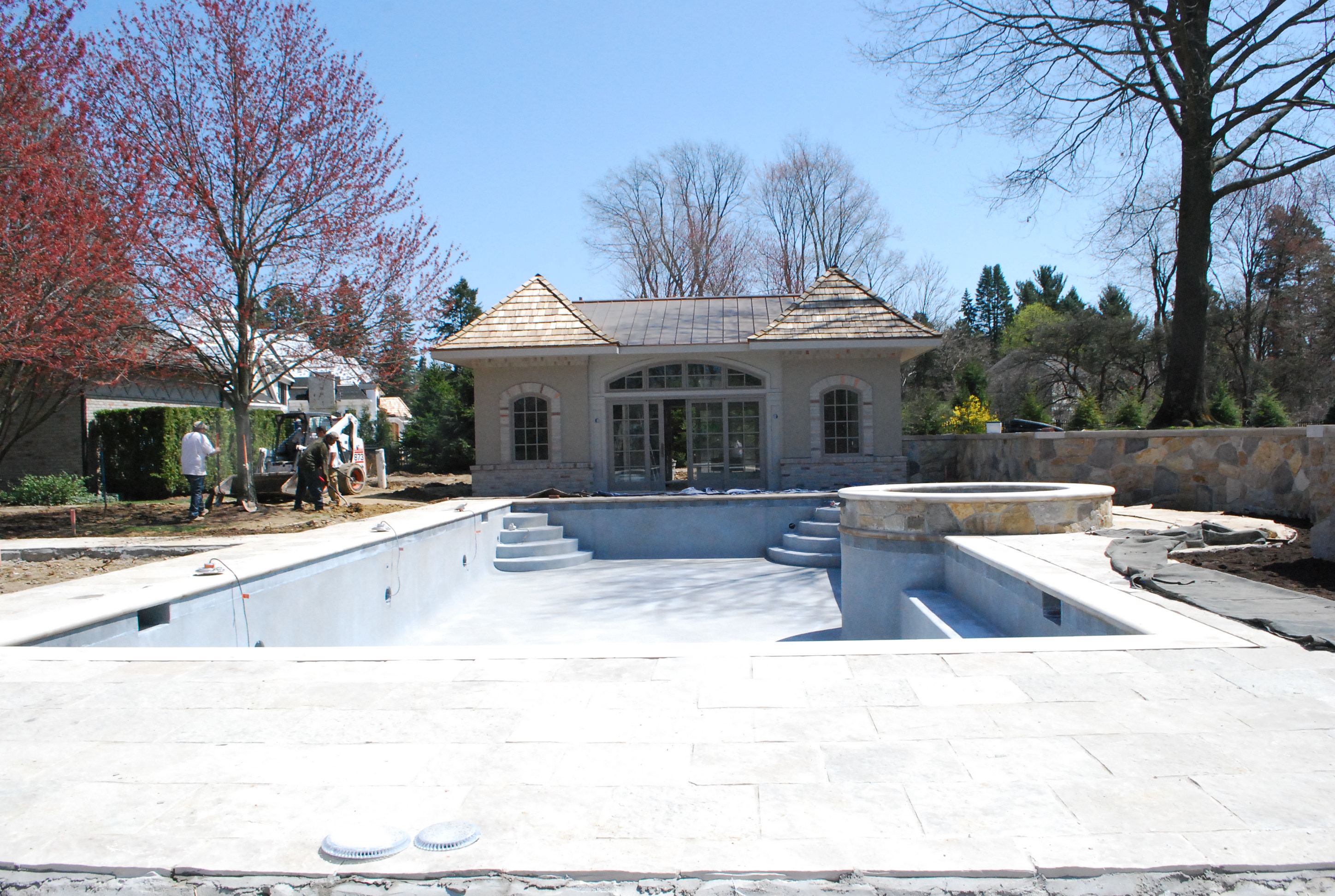
April-2012.jpgBy April, the pool house was up; the interior was under construction. The pool was finished, and waiting for warmer weather.  The landscape comes last, as the heavy construction occupies just about every inch of the space around it.  Once the exterior was finished and the debris cleaned up, we were ready to begin.

May-2013.jpgIn May, the addition of soil, grading, and prepping of the oil to plant was underway.  All of the beds were graded to meet the grade established by the pool and pool house. The existing landscape needed to be welcomed into the new design.

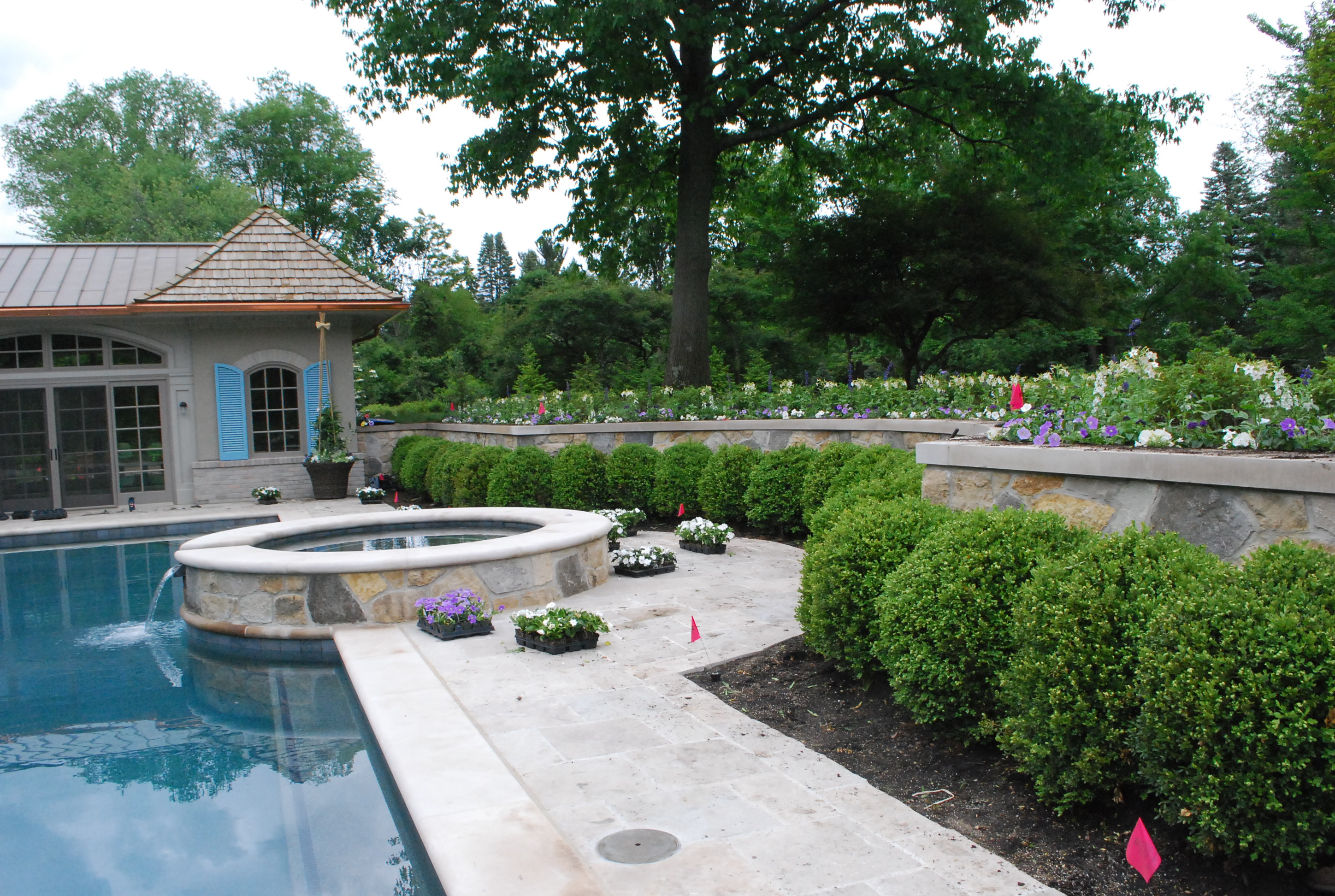
June-2013.jpgOnce all of the woody plant material was planted, and an irrigation system in place, the project was ready for grass, perennials and annuals.

June-2013.jpgBy this time, my clients were more than ready to give up the construction phase, and move in.  Who could blame them?  A project like this takes a lot of time to plan and execute.  There are problems that require attention.  In this case, quite a bit of drainage work was done before the finish.  Heavy spring rains created delays.

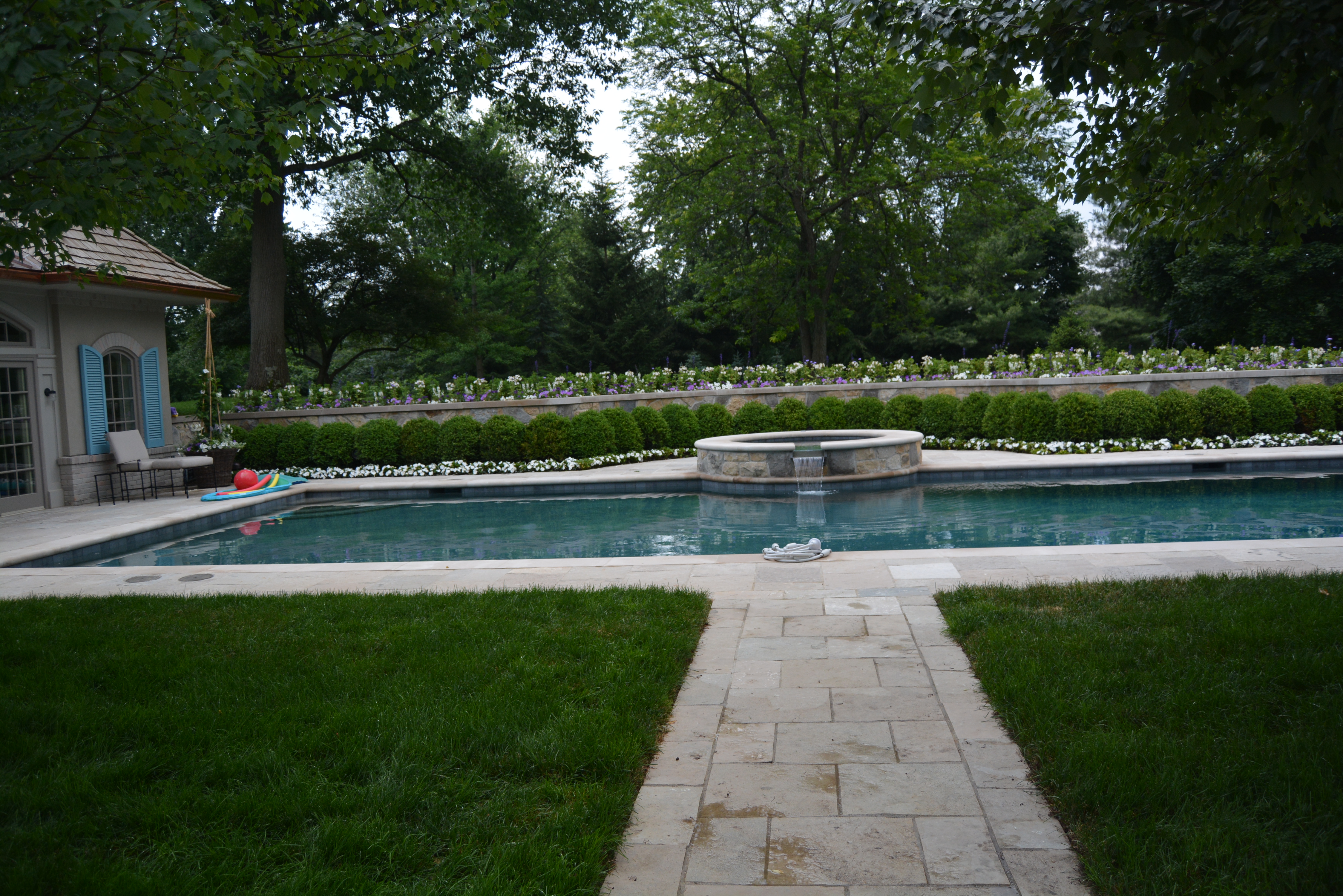
August-2013.jpgThe day when all of the commotion dies down, and a project comes to a finish, is a good day for a client. From start to finish, 11 months.  It is a satisfying day for all of the contractors who contributed to the final outcome.

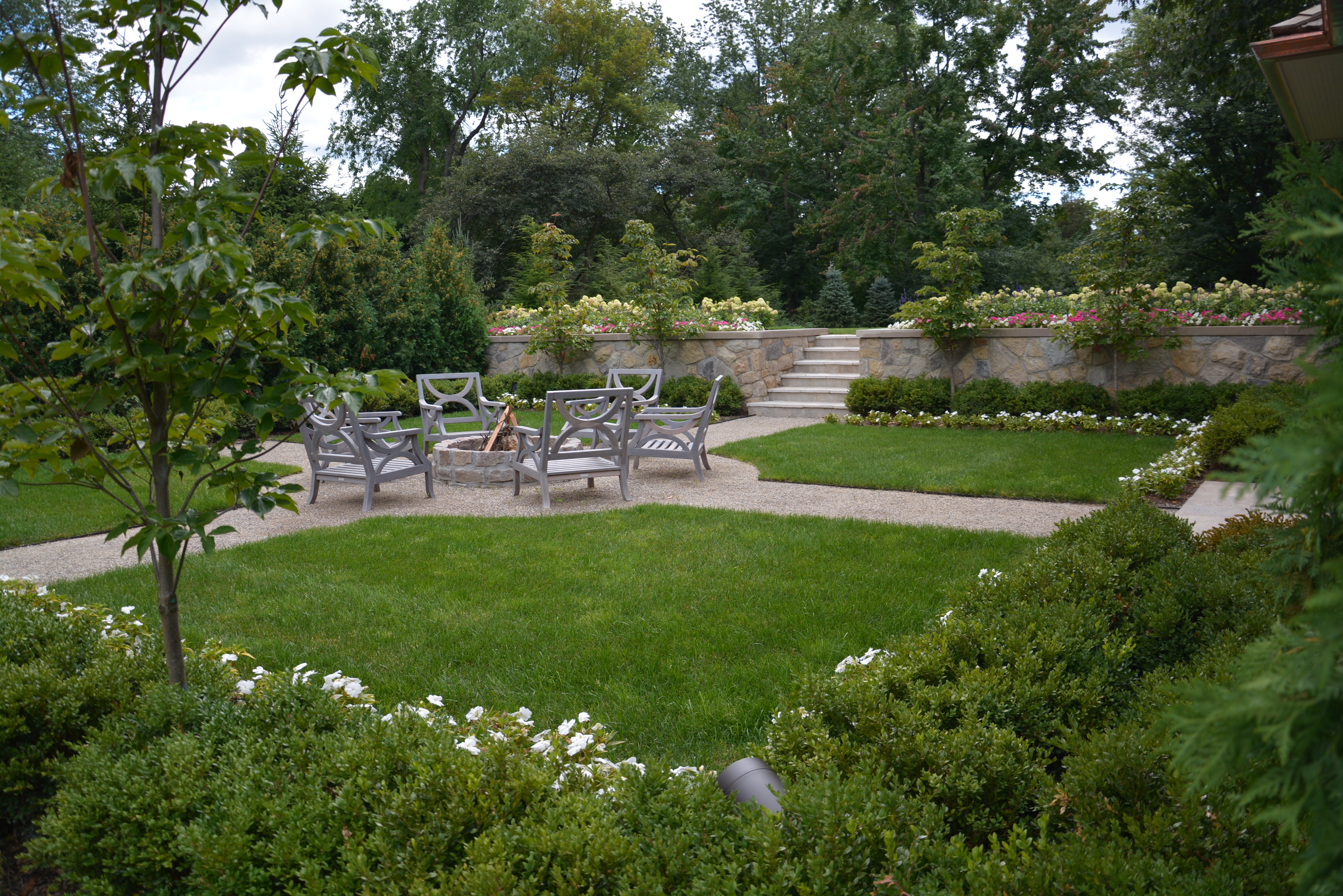
August-2013.jpgOf course with a landscape, there is no final outcome.  This was the beginning.  I find that big projects created from a few bold and simple ideas are easier to stage and execute.  A plan for the logical order of events helps make a project come to fruition with a minimum amount of lost, down, or wasted time.  But even more importantly, a simple plan that focuses on establishing spaces, and creating structure leaves the door open for the future.  Should a client have success with a new landscape, and become more interested, gardens can be added.  A grove of fruit trees might be just the thing.

August-2013.jpgNew landscapes, whether big or small, benefit from a plan that prioritizes what needs to happen first.  A plan that asks for a lifetime’s worth of landscape development to be installed all at once puts a big burden on the client.  Once the installation is finished, my work is done.  But the work is just beginning for the client.  I like them to have the opportunity to decide whether they would like to take things further.  After they catch their breath with this phase, that is.

August-2013.jpgOnce the structure of a landscape is installed, it may speak back in a way that a designer and the client did not anticipate.  There may be surprises, second thoughts, or new ideas.  There may be something that does not work out.  Better one problem to solve, than a long list of problems to solve.

August-2013.jpgI think it is important for clients to experience success in maintaining a project.  A landscape design and installation is no better than the maintenance it takes for it to prosper.  They might decide they like the landscape that is doing well enough to do more.  A big perennial garden might be just the thing, providing the timing is right.  Not everyone would want as much to care for as I have.  Not everyone would want as little to care for as I have.  That degree has to emerge.  Better that the first part of the project creates a structure which can stand on its own.

late-August-2013.jpgThe degree to which a client is willing and excited to take ownership at the end of a project is no small measure of the success of the design.