Building The Lucerne Pergola

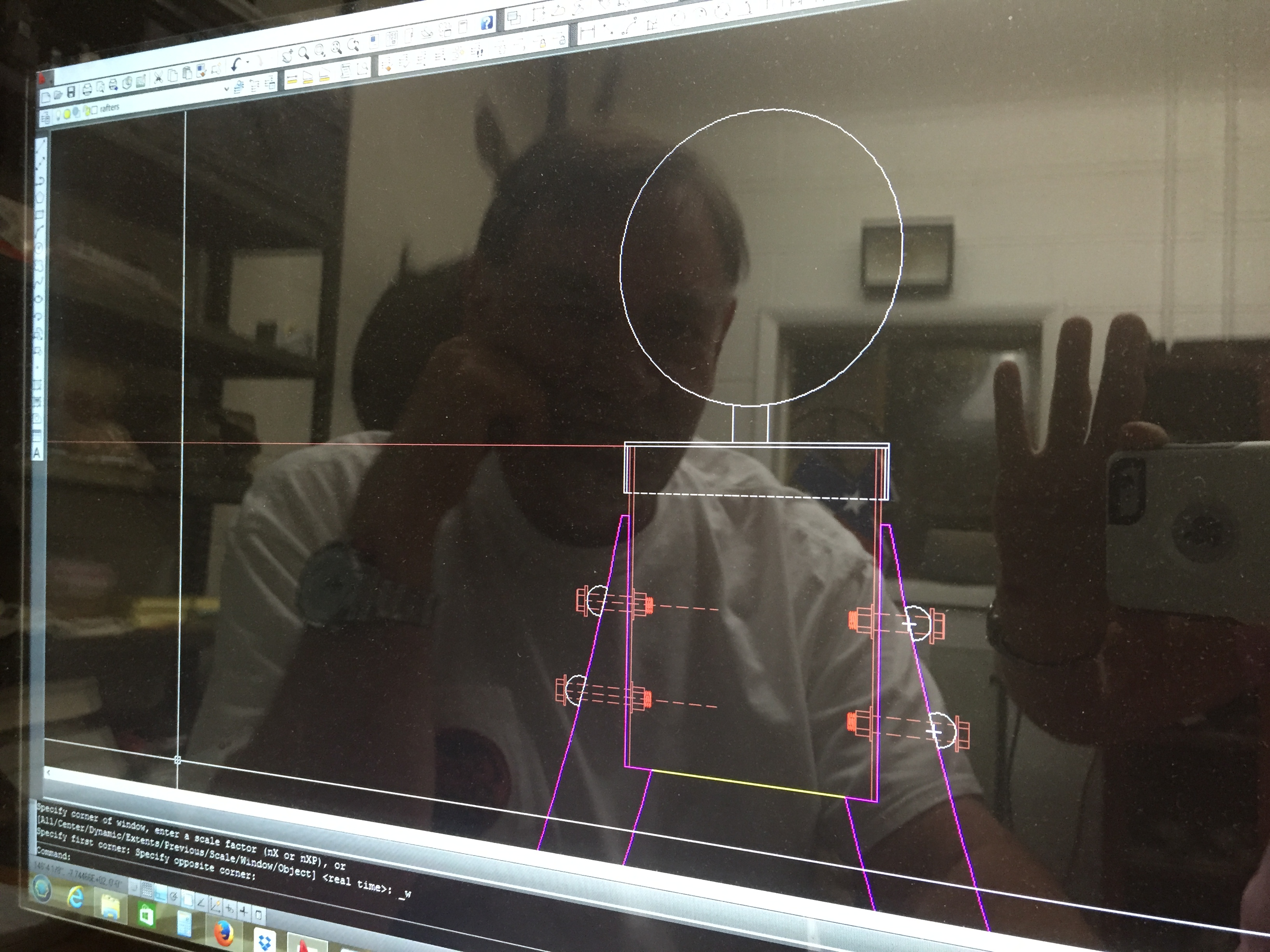
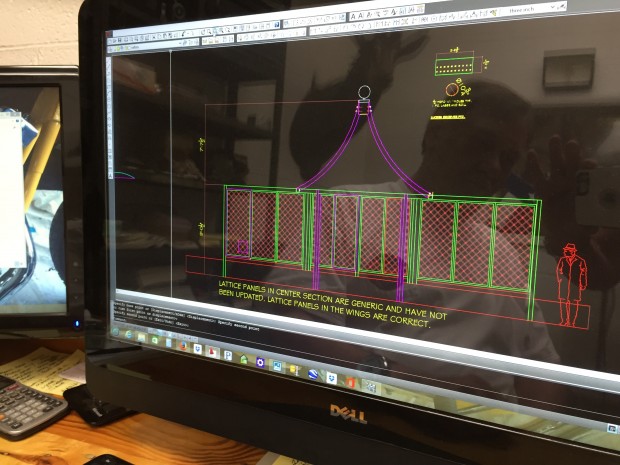
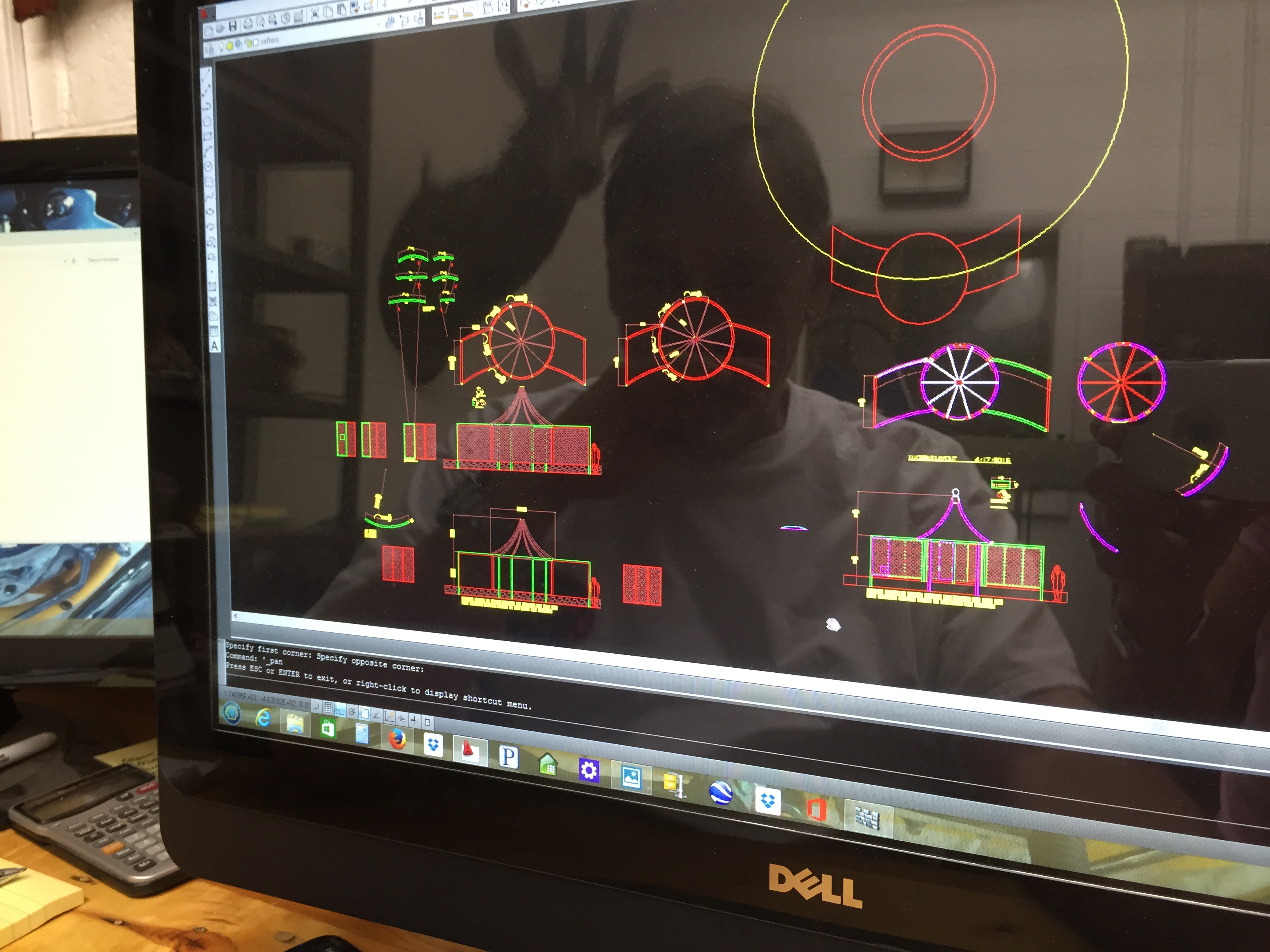
the Lucerne pergola (2)Phase 1:  Design, engineer, and build  Once Buck had my sketch for the pergola, there were a lot of drawings that would need to be done.  The CAD drawings would indicate the angles, the rolling radiuses, and the exact sizes of every piece of steel that would be necessary to fabricate the piece. Buck constructed the pergola full size – down to the last bolt hole – in the computer.

the Lucerne pergola (3)

the Lucerne pergola (4)

the Lucerne pergola (5)

the Lucerne pergola (6)

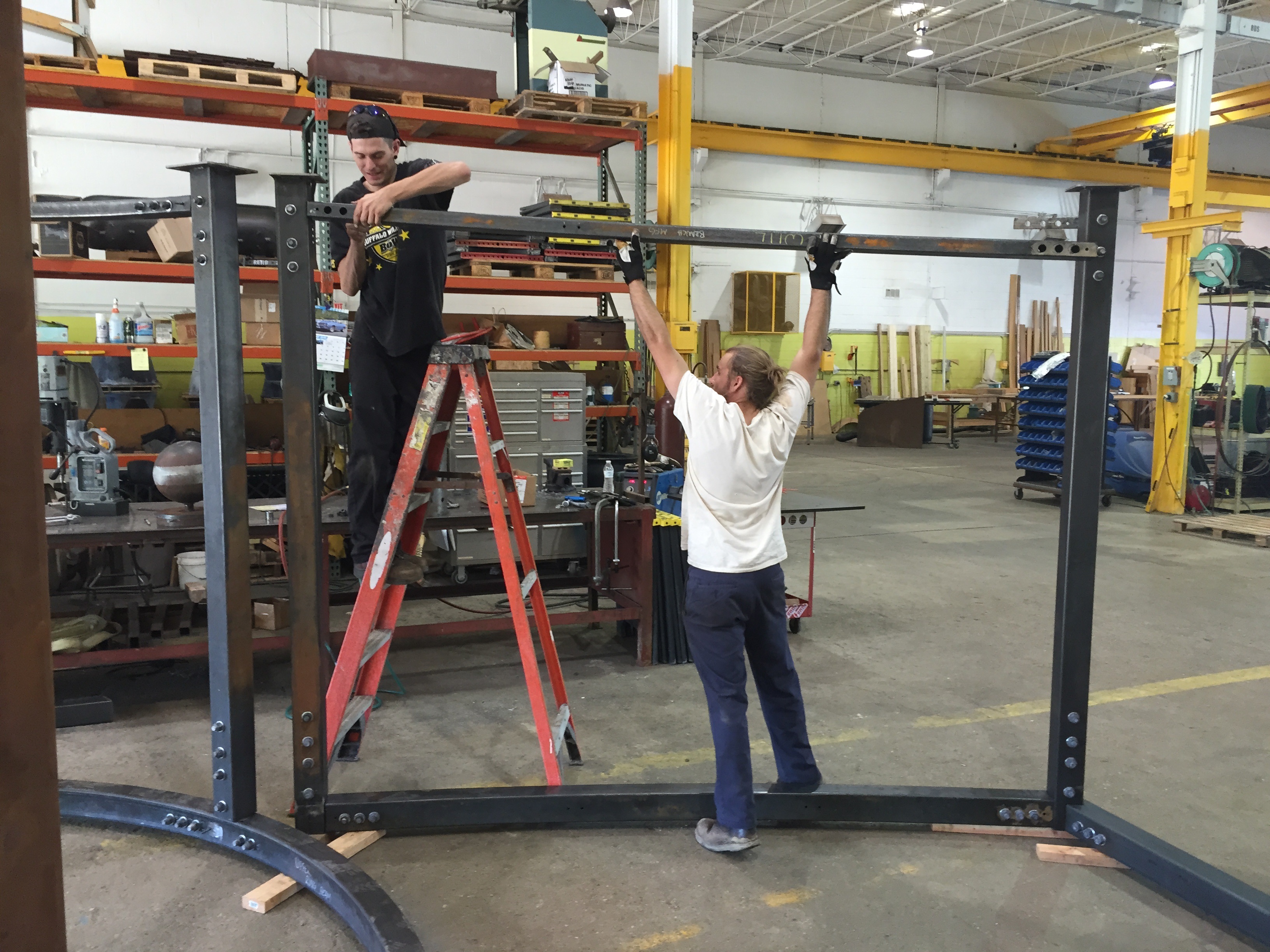
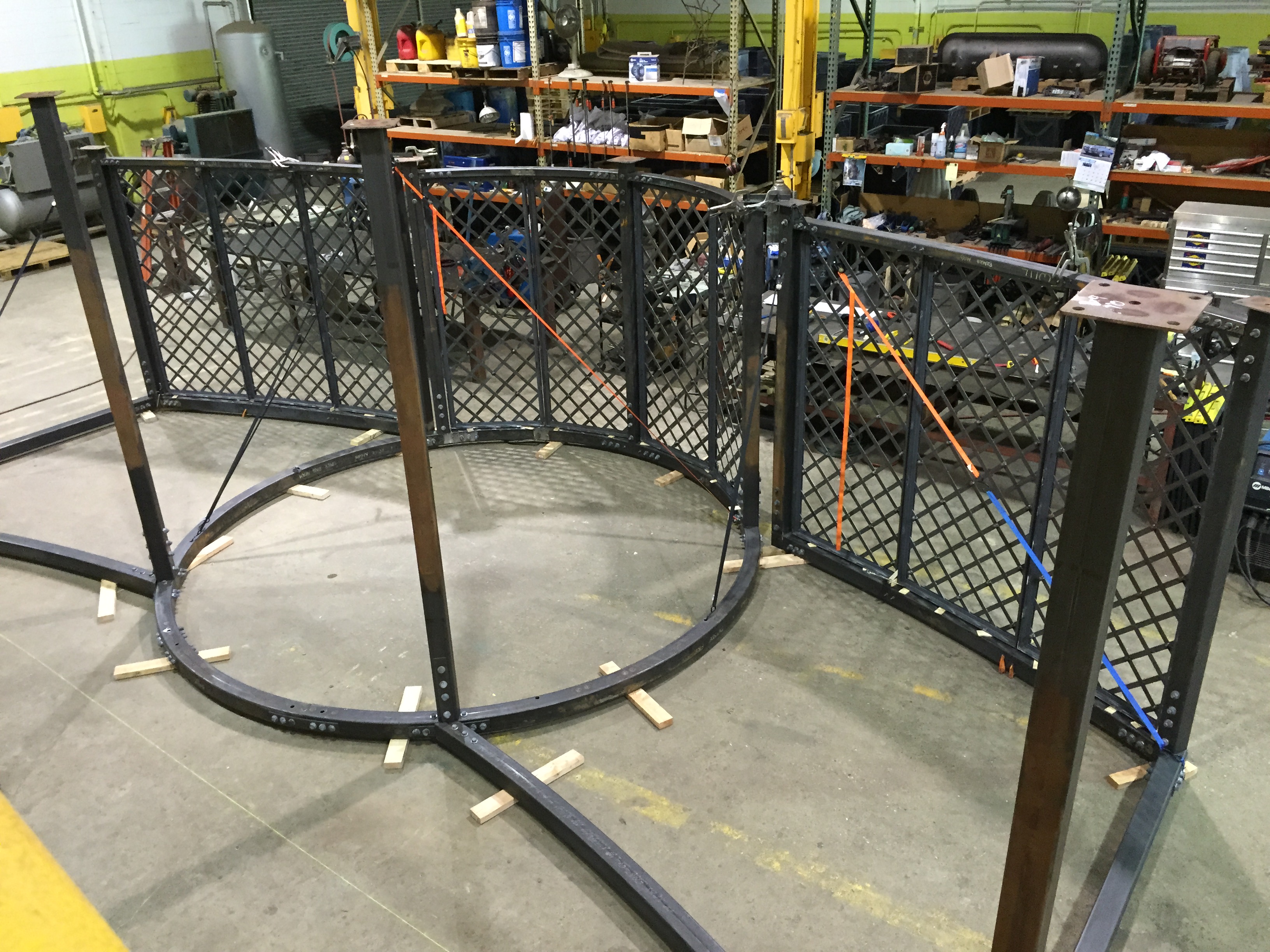
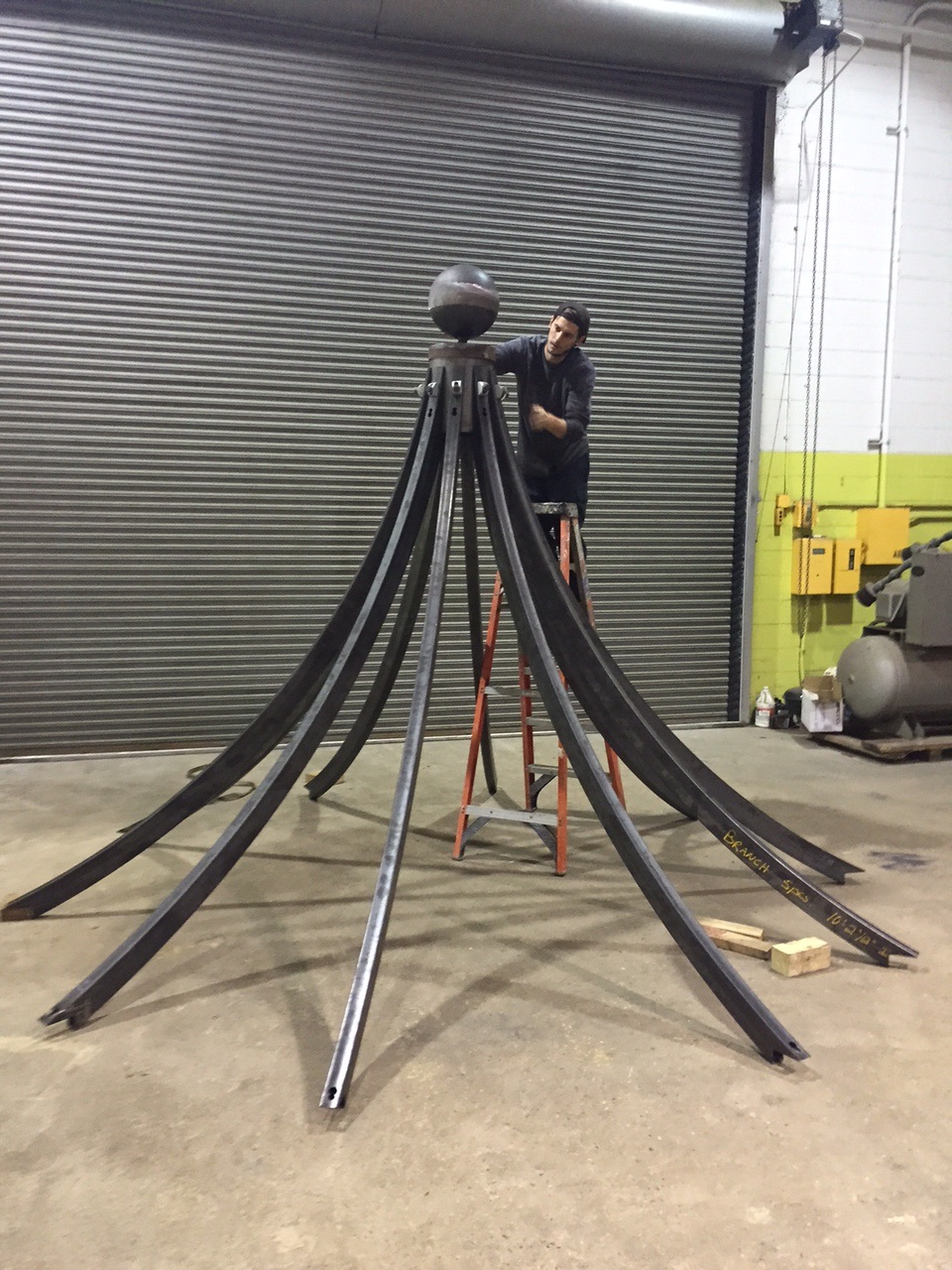
the Lucerne pergola (10)Buck’s crew put the base of the pergola together up side down, to be sure every piece fit together properly. Owen was the lead fabricator on the project, with help from Adam, Riley, Sal, LaBelle, and Buck.
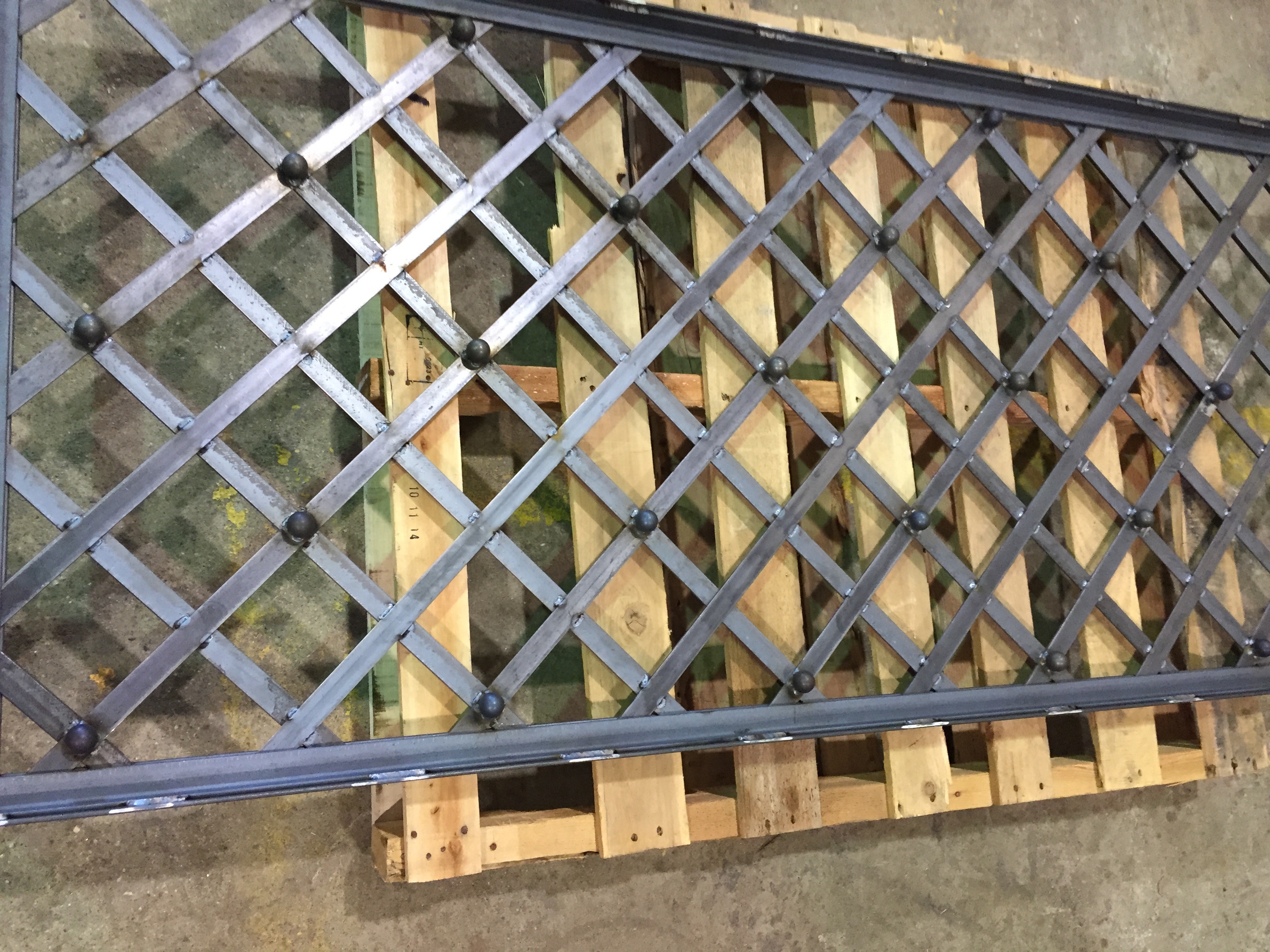
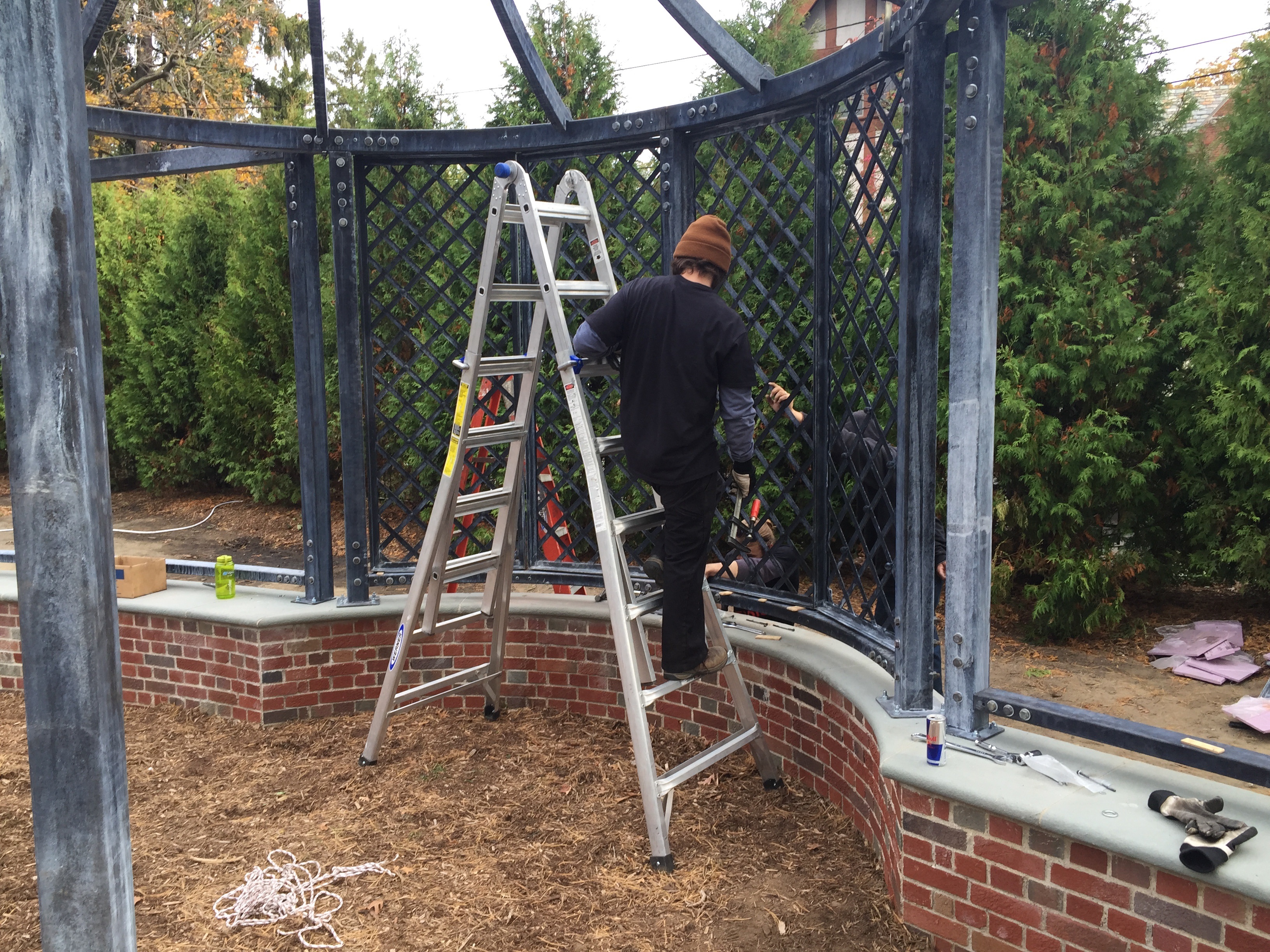
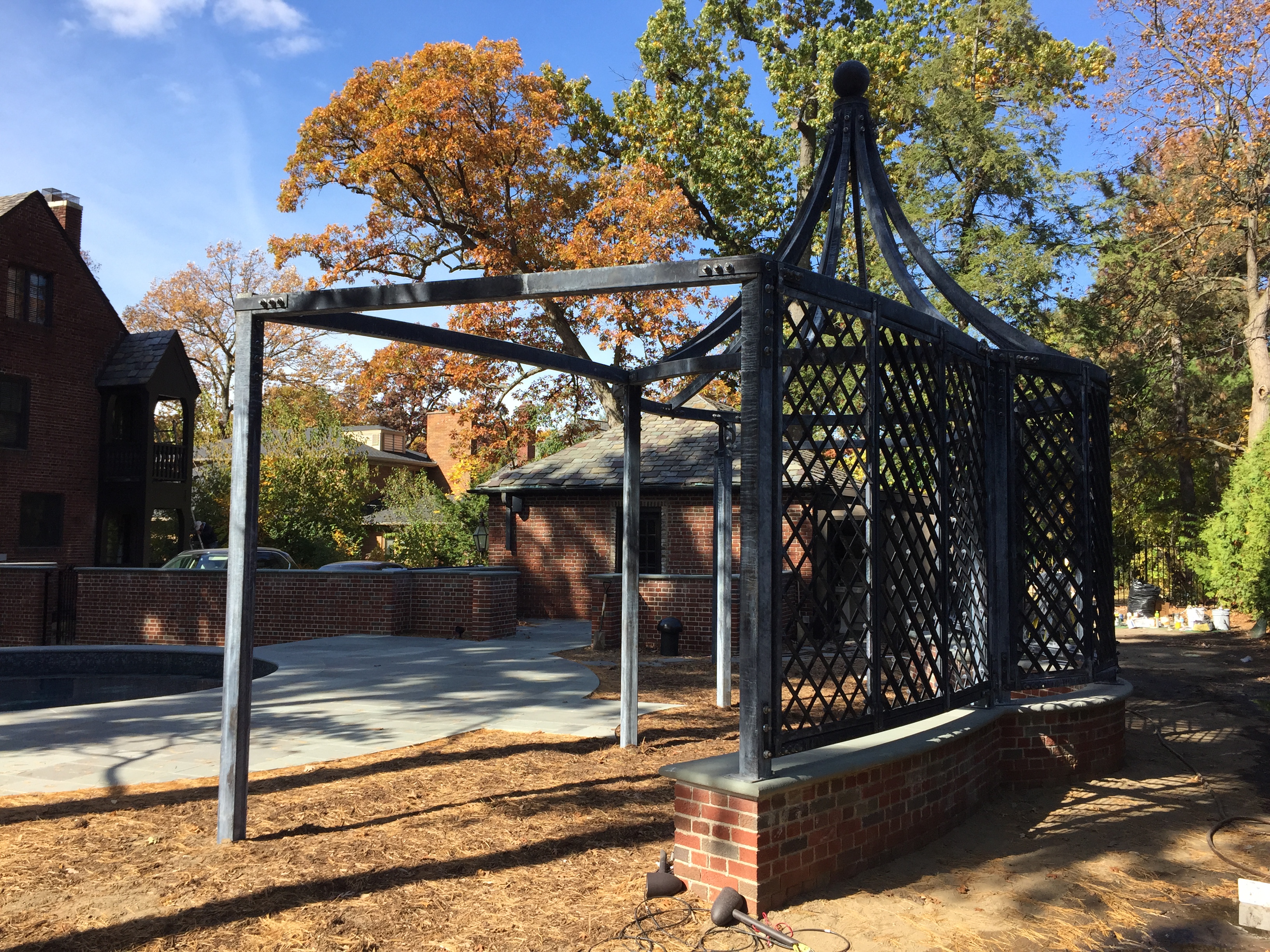
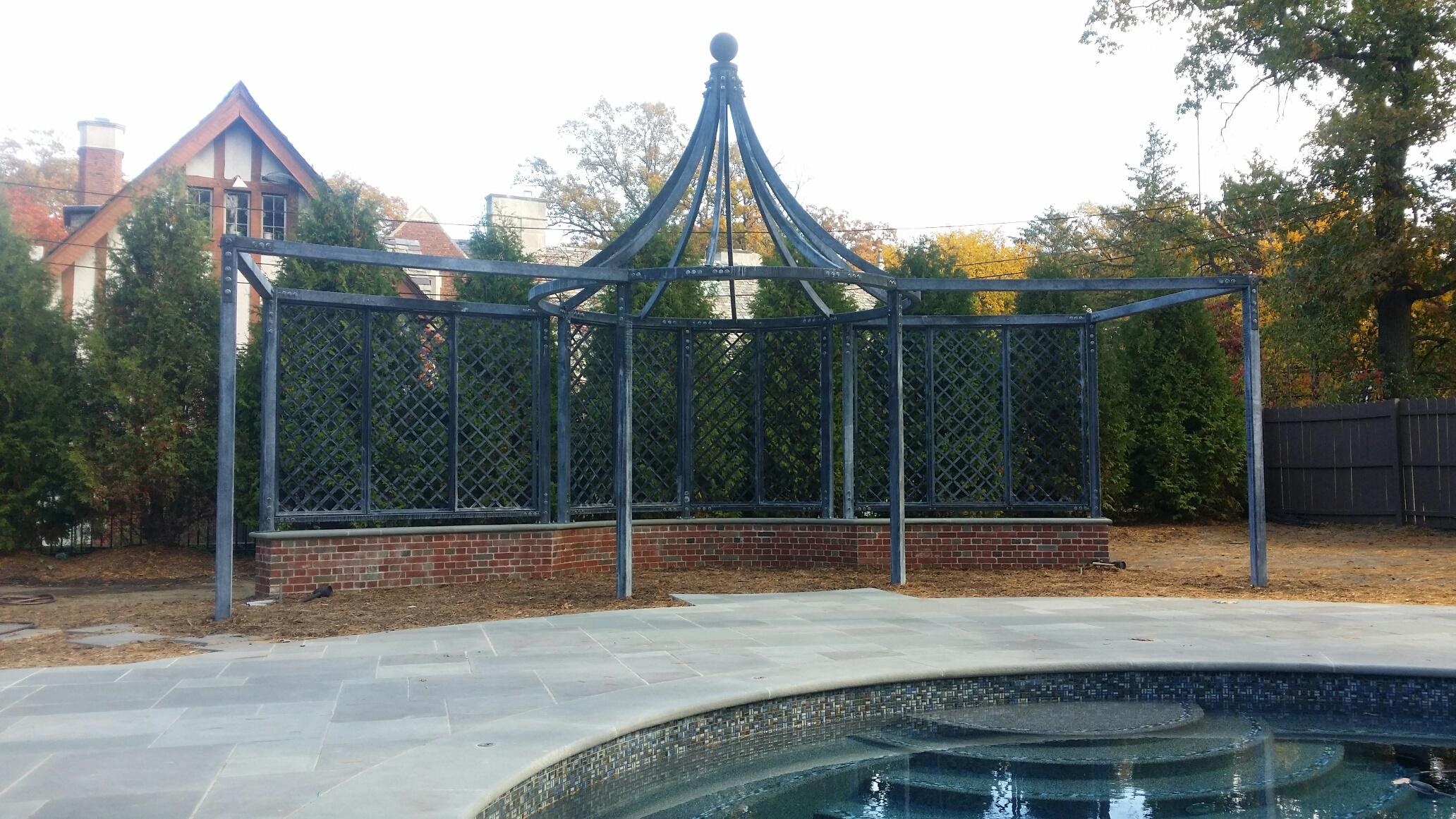
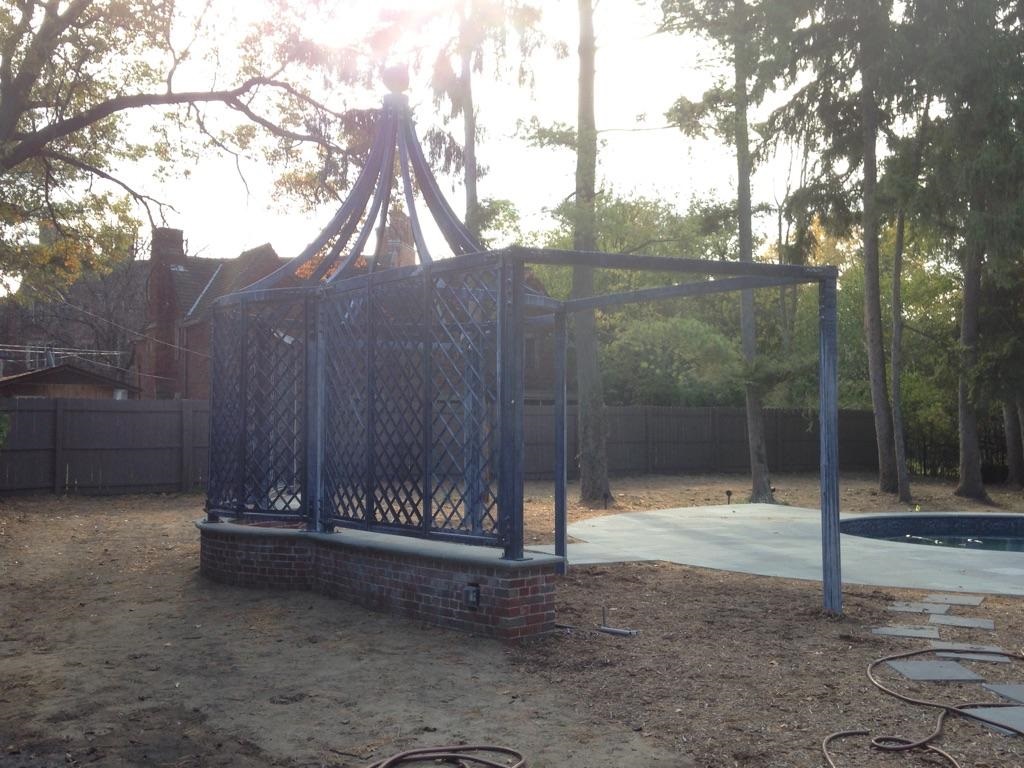
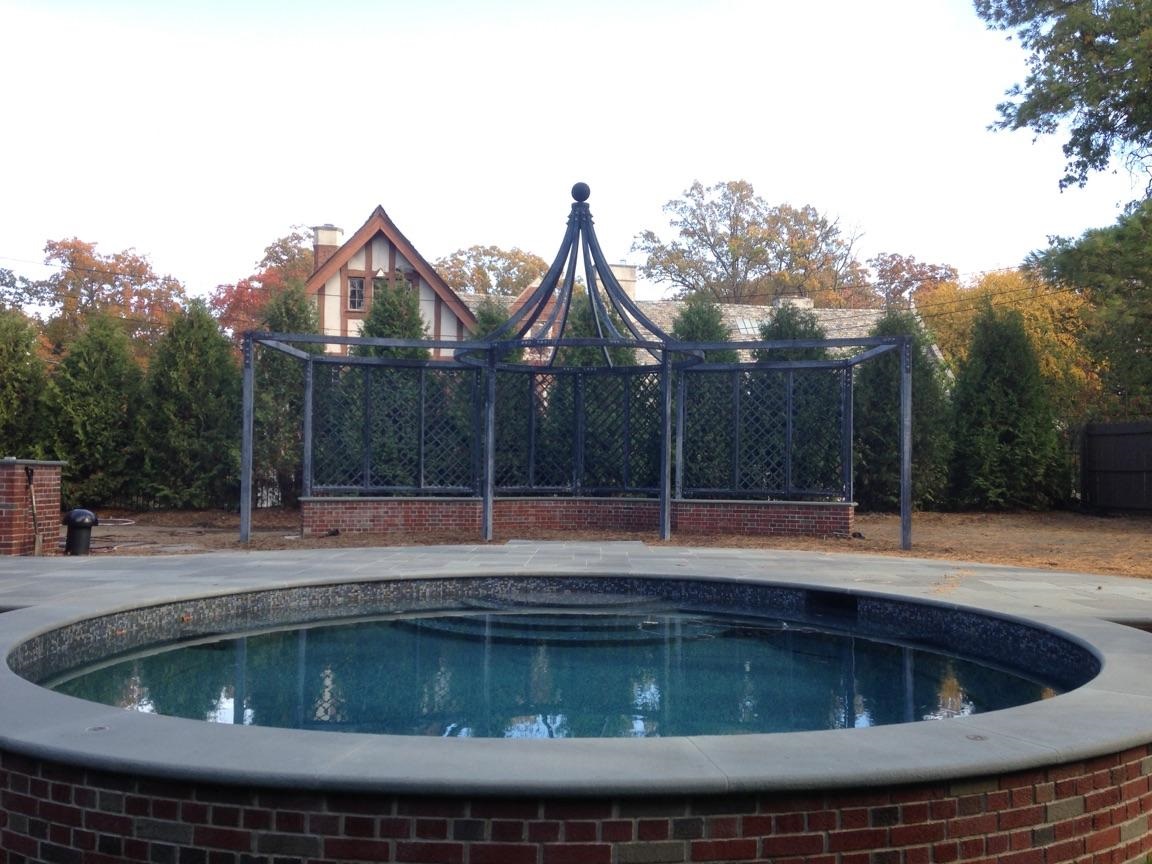
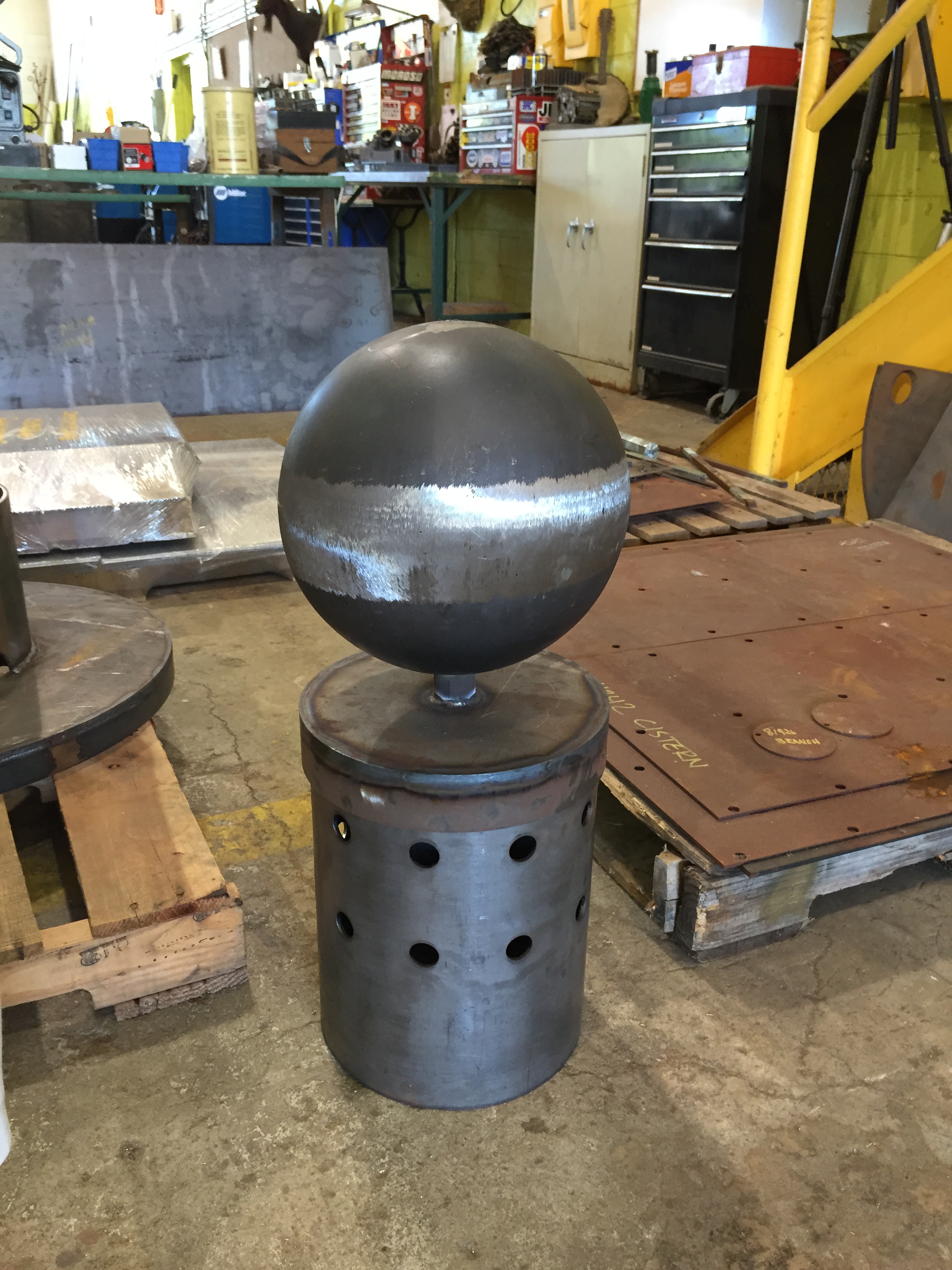
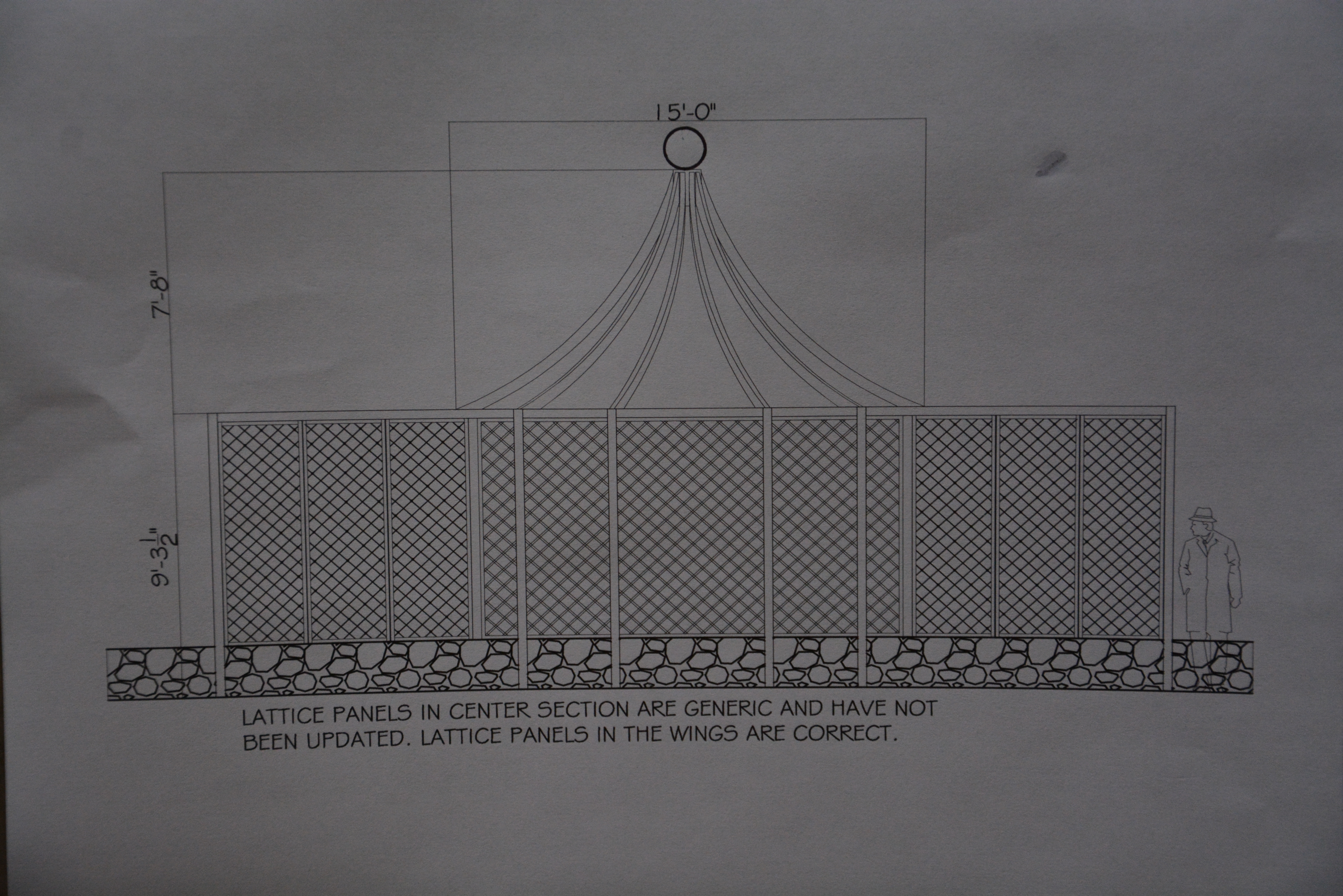
the Lucerne pergola (8)Lattice panels were designed and fabricated as an open wall for the back of the pergola, and feature a steel ball detail.
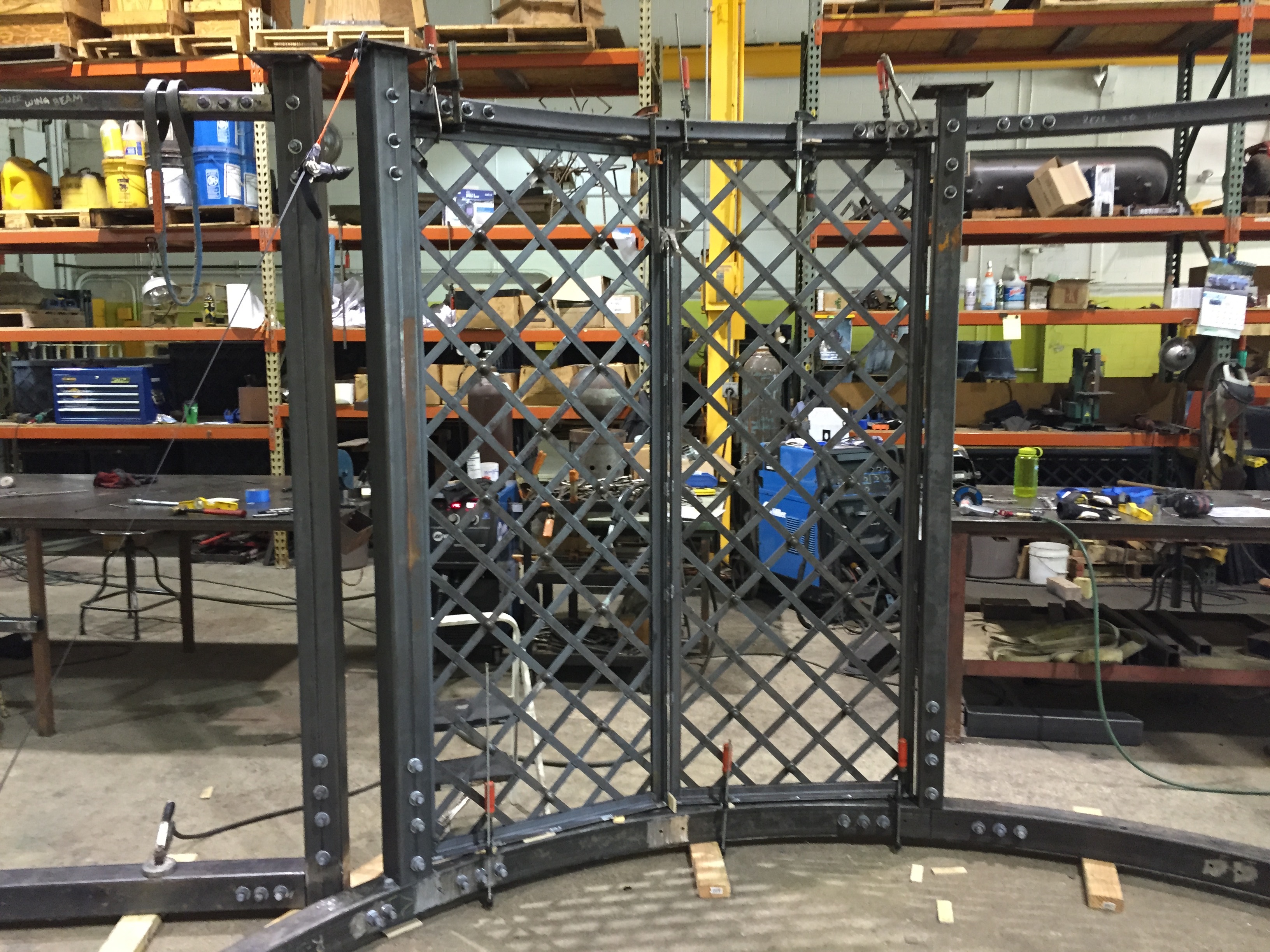
the Lucerne pergola (9) Each of nine panels were hand fabricated and fitted to each opening.
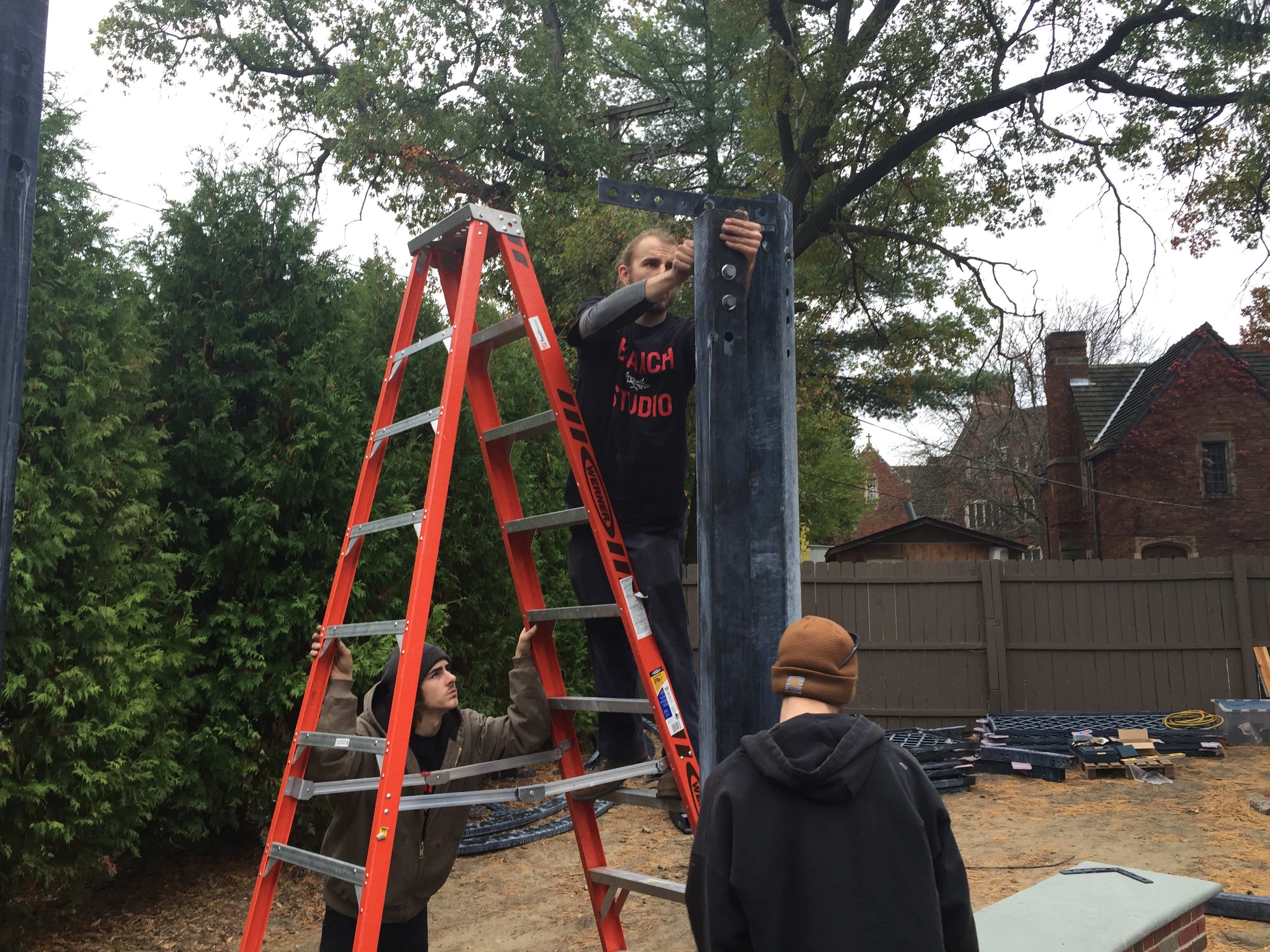
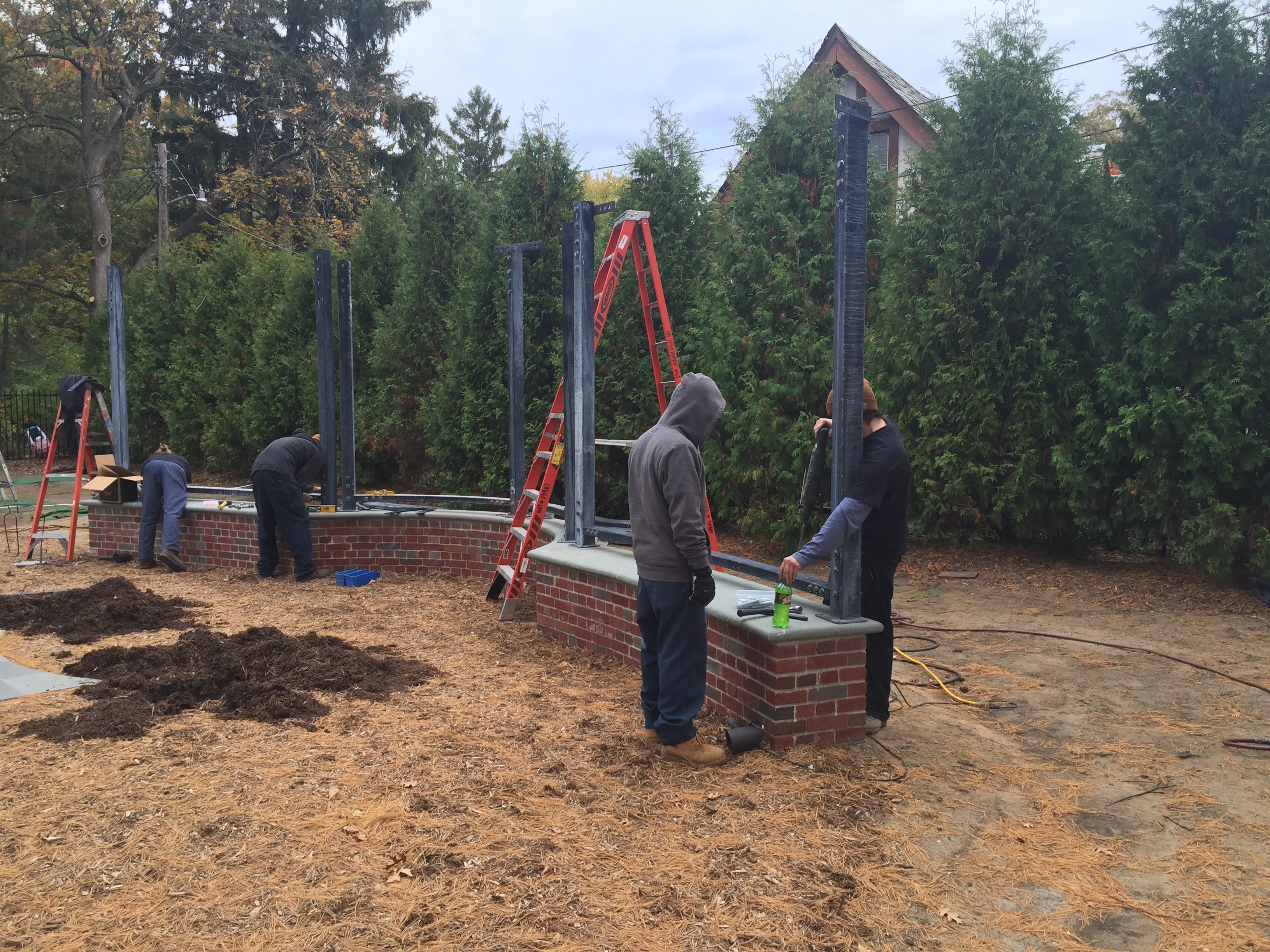
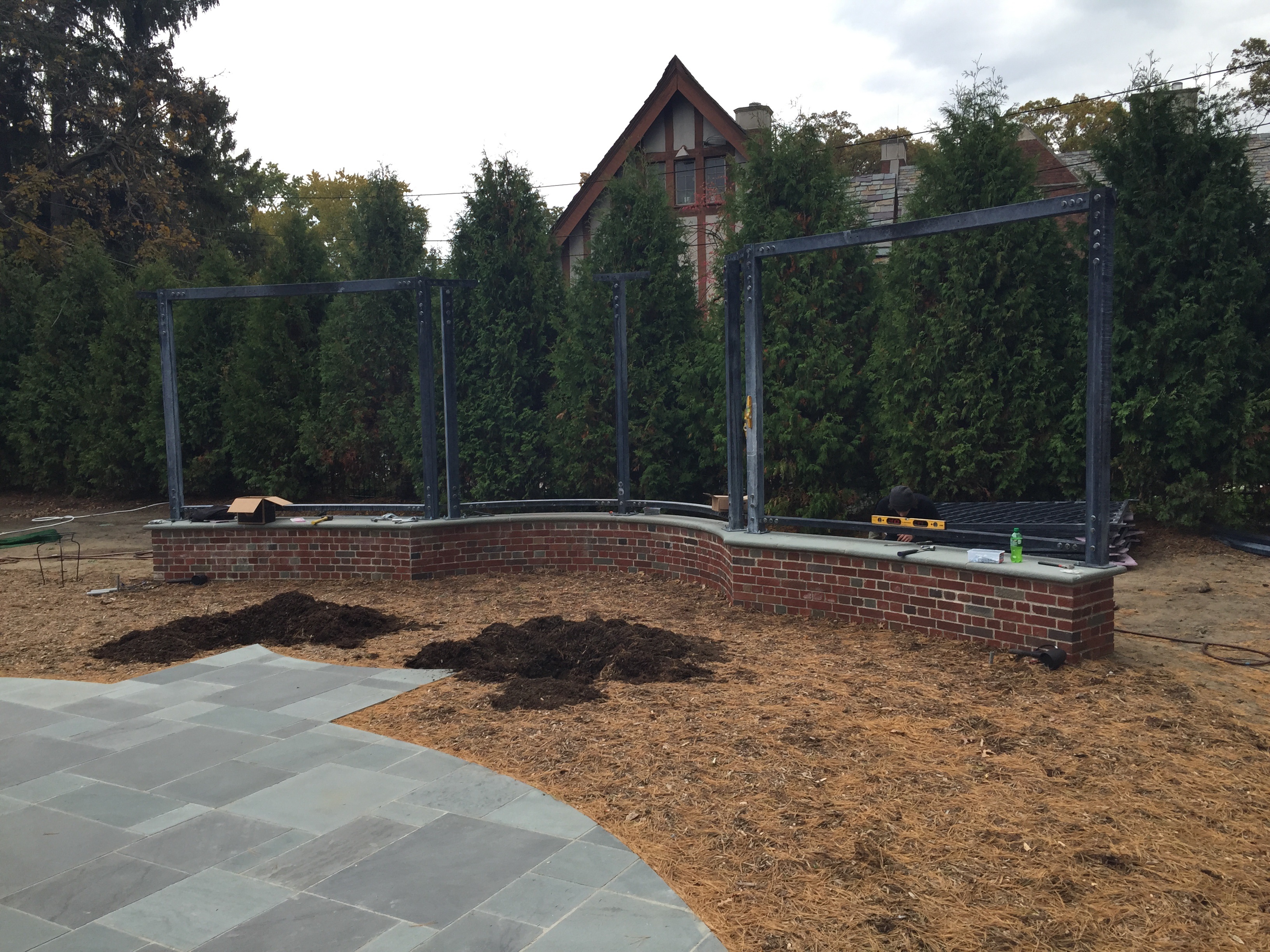
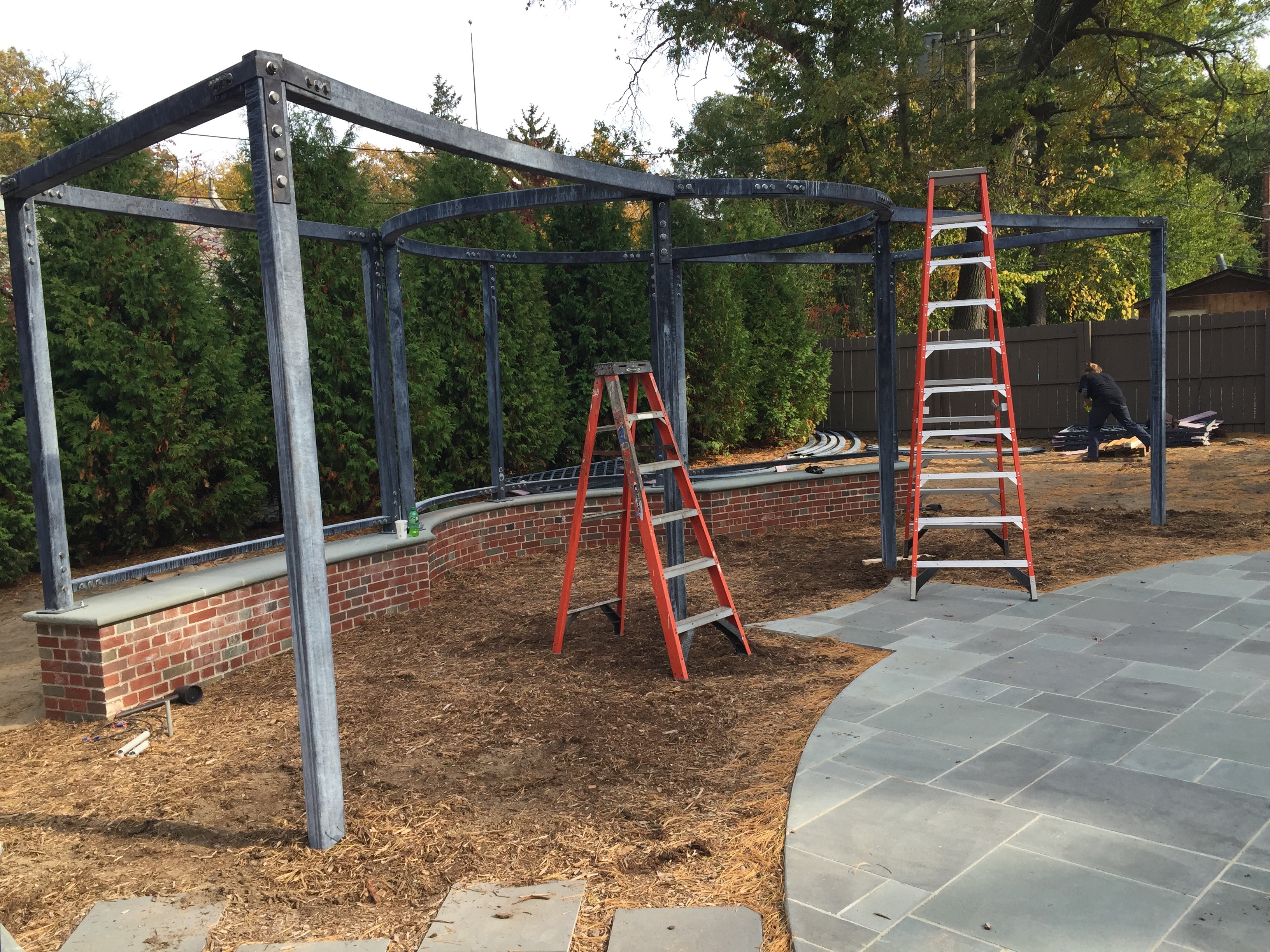
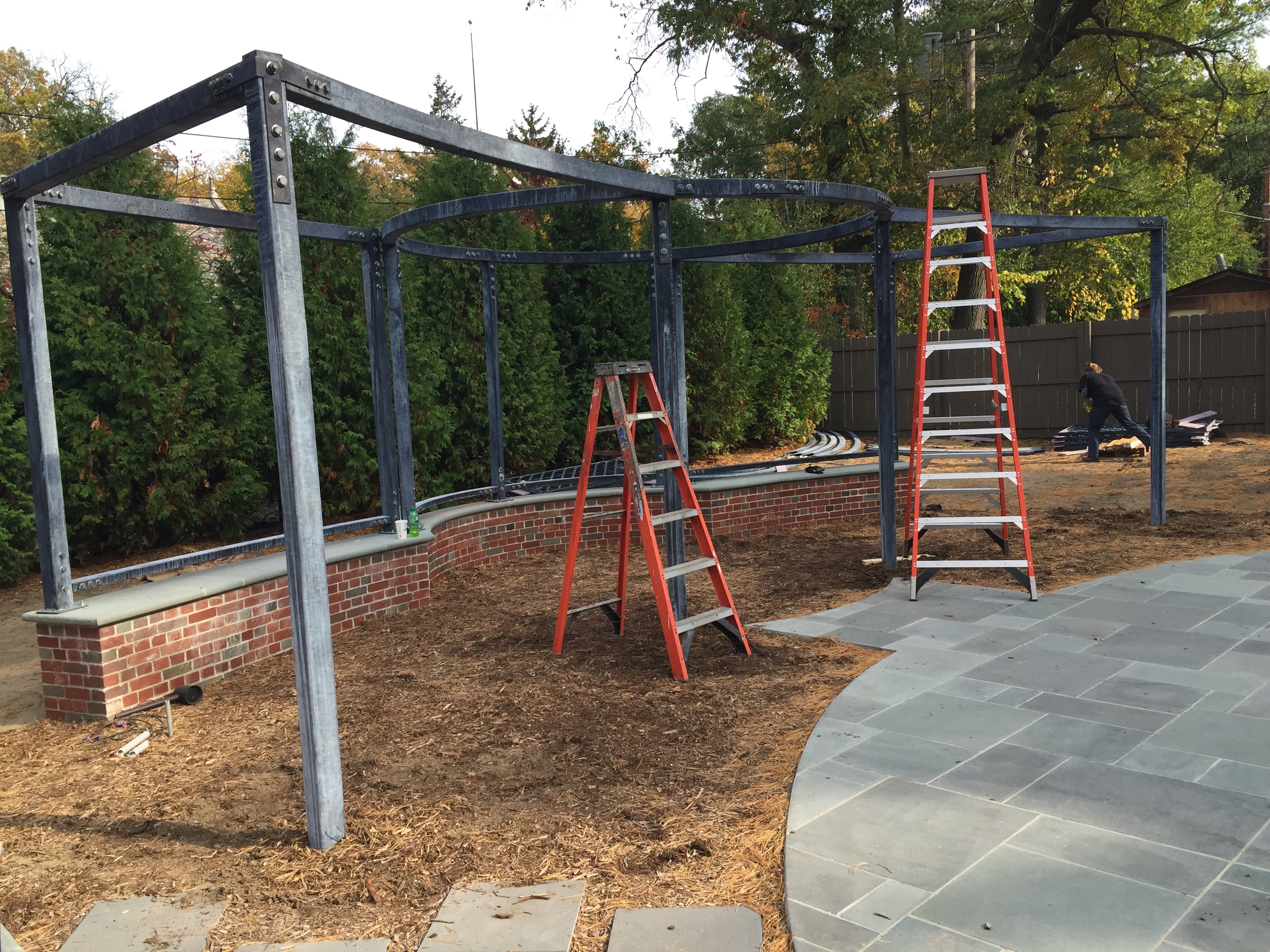
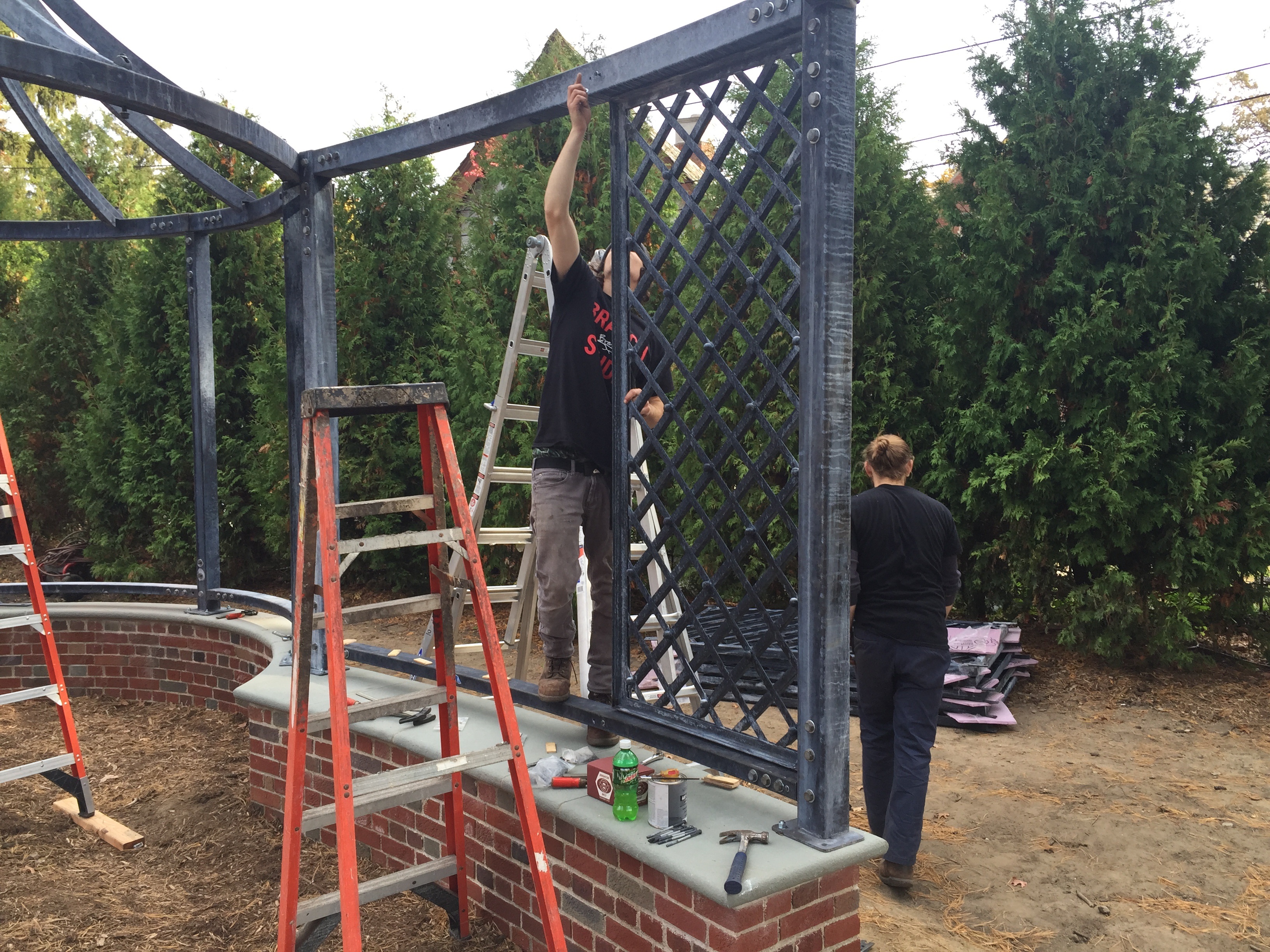
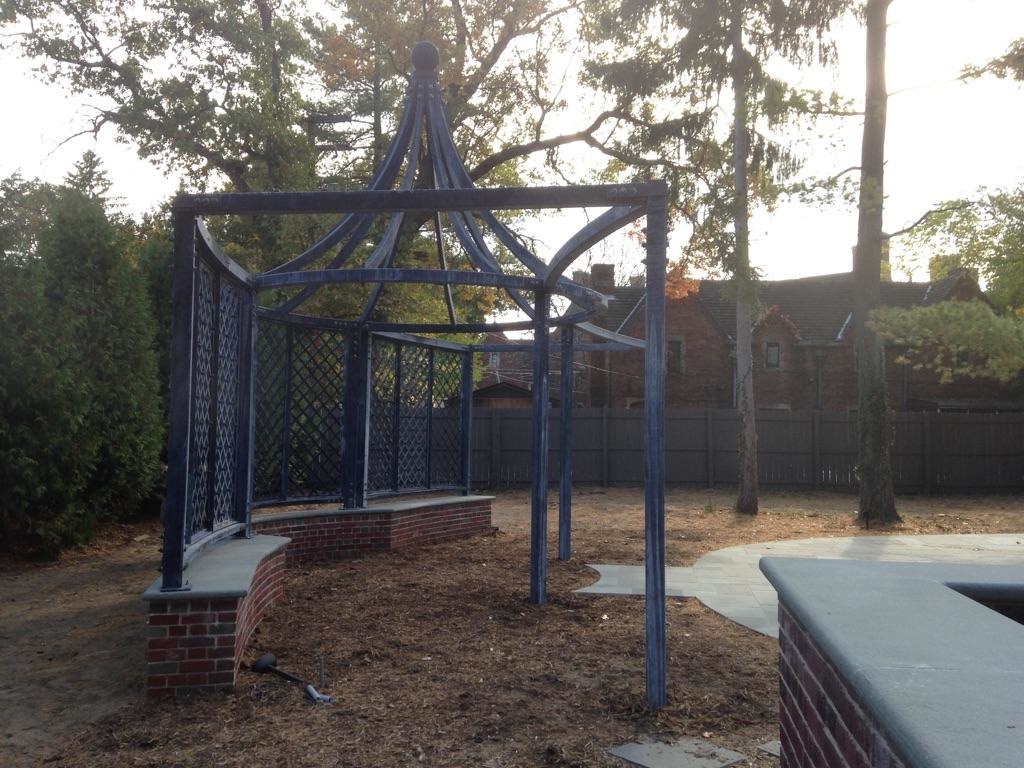
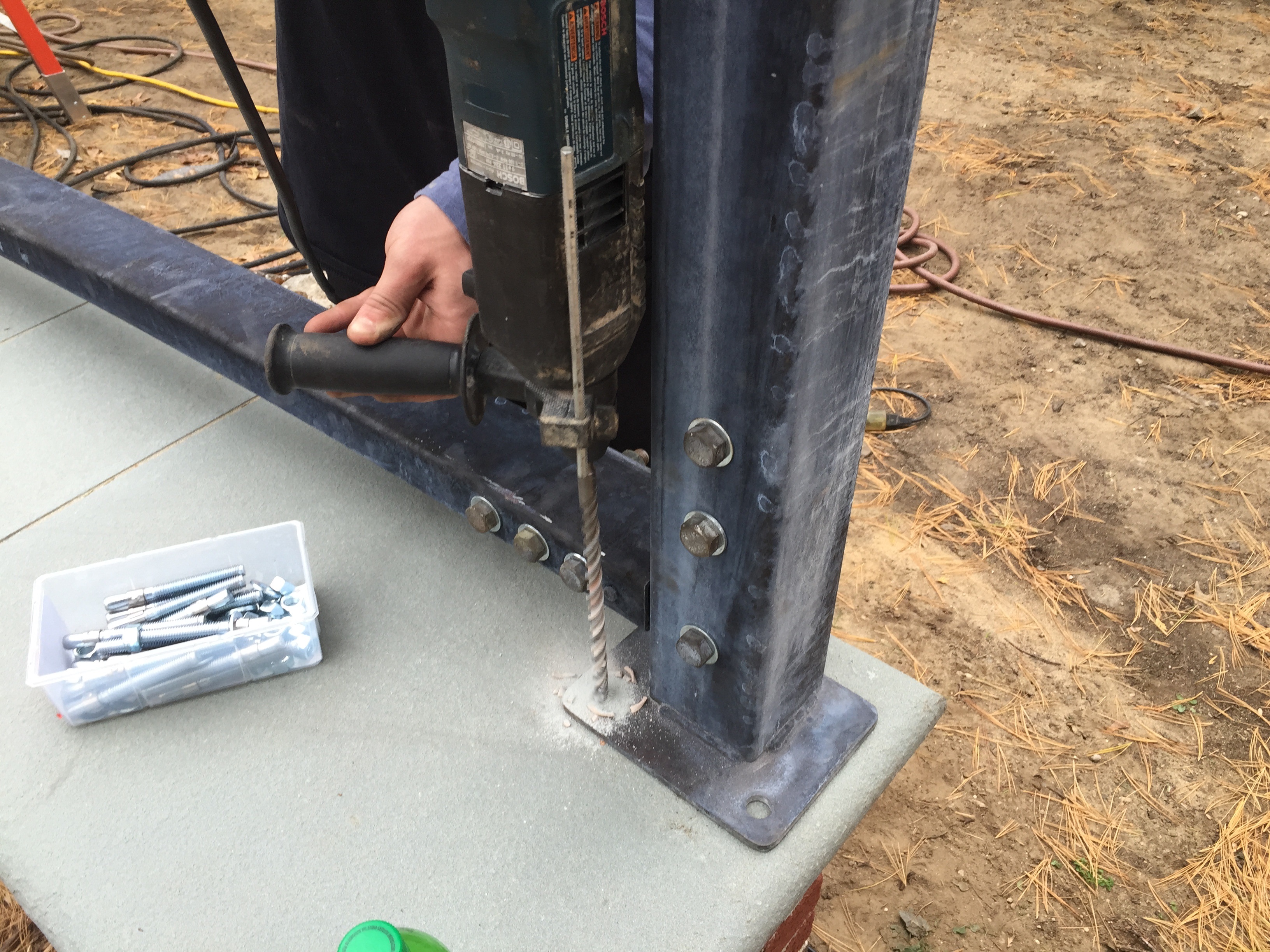
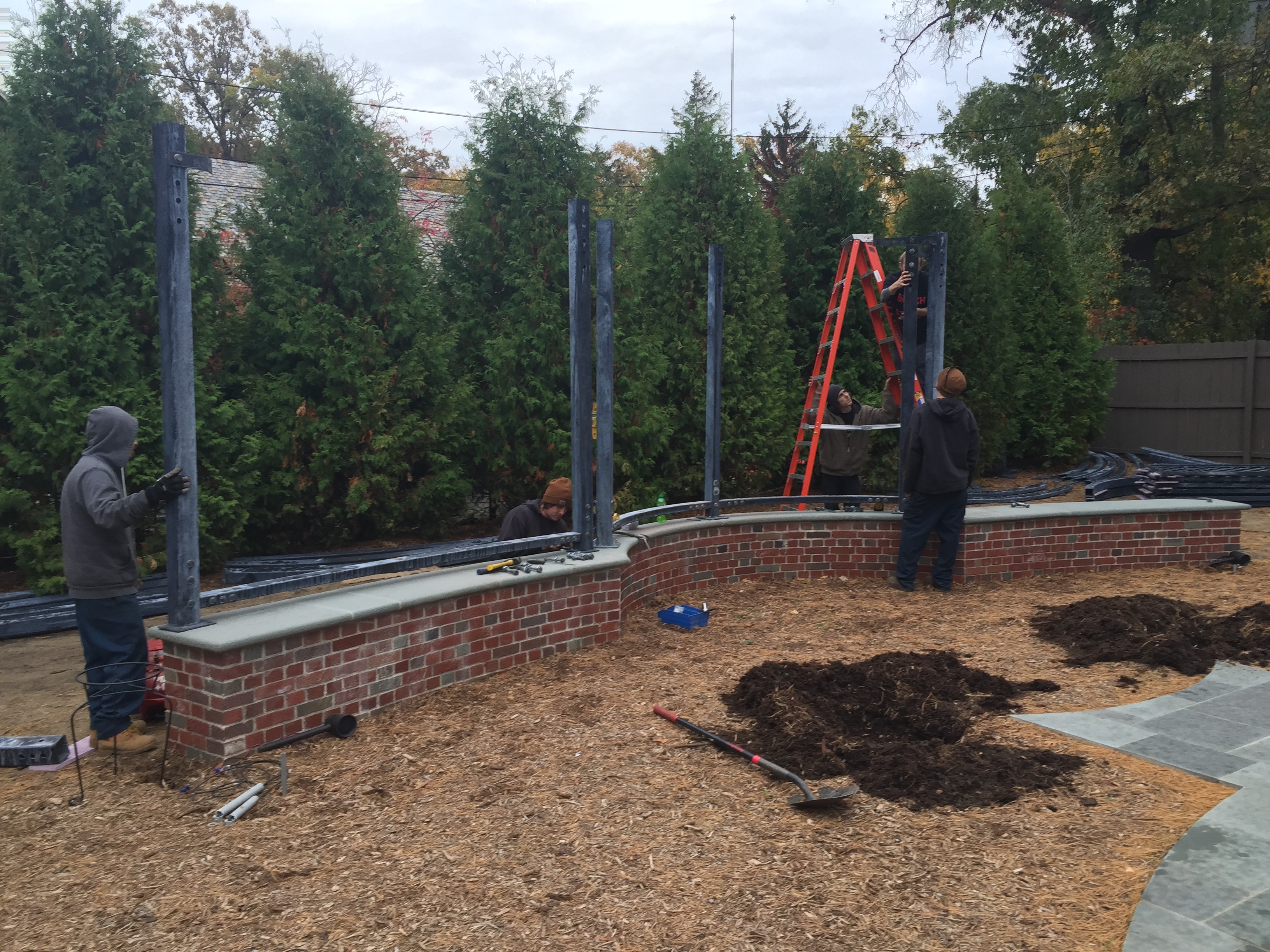
setting the structure (7)The installation: setting the structure.  The bottom of the pergola was bolted in the rear to a seat wall of brick, through the bull nosed blue stone coping.
setting the structure (5)

setting the structure (8)

setting the structure (6)The top of the brick wall is seat height, and width.

setting the structure (4)

setting the structure (3)

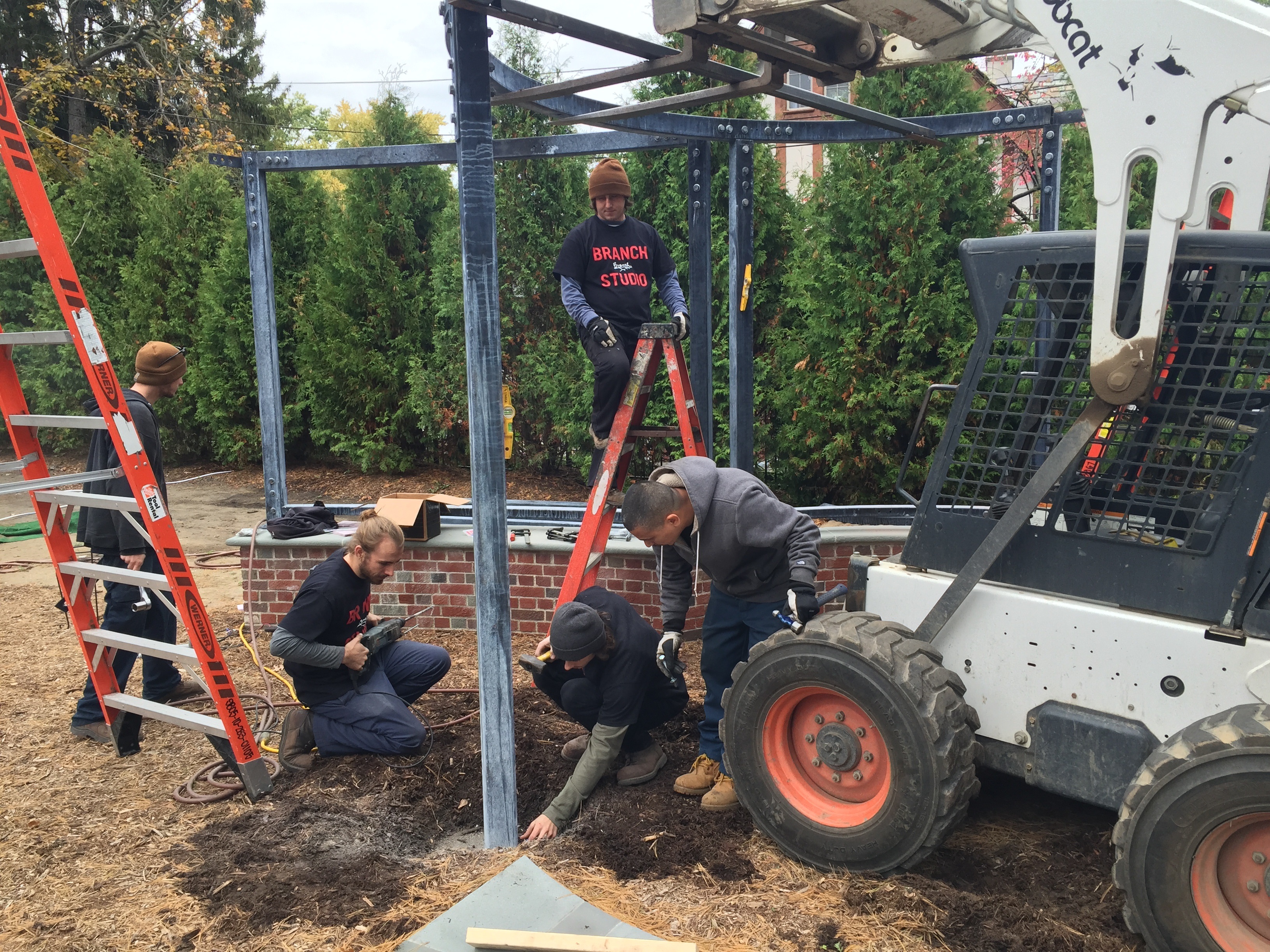
setting the structure 2The front post were anchored to 42″ deep concrete footings.
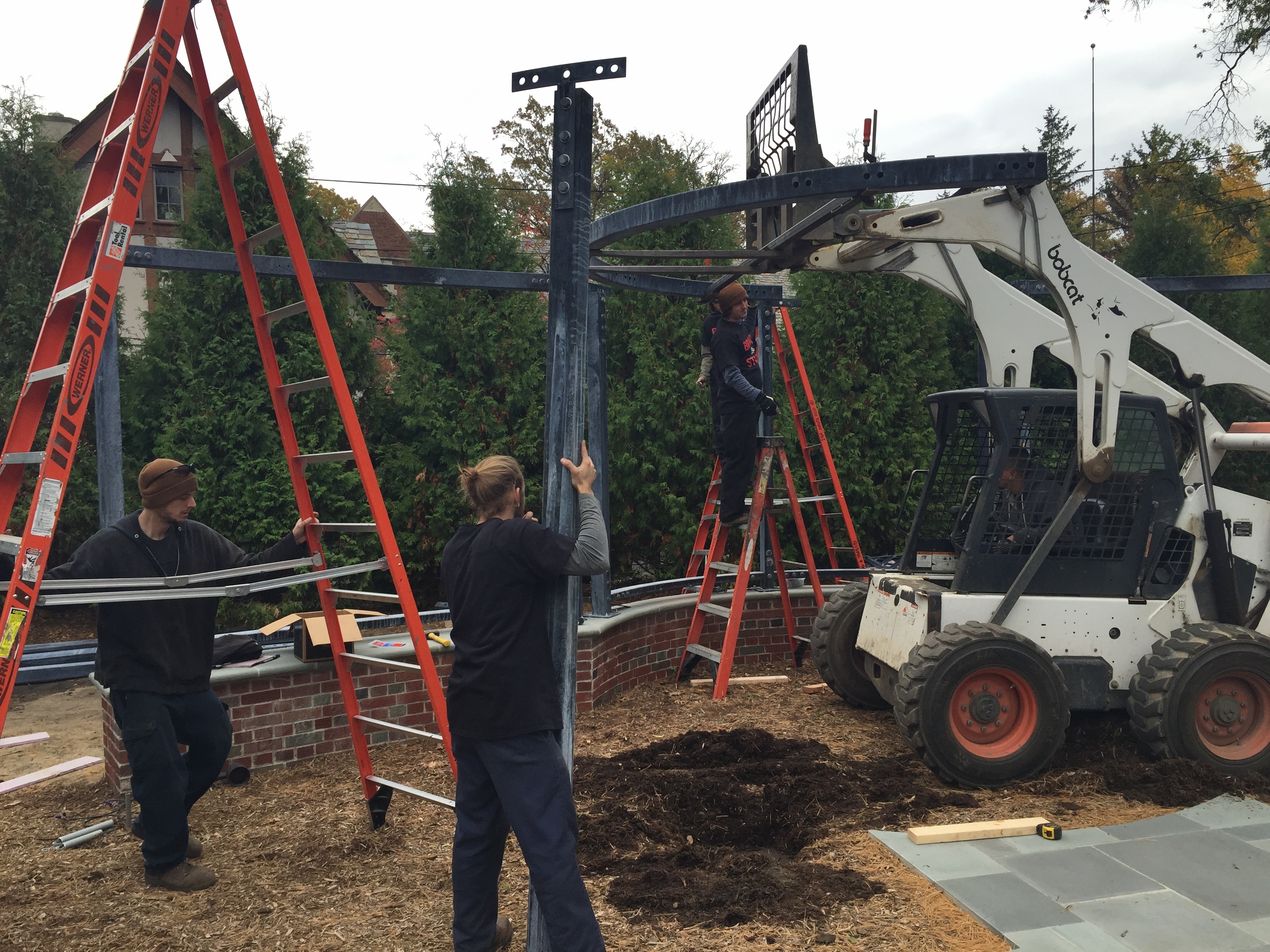
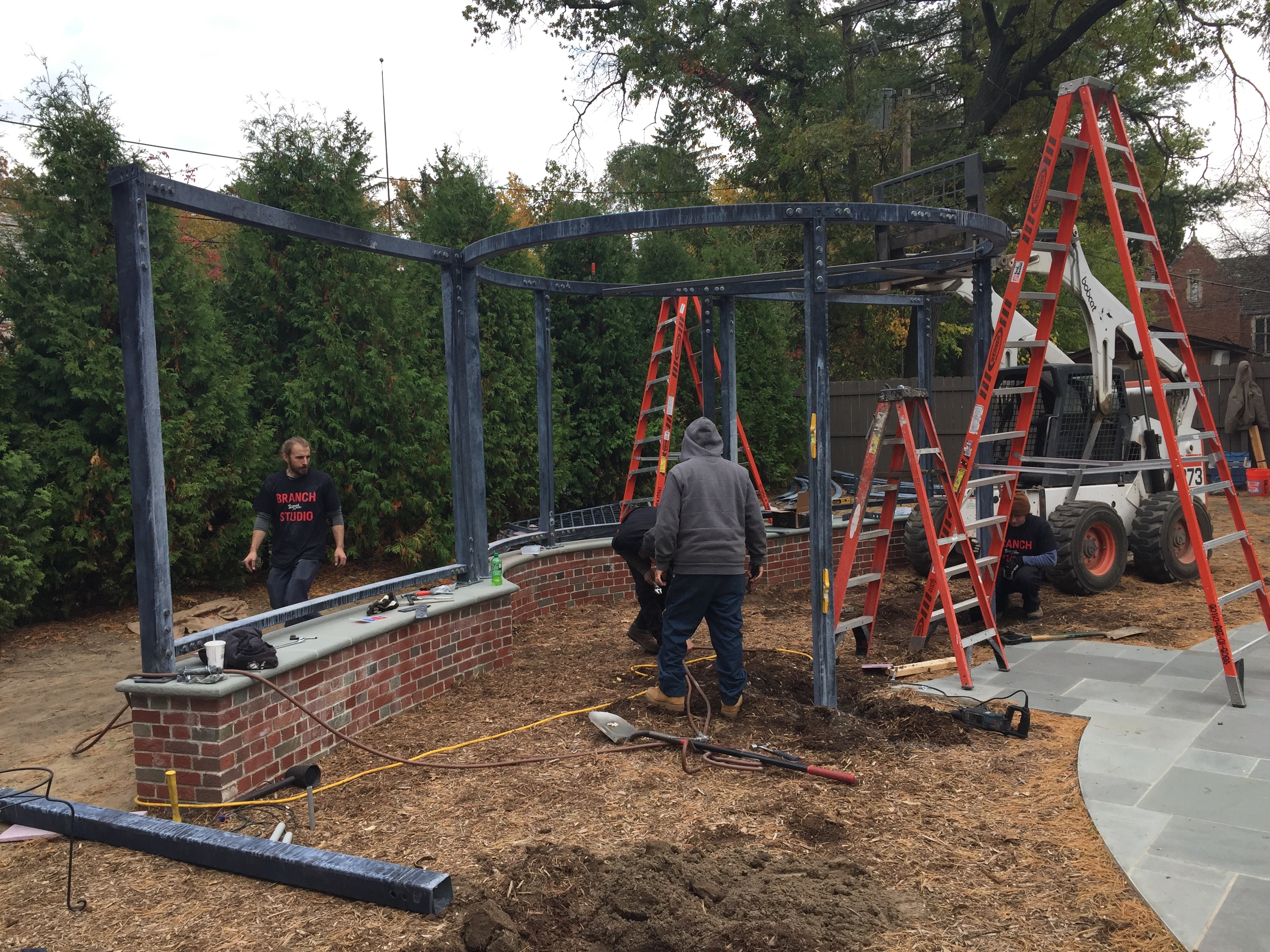
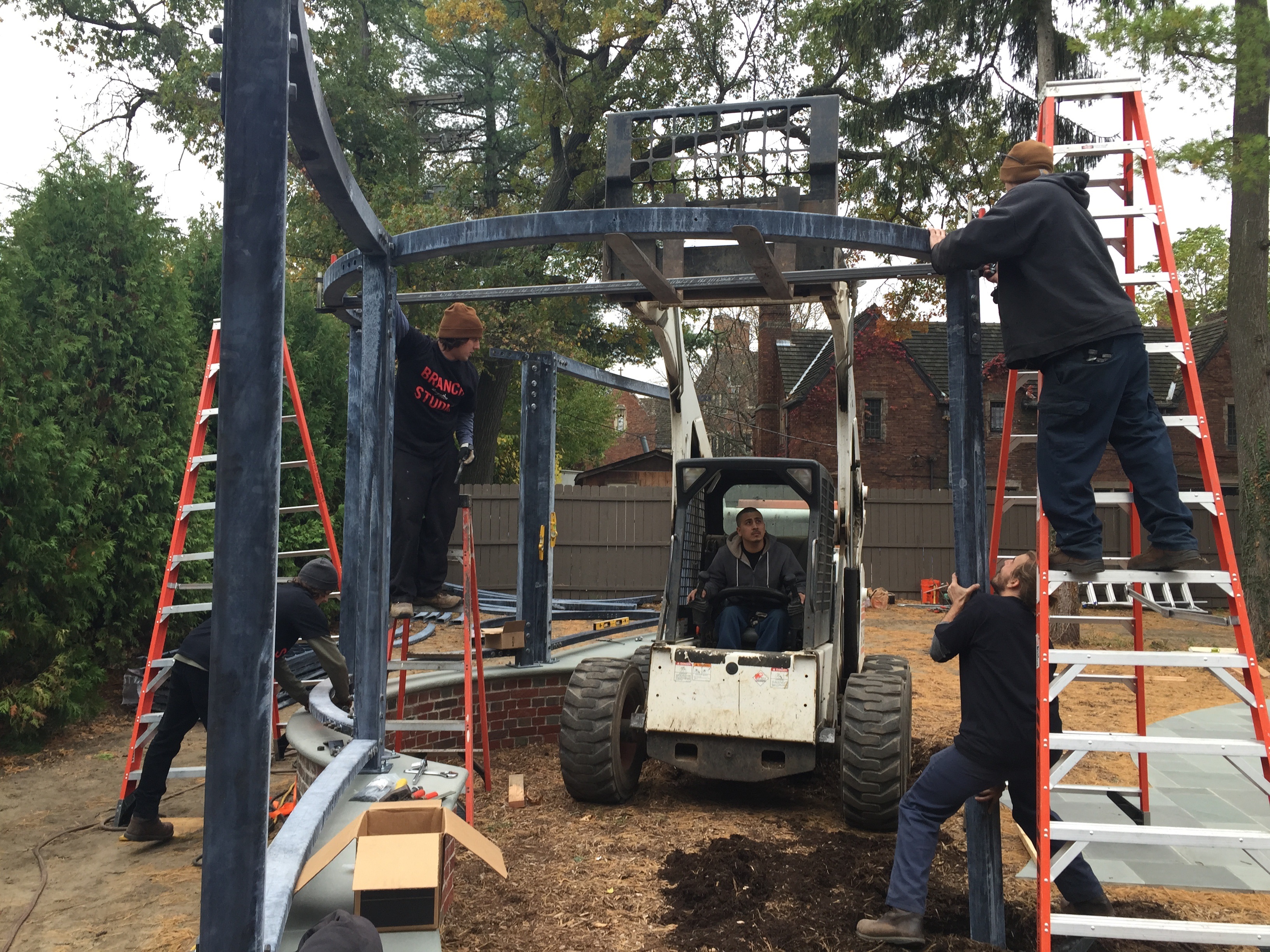
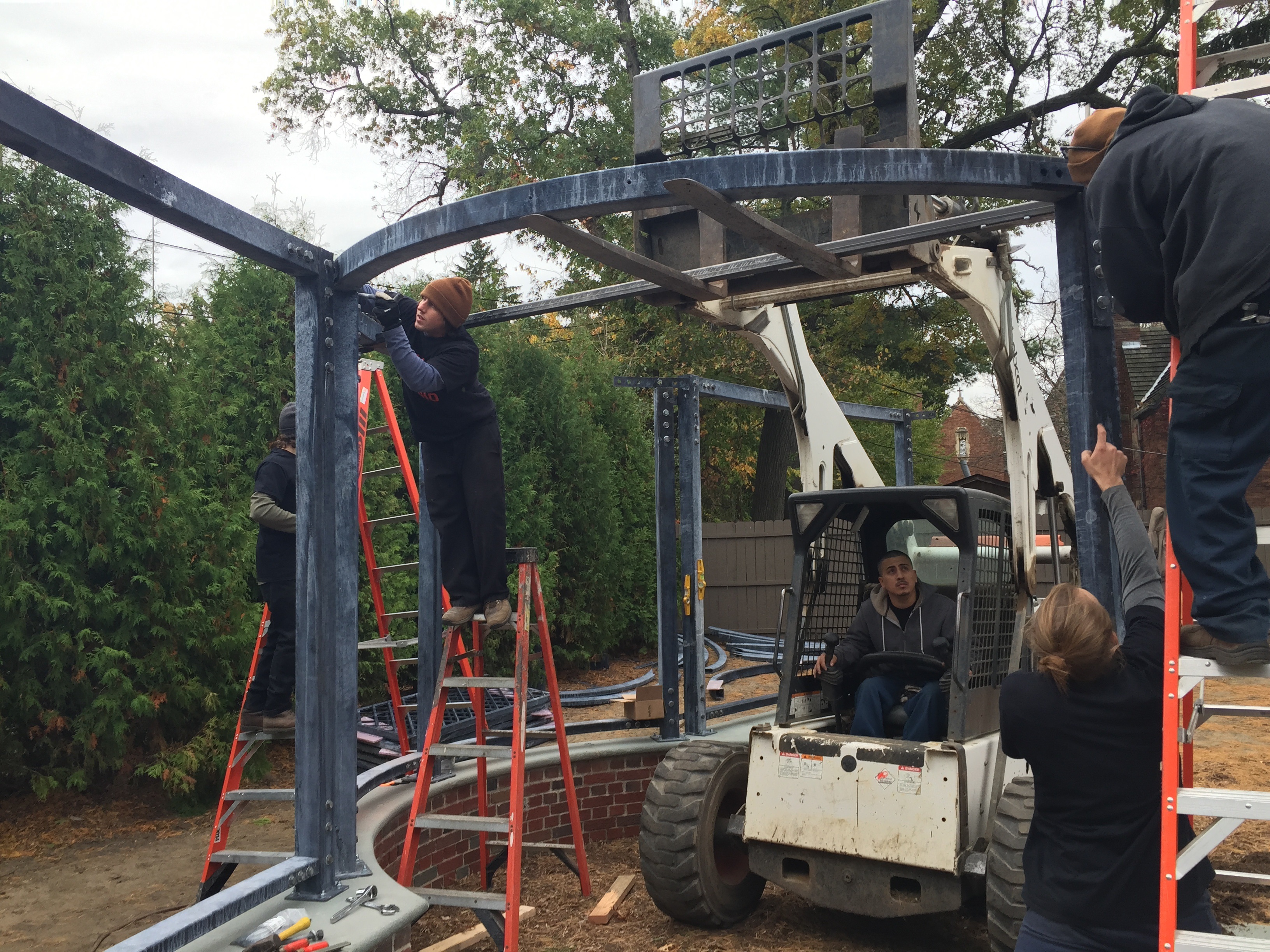
setting the roof beam (7)Setting the roof beams was the most difficult part of the job.  Each half-beam was 12 feet in diameter, and was incredibly heavy.  A support bar made especially to hold these beams, and a loader was necessary to get these pieces to the proper height for bolting on.
setting the roof beam (6)

setting the roof beam (4)

setting the roof beam (3)

setting the roof beam (2)

setting the roof beam (1)

setting the structure 2

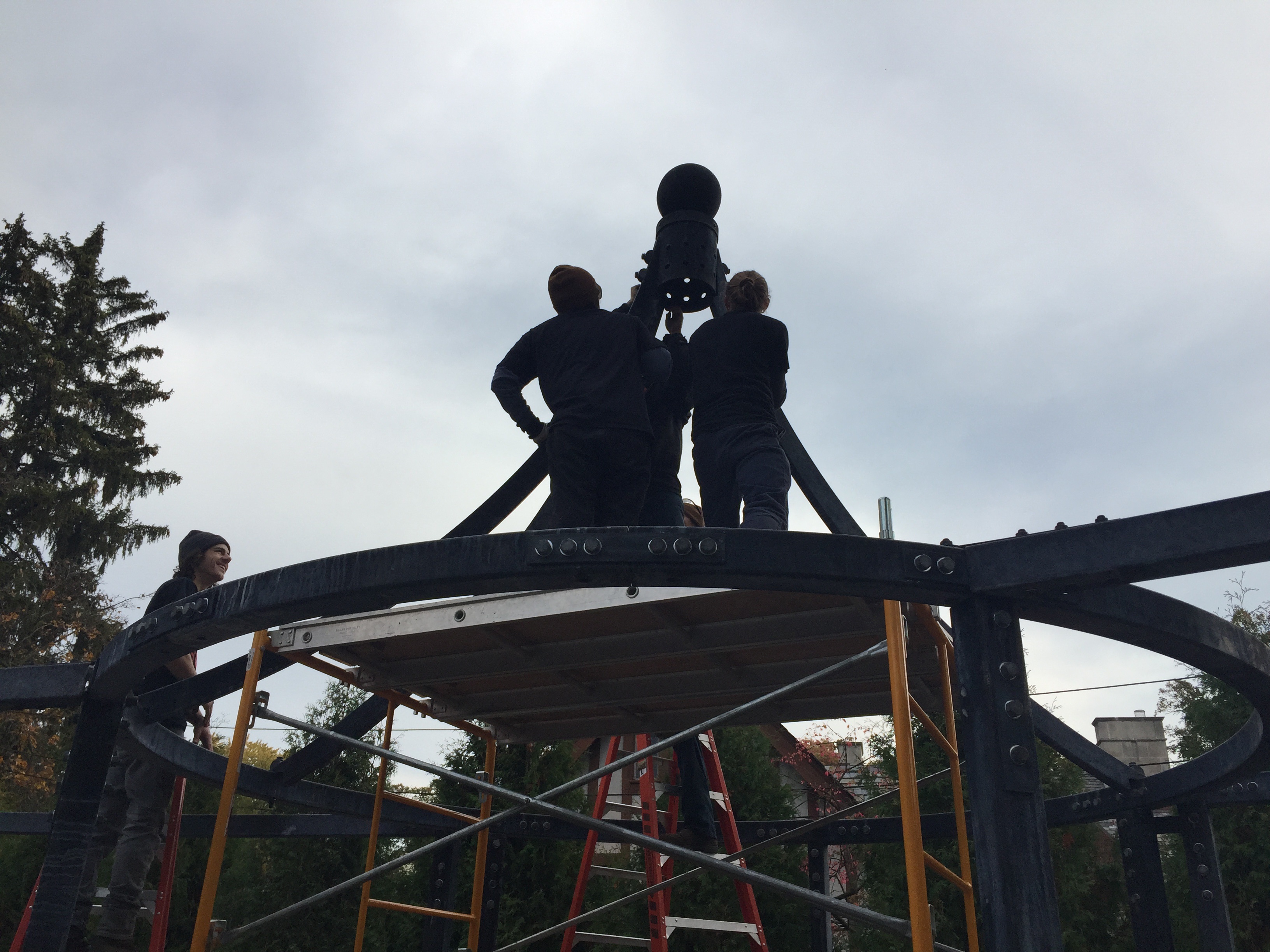
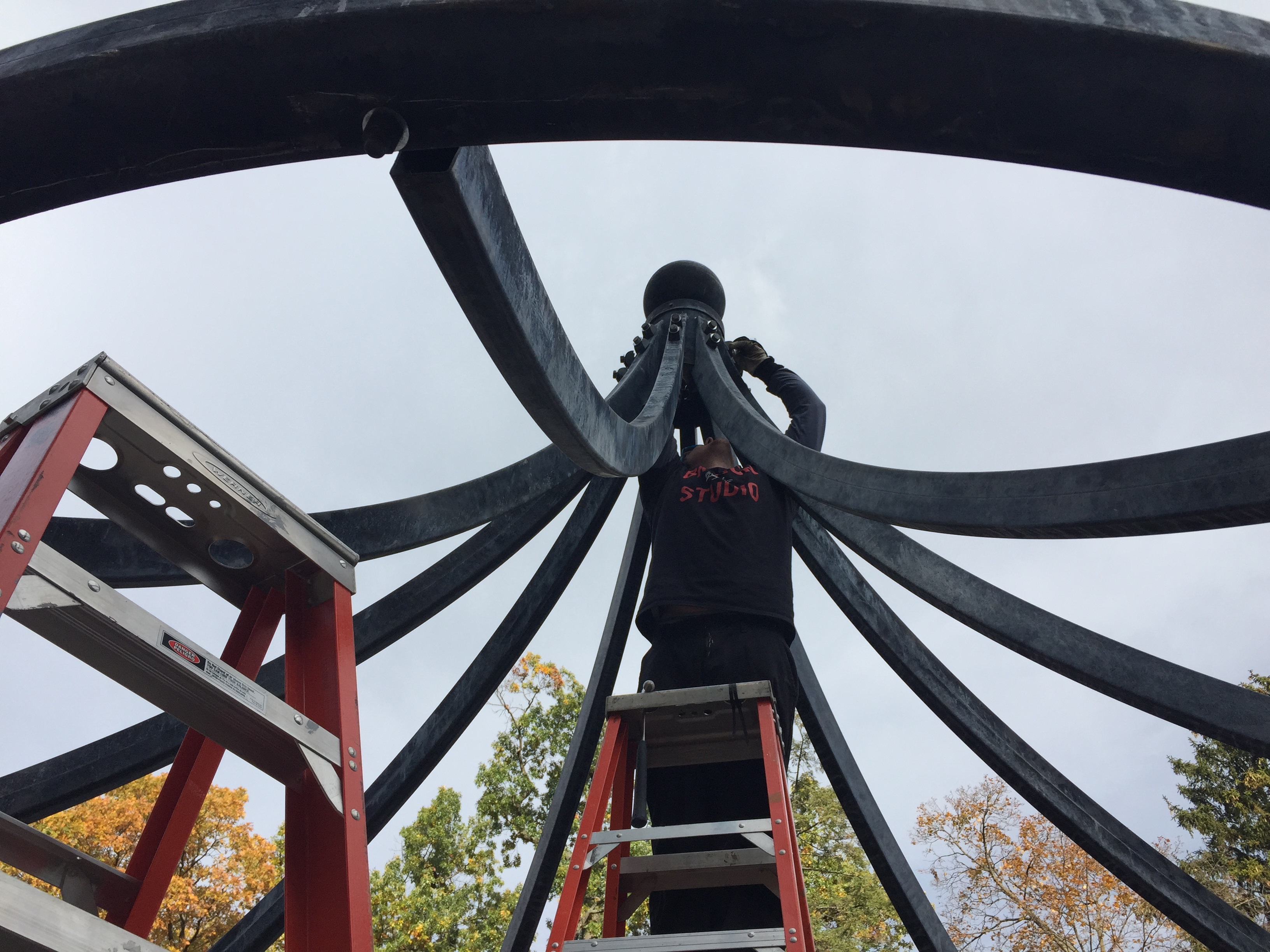
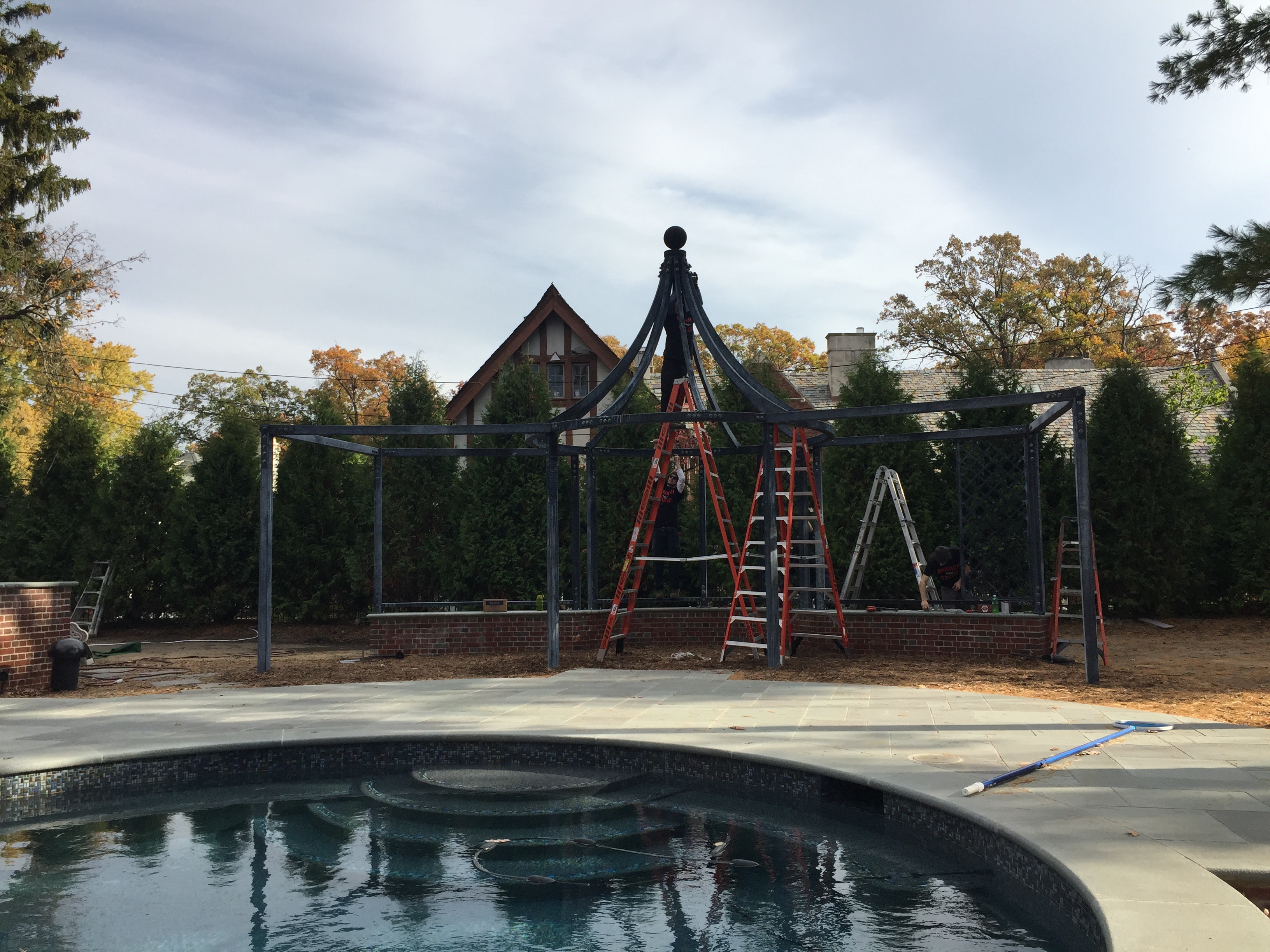
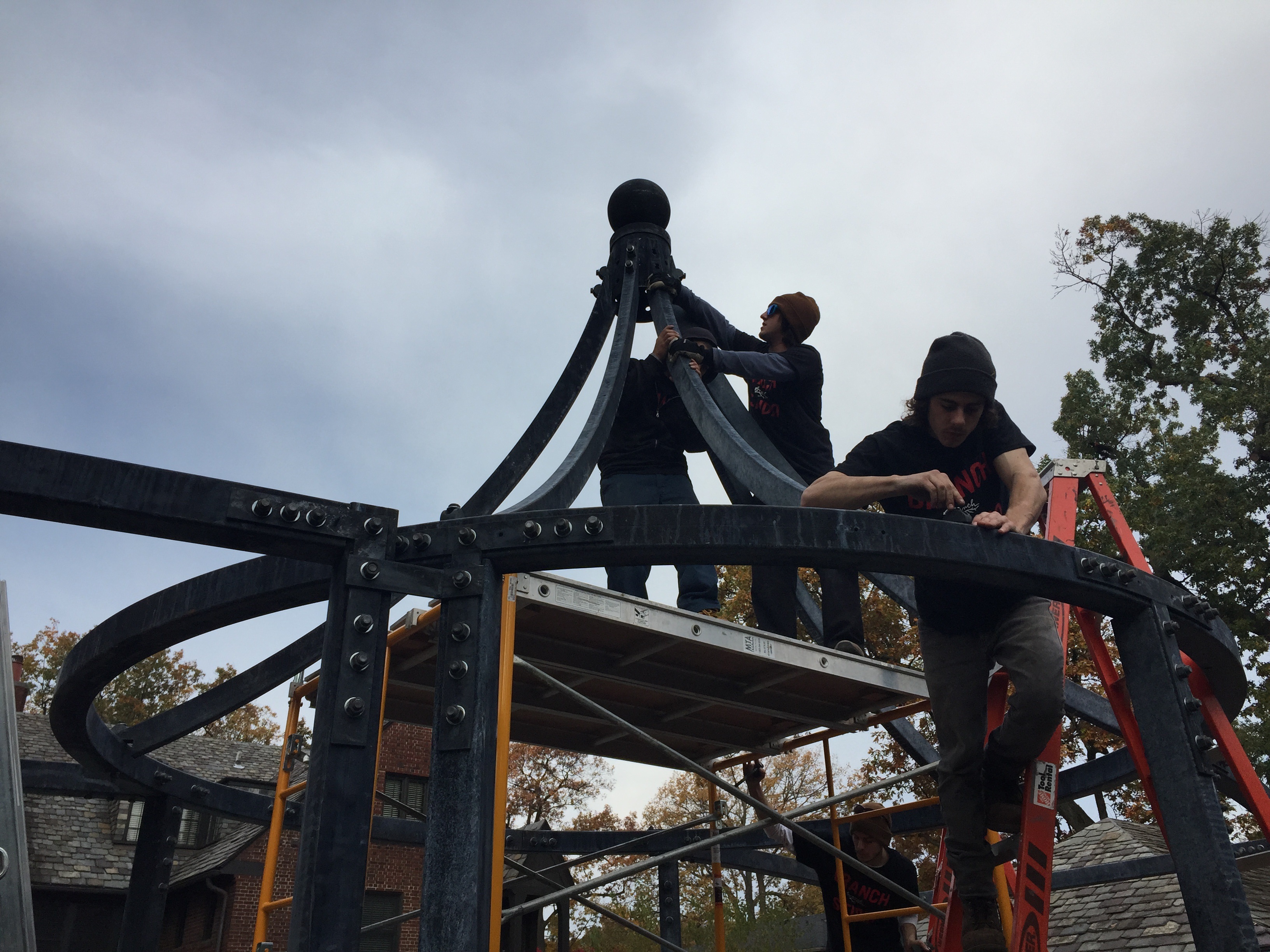
the roof (2)Setting the roof.  These pictures are not so swell, with all that sky behind the action.  The top of the finial is 17 feet off the ground.
the roof (3)

the roof (1)

the roof (4)

hanging the lattice panels (3)hanging the lattice panels

hanging the lattice panels (1)

hanging the lattice panels (4)

the finish (3)

Branch Studio pergolaThe finish

Branch Studio pergola (2)

Branch Studio pergola (3)

Branch Studio pergola (1)

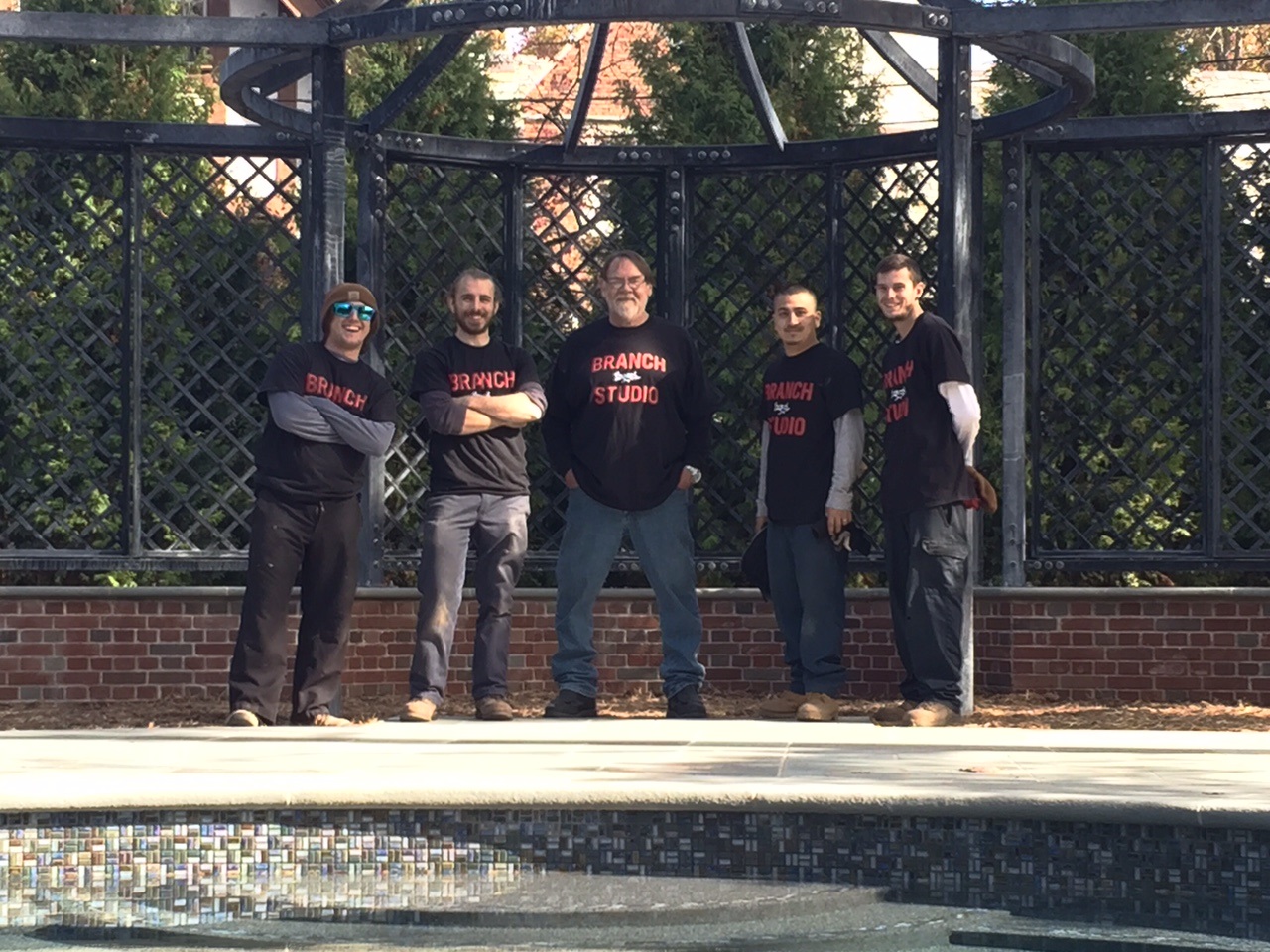
the finish (1)5 of the 6 Branch Studio dudes

the finish (2)The two day installation consumed 110 hours of work on the part of all 6 members of Branch. My clients had the great idea to do a time lapse video of the installation-what a treat this is to watch! If you are interested in watching, click on the link below.

the Lucerne Pergola installation
 

Planting A Tree

the tricolor beech (2)The very first tree I ever planted was a gingko.  My Mom and I, with not much discussion or ceremony, planted 10 seeds in small plastic pots. As I was probably 7 years old, it never occurred to me to ask where she got the seed. As she was a fairly reserved parent, there was no presentation about how to successfully grow trees from seed, or why growing a tree from a seed was a worthwhile and satisfying use of one’s time. Or that trees in general are one of the great wonders of the natural world.  I do remember that only one seed germinated.  That pot was buried in the rose garden for several years, until that gingko was about 15″ tall.  I watched her dig up a patch of grass in the side yard. In the process of getting the gingko out of the pot, I knocked all the soil off of the roots. I was horrified-I thought I had killed it.  She just scooped up that bareroot tree, and planted it in one fell swoop-the entire planting took but seconds. I would be in charge of the water to that tree for years to come. Once I turned 13, I had to be sent to the tree to water.  Once I turned 16, my attitude shifted. There was a lot of satisfaction to watching that tree grow-and grow it did.  By the time I went to college, it was a proper tree, a young but substantial element of our suburban landscape.

the tricolor beech (3)My Mom moved while I was in college, closer to the school where she taught.  I would eventually move near her.  That gingko tree was on its own, on the other side of town. If I ever had cause to drive from the west to the east side, I would go to see the tree.  It would always be there, just a little bit larger than the last trip. Gingkos are slow growers. Several weeks after she died, I went to see the tree. It was a comfort to me, that 45 year old tree, living and growing. It was such a beautiful tree, all on its own, set in the lawn. 10 years after she died, I went to see the tree, but it was gone. There was no sign it had ever been there. The shock and the grief  was unsettling. Every gardener has a hefty respect and affection for trees.

the tricolor beech (4)My second tree planting was in my twenties.  I was visiting a friend in Kalamazoo.  We were both gardeners, so a good part of every visit was consumed visiting nurseries. One nursery had a tall adolescent tulip tree in an undersized pot, with one green and orange “tulip” blooming at the top.  I had to have that tree. The leaf shape was so beautiful!  I drove that tree home in my pickup truck, and hauled it all over my property until I decided where to plant it. I chose a place where it would be free to grow as big as it could.  I was unaware that liriodendron are tap rooted, and very difficult to transplant.  I stripped the sod from the spot, dug down deep, and amended the heavy clay soil, and put that tree in the ground. I kept it watered without any coaching.  Miraculously, it took hold.  There were never any more tulips as long as I lived there. When I moved 15 years later, it was just beginning to put on weight.  I know better now than to go back.  I prefer to believe it is still there, growing taller and bigger every year.

the tricolor beech (5)I was working for Al Goldner, at Goldner Walsh Nursery, when I had occasion to plant my third tree. He had a dawn redwood that had lost its leader. It was header for the compost pile. When I asked him if I could take it home, he only said that the tree would never be right without its leader.  Plant it I did, in a swampy spot where it grew every bit of 18 inches a year.  Its shape was definitely asymmetrical, but it had a strange and atypical beauty that enchanted me. My fourth tree was a London Plane that had not been sold, but needed to go in the ground. Al gave that tree to me as well.  It was so large that it took me days to dig the hole. I needed every friend I had to help me roll it in the hole.  It took years before that tree took hold, and started to grow.  My property was almost 5 acres.  I had plenty of room for trees. I was beginning to understand a few things about planting them.

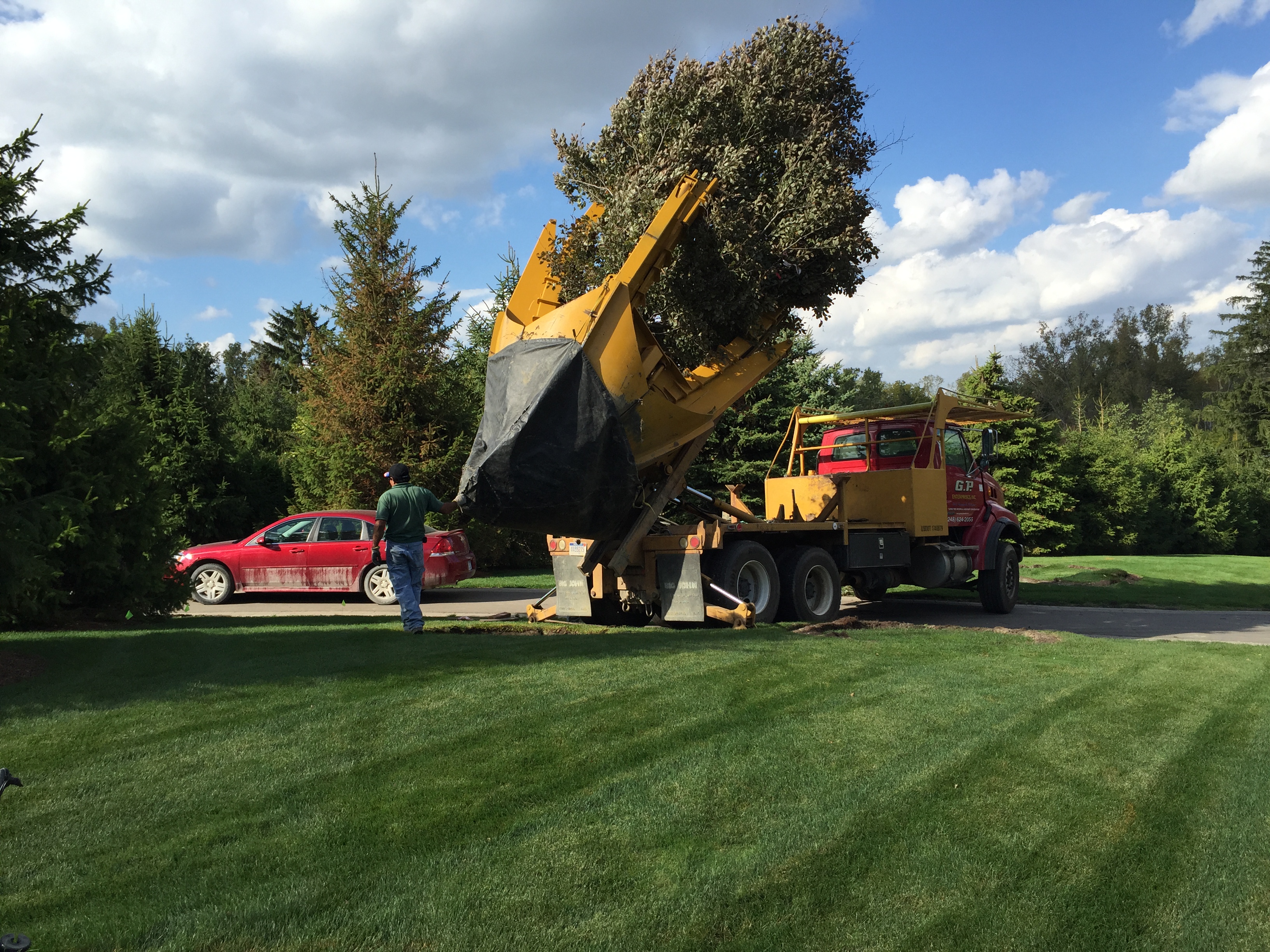
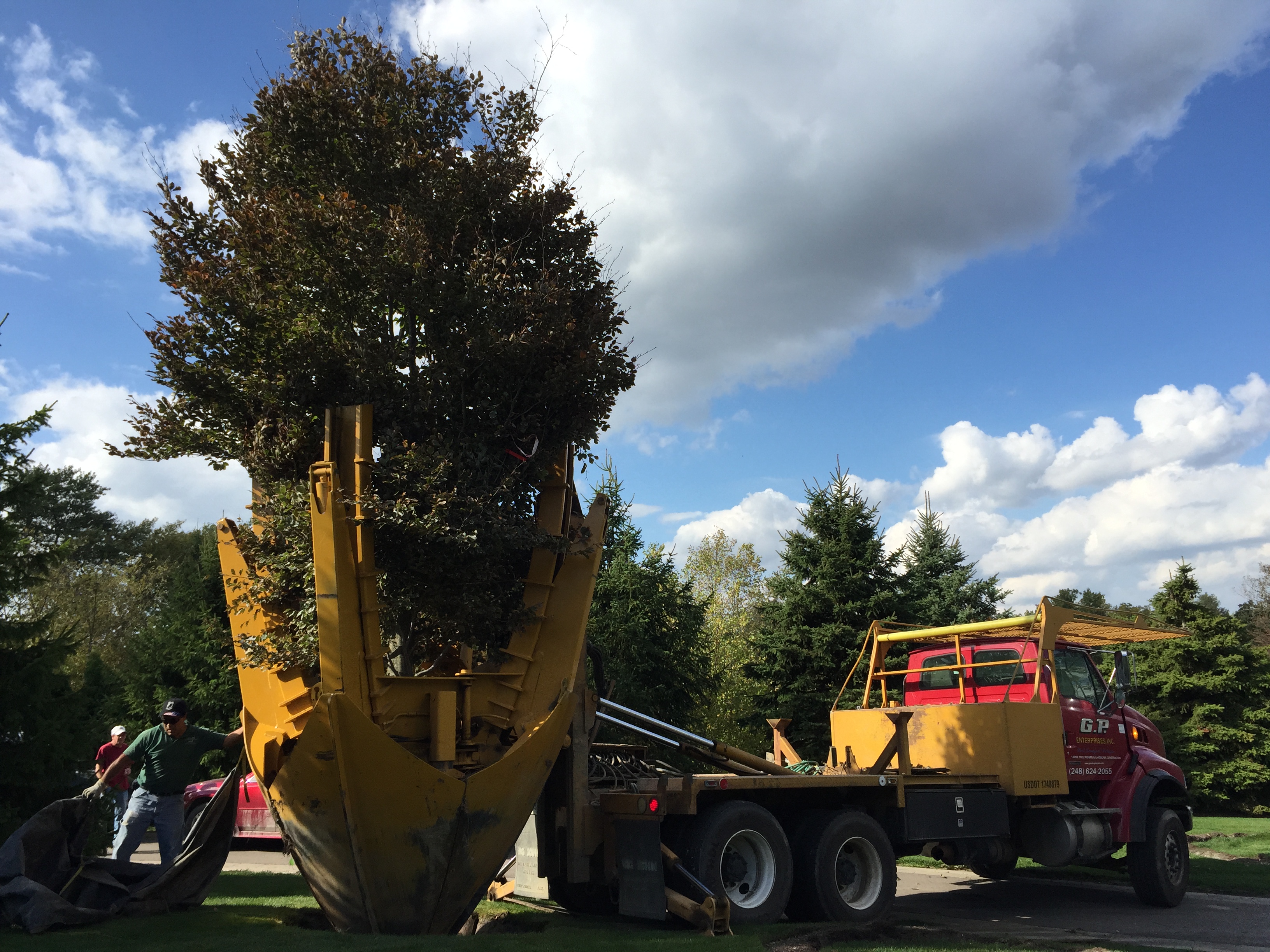
the tricolor beech (6)Over the course of my career, I have planted a lot of trees. Under story, or smaller growing trees are easy to place in just about any landscape. Their mature size is friendly and companionable with perennial gardens and shrubs, and smaller urban properties. The variety of species and cultivars available at nurseries is extensive. A gardener would need a very large property to grow one of every tree available in commerce. Trees are grown and sold in a variety of sizes.  The modest cost of a small tree in a pot makes it possible to plant a grove. My company rarely handles a tree with a root ball over 40 inches in diameter.  A root ball this size will weigh almost 1000 pounds. Some nurseries grow very large specimen trees. Luckily there exists sophisticated technology, and expert large tree movers such as GP Enterprises, that permits moving and replanting very large trees.

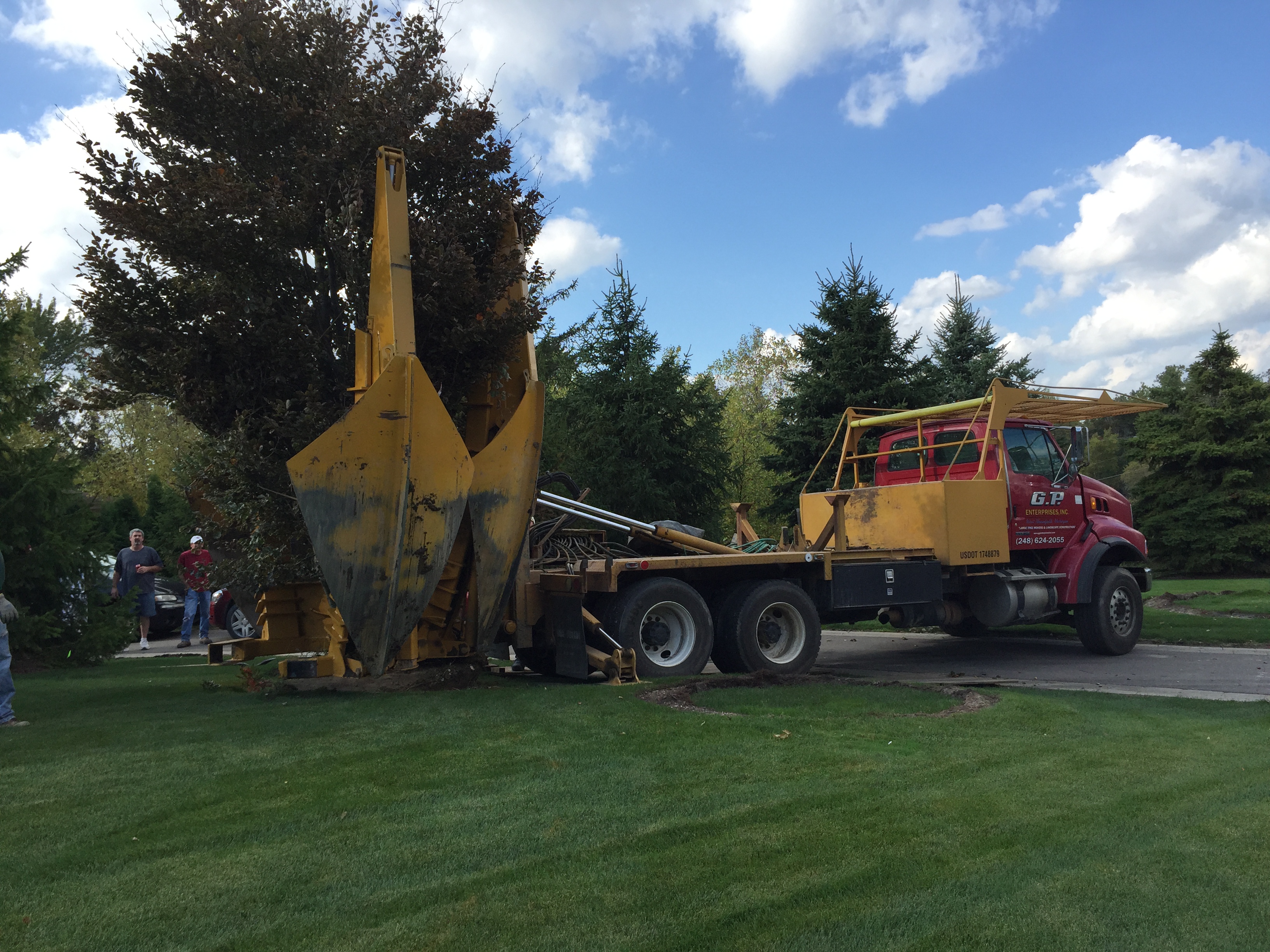
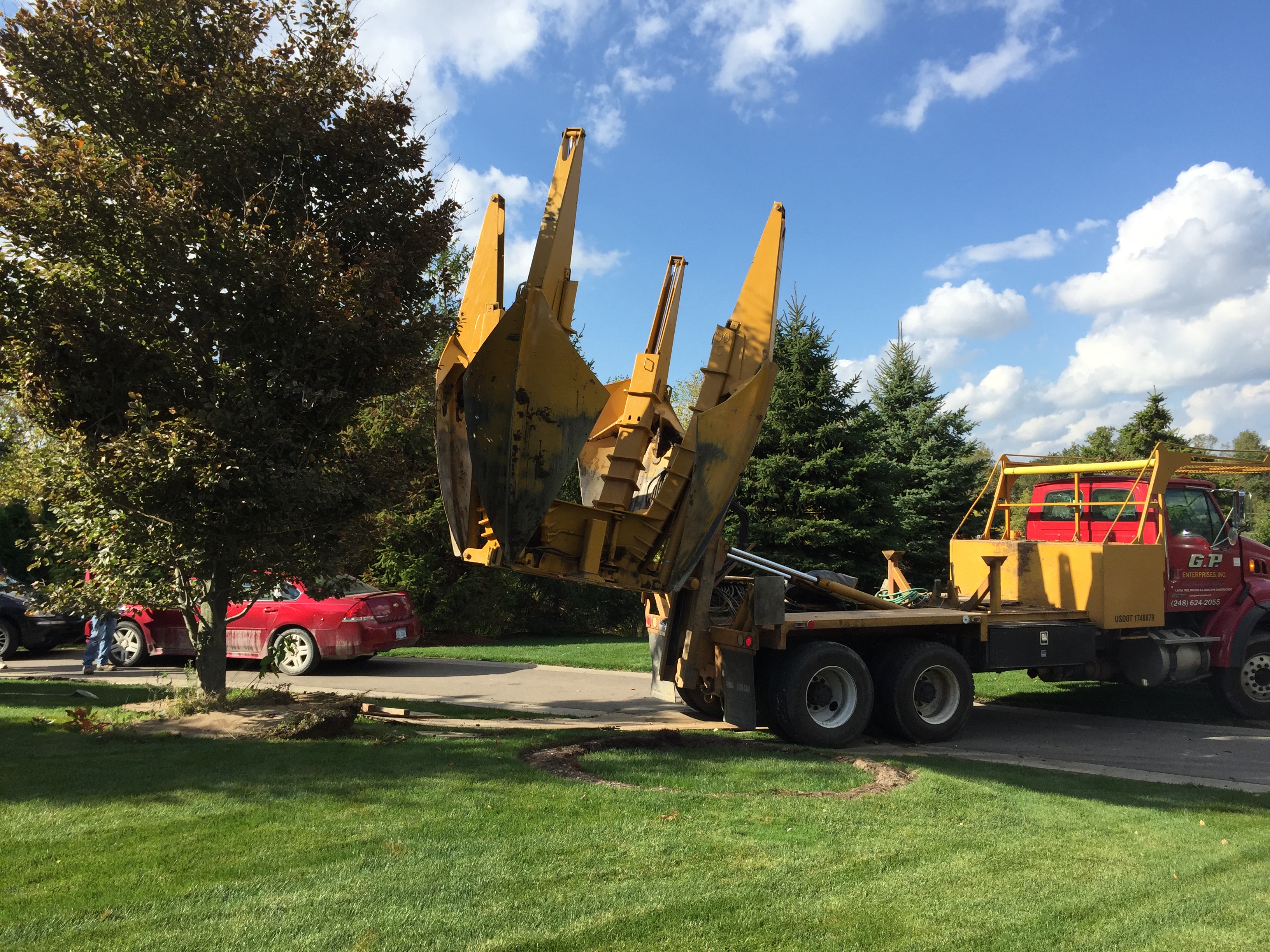
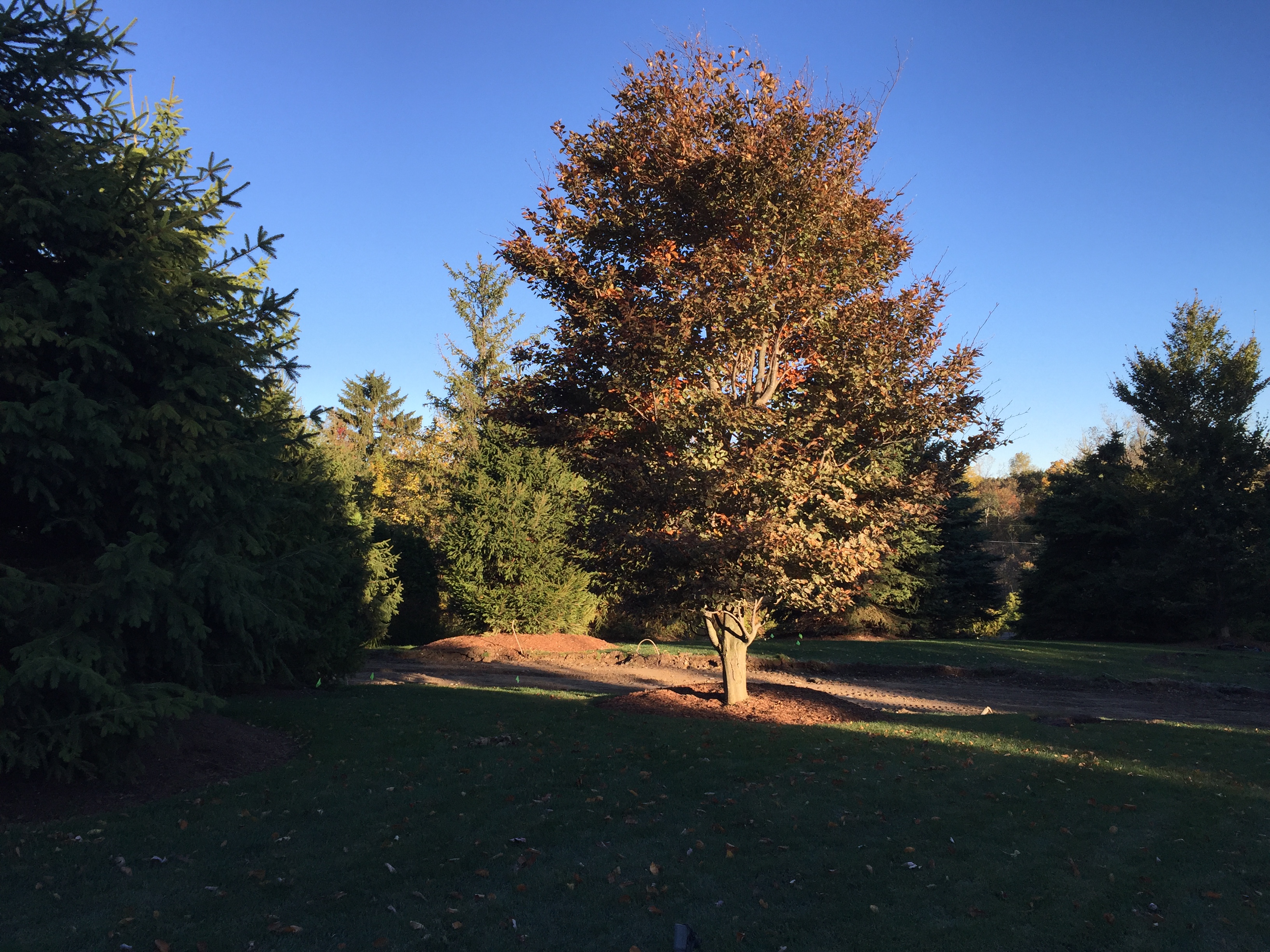
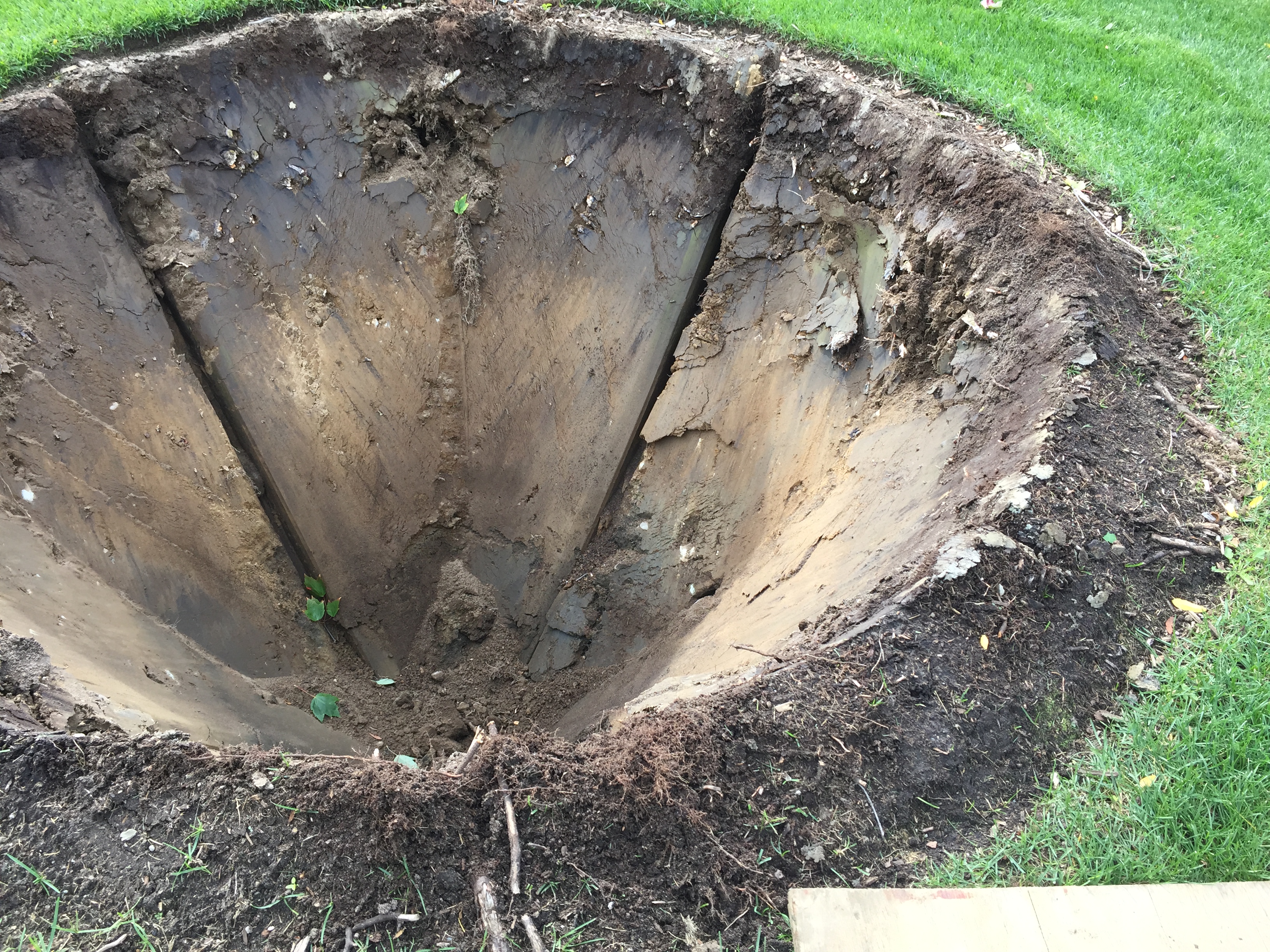
the tricolor beech (7)A tree spade is a flat bed truck, outfitted with a hydraulically powered set of four blades that can remove a cone shaped mass of soil 10′ in diameter, and better than 6 feet deep.  The spade can likewise dig a large tree, and transport it horizontally on the truck bed to a replanting location. A 5 inch caliper tree – the caliper being the diameter of the trunk 6 feet from the ground – will require a 5 foot diameter root ball to insure a successful transplant.  A 5′ diameter root ball weighs about 2800 pounds. We are in the process of installing a landscape on a very large property.  Big trees will help to provide a sense of scale and age to the landscape. This tricolor beech is 35 years old.  It is possible to move a tree of the age, as it has been root pruned, dug and moved a number of times at the nursery. Moving a tree from the wild would of the age would be much more difficult.

new beech (2)No matter the size, moving a tree is never easy. Every balled and burlapped tree has had many roots critical to its health and well being cut off in the process of making it movable. A large canopy tree with an abruptly reduced root system will suffer transplant shock, until enough roots grow back to adequately support the life of that canopy. It will take a year for every inch of caliper for that tree to recover sufficiently to begin growing again.  A one inch caliper tree will resume growing after one season in the ground.  A ten inch caliper tree will take 10 years to become completely established.

new beech (1)This tricolor beech has a very good new home. It was transplanted with a good deal of care.  It is planted in a space where it has plenty of room to grow. Best of all, there is a committed client who will not only truly enjoy it,  they will look after it as it should be.

Picture Taking, Garden Making

Sept 14, 2015 003I have been tinkering some with taking pictures with my new iphone 6. I am not very technically inclined, meaning I have always used a cell phone as a phone, and not much else. But this phone is capable of facilitating communications of all sorts, and in very sophisticated visual ways. The photo feature produces images that are amazingly sharp and detailed. Even at close range, in the hands of an older person.The fact that it is light, and fits in my pocket, means that there is no need to plan ahead. I am almost always ready, for anything that strikes my fancy.  Or that unexpected, interesting, or enchanting moment.

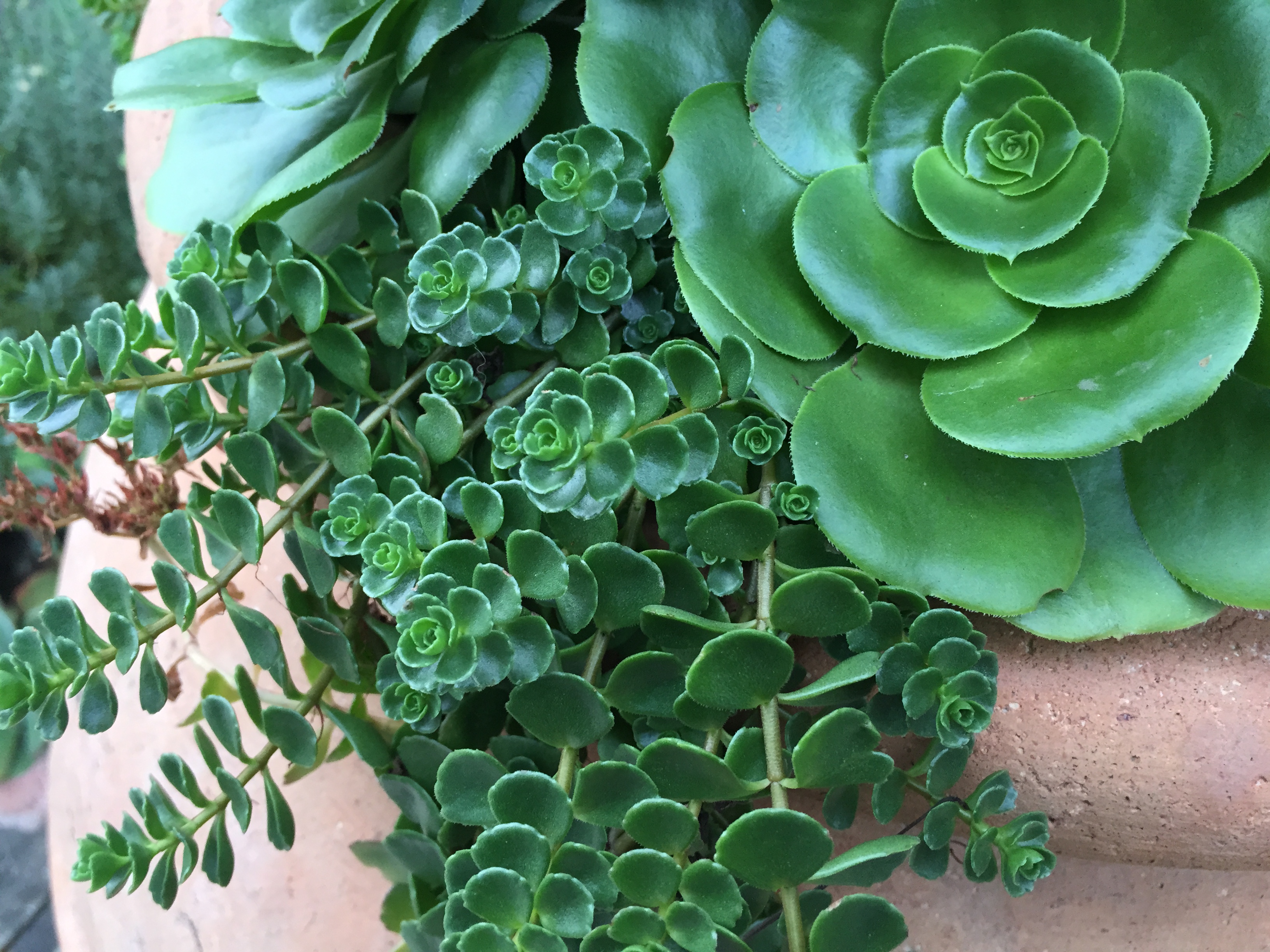
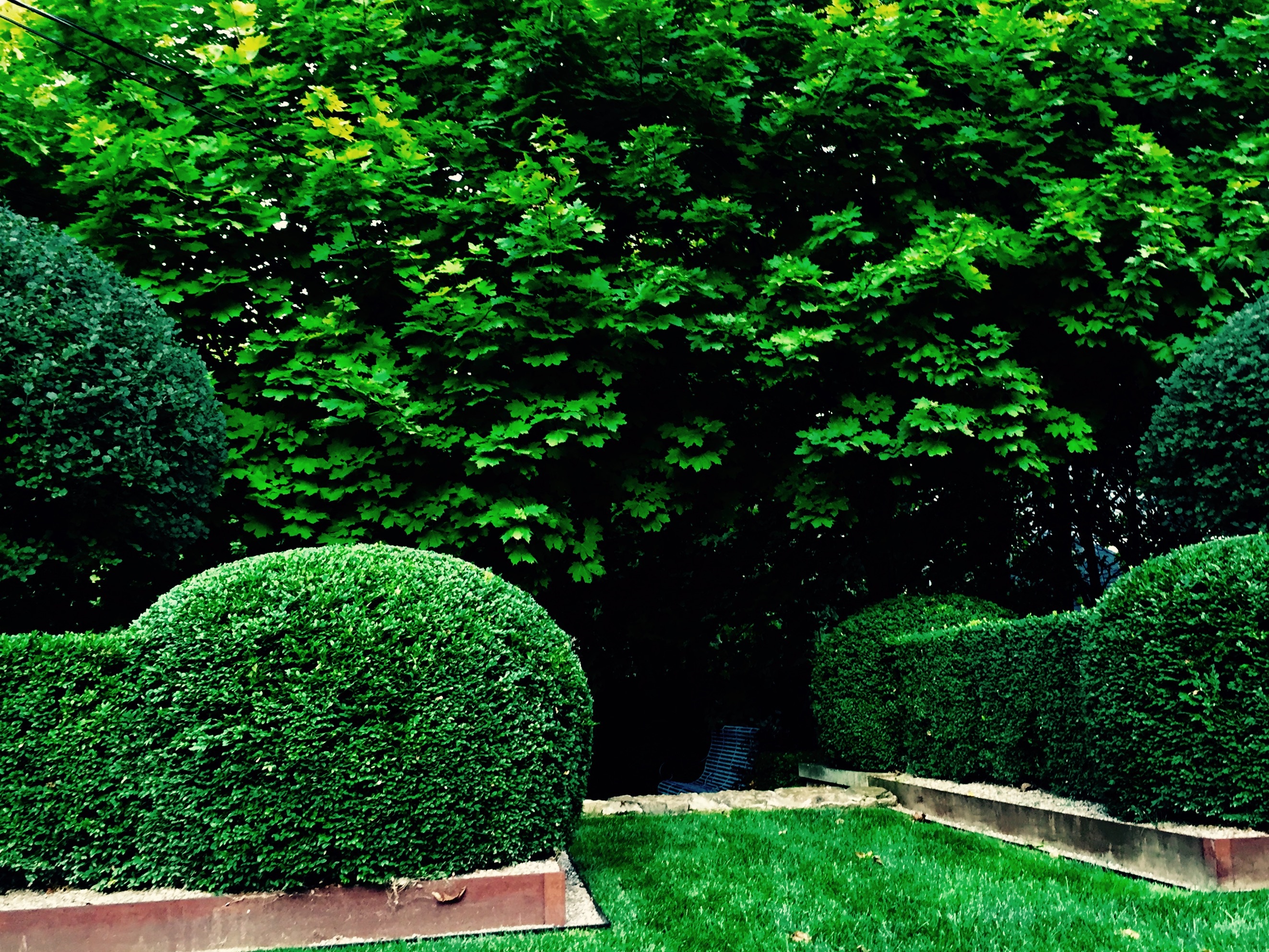
image6 (9)I just learned that I can edit my pictures.  I can change or rearrange the composition.  This means I can set the four edges of the photograph wherever I want. I can crop-as in blow up the image to the edges I have set, to eliminate all of those unnecessary visual details.  This is the heart and soul of editing. Keep what matters the most, feature what brings an idea to life visually in its simplest and most dramatic form, and discard what distracts. This crop feature makes that easy. Even when it is not so easy, this camera is a great tool by which to learn. A photograph is two-dimensional-flat. How the composition of that two dimensional picture is handled can create the illusion of great depth. Think of it.  This phone has a filter feature.  Any photograph can be overlaid with a number of different transparent color overlays-like acetate gels over a lens. This cropped photograph of succulents got overlaid with a color overlay called chroma. That overlay gives the greens in the picture picture a more intense blue/green cast.

image5 (11)This overlay is called noir. Whatever the color of the overlay, it turns the greens in the original photograph to black. Succulents in black and white-a very different point of view. An interesting point of view.

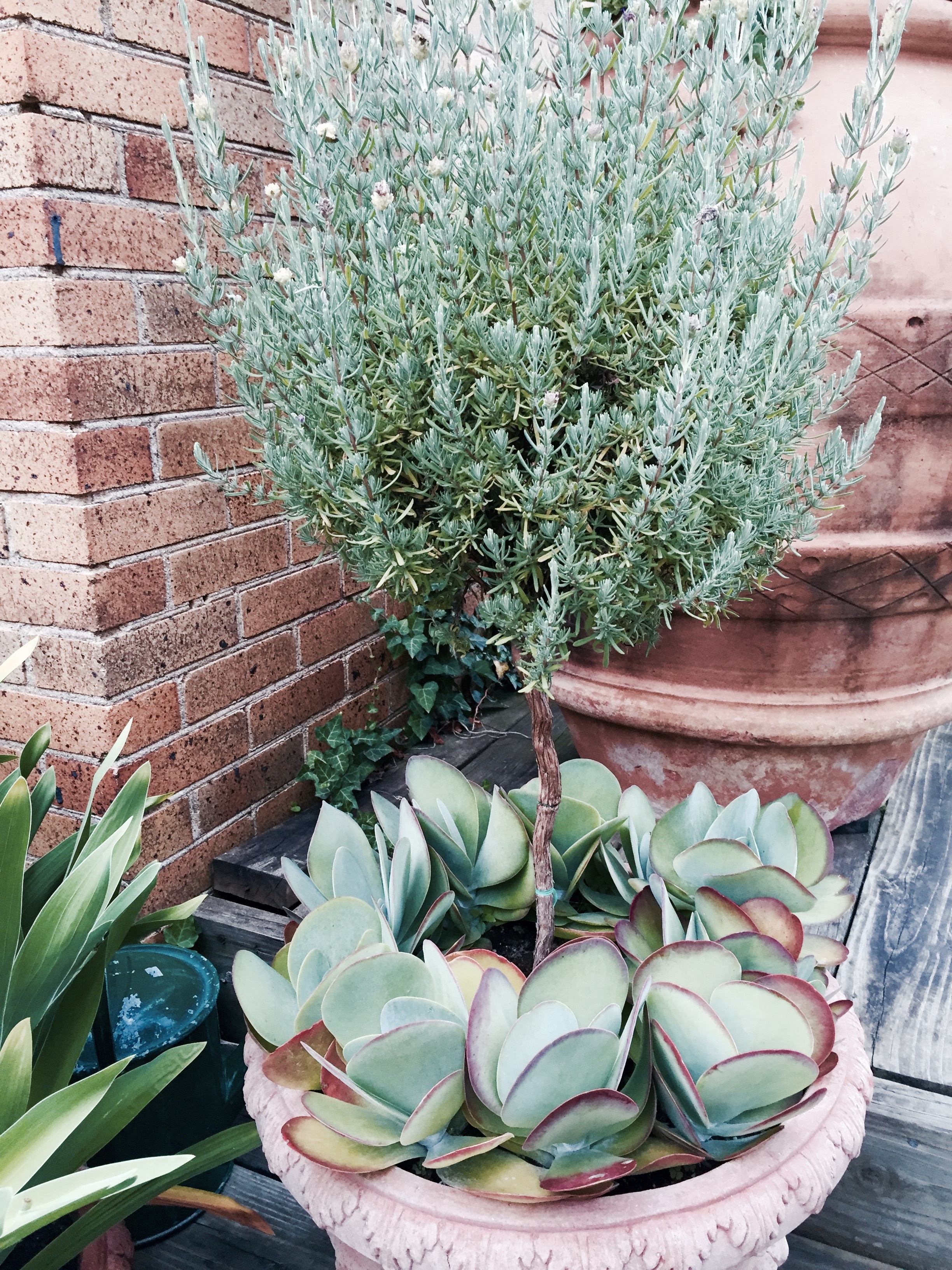
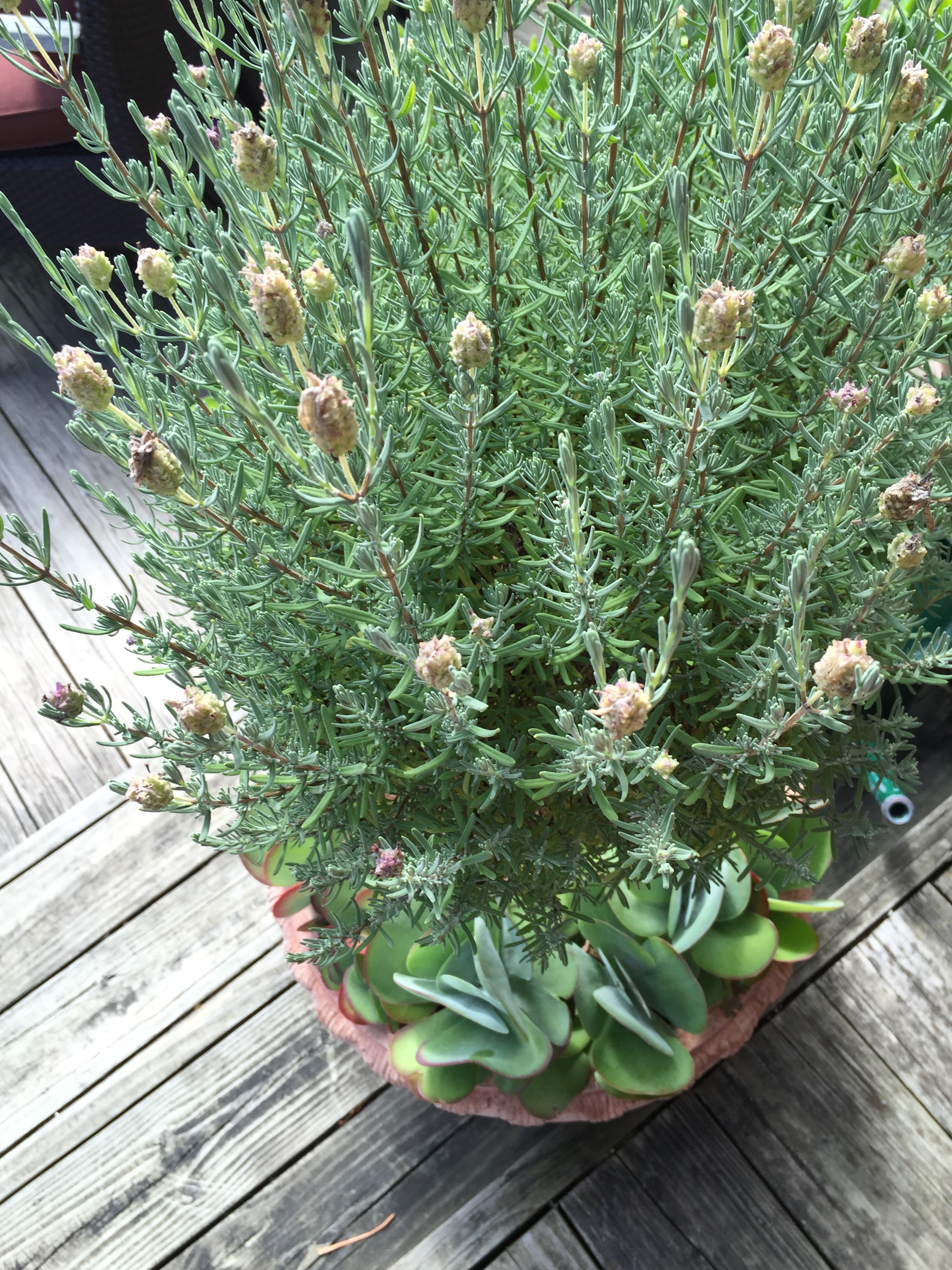
image7 (11)This overlay is called “instant”.  I have no idea what that means.  I chose it for this picture, as it enhanced the natural pale and muddy blue green of the lavender and the flapjack. The red edges of the flapjack are now a muted, muddy and moody terra cotta color. This overlay does not accurately depict the appearance of the plants the moment that I took the picture, but it accurately depicts how I see these plants.

Sept 14, 2015 039Seeing is not only about the optics of vision. How people see things is overlaid by many layers.  History, experience, memory, desire-these are but 4 of 1004 factors that influence how any given person sees.  No one sees optically.  They see emotionally.  That complex organism we know as a person sees like no other.  For any designer, how they see is their most precious asset. Successfully communicating that seeing can forge an artist from a designer.

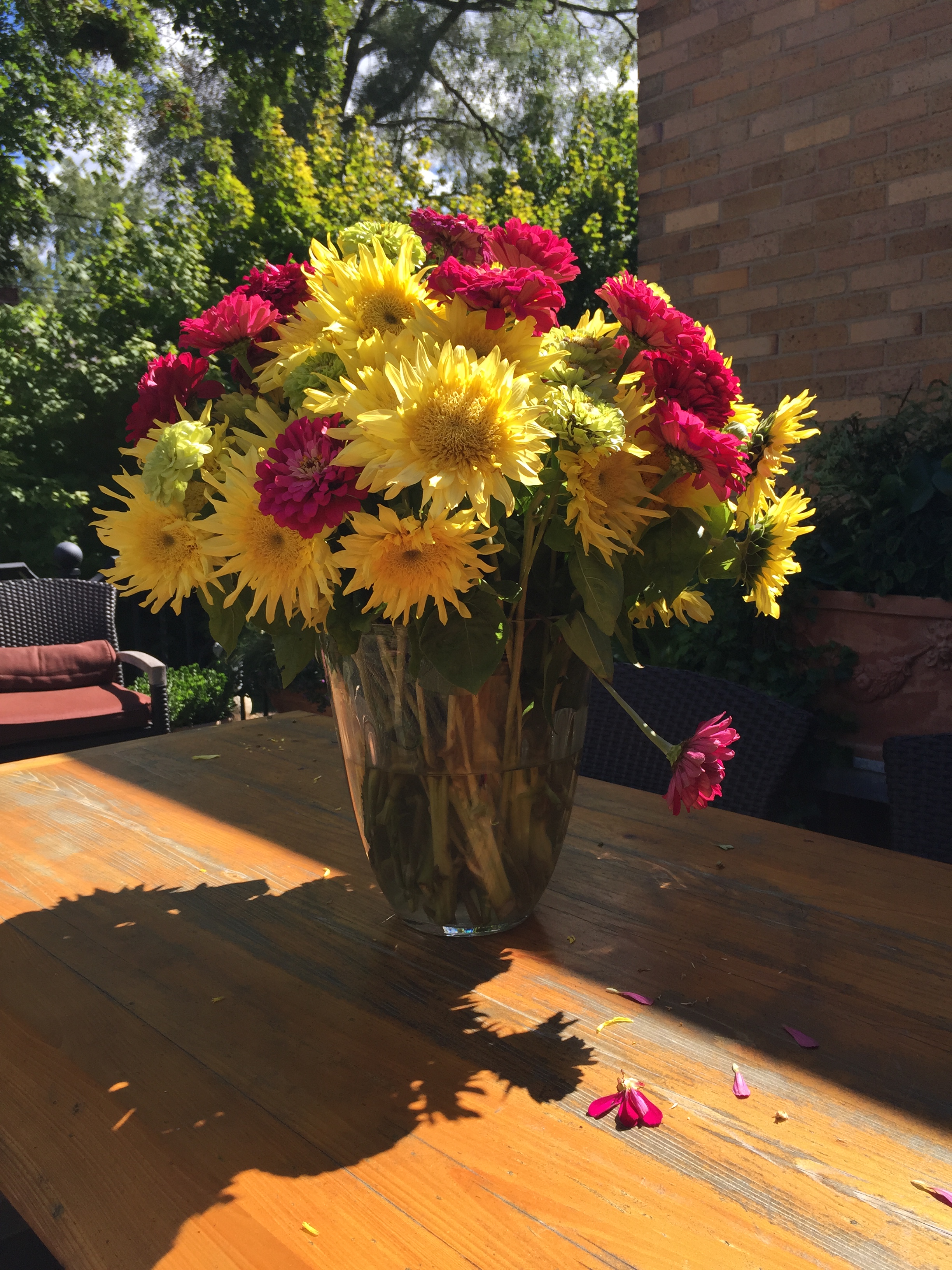
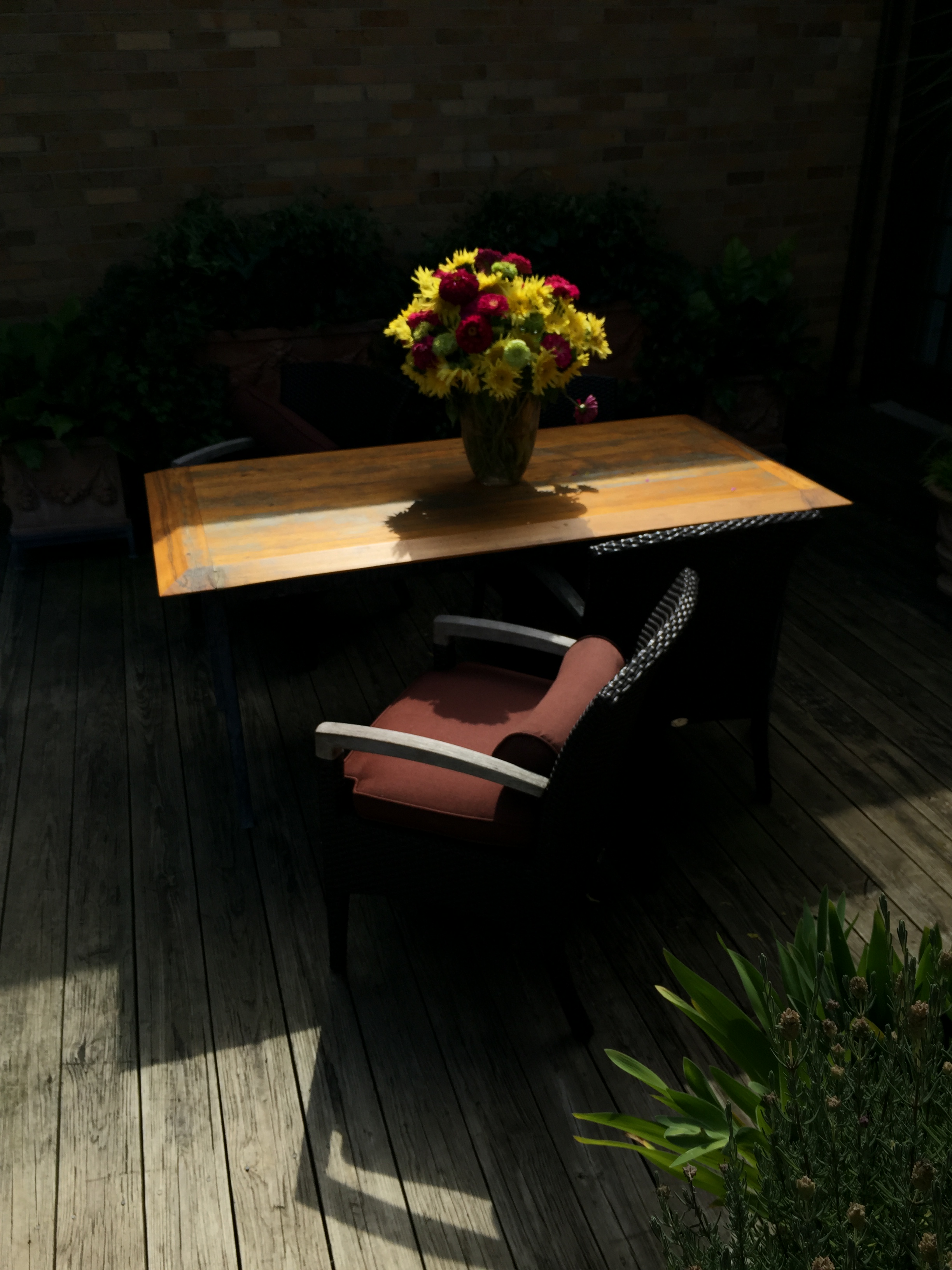
Sept 14, 2015 034My IPhone recorded this arrangement of flowers on my sunny daytime deck based on numerous scientific calculations about how to handle the exposure in the best and most pleasing way possible.

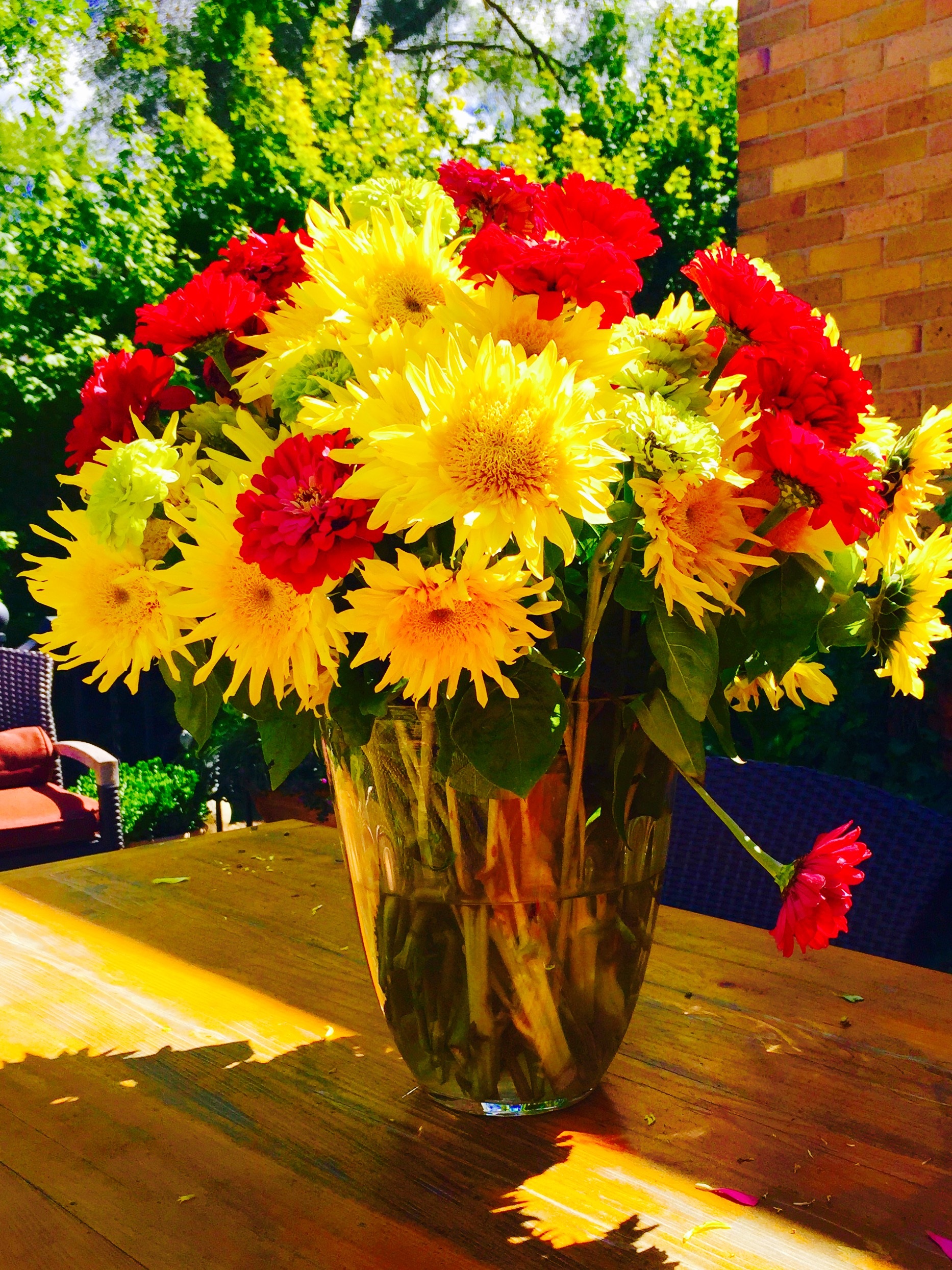
flowers 2A chroma overlay, with a bright light overlay makes the saturation of the color more intense. This photograph is edited.  I would guess that the editing would not read as well if the picture were printed.  Computers are glorified light boxes.  The light shines through the image, like those Kodak slides from 50 years ago. The intensity of the light is a pleasure to see.

flowers 3This overlay is even more intense, and dramatic.  The photograph begins to have an aura about it.

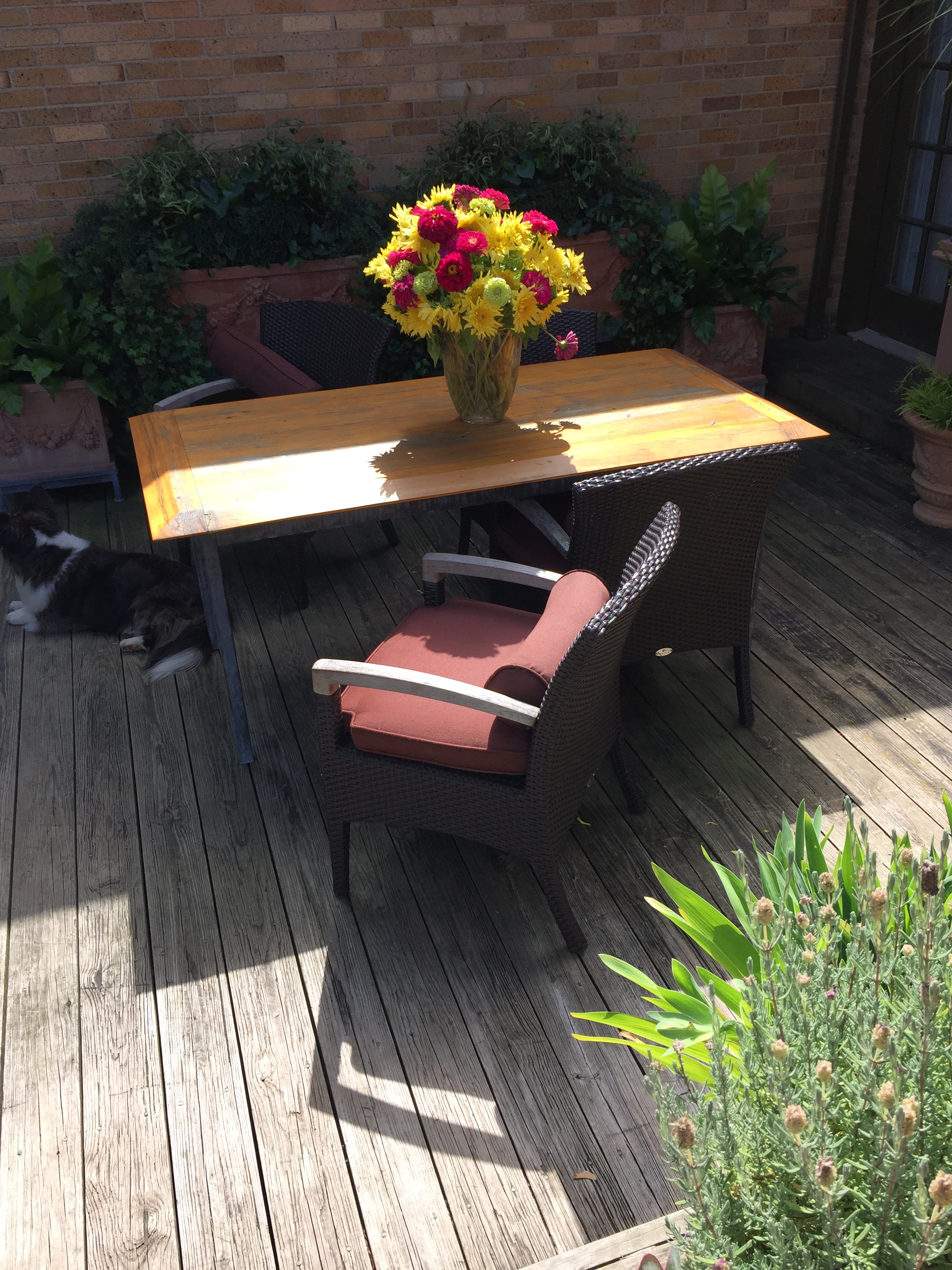
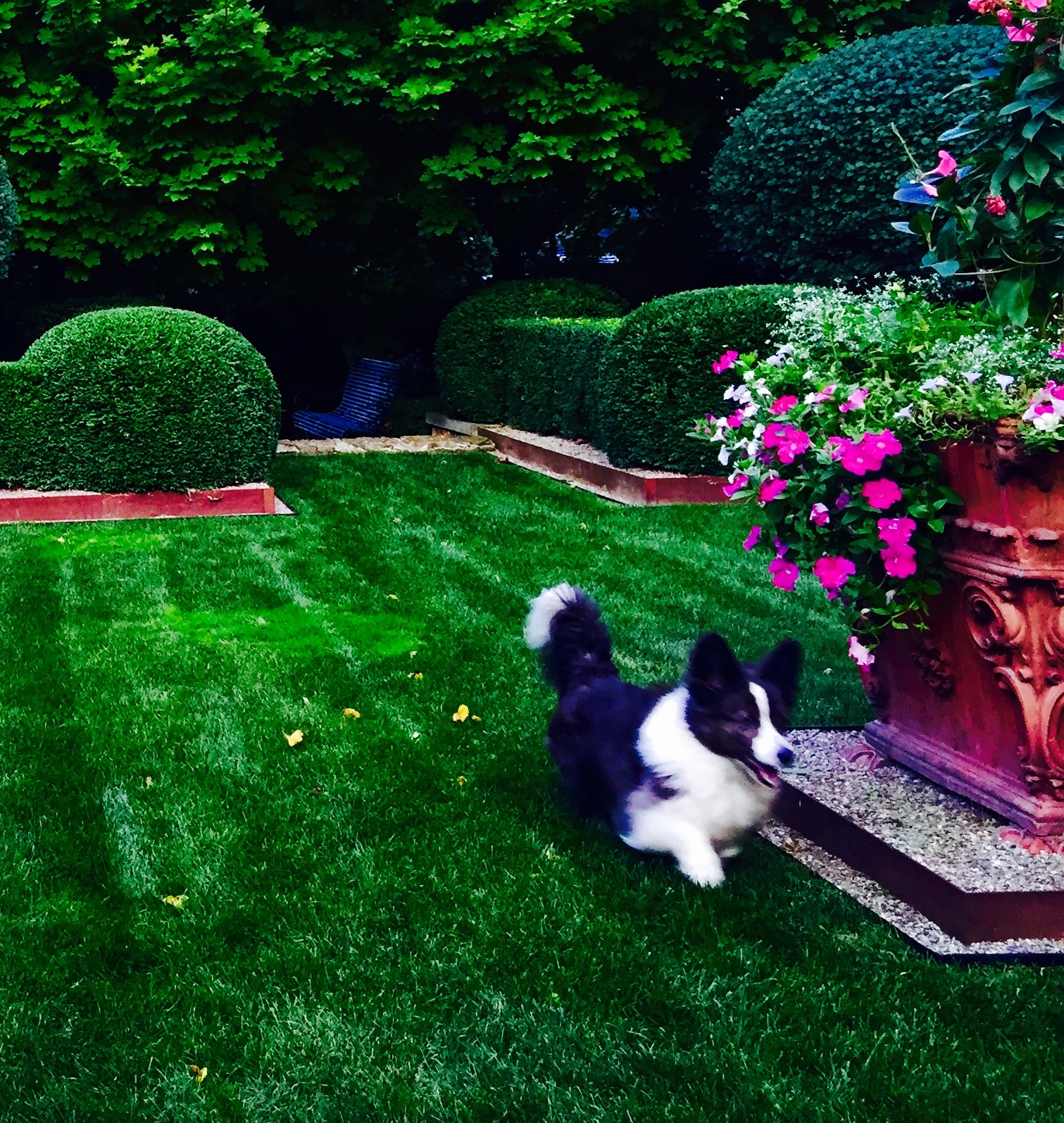
image15 (2)This sunny overlay saturates the color of my terra cotta pot. These pots are a pale peach, on a day with no overlays.  Here, the color is on fire.  The shadows on my brown chairs are blue. The pink and yellow flowers are brilliantly pink and blue. This edit is a happy edit.  A high  summer edit.

Sept 14, 2015 037This picture is as the camera read it.

Sept 14, 2015 036The same picture, edited, is an expression of how I felt, and what I truly saw, when I took this picture. How do I explain this in words?  Nature is a vast and ultimately a most important stage.  Everything of any consequence goes on there.  I have great respect for the story that is to come when the lights dim. The light is drama in and of itself.  The light and dark in a landscape-that relationship can be very dramatic.

image1 (16)If you are a garden maker, all of the above is of critical importance.  The composition. The editing. The plants arranged in a fresh or unexpected way.  The design that is is subject to a series of overlays that describe the maker. I feel quite sure that if 100 landscape designers were asked to create a design for the same space, every design would be different. Distinctively different. A designer and client that share certain overlays are bound to produce a project of note. A great landscape rings true, and is emotionally sound.

image15As for me, I like landscape designs that are simple, and saturated. Saturated with thoughtful composition.Saturated with shapes, color, textures, memories, events, and moments. I have not explained this very well, but that process by which gardeners create is loaded with mono, tonal, noir, chroma, fade, process, transfer and instant overlays.  A life applied to a landscape design-would that every project I do would have this overlay. Adding some light, dark, and color to this mix we call design- it could be brilliant.


Landscape Under Construction

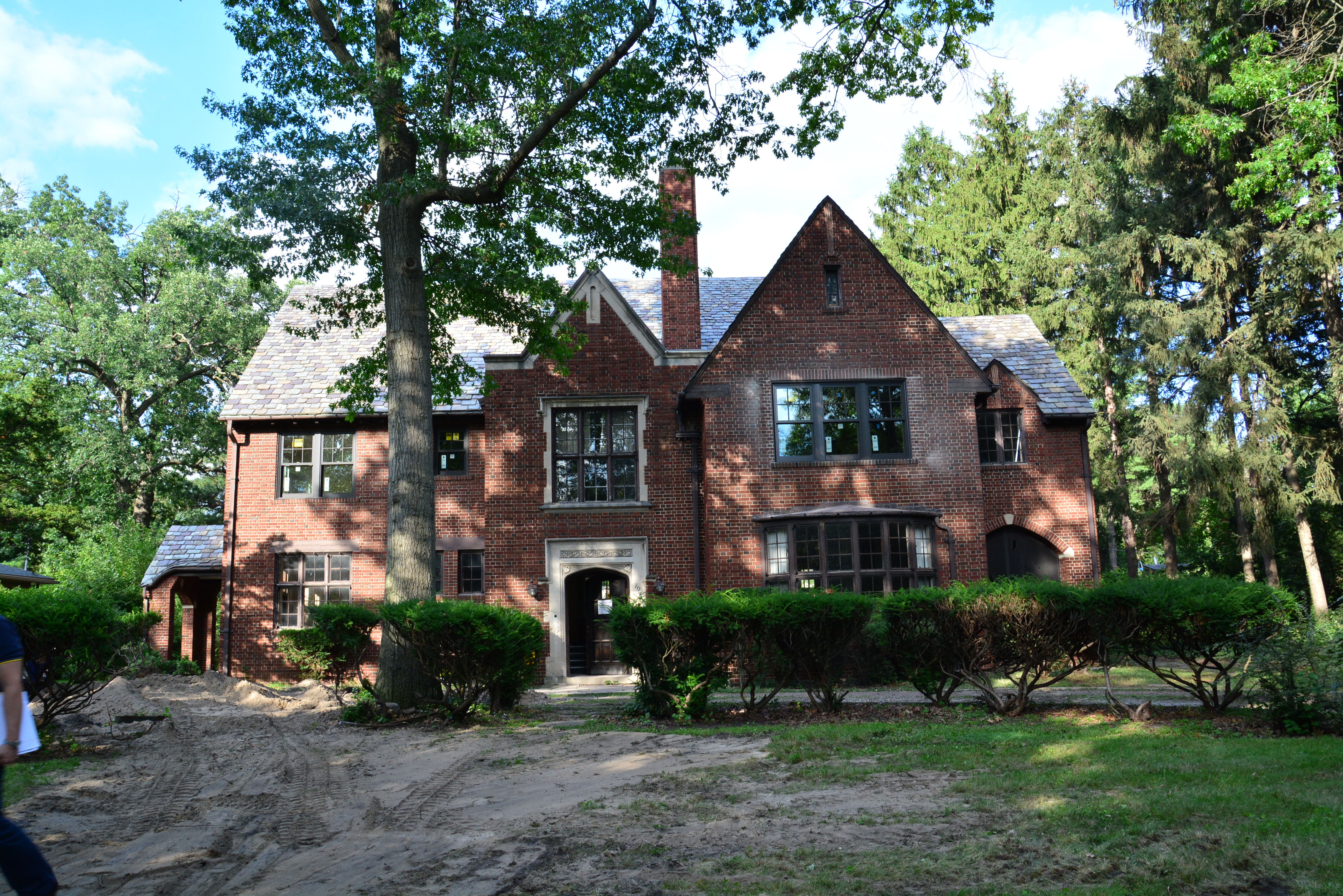
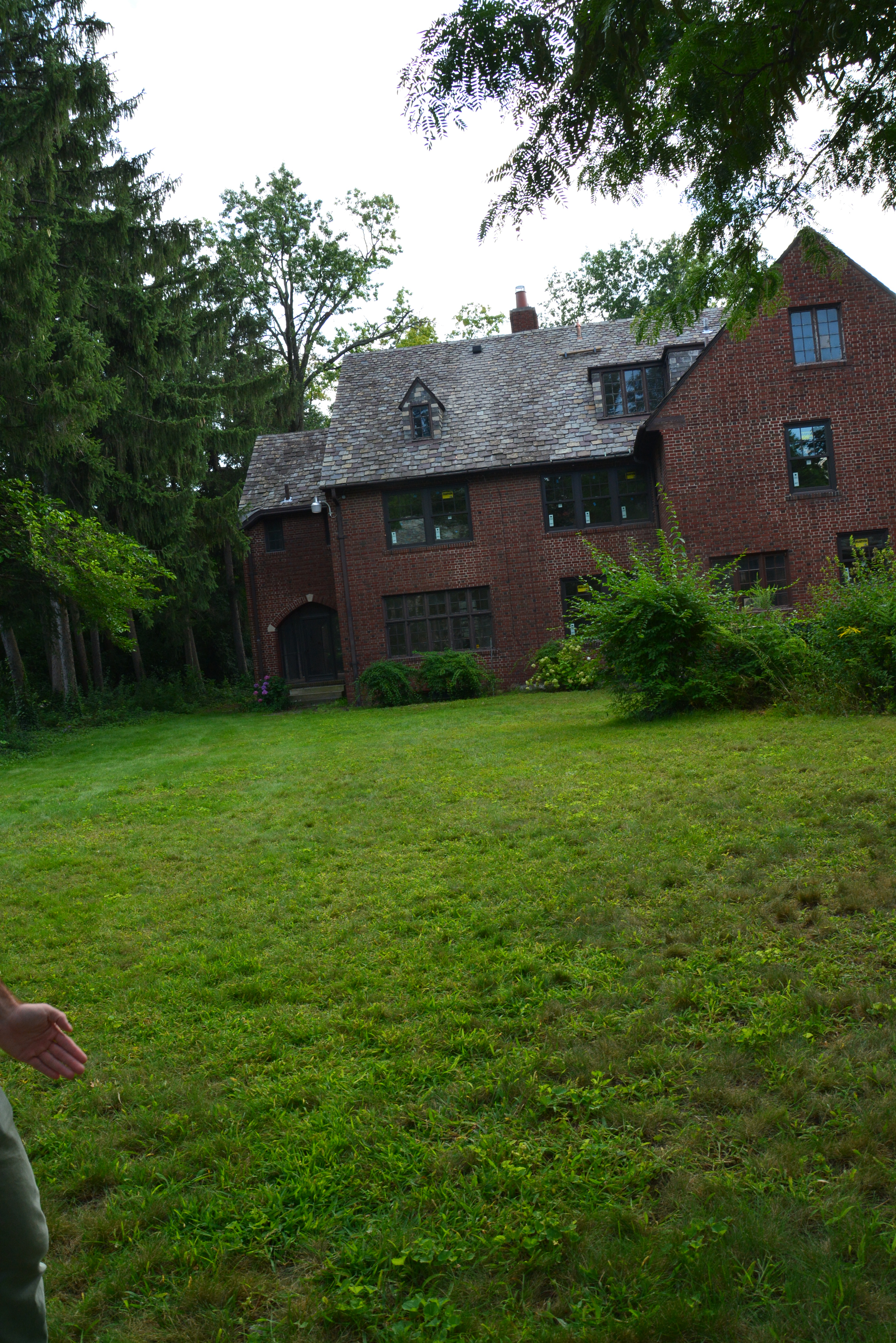
landscape under construction (8)A long time has passed since I first laid eyes on this lovely old home in Detroit. Dating back to the 1920’s, all of those beautiful details built in to homes of this era were intact.  The front door has a gorgeous hand carved limestone surround. The brickwork and slate roof are sensational. Gorgeous bones, everywhere. My clients were willing to put what it would take to restore and re imagine the interior to their taste. Every move they made paid great respect to everything original. As for the landscape, there was work to be done. They consulted me about the landscape early on. They both have a love, an appreciation, and a respect for all things green. They were interested in a landscape that would permit them to grow vegetables, a small conservatory in which to grow plants all winter, and a place to be outdoors as much as possible in the summer. Both are very busy professional people for whom a beautiful landscape and garden would be a sanctuary, a delight, and a place to grow plants, and to host friends and family.

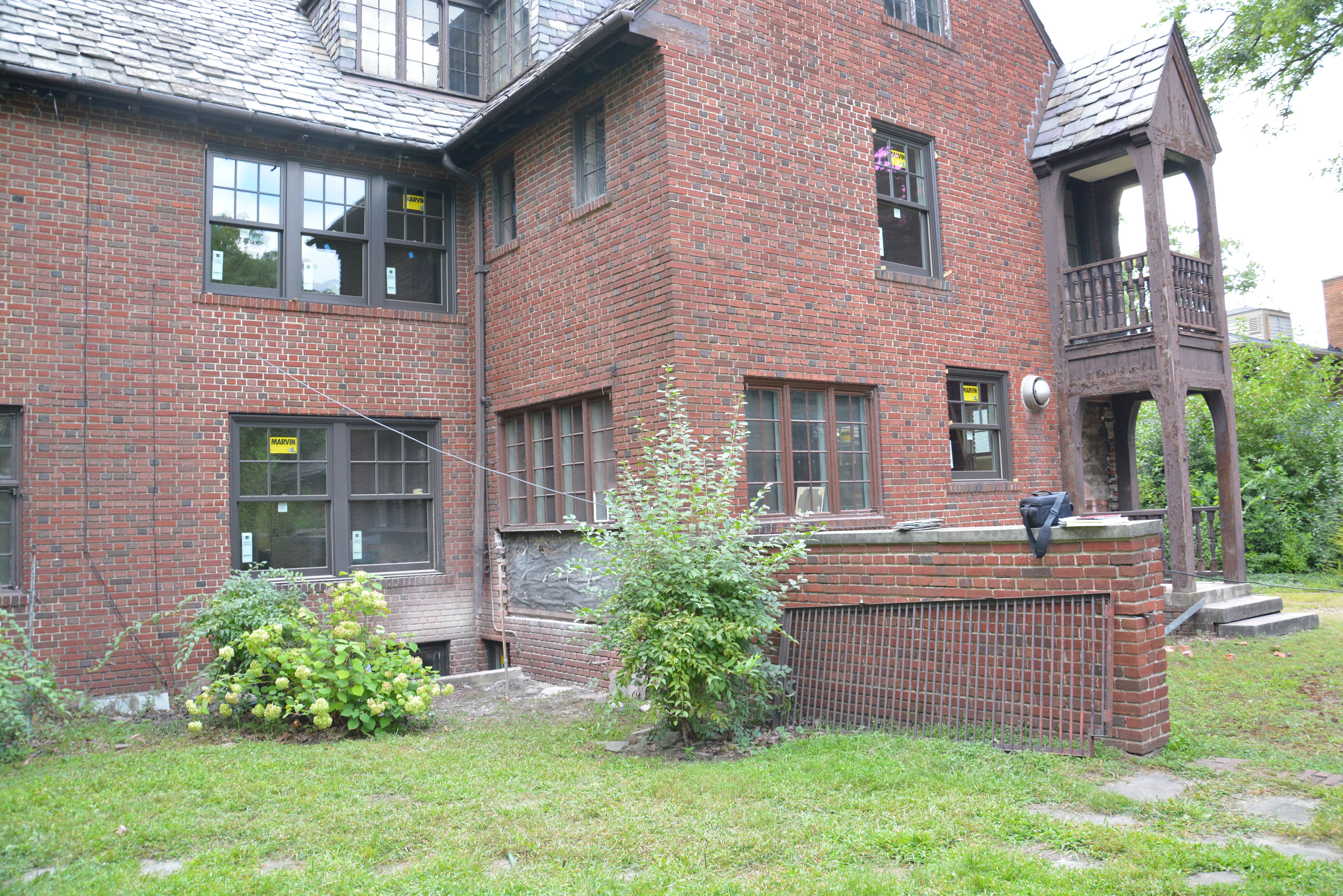
landscape under construction (5)The interior renovation took a long time.  This gave me plenty of time to consult with them about where they wanted to take the landscape.  It is obvious from these pictures that no one had cared for the property in a very long time.  The weeds were old, tall, and woody. Some tree seedlings were over six feet tall. There were dead trees, and trees in poor condition.  What shrubs had survived were unkempt. None of them were precious or unusual, but for a group of multi trunk yews in the front yard that were old enough to have attained tree status. They are breathtakingly beautiful, and thriving. The back yard needed some thoughtful design.

landscape under construction (6)Their interior designers, Arturo Sanchez and Barry Harrison from Art Harrison Design Studio made some great decisions early on.  The kitchen windows in the center of this photograph would become French doors.  This would make a trip from the kitchen to the barbecue convenient. There was a great interest in a terrace that would be friendly to dining and entertaining. The question about how to handle the rear terrace would be mine to explore. The other kitchen windows beyond the wall in this picture would be looking out onto the driveway. Driveway?  The drive outside this wall was gravel, and covered in a thick layer of compost and weeds. Once all of the construction was finished, the driveway would be redone. How would that view be handled?

landscape under construction (7)
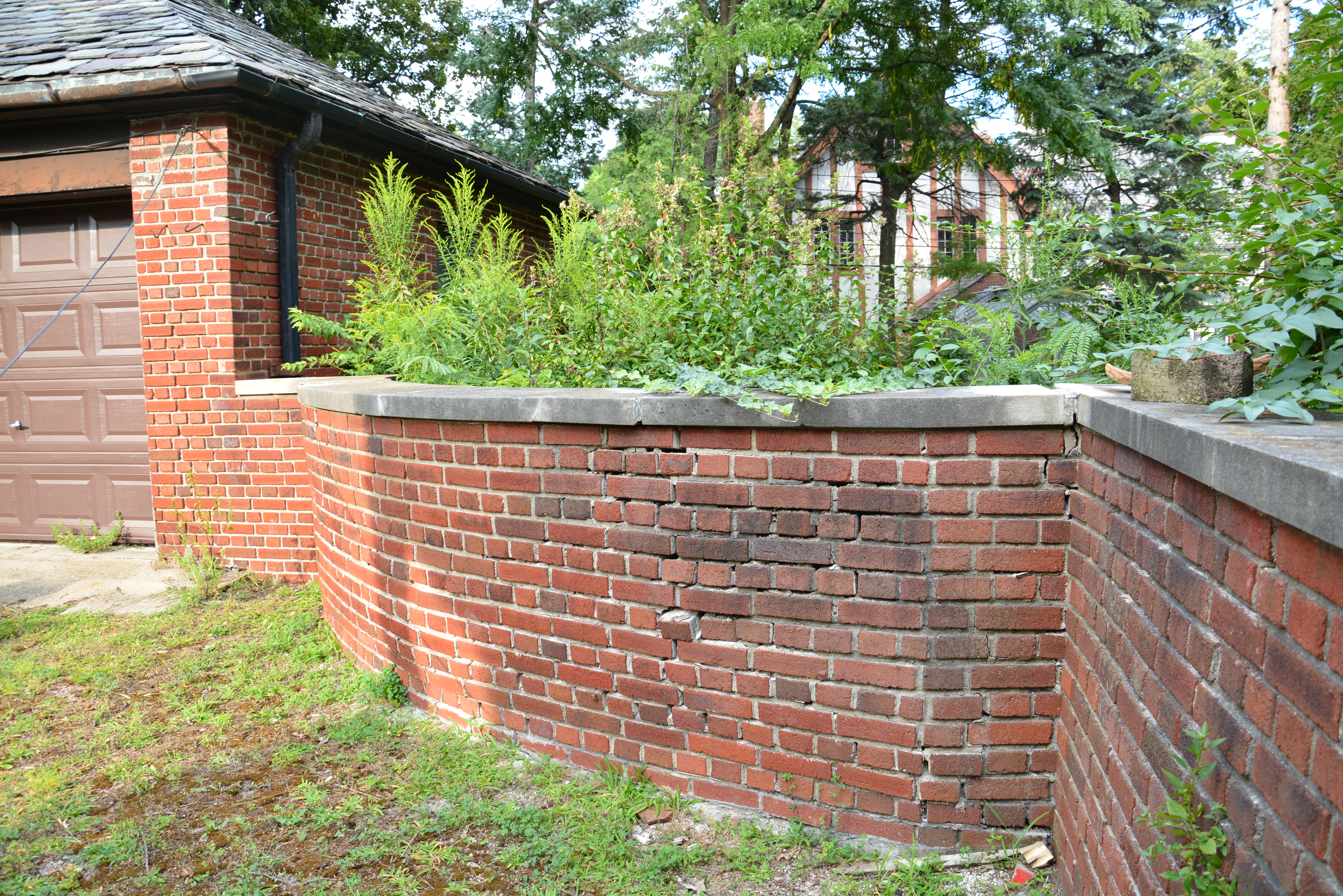
The wall which connected the house to the garage had been beautiful in its day.  It would need to be rebuilt.  And perhaps rebuilt in some other configuration. Designing the walls and hard surfaces would come first.  But there needed to be a concept established for how the entire space would work.  They wanted to cook and entertain outdoors.  They wanted a pool.  They wanted a spa they could use year round.  A conservatory was on the list. Perhaps the conservatory could be located behind this wall. This is an urban property with 3 neighbors.  How would we establish some privacy in the rear yard?  How could we maximize the the outdoor living spaces?

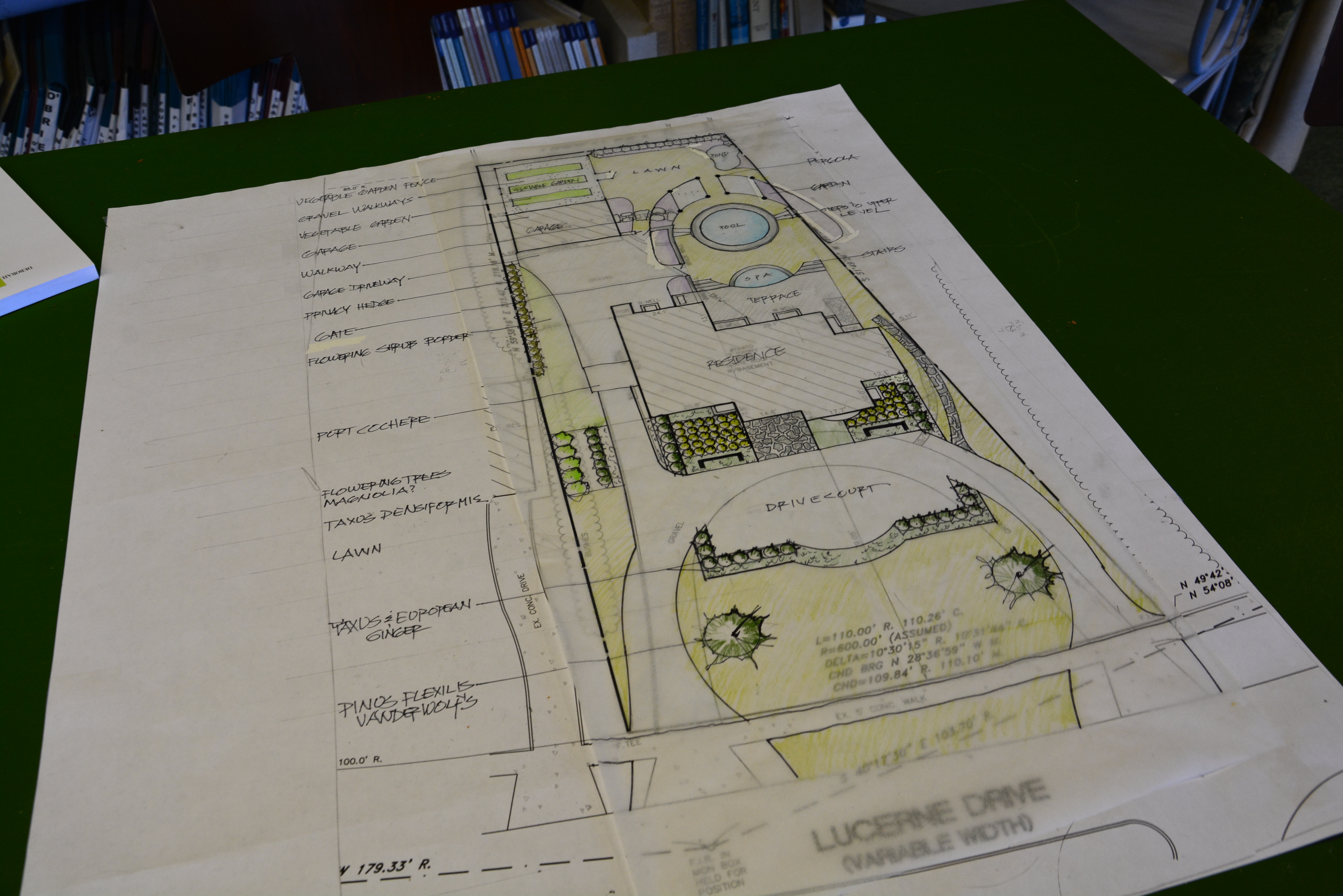
landscape planThis conceptual plan for the entire property evolved over a period of time.  The design for the rear yard is at the top of this picture.  The rear terrace would span the space from the new kitchen doors to the entry to screened porch at the opposite side.  Given a terrace of this size, there would be two sets of steps down into the back yard. The spa would be situated just below that terrace.  The pool would be round.  The rear yard is not that large.  A round pool would fit the space with ease, and be conducive to entertaining. As the grade of the rear yard rose the further one was away from the house, the pool was designed to have its front half out of the ground, with a coping set a seat height.  The rear half of the pool would be set at grade.  Beyond this round pool would be a pergola-the design to be determined. Once my clients were convinced that the round pool, and the terrace with a curved front and dual stairs was to their liking, the discussion turned to all of the details.


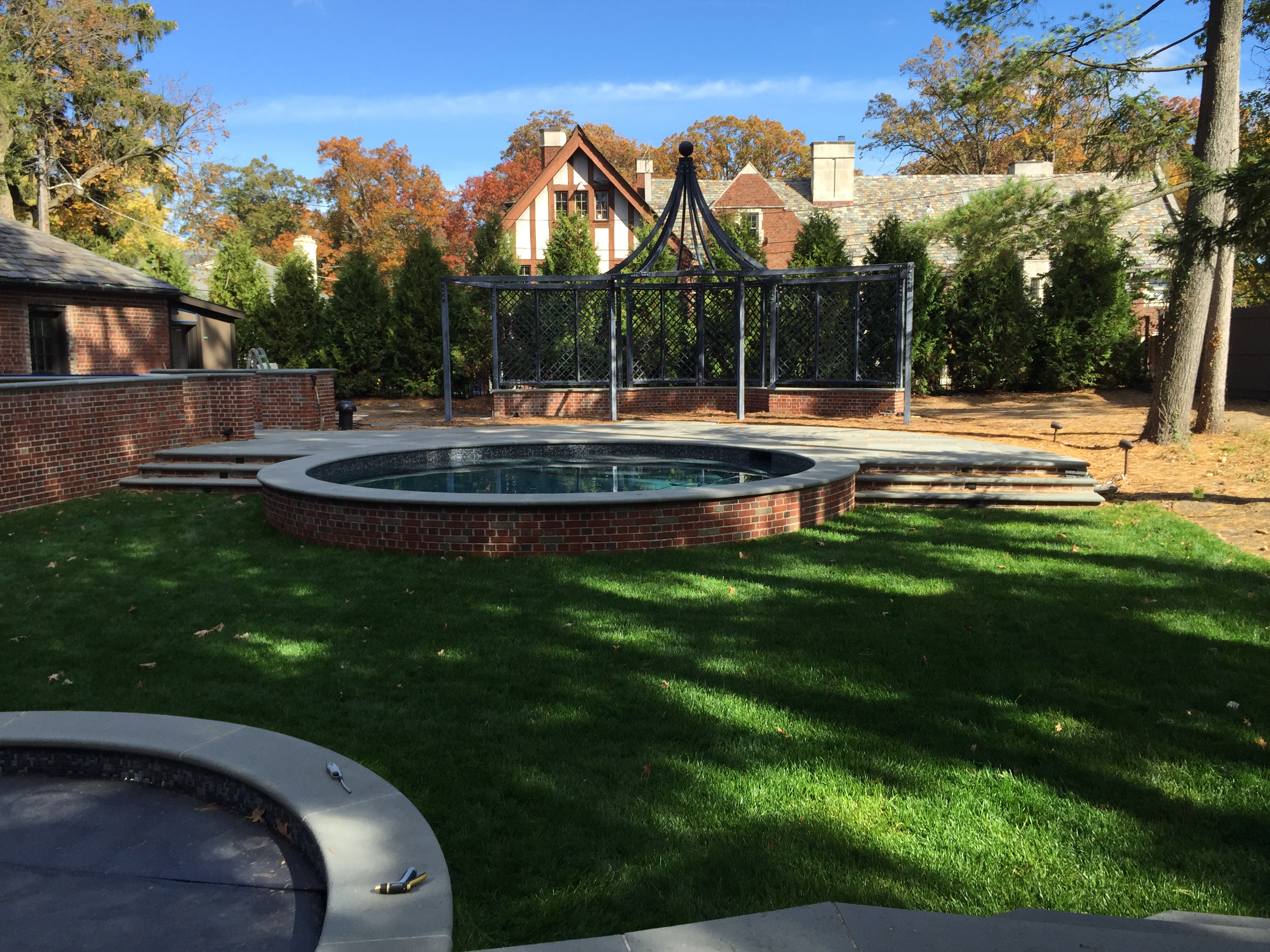
Branch pergola (3)A good bit of time was devoted to the design of the pergola. Eventually it was decided that the pergola would have curved wings that would follow the radius of the pool. The center section would be round, and have an open roof. The posts at the back would rest on a brick wall at seat height. The back of the pergola would be finished with lattice panels, for privacy.  The poles in front would sit at grade.  In the center, a round pavilion with a curved roof. This center section would provide ample space for a large dining table and chairs. The Branch Studio would manufacture the pergola.

Branch pergola (2)This picture of the finial to go on top of the finished pergola gives an idea of the size of the finished structure.  There will be lots of space to entertain.  A swimming pool can be a beautiful and welcome feature in a landscape.  That feature asks for a place to be, pool side.

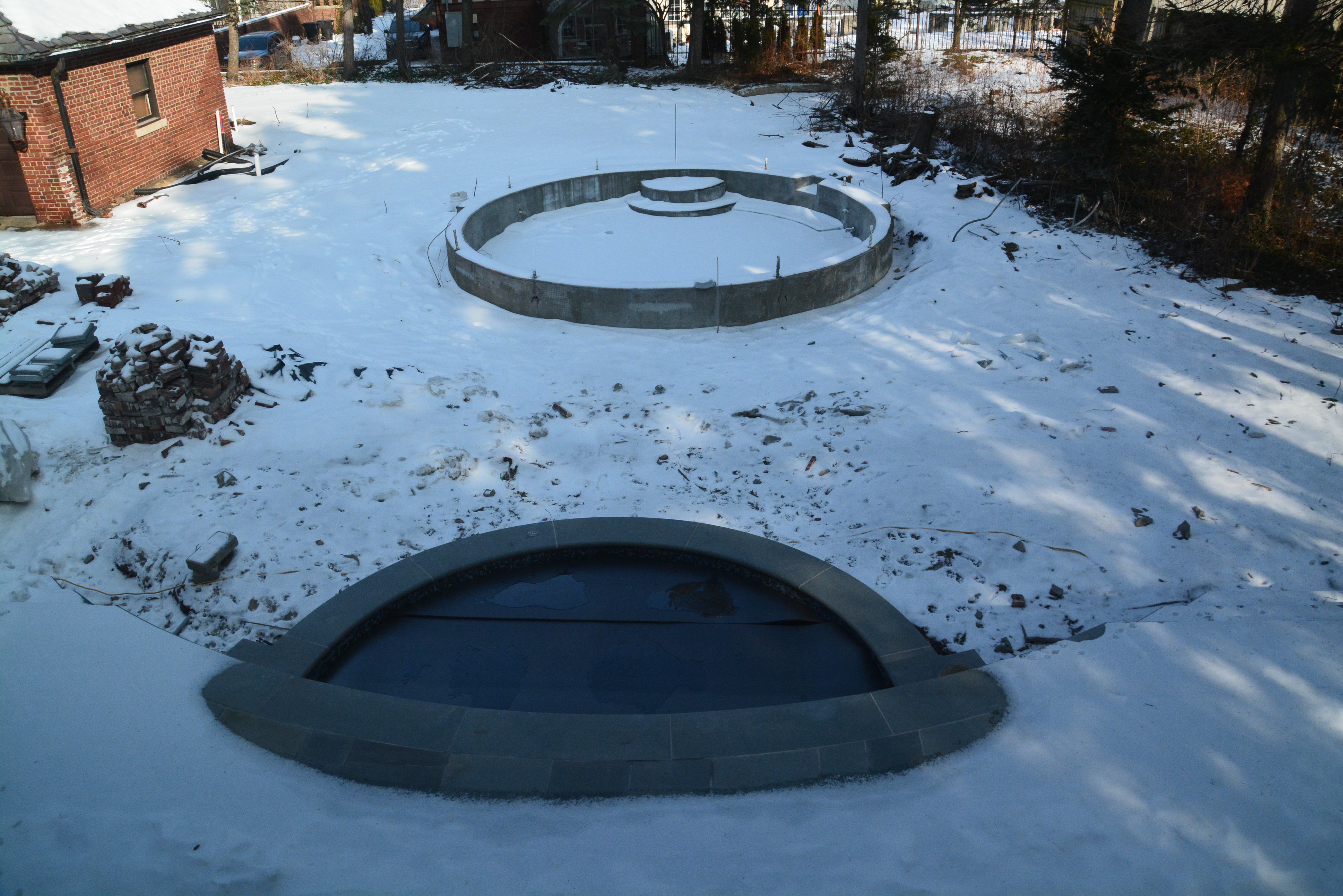
Branch pergola (1)Each piece of the pergola will be fitted together prior to the galvanizing process, to be sure everything fits. The body of the pergola can be installed by the landscape crews, and the Branch crew put together, but the roof will have to be set by a crane. If all goes well, that pergola should be ready for installation in less than a month. landscape under construction (4)The terrace, pool, and spa were well underway by time winter arrived last year.  The pool terrace, and the new wall separating the back yard from the driveway would have to wait until this spring.
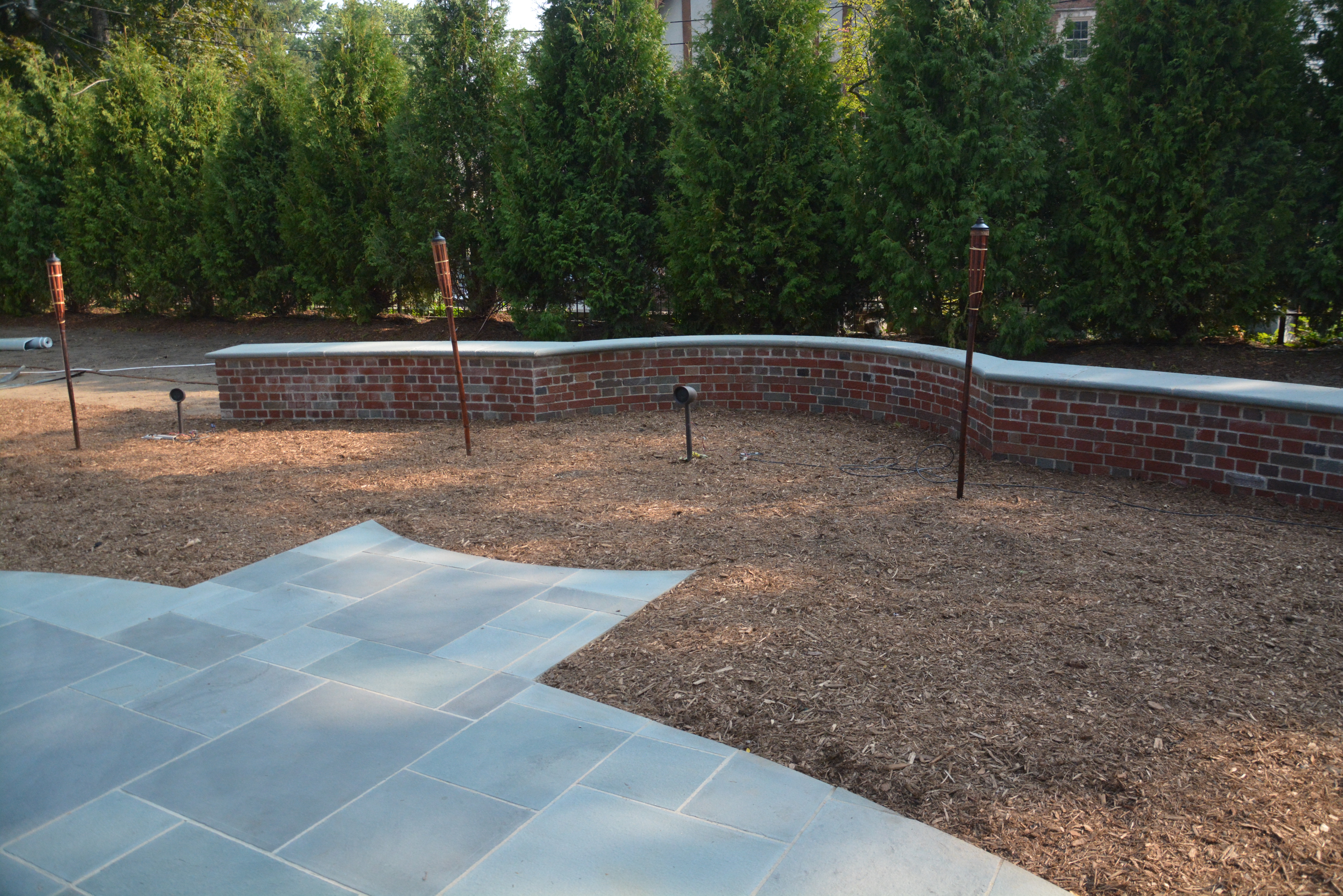
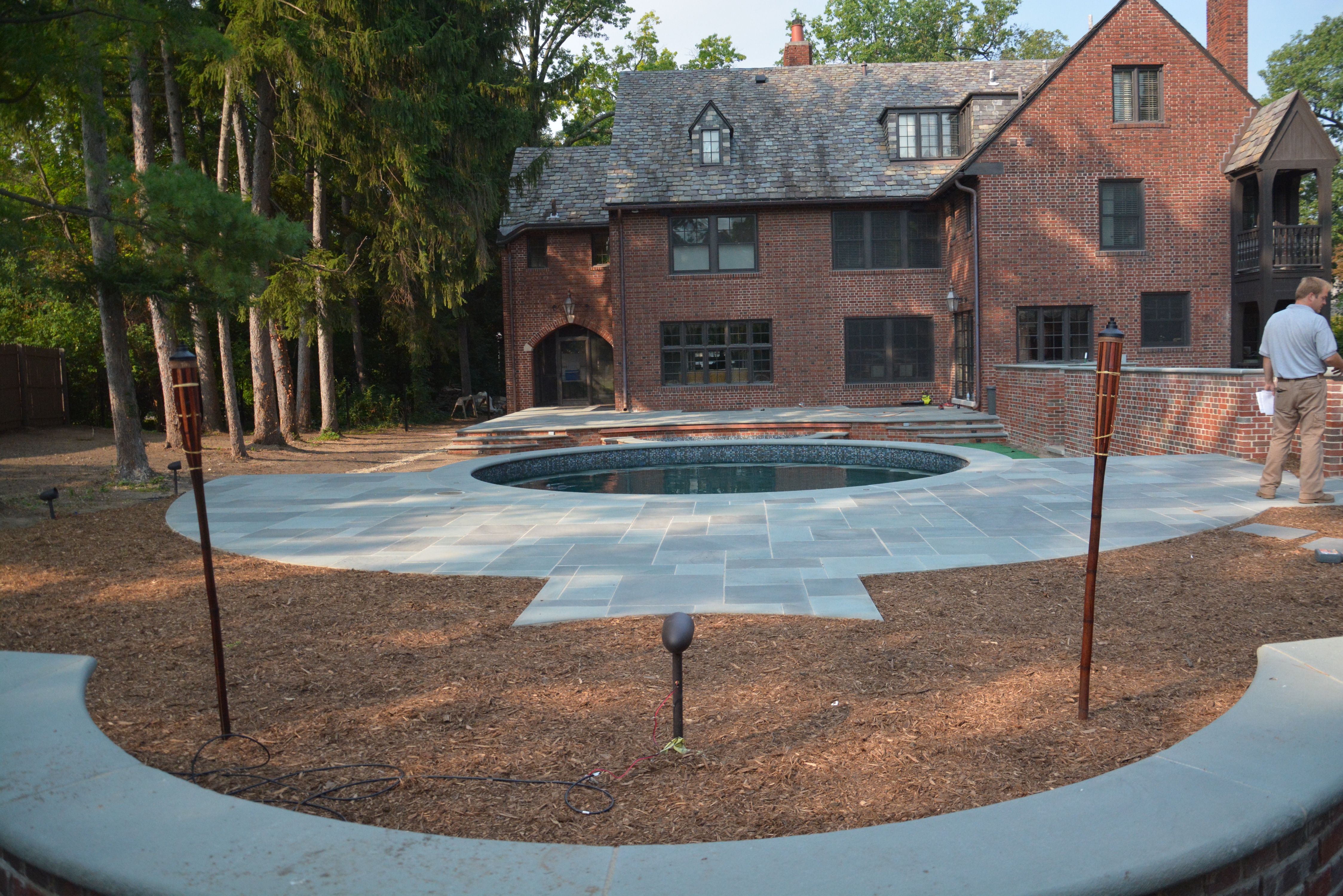
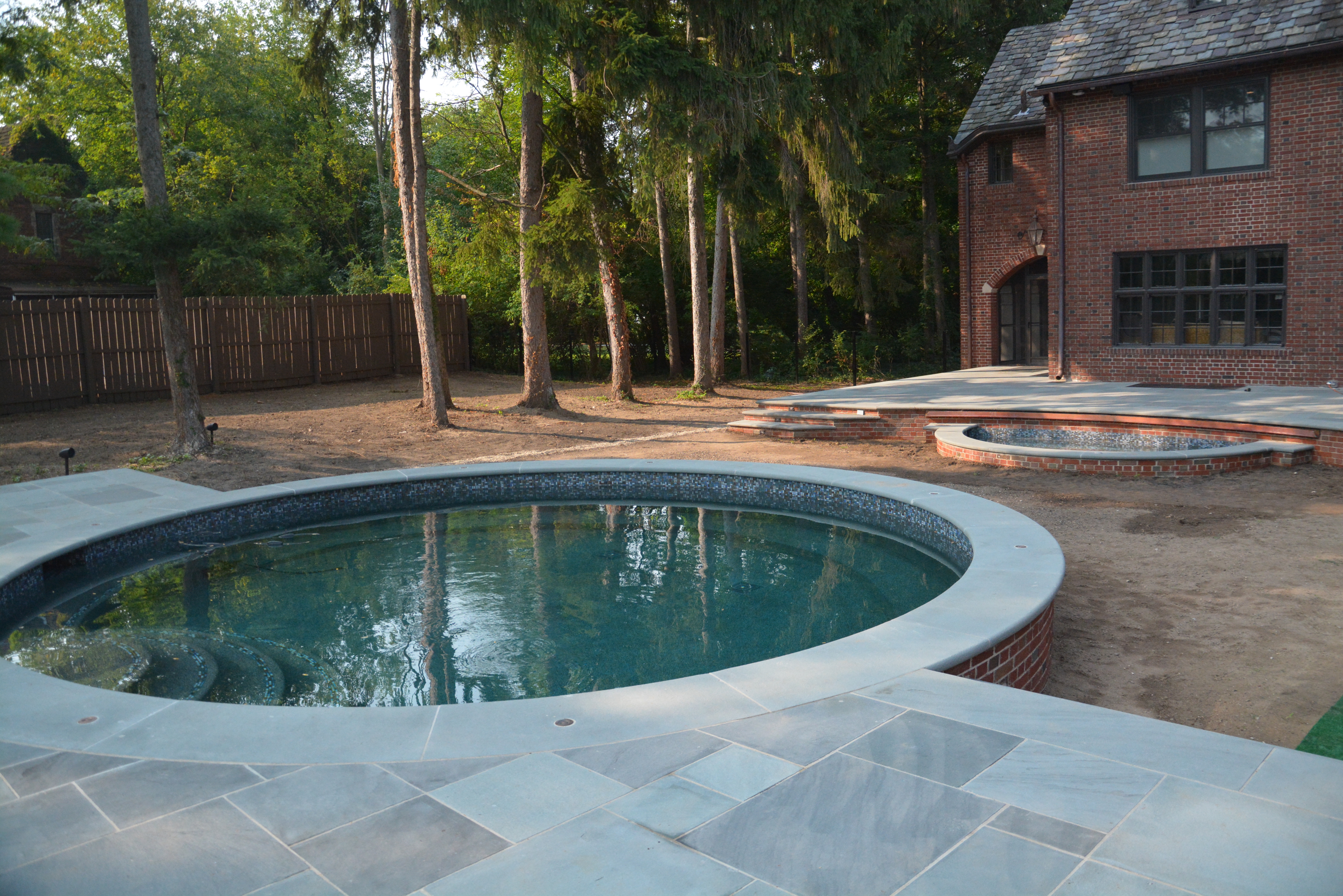
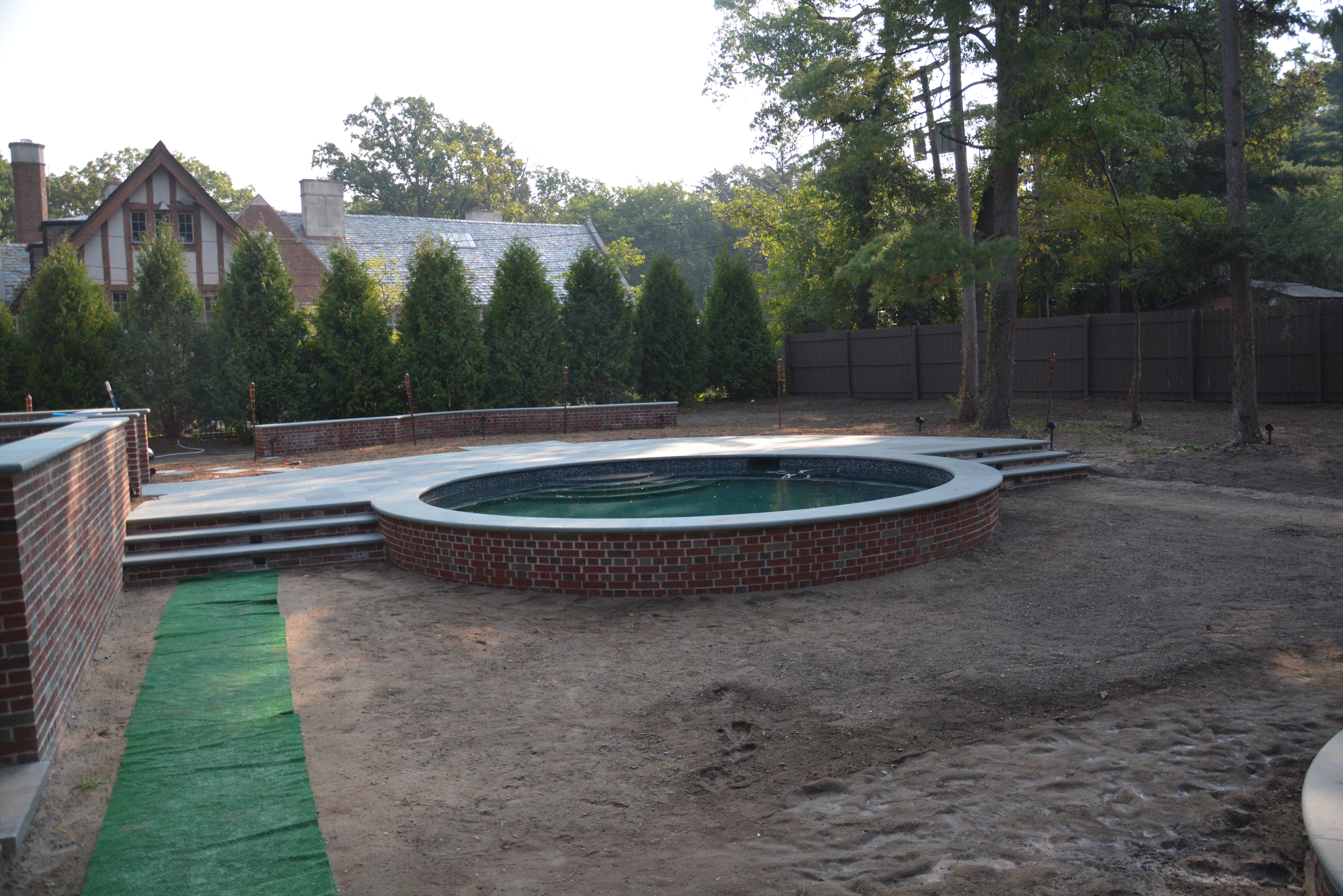
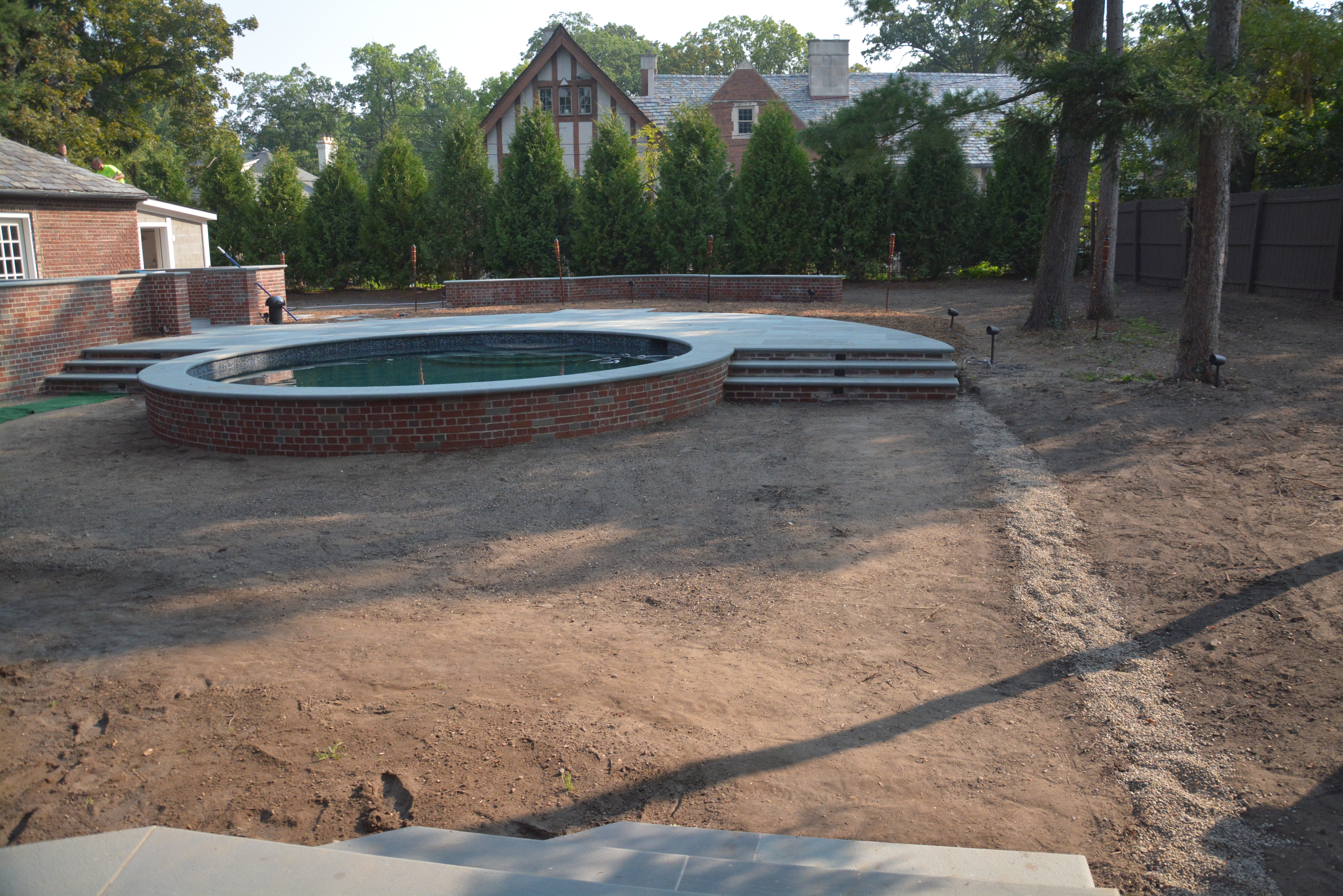
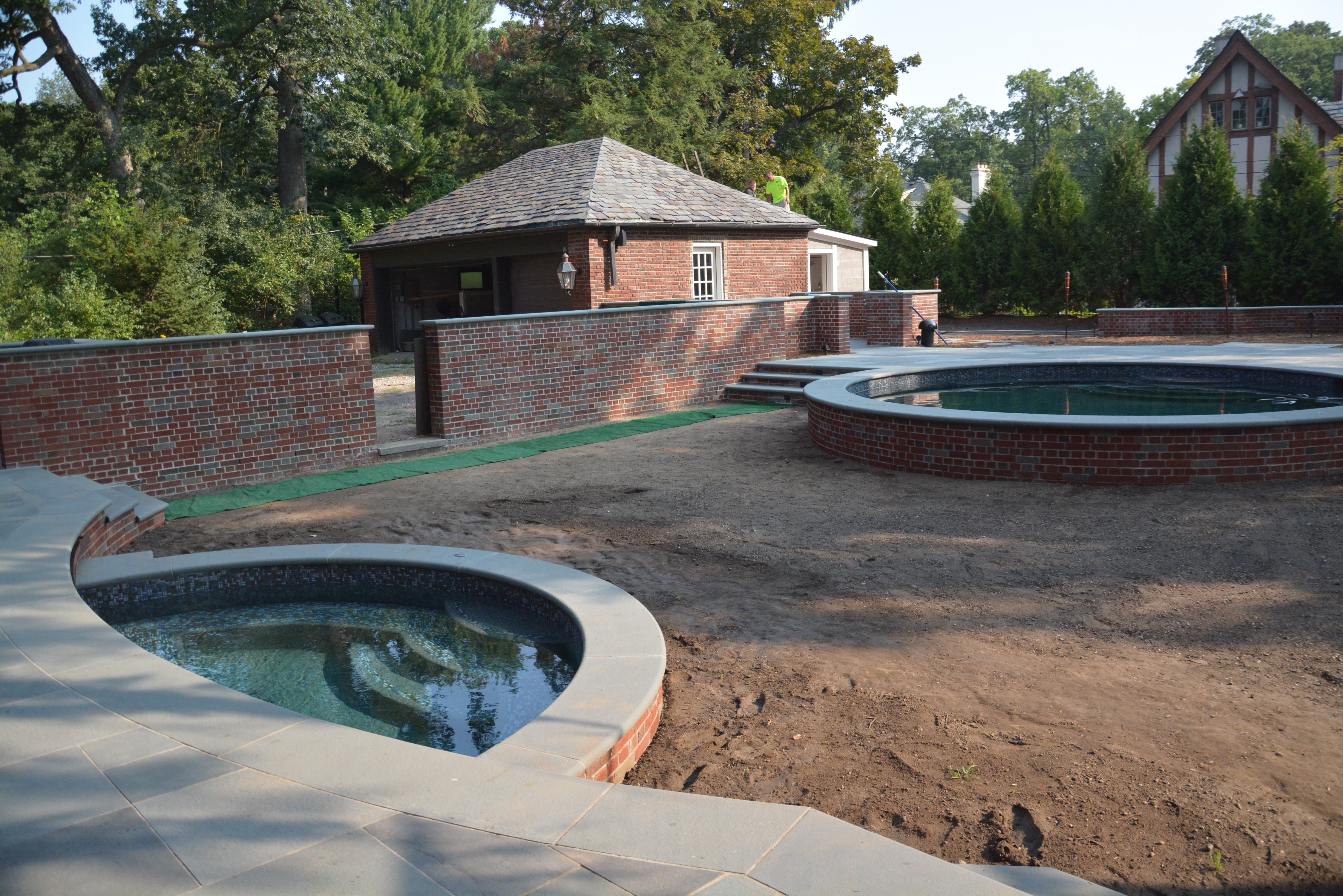
landscape under construction (14)It has taken more than 5 months to complete all of the stone and brickwork, and the pool.  The area in the foreground which will be occupied by the pergola has been barked, to keep the dirt and dust down.  This area will be graveled with decomposed granite, to provide a hard yet water permeable surface.  The back of the pool sitting at grade is accompanied by a generously sized terrace perfect for lounges and containers.  The back wall of the pergola features posts which will be set into a brick seat height wall with blue stone coping in the immediate foreground.

landscape under construction (13)The spa sits just below the house terrace, making it convenient for winter use.  The ground between the spa and the pool will be lawn.  On the left side, a wild flower and shade garden loaded with spring flowering bulbs will feature hemlocks and dogwoods.

landscape under construction (10)On the rear lot line, a hedge of recently planted American arborvitae provides loads of instant privacy to the yard. The shade garden will curve around and blend into this hedge.

landscape under construction (12)A dressing room is in the process of being built off the back of the garage.  And the conservatory?  it will be built on top of the brick wall off the side of the garage.

landscape under construction (11)The new brick wall dividing the garage and driveway from the back yard is soon to get an iron gate. On the backside of these walls, we will plant gardens.  The driveway garden is always an important garden. Everyone visits that garden at least several times a day, all year round. Now that the hard surfaces are done, I can revisit the landscape plan, and see if anything needs to be changed.  It is always a good idea to let the space speak back to you before you plant.

Sept 2, 2015 (10)Once the pergola is installed, I will better be able to judge where any additional trees and shrubs should be planted. The shade garden down the side of the yard needs to be integrated into the hard surfaces and spaces.  Will I plant on the pergola?  If course.