I have a big love for Italian gardens, and Italian garden ornament-no wonder. Rob has taken countless pictures on his trips there over the years to buy. I own an embarassing number of books on Italian culture, gardens, villas, terra cotta, art, interiors, flora and fauna-and the history thereof. Italian gardens-those two words evoke for me all things good about great gardens. I go so far as to have picture books of this region or that; I am quite sure heaven looks very much like Tuscany. My own collection of pots is almost entirely handmade Italian terra cotta-and three large English-made concrete pots in the manner of Italian terra cotta.
I am particularly interested in the faces. Italian pots, perhaps more so than pots from other countries, feature faces. The faces of women, satyrs, dogs, lions, putti, gargoyles, goats, birds. The faces of Italian life, I call them. It is astonishing how emotionally evocative those faces are, though made of fired earth.
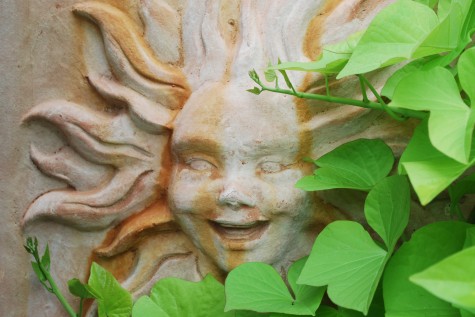
 In much the same way as I imagine the face of a person I have only talked to on the phone, I imagine plenty about Italy, based on these faces. This face, part cat, part lion, part sun, part satyr-what is the meaning behind those wrinkled brows, and intense gaze? I have my own mythology which I have enjoyed imagining.
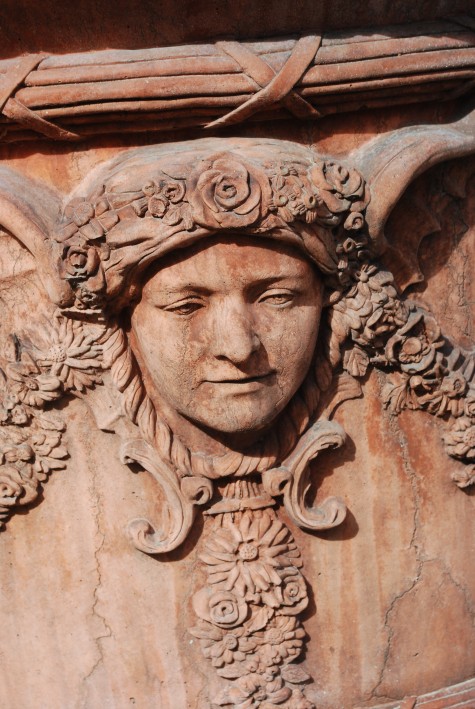
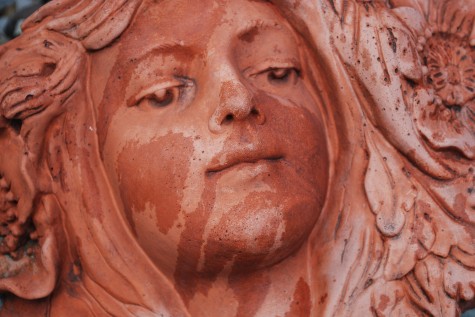 Some faces of the women can recall the Italian paintings of the Renaissance. The modelling of the features of this face is quite extraordinarily soft and fluid. The contrast of this face, with the heft and solidity of the clay is beautiful.
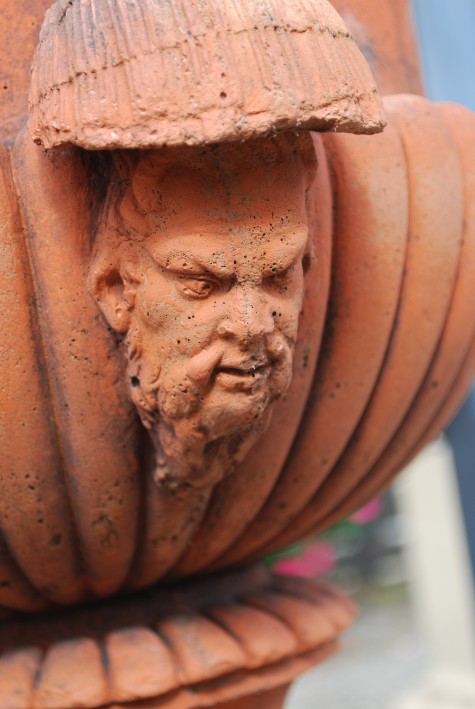
Even the faces without so much detail make an impression. This imposing face, with a shell helmet, is surely the face of the guardian of the pot. I have never felt the need to actually research the history of the design of these pots-I like my own impressions. But after years of looking at garden ornament, I have no problem knowing what country they come from, based on how the figure is represented.
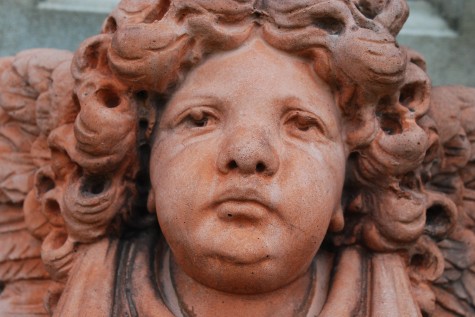 I see some of the history of Italian garden making and culture. This I get, before I ever fill them with dirt, and plant something in them. It also makes me careful about how I plant-so that a mature planting does not obscure what is represented on the pot.
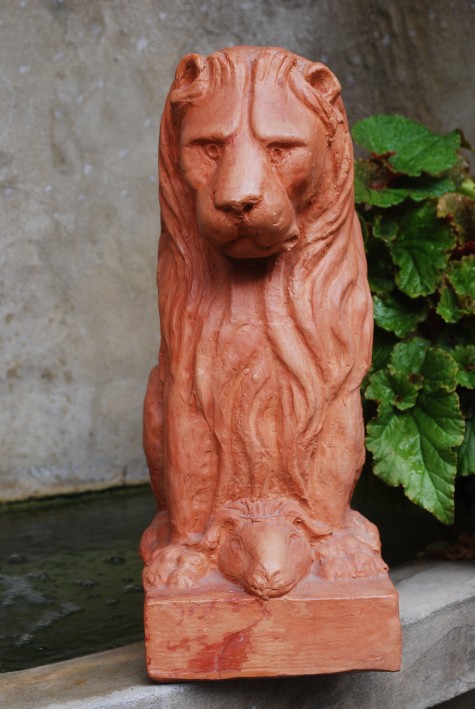
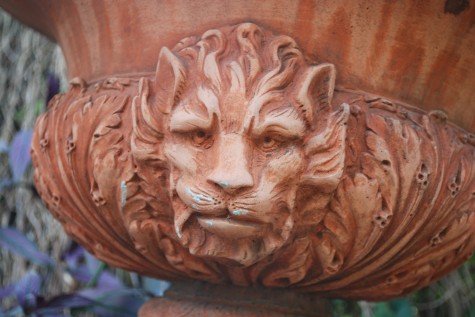
This sculpture Rob brought back from Milan probably 14 years ago. The lion seems horrified by what he has had to do to eat, to live. This is a long way of saying-what a strong expression of angst. There are those who would make a distinction between art and craft-but that argument breaks down quickly for me. There is a story here, being eloquently and simply told. My Italian pots are beautiful sculptures in which I make things grow.
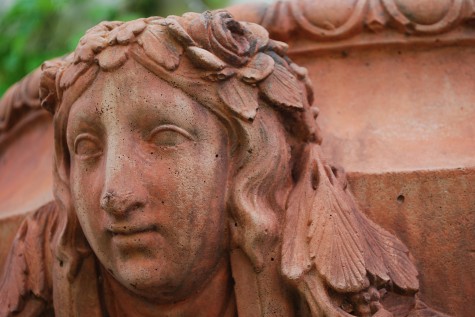 I like so much that the women have strong faces. She seems able and willing, her eyes wide open. Those who love the surfaces of their contemporary pots take just as much pleasure as I do from mine; everyone to their point of view.
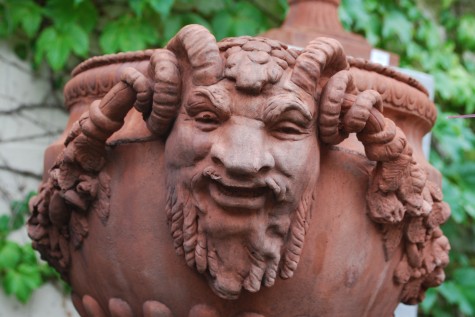
This Bacchus with the goat horns and ropy beard is smiling; those smile wrinkles at the corners of his mischievious eyes make me smile. Italian garden figures, beautifully rendered faces, a story, a tale from a moment in the history of a culture, a myth-imagine getting so much from a terra cotta pot. I will confess I put them inside for the winter-I would not want to do without them.
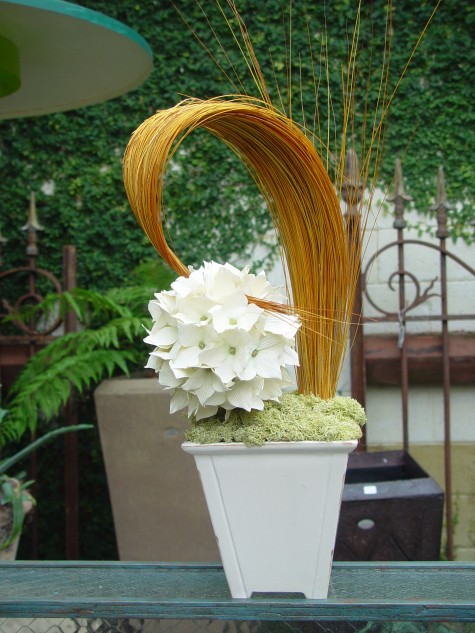 The last two nights the temperatures have been in the high forties and low fifties. Great. I am on the deck last night- in my fleece-having a glass of wine, and contemplating the end of summer. My plants in my pots have gone from gorgeous to grumpy. What to do? The topiary sculptures I make from natural materials in the fall and winter help me face the 6 months we have coming up in Michigan when the garden is dormant. The sculptures are set in dry florist’s foam-I use the John Henry brand. This sculpture, made from a dyed and preserved grass, preserved reindeer moss, and paper dogwood flowers, helps me to bring the beauty of the garden indoors.
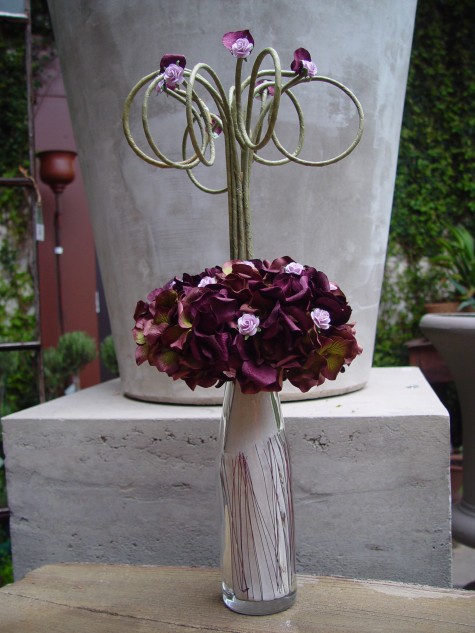 Glass can make great containers for sculptures. This vase by the Parisian artist Vanessa Mittrani is filled with white sand to give it weight. I seal the sand in the vase with a giant blob of hot melt glue, and wedge the foam in the top. Paper hydrangeas, mini-roses, and paper covered wire make for a sassy little something that reminds me of the garden. The purple paper hydrangeas bring out the purple/rust color of the wire in the glass.
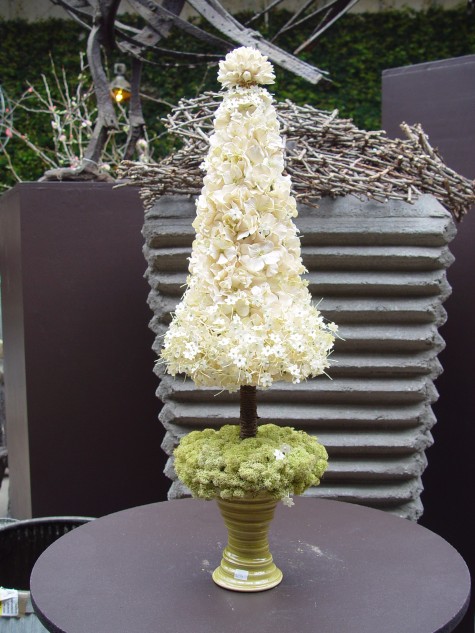 I consider paper a natural material, since it comes from trees. This combination of paper hydrangea petals, and diminuitive paper daisies describe a classic topiary cone shape. The flowery pompom at the top is constructed from individual dried bleached seed pods.
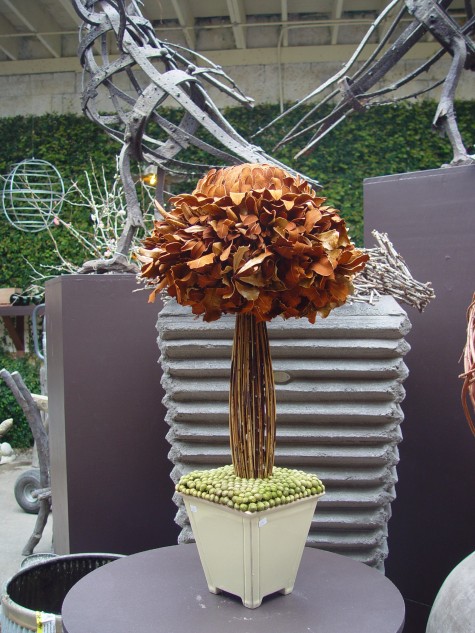 Integrifolia is a plant native to Australia, and probably other places as well. The leaves hold tight to the stems for a long time; they also take dye beautifully. This topiary began with individual leaves glued to a spherical form in a pattern reminiscent of an artichoke. As I worked towards the bottom, I reversed the curve on the individual leaves for more volume. The very bottom of the sphere is stuck with short branches just a few inches in length. Preserved reeds bowing out from a twig trunck make for a stem; the base is covered in preserved green seedheads.
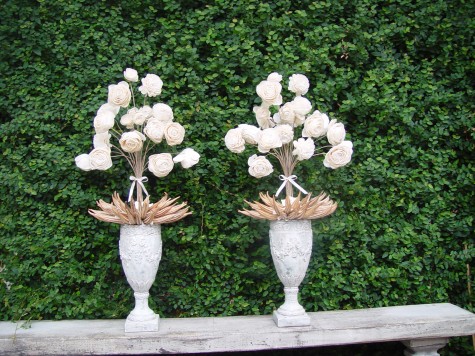 Paper roses on paper covered wires are a delicate contrast to the heft of dried okra pods.
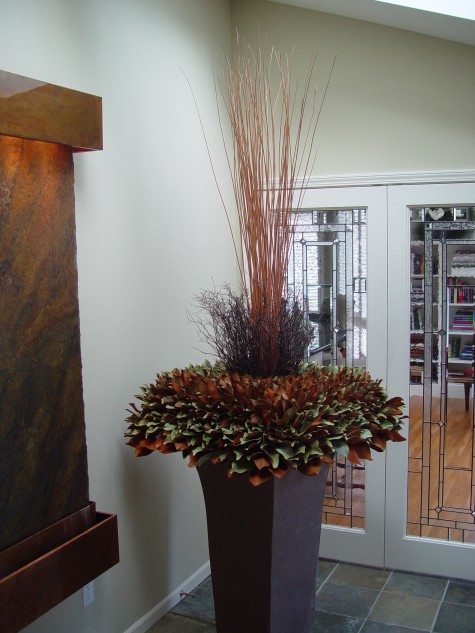 This very large scale sculpture has twigs and short birch branches for a centerpiece; the collar was constructed of fresh southern magnolia leaves. Magnolia dries beautifully, and lasts a long time.
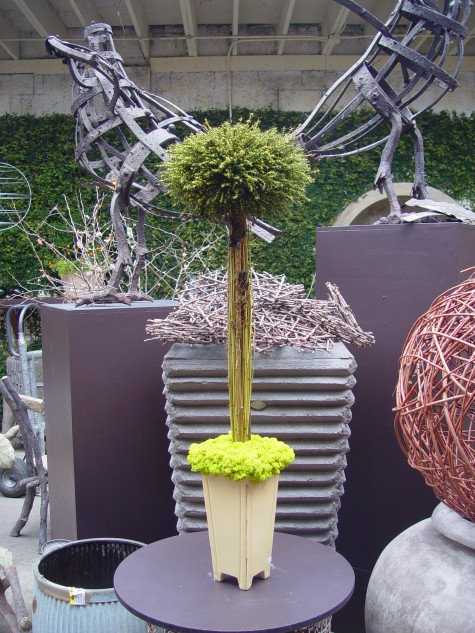 The science of preserving natural materials has become quite sophisticated. I for one would never have a house plant. I am happy for the season where I am not a plant caretaker. An object like this demands nothing from me; I just look. The reindeer moss in a color they call spring green is my idea of good color.
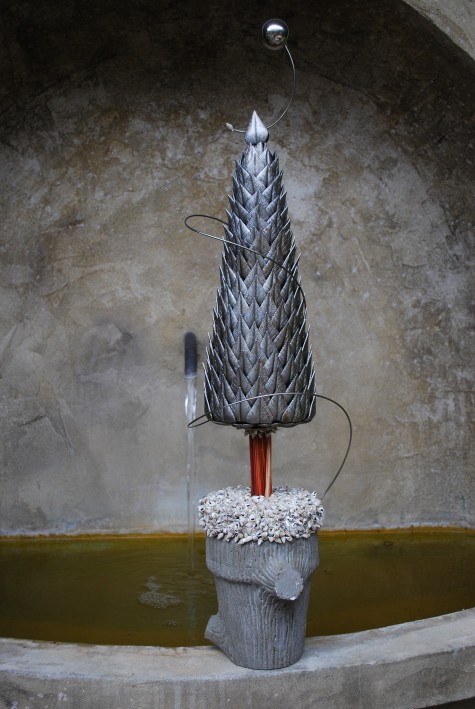 These steel leaves are by no means a natural material, but they describe one. The base was buttered with ceramic tile mastic, and embedded with tiny shells. The stainless steel wire is difficult to handle; I usually have to get help from a second pair of hands to glue it in.
 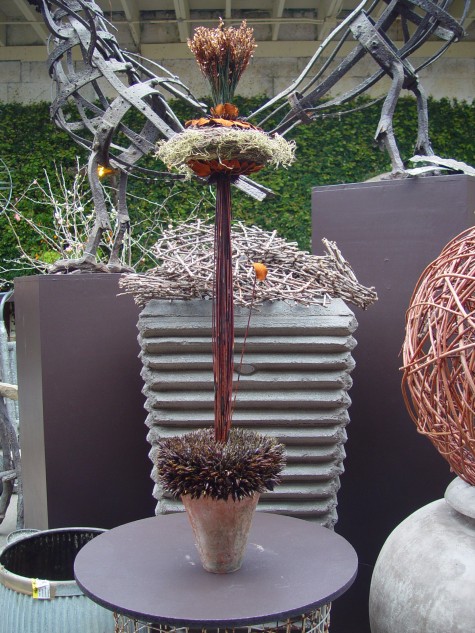 This whimsical topairy makes use of two bird’s nests made of various natural materials, sandwiched together. I buy these long stems covered with hundreds of chocolate seeds. After taking the seeds from the stem, I glued the individual seeds onto this base.
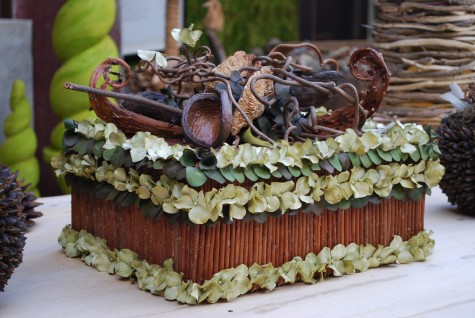 I call this a presentation box. The box itself is a photo box meant to hold 8 x 10 photographs. Should the box never have anything in it, it will still be fun to look at.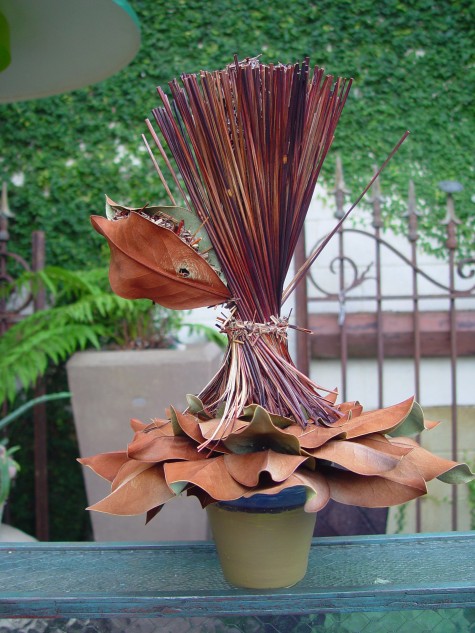
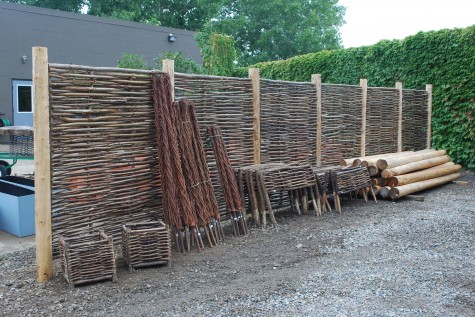
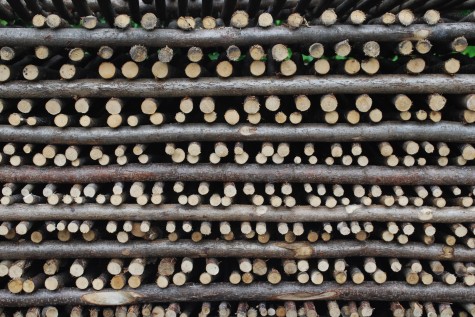 I wrote a few days ago regarding my excitement about the delivery of a container load of hazel wood hurdles from Belgium; the order we placed in May finally arrived. Wattles and hurdles are panels, woven from the coppice wood of willow and hazel wood. I personally favor the heft and longevity of the hazel wood; it is vastly more durable and substantial than willow. Coppicing is the practice of cutting trees or shrubs to the quick, with the intent of harvesting the branches for fuel, or fencing. The shrub or tree regrows, only to have its branches harvested again. Woven hurdles keep the livestock out of the vegetable garden. They border herb and vegetable gardens. They provide privacy without being utterly opaque. They work wherever they are needed. Woven hurdles are a fence material friendly to a garden or landscape of any point of view.
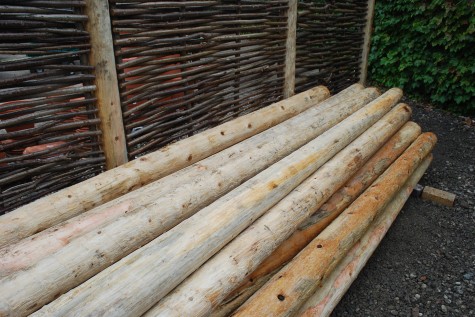 I have a client who has become a friend; he supports Michigan industry in a big way and was so pleased these stripped cedar fence poles we bought are Michigan grown. Though I ordered 5″ diameter poles, 10 feet long, they looked like telephone poles when they got delivered from a supplier in Michigan’s Upper Peninsula. As I relentlessly speak to issues of proportion, I was worried I had gone over the edge by an inch. I was wringing my hands, until the fence went up. I should not have worried. The size of the pole was perfect for the heft and texture of the fence. The bare cedar poles are a good contrast to the woven hazel wood, which has all of its bark intact.
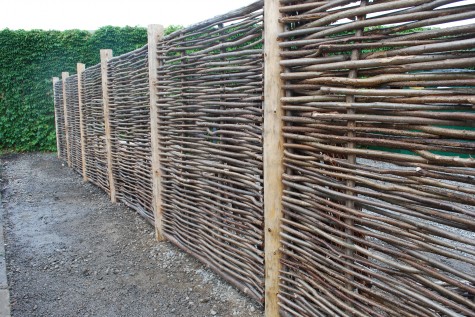 There is no substitute for the time when the talk ends, and the making begins. We set a pole down 24″ or so below grade, and set a panel up next to it. These panels are made by hand, and vary in width somewhat. One pole, one panel, and so on. This one step at a time construction ensures that the space between two poles is fitted to a specific panel. Steve toe-nail screwed the panels to the center of each post; this is a sturdy construction. What I like even better? This fence has no back or front; the panels are the same back and front. How friendly is this to neighboring properties? This fence looks good to both sides.
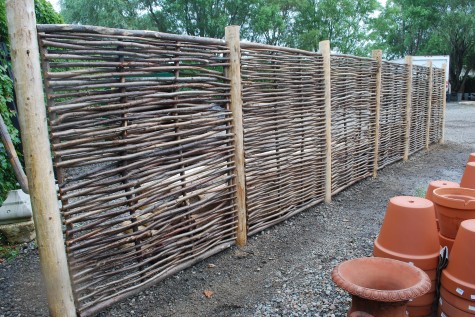 I have a client who plans to screen his hot tub with this fencing. It was the subject of intense debate today-will these hurdles screen a man who is happily skinny dipping? I vote yes-unless the neighbor plans to be close enough to see through the hurdle branches. The neighbor with his nose pressed to the fence-that is the subject of another essay, is it not? The fence is also friendly to vines that need to grip to climb. Clematis grown on this fence is especially lovely. We are careful to install the fence slightly above the existing grade of the ground. Wood in constant contact with soil will deteriorate much more quickly than wood that is able to shed water.
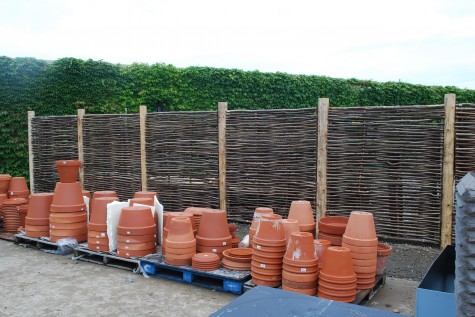 The fence is good looking with contemporary steel ornament, traditional terra cotta pots, a funky birdbath made from recycled materials, or a formal lead cistern fountain. This is by way of saying this fence looks good with almost anything. As to its longevity, imagine how long it takes a dead tree to fall and deteriorate. Branches and twigs are not good materials for the compost pile, as they break down so slowly. We have stocked this fencing for 8 years now. I have yet to have someone tell me it had disintegrated. Wood fences do age though-that is part of their charm.