Fenced

2008 Panaretos Spring 4-24-08 (3)
A fence is a garden structure that is easy to identify.  A fence is a vertical element in a garden that separates one space from another.  Twin fences with soil piled in between is an effective noise barrier.  How so?  Only soil absorbs and blocks sound.  Plants and single layer fences do nothing to mitigate sound.  An impossibly tall berm at the road is a fence of a green sort.  It separates a personal and quiet space from a noisy and public space by filtering out the sound.  Many communities permit the installation of what is known as a privacy fence.  No matter the material, any fence of a substantial height (in this case, 6′ tall) provides a physical separation from adjacent properties.  Those people who live in urban areas value their privacy.  A fence is a simple structure that takes up very little space-in the interest of establishing a boundary.  Your yard and my yard have a barrier in between that allows each of us to live our private lives.
April 25 2013 (15)
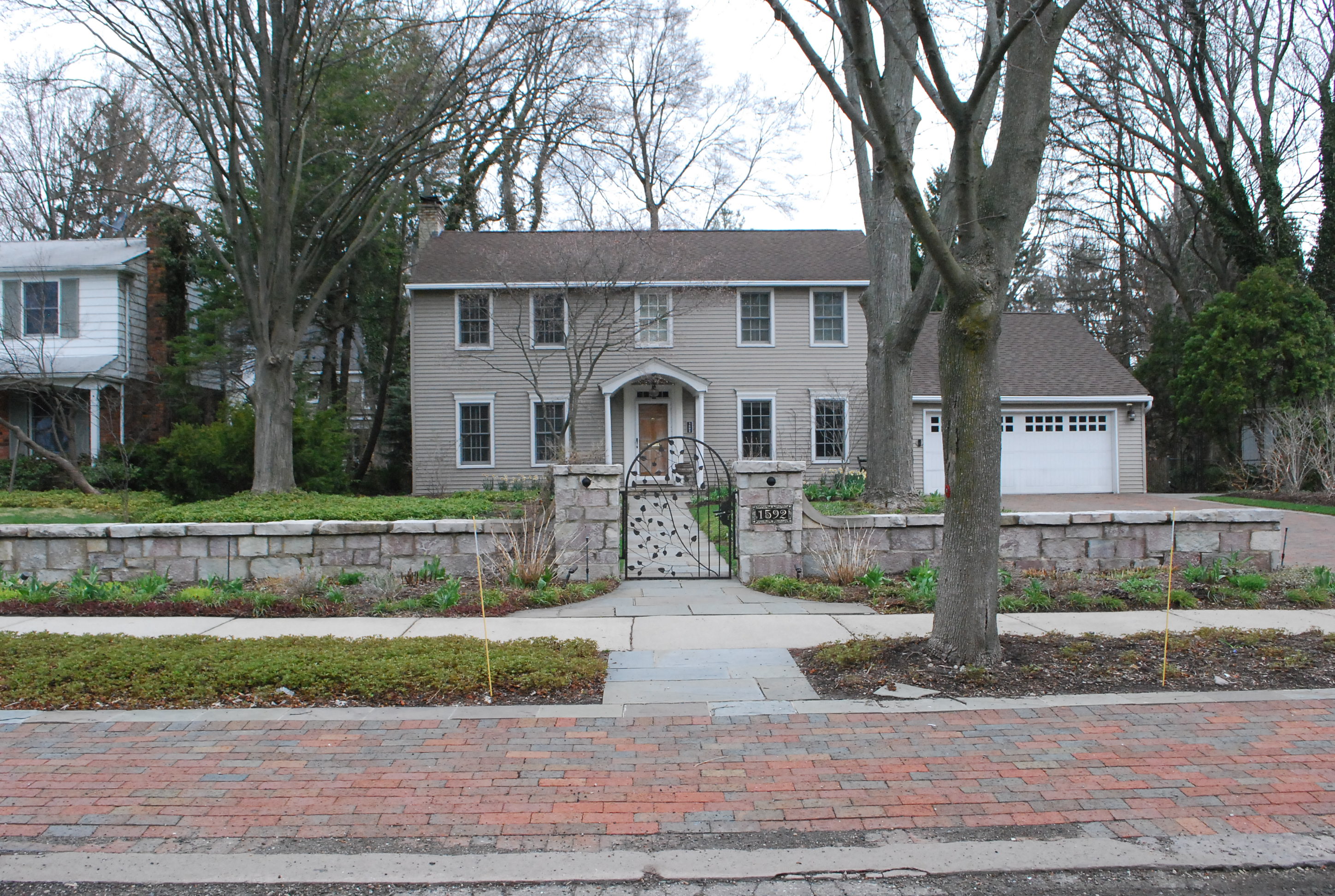
Those people who live on vast ranges of land in Texas value a separation that keeps their cattle from wandering off their property.  Electrical substations fence their properties to keep unsuspecting others from injuring themselves.  The Berlin wall was an elaborate fence which came to symbolize a barrier to freedom.  A firewall on my computer-a digital fence constructed to protect my computer from harm. A fence is a person who is a middleman between two parties.  The fence is a barrier, or a facilitator, depending on the circumstances. Other fences are purely decorative in how they define a space.  A low wall, should it be long enough, qualifies as a fence. This wall/fence does not provide privacy.  It does not entirely enclose a space.  It makes a beautiful and very friendly statement about the separation between the public street and the private home.
April 25 2013 (16)
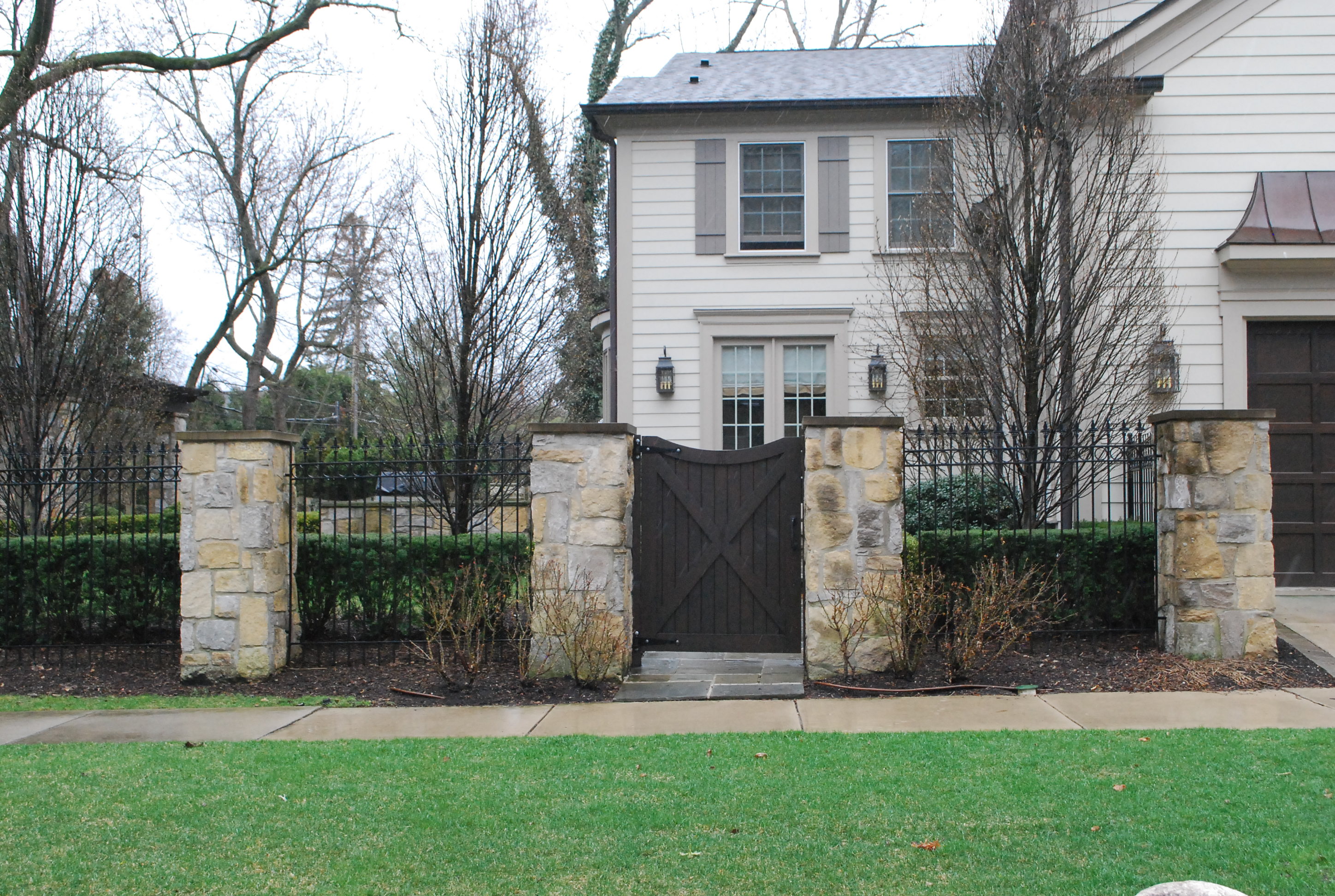
Iron fences designate a separation, but permit lots of light, and a view through.  These pillars are massive, and the gate is solid and painted a dark color.  The black iron fence can barely be seen, but for the hedge of yews planted on the inside.  Why so much discussion about this particular fence?  The choice of materials, the color, and the size make a visual statement about privacy.
April 25 2013 (18)
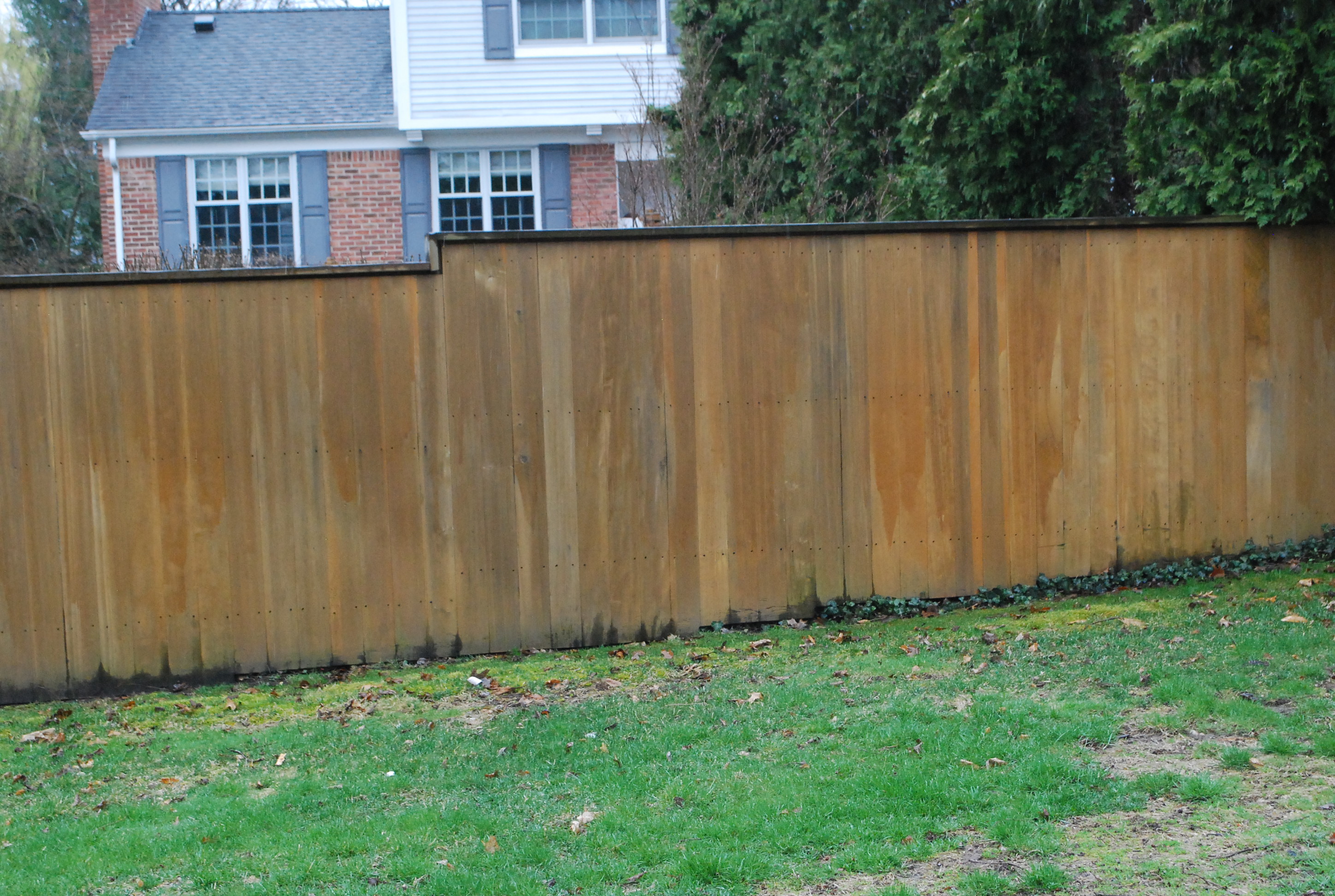
Like the home in the previous picture, this property is a corner property.  Other homes on the block have private back yards courtesy of the house itself. This fence is solid from top to bottom, and has a very contemporary feeling.  Make sure that wood fence is installed slightly elevated from the ground plane. A garden fence made of wood needs to shed water and dry quickly.  A fence in constant contact with the soil will deteriorate much sooner than it needs to.
balcony railing

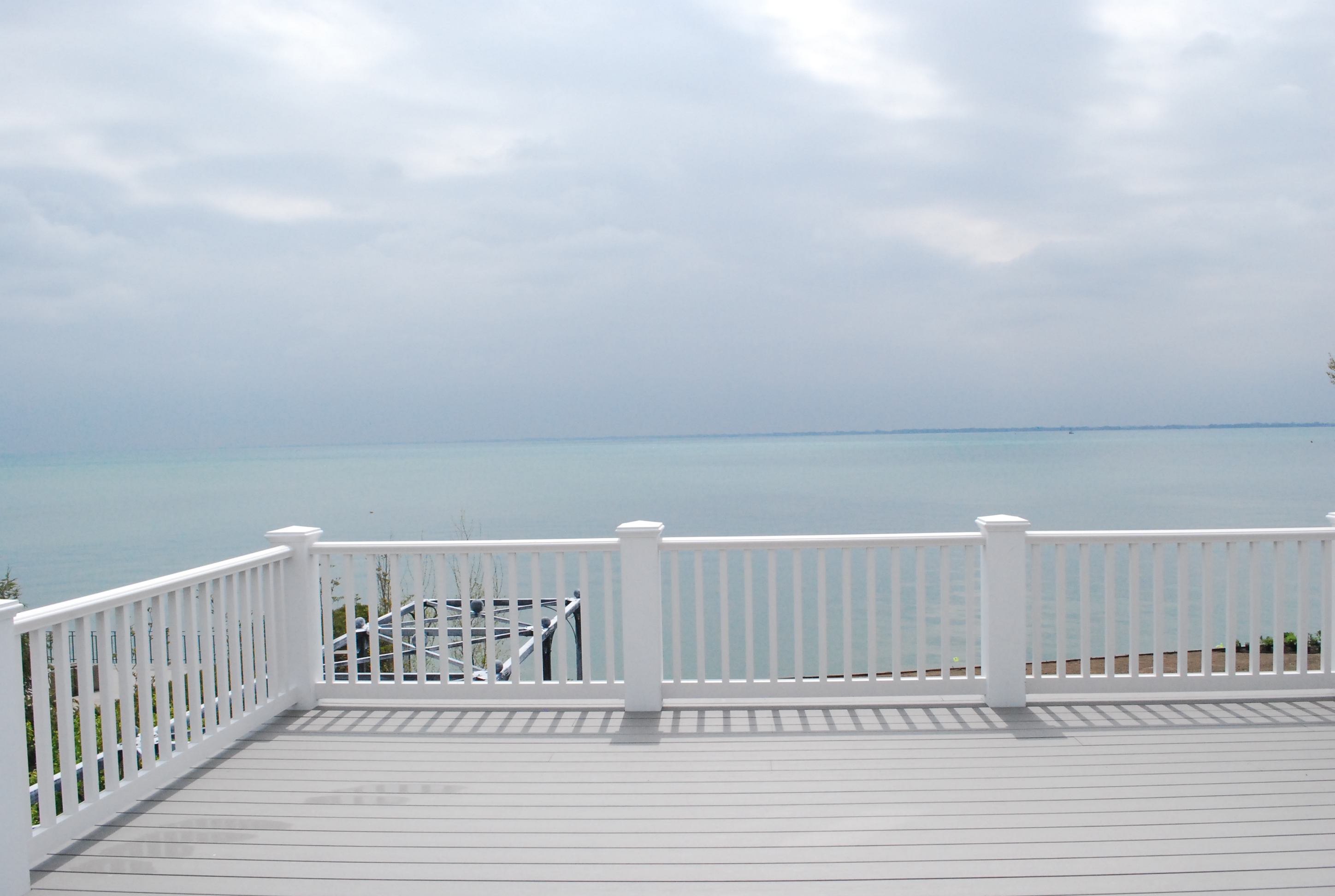
This second floor balcony terrace has a fence which is primarily about safety.  White or light colored fences usually stand out architecturally, but this fence has a landscape of water and sky behind it.  This white fence in a green landscape would make a much more emphatic architectural statement.
cedar fence

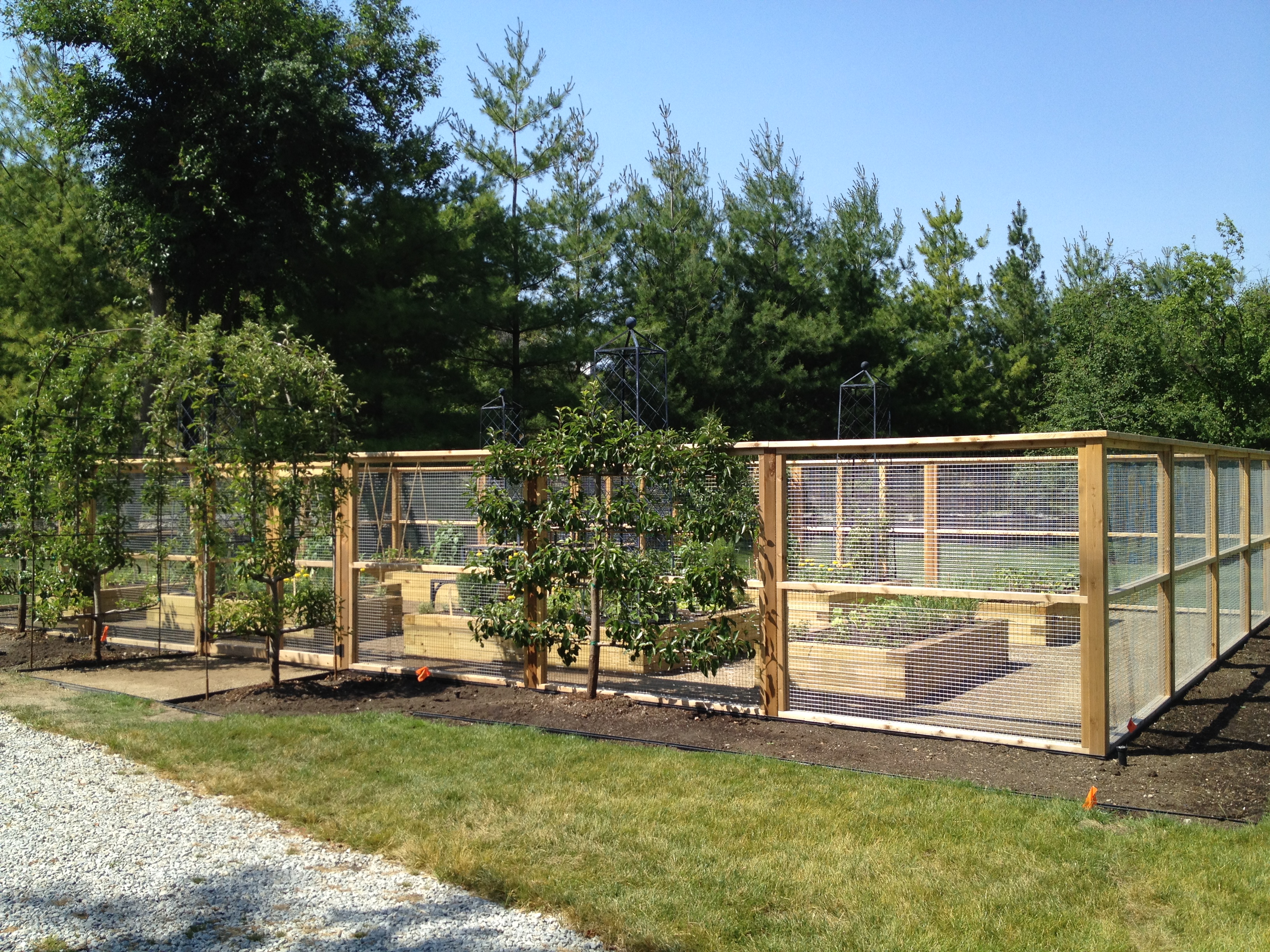
This vegetable garden is entirely enclosed by a fence of cedar, and galvanized steel mesh. The idea here is to protect herbs and vegetables from the wildlife. The height of the fence is meant to keep the deer out.  The depth of the wire fencing below ground is meant to deter ground hogs and rabbits.  Keep out.
cedar privacy fence
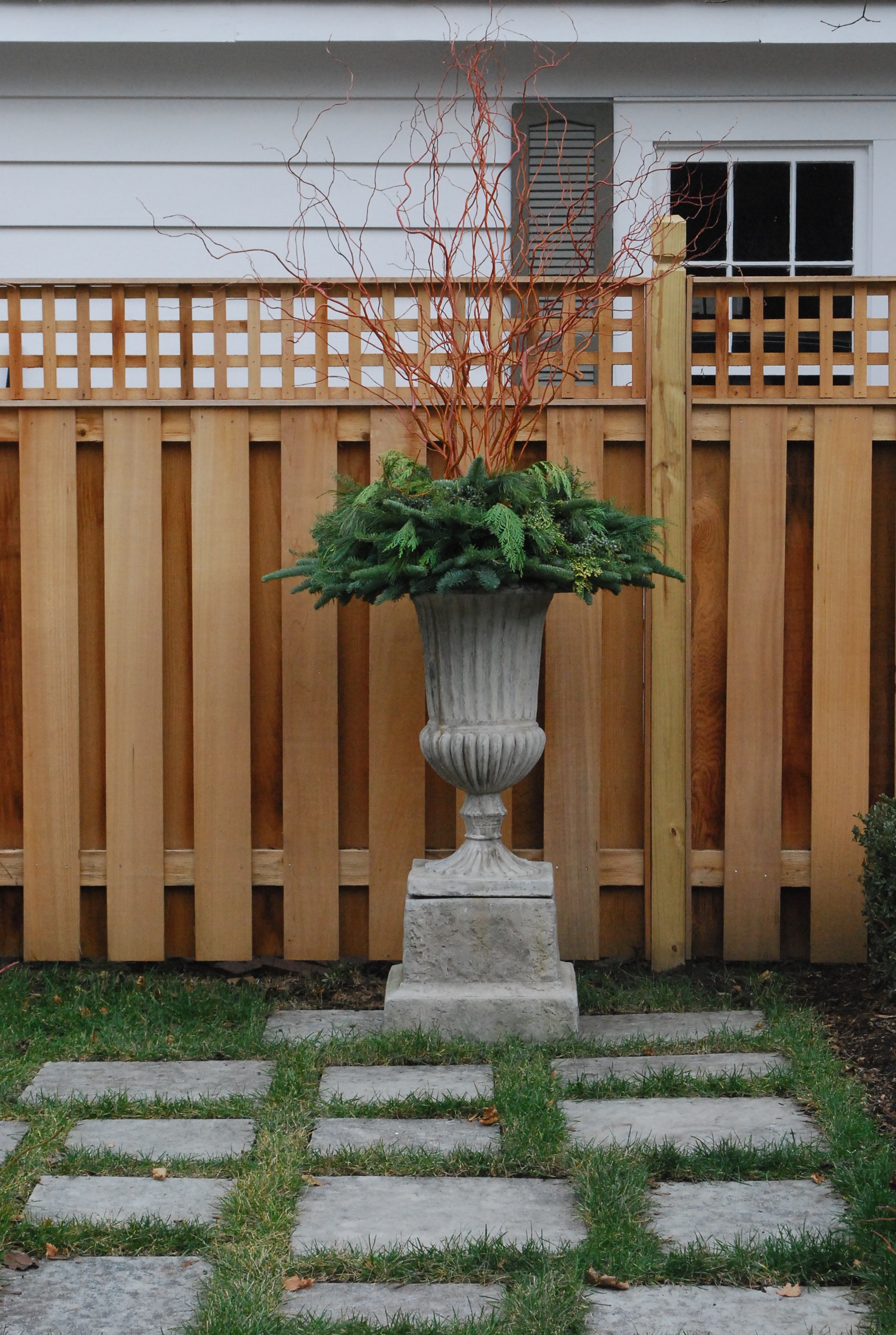
Fences of a clearly decorative design satisfy the need for beauty and visual interest as much as a need for privacy.  Cedar is a highly rot resistant and evenly grained wood that can make a fence as refined in appearance as a piece of furniture.  The design of this fence is especially pleasing, given the stone and grass path below.
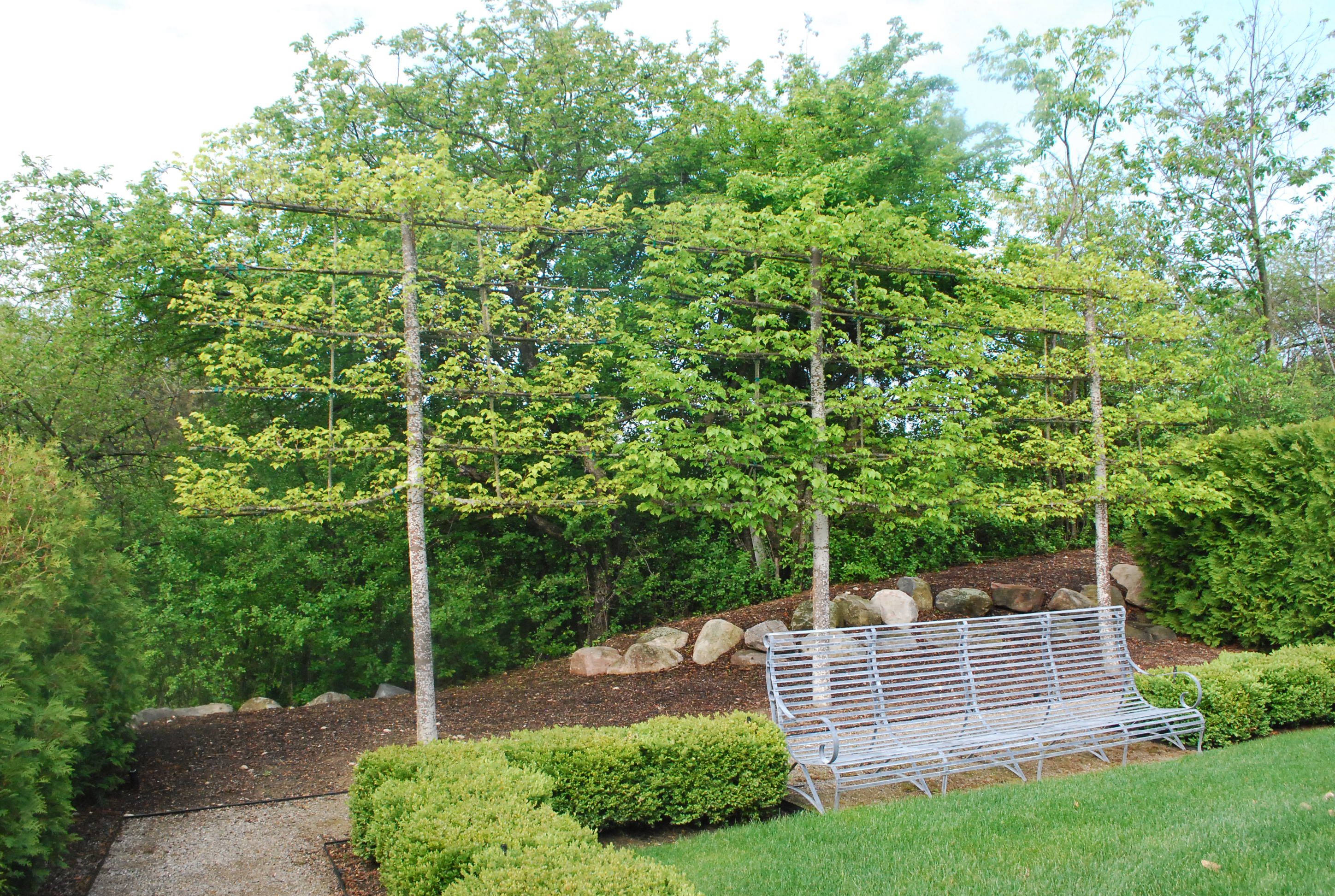
espalier fence

Espaliered trees can provide a green fence.  In a tight space that needed screening up high, a fence of espaliered lindens was a good solution.  The property next door is vacant, and unattended-the property line is in front of the boulders.  Were it to be sold and developed, a new house could be very close by.  Anticipating the need for privacy permits the time it takes for a green fence to grow.   The major horizontal arms have numerous small branches which will eventually grow together to form a green wall.  This fence needs more care than most, in the form of yearly, or twice yearly pruning.
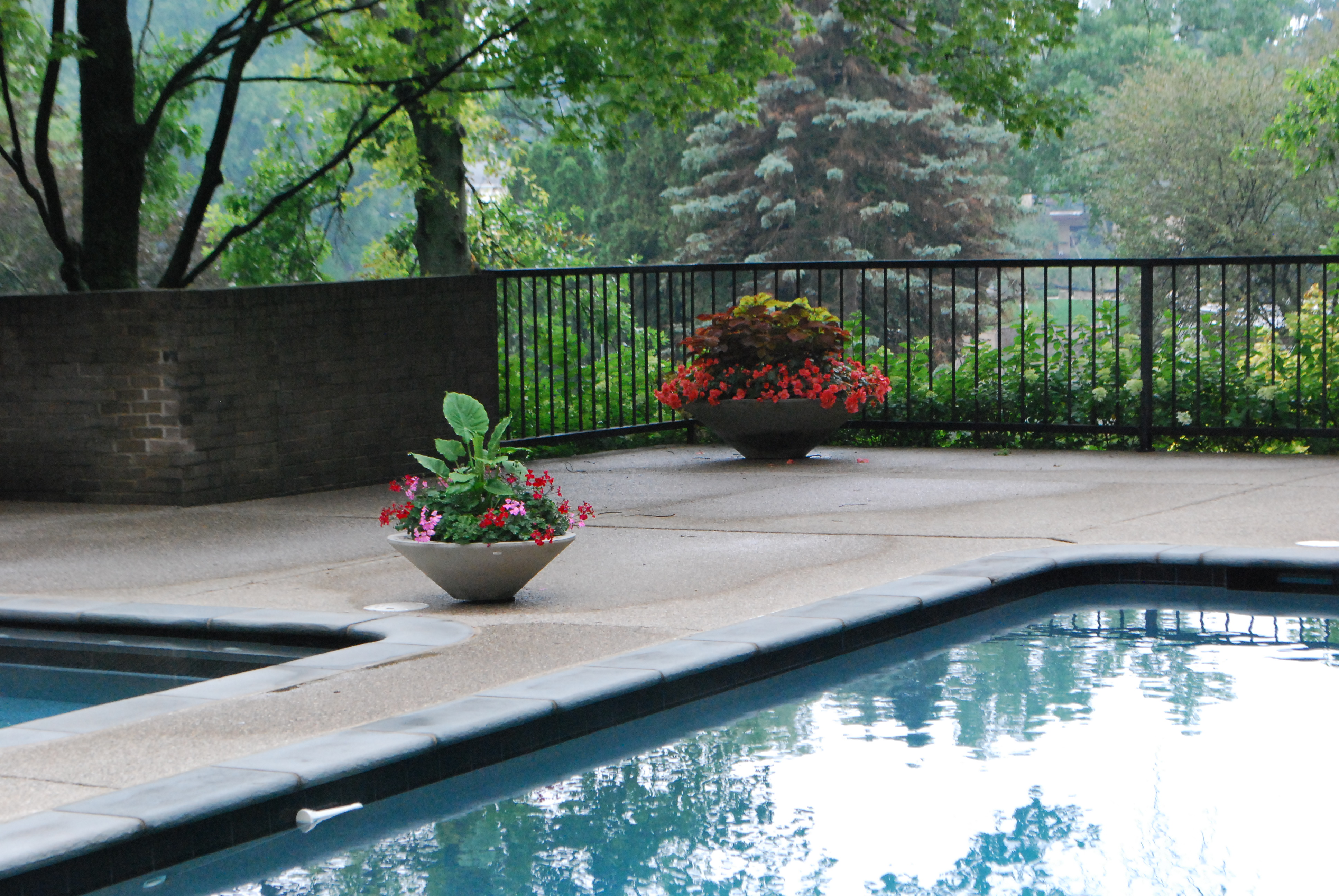
pool fence
Pools require fences of a certain height, and a certain density.  An iron pool fence in my area requires a picket every 4 inches.  Most communities have rules about fencing swimming pools, as they can be dangerous to a child.  These fences are not about privacy-they are about safety.  The hydrangeas on the far side of the fence will eventually grow between the pickets.  The fence itself will disappear from view, with its ability to enclose and protect unimpeded.
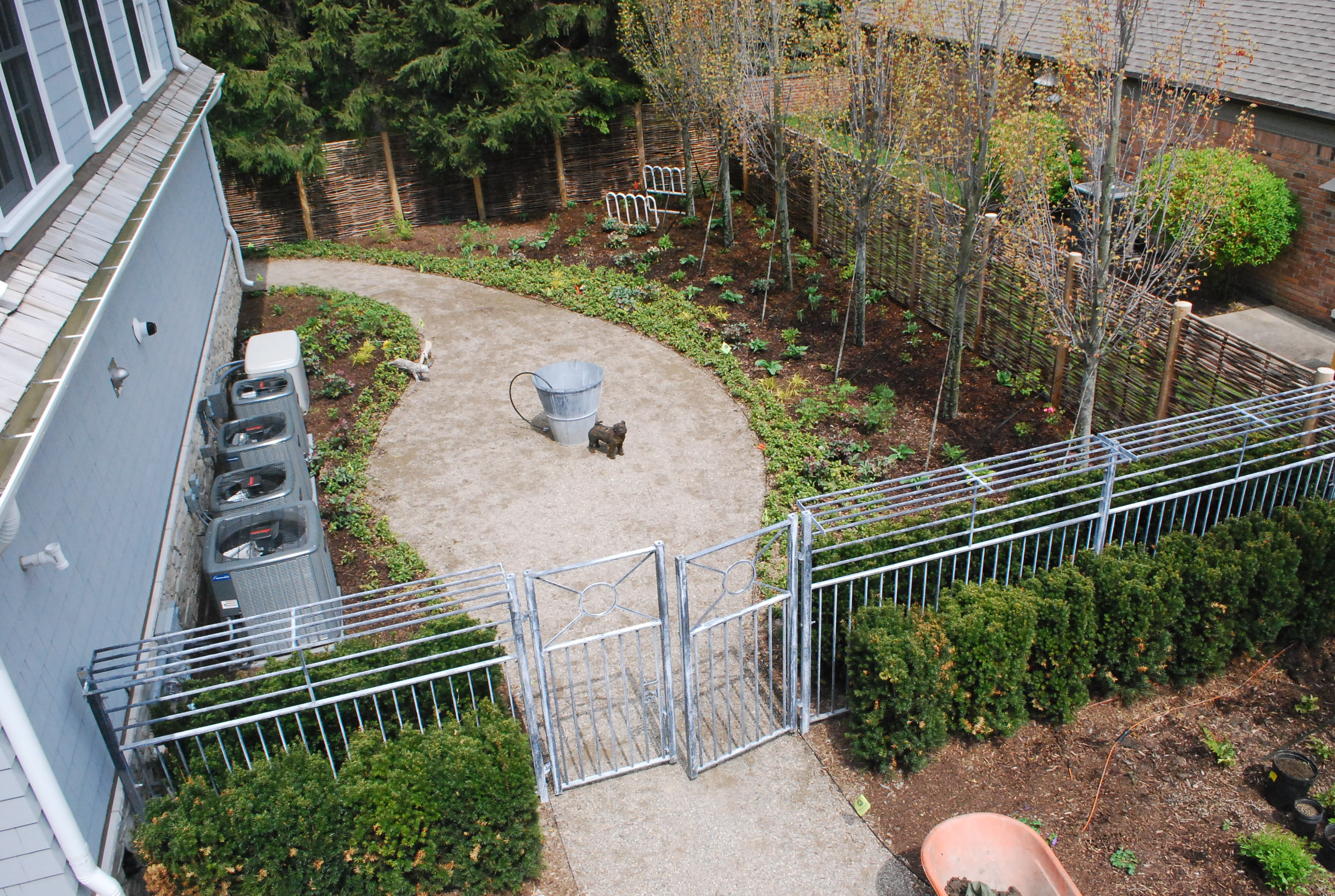
steel fencing
This garden/dog run has a hazel wood privacy fence along 2 lot lines.  The Bowhall maples will eventually provide a green screen for the second floor windows.  The iron fence encloses the dog run, and is meant to deter coyotes.  Coyotes run at, and leap over a barrier.  The 18″ wide shelf at the top of the fence, and the yew hedge at the bottom, is a strong deterrent.

twig fencing

I have only seen a fence such as this once.  It is beautiful and dense.  Fencing from natural materials are easy on the gardening eye while entirely functional.
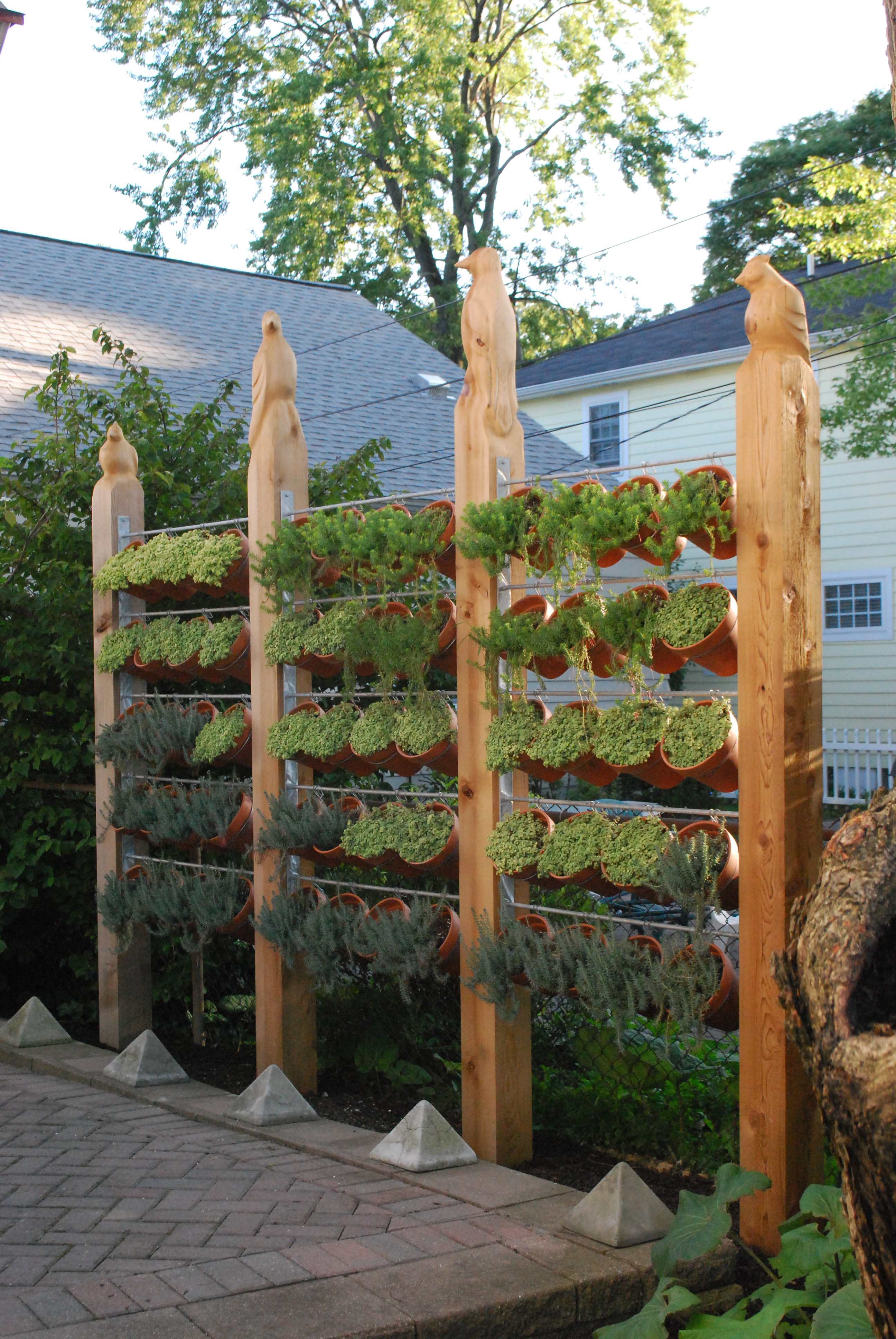
vertical-garden-fence.jpgBut of any fence I have ever seen, this has to be one of the most inventive and original.  Designed and built by Barry Harrison, partner in Art-Harrison Design Studio in Royal Oak, it satisfies both a need for privacy and a need for green.  The cedar posts with integral bird finials were hand carved by Barry himself.  It’s easy to see that these pots of succulents would be tough to overwater. This is sure evidence that even the most utilitarian element in a landscape can have great visual appeal.
Spring Season

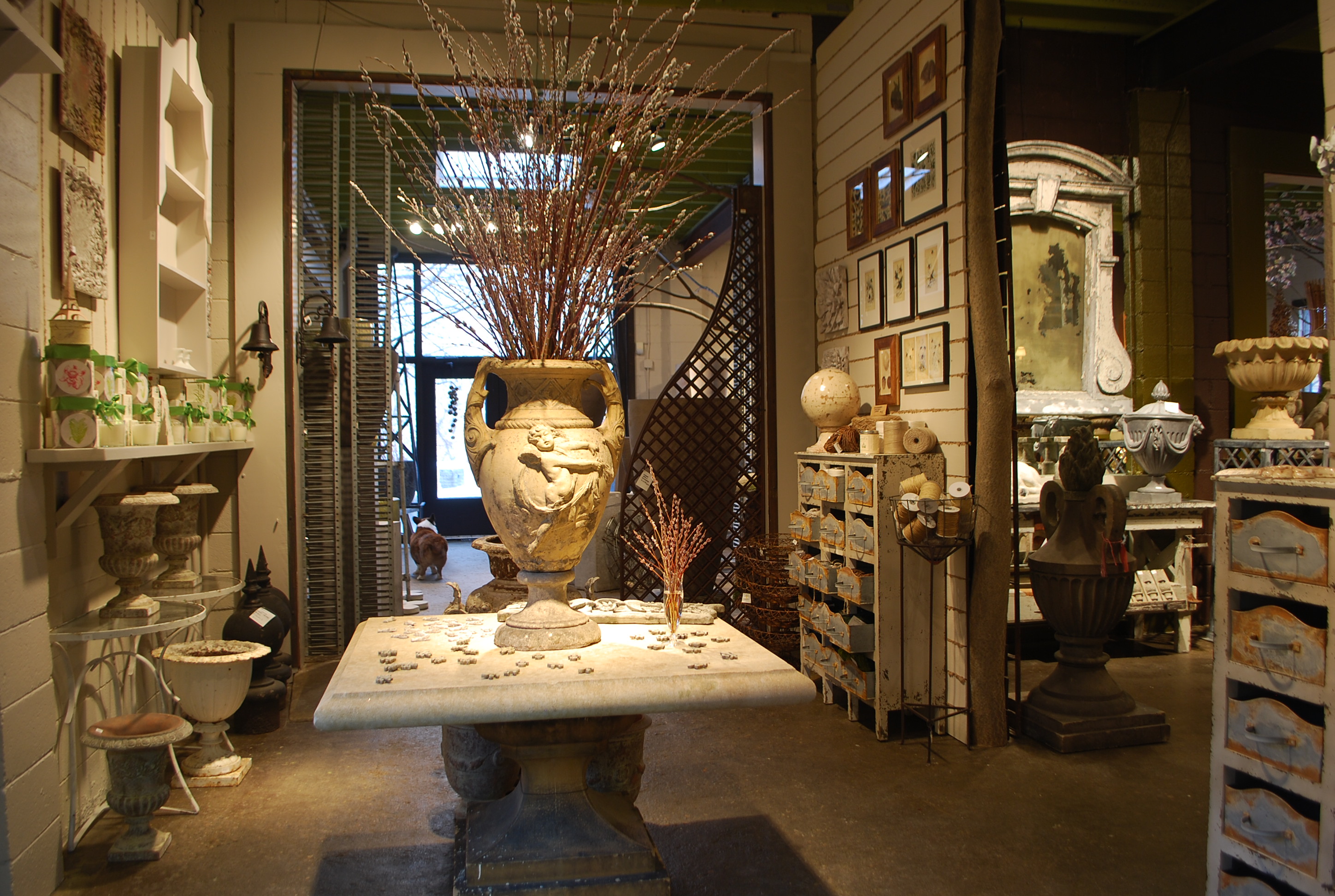
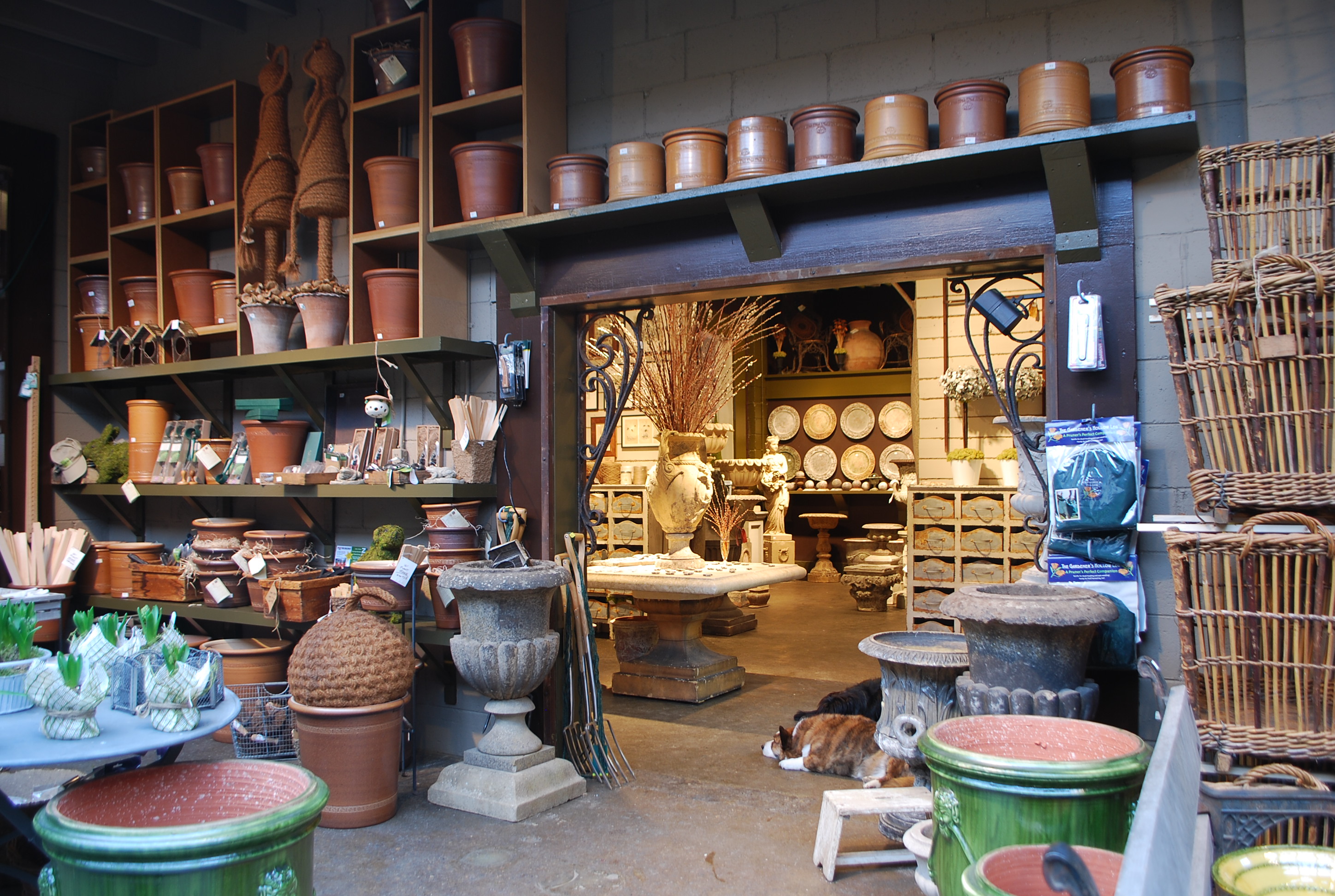
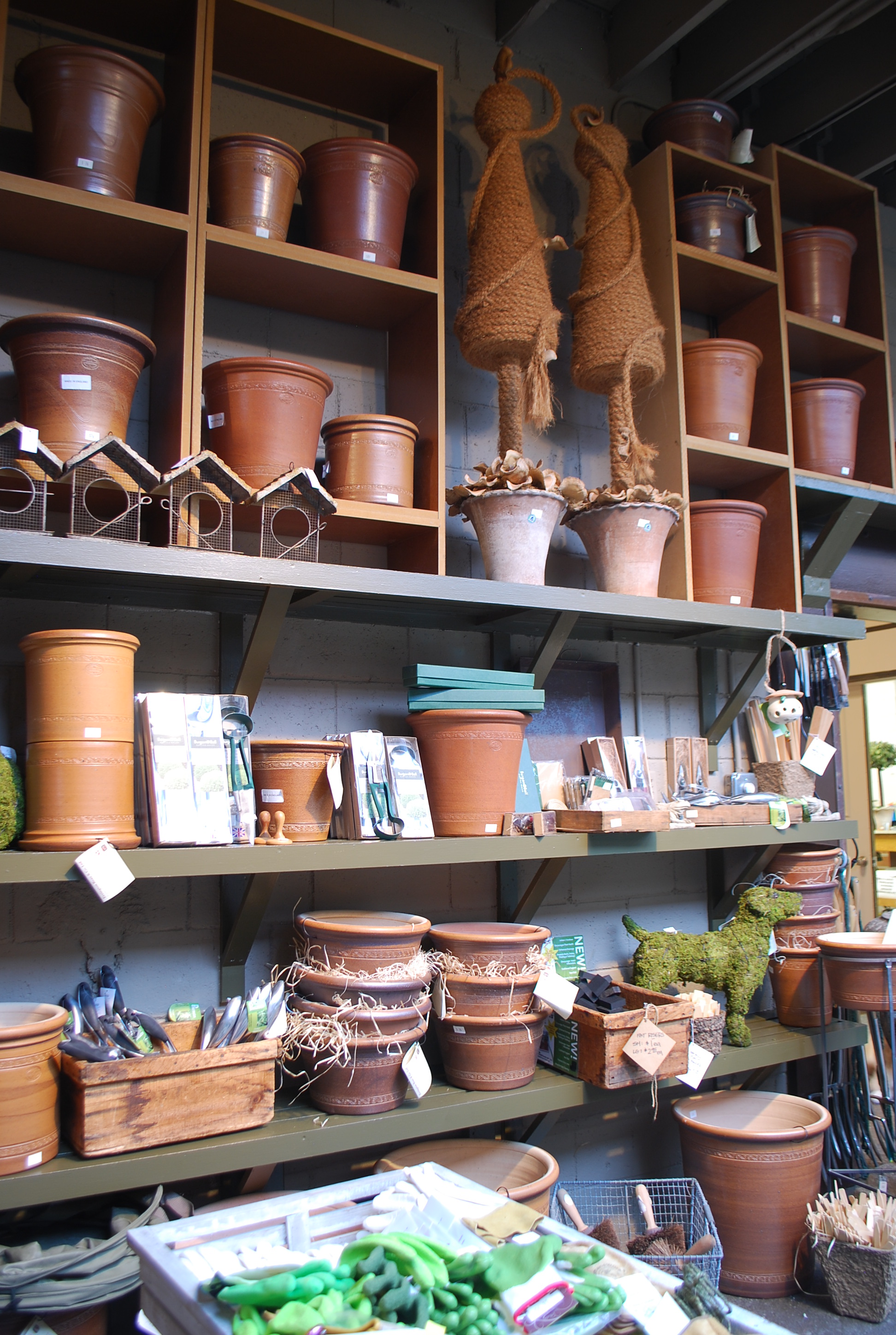
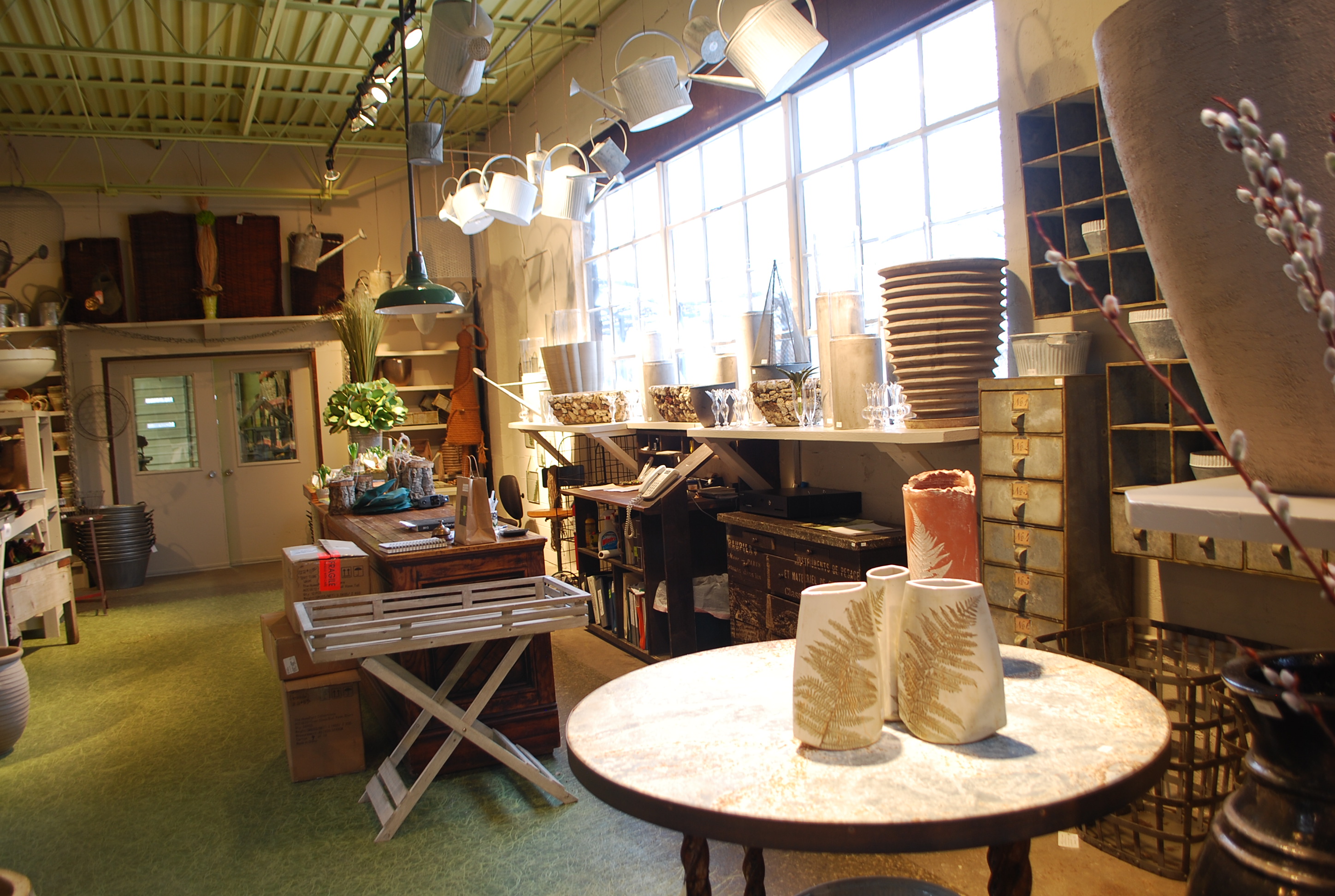
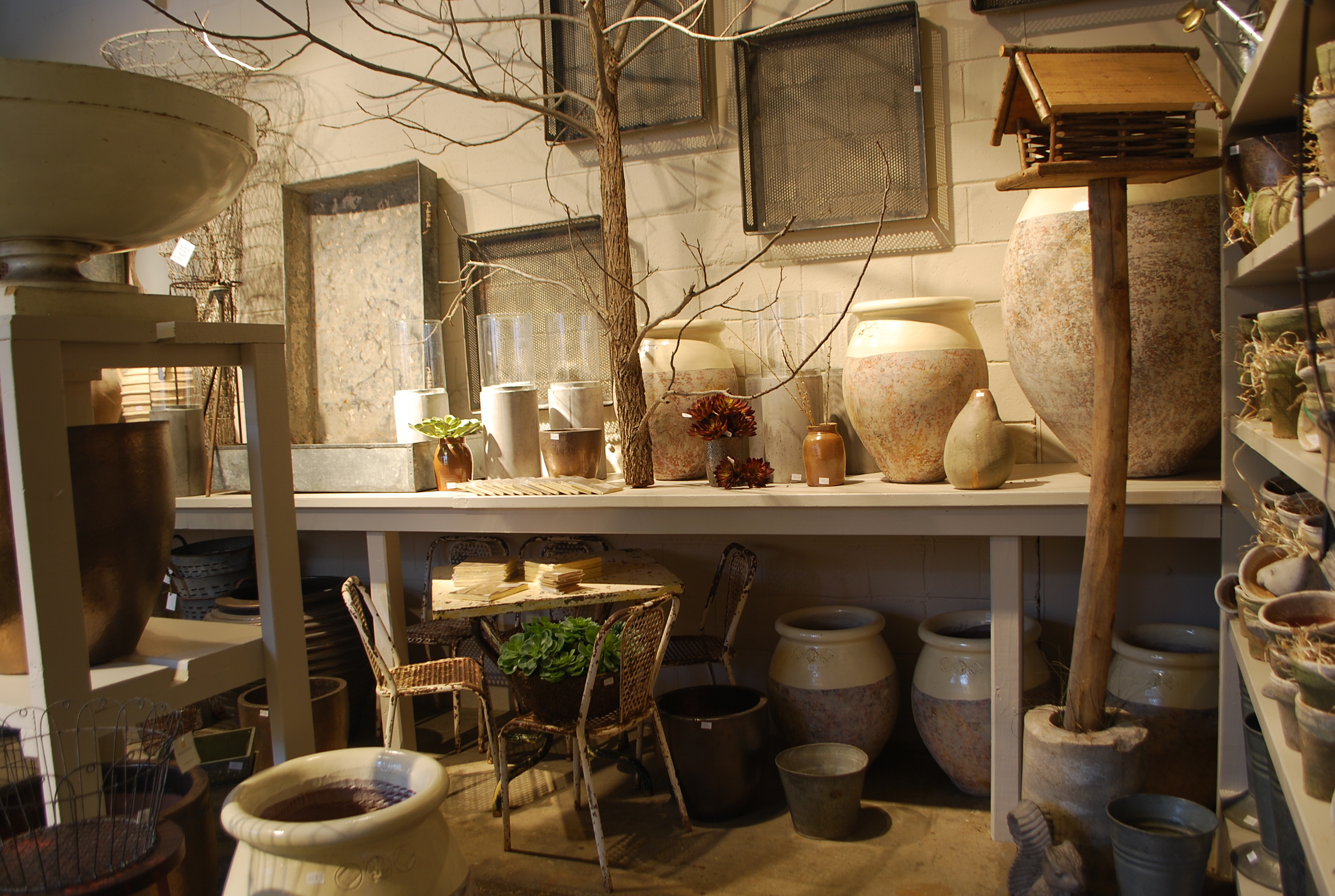
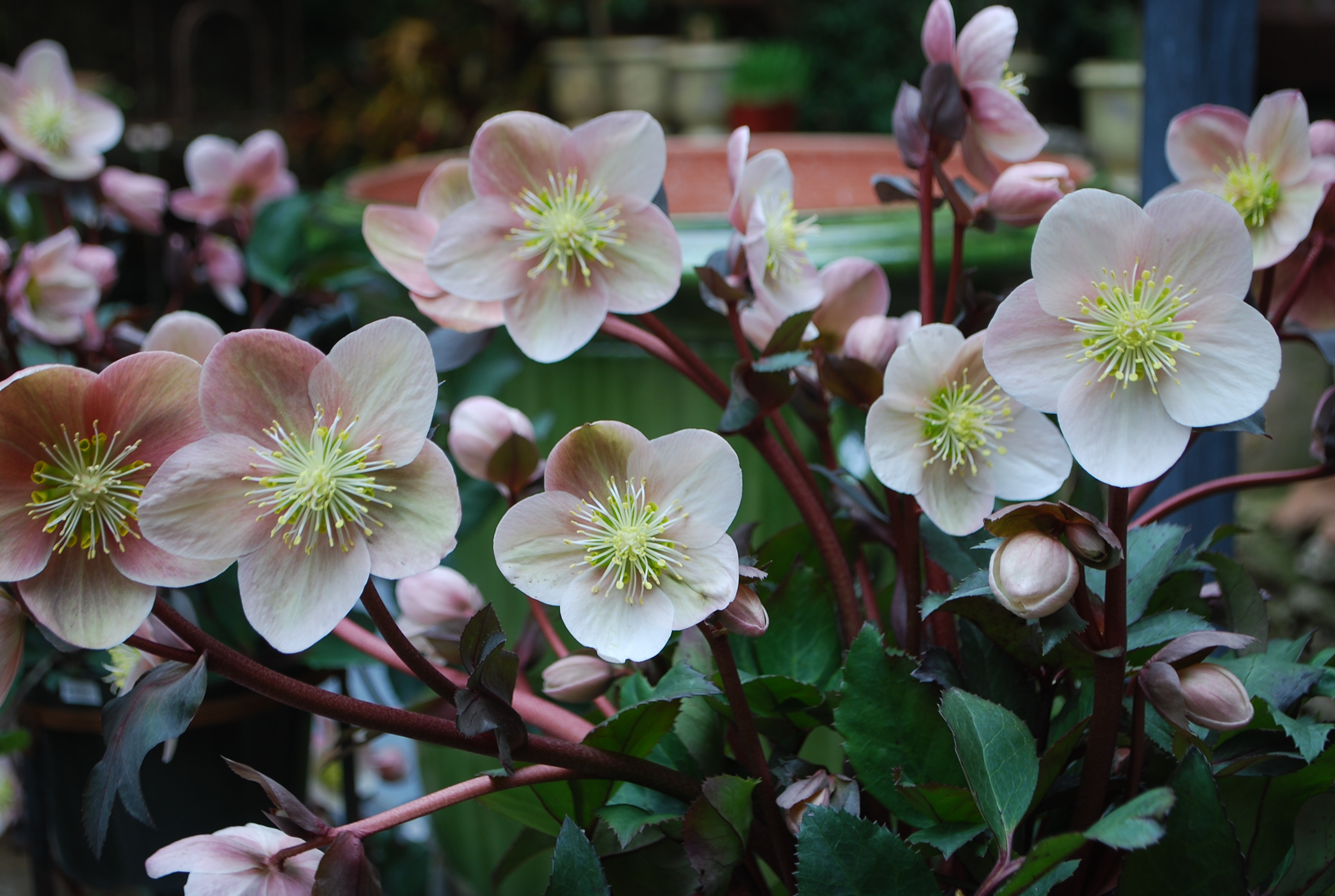
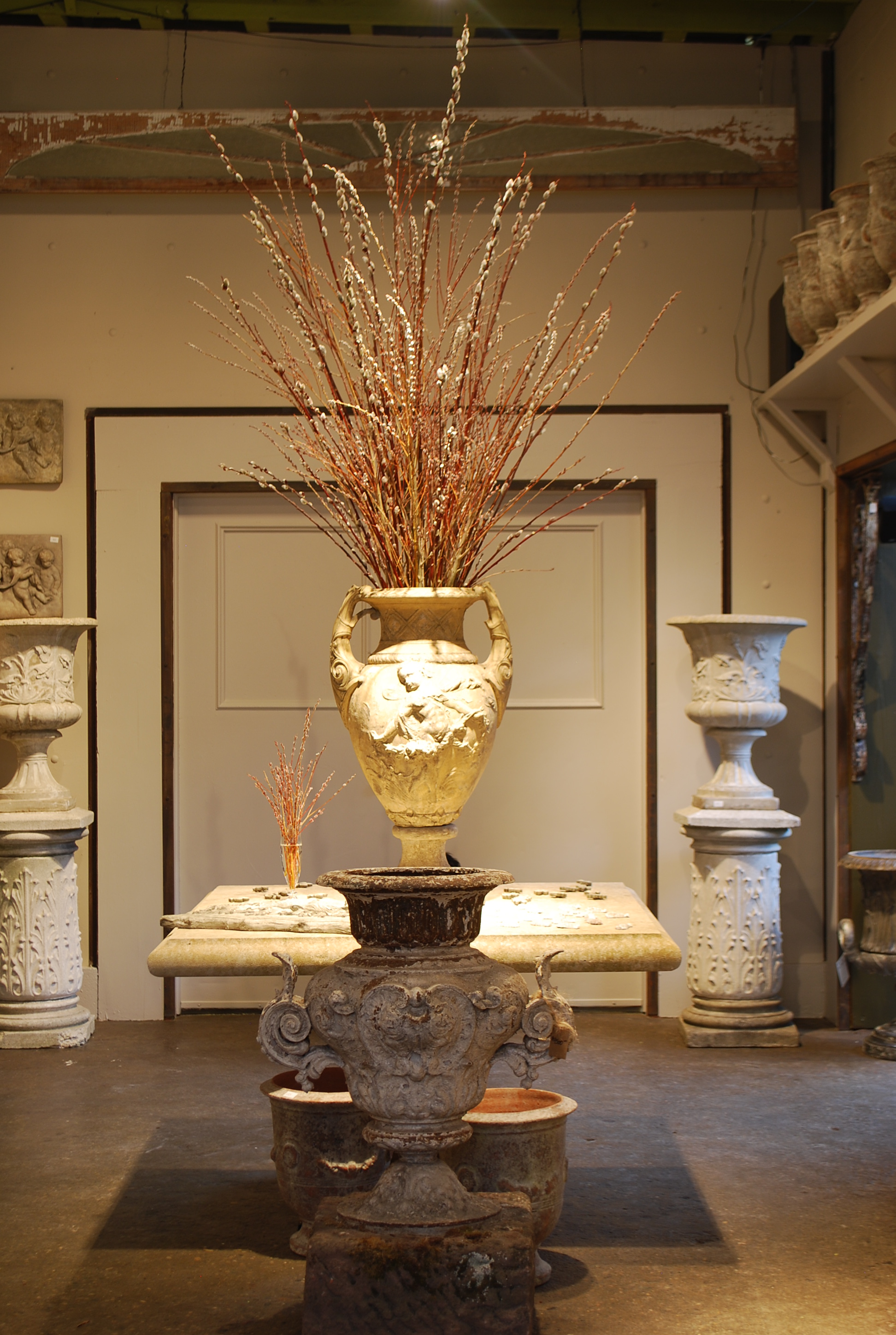
hellebore-blooming.jpgMy spring gardening season starts the same day every year.  The shop closes except by chance or appointment January 15 of every year.  The by chance or appointment part is code for “we do not keep the heat or lights on much, and we are in the inventory, repainting, cleaning and unpacking things for spring”.  In other words, we are not looking our best.  Most of us are here for those 6 weeks.  That’s how long it takes to take everything apart, clean, repaint, and reinvent the store for the spring to come.  We have gotten 2 containers in from Europe.  A third should be on the water next week.  But we formally reopen every March 1-ready or not.  The gates are open.  The hellebores are here.  And a good portion of what we will have to offer for spring is here.

Detroit-Garden-Works.jpg

A third container is still in Paris-stalled-awaiting a delivery from a Dutch manufacturer.  This happens.  Though Rob’s trip to Europe was months ago, some things he orders must be made.  Most of the companies are small.  This means but a few people hand produce all of the work.  Sometimes we have to wait.  Their concern is to produce a great product, not worry about the date we have decided on in advance for the beginning of spring.

spring-2013.jpg

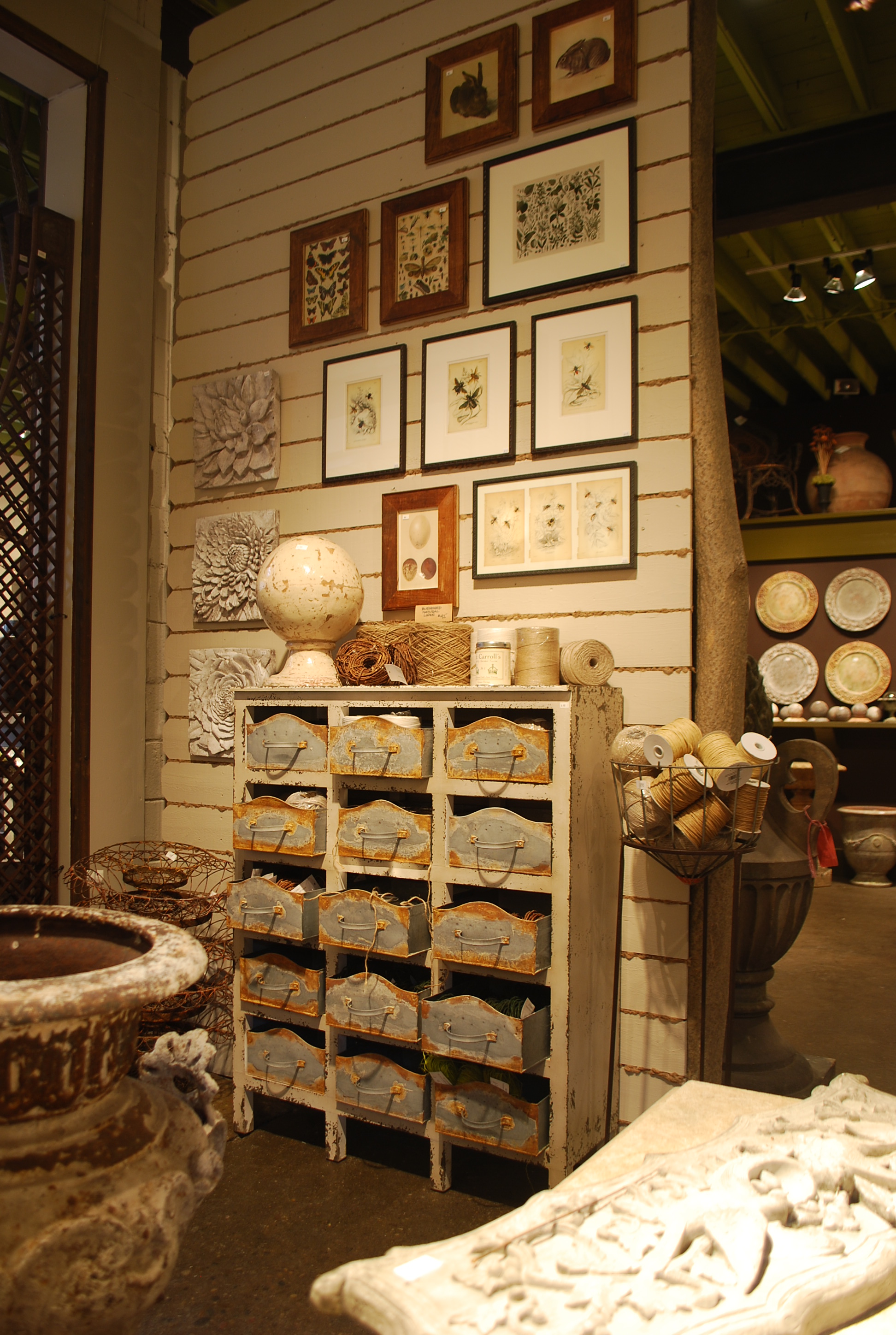
The work of redoing 10,000 square feet of space is just that- work. My landscape crews do all of the painting, and the heavy moving.  The Detroit Garden Works regular staff does the cleaning, the inventory, and the checking in of new shipments.  This time of year, something new arrives every day from US suppliers. Rob and I have to figure out what goes where-with the big responsibility to Rob.  He is the only person who knows exactly what is coming.

reproduction-French-cabinet.jpg

Monica manages the entire big fluid situation.  She has an uncanny ability to make sure that the day to day stays current and on track.  She also has no problem showing up in the garage to unpack when necessary-just like the rest of us.  I have no idea how other companies switch over from one season to the next-overnight.  We take everything down to the bare walls, and start over.

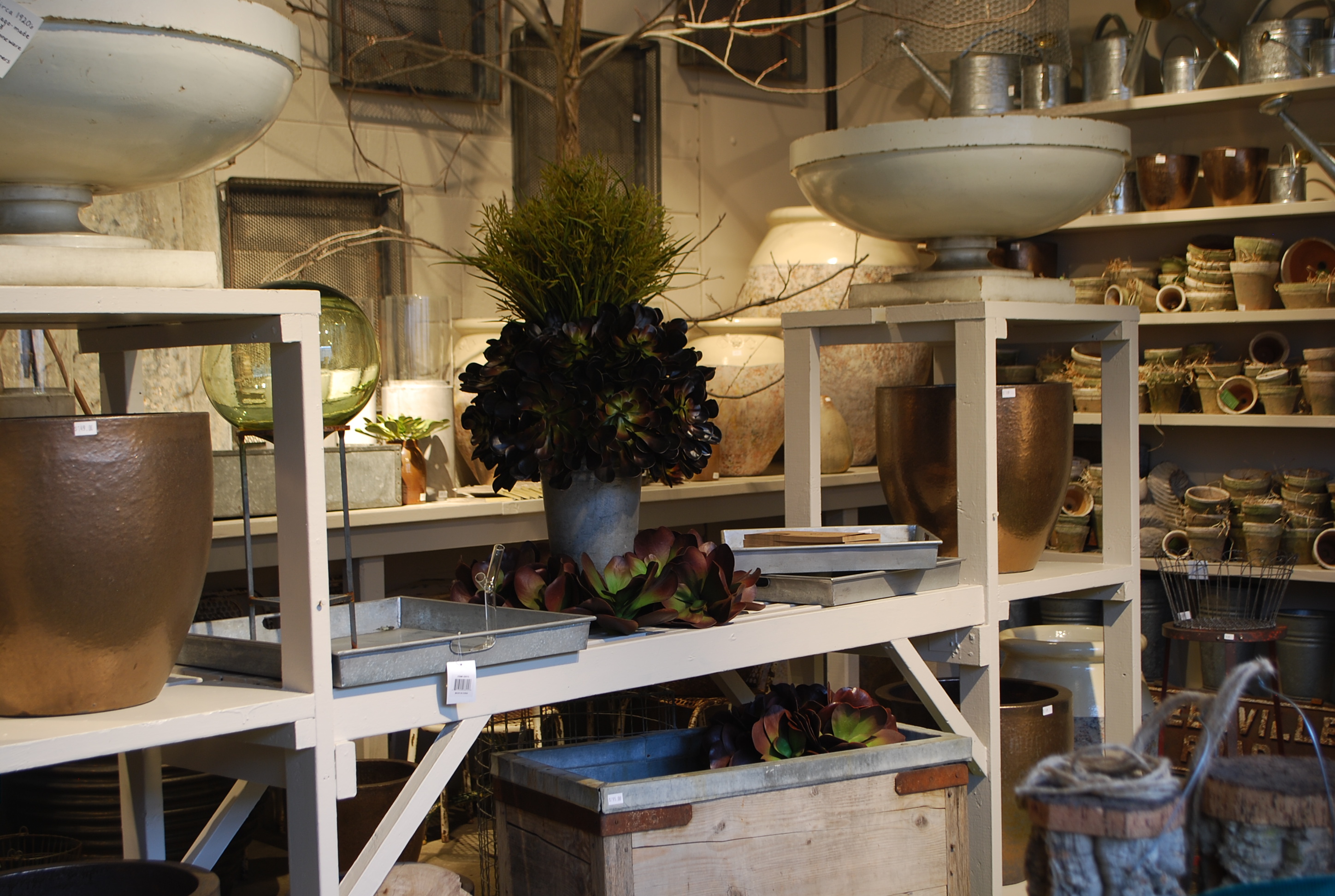
shop-display.jpgDreaming up what will go where, and with what-that is somewhat about skill.  But it has its roots in the process of making a creative gesture.  An overall look that flows.  Does this color look good with that one?  What flavors mix happily?  Where shall the tools go?  What color are we thinking this room needs to be painted?  Have we displayed this piece such that people understand why we chose it?

French-glazed-terra-cotta.jpgIs there a mix of textures, mass, color and shape that is appealing, and lively? Or somber and serious?  Or sassy.  Did we overthink this?  Did we not consider that?   How we group things in the shop is a visual discussion about the presentation of how we view good design.  An interest in really good design hovers over everything we do.  There are moments when my landscape crew makes a suggestion about a certain arrangement.  Happy to hear it-as if they take the trouble to speak up, I know they have thought it through.  If a vignette gets changed around a number of times, they are entirely good natured about it.

English-salt-glazed-pots.jpgA sincere interest in anything means that somewhere, there is a fire burning.  Sometimes the flames extinguish, and their is only the glow of an idea.  Sometimes there are lots of flames, and things move quickly.  I really enjoy this time of year, as we have set aside the time to let our ideas about the new season cook.

front-desk.jpg

A lot of hands are involved.  It takes Rob one entire long evening to redo all of the lighting.  The high ceilings are great for giving a sense of the sky, rather than an interior ceiling.  Judging the size of an object intended to go outdoors can be difficult in an indoor space.  Steve takes charge of arranging and hanging everything that must be hung on a wall.  He knows how to do the math, and he has a good landscape architect’s sense of design.  His graduate degree in landscape architecure is from North Carolina State University-enough said.

garden-shop.jpg
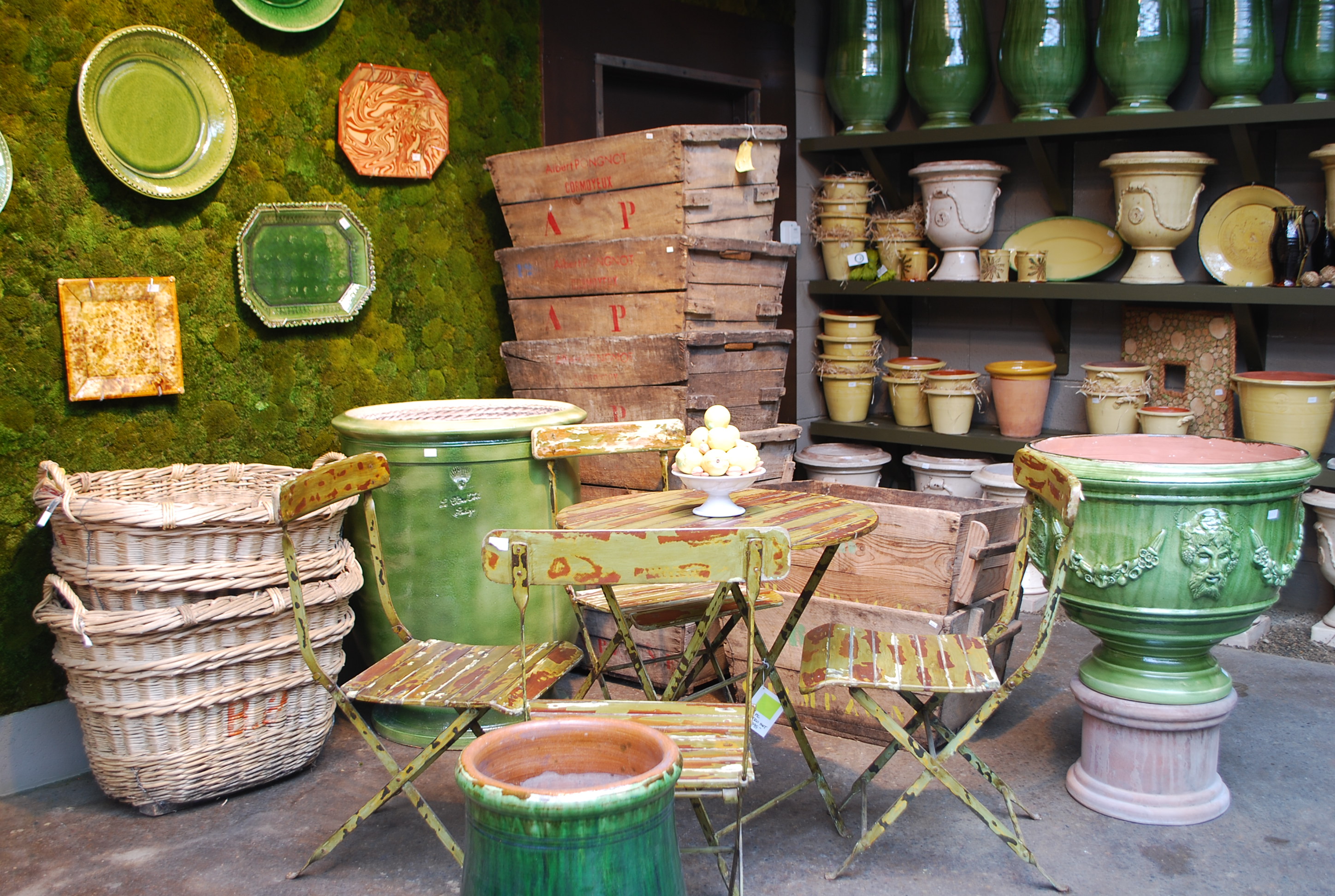
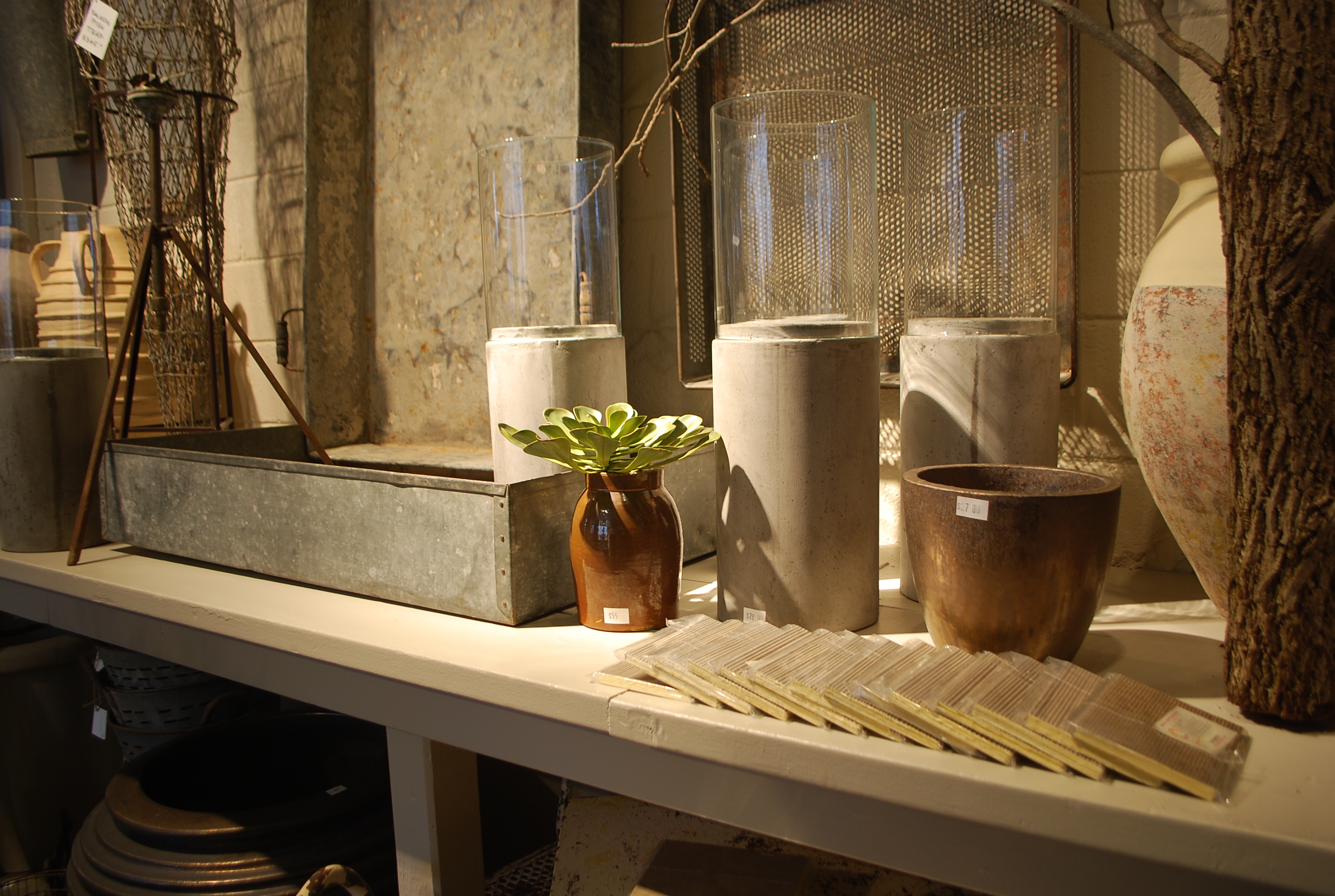
As usual, there is a wide range of styles, periods and materials.  But every year we try to do a thorough job of representing a certain point of view.  Rob’s mix is interesting this year.  His idea of contemporary garden ornament includes galvanized metal pieces from the farm that have very strong and simple shapes.  Terra cotta shapes whose origin is rooted in agriculture.  His idea of contemporary also means utilitarian.

spring-shop.jpg

Some contemporary garden ornament is cold. I am not crazy about objects that come with a built in echo.  I like things that fit in, and take on the feeling of their surroundings.

American-glazed-jar.jpg

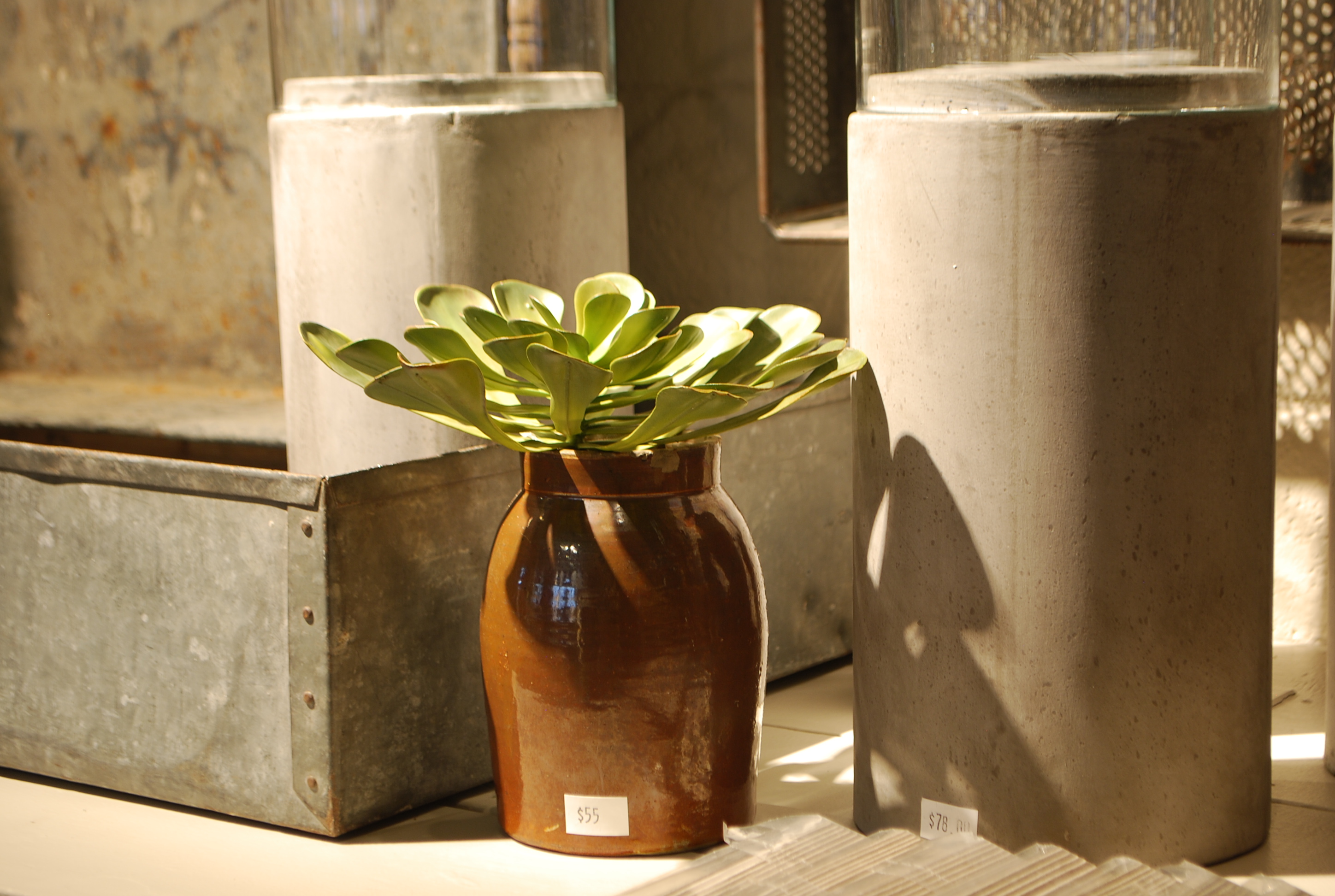
This 1920’s American glazed pickle crock is just as home in this setting, as it is in the pantry.

spring-gardening-season.jpg
This pair of cream glazed stoneware urns were made in Chicago in the early 20th century. They are not so easy to come by, as they are prized by gardener’s with urban landscapes.

March 2a, 2013 (32)

Howard has been as tireless as the rest of us, going over every inch of the place numerous times a day.  But we have made a lot of progress.

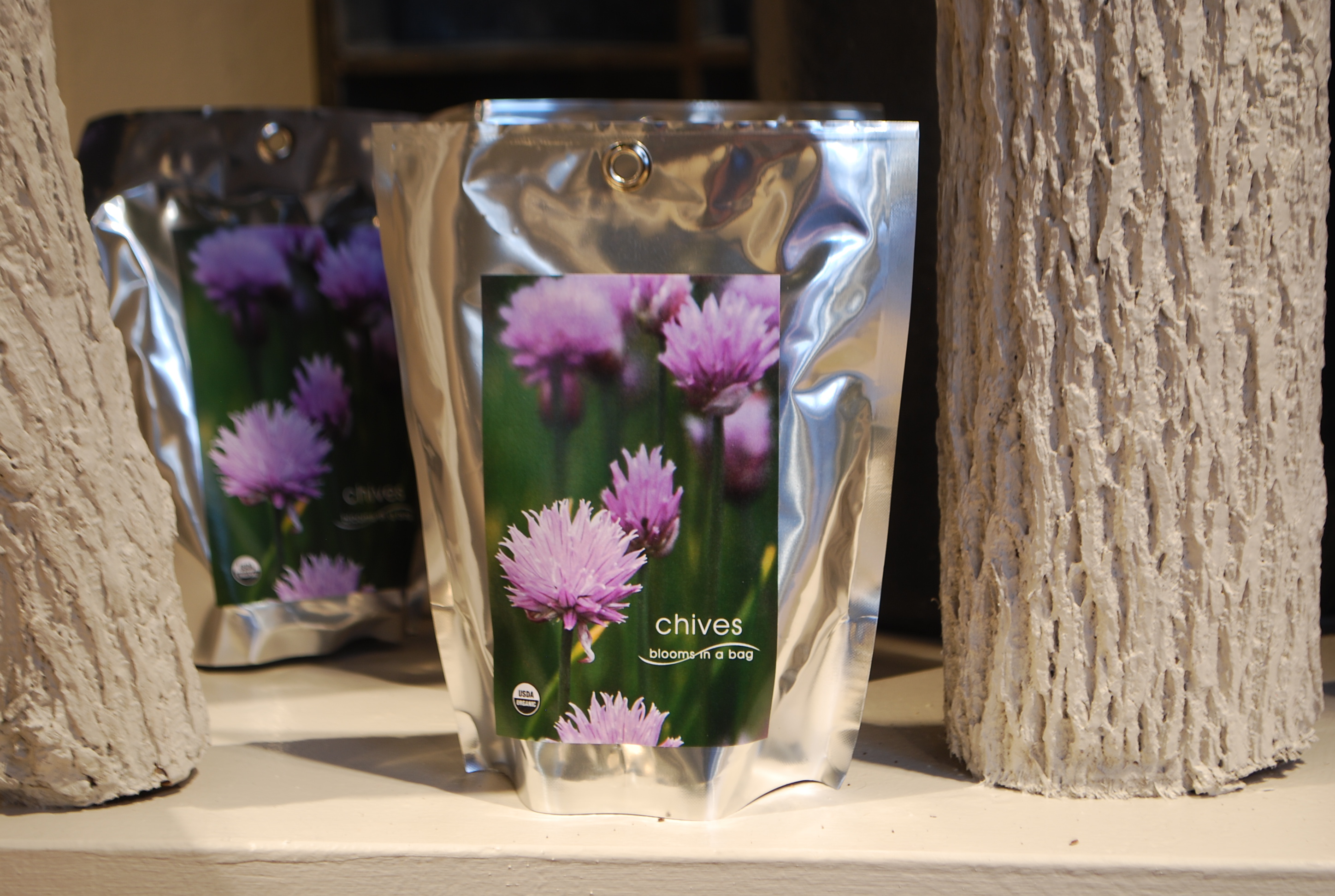
chives.jpg
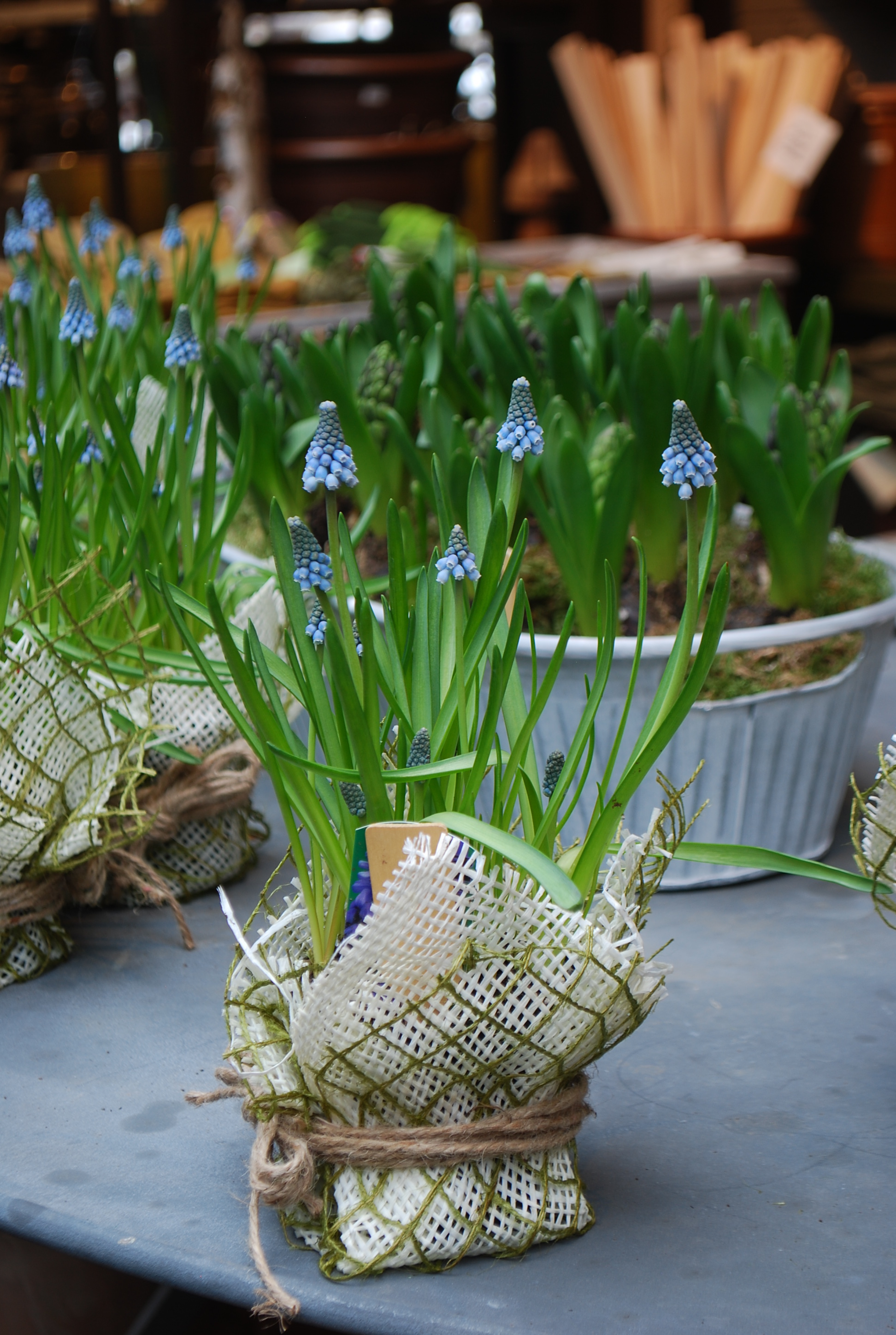
We like to have everything as ready as possible on the inside, before the weather warms enough to permit plants.  For gardeners who just cannot wait one more minute, snip off the top, water, and set in a sunny window sill.

spring-shop.jpg

I know this is a lot of pictures to slog through, but those of you who do not live close enough to visit might want a look at what we have going on.

contemporary-Belgian-stoneware.jpg

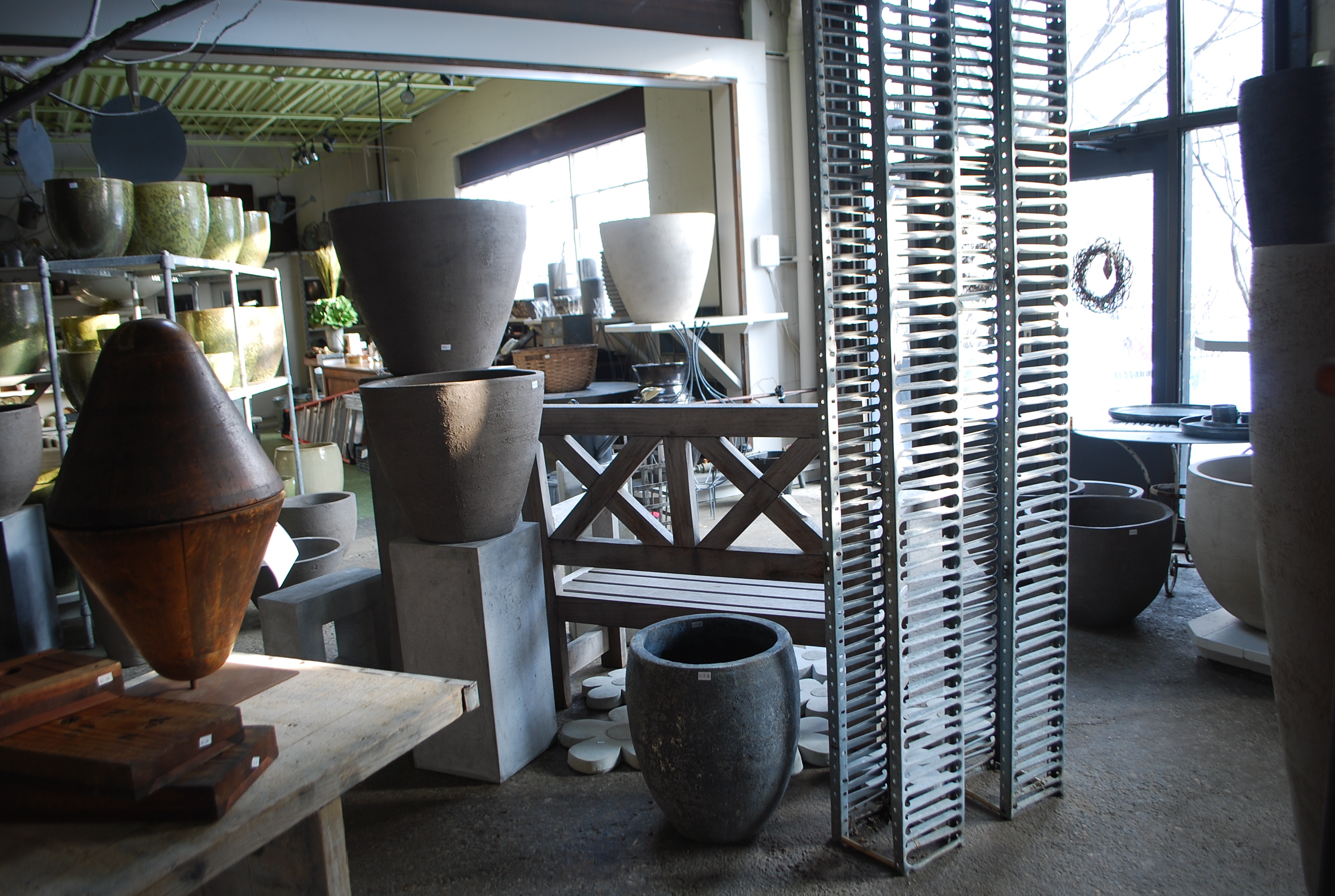
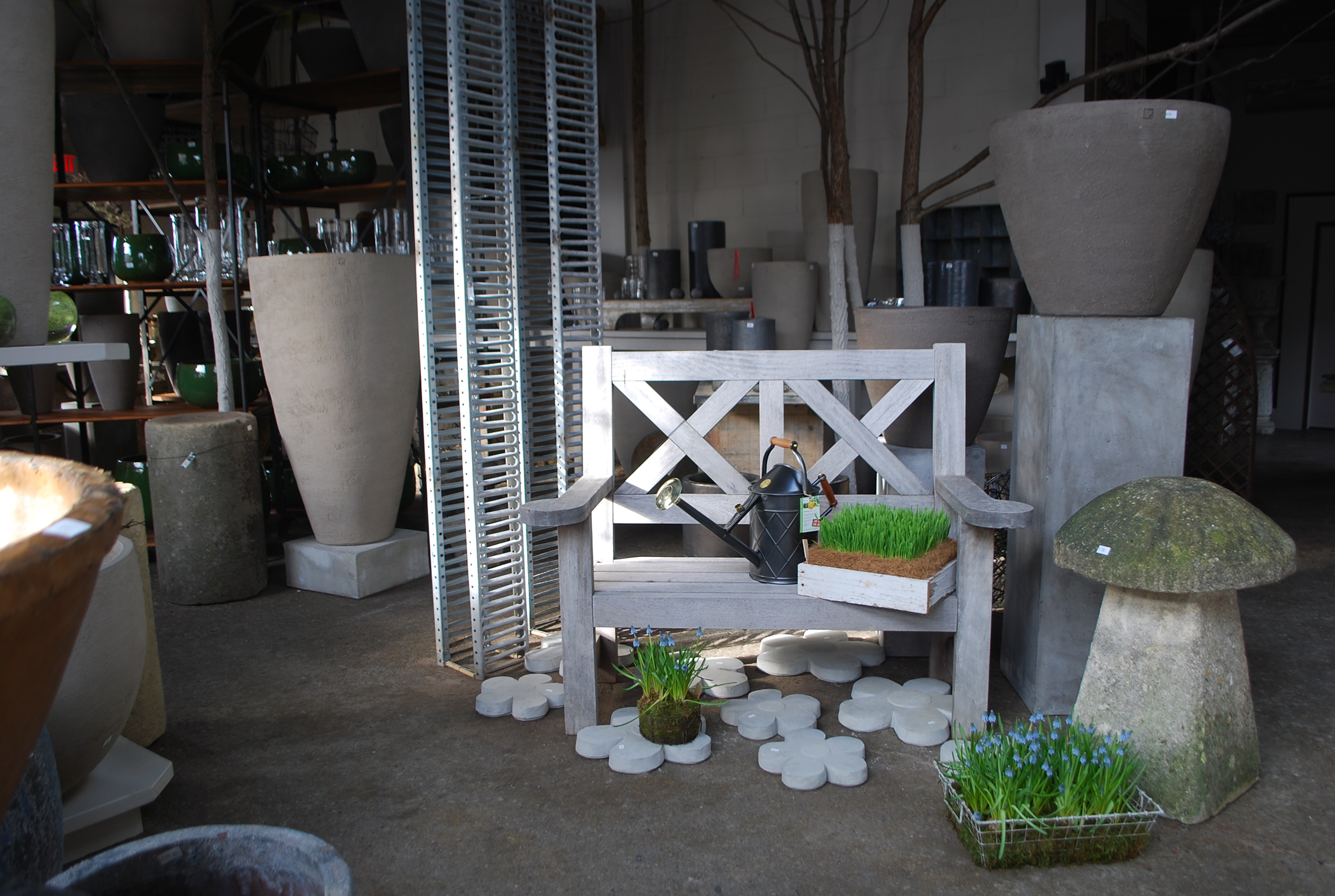
The Belgian stoneware pots are the feature of our spring collection.  Six of them are already gone-to 3 very different gardens.

spring-2013.jpg

Though I will be glad for the day when we can prop the doors open, there is a sense of spring in the air here.

March 2a, 2013 (47) See what I mean?


Paint

fiberglas-garden-plaque.jpg

Paint is one of the most versatile and accessible of any decorative material.  Though cave paintings were done centuries ago, the first patent in the US for paint available in a can was granted in 1867.  Early paint was composed of many different materials and colorants, suspended in a medium which would make the color brushable.  Vintage painted steel and wood garden furniture is readily available-in various states of disrepair.  Old, chipped, and weather worn paint on a garden bench can be charming.  A fresh coat of paint can dramatically alter the appearance of a house, or shed.  Old style adirondacks chairs with original paint are always in demand.  Old chairs repainted in vivid colors are visually invigorating.  Paint types and formulas are available for every surface and situation imaginable.  Some day I would like to try Annie’s chalk paint ( http://www.anniesloan.com/index.html ) both inside and out.  The surface sounds beautiful, and it can be used inside and out.  No matter the circumstance, I use Porter Paint.  It is a favorite brand of sign painters.  In my opinion, it resists cracking, fading, and peeling better than any other paint I have used.  The exterior Acrishield is 100% acrylic paint-not latex paint.  We use this on any exterior surface we want to paint.  Porter Paint is made in Pennsylvania, and is not always easy to find, but amazingly, it is available in my neighborhood ( http://www.pontiacpaint.com/).  Paint is a relatively inexpensive decorating material with one caveat.  What was once painted will eventually need to be repainted.  Is that so bad?

fioberglas-garden-plaque.jpg

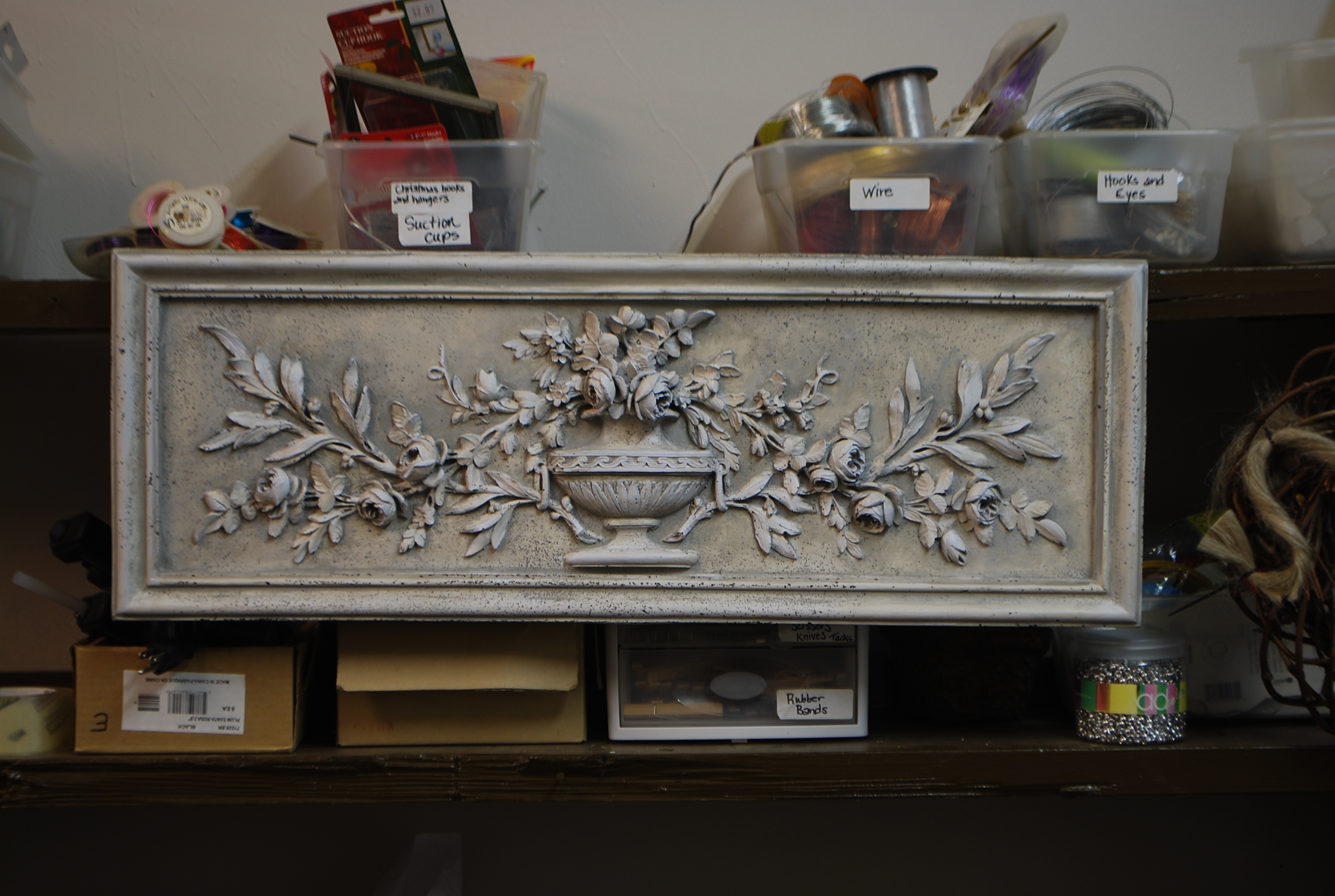
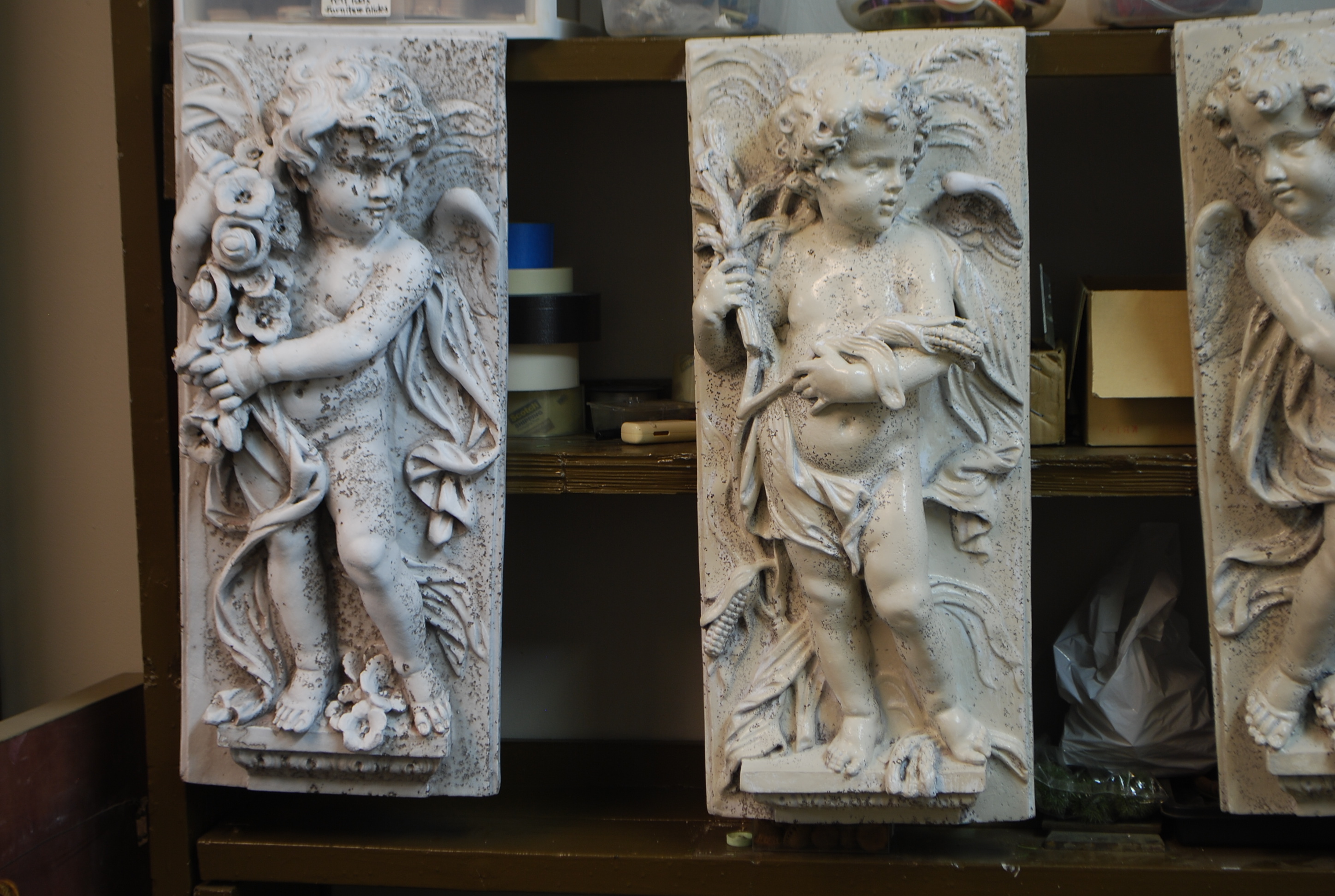
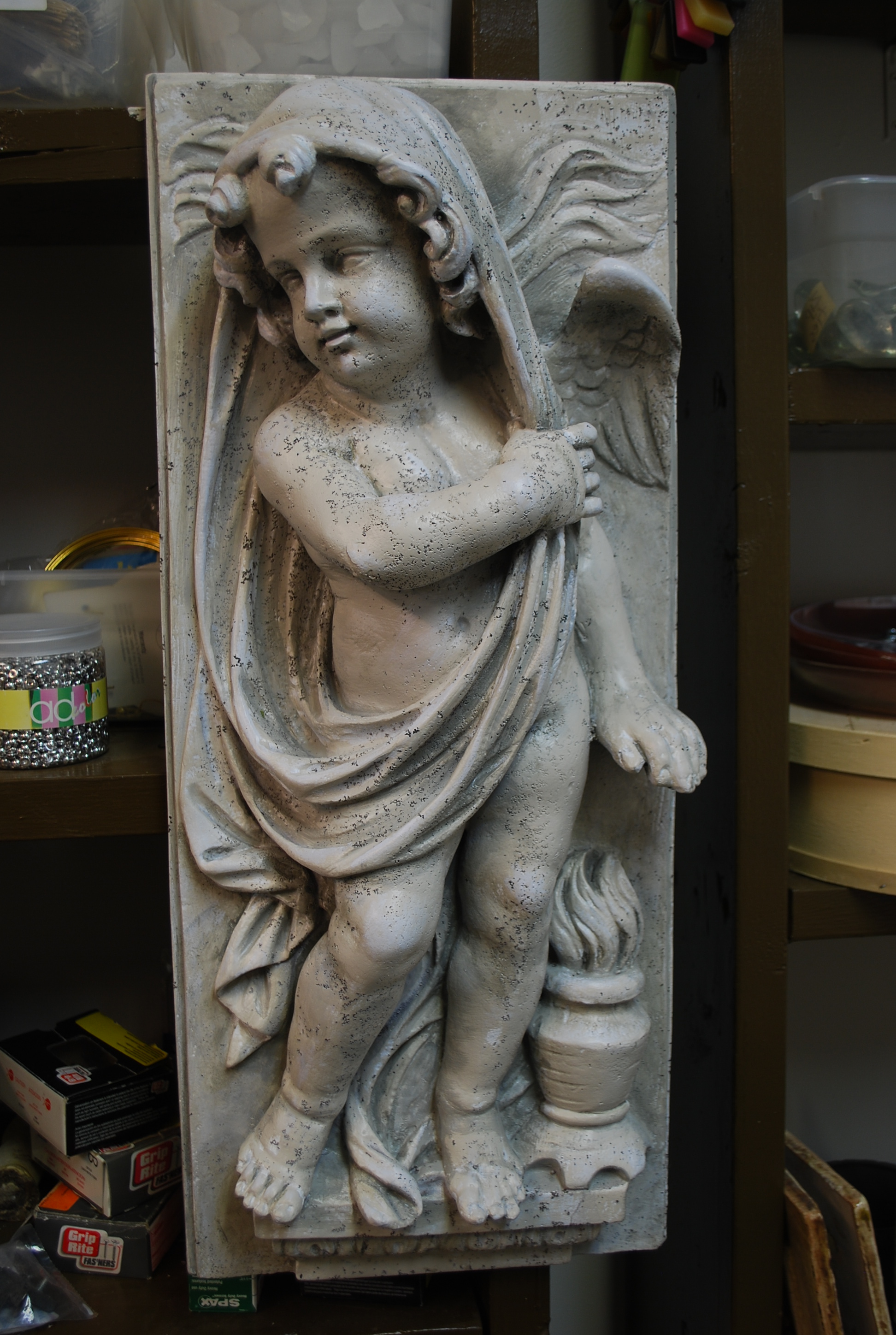
Rob and I bought a small collection of fiberglas garden ornament which was delivered late last week.  Though we had a lengthy discussion about the finish with the rep, I was not happy with what got delivered.  Fiberglas is a friendly material, in that it is impervious to weather, and light weight.  But it is by no means a natural material.  If I have to have fiberglas, I like it to look like fiberglas.  Fiberglas finished to look like something it is not-just saying.  The plaque pictured above had been spray painted the most horrifying shade of dead white imaginable.  I knew I had to paint it.  A dear friend had just introduced me to hand screened en grisaille wallpaper-meaning wallpaper that is all shades of gray from black to white.   Those gray landscapes have been on my mind.  I bought 4 quarts of Porter exterior paint, and went to work.  What is pictured above-the finish.  It is by no means a great work of decorative art, but this painted surface is much easier on the eye than what was. 

four-seasons.jpg

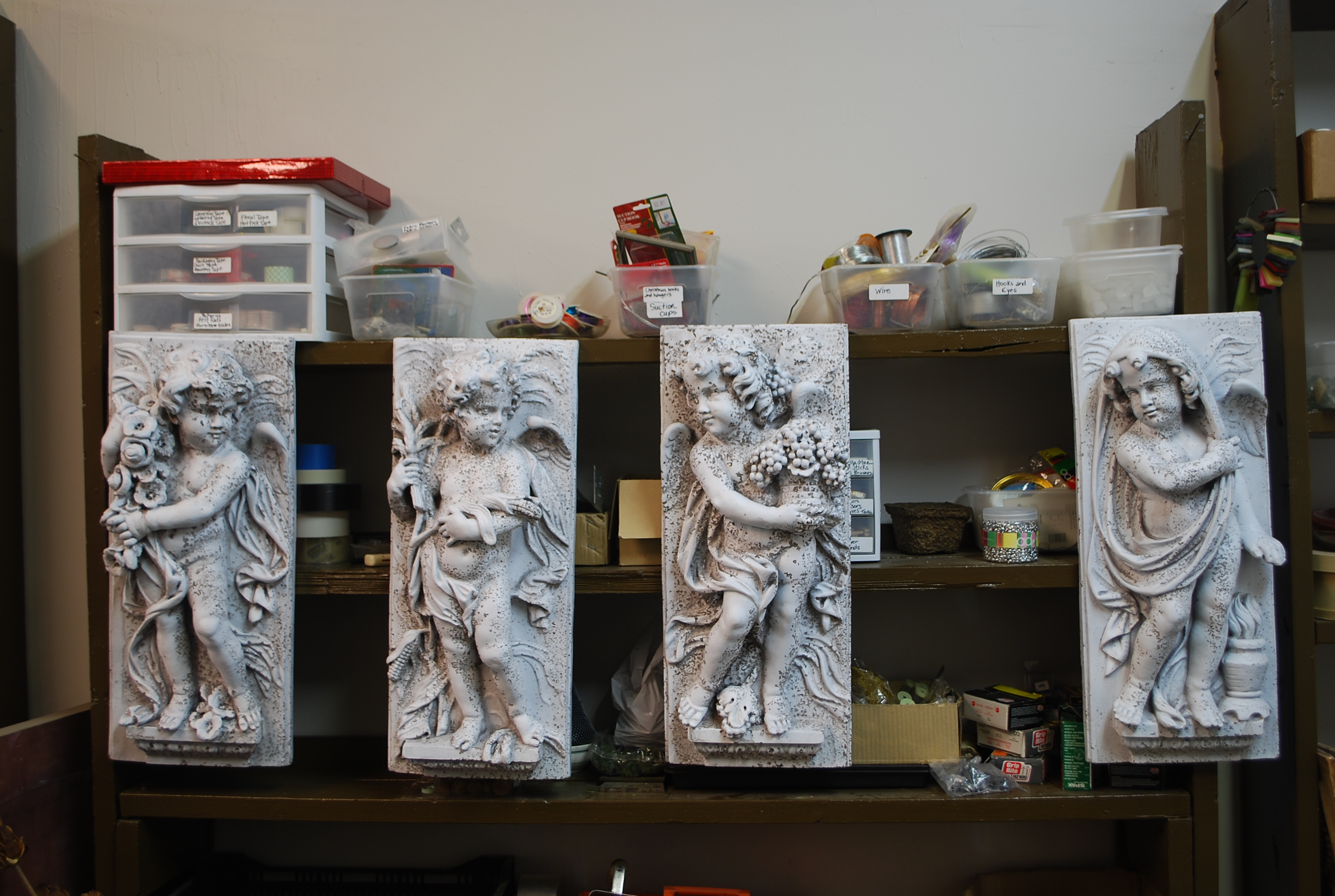
This set of wall hangings depicting a classical interpretation of the four seasons-not so great looking.  The white is harsh.  The pits in the surface of the fiberglas, even more harsh.  Beautiful white painted surfaces outdoors can be difficult to achieve.  A very stark architectural white that is fresh and airy on an indoor surface can be strident and off putting outdoors.  Toxic white I call it, as no one seems to warm up to it.  White outdoors is always warmed by the quality of natural light.  This flat and unnatural white made me squint.

fall-season.jpg

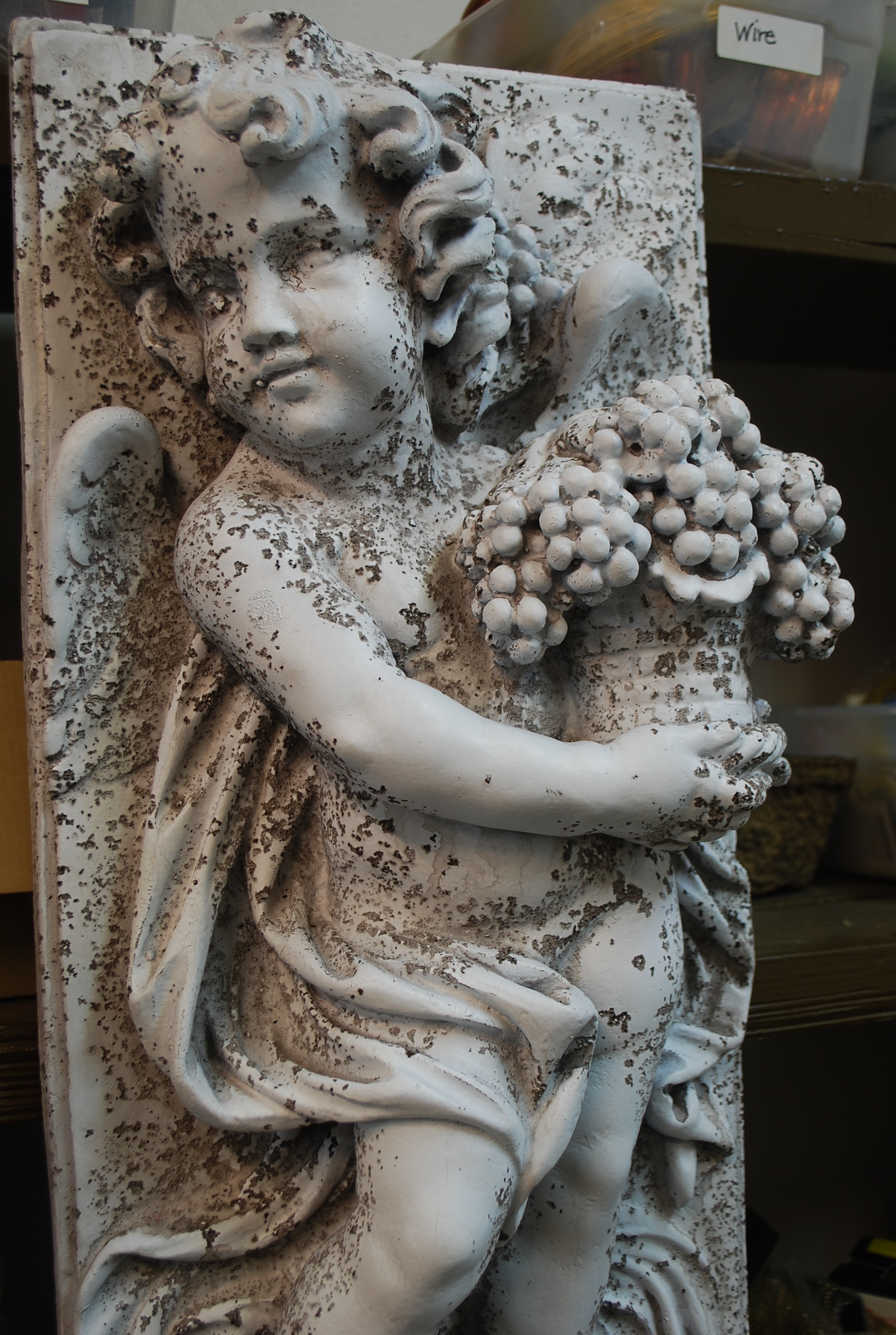
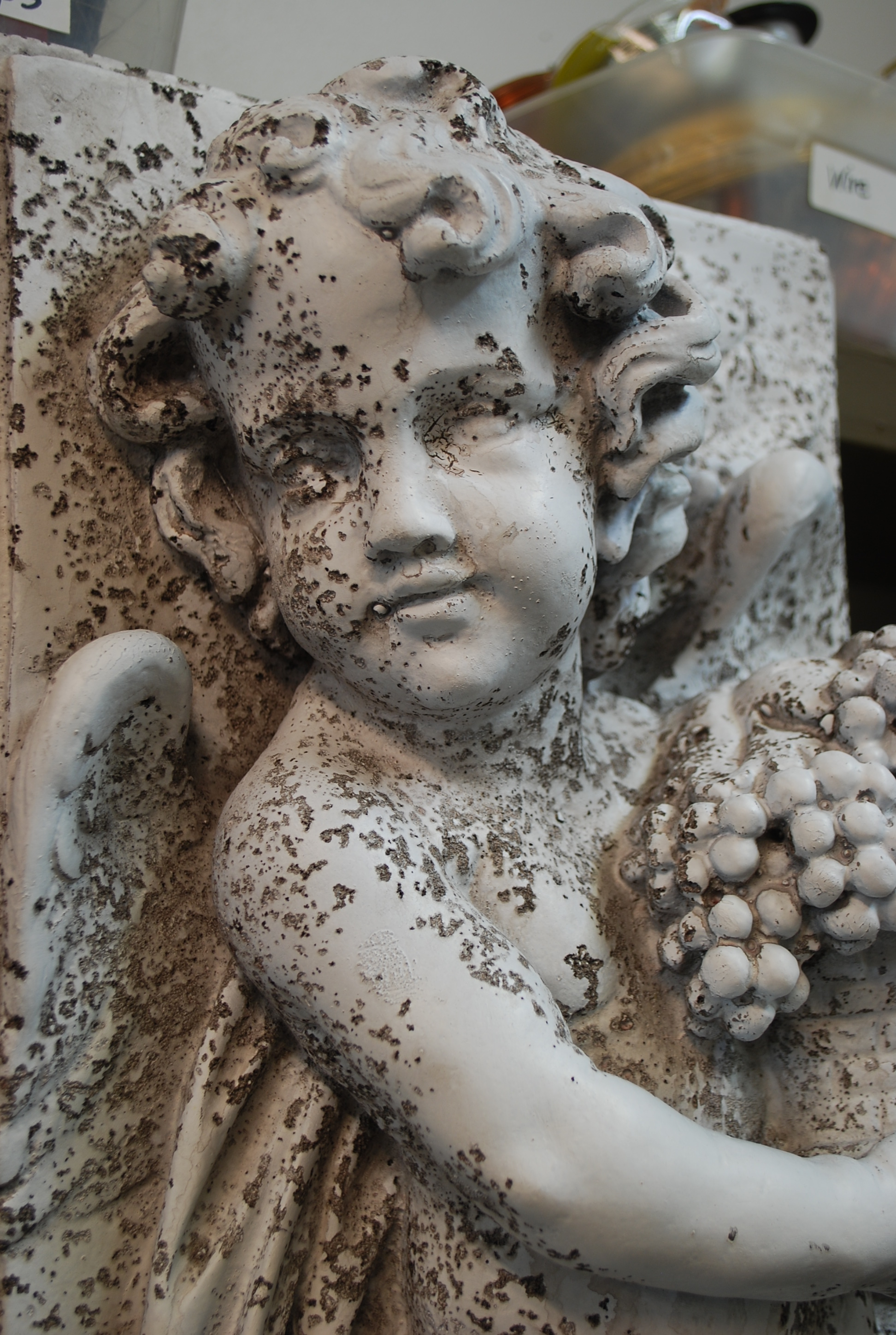
Buck tells me that cast concrete which is not vibrated sufficiently develops what is known as bug holes.  The air which produces this pitting has not been vibrated out of the mix.  I am sure these fiberglas bug holes were deliberate.  This was an effort to make brand new molded fiberglas look like aged stone.  I am sure it is as unconvincing a surface to you as it is to me. The pits were sprayed with a very dark stain.

cherub-face.jpg

This pitting is not so attractive. After all, cherubs are supposed to look sweet, or devilish-not scary.  The runny nose look-not my favorite. 

painted-plaque.jpg

The pitted areas would have been much more effective, has they been confined to the shadow areas.  A base coat of Porter exterior satin paint filled in the worst of them.

underpainting.jpg

The figure of the summer season on the far left in its original state shows how some ornament for the garden can be vastly improved in appearance with a little paint.

painted-four-seasons.jpg

The annotated collection is much more to my liking.  After the base coat, I used a slightly darker color in the shadows, and a slightly lighter color on those surfaces closest to my eye.  A little paint can go a long way towards improving the looks of anything it touches.  The best part?  If a first effort or color doesn’t work, there’s always the option to try again.

painted-fiberglas-cherub.jpg

Though I would touch the surface of an antique or lovely vintage ornament for the garden,  a little paint can go a long way.

Austere

clay-pots.jpg

Austere would not describe me or my taste.  I am very attached to my pink Ugg slippers, left on the radiator all day, and again overnight.  Barefoot in the house- morning or evening- in February? Not likely.  The radiator in the kitchen hall is host to either my slippers, sneakers or boots-round the clock, all winter long.  I have a craving for baked potatoes, beef stew, potato chips, and bratwurst.  I load my coffee with half and half.  Did I mention that Beurre & Sel in NYC makes and ships cookies that makes winter vastly easier to bear?  I hate taking a shower this time of year; who wants to be both wet and cold?  I like lots.  Lots of plants.  Lots of styles.  Lots of gardens.  Lots of weather suitable for gardening.  Lots of color. Second helpings.

whitewashed-tree-trunk.jpgThe environment outdoors late in February-very austere.  Austere as in cold, and uniformly gray.  To this gardener, the winter is a 6 month sentence that is undeserved.    Austere?  From the dictionary, austere is an adjective that describes anything with is somber, grave, rigorously self disciplined, spartan in style, simple, and plain.  Without ornamentation.  Restrained. This is my best shot at a description of austere ; utterly simple design refers to a pared down and minimal expression. Winter is a good visual description of austere.  All the voices in the garden are hushed.  Everything is sleeping, struggling, or enduring.   Silently. It will be spring before any winter damage is apparent.  The colors outdoors are restricted to gray, taupe, brownie scout brown, and white-with a dash of black every so often.  Snow falling makes next to no sound.  Snow tastes and feels cold, and not much else.  Snow quickly turns to water, if you touch it.  In a whiteout, who can see?

clay-pot.jpg

The tree whose outline in full leave is extravagant, robust and juicy is reduced to sticks in the winter.  Sculptural sticks, OK yes, but sticks none the less.  The greens represented in the summer garden-silvery.  Blue greens.  Lime.  Forest. Grass green. Green, uncontained.  There’s nothing austere about a summer garden.  Sun and shade on green-a complex and visually enchanting tapestry.  Once the leaves fall, gardeners are left with the skeletal remains.  Frankly, winter leaves an ashy taste in my mouth.  Branches in winter are those shades of gray that take lots of visual work to sort out.  Can you tell I am really tired of the winter?

pots-and-trunks.jpg

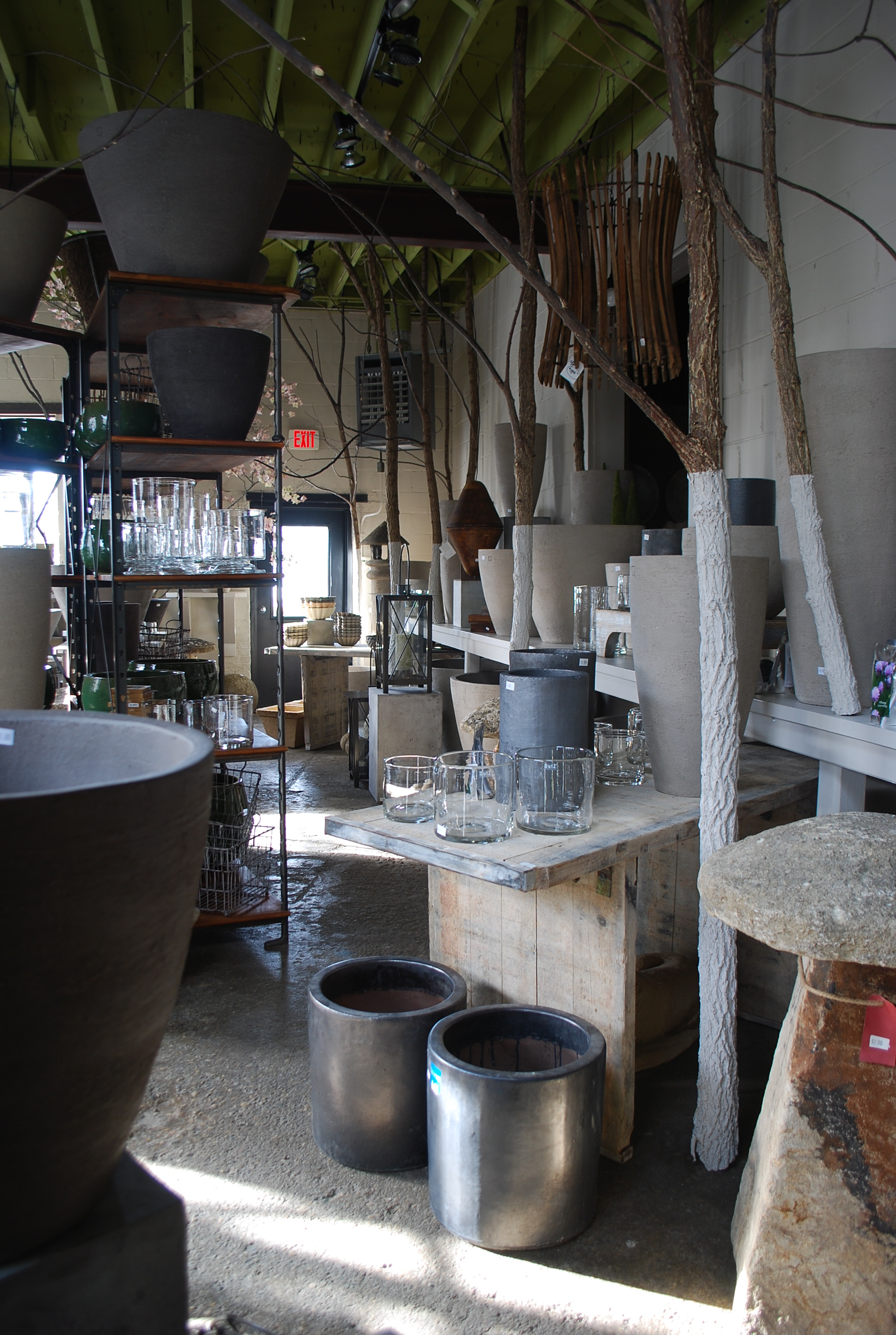
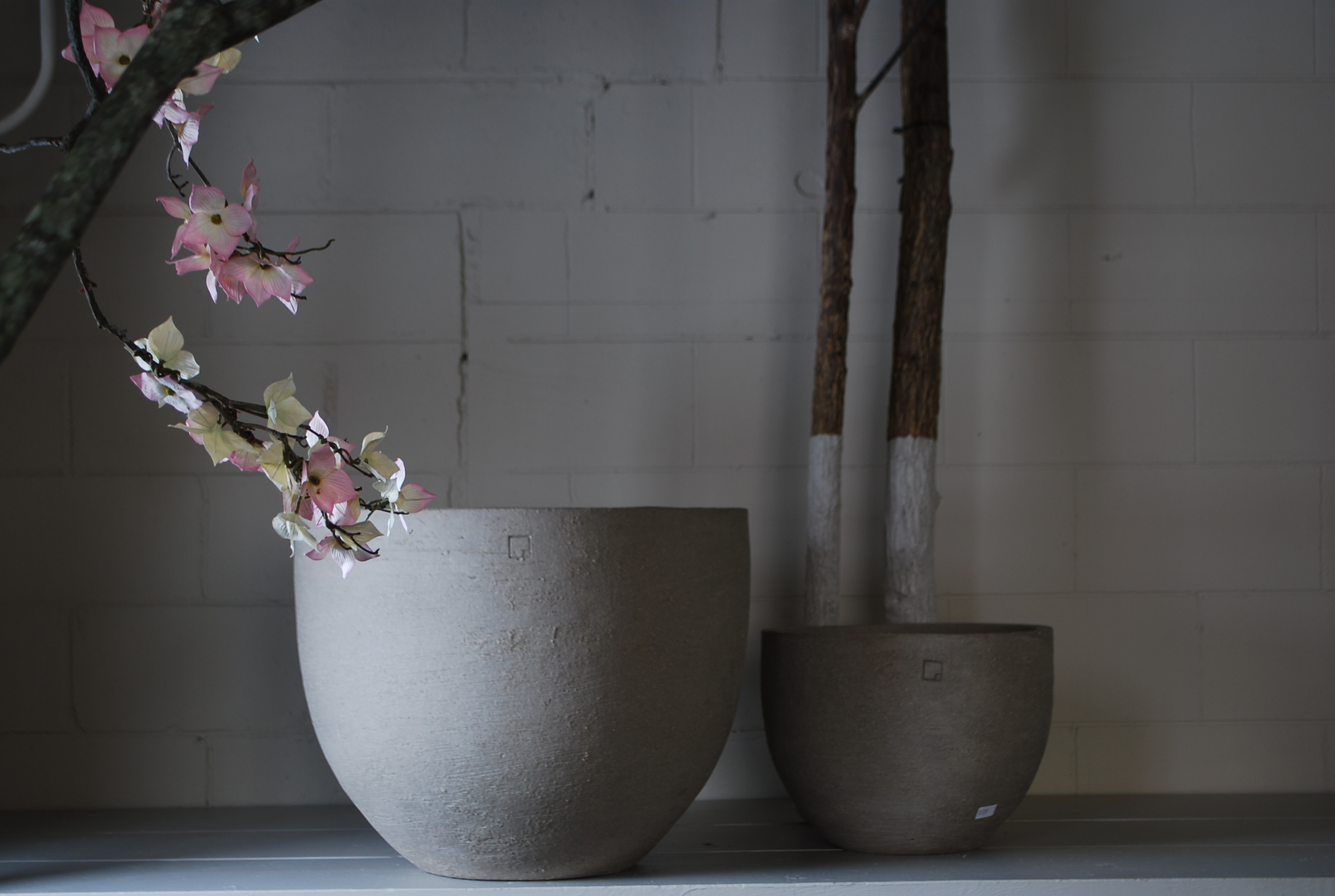
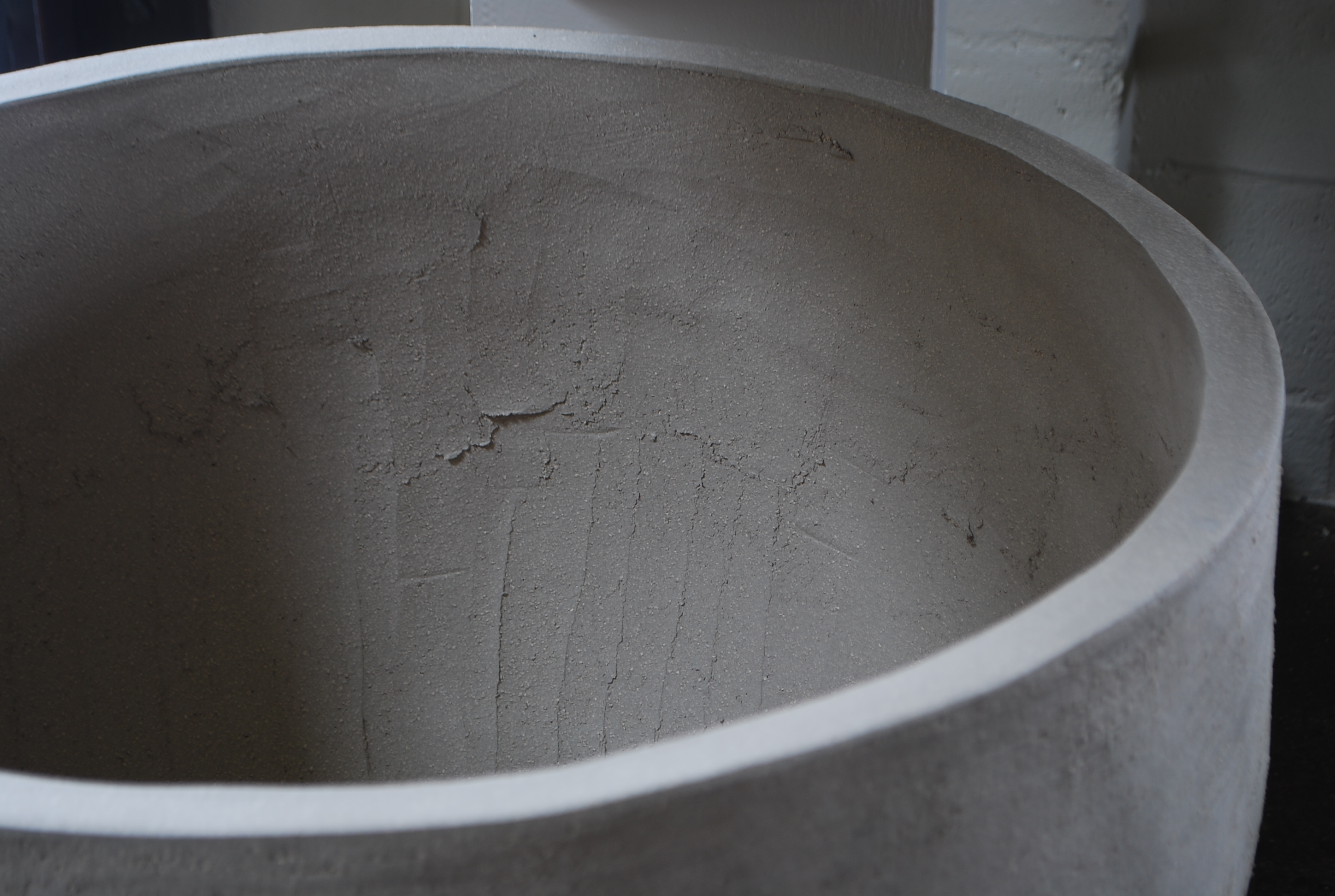
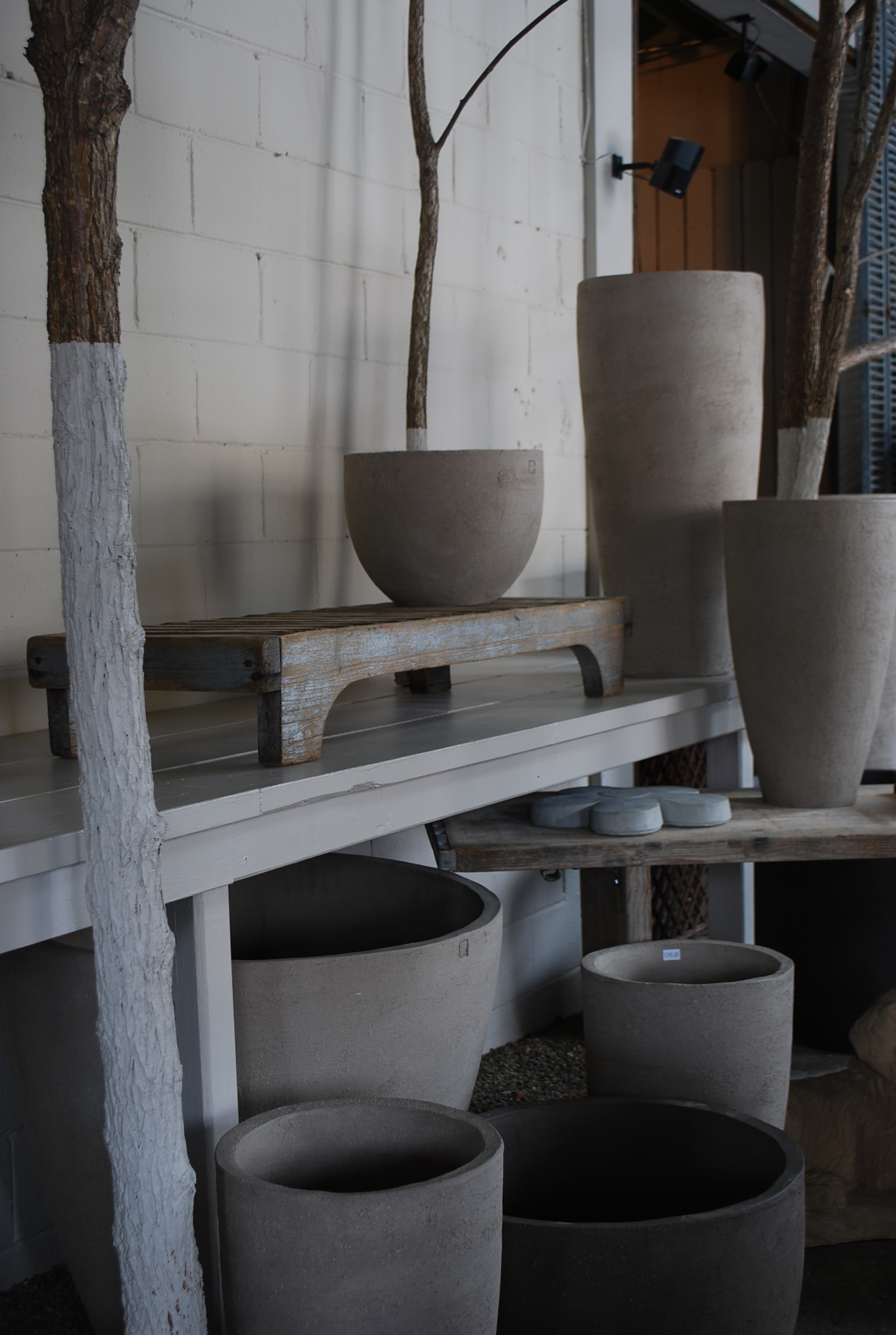
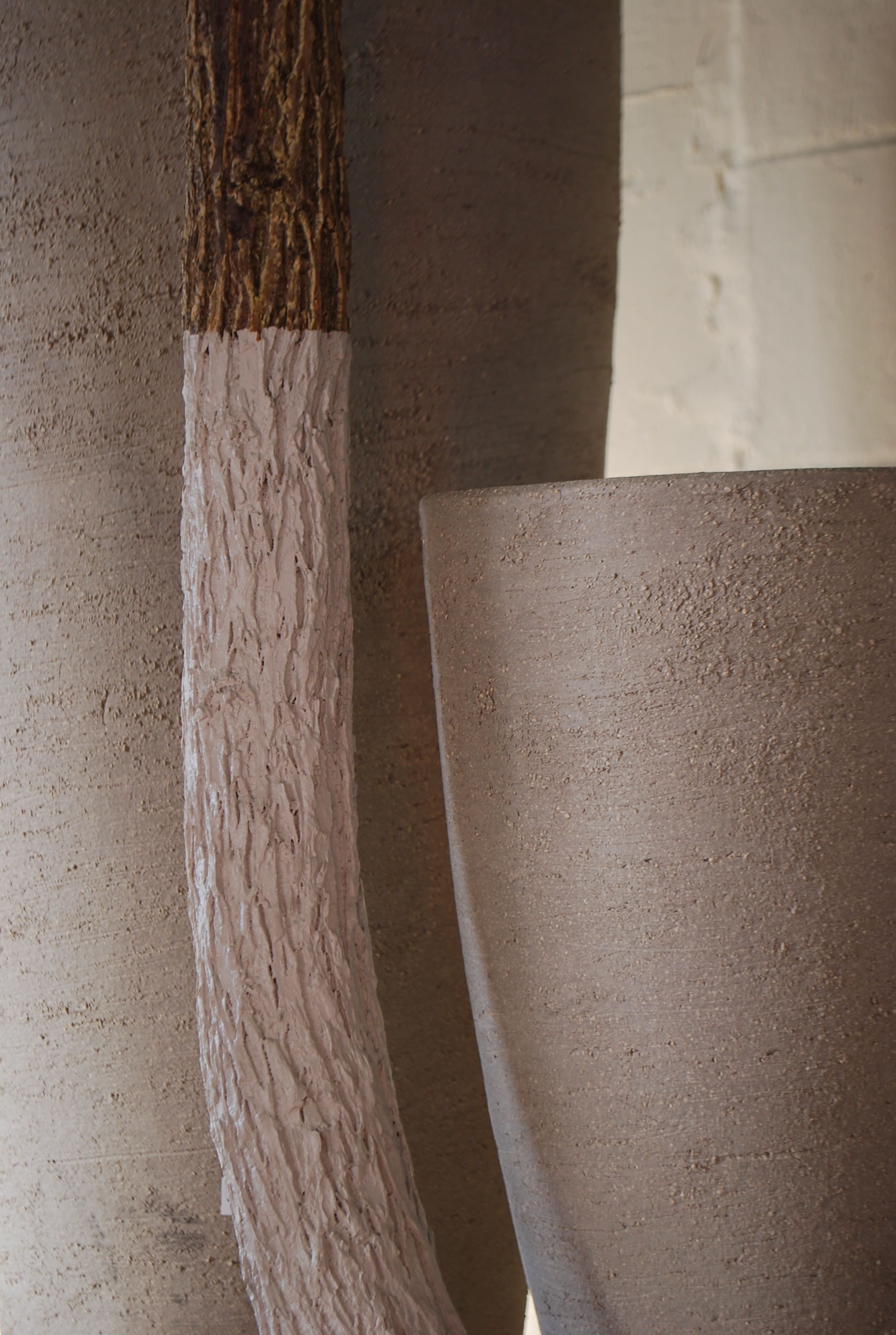
Why this discussion of austere?  The first two of Rob’s six containers due in this spring arrived this past Thursday.  Both containers were chock full of contemporary stoneware garden pots from Belgium.  The pottery insisted that they would pack the containers.  They insisted that nothing could be double stacked.  OK, we agreed.  When the first container was opened, the airspace in the upper portion-a strongly austere, and minimal gesture.  We paid to have air from Belgium, transported to the US.  Once I get past this, I find I am enchanted.  The pots are hand made from clay that is loaded with grog-hard particles.  Very definitely textured.  Each shape is available in a cool cream, a taupe, and black.  Very austere, this palette.  Not one bit like the open armed friendliness of a terra cotta clay pot.

interior.jpg

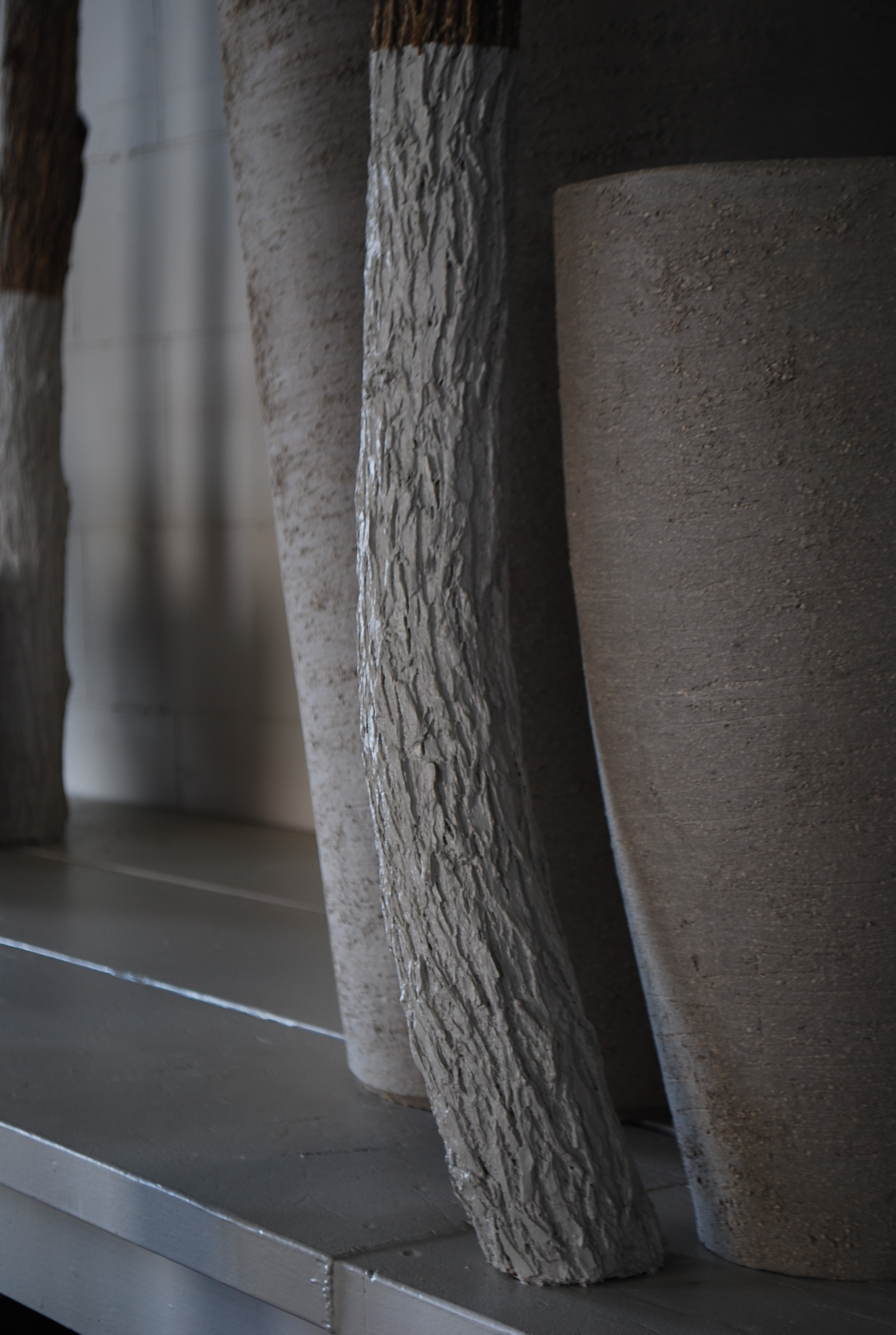
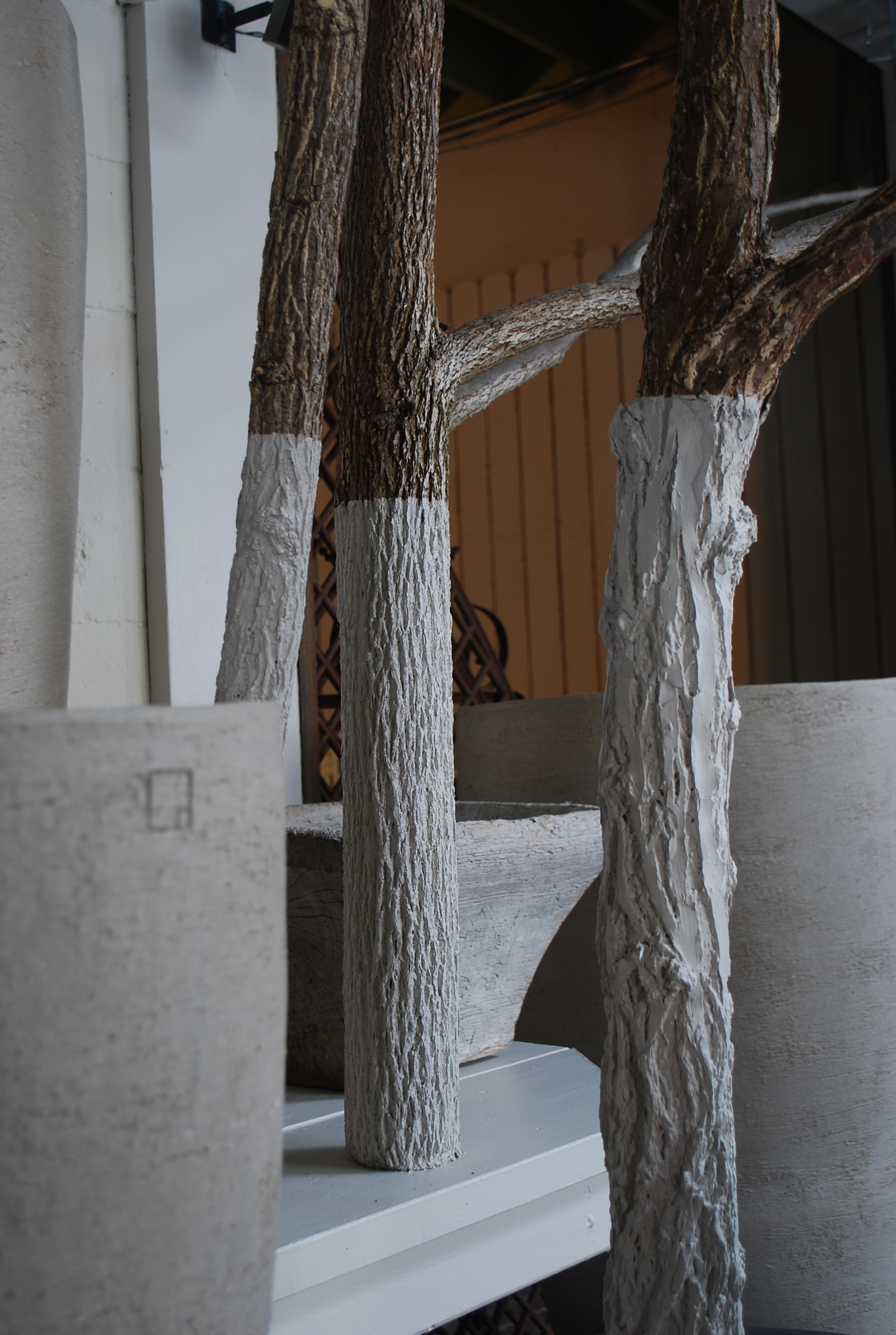
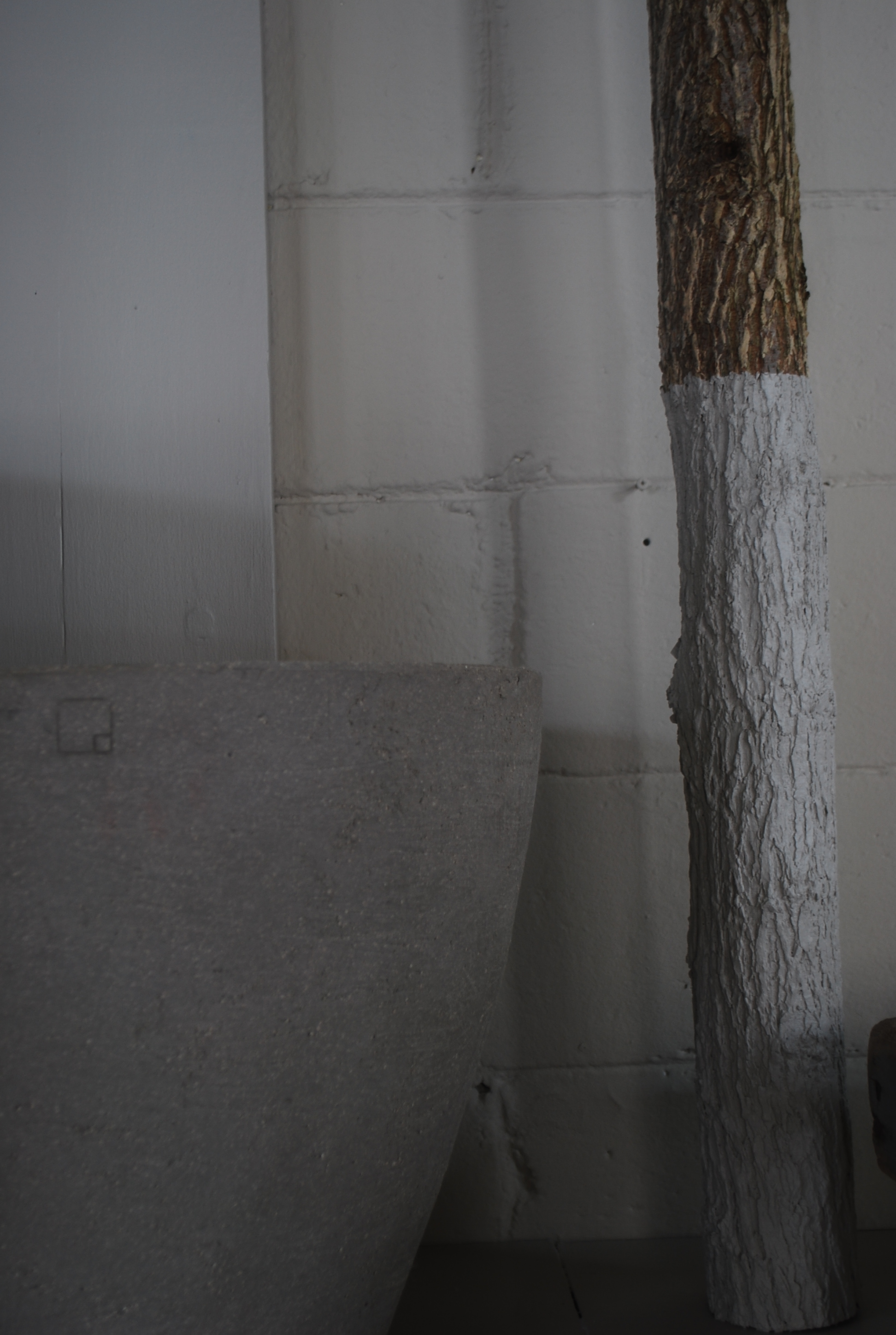
I planned ahead for their arrival. We dressed the floor and shelves with the trunks of a few small caliper trees. I thought the natural forms and textures of these trees would provide some warm company to these austere pots.  I never pitch a dead tree.  I keep it, in the hopes it might have another life.  The whitewash?  Traditional agricultural practice-kaolin clay on tree trunks is said to repel insects.  How the French whitewash the trunks of their trees-shockingly beautiful.  My whitewash is the same color as the pots.  The walls and trim were repainted the same color as those cooly cream colored pots.  We created an environment which is as close to the color of those cream pots as we could manage.

whitewashed-bark.jpg

I wanted to display them in a way that reveals why Rob admires them.  I have had a few days to look them over.  It took a day with both of my crews to unpack and take the packing material to be recycled. It took another day to put those pots in place.  Today I had the shop to myself.  This is the last Saturday we will be closed until January 15 of 2014.  Nonetheless, there was a steady stream of people stopping by.  They are tired of the winter too.  But they did like these pots.

clay-pots.jpg


I will say that an austere expression, if you give it enough time and attention, is just cause to slow down and reflect.  I am looking at shapes and shadows.  Texture.  Mass.  I am appreciating the quiet.  My fears about how chilly contemporary pots melted away.  The shapes are not only beautifully sculptural, the surfaces tell a story.

trunk.jpg

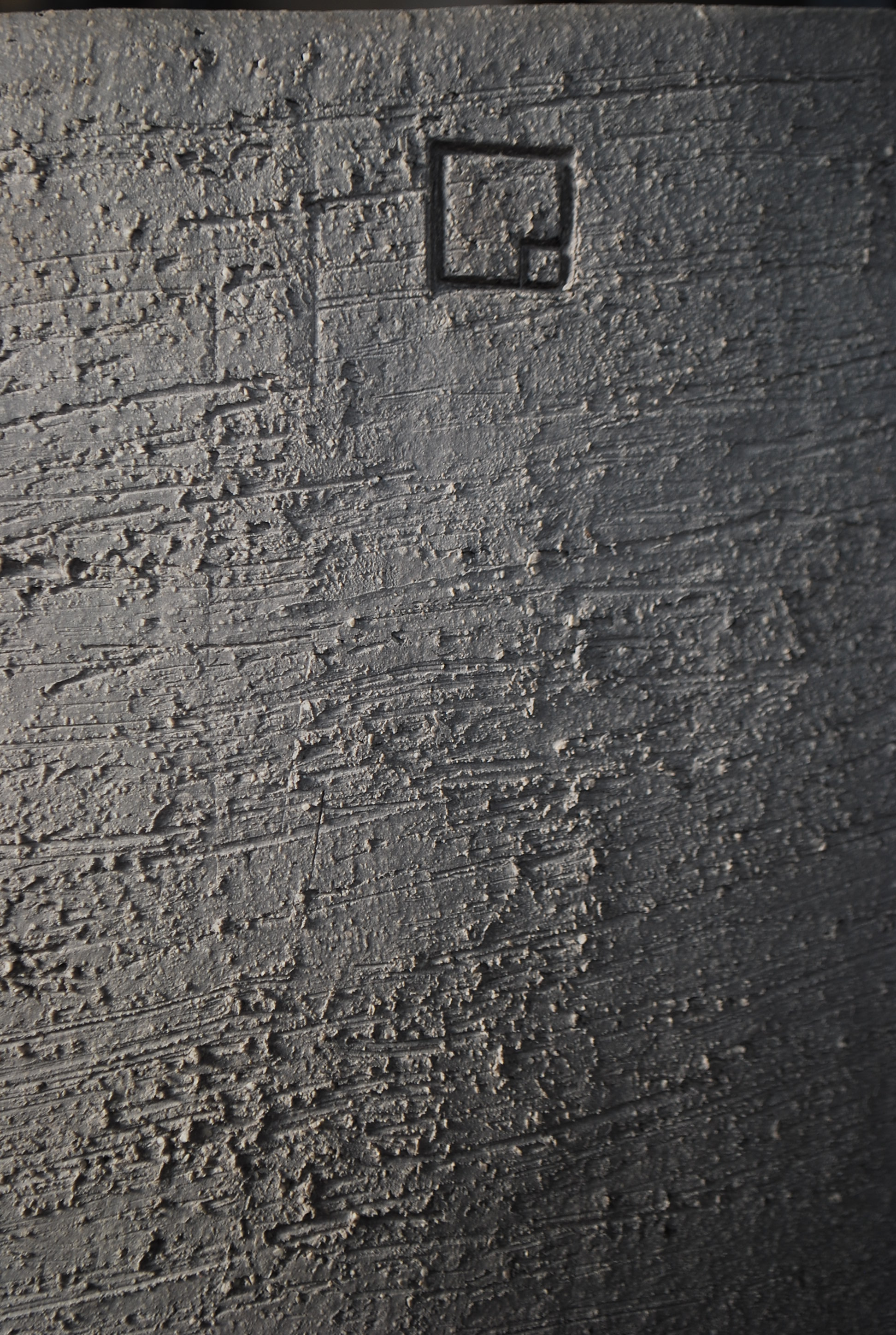
There is in fact something very warm and personal about these pots.  The hands that love and shape this clay are much in evidence.  I have never been so struck by the fact that the clay from which pots are made is an organic material.  From the earth.  A group of hands fashioning a fabulous collection of pots from clay dirt-this is a story of few words.  Minimal shapes and colors.  A subtle and highly edited point of view.  The quality of the available light greatly influences the appearance of the color.

stamp.jpg

Their stamp-I can only imagine how it came to be.  A stamp is a signature.  This is who we are, and what we make.  Plain and simple. These contemporary pots-I have decided that I quite like them.