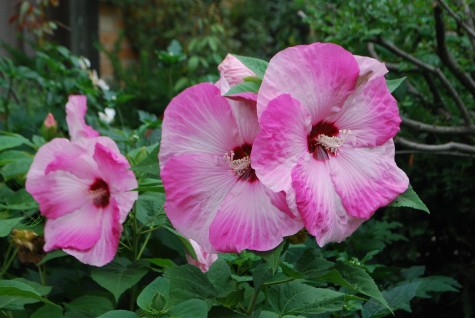
 A garden suffering from mid August heat and drought prostration is not a pretty sight. The street trees in my neighborhood are shedding green leaves like crazy-in an effort to conserve whatever little water there is stored inside. Fewer leaves means less evaporation. This might be akin to that white knuckle moment in the movies when the plane that is out of gas 25 miles from the English coast jettisons its fuel tanks, hoping a lighter plane might glide a few miles further towards land. The weather is keeping me stubbornly on the business end of a hose every day. My giant hardy hibiscus-who knows how a flower of this size, with such ultra thin petals manages to stay looking this fresh. Perhaps the fact that each flower is open scarcely more than a day might be a factor. Plants that withstand great heat and need little water may be an appropriate landscape move in hot climates, but one never knows what to expect in Michigan. This makes smart watering a garden issue worth discussing.
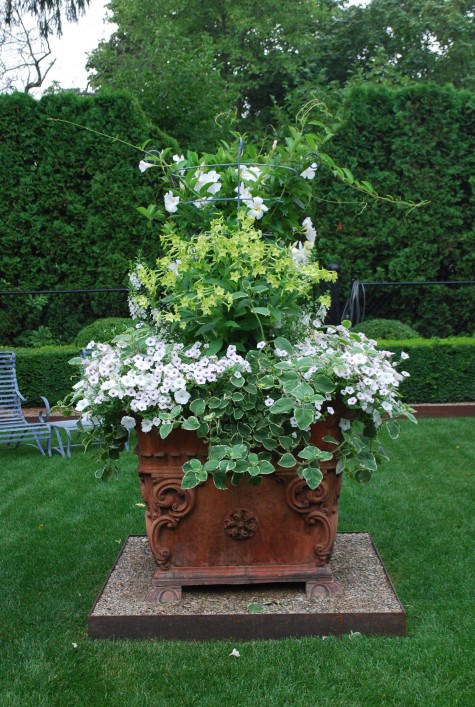 This concrete container is large enough to hold two full grown gardeners with ease. This means it holds a whomping lot of drainage material and soil. A huge soil mass means less frequent watering is needed. I have been worried about the nicotiana in this pot; they are not so fond of very hot and dry weather. The large mass of soil in this pot means it stays evenly moist; this pot is more likely to handle my neglect until I can get to it with a hose. Even and steady moisture means the planting weathers the dry hot spells with ease. Small pots with little soil mass can become a watering headache in this kind of weather. If you have your pots on a sunny terrace, multiply the effects of the heat by 2 or 4. Paving absorbs heat, and reflects light back up at you-and the plants in your pots. Plan for giant pots in the sun-your smaller pots in the shade. Pots set in the lawn are easier to look after.
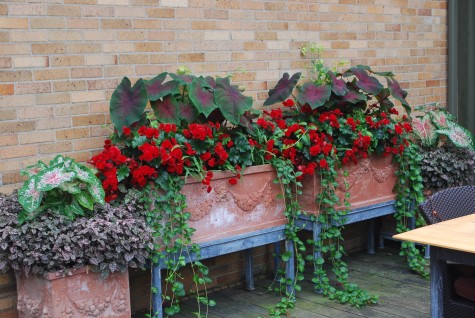
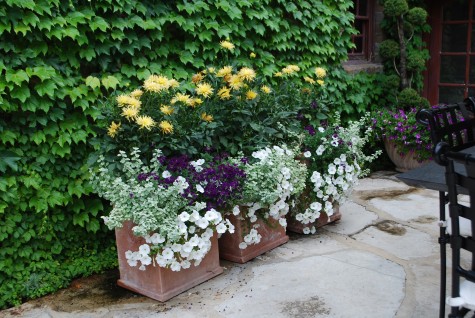
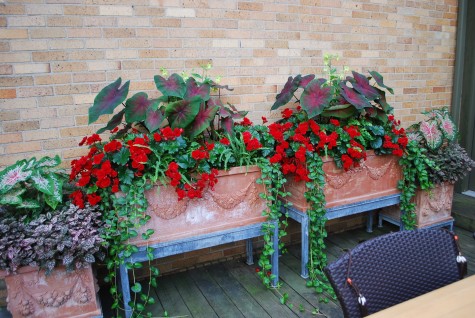
Shade has a huge impact on a plant’s need for water. Direct sun accelerates the rate of evaporation from soil and leaves. The shady spots in my yard always feel cooler. The soil in these Italian terra cotta boxes is much cooler to the touch than the pots not 3 feet away-in full sun. They need much less frequent watering. The exposure to full sun should likewise influence the location of a terrace, should you be thinking of building one. If you expect to spent time relaxing, or having dinner on your terrace, the position of the sun during those hours you are most likely to use it should figure prominently in determining a location. If your terrace is in full sun late in the day, you will need a pergola, or an umbrella. Gardens, landscapes, pots and people in sunny locations will need special attention during a prolonged hot and dry spell.
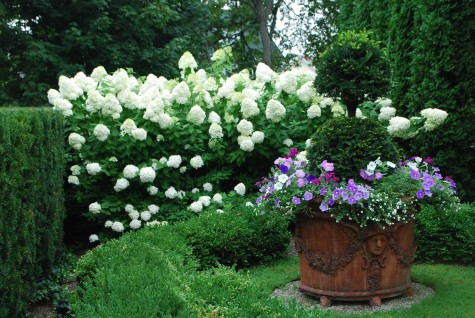 Woody plant material is much better equipped to handle extreme weather than any annual plant. This yew topiary has an extensive root system; the individual needles transpire at a much slower rate than a ligularia leaf. Planted in a container large enough to put a substantial soil mass all around that rootball, the petunias and bacopa planted on the edges tolerate the less frequent watering appropriate to the yew. Pairing plants with similar requirements for water simplifies the watering process.
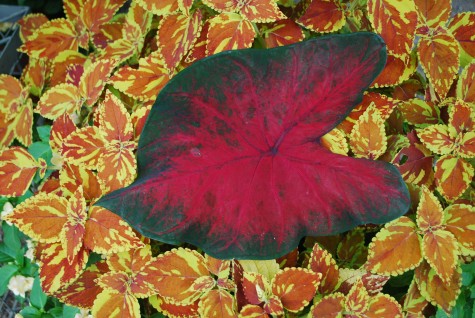
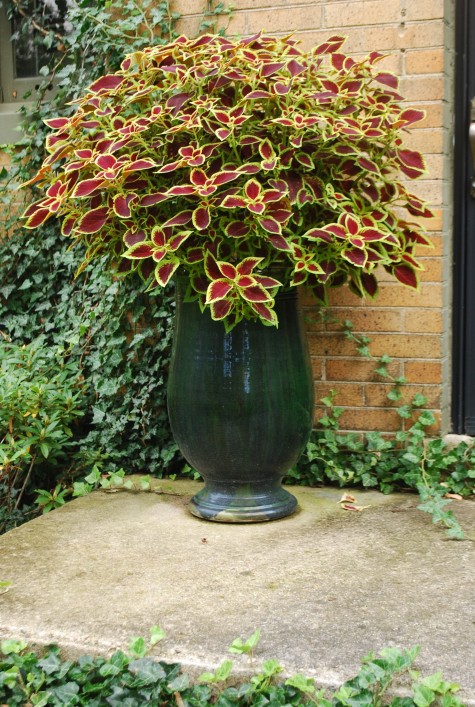 Some clients are reluctant to plant in shady locations; they tell me the choices for shade are few, and the few that do work make them yawn. Nothing could be further from the truth. This large sphere of coleus is striking; at the kitchen door, in 1/2 day shade, I only have to water every 2 or 3 days. Coleus offers more consistent top to bottom color than most flowering plants I know-whether they be annual or perennial. Their leaves may wilt in the heat, but their stems are juicy. Like begonias, the stems store water. They survive hot weather just fine.
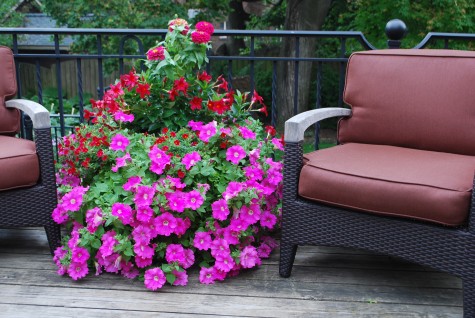
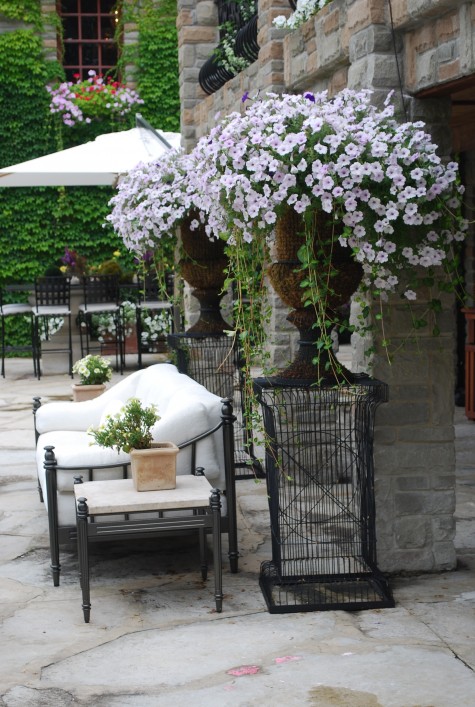
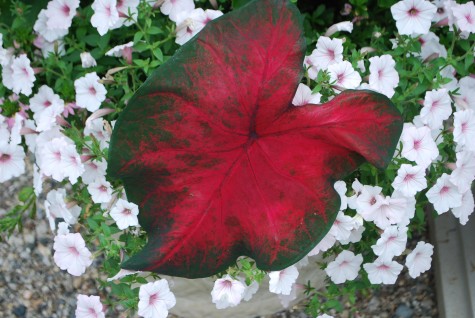
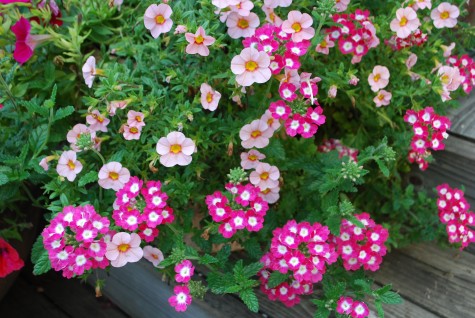
Always my plan is to design and grow my plants so they insulate the surface of the soil from the late summer sun and heat. Though heavily rooted containers will demand more thorough soakings, nothing dries out faster than one lonely plant bereft of company-whether that company be mulch, or the leaves of other plants. Every plant in this container has their own place, but they overlap one another enough to provide a little shelter from the weather. If you garden in terra cotta pots, you know that water evaporated through that clay from within at a much faster rate than a pot of some synthetic, non-breathing material. The petunias that cover the terra cotta here is slowing that evaporation rate.
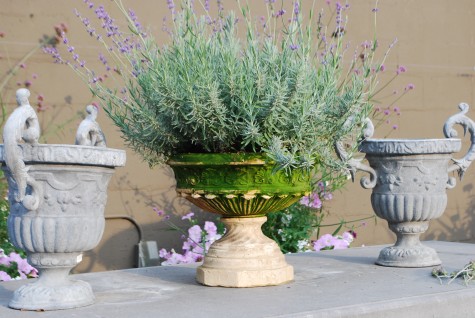 This small urn, placed on a Belgian bluestone table in full sun, is planted with the right plant; lavender is obviously heat resistant. The silver foliage reflects light rather than absorbing it. The needle leaves transpire at a lower rate. Lavender can also tolerate drought like conditions once established. In my zone, they die from too much water in the summer, and soil that is poorly drained and stubbornly saturated over the winter. I never plant them as a hedge, as sooner or later, one will succumb to the reality of an environment which is not so well suited to them. In pots, kept on the dry side, they shine. That is not to say this pot does not get frequent water. The moss on the pot,dependent on regular water, is thriving; the lavender, dependent on perfect drainage, is thriving too.
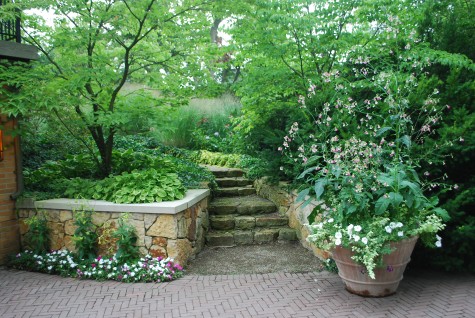
My shady spots are thriving right now, in spite of a long run of dry and hot weather. My hot spot plantings look good as well. Planning ahead to manage a weather situation you may or may not face-this is an important part of good design.