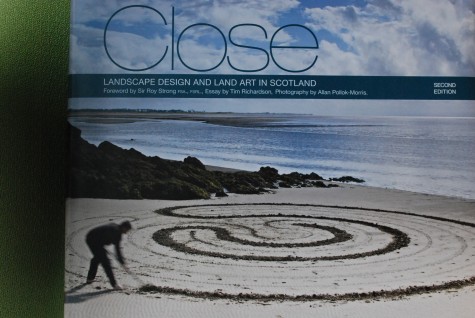
 I do think I wrote this winter about some of the books I was reading-winter means gardening from afar in my zone. Given the snow-I read. Courtesy of and on the recommendation of Rochelle Greayer at Studio G, I I bought a book. “Close: Landscape Design and Land Art In Scotland”. The well written essays in the book were written by Tim Richardson. The stunningly beauty photography-by Allan Pollok-Morris.
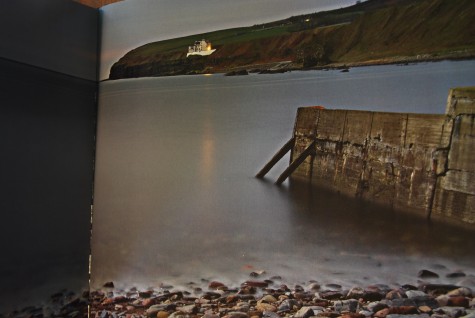 I have had really good reason to be reading this book. Spring got arrested some weeks ago, and has yet to make her bail. The past few weeks, 4 days of seven have been called on account of rain. Can you hear me sighing? Moving on beyond a missing a good many days of spring season-I am reading. Some books take my mind off the winter that seems to be lingering. This particular book deserves a place in your library, should you have the space. One garden in particular has captured my imagination. Dunbeath Castle, Caithness, Scotland, is extraordinary in every regard. Dating from the 17th century, perched on a cliff overlooking the sea-heartstopping.
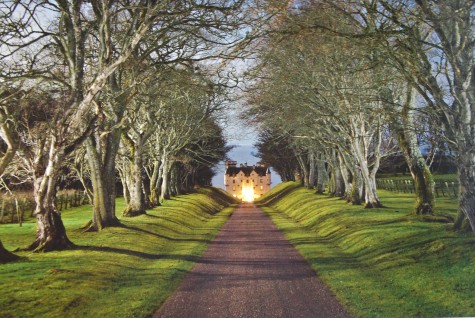 The gravel drive to the house is lined with ancient and windswept London Planes. How the drive is sunk into a valley between a pair of grassed knolls-stunning. The welcoming light at the house, all the more intense given the probable length of the exposure of this photograph-so beautiful. The sea visible beyond the house- this is a long view with no end. This may be the most enchanting landscape I have ever seen. Maybe more extraordinary than the landscape-this photograph. My copy is poor, but you get the idea. Allan Pollok-Morris created a work of great beauty. If there ever was a perfect moment in a landscape-this has to be it.
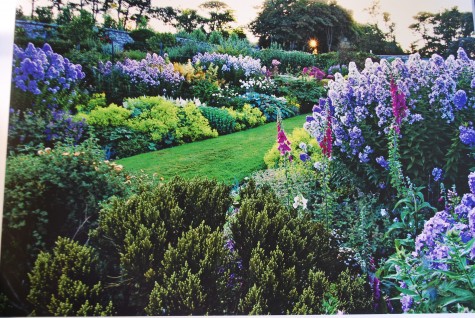 I was astonshed to read that this cliff in Scotland regularly endures 100 mile an hour winds. I see no evidence of that here; the perennial garden is walled. These perennial borders are breathtaking. The book tells me that the landscape designer of record currently is Xa Tollemache. What she has accomplished here, in concert with her client, is extraordinary. The stands of heliotrope blue campanula- breathtaking.
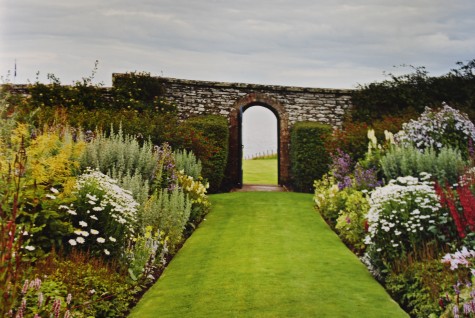 The tall walls protect the perennial gardens here from high winds. Every spring at the shop, we have broken pots, topiaries snapped off -utter distruction from wind. This photograph makes me understand that a truly beautiful garden depends on a committment to protect.
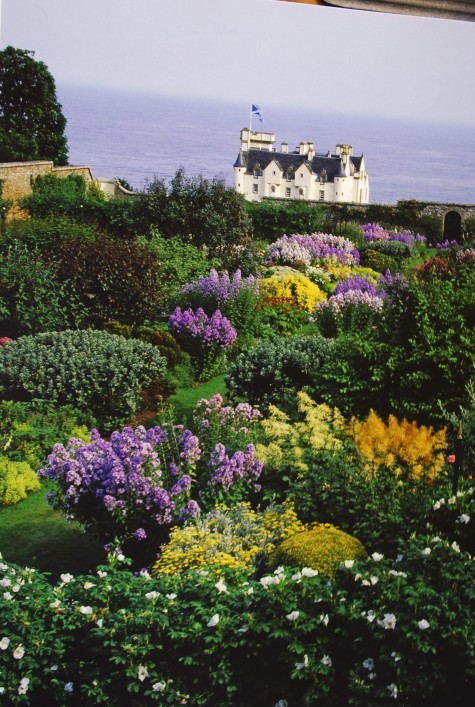 This walled garden is a considerable distance from the castle perched on a cliff overlooking the sea. The work that is involved to foster and permit this garden to thrive is staggering-this is obvious. My garden is by no means a fairy tale-but I do work at it. My garden, and the gardens I design, ask for a gardener in charge who happily takes responsibility. I know lots of gardeners like this. Fairy tale gardens-I depend on these to encourage me to do better.
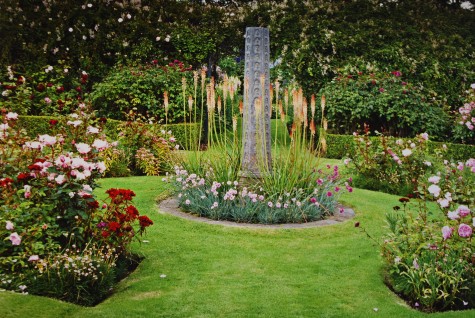 At the center of this rose garden-an ornament whose provenance is unbeknownst to me. No matter. The very tall and beautifully blooming tritoma would be lost without that central ornament of unknown orgin. The rose garden laid out in concentric circles-lovely.
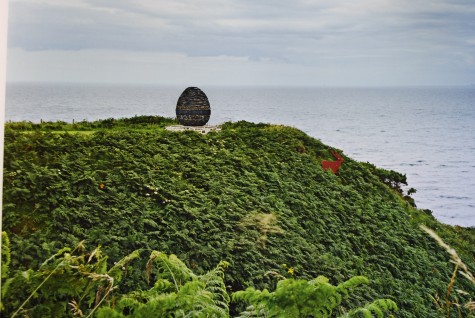 The cairn pictured above-do not ask me its material, or inventor. The plant material clothing this steep slope dropping to the sea-I cannot provide any information. The red steel reindeer a third of the way down the precipitous slope-I have nothing to add to this photograph. Make all of what you see in this photograph what you will. All of the delight of it is the visual experience.
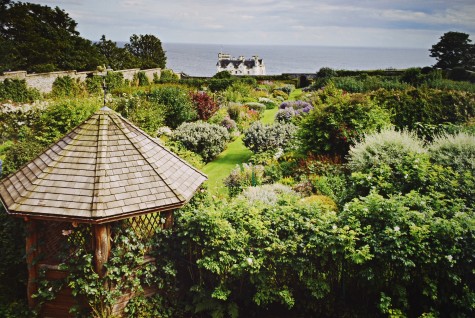 I love the congestion suggested by Mr. Pollok-Morris’s photograph. Lots and lots of plants. A relationship he suggests between a castle, and a distant gazebo overgrown with plants. The sea in the background-anything but cultivated and tended.
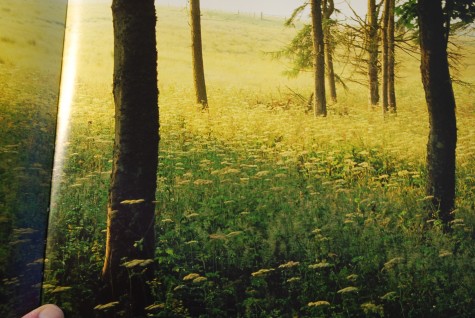
This meadow at Dunbeath Castle-I cannot take my eyes off this photograph. It is as beautiful as any perennial border I have ever seen. Amazon has this book available-I highly recommend it. Beyond this, I can only say that landscapes and gardens of this caliber are rare; the chance to see it in any form is a great pleasure. The essays of Tim Richardson, and the photographs of Allan Pollok-Morris, in regards to extraordinary landscapes in Scotland-they shine.