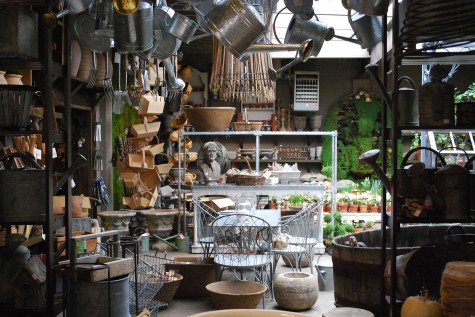
Packed

garden shop

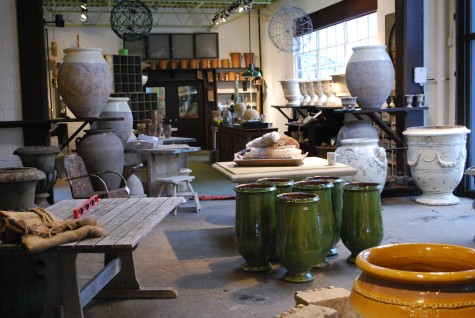
Have I mentioned that the shop is reopening tomorrow afternoon, March 1st, at 5?  We dial down January 15th-this means we are open by chance (which is every day) or by appointment.  How so?  It takes 6 weeks to clear everything out of the shop, clean like crazy, and repaint.  In February we had 2 containers arrive from France, and numerous other domestic shipments-in preparation for the spring gardening season.  Every new garden ornament needs to be introduced to what we love, and have.  The introductions can take longer than you think to make work.  I know we are ready-Jenny says the place is packed.  
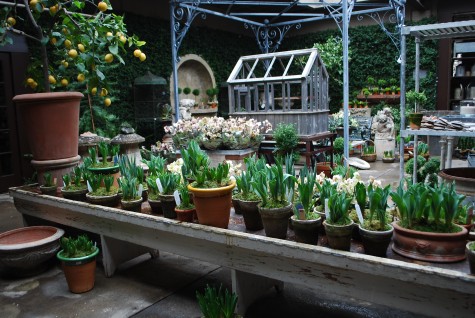
potted spring bulbs

Tomorrow night is our preview night.  We have never done a March 1st event at the shop before, but the weather has been very mild, making all of us all the more anxious to get outdoors.  And our new things for spring are very beautiful.  One of the best parts of having a small business is that new ideas are always welcome. Spring on March 1st in Michigan-why not?  We plan to make a party of it.   
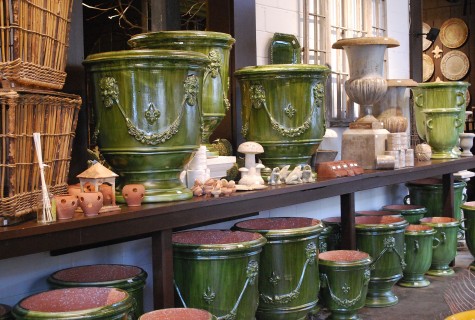
French terracotta pots

My favorite part of the shop spring are customers telling me that the place looks entirely different than the last time they were here.  It is especially important that we get the old blood moving, reassess, clean and clean out, and renew.  Redo.  This is no small part of the satisfaction I take in having the shop.  I like to change things up.  This means that sooner or later everyone will find something that really appeals to them. The work involved in this is considerable, but I do that work willingly.  Every gardener has a story to tell-I am no different.  
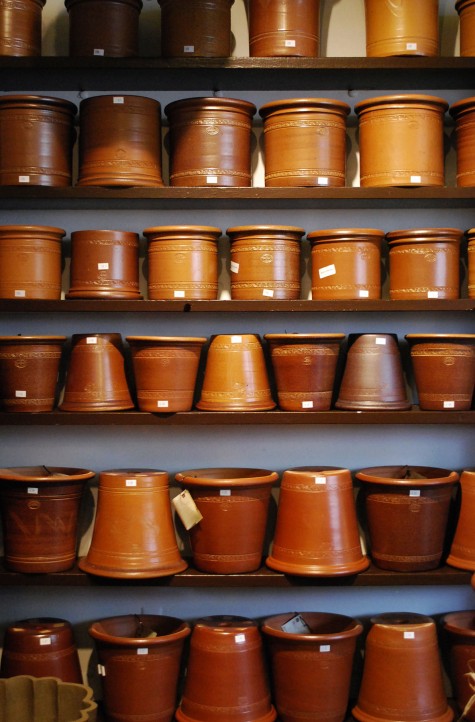
English salt glazed pots

Gardeners are a very diverse lot.  God forbid there there would ever be a country called Gardenia-how would the populace ever agree on a Constitution, much less a Bill of Rights?  It would bore me beyond all belief to be on either of these committees.  I am in favor of freedom of expression.  Great objects for gardens, and great plants help serious gardeners to express themselves.  They also help any person for whom gardening suggests a way of life express themselves.    
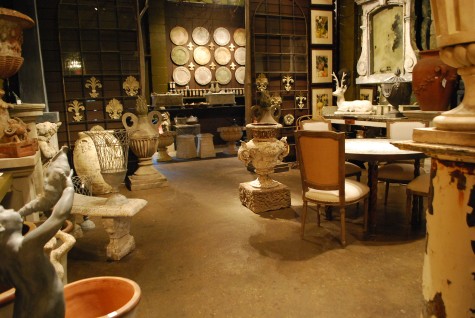
garden shop interior

I especially like this year’s mix of big and little, serious and whimsical, antique and contemporary, purely beautiful and utilitarian.  Anyone who has an interest in gardening, design and the natural world-we are interested in them.  There have been enough people that like this that I am happy to say the shop is celebrating its 16th spring.
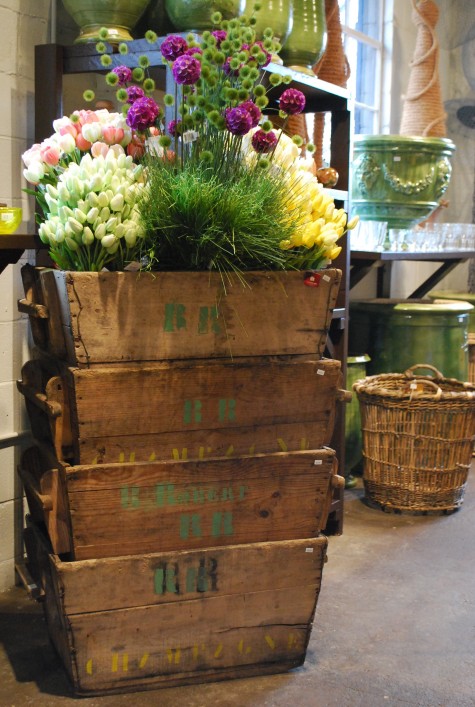
antique-French-crates

By no means did the last 6 weeks happen by my own hand.  There is Rob-if you shop here you know him.  He does the buying.  Before he buys, he dreams it all up.  Once everything gets here, I spend a lot of time looking it all over.  My landscape crews are instrumental in the moving, the painting, and the re-installation.  7 people on this crew.  5 people staff the store.  It takes everyone of the 12 people involved to remake 10,000 square feet.  I would invite you to come and see what they did. 
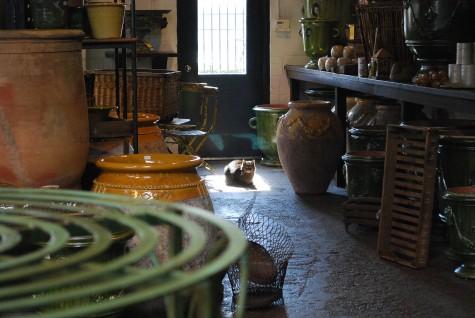
Mcat has change of routine issues.  The past 6 weeks I have seen him everywhere, trying out a new patch of sun, or a new arrangement.  I admit to a little of this myself.  It takes 6 weeks to shed what was.  Years later, I still have projects, and container plantings I still really like, but I always grateful, and energized,  for the chance to start over.   
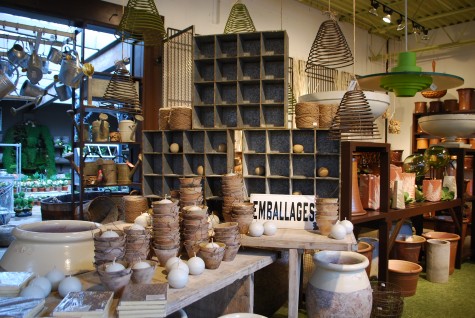
antique French porcelain sign

The shop this spring has a decidedly French flavor.  What’s to like about French gardens, pot makers, garden antiques, vintage French grape gathering crates, contemporary garden ornament?  Just about everything.  The French have an ability to edit that I could only imagine in my dreams.  French gardeners never forget their agricultural history.  They know how to be fancy, they know how to live in close proximity to the earth.  They made great wines, great cheese, and great gardens. 
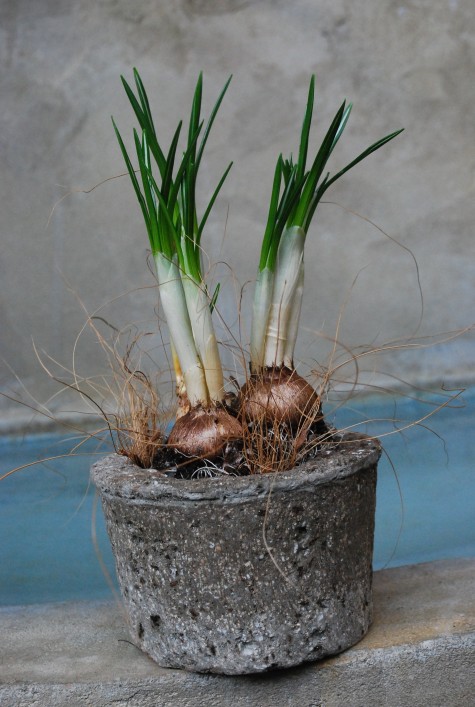
This is Rob’s idea of a container planted in the French style.  I should rephrase this-he plants containers all of his own invention.  But I see the impression this last trip to France made on him.   A forced cluster of crocus bulbs got the soil washed off, so they could be replanted with those bulbs above ground.  The bulb is as much about the presentation of this plant as the flowers are.  The container-very simple and roughly textured-a great contrast to the delicacy of the crocus.  The tufts of coir fiber stuffed into the dirt-all about a wiry description of the airspace.  This container, barely 8 inches tall overall, is about great design, grace, and restraint.       
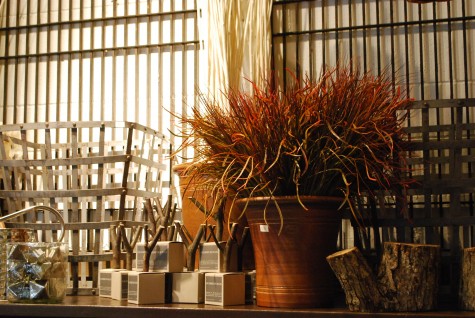
faux grass stems

I still have work to do tomorrow.  Some places need finishing touches.  The garage is clean and organized.  William Schwab, a sommelier with Papa Joe’s for 14 years, who has his own shop in our neighborhood now, will be pouring and discussing French wines tomorrow night.  Rob shopped personally for the little something to eat-French cheese and the attendant crackers, figs, pears, and grapes.  He redid all of the lighting last night.  French music-of course! We had help with that-thanks Michael. If you are local to us, I hope you will come by either tomorrow night, or over this early spring celebration weekend.  If you are reading in another state or country, I will post more pictures.    Jenny promises to upload all of our spring things on our website this Friday.   
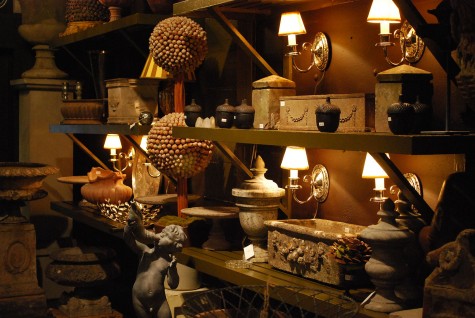
garden shop

It is so great to be 61, and having the time of my life.
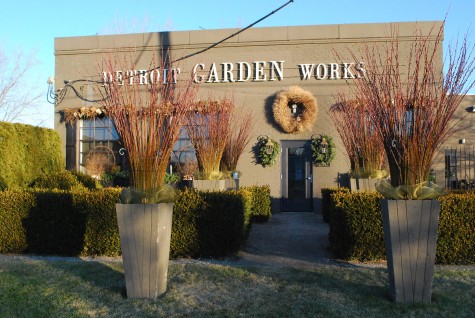
Christmas In February


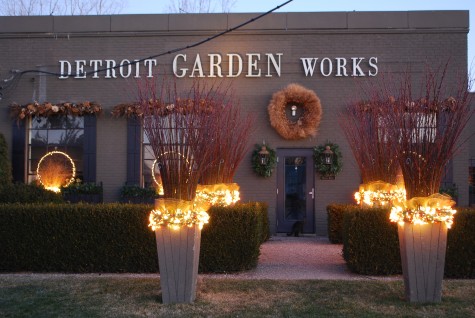
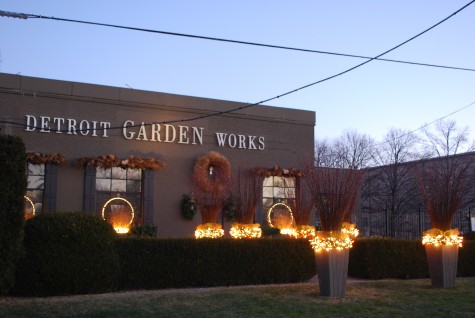
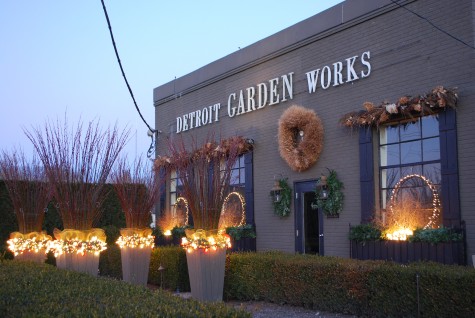
At the end of the first week of January, I reluctantly took the Christmas light garlands draped around these pots down, and put them in storage.  After all, the holidays were over.  This year I was especially reluctant for the holiday season to end-we had had no snow.  Though the temperature was chilly, we were denied that one ingredient that in my mind makes for Christmas-the snow.   

This photograph with all of the lights blazing taken just before Christmas does seem to lack that special seasonal element-does it not?  I felt we were so ready for the snow-that snow that never came. 

Winters in Michigan are notable for their grey skies, and their abundance of snow.  For whatever reason, our clouds were dry as dust.  It looked for all the world like we had the heat up much too high-and unnecessarily.  We designed a winter display based on the norm for our winters.  The norm went into hiding. 

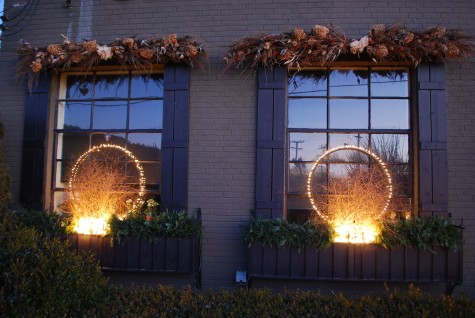
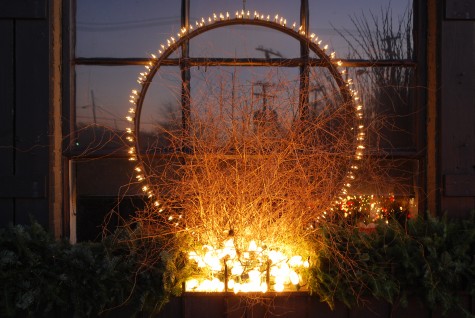
The collection and placement of these dried stalks of asparagus-Rob had an idea to fragment and diffuse an intense source of C-9 light with those stalks.  This is his version of snow or ice defining every branch distinctly-only that distinction was drawn with light.  Snow on the evergreen boughs in this window box would have added a whole other dimension to this arrangement.  Nature was not interested in cooperating.

I took photographs anyway.  But I so would have loved seeing the front of the shop buried in snow, with the lights running.  Who knows what that might have looked like. 

I took the lights down January 7.  But if you happened to drive by the shop in the past few days, you would have seen those lights going back on the containers.  Lest you think I have gone way over the deep end, Better Homes and Gardens has a photographer arriving Saturday to photograph some of my holiday and winter pots.  The lights had to go back on the pots, as they want to photograph them.   They were insistent that they wanted snow on all of the containers they wanted to photograph.  So the holiday lighting came out of storage. 

 Needless to say, we have been talking about this photo shoot for several months.  This snow squall in late January, just about our only snow this winter, lasted for all of about 3 hours.   2 weeks ago,  it looked like we might have snow showers tomorrow and Saturday.  The Chicago based photographer made some plans to travel-we were at a do or don’t moment.  They have 8 winter pots they want photographed.  Saturday. Who knew the weather would deliver in spades.  

This morning I read that our area has 5 to 8 inches coming tonight.  1 to 3 inches on Friday.  Snow squalls and cloudy skies on Saturday.  Mother nature suddenly has a mind to cooperate mind to cooperate in a big way.  8 inches, no kidding?  We loaded a truck today with props for the shoot, branches, snow shovels and brooms.  We loaded up a blower too.  If every pot is buried, we need to do a little uncovering.  I have already told everyone who works at the shop-do not walk across the lawn and come to the front door-take the side entrance.  The photographer has already asked for fresh snow, and not snow with boot prints.

A photograph of a garden in its finest moment bears no remote resemblance to a real garden.  But a beautiful garden photographed at its finest moment might encourage someone who has never gardened to give gardening a try. This is important to me.  Anyone who paints, photographs, gardens, writes, manages,  composes, sculpts, makes movies, or designs-  they all share this in common. That which gets created implies an audience.  There is a story over which a relationship can be forged.  I am so very pleased that we are about to get snow.  That snow means I will be in touch.

The Little Things

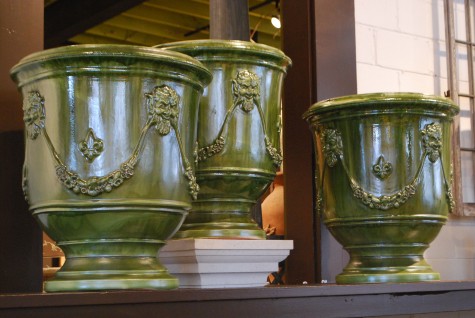
The more time I have to spend with these new French glazed pots, the better I like them. These were made at one of the few potteries in Anduze still hand throwing, or rope throwing, their pots.  These pots rank among the best quality available in handcrafted French pots.  Originally produced to provide homes for citrus trees, these pots have been in production for centuries.  The custom glaze created for us is more olive than blue green, and less shiny than the traditonal French glazed pots.  This particular design by renowned French potter Jean Gautier in the late 18th century features the faces of cherubs, garlands, and fleur de lis-a stylized depiction of a lily so strongly symbolic of all things French. The double roll of clay just beneath the garland is a detail from the original that takes much time and skill to model.   

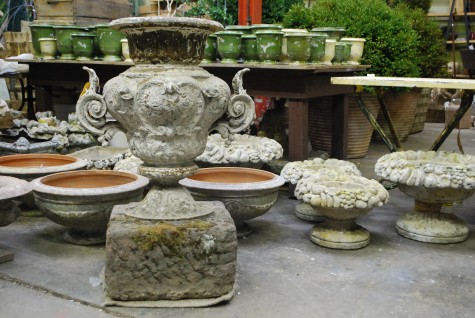
This ornate French cast iron pot and its base, hand hewn from a solid block of stone, dates back to the 19th century.  It is an antique ornament that exudes French garden history.  Colonies of lichens have made homes here.  I am sure once they are exposed again to rain, they will regain their volume and color. If you like classical garden ornament, this is a breathtakingly beautiful and one of a kind example.   

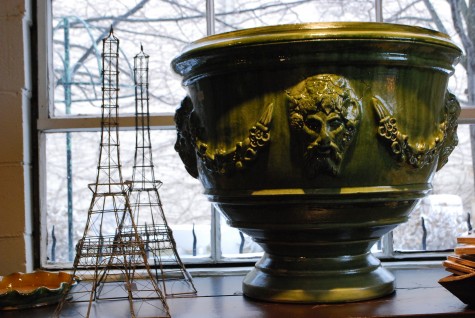
This coupe, or cup shaped, planter is my favorite of the glazed group.  The bacchus medallion and garlands are modelled in sharp relief; the shape is exquisite. The glaze sunk into the deeply incised cuts, and appears almost black.  This pot, I would have.  There are a lot of new things here, given a pair of containers from France, each object in each one chosen to give pause.  There are lots of stories, and history that comes with them.  But that is no means all there is to see.  Rob has a particular gift for the little things.  He does not overlook those small things that satisfy.  What constitutes a small thing that satisfies?  An old trowel that is a favorite trowel.  Warm winter boots that have spent the previous night warming up on the radiator.  A zinnia poking its head through the soil just days after sowing the seed.  Cruising the garden after work.  A favorite perennial freshly in bloom.

We will have a house full of fabulous for the spring-new, vintage and antique.  One of a kind and handmade.  Ornament, sculpture, tools, structures-and of course, the pots.  Great French platters for the summer dinner table.  But we do none of this at the expense of the little things.

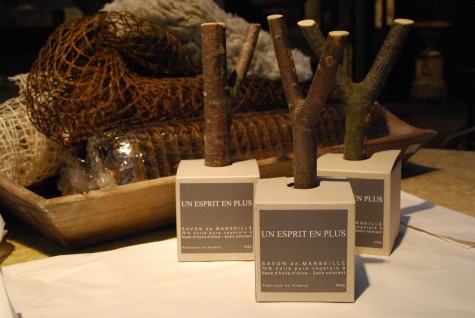
In 1668, a law was passed in France stipulating that only olive oil based soaps made in strict accordance with ancient methods could be labelled “Savon de Marseilles”.  Olive oil, alkaline ash from sea plants, and salty water from the Mediterranean are heated in cauldrons for ten days, after which they are poured into open pits to harden.  This Savon de Marseilles happened to be poured around a series of stout branches.  Soap on a stick.  A little thing this-but what gardener would not be pleased to see it, and use it, over and over again?  Company coming?  Soap on a stick in the powder room-friendly.  Engaging.

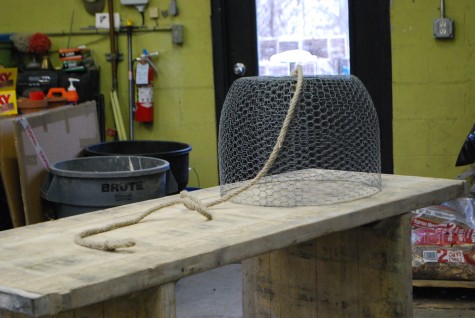
This chicken wire cloche has a wood top, and a stout rope attached.  The intent here is to keep the rabbits away from your spring lettuce.  Its a small thing, keeping the rabbits from getting to your lettuce first, but an important thing.  A very simple structure made from the most ordinary of materials that works-excellent.

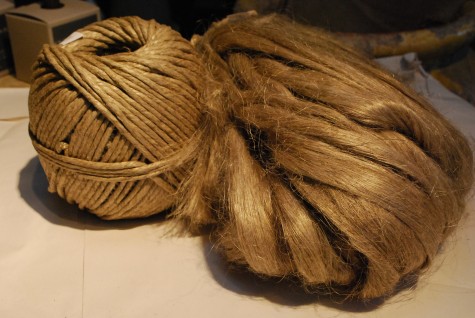
A ball of twine is a little thing that gives great pleasure.  The balls are wound in a beautiful way.  This is French linen twine.  The texture, color and scent is irresistable.  It might be used to tie up a plant to a stake, or wrap a package for a good friend having a birthday.  On the right,  a hank of raw flax fibers-the material from whence linen is made.  The fibers have been carded into parallel strands known as roving.  Lustrous and beautiful, this.  What would I do with it?  All the possibilities for this are part of what I would call a gardener’s simple pleasure.

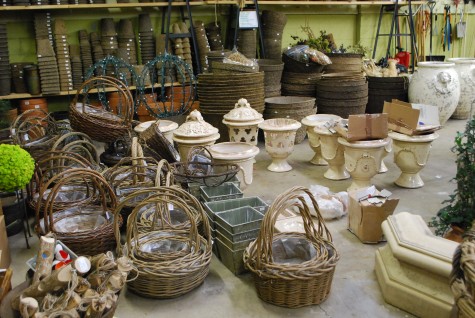
These white French glazed terra cotta pots and lanterns are striking.  The simple and unpretentious woven baskets on the left will hold flowering bulbs, annuals and early spring vegetables, come spring.  A little basket of spring for my front porch-a small and simple pleasure.

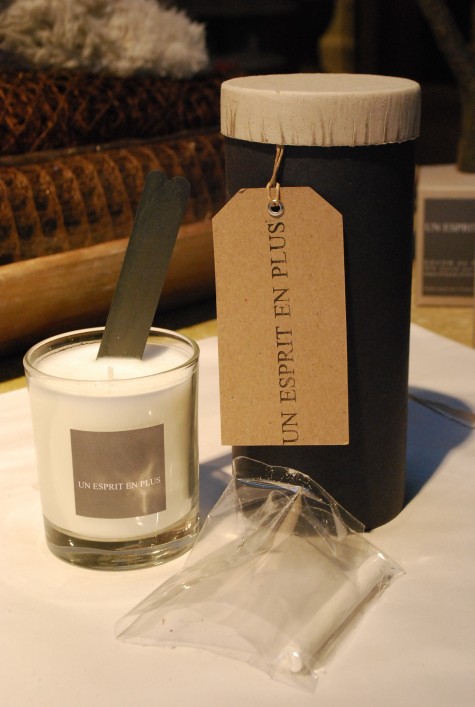
This small candle comes with a chalkboard stick inset in the wax,  and its own piece of chalk. What could be written on that stick?  You decide.  

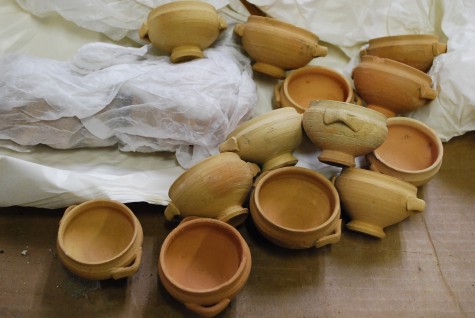
Rob found this collection of miniature pots at a flea market.  They are maybe 2 inches across.  Who made these, and why?  I spent time looking and thinking about them-many more than 2 inches of my time.    

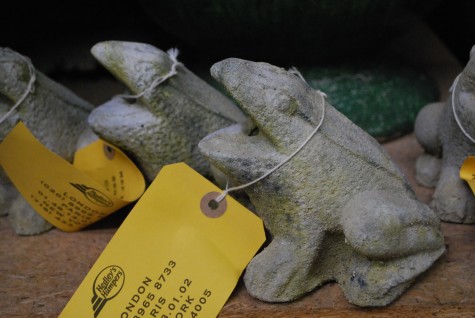
These little concrete sculptures frogs have a great surface.  They would occupy next to no space.  The place a gardener reserves for the little things is an important place.  Packets of seeds rubber banded together.  A great dibble.  A thermometer.  A hard cultivator, or a decent pair of muck boots.  A favorite pair of gloves.  The little things can be about those very personal things.

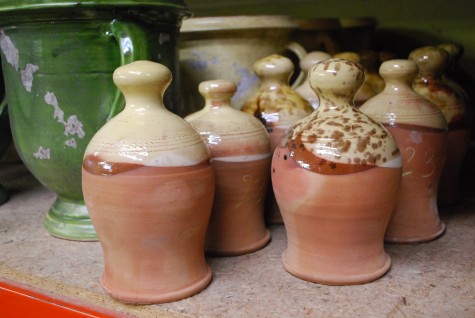
If you wonder what these are, I did too.  This is a French terra cotta watering bell-for seedlings. The bottom of this bell is terra cotta, perforated with lots of holes.  You immerse the entire bell jar in water-there is an unseen hole in the top.  Once the jar is full of water, you put your thumb over the hole in the top.  When you move your thumb off the hole in the top, a gentle shower of water exits the bottom. Watering a seedling tray with this-a little pleasure.  

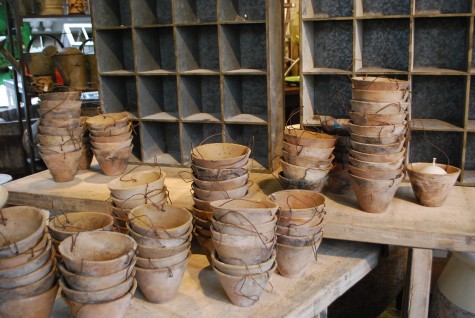
These small vintage French terra cotta pots came with rusty wire handles embedded in the clay.  Rob bought substantial spherical candles with long wicks that fit perfectly into these little pots. A few hung in a tree near the terrace and lighted-a little thing attending a quiet dinner in the garden. It is not a simple thing to remember the little things that give gardeners great pleasure, with great style.  I greatly admire Rob for how and that he does this.   


Zinc

zinc watering cans

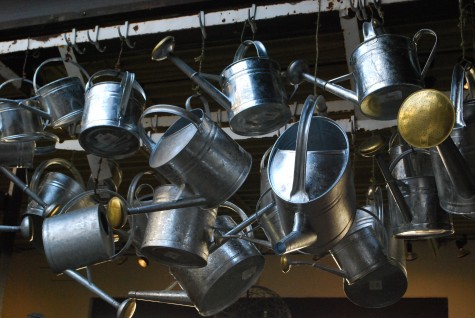
Courtesy of Wikipedia, zinc is a metallic/chemical element-the 24th most abundant of all of the elements as detailed on the periodic table.  It is an essential element to human health.  But its largest use by far and away is as a coating on steel which resists corrosion.  These watering cans are made of sheet steel, which is them submerged in a bath of molten zinc.  That thin coating prevents the steel from rusting.  Should you have an old metal watering can, chances are good that the zinc has worn away in spots, and the steel has begun to rust. Galvanized metal is a garden material common in watering cans, cattle and chain link fencing, chicken wire, tools, wheelbarrows-the list is long.     

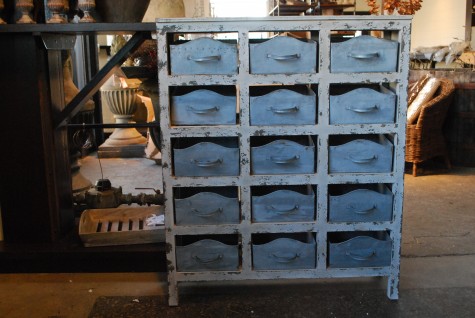
This is a reproduction of an old French cabinet with zinc drawers.  This zinc has a decidedly bluish cast.  The sheet steel from which the drawers are made is very thin, and therefore light weight.  The distressed white wood frame and zinc coated drawers makes for a cabinet that is very light, good looking, and utilitarian.  What would I store in this?  Seeds, twine, replacement blades for my pruners, garden gloves-you get the idea. 

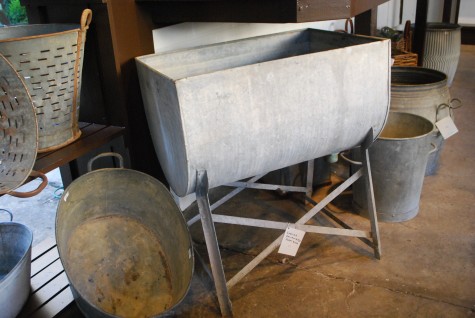
Zinc coated steel is such a familiar material in the garden.  This vintage English sink is kept company by a vintage handled bucket, and an oval washtub.  To the very far right, a vintage French wash tub.  The material is common in many cultures, for useful objects for farm, home, and garden. 

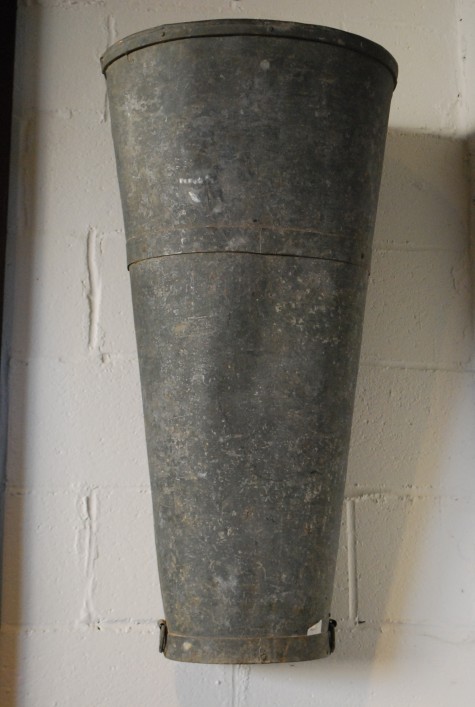
This very tall flat backed galvanized basket was originally used to gather grapes.  There are faint signs of rust where the moldings are applied over the body of the basket.  Imagine zinc heated to 800 degrees, transforming it from a solid to a liquid state.  A steel object is slowly lowered into this bath, and then slowly raised out and drained.  The coating is very thin, but thick enough to prevent rust.  Just about every activity in a garden involves water.  From the sky, from the hose, from the soil, from sweat.  Galvanizing greatly improves the longevity of steel outdoors.  Vintage and antique galvanized metal objects for the garden invariably show signs of rust.  Steel and water make rust.

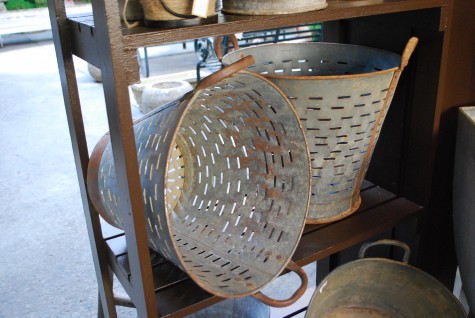
The window boxes at the shop, and the boxes on the roof are made from galvanized sheet steel.  This year, I need to replace them.  After 11 years in service, the zinc has worn through in many places.  The failure of the zinc means a degradation of the steel.  In a word-rust.  The bottoms of my boxes are rusting out.  I need new zinc coated boxes.  These perforated zinc buckets show signs of rust, but not enough to worry me.  They look like they have had some use.  That vintage rusty look is a good one.

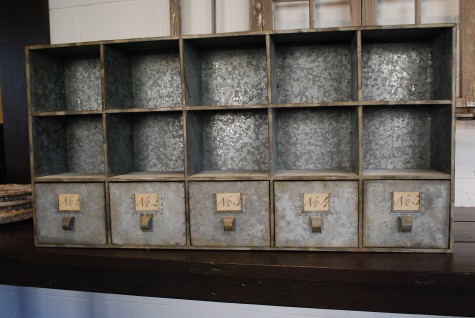
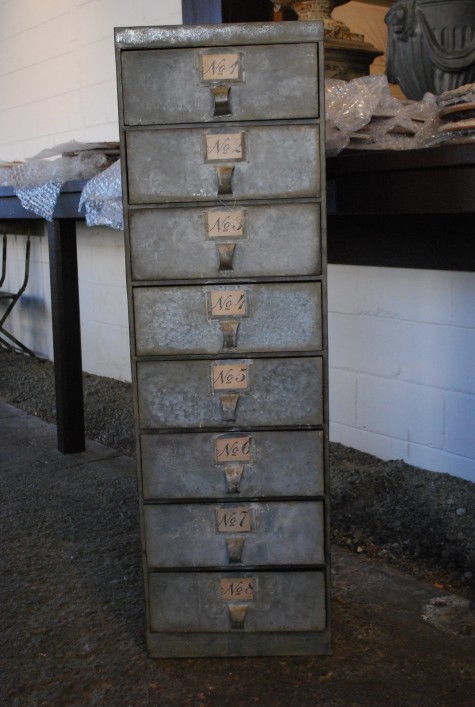
This is another reproduction of a cabinet from a French original.  5 drawers, and 10 cubbies.  Vintage style is easy to speak for, and assimilate.  My old buckets and watering cans-I would not dream of giving them up.  They have that comfortably worn look that reminds me of a favorite pair of boots-as does this zinc cabinet.       

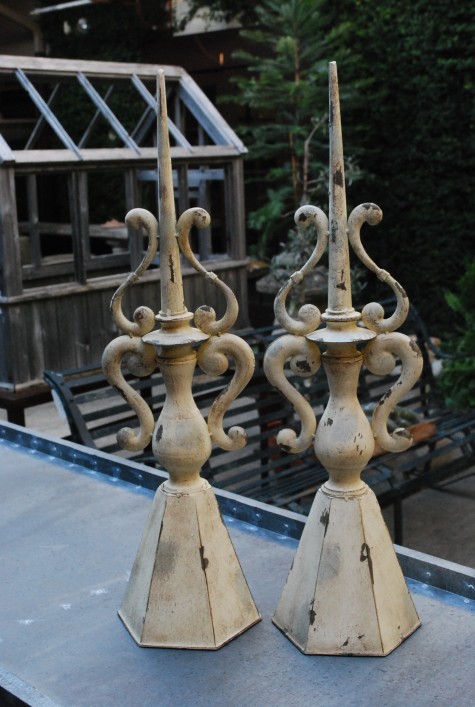
These galvanized steel finials are also reproductions.  They have a gently and convincingly degraded coat of paint.  The design is great-saucy.  The reproduction part means that a number of gardeners could have them.  I have no problem with reproduction pieces in the garden.  I only have a problem if they are not visually convincing.  This surface is entirely convincing.  The designer for this company-she understands how a piece should feel, and she works very hard to endow, and construct her pieces with that feeling. 

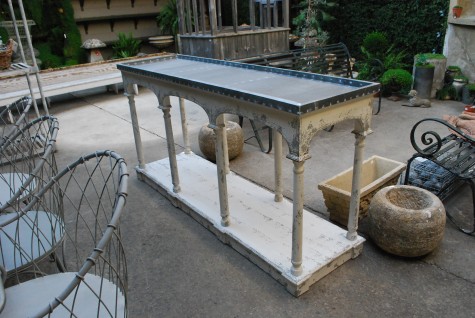
This sideboard is hers. The wood console has a zinc coated steel top, studded with rivets. The column legs are reminiscent of Moorish design to my eye, though her original is a French piece.  Spring at the shop will feature garden ornament in a wide range of styles and periods.  But it will have a decidedly French flavor.  Great French glazed terra cotta, and French antique sculptures, urns, and vintage French pieces.   These reproduction pieces appeal to my love of all things French, but they also appeal to my interest in a designer who has a passion she is willing to see through the construction.  Outdoors, the wood in this console would continue to degrade.  There are those gardeners who greatly prize what we call weathered.  So place this console in the garden, and deal with the consequences.  Indoors, or on a covered porch, this table would lastingly and clearly speak to the garden-with a French flavor.   

I did buy a number of zinc coated steel cabinets and cubbies from her, from the French originals.  I fell for the garden like look, the blue grey of the zinc, the vintage feel, and the possibilities.  What would you store in drawer number 7?  Old letters?  Embroidery floss?  Garden tools?  Votive candles?  Dog treats?  A flashlight?  You choose.     

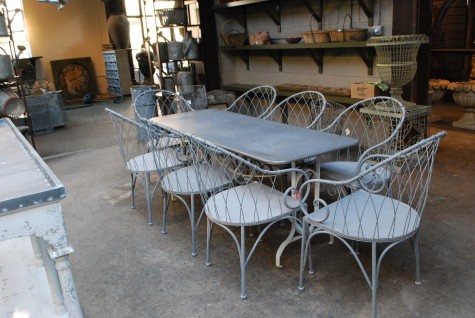
This vintage English garden table with painted steel legs and a zinc top (yes, solid zinc is available in sheets) has some new company-8 new galvanized steel garden chairs.  These chairs just arrived. The wirework of the backs and legs is a great foil to the sheet steel zinc coated seats.  Steel, galvanized with molten zinc, in this case, would enable a seated dinner party in the garden.  I truly like this idea.  I even more like the idea that any ornament in the garden has a name, an idea, an aesthetic, a point of view.  Passionate gardeners, I belong to their group.