 Wreath making is one of the great pleasures of the holiday season. Relative to other holiday decor projects, a wreath is small. A 30″ wreath will amply fill the space on a front door. A 30 ” diameter evergreen wreath can be decorated with all kinds of materials. A collection of pine cones or wood bits can be displayed on a wreath. Greens from the garden can be added to a purchased wreath. A wreath is a very personal expression, and anything from the garden that adds to that personality will make the end result all the more interesting. Green and beefy is a great base from which to start.
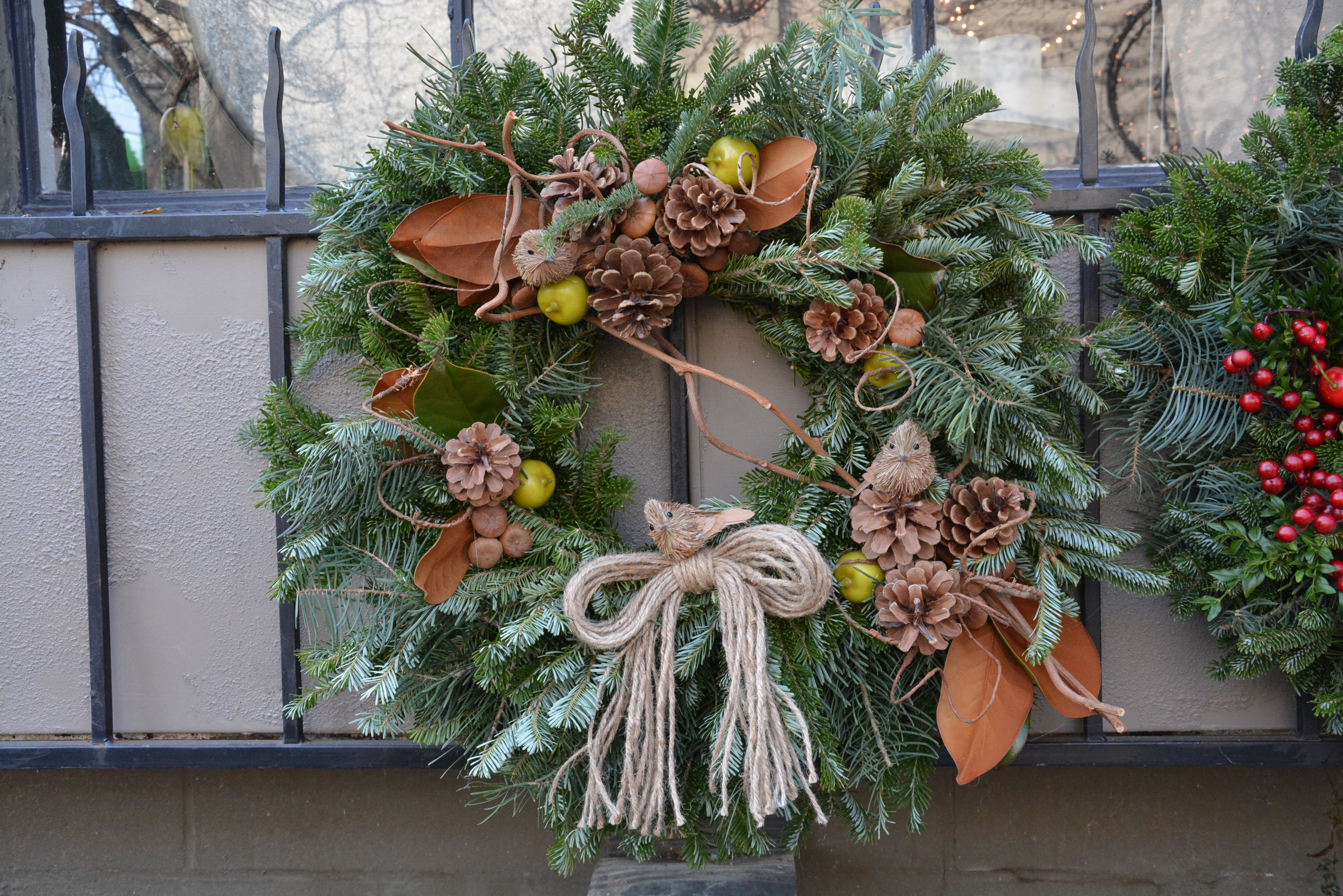 What happens next is up to you. White pine cones from the yard, a particularly interesting branch, a dried stem or leaf, a leftover hank of jute twine-you get the idea. Though the garden is in a dormant stage right now, there are so many beautiful bits waiting to be collected. In my yard, I have hellebore leaves, rose hips, dried fern fronds, boxwood, dry magnolia leaves, dry hydrangeas, arborvitae, rhododendron leaves, dogwood twigs, wisps of grass-you get the idea. In my garage at work I have boxes of other bits-stray pine cones, leftover stems of eucalyptus, random strands of string, leftover moss, wood plant stakes, sticks, and kraft packing materials. None of them are so swell on their own, but in concert with other like materials, something beautiful may emerge.
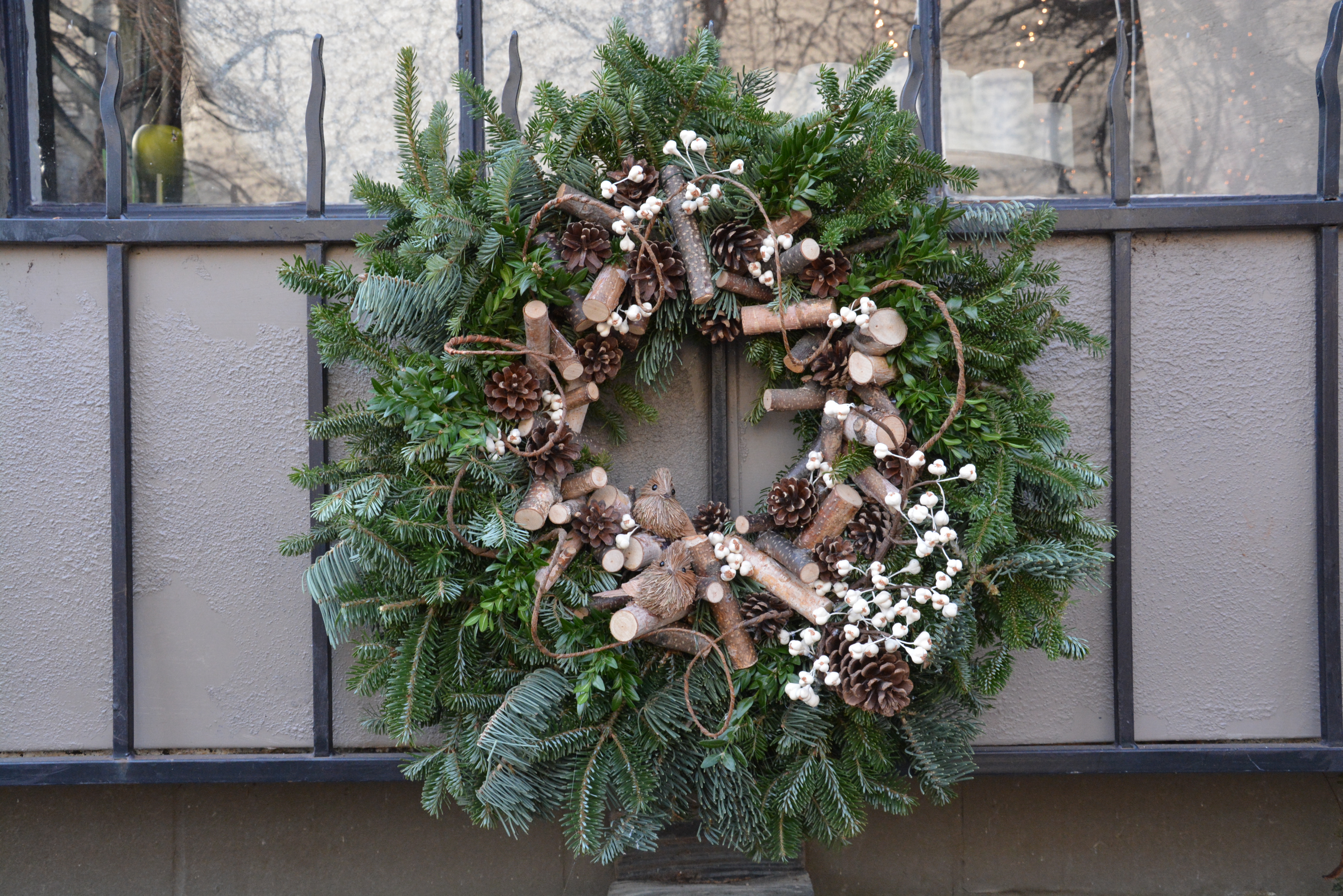 I will admit that I am a fan of birds in wreaths. Corn husk birds. Feathered birds. felted birds. Stick birds. What I like so much about them are their eyes-their expressions. Those birds looking back at me from their perch in the wreath is to me a symbol of gardening. Making eye contact with nature is what gardeners do. This wreath-chopped up birch branches, canola berries, bark wire, pine cones-and the birds.
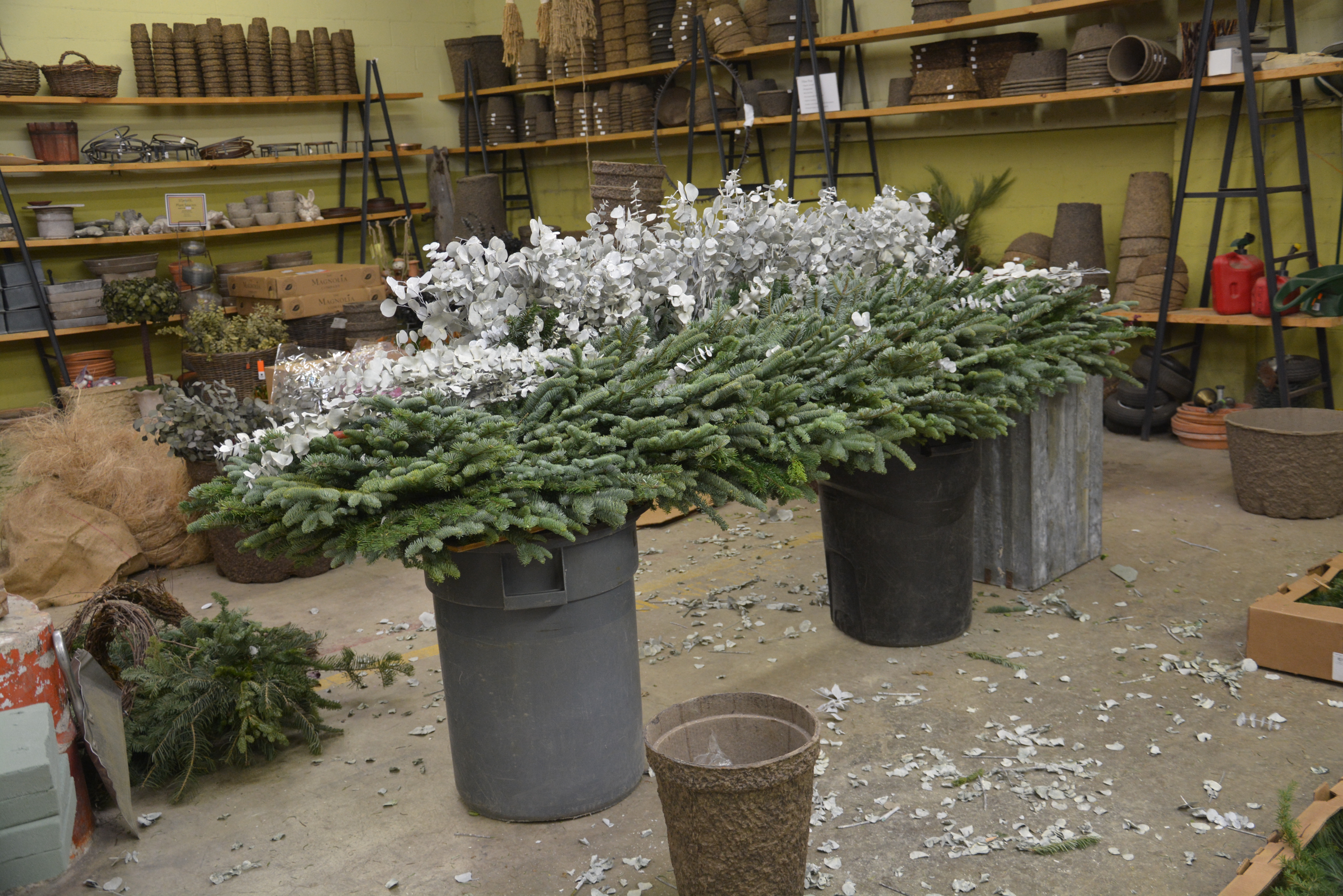
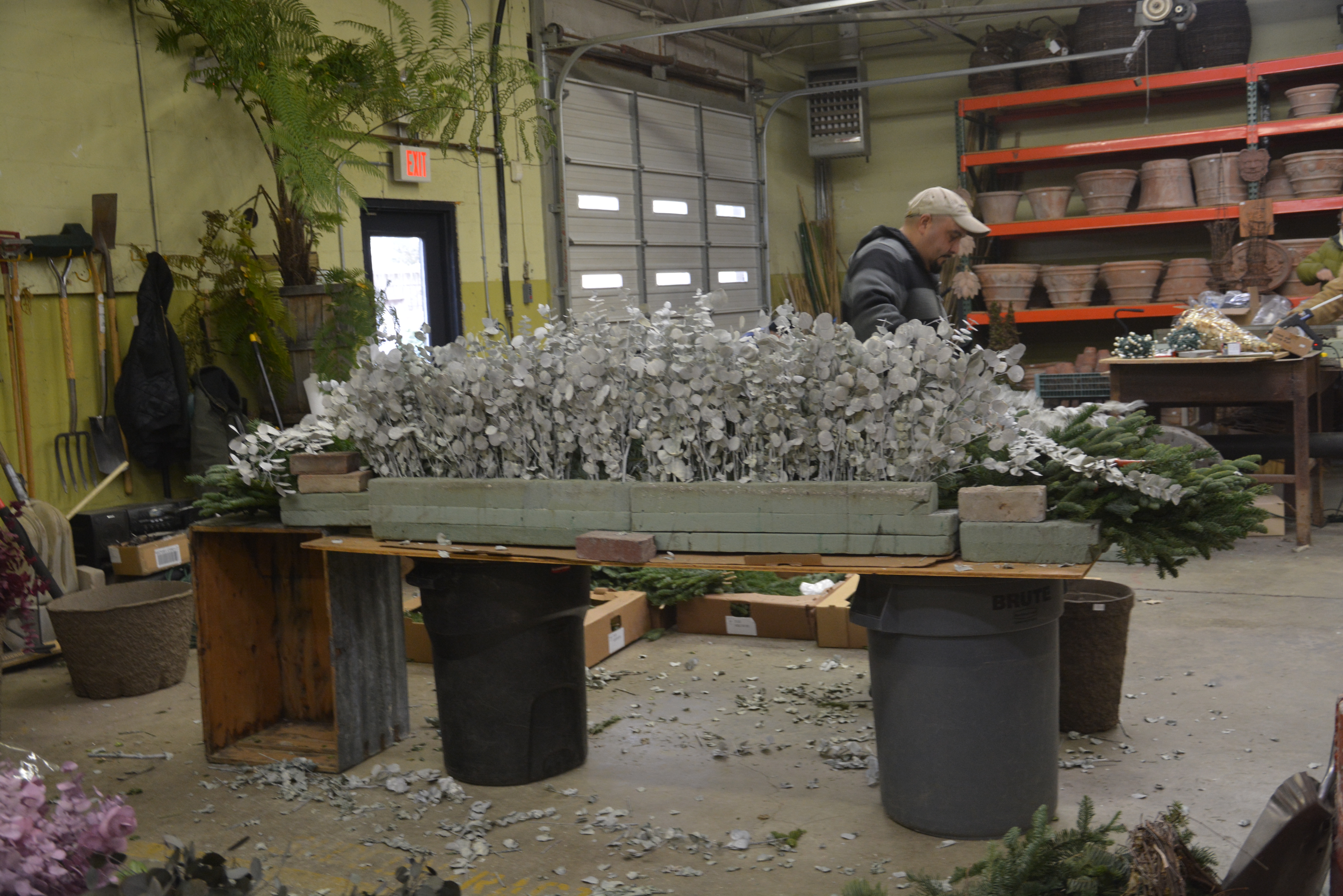
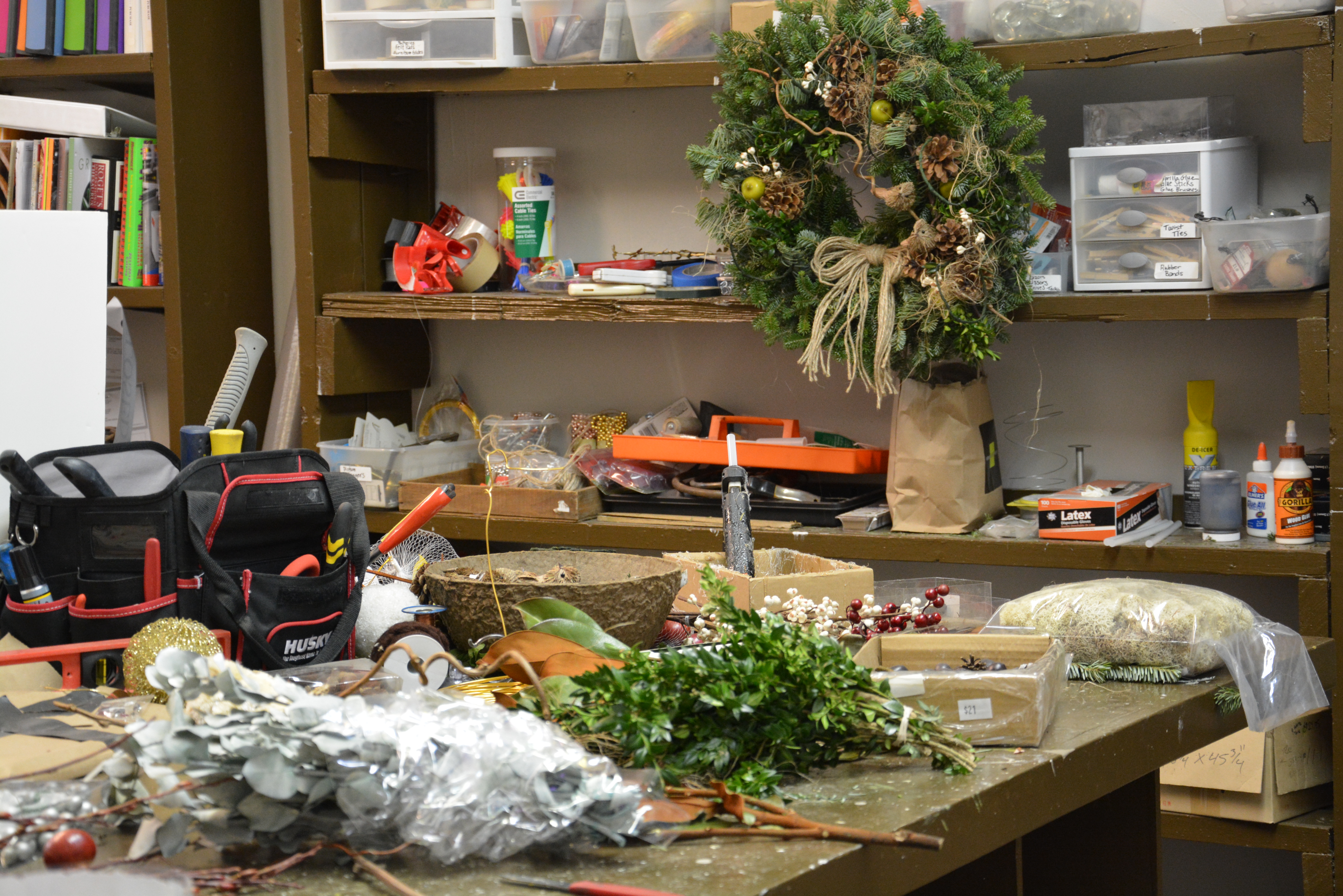
 I have a client for whom I make close to 20 wreaths-she sends them to friends and family for Christmas. I like the assignment. It gets me in the wreath making mood. Meaning that I set up my work space, I cover it with all sorts of materials. I also am sure I have wire, and florist’s picks. Materials that are too heavy to glue directly to a wreath need an attachment vehicle-a pick. I like some materials to float off of the wreath surface. I pick these materials too. Fresh twigs I wire up in bunches, and wire yet again to the wreath frame
.
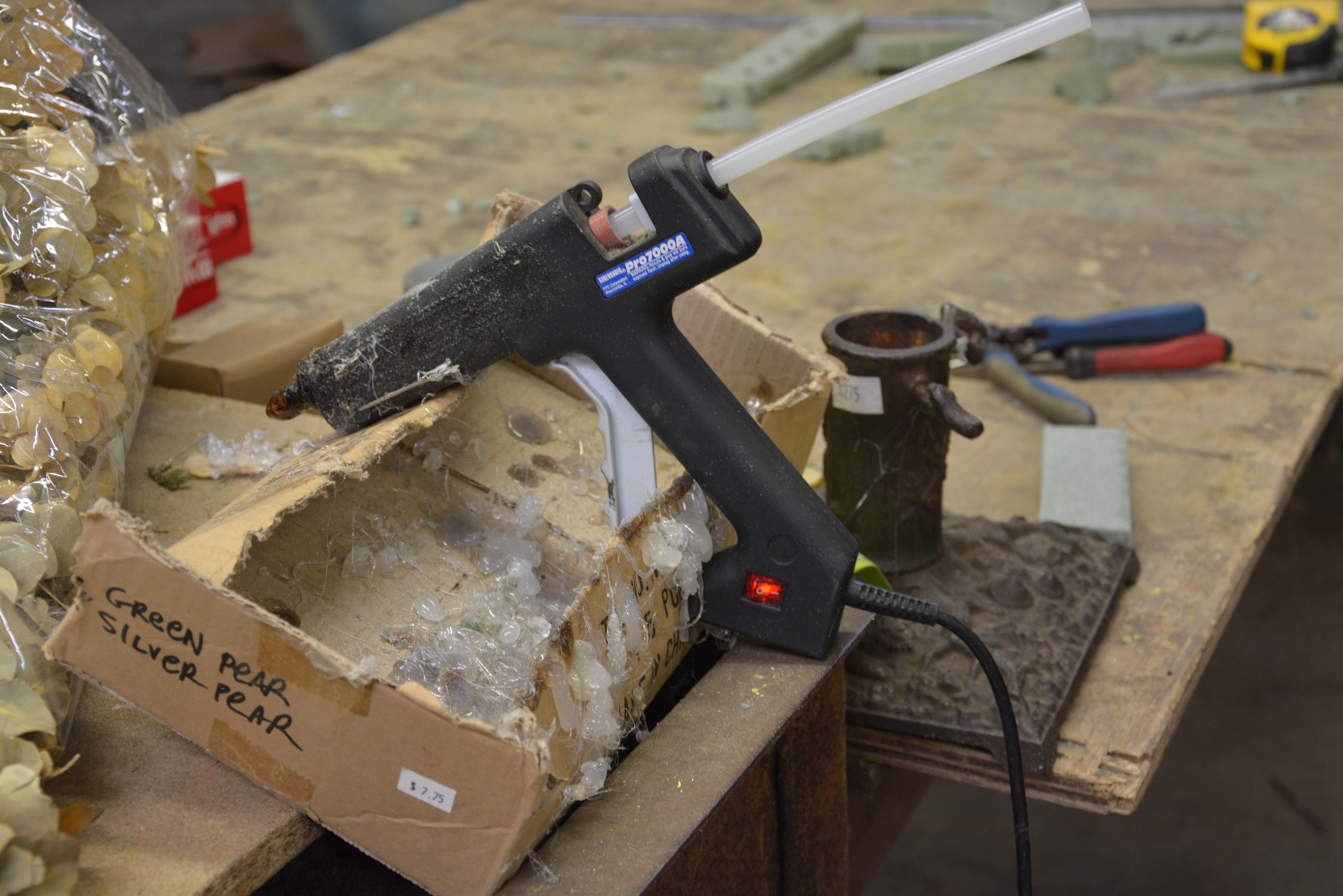
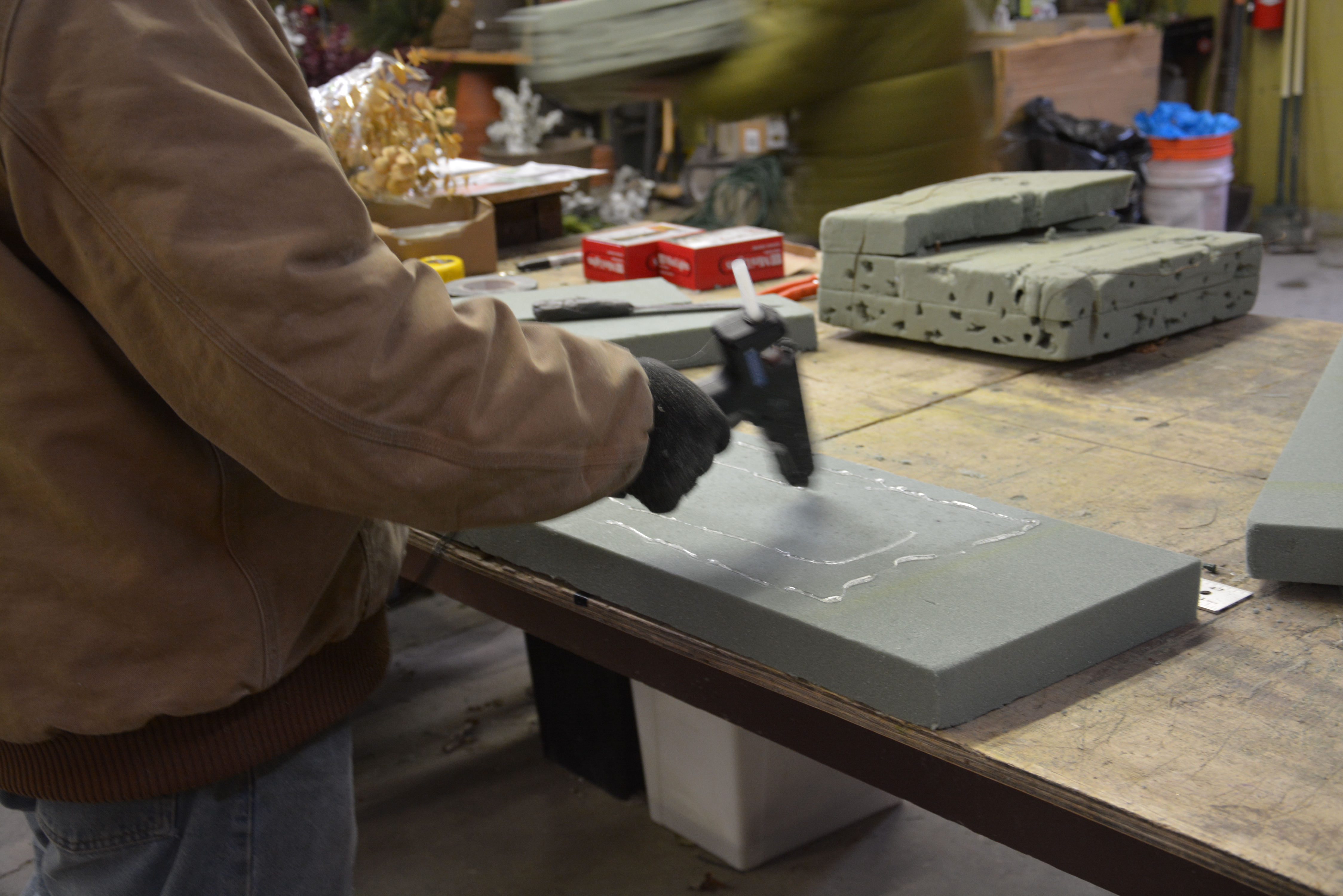
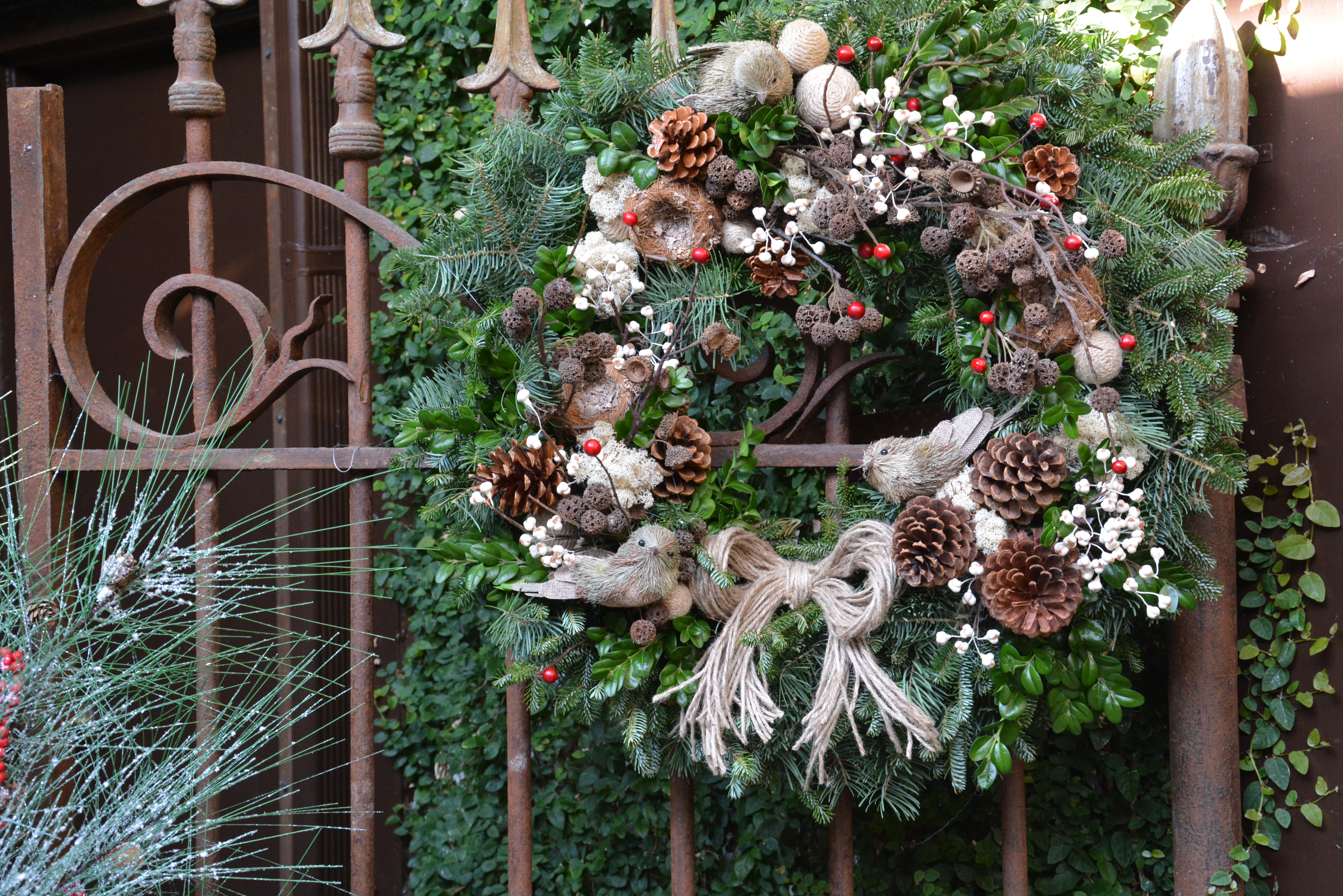 Wreaths that I make for clients has every element wired in or glued. I use a professional grade glue gun with a type of glue that never lets loose. Be so careful with a glue gun. That melted glue can produce really nasty burns-I speak from experience. I keep a glass of cold water on my worktable. The moment I feel heat, I quench. At home, I stuff my materials in. Should they fall out in a storm, I can make repairs. The wreaths that go out tomorrow to California, Vermont, Maryland and Florida have been glued up, and will be zip tied into the floor of their boxes.
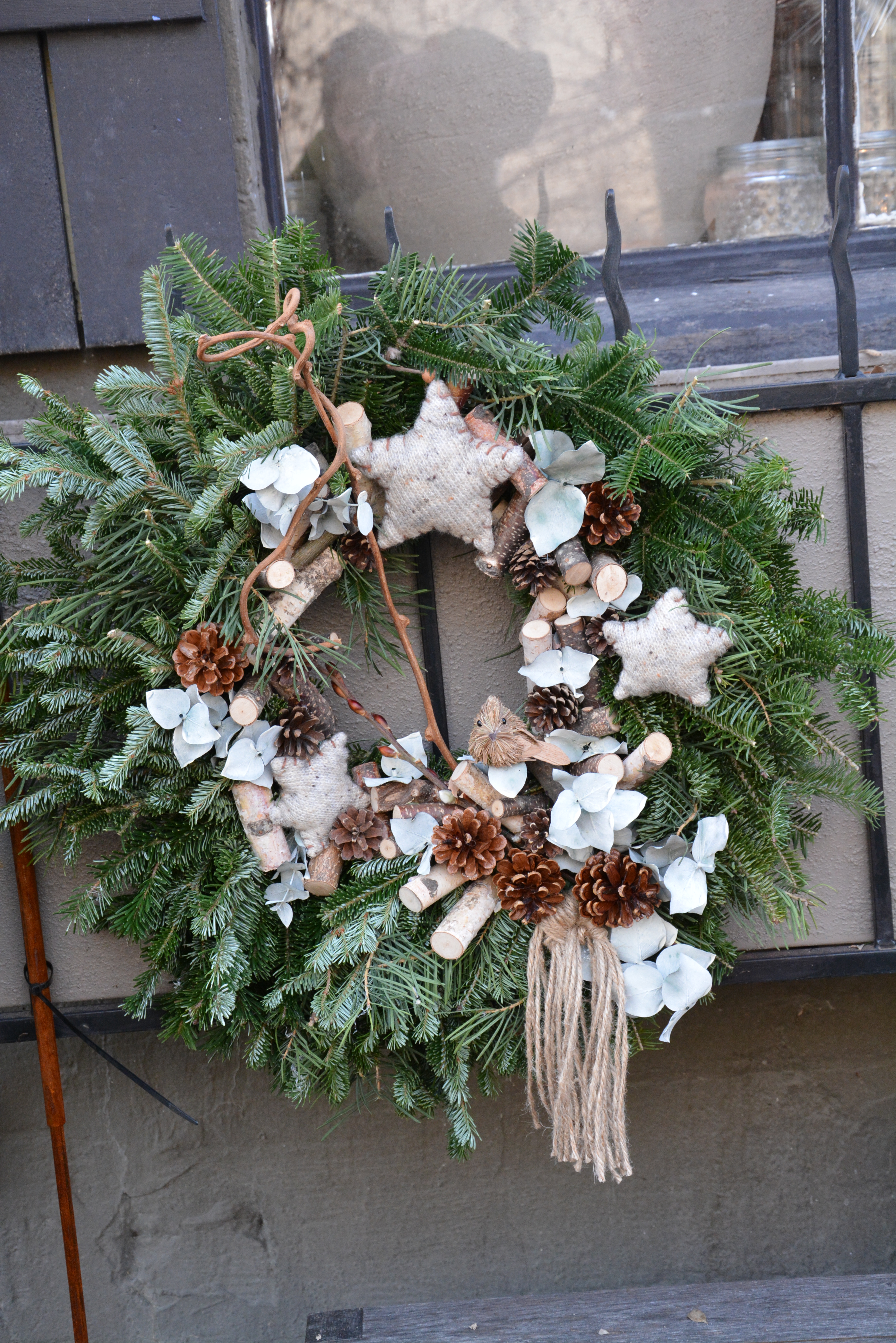 A wreath holiday wreath is the size of a dollhouse. Make sure the scale of your materials look comfortable with the scale of your wreath. I buy handmade wreaths from my local farmers market. If you are in my area, Dan Prielipp is a regular exhibitor at the Oakland County Farmers Market. His wreaths are fresh, and exuberant. They are rarely perfectly round, but any green holiday item can be tamed with your pruners, should you feel the need.
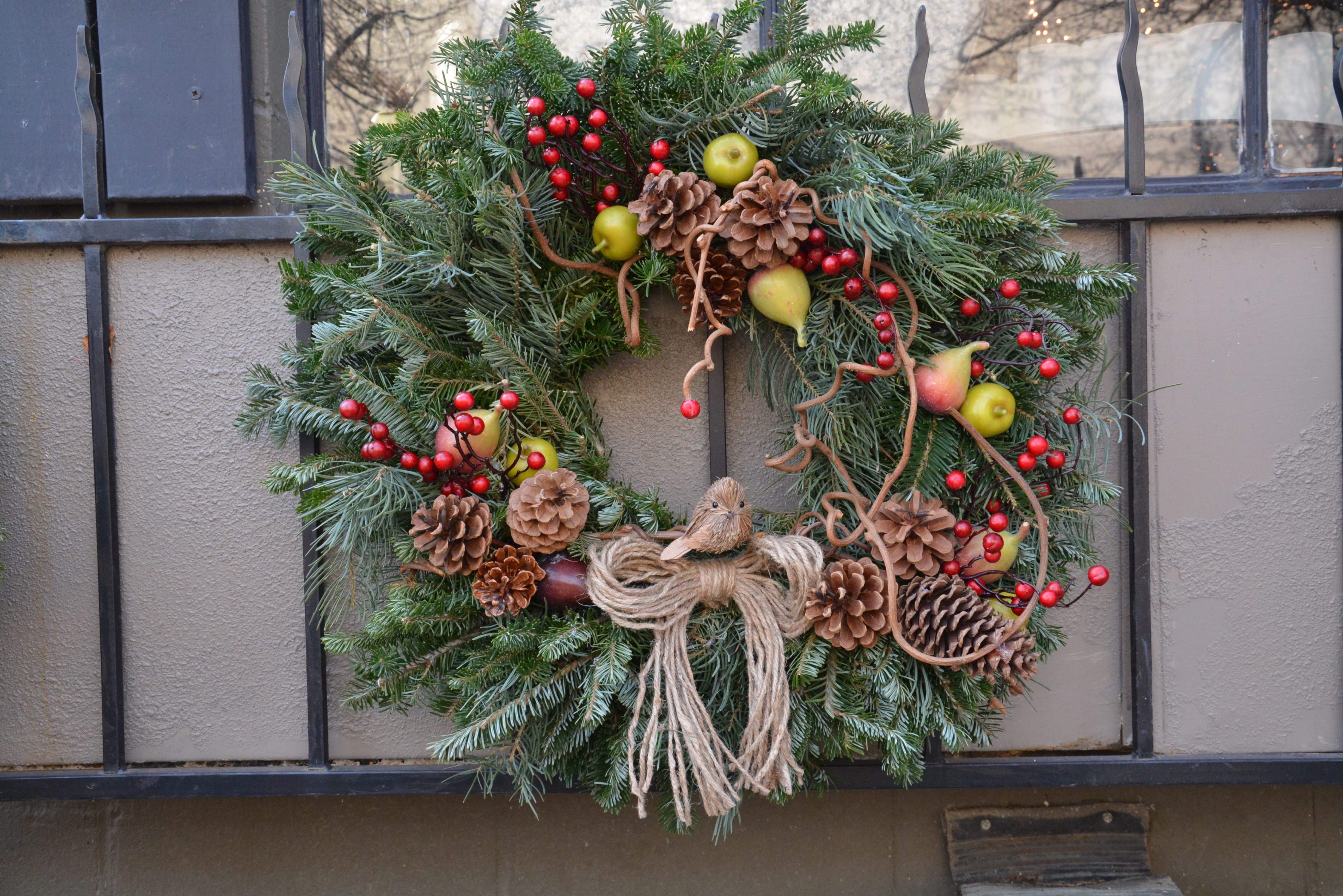 Once I start this wreath project, I rely on Detroit Garden Works to provide me with special materials. In January, Rob and I will shop for materials for the 2014 holiday season. Those little bits that are perfect for wreaths will be on my list.
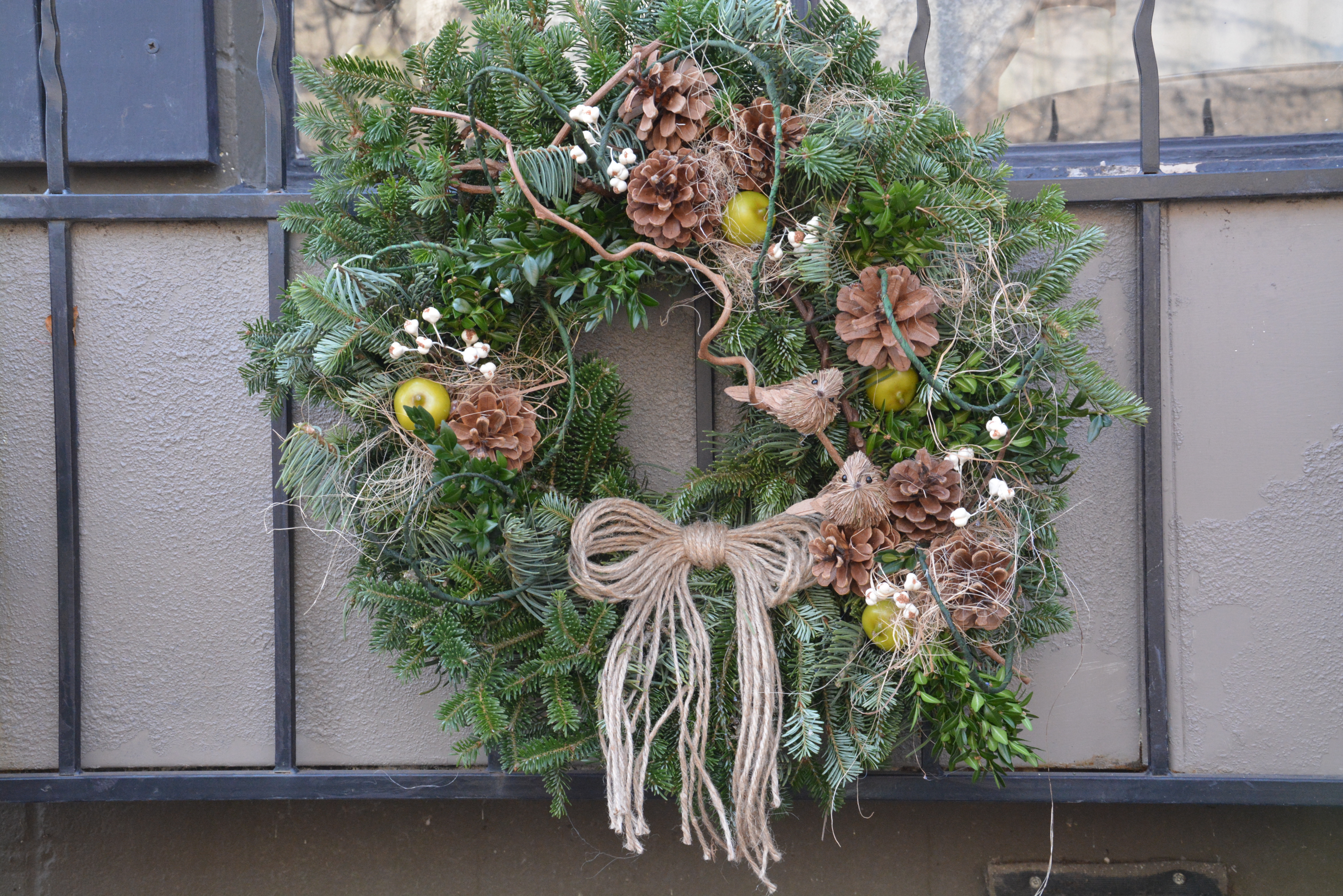 There are those gardeners that hang a wreath on their front door every season. I am not one of them. I save all of my energy for the wreath I will hang at home for the holidays. The winter. Making that once a year wreath in December does me a world of good. Welcoming my company at the front door with a remembrance of the garden is my idea of saying hello.
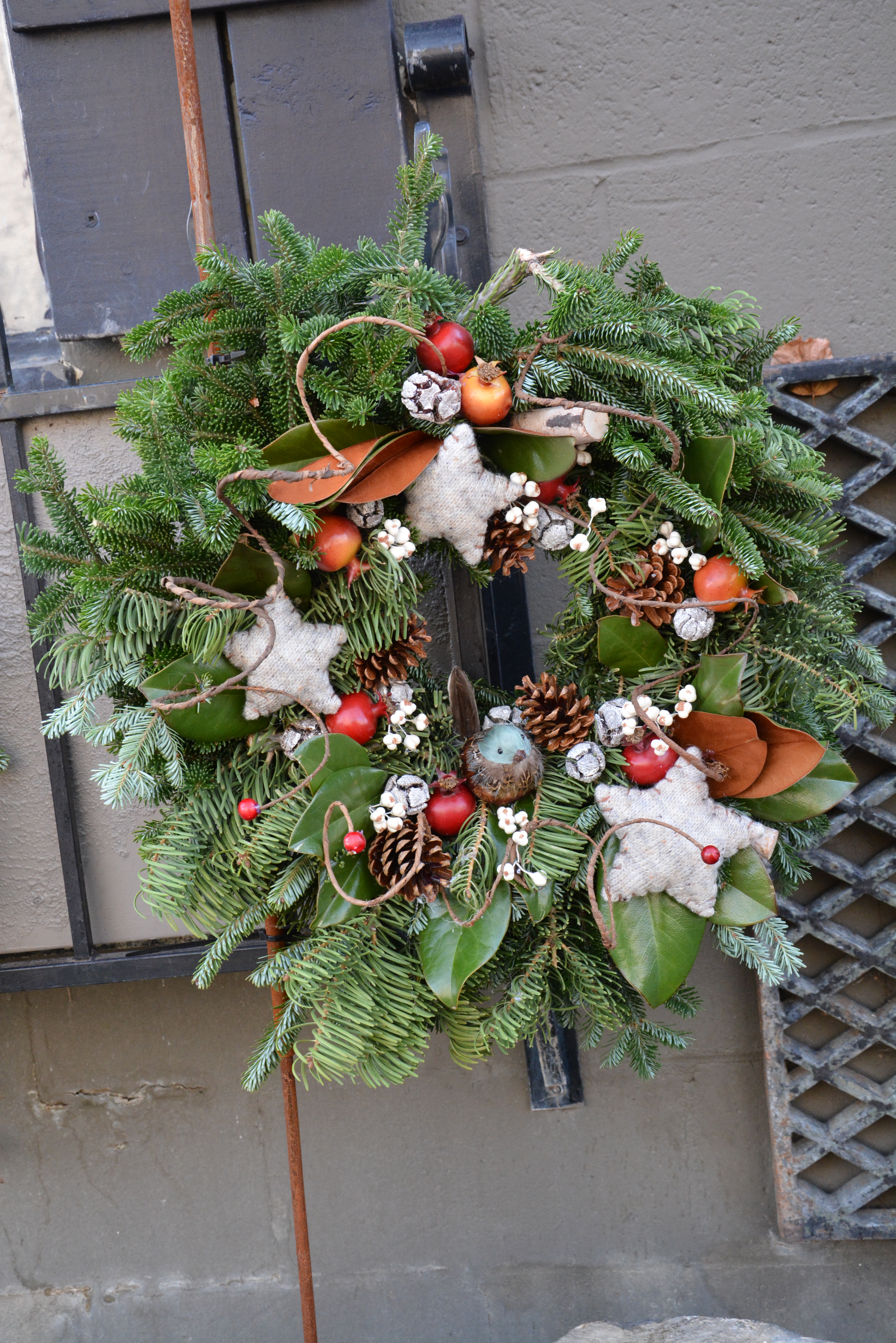 The wreath tutorial will have to wait until this project is finished and shipped. But pictures can help to spark an idea or direction.
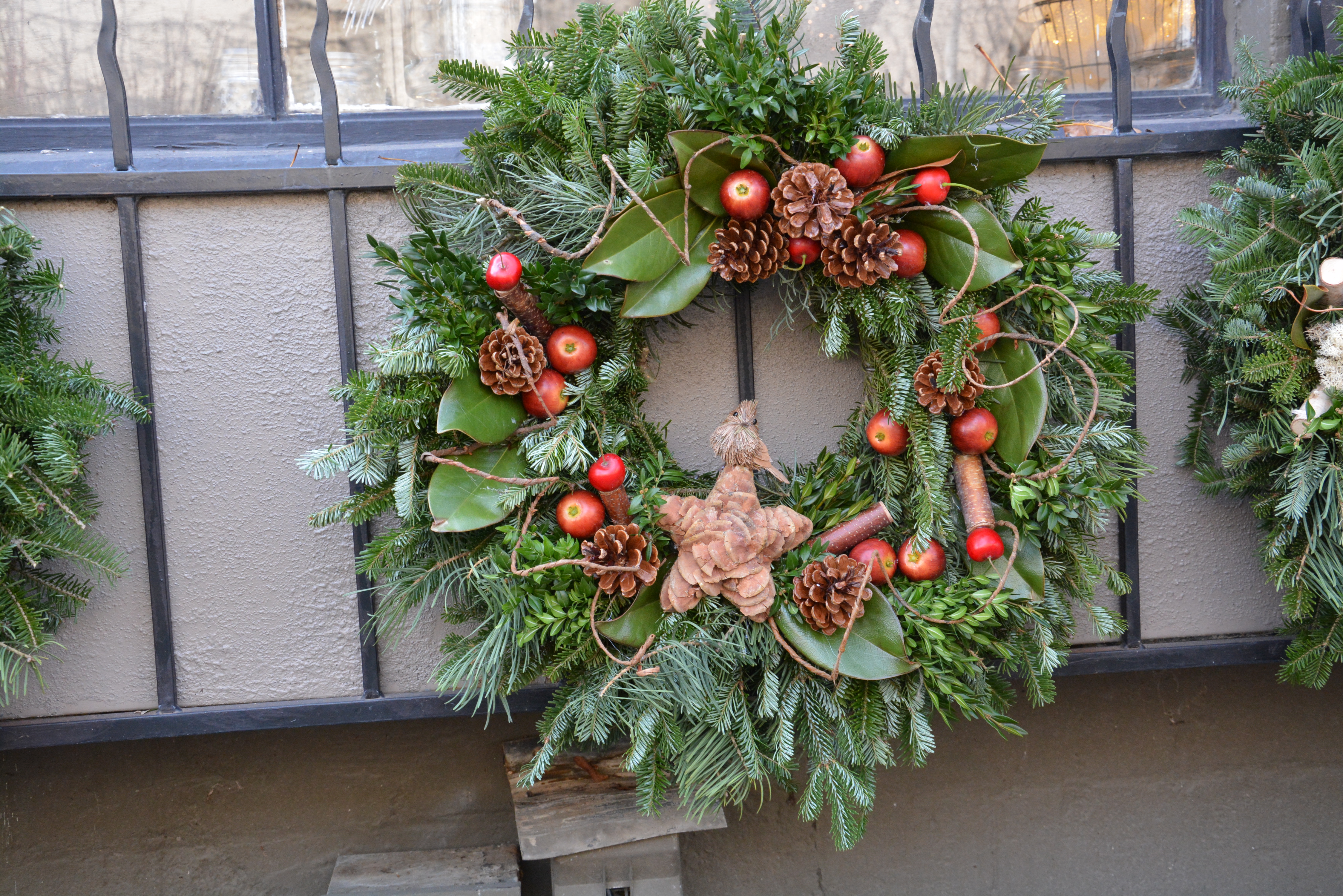
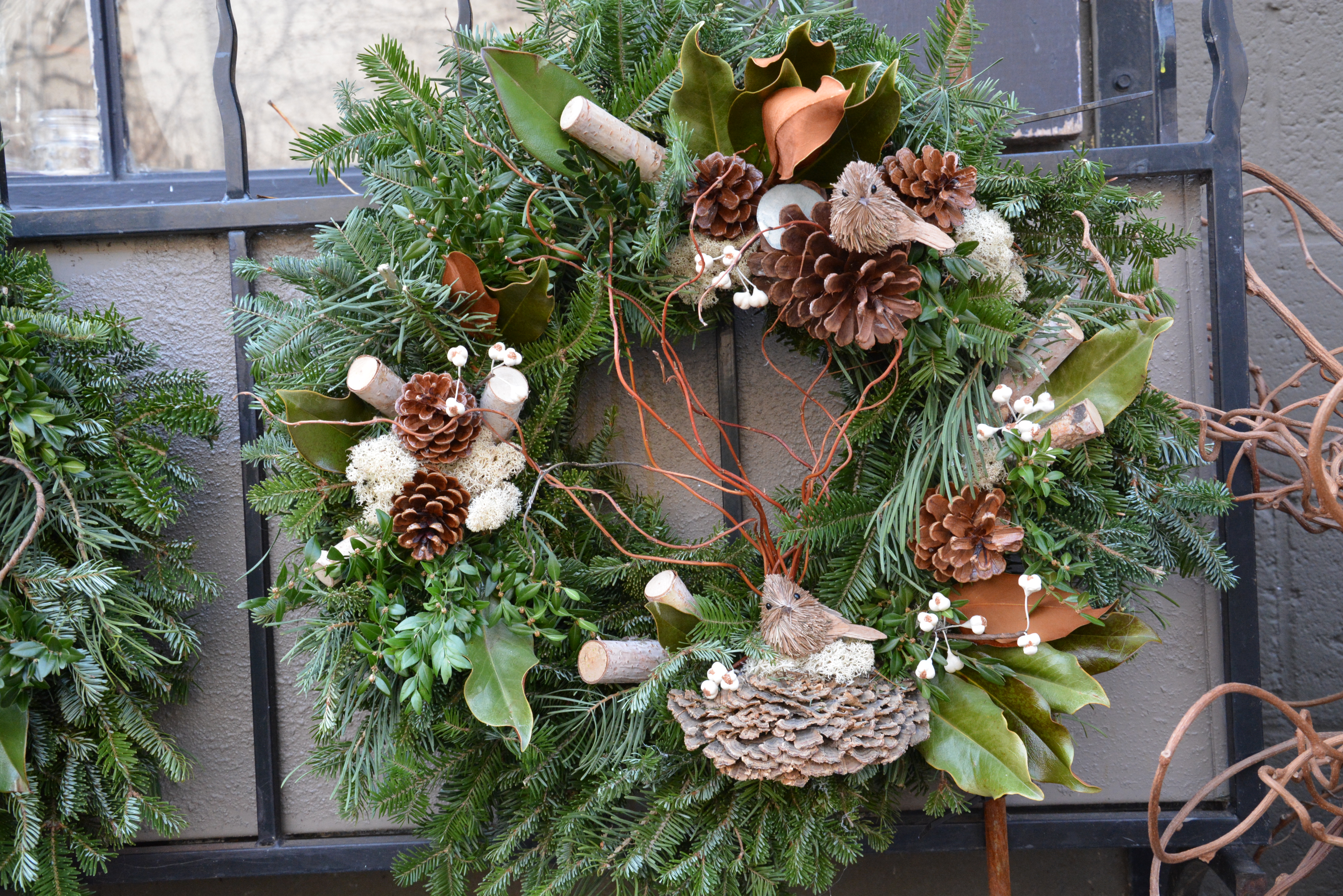 Little holiday projects can have enormous impact. What you hang on your front door for the holidays should express your own special point of view about nature. A wreath might provide a display venue for a year’s worth of collecting from the garden. This wreath features a bracket fungus from a tree in my tree lawn. Though the tree was dangerously rotted, and had to be cut down, I saved this. Though I was shocked at the loss of the tree, I was pleased to place this remnant of the story in a wreath.
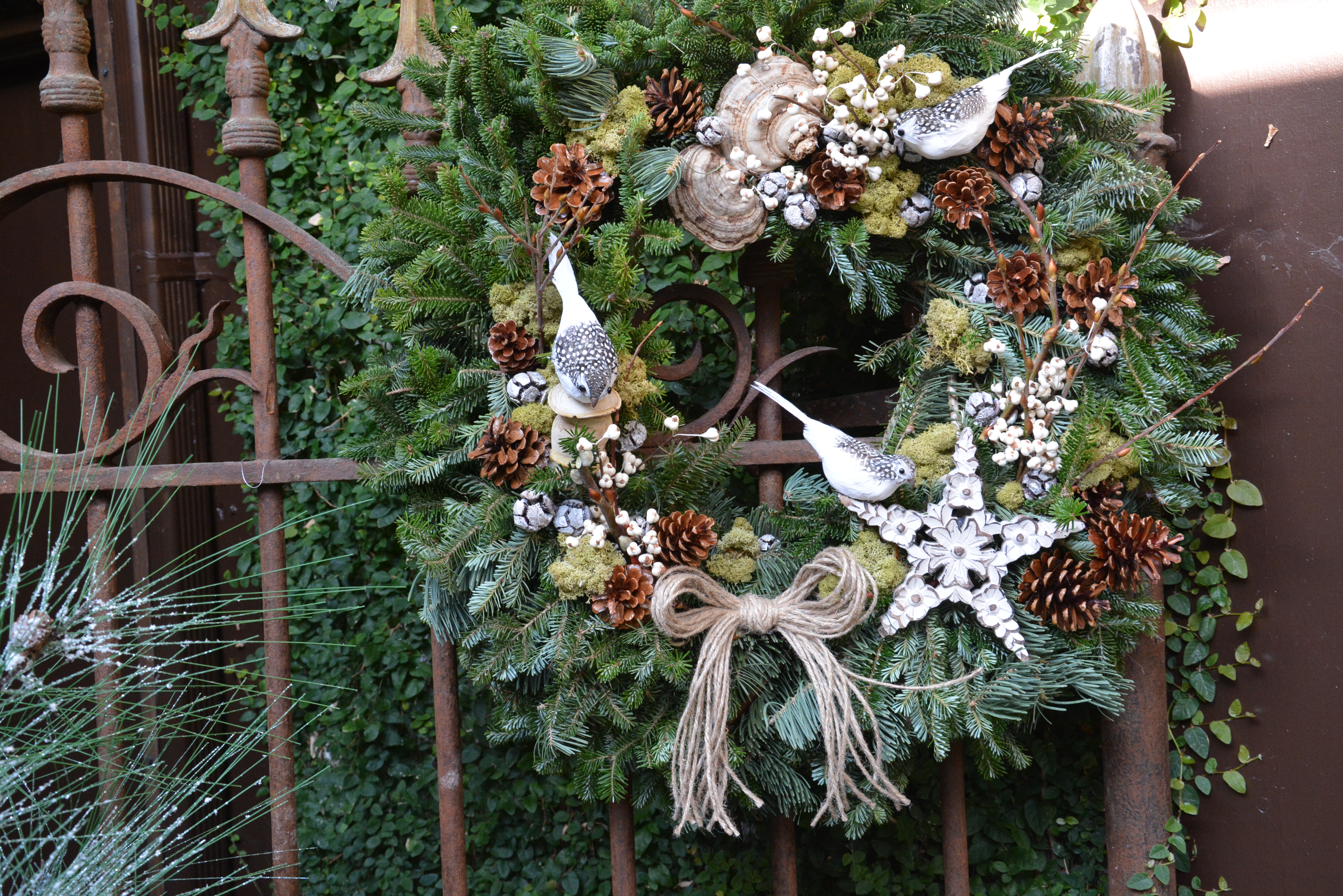 If you have never made a wreath from the bits and pieces from your garden, I would highly recommend it. Making something beautiful of a collection of memories is satisfying indeed.