Moss It

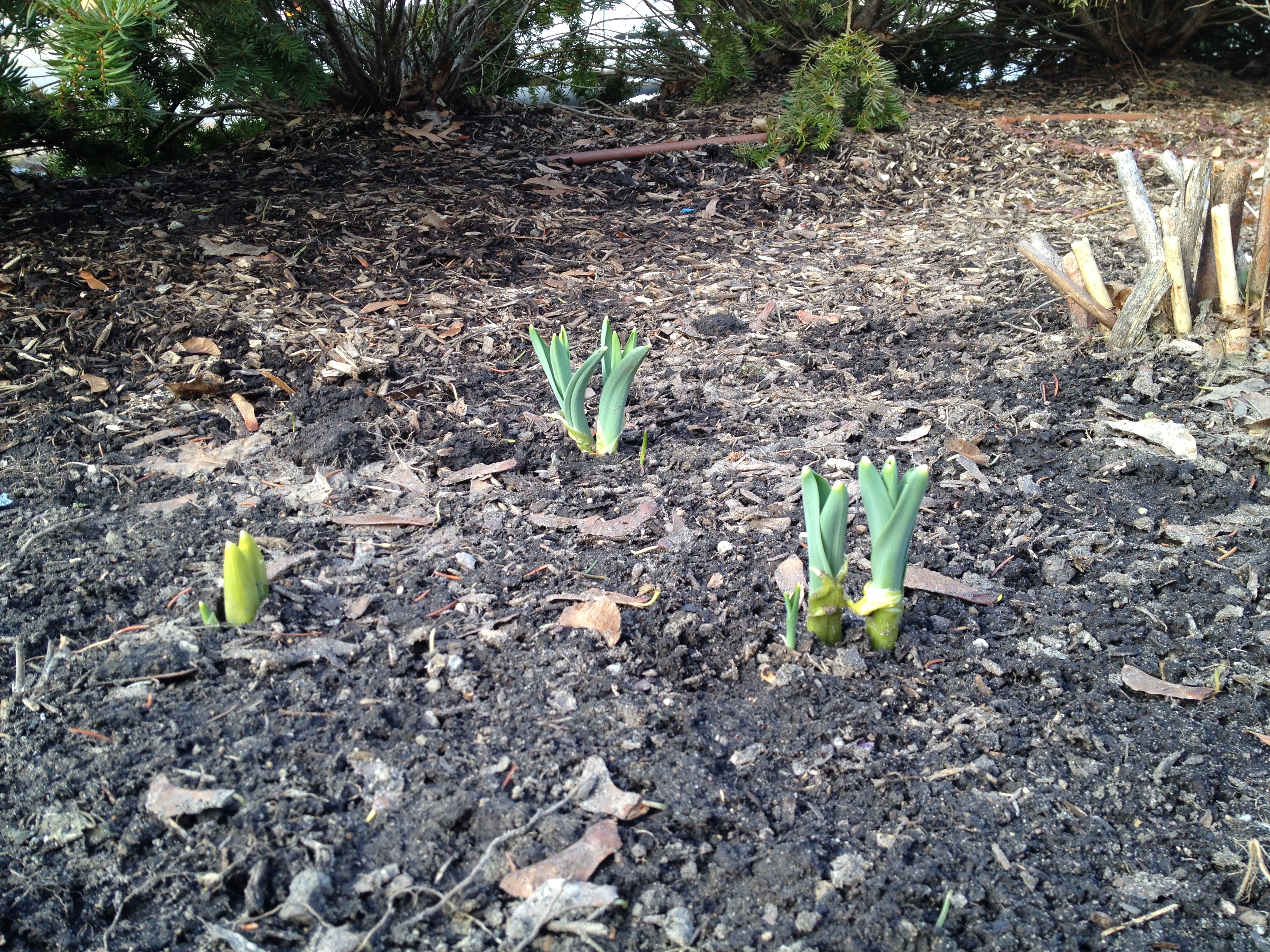
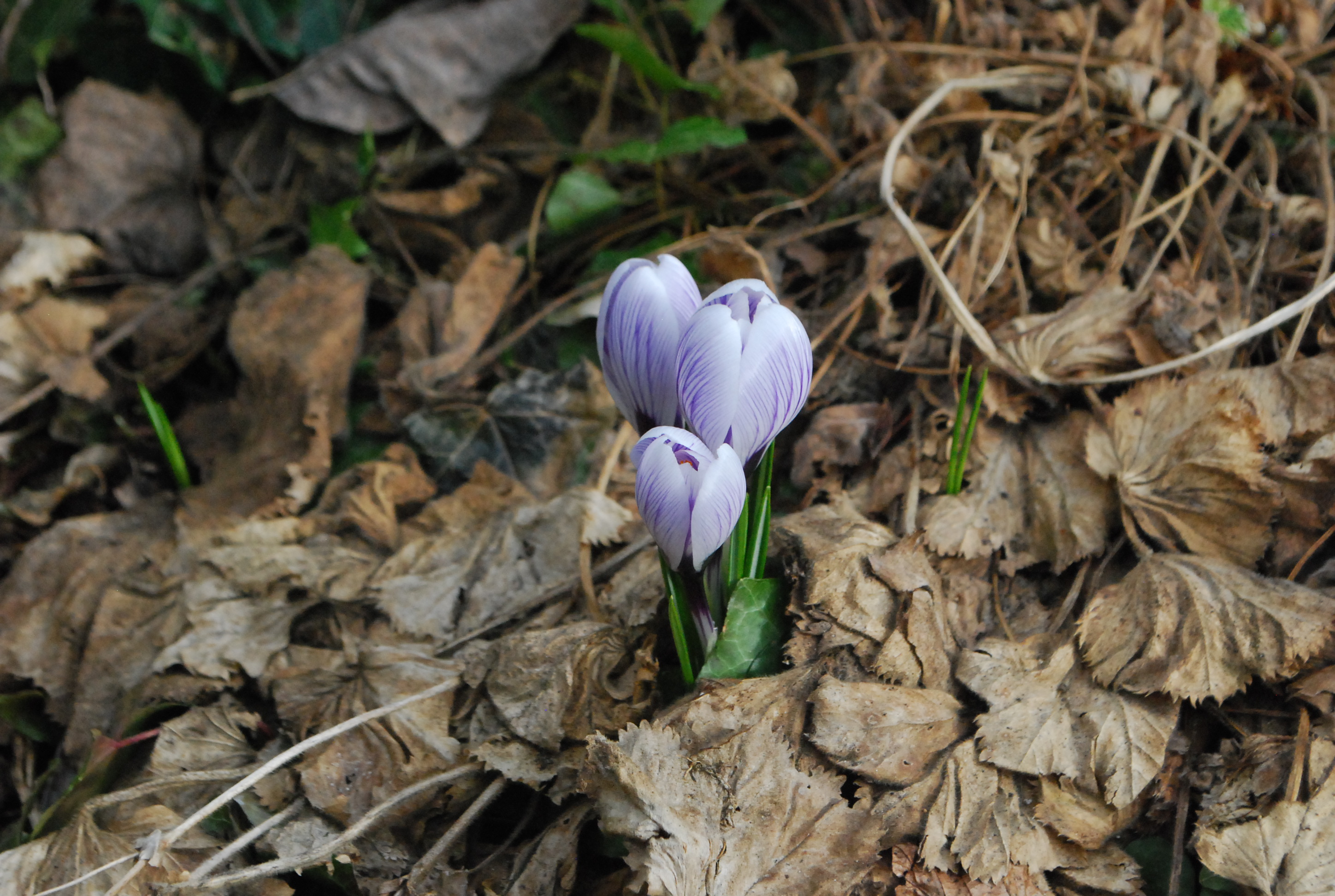
DSC_9020The signs of spring in my area are still few and far between.  I do have a few crocus just coming into bloom now – in April, for pete’s sake. My garden cannot be cleaned up yet, as a layer of ice still covers most of it.  I have winter pots still so frozen in place I cannot take them apart.  But I have other options for spring.  As in planting pots for spring.  We are in the process of planting lots of them for the shop.  Shortly we will be planting spring pots for clients.  I do have a love for mossed containers.  Nature represented in both the top and the bottom is a very good look. Lining moss baskets has always been about the art of patching.  Florist’s moss comes packed in cases of pieces.  Some moss pieces are big and thick.  Rob calls these moss hides.  Some pieces are thin and small.  A wirework basket may need a number of pieces of moss, stitched together via a puzzle of overlapping pieces.  Any natural material comes in all manner of natural shapes, sizes and thicknesses.

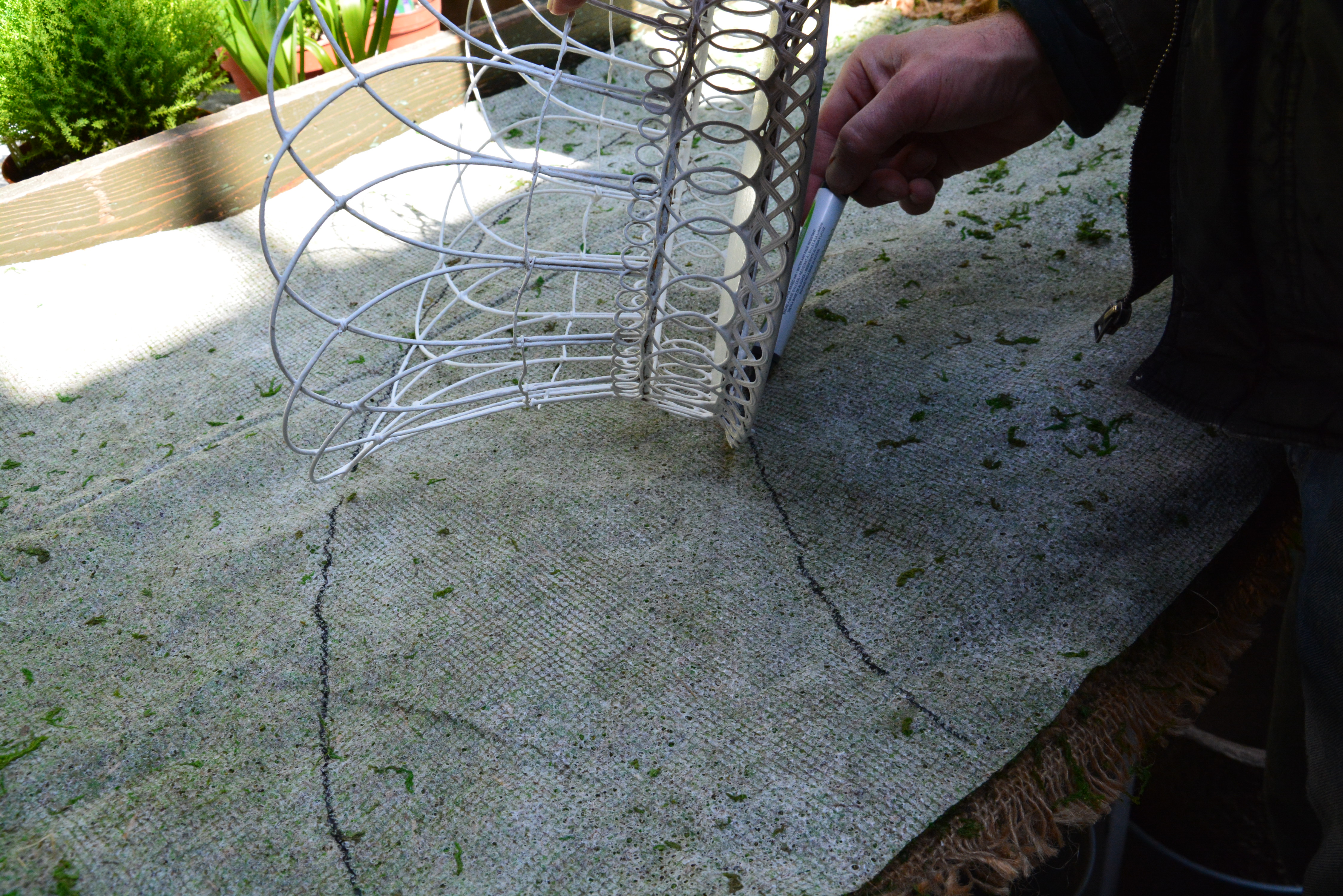
DSC_9021One of our suppliers had the brilliant idea of attaching moss to a biodegradable backing.  Don’t ask me how they do this-I have no clue.  But I do know that mossing a wire basket just got a whole lot easier.  For a round wirework container, Rob rolls the container in a natural arc across the moss mat.  He marks that radius with a nursery marking pen.  The marks describing the top of the container, and the bottom.  That pair of lines create an arc.  He cuts that arc big and wide- oversized.
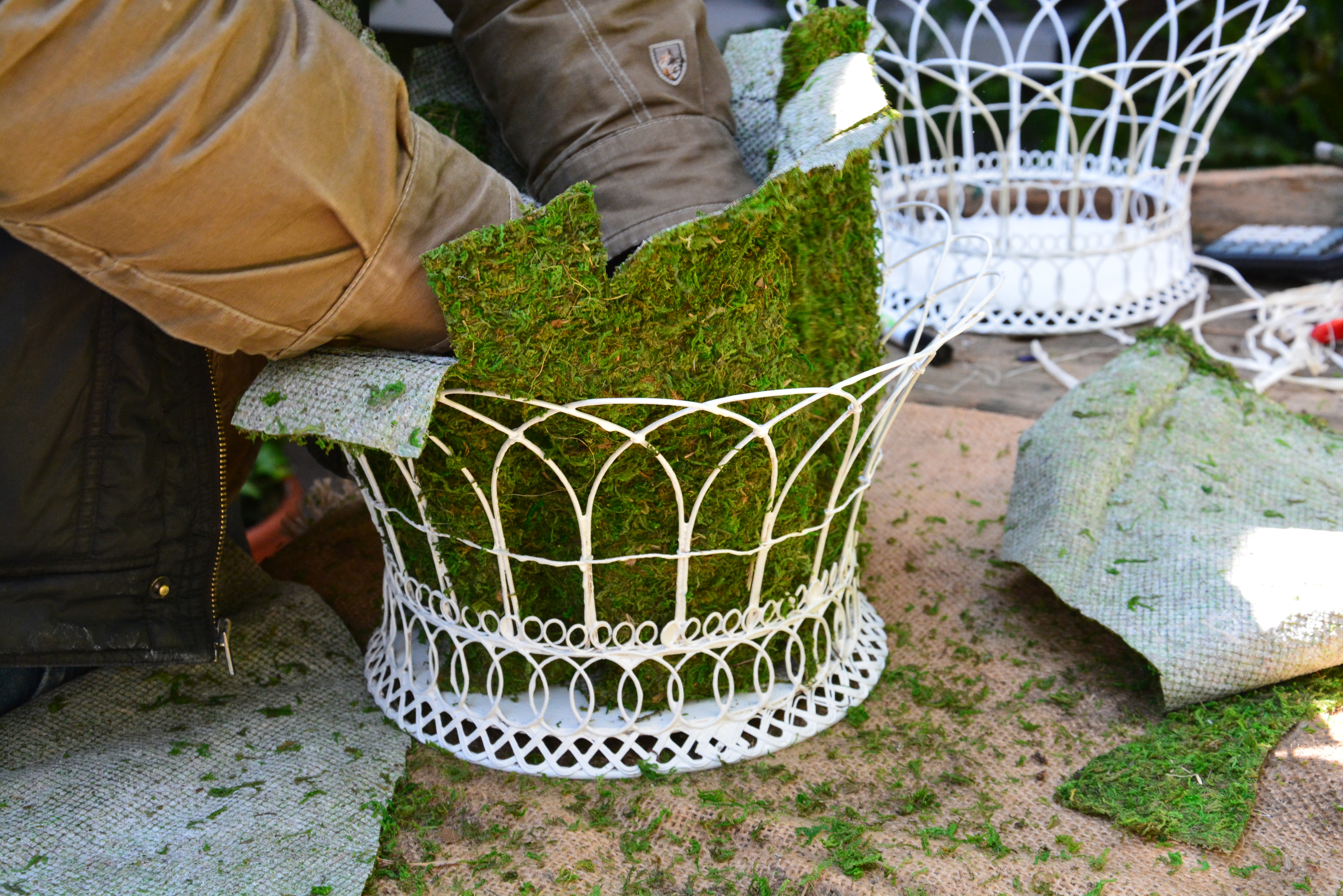
DSC_9025That arc derived from the top and bottom of the container means that the moss mat fits smoothly inside the basket.   Of course there is a lot of fussing.  Anything in the garden that means much to a gardener requires the work of a pair of hands.  A pair of hands on a shovel, or a hose, or a rake.  As for my gardening efforts today, I am putting my hands to planting containers for spring.
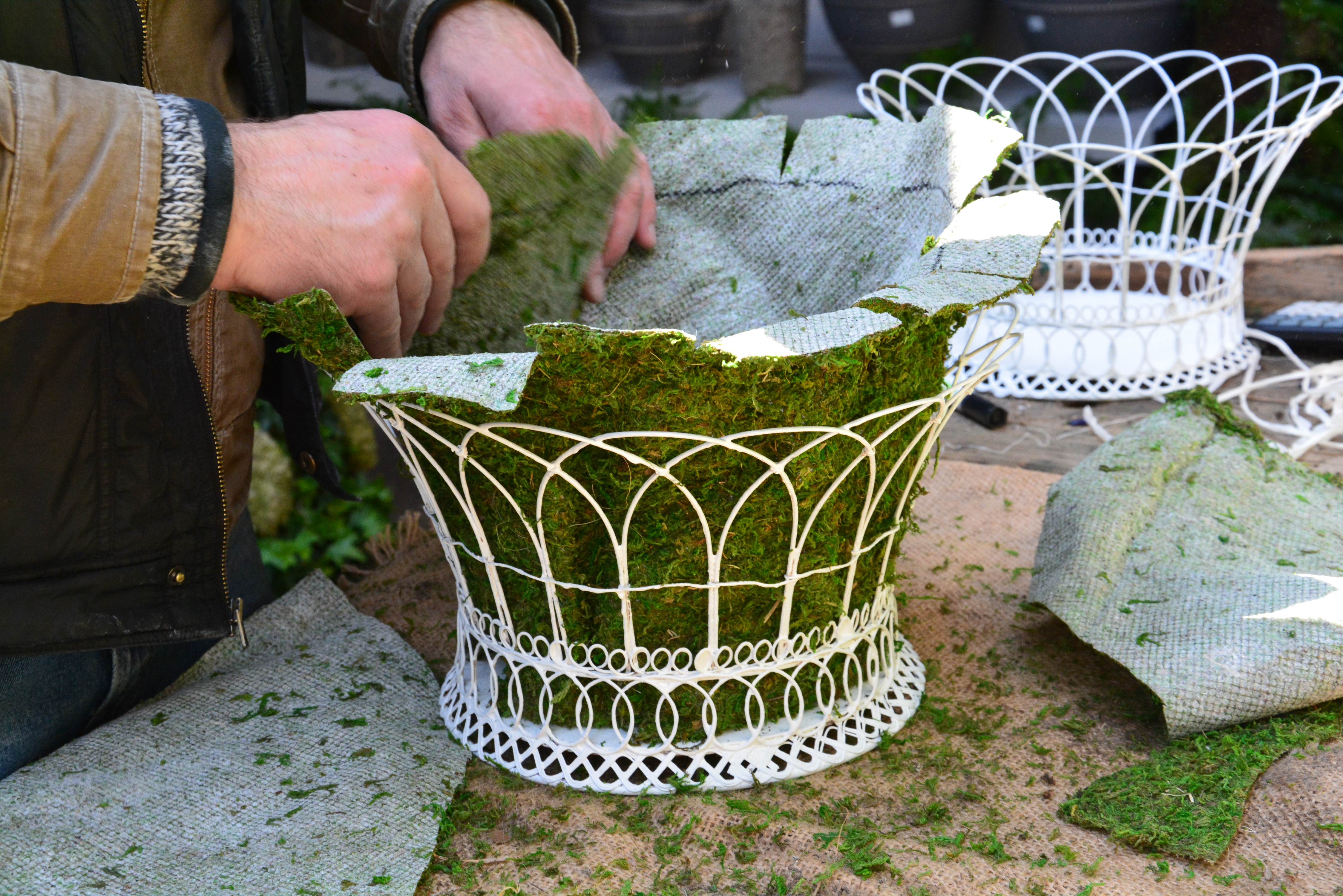
DSC_9026Not that I do as good a job as Rob does.  He has infinite patience.  He eases the moss mat into place.
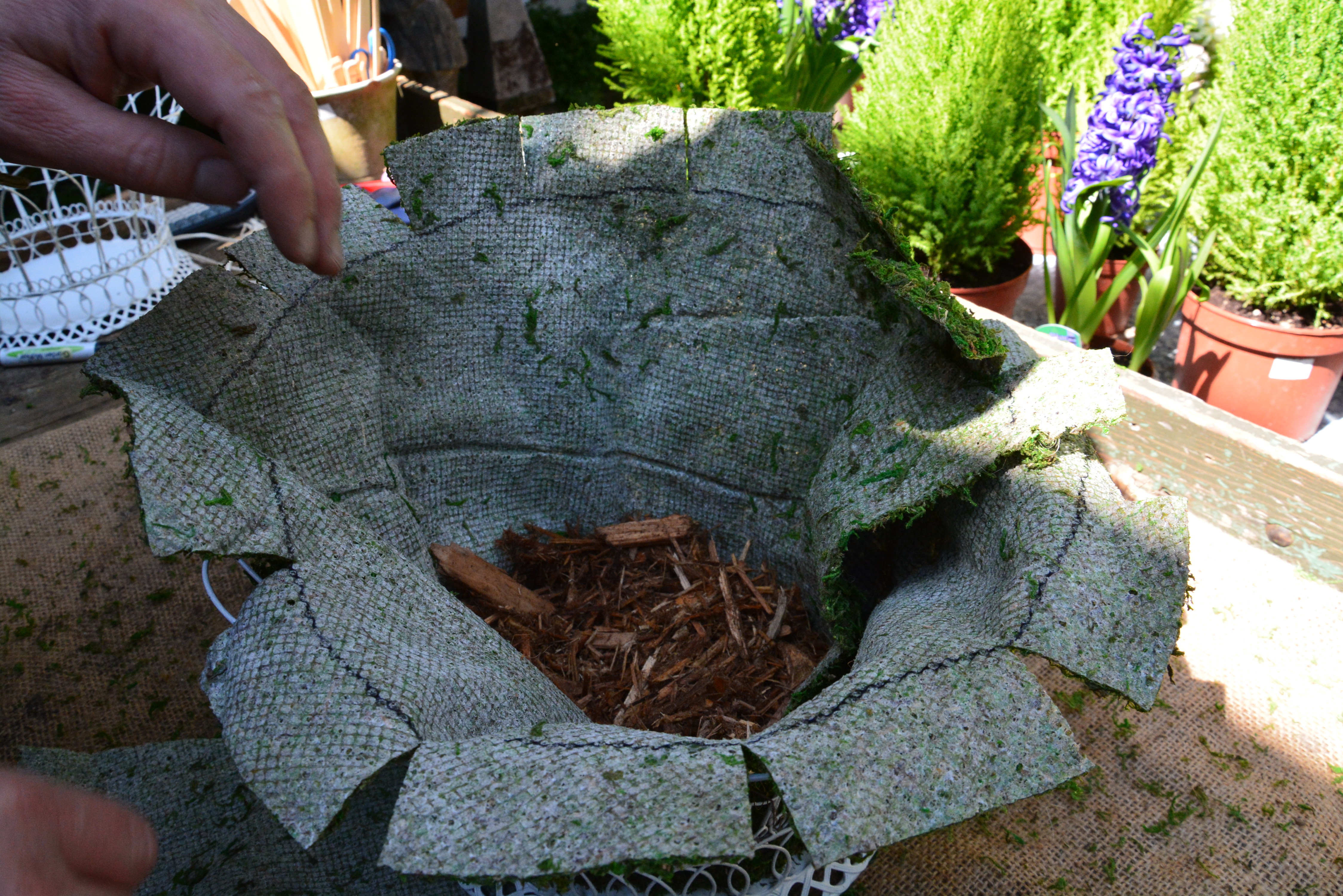
DSC_9028The bottom of this wirework container is filled with drainage material. By a third.  Container plantings require more drainage material than soil.  Waterlogged plants never prosper, unless you plan to pot up bog plants.  A seasonal pot planting does well with bark as drainage material. Making sure that water can drain from a container is essential.
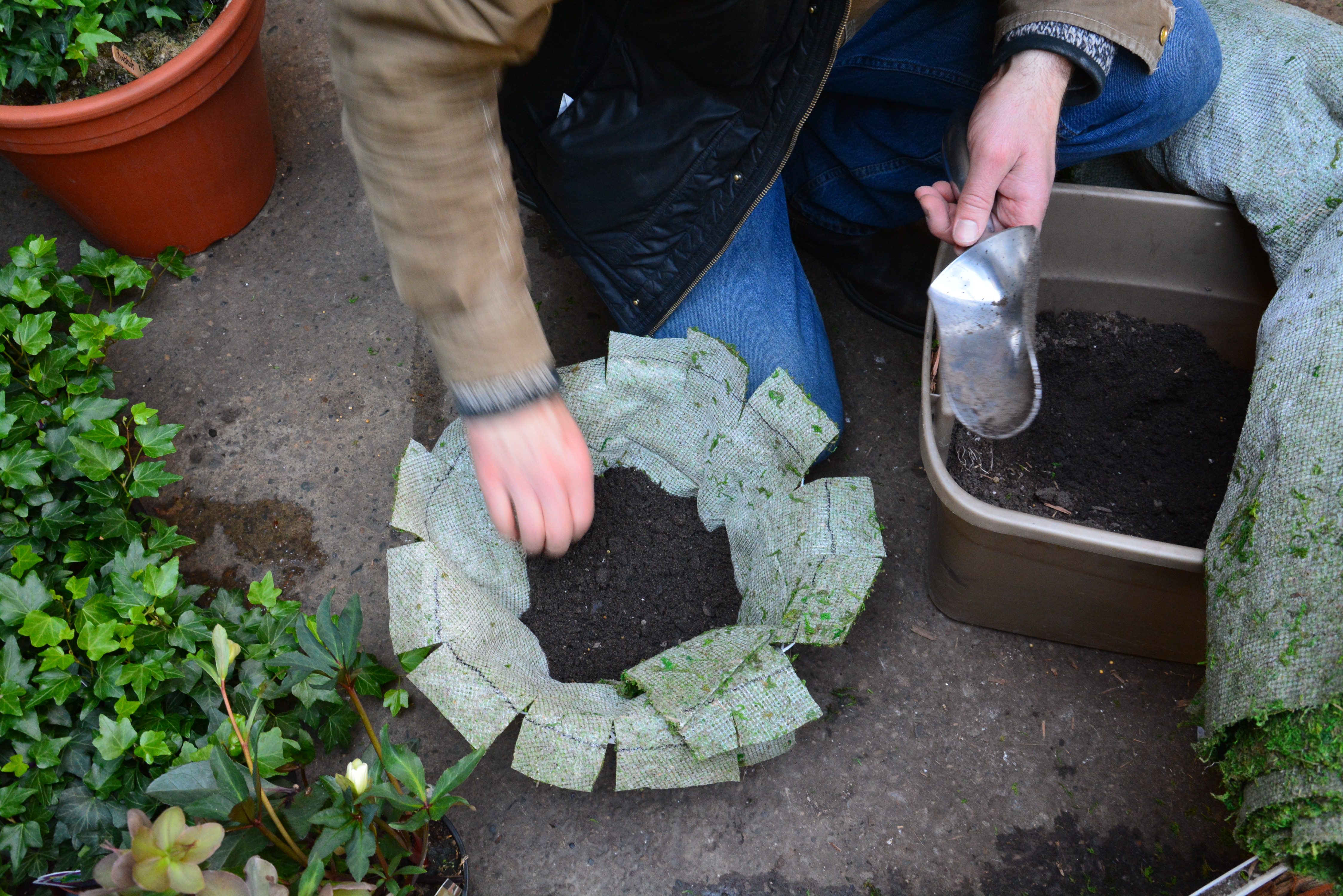
DSC_9031After the bark, the container is filled with soil.  We use a soil mix that is custom blended for us.  Lots of compost.  A big dash of sand.  And soil.  We do not use peat based growers mix in our pots.  Soilless mixes are perfect for professional growers who can manage the fertility levels and water to a tee.  For gardeners, we recommend a soil based mix. We like dirt.
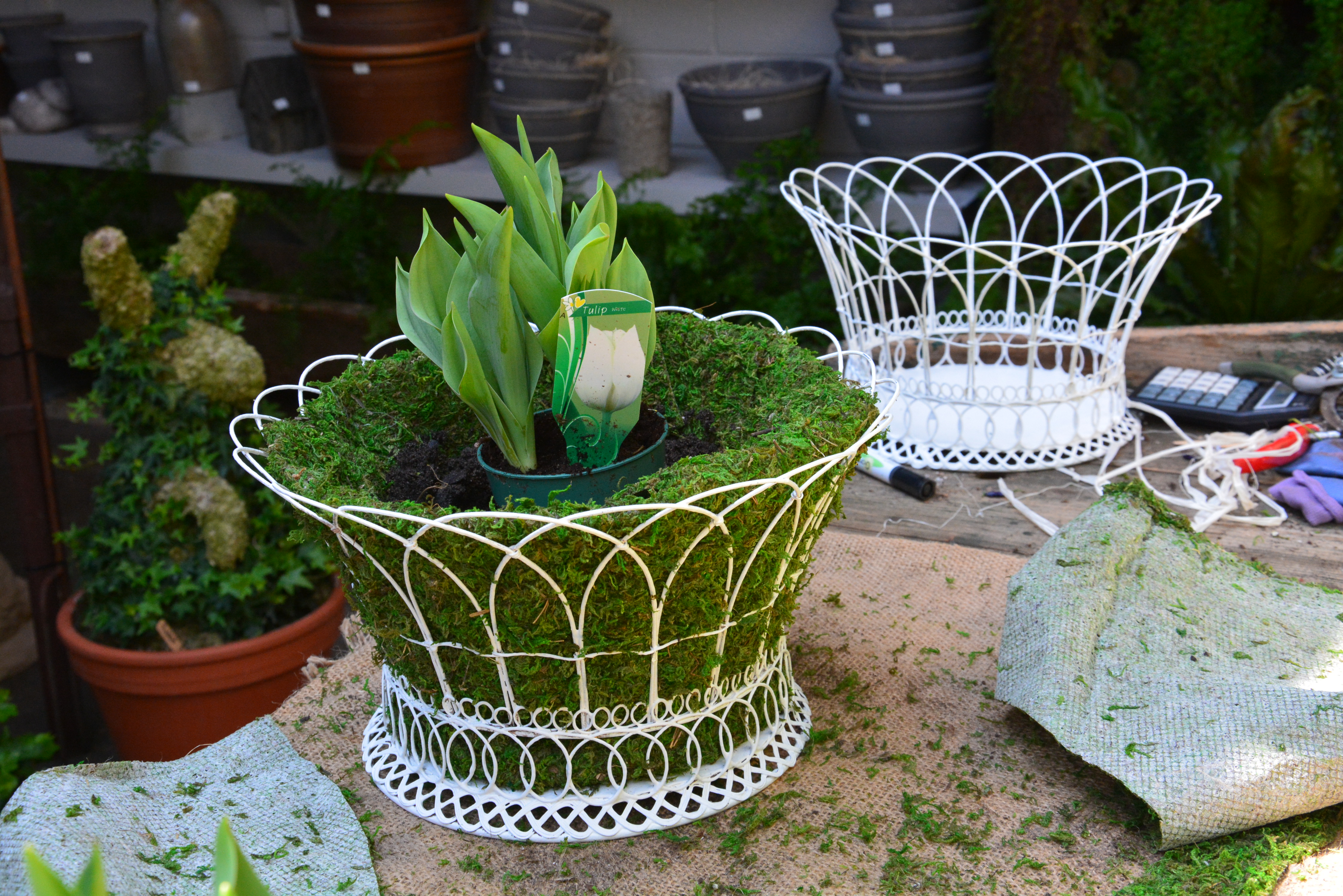
DSC_9033The upper side of the moss mat gets folded over. A rolled moss edge looks generously finished.  That thickness contrasts beautifully with the thin wire that describes the shape of the container.   That roll also helps to keep the soil right where it belongs-inside.
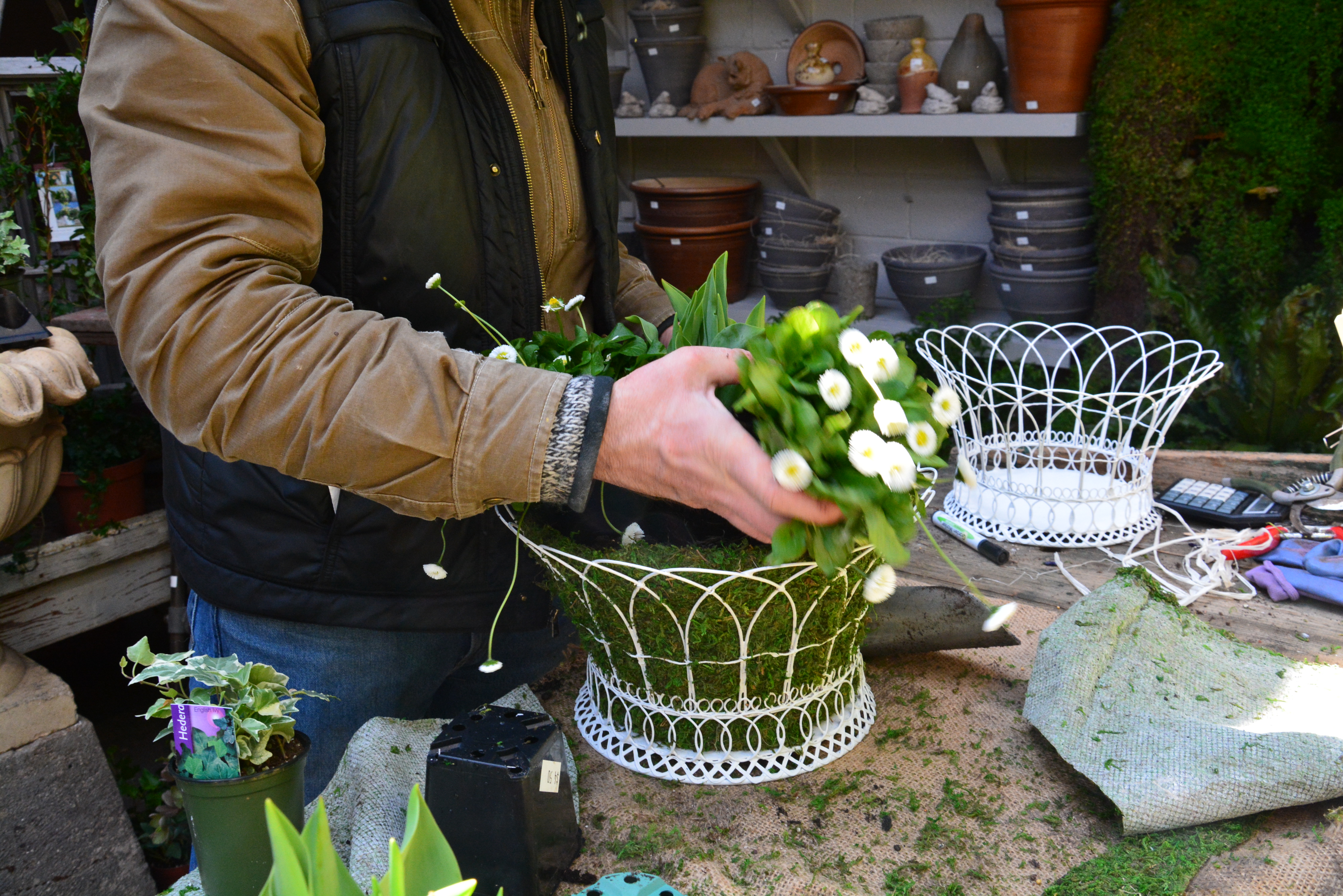
DSC_9034Once the wirework container is moss lined, it is time to plant the plants.  For this pot, white tulips, white English daisies, and white variegated ivy.
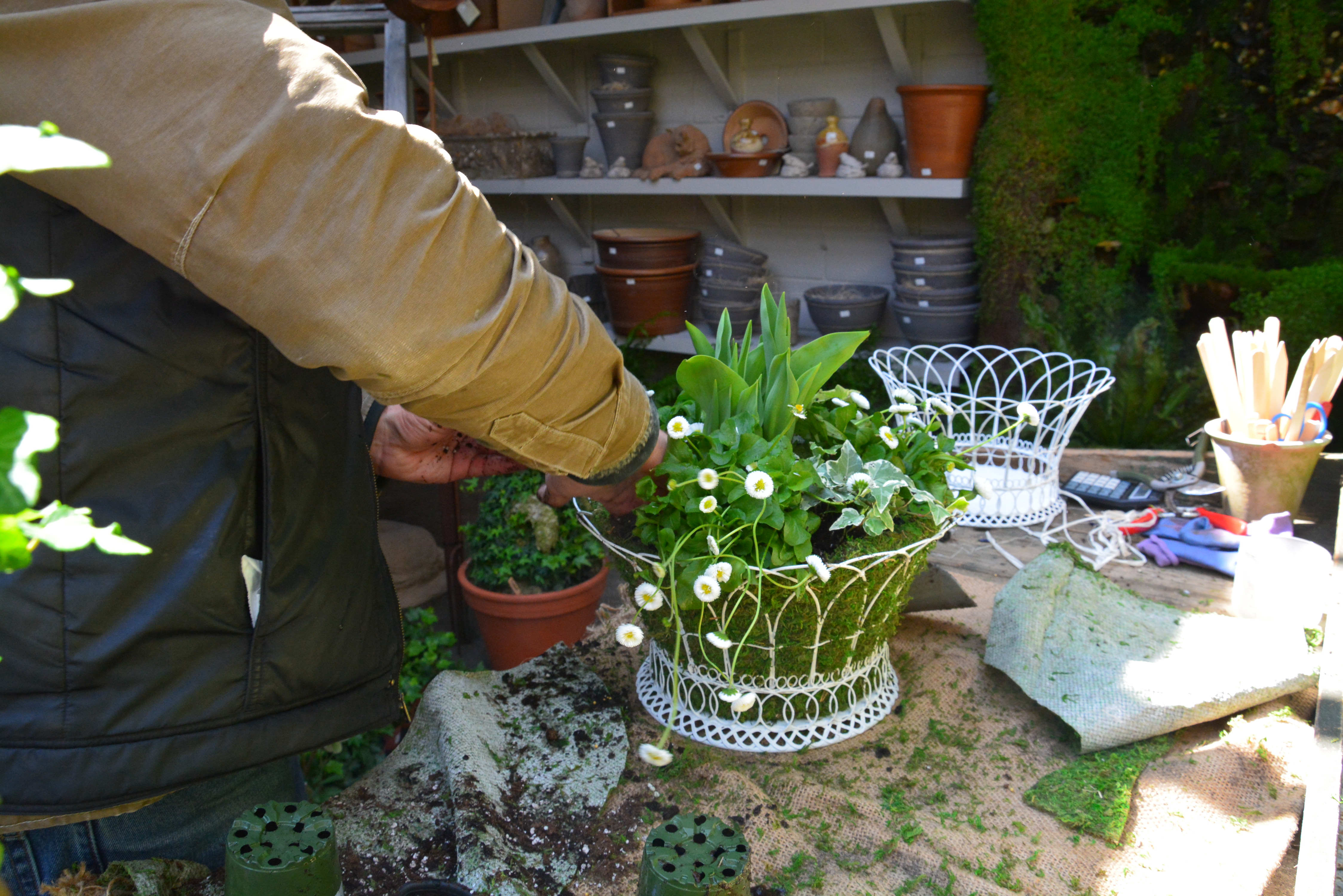
DSC_9038Planting a pot no doubt involves design.  Color, texture, mass-and a vision about the mature shape of the planting.  But planting a pot is also about that magical moment.  An idea. The plants. The dirt.  The act of planting.
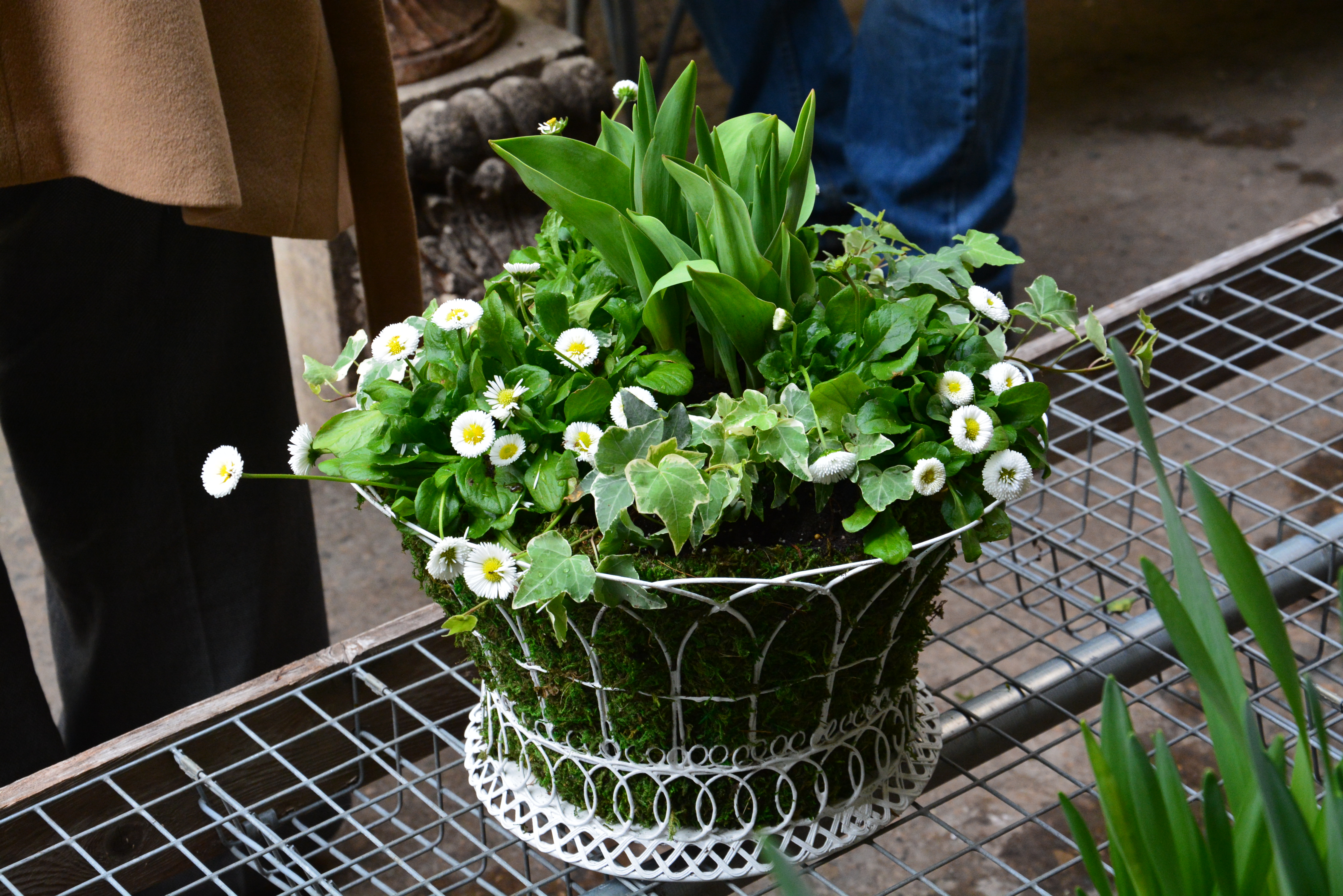
DSC_9043This mossed wirework basket-an expression of spring.  An expression of spring?  I expect both nature and every gardener to be making news, soon.

Vernissage

vernissage.jpgFive years ago today, April 1, 2009,  I published my first post. To follow is a reprint/edit of that post, entitled “Vernissage”.

vernissage-2.jpg

Strictly speaking, the French word vernissage refers to the opening of an art exhibition.  I learned the word recently from a client with whom I have a history spanning 25 years.  This speaks a lot to the value of nurturing long term commitments.  I have learned plenty from her, and from her garden, over the years. In the beginning, I planted flowers for her.  Our relationship developed such that I began to design, reshape, and replant her landscape.  She was passionately involved in every square foot of her 8 acre park.  Needless to say, the years flew by, one project to the next.  I have favorite projects.  A collection of fine white peony cultivars dating from the late 19th century was exciting to research and plant.  A grove of magnolia denudata came a few years later.  Another year we completely regraded all of the land devoted to lawn, and planted new.  I learned how to operate a bulldozer,  I so wanted to be an intimate part of the sculpting of the ground.  There were disasters to cope with, as in the loss of an enormous old American elm.  Deterring deer was nearly a full time job.  Spring would invariably bring or suggest something new.

vernissage.jpgIn a broader sense, vernissage refers to a beginning- any opening.  This has a decidedly fresh and spring ring to it.  I routinely expect the winter season to turn to spring,  and it always does.  But every spring opening has its distinctive features. Last year’s spring was notable for its icy debut. Grape hyacinths and daffodils ice coated and glittering and giant branches crashing to the ground.  This year, a different kind of drama altogether. My first sign of spring was the birds singing, early in the morning.  It was a bit of a shock, realizing how long it had been since I had heard the birds.  Why the break of my winter this year is about hearing the singing-who knows.  Maybe I am listening for the first time, or maybe I am hearing for the first time.  Every spring gives me the chance to experience the garden differently.  To add to, revise, or reinvent my relationship with nature.  This past winter was the coldest, snowiest and most miserable I ever remember.  It just about reduced my spirit to a puddle on the ground.  Spring is not so close to being here yet, even though it is April 1.  But I see the signs.

hellebores.jpg
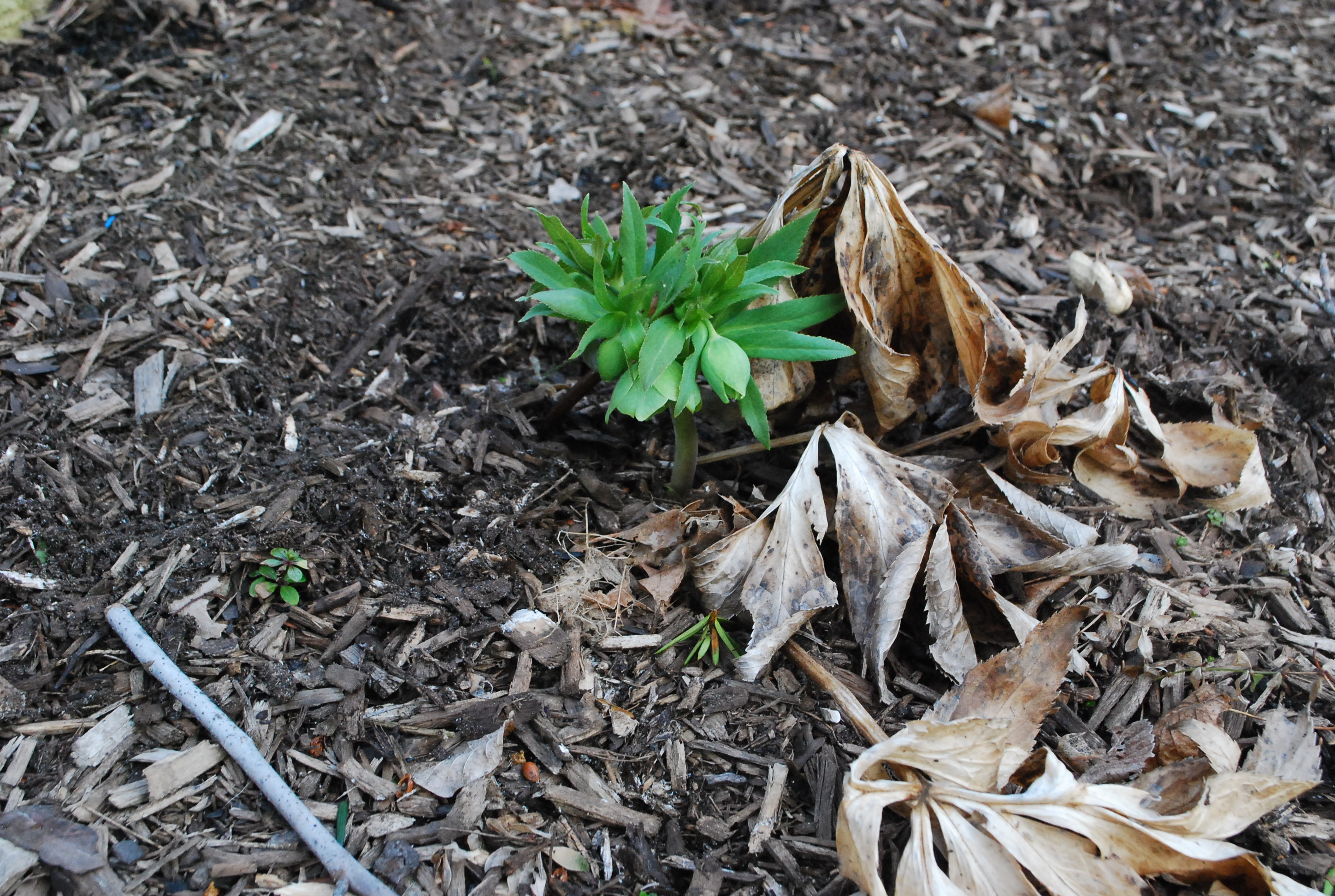
Much of what I love about landscape design has to do with the notion of second chances. I have an idea.  I put it to paper.  I do the work of installing it.  Then I wait for an answer back.  It is my most important work-to be receptive to hearing what gets spoken back. The speeches come from everywhere-the design that could be better here and more finished there. The client, for whom something is not working well, chimes in.  The weather, the placement and planting final exam test my knowledge and skill.   The land whose form is beautiful but whose drainage is heinous teaches me a thing or two about good structure.  The singing comes from everywhere. I make changes, and then more changes.  I wait for this to grow in and that to mature.  I stake up the arborvitae hedge gone over with ice, and know it will be two years or more-the recovery.  I might take this out, or move it elsewhere.  That evolution seems to have a clearly defined beginnings, and no end.
hellebore.jpg

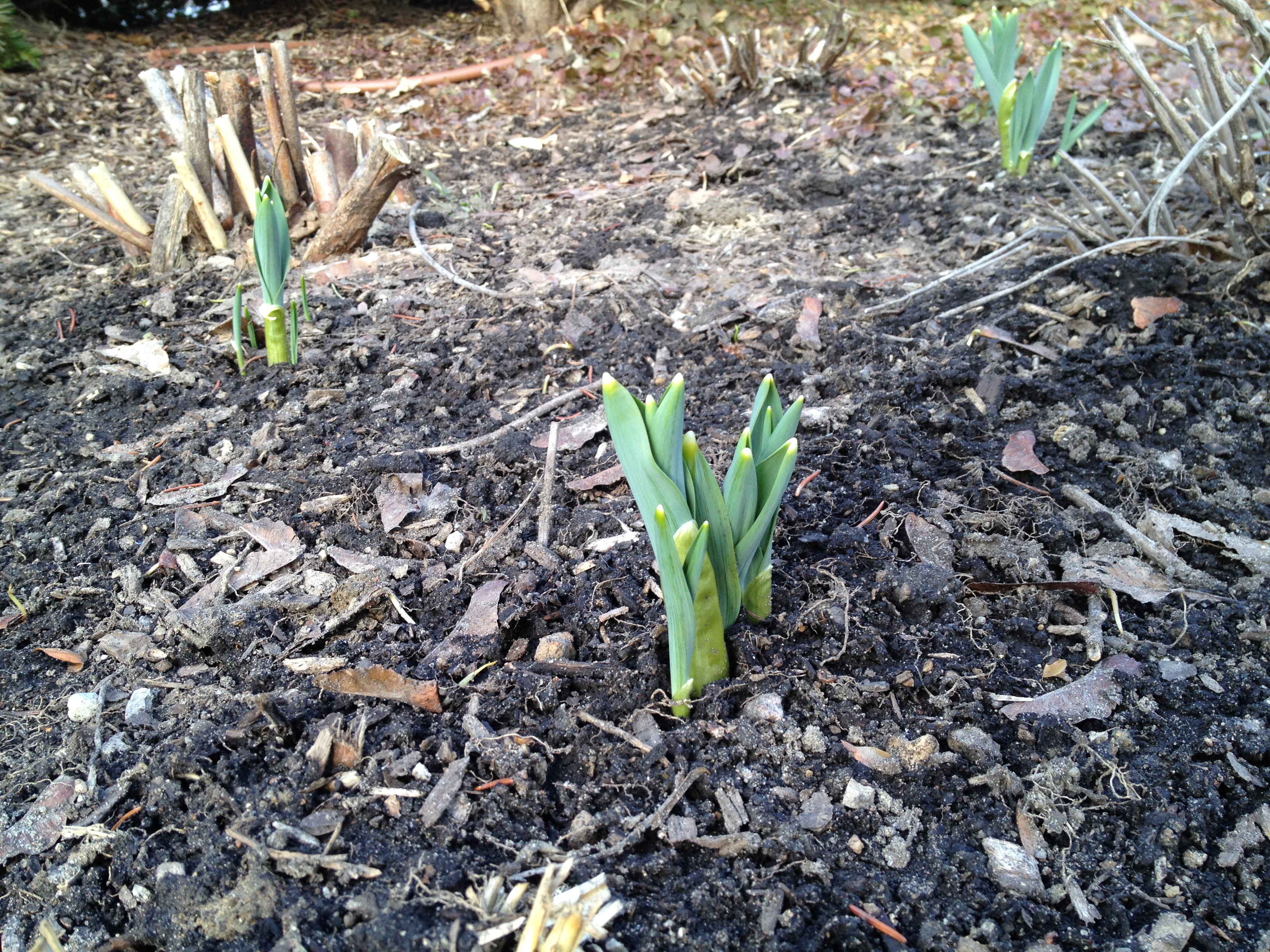
This spring will see more than anyone’s fair share of burned evergreen and dead shrubs.  The winter was that bad. But no matter what the last season dished out, I get my spring.  I can compost my transgressions. The sun shines on the good things, and the not so good things, equally.  It is my choice to take my chances, and renew my membership.  The birds singing this first day of April means it is time to take stock.  And get started.

vernissage-4.jpgI can clean up winter’s debris. My eye can be fresh, if I am of a mind to be fresh.  I can stake what the heavy snow crushed.  I can prune back the shrubs damaged by the voles eating the bark.  I can trim the sunburn from the yews and alberta spruce.  I can replace what needs replacing, or rethink an area all together. Spring means the beginning of the opening of the garden.  Later, I can celebrate the shade.  I can sit in the sun, and soak it up. I can sculpt ground. I can move all manner of soil, plant seeds, renovate, plant new.  What I have learned can leaven the ground under my feet-if I let it.  Spring will scoop me up.  Does this not sound good? I can hear the birds now; louder.
April 8 2013 (9)
Today also marks 22 years to the day that Rob and I began working together. There have been ups and downs, but the relationship endures, and evolves.  We are celebrating our 22nd spring.  Suffice it to say that Detroit Garden Works is an invention that reflects the length and the depth of that relationship. Vernissage.  We are thinking about spring.


18 Years

vintage-watering-cans.jpg

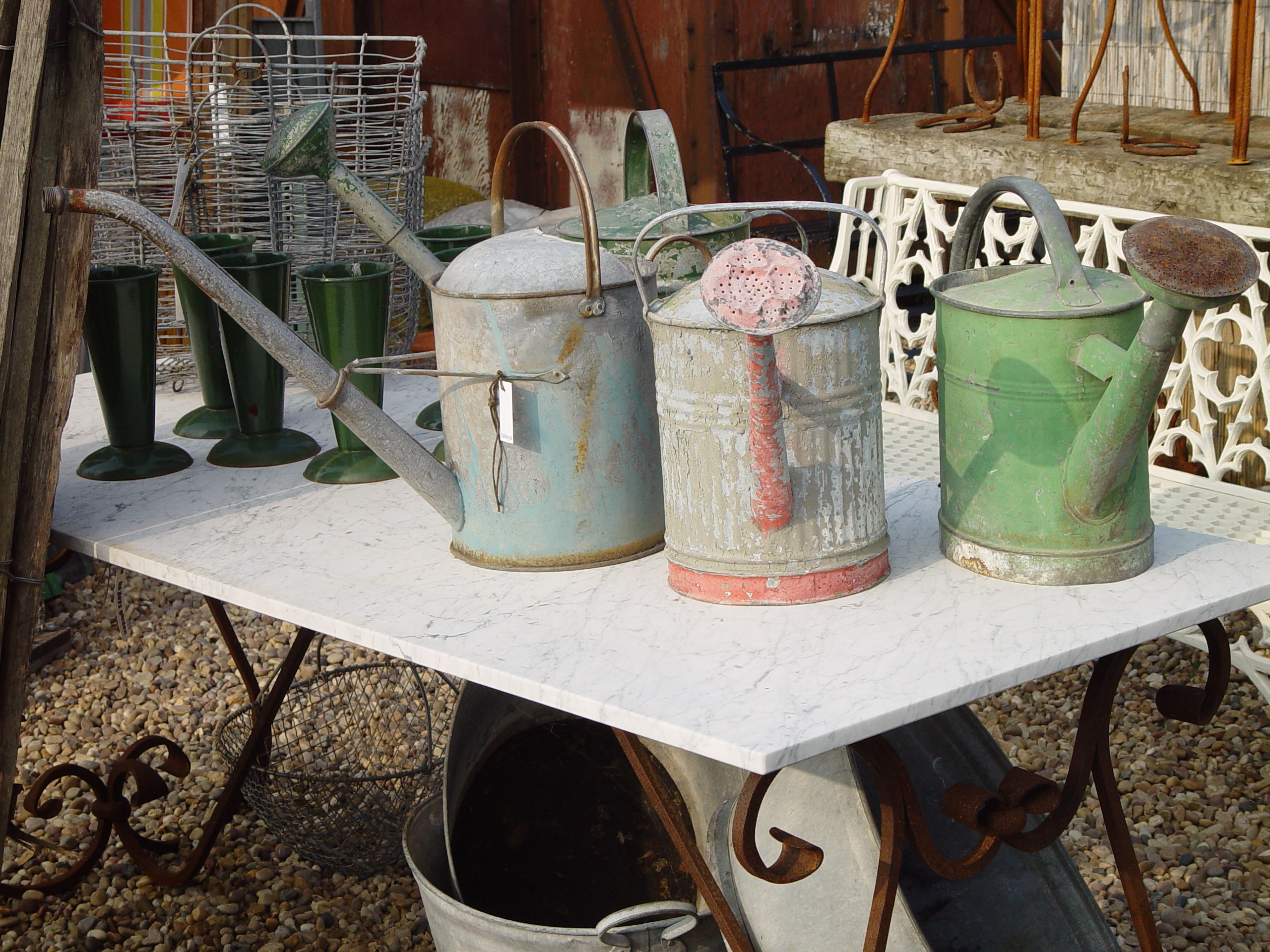
18 years ago, on March 29, Rob and I were hosting a party to celebrate the opening of Detroit Garden Works.  My landscape design and installation firm was the ripe old age of 10.  I had always had a dream of a place where clients could find beautiful and intriguing objects to ornament their garden.  No such place existed in my area.  So Rob and I decided to create one.  Crucial to the mix – my accountant.  He also represented a gentleman with a machine shop for sale.  Jeff was able to persuade his client to sell the property and building to me on a land contract.  This proved to be crucial to the mix.  Had I gone to a bank asking for a commercial mortgage to open a retail garden ornament business in an area zoned for light manufacturing, I would have been politely swept out the door.  A shop retailing garden ornament?  What exactly is garden ornament?

vintage-garden-bench.jpg

A garden group came to the shop Saturday for a talk on garden ornament. I pointed out that garden ornament – as in furniture, tables and chairs, benches and other seating- provides a place for a person to be in a garden.  It is one thing to observe or review a garden, but garden ornament can provide a place to spend time in that garden.  After work.  Before work.  To watch the birds.  To entertain friends. To relax.  To think things over.  To rest.

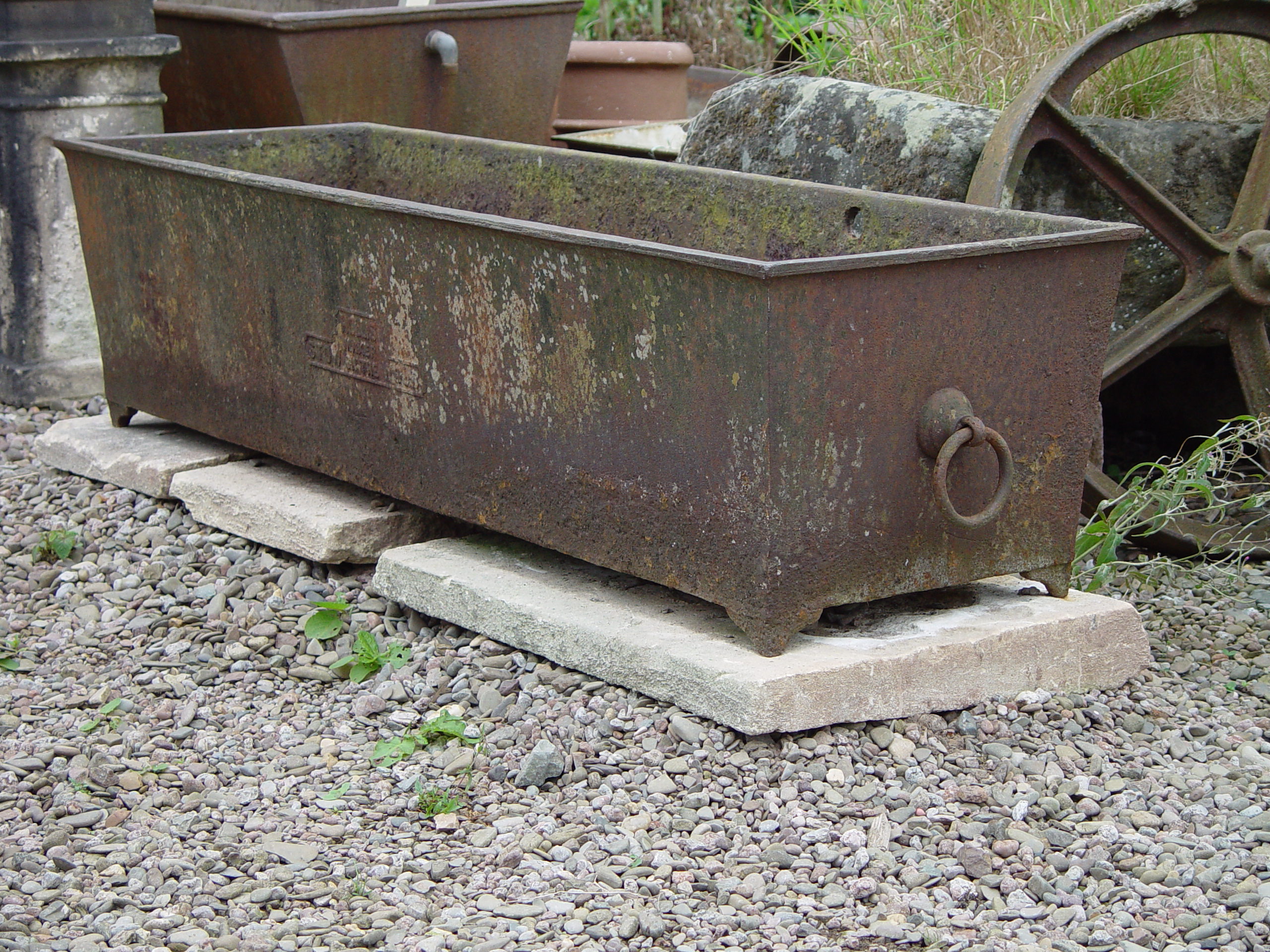
antique-iron-trough.jpgA garden ornament can provide a focal point for a garden.  An old galvanized washtub overstuffed stuffed with lavender or rosemary can be the star attraction of an herb garden.  A sculpture in the landscape can organize a garden, endow it with atmosphere, and make an invitation to interact.  Pots positioned on either side of a front door say welcome to my house.  And welcome to my idea of making you feel welcome.  Gardeners place birdbaths in their gardens for obvious reasons.  Gardeners also have very different views about what constitutes a beautiful birdbath.  Finding a garden ornament that suits your garden in particular is what gives that garden a personal and individual feeling.

French-gloriette.jpg

A structure in a garden, as in a pergola, can enclose a space, and give it a sense of intimacy.  A fountain brings the sound and sparkle of water to the garden.  An arbor or trellis provides a home for climbing plants. A vintage bootscraper, rain barrel or garden umbrella is utilitarian.  I could say that any non-living element in a garden would qualify as a garden ornament, but that is not exactly true.  Some objects trigger a memory of an experience, a special occasion, or a person. Those memories are very real.  Some vintage or antique garden ornament come with a feeling of history or culture attached to them.  Some ornament is whimsical.  Some is repurposed from old farm implements and tools. But no matter the origin, I am still interested, 18 years later, in how garden ornament can endow a garden with a little magic.

garden-ornament.jpg

Interested in more on that moment which was so magical to me 18 years ago?  Here you go.

A Sunny Window Sill

DSC_8638I was shocked to see that a post I wrote just about this time last year featured the same dirty snow and cold temperatures we are having right now.  It’s easy to forget that as a winter month, March can be only slightly more moderate than February.  As a spring month, it is stingy with both the sun and moderating temperatures.  March can go either way, and neither way is particularly wonderful. This year, I still have my nose pressed to the glass, looking from the inside out.  It was 12 degrees this morning, and barely better by 3pm. But we have had more sun the past few weeks than all of January and February.  We have a little warm and sunny weather streaming through the windows.

DSC_8671

Our helleborus festivalis held over the past 3 days drew lots of gardeners looking for some sign of spring.  Many commented that the greenhouse smelled like life.  My observation?  I could hear gardeners exhaling their dry winter air.  The shop smelled fresh.  Sun was streaming in every window.  Lot’s of hellebores went home to good gardening families.

DSC_8669I have never been a fan of plants in the house.  In my opinion, plants belong outside. Whether in the ground or in pots, plants need fresh air, the sun and rain from the sky.  A plant stuck indoors is a plant longing for another time and situation.  But this very cold and still snowy late March is a situation few plants could endure outdoors.  Indoors, they make the lack of a garden for me to tend a little easier to endure.  Handling garden plants indoors is different than handling tropical plants indoors.

DSC_8646My house is hot, dry, and dark, by plant standards. The heated house air has just about no humidity.  The light inside my house largely is courtesy of the miracle of electricity.  That light is miraculous for people, but not so swell for plants.  I might be able to get some tropical plants with a very low light requirement to live. But tropical plants don’t so much interest me.  I am ready to garden. Can garden plants live indoors long enough for me to take them, and me, outside? I do have some sunny window sills. Given my need for some signs of green life, there are plants that will oblige.

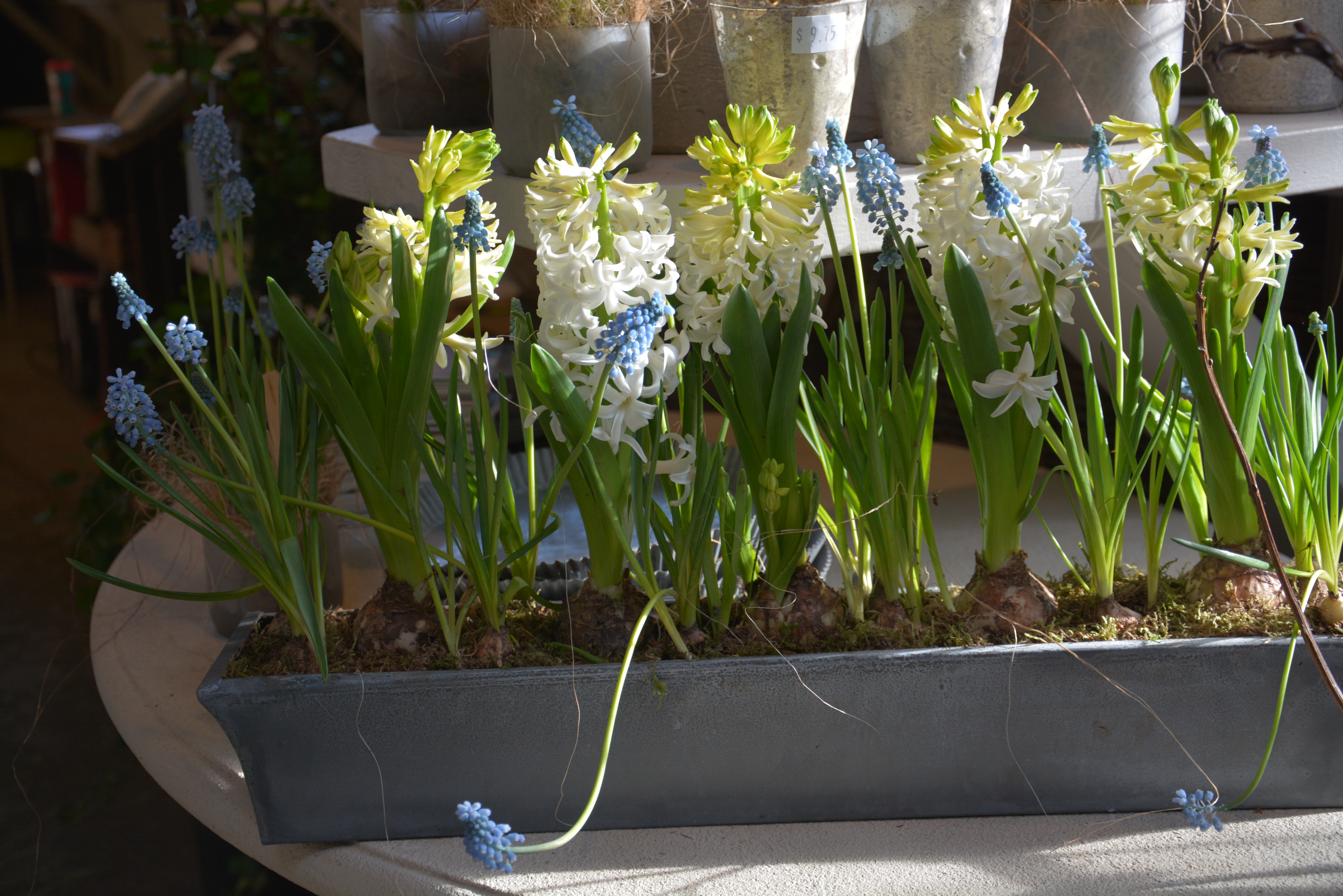
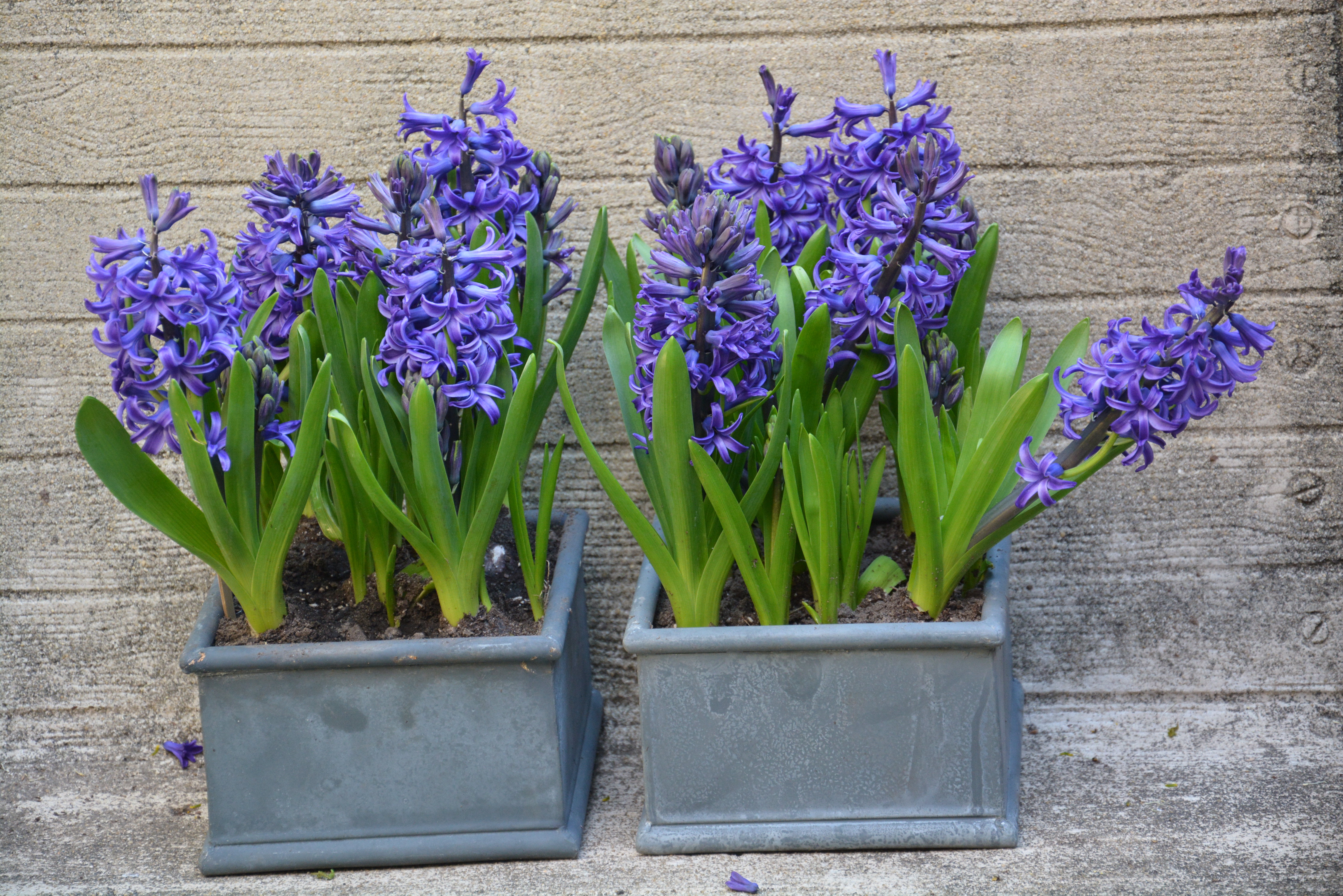
DSC_8655I would not say that any plant loves to be grown indoors.  I would say that a fair number plants tolerate life indoors.  Some low light tropical plants have the ability to adapt to interior conditions for years.  The successful culture of tropical plants indoors is not my expertise.  My interest in plants inside the house is confined to living through the madness I call March.  Some garden plants will tolerate a short stint inside on a sunny window sill, providing certain cultural conditions are met.  Spring flowering bulbs, once their requirement for cold has been met, will send forth leaves and bloom stalks in a low light too warm interior environment.  Don’t expect them to love the house for long.  Luckily, lots of nurseries carry pots of forced bulbs.  Buy lots, and stock your sunny window sills.  Restock when you need to.

DSC_8627

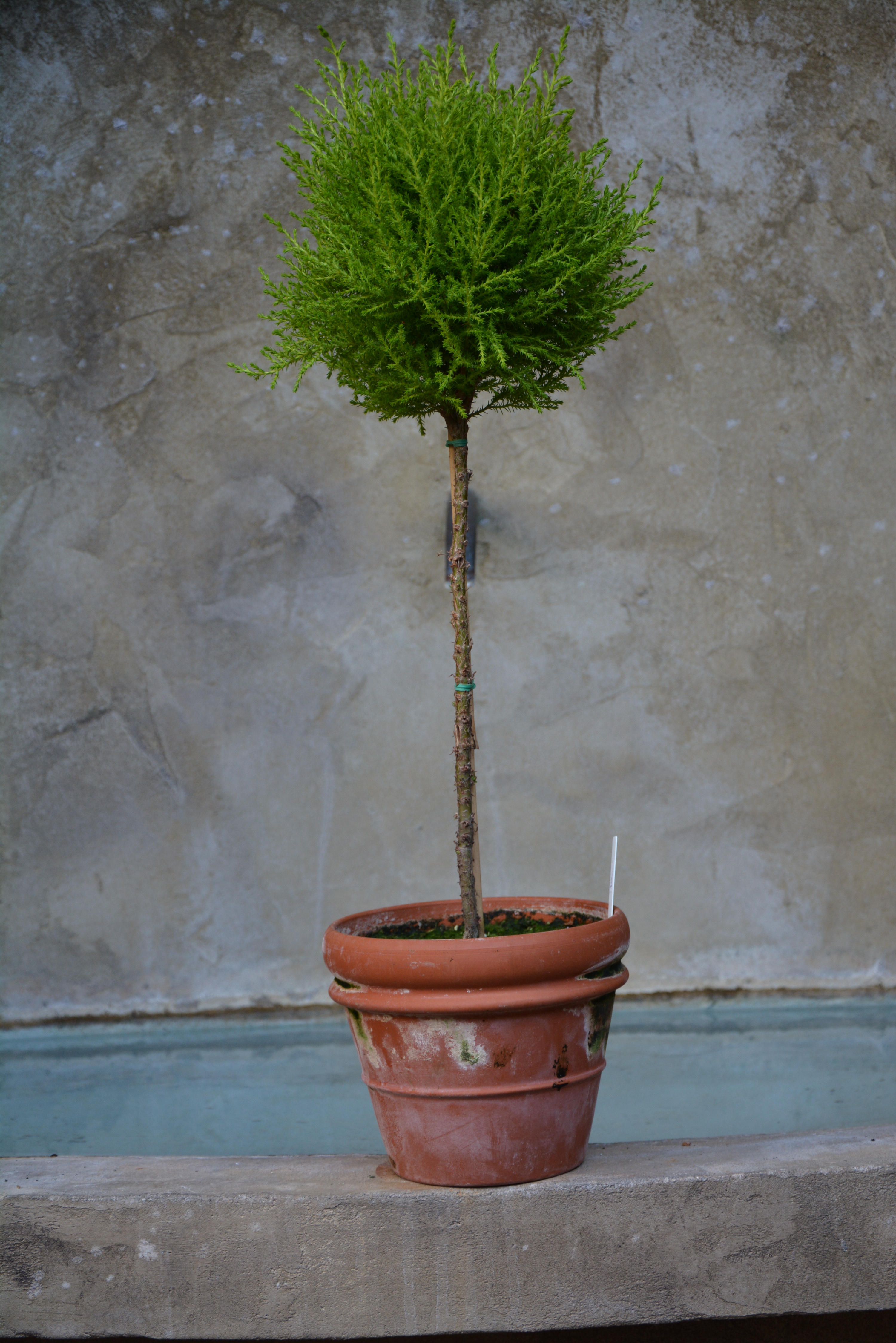
Lemon cypress is not hardy in our zone.  Hardiness zones refer to the hardiness of the roots of a plant-not the tops.  Lemon cypress can actually tolerate a good bit of cold.  Should you see a lemon cypress now that you have a mind to grow on this summer, chances are you can bring it along on that sunny window sill until the night temperatures are warm enough to move it outdoors.

DSC_8643Helleborus orientalis, and its hybrids, are incredibly cold tolerant.  They stir in late March.  They send up flowering stalks in April.  They are glorious in bloom, in late April.  In May, and in to June, the green tepels still look great.  Can you hold them indoors until the ground is ready to be worked?  Sure.  Give them the sunniest window sill you have.  Enjoy those gorgeous flowers.  Go easy on the water. Garden plants do not transpire or grow so much indoors.  If they are not growing so much, they don’t need so much water. Though they appreciate some sun, they would not appreciate the cooking heat from a radiator or heat duct.

DSC_8653I have kept ivy topiaries in the house over the winter plenty of times.  I err on the side of dry.  I give them the best sun I have.  A sunny window sill indoors is but a small shadow of a sunny place outdoors.  For plants lacking sun, dial back the water.  Plants in full sun outdoors transpire a lot, and need a regular drink.

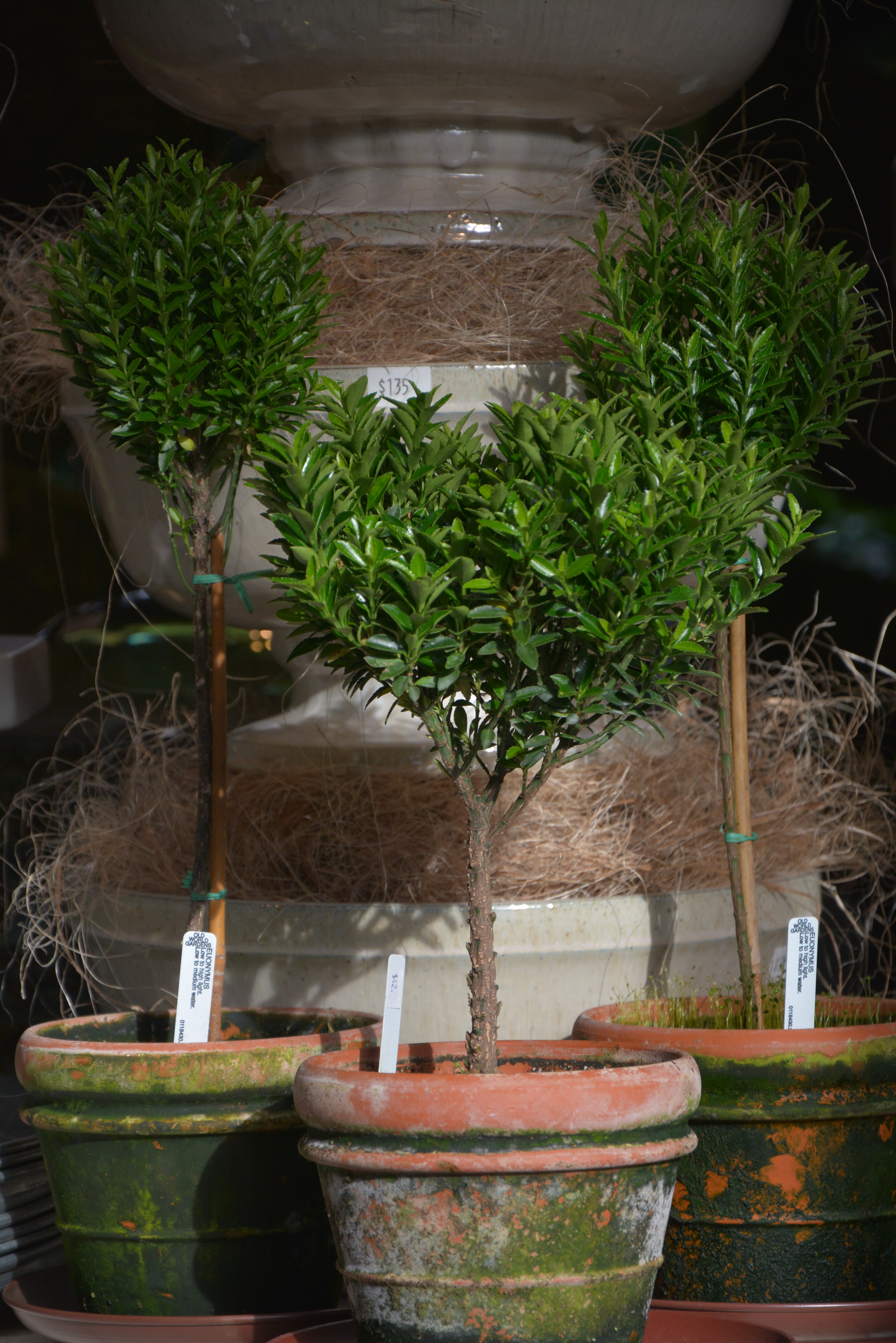
DSC_8658Myrtus communis is an evergreen shrub in zone 8.  They like full sun, but will tolerate some shade.  What they will not tolerate is getting too dry.  As they are willing to be trained and pruned into topiary forms, they are a popular garden plant for indoors for the winter season.  Garden plants that are being grown indoors are not so much growing on.  They are holding on until they can get back outdoors.  This makes growing myrtle topiaries indoors dicey.  They need just enough water, not too little and not too much.  They are much easier to kill than grow.  As for the table in the above picture, do not try this at home!  Myrtle topiaries may look great on your dining room table or mantle, but they cannot be grown in the dark.

DSC_8665Myrtles grown indoors are great on an interior table for a party, or a weekend, but any longer that this in the dark will bring trouble.  Plants need light to survive.  Some gardeners buy myrtle topiaries in pairs.  One sits on the kitchen counter while the other has a sunny cooler sill.  Once every 3 or 4 days, the plants switch positions.  Forced spring flowering bulbs are much easier to keep indoors than a myrtle topiary.  Once they start to grow, they are programmed to bloom.  They will do their destiny unless impossibly challenged.

DSC_8667English daisies are available now.  Their small scale makes them a great choice for the average shallow window sill.

DSC_8676

The idea is just to have a small sign of the garden inside the glass.  Long enough for the season to turn.

DSC_8679My office has very deep window sills, and faces south.  There is room on them to bring on some rare hellebores that were only available as very small plants.  The windows are very tall, so the space is light.   I have to look in on them over every day, watching the water, and turning the pots so every side gets some of that sun.  What started out being a chore has become a ritual I am enjoying.

DSC_8663They are saying 50 degrees here next week.