The Window Box

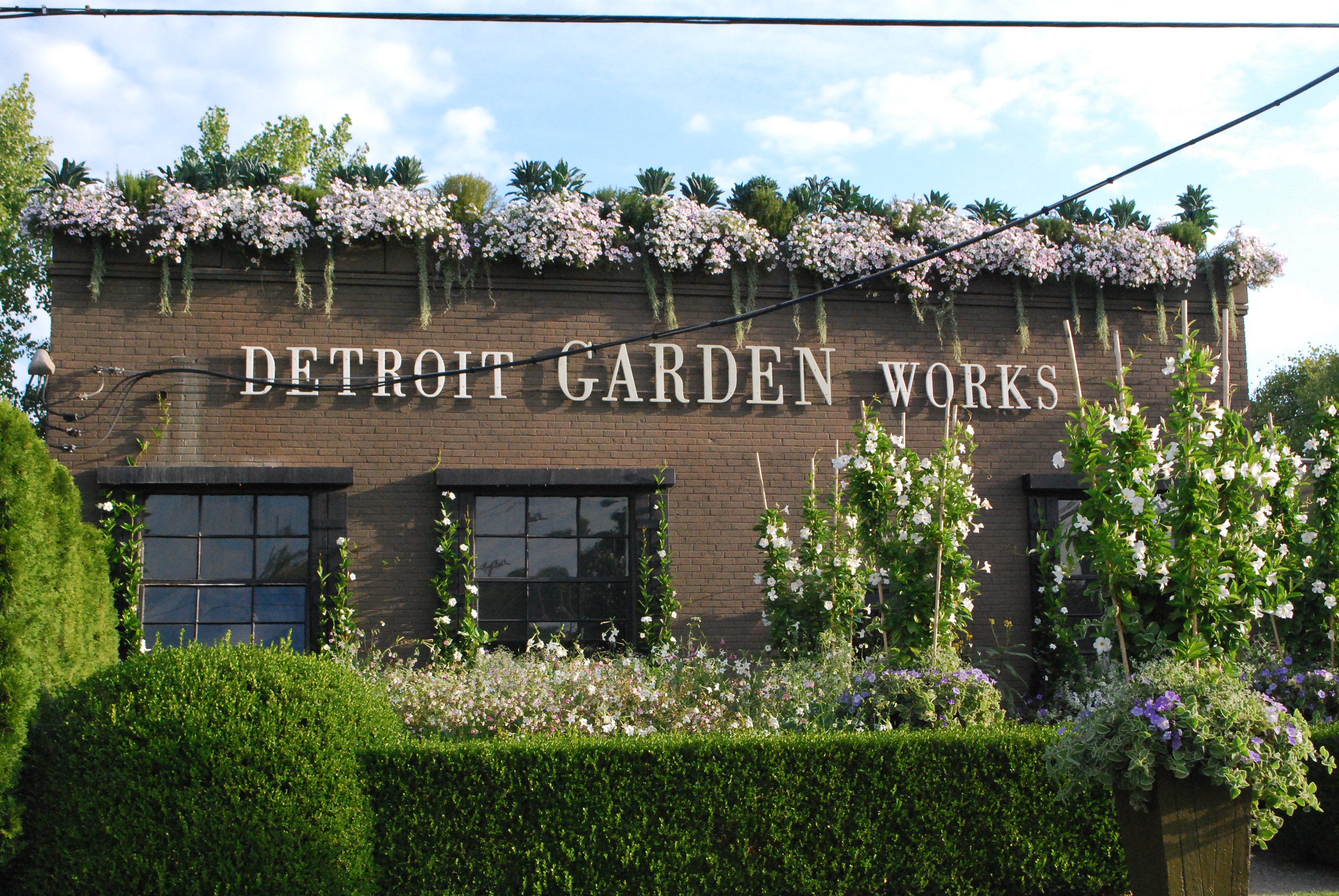
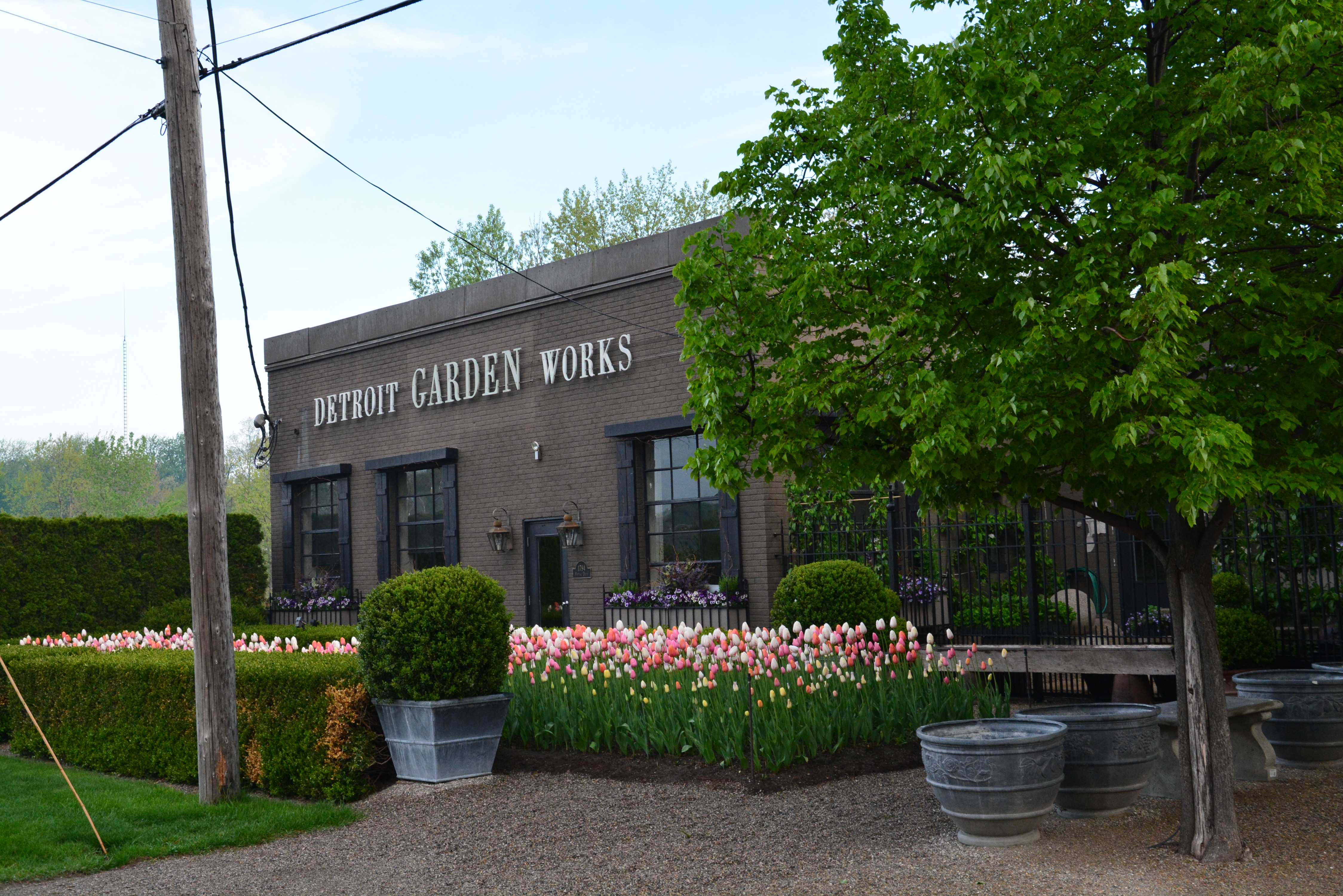
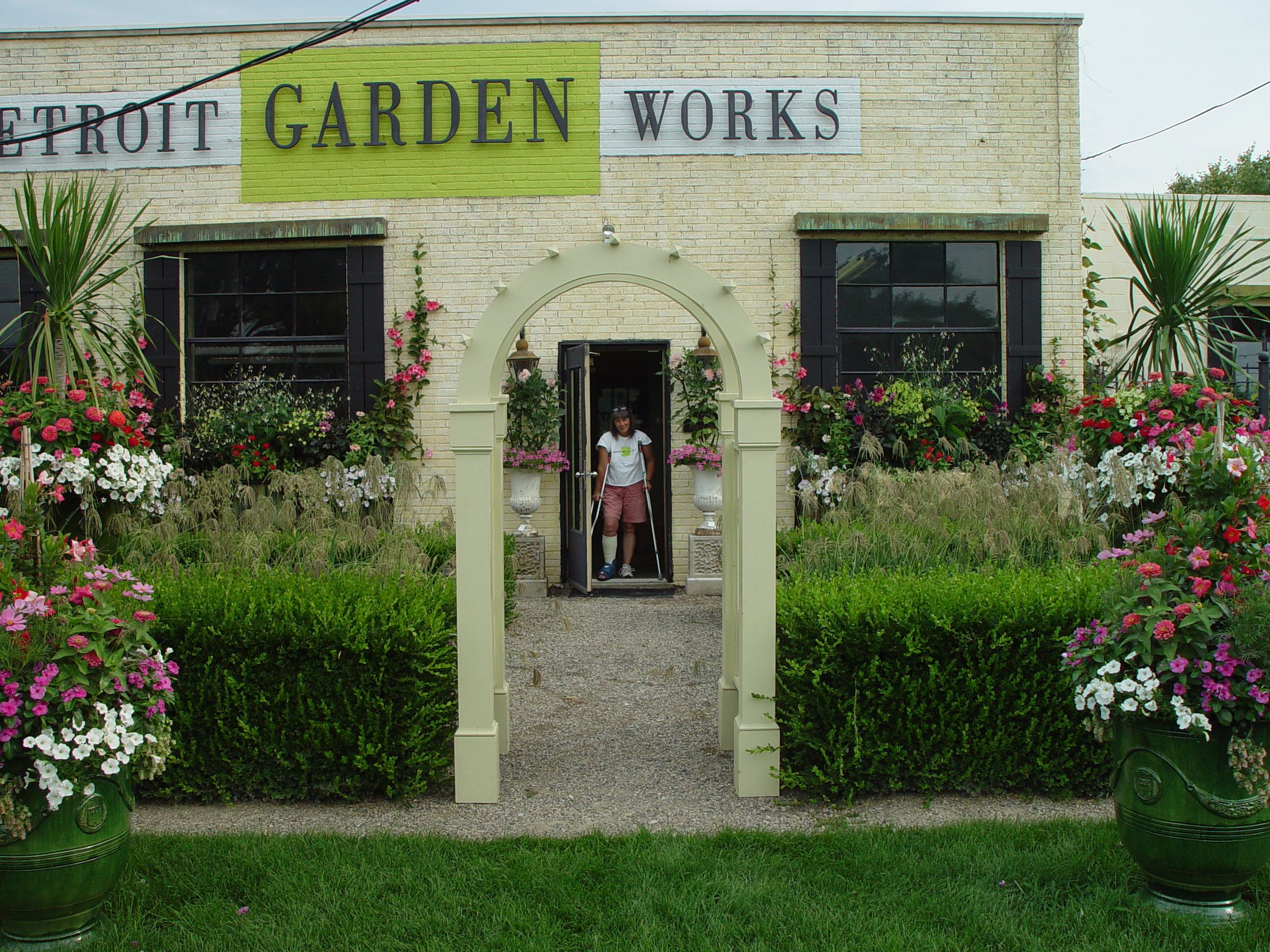
Detroit-Garden-Works.jpgI cannot remember what summer it was that I broke my leg, but I do remember being happy that it came after I planted the garden in front of the shop. In fact, I could have planted the window boxes dealing with a broken leg.  Window boxes are at an easy height to plant, and of a scale to encourage and support any planting idea. The shop garden is not so complicated.  A boxwood parterre, lots of gravel, and three big window boxes.  The big window boxes are the star of the summer show.  How I love planting those window boxes!   I am a big fan of generously scaled window boxes.  The planting is at counter height. Easy to plant.   A window box is a cross between a container planting, and an in ground planting.  There is more room and opportunity for a detailed expression in a window box than a container.  A window box can be filled with the most compost rich and friable soil.  I like planting with my fingers.

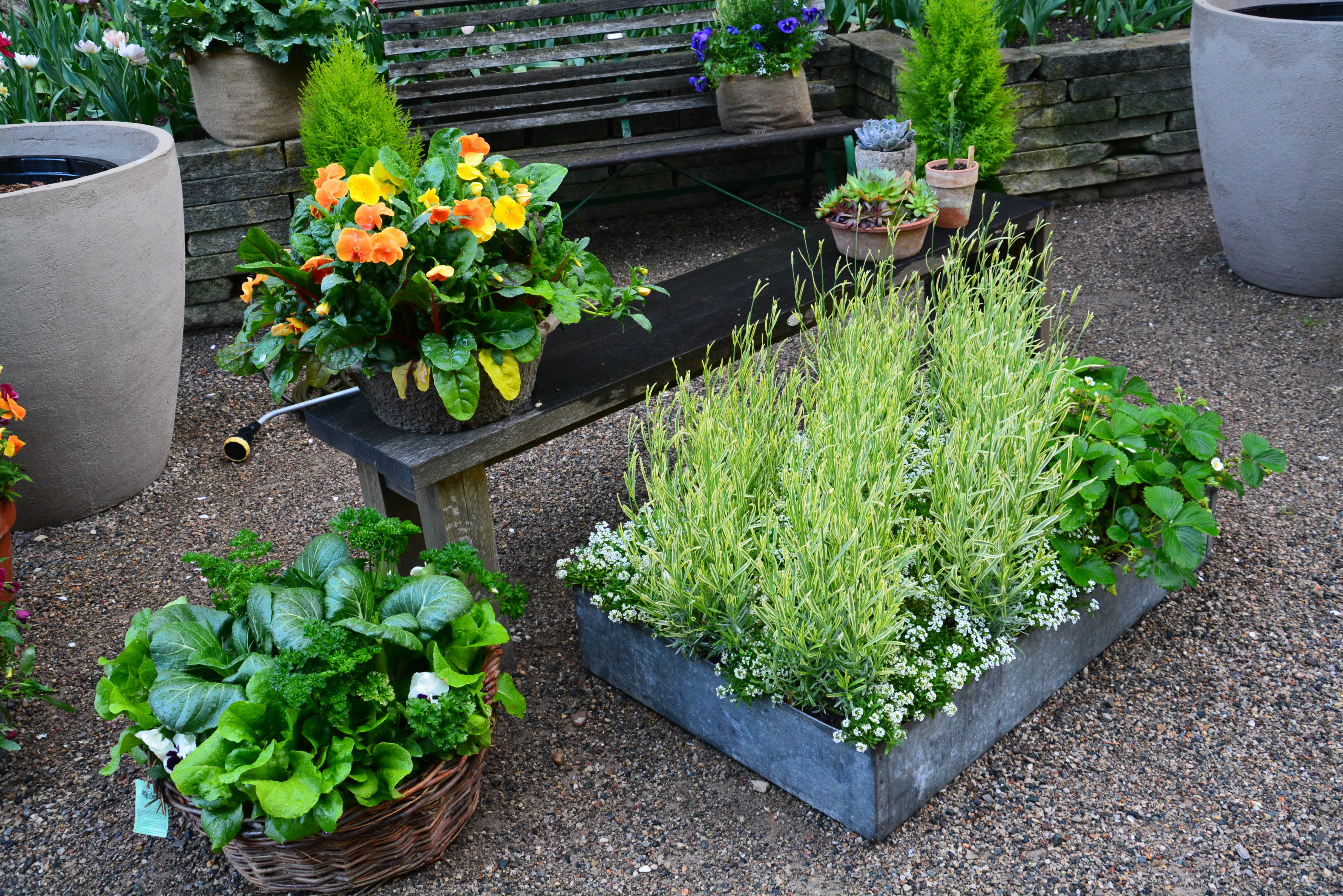
OLYMPUS DIGITAL CAMERAPlanting annual beds in ground requires a lot of digging  and turning with a shovel.  The work of this is daunting.  Real work.  Sometimes annuals planted in ground at grade do poorly.  Heavy clay soil, or sandy soil, can contribute to a poor show.  I like bedding out for the summer with my choice of soil, great drainage, and a place to work that is elbow level.  Planting in ground comes with a whole host of trouble.  I like minimizing the trouble, and maximizing the opportunity.   Big window boxes are my idea of a venue that affords lots of expression with not so much digging. I have seen plenty of window boxes that are 8″ wide, 4″ deep, and 18″ long.  What does one plant in a box of that edited a dimension?  Succulents are a good choice.  But if succulents are not your style, make bigger boxes.  I like window boxes that are wider than the window, deep enough to hold moisture for 2 days, and wide enough to plant plenty of plants.
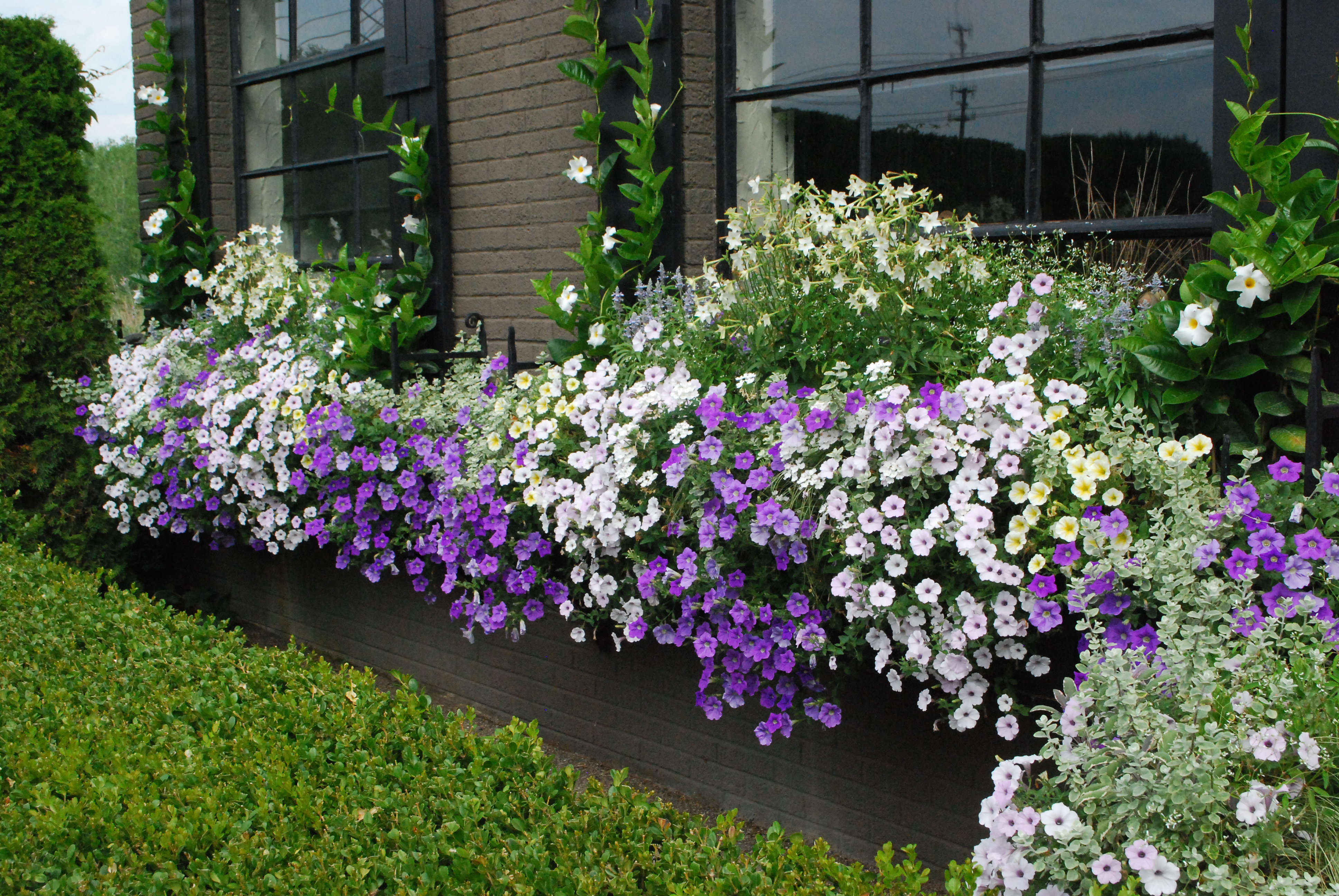
mandevillea 2012 014Most commercially manufactured window boxes are made to sizes that fit UPS shipping requirements.  What gardener wants to be limited by those dimensions?  An investment in a custom sized window box will result in a lifetime of planting pleasure. The boxes at my shop are roomy.  I would suggest that if you have a mind to invest in window boxes, go for roomy.  Plants need a place to live.  They do not so much mind being crowded by a neighbor.  But they do need some space to put down their own roots.
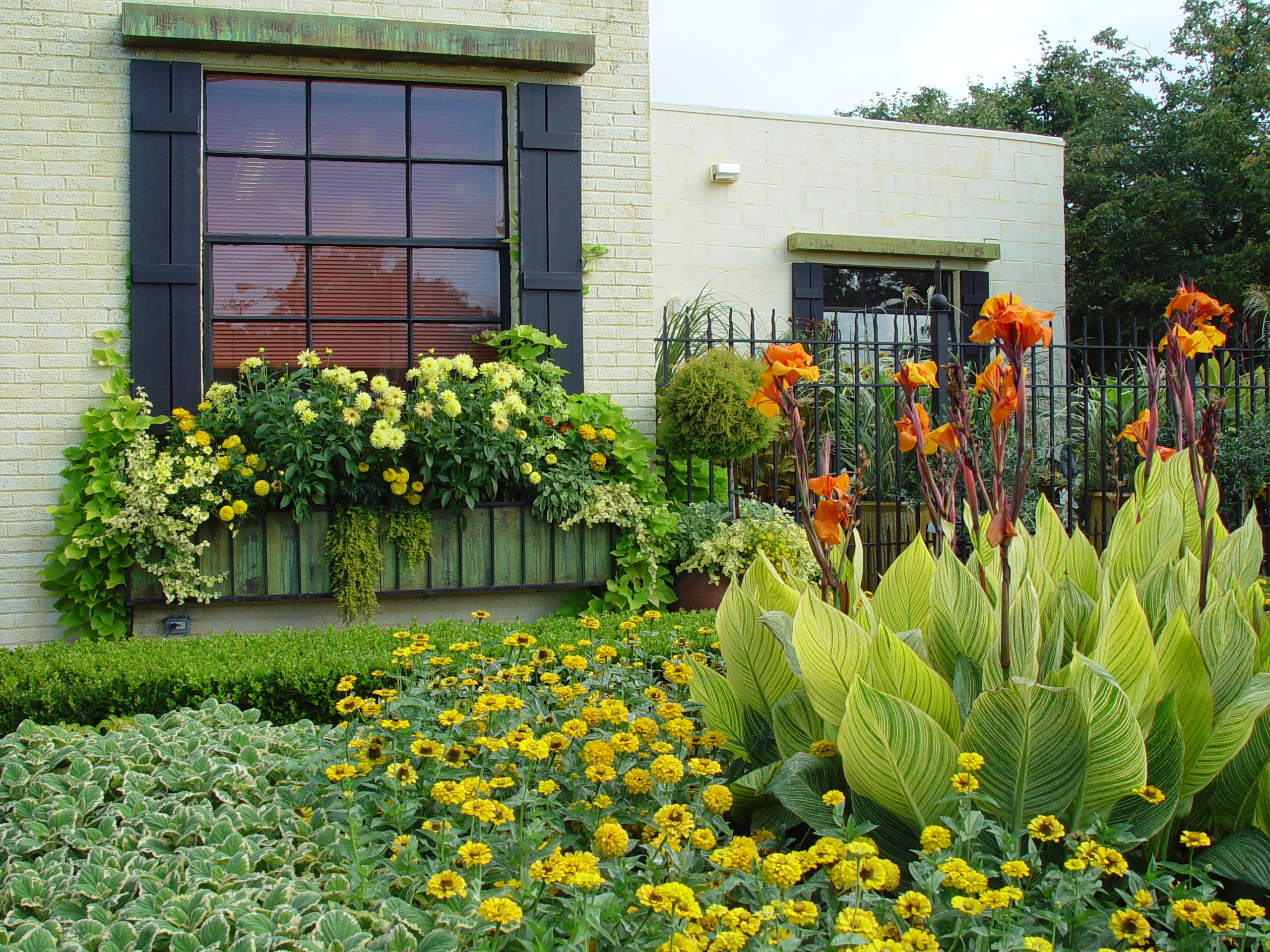
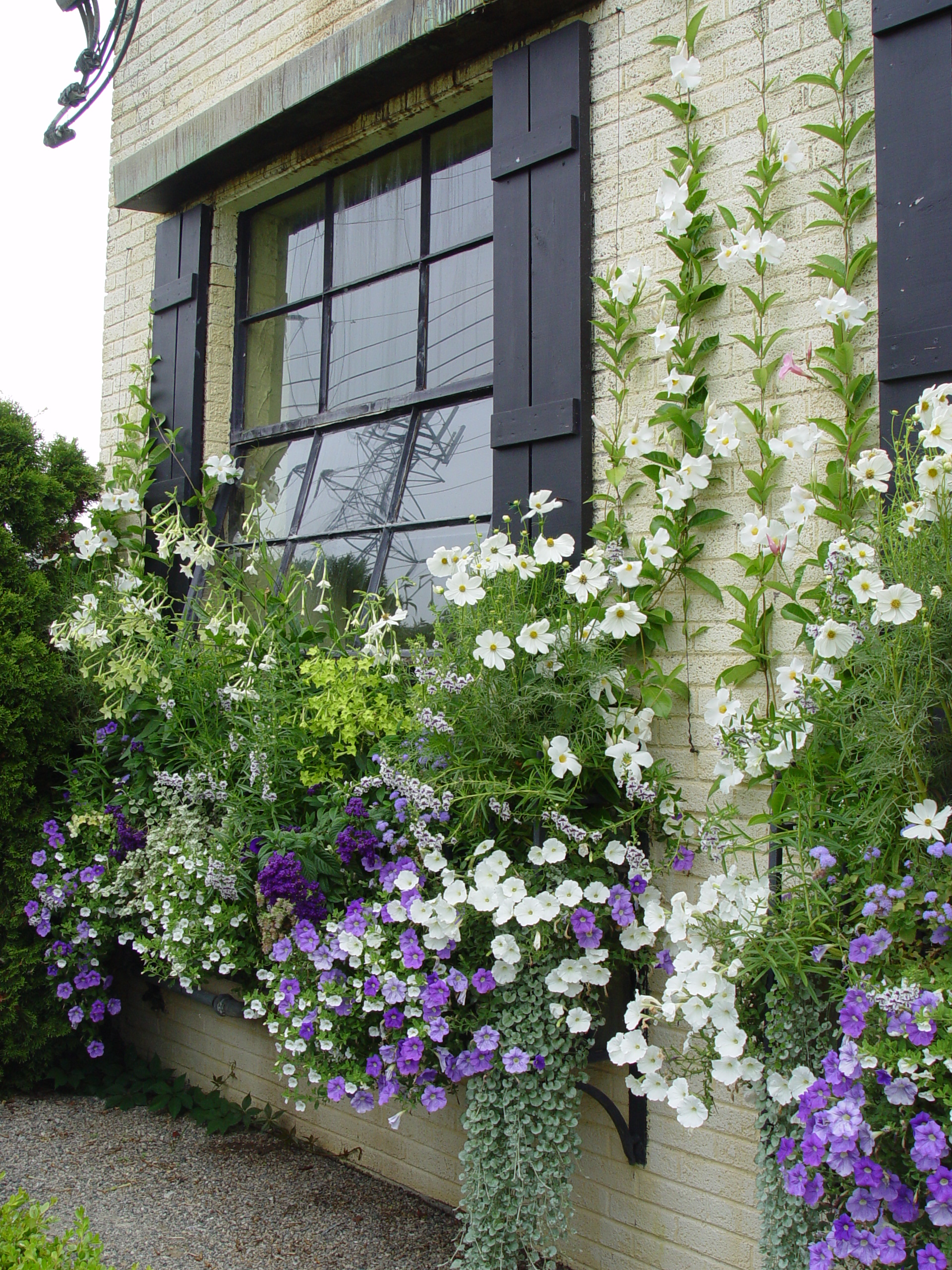
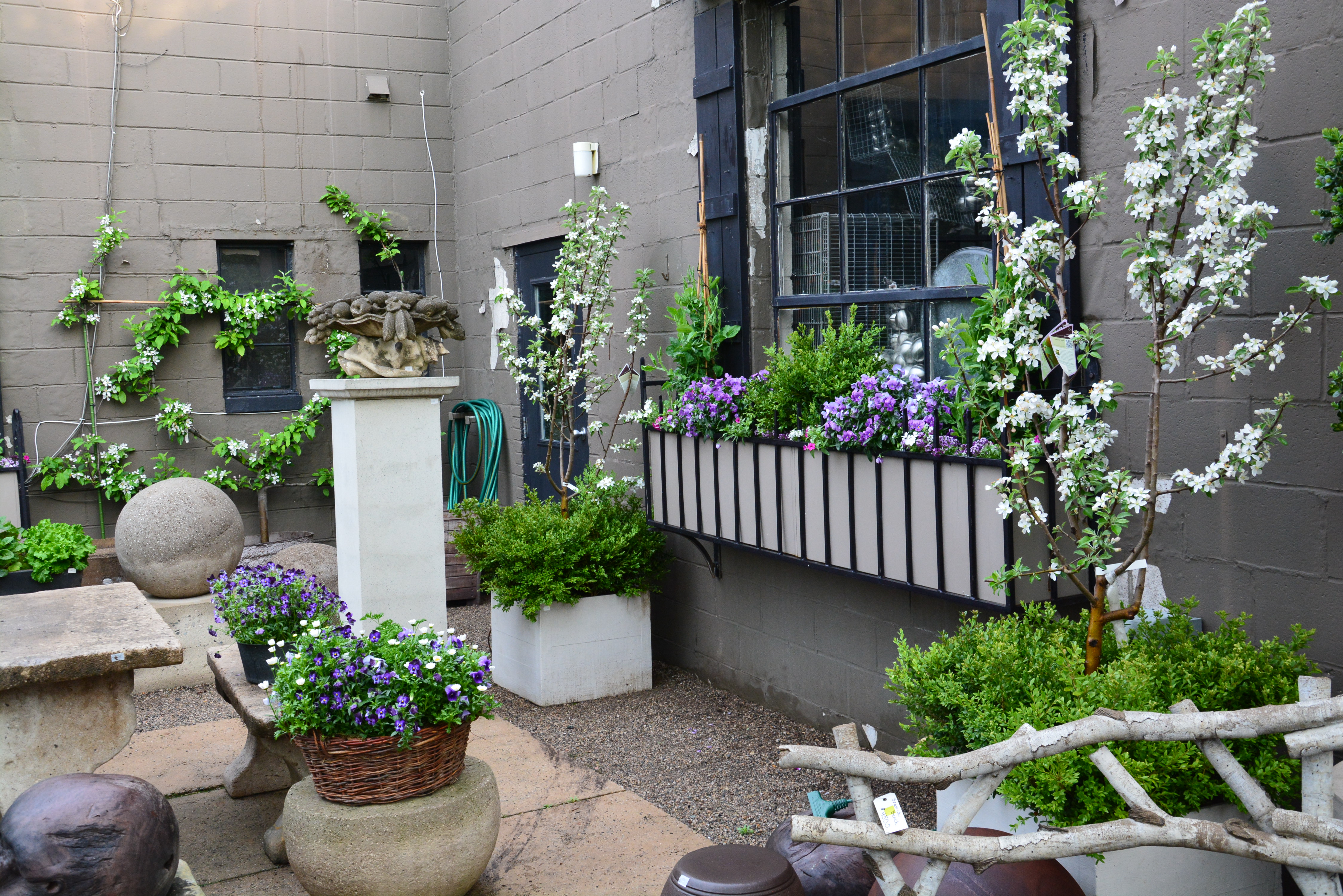
DGW13You can see from this picture that my window boxes are wider than my windows.  And wider than my shutters.  In my opinion, whatever element is closest to the ground needs to be the widest and most visually sturdy element. A window box is a foundation which complements the window.  Any planting box framing a window is an empire.  Size those boxes accordingly.
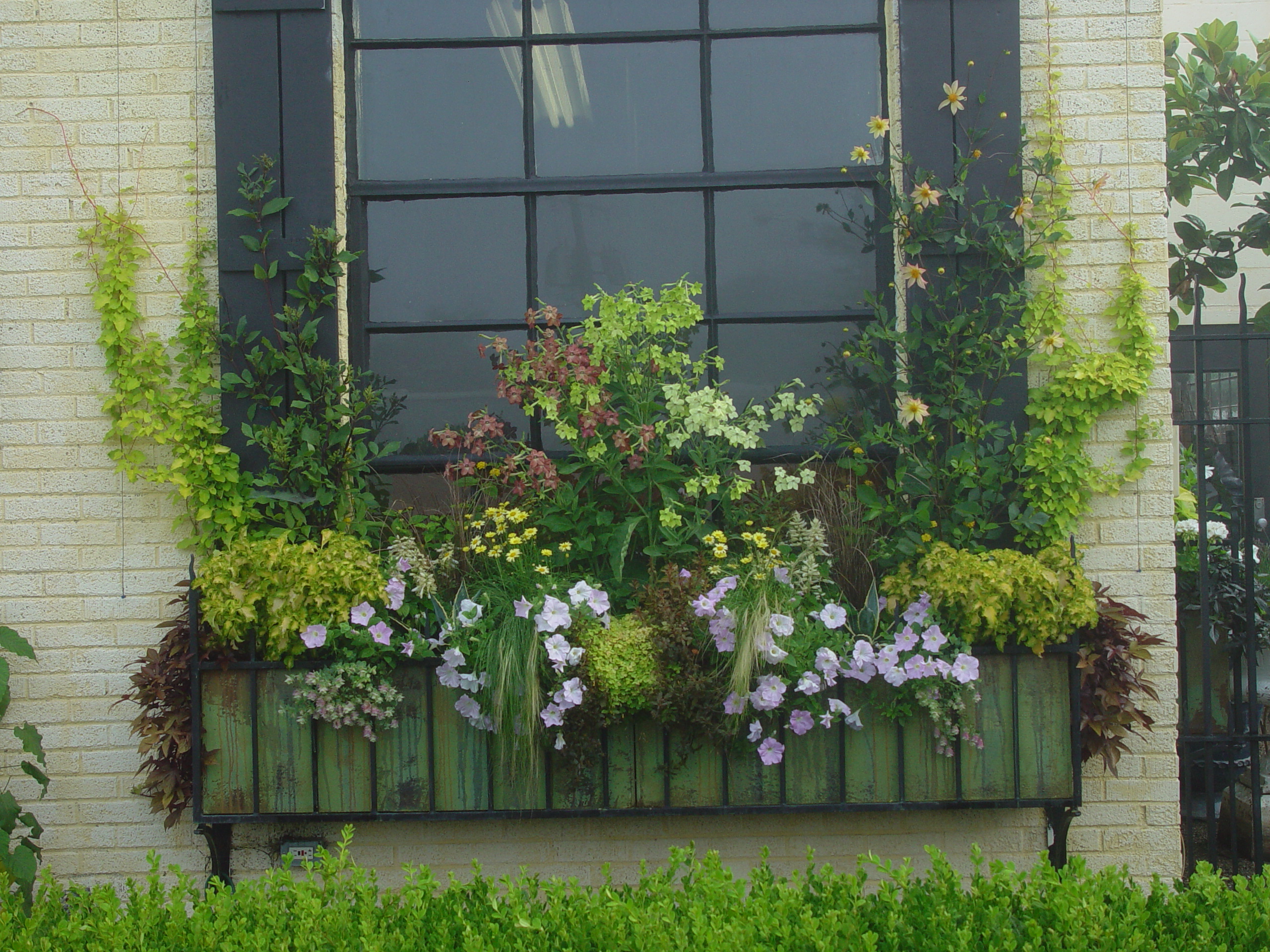
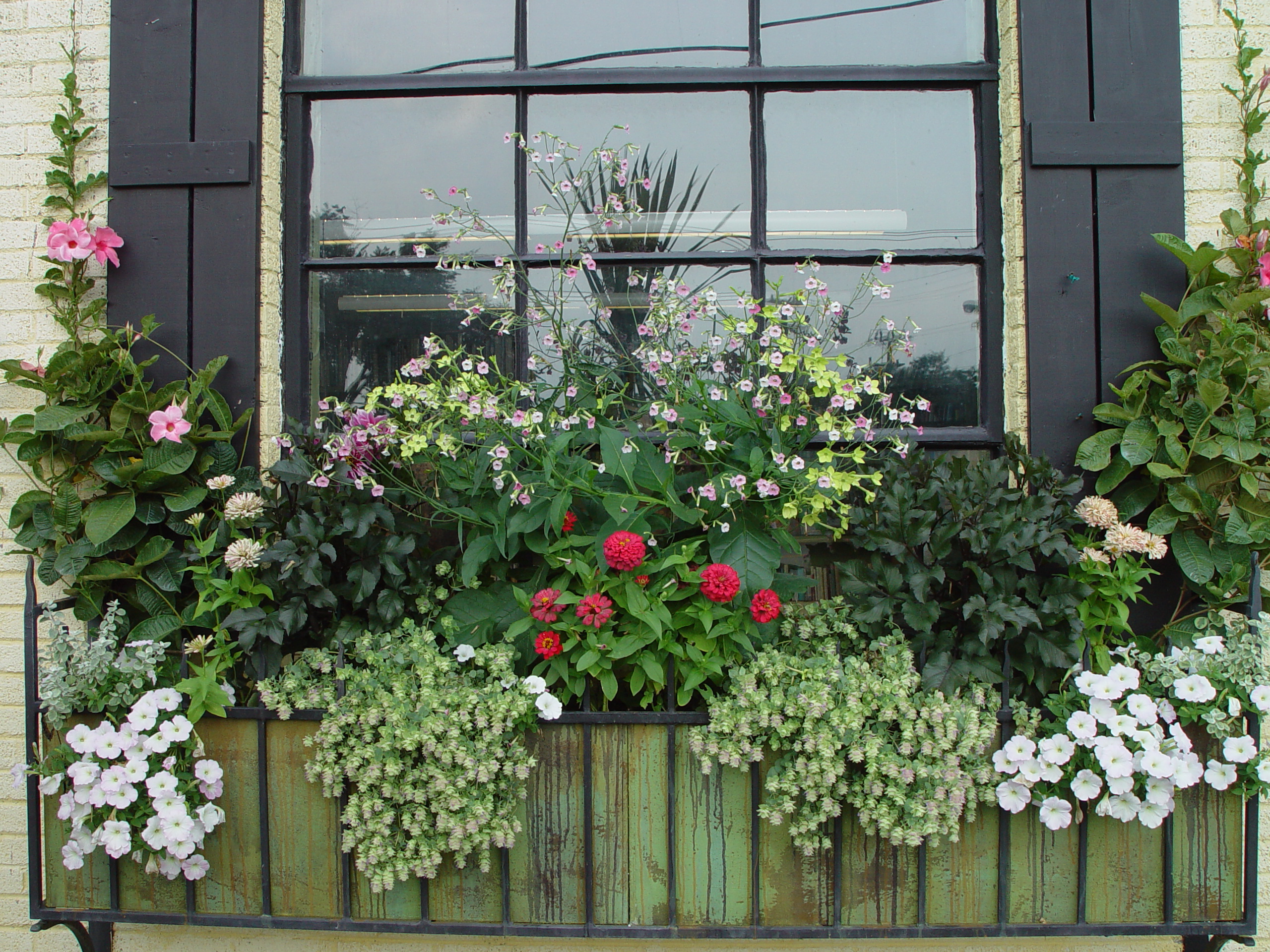
DSC09624The window boxes at the shop are of a size that enables me to explore an idea about color.  A story about texture.  These boxes, which have been my pleasure to plant for summer once a year, for 18 years, are little cities.  The have a style.  A language all their own. A particular set of rules.  A commentary on design. A look.  The day I plant them is a good day indeed.
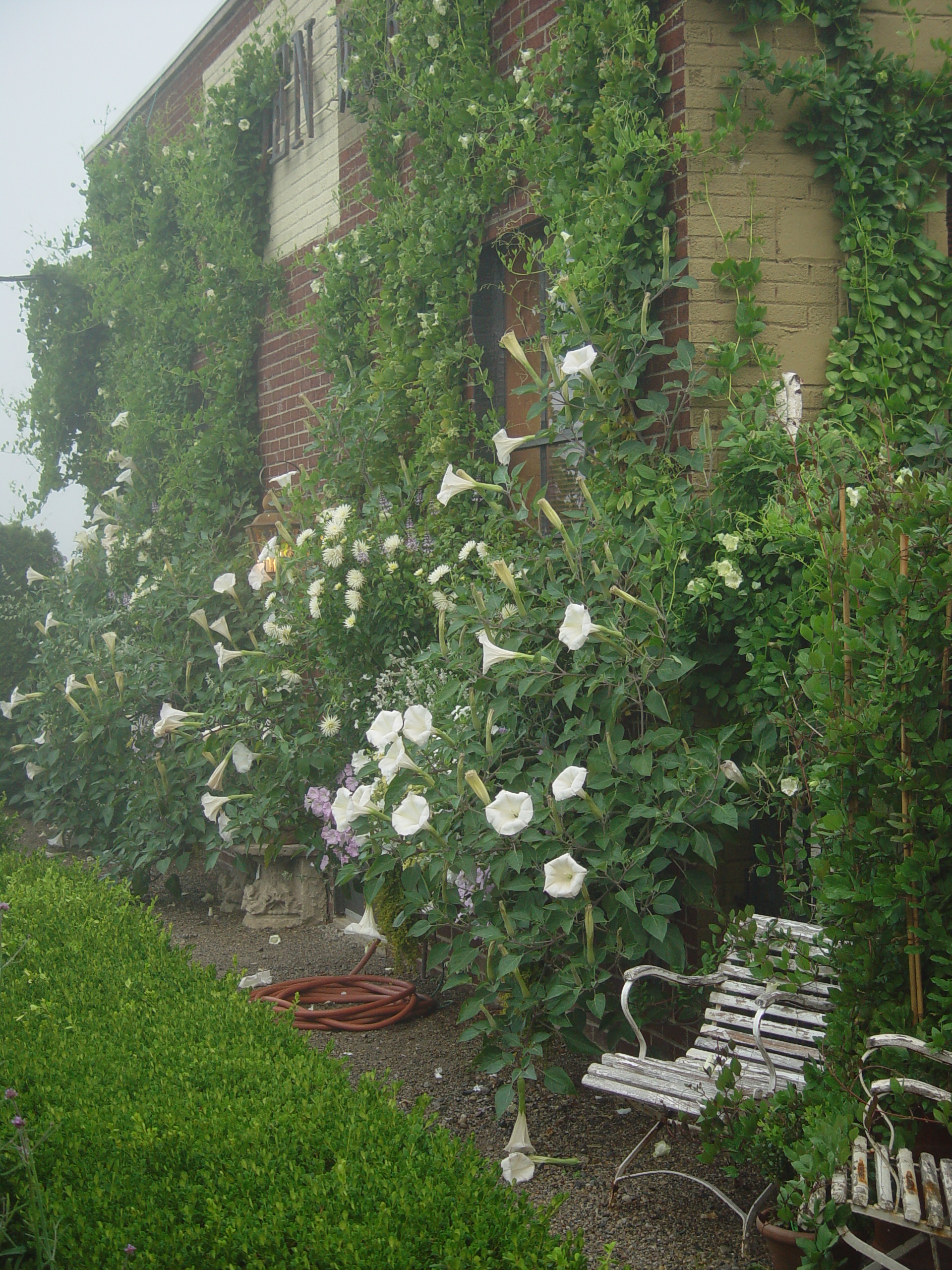
gleason0The window boxes take on a life of their own, once I have planted them.  They grow out, however they will.  The best part of any planting is seeing how nature responds to my ideas.  The big idea is to give every voice a chance.  And chance what you will. A properly scaled window box means you have room to explore.
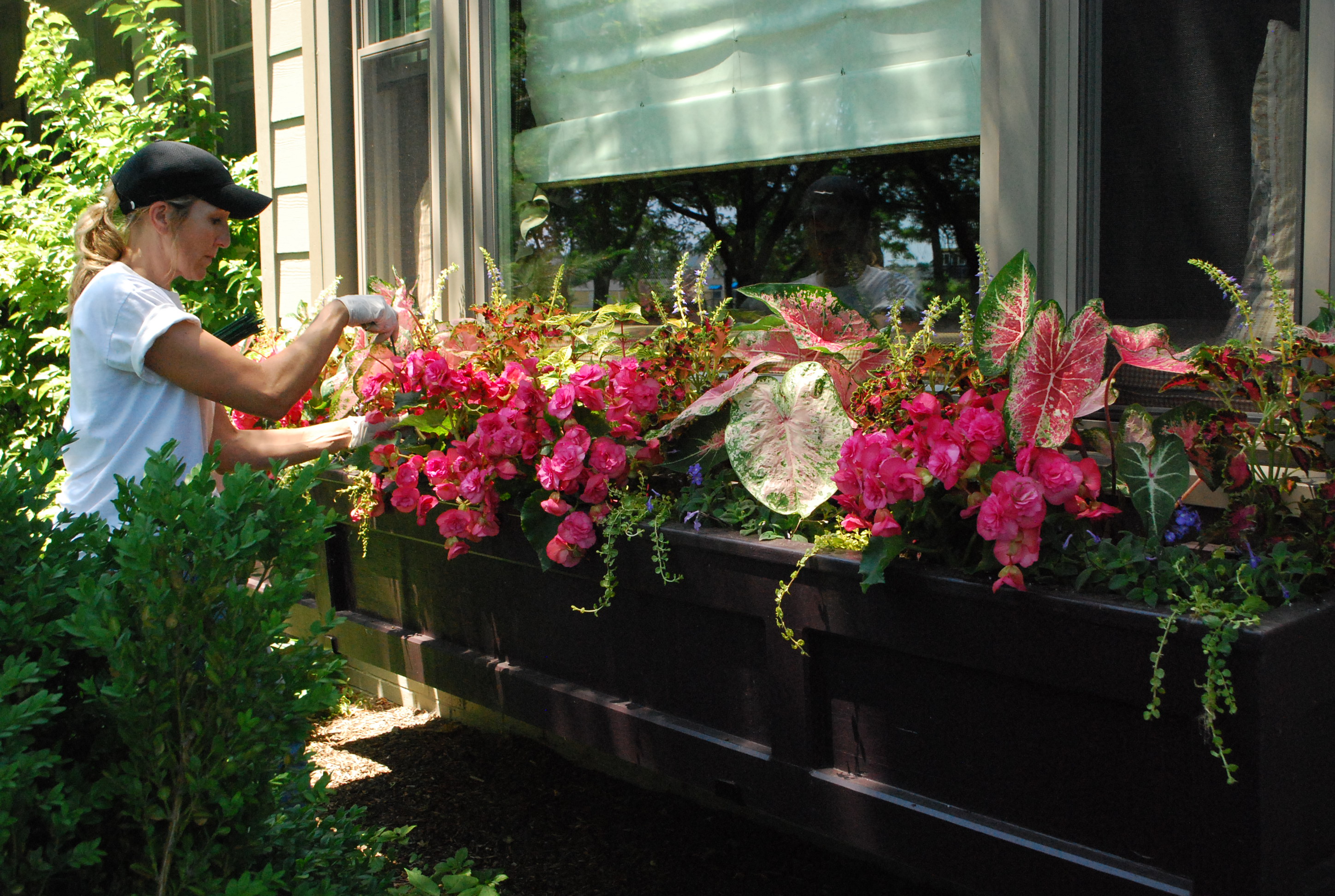
 

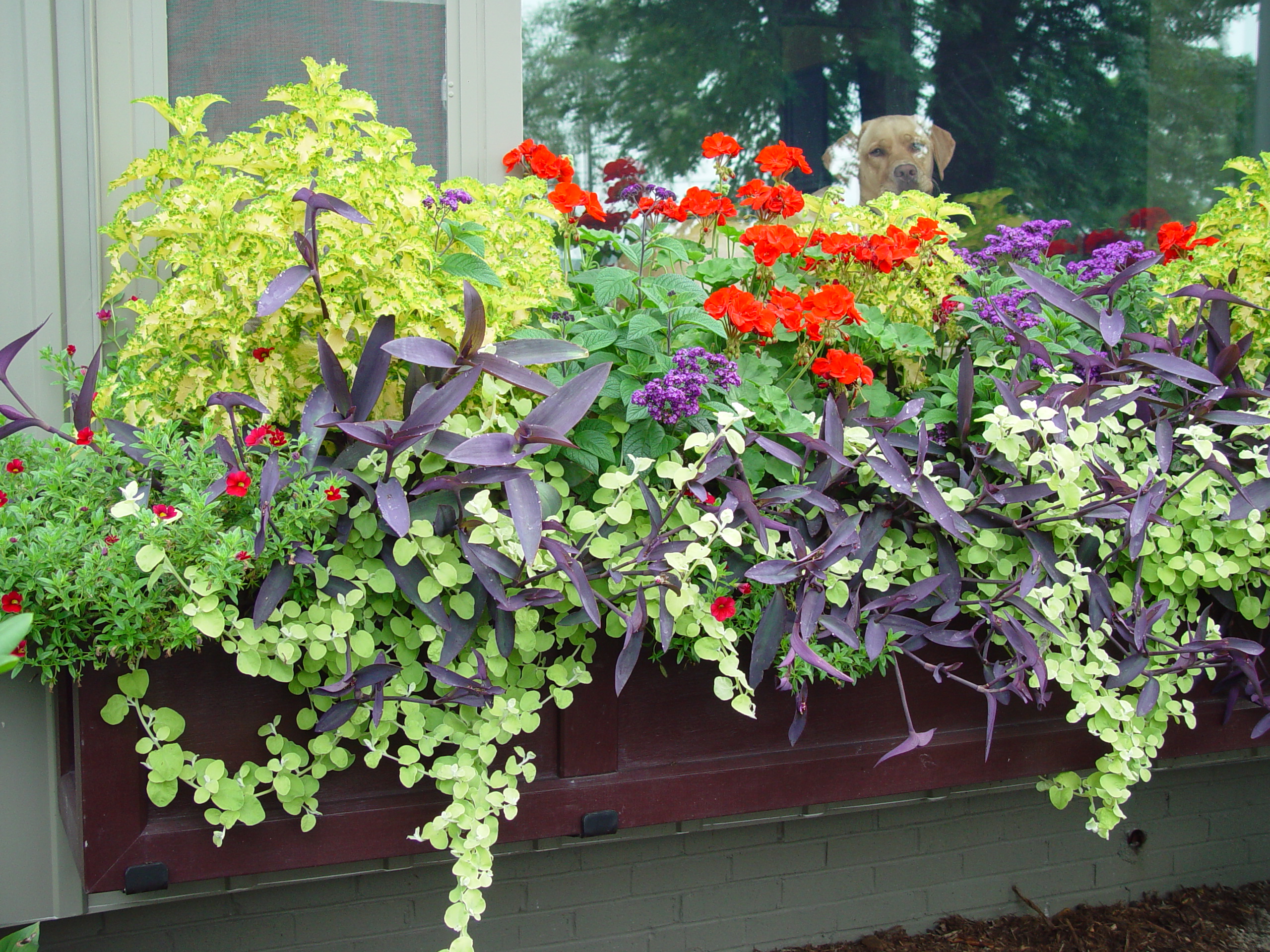
Opperer 2011 042Shade window box

DSC09008

shop boxes

Picture 006shop box


DSC_2670window boxes made to fit on a wall

Derda (3)window box planting

Celani 8-07 (42)roof boxes

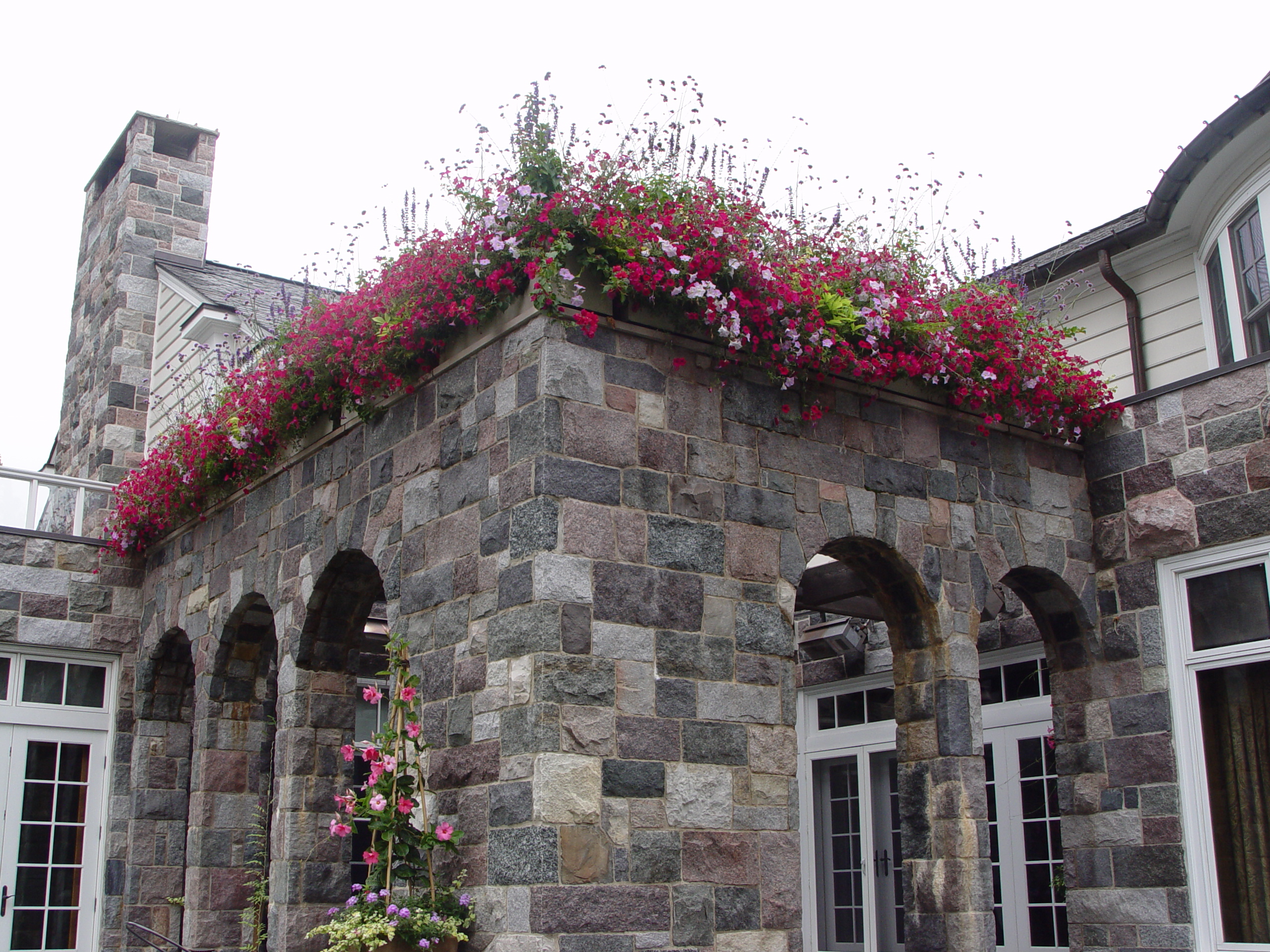
Sept 16, 2012 043The roof boxes at the shop last year were as good as I could make them.  All of my boxes provide me with a chance to grow a community of plants on to a greater visual good.  Thinking about window boxes?  Go long and deep.  You won’t regret it.


Garden Design Magazine

the new Garden Design magazineThe new Garden Design Magazine just came out.  The original magazine, which was greatly appreciated by aficianados of great landscape and garden design, quit publishing a few years ago. The rights to the magazine were eventually purchased by Jim Peterson.  What he has created comes from a vision all his own.  The 132 page publication is more book than magazine.  Everything about it is beautiful, including the paper it is printed on.  If you have a strong interest in landscape and garden design, I would urge you to subscribe.

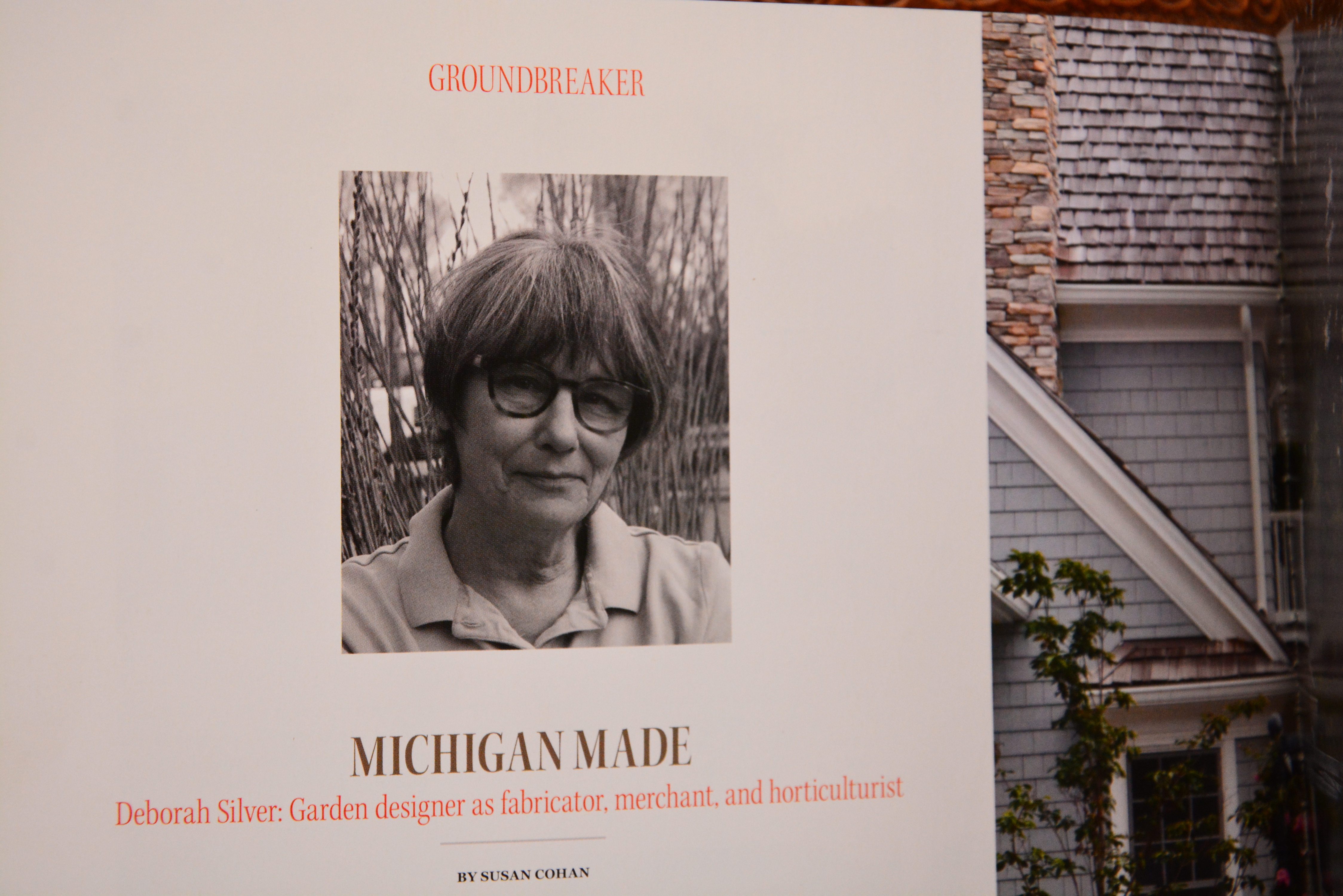
DSC_0936We have another reason to be thrilled with this premier issue.  A feature article about my work, and the evolution of my group of companies, is a very special moment for me, indeed. Most important to me is being part of a group of great designers from all over the country whose work is detailed here.  Thank you, Jim. If you are local, we do have copies available at Detroit Garden Works.

landscape-design.jpgwww.deborahsilver.com

May 20 2014 (3)Deborah Silver and Co, Inc container design

Detroit-Garden-Works.jpgwww.detroitgardenworks.com

May 13 2014 (22)Detroit Garden Works

May 20 2014 (7)Detroit Garden Works

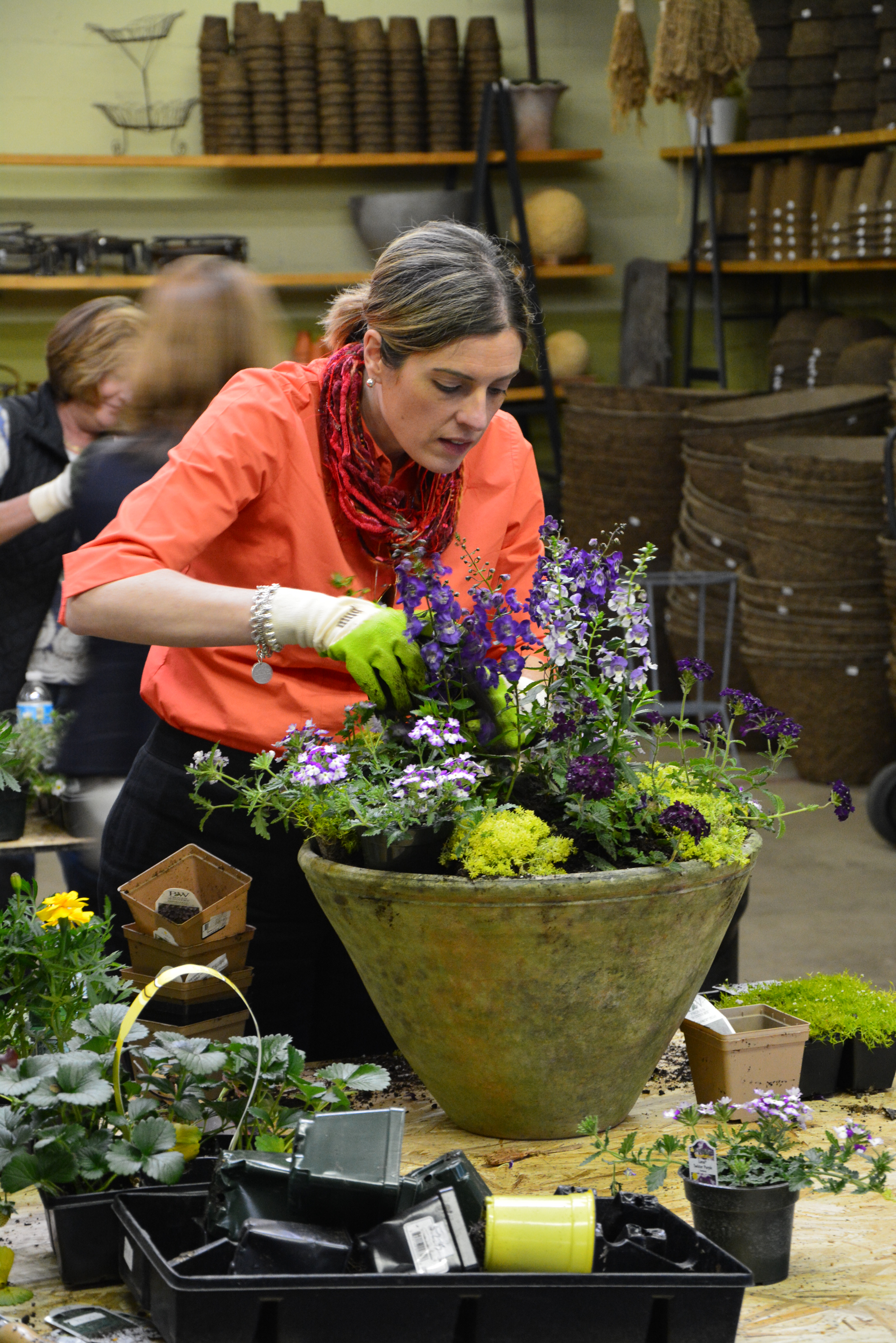
May 19 BHG (18)planting workshop at DGW

May 13 2014 (9)the shop

May 16 2014 Branch (7)www.thebranchstudio.com

Oct 3 2013 (22)pergola fabricated by Branch Studio

fountain 1the branch fountain

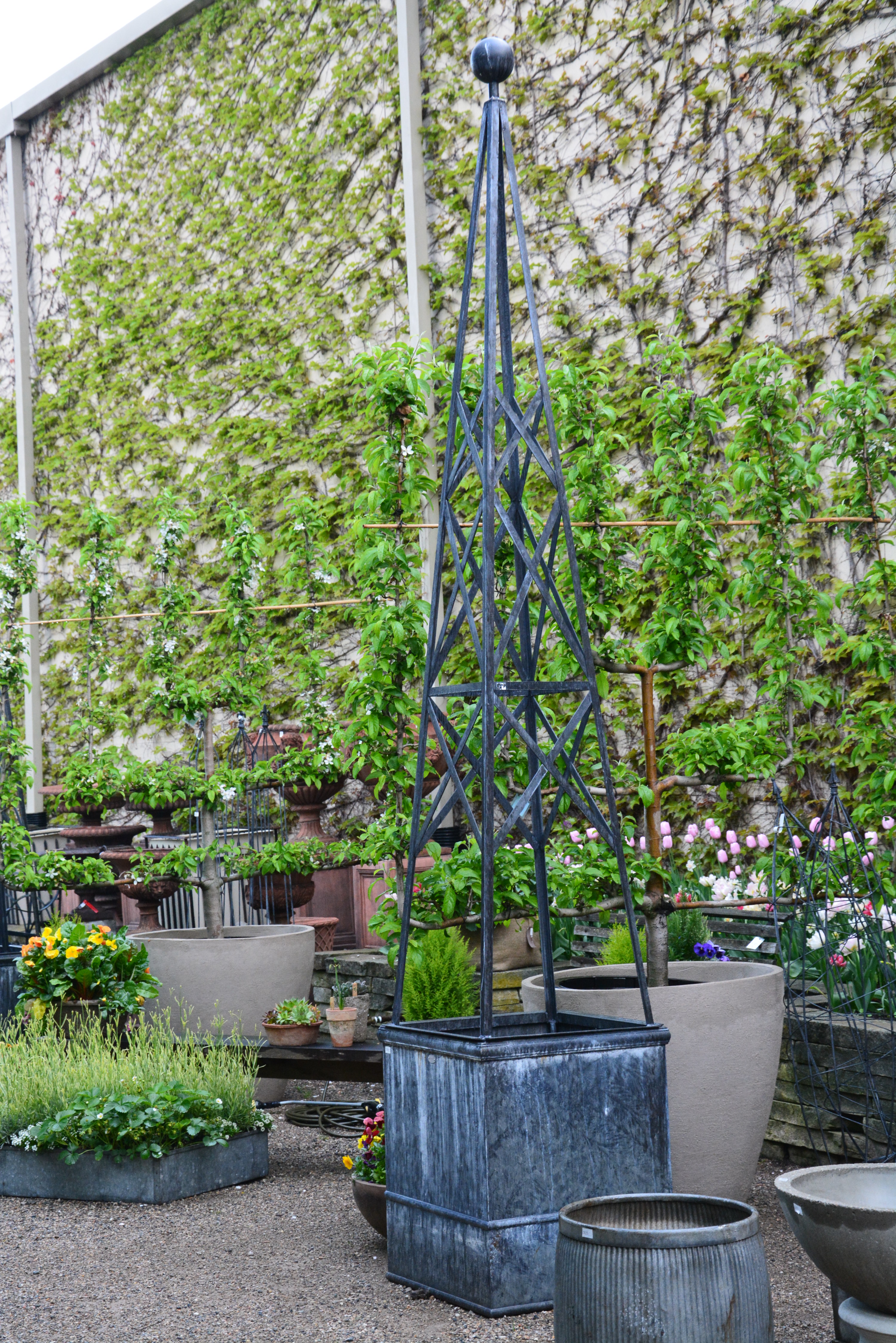
May 20 2014 (9)box and derrick topiary form by Branch Studio

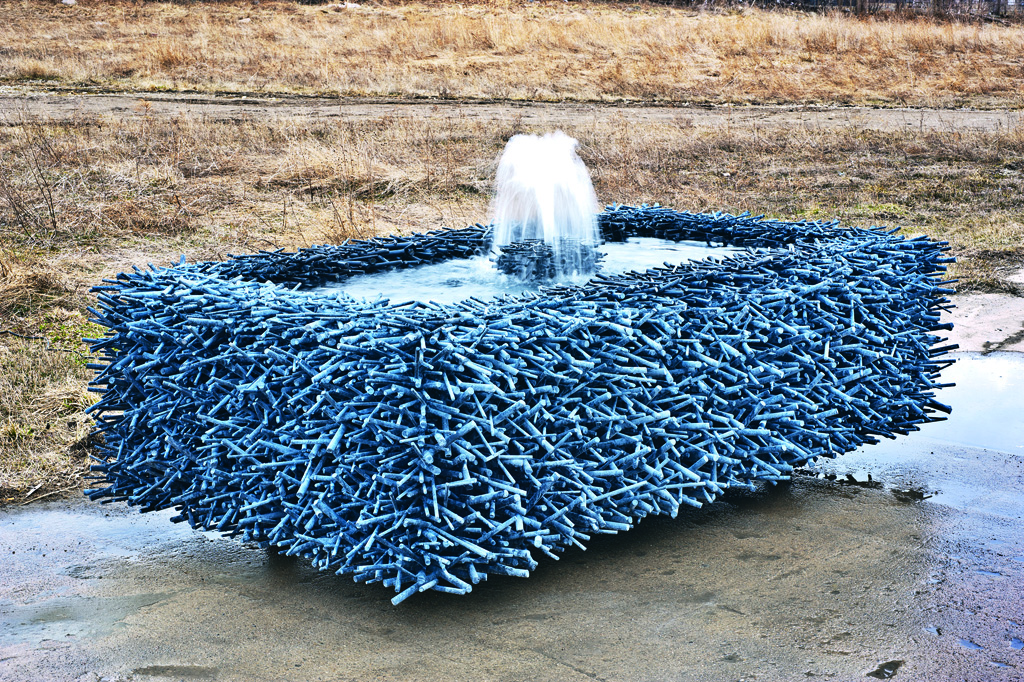
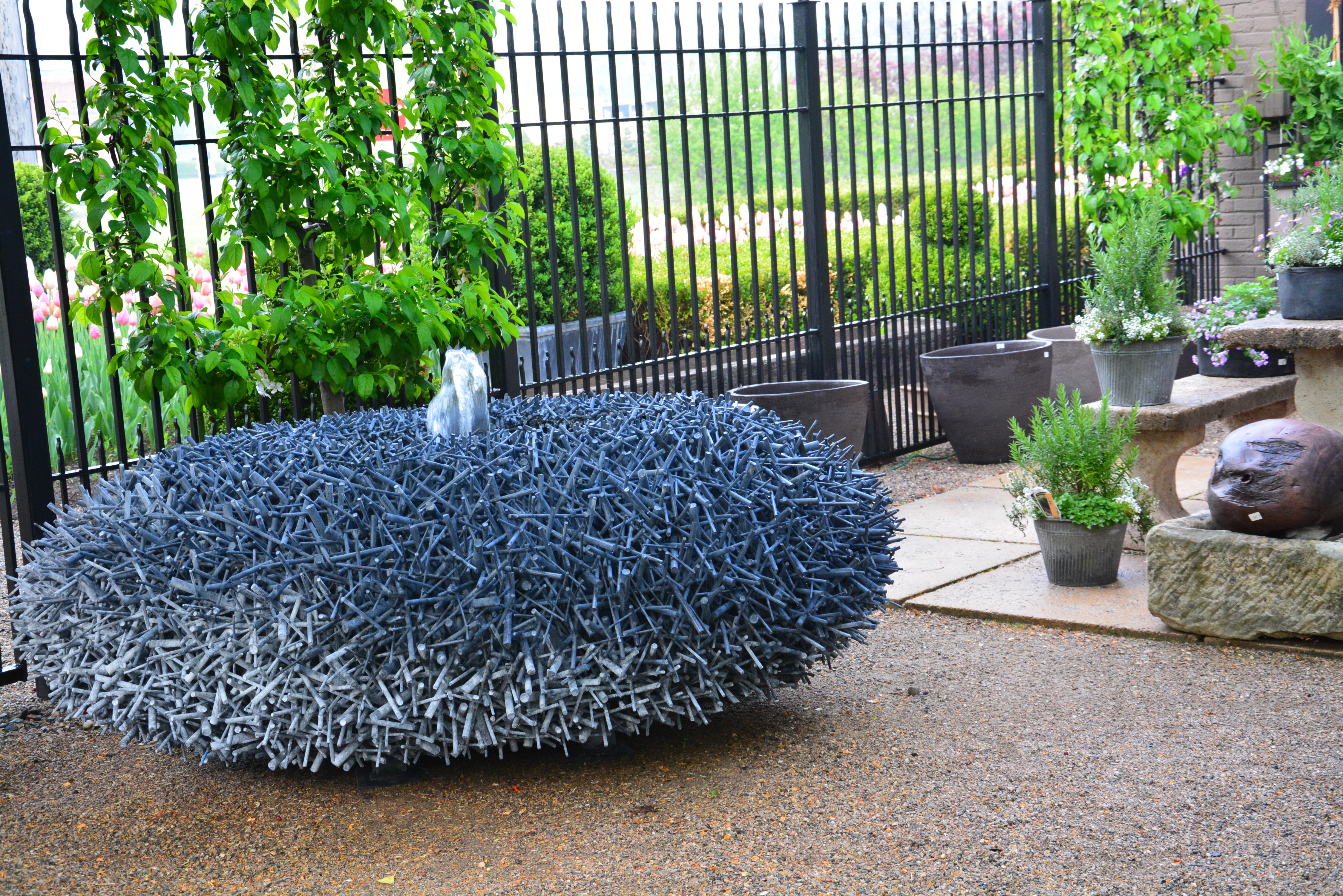
May 20 2014 (8)elliptical fountain by Branch Studio

May 19a 2013 (3)

My deepest thanks go to landscape and garden designer and writer Susan Cohan, whose article is a gift of a most perfect moment to me.

Who’s Choosing Whom?

stone-urns.jpgShopping for anything is one part fun, two parts research, and 5 parts anxiety. The anxiety is the toughest part. Is this avocado ripe enough to serve tonight?  Will these tennis shoes be comfortable? Will this washing machine handle all of my needs? Is this tennis racquet appropriate for my level of play?  Will I like this sweater next year?  Is this the right choice?  You get the drift.  If you have a mind to plant containers for the summer season, the first order of business is choosing the containers.

concrete urns.jpgContainers first and foremost need to be of proper proportion to their placement.  Little pots belong on a garden dining table.  Mid sized containers are fine on a terrace.  Container that flank a front door need to have a size appropriate to the front porch.  Proper proportion is to my mind the single most important design element. Galvanized buckets on the stoop of a cottage or an apartment balcony are appropriately sized for the occasion.

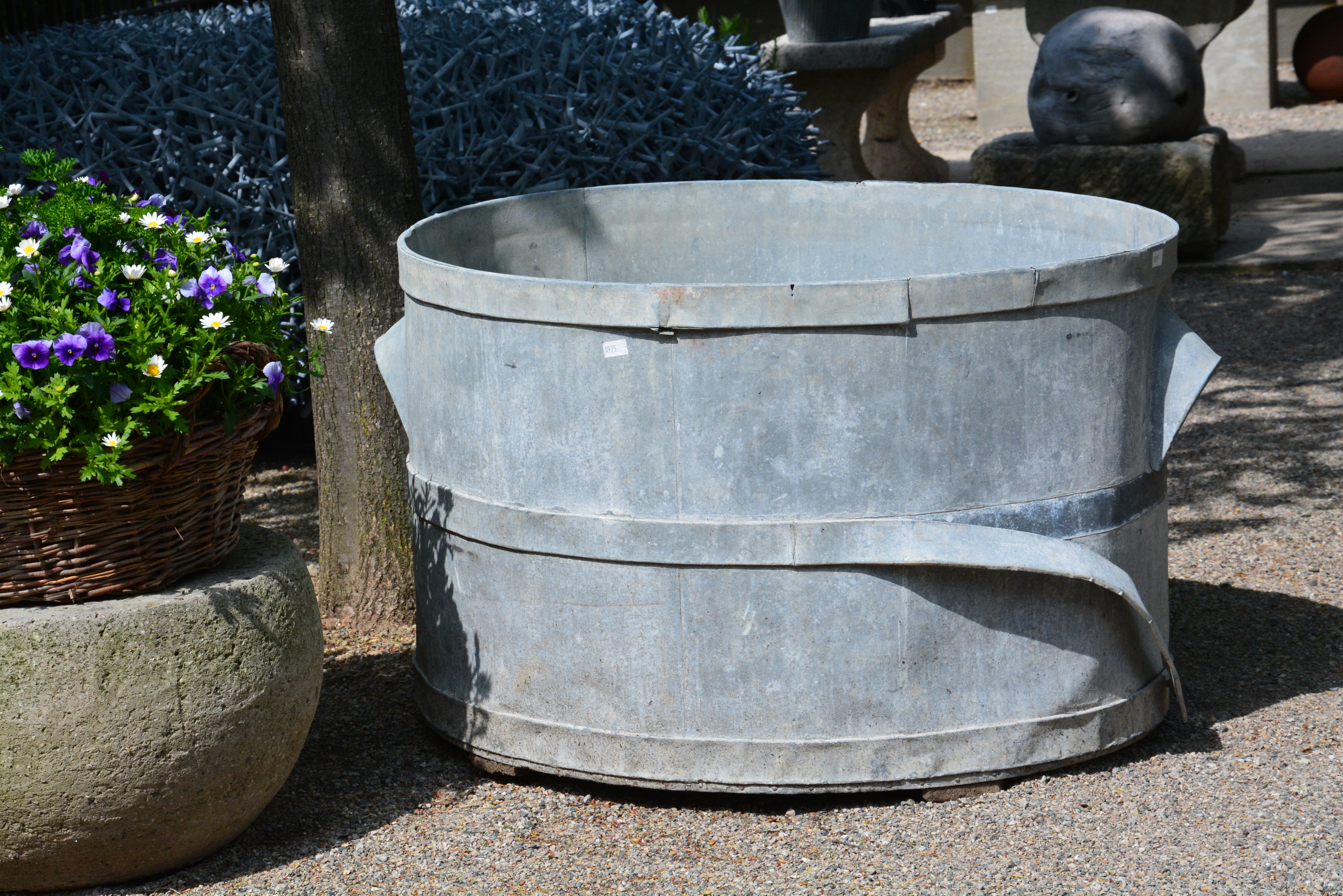
galvanized-tub.jpgGiant galvanized containers next to the side door may overwhelm that secondary entrance. That same container in the center of an herb garden is a properly sized anchor for the garden.

concrete-pots.jpgOnce the issue of scale is determined, there is the issue of style. A cottage style house does well with informally designed pots.  A very formal house asks for formal containers. An Arts and Crafts style house has its own language and vernacular. Containers that fit answer the architecture.  A home is the largest sculptural element on a property. The pots need to follow suit.  Breaking the rules can be effective.  A large pot in a small space can be very effective.  A traditional home complimented by contemporary pots can present an unexpected visual  pleasure.

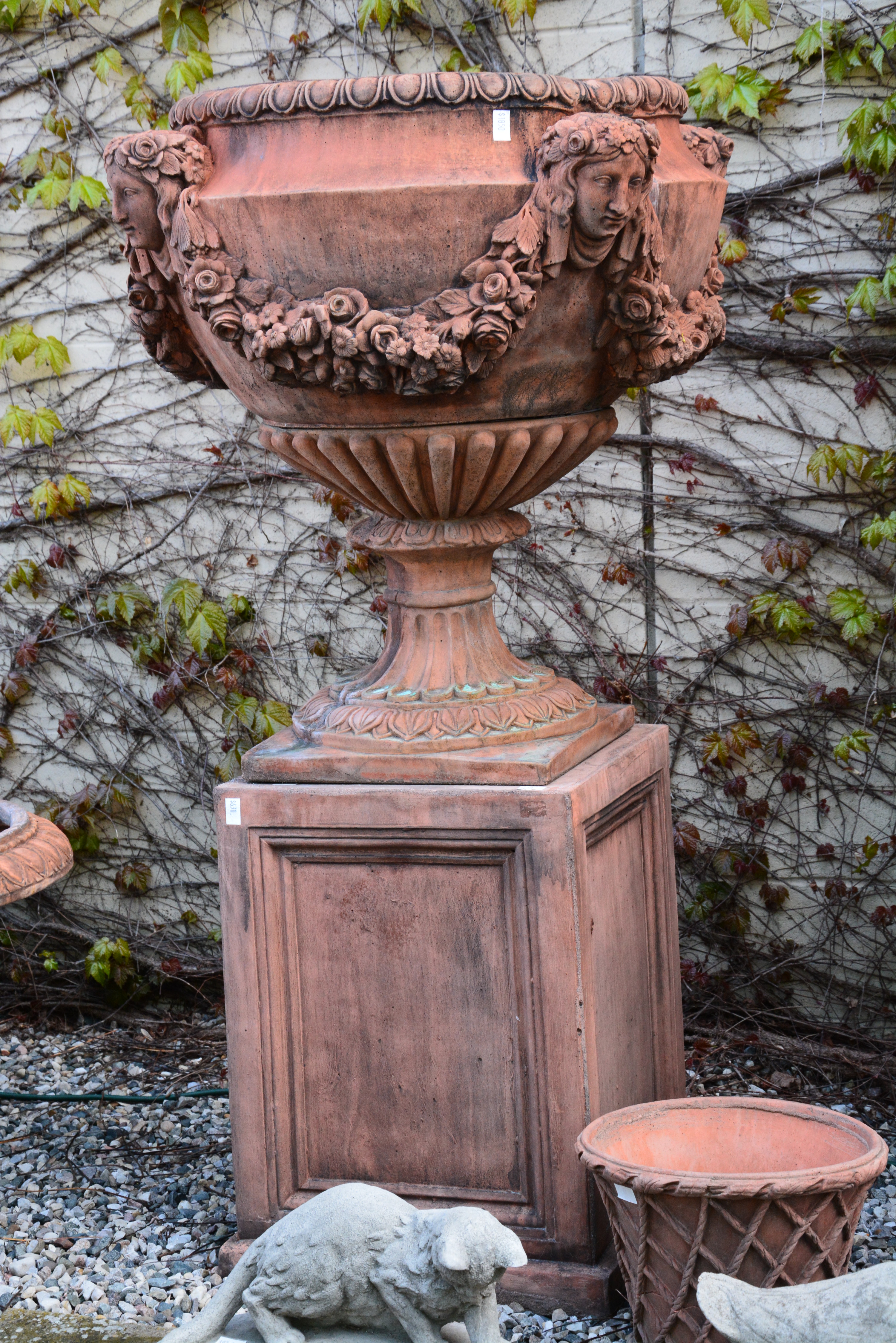
black-aluminum-urnsContainers are available in all sizes.  Tall and short.  Tall urns can sit on the ground.  Short urns can be elevated off the ground with pedestals. Narrow containers can dress up a tight space.  Wide containers can hold down a big space.  The tall and the short of it depends on what you want at eye level.  Tall containers, or urns on pedestals, can be seen from the sidewalk.  Low and wide planters can warm up a pool deck.  Small planters can dress up a garden table.  Medium height planters can put the flowers at eye level on a dining terrace.  A big tall planter, planted big and tall, becomes a screen warding off bad views.  A fabulous antique stone urn planted with a dome of moss focuses attention where it should be – on the urn.

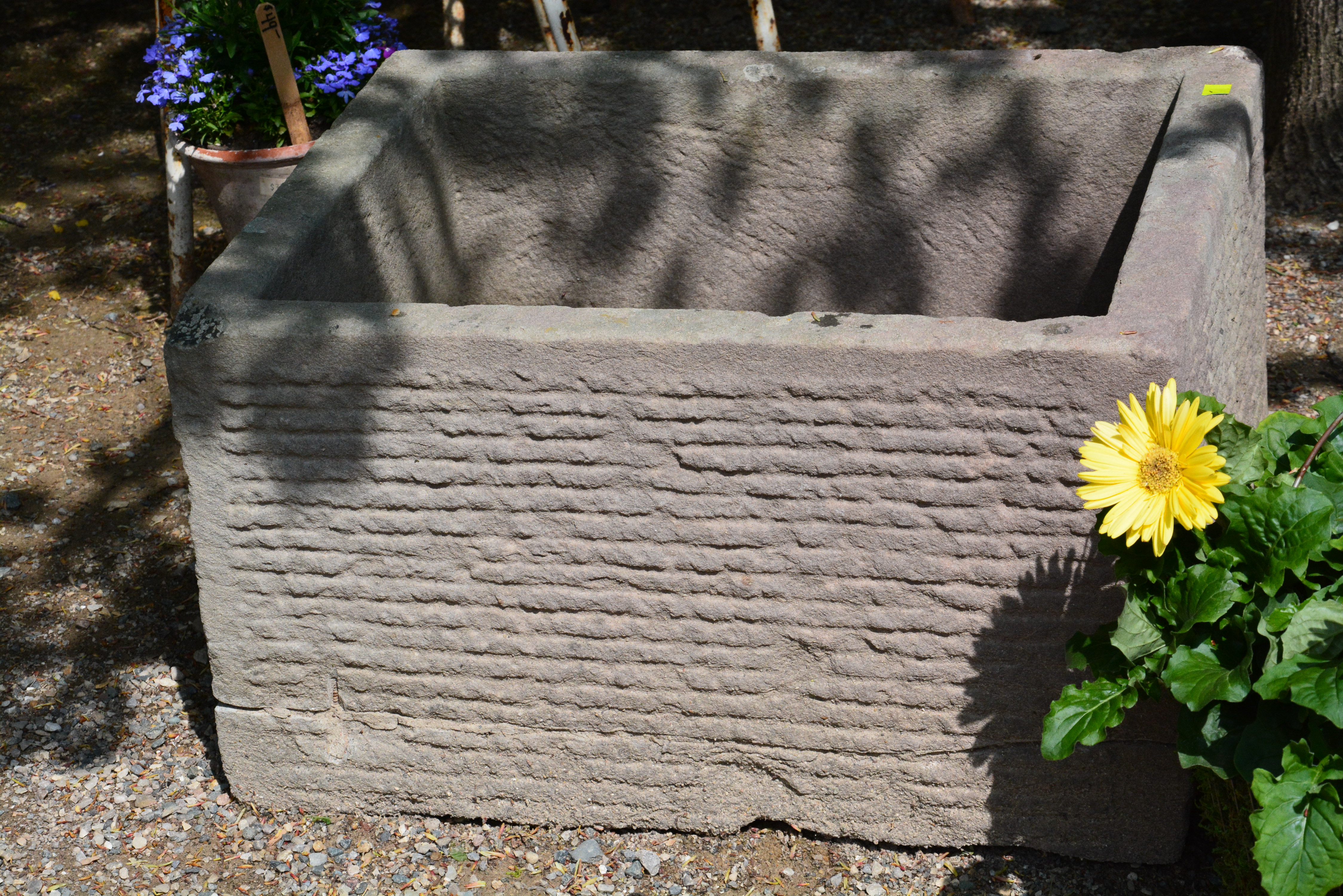
stone-trough.jpgAntique stone troughs come with lots of history attached.  Planted with succulents, they are great for those moments when a gardeners looks downward. They can be filled with water and water plants. Any container properly sited will look good, even when it is empty.

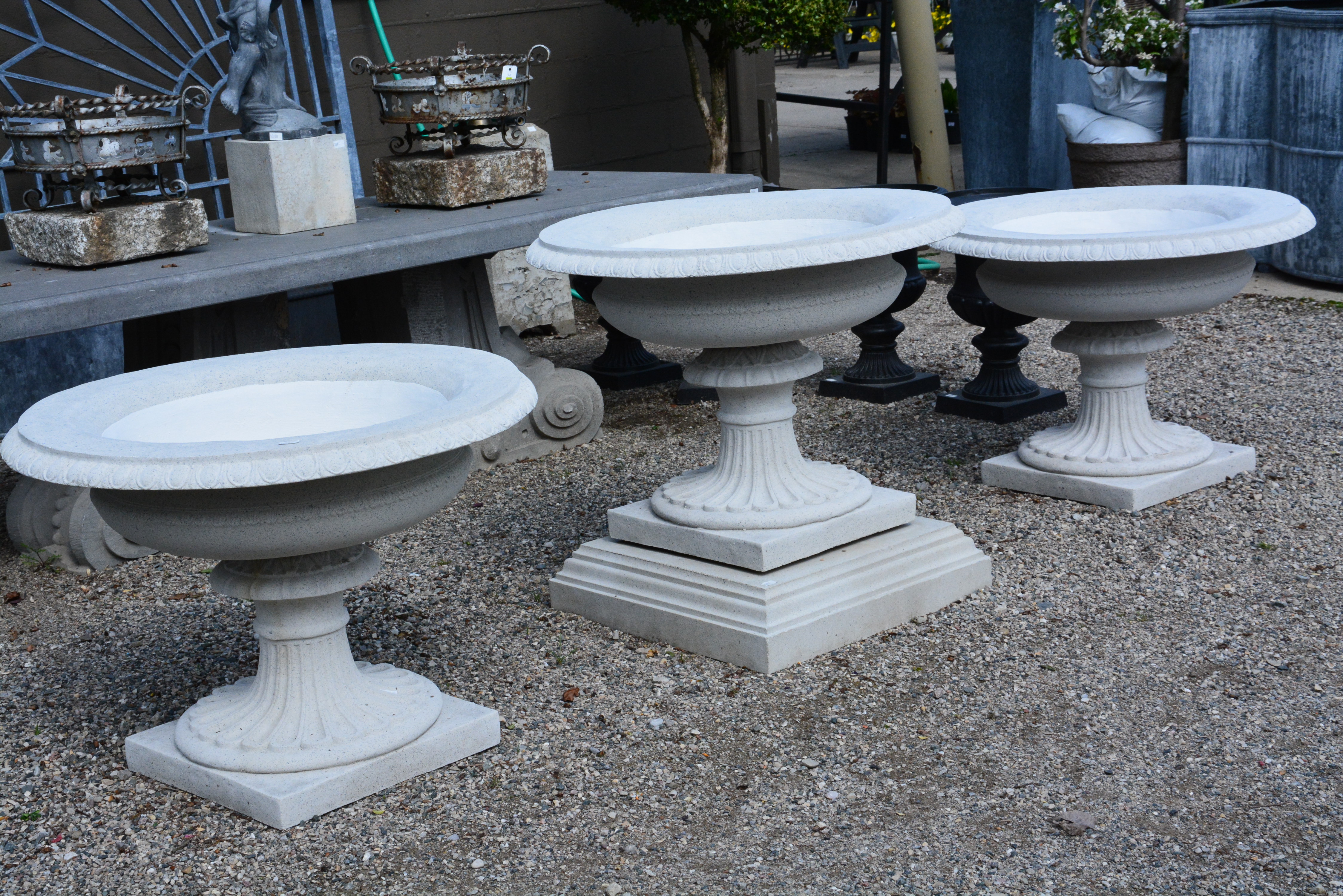
Italian-style-urn.jpgNo container does face to face better than an urn on a pedestal.  Face to face is good at the front door.  Or in the center of a beautiful garden.  Or as a focal point in a landscape.  This English concrete urn in the classical Italian style has a considerable presence, and could organize a fairly large space.  This urn features detail such that the planting would need to acknowledge rather than cover it.
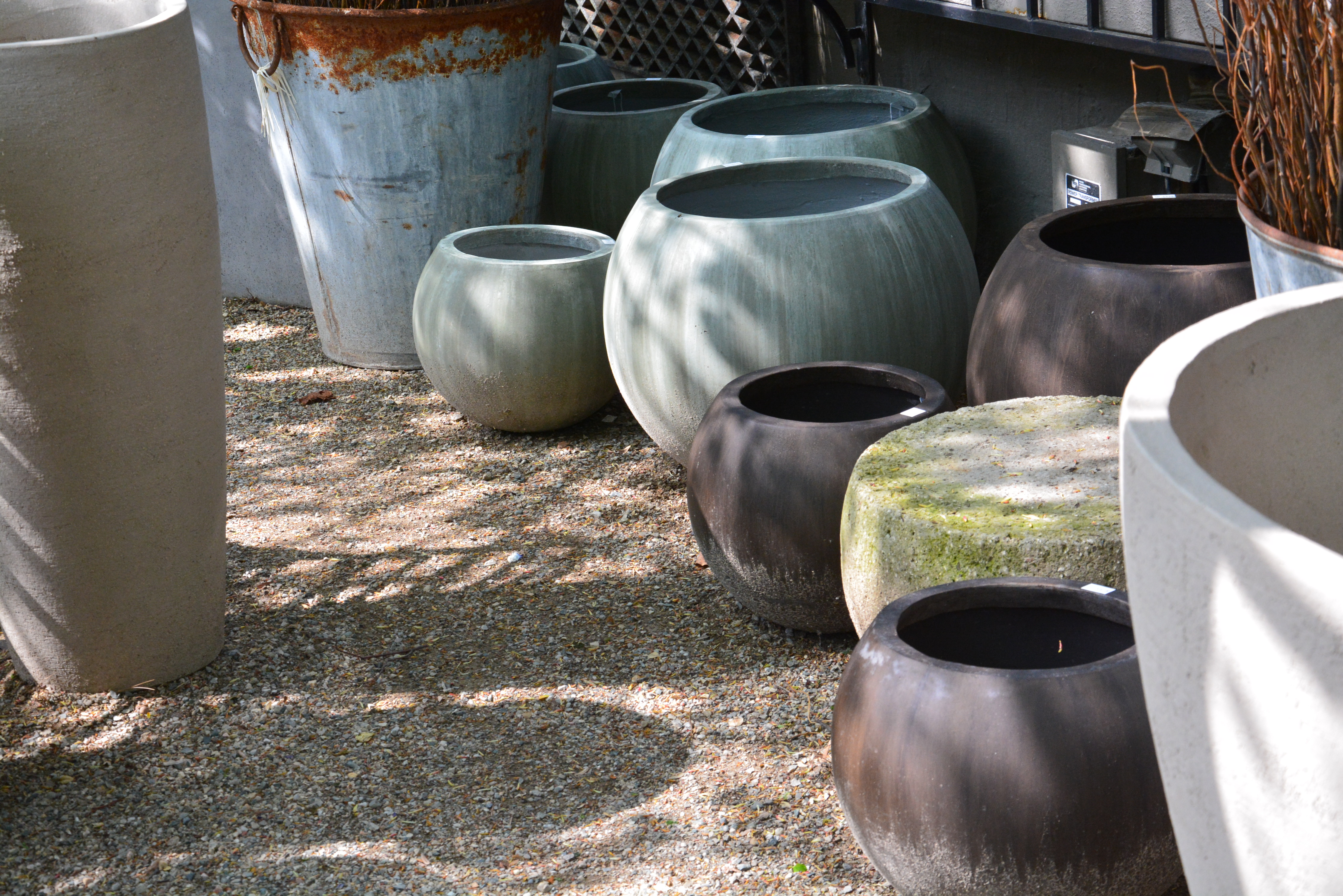
fiberglas-bowls.jpgFiberglass planters are light weight.  They are perfect for water gardens.  Spherical planters are especially effective in contemporary and geometrically organized landscapes.  They are great next to a lounge chair, or a bench.  A well planted bowl will keep you company.
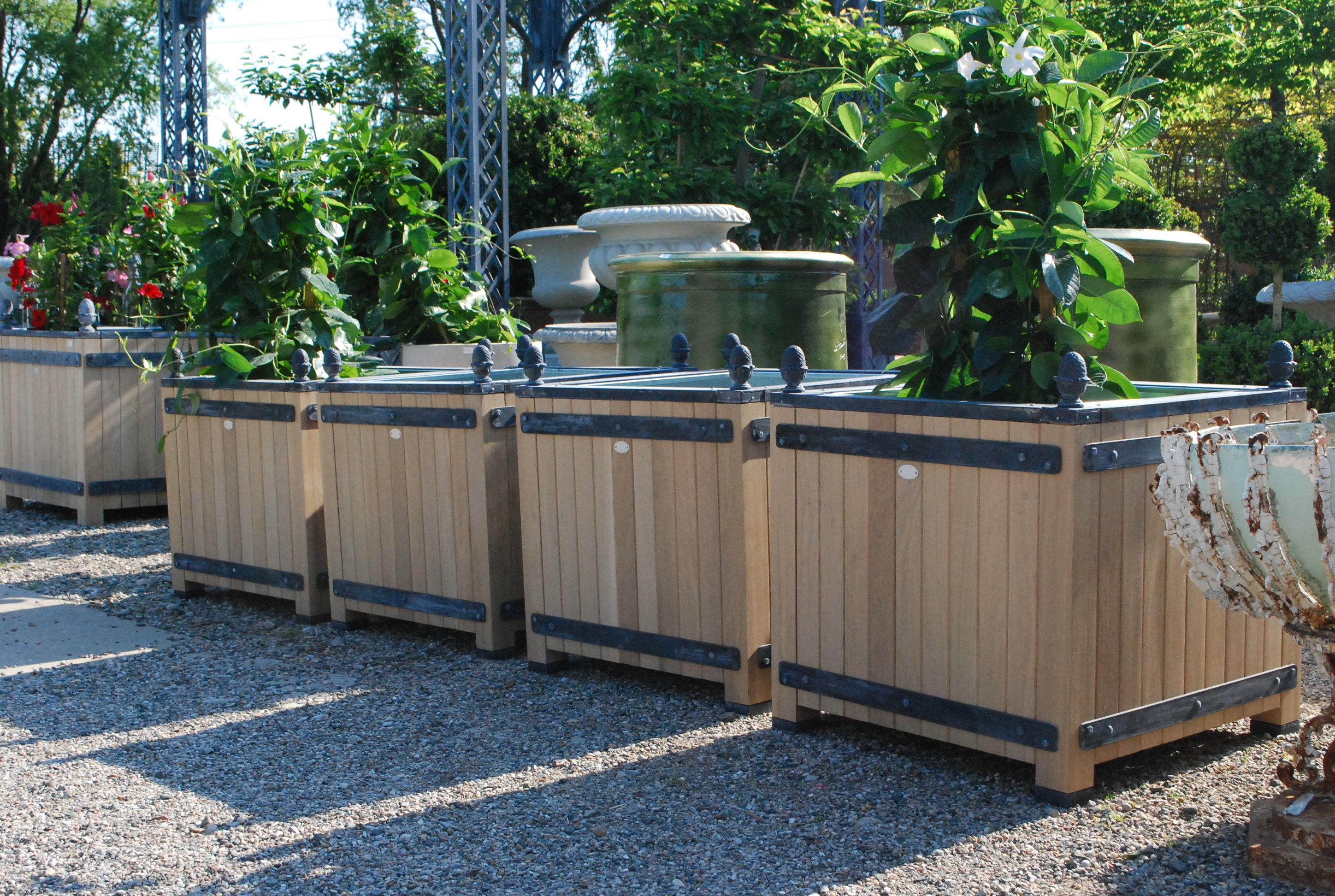
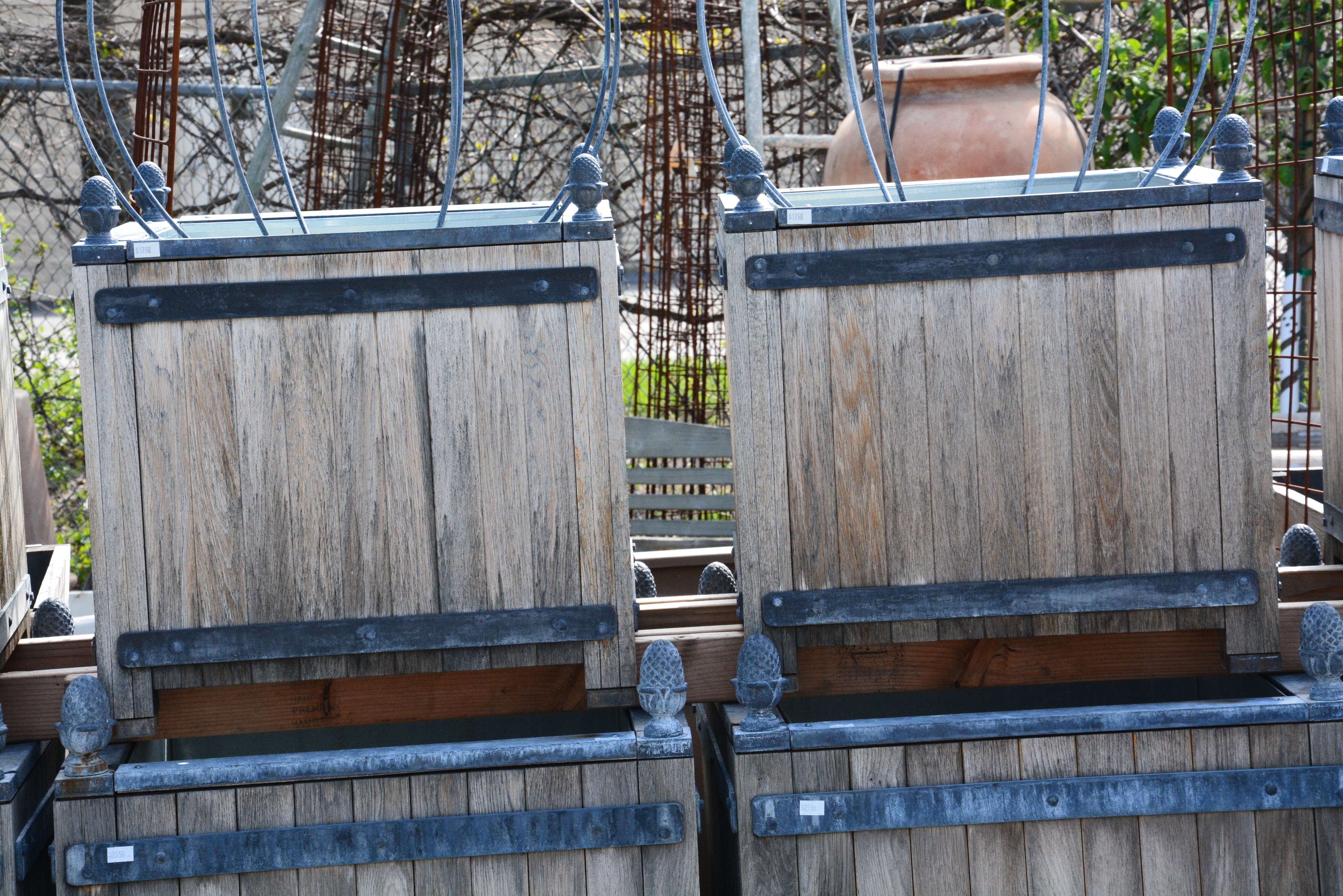
oak-orangerie-boxesThe material of a planter says much about style, period, and architecture. Formally designed and fabricated wood orangery boxes recall an age centuries old. French formal, for sure.  Four wood orangery boxes could organize a formal landscape with ease.  One casually fabricated or vintage wood box stuffed with herbs at the center of a cottage style vegetable garden is all about home. Great meals. Fresh food. When the wood starts to deteriorate, no cause for alarm.

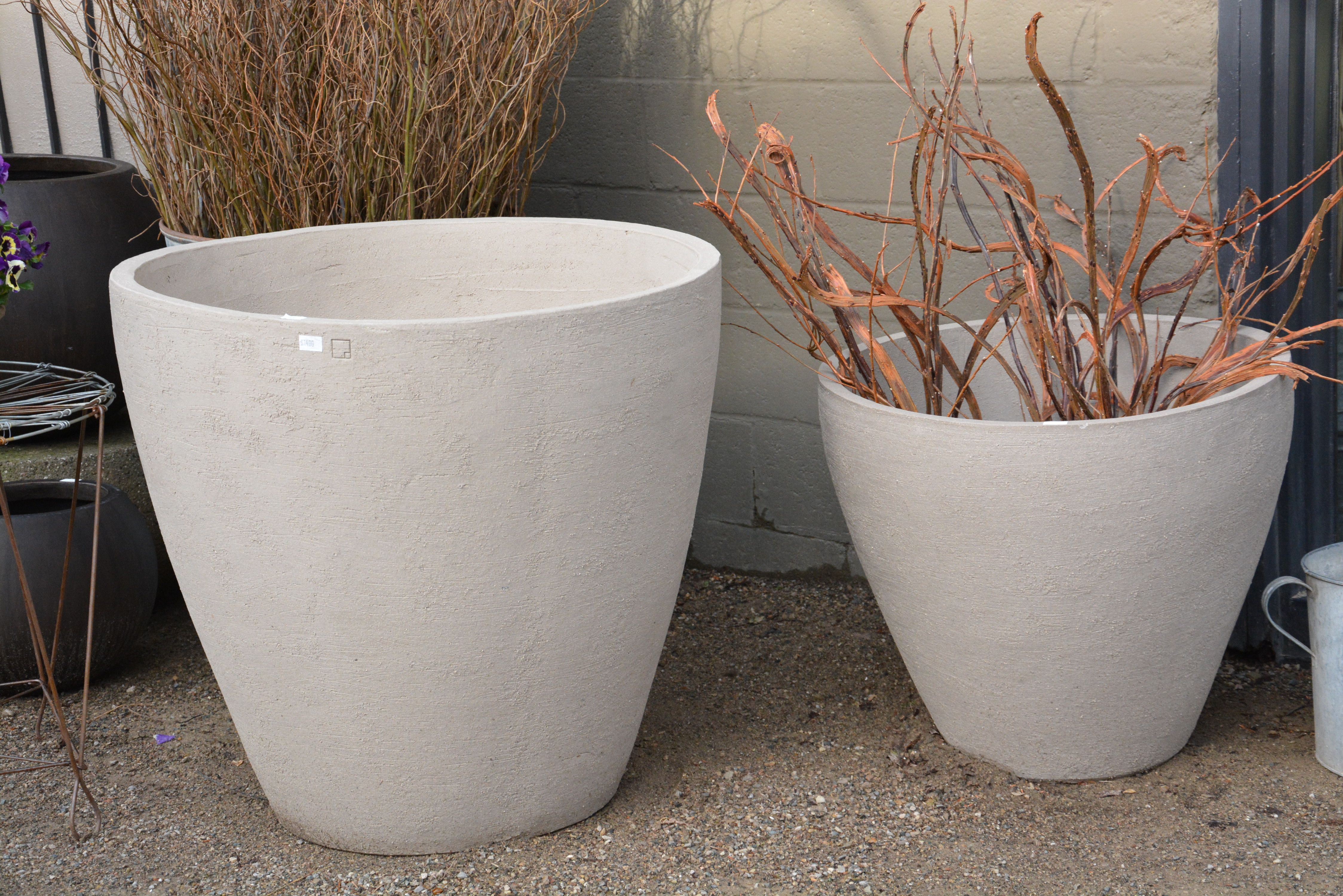
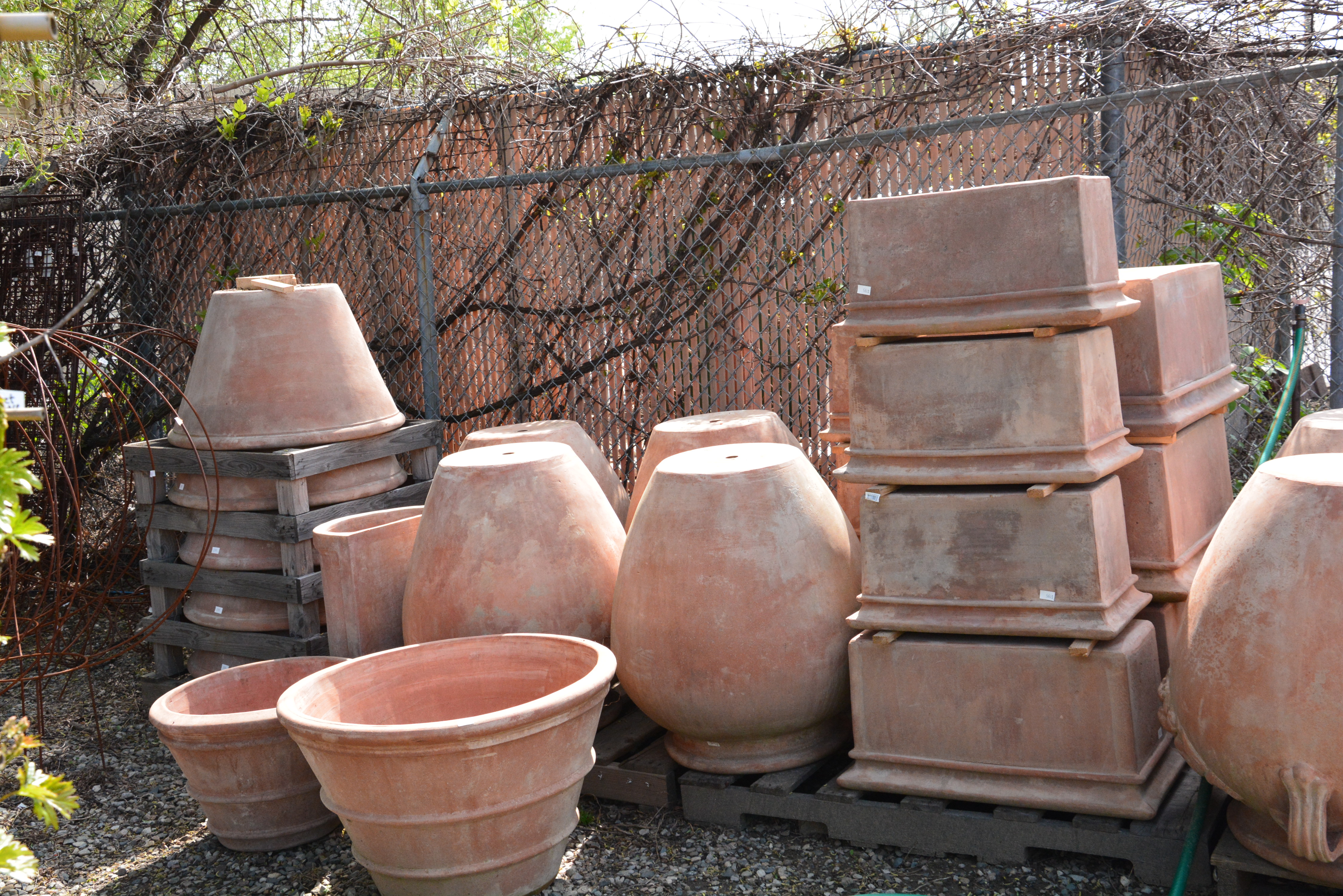
Belgian-stoneware-pots.jpgBelgian stoneware containers are subtly textured.  They are solid, simply modern in shape, and frost proof.  Any contemporary home and garden would be happy for them. That said, the simplicity of their shapes make them easy to fit into any scheme.  galvanized metal.jpgGalvanized metal buckets and tubs are an alternative idea.  Once you have sorted out the proportions, the style, and the size, and the aura,  you may have the idea to go way wide. Or way unexpected. Have at this.      Italian-terra-cotta.jpgI find that no matter what containers I would choose for my landscape, the container usually chooses me. The containers that would work well for you will choose you, if you listen.  This can make a decision much easier to come by.  What container would your home, terrace or garden choose?

square-steel-tapers.jpgEvery home and garden has an identity all its own.  What gets contributed by the gardener in charge makes that presentation all the more beautiful for being personal.

burlap-sack-pot.jpg Who’s choosing whom?  Good container choices depend on a lively interaction.

A Painterly Mix Of Tulips

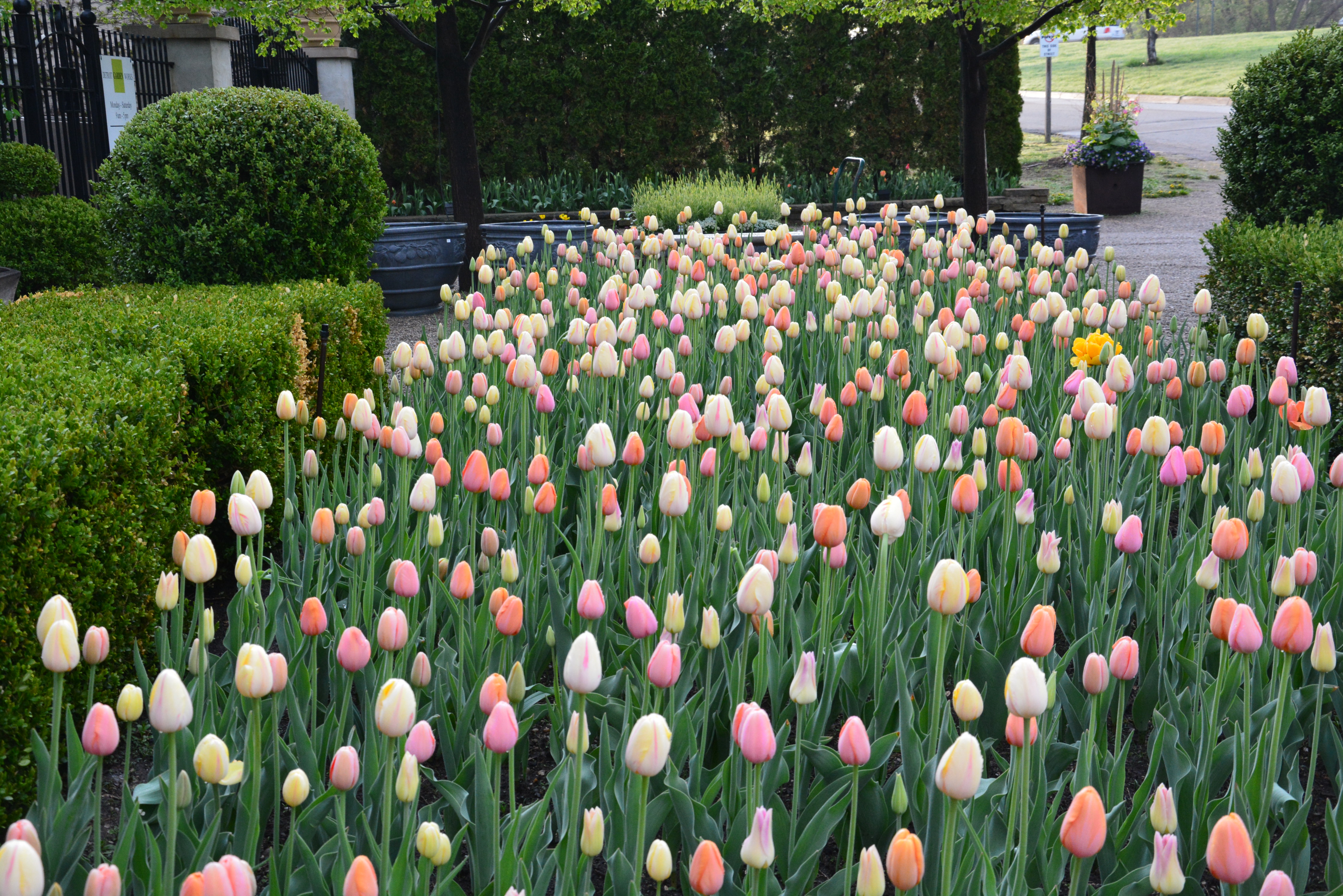
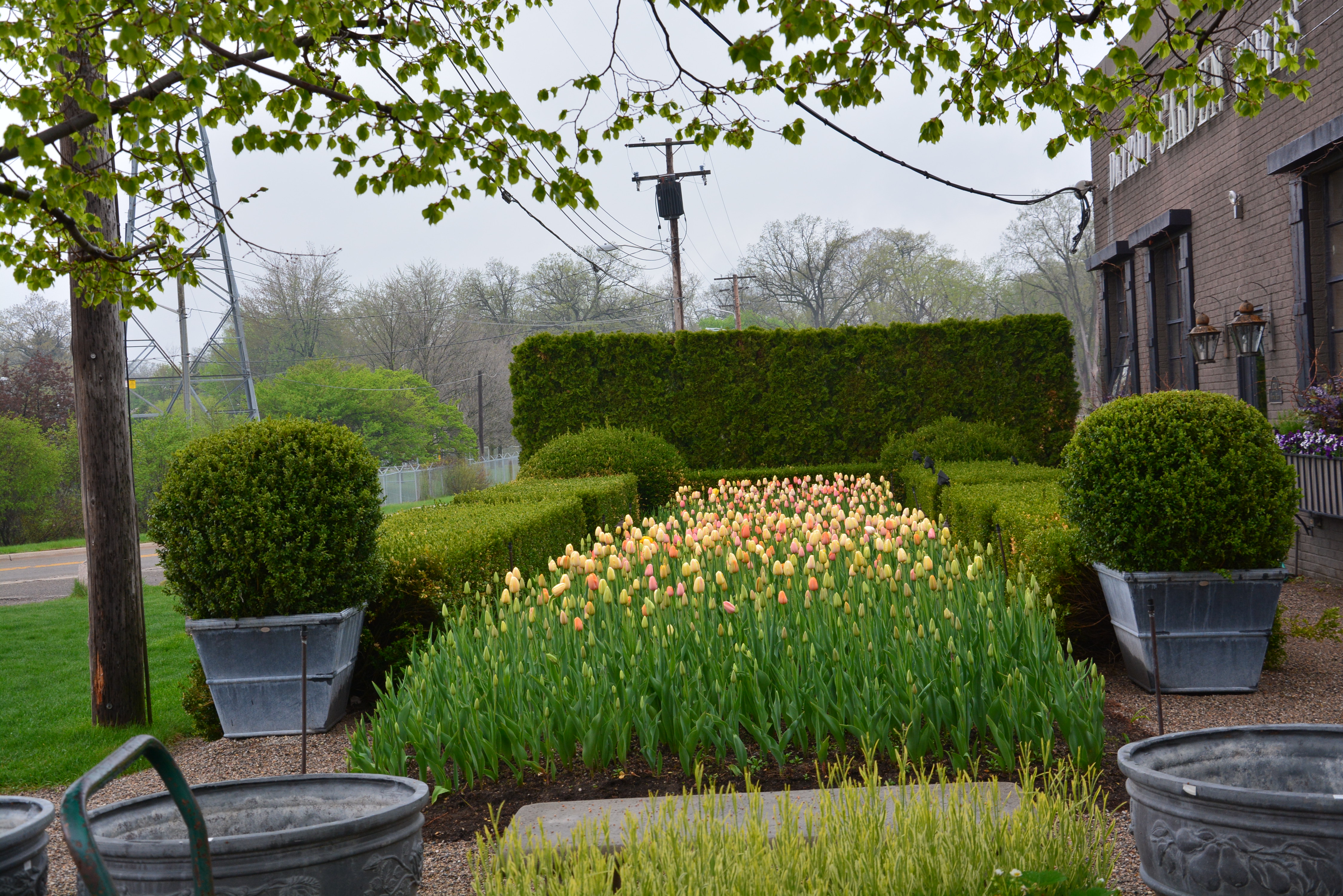
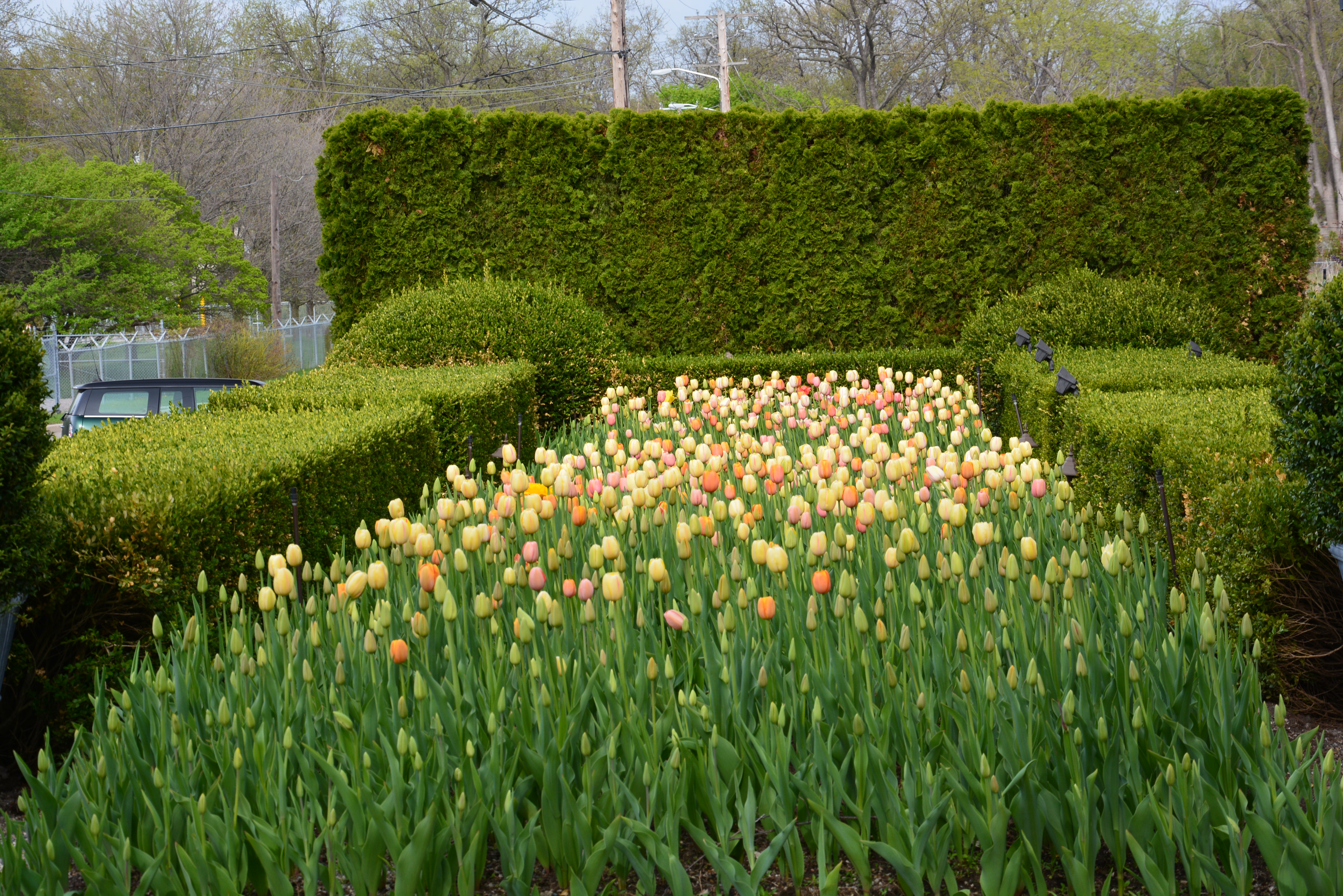
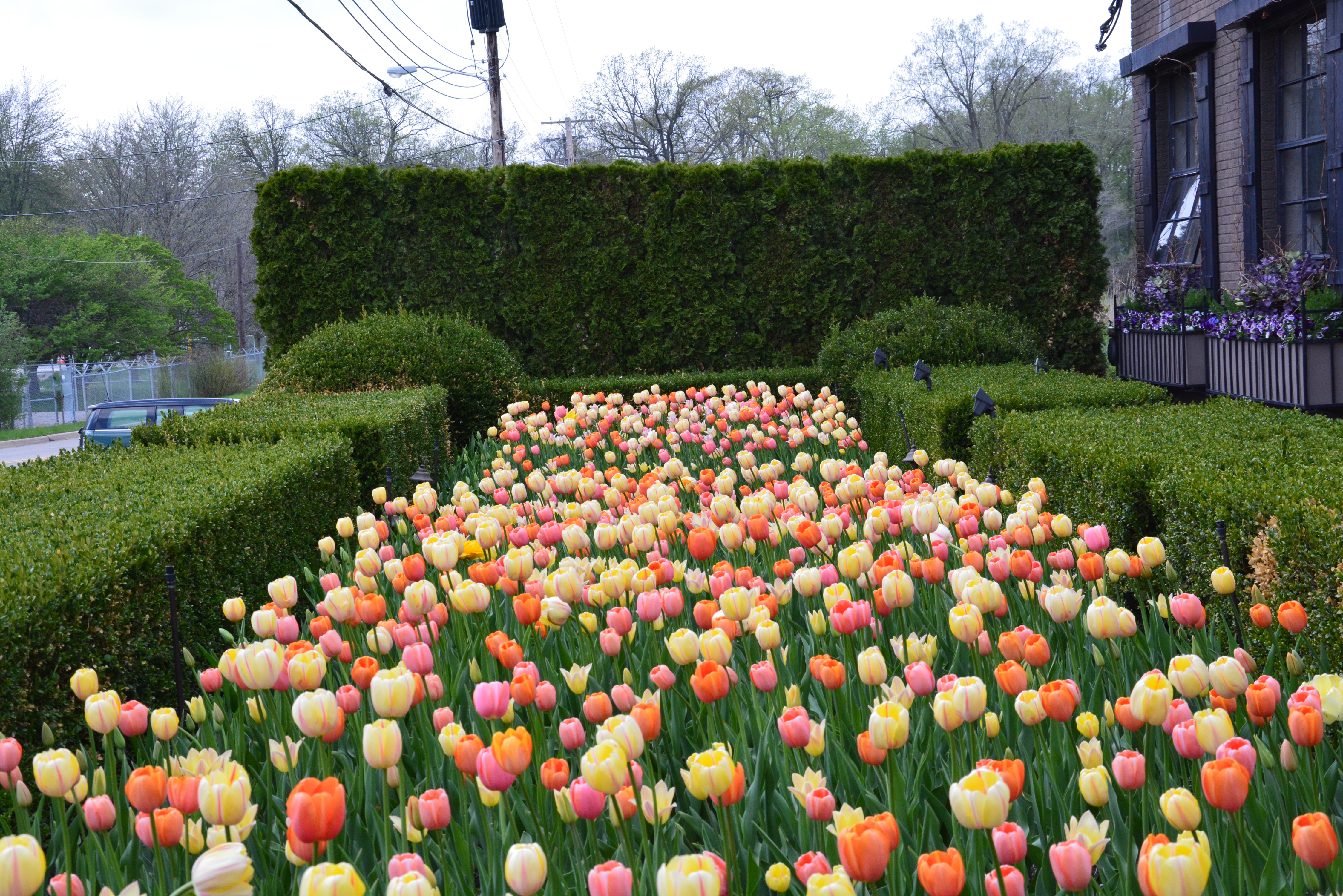
tulips.jpgAnyone who gardens has a fascination with what I call living color.  The red of tulip is a much different kind of red than red represented by paint.  Color infused by life and light is a special kind of color. It is no wonder that flowering plants are prized by gardeners.  Given the winter we just endured, the first signs of color are so welcome. And no plant is more about the joy of color in the spring than tulips.   mixed-tulips.jpgI plant a mass of tulips at the shop every year.  It is the perfect opportunity to explore shape and color relationships, as every plant looks just about the same. I A mass of all one color is striking in certain settings, and in small groups.  A mix of color and shapes makes for a more painterly approach.

tulips.jpgA good mix begins with a selection that blooms at slightly different times. A very early and a very late tulip will never keep one another company.  Tulips with related bloom times means that the display of color will evolve over time.  From the moment a bud appears to the time of bloom is about a month. The tulips in the foreground of this picture are behind those in the background for a simple reason.  They are close to some fairly large lindens that shade them in the early part of the day.

tulip-mix.jpgThe next step in choosing a mix has to do with height. A mix all at the same height means that each individual flower is not in view.  A mix of heights puts the color both up, middling, and down. Once a tulip comes in to bloom, the flowers continue to grow.  In a cool spring, the stems will grow to their full height, and stay in bloom quite a while.  In a hot year, the stems will be short and the flowers short-lived. Given our fairly cool temperatures, this should be a good year.

tulips 2014 (6)Choosing the colors is the most difficult part.  No one has the luxury of picking a tulip for its color any other way than via pictures in a catalog. A picture of a tulip is not remotely like the real thing.  Solid red tulips can be orange red, or bluish red.  Or red violet. Or red with streaks of yellow. Many tulips are comprised of several different colors overlaying one another.  The edge of the petals may contrast in color with the body of the petal.  Other tulips may be streaked or spattered with another color.

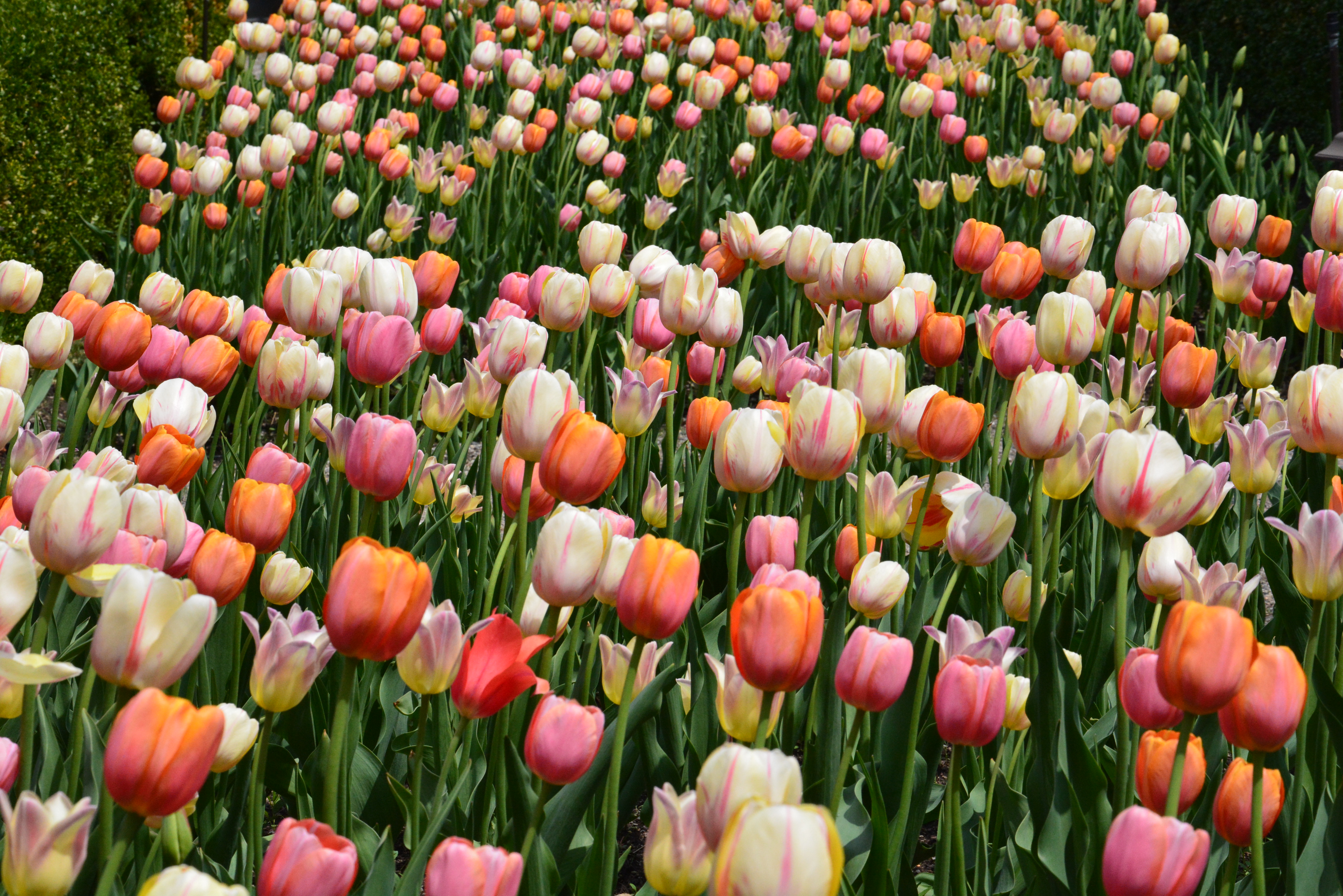
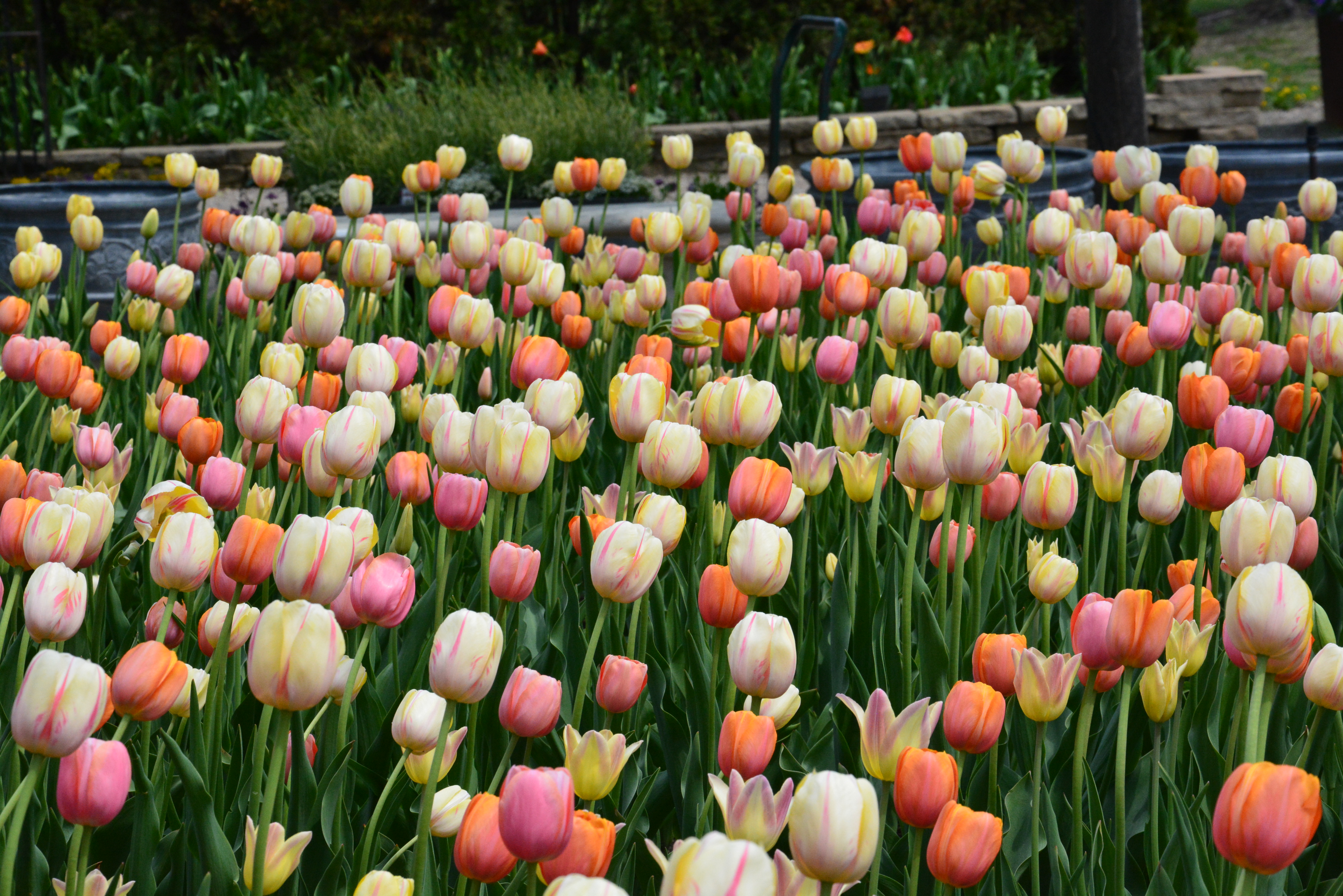
tulips 2014 (3)Tulips that have multiple color tones are great for creating a visually satisfying and complex display.  This softly colored mix is comprised of tulips with subtle color variations.  Choosing colors that are analogous means they are closely related on a color wheel.  The overall effect from a distance is monochromatic, but up close, there are many variations.  This tulip mix is easy on the eyes, but not sleepy. I like looking at pictures of tulips on the John Sheepers website.  The colors represented are fairly true, and they include a written description of the colors as well.  No catalog records what the inside of a tulip looks like.  That warm and sunny day that mature group of tulips opens their petals wide and flat is a beautiful day indeed.    tulips 2014 (15)I do take pictures of tulips on my own, for reference. We do a different scheme every year-why not.  They are all beautiful.  It is surprisingly easy to put colors together that are jarring and ill suited to one another.  I do see a fair number of red and yellow tulips planted together.  A mix is best with a minimum of 3 colors.  The color rhythm is better, and less choppy.  Red yellow and dark purple-an exciting scheme.  Red yellow and orange, a closely related celebration of hot color.  Red, yellow and pink is a little softer, especially if the pink is a littler paler than the others.  Pale yellow, watermelon red and the palest pink is a completely different look than the aforementioned schemes.  Red, yellow and white is striking by way of contrast.

tulip-mix.jpgA color mix also influenced by the ratio of one color to another.  25% yellow, 25% red, and 50% white may read like polka dots. a 33-33-33 blend is an even blend.  A 50-50 mix with one big patch of another color is energetic and catchy.

double-yellow-tulip.jpg

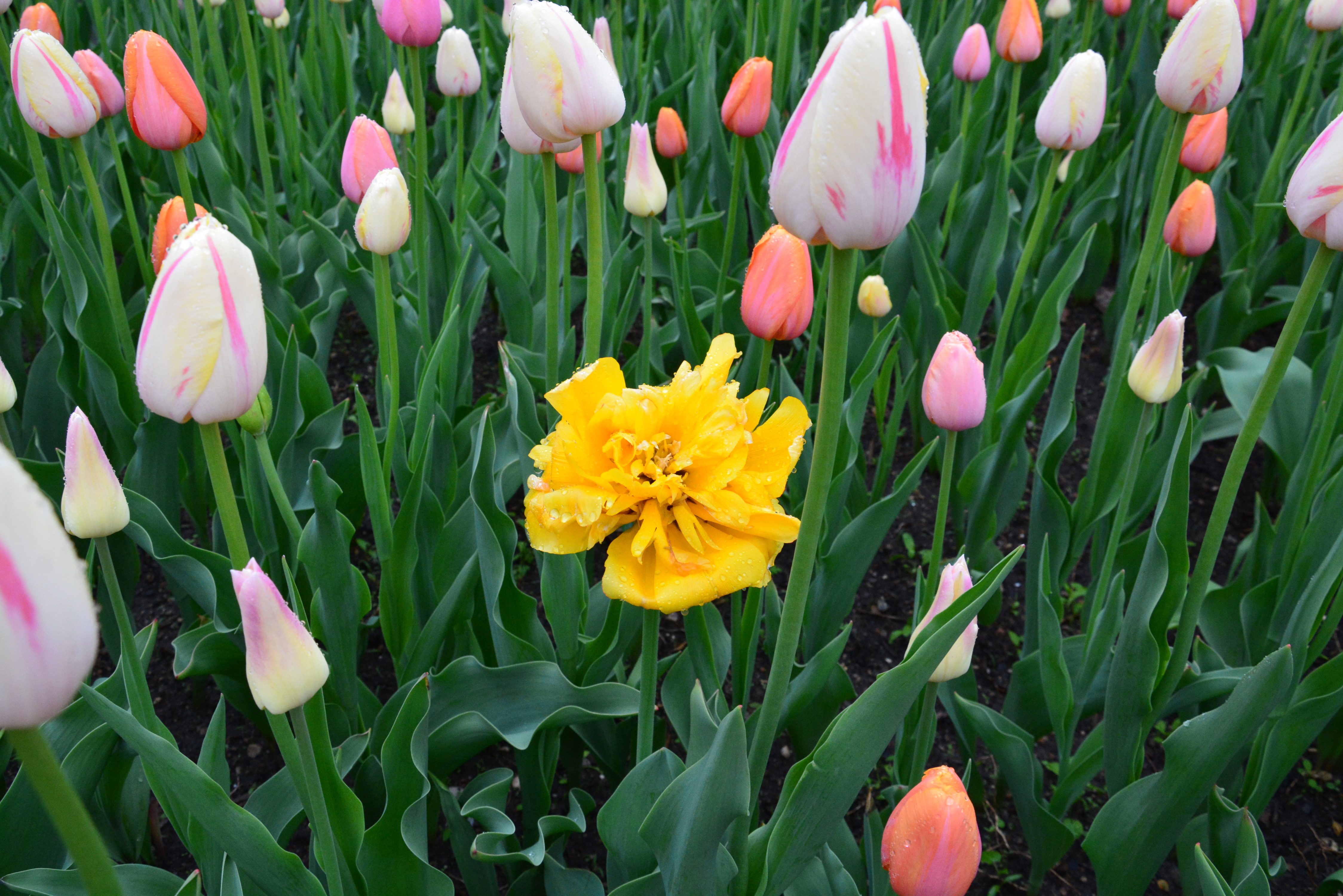
As for this yellow tulip with anemone petals-I have no idea what it is called, or where it came from.  But I am glad to have it as part of the mix.