Thirty Years


It was 30 years ago last night that Rob and I were hosting an opening preview celebration for Deborah Silver and Company’s new venture – Detroit Garden Works. This brand new company would make fine, whimsical, intriguing, memorable and shockingly beautiful ornament for the garden available to keen gardeners of all persuasions. Ha. It was a good thing we had ideas and determination, as it would take all of that and then some to make this wish come true. By “then some”, I mean the 10 years after the opening that it took to get the shop centered,  fully off the ground, and firmly in the black. We fought for it. Sincerely.
My landscape design/build firm, Deborah Silver and Company, opened for business in 1986, a decade earlier. Though the vast majority of my landscape design work revolved around the instinct to sculpt ground and install beautifully designed landscapes and gardens to life on the surfaces of that sculpted ground, I felt like a certain element was missing.  An interest in art and sculpture meant I had an interest in ornament for the garden. What do I mean by that?  Any object which represents a significant memory or  a point of view about what is beautiful or emotionally important can imbue a landscape with atmosphere.   A landscape with atmosphere is all I have ever hoped to make. Though I was keen to include this ornamental layer in my landscape design and installation projects, precious little was available.
 

Rob joined the landscape company in 1992, after completing his degree in landscape architecture at Michigan State University. It became clear early on that his landscape design work was austere, complex, yet casually offhand. Years later, he knows how to make a subtle and gracefully constructed arrangement look as if he dashed it off in a moment.  No matter how long he labors over and reworks anything he does, it will be perfectly convincing. He is a proponent and champion of a sparse look that always hovers just over and on the right side of weedy. That early mix of modernism and mess confounded me, and drove me crazy. No design project of his ever came to a definitive close. Clients wanting direction that had parameters in mind got his tinkering with no boundaries. How did we resolve those early years, co-designing ?  He had a romance going on with the garden like no other person I had ever met. I reserved judgment. This is one of the better decisions I have ever made. I truly admired his point of view. A commitment to that took me a long way. The idea that we would open a shop devoted to fine quality ornament for the garden was an idea we came to share. That he would do all of the buying for the store is that one decision that keeps us here 30 years later.
 

In the fall of 1992, Rob had a winter trip planned to Czechoslovakia to ski.  I financed a side trip, a very casually weedy trip, to scout European ornament that might be of interest to us, and to our clients. 2 pallets representing the sum total of his shopping arrived months later. It was exhilarating. We knew the right collection of pots or sculpture could organize a landscape. An antique garden ornament saturates the immediate environment with a sense of another time and place –  history.  Vintage farm troughs recall that time when agriculture was so much a part of every life.  Vintage ornament of an agricultural history satisfies that longing for connection to nature. Contemporary sculpture in the garden can evoke an appreciation of form, mass, and texture in a very direct and abstracted way. I wanted the perfect bench, the most striking container, and topiary forms that would work while they were being beautiful-for my landscapes. I knew that Rob would take this on.
 

Now, Rob buys for Detroit Garden Works.  He attends the flea markets,  fairs and factories. He has relationships with garden antique dealers, both in the US and abroad. He makes a point of visiting nurseries and specialty growers everywhere he goes.  He makes it a point to meet the people who make things for gardens.  He gives them the time and space to speak to their craft. What eventually makes its way to Detroit Garden Works in the spring of each year is a very carefully curated collection that has been assembled with a discerning eye.
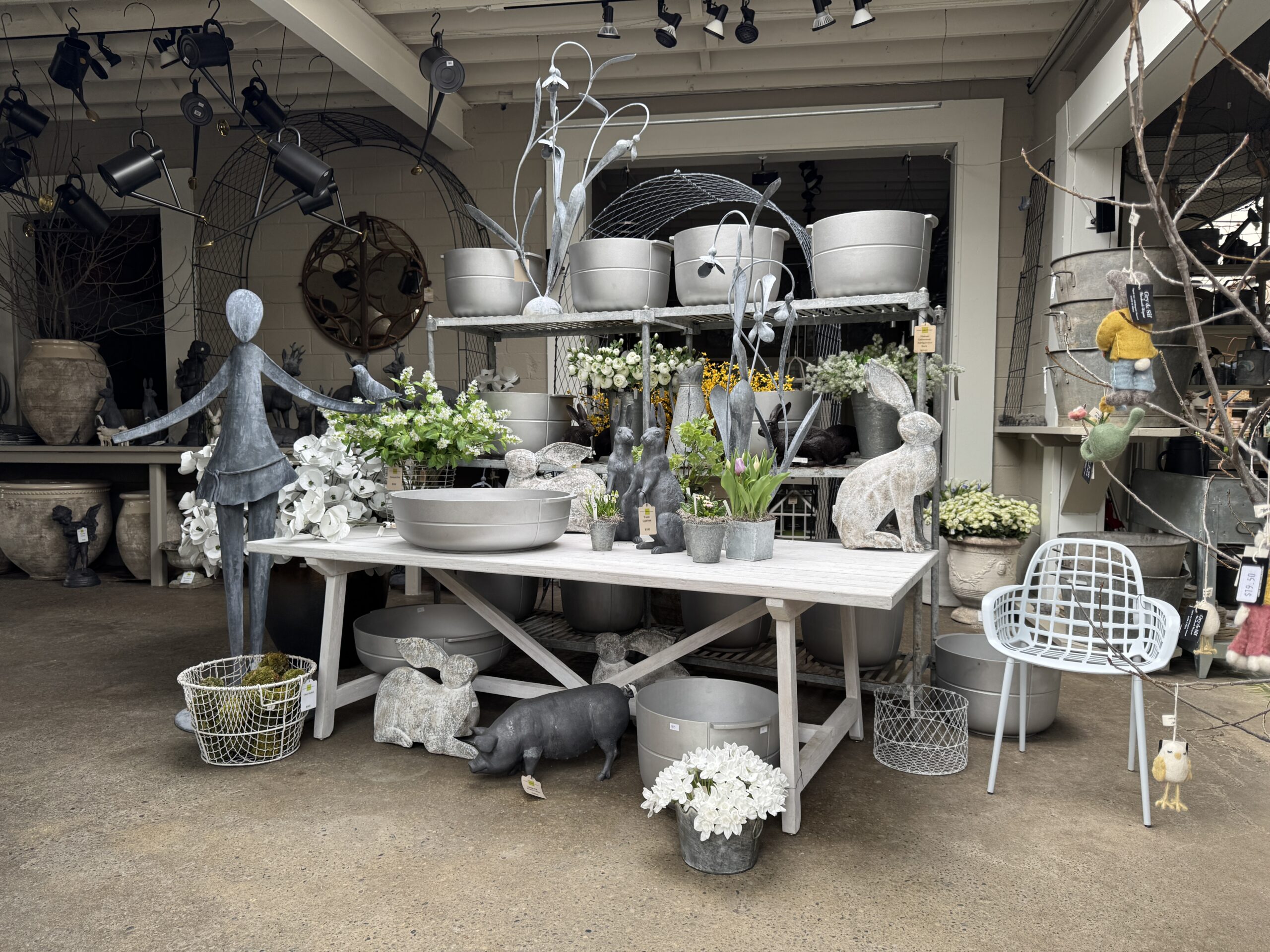
Detroit Garden Works 2015 collection

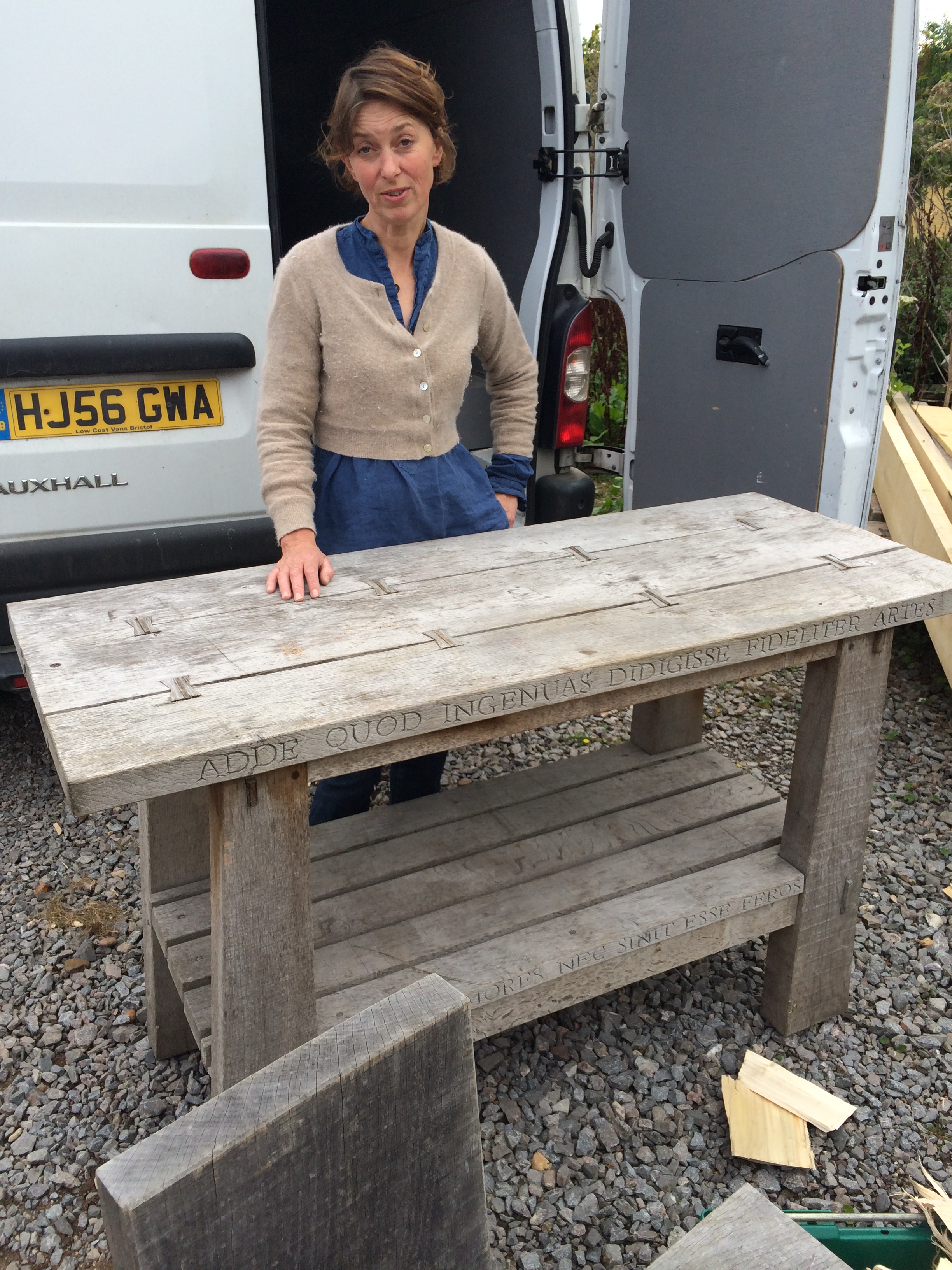
His shopping is always about the stories of the people.  The antiques dealers with a long history of collecting. The person who carves words into the oak boards that comprise her garden furniture pieces.   The people whose pottery is still making pots going on two hundred years later. The artisan who is creating their own special brand of ornament. The dealer who has taken the time to make very fine quality reproductions of classic garden ornament.  The armillary sphere maker whose attention to the science, physics, and fabrication warrants a closer look.  I greatly admire how he takes the buying to heart. That big heart of his has made Detroit Garden Works  a destination for gardeners of every persuasion.
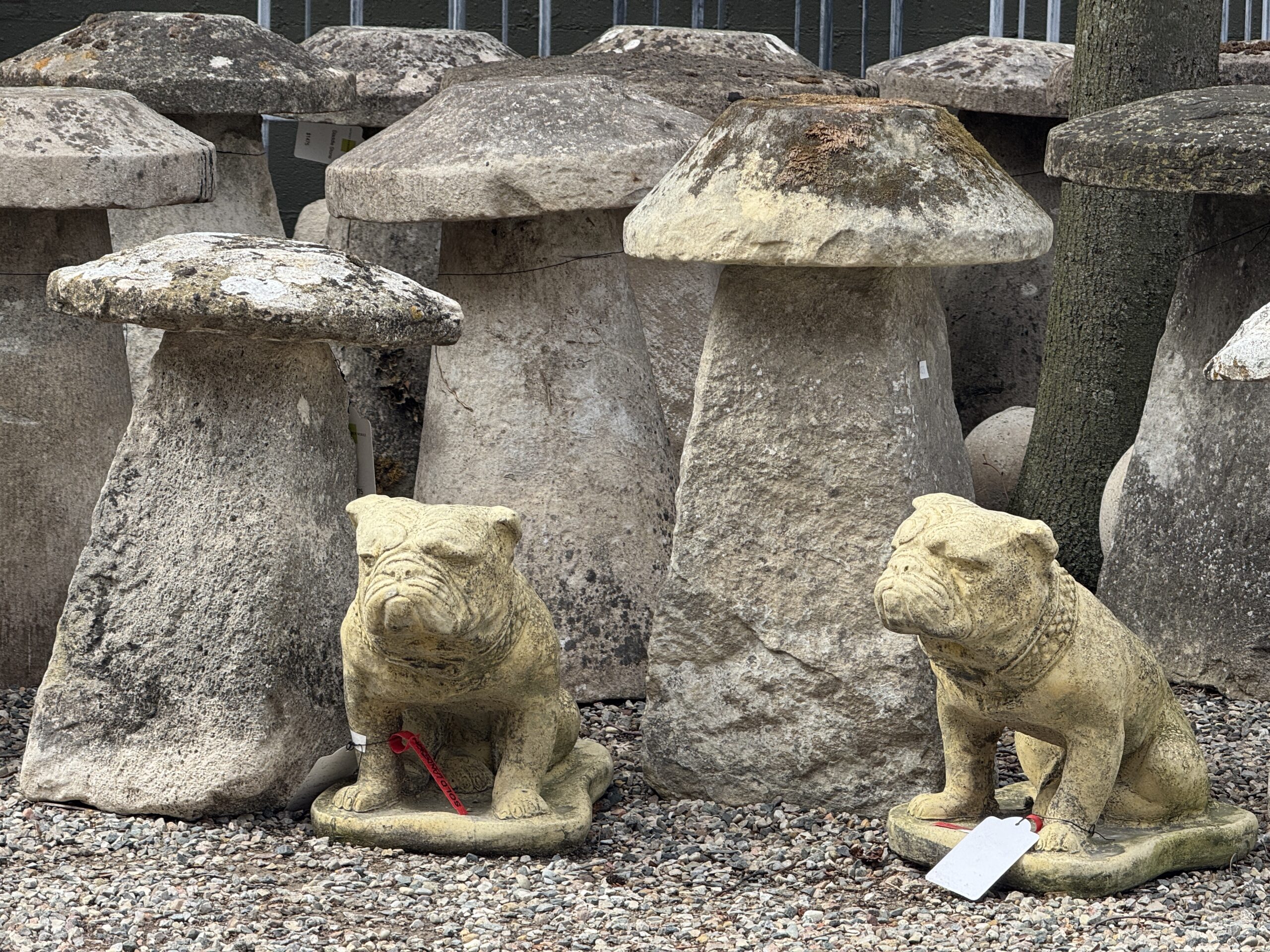
Detroit Garden Works is in the business of offering beautiful ornament for the garden. Still.  It could be antique.  It could be vintage, and funky vintage. It could be of a French, American or Italian flavor. It could be of English origin, through and through. It could be new, with a particular point of view. It could be fun or funny.  It could be contemporary.  It could be arts and crafts or mid century modern inspired. It could be Belgian in origin-old, vintage, or new.  It could be none of the above, just sitting here waiting for that one particular gardening client to lay claim to it. When you come here, you’ll see.


Who’s Choosing Whom?

stone-urns.jpgShopping for anything is one part fun, two parts research, and 5 parts anxiety. The anxiety is the toughest part. Is this avocado ripe enough to serve tonight?  Will these tennis shoes be comfortable? Will this washing machine handle all of my needs? Is this tennis racquet appropriate for my level of play?  Will I like this sweater next year?  Is this the right choice?  You get the drift.  If you have a mind to plant containers for the summer season, the first order of business is choosing the containers.

concrete urns.jpgContainers first and foremost need to be of proper proportion to their placement.  Little pots belong on a garden dining table.  Mid sized containers are fine on a terrace.  Container that flank a front door need to have a size appropriate to the front porch.  Proper proportion is to my mind the single most important design element. Galvanized buckets on the stoop of a cottage or an apartment balcony are appropriately sized for the occasion.

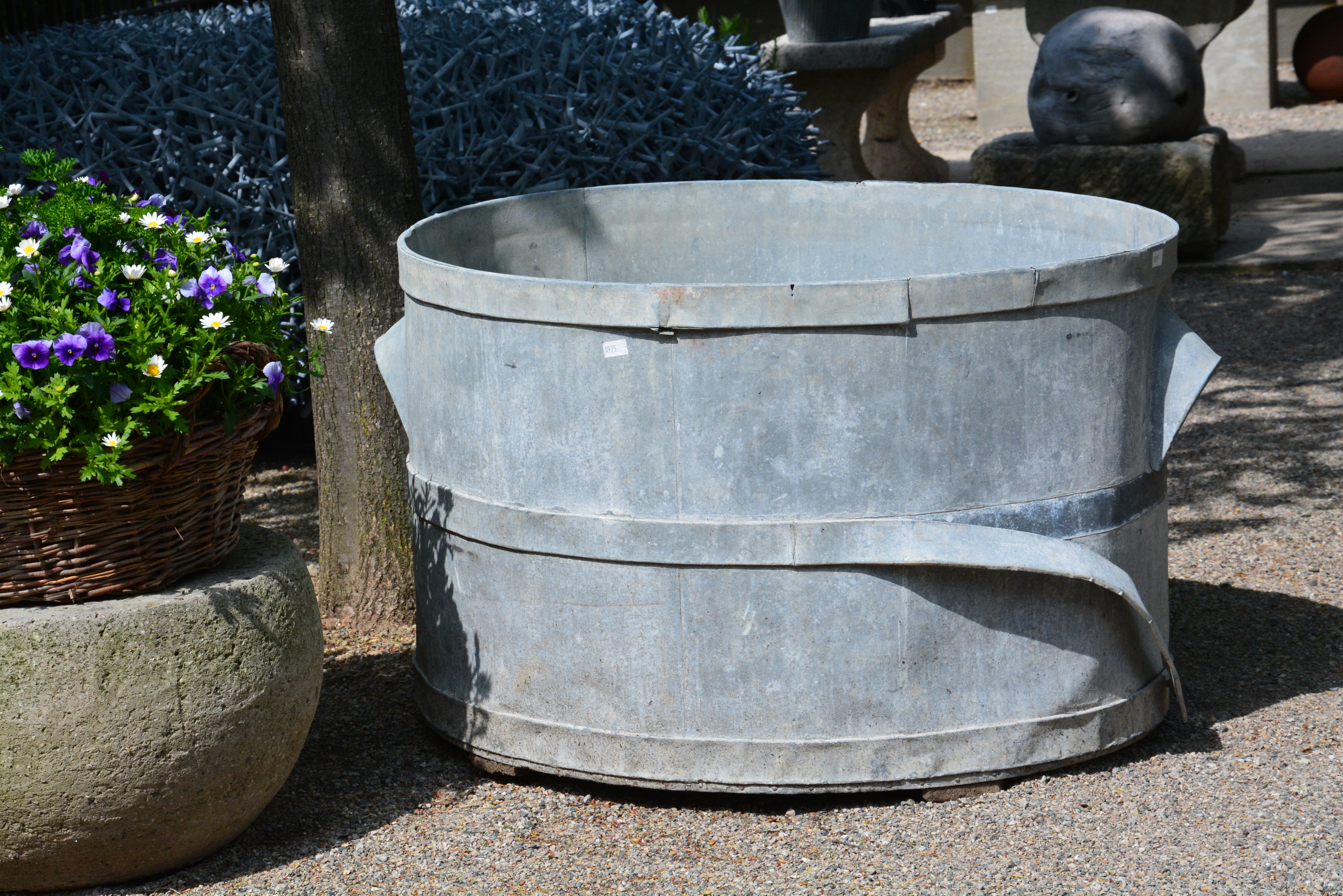
galvanized-tub.jpgGiant galvanized containers next to the side door may overwhelm that secondary entrance. That same container in the center of an herb garden is a properly sized anchor for the garden.

concrete-pots.jpgOnce the issue of scale is determined, there is the issue of style. A cottage style house does well with informally designed pots.  A very formal house asks for formal containers. An Arts and Crafts style house has its own language and vernacular. Containers that fit answer the architecture.  A home is the largest sculptural element on a property. The pots need to follow suit.  Breaking the rules can be effective.  A large pot in a small space can be very effective.  A traditional home complimented by contemporary pots can present an unexpected visual  pleasure.

black-aluminum-urnsContainers are available in all sizes.  Tall and short.  Tall urns can sit on the ground.  Short urns can be elevated off the ground with pedestals. Narrow containers can dress up a tight space.  Wide containers can hold down a big space.  The tall and the short of it depends on what you want at eye level.  Tall containers, or urns on pedestals, can be seen from the sidewalk.  Low and wide planters can warm up a pool deck.  Small planters can dress up a garden table.  Medium height planters can put the flowers at eye level on a dining terrace.  A big tall planter, planted big and tall, becomes a screen warding off bad views.  A fabulous antique stone urn planted with a dome of moss focuses attention where it should be – on the urn.

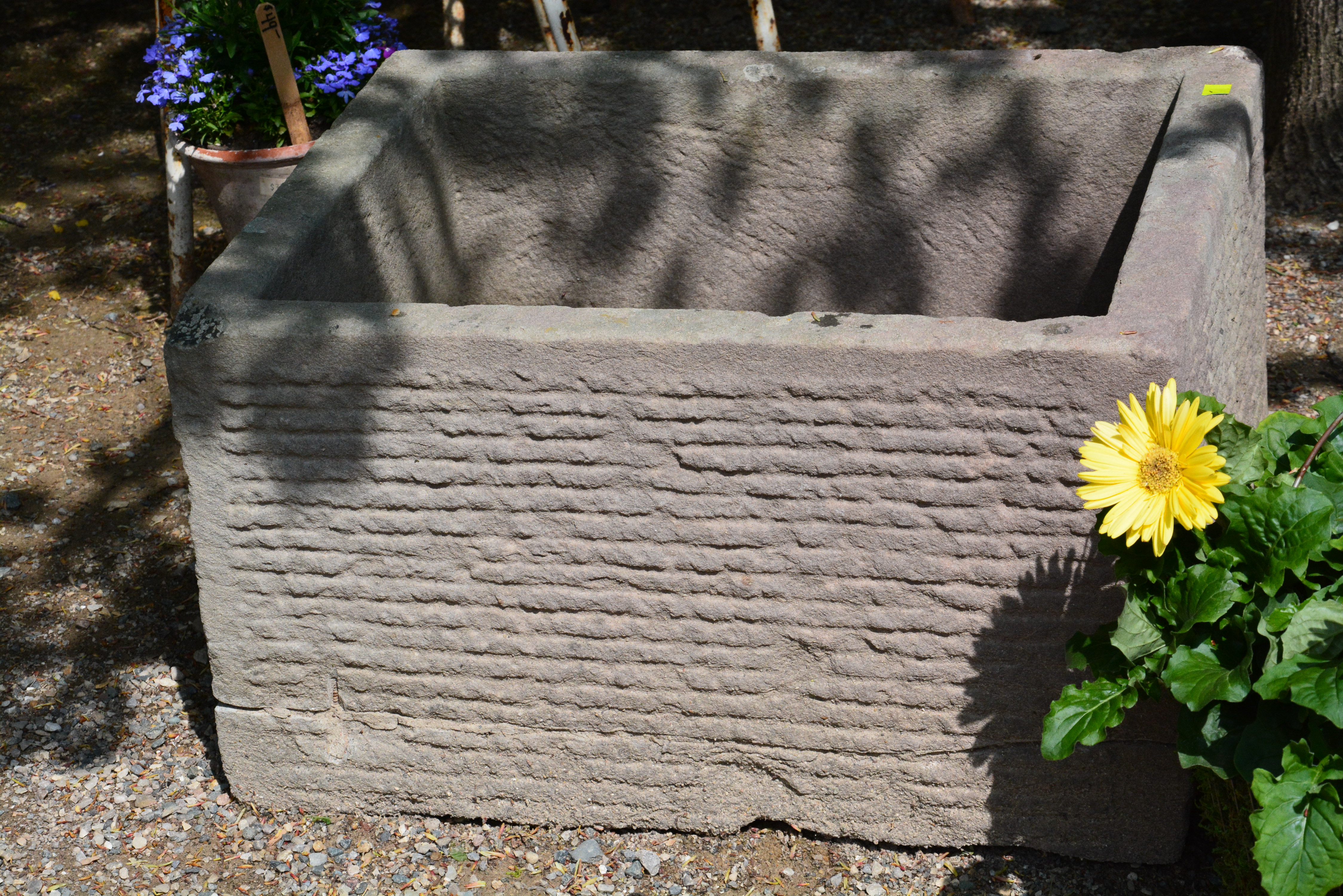
stone-trough.jpgAntique stone troughs come with lots of history attached.  Planted with succulents, they are great for those moments when a gardeners looks downward. They can be filled with water and water plants. Any container properly sited will look good, even when it is empty.

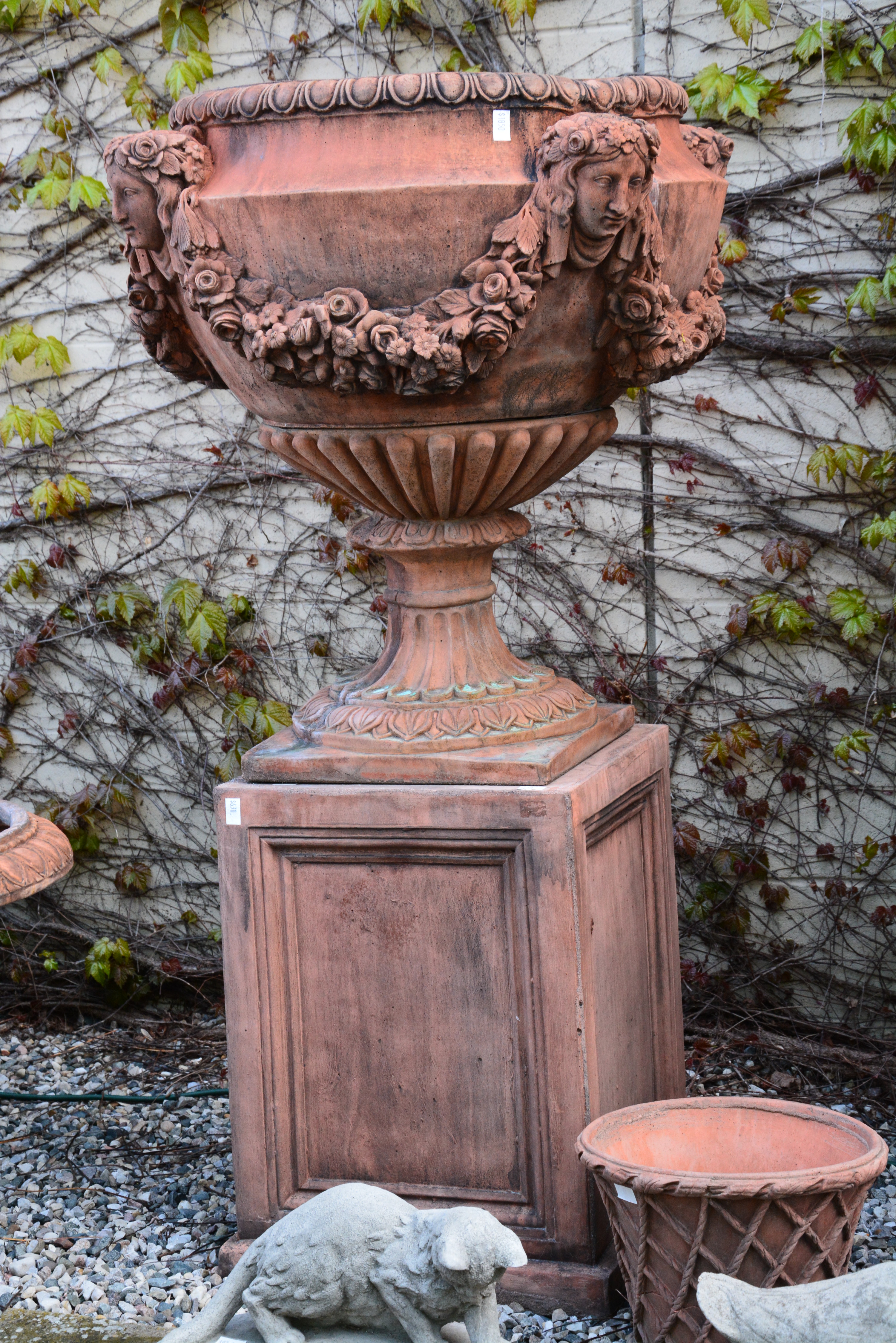
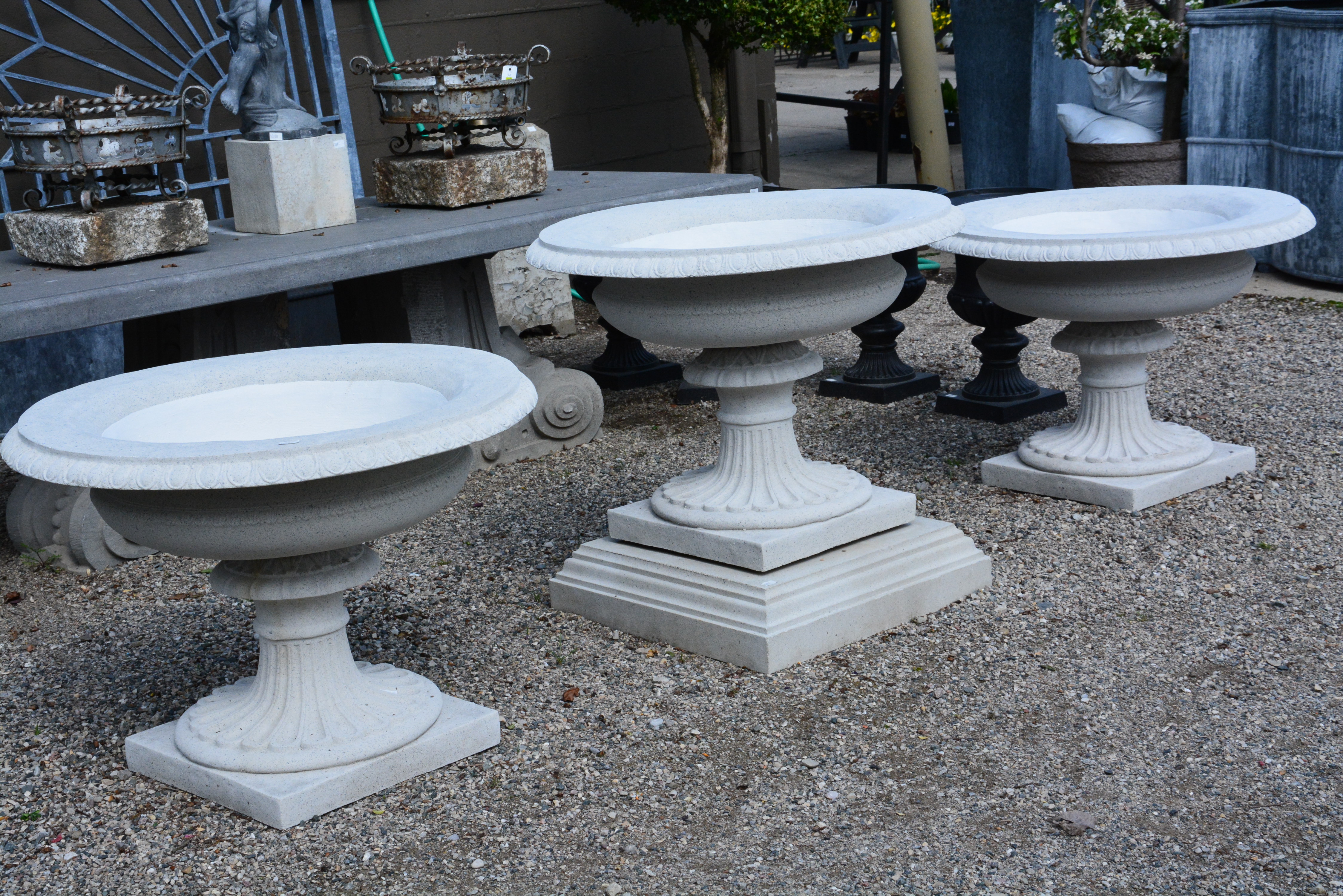
Italian-style-urn.jpgNo container does face to face better than an urn on a pedestal.  Face to face is good at the front door.  Or in the center of a beautiful garden.  Or as a focal point in a landscape.  This English concrete urn in the classical Italian style has a considerable presence, and could organize a fairly large space.  This urn features detail such that the planting would need to acknowledge rather than cover it.

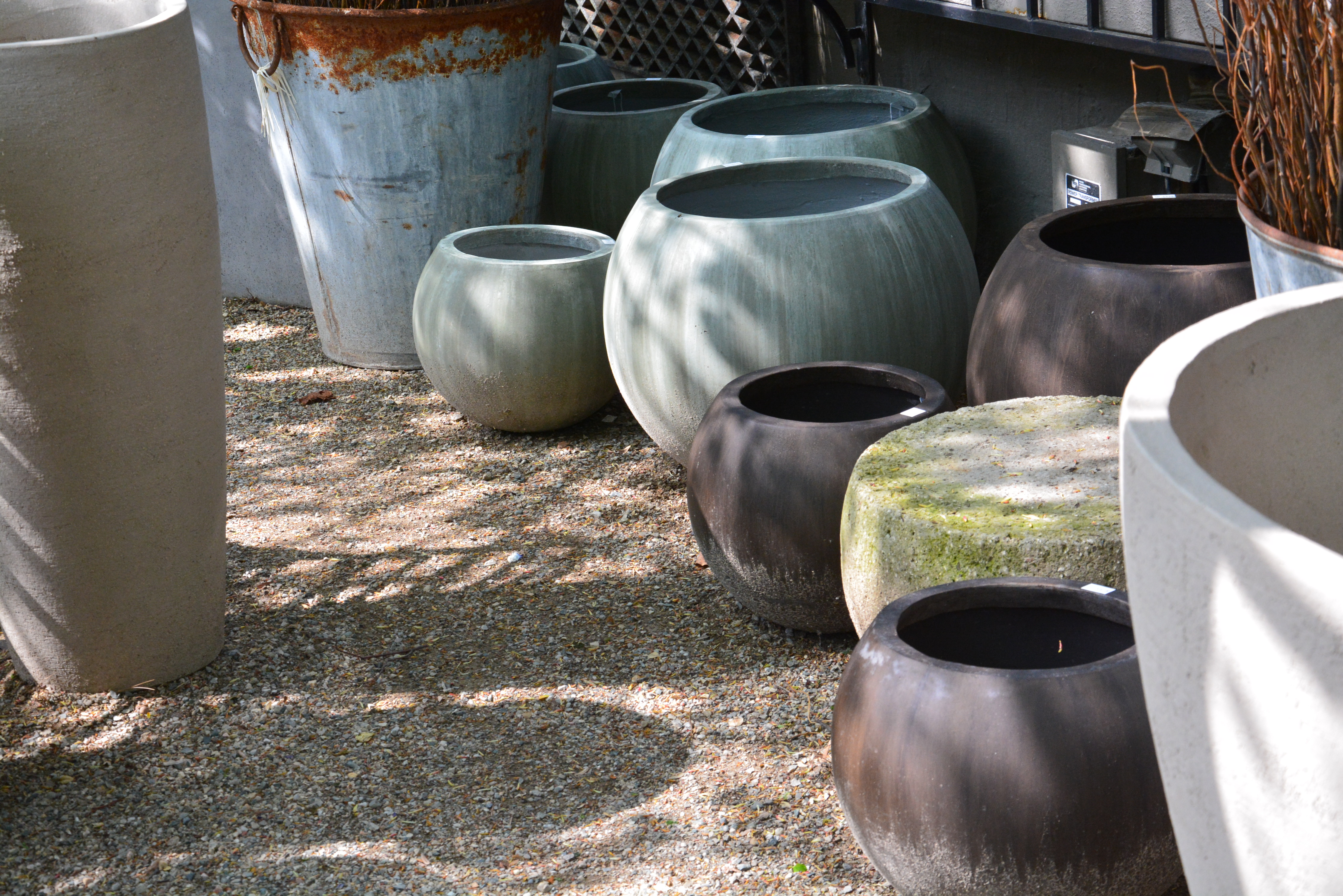
fiberglas-bowls.jpgFiberglass planters are light weight.  They are perfect for water gardens.  Spherical planters are especially effective in contemporary and geometrically organized landscapes.  They are great next to a lounge chair, or a bench.  A well planted bowl will keep you company.

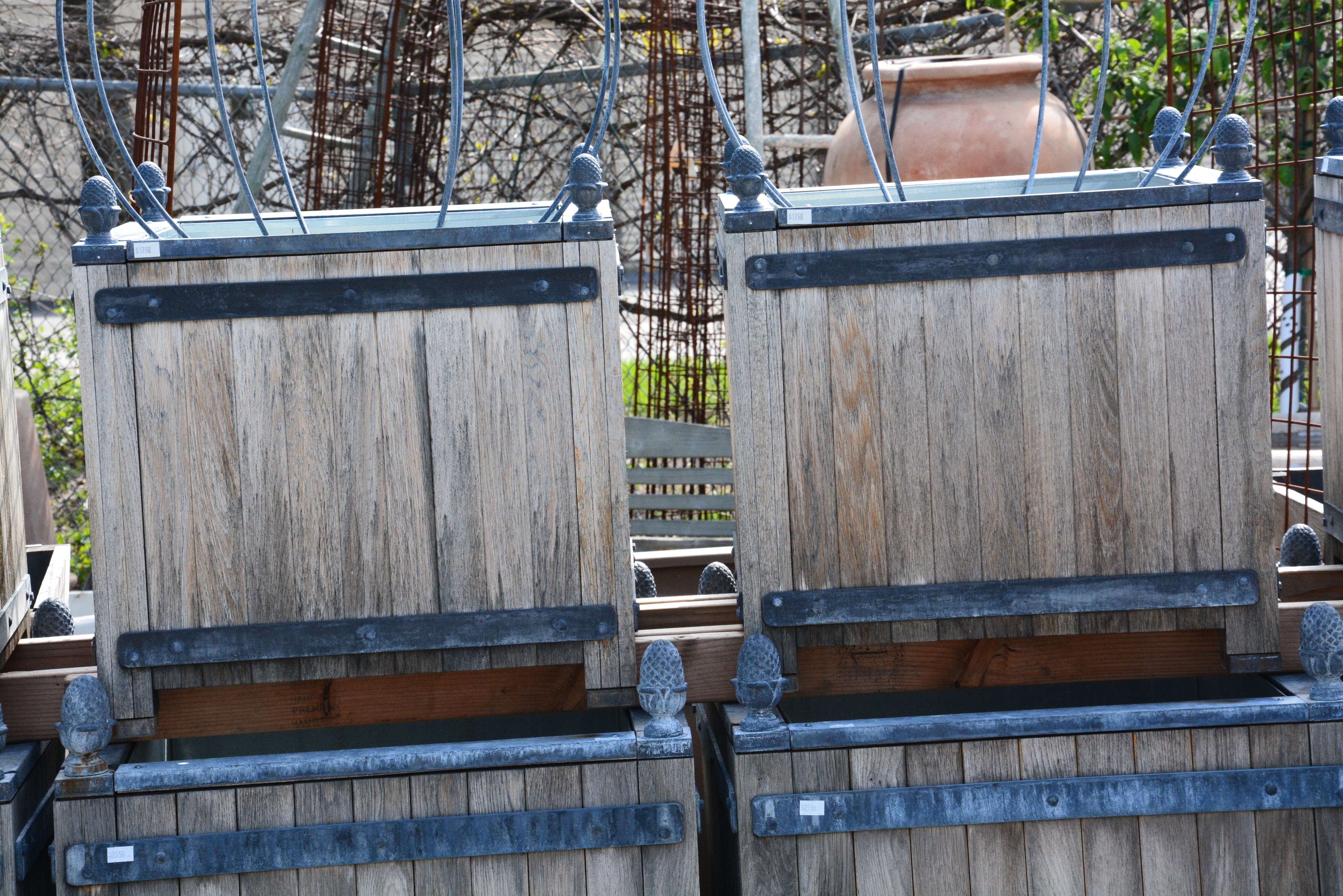
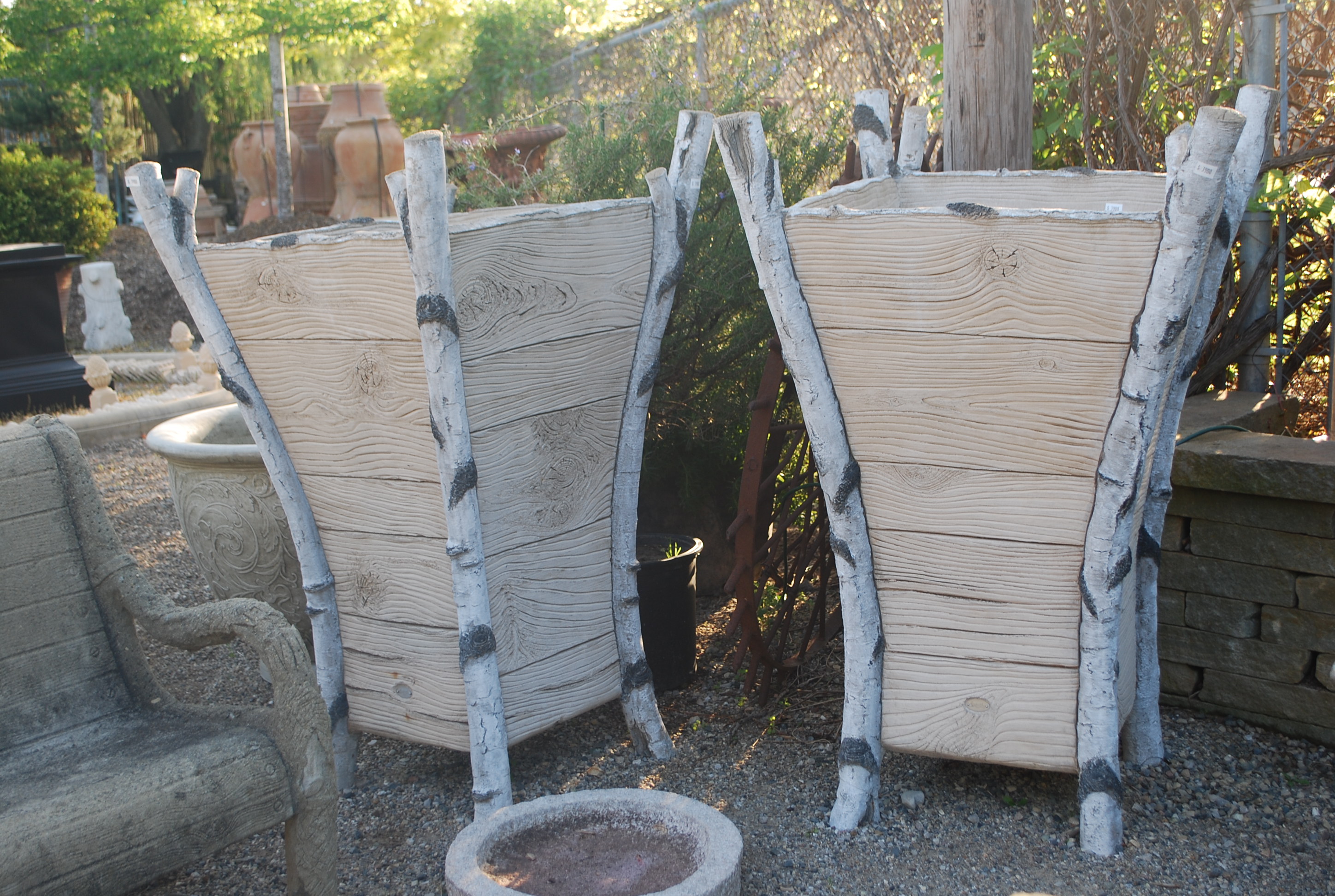
oak-orangerie-boxesThe material of a planter says much about style, period, and architecture. Formally designed and fabricated wood orangery boxes recall an age centuries old. French formal, for sure.  Four wood orangery boxes could organize a formal landscape with ease.  One casually fabricated or vintage wood box stuffed with herbs at the center of a cottage style vegetable garden is all about home. Great meals. Fresh food. When the wood starts to deteriorate, no cause for alarm.

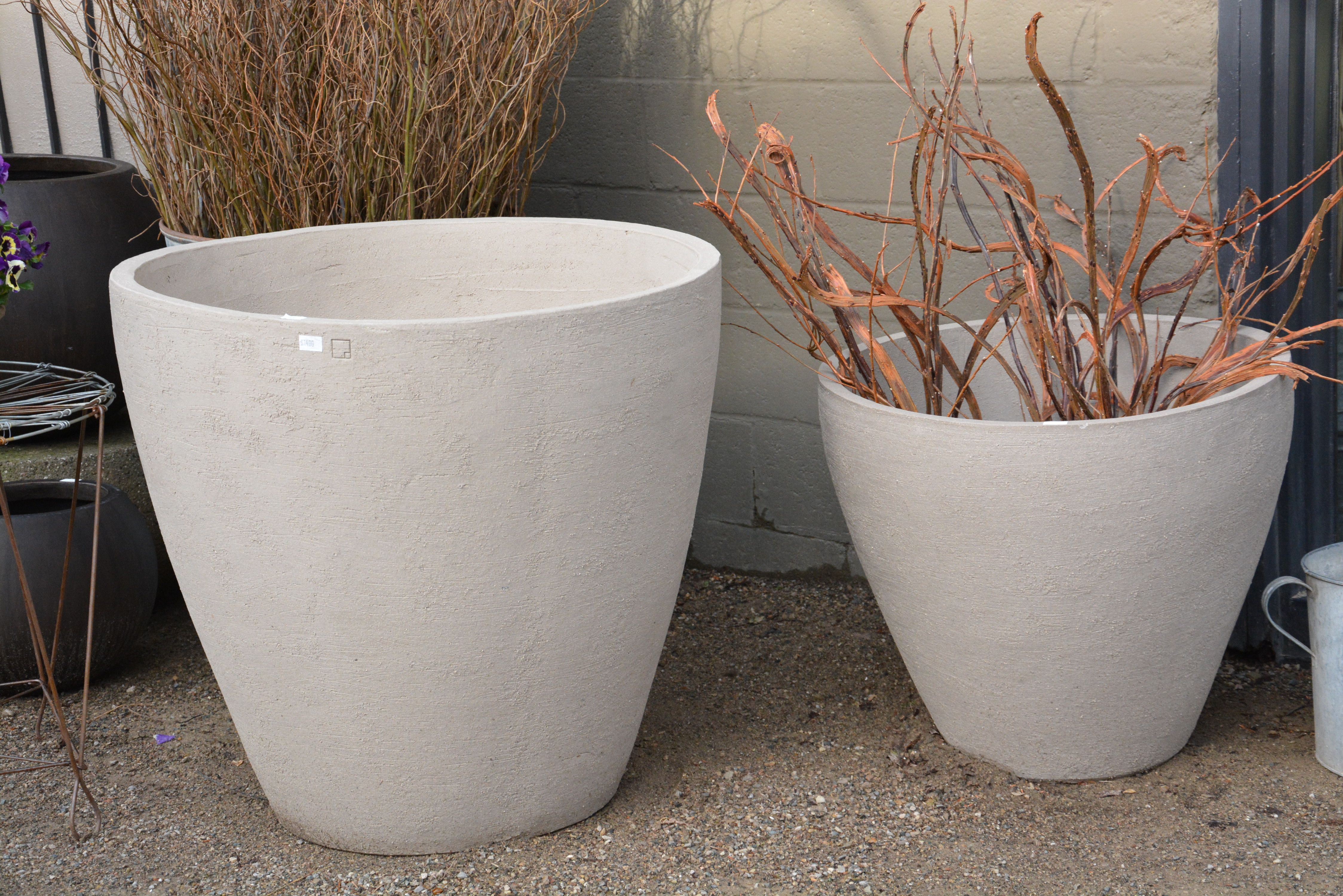
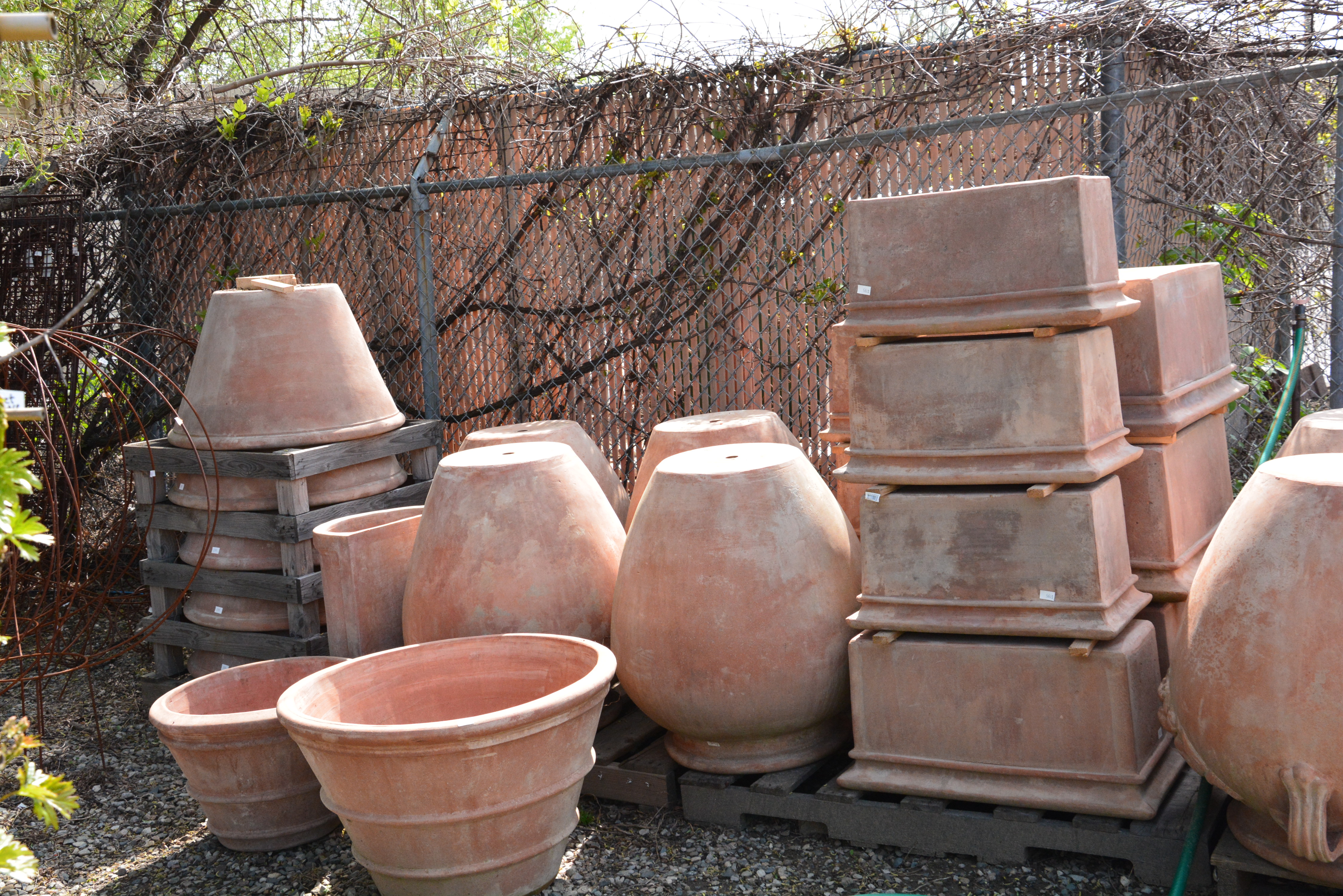
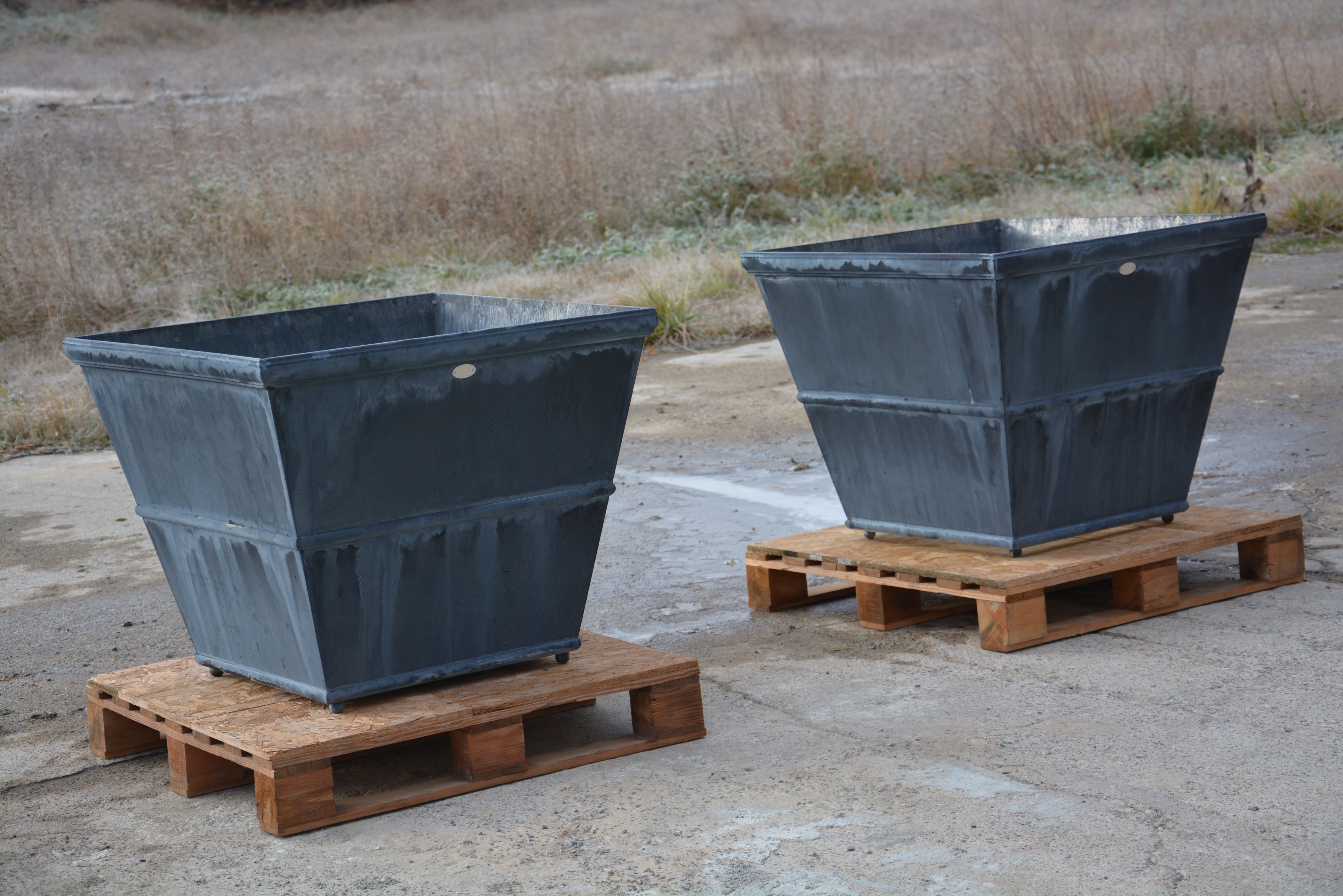
Belgian-stoneware-pots.jpgBelgian stoneware containers are subtly textured.  They are solid, simply modern in shape, and frost proof.  Any contemporary home and garden would be happy for them. That said, the simplicity of their shapes make them easy to fit into any scheme.  galvanized metal.jpgGalvanized metal buckets and tubs are an alternative idea.  Once you have sorted out the proportions, the style, and the size, and the aura,  you may have the idea to go way wide. Or way unexpected. Have at this.      Italian-terra-cotta.jpgI find that no matter what containers I would choose for my landscape, the container usually chooses me. The containers that would work well for you will choose you, if you listen.  This can make a decision much easier to come by.  What container would your home, terrace or garden choose?

square-steel-tapers.jpgEvery home and garden has an identity all its own.  What gets contributed by the gardener in charge makes that presentation all the more beautiful for being personal.

burlap-sack-pot.jpg Who’s choosing whom?  Good container choices depend on a lively interaction.

Sunday Opinion: Scale And Proportion

cad-drawing.jpg
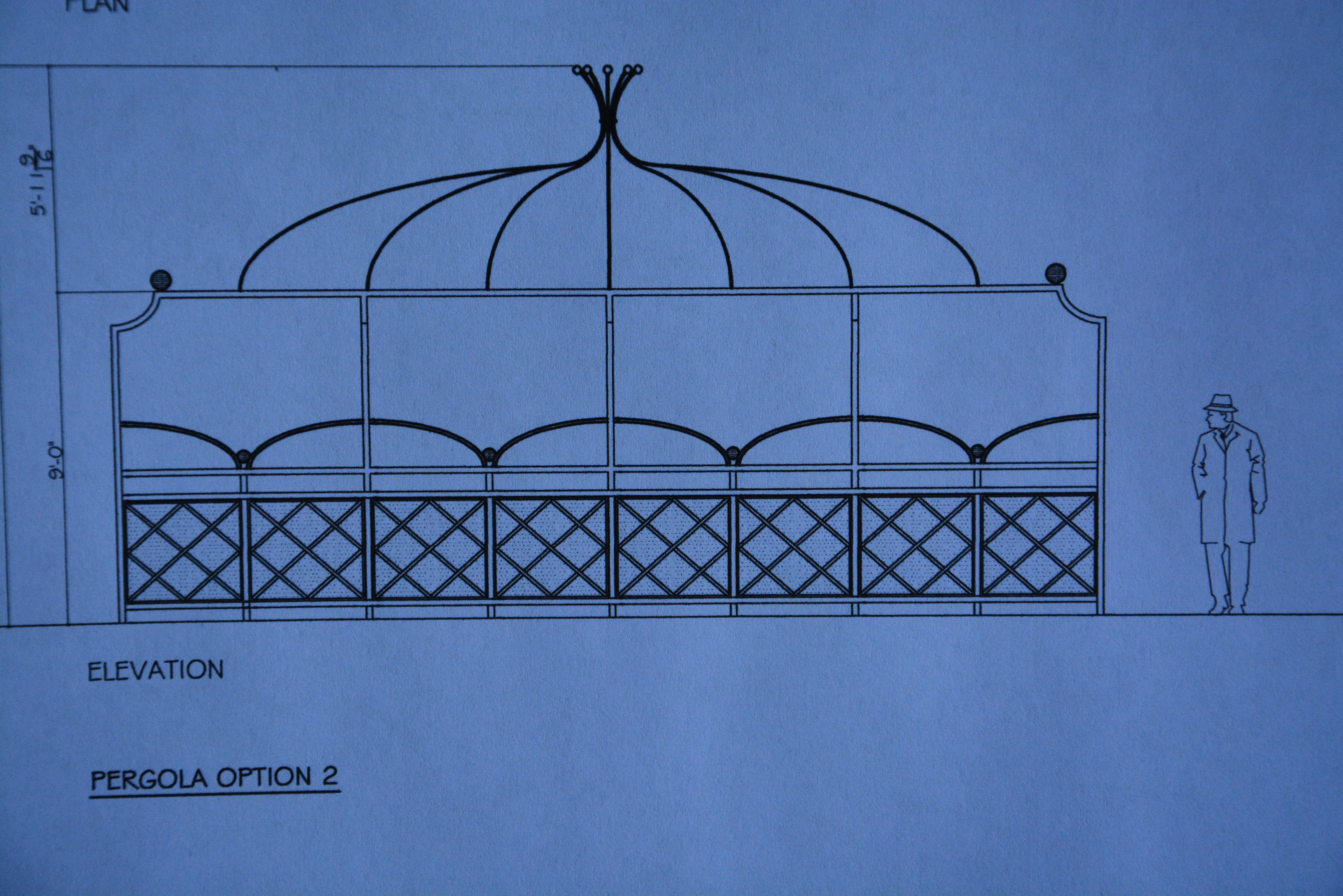
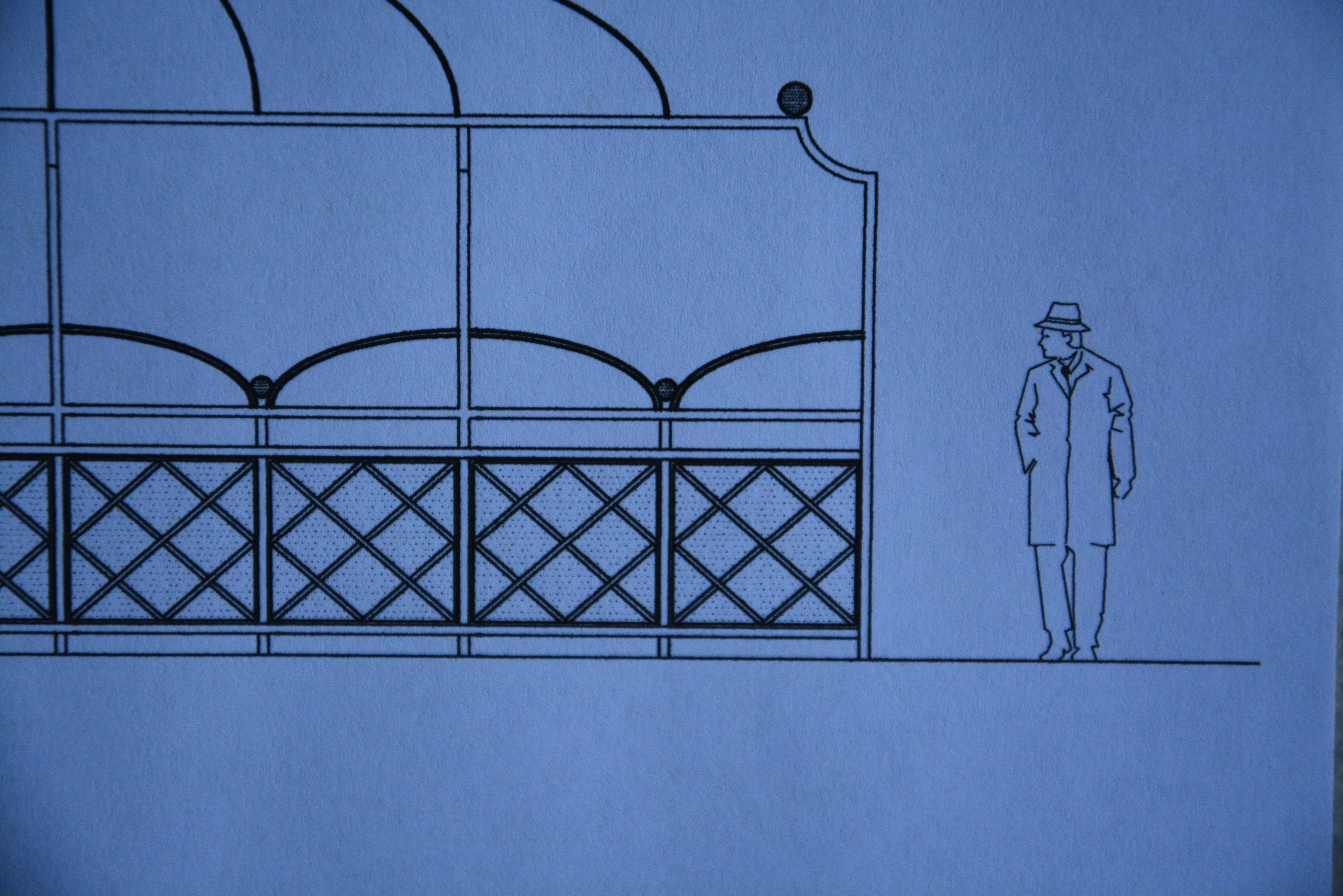
Whenever Buck does a CAD drawing for a project, or an object, he includes a drawing of Man 01.  For those of you who do not do design drawings on a computer, CAD stands for computer assisted design.  This line drawing of a man who is 6′ tall is stored in his computer as a “block”.  Buck has thousands of blocks stored in his computer. Those blocks are stored drawings of shapes and forms he uses over and over again.  Pasting a block into a drawing means he does not have to draw that portion from scratch.  An entirely new shape will require a drawing from start to finish.  A complicated design for an object to be made can take many hours to draw.
man-01.jpg
I have watched him translate an idea into a precisely rendered drawing. Who knows how long ago it was that he learned the language of this two-dimensional design program.  It must be a long time, as his fingers fly over the keyboard of his computer faster than my eyes can follow.  I see lines drawn to precise lengths that connect to other lines, which finally, and exactly, describe a form.  Down to the last 1/64th of an inch.  Given a specific engineering inquiry, he can design to 1000th of an inch. This level of precision isn’t an issue for you and I.   What purpose does the man01 block serve?  This 6′ tall idea of the height and volume occupied by a man is size that is easy to recognize.  6′ tall isn’t short, but it isn’t tall, either.  Man01 is a average size guy.  When man01 is standing next to a planter box we are thinking of building, I have more than the dimensions of that box.  I have  a size and height that is familiar to me.  I can compare the size of the man, to the size of the proposed box.

CAD-drawing.jpg (7)

Anything that Buck makes at Branch, requires a drawing.  He has the drawings for our stock products stored in his computer.  The company that laser cuts our steel, or the company that rolls our steel in multiple dimensions, require those drawings to program their computers to cut or roll to our exact specifications.  Building an object successfully that involves a number of different people and operations doesn’t happen via a breakfast meeting or a conference call.  What is drawn on the page is an exact template for what will be built.

people-in-the-garden.jpgBuck makes those drawings with the help of a computer program programmed to precisely, and mathematically describe a form.  He drives the bus. He tells the computer what he wants to see. The many years he spent as an architect required a working knowledge of how to translate a design into a drawing.  Not just any drawing.  A drawing that would spell out to a contractor exactly how to build a house,  a stadium, a heating system, a plumbing plan, or a fruit cellar.  A bell tower, or a topiary form, or a bench.  But rest assured, a mathematically precise rendering of an idea of an object does in no way indicate that an object will be beautiful.

Dorothy-and-Don-Farmer.jpg

Man01 is a gesture in a beautiful direction.  The proportion of a planter box for the garden is a key element of its design.  How a person would relate to the dimension and proportion of that box, whether standing or sitting, will influence how a gardener eventually views, and reviews, that form.  Every person has an idea all their own about what is beautiful and of interest.  Each person likewise has an idea of what doesn’t move them.  This makes garden ornament very difficult to design.  One way we broaden our appeal is by offering different sizes.  Comparing a set of possible sizes to the mano1 block helps us to decide what to build and what not to build.  The computer is a tool that helps with the decision making process.

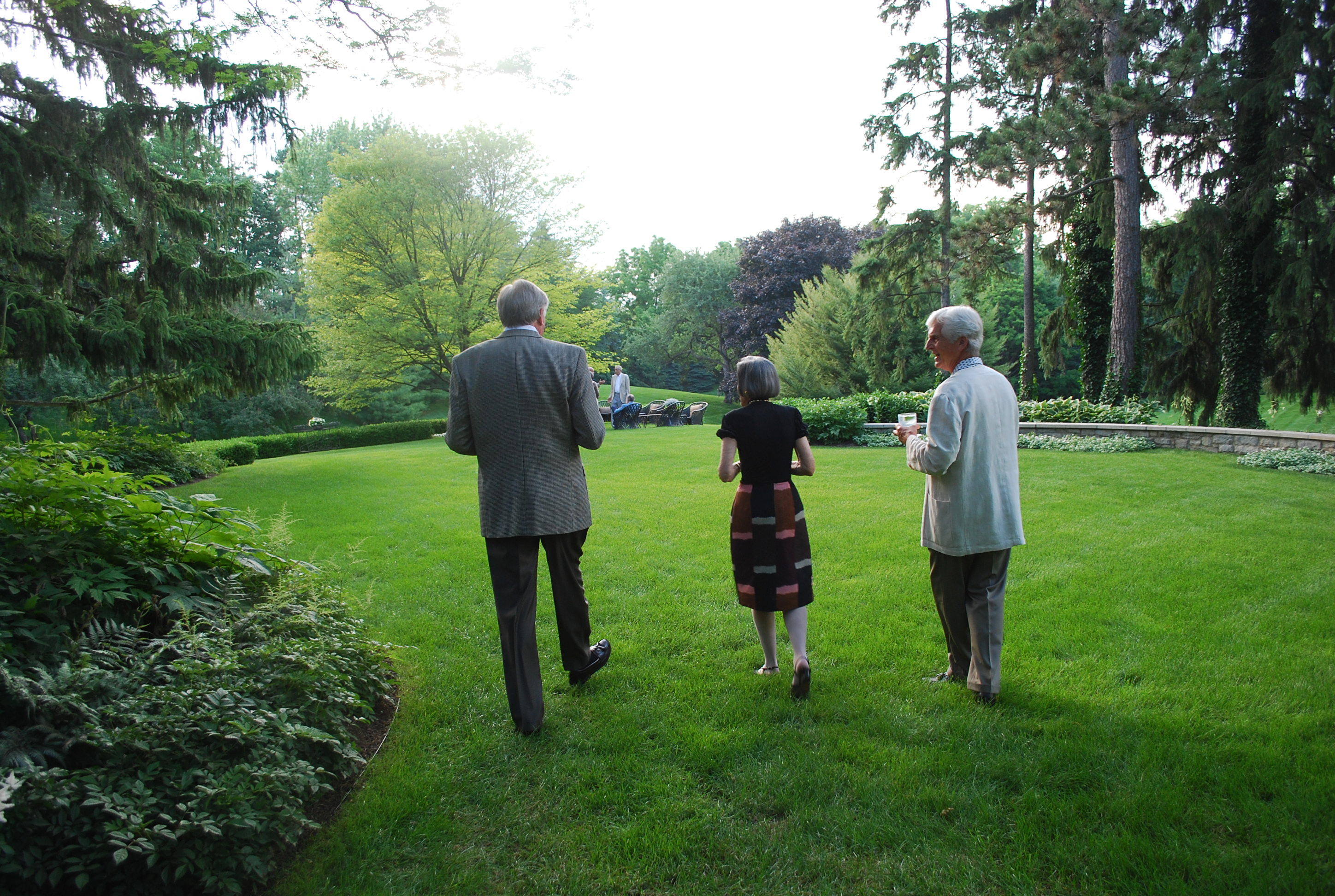
in-the-garden.jpgMan01 is a symbol on Buck’s drawings for scale and proportion.  Woman01 is a scale I sometimes ask for from Buck.  5.5 feet.  But no matter the gender,  human scale is an element that should inform landscape design.  A good feeling for the scale and proportion of a property, the plants, and the people can produce visually interesting relationships.

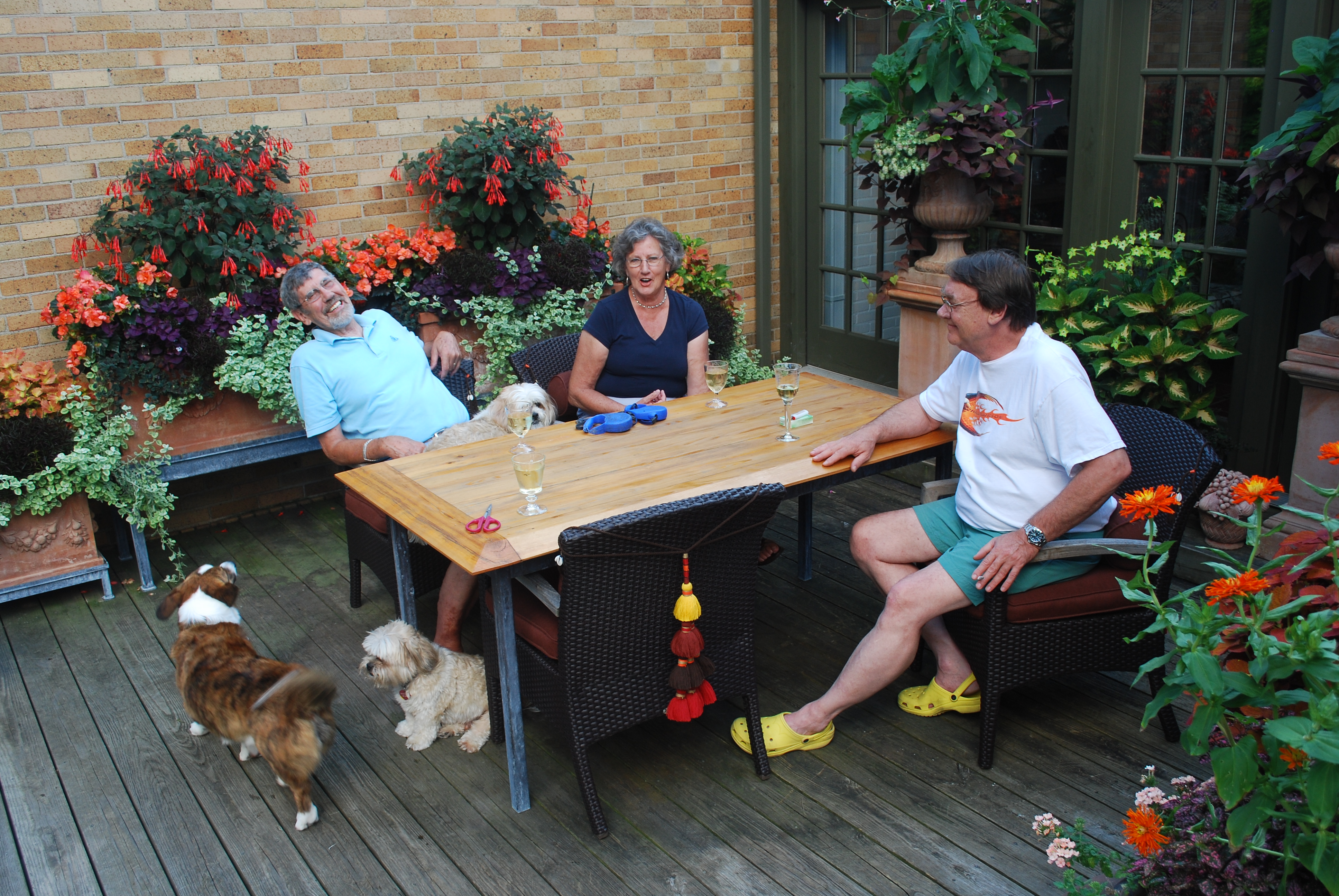
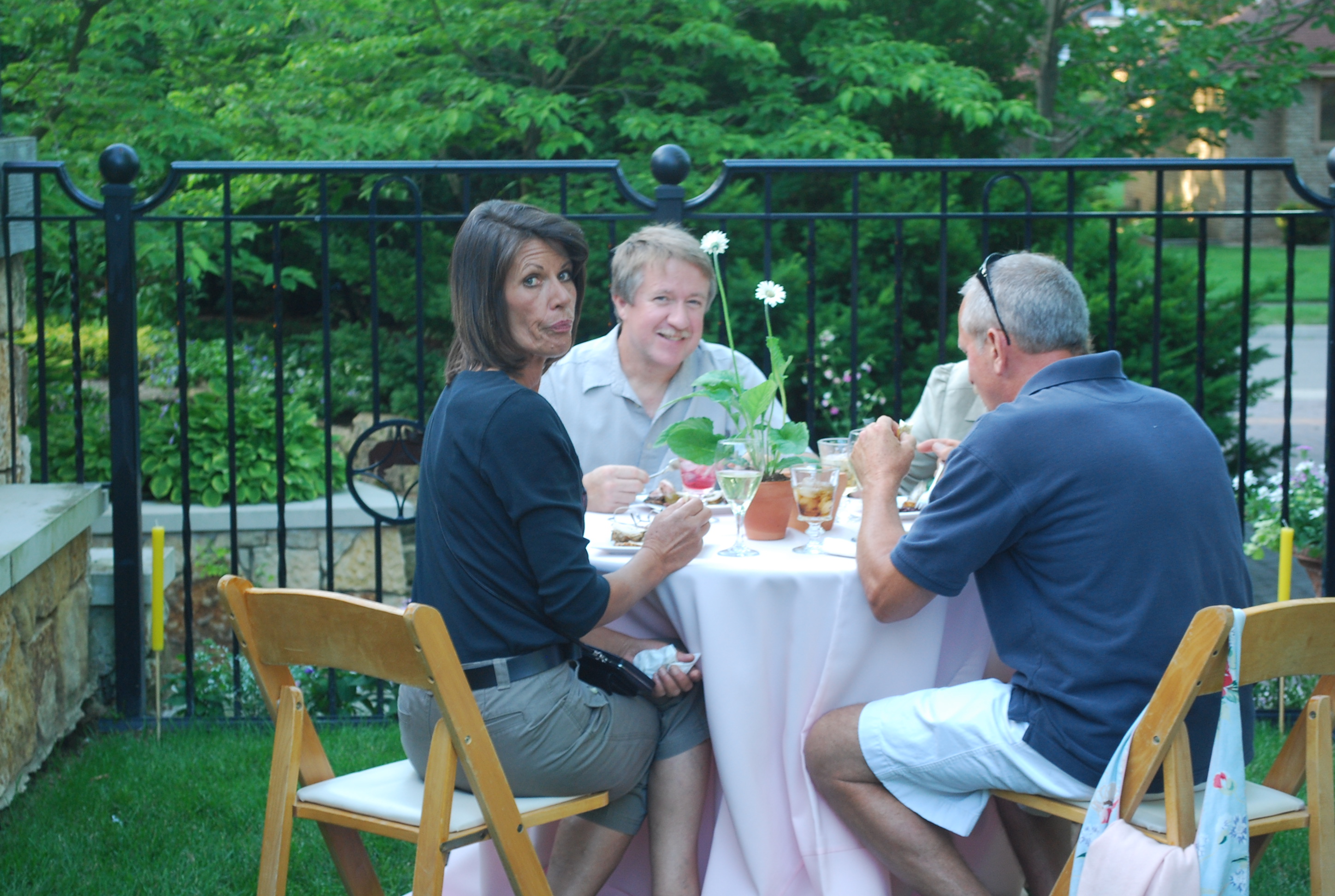
friends-in-the-garden.jpgFriends for dinner in the garden is great fun.  Friends comfortable in the garden is an important part of design.

The Photographs

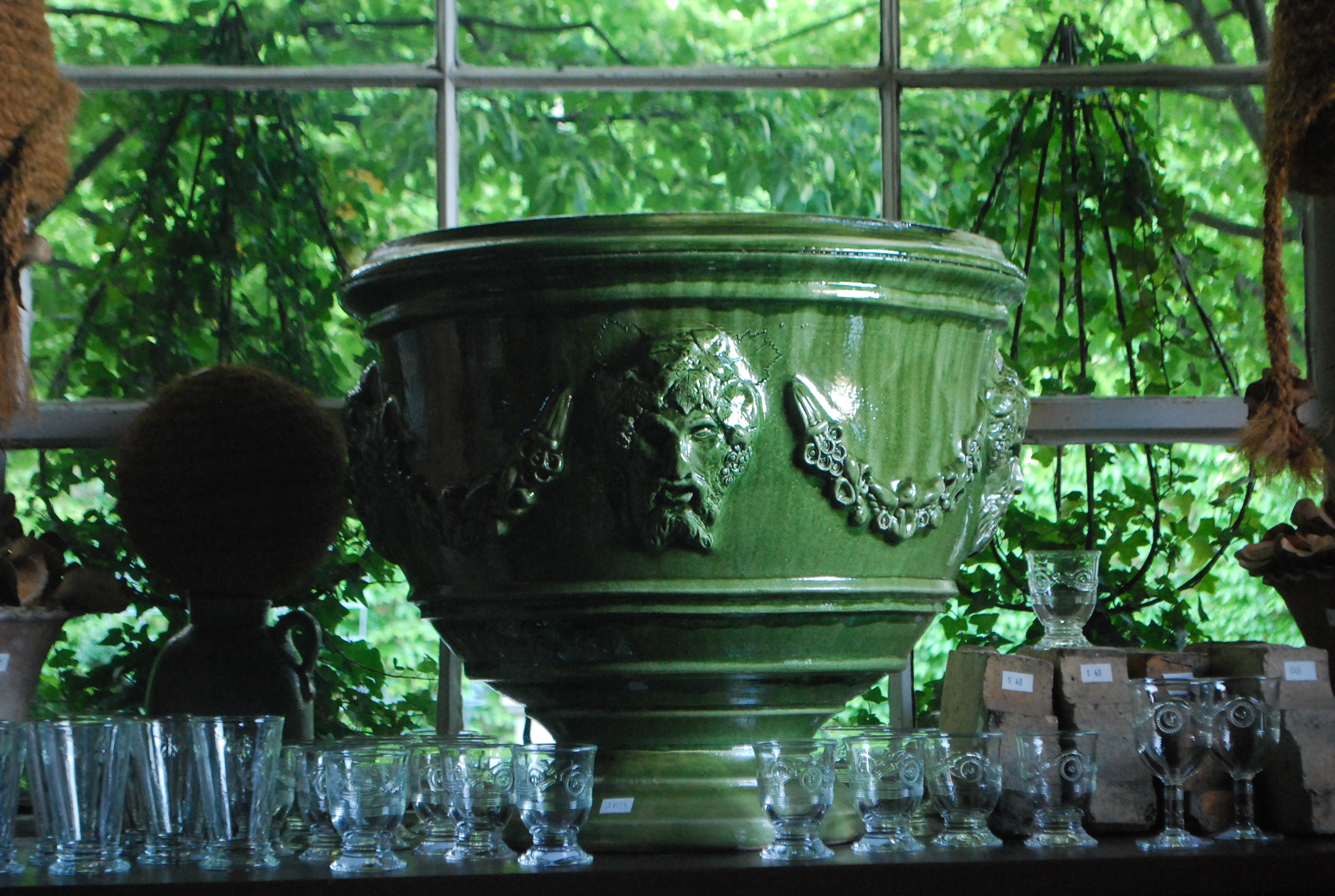
glazed French pots

You may have noticed that this website has a new format.   Indeed it does.  My big interest in updating the blog was that the photographs would be bigger-better.  Clearer.  I am no different than most; say what you will, but show me a picture.  A photograph communicates in a graceful yet direct way. The picture of this French pot does a vastly better job of explaining the look than a collection of words.

A photograph does not require good grammar, or proper punctuation.  A good photograph of a garden can capture the light, the weather-the moment.  The written word-a labor of love which invariably looks like labor.  My pictures-sometimes they capture in one fell swoop what would take me 800 words to describe.

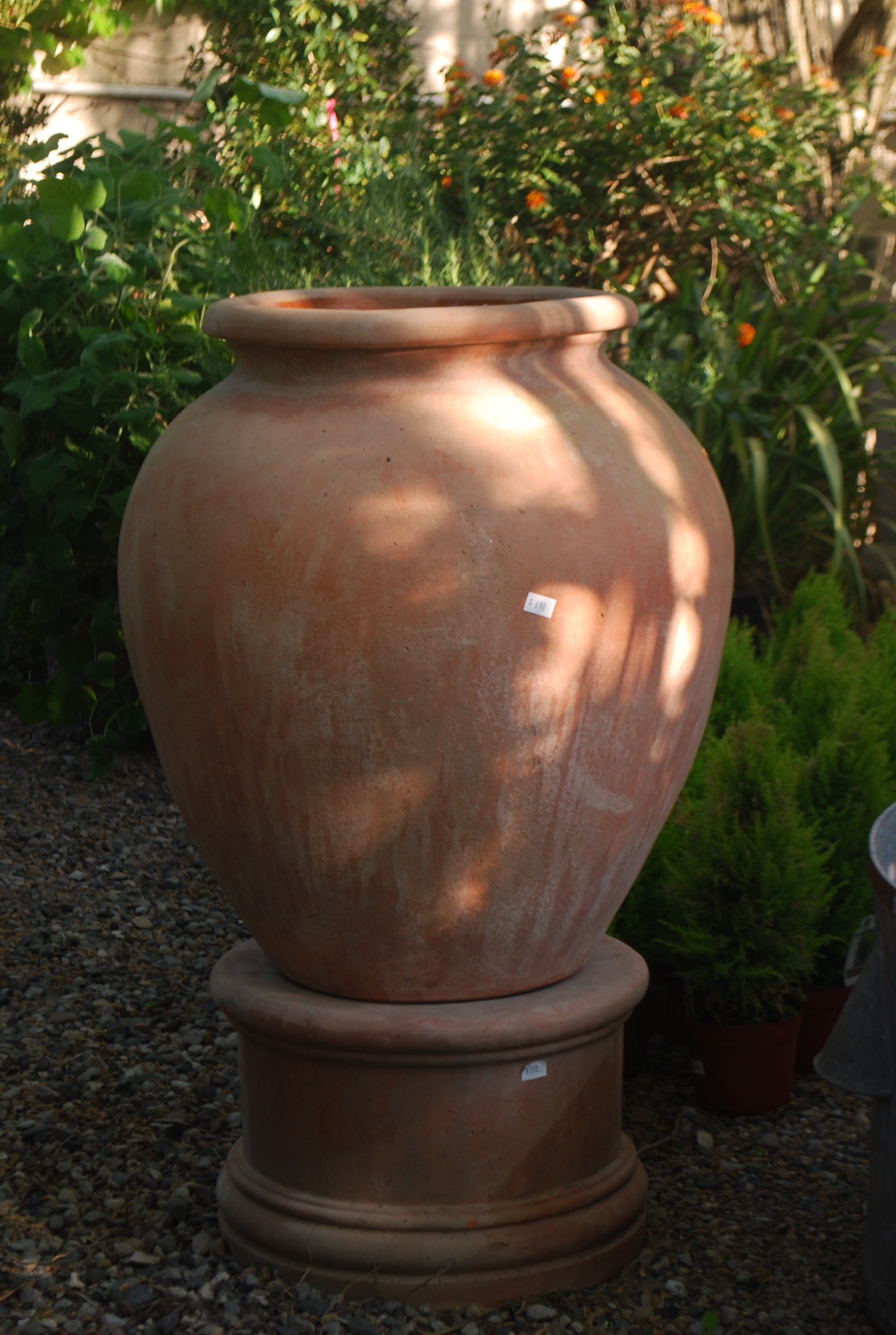
Italian terra cotta pots

I have days when I am not interested in reading the words.  I only have eyes for a visual moment. It took me a few days to learn how to use this new format. The lag time made me furious!  What garden writer wants to be out of touch the latter half of May?  But  I am pleased with the results.

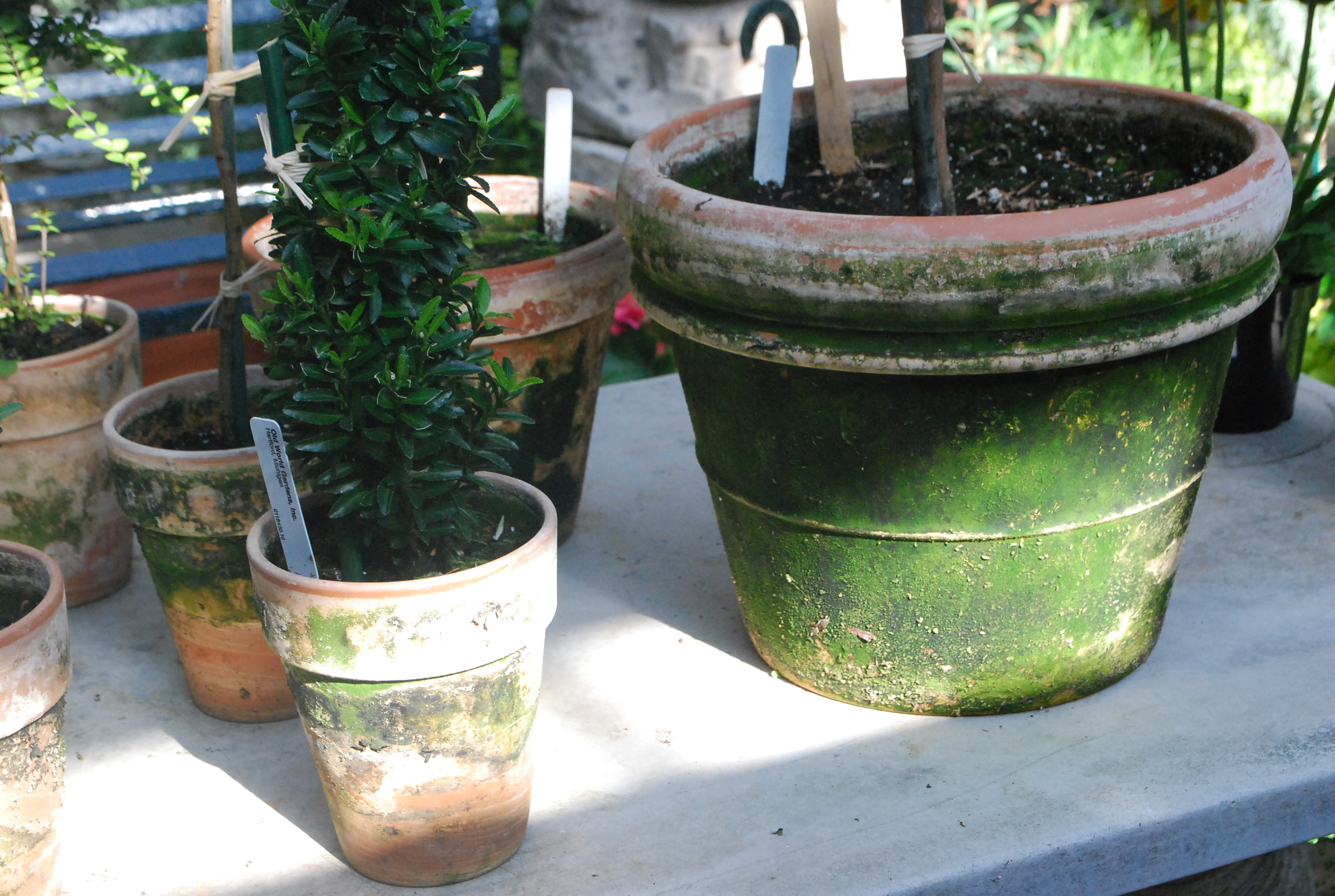
mossy clay pots

I like the bigger pictures.  And that you can see them even bigger yet, if you click on them.  As for my post yesterday about the process of choosing great pots, here is an addendum.  A visual addendum.

The gardener who would fall for this contemporary Belgian glazed pot is entirely different from the gardener who would choose wirework plant stands.  The gardener who would mix them in a grouping of pots-another sort. But enough of the talk-enjoy the pictures.

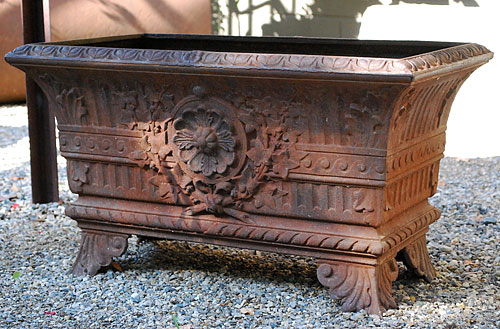
cast iron jardiniere

French cast iron jardiniere

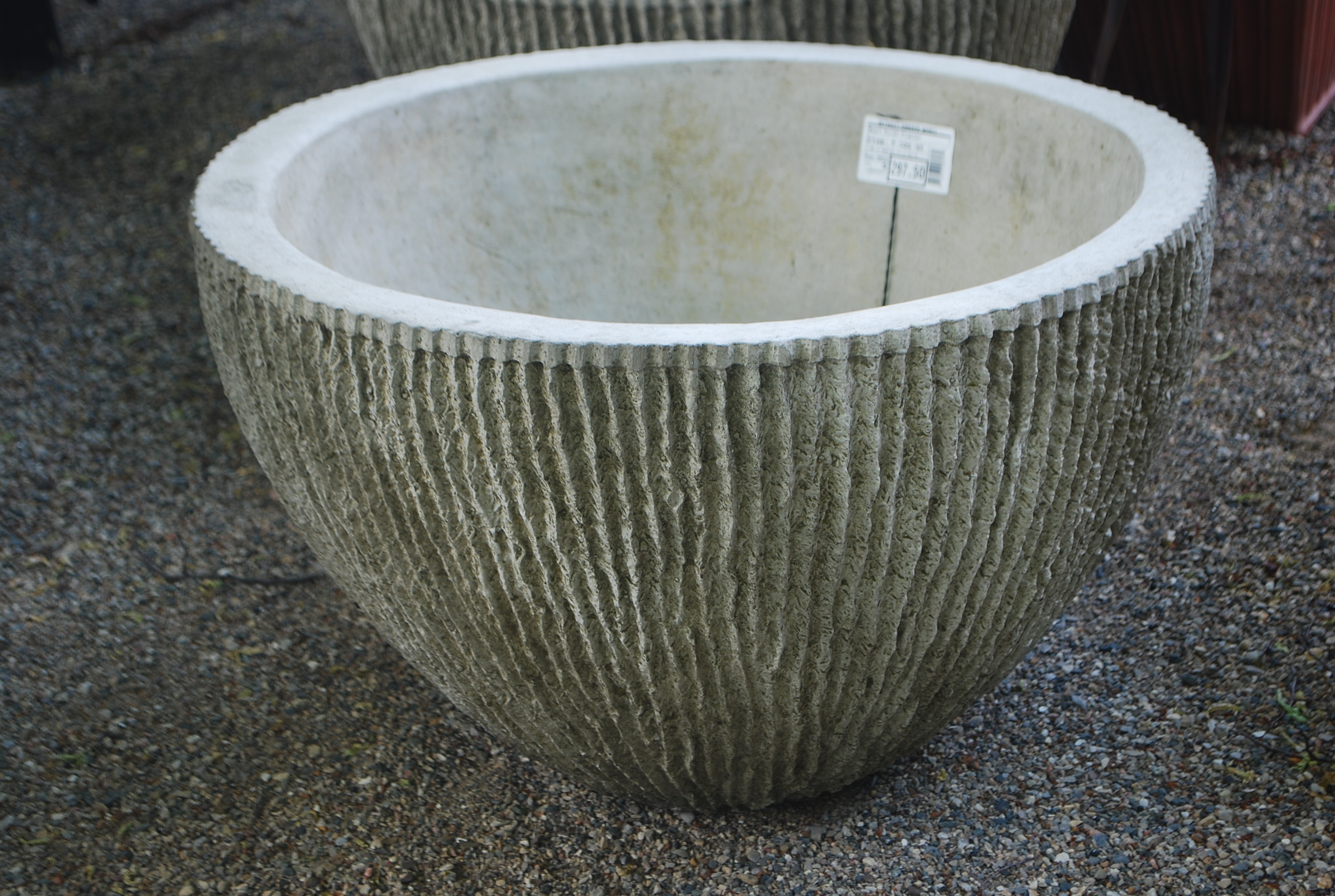
American ridged concrete bowl pot

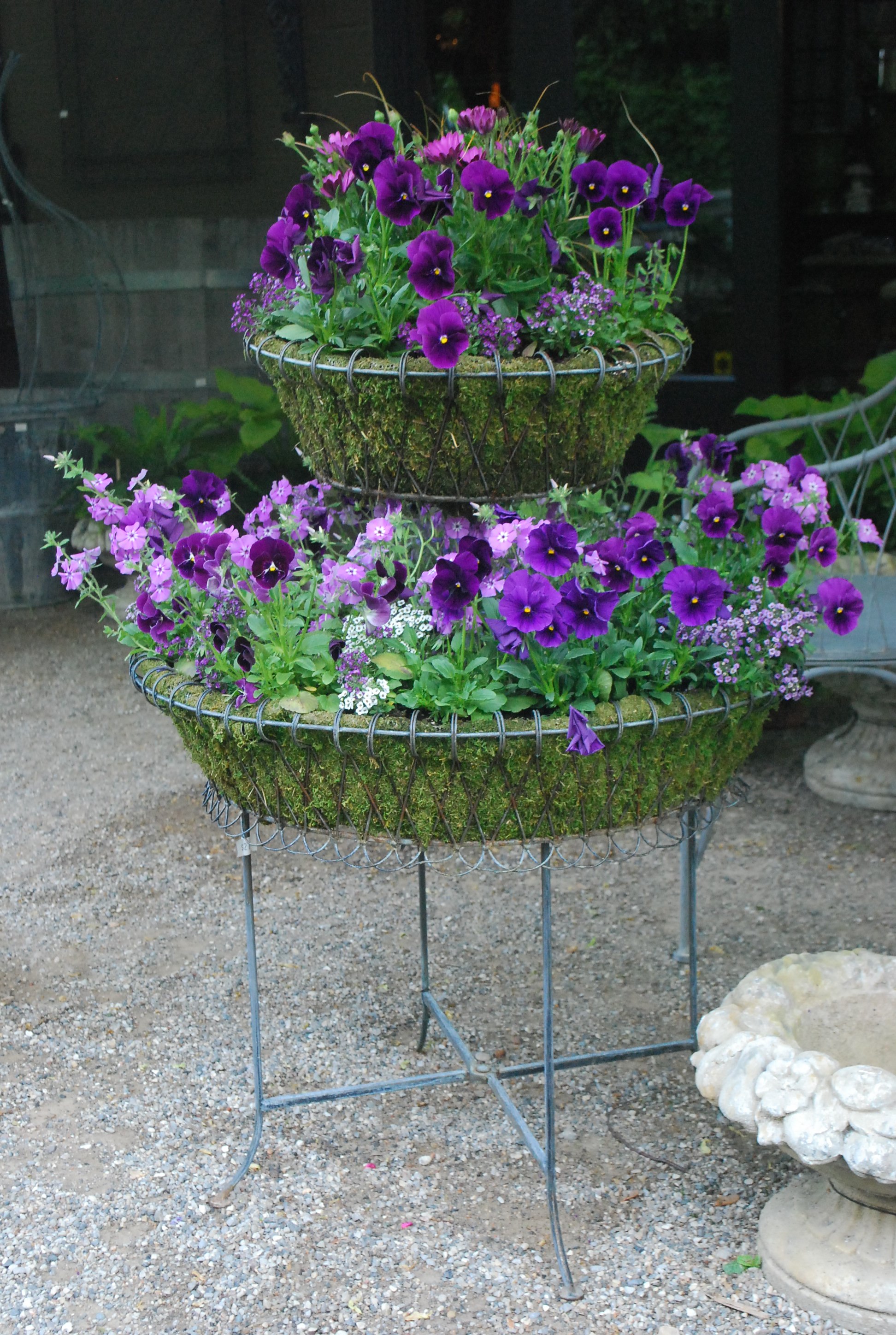
two-tiered plant stand
two tiered wirework plant stand

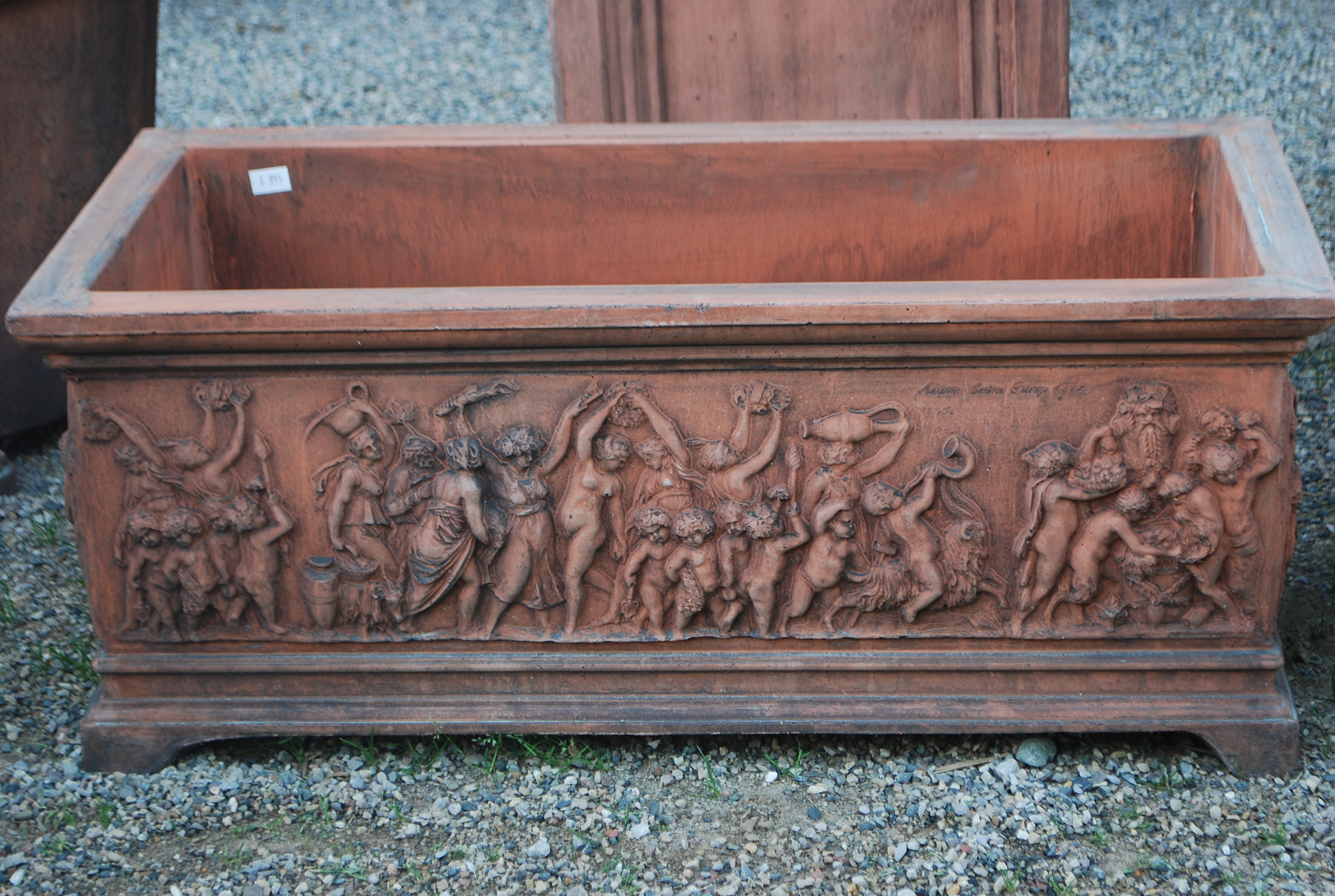
English concrete rectangle

glazed French terra cotta

glazed French terra cotta

limestone urn detail

concrete pots

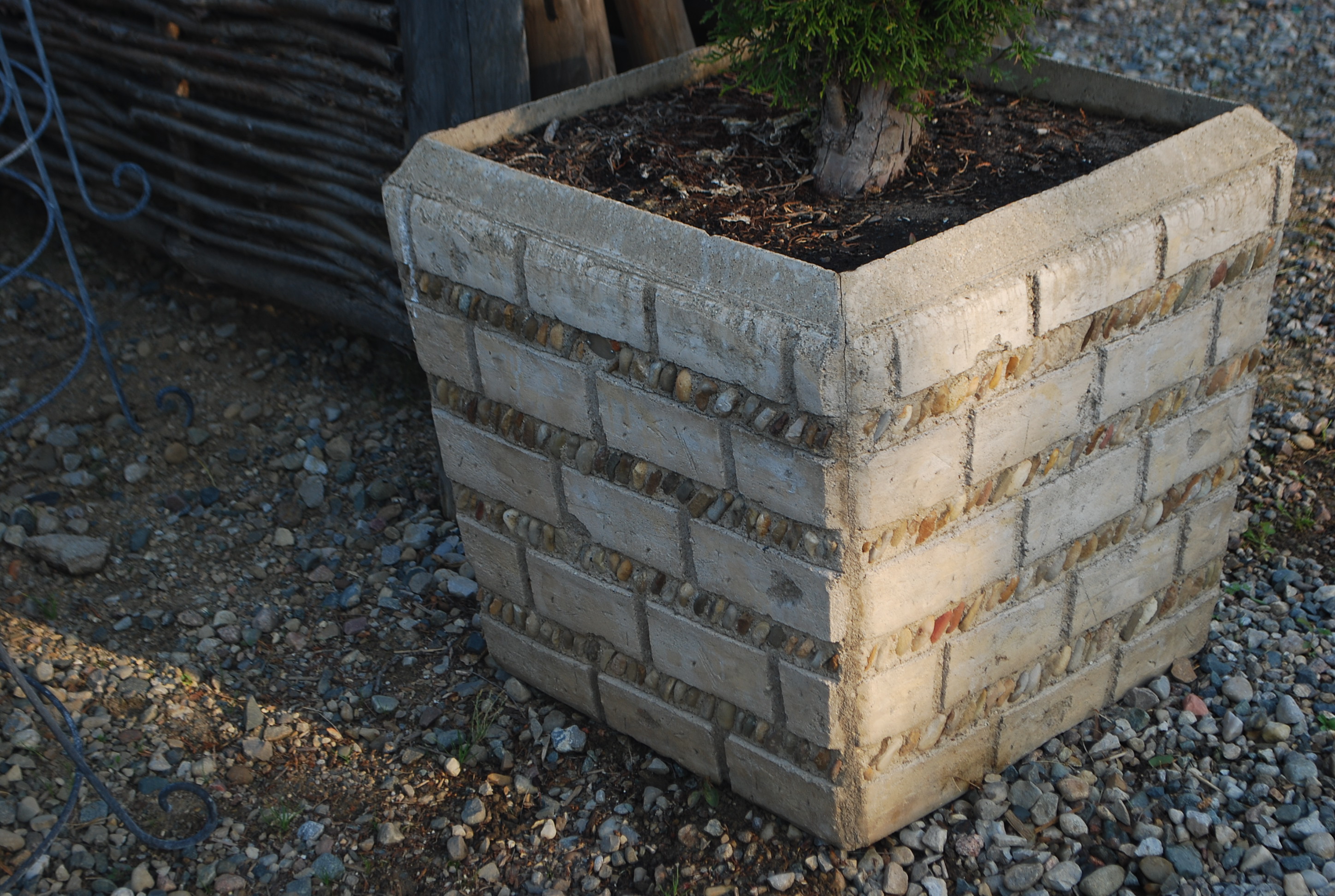
brick and rock pot

terra cotta pots

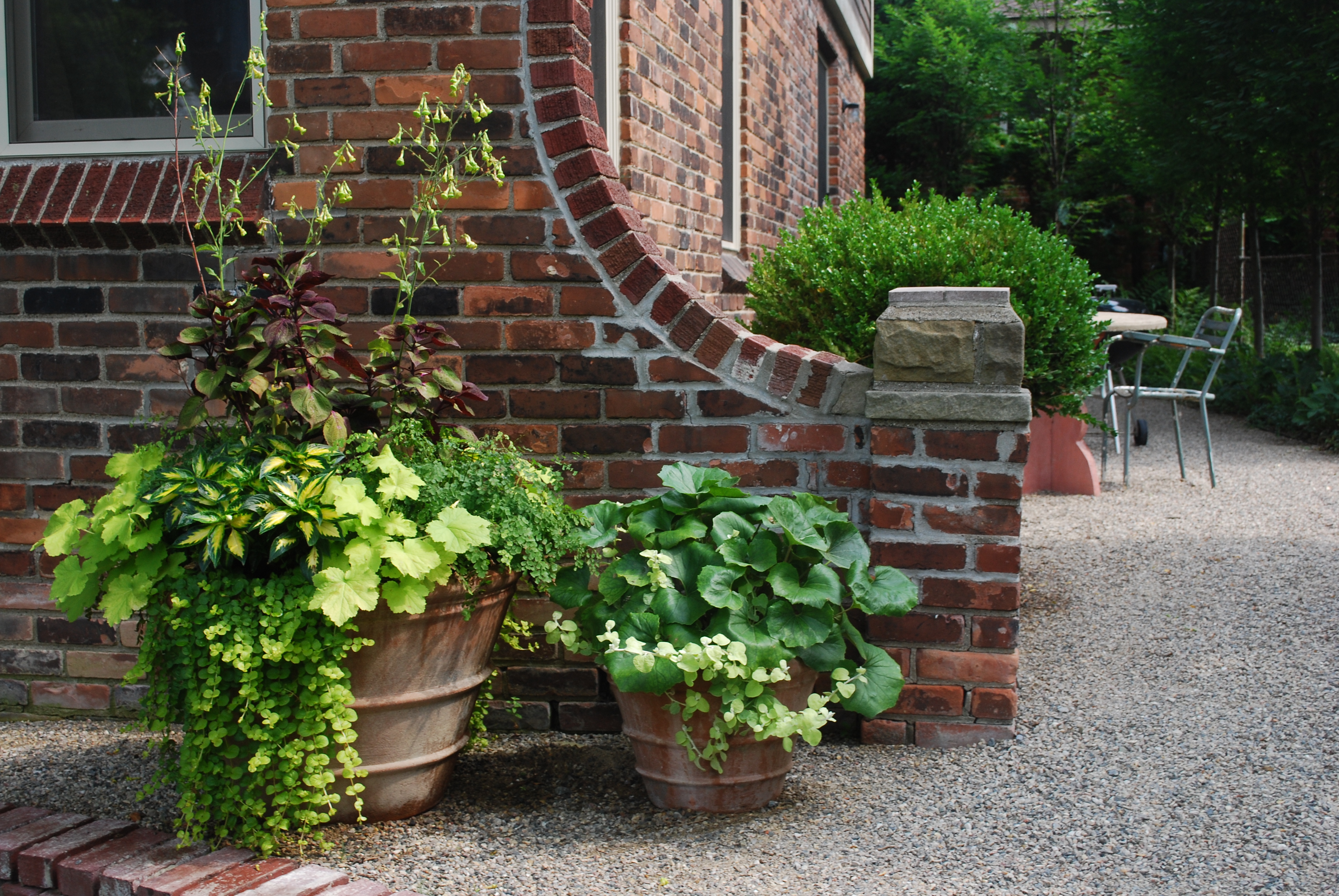
Rob planted these Italian terra cotta pots.  The combination of great pots and great plants-truly lovely.