 Our winter/holiday season began the moment that our cut greens arrived. Why so early? The daughter of a long standing client is to be married this Saturday the 18th. Lots of family and friends from places far away will be attending. I promised that her winter pots would be done before the first of their out of town guests were scheduled to arrive. On the face of it, that seemed easy enough. To say we carry cut greens is an understatement. Our west coast grown greens are premium length and fine quality boughs that permit us to provide the proper scale and density to our winter pots.
 Those greens were scheduled to be delivered this past Monday. But on Monday, our driver was still in Nebraska. Shipping delays are not that unusual, but I had a deadline that had no wiggle room. I talked to my client, and assured her that the moment those materials arrived, we would be on her project. Tuesday morning we were breaking in to the 40 pound boxes of greens as they came off the truck. Wednesday morning first thing we were ready to install.
 All of the work of our winter containers is done in the stockroom/garage at Detroit Garden Works. The materials for the centerpieces are arranged around and zip tied to a stout bamboo pole. That pole gets driven down into the pot with a padded mallet once we determine the exact location for that centerpiece. That long stake driven down into the pot provides ballast that keeps that centerpiece perfectly vertical. Of course smaller pots get smaller stakes. The greens are cut to the length we need, and sharpened at the ends before they are inserted in thick dry foam forms.
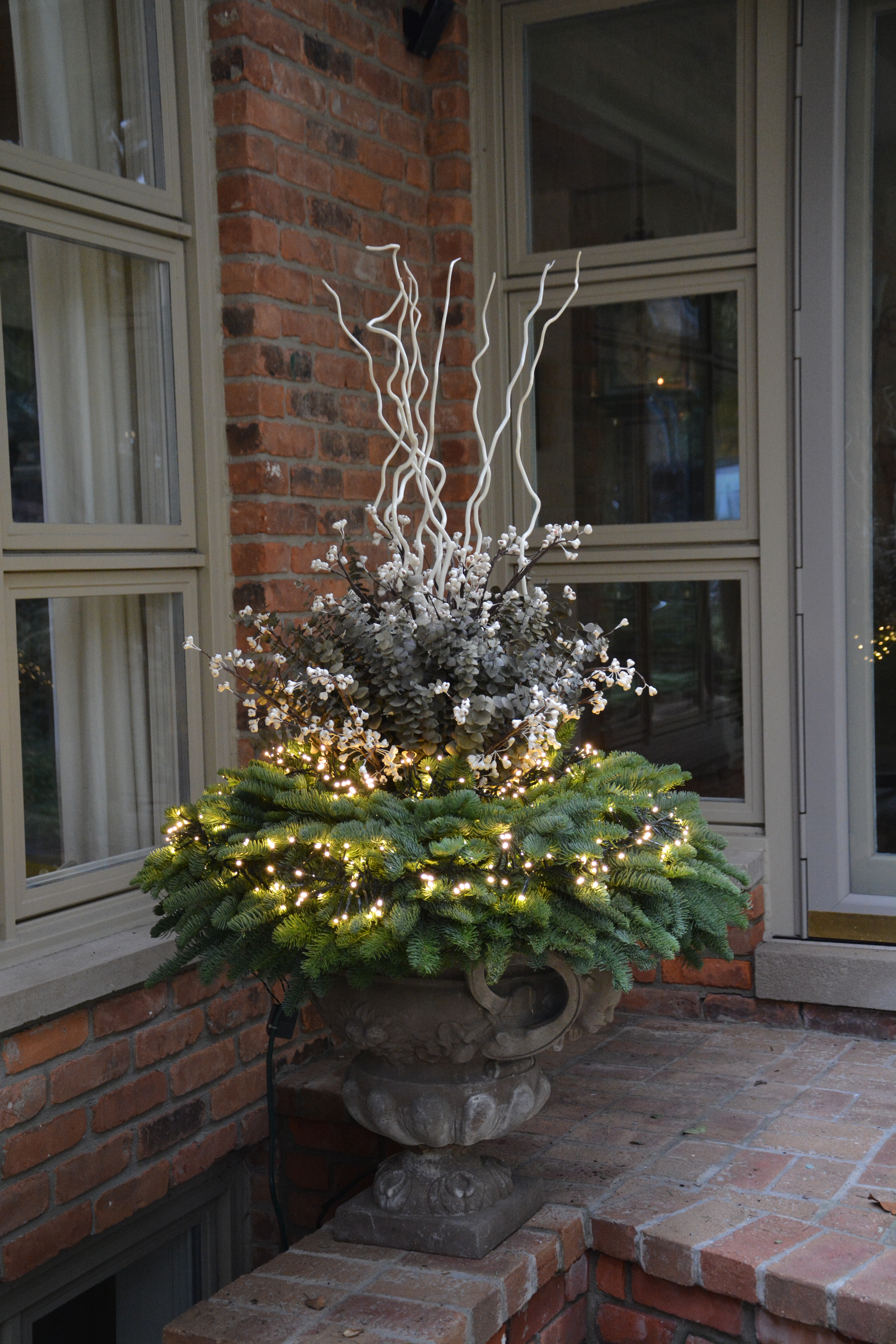
 Those double layered dry foam forms are cut to the interior dimensions of the pot in question. The bottom layer is inserted into the container. The top layer stands proud of the rim of the pot. This enables us to stick greats horizontally – a look which is graceful and natural coming over the edge of the pot. Once the greens in the form are wedged into the pot, and the centerpiece set, we add lights. Winter pots provide an opportunity to light that dark time of year.
 We exclusively use Lumineo LED light strands available from Detroit Garden Works for our winter containers. The strands are so lightweight, and entirely flexible. I can easily hold a 110 foot long strand in one hand. They drape beautifully. The lights are shatterproof – stepping on them does no harm. You can count on 50,000 hours, or at least ten years of longevity. The dots of light are set on top of long black green stems. This design makes it simple to hide the lightweight wire, and have the lights proud of the greens. They come in a range of lengths and light densities. They also come is a classic warm color mirroring the color of traditional incandescent strings, or a warm white which is a clearer and brighter white. These LED light strands do not have the fire power of traditional incandescent winter and holiday lighting, but they make up for that in longevity and economy. Interested in more firepower? Try the cluster lights, which are set very close together. They draw so little power, that they eliminate the need for timers. Detroit Garden Works has switched over to this lighting for its signature light rings.
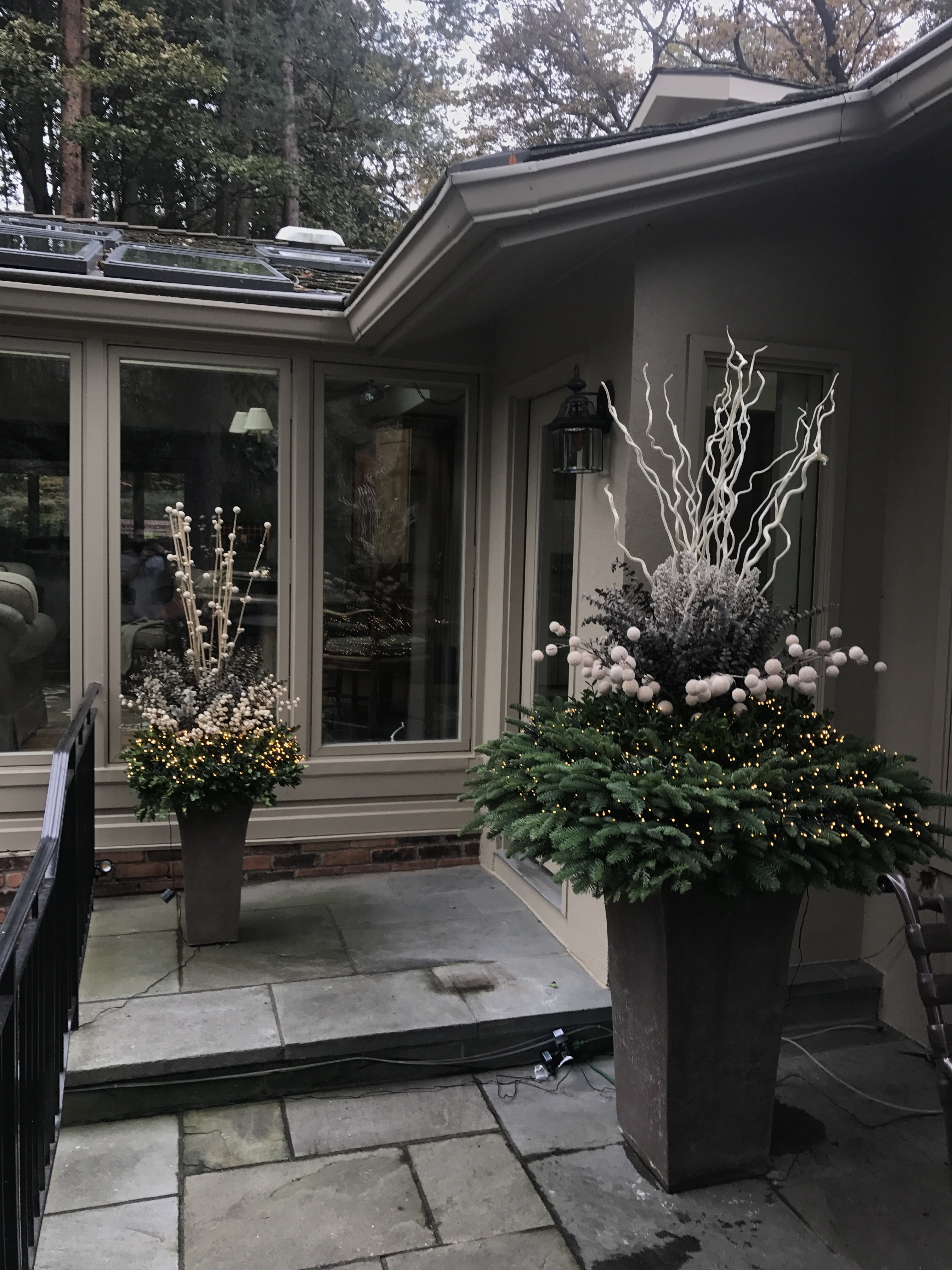 Great technology can be incredible, and shipping can be delayed, but foremost, our first winter project was very personal. We chose materials that seemed celebratory of a very special event. My client was happy about those materials, and the lighting. I put all of my crews to getting the work done. I was so pleased about the look. I fluffed this, and rearranged that, but by and large my crew did a terrific job of rising to the occasion.
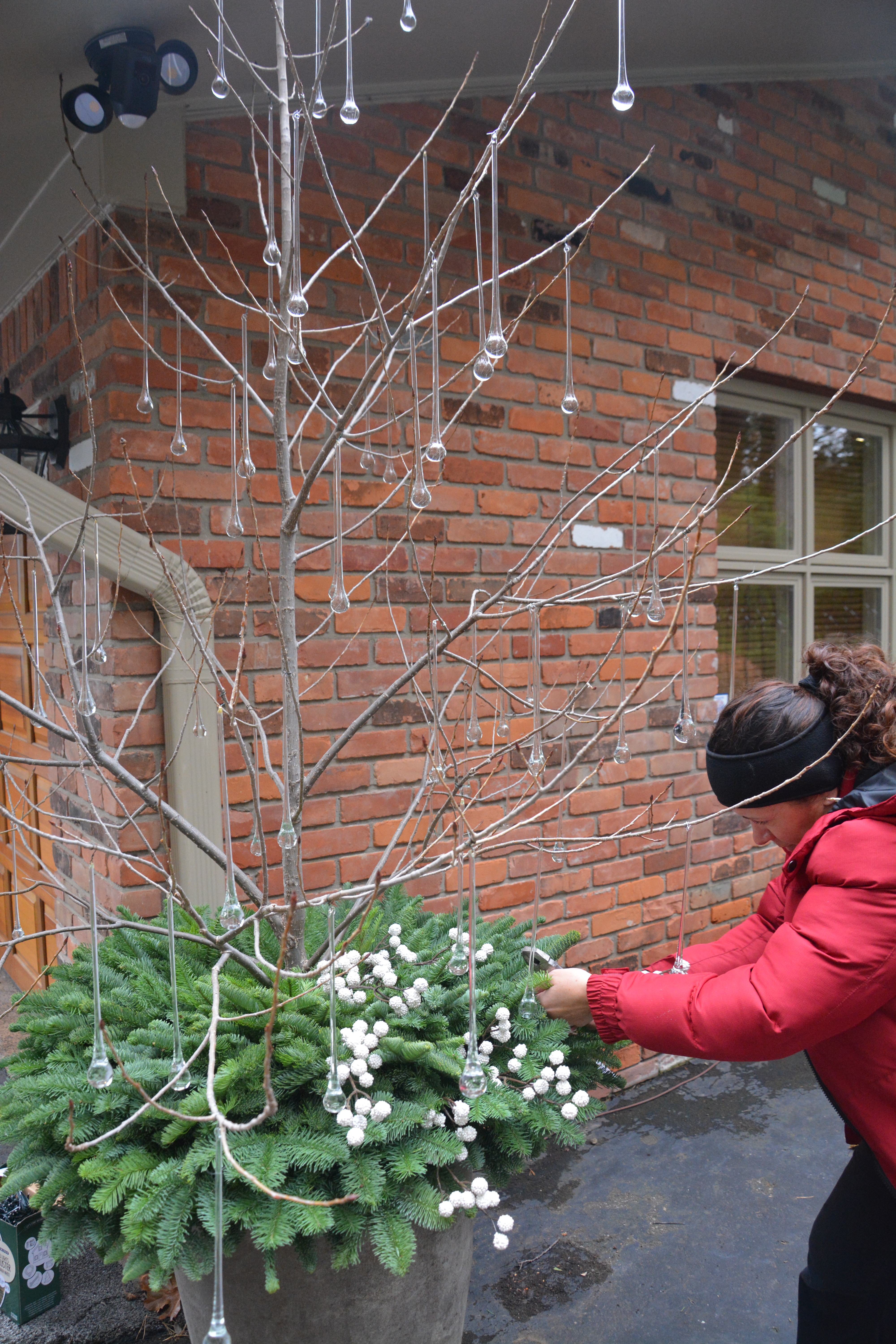
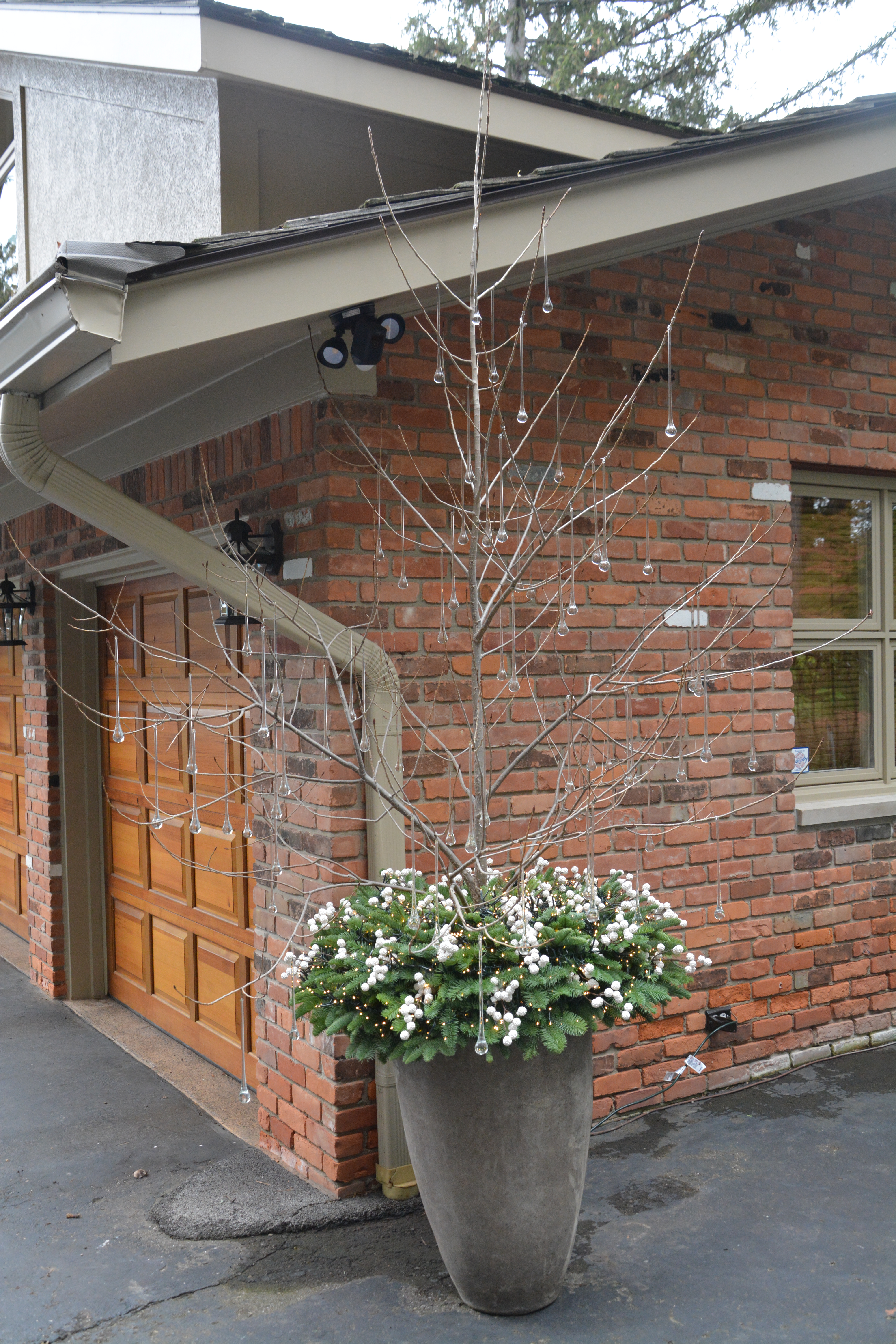
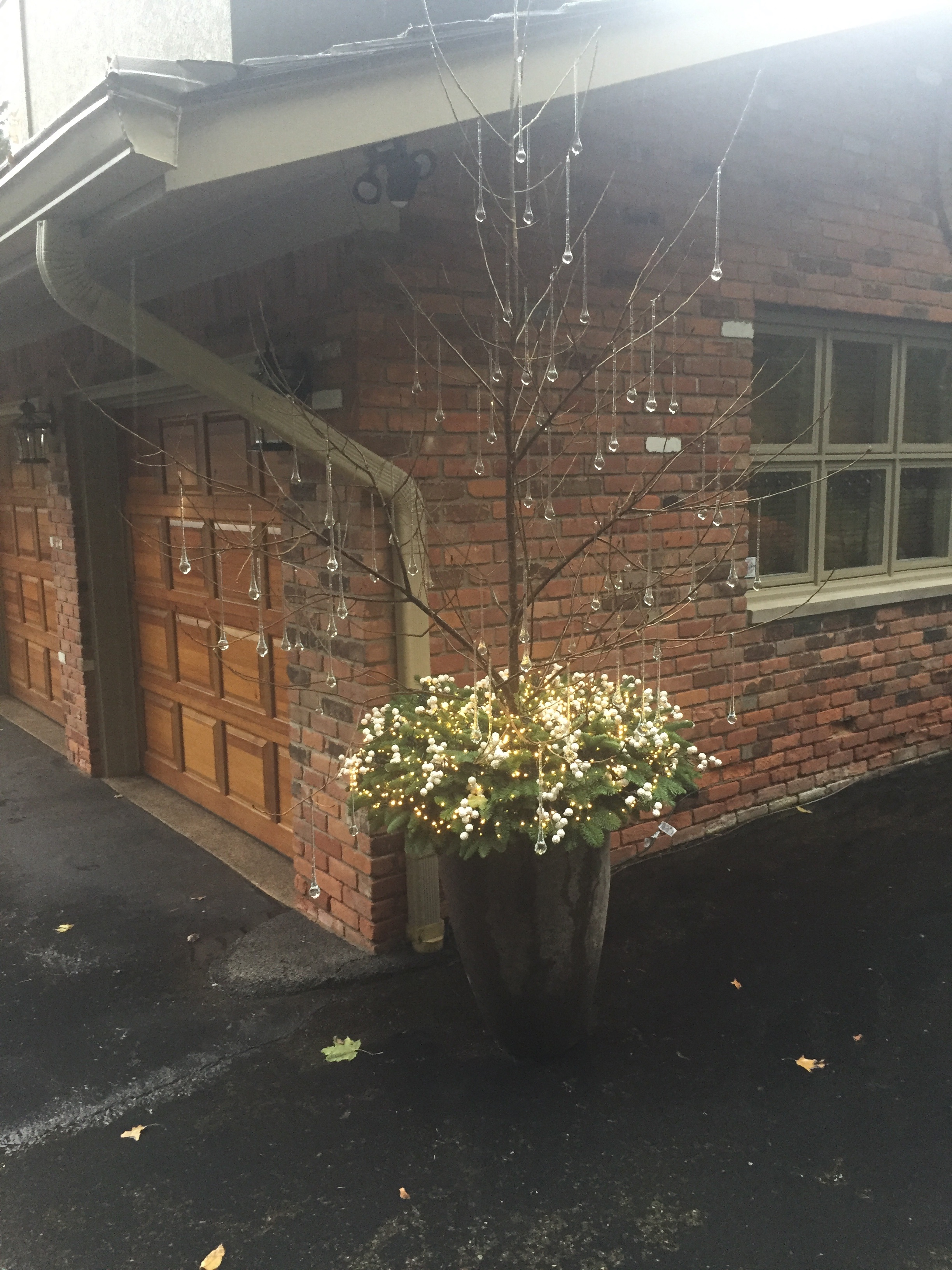 This pot at the corner of the garage features glass drops attached to a weed tree much like what we did for her 9 years ago. She brought the box of drops to me a week ago. We added some drops, given the size of a weed tree on our landscape property that we cut for this particular pot.
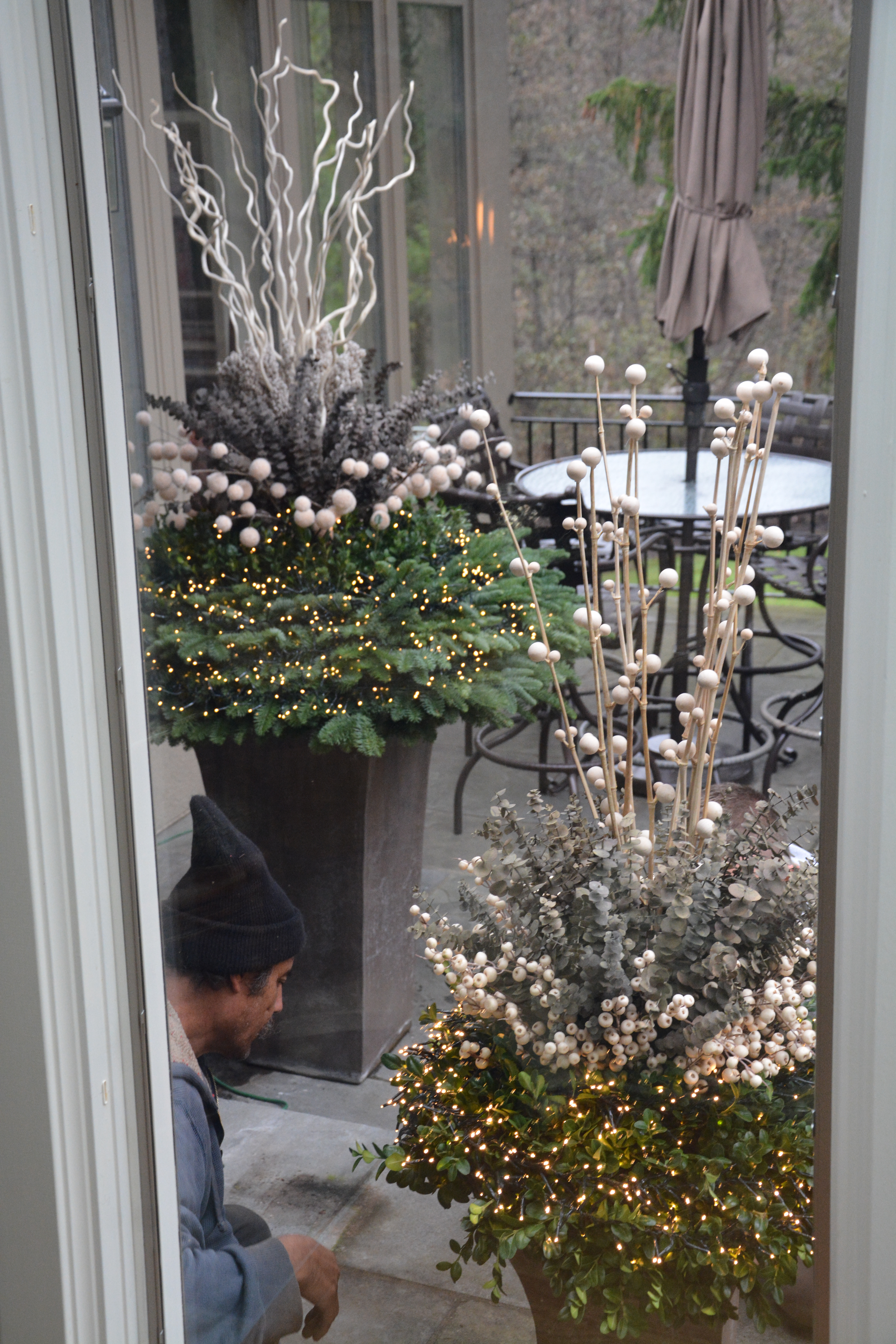
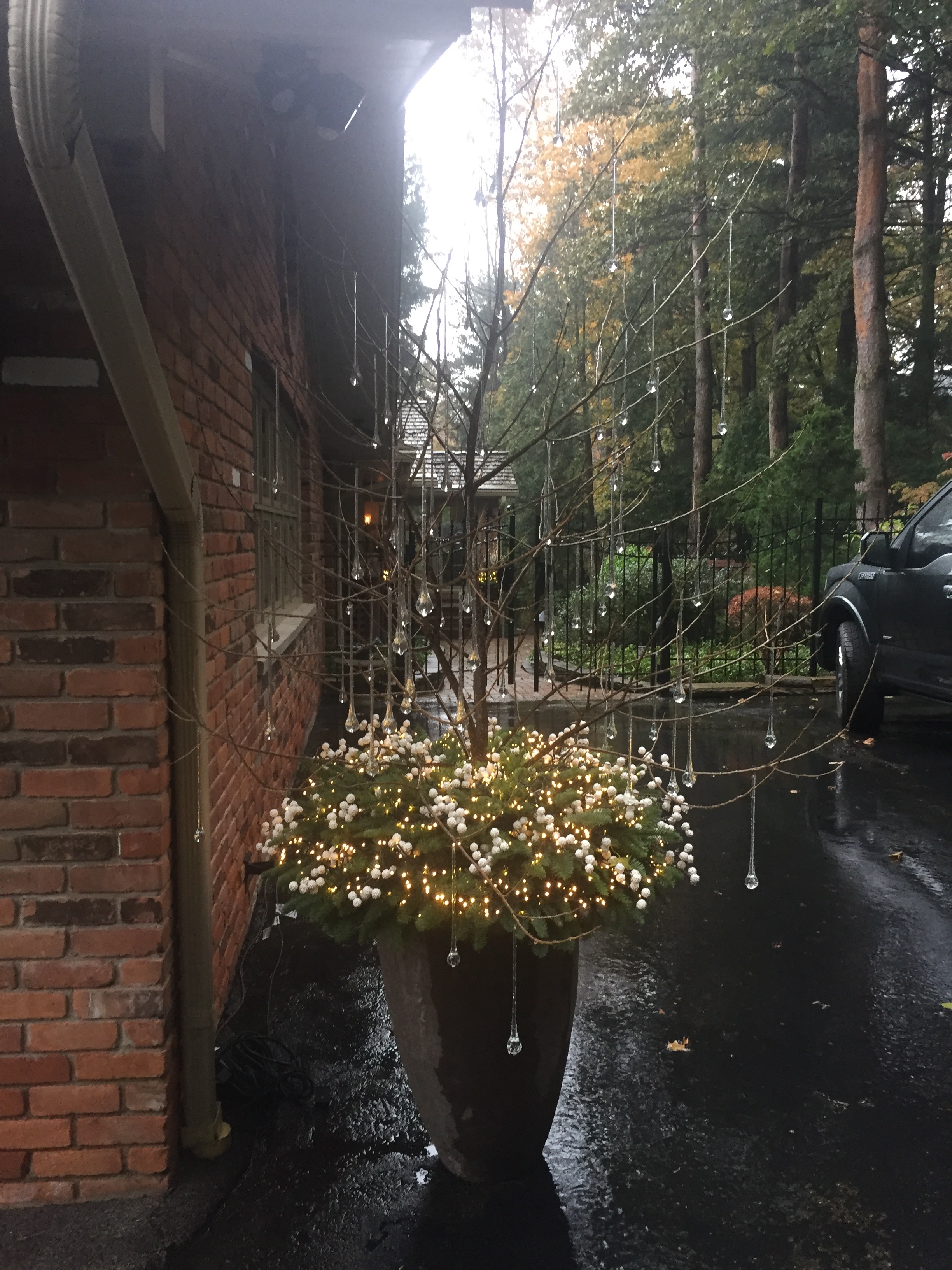 My client took me through her entire house so I could see the views out her windows. She explained to me how the views from inside to the outside meant so much to her. Seeing the landscape from inside out for the first time was a revelation. I have done lots of landscape work for her. Yesterday, I understood what she sees. What I understand from our first winter installation is that what is personal and important is precious.