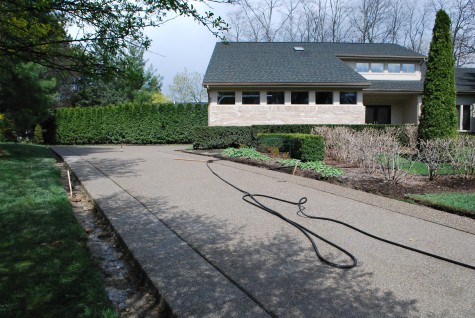
 I have been working steadily on the landscape for this client for the past 6 years; every year we have done something. The driveway garden we saved for last. Her youngest daughter loves basketball-we could not take the driveway mounted basketball hoop down until she was ready for college-Jenna has just moved out. The concrete driveway was almost 30 years old. My client chose to replace it with concrete aggregate. Concrete embedded with gravel has a much dressier look. Why would we be looking for a dressier look? The driveway landscape gets visited every day, sometimes multiple times a day. This is one spot that should always look great.
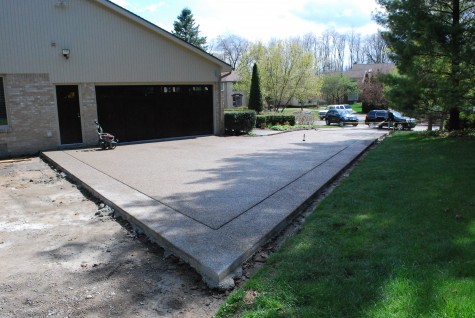 Given that the basketball hoop was coming down, an entire 10′ by 30′ section of concrete could be removed all together. This 300 square feet would become a perennial garden. The new drive had an 18″ border defined by a substantial expansion joint, filled with a rubber filler material. The pattern visually breaks up the large expanse of concrete.
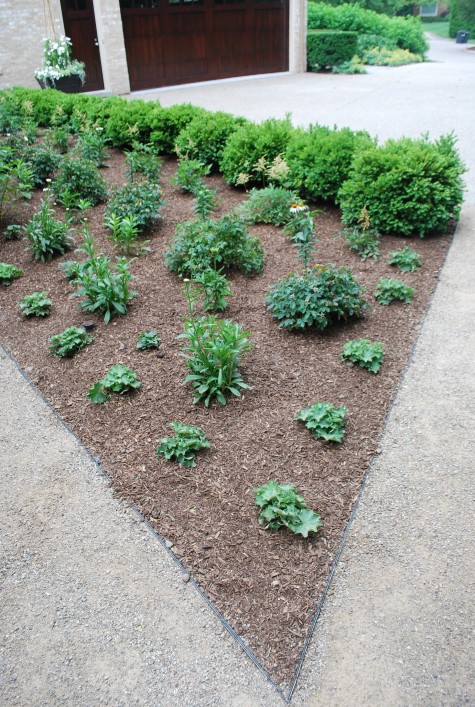 The driveway went in April 16-20th. Given our relentless spring rain, and the advent of annual planting season, we only got back to finish this project a week ago. This is a simple perennial garden-only tried and true white flowers. White hardy hibiscus, white knockout roses, Casablanca lilies, white echinacea, Becky shasta daisies and white astilbe. My client will not want to tinker with this-her tinkering focus is firmly fixed on her containers.
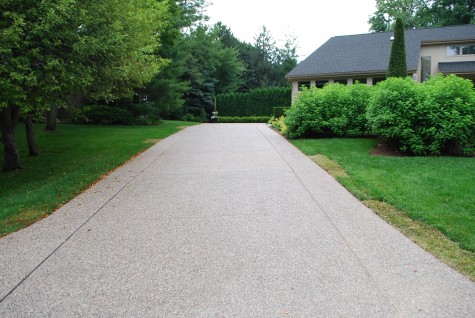 Nothing much is revealed during the trip up the drive. This is deliberate. The arborvitae in the back of the garden is faced down by green velvet boxwood in the front. The perennial garden is planted in between the evergreens. This will make for a finished and polished look in the winter-and a sumptuous look in summer.
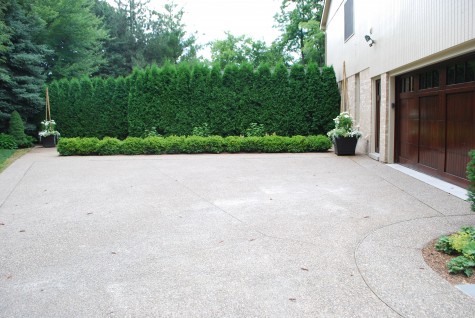 Eventually the tall perennials will make themselves known during the summer months. But for the roses, all else will be cut down in late fall.
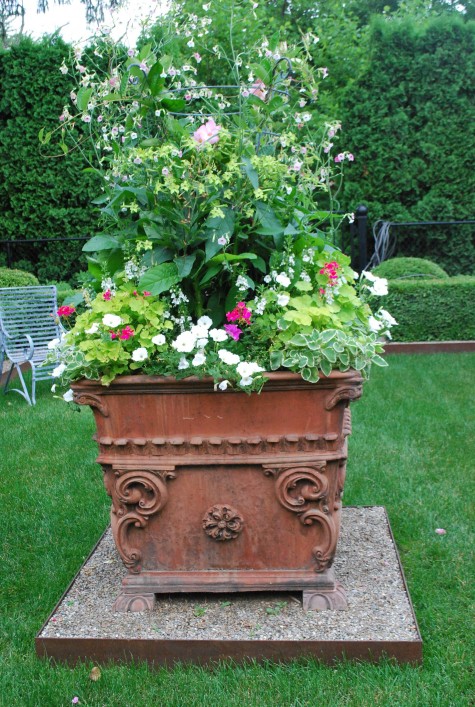
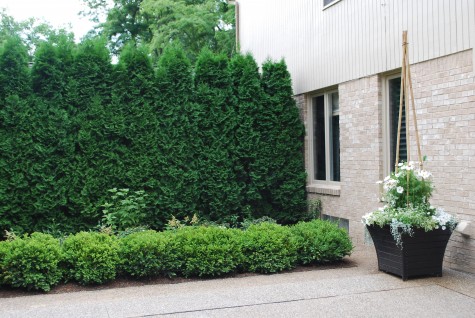 A pair of Belgian oak boxes stained a black brown have been on the rear terrace for a few years. I brought them out front to provide accompaniement to this garden. I like seeing annual plants in proximity to a perennial garden-they bloom on and on, no matter the status of the perennials.
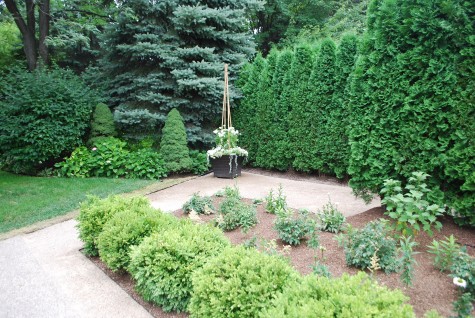 A decomposed granite path leads to the rear yard. I got rid of all of the grass here-what a nuisance it would be to cut grass in this small space. Anything I design, I ask myself what will be involved to maintain it. Let me explain. Anything difficult or beyond too challenging to maintain means that failure and frustration is bound to loom large. I like any design to be friendly and doable.
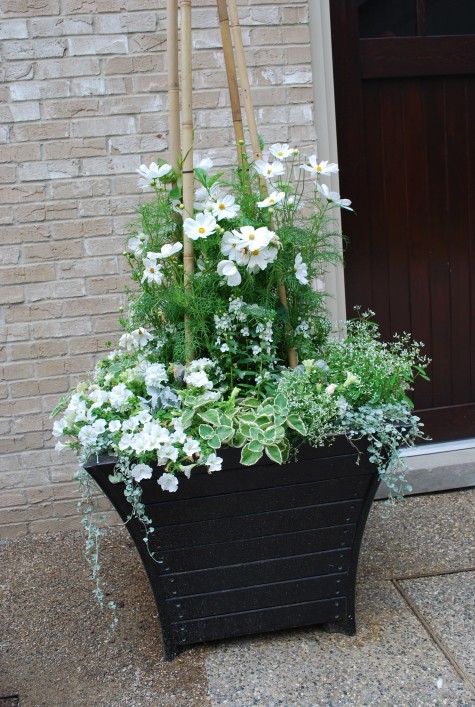 We stuffed the Belgian boxes full of white annuals-white mandevillea, angelonia, Sonata cosmos, petunias, variegated trailing plectranthus, euphorbia Diamond Frost and silver dichondra. They looked great the day we planted. Better days are to come.
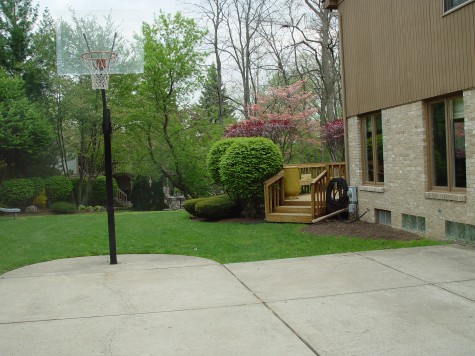
I took this picture the first time I ever saw this property. Before the pool, and the pool house. Before the arborvitae hedge. Before the cypress deck, and the stainless steel fire bowl. Before we took down the basket ball hoop, and replaced the drive. Before we tore out the pressure treated lumber deck. A great landscape takes time. A big block of time. My advice? Take whatever time your dream takes.