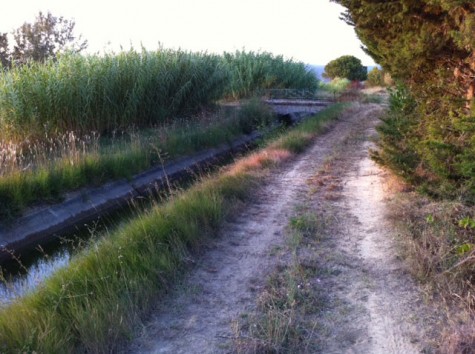
 I have clients in Ann Arbor, Michigan. Michael, and Mathias. I am due to make a landscape design presentation regarding their property September 10. It has taken 18 months to get to know one another, and set a firm date. Michael has a Renaissance sensibility. He can hold his own about farming, romance, music, culture, gardens, a passionately lived life is his life; I am also quite sure he could fix a broken zipper with dispatch. Matthias is French. He is reserved, except where his dog Banjo, his garden, and his love for France is concerned. He is talented, kindly, compassionate, and passionately French. When Rob sent me this first picture from France, I thought first of Mathias. Though his experience is more urban than this picture would suggest, I am thinking a lot about a culture other than my own. Rob drove down this two-track dirt road after shopping all day, to have dinner with friends- French friends.
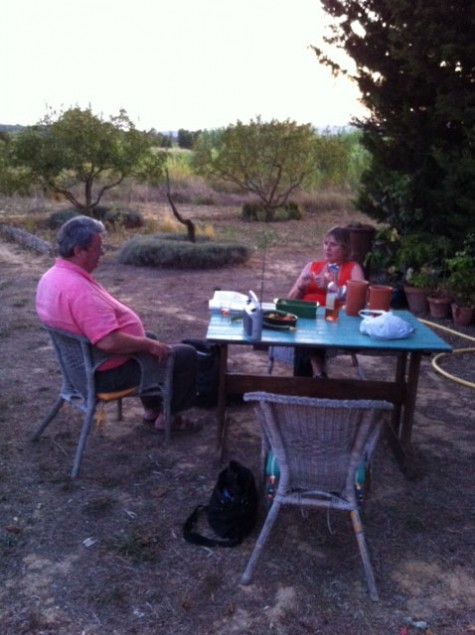 They have a house in town. They have a garden property some distance away. The garden has a small structure that houses a kitchen, a sink, and a bathroom. She calls that building the hut. They grow vegetables and herbs here. The water canal brings water to their garden. It is quiet, dusty, unpretentious-the perfect place to decompress, have a glass of wine, and fashion a dinner. They come here quite often. Rob told me about their place and this evening in great detail-no wonder. It is a landscape, and a way of life that could not be further from his own.
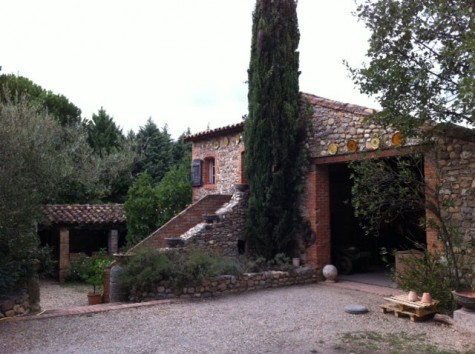 The landscape of this house is mostly about the existing native landscape. The plant choices are dictated by the climate; a few treasured plants are grown in pots-herbs, vegetables, citrus trees. There is a lot of bare dirt, and even more gravel-it is a dry climate, and gardens acknowledge this. They are cultivated in a different way. I cannot really explain what I mean by this, except to say that the gardens are more about coexistence, and less about intervention.
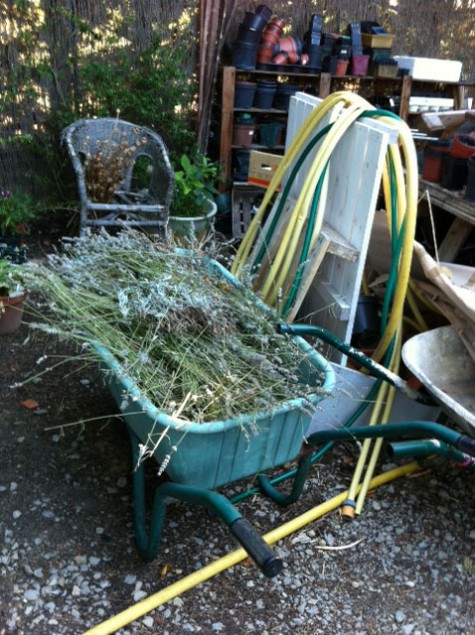 No where in my garden do I have a wheelbarrow full of lavender; this picture makes me long for for it. This garden is not for show, it is for living. As much as it is a living space, it is unabashedly a working space. There is something so comfortable and inviting about this space; there is an authenticity of place. Do I have anything like this-no. But what becomes so valuable about this landscape is what there is to be learned about another place, another climate, another environment.
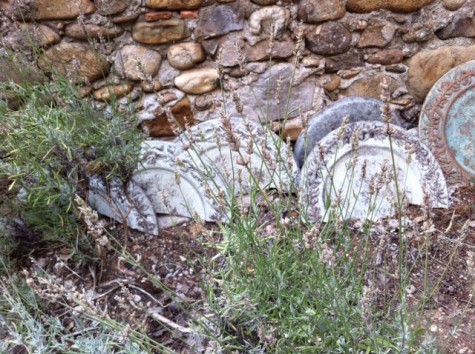 This poterie garden is ornamented with terra cotta trays, broken in the kiln. It seems appropriate, this. Though broken terra cotta plates may not translate directly to my experience, there is that idea that the most ordinary of things become ornamental given how they are placed. The beauty of a garden is very much about its identity.
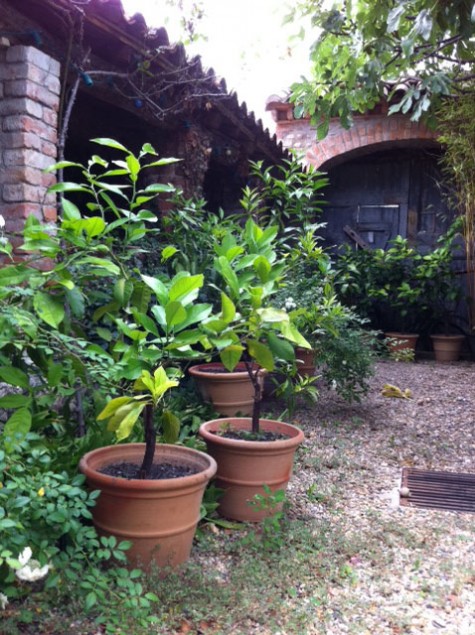 This collection of citrus trees in pots, and the orangerie boxes with their citrus trees at Versailles differ only in degree. French gardeners value their lemons, oranges and limes enough to cultivate them in pots. I have seen so many textiles, pottery and dinnerware from the south of France in the colors of fruits. That French blue? The color of the sky, or the Mediterranean.
 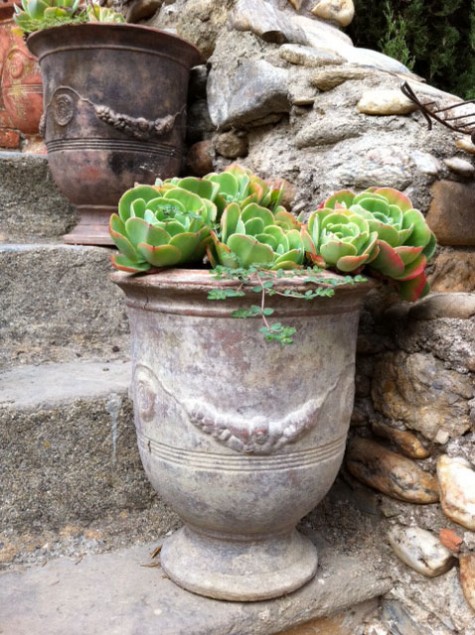 This terra cotta pot with its succulents and trailing weed-nothing fussy here about the planting, or the care required. The finish on the terra cotta so beautifully reflects the natural stone and mortar in the stairs and wall. This container planting is subtle, and satisfying.
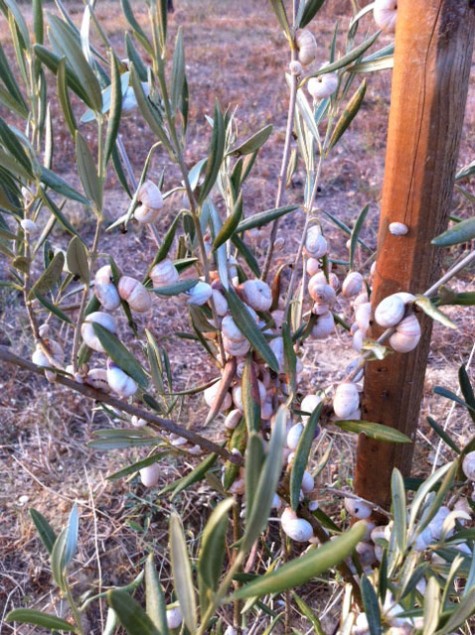 This olive tree is unexpectedly studded with snails, not olives. This is indeed a landscape completely unlike my own.
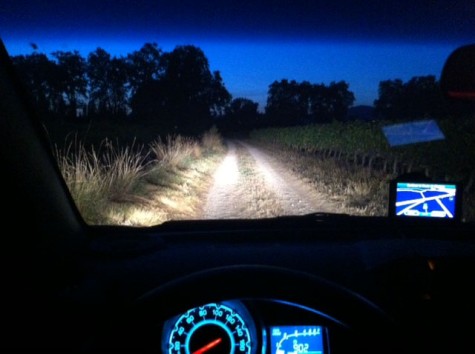 The landscape that runs right up to the sides of this two track-equally unlike my paved roads with their curbs, medians and street signs. This kind of peace and quiet is compelling. Mathias-his property has elements exactly like this. Part of my job as a designer is to recognize the natural beauty of that place. The landscape will have to recognize, not dilute or compromise what needs little help from me in the first place. No doubt a kitchen garden, and fruit trees will figure prominently in the design.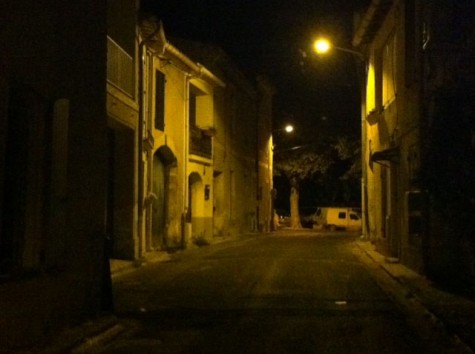
For 9 nights, this street in France, with the buildings run right up to the road will be Rob’s home away from home. Every time he shops overseas, he adds to his knowledge of gardening and ornamenting the gardens practiced in other places. How he sees that fitting with how we garden here fuels and enriches his choices. No doubt this gets passed along to me. In turn, I hope it will influence how I design.