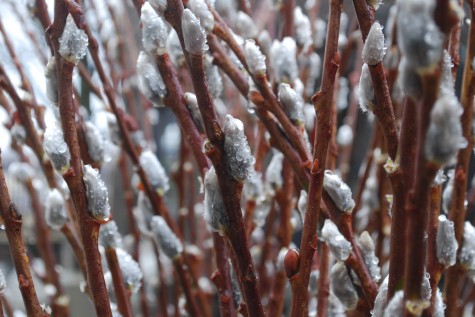
 We’ve had a run of unseasonably warm weather that has helped to make a major overhaul of the outdoor spaces a lot easier. We have another week yet to go on that giant project. But today the rain blustered its way in-not that I mind. The front gardens have tulips sprouting; I like to see them get a good drink once they break ground. Weather is an important design element in garden making-I feel lucky for this. Barring distructive weather, I like how nature changes the channel. It is so interesting to see what the rain makes of how we have put the collection together.
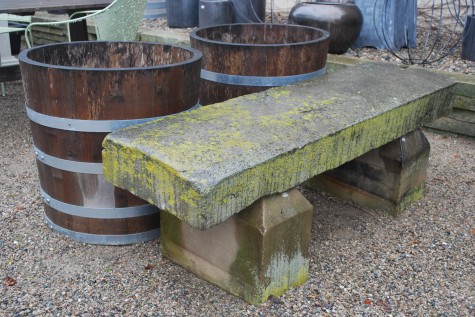
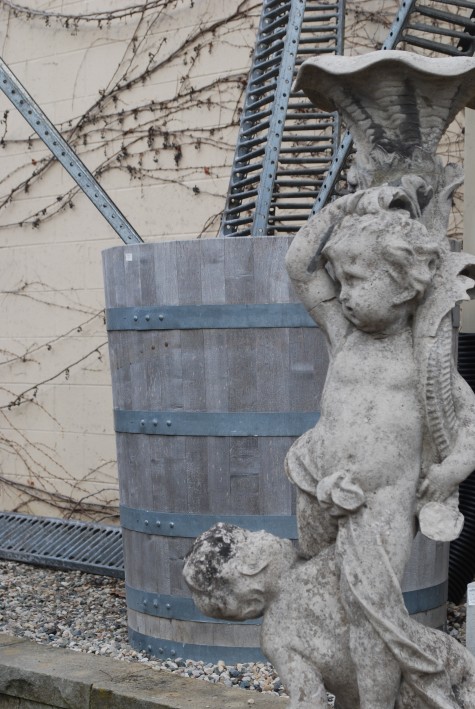
I am likely to keep writing for a while about collecting-its part of what I do. I also have a keen interest in how and what gardeners collect. Collections are somewhat about scale and emotional cache-100 beans of assorted varieties on display has a much less dramatic impact than 100 corgis running. This probably accounts for why I do not have a hellebore collection-I have masses of white and green hellebores of varying species and cultivars. The mass makes the statement, not the specific plant. I am sure you know by now I am not a plant collector-I have other things in mind. As in the relationship of these modern Belgian elm barrels, with this 19th century English stone bench. Round shapes versus rectangular-there is a face off right up front. New and old in proximity-interesting. The rain makes much of, and magnifies color relationships. The galvanized steel bands on these barrels repeat that wet limestone grey. A satisfying discourse here.
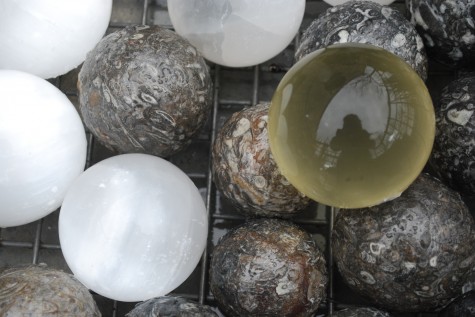 The music of the spheres-I am a fan. I collect them-to this I confess. What gardener could pass up an allium? I have spheres made of grass, steel, seed heads, limestone, boxwood, mineral; there is something about the stability and beauty of a sphere that makes them so satisfying in a garden. These stone and glass spheres-where might they find a home? In the landscape, or on the kitchen table-take your pick. Rain wet stone, by the way, is really beautiful.
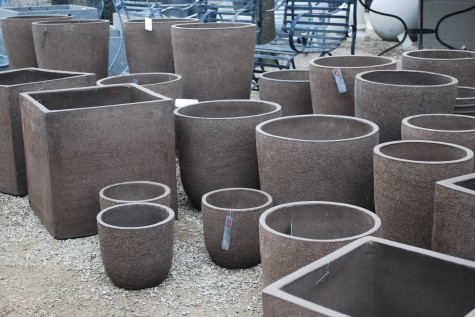
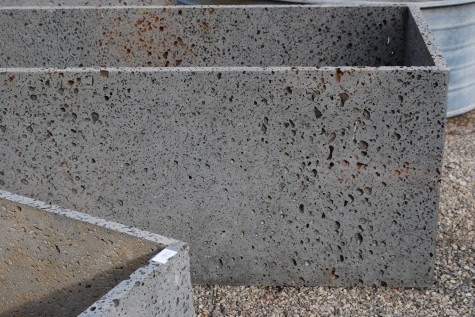
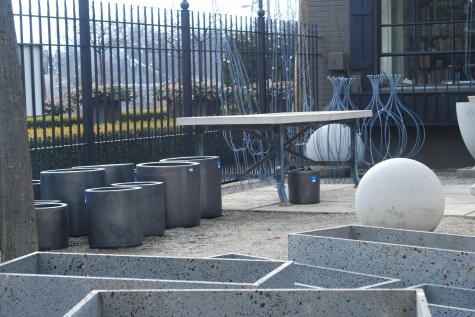
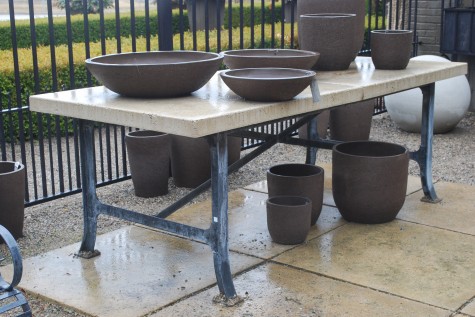 Some elements of the spring collection get here strictly on the basis of their presence-on their own. You shut your eyes, and cross your fingers, that when a collection of pots arrive, they make themselves at home, without going sleepy. I value anything that asks for my attention in a strong way. How they come to make friends at the shop is a process of trial and more trial. This Belgian steel garden table with a concrete top works with these dark and textured pots like I hope for things to work. The late light on the rims of these pots recall the blue steel. The relationships between the shapes-music. The drenching March rain makes every gesture look better.
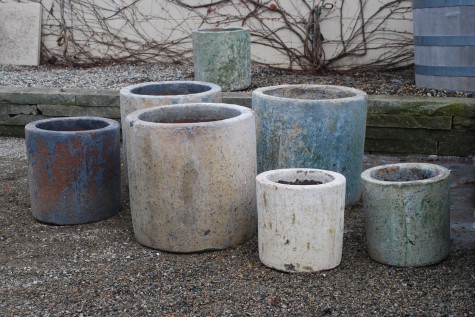
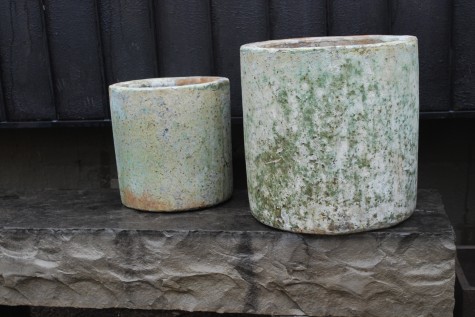 I have some very chunky and fluidly finished granite benches-from our neighbor, Canada. Stone so thick and expertly rock faced-beautiful. Those rustic cylinders I have been writing about-you are seeing their wet incarnation. These objects make for a relationship that will attract attention. Once I see a gardener fall for something, I understand the process of deciding how and where that object might fit.
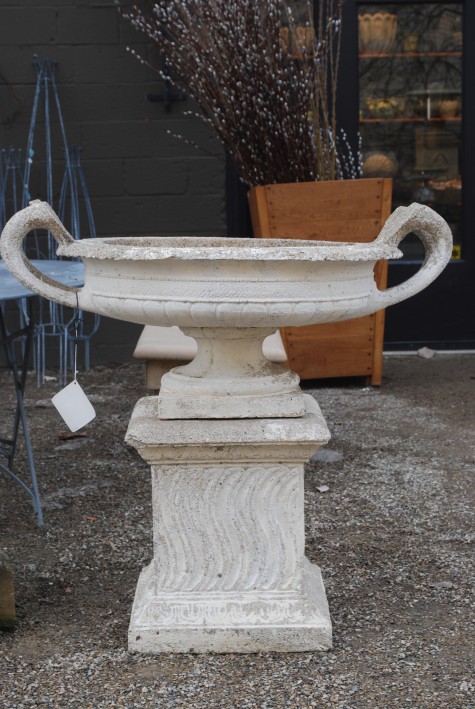
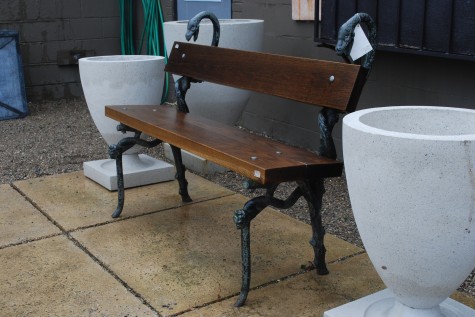 A pair of very old forged steel snake bench supports-I forget how I came by them. Buck made a new back and seat from white oak, and put back together what age and neglect threatened with a trip to the scrap yard. These old snakes look handsome in concert with these dry cast limestone deco urns-don’t you agree? Someone will come along, and love this look for their garden. There might be something about it that adds to their collection.
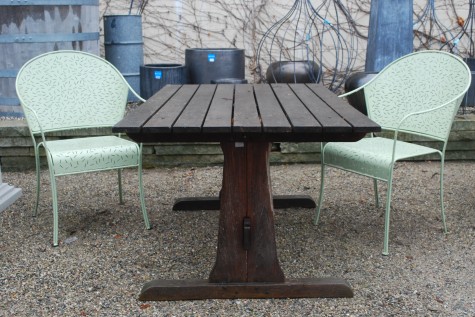
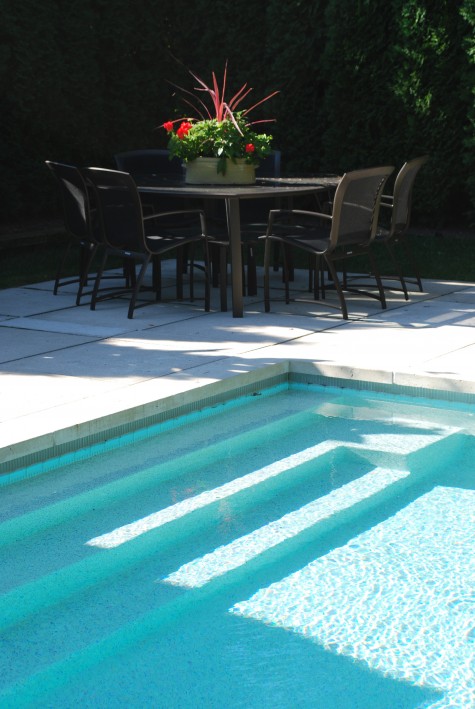
We have shopped for garden ornament in England regularly for the past 15 years. Their garden history I greatly admire and value. What we retrieve and bring over always seems to move in with us -without fanfare. This vintage English trestle table is home to plenty of diminuitive plant species of the lichen/moss sort-a gorgeous old garden table. Is this table appalled by its complement of French contemporary chairs-not in the least bit. The Brits-the gardening Brits-really friendly.
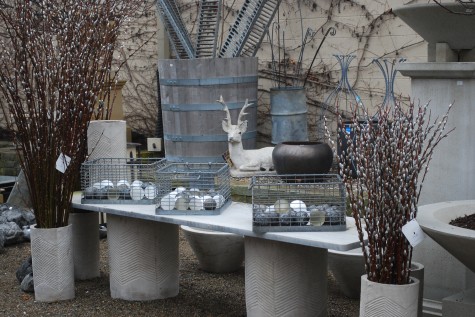
Anyone who collects devotes lots of time and thought to their collecting-I am no different. How a garden collection I put together gets integrated into a garden-this is all about what it is to have a relationship with other gardeners. My gardening community-I would not give it up for anything.
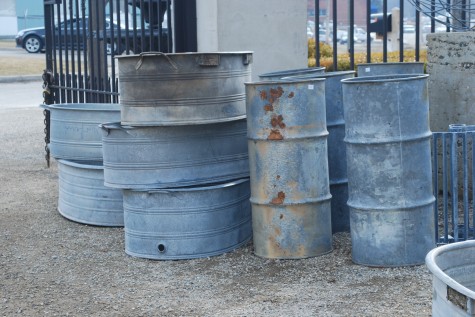
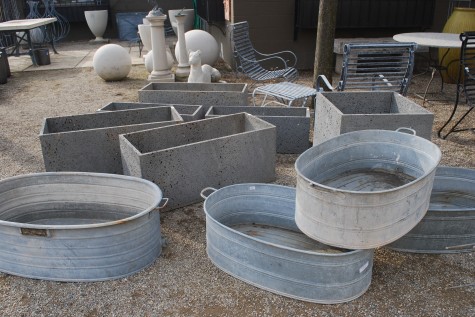
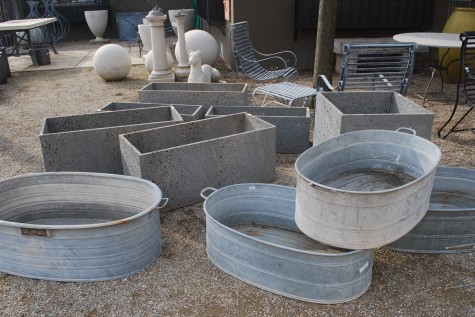


![Containers421[1]](https://deborahsilver.com/wp-content/uploads/2010/02/Containers4211.jpg "Containers421[1]") Galvanized buckets and troughs have graced many a barn and farm garden. It’s no stretch to plant them with vegetables, flowers or herbs. My favorite pot compositions of Rob’s are his “roadside weed” plantings. Loose, grassy and verging on scraggly, they are charmingly natural and unstudied. A bucket is a perfect container. A sizeable pail can be an unexpectedly handsome home for a lotus. My brother had a garden party once (Petey most assuredly is not a gardener)-he used a number of large pails as burn buckets once the light started fading. I must admit it looked great-his casual grouping of fires in buckets.
Galvanized buckets and troughs have graced many a barn and farm garden. It’s no stretch to plant them with vegetables, flowers or herbs. My favorite pot compositions of Rob’s are his “roadside weed” plantings. Loose, grassy and verging on scraggly, they are charmingly natural and unstudied. A bucket is a perfect container. A sizeable pail can be an unexpectedly handsome home for a lotus. My brother had a garden party once (Petey most assuredly is not a gardener)-he used a number of large pails as burn buckets once the light started fading. I must admit it looked great-his casual grouping of fires in buckets. ![C1191[1]](https://deborahsilver.com/wp-content/uploads/2010/02/C11911.jpg "C1191[1]") This large galvanized steel cistern is English in origin. The pitted, highly textured surface is indicative of some age. A tomato garden with herbs would be smashing. It would be equally as attractive as a fountain. It is also the perfect height to accomodate a large thick stone top-a perfect dining table base for a contemporary garden. Galvanized metal is a chamaeleon garden material-it seems to adapt and make itself at home in a variety of settings.
This large galvanized steel cistern is English in origin. The pitted, highly textured surface is indicative of some age. A tomato garden with herbs would be smashing. It would be equally as attractive as a fountain. It is also the perfect height to accomodate a large thick stone top-a perfect dining table base for a contemporary garden. Galvanized metal is a chamaeleon garden material-it seems to adapt and make itself at home in a variety of settings.


 This old French water cart would be my nemesis-I cannot imagine filling it with water, and hauling it to the garden, many times over. But parked in one spot, I could come to appreciate its form, and its history. Not everyone loves classical garden sculpture; it’s a good thing they don’t need to. Though it would not be my choice, I have seen gardens where vintage tools are displayed as sculpture to beautiful effect.
