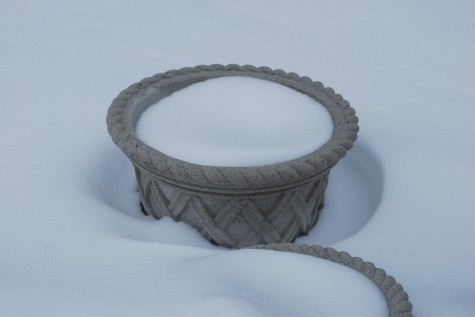
Every three dimensional object has a surface of one sort or another. The dictionary defines surface as the outer or topmost boundary of a 3-D object, the external aspect of an object, or a portion of space having length and breadth but no width. How unhelpful is this? It seems simpler to just think of the surface of an object as its skin. That skin can be represented by different textures. Paintings have subject matter, composition, color, line, mass-a whole raft of qualities. But how the artist physically handles the paint determines its surface. I happen to be thinking about surfaces, as I had someone ask me recently why I did not carry fiberglass or plastic pots and ornament.
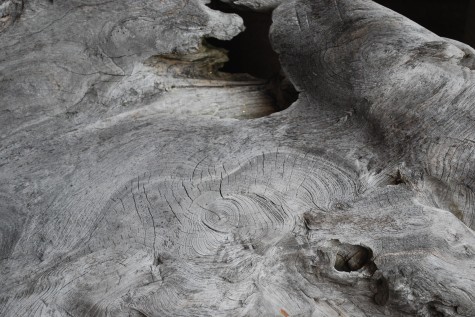
Most of my reasons have to do with a love and interest in what nature has created. Natural materials-wood, terra cotta, stone, dirt, leaves, flowers, water-are living materials. That life imparts a beauty to them like nothing else can. It might be a stretch to think of stone as living and breathing, but I do. It makes emotional sense to me that my garden and landscape be kept company with objects made from natural materials. I once taught a class in vegetable gardening for the Greening of Detroit; I did recommend that anyone worried that their natural soil was contaminated, think about planting their tomatoes and potatoes in garbage cans. Were they old enough to be split at the bottom, or have gashes in the sides, all the better for the drainage. But if I have a choice, I favor the real thing.
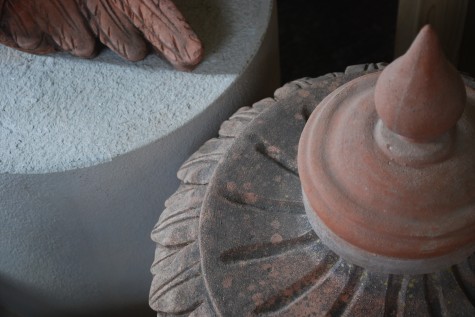
Terra cotta, absorptive as it is, can provide a home for other living organisms such as mosses and lichens; no wonder old terra cotta is my favorite material for pots. The combination of plants and terra cotta is naturally beautiful. I have no objection to made-made materials, as long as they are manufactured to look like what they really are. Fiberglass or plastic made in imitation of any natural material always looks like an imitation. Fiberglas pots made with an unabashedly natural fiberglass surface can be very good looking.
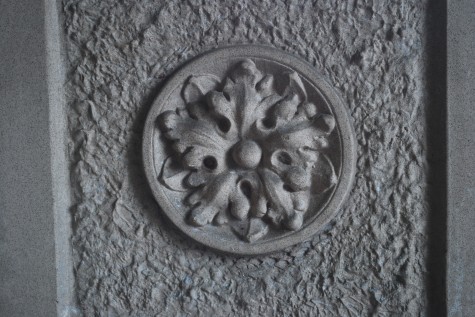 Pictured above is a panel of a terra cotta square pot made by the Galloway Company from Philadelphia Pennsylvania in the early 20th century. The river bottom clay from whence their pots were made is naturally this color. There is no mistaking this is a natural material, even if you have never seen anything made from cream colored clay. The surface is genuine; it rings right.
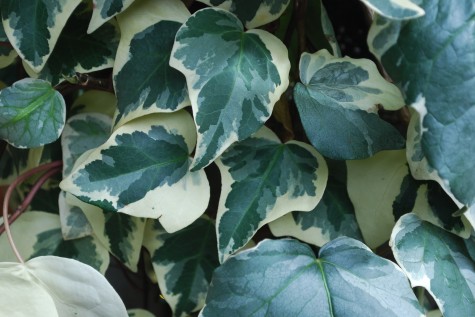 Do you even have a number in mind for all the different kinds of leaves that must exist? Their surfaces can be hairy, shiny, matte, smooth-there is no end of variation. But what they all have in common are surfaces that are unmistakeably alive. They live and breathe. I could not really explain what it is about a living surface that is so evident. Suffice it to say that I have yet to see an imitation that was truly convincing.
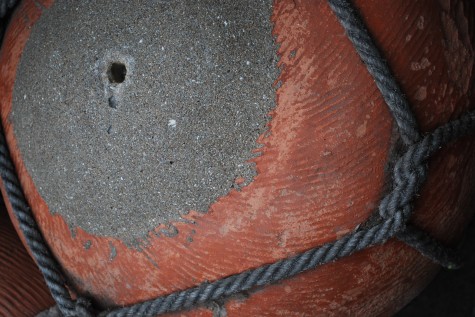 Concrete is a man made material which I greatly like. These terra cotta oyster floats have blobs of concrete which help to weigh the floats down in the water. Concrete as a material is at its most beautiful when its surface accurately represents exactly what it is-concrete. Of course everyone has had to make concessions of one kind or another over their garden. I myself have concrete terra cotta pots made in the style of classical Italian terra cotta. I have three places where I wanted a pot in situ 12 months of the year. My concrete pots enable this. Their workmanship is incredibly good. However nothing moves me more than the clay.
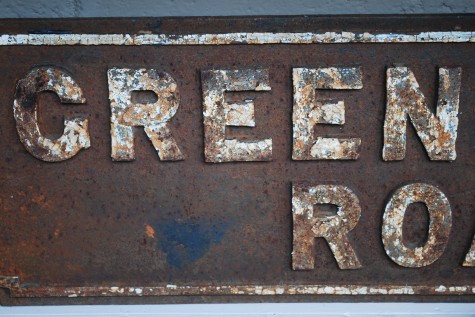
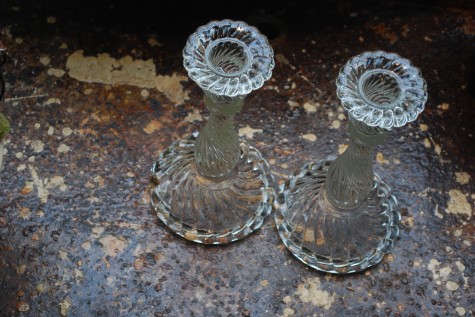 Steel and iron are likewise a product of human technology. The surface of steel will age, as it corrodes. The pits in the surface can provide a home for small plants, just like terra cotta. How steel ages can be very beautiful; age on a man made surface greatly enhances its appearance.
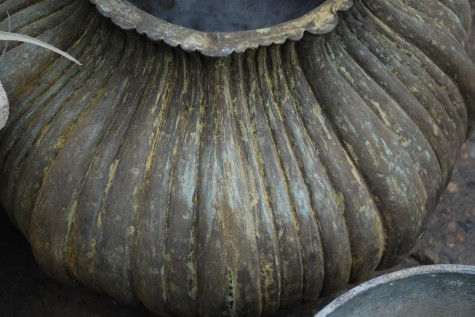 The surface of this terra cotta pot looks like a painting. I have no idea how it was done, but there is no evidence of paint. Whatever altered the surface has soaked in, and become part of the clay. I am told the material is mineral based-as are many pigments.This treatment I can live with. The shape and texture of this pot is beautiful as well-it reminds me of a squash, without trying to look like a squash.
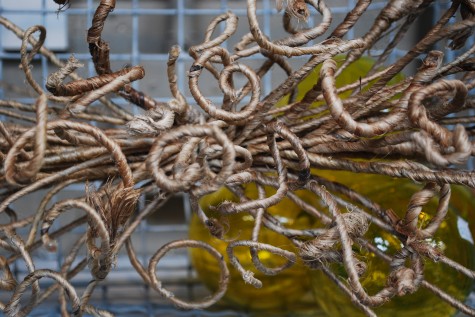
This very heavy gauge wire is wrapped with hemp twine; the wires originally formed stems for some wood shaving flowers. I think I liked these stems better than the flowers, so I saved the stems. I took giant needle nose pliers and secured all 20 stems in the middle with the 21st stem. After curling the ends, I had myself a decent looking bow. Natural materials-I like having them around me.
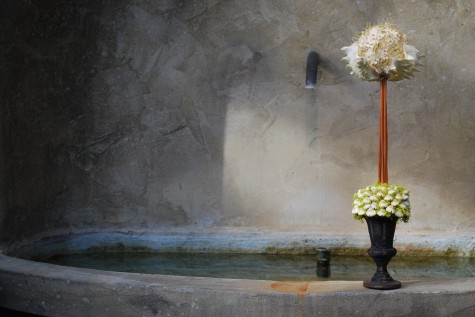
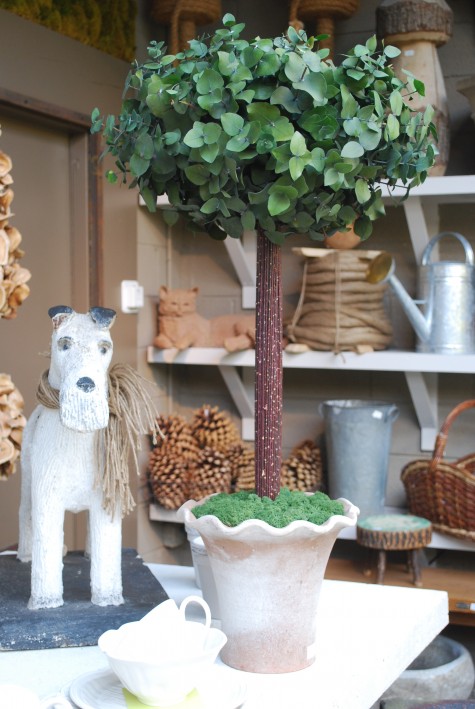 Eucalyptus is not native or hardy in Michigan, but its sturdy broad leaves remind me of boxwood- super sized, that is. Eucaylptus takes well to being preserved; the lush and lively look pictured above will last a very long time. The delicate cedar whip stems are arranged around a stout stick under a rubber band, and then glued. The trunk has interesting texture, does it not? Preserved reindeer moss covers the top of the clay pot. The moss is set low enough such that the terra cotta pie crust edge can still be seen.
 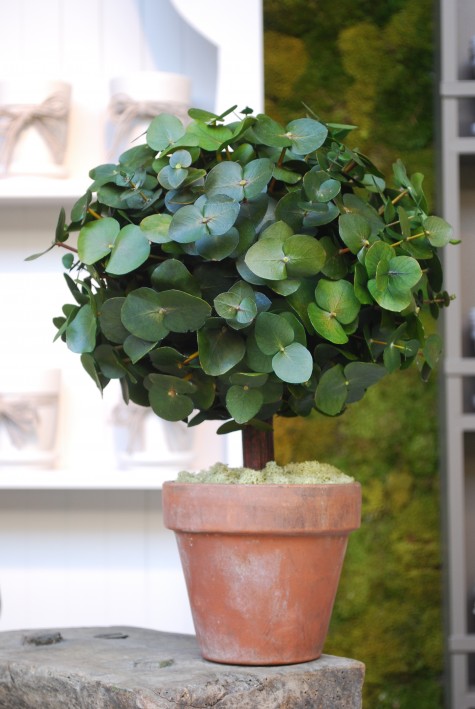 Making anything with one’s own hand is so satisfying. My friends Lauren, Buck, Marianna, Jane, Lynn, Julie and Janet-they cook. Fred’s twice a year chili extravanza-he runs a marathon for a solid two days over it; I have been a lucky recipient. Some sew, others compose. Gerhardt has not only resumed, but embraced his interrupted calling as an artist, after 30 years directing an Art Academy. At 70, he is just firing up. What and how all of them make things energizes me. Myself-I love what these small sculptures teach me about scale, proportion, texture, color, line, mass; what I put together stays with me, when I have a garden project to design.
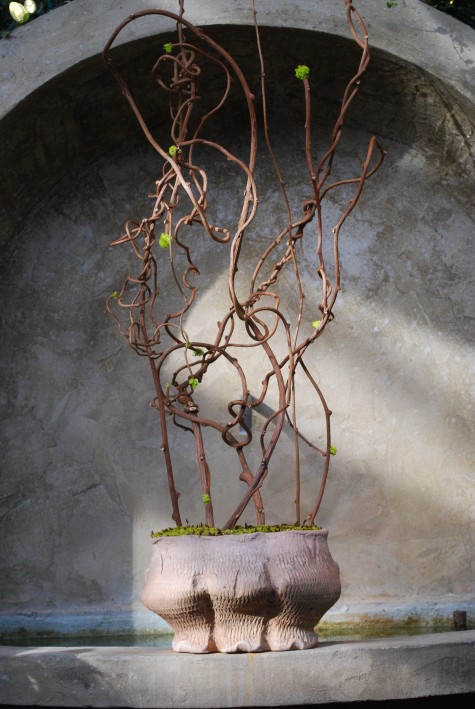
 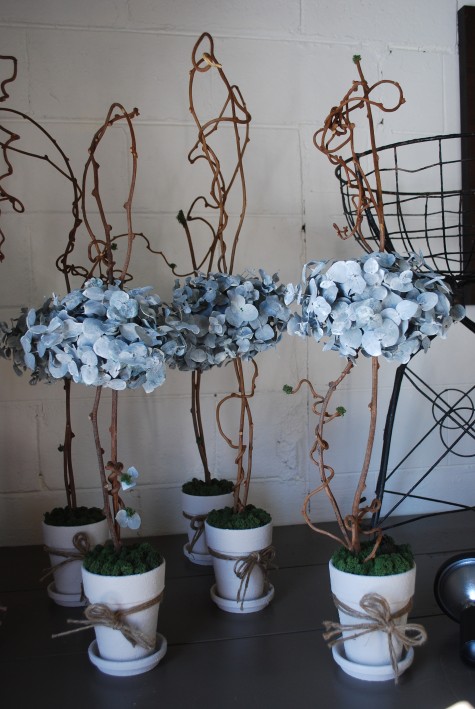 The hard wood of kiwi vine is extraordinarily beautiful. No two lengths are ever the same. Though I designed a number of these small sculptures with whitewashed eucalyptus and painted terra cotta pots, each one is different. As I compare them, I see the importance of line in a composition. I see that a signature, an arrangement of lines, is unique, and significant. Where I might apply this in my work-who knows. But I have seen this, and I will remember.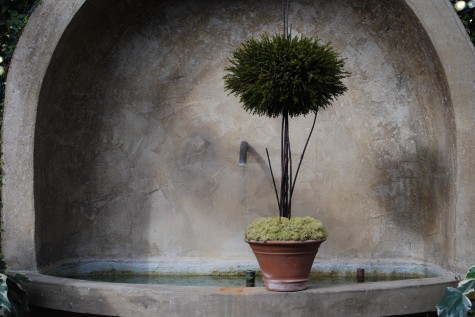
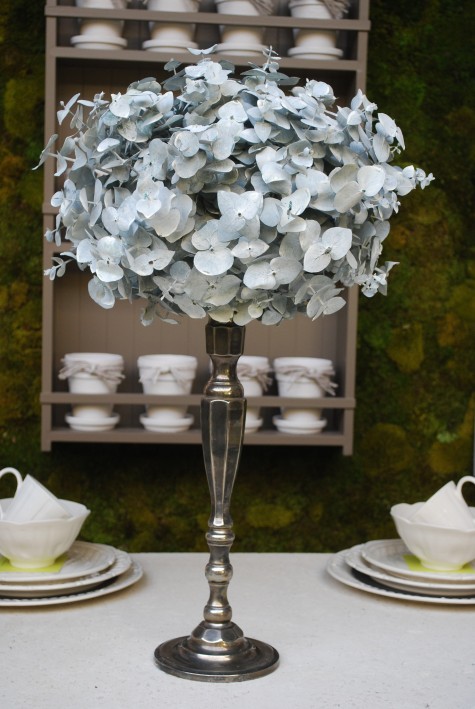 This lone silver plate candlestick I inherited-I do not remember why. For years it has been on a shelf, looking at me. The whitewashed eucalyptus unexpectedly looks good with this formal metal trunk. Every material needs the right spot to shine.
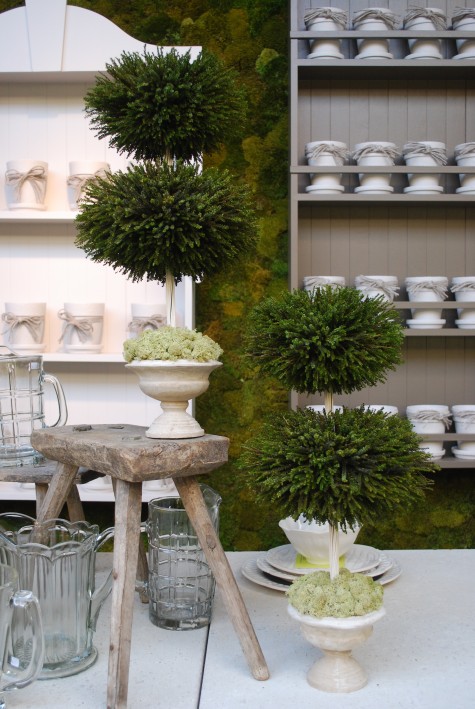 Rob will show up from a buying trip with pots in hand-these are actually densely fabricated paper mache. A wispy and dense natural material seemed like it might make a good companion. Though my first choice would be for a topiary plant firmly rooted in the ground, in a landscape, I don’t mind this slight and skillfully made interior bound reference. Making is much about doing justice to whatever greatly interests you.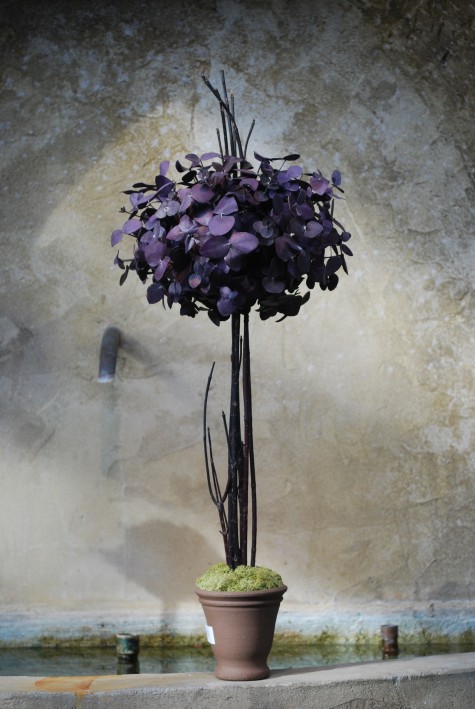

 nn
nn