Sunday Opinion: Scale And Proportion

cad-drawing.jpg
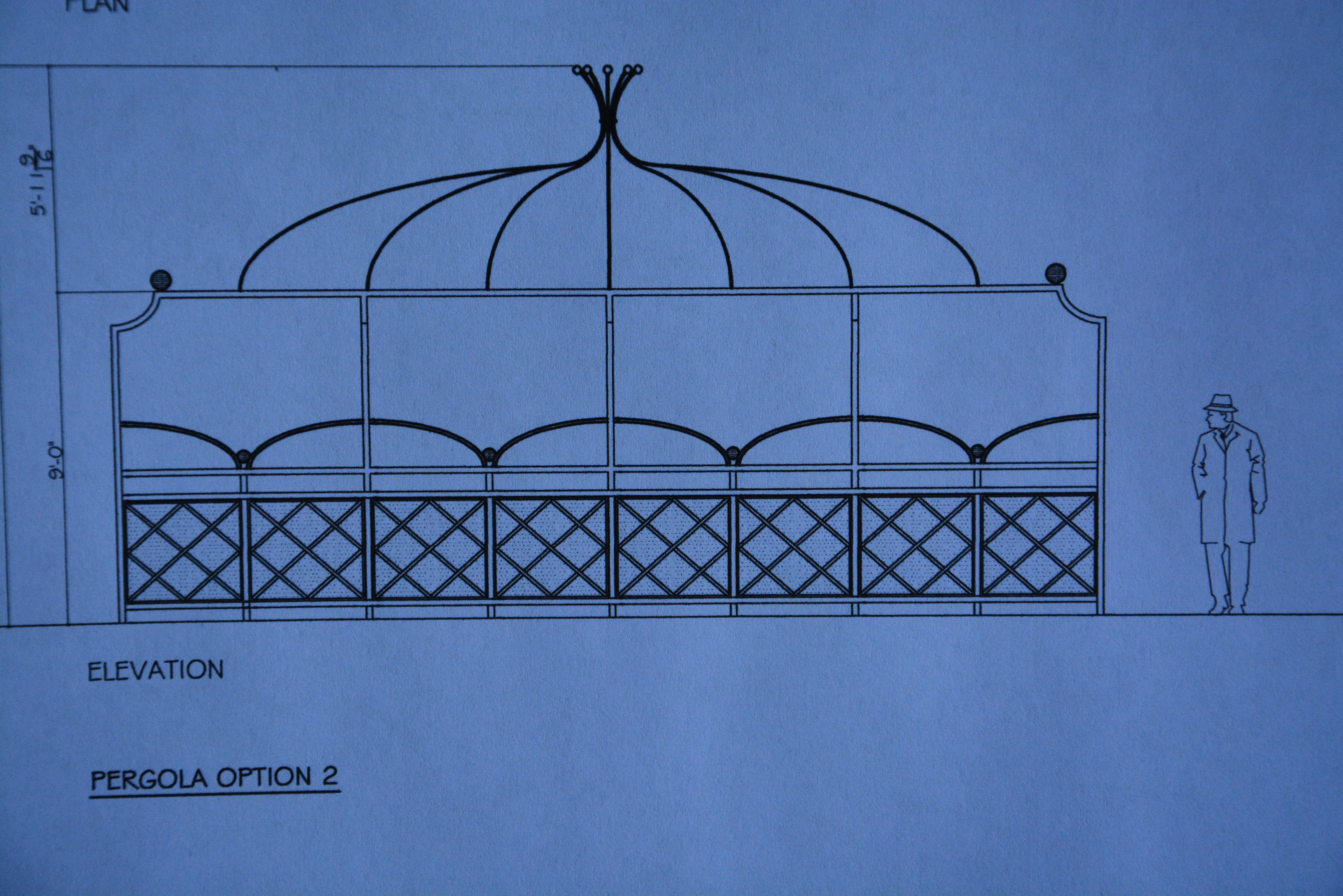
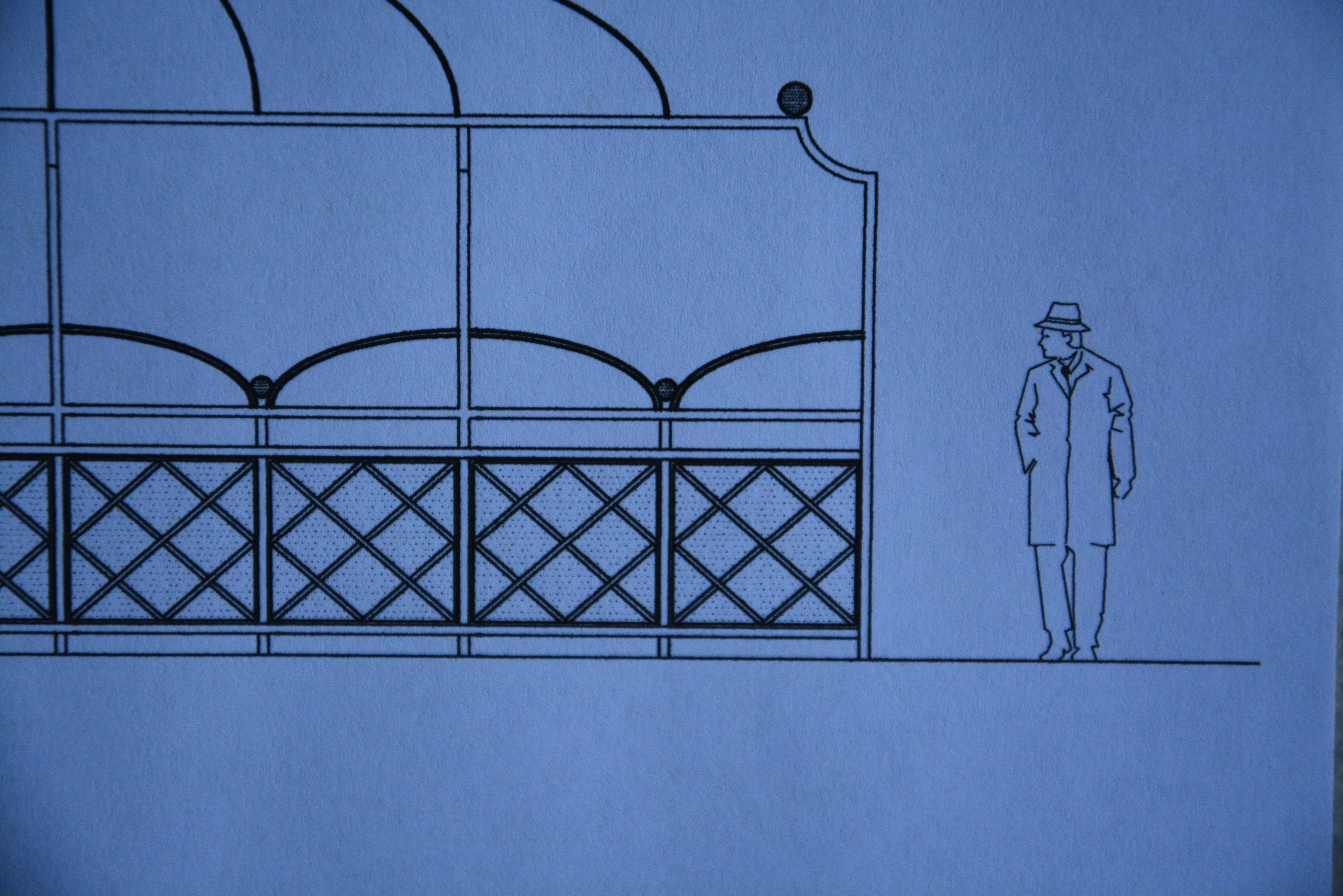
Whenever Buck does a CAD drawing for a project, or an object, he includes a drawing of Man 01.  For those of you who do not do design drawings on a computer, CAD stands for computer assisted design.  This line drawing of a man who is 6′ tall is stored in his computer as a “block”.  Buck has thousands of blocks stored in his computer. Those blocks are stored drawings of shapes and forms he uses over and over again.  Pasting a block into a drawing means he does not have to draw that portion from scratch.  An entirely new shape will require a drawing from start to finish.  A complicated design for an object to be made can take many hours to draw.
man-01.jpg
I have watched him translate an idea into a precisely rendered drawing. Who knows how long ago it was that he learned the language of this two-dimensional design program.  It must be a long time, as his fingers fly over the keyboard of his computer faster than my eyes can follow.  I see lines drawn to precise lengths that connect to other lines, which finally, and exactly, describe a form.  Down to the last 1/64th of an inch.  Given a specific engineering inquiry, he can design to 1000th of an inch. This level of precision isn’t an issue for you and I.   What purpose does the man01 block serve?  This 6′ tall idea of the height and volume occupied by a man is size that is easy to recognize.  6′ tall isn’t short, but it isn’t tall, either.  Man01 is a average size guy.  When man01 is standing next to a planter box we are thinking of building, I have more than the dimensions of that box.  I have  a size and height that is familiar to me.  I can compare the size of the man, to the size of the proposed box.

CAD-drawing.jpg (7)

Anything that Buck makes at Branch, requires a drawing.  He has the drawings for our stock products stored in his computer.  The company that laser cuts our steel, or the company that rolls our steel in multiple dimensions, require those drawings to program their computers to cut or roll to our exact specifications.  Building an object successfully that involves a number of different people and operations doesn’t happen via a breakfast meeting or a conference call.  What is drawn on the page is an exact template for what will be built.
people-in-the-garden.jpgBuck makes those drawings with the help of a computer program programmed to precisely, and mathematically describe a form.  He drives the bus. He tells the computer what he wants to see. The many years he spent as an architect required a working knowledge of how to translate a design into a drawing.  Not just any drawing.  A drawing that would spell out to a contractor exactly how to build a house,  a stadium, a heating system, a plumbing plan, or a fruit cellar.  A bell tower, or a topiary form, or a bench.  But rest assured, a mathematically precise rendering of an idea of an object does in no way indicate that an object will be beautiful.
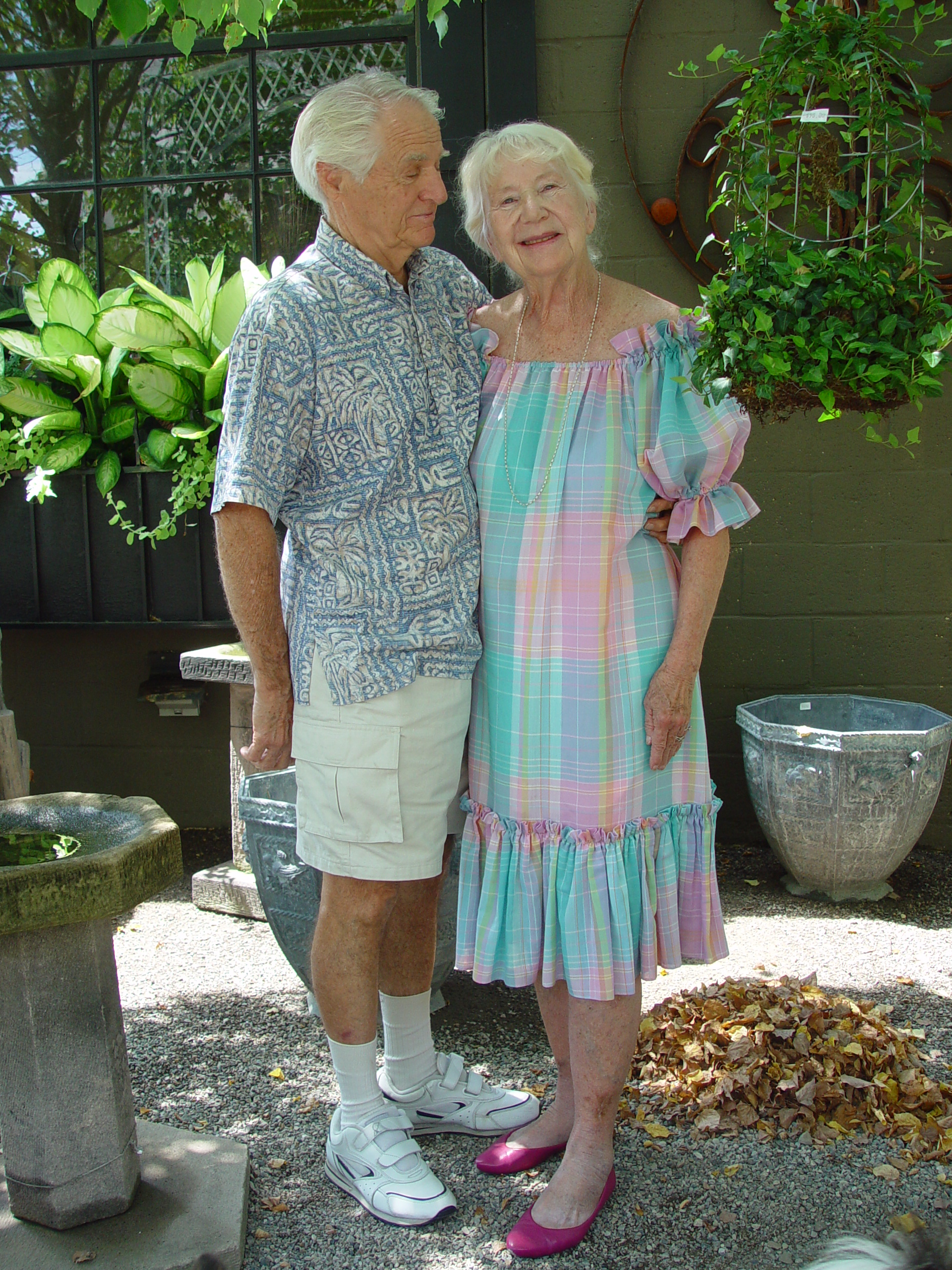
Dorothy-and-Don-Farmer.jpg

Man01 is a gesture in a beautiful direction.  The proportion of a planter box for the garden is a key element of its design.  How a person would relate to the dimension and proportion of that box, whether standing or sitting, will influence how a gardener eventually views, and reviews, that form.  Every person has an idea all their own about what is beautiful and of interest.  Each person likewise has an idea of what doesn’t move them.  This makes garden ornament very difficult to design.  One way we broaden our appeal is by offering different sizes.  Comparing a set of possible sizes to the mano1 block helps us to decide what to build and what not to build.  The computer is a tool that helps with the decision making process.
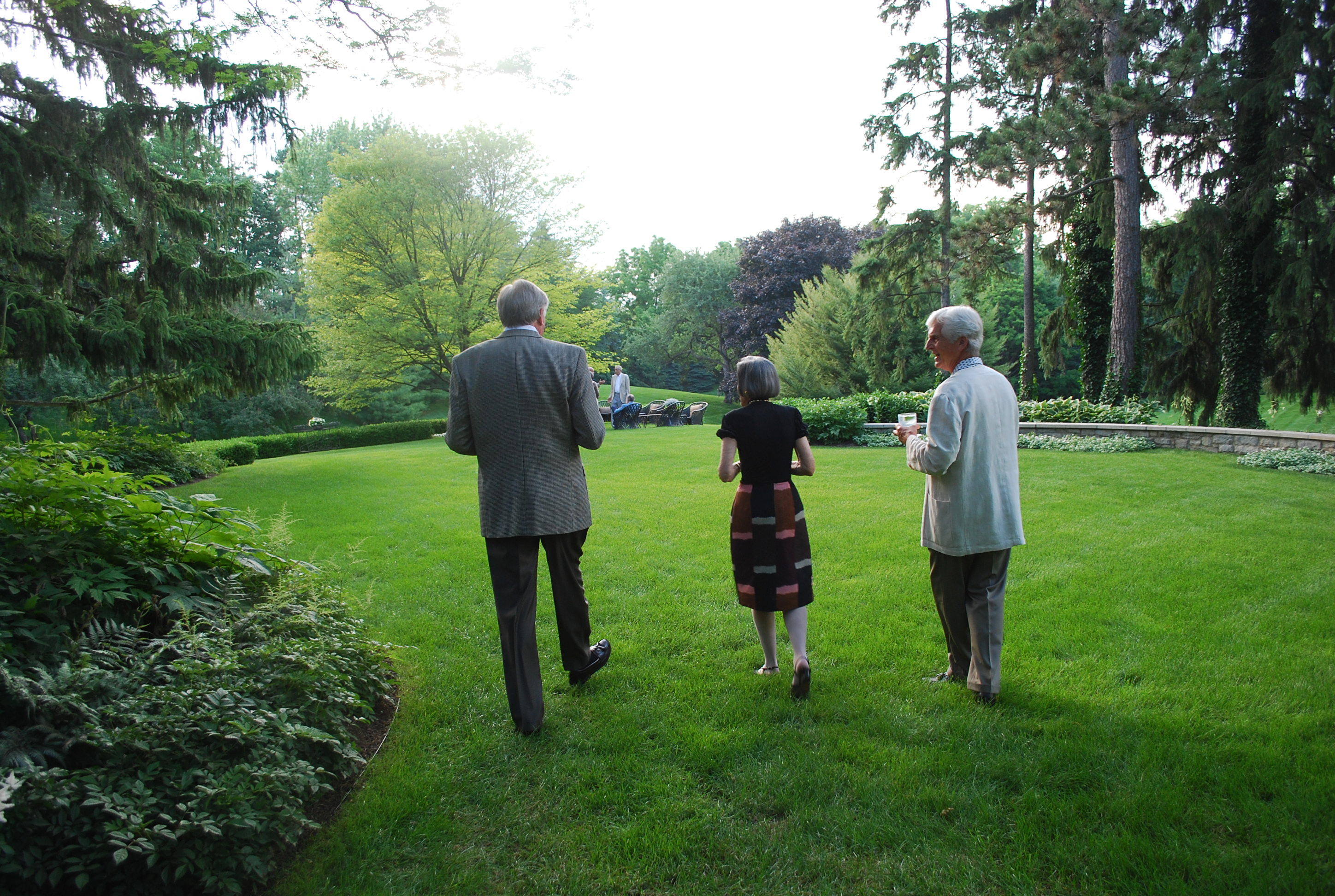
in-the-garden.jpgMan01 is a symbol on Buck’s drawings for scale and proportion.  Woman01 is a scale I sometimes ask for from Buck.  5.5 feet.  But no matter the gender,  human scale is an element that should inform landscape design.  A good feeling for the scale and proportion of a property, the plants, and the people can produce visually interesting relationships.
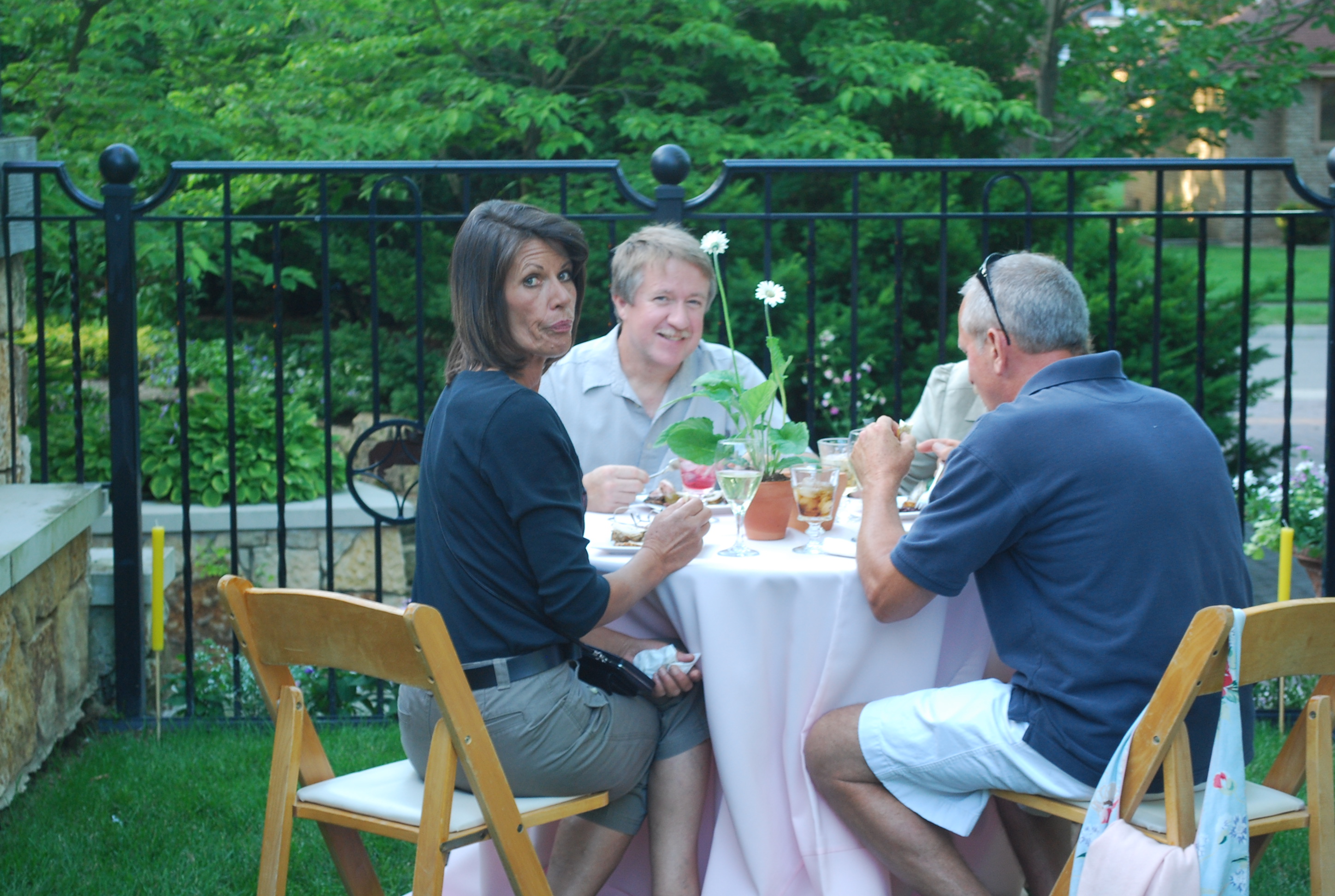
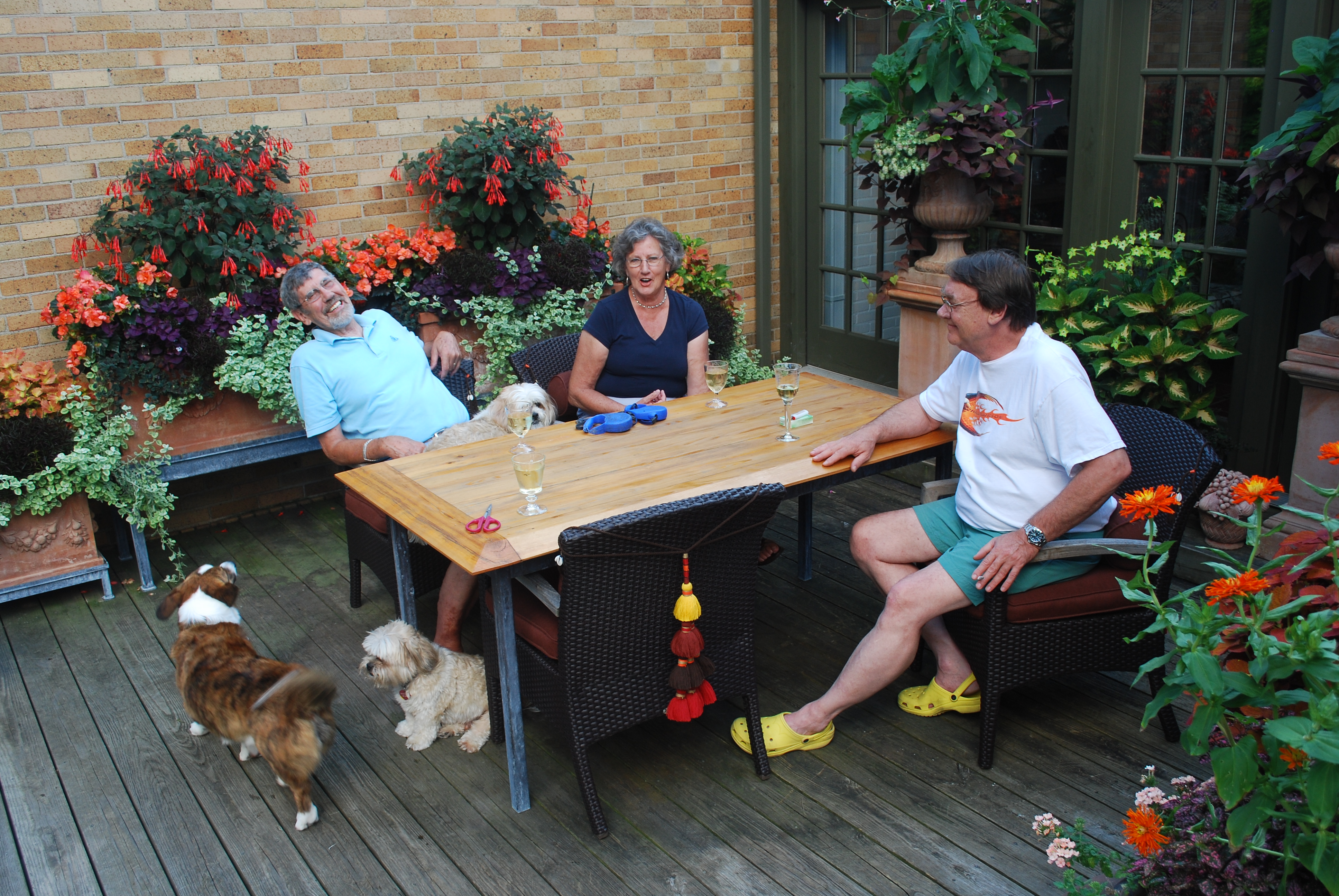
friends-in-the-garden.jpgFriends for dinner in the garden is great fun.  Friends comfortable in the garden is an important part of design.
Tuesday Opinion: Rhythm

Someday I will  plant a giant circle of deciduous trees.  Or a square. or a rectangle, or an irregularly shaped enclosure of trees.  Most of the trunks will be too close together.  There may be one entrance, which is also an exit.  There may be an entrance and a separate exit.  There may be one entrance, and several exits. There may be one entrance on axis, and other oblique entrances. No matter the shape, the canopies of the trees will create a tent.  Inside the tent, there will be a bench, or a collection of benches.  The garden on the outside of the tree tent will be inviting and friendly.  The inside of the tree tent will be plain.  Just grass, and a place to sit.  I would visit the tree tent every day, every season, year round.  Maybe very early, before work.  Maybe late in the day, after work.  Maybe more than twice a day.   Why would I want such a garden? A daily garden?  For the sake of rhythm.

Like most gardeners, I am tuned into my garden at specific times of the year.  The first signs of spring.  The spring trees blooming.  The planting of the spring-and the summer pots.  The roses coming on.  The late summer garden.  The fall, and finally the winter.  These moments are an intense experience.  The hellebores in full bloom make me feel dizzy, my focus is that intense.  Other times, I barely notice what is in front of my eyes.  I have this issue to attend to, or that.  The delphiniums may be sending up a strong second flush that I barely acknowledge.   Up and down-that would be me in the garden.  Miss topsy-turvy.  Would that I could be more consistent and less scattered.

On and off is not my favorite place to be.  A lengthy “on period” means I can establish a rhythm.  It is not so tough to imagine this.  In simple terms, practice makes perfect.  Those times when I am focused on the garden, day to day, my garden benefits.  The 2 months I spend planting summer pots-I am quite sure the last of those pots are the best.  Once I have gotten into a rhythm, there is flow.  I stop thinking about what to do, and just do.  Stating and stopping and starting up again in the garden shows.  A design may appear disjointed, or fragmented.  Or even worse, careless.

A regular rhythm is like a pulse, like a heart that beats regularly.  Repetition sets the stage for a rhythmic expression.  The big idea here-anything you attend to, or practice every day establishes a rhythm.  Once you have a rhythm going on, a beautiful expression is not far behind.

As for my tree tent-I imagine it as a place to recapture that sense of rhythm.  A place that can store momentum.  Of course the tree tent is an idea that could exist only in my imagination.  Maybe the real solution is to figure out how to keep the door to imagination propped open.  Today I have a large Christmas tree to decorate. It is a project I have not done before. I have assembled a collection of materials-they will be looking at me.  And my crew will be looking at me. I am sure I will be trying out different arrangements, stopping and starting, until that certain state of mind that I call rhythm gets switched on.


Making A Lot Of Little

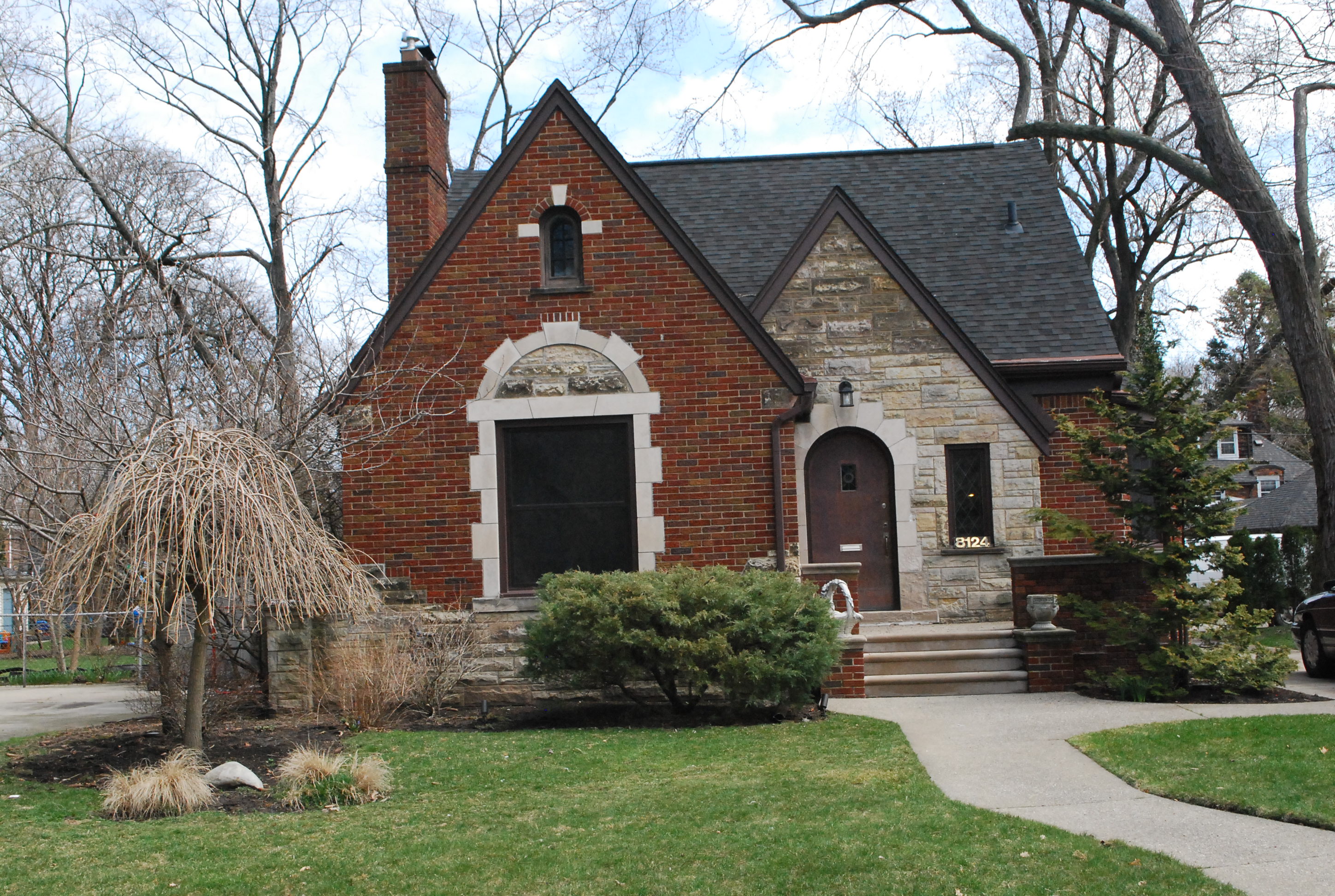
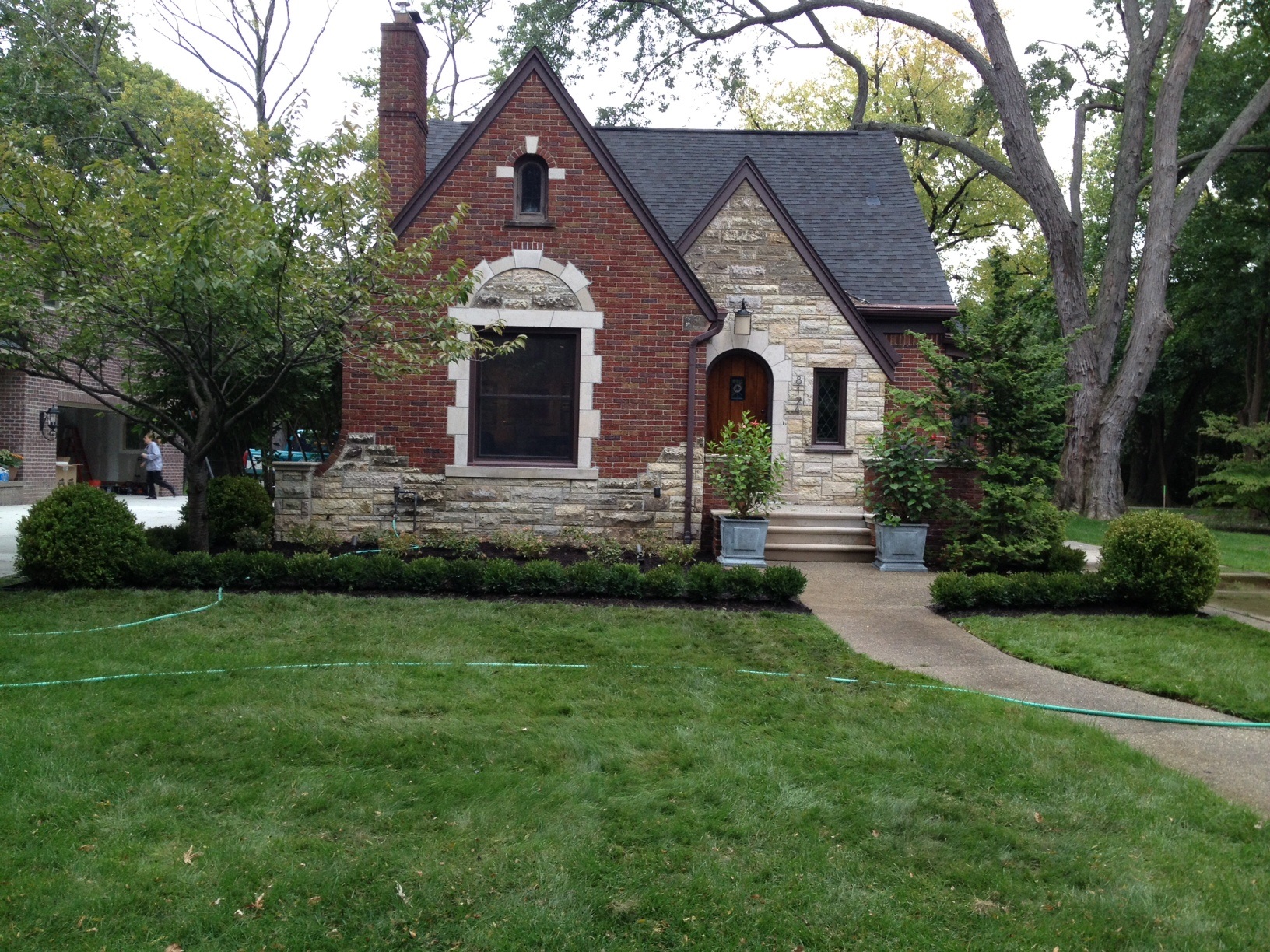
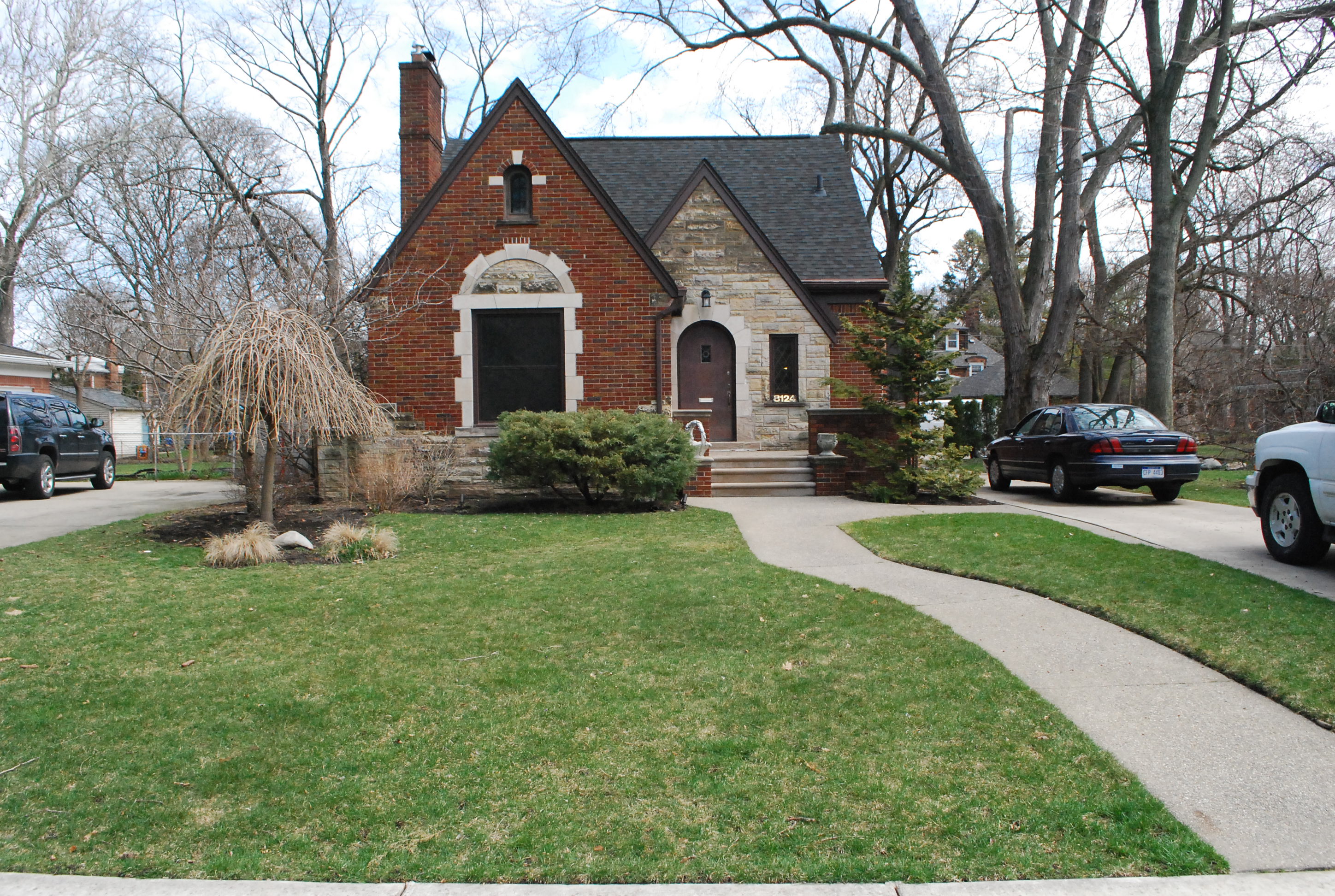
landscape-design.jpgAn old client bought a new house.  The landscape out front was not so swell-I am sure you can see an overgrown and poorly tended collection of plants that have no relationship to each other.  A great landscape needs to respect, enhance, and challenge the space and the architecture.  Not to mention the need for an expression that is interesting, and polished.  This home was built in the 1920’s.  Who knows what landscape might have been planted after the house was finished.  I felt really certain that the current landscape was cursory, if not left over, and not so much oriented around the architecture.  This is not an unusual.  Not everyone is so interested in the landscape, much less good landscape design.

new-house.jpg

My client, however, was very interested in landscape design.  She wanted her new home to have a new landscape.  A fresh design.  A design that she would delightedly call her own.  Delight is a state most everyone can relate to.  Landscape delight revolves around a few issues.  A home is the largest feature on any plot of ground.  The shape, the size, the height, and the style of that architecture should inform the attending landscape.  A delightful landscape looks like it belongs to the house and property upon which it is planted.  A good landscape resonates with a house and property.   That house informing the design does not mean reproducing the landscape design of that period.  It only means that any large structure that sits on a property needs to be grounded in a thoughtful and beautiful landscape design, properly proportioned.  A good landscape has an idea about house and ground that is delightfully framed and executed.  On my first visit, I so loved the house, and all of its features.

landscape-project.jpg

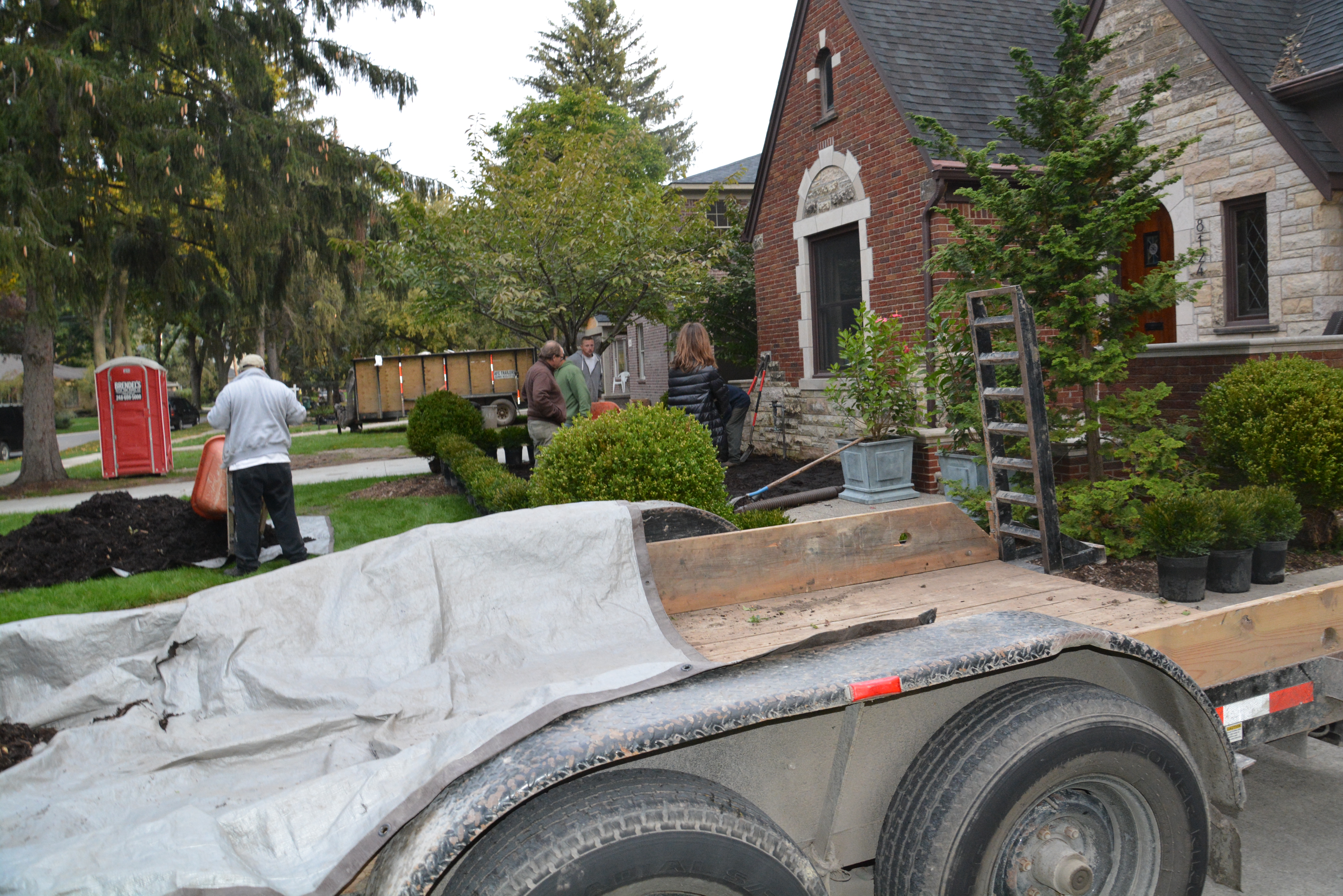
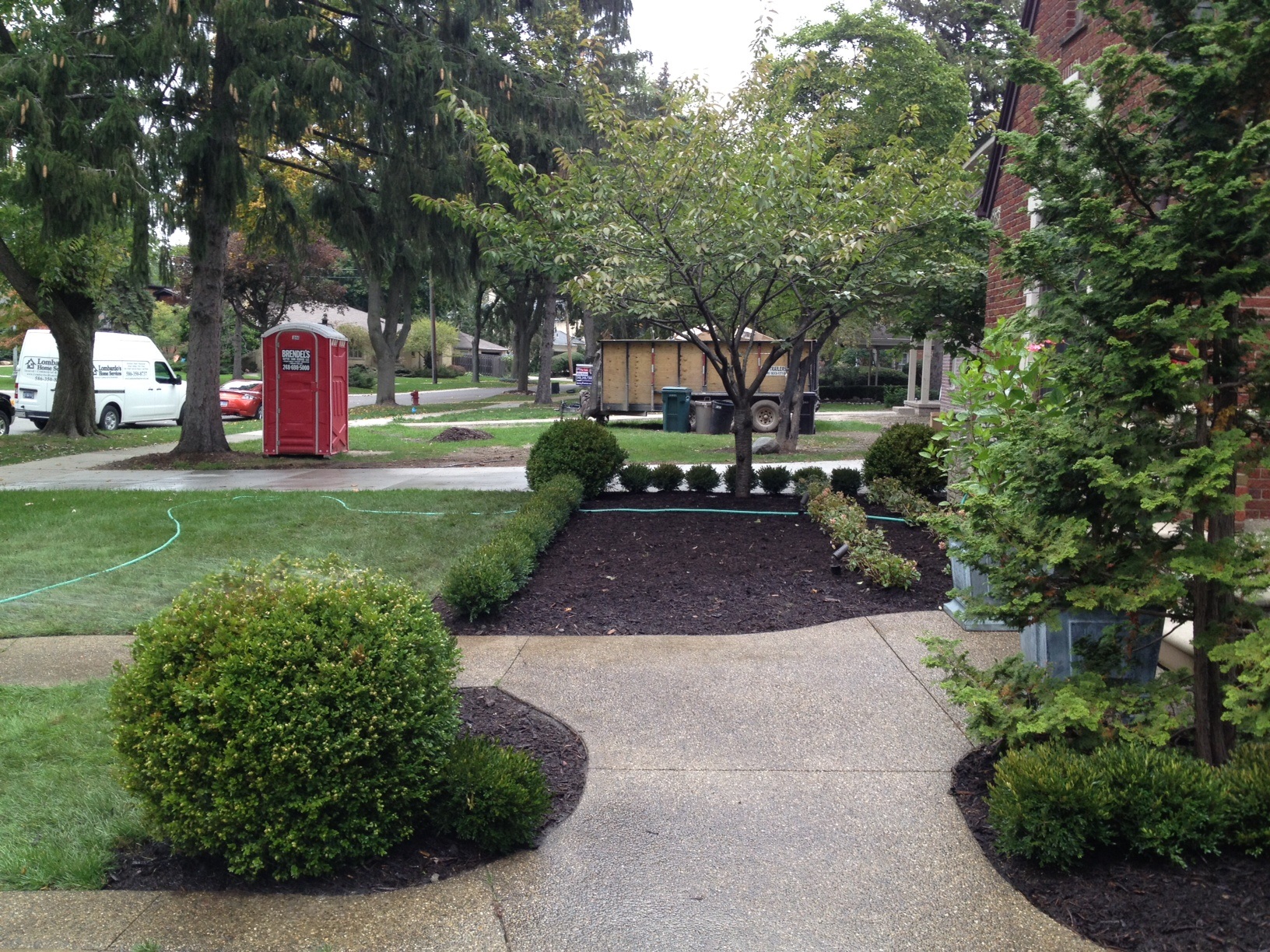
My first installation visit to this property was about eliminating her feeble collection of plants in front, and creating some basic green structure.  The cost of implementing this part of the plan would depend in large part on the size of the plants.  Great design is not one bit related to the cost of an installation.  We can buy and install plants of many different sizes.  The design called for green structure that came away from the house, and enclosed the sidewalk to the driveway in a configuration that made visual sense.  In other words, a bed of some size.  She wanted to make the biggest impact she could within the confines of her budget.

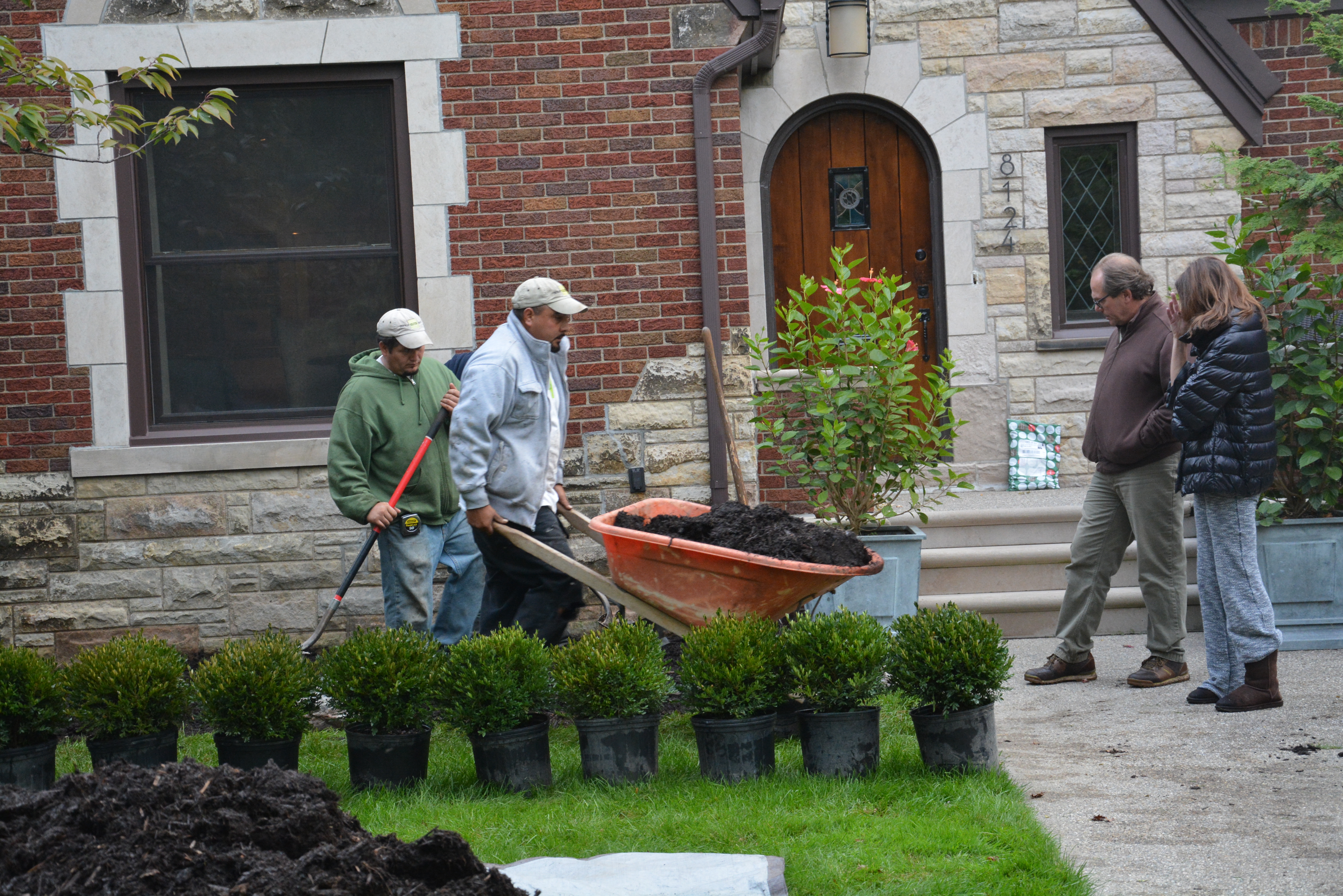
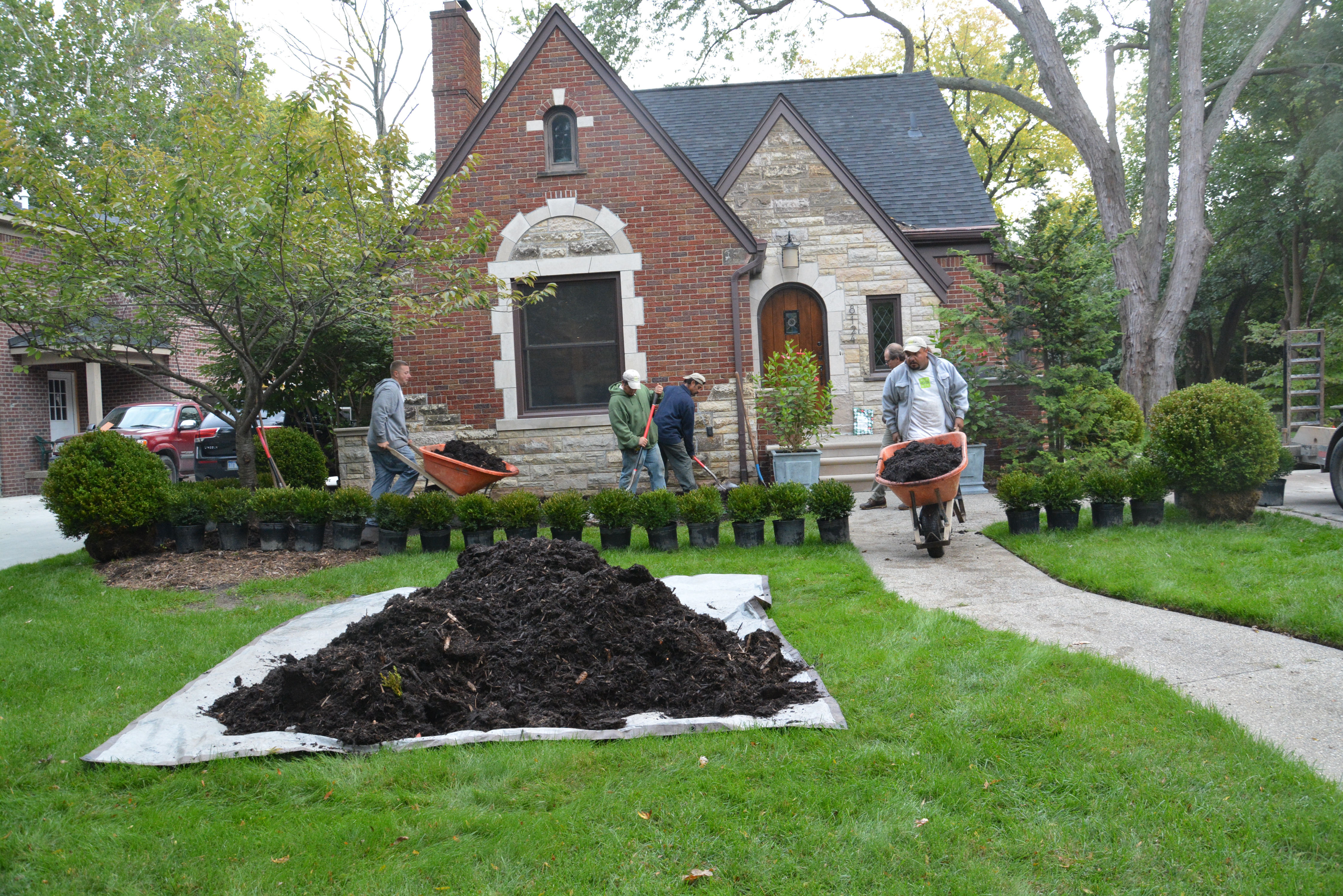
landscape-project.jpgGreat landscape design may be about a moment imagined for the future.  Small plants cost less.  Big plants cost a lot.  Most of the boxwood on this project are 12″ to 15″ tall.  We paired lots of those little boxwood with four boxwood of considerable size.  Contrast is a very powerful design element.  In this case, the contrast in size made the entire installation look more important visually.

landscape-renovation.jpg

The 15″ Green Gem boxwood are really small.  Small enough that they are grown in pots.  Small works great, when they are contrasted with companion plants of greater size.  36 inch round Green Gem boxwood spheres are rare, indeed.  Splashy.  These four big bits would make lots of the smaller bits.

landscape-renovation.jpgThis is the first part of the plan to be installed. Designing with staging in mind involves 2 things.  The part has to look finished on its own-not piecemeal. The “part one” also has to be ready and friendly to the next phase, whenever that phase comes along.

making-a-change.jpgThe installation of this boxwood parterre would look fairly routine, but for the larger balls on the four corners.  The four boxwood of scale attract attention.  Behind the boxwood, several rows of Little Lime hydrangeas.

landscape-design.jpgWhat goes between the hydrangeas and the boxwood is under discussion. We probably will not do anything here until the spring, which means there is time to think it through.

landscape-renovation.jpgThis picture explains the visual logic of the location of the parterre.  That space could be handled in lots of interesting ways. It could be lawn, or ground cover, or more boxwood, or a combination of all the aforesaid,  or gravel, or?  For now, part I is holding its own.


A Topiary Garden

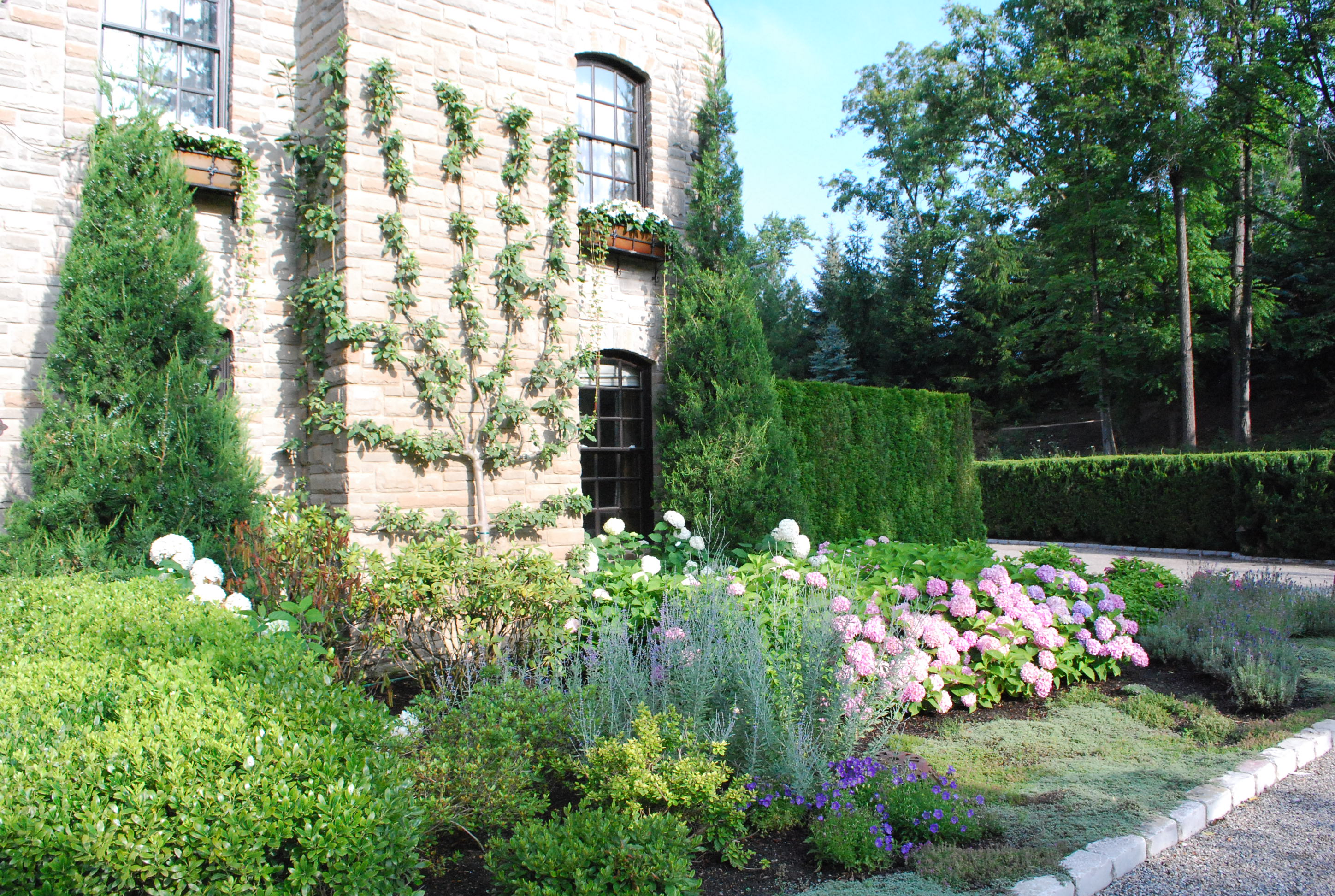
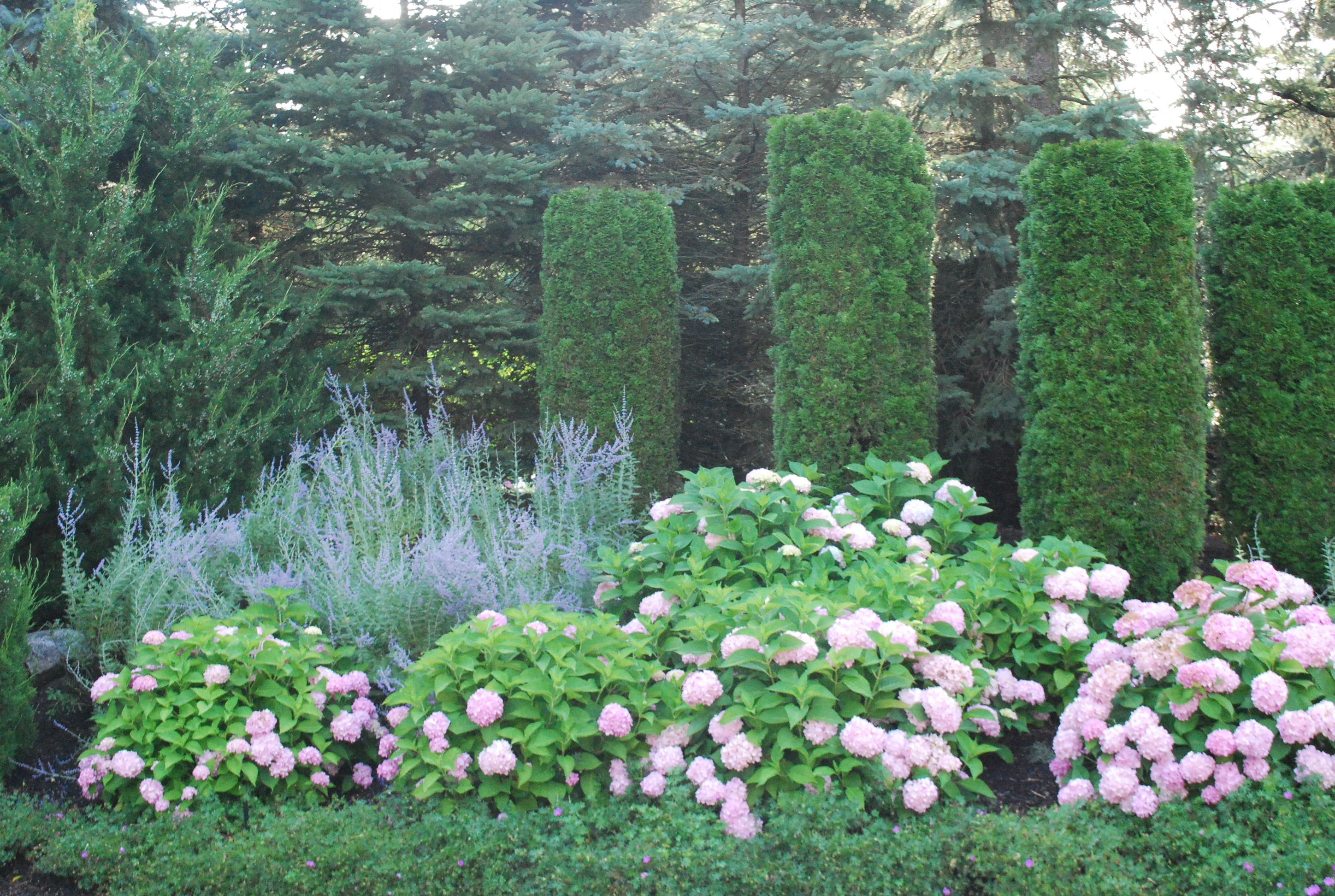
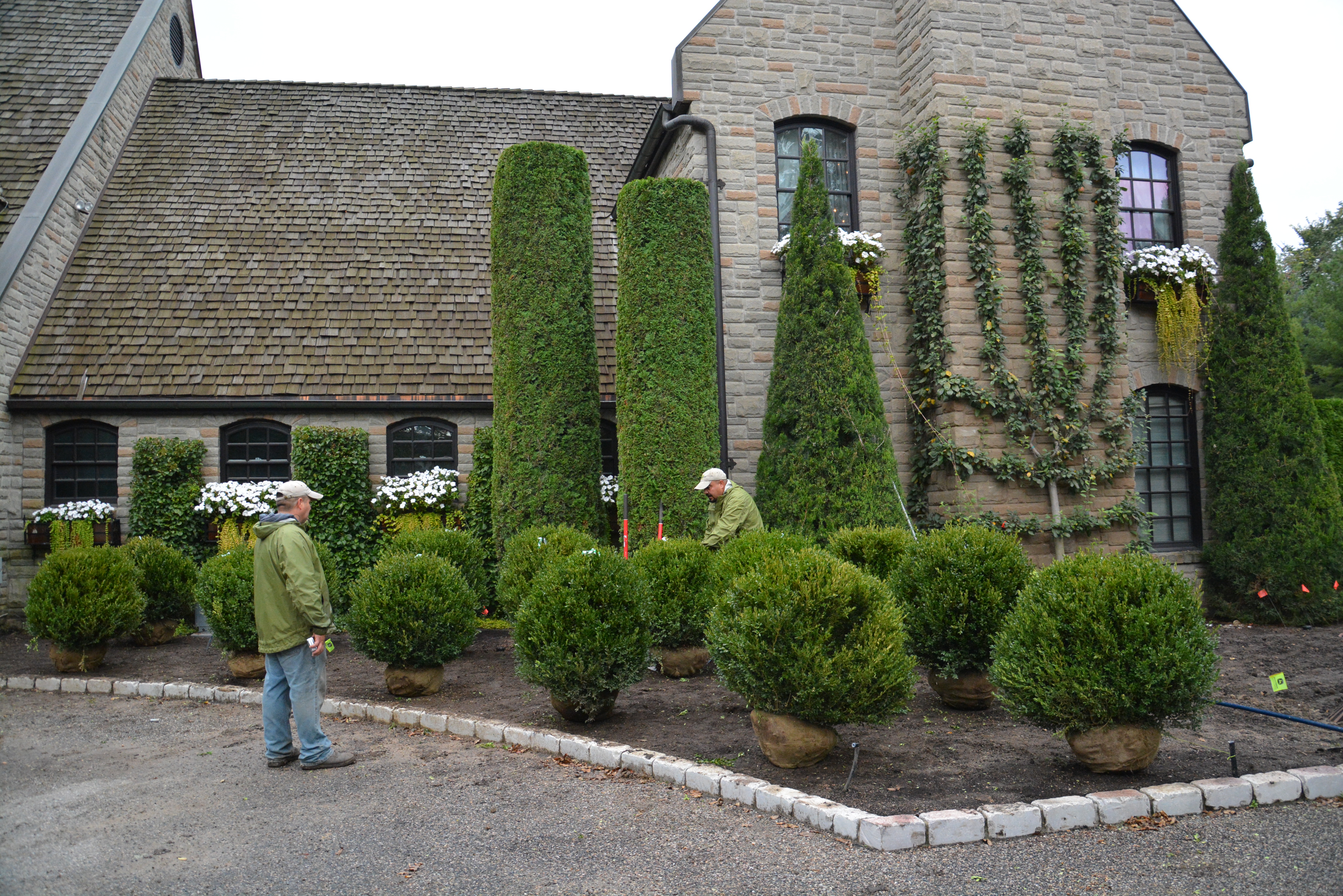
garden.jpgI have been planting pots for this client since 2005.  He really enjoys his garden, and I look forward to planting for him every year.  As for the landscape, it was not my favorite.  A circular drive court was planted round about with ink berry.  Over the years, the ink berry died out in patches, and what survived grew leggy.  The landscape did have to its credit a number of large arborvitae which had been pruned into shapes, and several espaliers.

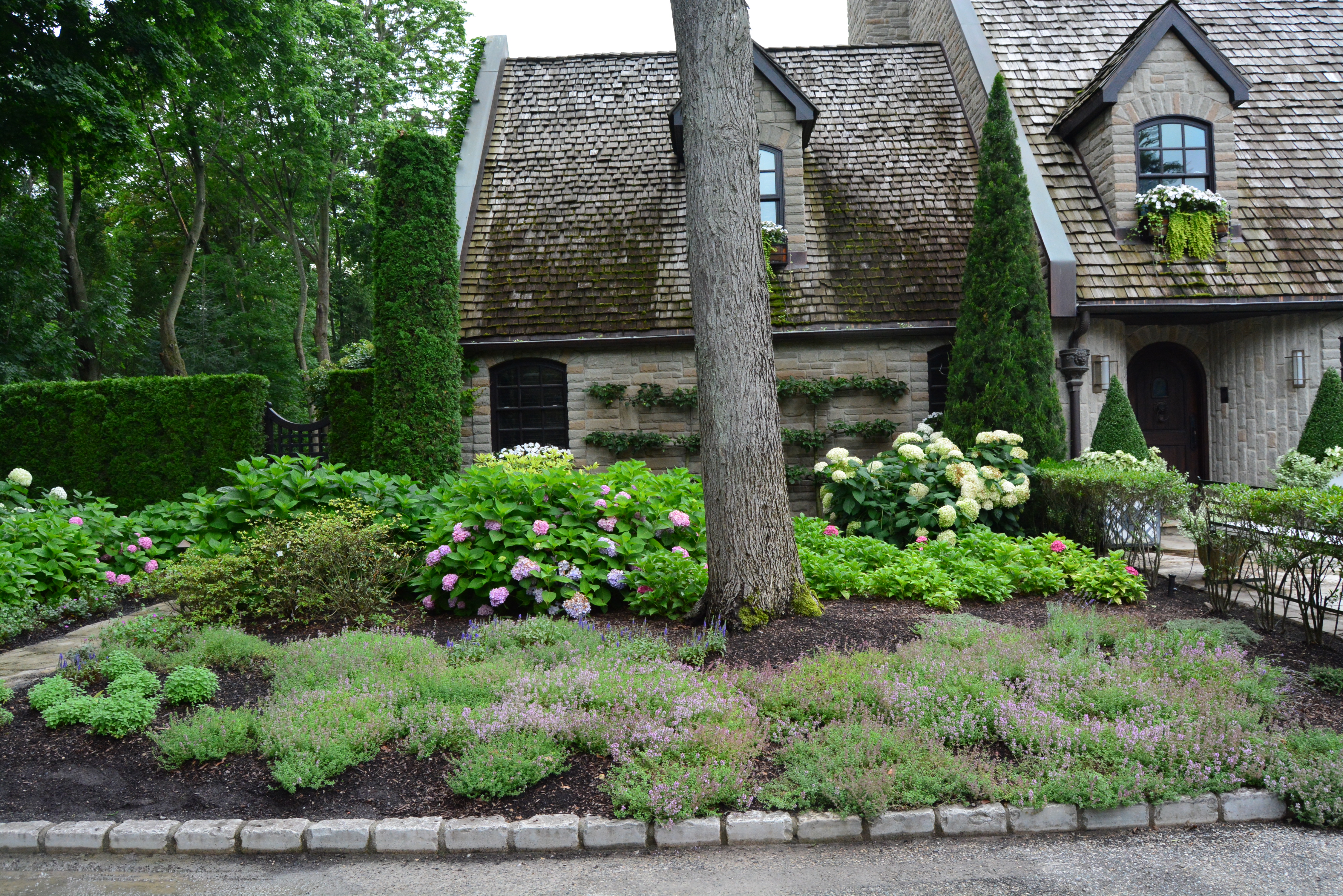
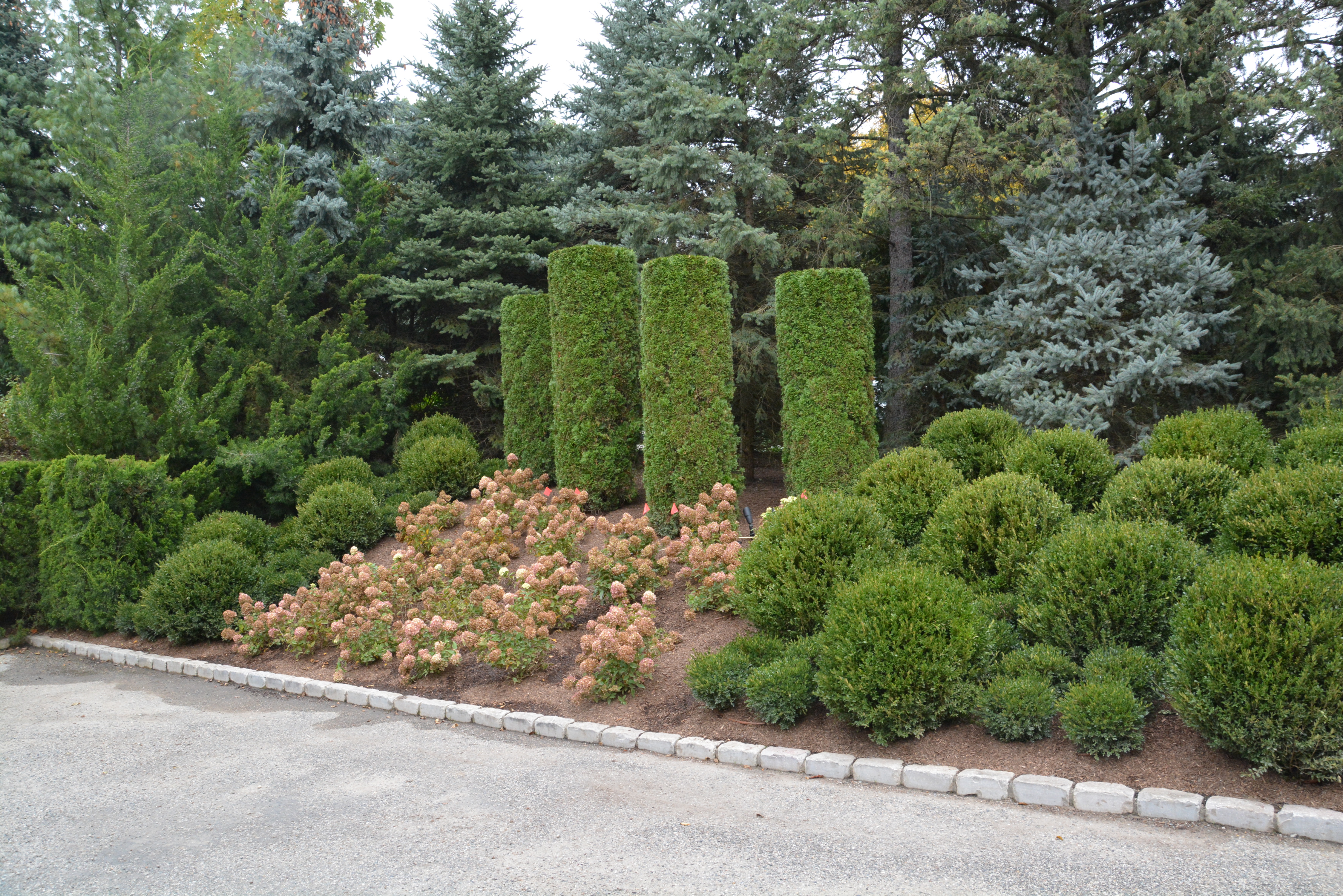
garden-and-landscape.jpgThe rest of the landscape was a random mix of hydrangeas that did not bloom much, and perennials which asked for full sun and perfect drainage. The vast majority of the plant material was not happy where it was planted.  Moist shade is not a spot that asks for or welcomes thyme. Thyme is very small leaved, and grows but a few inches tall.  Placing it in the landscape effectively is all about a good understanding of scale.  An old, limbed up, and half dead maple tree was not adding much to the landscape either.

garden-and-topiary.jpgBut what was obvious to me was that this client truly enjoyed his topiary plants above all.  I respect and enjoy landscapes in which the structured plants are contrasted with a looser garden.  In this landscape, the contrast did not seem to work.  I so rarely take the time to critique.  In general, I think the energy it takes to criticize would be better spent in an effort to suggest a solution, or a better way.  I was sure this landscape did not represent what my client loved about landscape-so I persisted. It did take me every bit of 18 months to convince him to redo the landscape.

placing-the-boxwood.jpgClients are ready for change when they are ready. This is not unusual.  All of us are ready when the moment comes when we are ready. My client made a decision.  We moved on that decision. It did take but a half day to rip out the ailing ink berry. Another half day for the pink hydrangeas and company.  The shape of these beds made it very difficult to plan a formal design with topiary boxwood. I had 18 months to work out the placement.  I was ready.

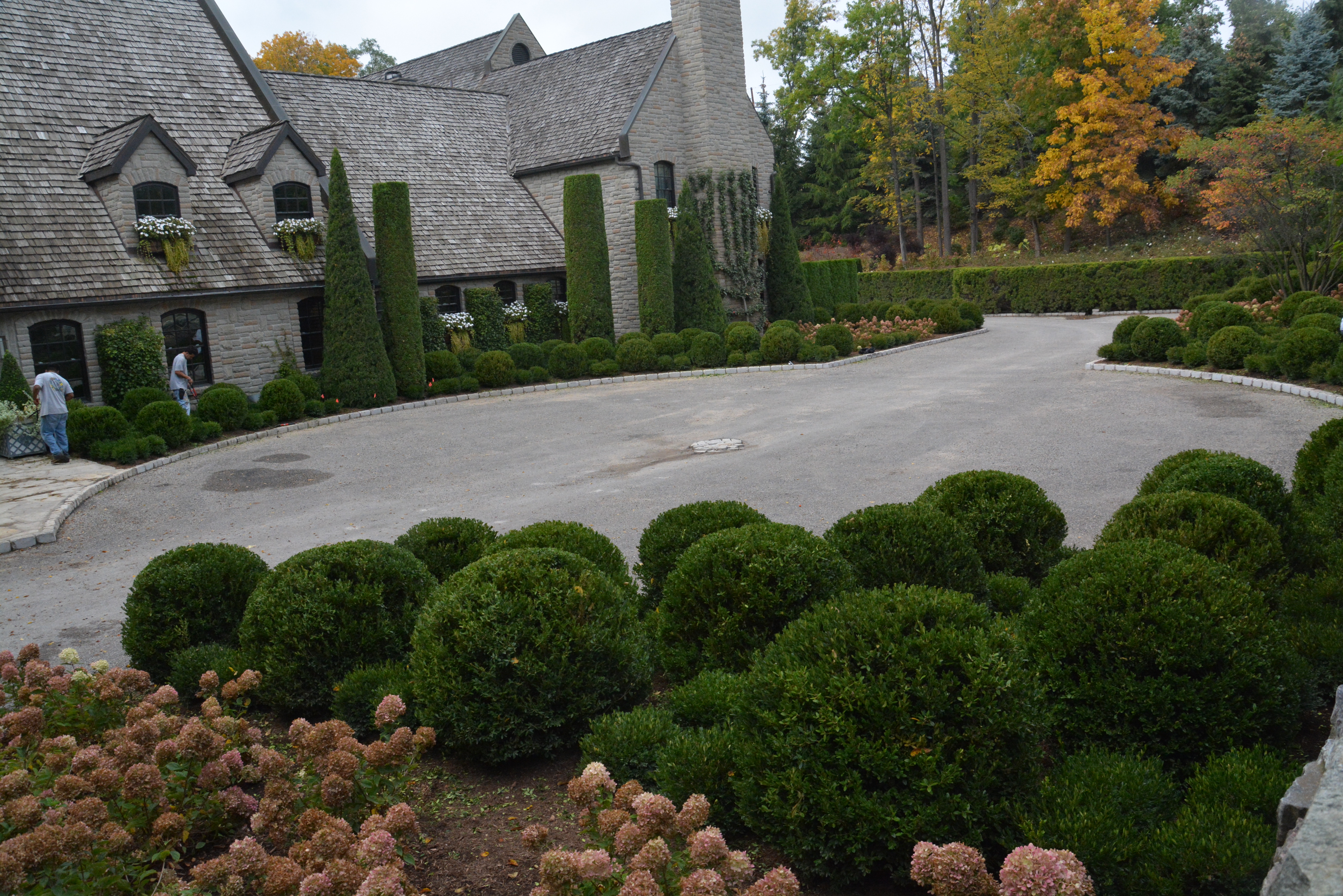
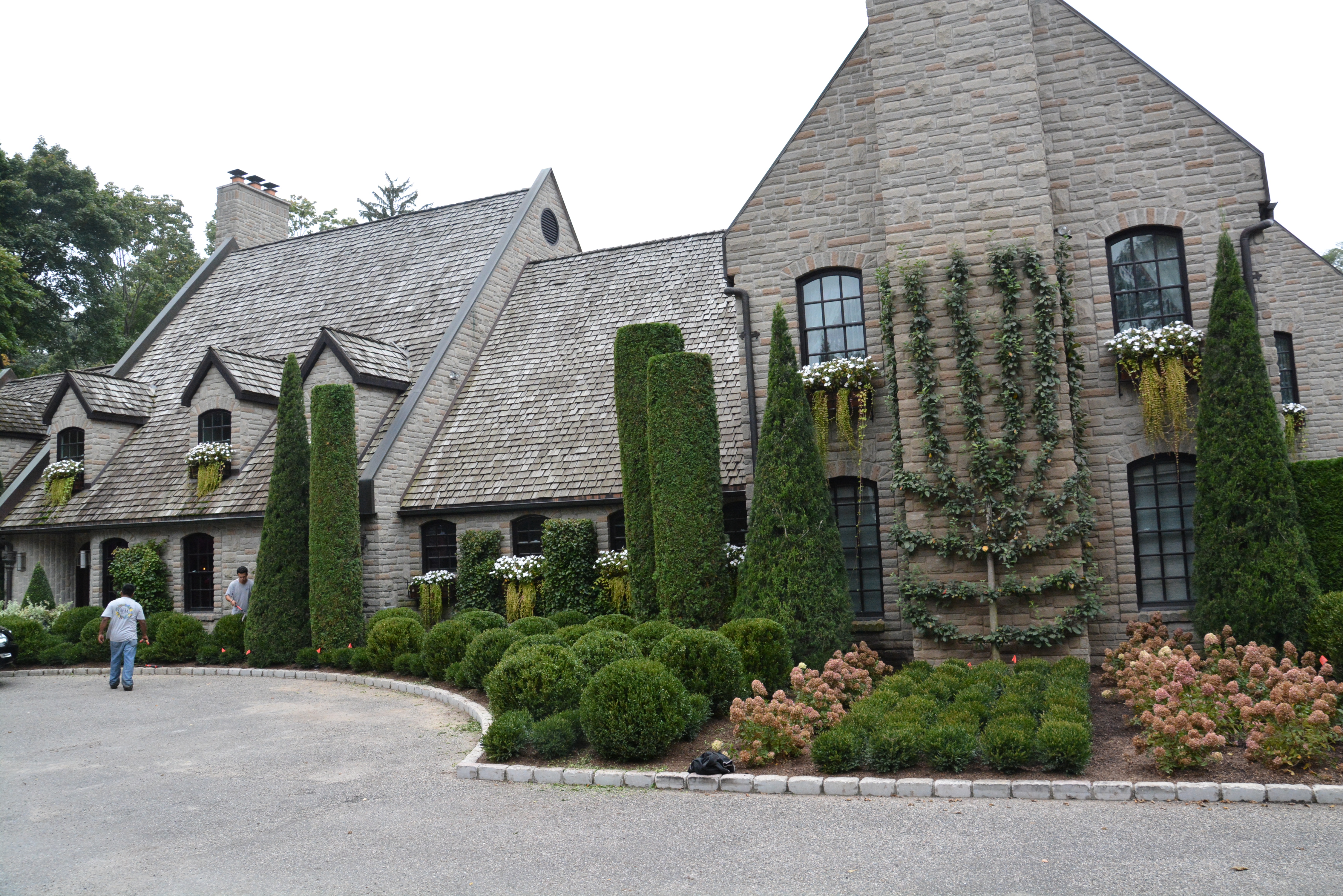
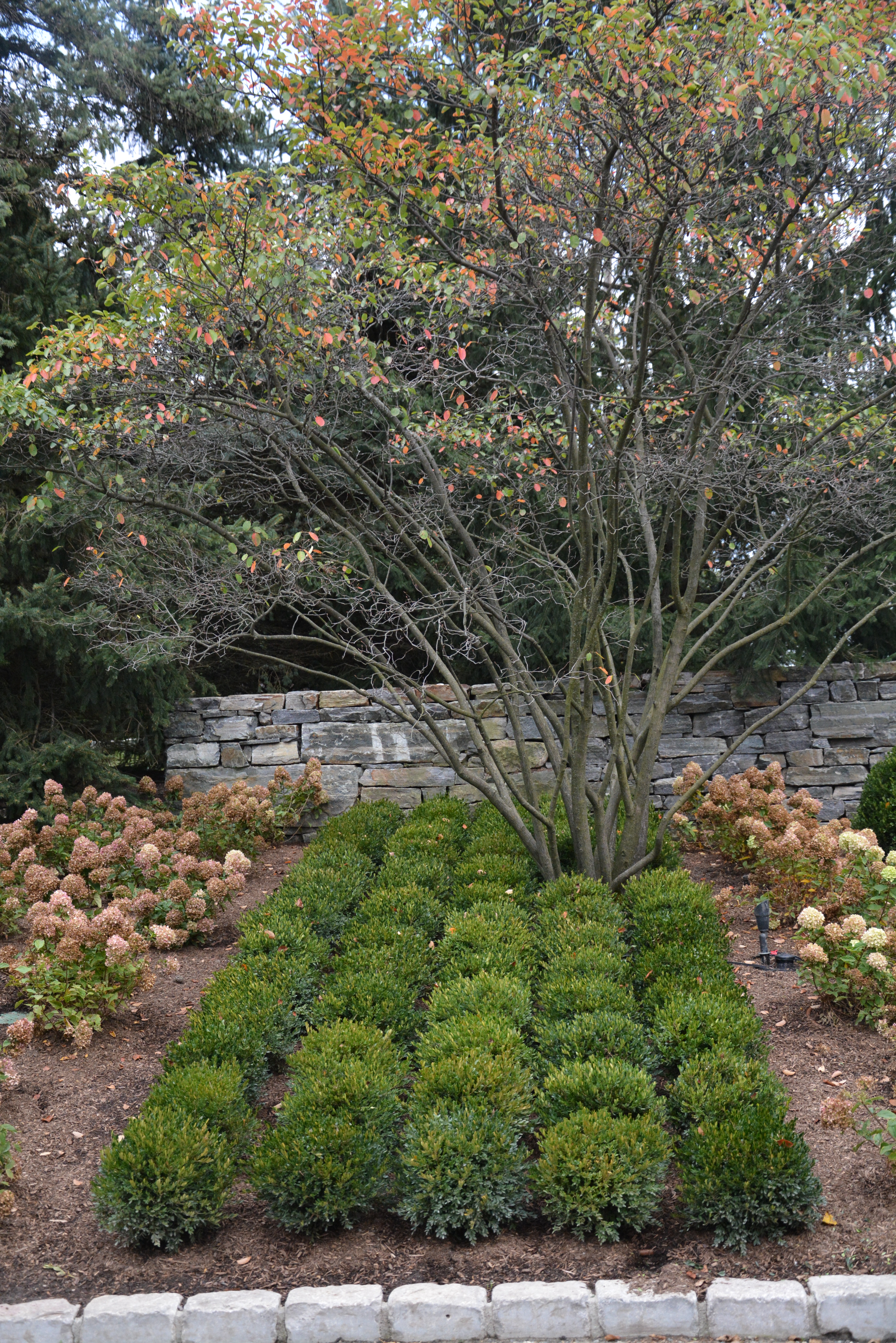
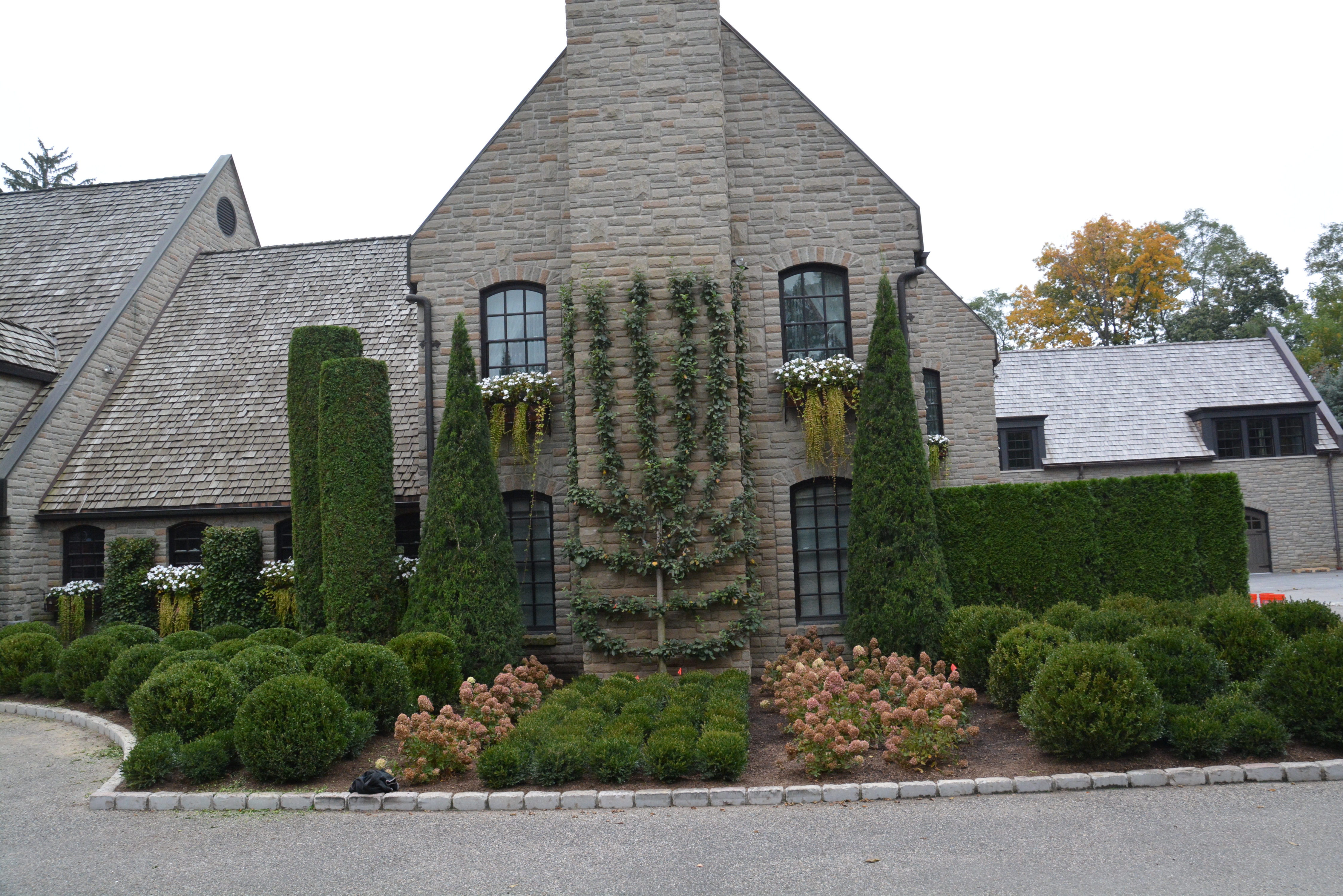
topiary-garden.jpgMy landscape design is predicated on an arrangement of shapes and only 2 plants.  Specimen size 3′ by 3′ Green Gem boxwood, 15″ tall Green Gem boxwood, and Little Lime hydrangeas.  My client also has a big interest in contemporary design and art.  The house is an interpretation of classic French design.  I was after a landscape design that had its roots in classical landscape design, with a nod to a modern aesthetic.  I was also interested in the landscape representing my client’s love of topiary.

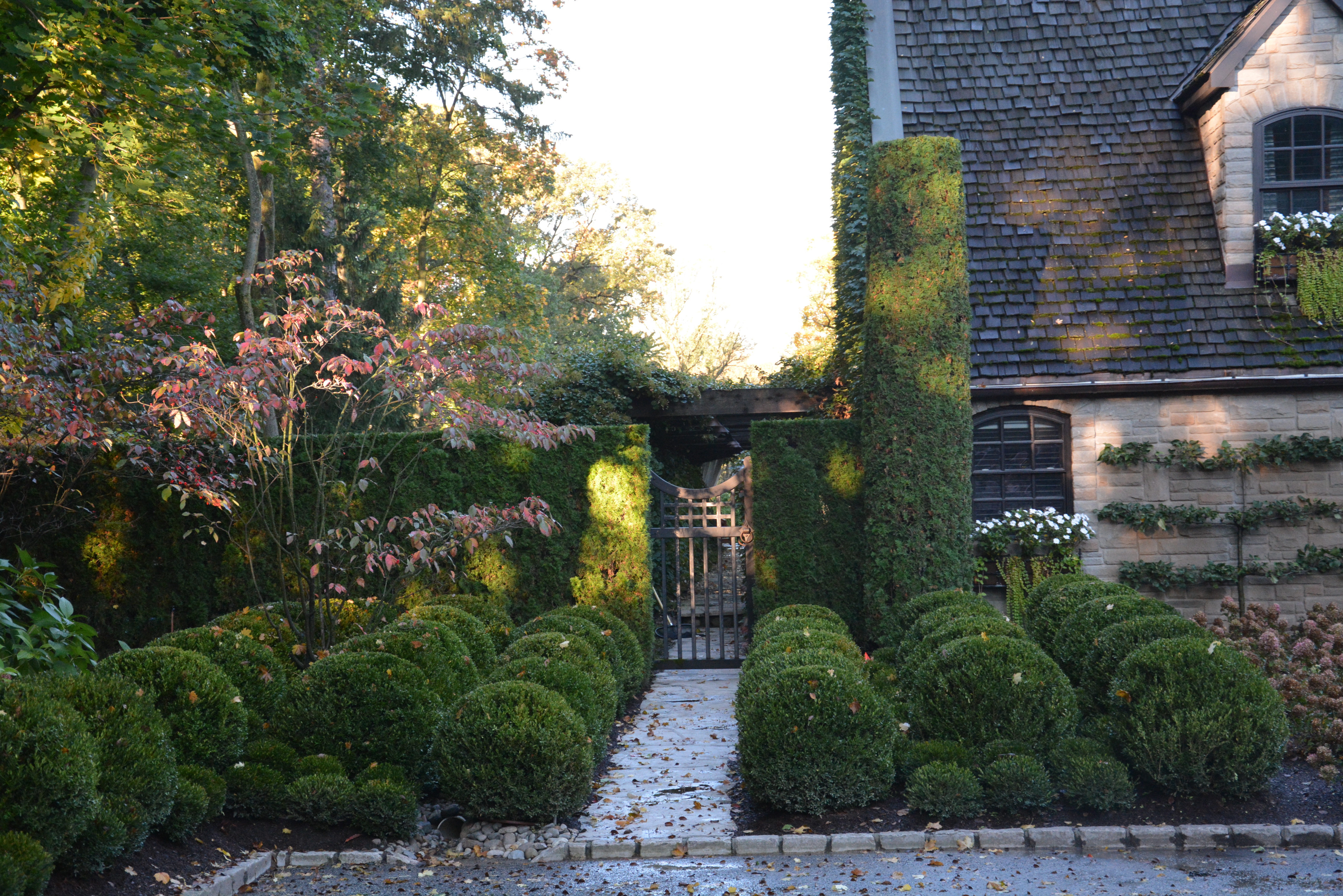
boxwood-spheres.jpgA pattern of offset 3′ by 3′ Green Gem boxwood spheres was alternated with blocks of 4 squarely placed  15″ Green Gem boxwood is a pattern that is repeated in stripes perpendicular to the house.  The round shapes contrast with the geometric placement.  This view down the drive is strong.

boxwood-garden.jpgWe had drainage issues.  I will not bore you with the problems associated with the drop from the street to the driveway plane, and how we handled the water.  If you search the above picture, you can see the drain pipe to the left of the boxwood planted on the left side of the walk to the back yard.  Providing for proper drainage is essential.  Handling the drainage gracefully takes lots of planning and work.

topiary-garden.jpgThis landscape renovation honored first and foremost my client’s love of topiary evergreens.  Secondarily, the landscape renovation reflects his interest in contemporary design. I was so interested that all of the spaces be simple and integrated.  The driveway and drivecourt is a much larger space than the landscape spaces. A strong pattern would minimize the visual draw of the drive, and maximize the visual attention to the green spaces.  That said, any landscape needs to challenge and enchant.  At the end, I feel sure that the reconstruction of this landscape is particular to the taste of my client.

topiary-garden.jpgEvery client is different.  A good landscape designer needs to have the ability to absorb and then design for different. Any gardener who has a mind to design for themselves needs to first and foremost listen to their own voice, then acknowledge the demands of the space, and be bold about a plan.

topiary-garden.jpgThe renovation of this landscape went well.  The soil was surprisingly good and easy to work. We dug and planted for 6 straight days.

topiary-and-espalier.jpgFormal landscape designs have their proponents.  Vis a vis this project, I am one of them. I like formal landscapes, when they are appropriate to a site and a client.  I like other than formal landscapes, given a specific situation.  Redoing a landscape is a big fluid situation-any designer knows this.  If you are a gardener who designs for yourself, I could offer this advice.  Take the time to figure out what you want first and foremost from your landscape.  Next up, dream and scheme.  At the last, make a move.  As for this landscape-it is all about the beauty of the topiary plants.

topiary-garden.jpgMy client likes what we have done. I am pleased with the finish.