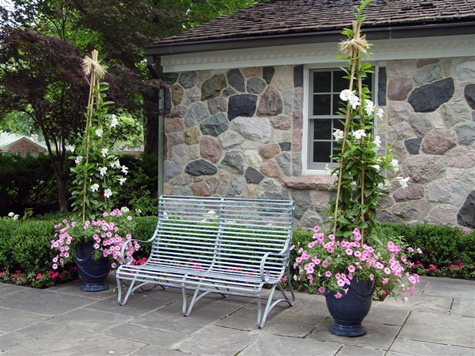
 If you are a like me, you do not sit much in your garden. I can always find a weed to pull or something to stake, trim, or otherwise fuss with. But as I subscribe to the notion that a landscape is a place to be, a place to sit seems like a very good idea. A place to take a break, to contemplate your future, to watch the birds, to have a glass of tea-excellent.
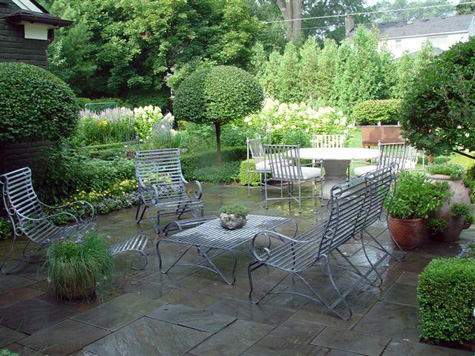 We make this scrolled steel furniture, galvanize it, and acid wash it. It has the look of lead, that blue grey with a white bloom. This furniture is amazingly comfortable for being made of steel. I think it is very good looking and appropriate in either a traditional or contemporary setting. But most of all I like that it looks like garden furniture-and not the furniture I have in my living room.
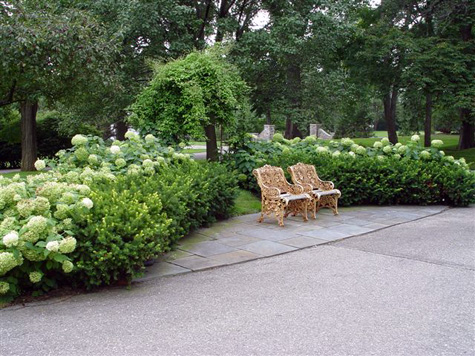 In the past few years I have seen plenty of garden furniture, made from weatherproof materials, that looks like indoor furniture; this does not appeal to me. I like everything in the garden, to look like it belongs there. Thus I prefer my sofa in my living room, and not on my terrace. I very much like these 18th century Coalbrookdale chairs, in the nasturtium pattern. They look like they were made for a garden.
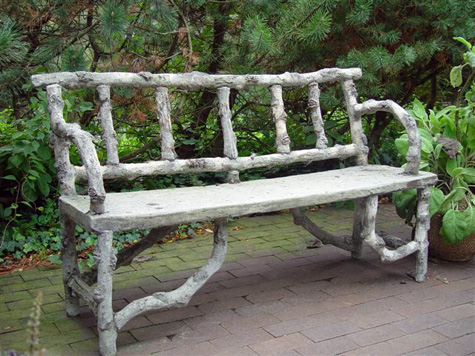 This is an early 20th century French faux bois bench. Literally translated, faux bois means false wood. The bench is concrete over a steel armature, that was carved to look like wood. I doubt it is a place you would want to sit for long, but it most definitely is a lovely place to sit and enjoy a garden moment. It is just as lovely as a garden ornament.
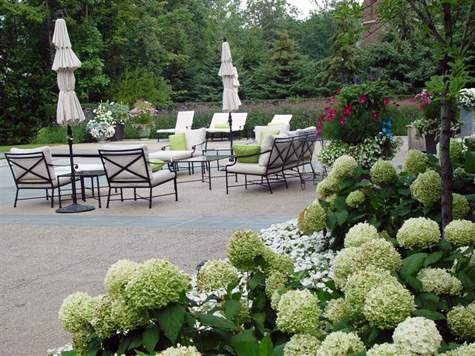 Pool furniture almosts asks for cushions. Hot steel and bare legs is not such a good combination. Be sure if you buy of have cushions made for your garden furniture, that they are constructed using exterior foam, which drains quickly and dries out. Hauling cushions inside when there is a threat of rain is a nuisance. The technology of new fabrics rated for exterior use is considerable. These fabrics are sunfast, and mildew resistant. This suite of furniture looks like a cool spot to sit on a hot day.
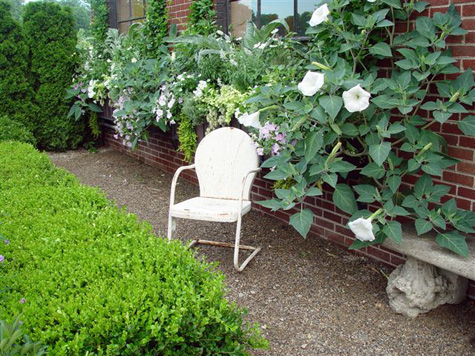 Not so fancy, but plenty charming are vintage American garden chairs. I like everything about them-the shapes, the old paint, and the rust and how they rock. They are easy to find a spot for, and they are easy to move to another spot, should you have a mind to.
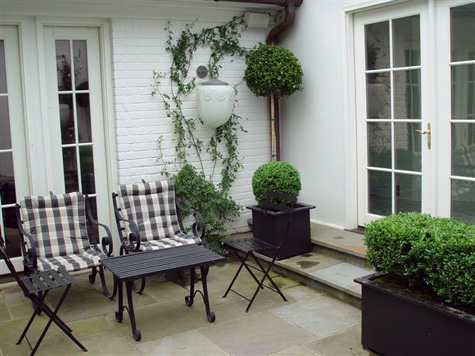 This very fine iron furniture comes from a small company in England. The black and white checked fabric on the cushions is very smart looking, and elegant.
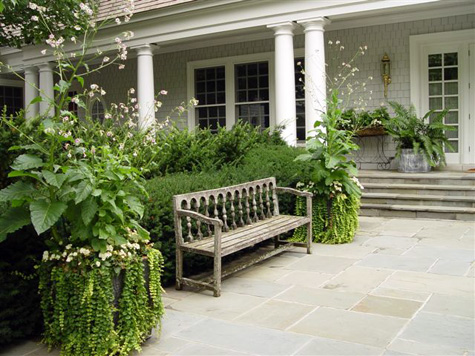 This very old English wood bench has great style; the spindle back and the curved arms are very handsome. The yews and pots do a great job of highlighting its form. It is a friendly size .
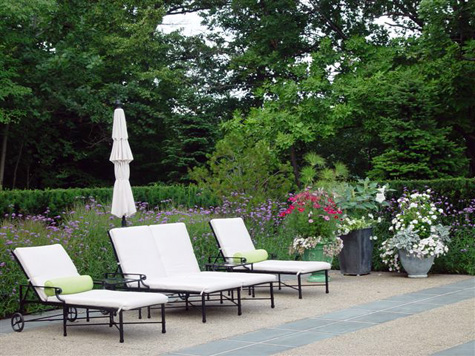 The chaise lounge is a bed for the garden. Its scale and size makes it stand out in the landscape; the grouping suggests the company of friends and family. White fabric in the garden looks as fresh and crisp as white flowers. I cannot imagine using a chaise, but I like looking at them.
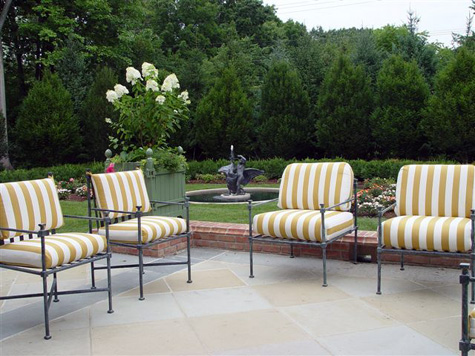 Stripes seem especially appropriate for a garden too. Reminiscent of vintage awnings, they are inviting and pleasing to the eye. These chairs are great for an extended visit in a garden.
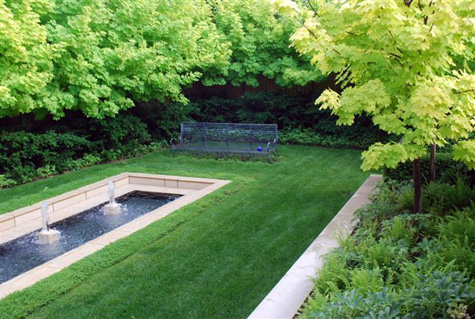
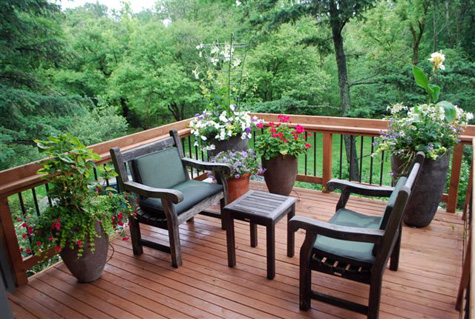 A place to sit in a garden is an essential element of landscape design. Plan where you will sit in your landscape with as much care as you plan what you will see when you sit there.
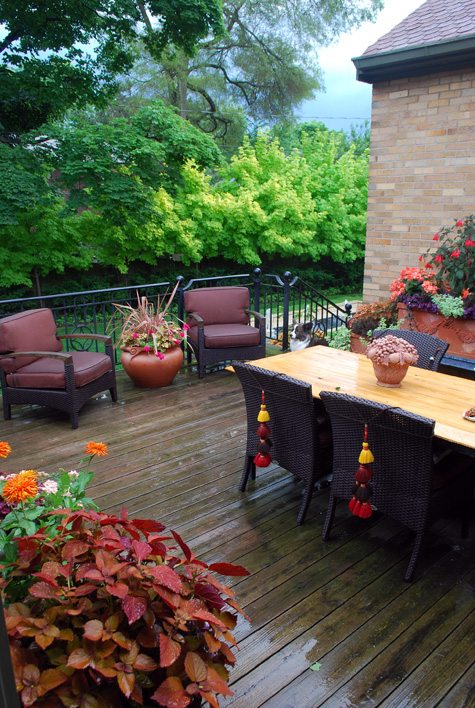
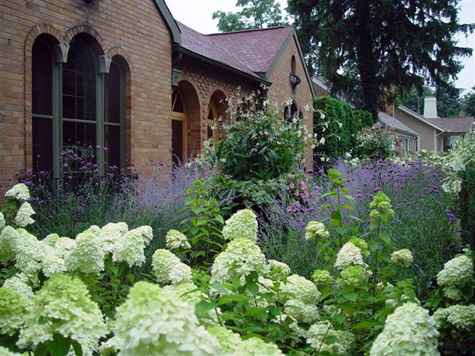 Hydrangea Paniculata “Limelight” is a favorite shrub of mine,, as well it should be. It is extremely hardy (some say zone 3), and not particularly fussy about soil, or water. It is a robust, vigorous and willing grower. Add to this a long and spectacular season of bloom-this plant earns its keep.
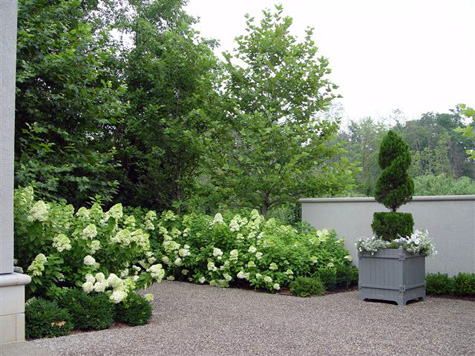 The lime-white flowers emerge late in July for me. They look crisp and fresh at a time of the gardening year that in fact can be blazing hot and miserable. They have great dignity and presence in a formal garden, or they make a graceful backdrop for more delicate and late blooming perennials such as Russian Sage, bee balms, and hyssop, in more informal gardens.
 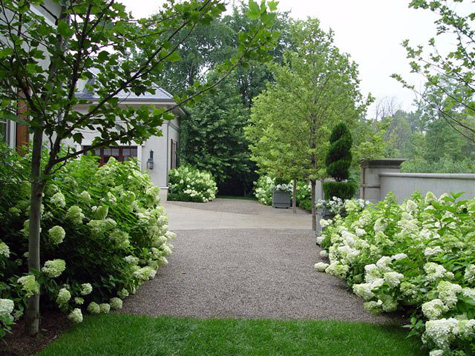 When first coming into bloom, the plant and flowers are many shades of green, and white. Few shrubs provide so much interest. The flowers mature white, and bloom for an incredibly long time. Towards the end of their blooming period, they go pink-green, and rose pink; this stage is beautiful too. They make great cut flowers, and they dry beautifully. They clearly are at home in this formal landscape spilling onto the gravel as they are in a cottage style garden.
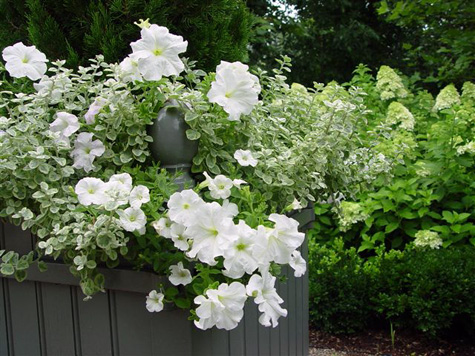 Their habit makes them easy to use in a formal garden, as well as an informal one. They stand up on their own; this habit of growth I really appreciate, as I am not fond of staking plants. Their habit has a lot to do with their genes; hydrangea paniculata has a naturally upright habit. I prune to top branches in early spring shorter that the side branches-ala a shag haircut. This permits light to reach the lower branches, and promotes blooms from top to bottom. Sometimes I prune very hard, if I am interested in keeping them smaller than their natural inclination to grow 6′-8′ tall. I have on occasion pruned them as short as 14″ off the ground, without any loss of bloom. I have read about a new paniculata variety called “White Diamonds”, which is reputed to only grow to 4 feet tall, but I have not seen it.
 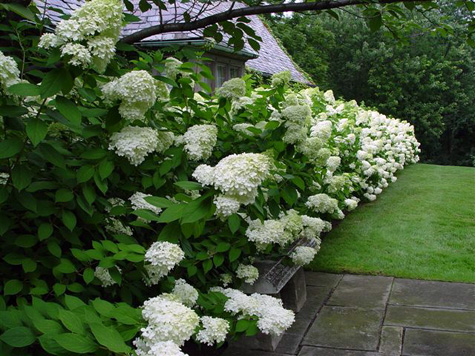 They make a magnificent hedge when left to their own devices. This client was interested in screening close to the house; this is a very showy solution.
 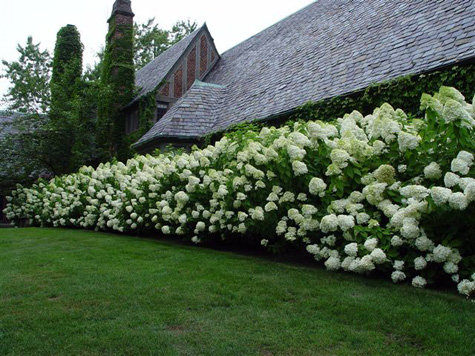 They are willing bloomers with this eastern exposure, but I have planted them in full sun with just as good results. I do try to plant them in soil with a good percentage of organic material, as they do like even moisture. I do not always site plants perfectly-that’s a normal thing, to have to move things around until they have exactly what they want. But I have seen very few limelights performing poorly, even though I see them in lots of different situations.
 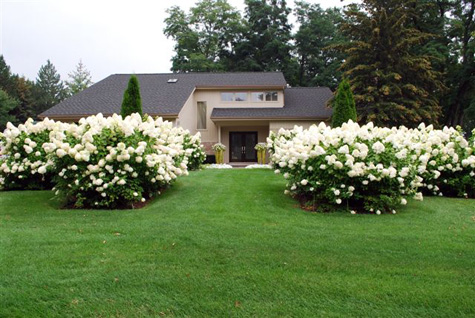 Luscious, aren’t they??