Winter Green

landscape-in-winter.jpg

The color green has not nearly so much significance to a gardener as living green does.  I have never taken the time to record how many different plants I have on my property, but suffice it to say that there are lots.  Each of the plants have a certain shade of green associated with them.  Taken as a whole, a garden is a green tapestry.  Only a fraction of the possible colors of green represent in my garden today.  A good portion of the garden is still dormant.  My roses, shrubs and trees are bare.  The perennials are buried under snow whose crust has frozen solid.  My isotoma fluvialitis is entirely brown.  What’s to look at?  The living green in winter is a certain kind of green we call evergreen.  Given that our winter is still holding on in March, this is the perfect time to be thinking about evergreens, and how they endow the winter landscape.

evergreens-in-March.jpg

That group of plants that manage to stay green over our winter-not such a big range, but impressive in their delivery.  The ability for spruce,  douglas fir, white pine, boxwood, and rhododendron to stay green over the winter is an extraordinary story of adaptation.  Evergreen trees and shrubs do not shed their needles and leaves at the end of the season.  They shed interior needles on species specific schedules during the growing season-but definitely not during the winter.  Evergreen trees has evolved such that the individual needles have very little in the way of surface area.  Those needles are vastly better adapted to resist the drying from winter winds, and survive without photosynthesis going on, than a big fat juicy leaf of a hydrangea.  Hydrangeas, and many other deciduous plants, shed that juicy liability in the fall.  The needled and broadleaved evergreens-they tough it out.
old-spruce.jpg

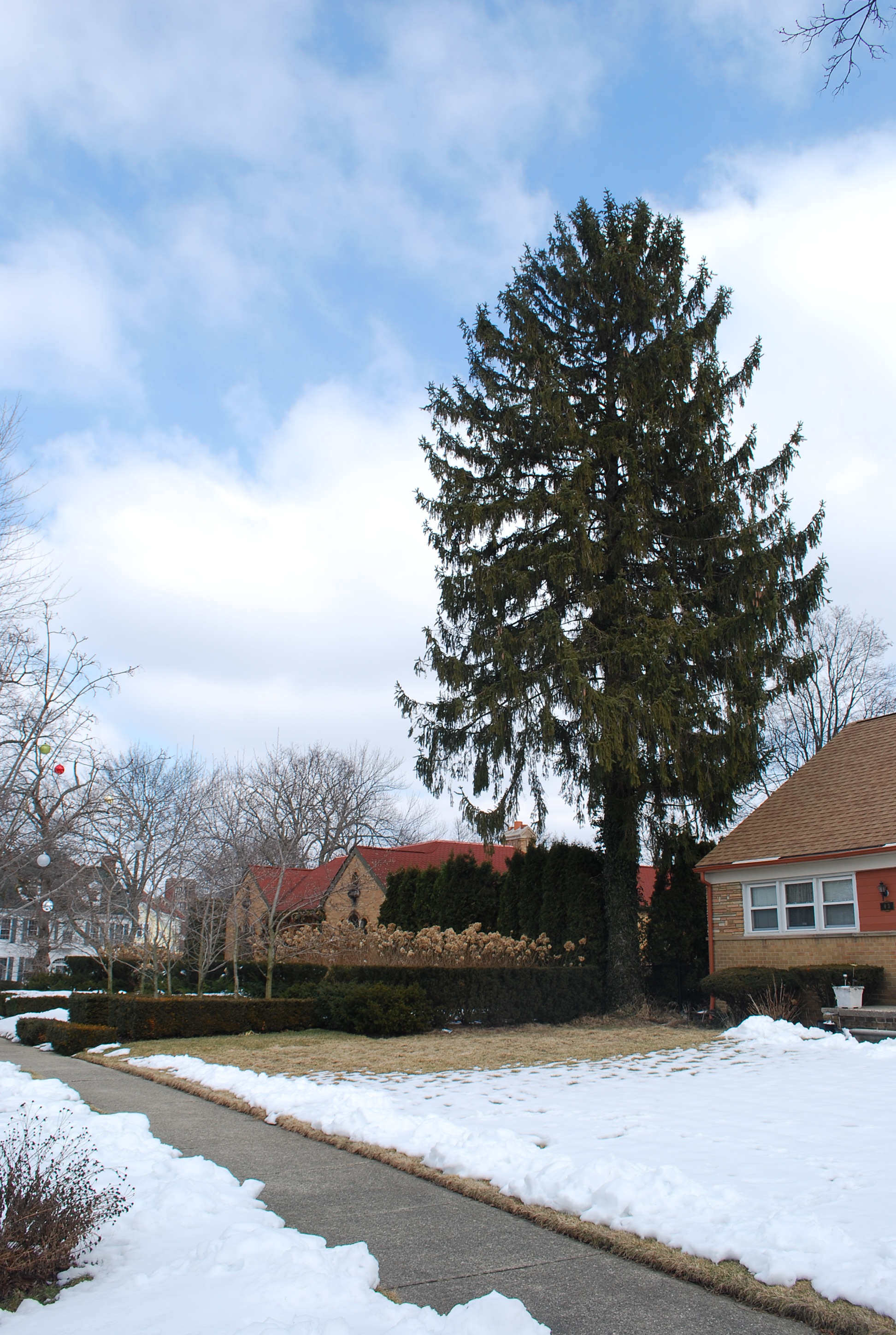
My urban property has but one large spruce.  I am sure it has been here at least 40 years.  Maybe 60 years.  This tree is green, winter and summer.  The winter green is moody and dark, unlike the summer emerald green.  I am never more appreciative of that green than I am right now.  I barely notice this tree in the summer.  In the winter, I see it coming from blocks away.  The evergreens that define my winter garden-I could not be more appreciative.
yews-in-winter.jpg

Yews are needle leaved evergreen shrubs.  Their dense and dark forest green needles provide such beautiful structure to a garden.   In the spring, the new growth is lime green.  In the depths of the winter, the color is almost black.  Watching the change in color given the season is to understand how plants deal with stress.  A yew floating in much too much water-the needles will be yellow.  A yew that dies makes a spectacular issue of that demise.  Orange needled yews-I am sure you have seen them.  Yews in the thick of enduring the winter-the needles are almost black.  The color green teaches, should you be watching.

yews-in-winter.jpg

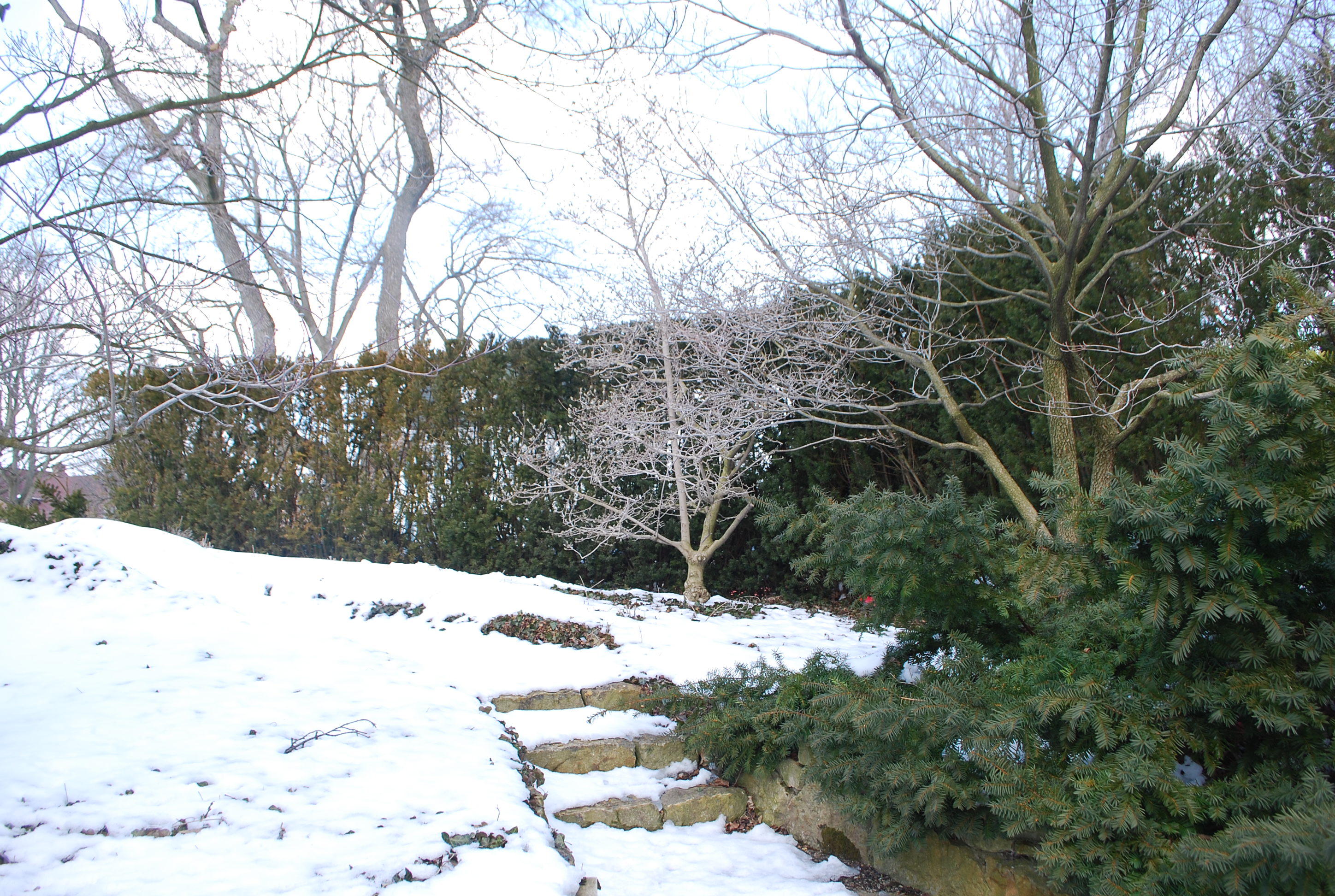
Evergreens provide a stalwart backdrop in the winter for the snow covered branches, and the wispy tufts and remains of the perennial garden.  This black green backdrop of hedged yews brings a magnolia into clear focus.  Were this view open to the street, the delicate tracery of the branches and the overall shape of this tree would be lost.  Specimen evergreens need ample space around them-appreciative space.  Hedging evergreens whose repetition defines spaces help to create winter interest.
rhododendrons-in-snow.jpg

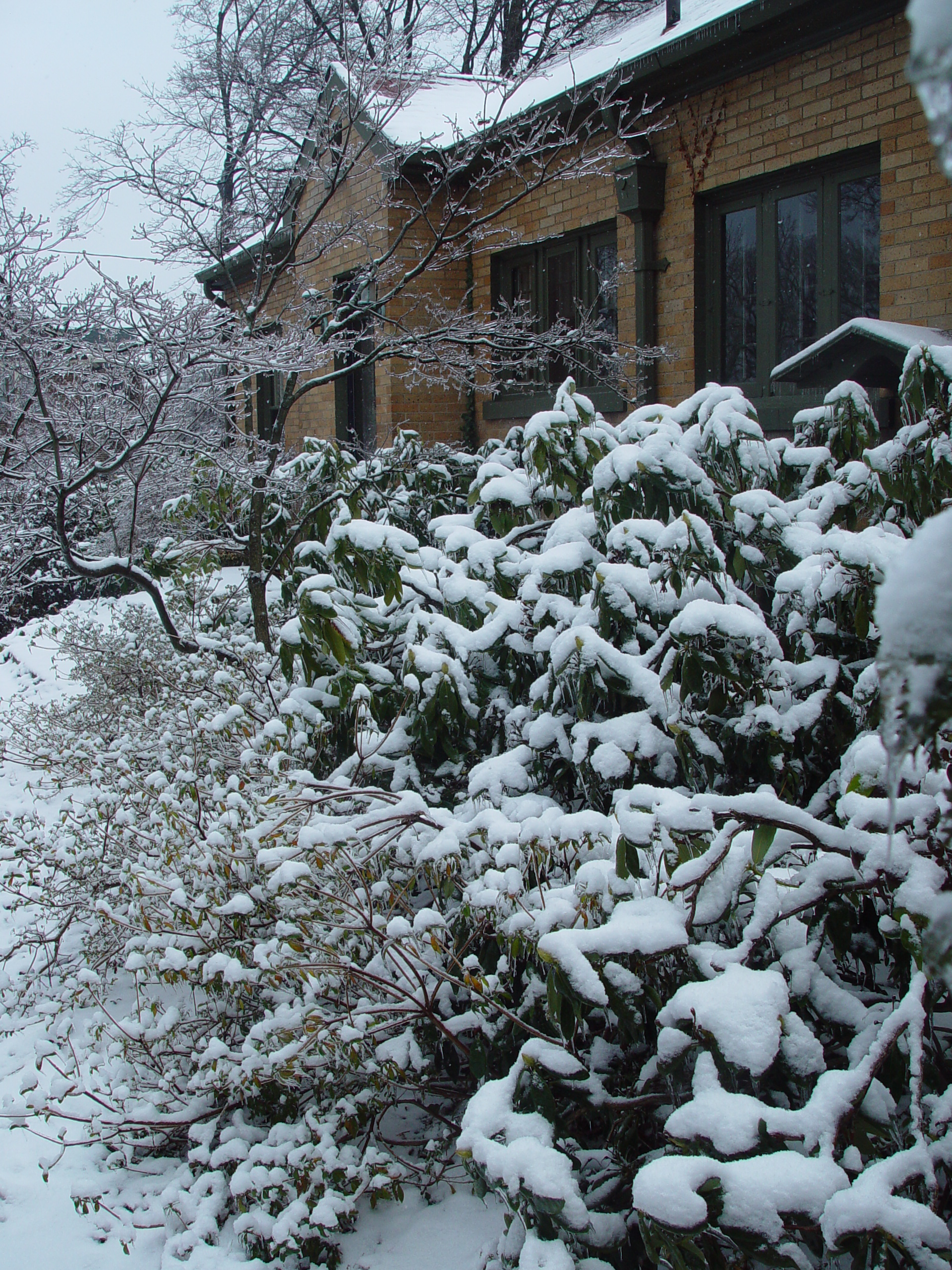
Broad leaved evergreens are a glutton for punishment.  Rhododendrons feature broad leaves with big surfaces that suffer much more damage than needled evergreens.  Those big leaves react to winter weather graphically.  Those big leaves are sitting ducks for serious cold and vicious wind.  The rhododendron outside my home office window tell me whether the day is cold.  In cold weather, rhododendron leaves curl and drop down.  In very cold weather, the droopy outline of the leaf is rolled in on itself- much like a pencil.  In much the same way as I curl up on a cold day, their curling and dropping mechanism helps protect them from extreme cold.  In the picture above, the leaves are hanging, dangling, from the stems.  This is a winter profile, generated by adaptation.  Once the leaves fan out, I know the temperature has moderated.  Rhododendrons prosper far better in warmer zones than mine, but my few plants grace my garden with green all winter.
boxwood-topiaries.jpg

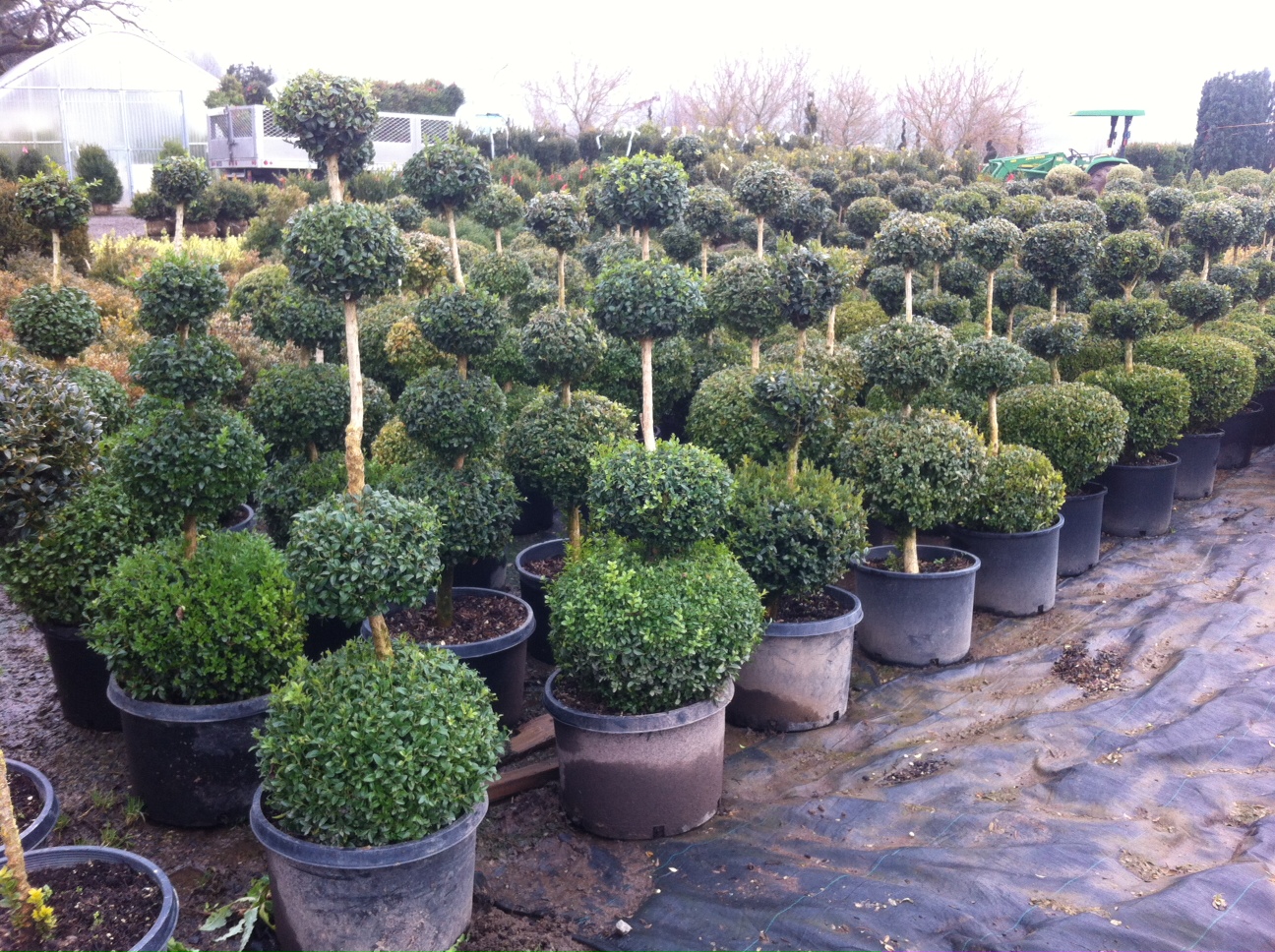
Boxwood-no other evergreen shrub describes a landscape better.  Most of our suppliers winter their boxwood in tunnel houses.  How so?  A boxwood out of the ground, in a pot, is an evergreen needing protection from the winter.  Boxwood in containers require special care, as their roots winter above ground.  Lots of water prior to the freeze is a good idea.  A wilt pruf spray- not a a bad idea.  Evergreens in pots at the front door is a very good winter look.

boxwood-sphere-in-summer.jpg

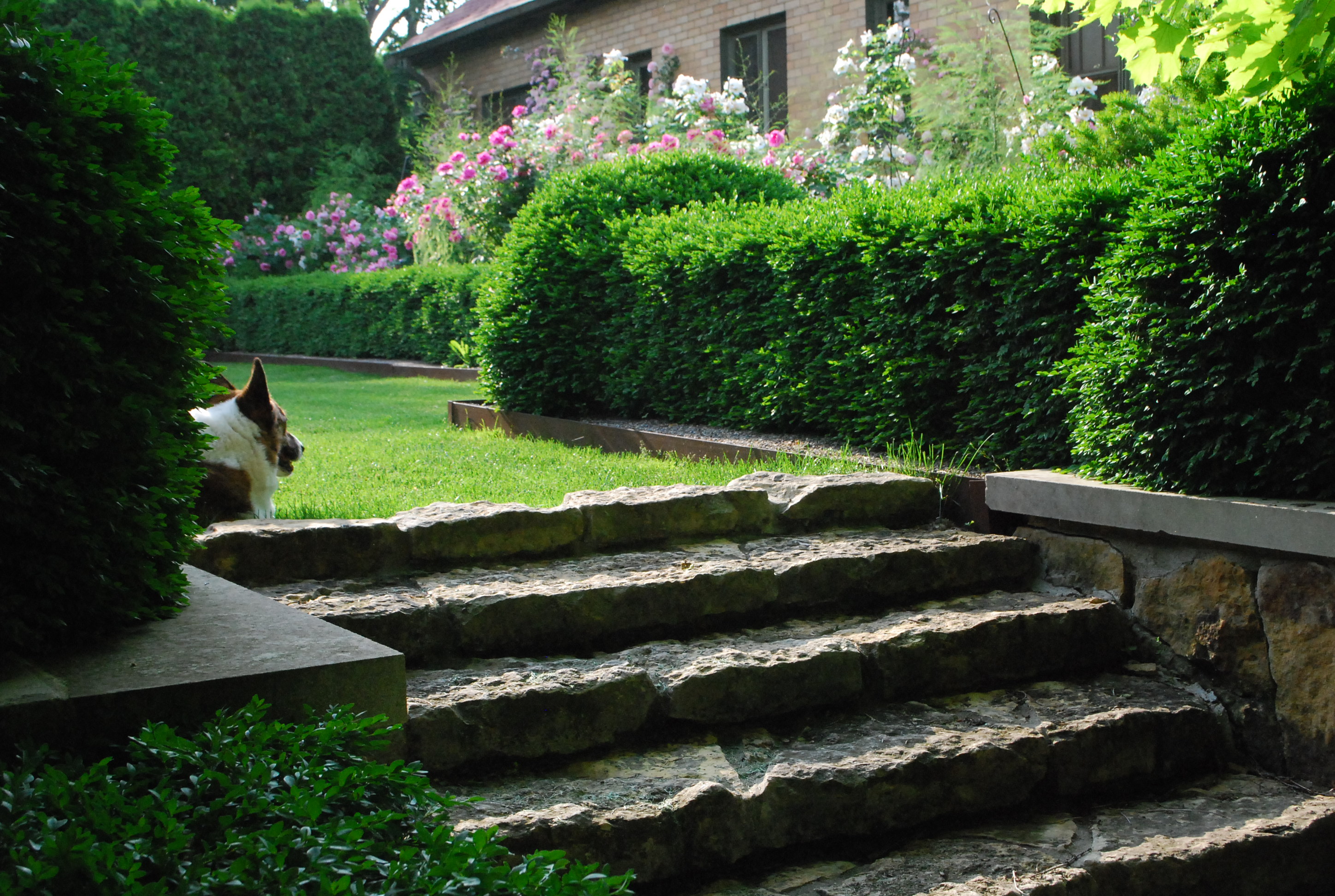
Boxwood in the ground prospers in my yard. The evergreens, both big and small, both needled and broad leaved, define a landscape both summer and winter.
winter-garden.jpg

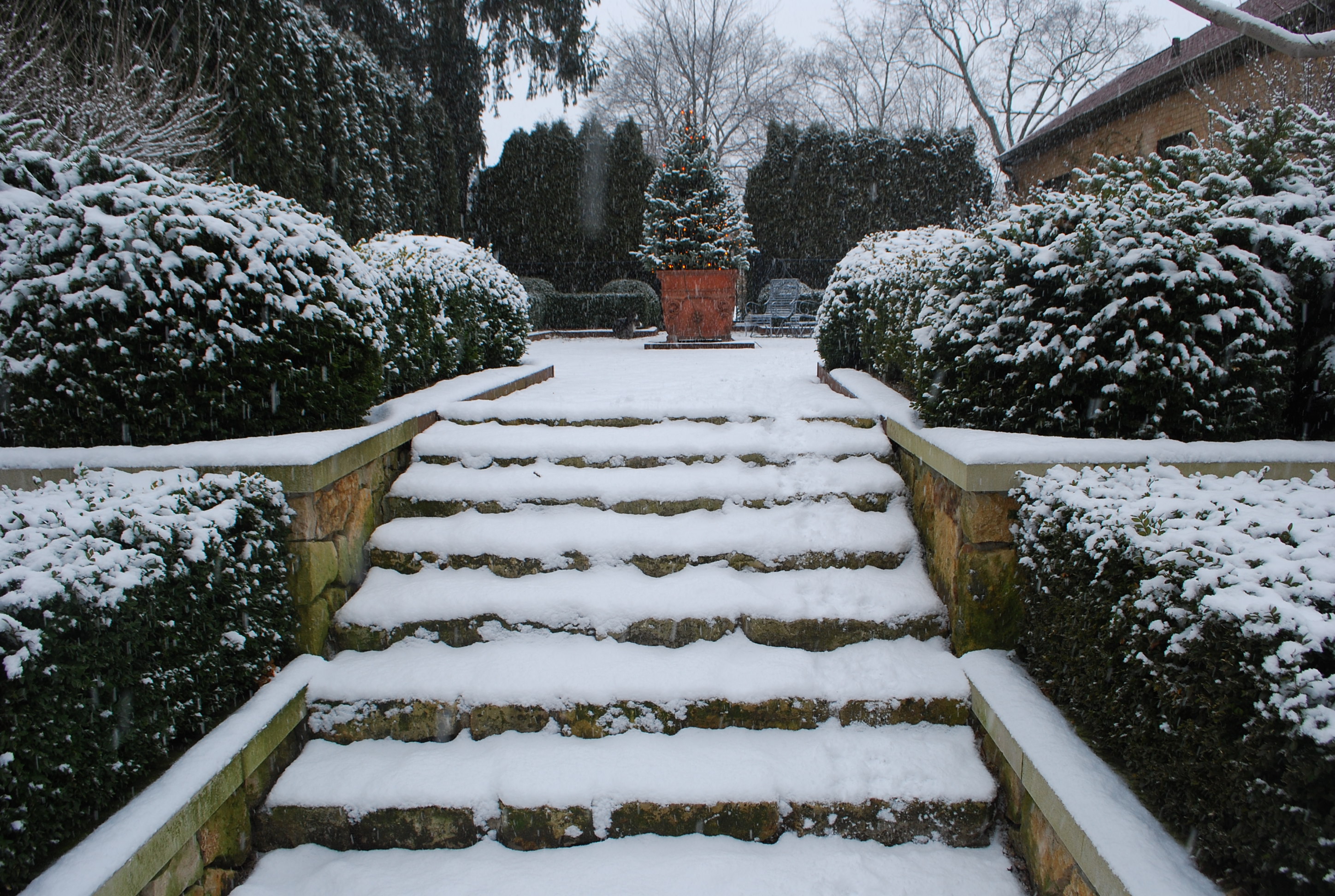
If a winter season is unavoidable, the evergreens help to make it a little easier to bear.  They organize a space when snow has all but obliterated any of the details.  Once established, evergreens are long lived, and low maintenance.
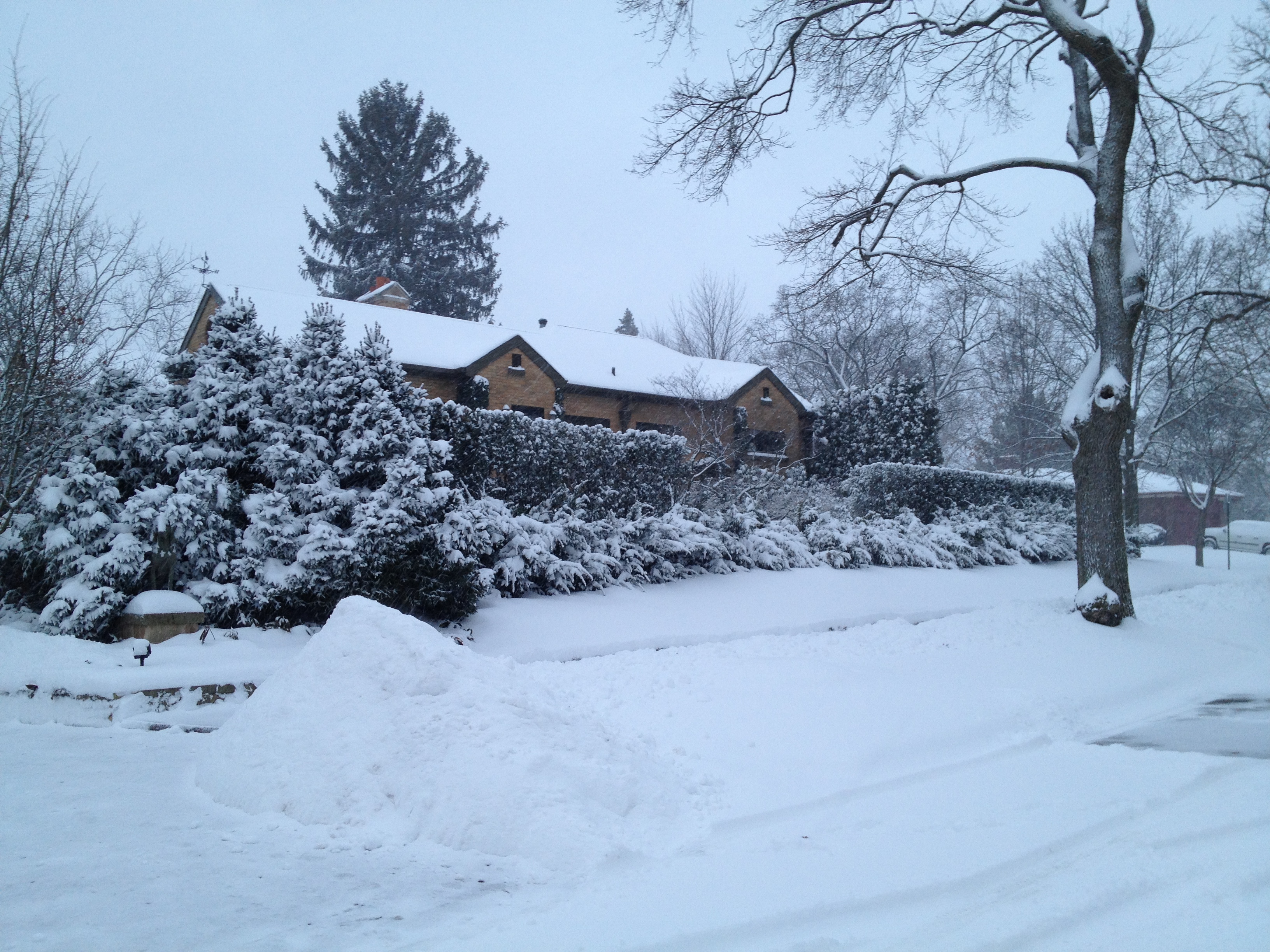
snowy-day.jpgThis day would have been ever so much more bleak, without the evergreens.
Sunday Opinion: March Madness

March madness has a meaning in popular culture that dates back to the 1940’s.  For those of you who do not follow basketball, March madness refers specifically to the NCAA (National Collegiate Athletic Association) college basketball championships.  Most of these championship games are played in March, and followed with astonishingly reverential and lively interest.  Steve, my landscape superintendent, does not look kindly on any activity which interferes with a March NCAA game.  He likes his March to himelf.  Gardeners host championships every month of the year-but at least in my zone, not in March.  March is the next to the last of the tail end of winter.  This is a polite way of saying that March 1 does not necessarily mean spring.  My need for spring is always early.  Once March arrives, winter stocism starts giving way in a big way for a longing for spring.

Am I longing for spring?  No doubt.  A high temperature with snow showers today is disheartening at best, and really aggrevating at worst.  Our last heavy wet snow, so gorgeous as it fell,  is now glued into place, and has an annoying and treacherous crust.  This state of affairs-courtesy of recent temperatures significantly below freezing.  Everwhere, the landscape is represented by ice.  Dirty ice.  Gray skies.  Snow showers.  As for a gardener’s version of March madness, I think I might be afflicted.  I don’t want to be out, nor do I want to be in.  That cooped up feeling has intensified like a storm exactly on track.  My winter coat feels like a soft walled version of jail.  I am tired of that chilly and speechless state of affairs.

Henry V Porter was a high school teacher and coach in Athens, Illinois.  In 1942, he wrote this essay in which he coined the phrase-  March Madness.  At that time, basketball was a only a statewide event. His essay, though it is obviously dated, expresses in plain terms what it means to have a sincere passion.

March Madness,  by Henry V Porter
Homo sapiens of the Hardwood Court is a hardy specie. There are millions of him. He exists through summer and fall, shows signs of animation through the winter and lives to the utmost during March when a hundred thousand pairs of rubber soled shoes slap the hardwood in a whirlwind of stops and pivots and dashes on the trail to the state basketball championships. He is a glutton for punishment. When the March madness is on him, midnight jaunts of a hundred miles on successive nights make him even more alert the next day. He will polish his pants on sixteen inches of bleacher seat through two games or three and take offense if asked to leave during the intermission between sessions. He is happy only when the floor shimmers with reflections of fast moving streaks of color, when the players swarm at each end and the air is full of leather. For the duration of the endemic he is a statistical expert who knows the record of each contender, a game strategist who spots the weak points in a given system of offense or defense, a rules technician who instructs the officials without cost or request. Every basketball canine has his day and this is the  month.

He is a doodler who, while conversing, scribbles free throw lanes with a hundred radiating alleys. In May the three symbols of the New York Fair will take on their intended meaning but in March the helicline is a ramp to the balcony, the trylon is the pyramid of hundreds of teams being narrowed down to the one at the state championship pinnacle and the perisphere has the traditional four panel basketball markings.

In everyday life he is a sane and serious individual trying to earn enough to pay his taxes. But he does a Jekyll-Hyde act when the spell is on him. He likes his coffee black and his basketball highly spiced. He despises the stall unless his team is ahead. It is a major crime for the official to call a foul on the dribbler unless the opponent was dribbling. His moods are as changeable as the March wind. He flies into a frenzy at some trivial happening on the court and before his vocal expression of disapproval is half completed he howls in delight at the humorous twist of a comment from a bleacher wit. He is part of the mass mind and is subject to its whims. He berates the center for attempting a long shot and lauds him when it goes in the basket. He is consistent only in his inconsistencies.

The thud of the ball on the floor, the slap of hands on leather, the swish of the net are music in his ears. He is a connoisseur in matters pertaining to team coordination and artistry in action. The shifting zone, the screen and the spot pass are an open book to him. He speaks the language.

He is biased, noisy, fidgety, boastful and unreasonable but we love him for his imperfections. His lack of inhibitions adds a spontaneity that colors the tournaments. Without darkness there would be no light. A little March madness may complement and contribute to sanity and help keep society on an even keel.
The writer’s temperature is rising. The thing is catching. It’s got me! Gimme that playing schedule!

I did edit Henry’s essay, to the tune of two words. Does Henry’s essay not equally describe a passionate gardener? March Madness-I am sure I have contracted it.

Spring Season

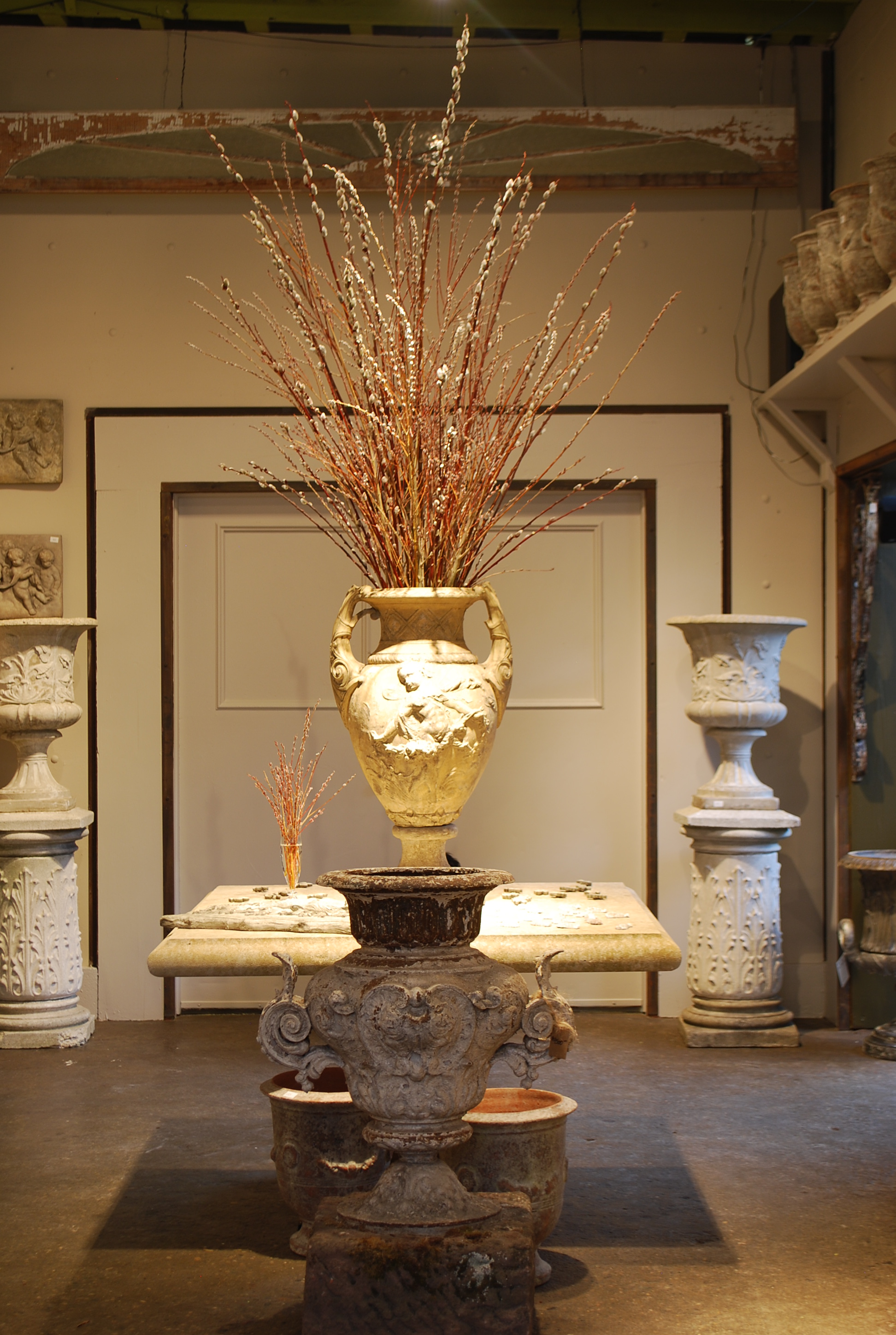
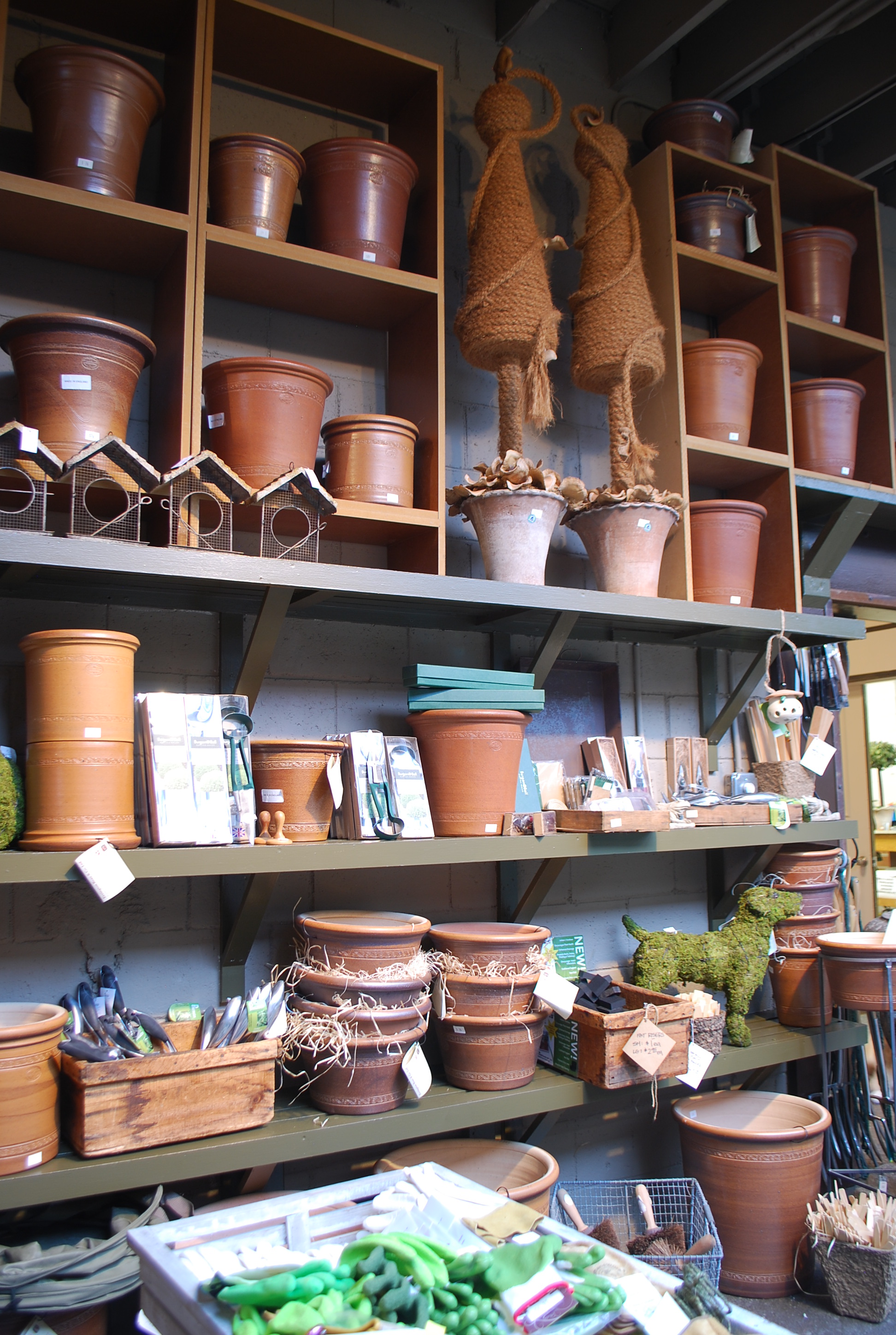
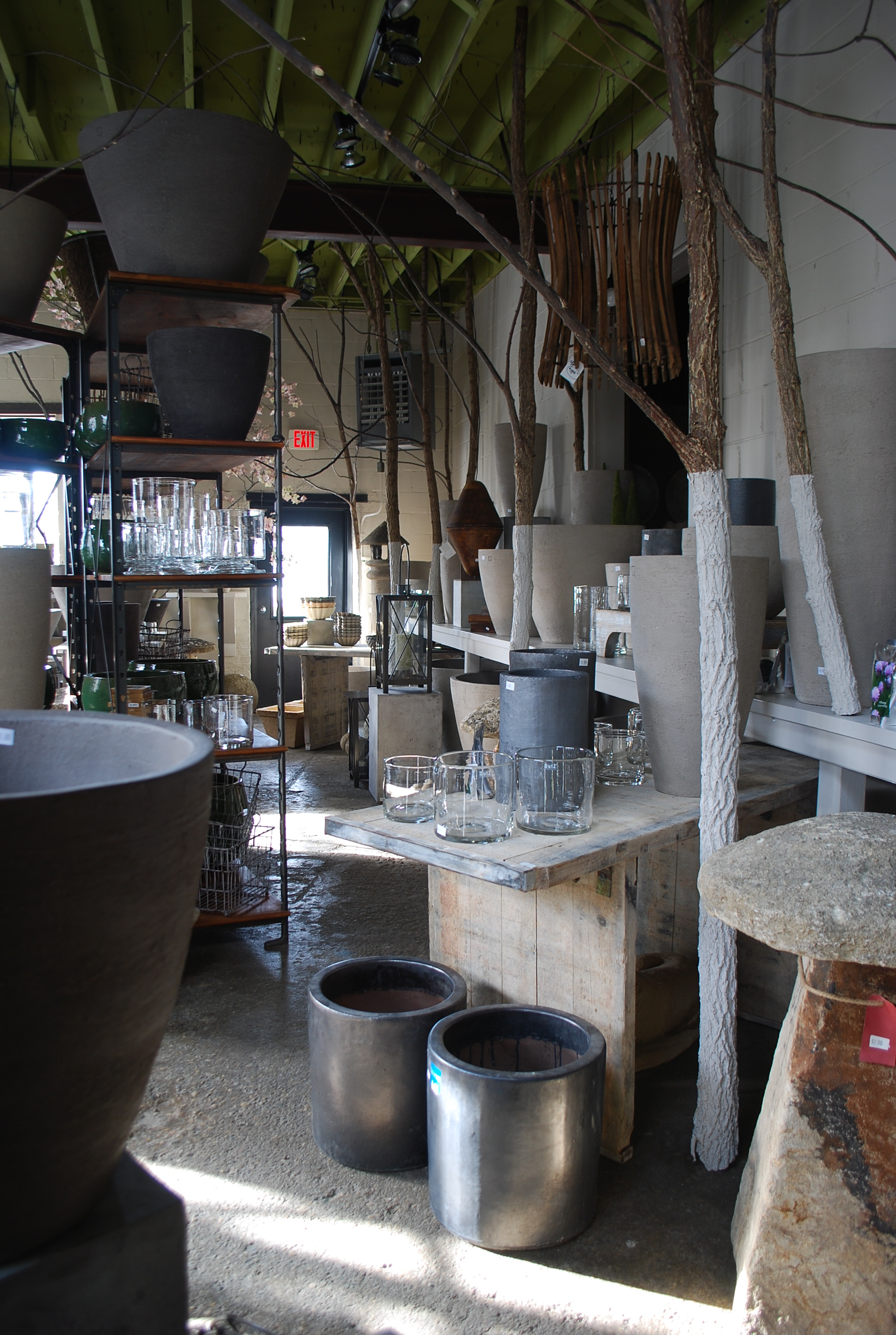
hellebore-blooming.jpgMy spring gardening season starts the same day every year.  The shop closes except by chance or appointment January 15 of every year.  The by chance or appointment part is code for “we do not keep the heat or lights on much, and we are in the inventory, repainting, cleaning and unpacking things for spring”.  In other words, we are not looking our best.  Most of us are here for those 6 weeks.  That’s how long it takes to take everything apart, clean, repaint, and reinvent the store for the spring to come.  We have gotten 2 containers in from Europe.  A third should be on the water next week.  But we formally reopen every March 1-ready or not.  The gates are open.  The hellebores are here.  And a good portion of what we will have to offer for spring is here.

Detroit-Garden-Works.jpg

A third container is still in Paris-stalled-awaiting a delivery from a Dutch manufacturer.  This happens.  Though Rob’s trip to Europe was months ago, some things he orders must be made.  Most of the companies are small.  This means but a few people hand produce all of the work.  Sometimes we have to wait.  Their concern is to produce a great product, not worry about the date we have decided on in advance for the beginning of spring.

spring-2013.jpg

The work of redoing 10,000 square feet of space is just that- work. My landscape crews do all of the painting, and the heavy moving.  The Detroit Garden Works regular staff does the cleaning, the inventory, and the checking in of new shipments.  This time of year, something new arrives every day from US suppliers. Rob and I have to figure out what goes where-with the big responsibility to Rob.  He is the only person who knows exactly what is coming.

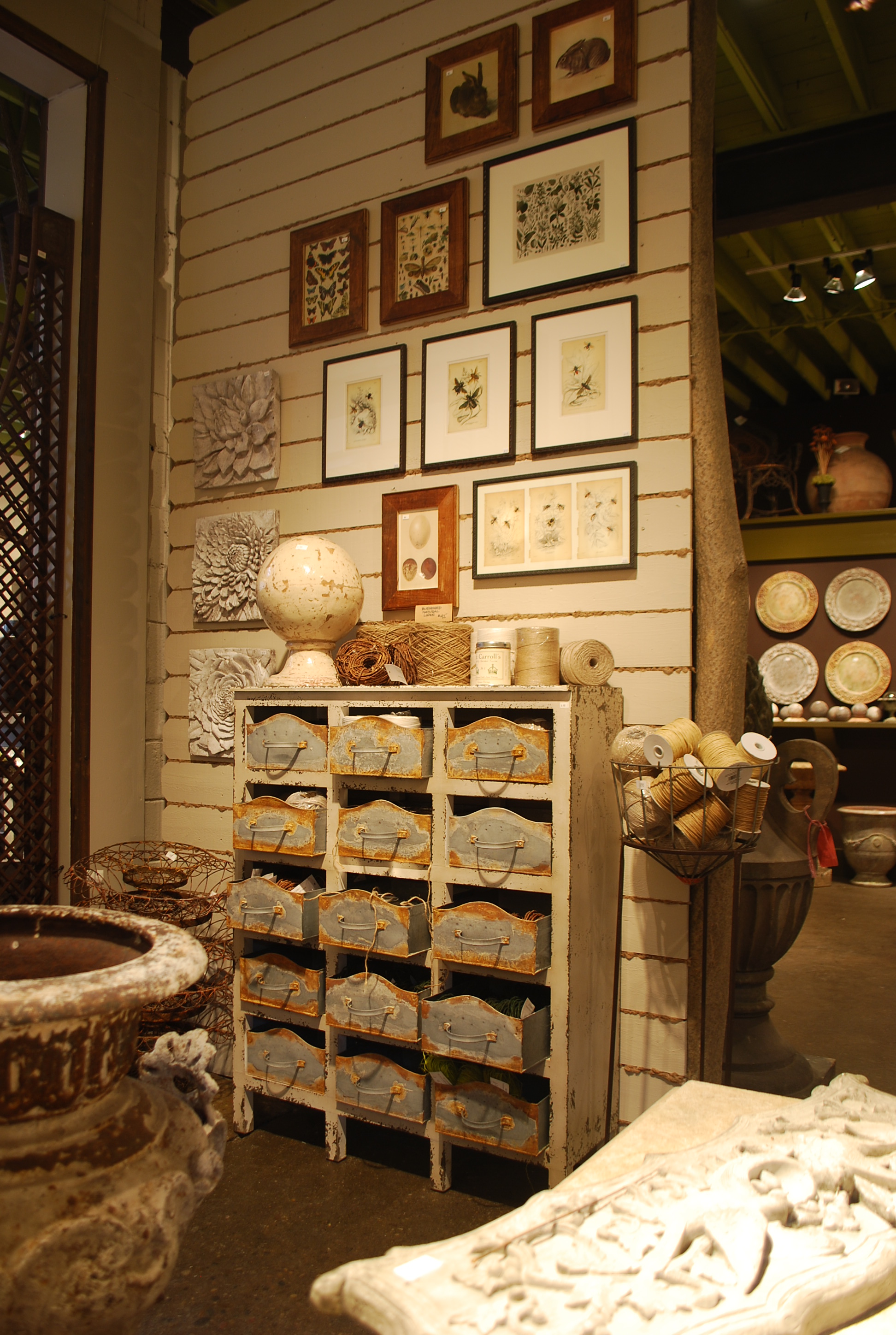
reproduction-French-cabinet.jpg

Monica manages the entire big fluid situation.  She has an uncanny ability to make sure that the day to day stays current and on track.  She also has no problem showing up in the garage to unpack when necessary-just like the rest of us.  I have no idea how other companies switch over from one season to the next-overnight.  We take everything down to the bare walls, and start over.

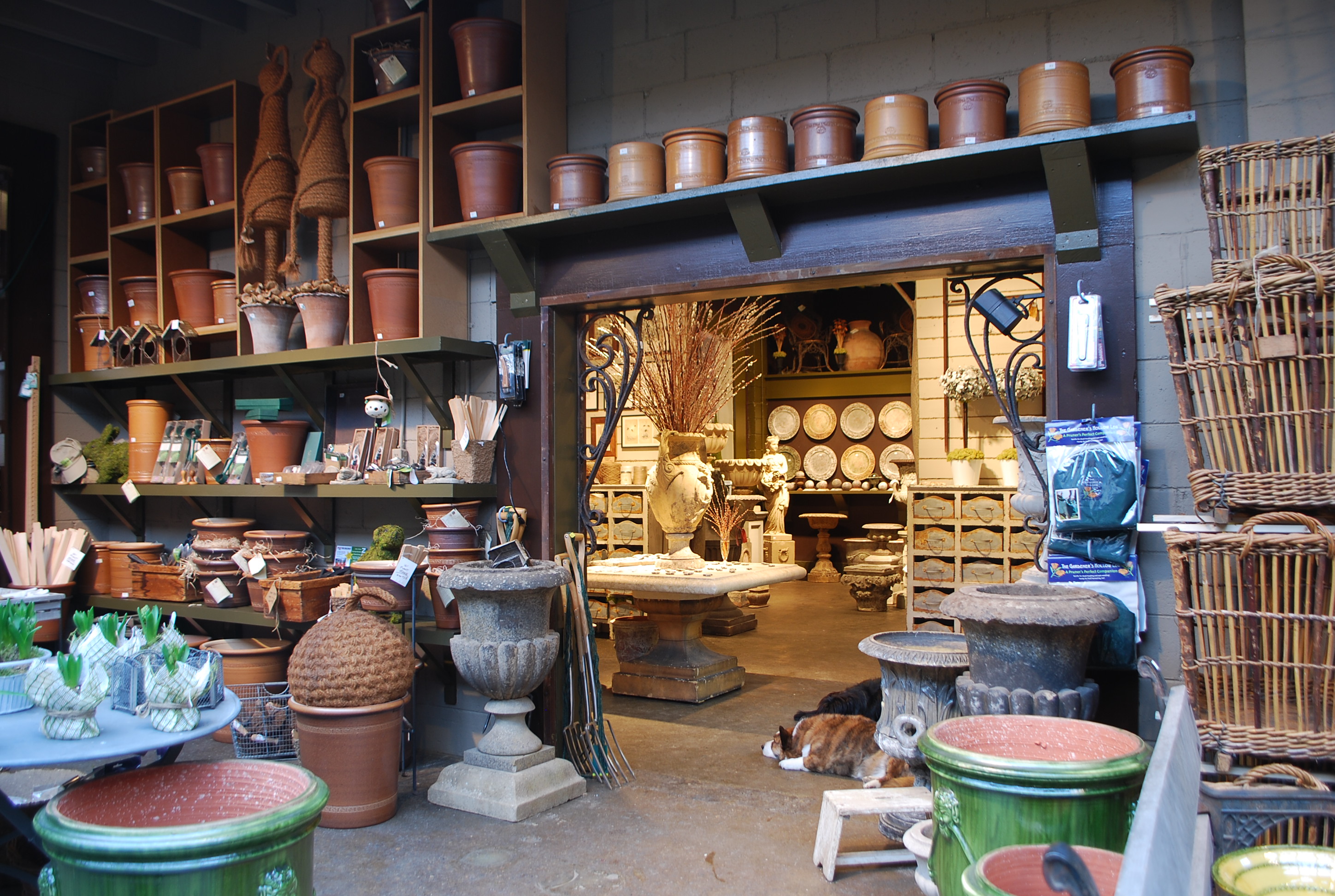
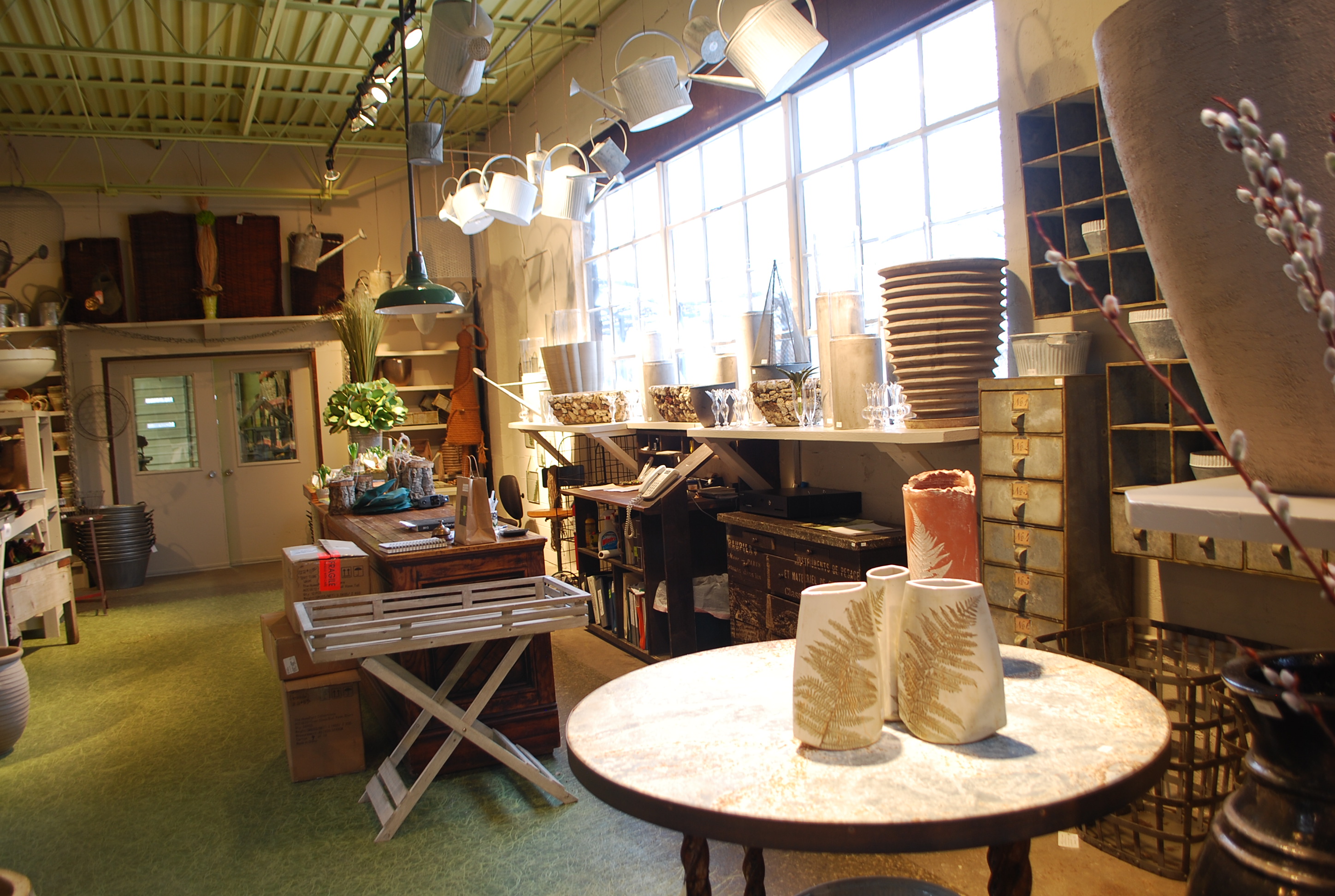
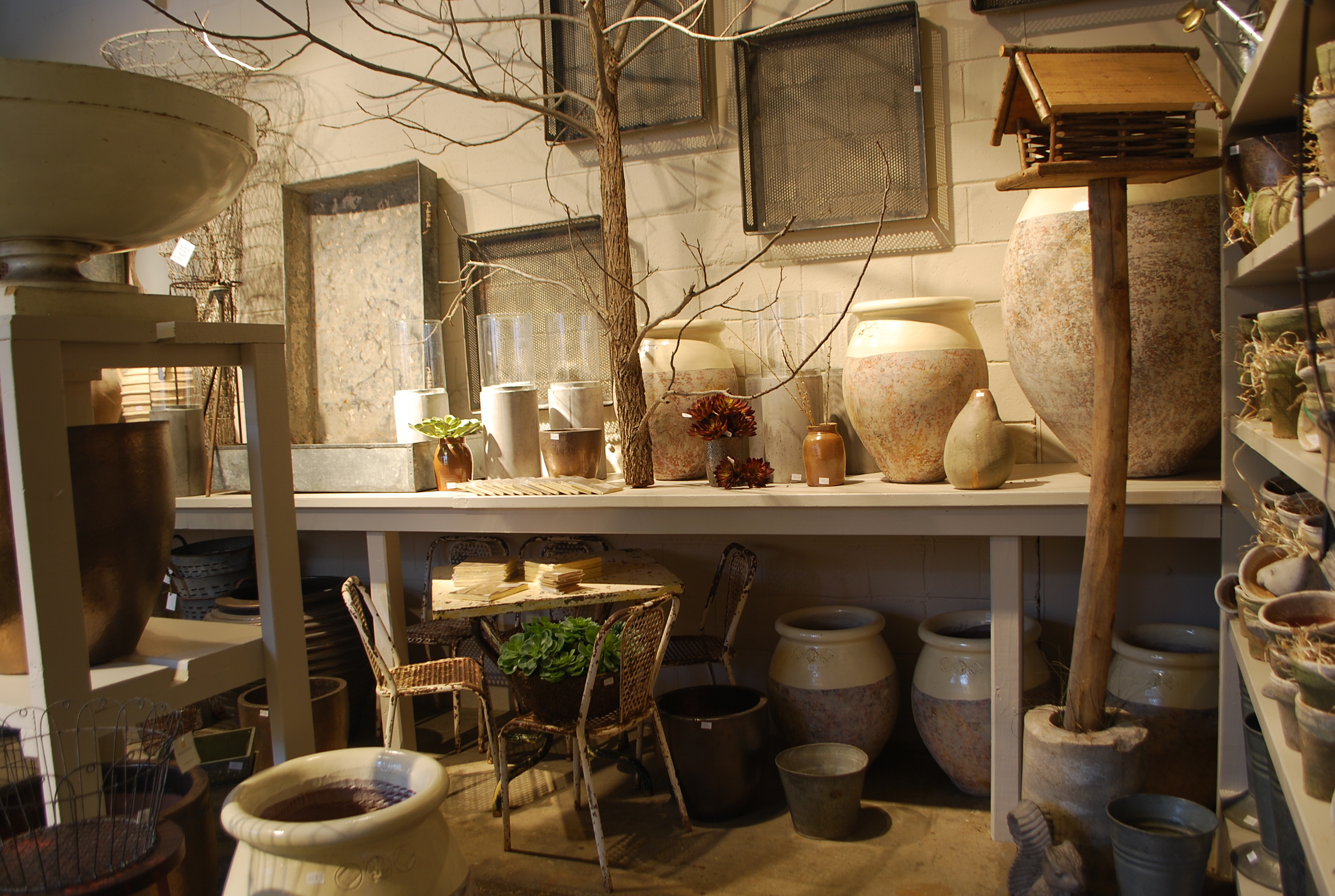
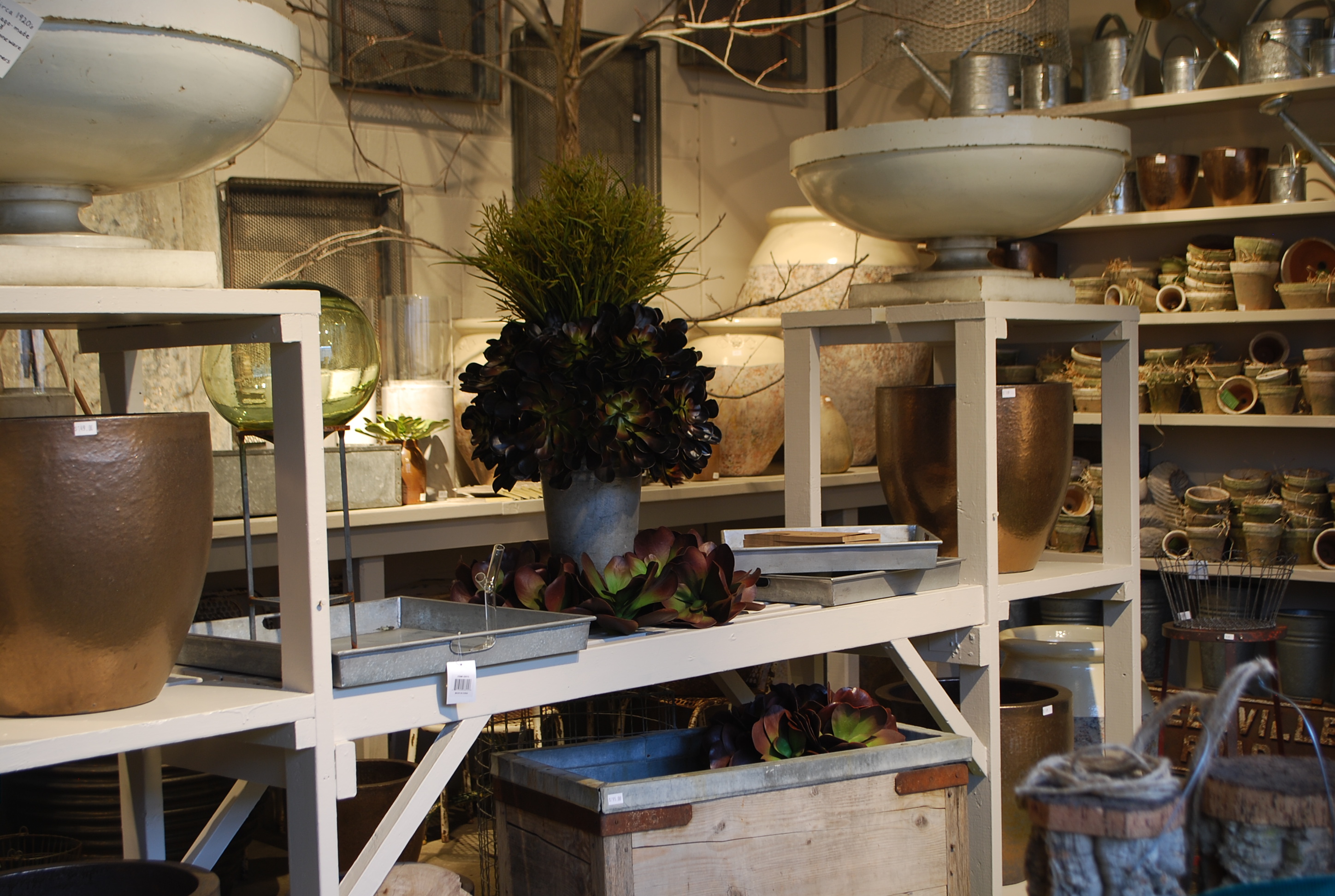
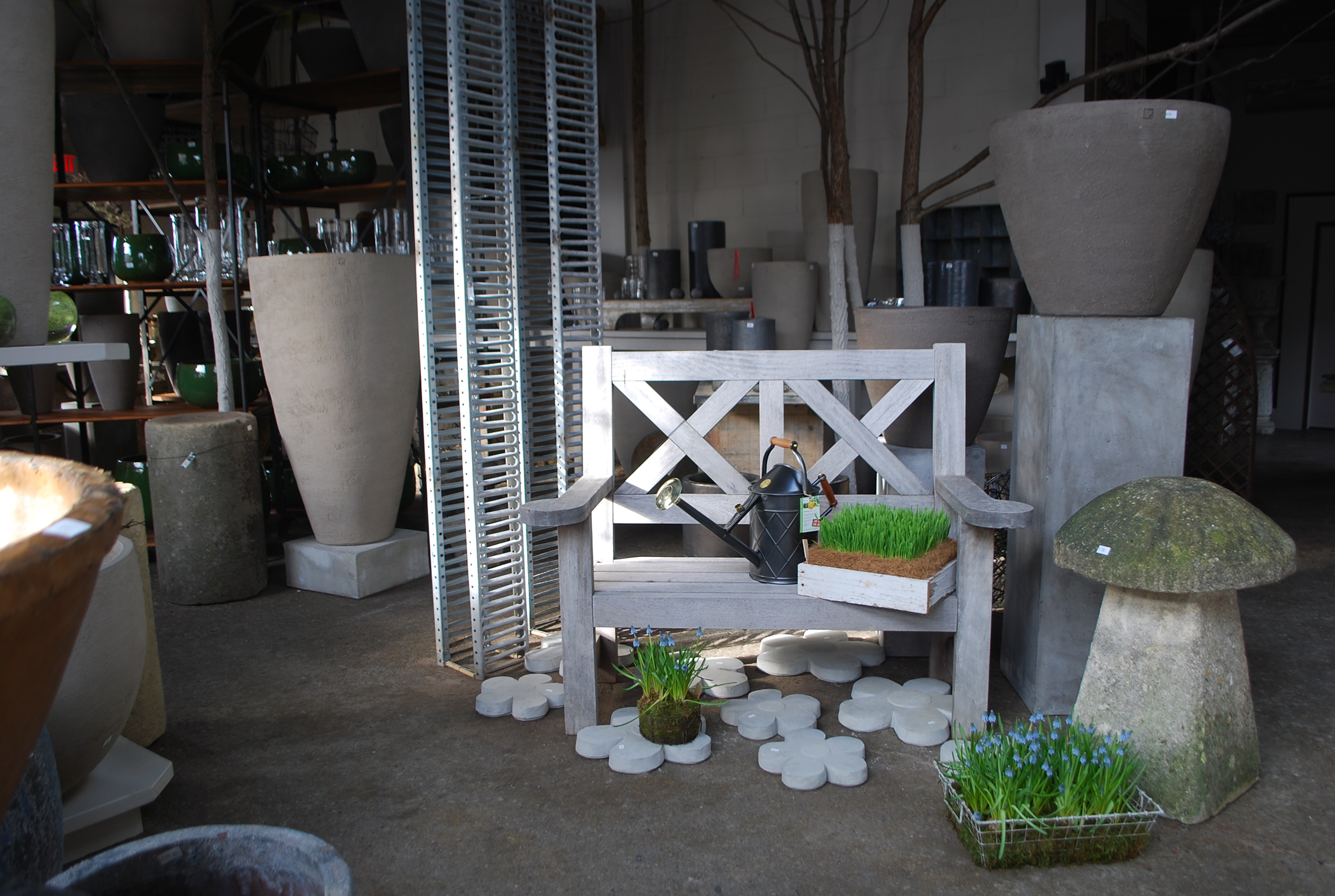
shop-display.jpgDreaming up what will go where, and with what-that is somewhat about skill.  But it has its roots in the process of making a creative gesture.  An overall look that flows.  Does this color look good with that one?  What flavors mix happily?  Where shall the tools go?  What color are we thinking this room needs to be painted?  Have we displayed this piece such that people understand why we chose it?

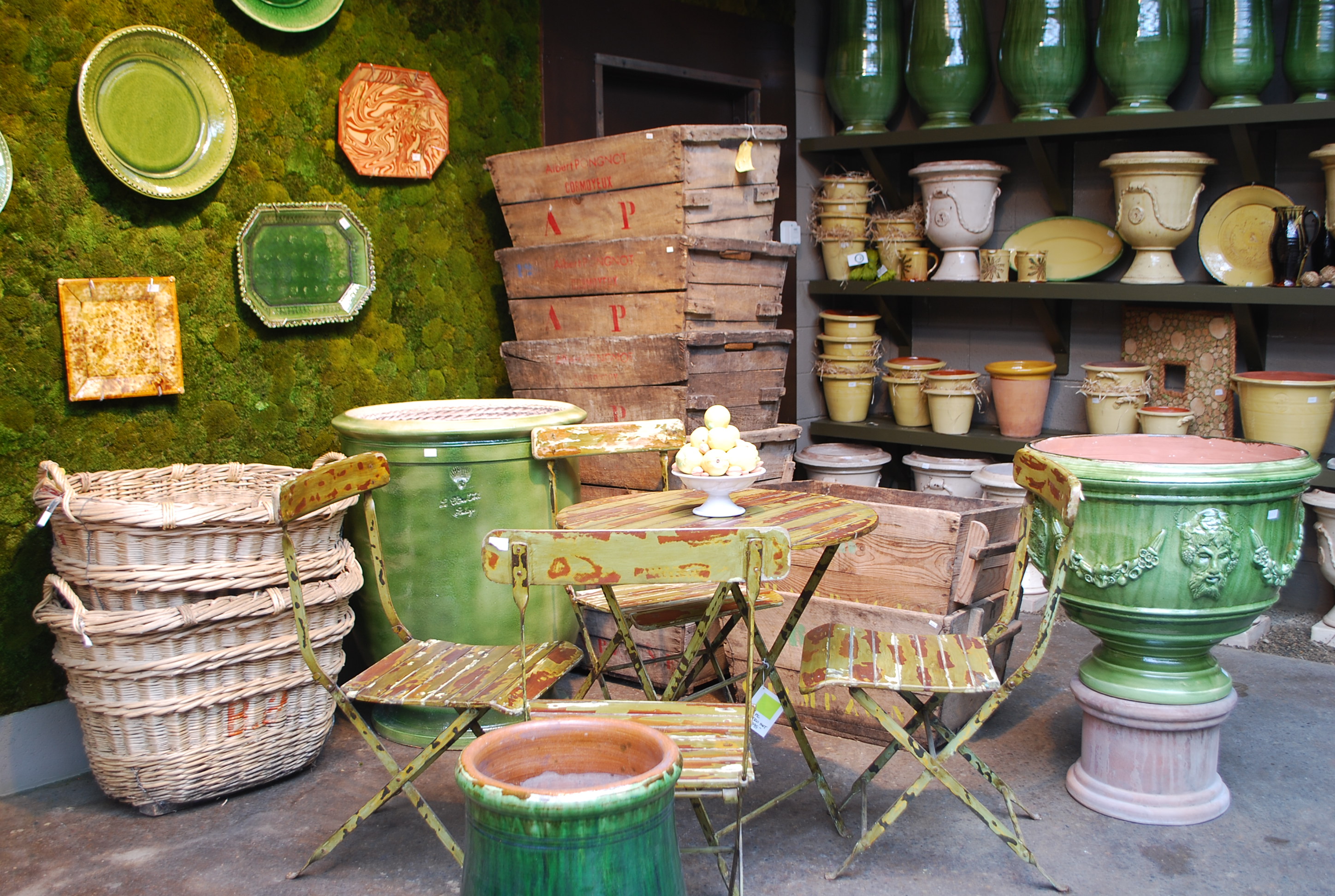
French-glazed-terra-cotta.jpgIs there a mix of textures, mass, color and shape that is appealing, and lively? Or somber and serious?  Or sassy.  Did we overthink this?  Did we not consider that?   How we group things in the shop is a visual discussion about the presentation of how we view good design.  An interest in really good design hovers over everything we do.  There are moments when my landscape crew makes a suggestion about a certain arrangement.  Happy to hear it-as if they take the trouble to speak up, I know they have thought it through.  If a vignette gets changed around a number of times, they are entirely good natured about it.

English-salt-glazed-pots.jpgA sincere interest in anything means that somewhere, there is a fire burning.  Sometimes the flames extinguish, and their is only the glow of an idea.  Sometimes there are lots of flames, and things move quickly.  I really enjoy this time of year, as we have set aside the time to let our ideas about the new season cook.

front-desk.jpg

A lot of hands are involved.  It takes Rob one entire long evening to redo all of the lighting.  The high ceilings are great for giving a sense of the sky, rather than an interior ceiling.  Judging the size of an object intended to go outdoors can be difficult in an indoor space.  Steve takes charge of arranging and hanging everything that must be hung on a wall.  He knows how to do the math, and he has a good landscape architect’s sense of design.  His graduate degree in landscape architecure is from North Carolina State University-enough said.

garden-shop.jpg
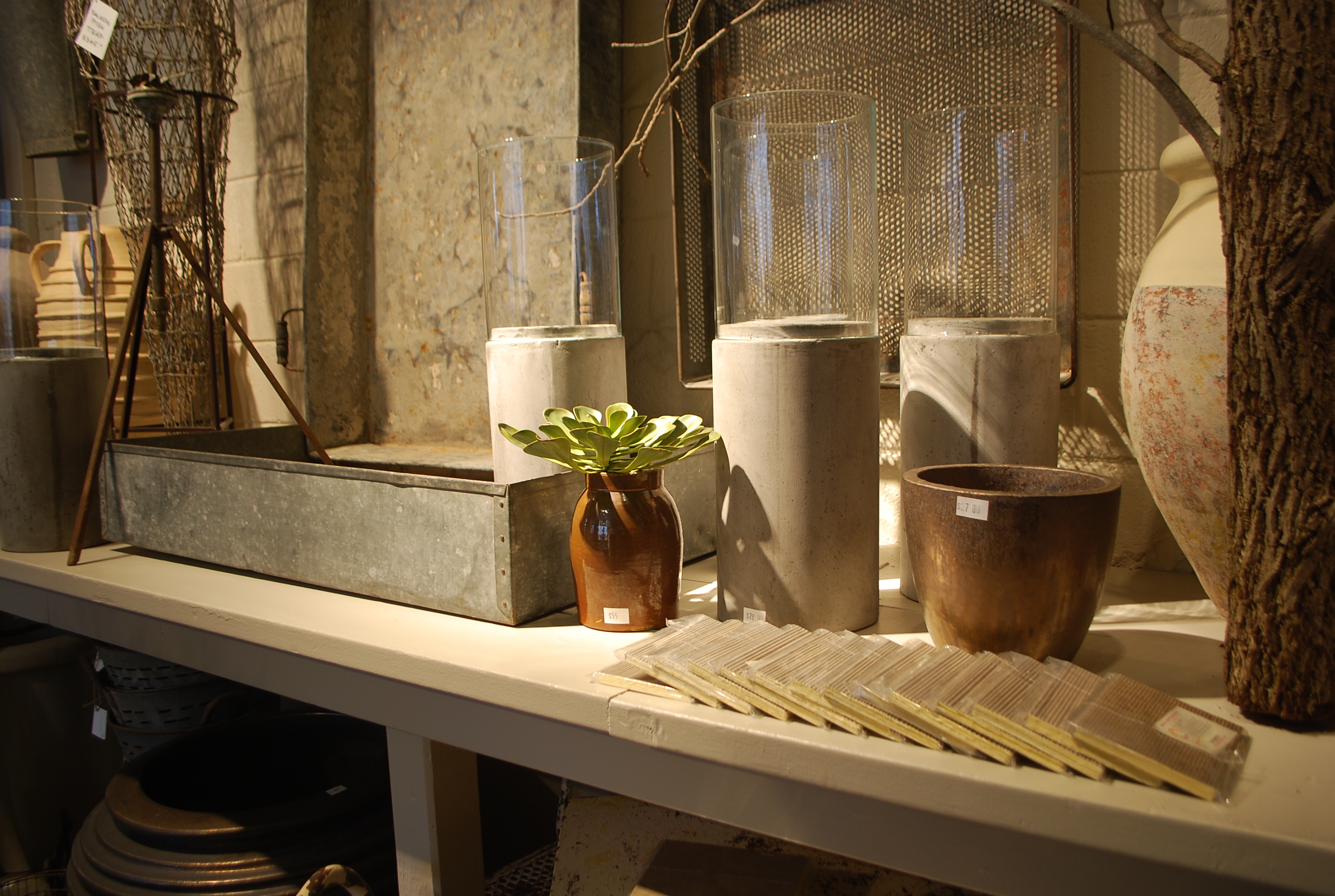
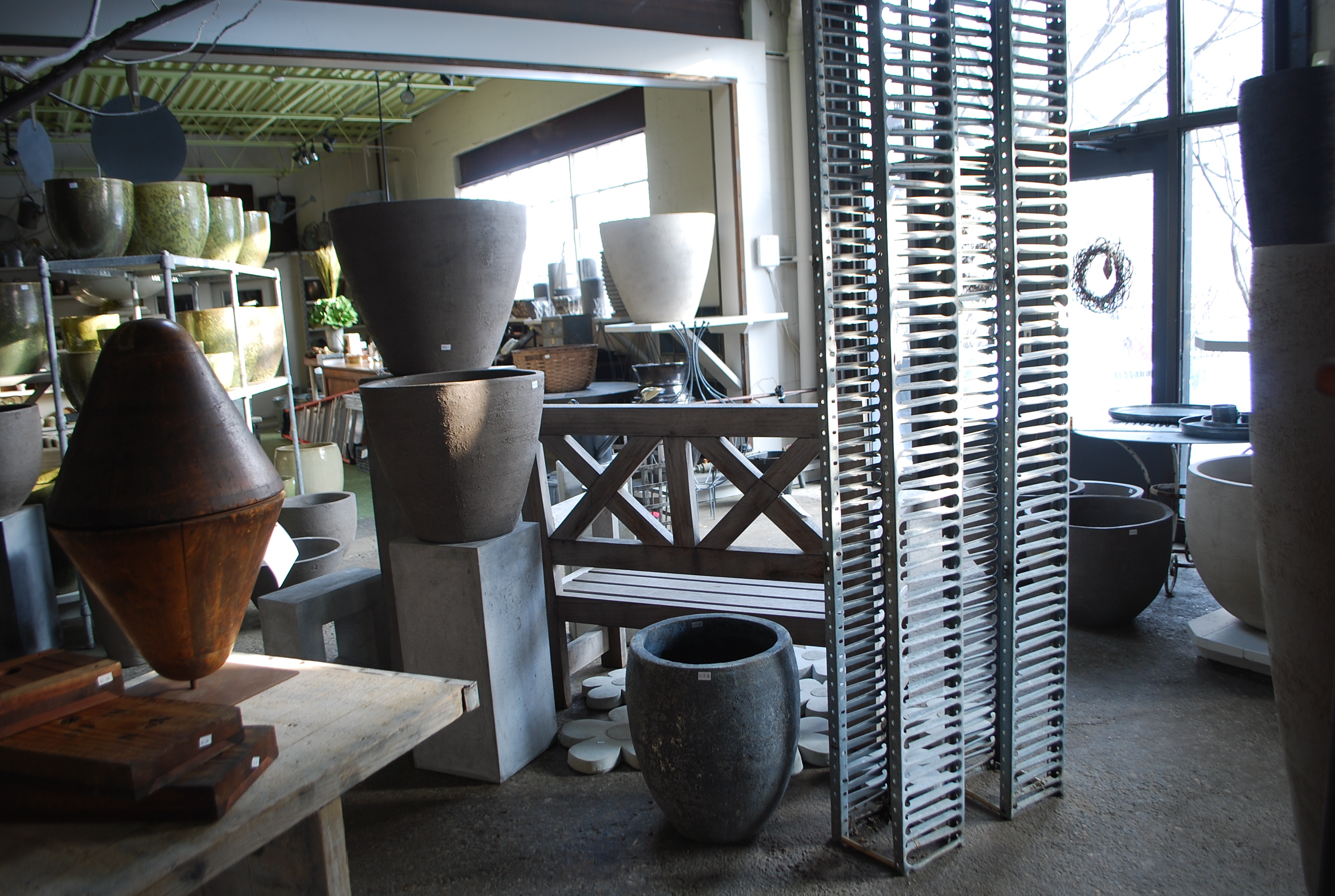
As usual, there is a wide range of styles, periods and materials.  But every year we try to do a thorough job of representing a certain point of view.  Rob’s mix is interesting this year.  His idea of contemporary garden ornament includes galvanized metal pieces from the farm that have very strong and simple shapes.  Terra cotta shapes whose origin is rooted in agriculture.  His idea of contemporary also means utilitarian.

spring-shop.jpg

Some contemporary garden ornament is cold. I am not crazy about objects that come with a built in echo.  I like things that fit in, and take on the feeling of their surroundings.

American-glazed-jar.jpg

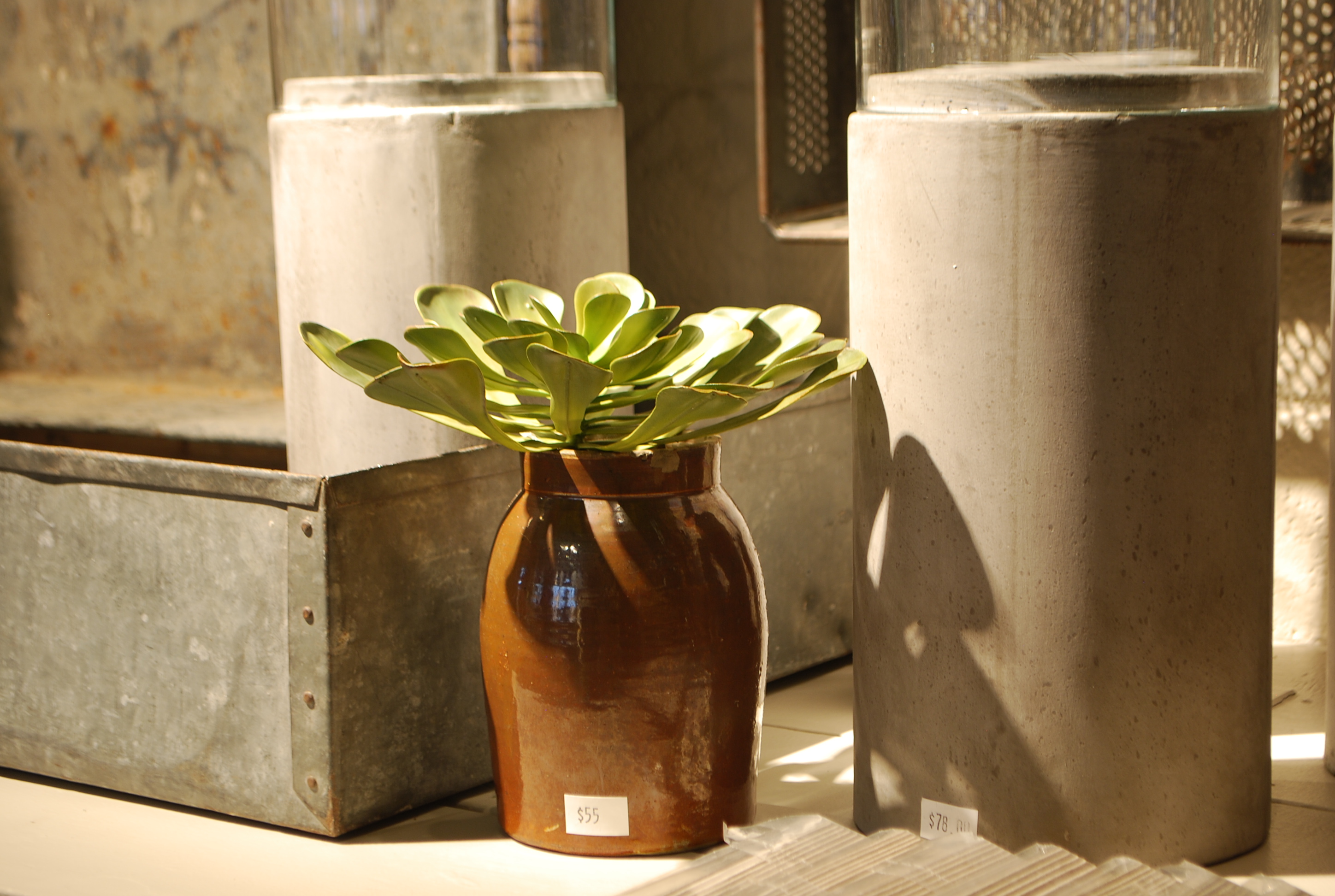
This 1920’s American glazed pickle crock is just as home in this setting, as it is in the pantry.

spring-gardening-season.jpg
This pair of cream glazed stoneware urns were made in Chicago in the early 20th century. They are not so easy to come by, as they are prized by gardener’s with urban landscapes.

March 2a, 2013 (32)

Howard has been as tireless as the rest of us, going over every inch of the place numerous times a day.  But we have made a lot of progress.

chives.jpg
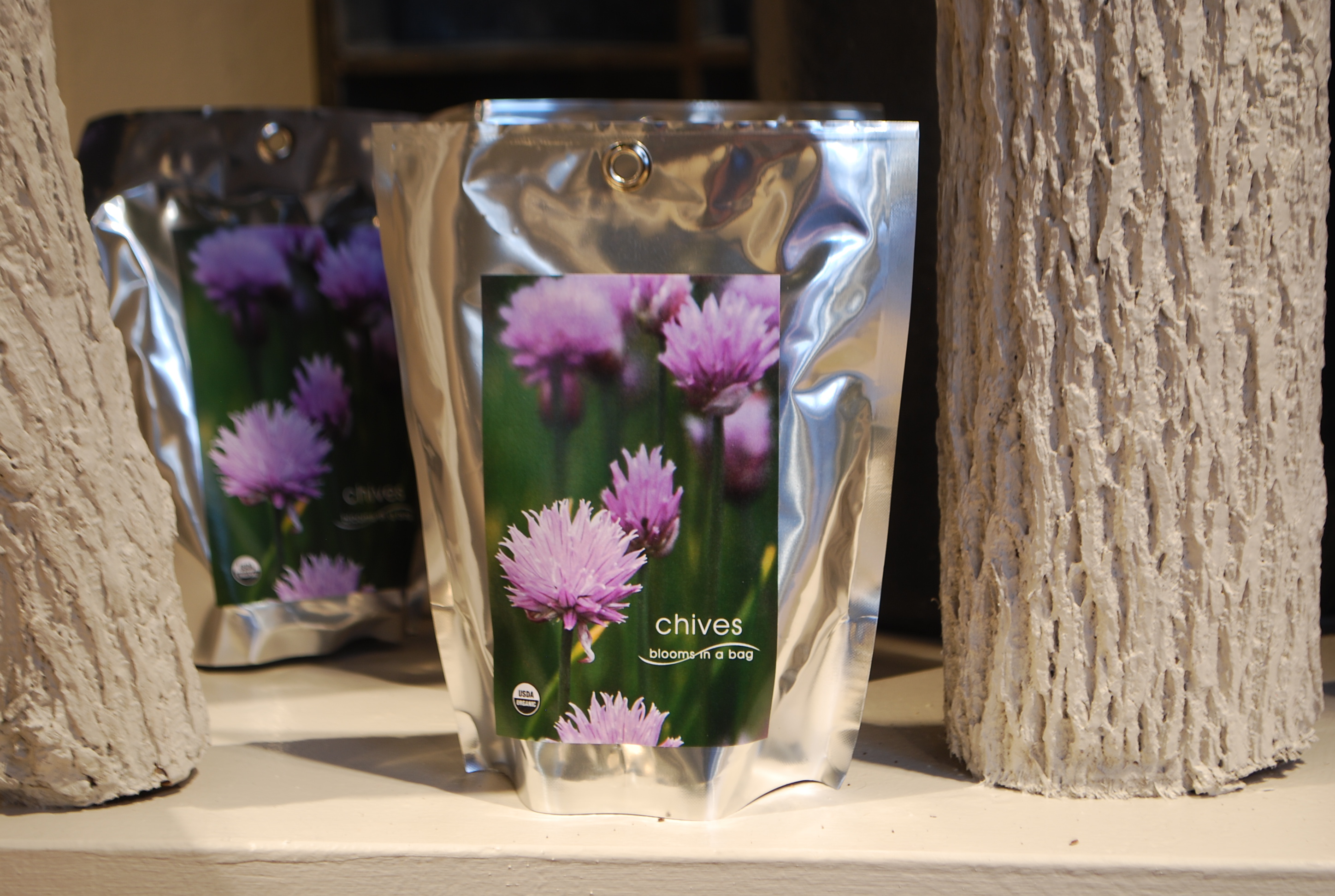
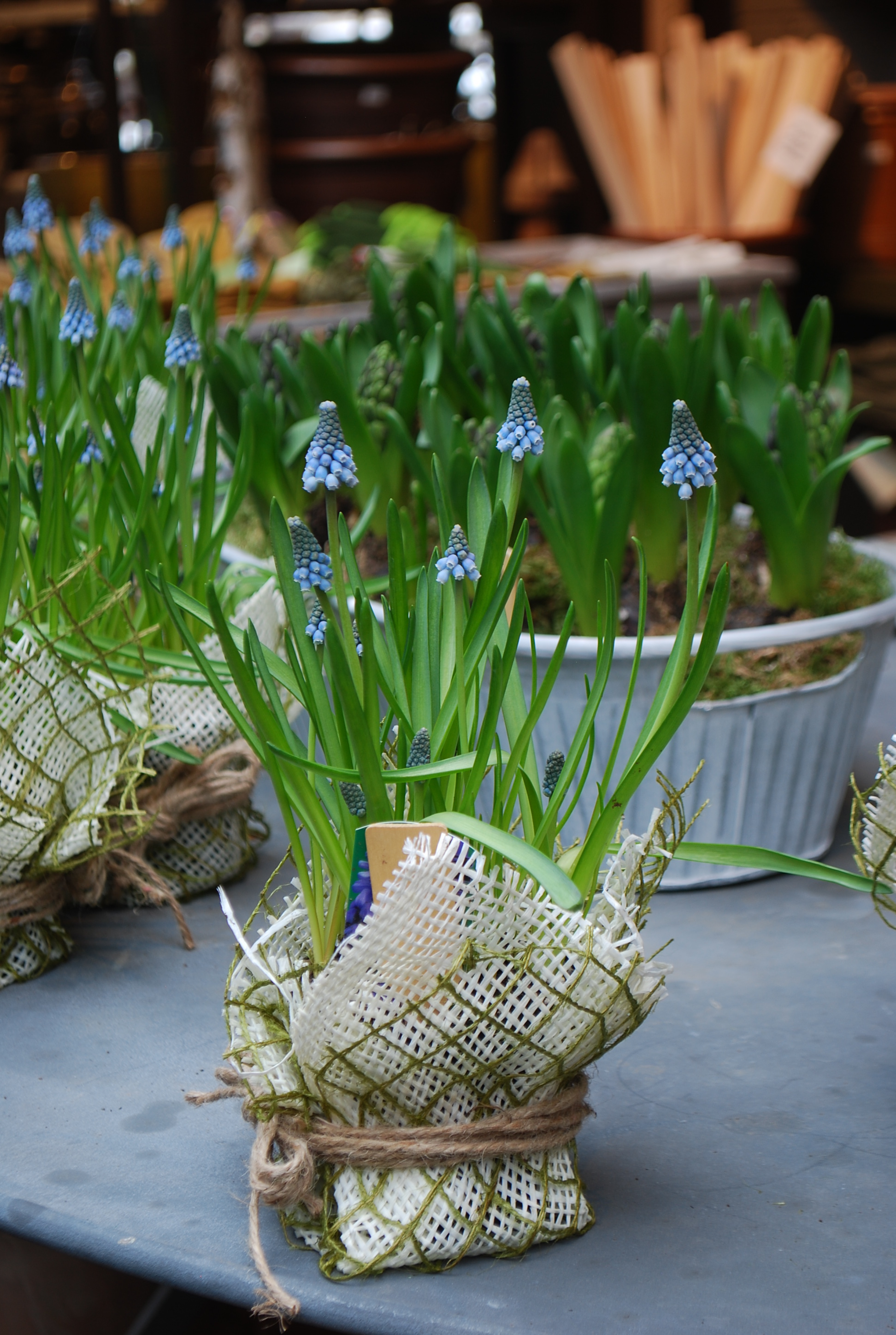
We like to have everything as ready as possible on the inside, before the weather warms enough to permit plants.  For gardeners who just cannot wait one more minute, snip off the top, water, and set in a sunny window sill.

spring-shop.jpg

I know this is a lot of pictures to slog through, but those of you who do not live close enough to visit might want a look at what we have going on.

contemporary-Belgian-stoneware.jpg

The Belgian stoneware pots are the feature of our spring collection.  Six of them are already gone-to 3 very different gardens.

spring-2013.jpg

Though I will be glad for the day when we can prop the doors open, there is a sense of spring in the air here.

March 2a, 2013 (47) See what I mean?


The Garden Designer’s Roundtable: Romance


landscape-in-June.jpg

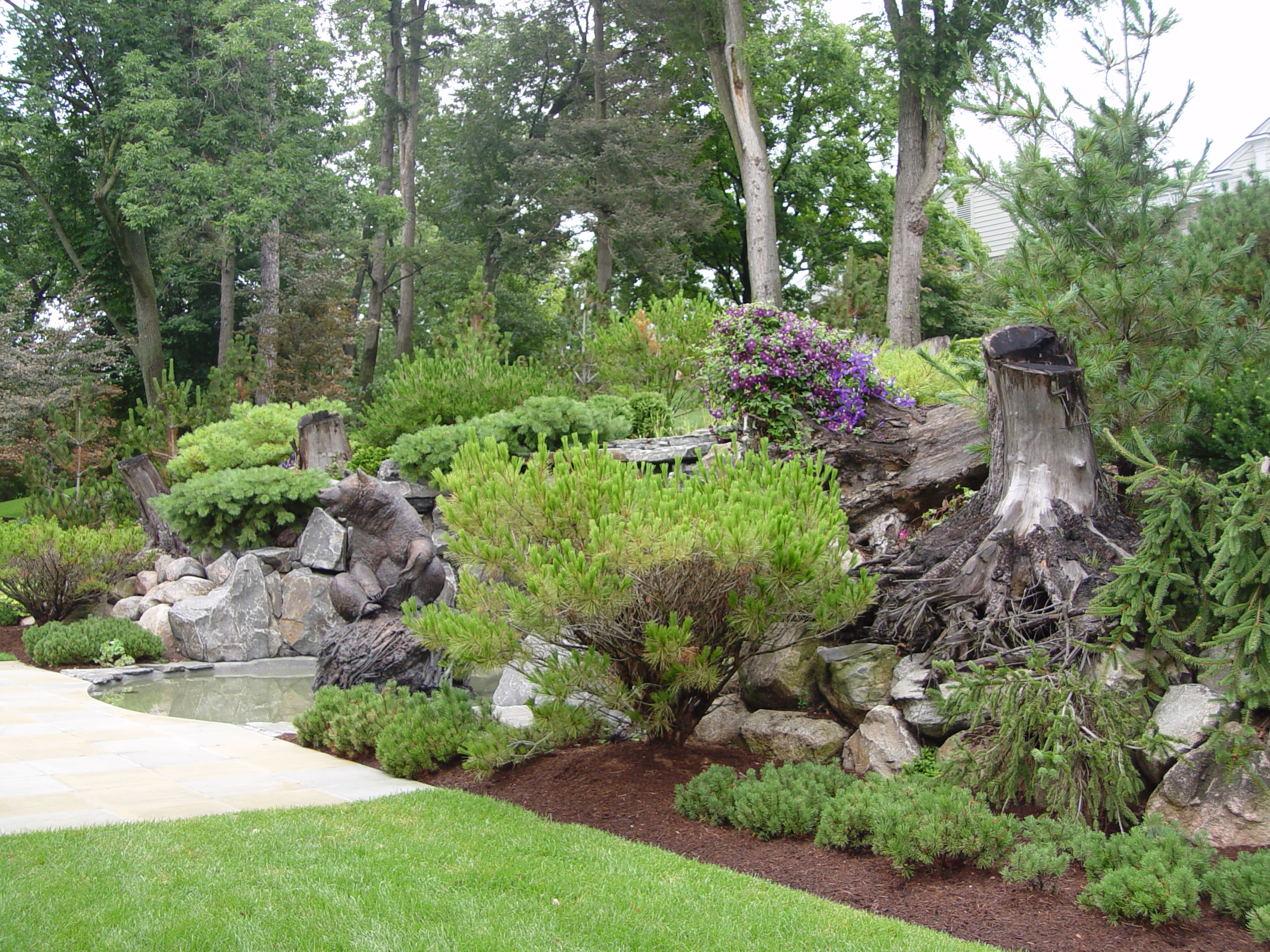
What makes for a romance?  An attraction that cannot be denied.  An attraction that evolves from the excitement generated by the hope that a relationship might lead to a steadfast commitment.  The romance suggested and generated by the possibility of love-who hasn’t experienced it?  Gardeners romance their gardens-meaning they seek to establish a  relationship with their environment, their love of plants,  and their property to a mutually satisfying end.  I never met a gardener that was not committed to the long term.  However, mutually satisfying outcomes are rare.  Things go wrong.  Plants die.  Taste’s change.  More than rare, garden outcomes that stir the heart are short lived.  Ephemeral.  This makes the possibility of true romance all the more desirable.

stump-garden.jpg

Nature-the object of every gardener’s sincere affection.  On occasion, that love is returned.  Sometimes I am face to face with it in such a way that takes my breath away.  But more often than not, nature has another idea in mind.  I have had my hopes dashed more often than I care to recall.  The weather here last spring was anything but.  All of the efforts made to protect the spring flower buds-spurned.  There are less dramatic challenges to one’s love for the garden.  A lack of rain-or too much.  The neighbor’s kid or the neighborhood rabbit who snaps all the lily buds off.  The specimen evergreen that is not so happy where you have planted it.  The effort it takes to improve the organic content of the soil.  I suppose the spring will eventually come when I think I’ve had enough-but it hasn’t happened yet. 

 rain.jpg       

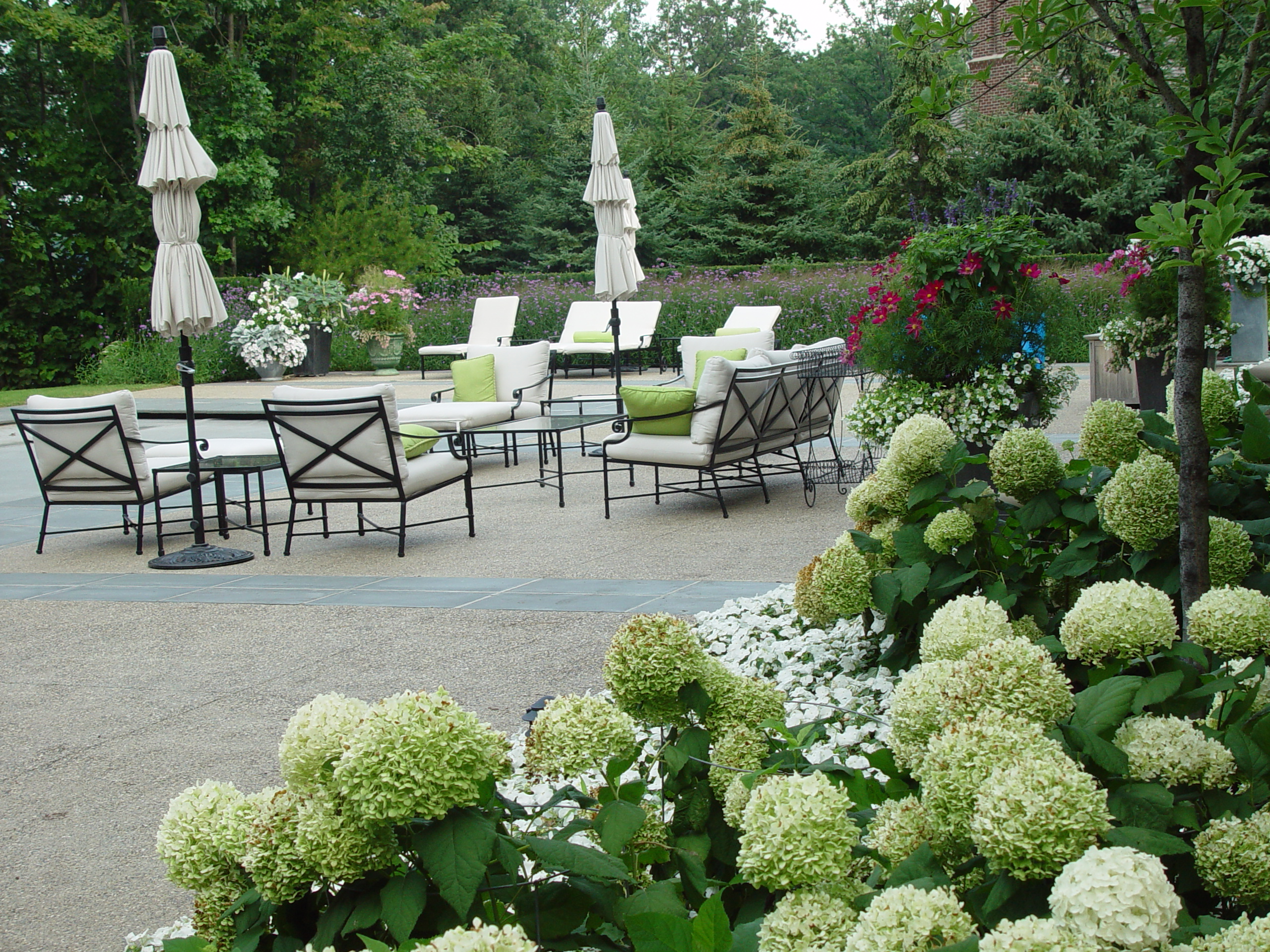
Anyone who gardens long enough realizes that a romance has its ups and downs.  There are on occasion those perfect moments. An hour or a day or a season that enchants and utterly satisfies.  They could be very simple, and not so readily apparent to a casual observer.  The sun emerging after a spring rain.  A quiet hour spent weeding.  Watching a hummingbird feed.  How the roses look just before they bloom.   

summer-day.jpg

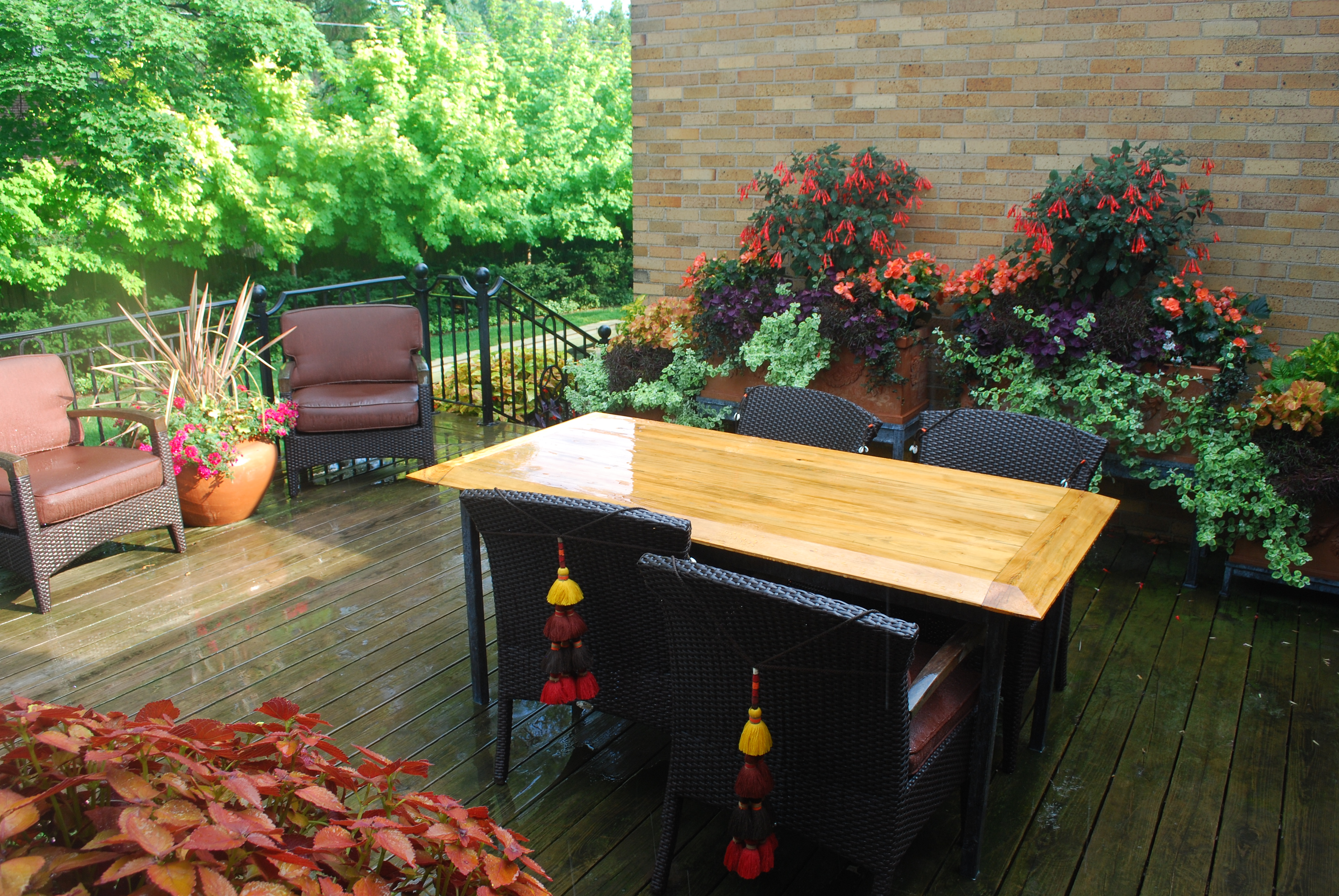
That June day several years when the roses were blooming like I had never seen them before-heart stoppingly romantic.  That summer day when all is good enough in the garden such there is time to take time to enjoy it.  There are those perfect moments that come when you least expect them, and are over before you know it.  That fairly accurately describes my relationship with nature.  Never easy, and often times irritating and disappointing.  Despite all that does not work,  a life without a serious relationship with nature has no appeal to me. 

February-day.jpg

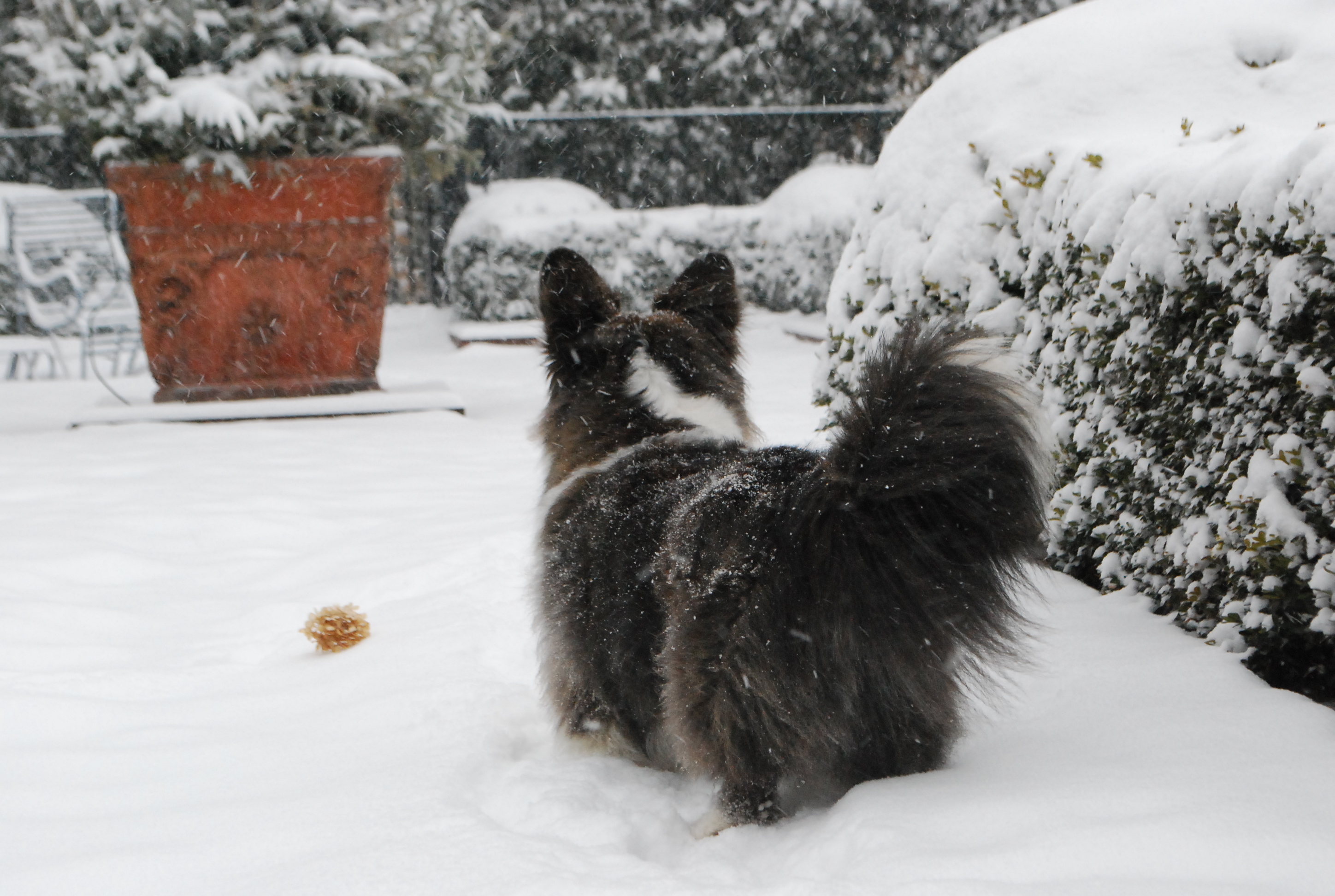
This cold windy and snowy February moment that Milo and I shared in the garden-satisfying indeed.  I am sure the other members of the Garden Designer’s Roundtable have an equally personal romance with nature-be sure to read on.


Lesley Hegarty & Robert Webber : Hegarty Webber Partnership : Bristol, UK

David Cristiani : The Desert Edge : Albuquerque, NM

Debbie Roberts : A Garden of Possibilities : Stamford, CT

Jocelyn Chilvers : The Art Garden : Denver, CO

Mary Gallagher Gray : Black Walnut Dispatch : Washington, D.C.