Fall Plantings

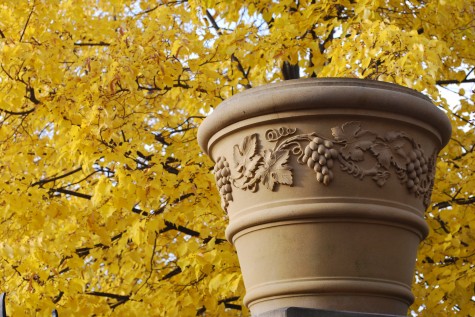
My fall is in full swing; it was cold and blustery all day today.  I come to work sporting at least 3 layers.  My office door at home is open all evening so the corgis can come and go as they please-not tonight.  Too cold.  The leaves are starting to turn color in earnest; the lindens at the shop are so beautiful this time of year, dressed all in that intense citron shade of yellow.
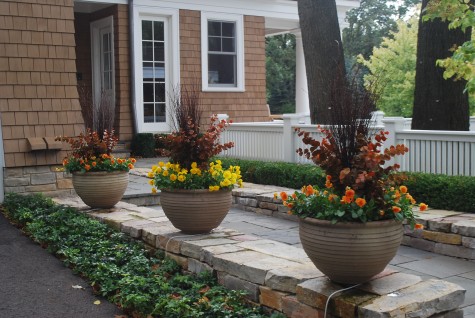
I have written before about how limited a fall plant palette can be.  But in fact, limitations can spark some some imaginative solutions.  There are times when I have so many choices that all the time I spend so much time considering the options makes what I eventually choose looks exhausted-this would be a spring scenario.  These fall pots have the expected yellow and orange pansies, but get their volume from birch twigs and preserved eucalyptus. Not all natural materials have roots, and need water.        
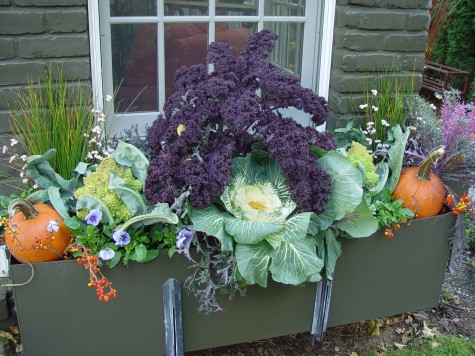
Ornamental cabbage and kale, and pansies are fall staples.  But who wants to look at staples? My farmer’s market has no end of natural materials-the bittersweet and pumpkins in this window box add so much to the cabbage and pansies.  One of my most favorite fall materials-romanesco broccoli.  The lime green florets are of an astonishing configuration; the swirling leaves add a little sass to any staple fare. I have placed these broccoli heads in pots, and used then as finials on fence posts.  What is your idea?   
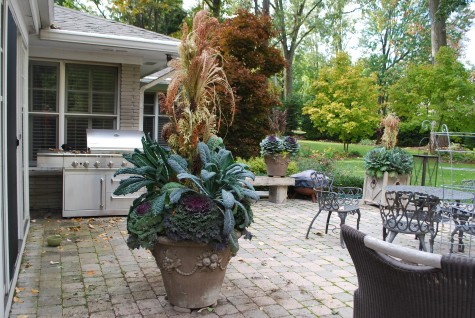

Broom corn is just that-a plant which when harvested can provide material for brooms.  The fresh stems at market are beautiful and colorful, and you can be assured they will last the entire fall. I am crazy for tuscan kale and ornamental cabbage, but this fountain of broom corn in the center makes the whole arrangement look like a substantial celebration of fall.  
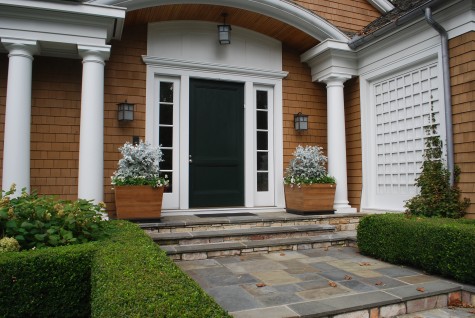
Dusty miller is an underused plant for fall pots.  It regularly survives the winter in my zone.  The silver color is great in the fall-but should you not have access to tall plants, your pots could get a big leg up from some preserved  spiral eucalyptus. Though not one bit hardy in my zone, eucalyptus takes well to preserving, and color.  The dusty miller and pansies in these pots get a big dose of emphasis from a central mass of eucalyptus preserved and dusted with white.     
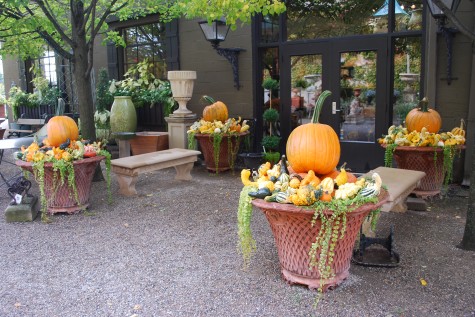
I have no objection to a fall planting that makes much of the fruits of the harvest, or other natural materials.  My fall season is short, and brusque.  This means that I do not object to materials for fall pots that do not have roots-I actually welcome the diversity they represent. The creeping jenny in these pumpkin pots had beeen there all seaason-I saved  them.  Creating a fall planting from 4 great pumpkins with outstanding stems, and loads of mini pumpkins and gourds was great fun. A container whose surface is planted flat with mixed pansies does not entertain my eye nearly as much as this does.  
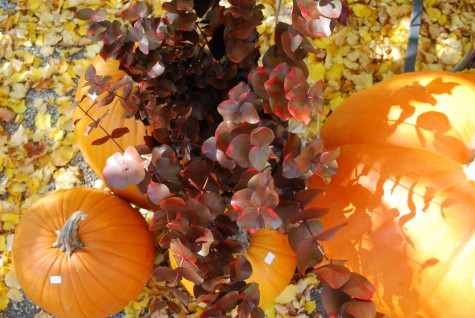
Gardeners need some entertainment in the fall.  The closing of the season is not my favorite time.  I am cutting back, cleaning out, and cleaning up. Some fall containers with great color and texture can make the changing of the seasons a little less distressing. 
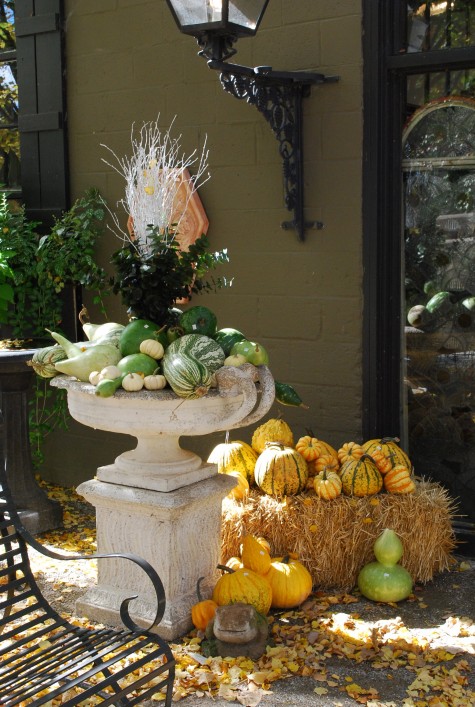
These antique urns flanking the front door of the shop have not one thing in them with roots. White glazed birch branches and preserved green eucalyptus are a centerpiece for a collection of green and white gourds. This “planting” celebrates the end of the season.  I hate to give air time to my disappointment that the season is changing, and moving towards winter.  I would rather do my best to create a little excitement about the moment.  
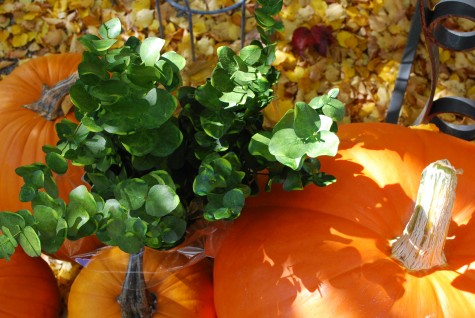

Those of you who live in temperate climates-I do not envy you.  I truly like the end of a season as much as I like the beginning.  I like being limited, and challenged. This is part of what is the great fun-should you decide to be a northern gardener.
Everyone Loves The Lamb

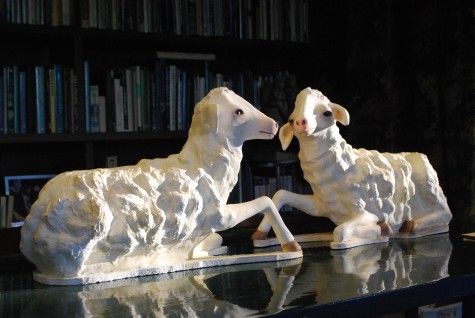
While shopping last winter for our holiday 2010 season, Rob found a company that imports Italian paper mache and plaster figures from Italy. He knew I would fall for this pair of goats.  Everyone who sees them insists they are lambs, so I give.  I love these lambs.  The origin of the art of cartapesta dates back to the fifteenth century in Italy.  Do my lambs not look so Italian? 

The art form found expression originally in figures and ornament for Catholic churches.  Overscaled hand carved stone statuary used to ornament the churches were incredibly expensive and time consuming to produce. An affordable method of producing large figures that had the appearance of stone at a fraction the weight and cost fueled an art form. Cartapestra.  Plaster over paper mache.     

By the 1700’s, Italy was known throughout Europe for these lovely and affordable stone look alikes, fashioned from straw, steel wire, silk string, hand made paper and plaster.  Each figure would be polychromed, or painted, by an individual artist. 

The plaster layers are sun-dried; this part enchants me. If your life is in any way like mine, having the time to let the sun work its magic sounds swell.  Each figure is hand sanded and the surface burnished before it is painted.     

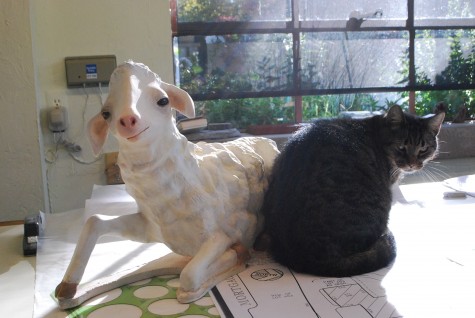
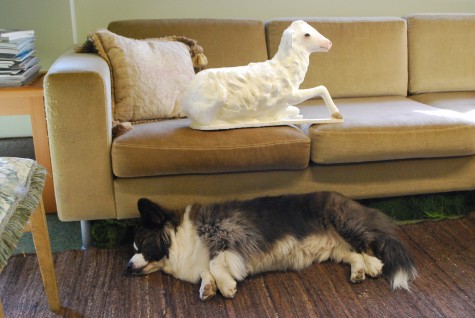
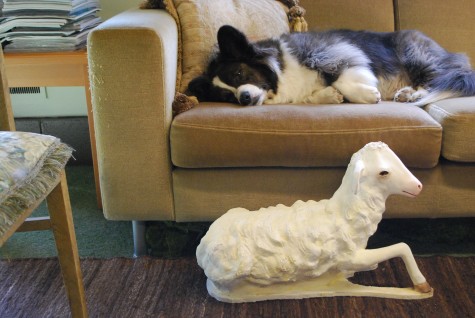
I spent some time this morning hauling one of these lambs all over the shop.  Why would I do this?  I had sent a picture of them to my landscape superintendent Steve.  He wrote me back- everyone loves a lamb.  I decided to test out his theory.  MCat took an immediate fancy to them-he has been sleeping peacefully, snugged up next to them for the past four days. Milo took no offense to the lamb.  He actually went right back to sleep. 

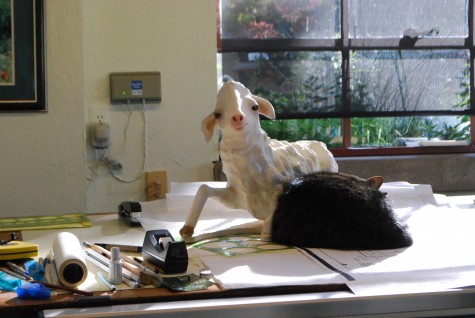
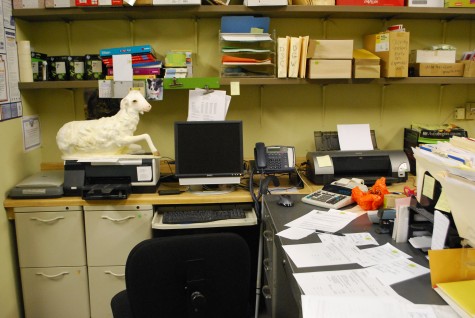
Monica is my assistant-hers is a position the seat of which glows.  Her switchboard is perpetually lit up.  She handles everything with exceptionally and unfailingly good manners.  Her genuine concern and attention to detail is astonishing. The lamb placed on her printer made her laugh first, and made her speak secondly to her appreciation for the whole idea of a peaceable kingdom.  No matter the issue, her kingdom is about maintaining the peace.  I may need to get her a lamb of her own.

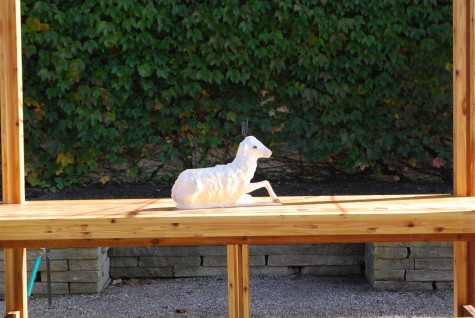
Paper mache hand plastered over is not a good candidate for a garden ornament exposed to the weather. Stone stands up far better.   But this does not mean this Italian sculpture is not at home outdoors for a moment. Sun drenched and 75 degrees it was- a beautiful day.    


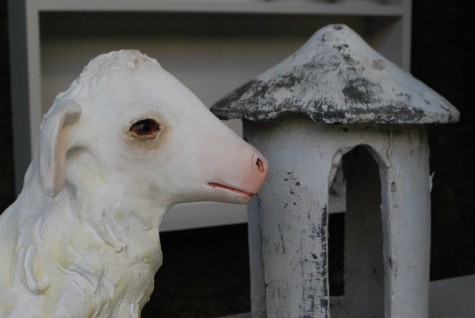
Landscapes, and their gardens, benefit the people who take them on, and tend them.  Much of that benefit has to do with providing a sense of serenity.  I get that same feeling when I look at this Italian lamb face.     


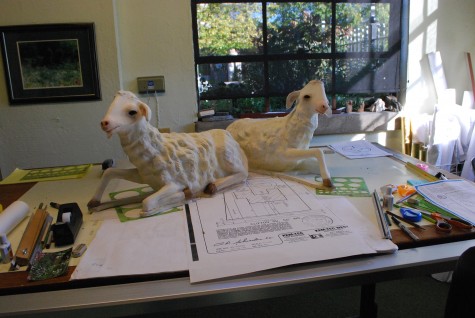
My pair of Italian made paper mache goat-lambs- no doubt they made my day better.  What will I do with them?  They are for the moment in residence and looking good on my drafting table.

It Is So Easy

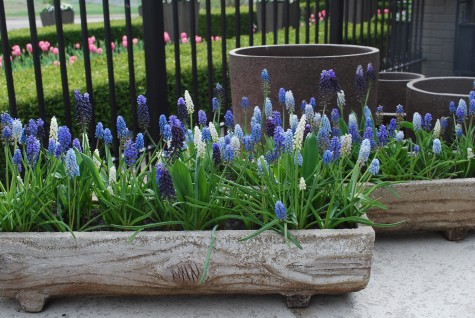
There is only one thing in this world that is easier than planting spring flowering bulbs-that would be not planting spring flowering bulbs.  I have never really been able to determine why. I know it is hard to believe those brown orbs will ever amount to anything. Granted planting in cold and blustery weather is not my favorite.  It is true that all you have to show immediately for your work is what appears to be disturbed ground.  But from the first eranthis in March to the June blooming Globemaster alliums,  any spring is all the more gorgeous for the bulbs.  The muscari mix in these two troughs-a Christmas present to Rob.  When I saw them in bloom, I could have kicked myself for not planting a single bulb at home. I had the better part of three months to regret my omission.  I was determined not to make that mistake this fall.   

As I hate having no recourse given what I forgot to do the previous fall, I plant pots with spring bulbs for the shop.  There is no end of information about forcing bulbs, but forcing refers to tricking the bulb into growing and blooming before its natural bloom date.  I like flowers in season; I do not want Lily of the Valley in December.  I just like the option of moving a pot of bulbs around to the front porch, if that suits me.  So I pot up bulbs, and winter them in our unheated garage.  I am careful to get them right outdoors whenever things seem to be stirring.  

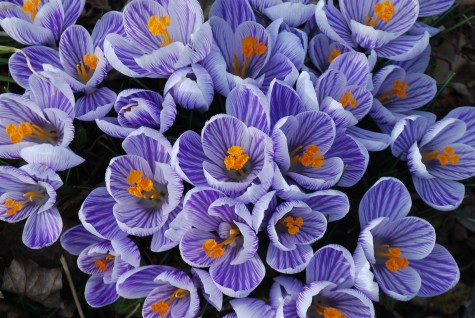
Crocus can be up out and done in a blink of an eye, but that is no reason not to have them.  I have had my litlle patches come up and bloom faithfully for 15 years.  That counts for a lot right there. I like getting down on the ground, so I can see the flowers.  Having the soil so close, I can smell the spring coming out of the ground.  It is a fragrance that defies description, but if you are a gardener you can probably conjure up that smell out of thin air. Crocus bulbs are little; you can practically push them down 3 inches with your thumb.   

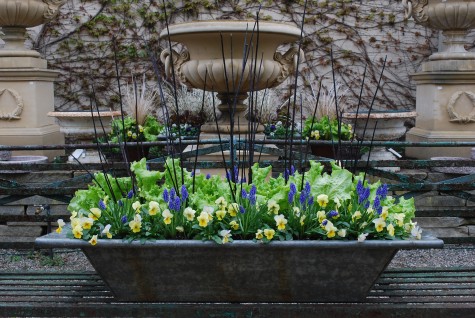
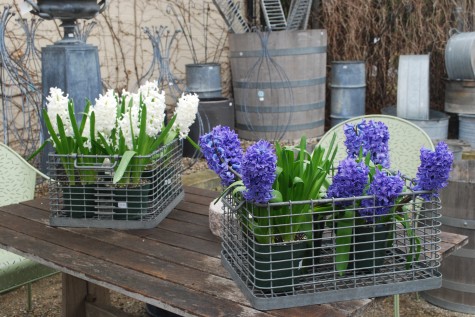
Planting spring bulbs in little pots means I am able to use them in bigger spring combination pots.  Grape hyacinths are a great choice for this, as they last so long. In a perfect spring, all the flowers on the bulbs go into the fridge each night.  The only enemy of the spring bulbs is early and relentless heat.  I prefer to be optimistic; I have 5 varieties and mixes of muscari on order.  What you see above is John Sheepers Muscari Magical Mixture; it is well named.     

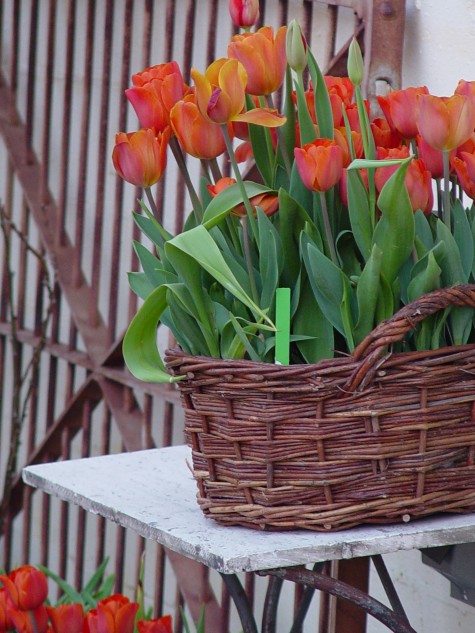
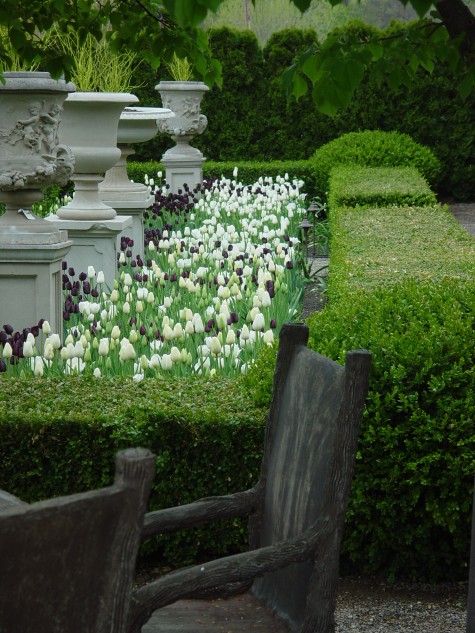
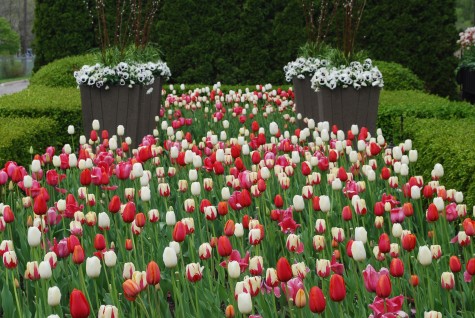
The species and various hybrid tulips make it possible to have tulips in bloom for at least 2 months.  10 tulips all planted in a bunch makes a great in ground bouquet.  It takes 2500 tulips to fill the beds in front of the shop.  We use a planting technique that works well for planting large numbers.  We lay out four or five rows. Each spot for a bulb gets stabbed with the trowel held backwards.  We open that slot slightly, drop the bulb in the slot, and firm the soil.  We do not dig holes six inches deep, and place the bulb in the bottom, nose side up.  This takes way too much time to no better end.  Daffodils like to be really deep.  I have a team of two handle the planting; one person pushes a shovel- blade flipped backwards and held exactly perpendicular to the ground- all the way into the dirt.  When he pushes the shovel handle away and pulls up, a slot is created.  Person 2 places the bulb in the slot; person 1 tamps the ground.  This is much quicker than digging a hole.

The most arresting and spectacular bulb display I have ever seen was in Chicago on a University campus this past spring.  Some brilliantly obsessed bulb afficianado had planted many hundreds of dark purple, dark red violet, and lavender hyacinths in a mix-shoulder to shoulder.  It was breathtaking, and romantic-all those flowers so close together.  It was a display I feel compelled to recreate for myself.  Hyacinths are beautiful at every stage of their development.  This makes them a good choice for a container bulb planting.    

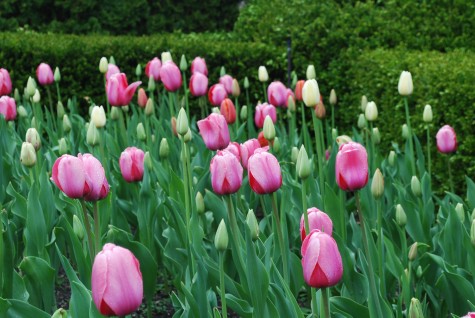
I usually plant 3 or 4 tulips in a mix in the shop garden. I like to vary the heights of the flowers, and the bloom time.   I like the informality of the mix.  The garden has more than enough formality going for it in the boxwood. I like the flowers up and down, rather than aitting on top. This Darwin tulip, Pink Impression, was the first to bloom.  It lasts unusually long for a Darwin.  The garden is beautiful at this stage too; the color and texture of the leaves and buds is a lot to look at.    

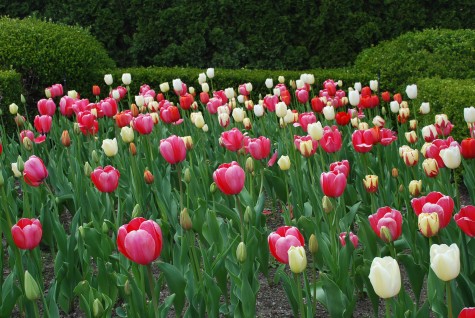
The red Darwin Oxford, and the single late white tulip Maureen are both on the way. Barely getting started are the white flamed red and cerise single lates-World Expression.  It might be my favorite tulip. There would be a moment when I would have tulips as far as the eye could see.  Well, pretty far, for sure.  Before your fall gets away from you, you might want to put some of those brown knobs in the ground.  You will be happy you did, come spring. 

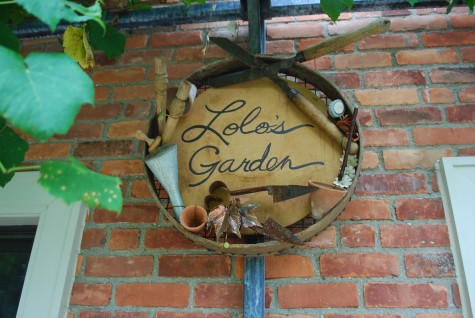
Lolo’s Garden


I do not grow vegetables at home.  In my opinion, a vegetable patch looks messy and disorganized, even when it is anything but. Working gardens show evidence of that work.  I am not interested looking at work when I go home-I have already done that all day long.  Afficianados of growing food at home like Lolo are a hard working lot that have an astonishing range of knowledge.  Growing from seed, pairing plants, crop rotation-the depth of her knowledge is impressive.  Often there is a family history that includes growing food, cooking, family meals that is a way of life. I would want a working garden to be beautiful in a way it cannot be.  Sooner or later, every vegetable garden tends towards dissolution.

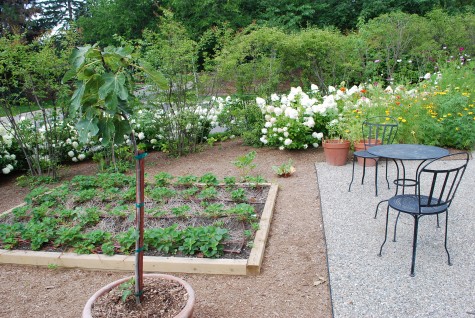
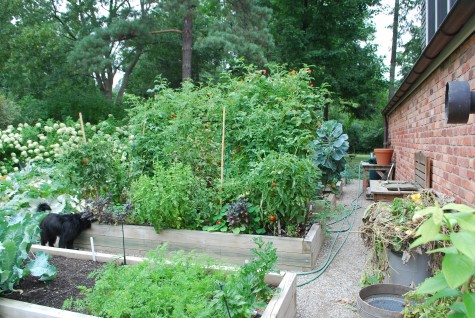
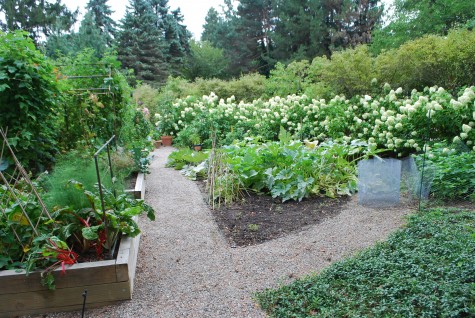
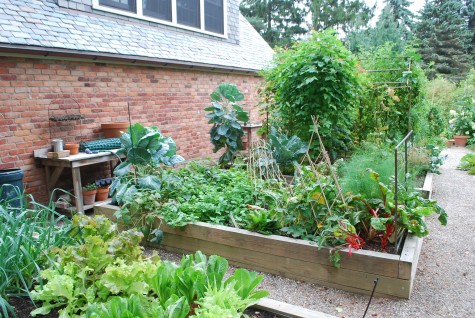
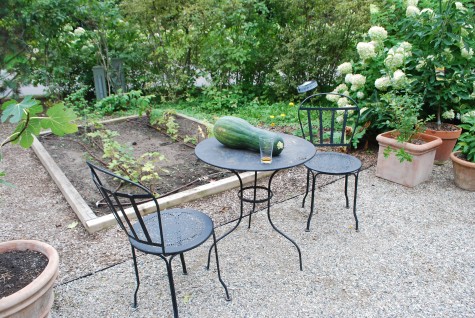
The vegetable garden can be designed in a very orderly way.  Raised beds permit making choices about soil composition.  There can be the designated asparagus, strawberry or raspberry patch.  Espaliered fruit trees, grapes, and a fig tree can be worked into the design.  A spot to grow cutting flowers-what a great idea.  But once I get to this point, I am not only over my head, but I have lost interest as I have lost control.  Fortunately most people who would devote part of their landscape to seriously growing food know what they need from a space.  Cultivating a vegetable garden is not for a weekend gardener-it is an every day committment. 

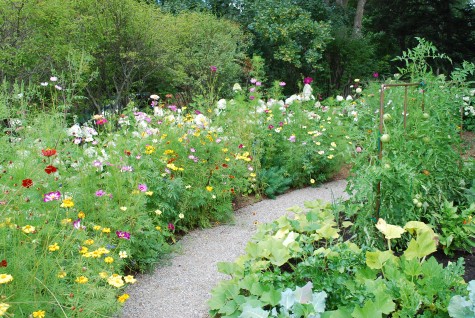
When the soil-making and daily tending and growing has been good, it seems like there is that moment when the the entire garden seems poised to overrun the space.  The paths get narrower; the squash has grown out of the box and heads for the road.  Is there a vegetable plant that does not not fall over in a heap? I have yet to see a vegetable garden not overrun with withies, stakes, towers, arbors and cages.

The potting bench surface is usually covered with tools, packets of seeds, a collection basket, the soil sifter, and the like. Vegetable people leave their hoses, stakes, Japanese beetle collecting cans and gloves out in plain sight-why wouldn’t they?     

Every plant is at a different stage.  The pea patch runs out and has to be replanted-as do the lettuces, spinach and radishes.  There are those bare dirt spaces hosting the seeds of the next crop.  The galvanized wire hats goes over what ever is being eaten by the birds, rabbits, deer, raccoons and woodchucks at that moment. 

All in all, a vegetable garden at harvest time is a gloriously messy affair. Never mind the work that is involved enlisting the help of others when the garden bears vastly more than what you can eat.  Is there any more ungainly looking plant on the planet than the brussel sprout plant?  I do understand that home grown food is the best food there is-I have been the lucky recipient of various harvest overruns.  I love OPVG’s-other people’s vegetable gardens. 

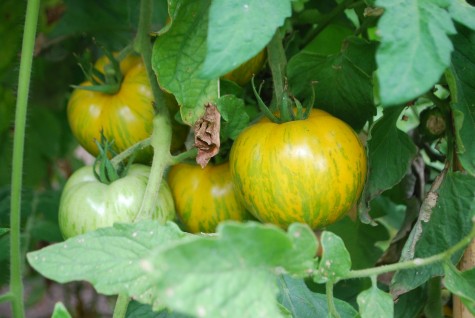
This tomato in articular whose name I do not know is incredibly great looking, and great tasting.  The bush on which it grows-not so pretty.  It seems as though tomatoes and tomato plants are as irresistable to bugs, fungus and disease as they are to me.  Who wants to look at hornworms, flea beetles, and cut worms?  Who wants to deal with early blight, gray wall, catfacing or blossom end rot?  Who wants to read the Texas A and M tomato disorder page?

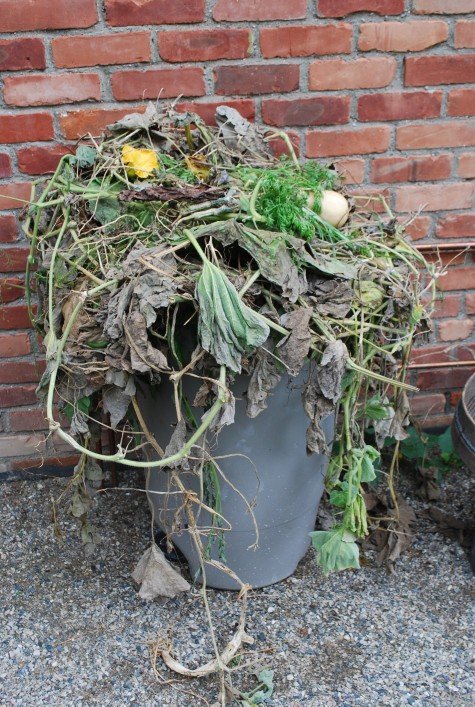
Who really wants to look at this at the end of a season?  My theory is that vegetable plants give so much for so long, they finally succumb to every fungus and illness swirling around in the air and soil.  I am grateful to have both friends and clients who deal with all of this and more-otherwise I would never eat any home grown food. 

Anyone who grows vegetables, fruits and herbs at home has the idea in their mind that fresh and pure is delicious and good for them, and their family.  What other reason could there be that would motivate them to work so hard, day after day?  They, like Lolo, are gardeners of the most serious sort.