A Second Look At Hydrangeas


A reader left a comment yesterday about my post about Limelight hydrangeas.  Nursery catalogues did not have that much information about hydrangeas.  The gardener’s lament-we all know that tune.  Though I spent my late twenties falling asleep with the White Flower Farm catalogue under my nose, nurseries who sell plant material by mail do not trial plants.  They decide what they want to sell, and they make much of the good characteristics of those plants, and perhaps ignore or gloss over the problems with those plants.  Books record the one day that is a perfect moment-this bears no resemblance to what it is to grow a real garden.  Perfect moments do not come along all that often.  
I do not blame nursery catalogues one bit.  They are in the business of generating excitement about their plant offerings, and selling them. Gardeners are naturally interested in new plant introductions-so many nurseries feature them.  Other nurseries have invested acres of growing space to a variety; they are not so keen to move on to something new when they have fields of last year’s cultivar yet unsold. A nursery catalogue is a list of available plants-nothing more, nothing less.

Hybridizing and bringing a plant to market is a costly and very time consuming endeavor.  Growers routinely put their time and money on the line, believing the plants they have to offer will deliver what gardeners want.  Make no mistake-I planted more than my fair share of Annabelle hydrangeas.  I fretted and fumed about the weak stems-I caged, tied up, and otherwise tried to remedy what is a fundamental fault in the growth habit of the shrub.  The most beautiful planting of Annabelles I have ever seen was in a bed raised 4 feet off the ground.  The cascading flowers at eye level was enchanting.  The unknown designer knew this plant, and planted accordingly.
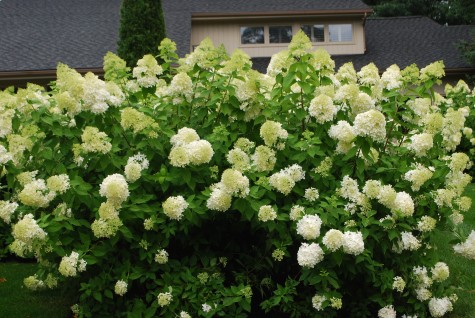
I no longer plant Annabelle hydrangeas-the maintenance is considerable. I find the Limelights to be the most reliable, easiest of culture, and most adaptable of any of the white hydrangeas.  They make beginners look good.  They deliver under difficult circumstances.  One is good, 30 are spectacular.  I was able to convince one forward thinking client to replace her Annabelles with Limelights.  I admire gardeners that are able to cut their losses, and move on. 
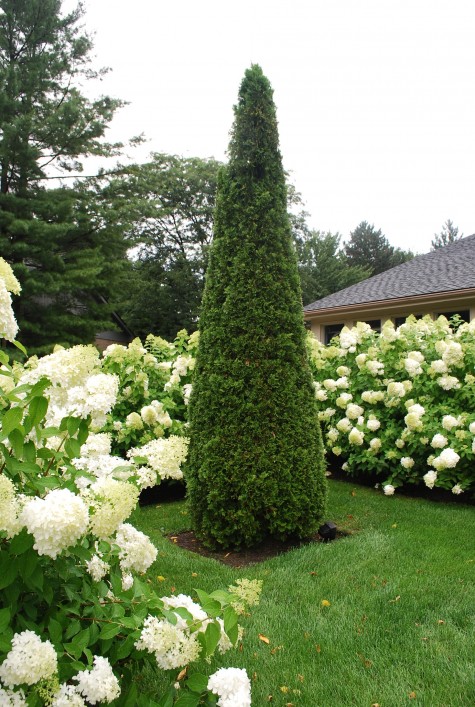
Pruning hydrangeas is a very important business.  Once you have provided them with a compost enriched soil, regular water, and a fair amount of sun, you have options that influence how they perform.  Hydrangeas pruned short on top, whose side branches are left long, will bloom from top to bottom.  Hydrangeas that bloom on top of woody legs have not been pruned, or not pruned properly. If you like your hydrangeas 4′-5′ tall come the end of July, prune them in the spring down to 18″-24″.  Don’t be shy-they grow like mad.  If you like them tall and bushy, prune lightly.  Prune only in the spring-when you see the buds swelling.  I see landscape companies saw hydrangeas down to ground level-this is much too hard.  Do not count on basal growth-leave buds above ground to grow.
No nursery catalogue will go into this detail-why should they?   I only have detail to report, as I have grown lots of plants in lots of different gardens, for many years.  There is no substitute for trying plants out yourself-unless you have trial gardens near you.  Universities with gardens often trial, or test plants.  You can visit, see what goes on, and make your own assessment. When Alan Armitage favors a plant, I take a good look.  His trial gardens, and his writings,  are known nation wide.
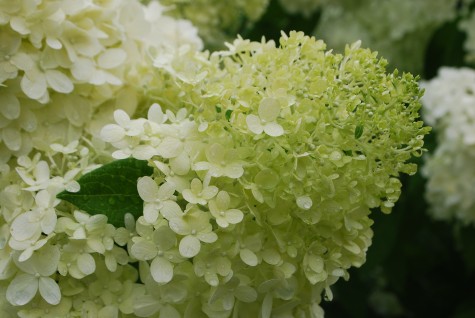
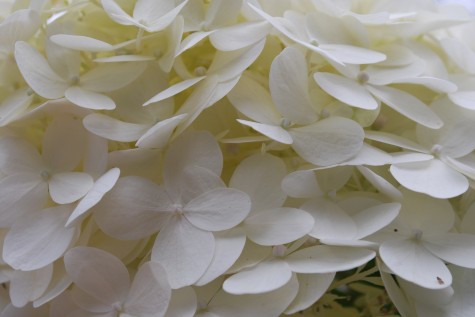
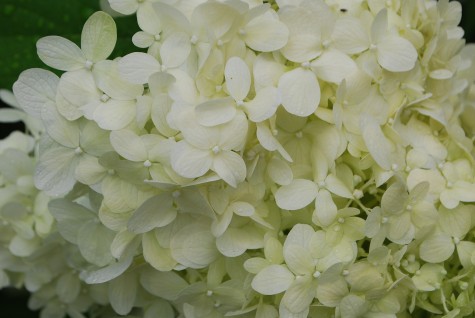
Limelight hydrangeas have cone shaped flowers with a decidedly lime tinge. As I am more enchanted with profusion than color or shape in hydrangeas, I side with the plant that delivers beautifully wherever I might plant it.  Should I have a burning need for pink or blue hydrangeas, I would plant the best hybrid available to me, in the best possible spot, and keep my grimy fingers crossed. I would try more than once, before I gave up.  

Every gardener needs to sort out what matters to them.  I like plants that willingly reward my eye.  They need not be rare or new.  I like plants that grow enthusiastically-that enthusiasm I find beautiful.  How does any gardener assess what might grow beautifully for them?  Try things.  One person who works on my crew bought two incredibly expensive orange echinacea on a trip he took to a nursery to get plants for a job for me.  I can tell looking at them-they will not be hardy.  Maybe 6 generations down the line there will be hardy orange echinacea.  Do I fault him for his hope-absolutely not.  Gardeners need to try whatever moves them, and not be discouraged when all does not go as planned.  Fall down, get up, go on-gardeners know how to do this.    

Welcome to gardening.
Heavenly Hydrangeas

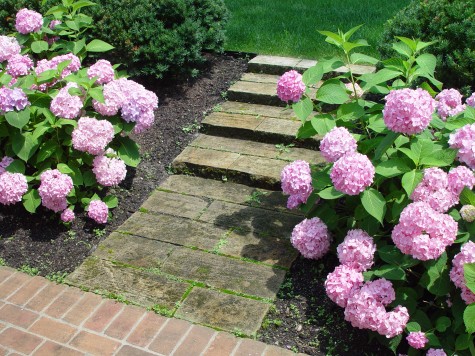
What is it about hydrangeas that makes them such a magnet for gardeners?  No doubt they are one of the showiest shrubs hardy in my zone.  They are fairly easy to care for, providing you stay away from marginally hardy varieties.  They grow fast, have big, clean, and very green foliage.  The massive flower heads speak to summer.  What could be better?  The plant hybridizing industry has focused on producing more reliably blooming “other than white” hydrangeas for the nursery trade geared to produce in cooler climates.  This “All Summer Beauty” hydrangea is more reliably blooming than its predecessors.   

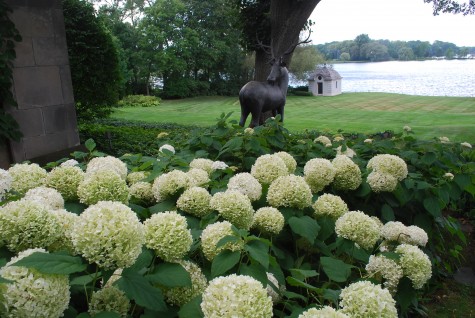
The Annabelle hydrangea has been the mainstay of the summer shrub garden as long as I can remember, though I no longer plant it. Weak stems and overly large flower heads make the shrub a challenge to keep off the ground.  Given heavy rains and mid summer stormy weather, you are likely to wake up with those flowering spheres face down in the mud.  Should you have them, cage or otherwise securely stake at least 40″ tall out of the ground-in the spring.  Othereise, you will be chasing some stop the flopping solution that looks awkward and unnatural.   

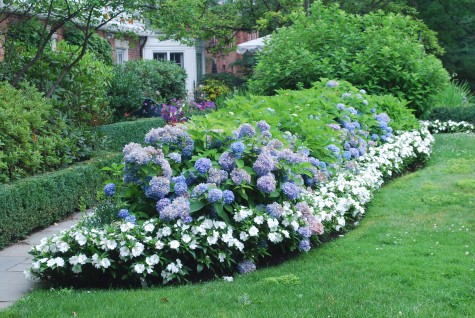
This garden no doubt is the one place for 100 miles perfectly suited for Nikko Blue hydrangeas.  Once out of the nursery pot, and in the ground, they are generally known to be stingy with the flowers.  Blue hydrangeas-what midwestern gardener does not long for this plant to perform for them?  I am sure many more get sold, than deliver and please.  As no one grows hydrangeas for their shape and foliage, choose a cultivar known to reliably produce flowers in abundance in your zone. 

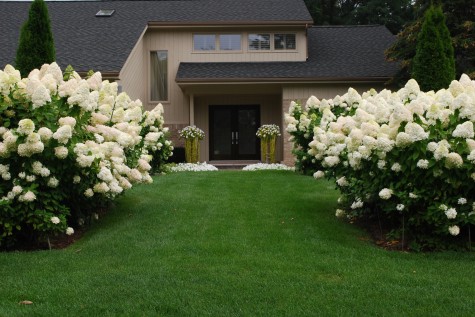
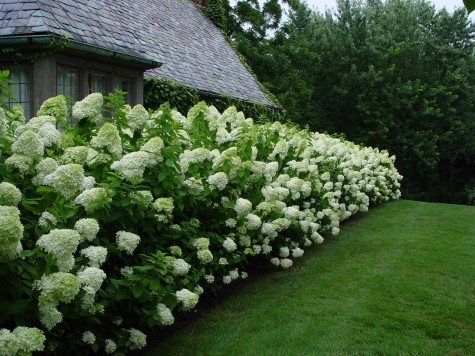
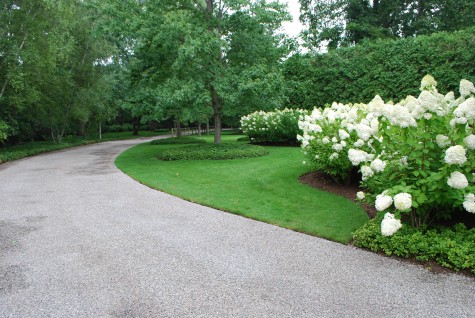
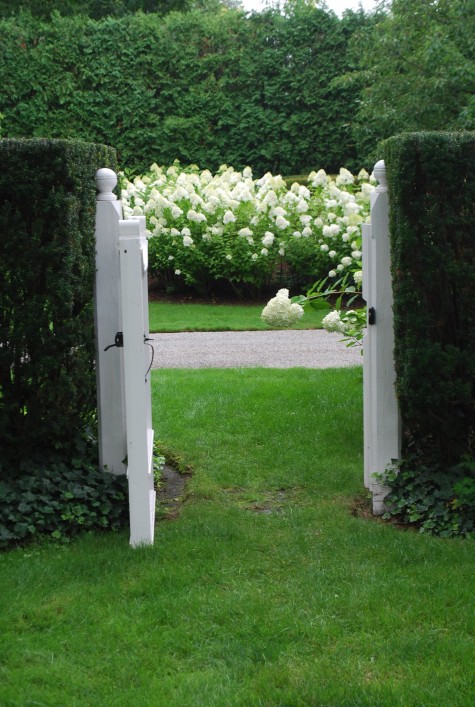
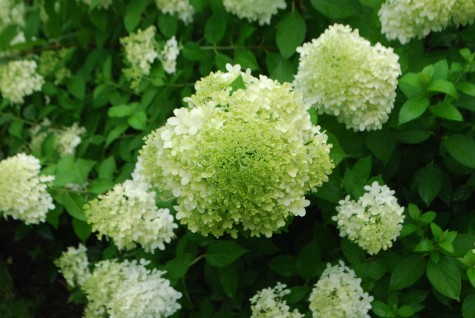
Flowers in abundance-perhaps this is what makes hydrangeas so attractive in a landscape.  I favor the Dutch hybrid-known as Limelight.  They are sturdy growers-there is never any need for staking.  Their hydrangea paniculata parentage is responsible for the cone shaped flowers that open green, mature white, and pink with age. The straight species hydrangea paniculata is a very wide and very tall grower.  The flowers are many, but modest, open and subtle in appearance. A hedge of panuiculata 8 feet wide by 40 feet long might make a show.  Limelight produces densely showy flower heads from a vigorous and adaptable shrub-the best of all worlds, should you be talking hydrangeas. 

Densely blooming and showy-see what I mean?  They do not ask for much-this part I am especially fond of.  They handle full sun, given sufficient water, with aplomb.  They will willingly survive part shade, and bloom better than most hydrangeas starved for sun. They grow fast.  They are fine with a serious spring pruning.  I have Limelights I prune down to within 14″ of grade-where it is my idea to keep them in the 4′-5′ tall range.   

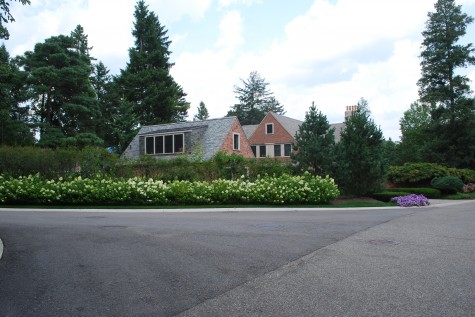
Given a space of sufficient size, a hedge of hydrangeas provide no end of a robust visual reference to summer, lots of flowers for bouquets, screening, material for dried arrangements.  What garden shrub do you know of that delivers on this scale, and to this extent?   

Should you be thinking you might plant some limelights, I would make the following suggestions.  Locate them in as much sun as you can muster.  Do not space them any closer than 30″ on center-36″-42″ on center will fill in in no time.  They like regular moisture.  Whatever you have done to enrich your soil with compost, the hydrangeas will appreciate.  Given how fast they grow, a 3 gallon plant will catch up to a five gallon plant in no time at all.  If you plant smaller plants, be sure they get regular water to the rootball.  Potted hydrangeas become rootbound in the blink of an eye.  Lacking the water they need, the foliage will burn and drop-this is not a good look.


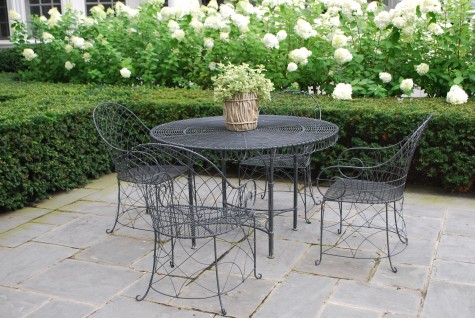
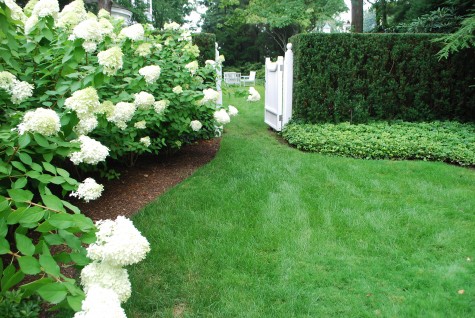
My landscape features 2 large blocks of Limelight hydrangeas-25 plants in each block. They are about 7 feet tall, and just coming into bloom.  In full bloom, they are glorious. In late bloom, they are beautifully moody-green, white, and white speckled with rose pink.  The show goes on for a number of months.  The limelights are just now coming on-I am ready.

Coping With The Heat

We have had quite a streak of 90 plus degree days in the past 3 weeks. It has been enough to make even the most passionate gardener wilt.  Even the corgis want no part of it. Getting in my fountain at the end of the day has been a regular thing lately.  Intense heat can play special havoc with gardens in containers, as technically speaking, their roots are above ground.  They also are completely dependent upon you for water.  But there are some things you can do to help your containers cope with the heat. 

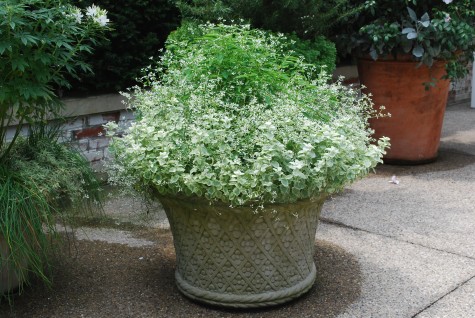
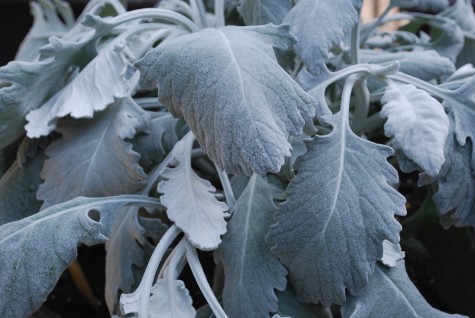
The obvious solution is to pick plants that like to be dry. Succulents, echeverias, agaves and other desert type plants can survive long periods without water.  I am told that agaves have lived on the roof of the Vatican for 300 years-I am quite sure no one waters them.  Plants native to desert like environments have adapted to do well with little water.  Being from the Midwest, I am not such a fan of these plants.  I would starve, only having succulents to look at in my pots, so I look for other solutions.  Diamond Frost euphorbia and variegated licorice will not suffer the gardener that waters them too often.  Once established, I only water when they are really dry.  

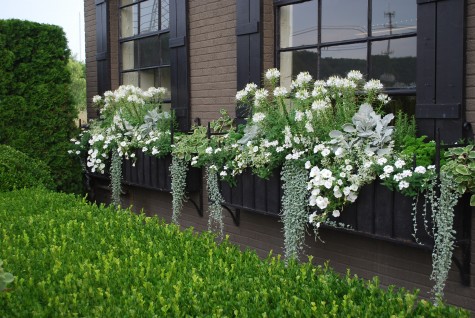
You can buy a little time if you grow annuals in window boxes.  The big idea here-a giant soil mass dries out slowly, rather than twice a day. When soil heats up, the rate of evaporation of water from that soil gets to be speedy indeed.  I have seen clients splash water on their pots from a watering can-this is not watering.  I fill this window box to the top with water, let the water soak in, and fill the box again.  I repeat this until I see water raining out the bottom.  Water your pots thoroughly, not lightly.  This box sometimes goes three days before I need to water again.

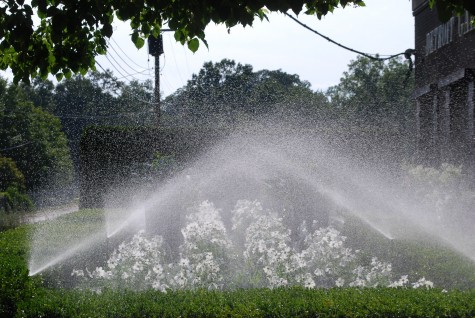
Automatic irrigation for annual plants can save you hours of time, but you have to be sensible with it.  Water automatically when there is a need, not automatically.  Patty at Bogie Lake has been watering annual crops for so long she can tell if something needs water by looking at the leaves.  She says the green color will change when a plant is dry.  Barring this type of watering skill, put your finger in the soil to see if it is dry. So many people plant impatiens in ground, as it is so tolerant of water from an irrigation system. The cosmos in this bed I let go to the dry side before I water.  Most annual plants love the heat.  90 degrees they handle with aplomb; it is 90 degrees without water that is a problem.

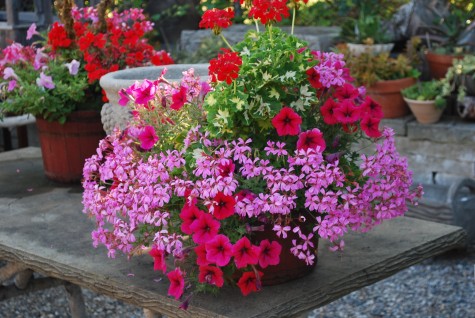
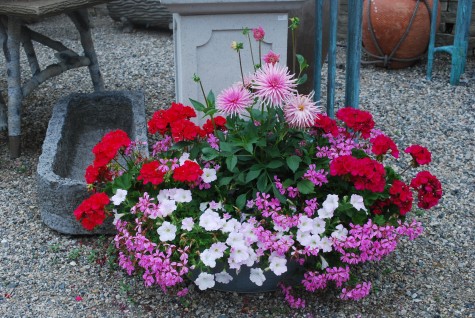
Small containers in full sun locations are not for everyone.  Not everyone can water twice a day if the temperatures are over 90.  If the time you have available to water is short, use fewer, and bigger containers.   If you must have smaller containers, choose plants that don’t mind drying out, or plants of easy culture.  The only thing that ever seems to bother petunias much is too much water.  These mini cascade geraniums are amazingly tolerant of hot and dry conditions. They also bloom long into the fall.  I wonder why I do not see them used more often.   

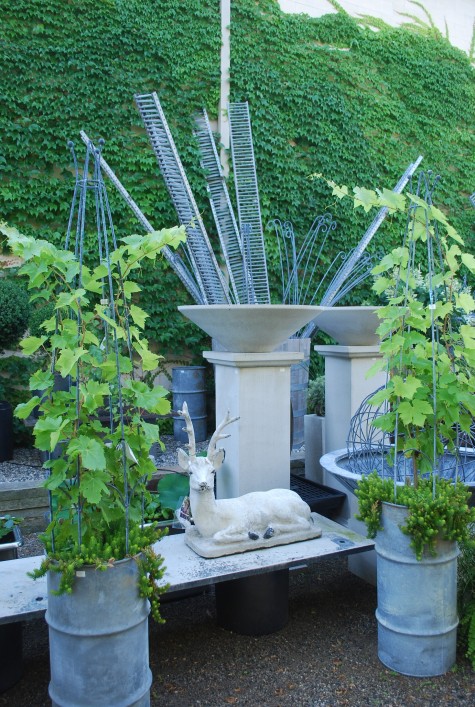
A grape vine and some angelina is a dry and hot tolerant combination, and much more verdant looking than hens and chicks.  Plants liking a long root run, as do tomatoes and grapes, benefit from deep soil more than wide soil. 

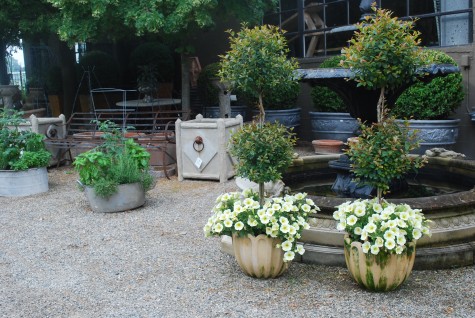
Topiaries grown from shrubby material such as these eugenias are not fussy either.  They never seen to be bothered by heat, and they tolerate imperfect watering.  Choosing plants that are native to hot and dry environments are perfect for your full sun terrace.

When plants grow together, they shade the soil.  This slows the rate of evaporation from the soil much like mulch does.  I may groom old leaves out in order to keep good air circulation, but I let the plants provide a shade barrier to the soil.  A hanging basket that has gone bald on top and is showing soil will dry out very fast.  Most plants do not like to be watered every day, but when the temperature soars, you may need to do just that, to keep them alive.


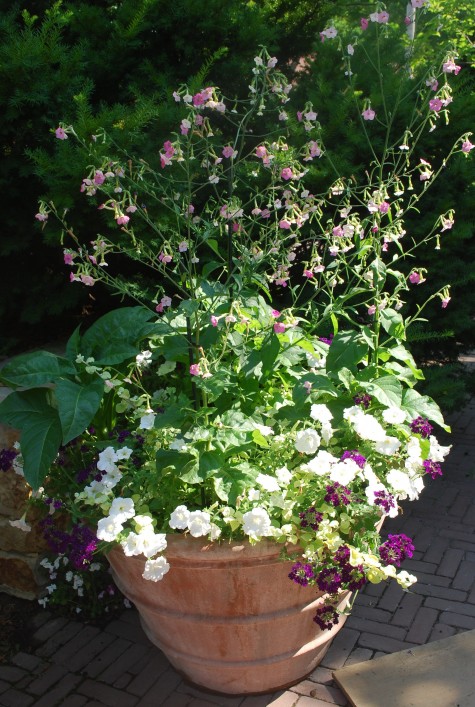
Be thoughtful about where you place your containers.  A little shade from trees or shrubs can help your post stay good looking.  This pot has enough exposure to the sun to stay good looking, but not so much exposure that they fry. Group pots together; one large pot planted with a topiary lantana can handle any amount of heat and sun.  Other pots grouped with it will benefit from the umbrella.   Other plants that make great umbrellas are datura, irisine, nicotiana mutabilis (pictured above) and grasses. 


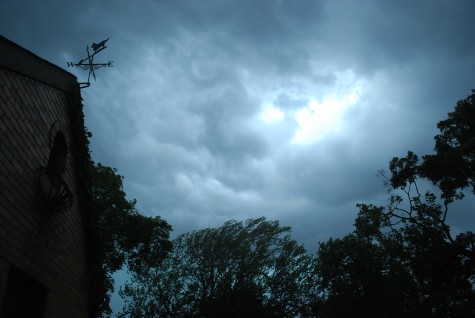
Seeing these rain clouds gather overhead was a gardening religious experience; we had 1.5 inches of rain last night.  And relief from the heat. Some days you just get lucky.

Appealing Leaves

Leaves are a very highly specialized mechanism for converting the energy of the sun into compounds that provide food for a plant.  The word for this-photosynthesis.  Though I have a middling ok understanding of the science involved, I am better on the appreciation end.  The infinite diversity of leaves is like having a box of pastels with a 1000 diferent colors available-only better.  Leaves are not just diverse in color, but also in mass, volume, substance, shape, form and texture.  Appealing leaves can add as much to your garden-maybe more so, than the flowers that come with.


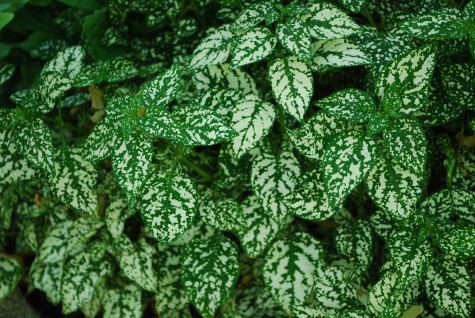
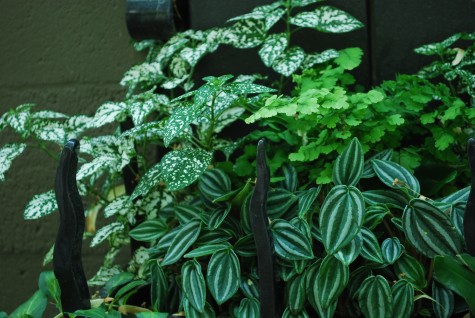
Is it my age, or are polka dot plants cool? I like variegated leaves-this plant does a stellar job of delivering  very interesting color contrast and texture-and is adaptable to either full shade or full sun.  What more could you ask for?  They are equally as good in the shape department-I trim mine into all kinds of shapes-balls, ovals-they are as decent as any living plant I have ever seen at approximating a square. I think of them as supporting cast leaves-would that I could grow this plant into a topiary on standard.      

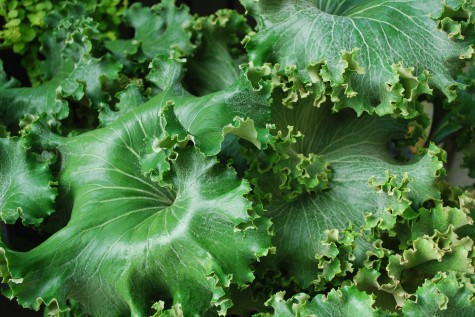
This handsome leaf strongly reminiscent of Luciano Pavorotti is related to ligularia.    The large thick leaves of Farfugium terminate in graphically frilly edges.  Look again-this is a leaf a gardener would never forget.  The contrast in texture between the main leaf and the edges-as dramatic as it gets. An aria is in the air.  A simple and decidedly modern container is all the better for the strong texture and rhythm that a planting of this plant could provide. 

Pepperomia-this family has many species, and lots of cultivars.  Long the darling of the indoor house plant set, I like planting them outdoors.  The leaves are routinely round or oval-the variation in surface, sheen, and color- striking. This class of plants-I am a fan of pepperomias. The small growers, my favorite.  The big paddle shaped leaves of a viariety whose name I do not know-I plant them with the frothy leaf fronds of ferns-a dramatic study in contrast.  Try tropicals outside-they might surprise and please you.    

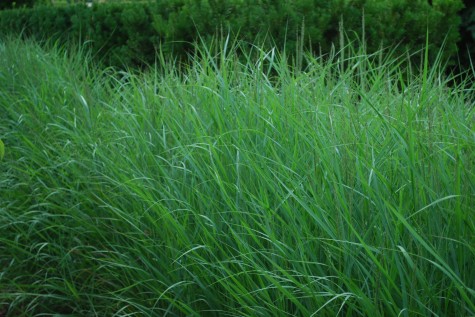
Grass-I admire grass in any form.  My clipped turf-a groundcover like a skin over dirt. The ornamental grasses such as this Panicum Virgatum-graceful.  Tranquil.  Meadowlike.  Good for the gardening soul.  The long narrow leaves are textural, and rhythmic.  Any long grass is all the better for the wind flowing through.  Ornamental grass moves with the slightest breeze.  I would put grass at the top of my list for leaves that manage to make beautiful music.

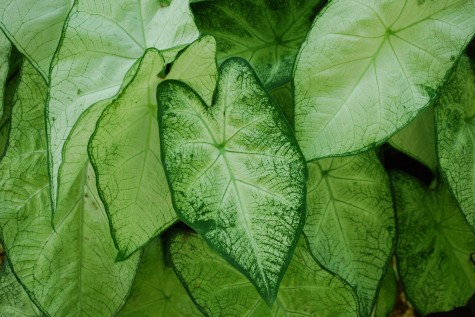
Caladiums have giant heart shaped leaves.  They come to a point dramatically-like an arrow.  They are thin.  Substance refers to thickness; a xx leaf is thick and rigid-a caladium leaf is very thin, and wispy. A leaf of considerable size, which is white to boot-this plant will like shade.  The new varieties of caladiums-such as this all white variety known as White Christmas-greatly enhance the palette of any gardener focused on great design.  

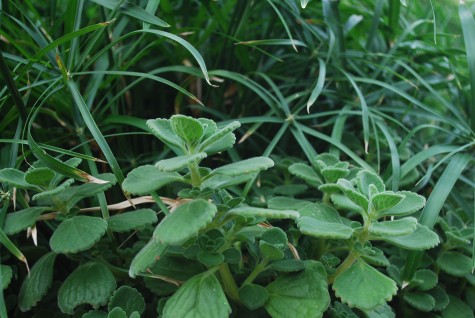
Cuban oregano-I plant this plant as a skirt,  routinely.  The thick hairy leaves have a great texture.  They grow like weeds, and take well to pruning.  A mass of this oregano well grown-green and beautiful. 

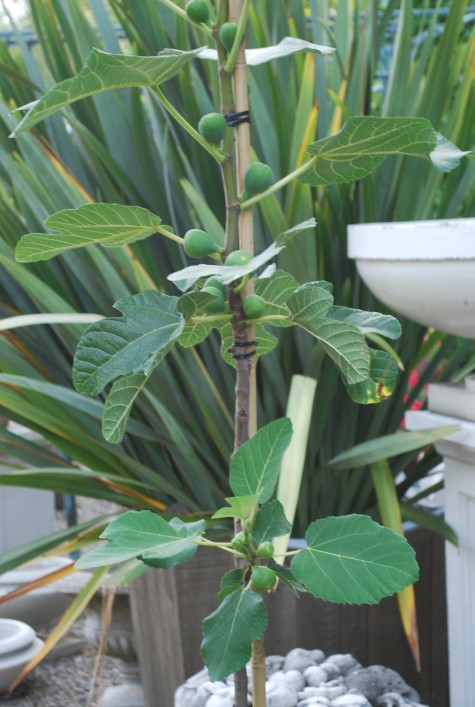
Figs have large and beautiful leaves.  The leaves are spare, on the trunk.  Should you have a modern or contemporary garden, consider figs.  Each leaf is a sculpture. The ripening fruit will please you.  Should you have a farm and garden landscape, a few fig trees will make themselves at home.  The design issue here-make much of whatever design component important to you that takes your landscape where you would like it to be.   The figs of the Italian working gardens-is this you?  The sparsely growing figs that so fit in a contemporary garden may be more to your liking.    

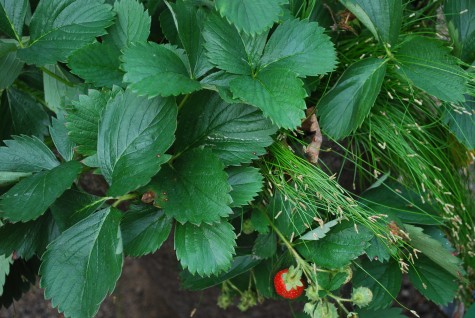
Strawberries-who does not love this fruit?  I would only ask that you look at their medium large toothed leaves; are they not beautiful?  This pot at the shop features a topiary rosemary-which I have left out of this photograph.  The rosemary- underplanted with strawberries and  fiber optic grass.  The contrast of leaf textures-pleasing. 

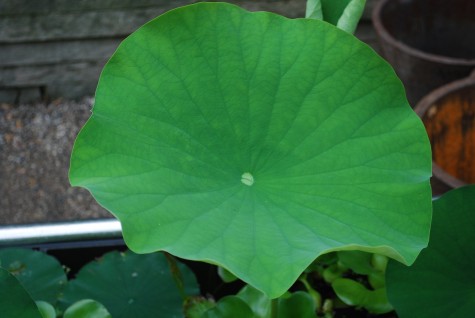
Lotus-this leaf is like no other leaf. Thin, delicate, and emerald green-astonishing.    Our native lotus, nelumbo luteus-I have many memories of visiting those large stands near Monroe, protected by the Ford Motor Company.  The Ford family-they support my museum, my opera, my symphony, my city-and my native lotus. Many thanks to you, Ford, for honoring the beauty of the leaf.  Gardens may have flowers, but most of what is there is about leaves.