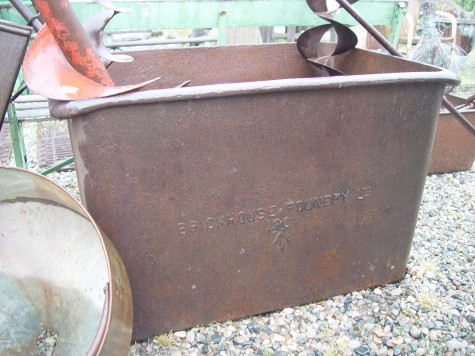
foundry vat
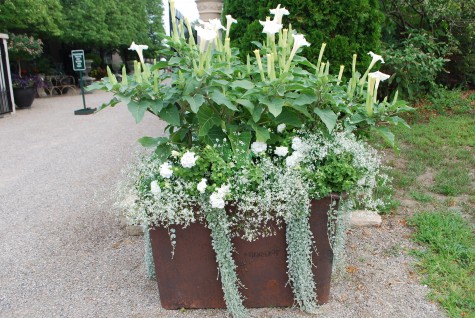
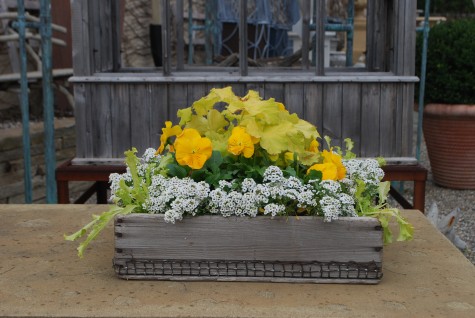
wood box
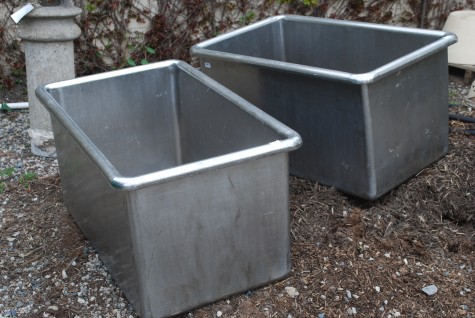
stainless steel chocolate processing vat
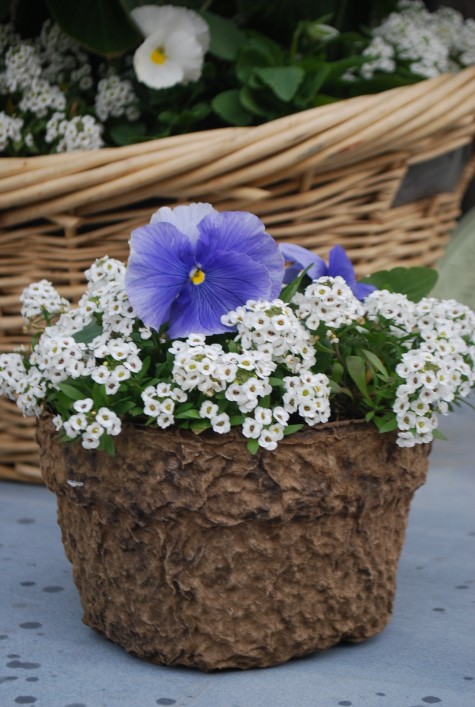
fiber pot liner
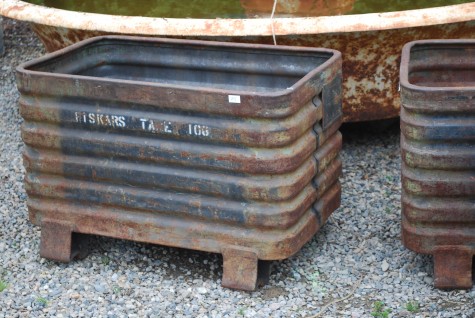
industrial parts bin
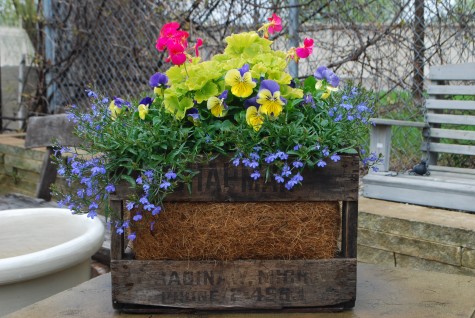
coir lined vintage vegetable crate
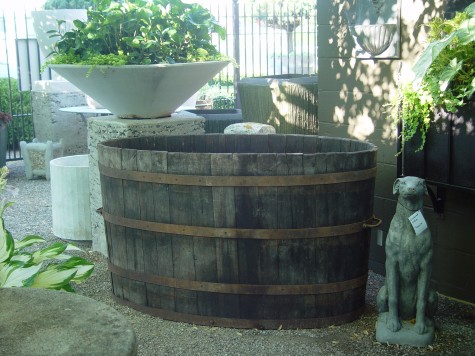 vintage French wine vat
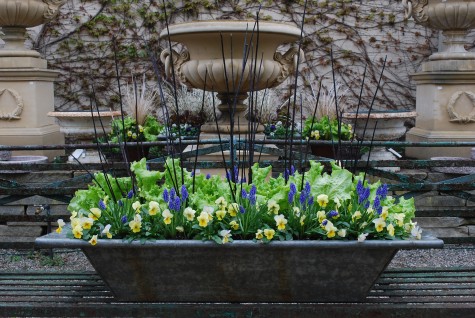
galvanized water trough
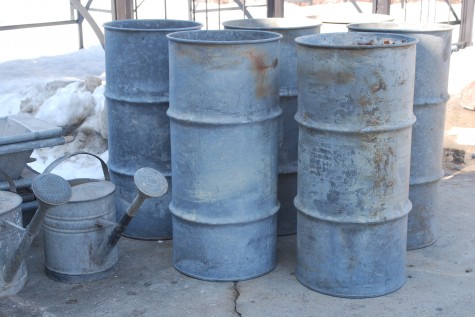 industrial storage drums
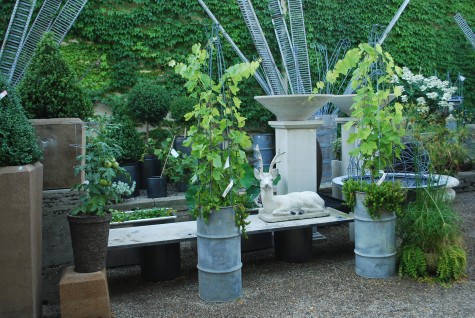
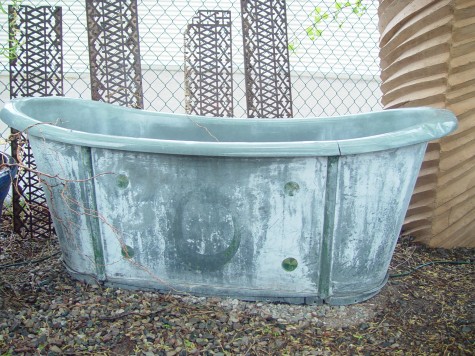 vintage zinc bath tub
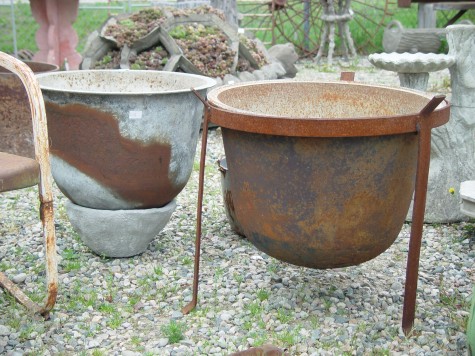
iron cauldrons
Deborah Silver is an accomplished and experienced landscape and garden designer whose firm first opened its doors in 1986.
foundry vat
wood box
stainless steel chocolate processing vat
fiber pot liner
industrial parts bin
coir lined vintage vegetable crate
vintage French wine vat
galvanized water trough
industrial storage drums
vintage zinc bath tub
iron cauldrons
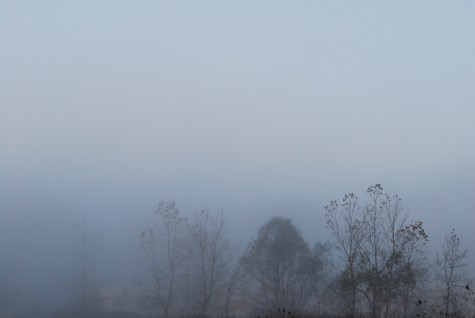 Our season is changing quickly now. 28 degrees overnight made for a fine fog this morning. We finally had that first hard frost that I dread. It is suddenly too cold to be outside-unless you are working. Buck has drained the pool. I have chopped back every perennial on the property. The roses look ridiculous without their perennial friends; they are such awkward and gangly growing things. The garden has an air of resignation about it.
  At least the tulips are planted. I am as busy planting pots with bulbs as I am redoing the shop for the holidays. Having one foot in winter and another in the spring to come is a way of coping with the winter that is surely on its way here. I have occasionally planted left over tulips in crates for the spring, but this year I planned ahead. The shop will have lots of pots of all manner of bulbs come spring. I bought tulip mixes, grape hyacinth mixes, white daffodil mixes-even trout lilies. Some pots I will layer-my first time trying that. Fortunately the garage here is of considerable size, so all the pots will have an unheated but indoor space for the winter.
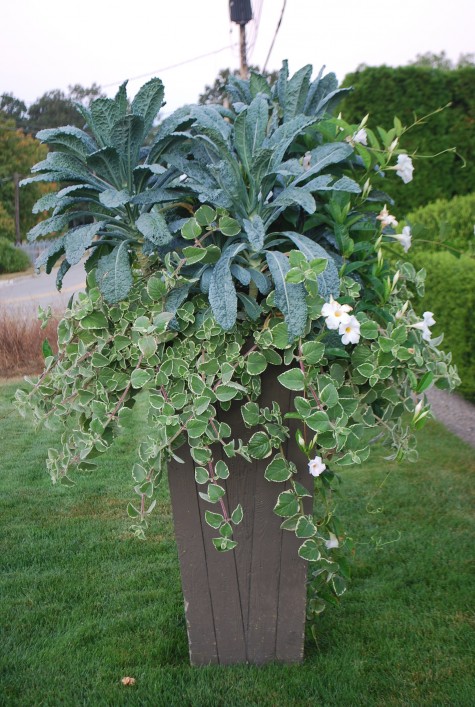
My Tuscan kale pots rank up there as one of my most favorite annual plantings. Mandevillea does just fine left to its own devices. Plectranthus and kale are stiff and solid growers; the swirling vines lightened that heavy look. They grew such that the pots looked small-this I liked.
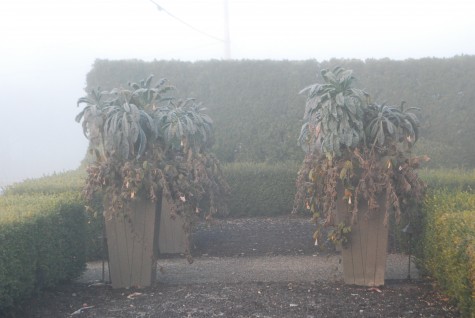
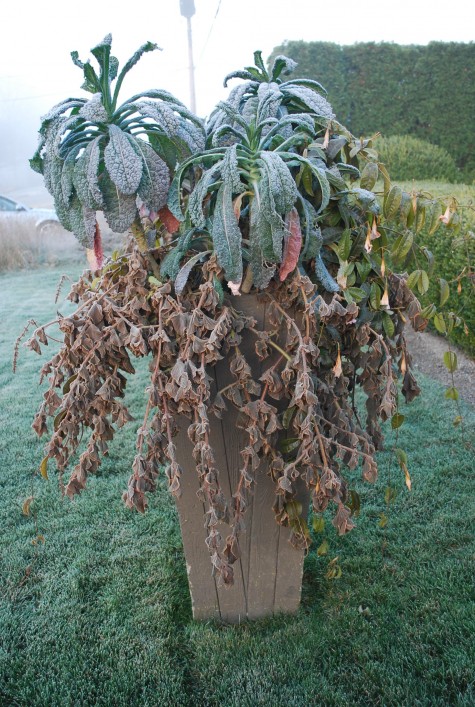 Plectranthus has no tolerance for frost whatsoever-as you can see. It is dramatically unhappy with the turn of events. Even that cold tolerant kale looks defeated. Overnight the thick stems and felted leaves have turned to mush. My once handsome pots look like a compost pile. I looked at this for a few days before emptying the pots. Buck asked me if I was hoping they would perk up-this made me laugh. Maybe I was.
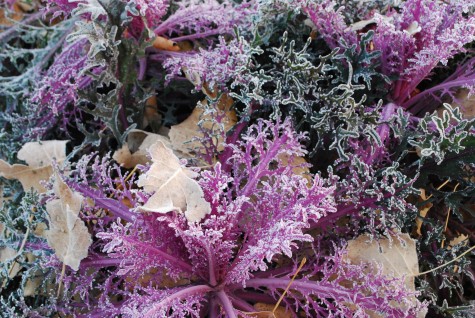 If a leaf is chilled below the dew point of the surrounding air, and that surface is colder than freezing, frost will form. Frost-scientists call this spicules of ice that grow out from that surface. Sounds bad, doesn’t it? If there is a wind, frost arrows might form. Hoarfrost refers to those white ice crystals you see deposited here on this kale. Heat loss from these leaves makes their surface colder than the surrounding air; the water in the air condenses, and freezes.
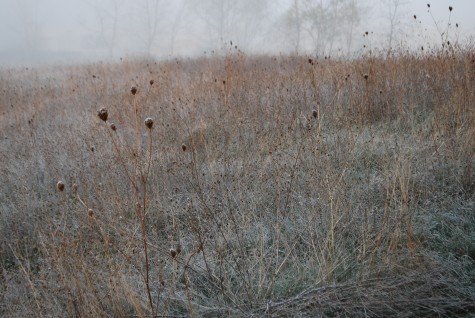 Air hoar, surface hoar, crevasse hoar, depth hoar, advection or wind frost, frost flowers, rime-of course there is plenty of scientific discourse on the subject. Plectranthus, like tomatoes, is killed by frost. Hardy perennials shed their leaves, go dormant, and survive freezing. Evergreens shrug off the freeze and stay green throughout the winter. The needle like foliage helps to conserve moisture during that time when the roots cannot take up water. The survival mechanisms of hardy plants are amazing.
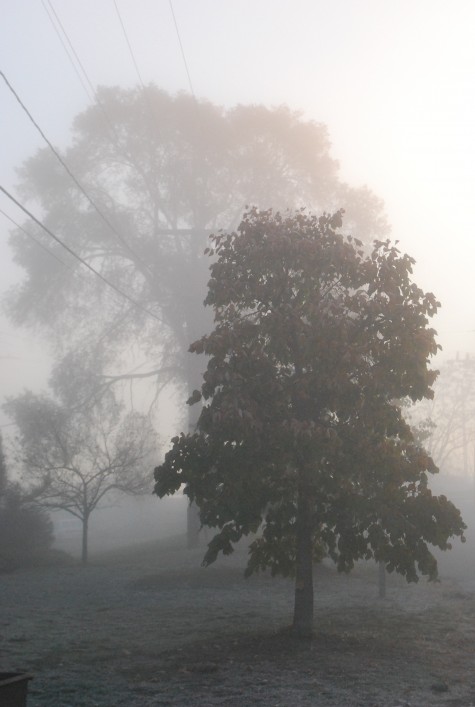 Trees can be damaged over the winter from frost. Very cold air temperatures on a very sunny day can result in frost crack to the bark. When the grapes on the pergola here at the shop were young, we wrapped the bark in white tree wrap. This helped to reflect the heat of the sun on a cold January day. Now that they are better than 10 years old, the vines seem to withstand our winter weather without injury.
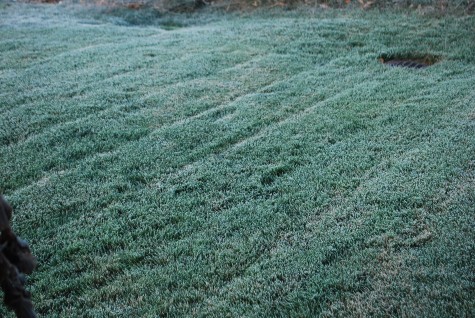
The walk across the lawn this morning-crunch, crunch.
Though I do not talk about it much, a considerable amount of my time is spent as an administrator. Though I would much rather be designing anything-a topiary sculpture, a series of containers, a pergola, flowers for a wedding, a series of steel pots, a landscape, a vignette in the shop, a perennial garden, I am in fact a small business owner. My simple version of what business ownership means to me can be summarized as follows. My love of landscape and gardens, my interest in people who have the inclination to garden, my need to create-my plan is that my business enchants my clients, and sustains the evolution and expression of my entire group.
Sustenance is a word fraught with meaning to every gardener. Healthy soil sustains everything that roots into it. Countless plants provide sustenance-grapes, tomatoes, chard, cauliflower, potatoes, corn. The farmers in this country feed lots of people-I am grateful to them for the cippolini onions, garlic, chard, beet greens and tomatoes I bought last Saturday at market. Sufficient water encourages new trees and shrubs to root. I am particularly interested in my clients having success with their landscapes, their gardens, their pots, as I know they will get sustenance of some kind from it if they stick with it.
I am sustained in no small part by my banker Linda Saperstein. For years she has made the administration of my business easier via National City Bank. I am a very small business, but she has always treated me with spot on attention and respect. NCB has now become PNC bank- she did not skip a beat. I got lots of help from her, handling that change. I had a letter/question from the bank; call our 800 number, it said. 20 unsuccessful minutes later, I called Linda. Never call the PNC 800line, she tells me today. That’s what I’m for. Call 1-800-Linda, ok? She not only handled my request, she made me laugh.
I have been thinking about her all day. I love how willing, able and available she is. Our European shipper will collect everything Rob purchased; Linda electronically transferred the funds needed to their bank. The process of collection, packing and shipping from overseas begins when the shipper has the funds to pay Rob’s bills. Linda made that happen with dispatch. Should you be interested in a banker who answers her phone and knows your name, call Linda Saperstein at PNC Bank. As far as I am concerned, PNC Bank’s real name is Linda Saperstein.
Some things happen very slowly in a garden. I once scarified some gingko tree seeds, stratified them in my refrigerator for 10 weeks, and planted them out in pots in the spring-with the help of a parent. I probably was 11. Who knows how long it was before I could plant the seedling in the ground-it could be my Mom did that part for me. 5 years ago I went to see the house where I grew up-that gingko tree had become a substantial tree. Last year I made another visit-the gingko had been cut down. 45 years to grow a substantial and handsome tree from seed. Other things happen very fast in a garden; I am sure it took less that four hours to get that gingko down and hauled away. A vision of a climbing rose redolent and weighted down with thousands of blooms in June takes years to realize. It takes plenty of additional time to feed and prune, deal with the blackspot and the Japanese beetles, encouraging a plant to stay the course long enough to make that vision a reality. A tomato seed can become a ten foot tall rangy plant loaded with fruit in the blink of a season. For a gardener, a season is a measure of time. Not short, but not very long either. It seems like my coleus just got good when it started dropping leaves from cold.
A landscape or garden plan can slowly consume what seems like an endless amount of time. Any amount of time accompanied by the wringing of hands and indecision can becomes an interminably long slow time. One can stubbornly hold out for the perfect plan, and suddenly find themselves out of time-I am a guilty party in this regard. I had the good sense to plant some small evergreens, thinking it would buy me some time to get the rest of a scheme together. At fifty I awoke from my working every waking moment stupor to maturing evergreens and weeds in their early twenties; obviously my time to make the garden of my dreams was running out. I needed to step on the gas.
When I design for a client, my first act is to stew. I stew over what a client has told me about what they would like to see happen. I stew even more over the site plan or mortgage survey. The stewing takes a lot more time, compared to the drawing. Once I sit down to draw, I have an idea in mind-a concept. The drawing has to work within the confines of a lot of givens. The lot lines. The physical distance from the home to the street. The location of the driveway may or may not be a given. In the drawing stage, I see how much more time it will take to make what I conceptualize work. The drawing goes slow at first. Maybe the concept doesn’t work very well at all; it takes strength to ignore the clock and start over. Should everything be working, the drawing goes fast.
Once a design is in place and set to go, slow sets in like the project is coming down with a cold. Projects need to be organized, and staged. Plant material needs to be located and shipped. The stone mason needs to see the job and quote the work, and set a tentative date to start. There is a chain of events which is bound to get tangled up. A client approaching me in September about a project needing to be finished the following June-one would think that would be enough time for just about anything. The project will finally get underway Monday October 18, some 48 days post the decision to proceed. Who knows what lies ahead that could slow things down even further.
Pine Knot Farms is one of my favorite sources for hellebores. I was looking at the plants I bought from them two years ago just the other day. I am hoping this coming spring I will see my first flowers. Nothing happens very fast with baby hellebores. I have a fruiting olive tree in a pot which spends the winter in the green house; it has not grown an inch in the past two years-well maybe, an inch. What the hold up is, I have no idea. Neither a garden nor a landscape happens overnight.
But plenty can happen overnight. A client may have a garden that needs a new dress and a good hair do in time for an unexpected event. A tree can be blown over, or struck by lightening; I have had both of these things happen. Some people fall in love with gardening very fast, and fall out of love even faster. Some warm up to the idea very slowly, and then presto- the warm feeling becomes a fire burning. All manner of circumstances can change in an instant. It is easy to recognize an instant when it happens. It is harder to keep that possibility in mind every day, and garden accordingly.