
Every living thing has various incarnations-some of these states of being have names. My corgis go by many names, depending on the circumstance. Howard, for example, lives, eats and breathes just how I imagine anyone named Howard would. He takes his job very seriously. He never misses a day’s work; he is somewhat humorless where dealing with the public is concerned. He is a dignified and serious dog of very short stature. So sometimes, Mr. Howard. But when he comes inside with every bit of detritus from outside stuck to his fur, I call him Hoover. When he is racing around in jubilation after breakfast in the morning, I call him the head pupathon. When he looks worried, Mr. Bebe. When he does crack a rare joke, I call him Mr. Pookiness. Milo might be Clowndog or Hambone, depending on how hard he is trying to get someone to play ball with him. Milo So Sweet-I name the day, and talk to him. His human name is a good one, as I am convinced he is really a little person in a dog suit. The two of them-the dodies. Don’t ask where that word came from-I have no idea. The Dod-ies-so be it.
Miss Dirtiness-that would be me. It is under my fingernails better than 250 days a year. My clothes and shoes have that sepia-toned vintage look; the washing machine does what it can. When it comes time to clear the plates after dinner, there is the clean table which was underneath my plate-and the fringe of bits all around that somehow managed to slide off. Some of the food on that plate, I probably ate with my fingers that had gotten only a cursory wash. It is enough to make Buck raise his astonshingly expressive eyebrows. My steering wheel, glasses, computer keyboard, and camera, my socks- all have that telltale aura of grime. As my grandmother said, a peck of dirt before you die. So I was surprised last week at my own considerable dismay at the sight of dirty water coming out of the tap. Rob had left me a note from the night before-check the water. I ran a three gallon vase full of water-very unappetizing.
I am telling a tale-unappetizing doesn’t begin to describe my reaction. The greasy film on top of the water had a greenish cast. Dark bits in suspension-what were they? After an hour, not much had settled out. I emptied out the vase at the end of the day; the dried dirty grime in the bottom of the vase the next morning did not dissolve when I tried to rinse it out the next day-shocking. I was appalled. It was revolting, that dirty water. Needless to say, I made my coffee with bottled water. It took an entire day of calls to the water department to finally get an answer. A contractor working on the road construction near the shop had hit the water main. It took another day for them to fix whatever, and flush the hydrant. For three days, I did not have clean water.
A few weeks ago at a dinner party, I had occasion to talk to a professor in nutrition from the University of Michigan; we had a spirited debate going about organically grown food. I protested to her than no study has even shown that the consumption of organically grown food resulted in healthier people who lived longer. She replied-the people in this country have access to clean water. Clean water, she said. This skews the organically grown food studies. Though I was dubious that night; today I have a different take. Miss Dirtiness stands on the side of clean and drinkable water. No doubt clean water was on my mind the other day. I regularly have it to drink, to wash in, to cook with. I do not want to, nor am I competent to, discuss the science of clean water, but suffice it to say, I have never been made sick by dirty water. Today I understand that clean water is not a given, it is a mission-a committment. What I once thought was about food, may be about clean water.
We have had a fair amount of rain this week. What water is falling through the sky to the ground-who knows what it might pick up in the atmosphere. But every spring, I see plants clearly being nourished by it. Our rain this morning cleared; we have sun now. Everywhere I look, I see healthy plants growing lustily. A big part of that-clean water.
There are many places on this planet where a supply of clean water is little to non-existent. One serious and immediate consquence of natural disasters can be the disruption of a clean supply of water. The agony of Haiti-so many people with no clean water to drink. Please do not fault me for an in depth overview of that disaster-I am not able. But I did agonize about that impossibly hot and humid island culture, enduring no source of clean water for drinking. Shocking. Whether I drink the water, bathe in it, water my garden with it, put cut flowers into it ,or observe it in a lake or stream or fountain, clean water is essential to the health of every living creature. I may be a Miss Dirtiness, but I have a Miss Stewardia in my repertoire-we are not owners, we are stewards.
I am watching with as much dread as every other American, the oil spreading across the surface of the Gulf of Mexico towards the Gulf states. The case of the dirty water in my vase from a jostled water main-this disaster a trillion zillion times my momentary trouble. This country is full of good people who not only understand the science, but will commit to what it takes to deal with disaster.
God willing, a good number of them are all ready working, or are on their way to the Gulf.
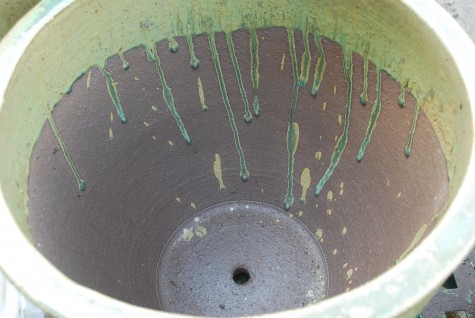
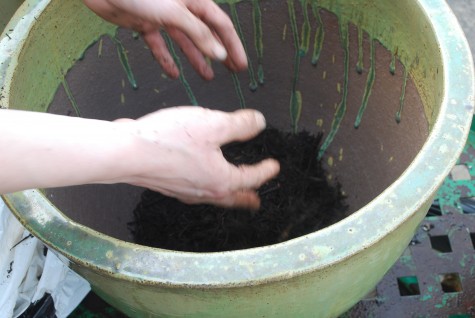
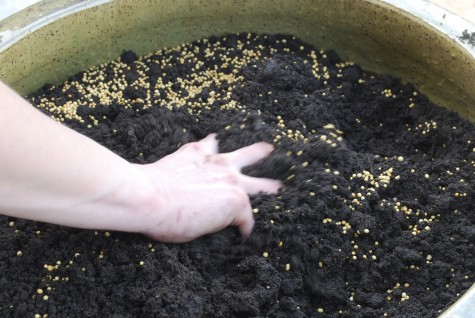
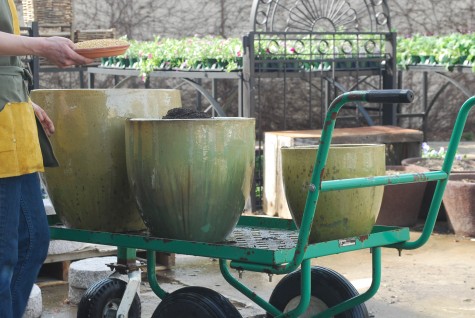
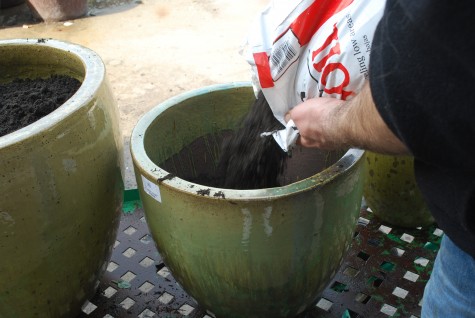 Perhaps even more important-the soil. Every gardener has a mix-I am no exception. I like a heavy soil, leavened with lots of compost and a big dollop of sand. Though plenty of garden centers sell giant bags of peat based “planting media”, I am a fan of topsoil. As in the closest thing to good garden dirt that is available.Peat based plant mixes are light-you can carry a giant bag to your car. But peat based planting media implies a professional grower on the other end who will feed that sterile soil at whatever parts per million it needs to produce good plants. My dirty little secret-good and hefty soil is essential for great plantings. A compost based soil that does not dry out too fast, that has nutrients, is perfect for garden variety gardeners. I am no fan of hauling forty pound bags of soil around-so I farm that job out to whomever I can persuade to help me. This is worth the trouble-making sure the pots get filled with great soil.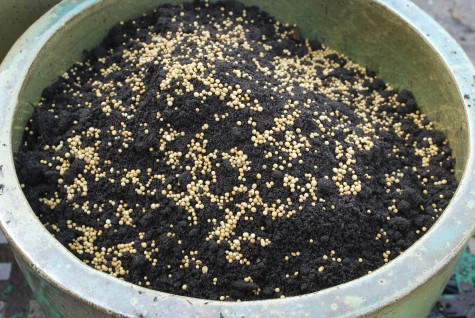










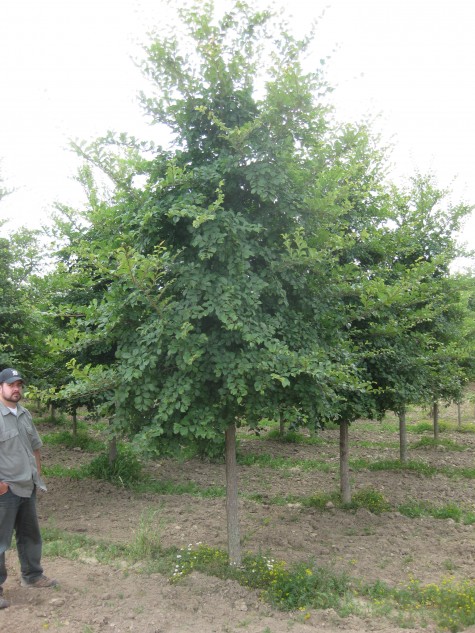
![100_2166[1]](https://deborahsilver.com/wp-content/uploads/2010/02/100_216611-475x356.jpg "100_2166[1]") One of the better parts of my work is buying trees; I buy lots of them. They may come from Oregon, or North Carolina, or Tennessee, or Macomb township just a few minutes from me. I do not own a nursery; I buy trees for specific projects. I choose based on what a client space and environment demands. The branch structure on these beech give me a great idea of their eventual shape. Jim’s son in the picture-I have a good idea of the size of these trees. As much as I would want to have one gorgeous specimen of every tree hardy in my zone, I have to make choices. These oval growing beech-perfect for a spot I am looking to plant.
One of the better parts of my work is buying trees; I buy lots of them. They may come from Oregon, or North Carolina, or Tennessee, or Macomb township just a few minutes from me. I do not own a nursery; I buy trees for specific projects. I choose based on what a client space and environment demands. The branch structure on these beech give me a great idea of their eventual shape. Jim’s son in the picture-I have a good idea of the size of these trees. As much as I would want to have one gorgeous specimen of every tree hardy in my zone, I have to make choices. These oval growing beech-perfect for a spot I am looking to plant. ![100_2191[1]](https://deborahsilver.com/wp-content/uploads/2010/02/100_21911-475x633.jpg "100_2191[1]") Some trees can screen an untoward view. Other trees provide shade from the summer sun. Trees have function; a well placed tree can cut the temperature inside a home by plenty on a hot July day. Trees also delight the eye in a landscape, via their shape, stature, bark, blooms, leaves, berries. They are the giants of the garden-proper placement is essential. These cooly columnar European green beech would do a great service screening a neighboring play structure in a very narrow space-their architectural shape and bearing-a big plus. A straight European green beech-step aside, and provide lots and lots of room, and an equal amount of time.
Some trees can screen an untoward view. Other trees provide shade from the summer sun. Trees have function; a well placed tree can cut the temperature inside a home by plenty on a hot July day. Trees also delight the eye in a landscape, via their shape, stature, bark, blooms, leaves, berries. They are the giants of the garden-proper placement is essential. These cooly columnar European green beech would do a great service screening a neighboring play structure in a very narrow space-their architectural shape and bearing-a big plus. A straight European green beech-step aside, and provide lots and lots of room, and an equal amount of time.![DSC_5337[1]](https://deborahsilver.com/wp-content/uploads/2010/02/DSC_53371-475x317.jpg "DSC_5337[1]") White pine is the state tree of Michigan. In woods of age in the Upper Peninsula of Michigan, their open growth and gorgeous towering shapes are all anyone would ever need in a tree. Should you have acreage, that is. Sheared native white pine is just that-sheared. Columnar white pine is very unlike our native species. Elegantly tall and narrow, they can give a garden stature without bulk. I have seen white pines in Michigan that could easily shade my entire property-they are not for me. This edited version I could much more easily find a home for.
White pine is the state tree of Michigan. In woods of age in the Upper Peninsula of Michigan, their open growth and gorgeous towering shapes are all anyone would ever need in a tree. Should you have acreage, that is. Sheared native white pine is just that-sheared. Columnar white pine is very unlike our native species. Elegantly tall and narrow, they can give a garden stature without bulk. I have seen white pines in Michigan that could easily shade my entire property-they are not for me. This edited version I could much more easily find a home for.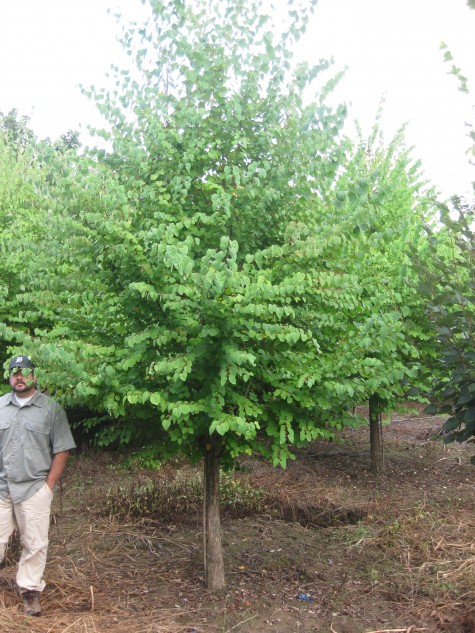 I have a great fondness for Katsura trees. Known formally as Cercidiphyllum Japonicum, their shape and quiet density make them one of my favorite trees. They have no blooms of note, but they do have extraordinary heart shaped leaves that are blue green, with veins decidedly purple. This coloration is unique to this species. These trees have been pruned; the effect is dense, and topiary-like.
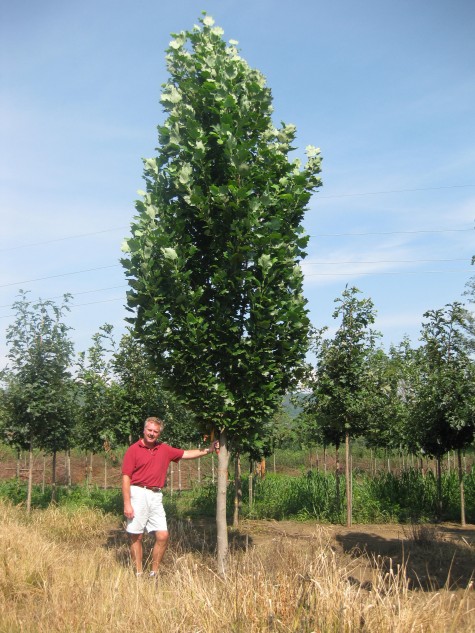 Liriodendron tulipfera, or tulip tree, is one of the largest growing trees in North America. Their green and orange tulip shaped blooms are lost on most. The trees do not begin blooming until they are old, and very tall. You need to stand off, with a spyglass, to appreciate this blooming part. I have a client with screened porches high in the air-I should talk to her about these trees. The columnar tulip tree you might be able to handle. The same smooth grey bark, the same luscious palmate leaves-in a narrow version.
 This untrimmed katsura presents very differently than those that are pruned. Many trees are seed grown, producing great variation from tree to tree. If you are looking for a tree, look in person. Even a young tree will give you a hint as to what it will become. Make friends, then buy.
![securedownload[2]](https://deborahsilver.com/wp-content/uploads/2010/02/securedownload2-475x315.jpg "securedownload[2]") These espaliered Bradford pears I am considering buying-with no project in mind. I think I might just have to have them. They are old enough to stand on their own-no structure needed. This winter aspect makes my heart pound. How they catch the snow-so beautiful. It is a sign, when you don’t think you can live without something. These trees have that feeling.
These espaliered Bradford pears I am considering buying-with no project in mind. I think I might just have to have them. They are old enough to stand on their own-no structure needed. This winter aspect makes my heart pound. How they catch the snow-so beautiful. It is a sign, when you don’t think you can live without something. These trees have that feeling. ![securedownload[1]](https://deborahsilver.com/wp-content/uploads/2010/02/securedownload1-475x315.jpg "securedownload[1]")