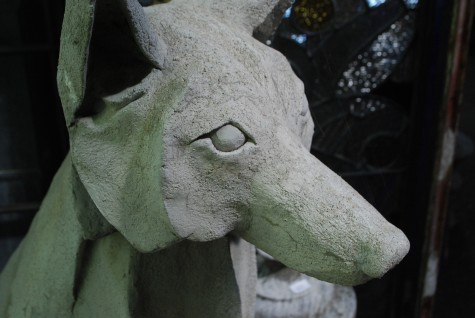
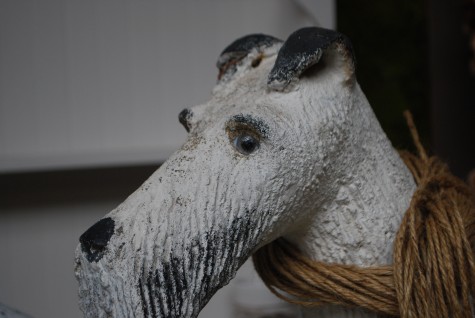
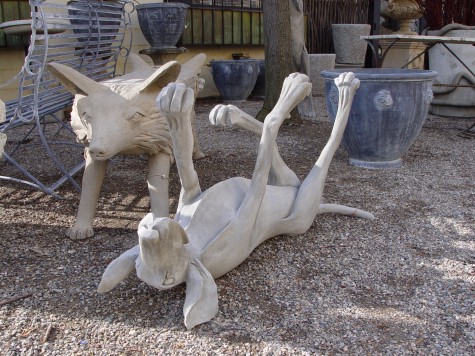
 I am very pleased that Troy is in the process of creating his third collection of hand sculpted concrete hounds for the Branch Studio, as all but one of the original 18 dogs have been sold. Detroit Garden Works gets inquiries about them regularly-no wonder. His sculptures accurately represent the forms of the hounds, but what is extraordinary about them is how they capture the soul and being of of a hound. He grew up in a rural Michigan community in a family that hunted, gardened, fished, and grew a lot of their own food. He was a naturalist, farmer, fruit grower, plantsman and gardener before he ever turned to sculpture. His understanding of the natural world is evident in all of his work.
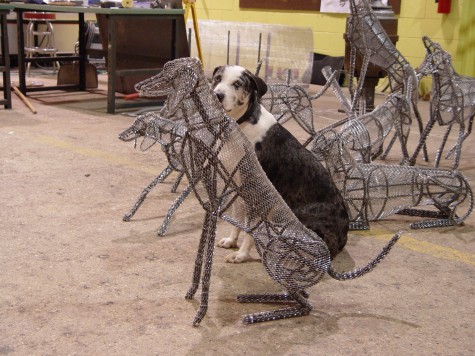 His Annie is a Cattahoula Leopard cur-one of the oldest North American mongrel breeds. Bred in Loiusiana to hunt wild boar, they are also known as Catahoula hog dogs. Fiercely dog-like, smart, energetic and unruly, Annie is much more like a wolf than a poodle. That barely civilized soul of hers you can see loud and clear in Troy’s sculptures.
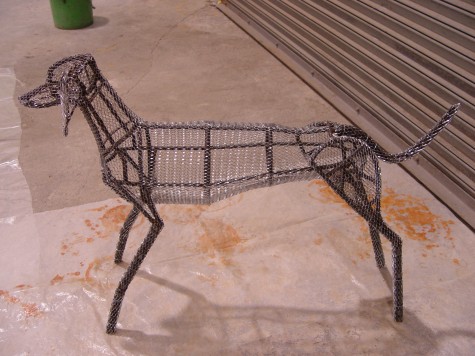 The sculptures begin with the a steel rebar armature that gets covered with a heavy duty wire mesh. The armature is designed and built to give the concrete strength, not describe the finished shape. But even at this stage, it is easy to see that the finished sculpture will have energy and grace.
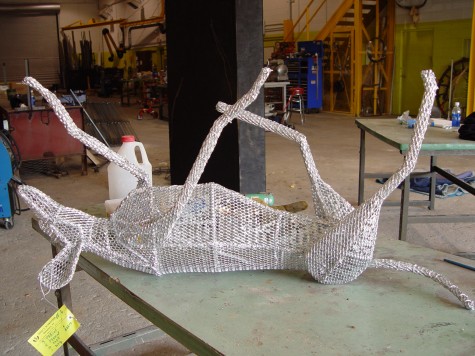 The frame is hot dip galvanized, to keep the steel from rusting once it is coated with cement. Steel and cement in contact with one another is an unfriendly affair. Cement absorbs water; steel in contact with water rusts. The galvanizing process helps keep the two materials away from each other.
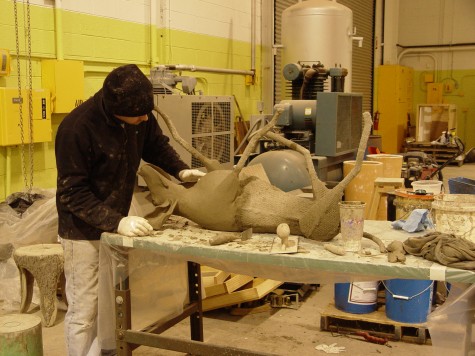 The entire form is packed solid with cement; this is a time consuming and tedious affair. Once the form has cured, a layer of mortar is applied, and hand carved. This is a simple description of a process which requires a considerable knowledge of how mortar can be worked before it sets up. I have watched him work an entire day when all the mortar would do is fall off the concrete. Or another day when nothing was to his liking; he would chip it all off the next day.
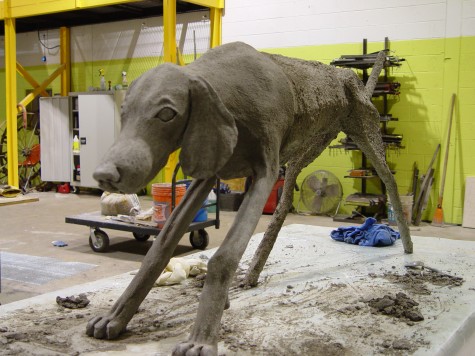 Should the mortar set up faster than you can sculpt it-troublesome. A clear understanding of how the materials work allows him to concentrate on what makes these dogs sculpture. To the last they have energy, attitude, rhythm, tension-life.
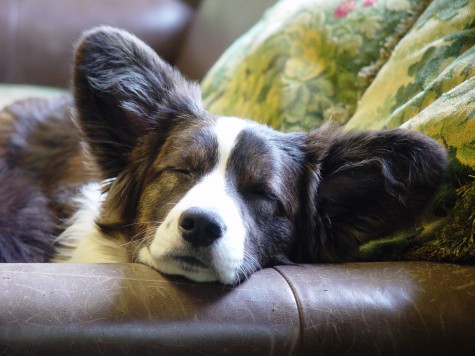
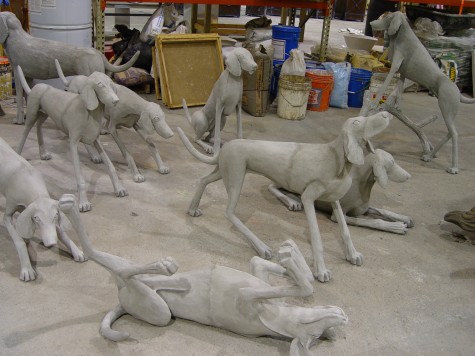 Each dog would have a whole lot of one thing going on. His sleeping dogs would be sleeping deeply, oblivious to all else. His howling dogs would keep on howling, or howl louder. His playing dogs had nothing else on their mind except play.They were all engaged in some singular hound activity. Whether sleeping, playing or barking at the moon, I knew they would really come to life outdoors.
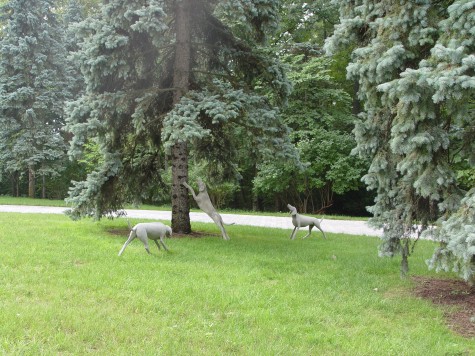 Though I really like all kinds of sculpture in a garden, I am particularly fond of these. They are of a scale and grace that makes them as natural as they are striking. Imagine this moment in the landscape without the hounds-sleepy. Garden sculpture that does not necessarily engage, energize or require a landscape does not appeal to me as much. The dogs look great from a distance, as they are very simple and direct expression of the artist’s view of the living world. Don’t ask me what I mean by this, but these dogs are as witty as they are wily.
 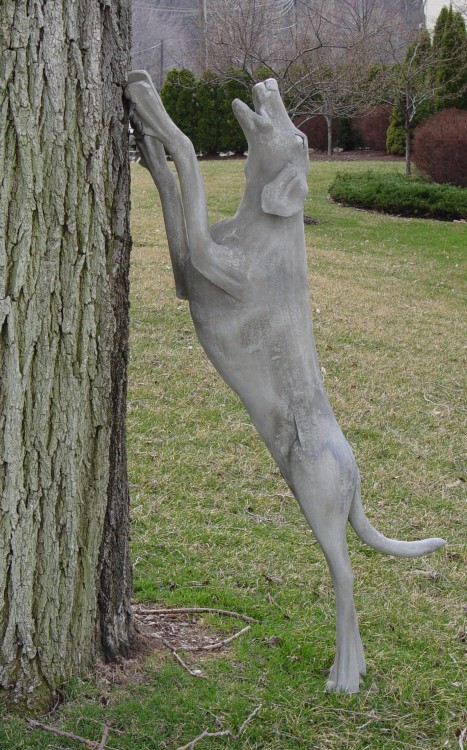 I doubt my garden will ever have a 19th century limestone sculpture of the huntress Diana, a steel sculpture done by Richard Sera, or a Deborah Butterfield horse, but it could have this dog. I could move it to a different spot every year. I am guessing that before long the dog would have a name.
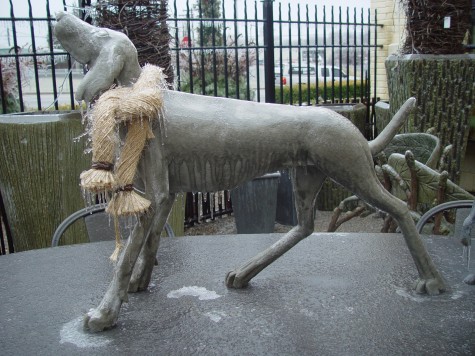
When Annie would visit, no surface outdoors was too high off the ground for her, or off limits to her. You could not help but admire all that energy and zest for the out of doors. See what I mean?