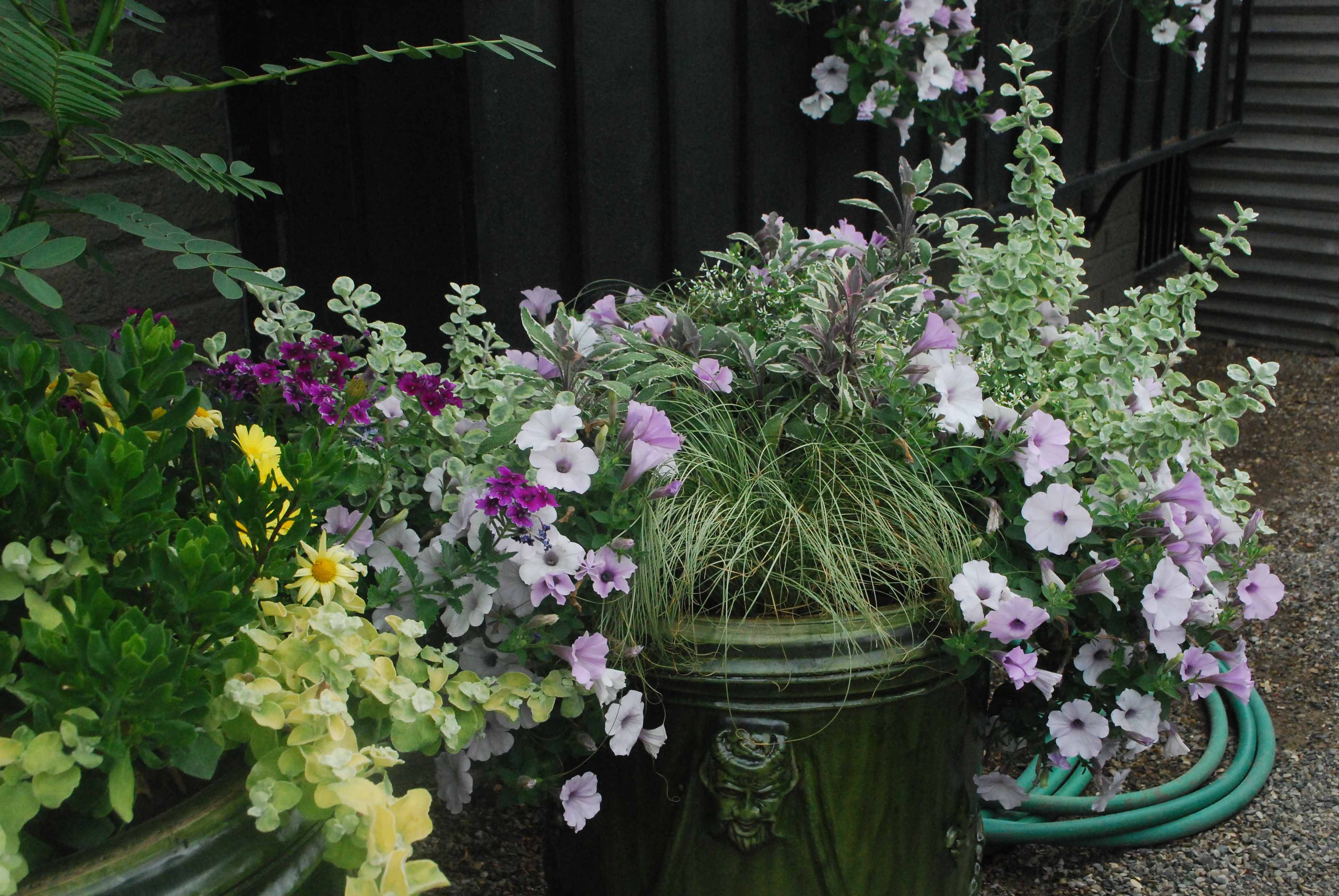
Sun Parasol Mandevilleas

white mandevillea

The family of plants known as dogbane includes a genus of very handsome plants known as mandevillea.  Mandevillea is a vining plant native to tropical climes-in central and South America.   Michigan in no way resembles the tropics, but this vine is willing to perform here during the summer.  Older forms of mandevillea, including the cultivar Alice du Pont, regrettably, are magnets for both insects and disease.  In 2003, Suntory Flowers Ltd in Japan released a new series of mandevillea called Sun Parasol.  Their breeding efforts produced plants with great vigor and disease resistance.  Their near continuous bloom and ease of cultivation is as attractive as the flowers themselves.    
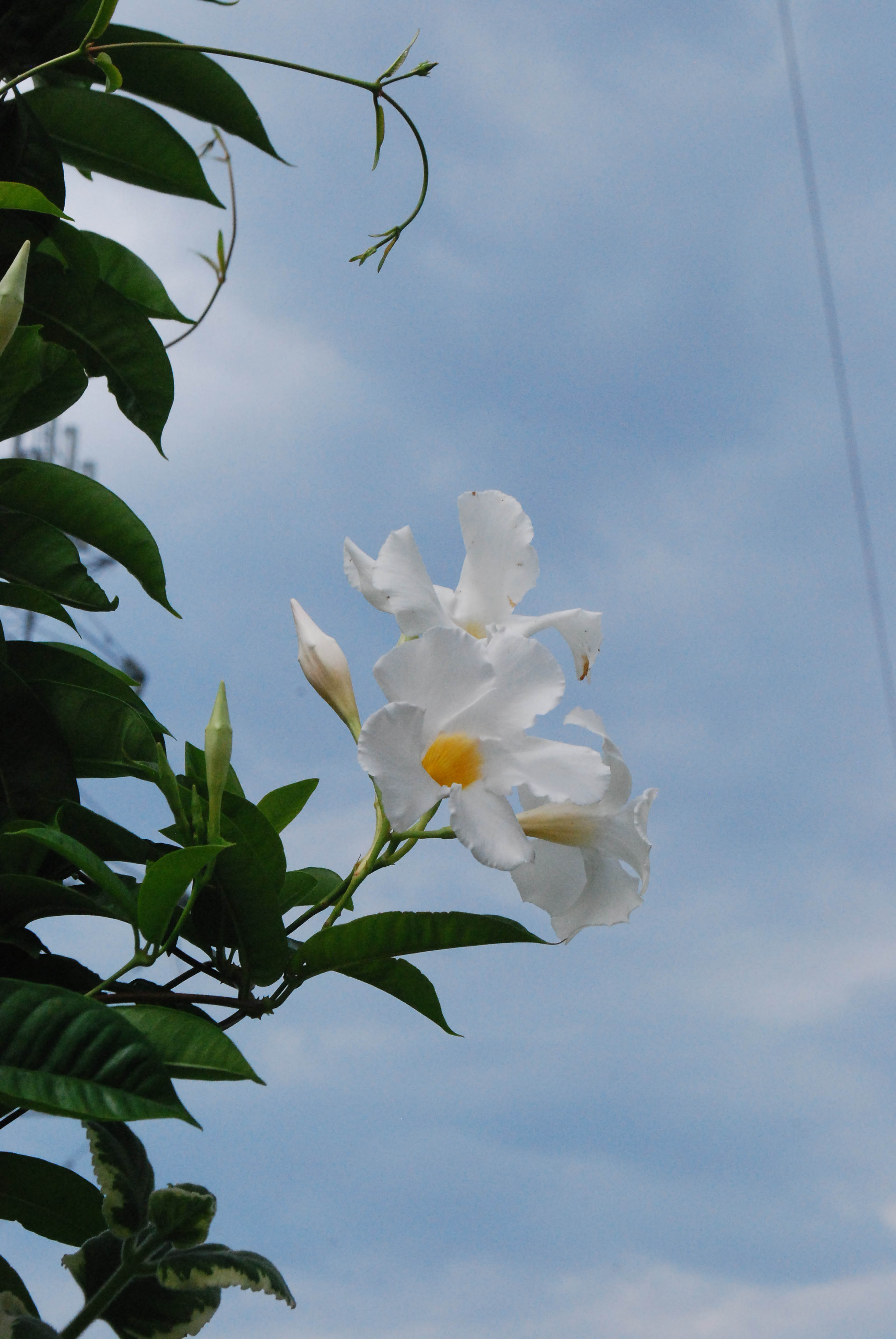
mandevillea vine

Mandevilleas do require some sort of support to climb.  This does not have to be fancy, since a well grown vine completely cover a pole, wire or trellis in short order. The vines do not attach themselves to a support, they wind around it. I have on occasion planted small mandevilleas as trailers in containers. Their natural inclination to curl gives them a very lively and wired appearance in a pot.    
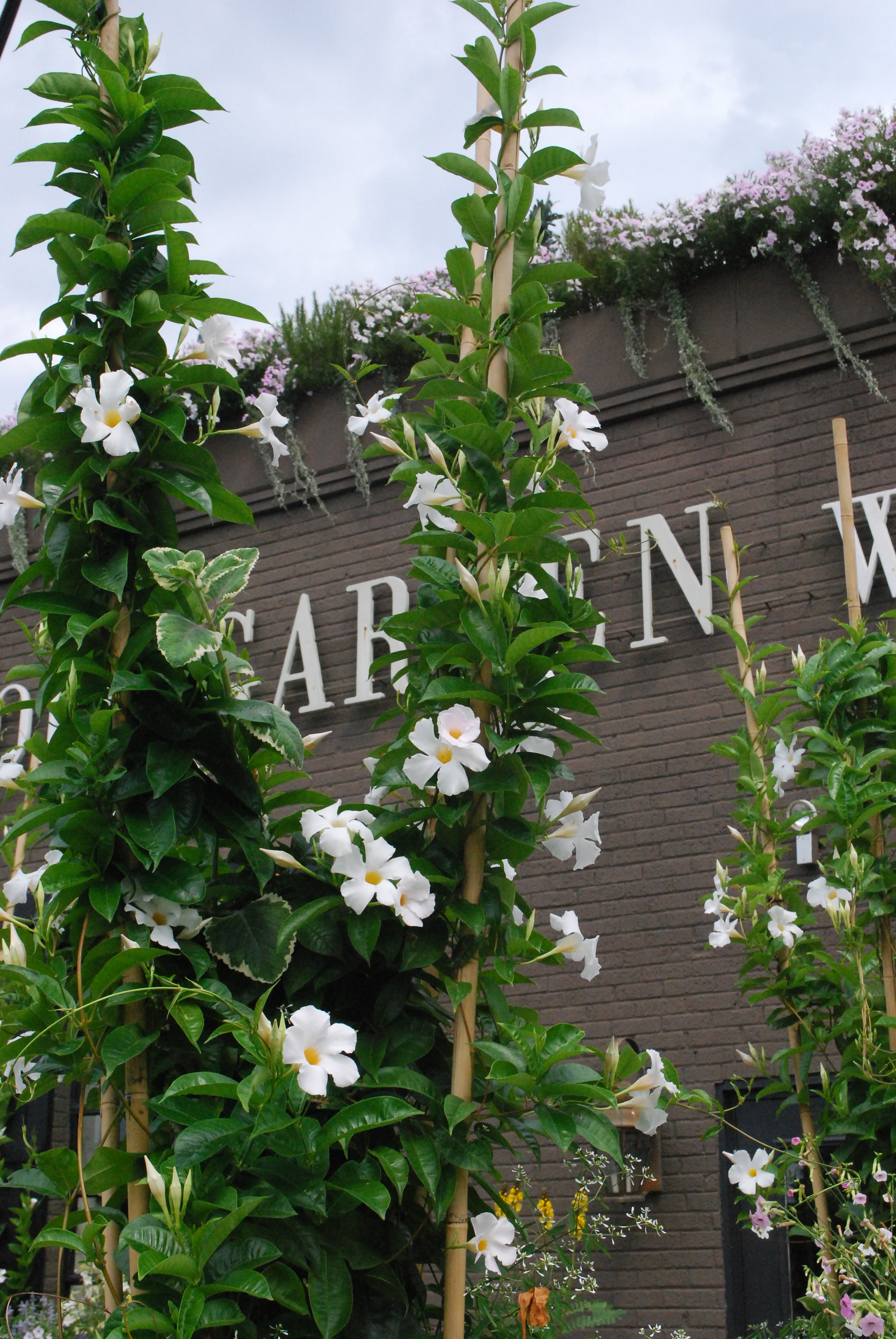
parasol white mandevillea

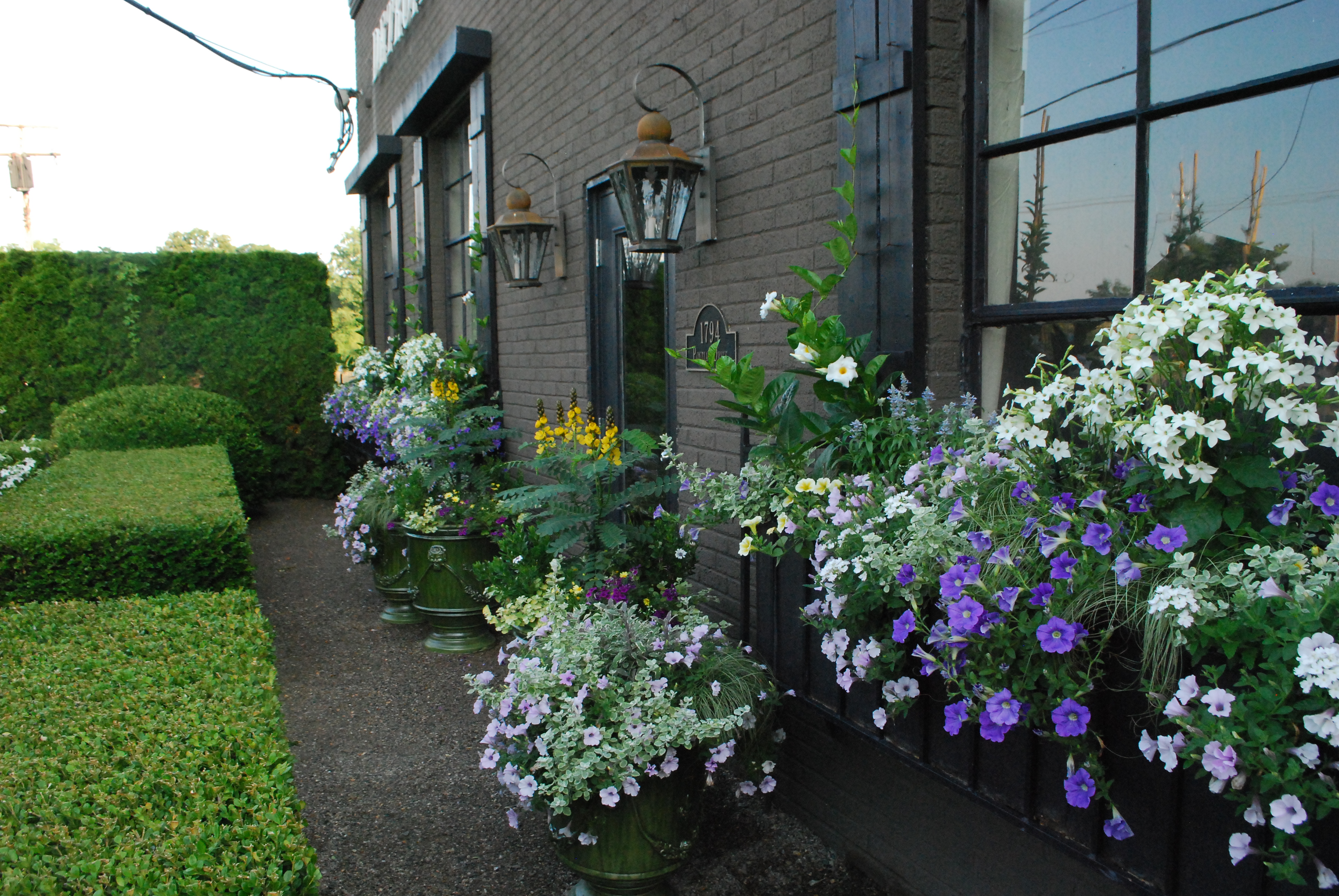
All six containers in the front of the shop have white mandevillea as their centerpiece.  Additionally, the windowboxes at the shop are framed by white mandevillea vines.   That decision was made long before the weather warmed up enough to plant. A cool and rainy summer would not have been so friendly to my choice.  Mandevillea loves hot weather-the hotter, the better.  They also like to be kept on the dry side.  This summer-a perfect summer for them.
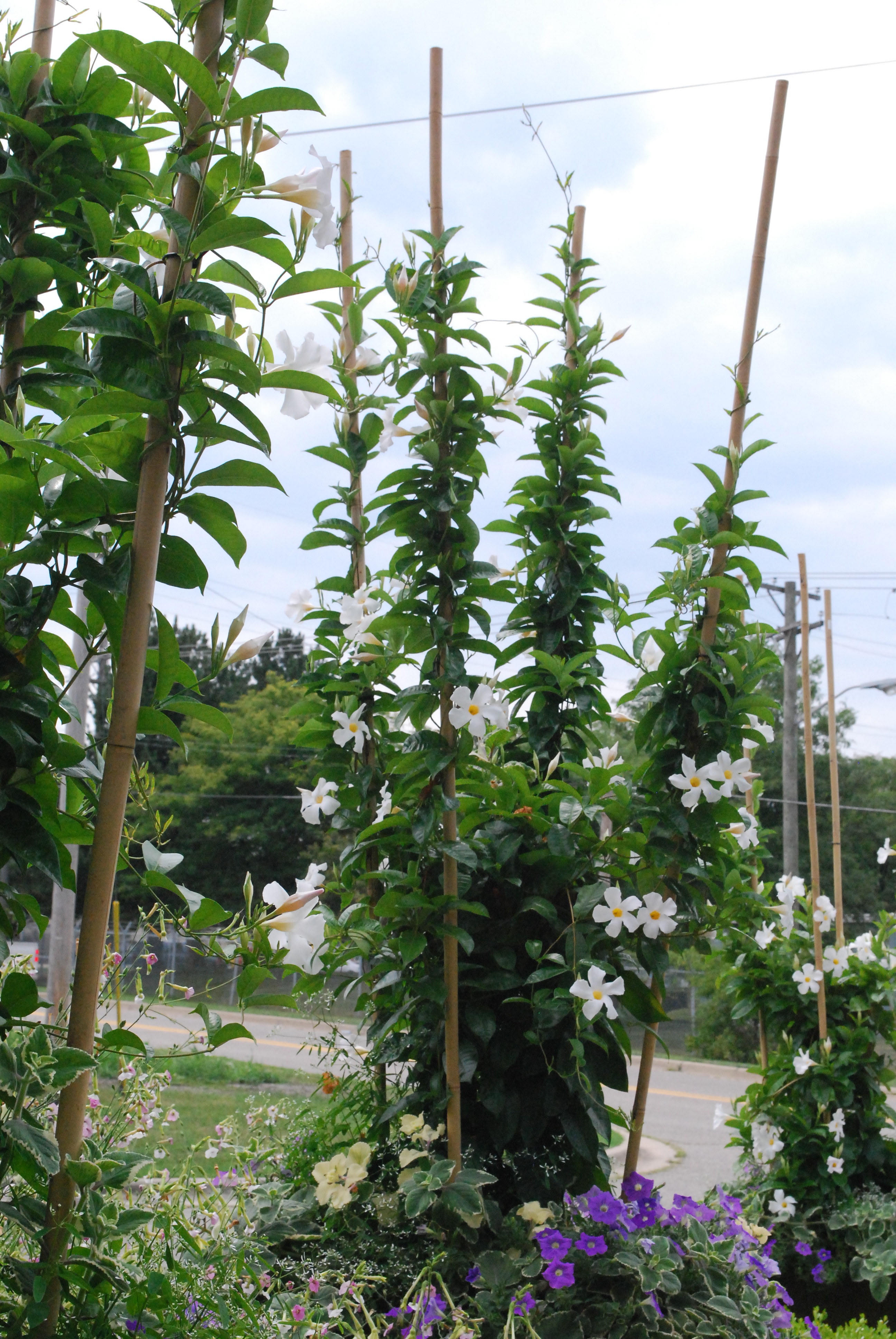
growing mandevillea

Mandevilleas only bloom on every third set of leaves.  This means the look of the leaves is every bit as important as the flowers.  The dark green, glossy, and healthy foliage is beautiful in its own right.  My Jeannie le Joie climbing roses are a dream come true in the spring, but the foliage right now is nothing much to look at.         
giant pink mandevillea

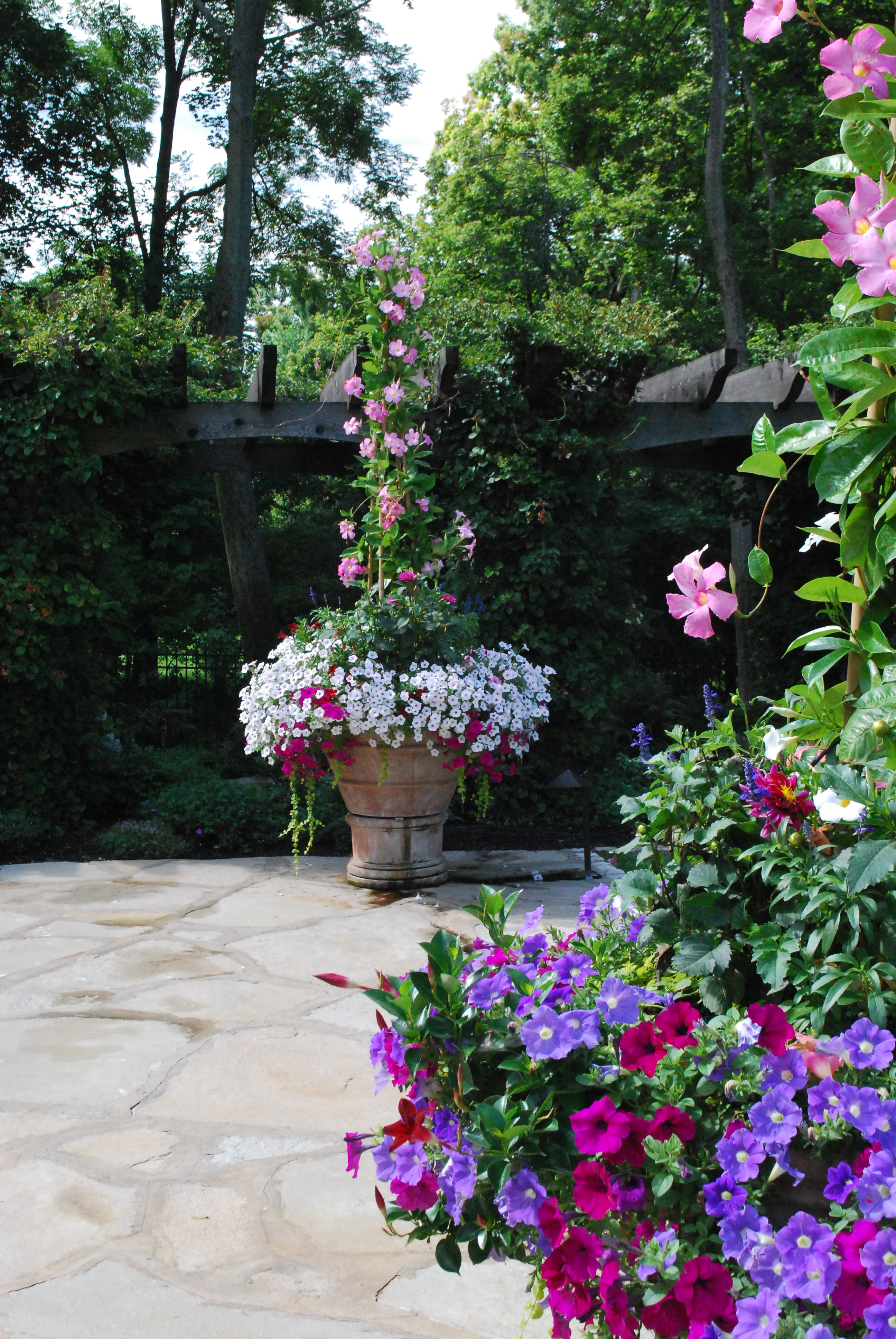
This week I have been catching up some of the plantings I did in May.  I was happily surprised to see that every mandevillea we planted was growing strong.  If I plant mandevillea as a centerpiece in a pot, I gradually remove its bottom leaves. Layering plants in a container requires some grooming, so one layer does not shade the other.  

giant pink mandevillea

The dahlias in these pots are healthy and strong, but their peak bloom season will come in the fall.  Of course the petunias have revelled in our heat just as much as the mandevillea.  This mandevillea variety is simply known as Giant Pink.
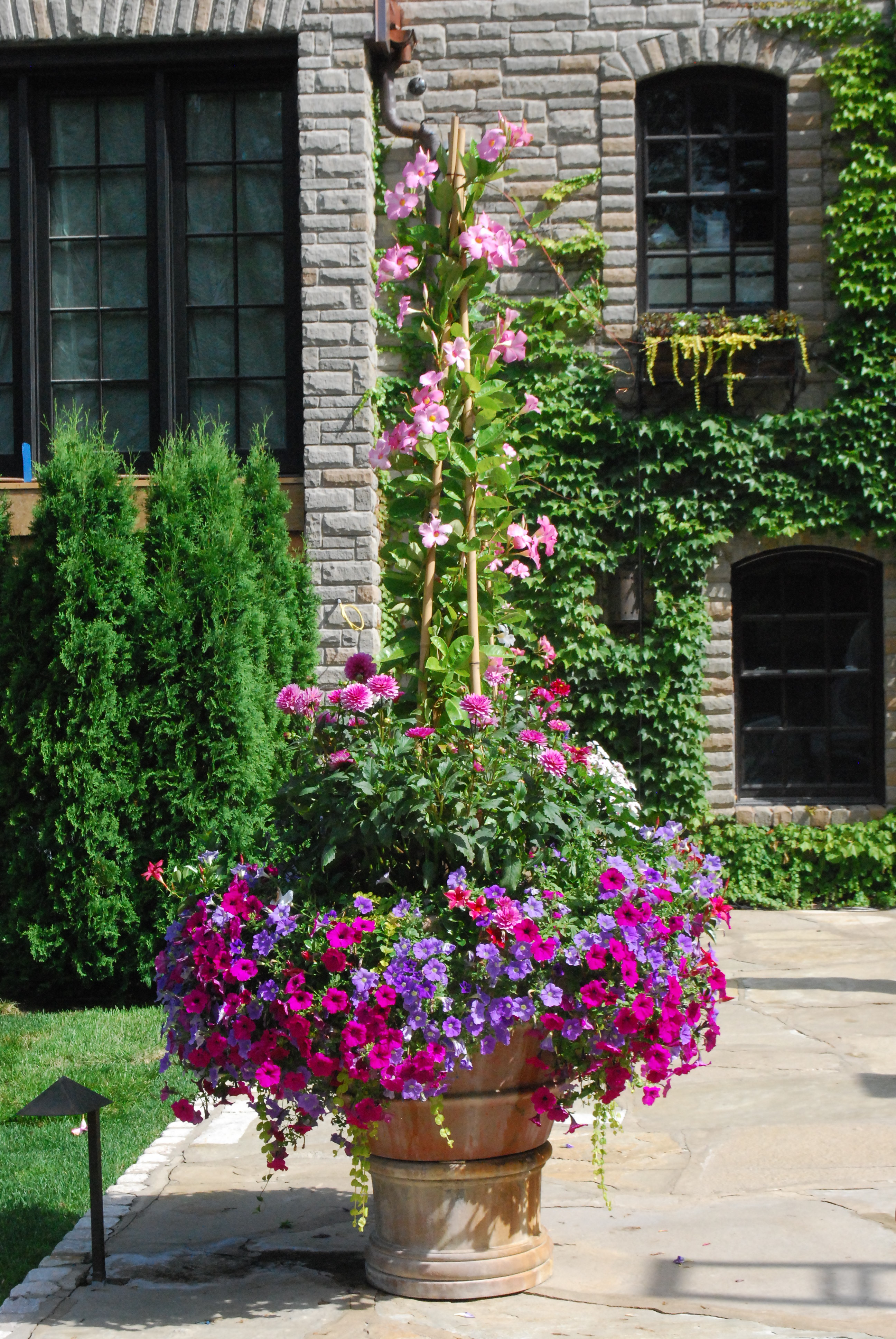
4 10′ natural bamboo stakes provide support for the vine.  We wind individual tendrils around each of the stakes, and tie them up with flexible garden tie.  If new tendrils sprout from the base, or loose their grip on the pole, we may provide more ties. The Surfinia sky blue petunia in this pot-another outstanding annual cultivar bred by Suntory Flowers.  
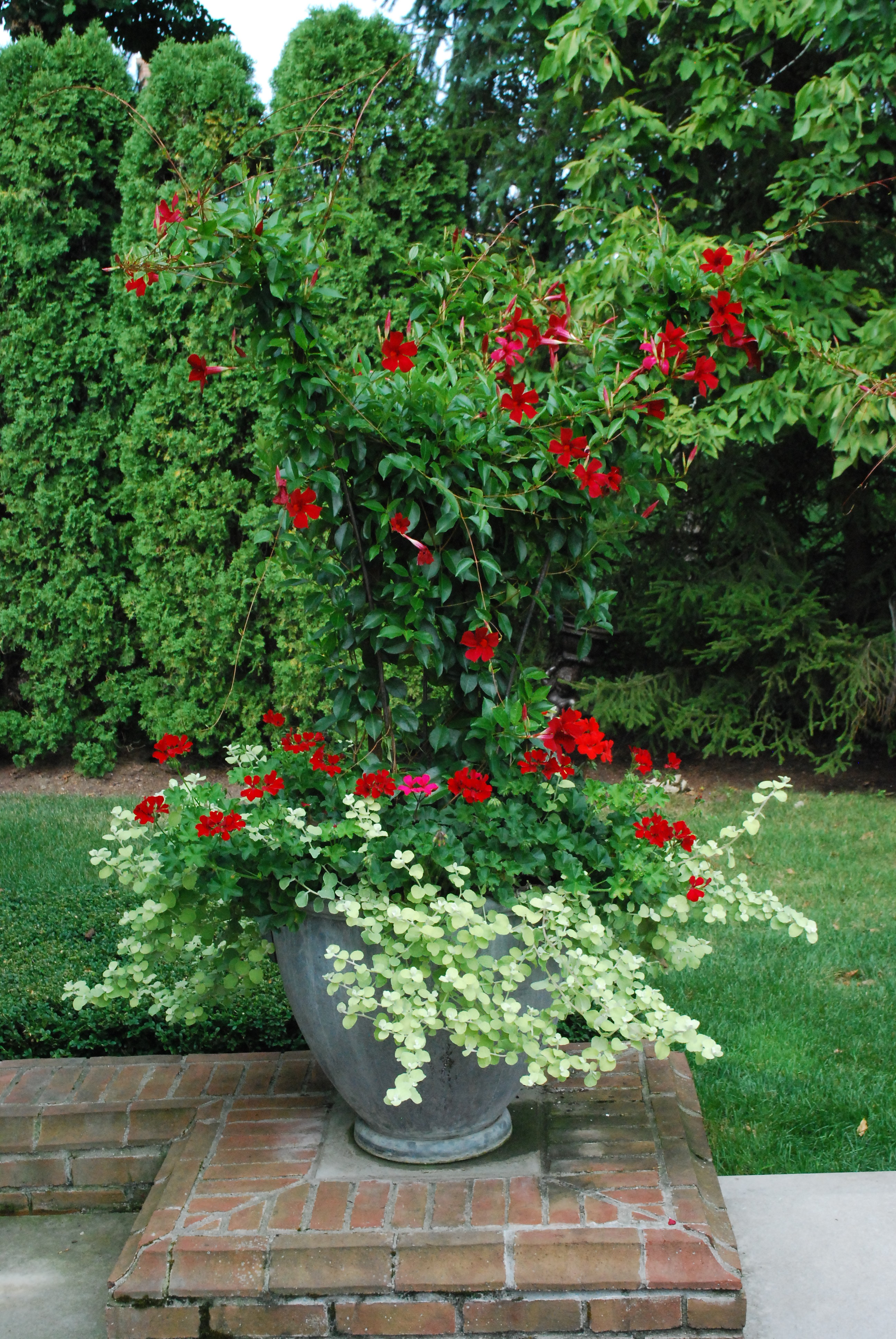
Red flowered mandevillea is an intense and deep crimson red.  No so many summer flowering plants sport this color, but the Caliente deep red geraniums in this container come close.  This vine is supported by 4  1/4″ diameter steel poles.  The part of the pole that goes in the ground is straight.  The upper part of the pole angles out slightly.  We make these poles to mimic the natural growth of the plant.  Once the vines reach the top, they can be left to their own devices.
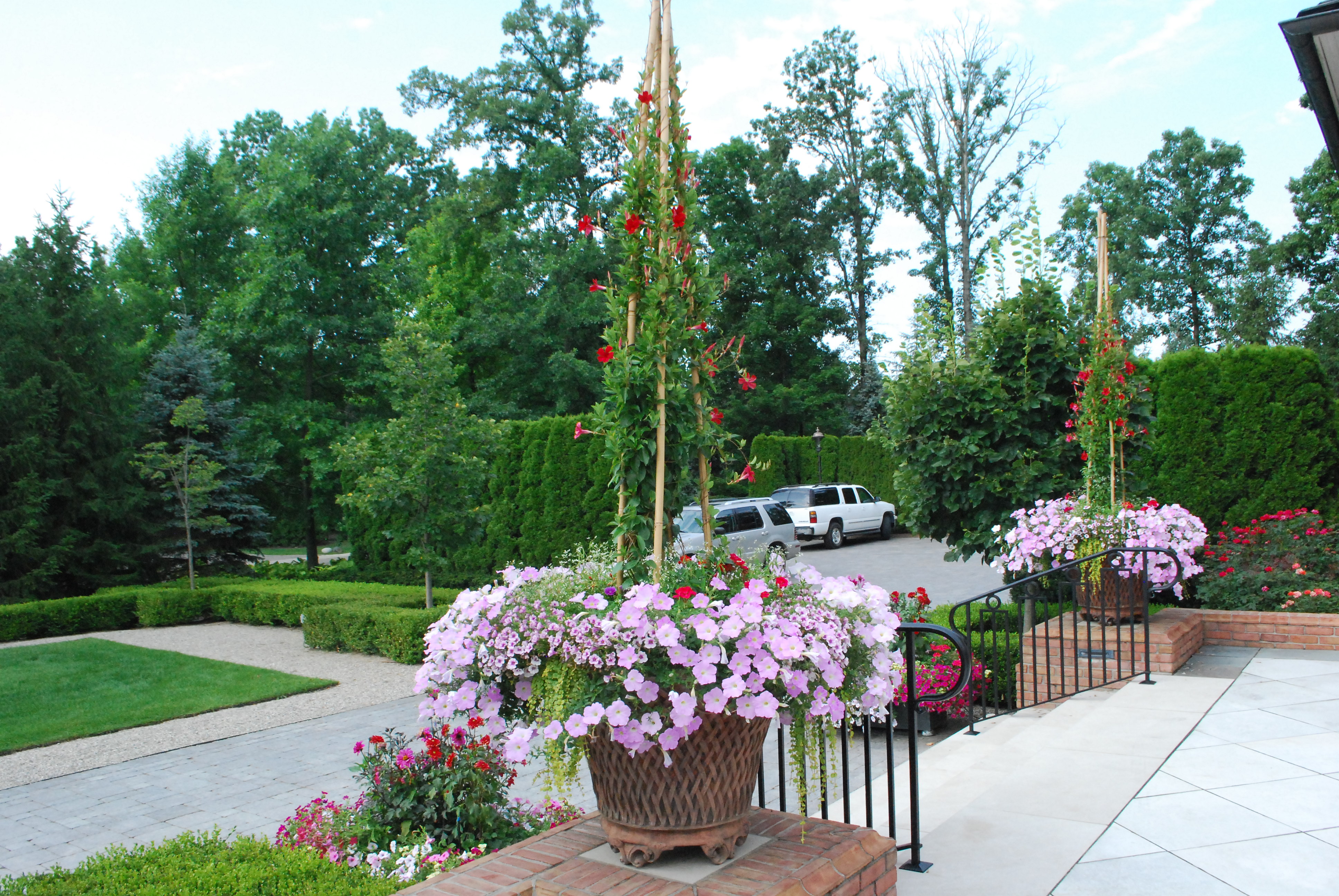

What the small flowered cultivars lack in flower size, they make up for in sheer numbers.  In another few weeks, these vines will be completely covered with flowers.  Though I primarily use them in containers, they can be equally effective planted in the ground near a light post, railing, or fence. 
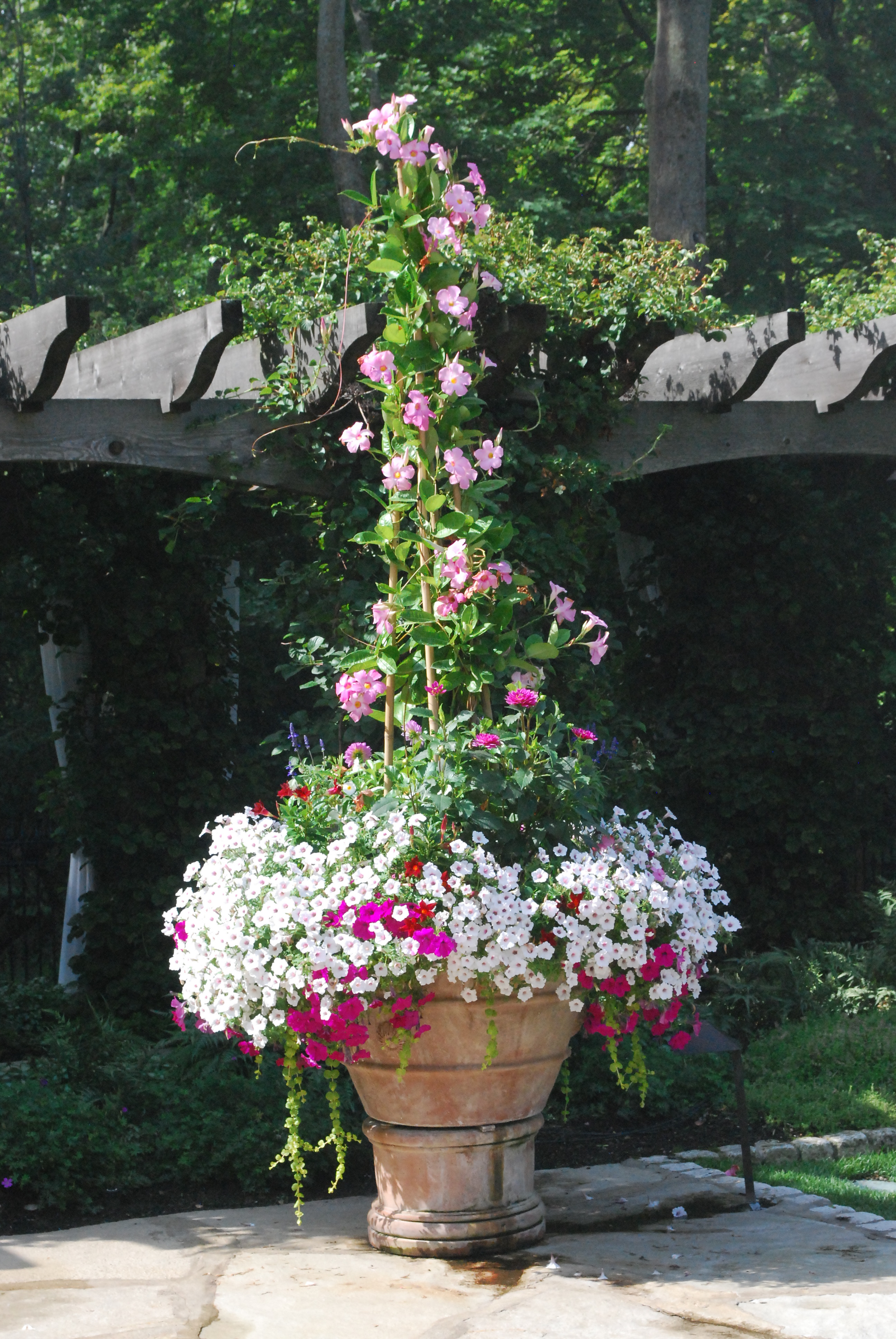
The large flowered mandevilleas are slower to come into bloom than the smaller flowered cultivars, but if the warm season is long enough, they will catch up. Given how difficult our summer season has been, I really appreciate the breeding that has made this plant weather tolerant, florifierous, disease resistant, and easy to grow.   
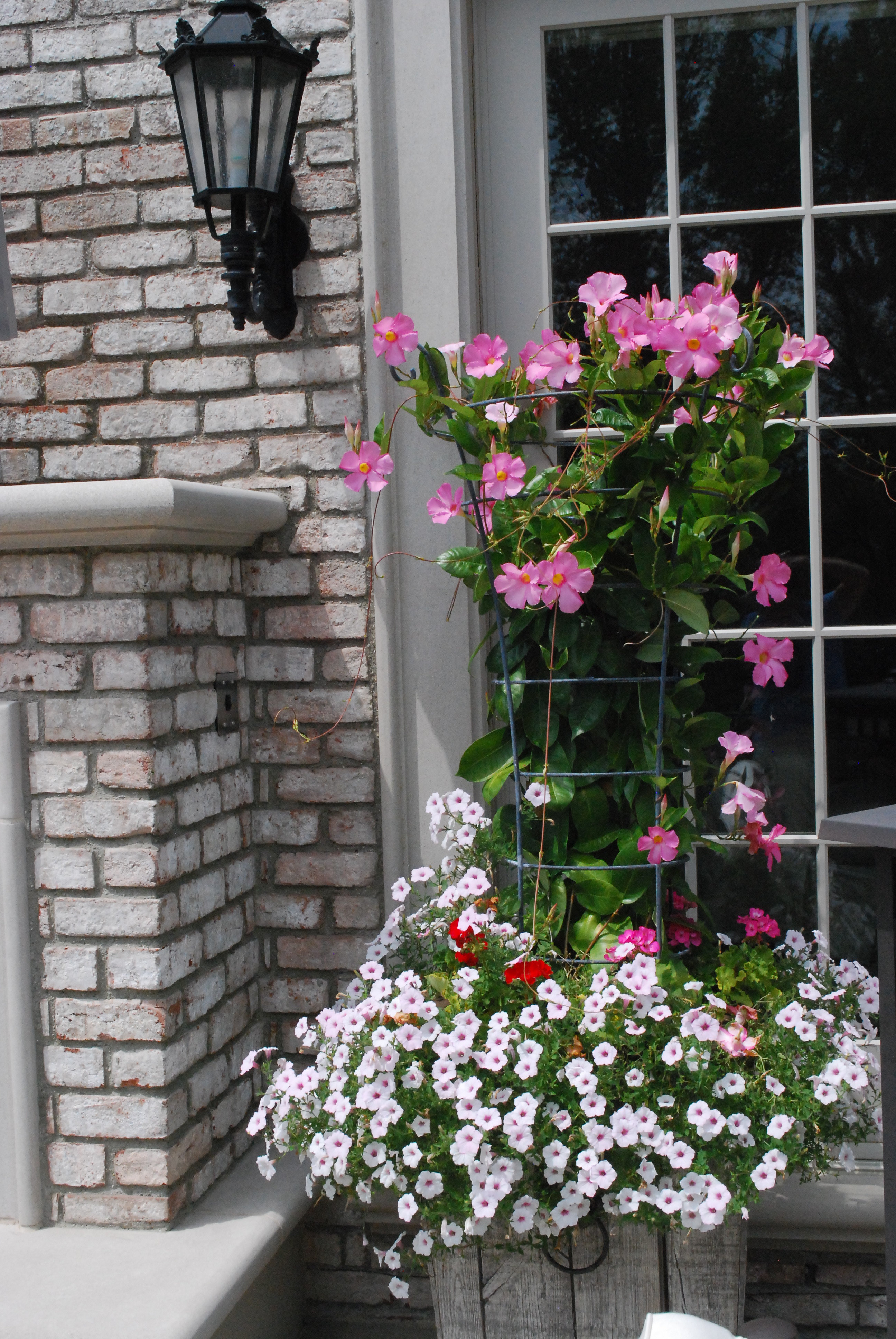
 

This is the hottest spot of any spot I garden.  A stone terrace and brick wall facing south makes this terrace feel like the desert on a hot day.  I see no signs of stress here whatsoever. 

Mandevilleas are not tough to overwinter.  The need a spot which does not dip much below 40 degrees.  They will drop some leaves when brought in.  I water them on occasion over the winter-not much.  I do cut them back, but not much.  They will need those stems to get going again in the spring.
Time For The Limelights

limelight hydrangeas

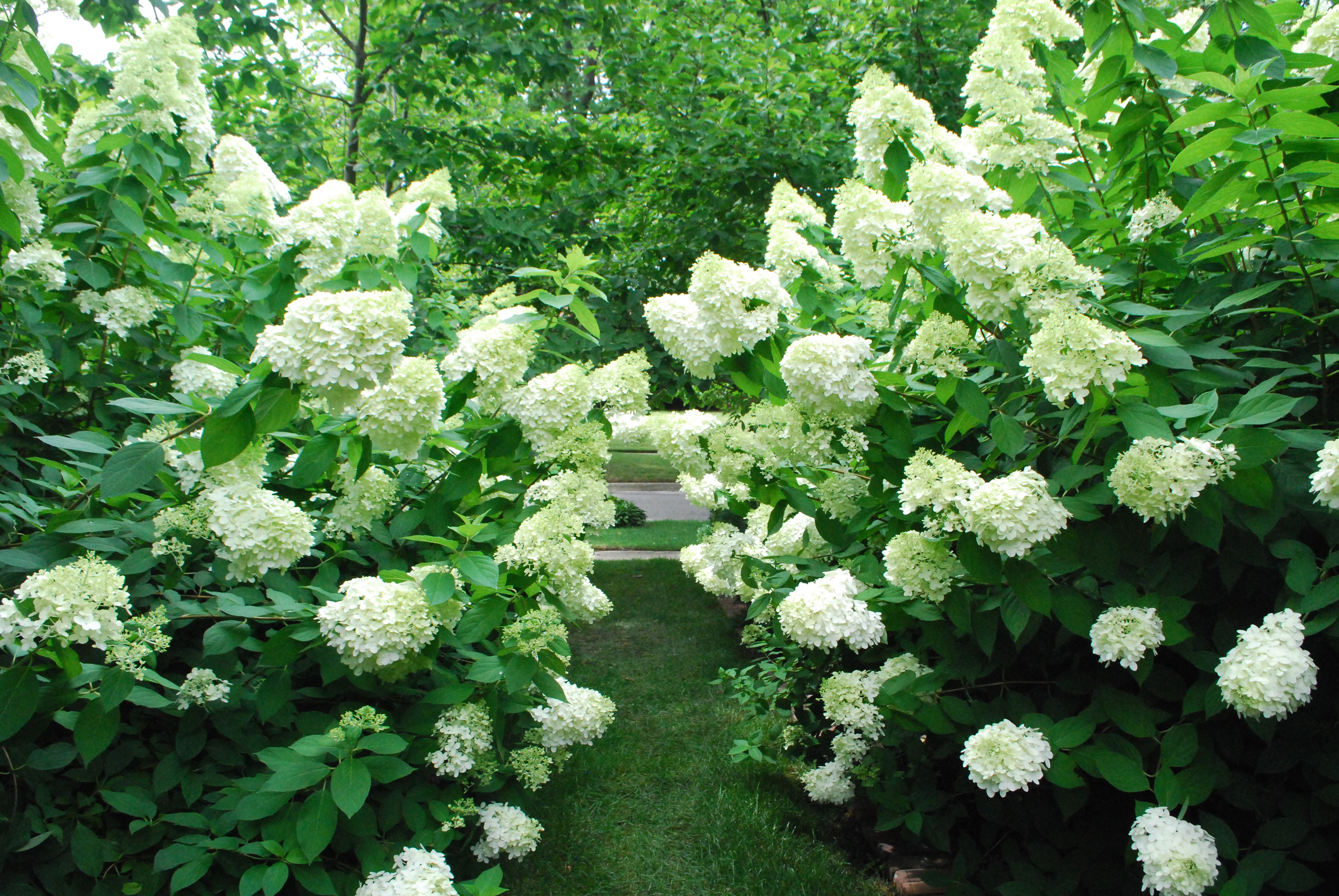
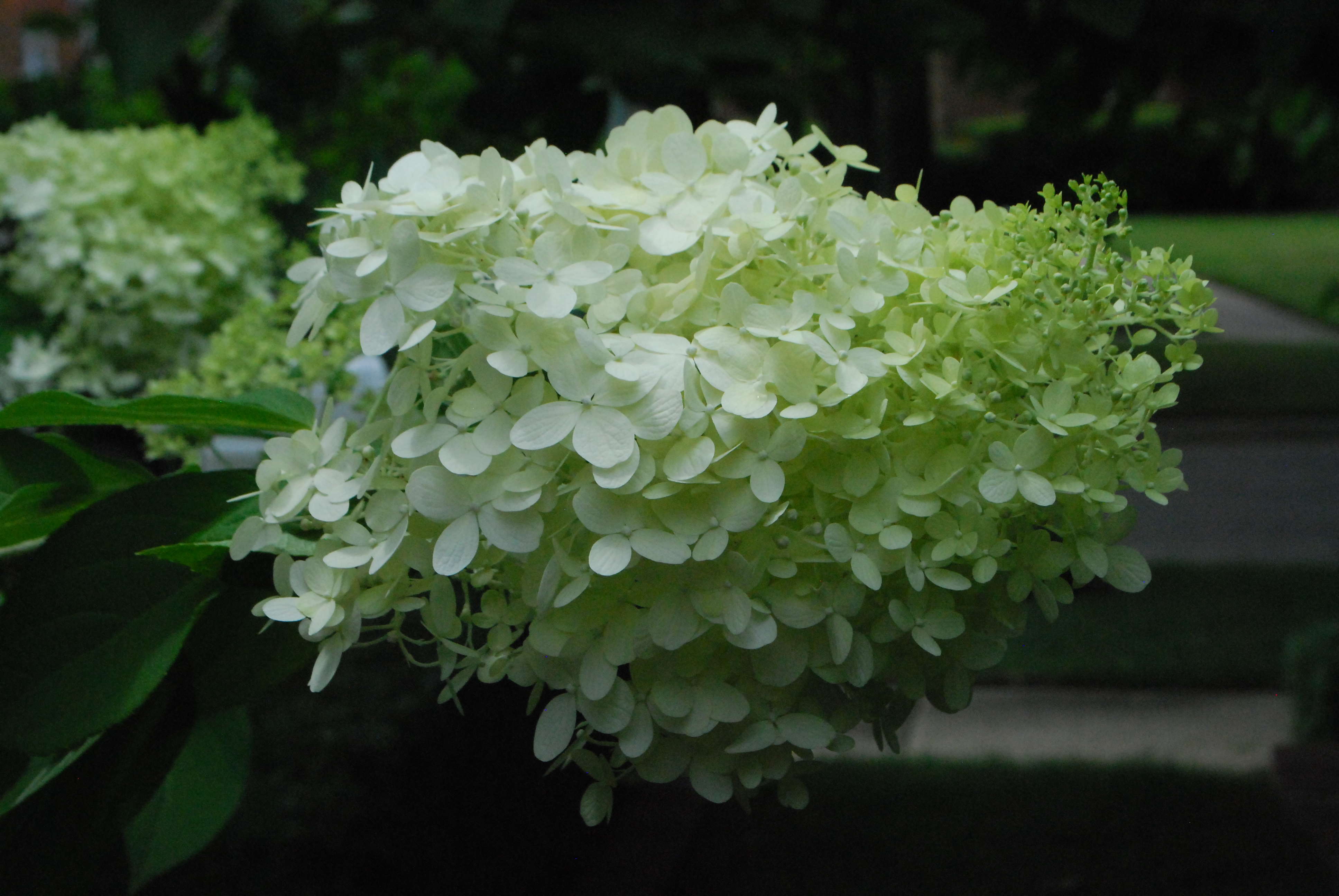
Summer blooming hydrangeas appeal to almost every gardener.  Each flower head is substantial.  Comprised of hundreds of tiny florets, a single cut stem is a bouquet that celebrates the beauty of the summer season. One shrub in full bloom delights the eye.  There are no end of cultivars-some white, some pink, some blue on occasion. They are broadly tolerant of a variety of conditions, but appreciate their fair share of sun, space, and water.  I plant Limelight hydrangeas, and the new dwarf version, Little Lime, more than any other variety. They are vigorous growers, and bloom reliably.  

summer flowering hydrangeas

My zone is a little too chilly and unfriendly for a good many hydrangeas.  This is just me talking, but I only have one westside client who has been successful in growing blue hydrangeas.  Her success is a mystery to me.  The pink flowering varieties, available in my zone are easy to grow, but so reluctant to bloom.  Sporadic bloom on a sizeable shrub makes me look like I don’t know how to garden.  My clients on the east side of the metropolitan area have no problem cultivating pink and blue hydrangeas. I can’t help but think Lake St. Clair mitigates seasonal extremes. 

hydrangea hedges

 I am satisfied to grow the hydrangeas that do well in my area.  This means Annabelle,and Limelight.  White hydrangeas, these.  They are easy to grow, and so willing to bloom.  Come June, the Annabelles delight every gardener with their snowballs.  My favorite place to site them is on a slope, as they are stubbornly floppy in habit.  Come the first of August, the Limelights transform the garden.    white flowering hydrangeas

Their greenish white conical flowers develope over a period of a few weeks.  Chubby, luscious,  and very large, the showy flowers dominate the summer landscape.  I have 25 or 30 of them in the ground at our landscape yard.  They are planted in gravelly soil, and make due with whatever water comes from the sky.  They are a quarter of the size of these plants; the flowers are tufts.  Plant hydrangeas in compost enriched soil that gets regular water.   

great shrubs for the landscape

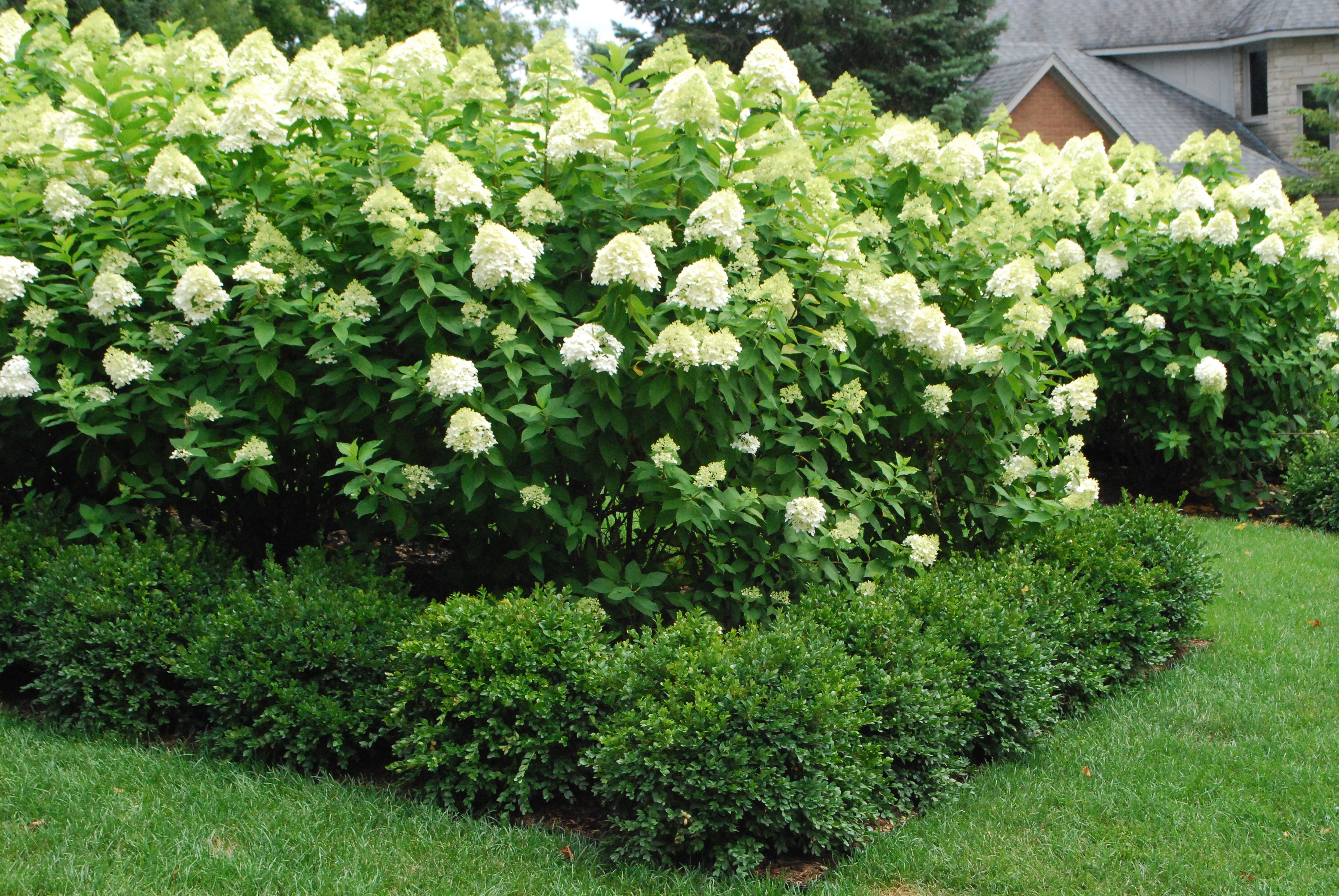
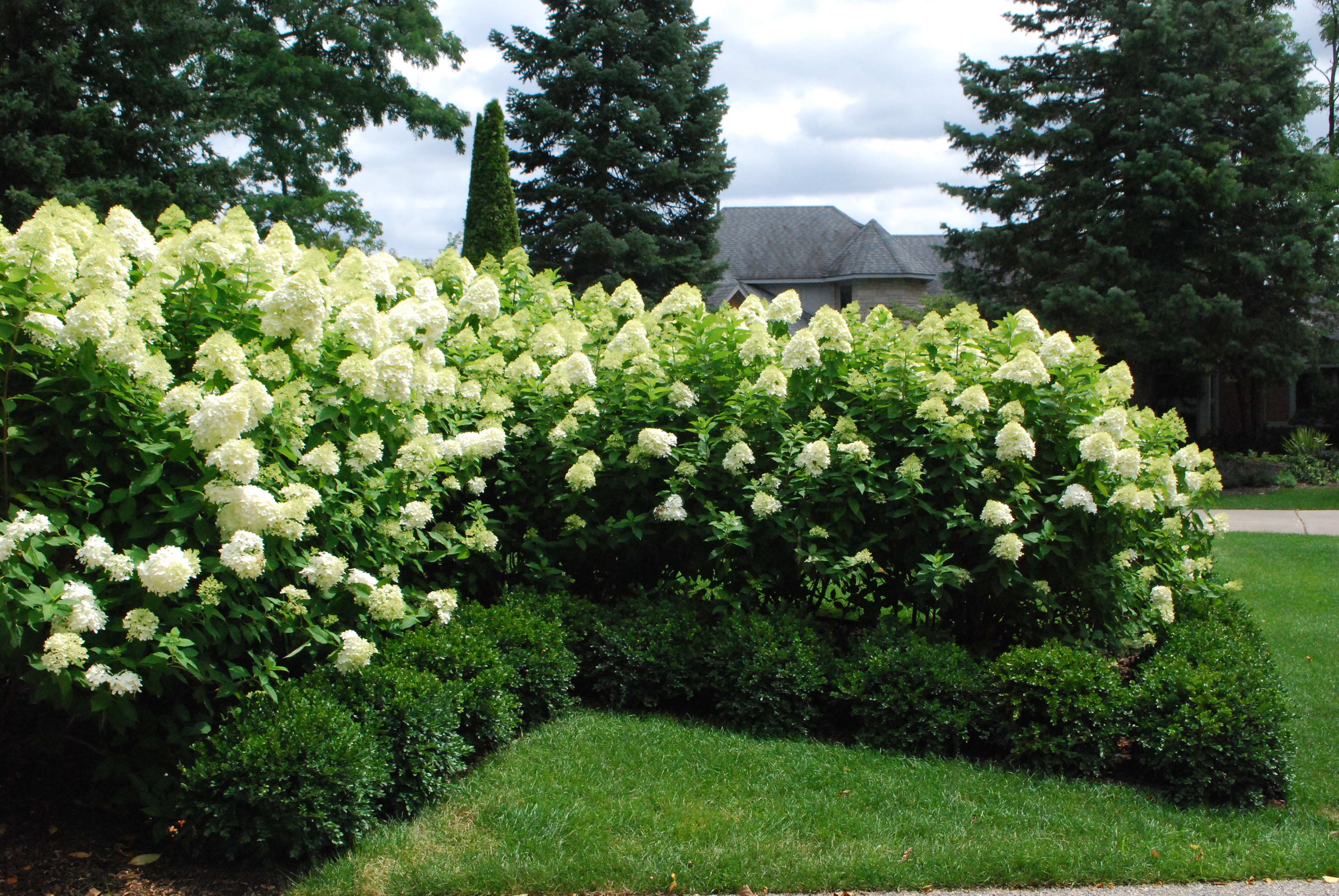
 Large growing hydrangeas can be stalky-leggy.  Skillful pruning in the early spring can help keep them green and blooming to the ground.  But a good underplanting gives them a very finished look.  I like to face down most large growing shrubs with a smaller growing shrub or perennial.   Boxwood does a great job of concealing those inevitably gawky Limelight legs.  They do a better than great job of giving the hydrangeas some winter interes

hydrangea limelight

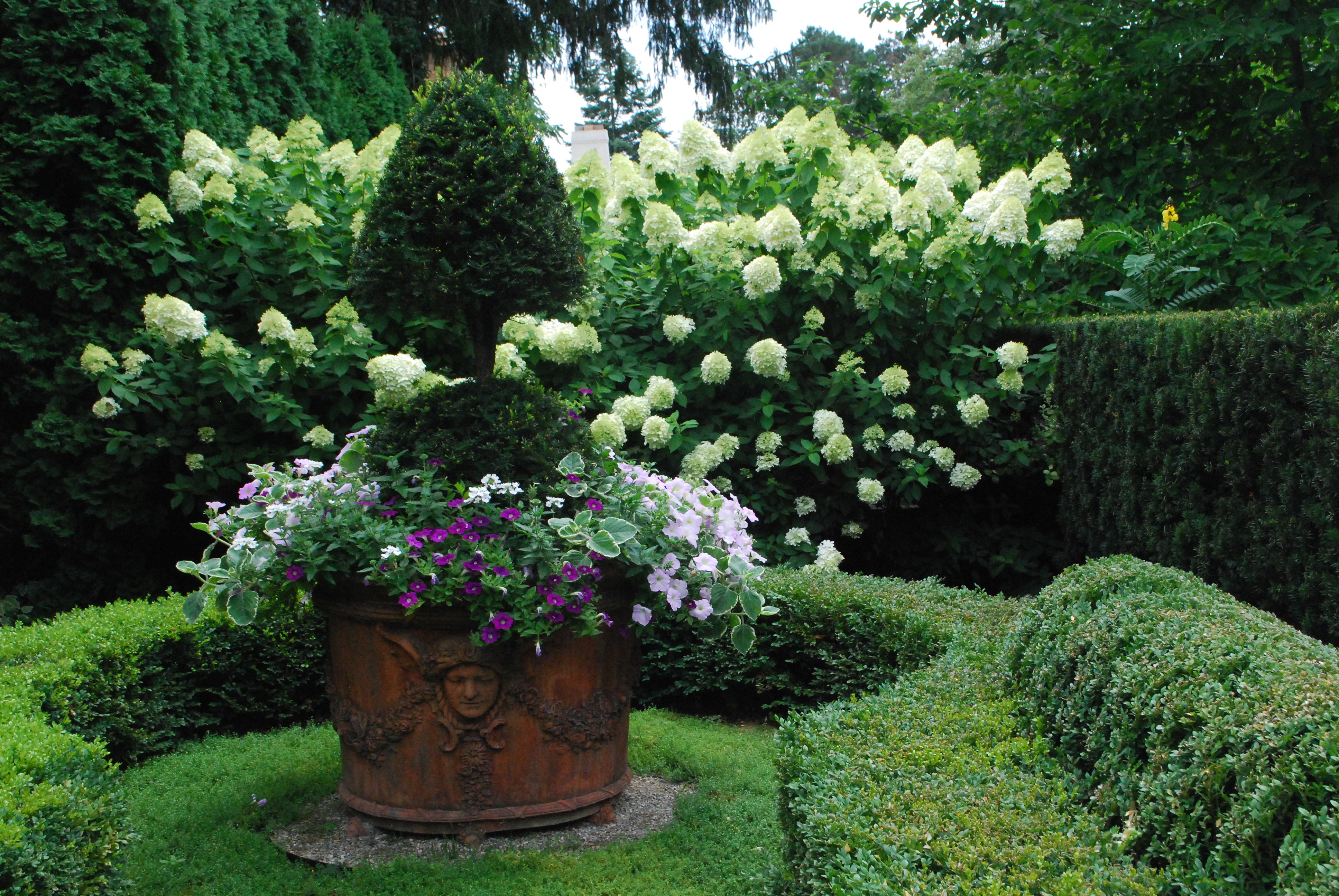
 This block of limelights is wedged in between a hedge of yews, and an L of boxwood.  In a different, cooler, and more rainy summer, the tops of those yews would be dark emerald green, rather than the color of toast.  But the lime green second flush of growth on the boxwood is a beautiful textural contrast to the hydrangeas.  No legs on display here.

white hydrangeas

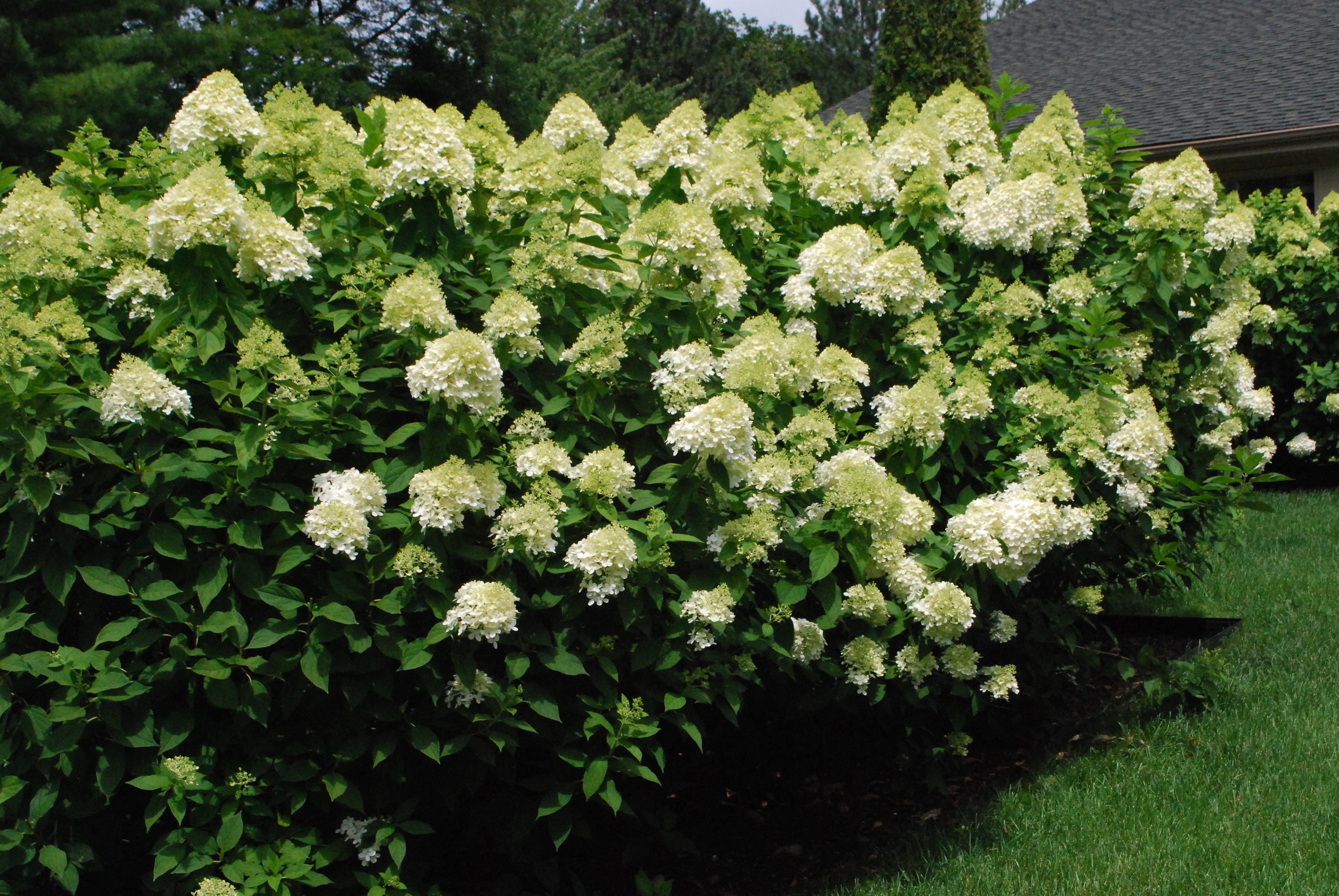
 I prune my hydrangeas as soon as the buds swell in the spring.  I give them a shag haircut, by shortening the long branches on the top. I rarely prune the bottoms.  Heading back the long top branches allows light to reach the bottom. Good foliage and flowers requires good light.  It is so easy to see in this picture that the heaviest bloom is occurring where there is the most exposure to light.   
white blooming hydrangeas

 Limelights can be pruned as low as 24″-30″ in early spring.  Hard pruning produces fewer, but larger flower heads.  I prune my hydrangeas lightly, as I like them tall, and I like lots of flowers. They make a beautiful backdrop for this pot in August.  They hydrate the look of my summer landscape.

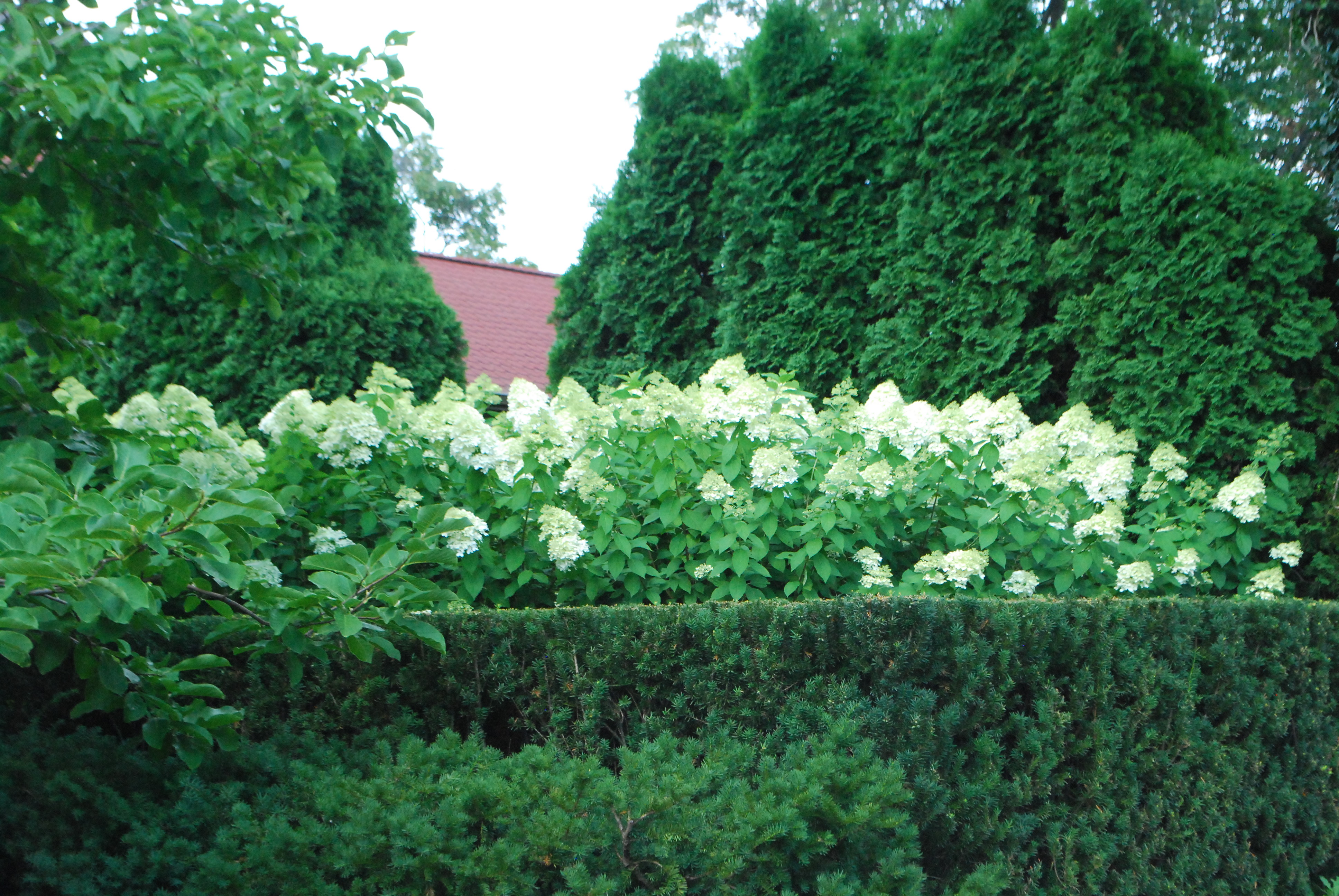
My blocks of hydrangeas are sequestered behind a pair of yew hedges-one formally pruned, another left shaggy.  Thuja nigra backs them up, and sets off the white flowers to good advantage.  This is the juciest moment I have had to date in my garden all season-you bet I am enjoying them. 


Nicotiana Fete And Fandango

 nicotiana alata

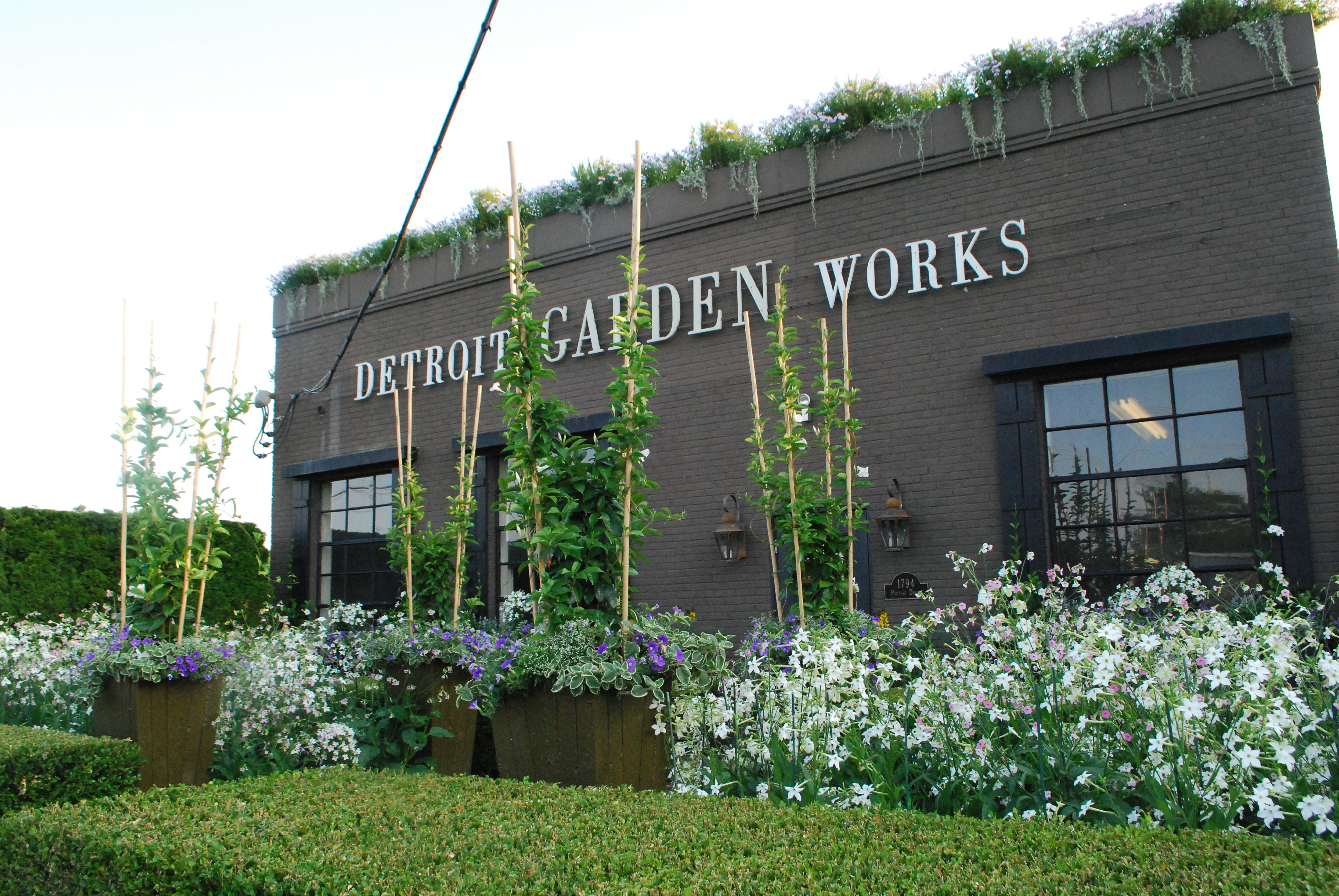
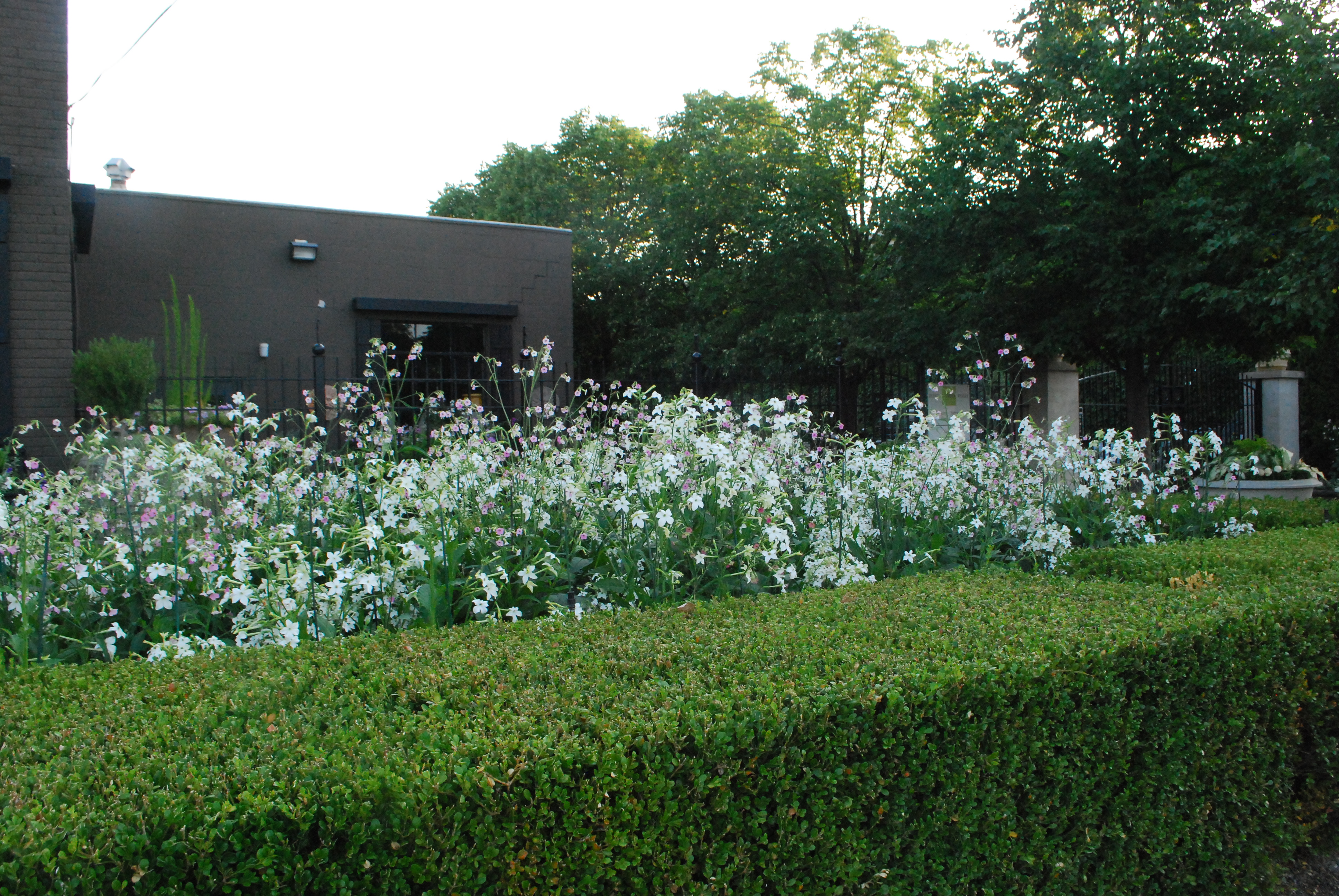
Being ever so fond of all of the cultivars of nicotiana, I planted the boxwood parterre in front of the shop this year with a mix of 3 kinds.  Nicotiana “perfume white” is short growing, and as  fragrant as the name suggests.  Nicotiana alata white is a taller, lanky growing nicotiana with larger and more widely spaced branches and flowers.  Bur nearest and dearest to my heart is the big growing species, nicotiana mutabilis.  I can’t manage to let a summer go by without planting it-usually in my own yard.  This year I planted lots of them at the shop.

The garden had an odd look early on-every single plant got its own 4 foot tall bamboo stake.  There for a while, we had a stake garden.  But there are few things more trying than staking a plant that needed that stake weeks previous.  If you have ever tried to get an Annabelle hydrangea that has gone over in wind or rain off the ground, you know what I mean.  The afterthought staking always looks like that afterthought.

nicotiana mutabilis

Our stakes go a good foot into the ground.  Given the torrential rains and high winds that accompanied all the heat we have had the last 10 days, I am so glad we did it that way.  We did not loose a single plant.  In another week, those stakes will completely disappear from view.  Nicotiana mutabilis is never more beautiful for me than it is in the fall-it is happy in cool weather.  But I see no signs of heat stress here.  We have watered heavily and regularly-as much for the boxwood as the nicotiana. Like the annual flowers, woody plant material stressed by too dry conditions are more susceptible to other problems.

  nicotiana perfume white

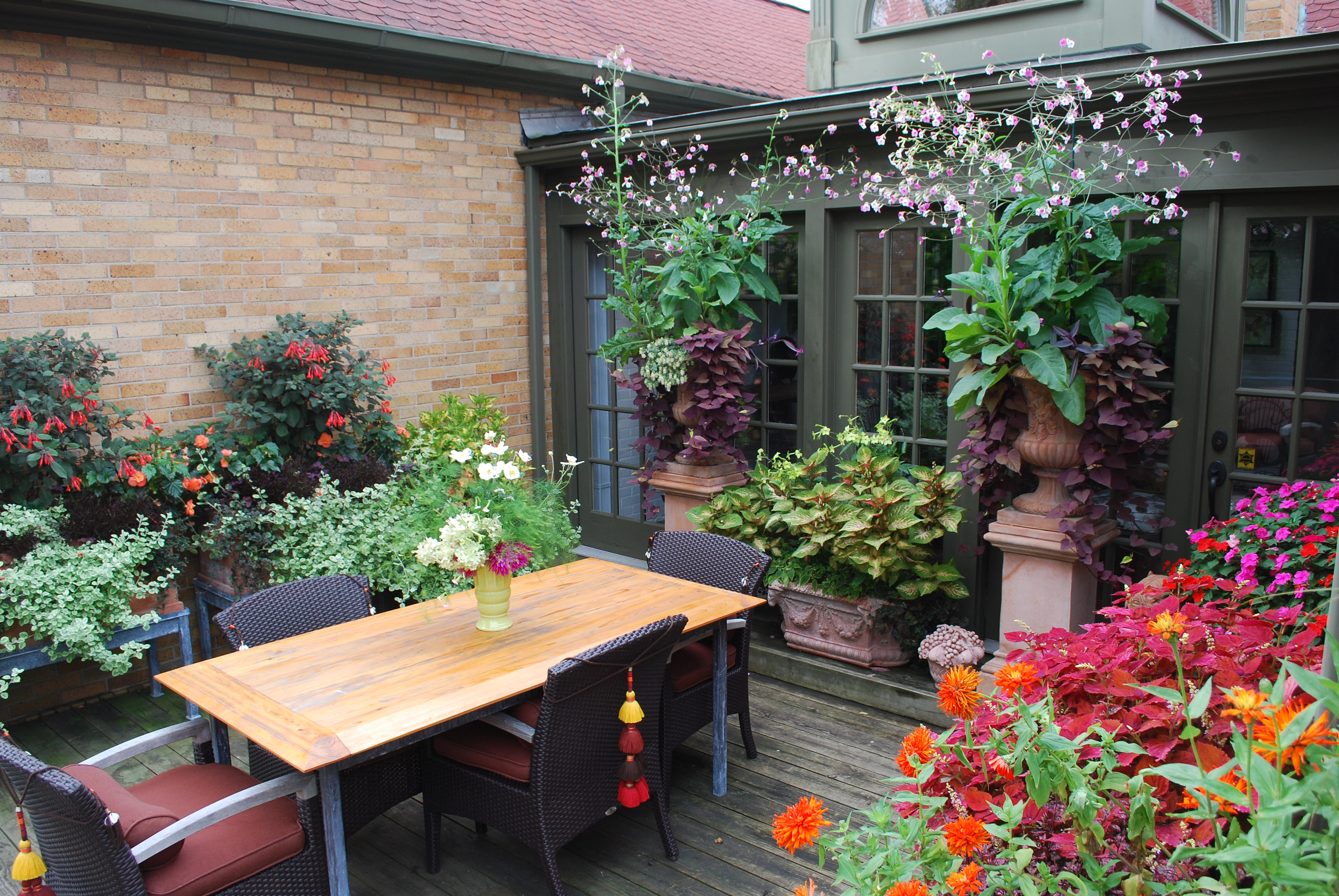
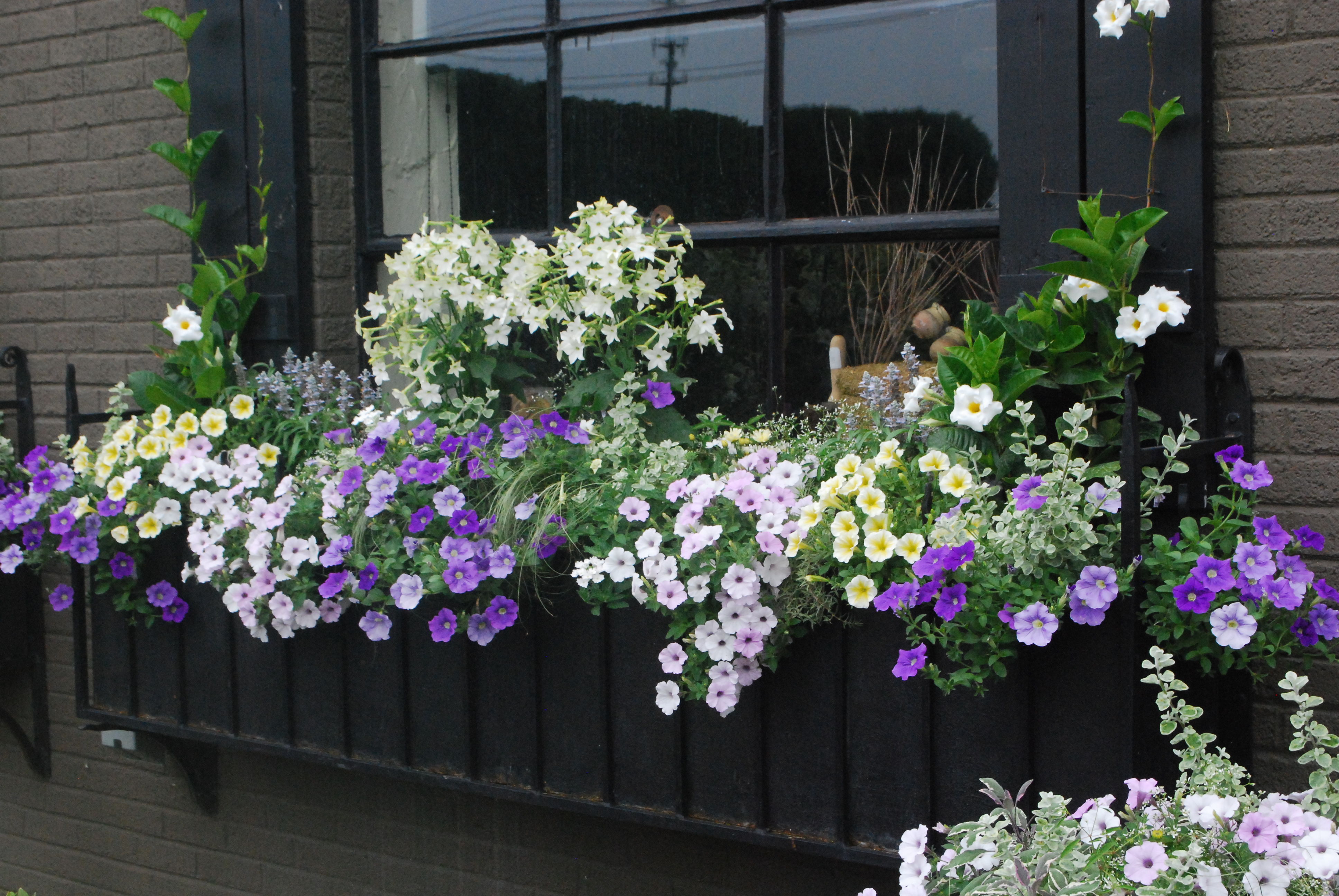
There are a few perfume white nicotianas in the window boxes.  They are a great size and height for a container that is already a good distance off the ground.  We keep the giant leaves at the bottom trimmed back, so as not to cast shade on the neighbors. When using nicotiana in containers, the grooming at ground level is important. They produce leaves prodigiously.  

nicotiana mutabilis

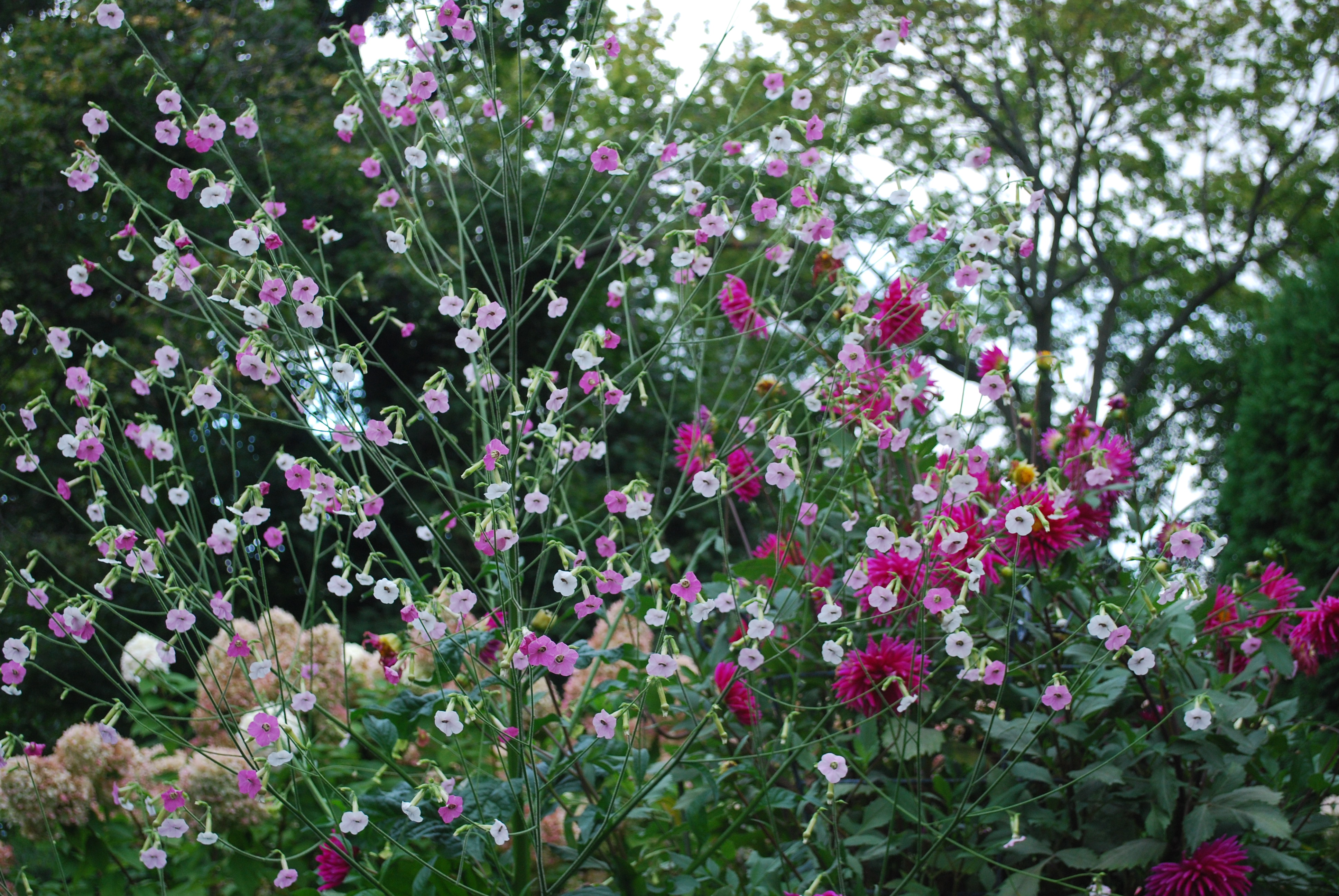
The flowers of nicotiana mutabilis are very small, and an utterly simple shape.  But a happy plant will produce thousands of them.  I don’t understand the science, but each plant will produce pale, almost white flowers, pink flowers-and hot pink flowers-all at the same time, on the same plant.  The slender stems make it seem as though those small blooms are floating, hovering over the container.

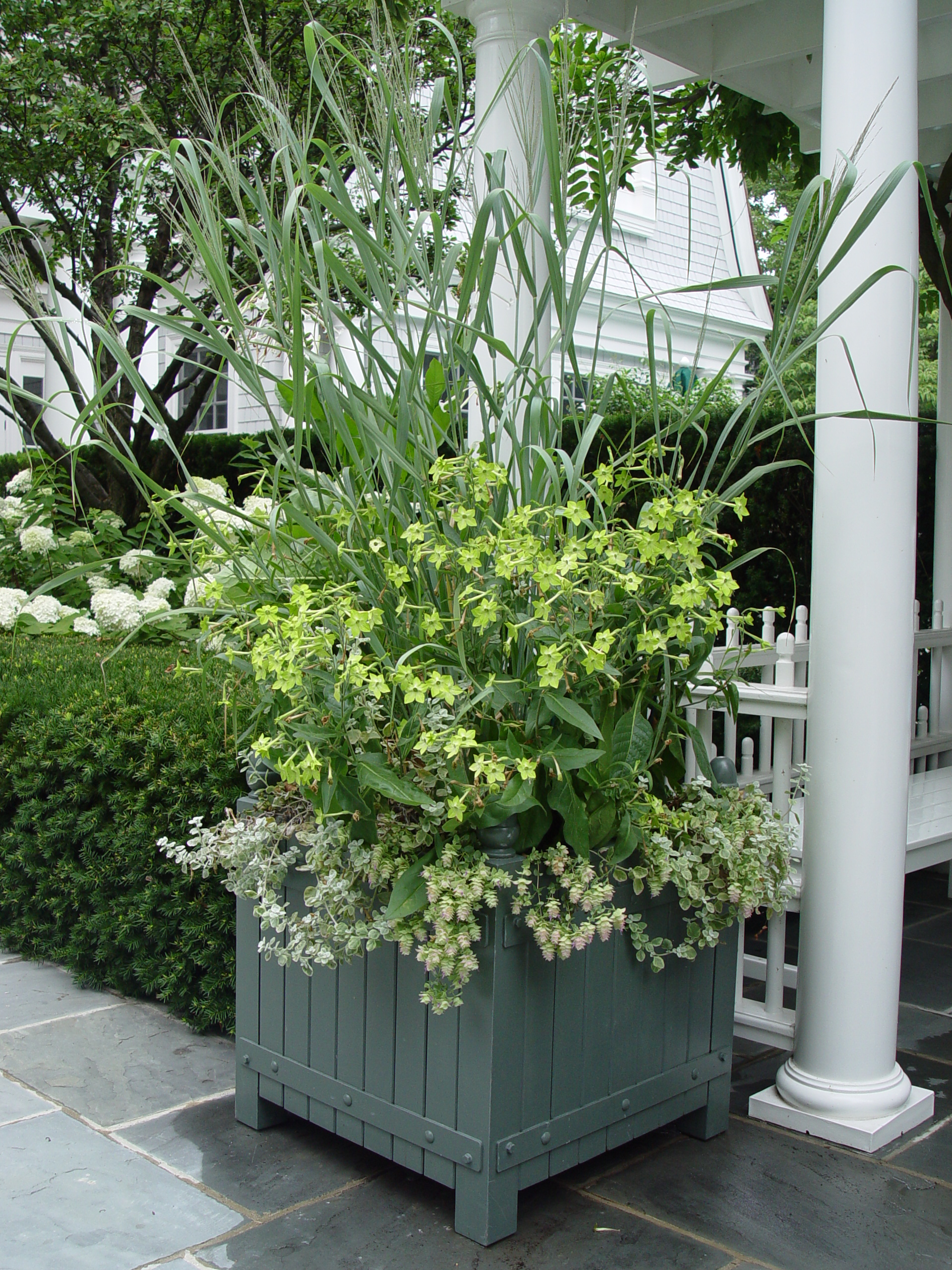
Nicotiana alata lime peroduces flowers that are just that-lime green.  In a good season, they will bloom heavily the entire summer.  I have seen them peter out in really hot weather.  In that case, I cut them back a little, and feed.  They seem to revive when the weather cools off.

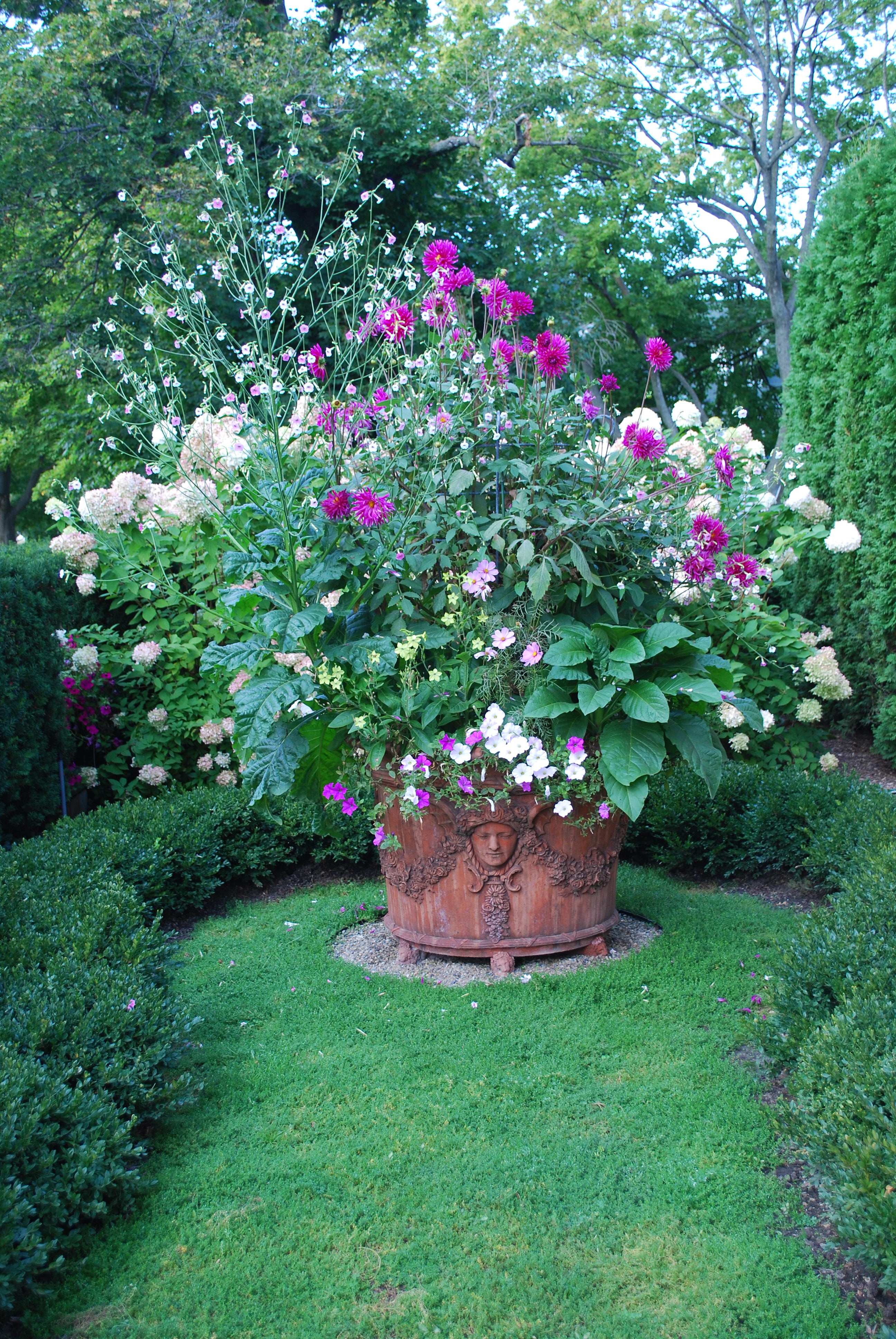
I remember taking this picture of a pot at home some years ago in September.  The nicotiana was sending out giant thick bloom stalks.    The composition was no doubt lopsided, but I loved the exuberance of it all.  The stiff habit of those giant dahlias is completely masked by that cloud of flowers. 

nicotiana

This English concrete pot cast in a classic Italian style is a huge pot-it measures 39″ by 39″.  The surface is 12 square feet.  The nicotiana mutabilis makes a giant airy bouquet-the pot is the smallest element of the composition.  This picture was taken the beginning of September.  I like annual plants that can go the distance-an entire summer season-and on into the fall.  I like to get tired of looking after my container plantings before they give out. 

nicotiana mutabilis

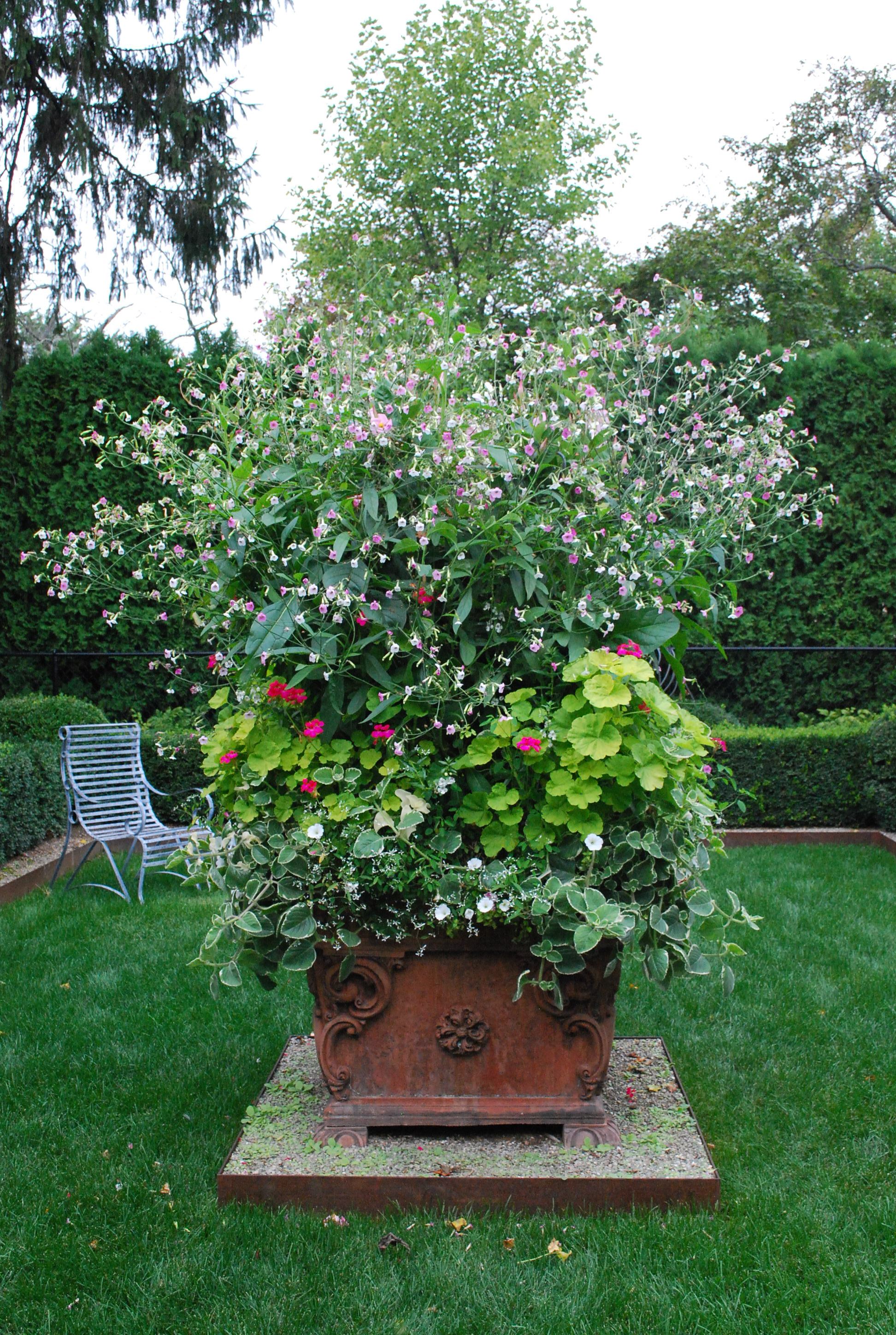
One of more foolish container moments-planting nicotiana mutabilis in a relatively small Italian terra cotta urn. The bigger foolishness?  How much I loved the look. 


Some Like It Hot

cardigan welsh corgi

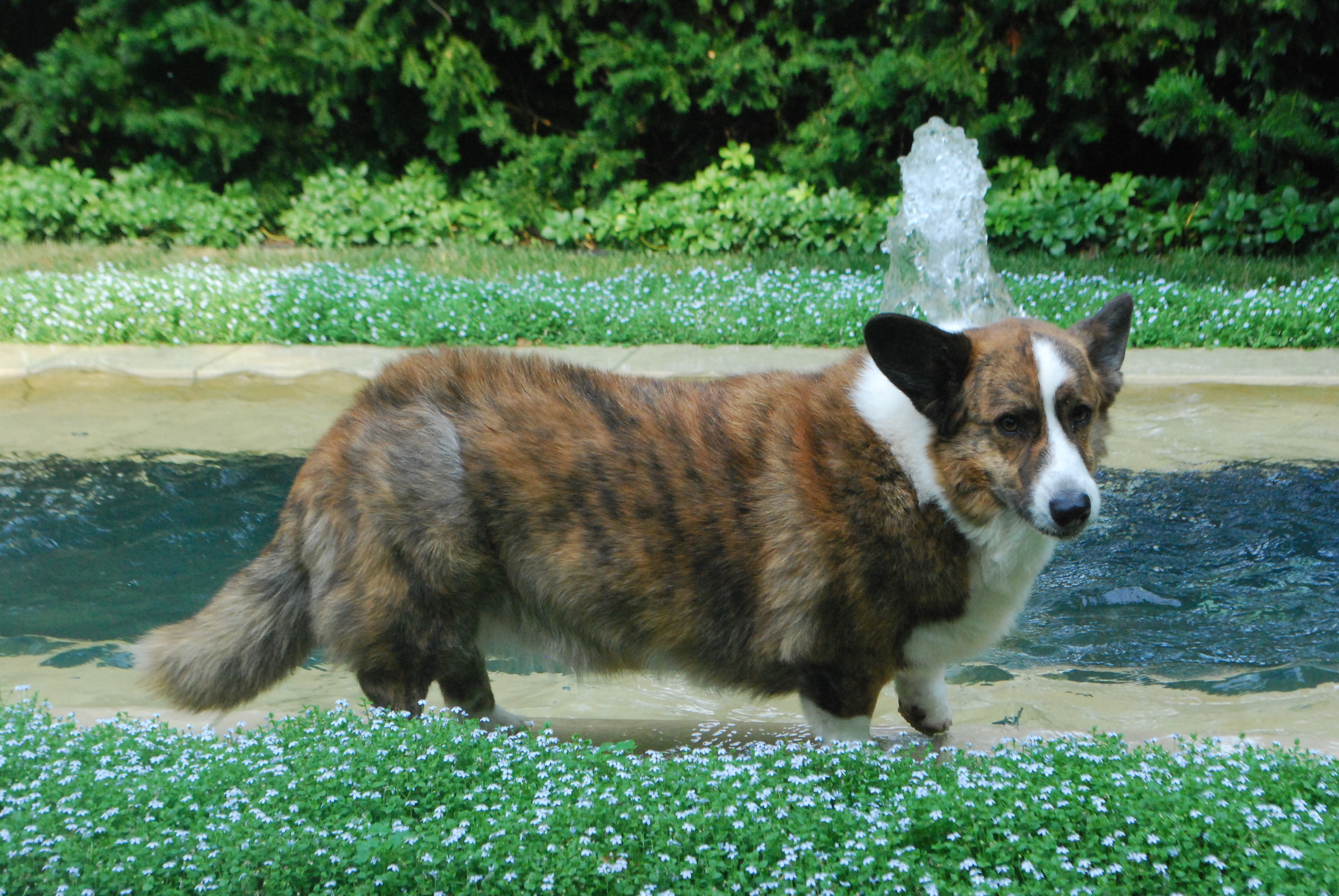
The blisteringly hot and persistent heat of the past week has made many a gardener, and the above pictured corgi, miserable.  Howard, who would not set foot outside the door if he thought he would get his feet wet, had an alternate plan for yesterday.  Strong winds were pushing water over the coping of my fountain.  He doesn’t look all that thrilled with his situation, but he had no plans to go elsewhere either. I had to laugh, watching him stand with obvious annoyance in a few inches of water.  Just like the rest of us, there was no getting around the heat.    

petunia

It may be stating the obvious, but plants evolve in response to their environment.  Though last week’s Garden Designers Roundtable topic focused on texture in the landscape, there was quite a bit of discussion about how the surface of a leaf says everything about a mechanism for survival.  I had never really thought about it before, but plants that live in environments where rain is extremely scarce have evolved to minimize the evaporation of water.  Those leaves are thick skinned.  Tropical plants where rain is frequent and heavy can survive just fine with thin and jumbo sized leaves.    

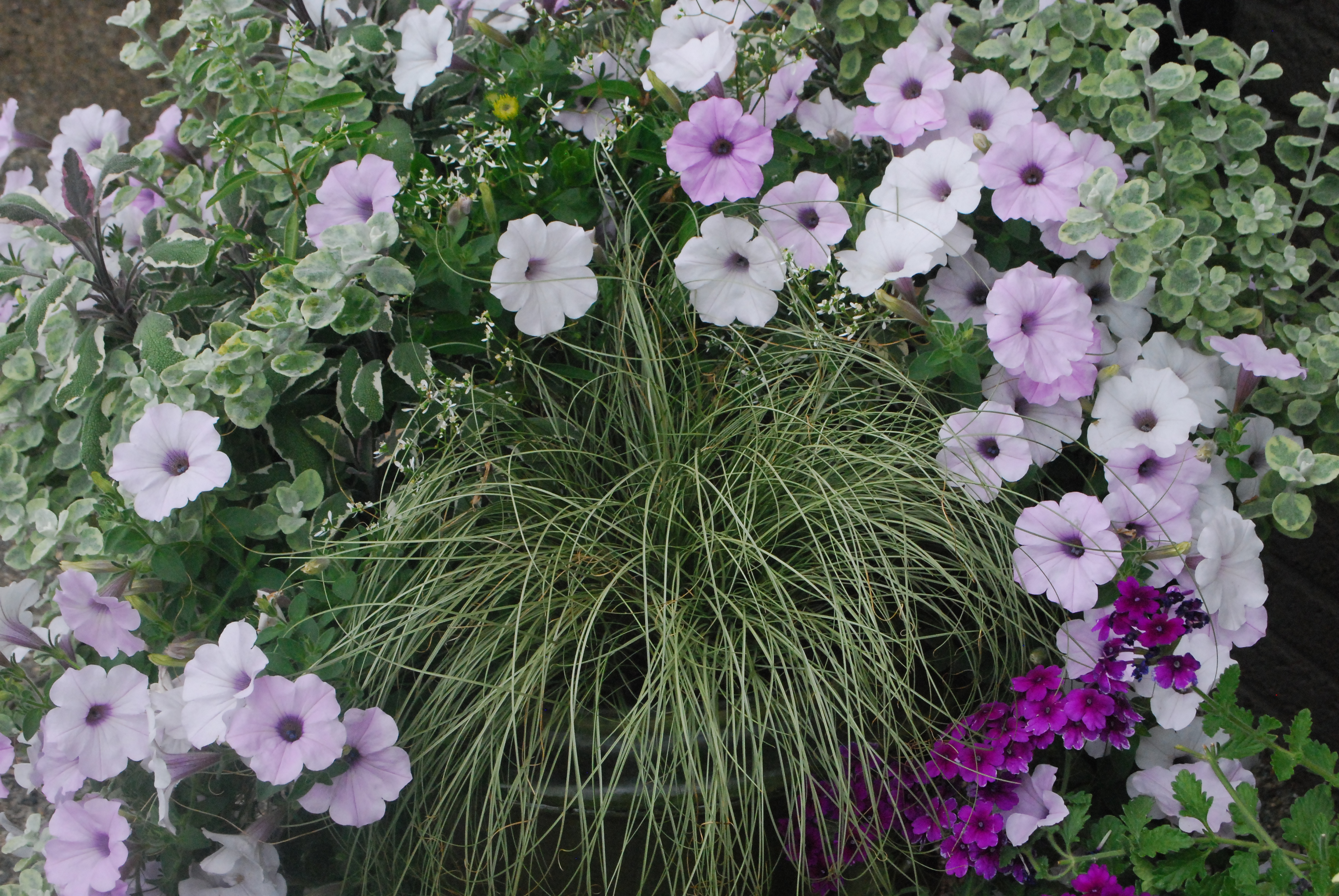
Petunias are native to Argentina.  Many species of helichrysum, like the variegated licorice pictured above, are native to South Africa.  The blue-green frosted curls sedge is a cool season grass, meaning it grows best before the advent of hot weather, and after the cessation of hot weather.  It tolerates, but does not grow much, in really hot weather.  These plants are equipped to handle the heat.

sunny window boxes

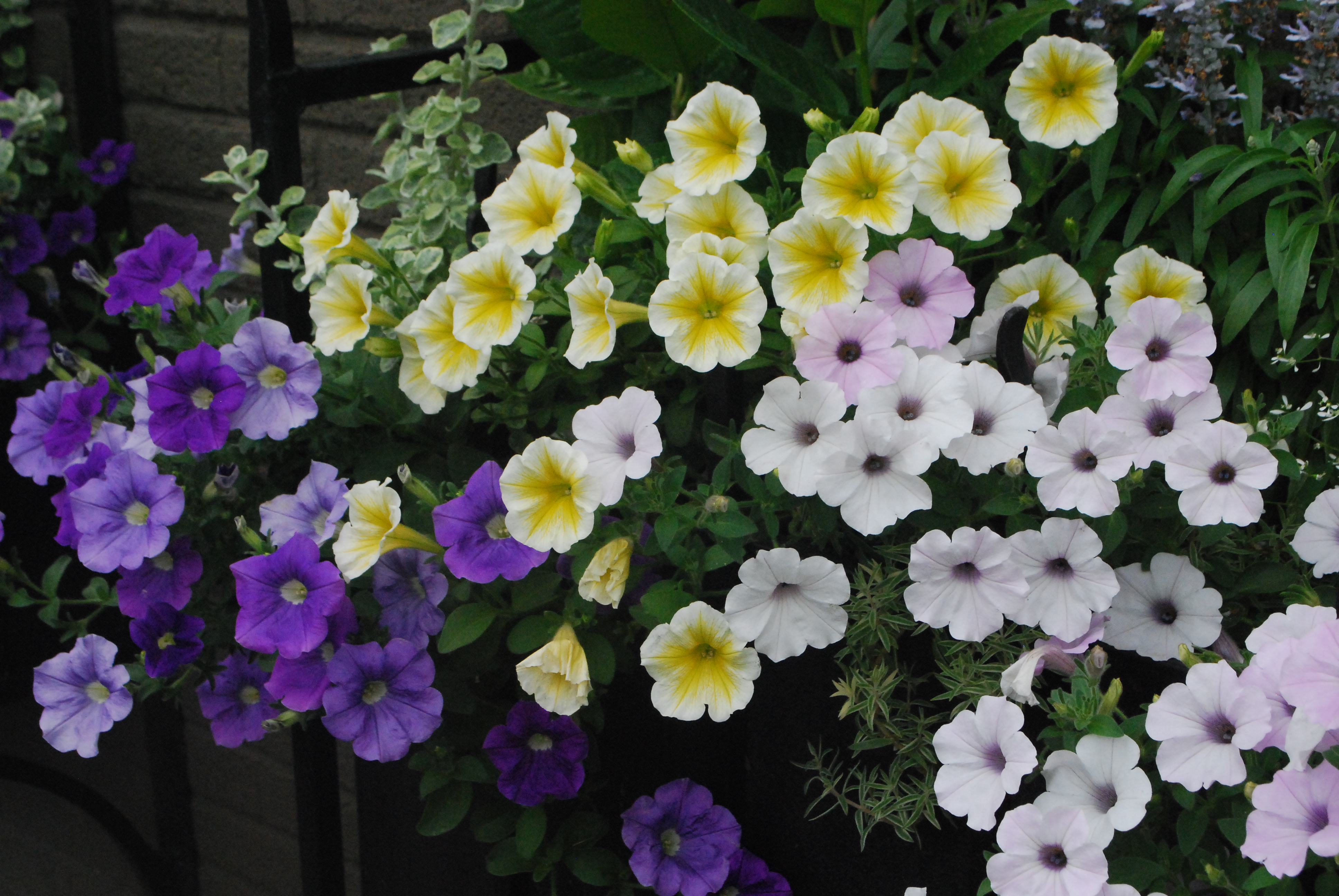
Most of the plants I use in containers are hybrids of non-native, tropical plants.  The petunias like to be grown on the dry side, and usually do well in the heat of our summers.  They come from places that are routinely hot.  New Zealand sedges, of which the hybrid Frosted Curls is an example, are native to a far more temperate zone than mine. They can tolerate our midsummer heat.  But not all heat is created equal.  Extreme heat is one thing, but extreme heat that goes on for an extremely long time takes a toll.

heat loving annuals.jpg

The petunias are fine, and growing lushly-at the moment.  They are dealing with this weather far better than I.  The white mandevillea will sit until the weather gets hot-they are native to central and South America.  Many mandevilleas are native to Brazil.  They grow and bloom like crazy in hot climates.  I expect this white mandevillea will get bigger and bloom more should our hot weather persist.  Nicotiana species can be found in environements all over the globe.  I find mine do quite well over the summer, and rebloom profusely.  Nicotiana mutabilis in particular will rev up in the fall, and send out substantial new flowering stalks.

cassia

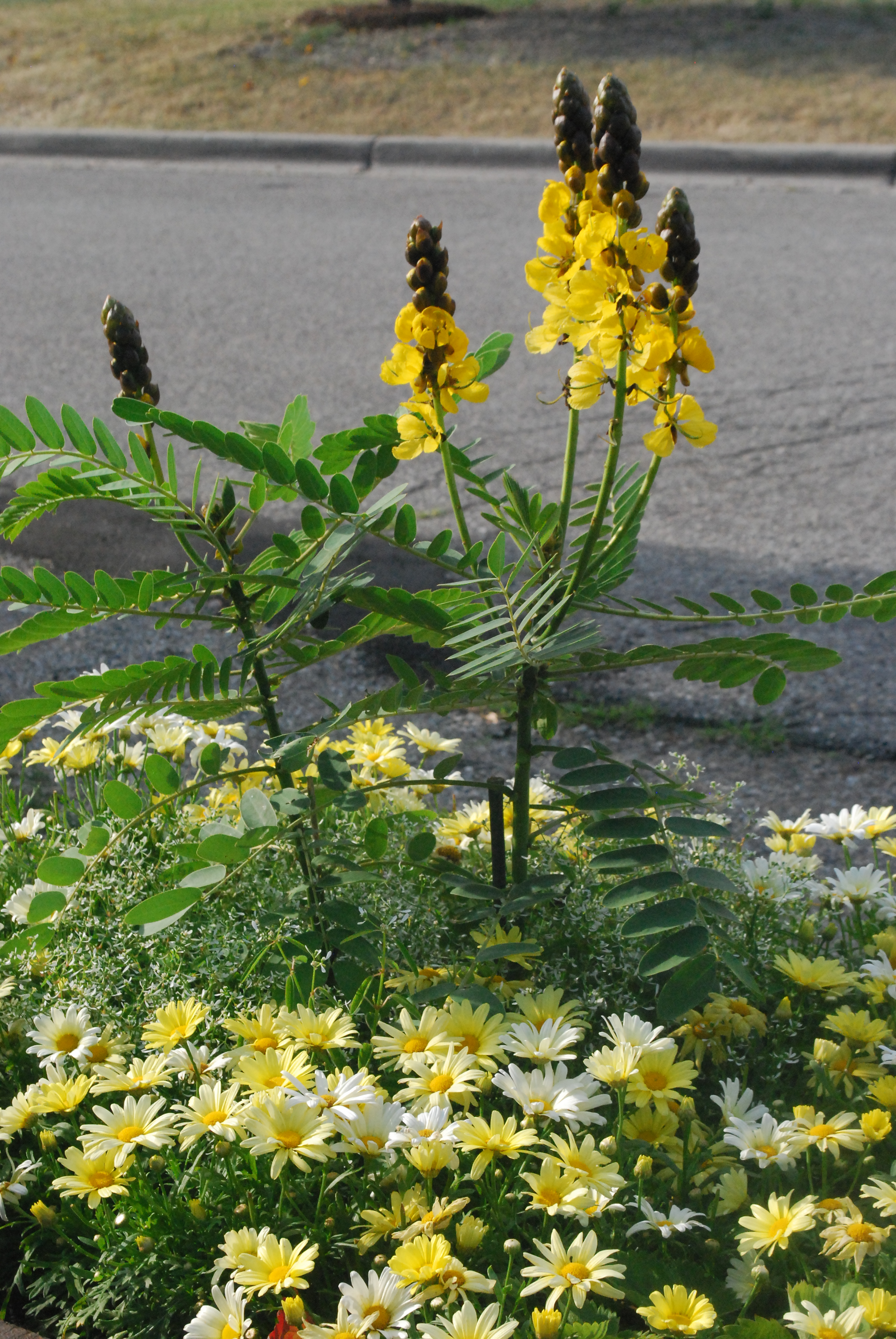
Cassia didymobotrya is commonly known as the popcorn plant.  The fragrance of buttered popcorn is strikingly apparent, should you run your fingers across the stems and leaves.  It is a shrub, native to South America, that will grow 4 to 6 feet tall in one season.  They may grow larger, given a hot season.  They make a substantial showing in a container garden.  They throw yellow flowers on and off all summer. I am particularly fond of the pea-type leaves.  Cassia is a tropical plant with a very airy appearance.  Planted in a cast iron cistern placed at the edge of our asphalt street, it looks stress free, and is growing well.

Texas sage topiary

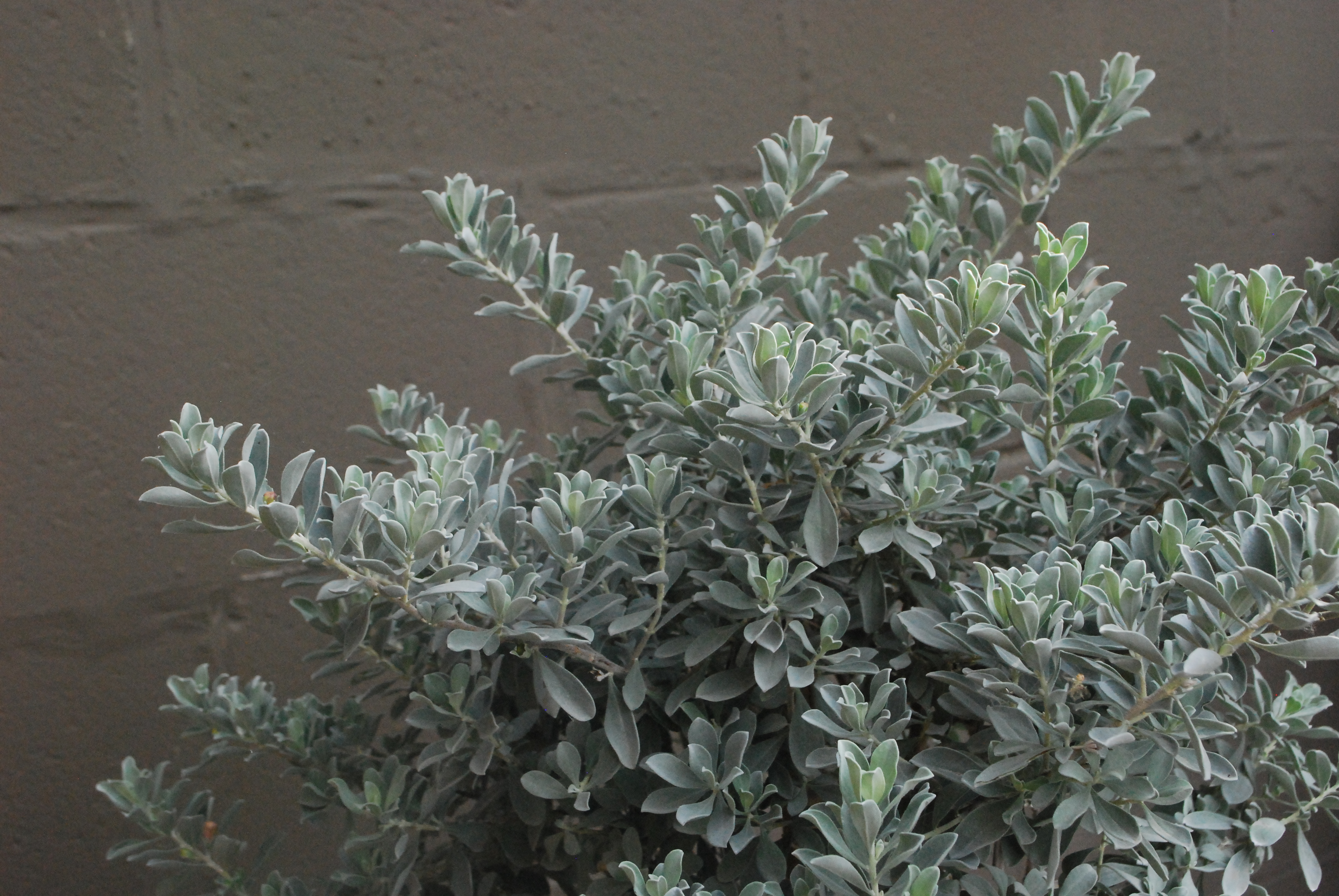
Texas sage is as it suggests-it thrives under desert conditions.  I have never had a leucophyllum bloom for me, but perhaps this year I will get lucky.  They like desert conditions, but oddly enough require some humidity to bloom well.  I cannot believe the usual Michigan humidity is far behind. I know that many grey foliaged plants are native to dry places.    Lavenders and grey salvias will not tolerate too much water for long. 

I do know there can come a point when heat can severely damage plants.  The first line of defense against life threatening damage is to go dormant.  Both plants and animals will aestivate, meaning they slow down their activity, in order to conserve moisture and energy.  Petunias and impatiens will go out of flower, if they temperatures get too hot, and stay too hot. Our drought-like conditions are not helping one bit with the effects of the heat.  Many lawns in my area have gone brown and dormant-they are aestivating.  Should the soil temperature gets too high, roots can literally cook.  I remember a summer in the mid eighties where many growers in the Cleveland area lost nursery stock from soil temperatures that soared over 100 degrees.  There is nothing that can be done to defend against extreme weather like this.

white nicotiana

The best I can do to help my plants survive a bout of unusually hot weather is to water them when they need it. Even if that means I am outside with a hose when I would rather be anywhere else.  So far, so good.