 There are plenty of ways to think about white. If you take red, blue and yellow light and mix them up in equal amounts, the result is white light. White snow or dense fog on a sunny day appears blindingly white, as they reflects all every color, and appear devoid of any color. Devoid of color is one way of talking about white. This snow looks gray, as it was photographed on a cloudly sullen day-no light making for white white. Scientific discussion about exactly what constitutes the nature of white-there are lots of theories. No designer needs to understand the physics or chemistry of white as much as they need to observe what white does in a composition.
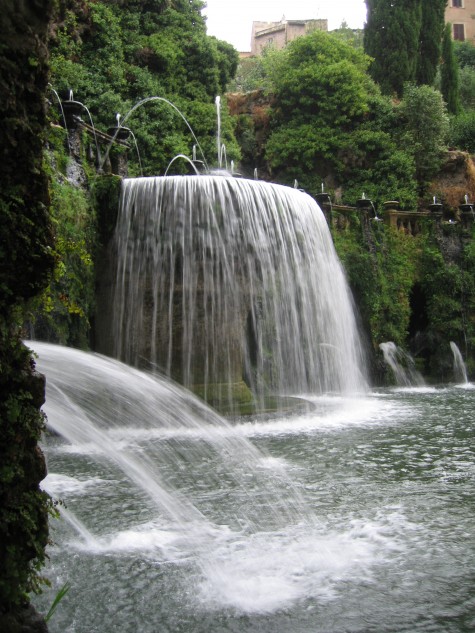 I never think about white without thinking about light. Water is transparent, or colorless, it transmits any color behind it. The water in the air from this Italian fountain is reflecting all the colors of the light spectrum. This clear water appears white- in bright light. “White water”, or churning airborne water, looks just like snow. If you squint at this picture, so all the individual details drop out, the white will seem close to your eye, and grab your attention. The green seems to recede, and hang back. A landscape is very much about the creation of a sense of depth. There are actual spaces, with dimensions you can measure. A physical space that is very shallow can visually appear to be quite spatial. How you use back and white, or light and dark, is key to this.
 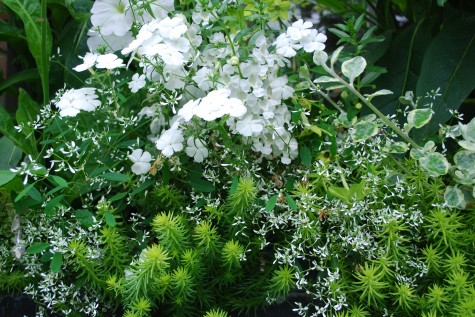 White has strong emotional connotations-as any color does. Imagine how you would feel arriving at a hospital for surgery where everyone was dressed in black? Or red? Or anything but white? White looks pure, fresh, crisp and clean. This white annual phlox brings all of the above to mind.
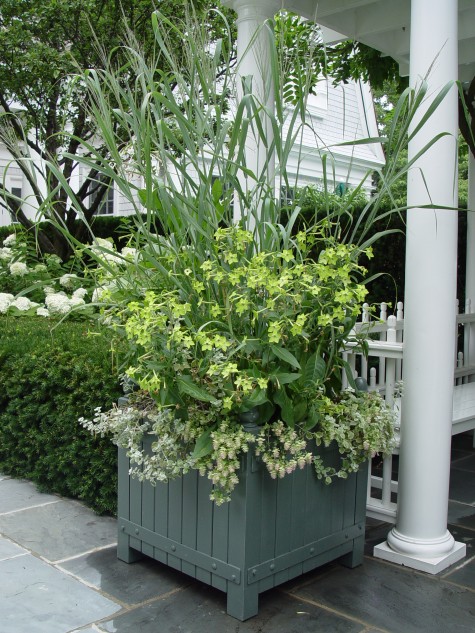
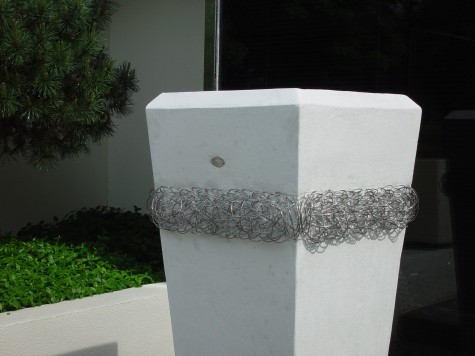 Pairing white with some sharply defined geometry can be clean and contemporary, and on the edge of glaring. My main objection to contemporary landscape design has to do with the lack of any attendant and contrasting softness. Mid century modern design does so well expressing a contemporary point of view, without being pitilessly stark. How this container gets planted will be key to its visual success.
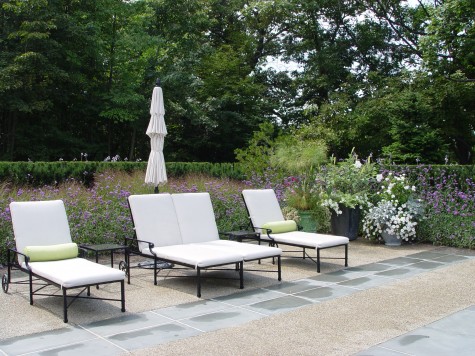 White furniture in the landscape is cool and inviting, not cold. This black and white furniture, set on a bluestone and concrete aggregate terrace draws the eye, and invites company to gather. The attendant landscape is softer and looser, without being messy or disorganized. The invitation to sit is the most important visual element here; the landscape follows up with the suggestion of soft enclosure. But the invitation issued in white reads first.
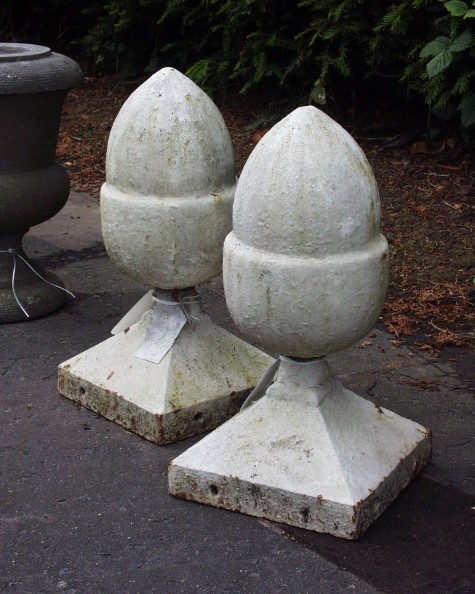 Many antique garden ornaments, whether stone, iron, or concrete, have been painted white. Perhaps the origin of this practice has to do with an effort to make those ornaments stand out. Vintage white paint on an object has a feeling that enchants those who love classical gardens, as well as those who love cottage gardens. In one of my lives, I would like a house with white limed floors, white walls, and white everywhere. How serene and beautiful this would be.
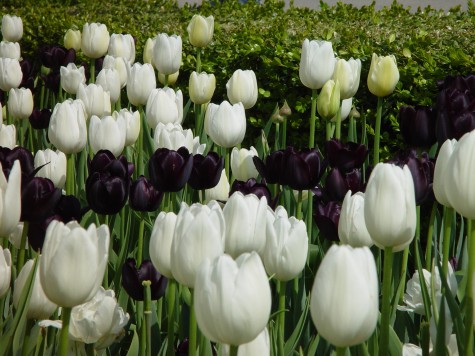 Though the only thing on my mind come spring is some color, I do love white tulips. These Maureen tulips, paired with the black blooming Queen of the Night tiulip, is a different sort of spring display; stately and formal, I would say. Though white flowers attract visual attention from afar, and can light an evening garden, I like what white does to direct your attention to the form. A white tulip will permit you to see more about the shape of a tulip than any other color. Color can be a distraction. Sometimes if ideas seem scarce when I am designing a landscape, I print all my study photos in black and white.
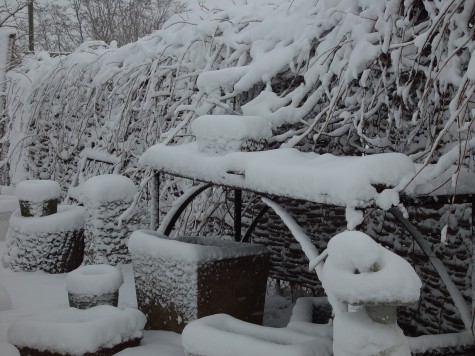 My life is all about the white now. Far from being a stock color, the character of white is so influenced by whatever light I might have delivered to my door in the morning. I especially appreciate how it defines, and then blurs the shapes of everything outdoors. I like how it makes me see big forms and shapes in clean relief. This makes me understand how a gardener could be very keen for a white garden.
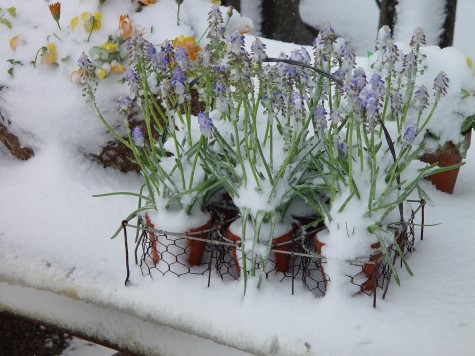
My relationship with white in the garden might be described as always, and forever changing-with the push and pull, the hot and cold, the off and the on that characterizes most good relationships.
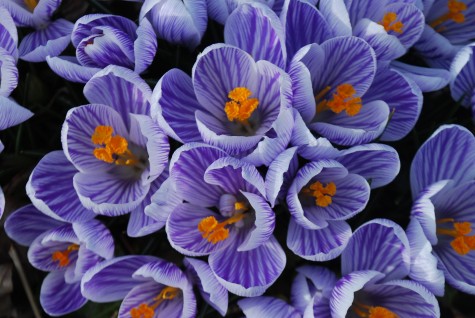 The first color I want to feast my eyes on when spring comes is purple. It could not be any further from the light, medium and dark drab I have been looking at for months. Purple flowers have a luminosity and depth that no purple paint could come close to-just try to paint a room crocus purple. Watercolor pigments, thoroughly suspended in water, and applied transparently over a white sheet of paper, come close to luminous. The gold yellow of these stamens are by direct contrast sure to attract pollinators as much as they attract me. But no one does luminous better than nature.
 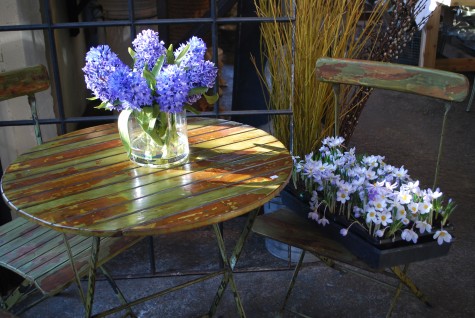 Though these lavender species crocus planted in a flat do not bloom for long, I pay my money, and go home happy. Sometimes I do the right thing, and plant tufts of them out in the garden. They rebound from the forcing amazingly well, and will take hold in the garden. The hyacinths are another story-these fabulous fakes fool the eye even up close. I have seen people touch them, to check if they are real. I think the fabric is dyed such that the color pools dark to light on each floret. The individual florets are thin enough to permit light to pass through-a more than decent try for luminosity.
 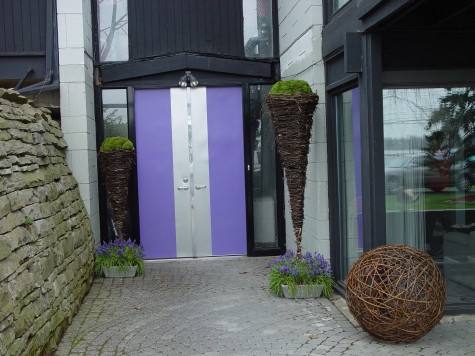 It is an unusual client who will commit to a purple door. I find this refreshing. The front door looks like a package ready to be opened, does it not? The grape hyacinths-who would not have them-all the species and every available hybrids-if they could?
 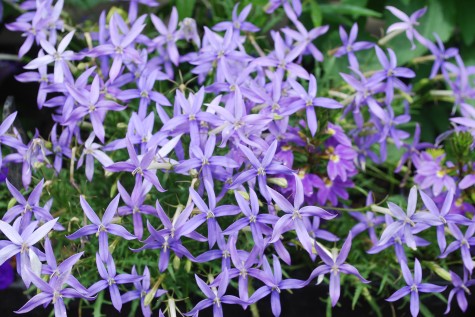 Laurentia is blue purple. Commonly known as heliotrope blue, the color startles me. In the smallest dose, it reads loud and clear. A small stand of this is as striking as an entire field of sunflowers, as it is so unexpected. An unexpected landscape element-what is yours?
 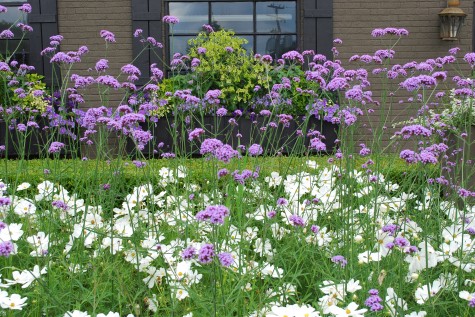 Verbena bonariensis is one of my favorite flowers. Endowed with all the airy grace of a meadow perennial, it is an annual in my zone. Drought tolerant, sturdily tall, a prolific seeder whose seedlings are easy to weed out-who could ask for more from a plant? These floating dots of red/lavender/purple are beautiful with just about every other color on the planet; this makes them friendly to just about any scheme you have in mind.
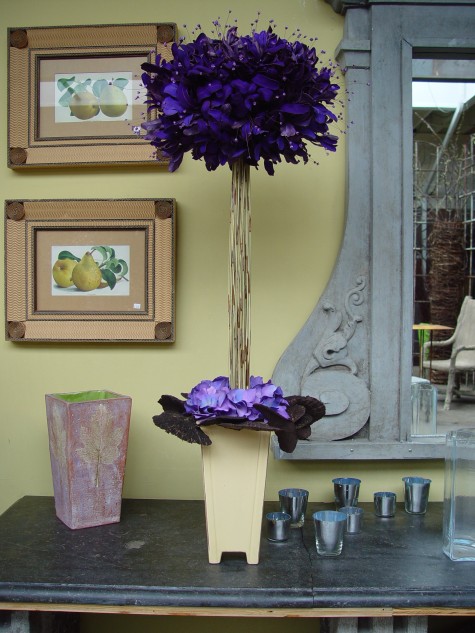 Integrifolia dyed purple is a rich royal purple. Placed in front of a pale greenish yellow wall, this complimentary color makes the purple glow. Though no light penetrates these leaves, pairing colors opposing each other on the color wheel is a reasonable approximation of luminosity.
 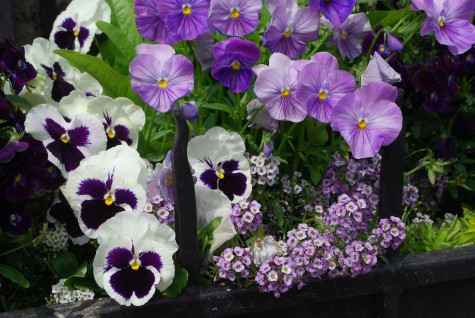 Pansy purple-everyone knows what that color is. I find it all the more precious as I have it in the spring and early summer-no other time. I call this alyssum the Easter mix-the mix of lavender and purple brings back memories of Easter Sunday hats. Those hats I only saw at Easter-never any other time of year. I am sure I had more than one Sunday dress in some variation of that purple.
 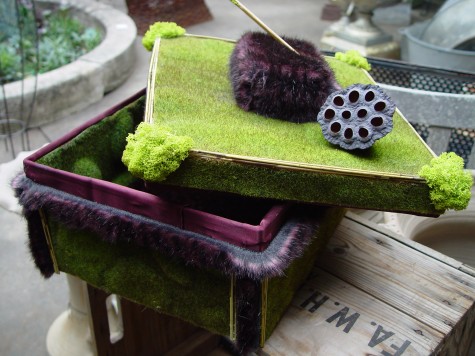 I call this a presentation boxes-don’t ask me what that means, exactly. Draw your own conclusions. This box I made from synthetic moss mats, lime green reindeer moss, natural reed, a particularly fine specimen of poppy pod-and purple fake fur. Purple and lime green-an inspired color combination.
 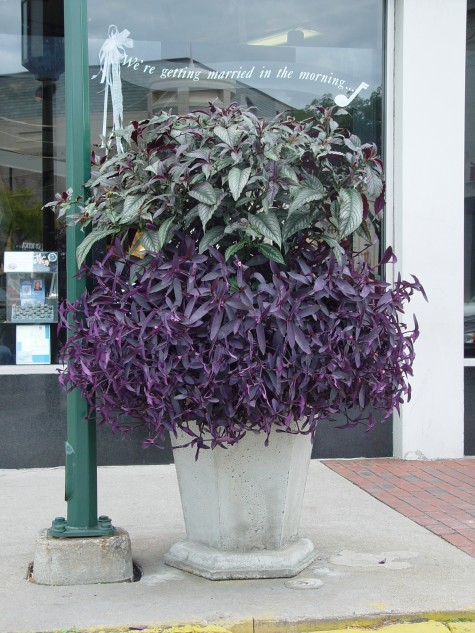 Purple can be moody, and fugue like. What I call Moses in the Cradle-this dark purple tradescantia, I plant liberally. It tolerates cold, heat, shade, sun and neglect. A new variety I tried this year has a white and cerise variegation; such a fancy outfit must be why it does not grow vigorously. But the ordinary Moses will make a stunning bouquet for you. Persian Shield is a moody mix of blue green and red violet in this more sunny location.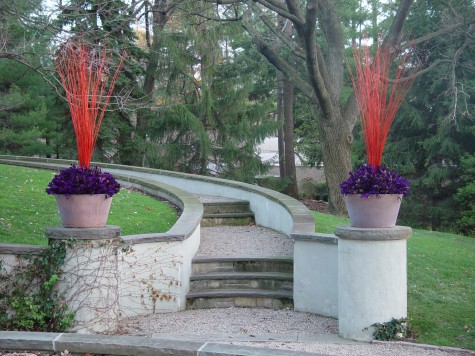
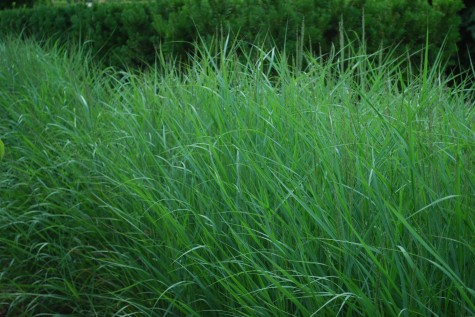
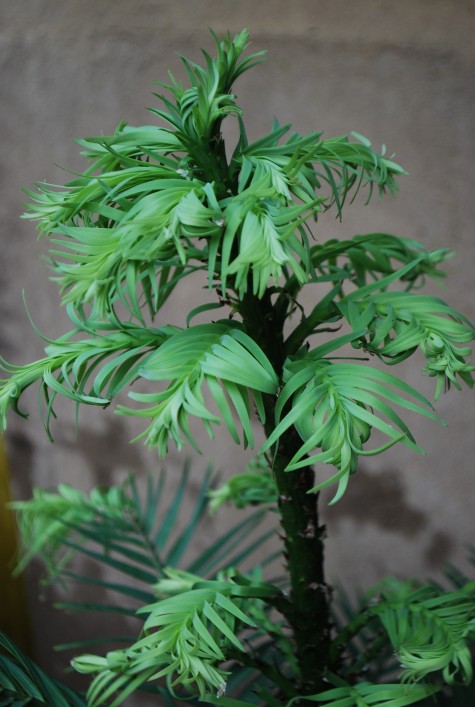
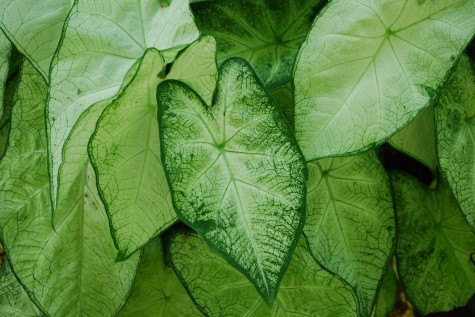
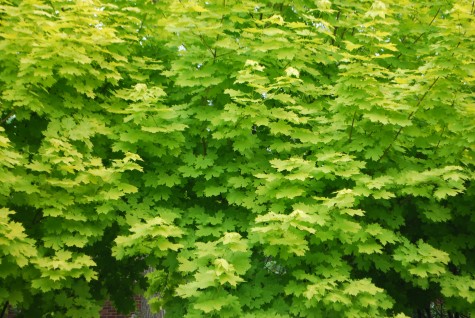
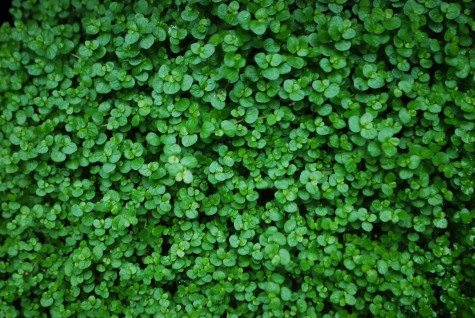 Judging from the numbers of people I try to help grow healthy yews who cannot spot that yellow/green yews indicate a water or drainage problem, I think green is so pervasive in a landscape, people stop seeing it. If you are not tuned in to green, you are missing a good portion of the pleasure and satisfaction of a landscape. Designing with green in mind-don’t miss this.