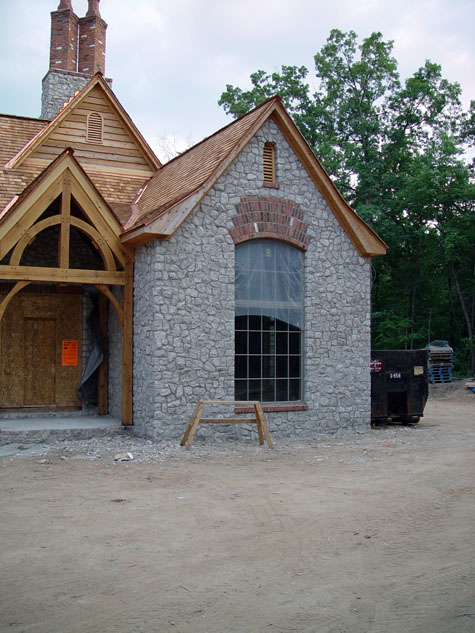
Having designed and built landscapes for many new homes, I can safely say I would never want to build a house myself. Its a special person who can deal with all the decisions, delays, snafus and unpleasant surprises. You have to be a person who loves a process that involves a lot of people and circumstances over which you have no control. The landscape process I have infinite patience for, as anything in the natural world gets my attention and respect. But landscape for a new house can be tough. Would that my work could be first up in the project, rather than last.
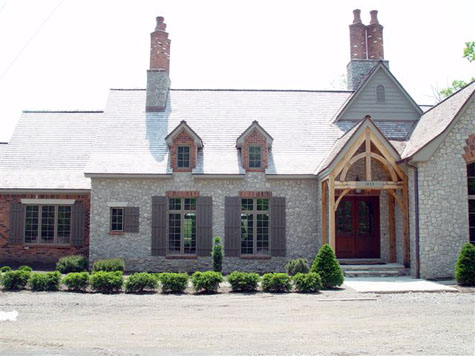
The contractors have driven over every square inch of soil, turning it into an airless, concrete like mass. Mortar, and other debris has been dumped everywhere. Clients are ready for a project to be finished, as well they should. They are ready to move in and live. They are tired of the commotion, the demands on their time, the dirt and the dust.
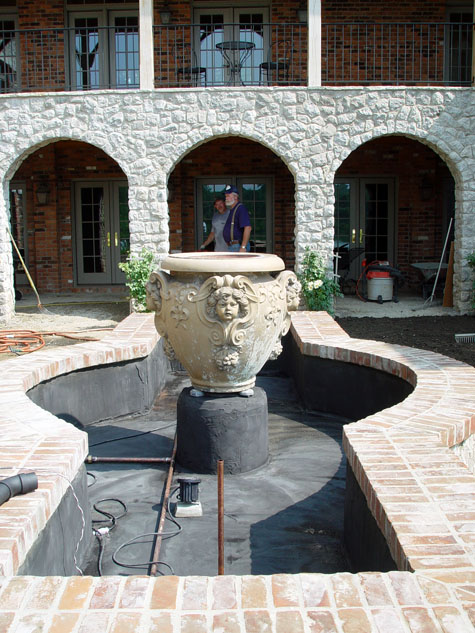
There is a lot of work that goes into any new landscape construction; it can be years before a new landscape settles down, and looks entrenched. A garden feature, such as a fountain, has a definable construction start and finish, but no landscape or garden is ever finished. A landscape I would define as a “big fluid situation”. Try describing a big fluid situation to a client who is over the construction phase; I do my best.
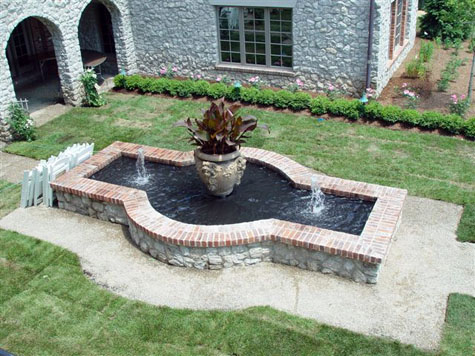
New grass has that patchwork look. There are more spaces than plants, when plants are spaced properly. Big pieces of ground need shaping. There are so many details in a very large space-what person’s living room is larger than their yard? The sheer square footage is daunting.
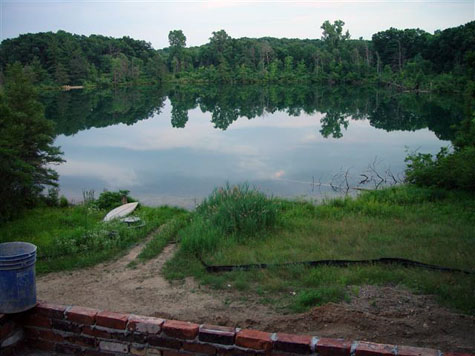
It has always interested me that a new house is attractive in its “newness”. But a landscape is always asking for some age, some maturity. I own a “mature” house-it seems like it always needs something; the age of my house is not always a big plus. Large landscape materials can add scale instantly, but big material moves slowly. A large tree may take years to really root in after it is moved. Smaller material takes hold faster. There really is no substitute for time in a garden.
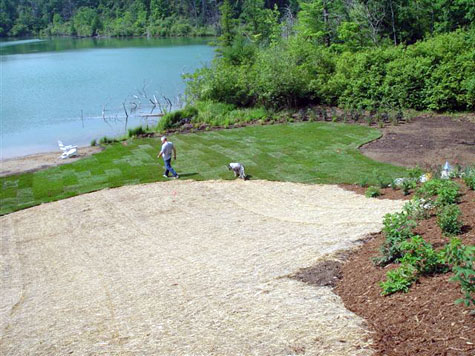 Landscapes can be phased-not everything needs to be done at once. Doing everything in one fell swoop doesn’t give the space time to talk back to you. I’d rather grass a lot, and subtract grass as is seems appropriate. We seeded this steep slope with a carefree fescue mix that is drought tolerant and fairly short growing, so its needs mowing but once or twice a season. When the time comes for some other arrangement, we’ll cut into the grass.
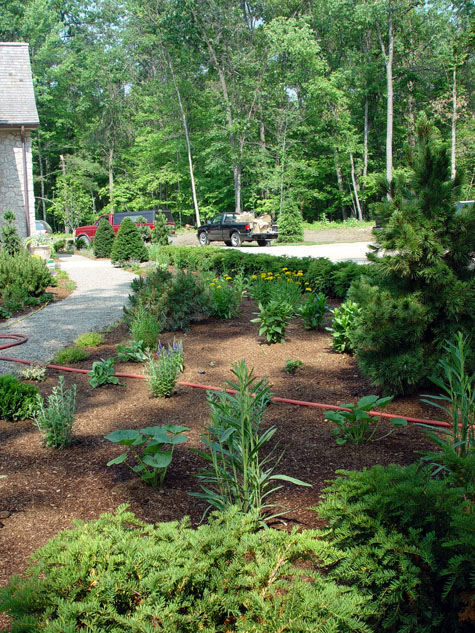
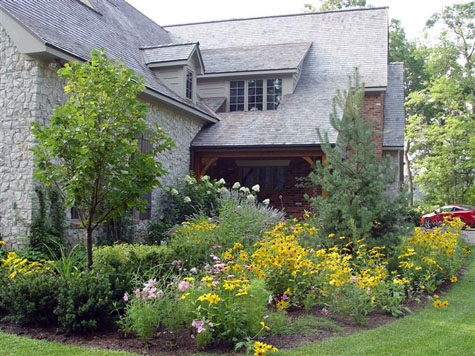
Perennials need space to grow, so they are not instantly on top of each other. This newly planted perennial garden was augmented with big growing annuals its first season.�
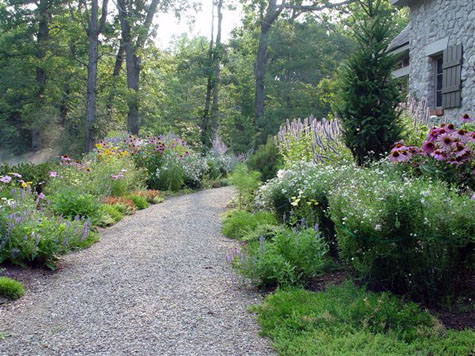
A few seasons later, lovely.
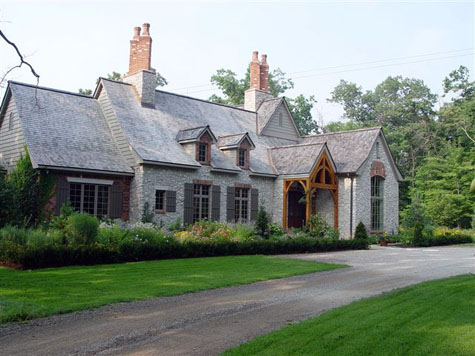
This landscape is starting to get good, some three years after planting. It will get better, given my client’s care of it. He has fortitude, and lots of patience. He still calls me for help; this is the mark of a successful new construction project.
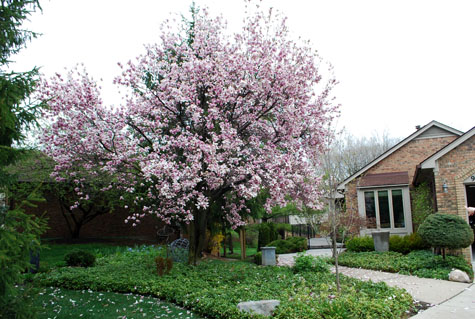
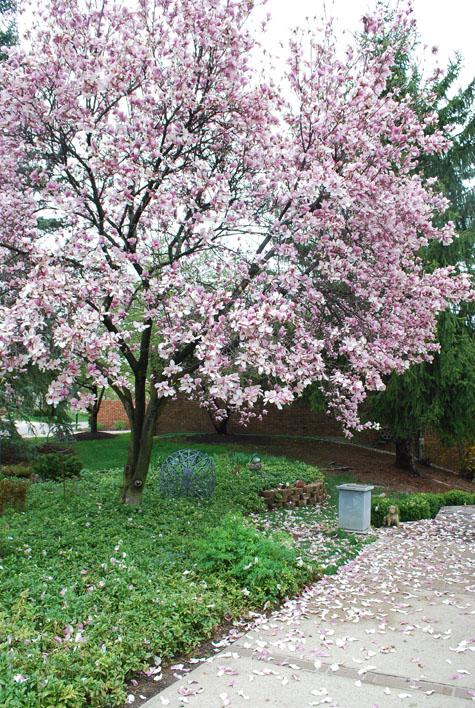 Jane and Ken Cruickshank have been enthusiastic supporters of my store
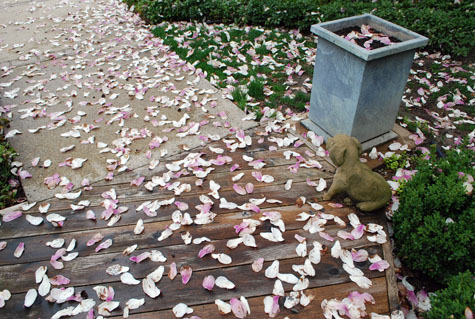
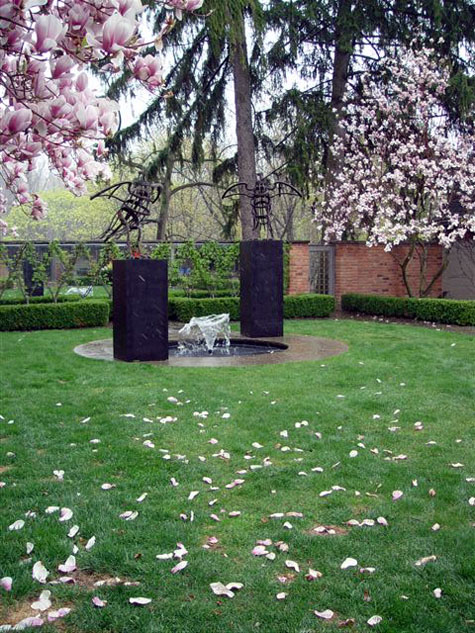
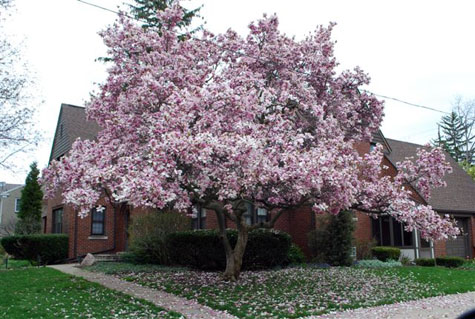
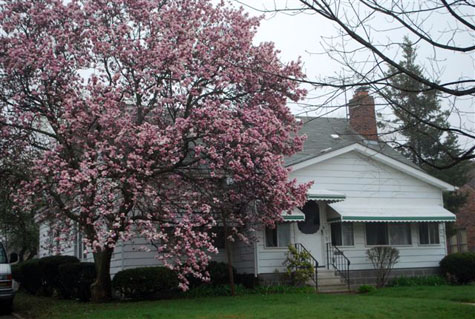 Everyone makes decisions about a life’s work. Whether they think it through, or not, decisions get made. As a landscape designer, I realized part of my life’s work was to plant magnolias-all manner of magnolias, every where it made good design sense to plant them. I am a designer who in part came to design via a love for plants. Plants are part of the vocabulary that helps give voice to a point of view. Every designer needs heart, soul, and nerve-but they also need language.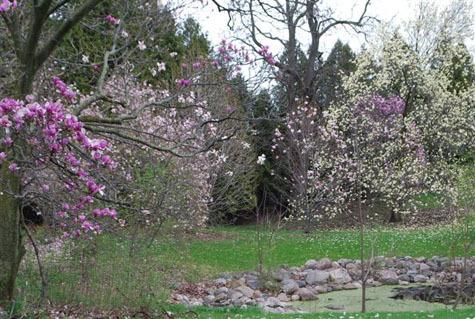
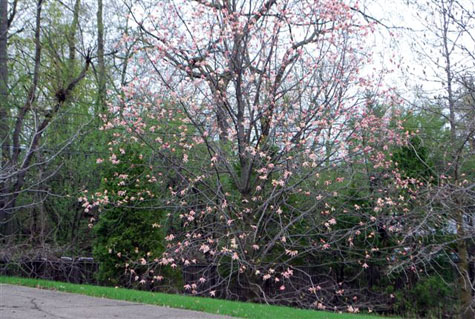 Phil Savage, lived on almost 8 acres-most of which reflects a lifetime growing and hybridizing magnolias. He also grafted magnolia cuttings onto ash tree root stock-these trees are 70 feet tall on his property, as we speak. He hybridized “Yellow Butterflies”; when the spring weather is perfect, it is a dream come true in bloom. Later, it is sturdily and robustly green. His property had magnolias of a size, with flowers in colors, I have never seen-yellow, peach, orangy pink. It was like a visit to another planet. But no, just a visit to a man who knew and lived his life’s work.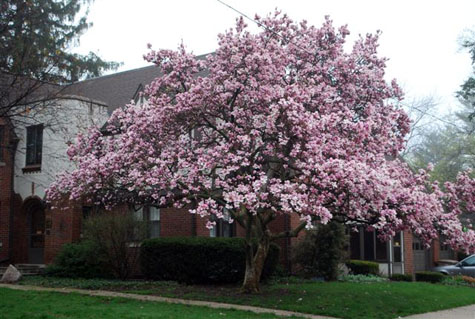
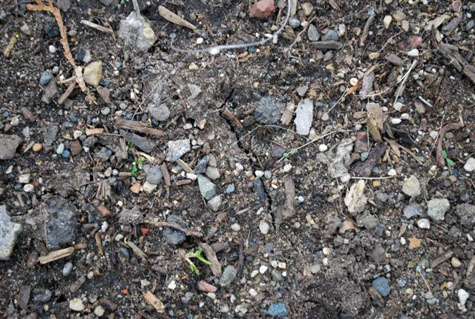 I have been a gardenmaker of one sort or another for what seems like a lifetime. I am quite sure my first effort to learn how to walk was an effort to get outside; this had not changed much in 58 years. Once I did get outside, I stayed until I tracked it all back in with me like a beloved blanket. Dirt I found very appealing, as its forms were infinitely varied as were its textures and smells. Though I later learned that dirt was a substance picked up by a vacuum cleaner, and soil is what one grows plants in, the word dirt has always sounded just right to me. My first strong memory of dirt is the mounds of it excavated to make basements for the ranch houses being built in the subdivision where I grew up in the 1950’s. This dirt retained the teeth marks of the machines scooping it out of the earth. Its colors were iridescent; the smell of wet metal, palpably radiating, was strong enough to make my eyes water. As fascinating as the dirt was the hole left by its absence.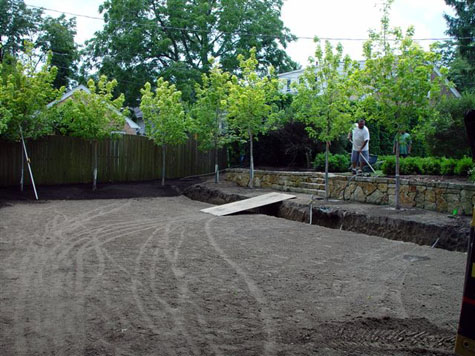
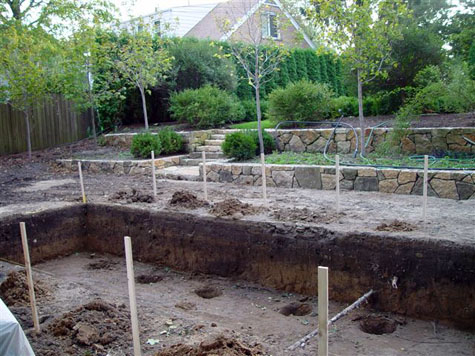
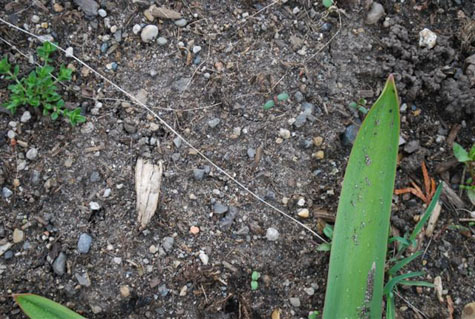 This is all by way of saying I found the dirt and the dirt sites irresistible. Beyond the perimeter of grass surrounding my new house was an earth world, amusing and wildly entertaining as simple things are at that age. I would climb the mountains of dirt, claim possession, and listen to the sunny silence. A convenient board would give access to what would become a basement-a place of a silence of a wholly different sort. Ones bones felt the air echo, and the cold seemed dangerous-would anyone look for me if I could not climb back out? The dirt seemed natural and right, as it was what was wholly mine. My love for dirt, earth, compost, soil-call it what you will-has been with me ever since.