 I do have a memory of getting into my Mom’s rouge pot in an idle moment. Those bright red perfectly circular spots of red I applied to my face made her laugh. I was terribly offended, as I thought I looked beautifully dolled up. All these years later I still like how a little rouge can doll things up; this is never more the case than in a garden gone wintry. Red twig dogwood and preserved and dyed eucalyptus can enliven a winter garden like nothing else does. I am not a fan of red tulips, or red dahlias; the red flowers and the green foliage is a little too much excitement for me. But the excitement generated by rouge red, in a garden gone grey, brown and black ,warms me up.
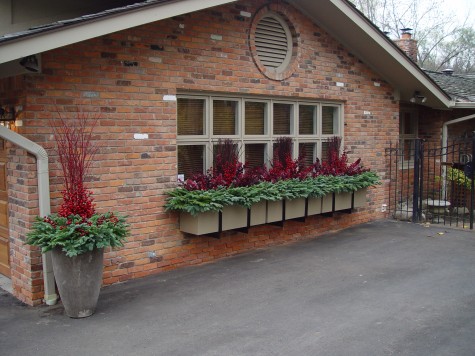
 Dark red eucalyptus and red twig paired with the blue needled noble fir is a dramatic color combination. Very dark colors are best in small spaces viewed up close, or places backed up by a lighter color. The lighter orange/brown brick of this entrance makes that dark red read loud and clear. The big round leaves of the eucalyptus are a great foil to any needled evergreen branches.
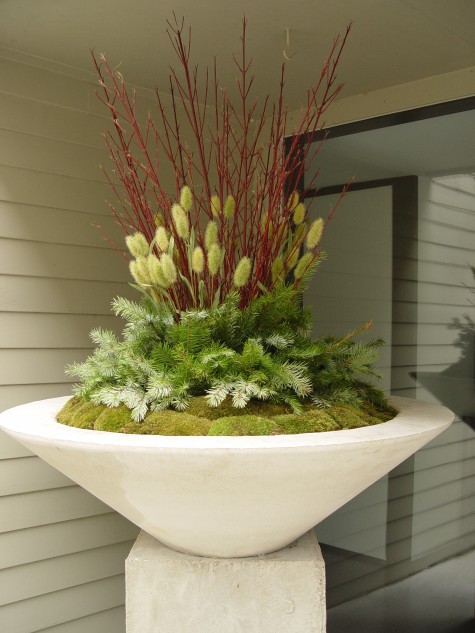 Bright red is all the more electric paired with a light green element. As no plant in the landscape has this form or color right now, I have no problem adding in artificial stems. Sometimes people ask how I could stand anything in a pot that wasn’t natural or real; it’s easy. Gardens make people feel good; if an artificial stem helps make an arrangement a little better and the winter a little more tolerable, I am all for it. This contemporary arrangement is all the more contemporary given the obviously faux detail.
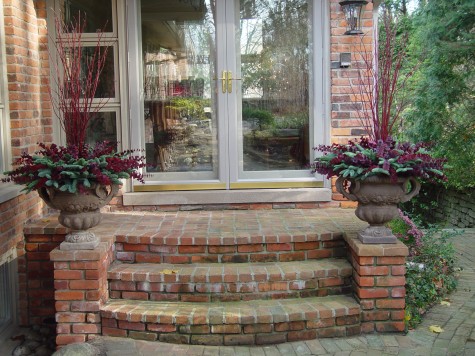
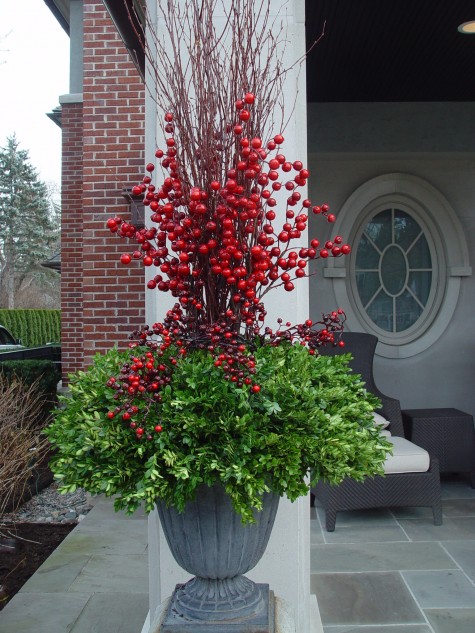 I am a fan of many shrubs and trees that sport berries in the fall and winter. However, they have a short lifespan, cut and in a container. The berries of Ilex Verticillata, or what we call Michigan holly, are spectacular but fragile. The berries in these urns will look great all winter, and can be removed the beginning of March. The boxwood might need a little floral dye sprayed on it by then, but I like keeping the pots intact until April sometime.
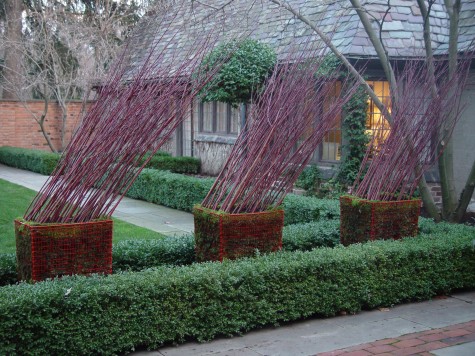 This wired and windswept winter display was entirely inspired by the floral arrangements of Jeff Leatham. His floral arrangements for the Four Seasons Hotel Paris, the George V often feature flowers set in vases at startling angles. This out of vertical placement attracts attention instantly. Each one of these dogwood stems were wired individually so the form would be kept intact whatever the weather.
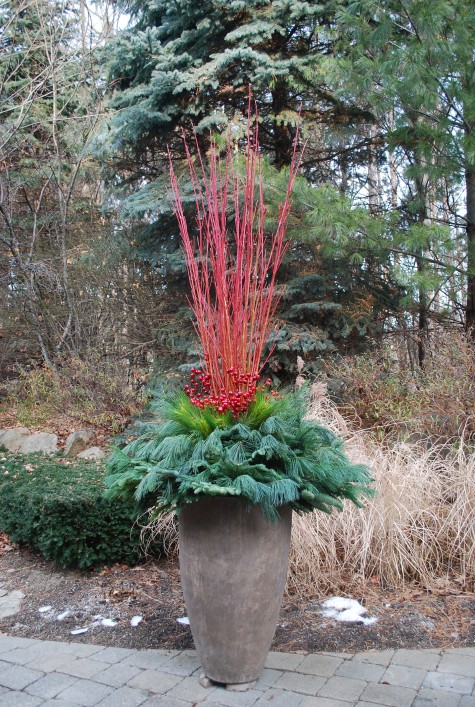 Cardinal redtwig is a relatively new cultivar that shines. It stands out so beautifully in front of the drab woodland background. We are sure to elevate the pot off the terrace surface, so water does not collect and freeze around the base.
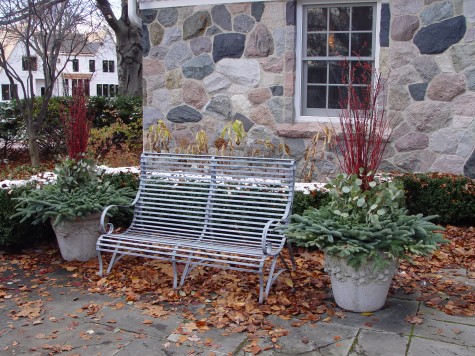 I have good success using fresh silver dollar eucalyptus outdoors. As it dries, the color does become more subtly taupe-blue, but the big leaves are an invaluable texture. The littleleaf euc tends to dry much faster and not to good end; I am not sure why. Eucalyptus pods dry blue, and hold their color well.
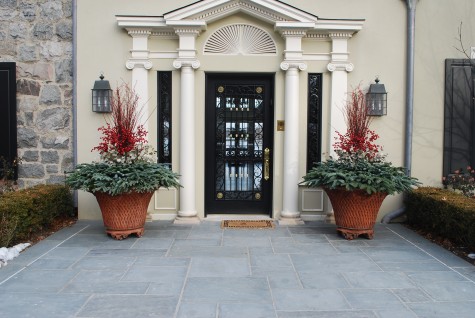 This pair of pots welcomes anyone who comes to visit. They make a very strong reference to my client’s love for their garden, from a long ways away.
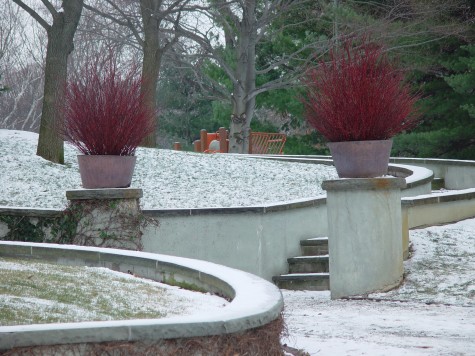 Likewise, this redtwig massed in copper pots, framing the view to a beautiful beech. Placed at least 75 feet from the road, they make a clear statement to passers by.
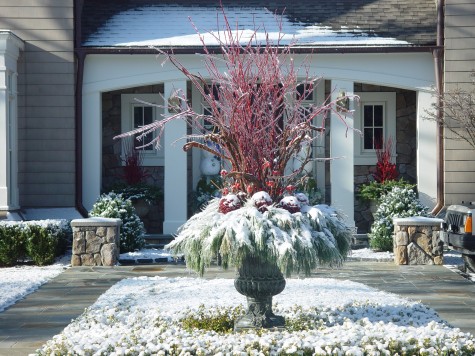
It is good to have something in place and ready for this day. This is exactly how I like my snow and ice.
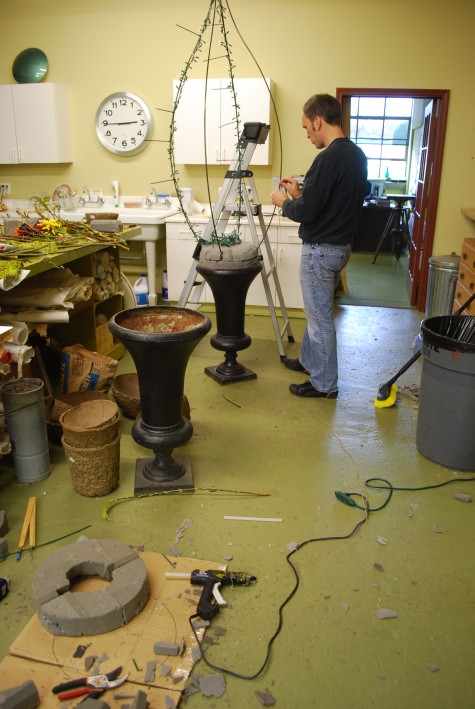 Our entire method of sturdily constructing an arrangement for a winter pot is predicated on one concept-you have to create the roots, and the trunk. I rarely worry about my summer pots going out of kilter. The roots of the plant secure them to the soil; plants grow upwards, towards the sun. I do not have that luxury in the winter, and Michigan has more than its fair share of stormy winter weather. So the mechanics of fastening all the materials is really important to the longevity and beauty of the piece. Tall skinny pots like these get lots of gravel in the bottom; a large centerpiece can be a big sail in disguise, just waiting for a decent wind to get airborne. We then construct a form in which to secure all the materials-glued up with industrial strength hot melt glue-that sits tight in the container. A loosely fitting form is just asking for trouble. If you have ever tried standing up in a pair of ice skates that do not lace up tight over your ankles, you know exactly what I am talking about.
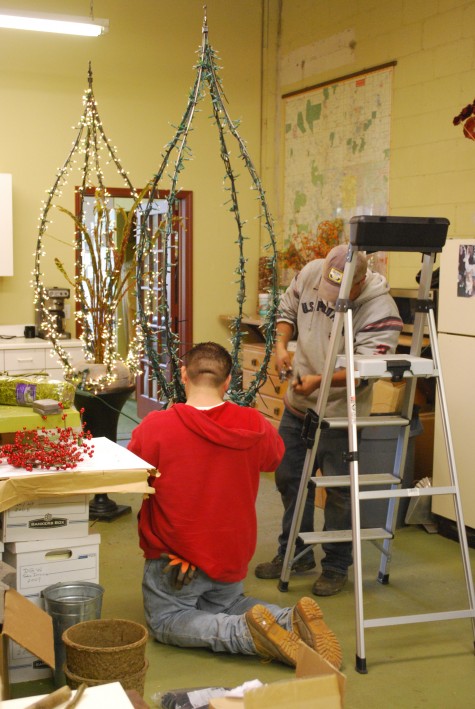 These pots will have lights in the vertical dimension; a steel form provides stability as light strings are heavy. They also make it possible to cleanly and crisply mimic a geometric form. As light strings shapes are governed by gravity, a rigid form insures they will be representing the form you choose for them today, next March.
 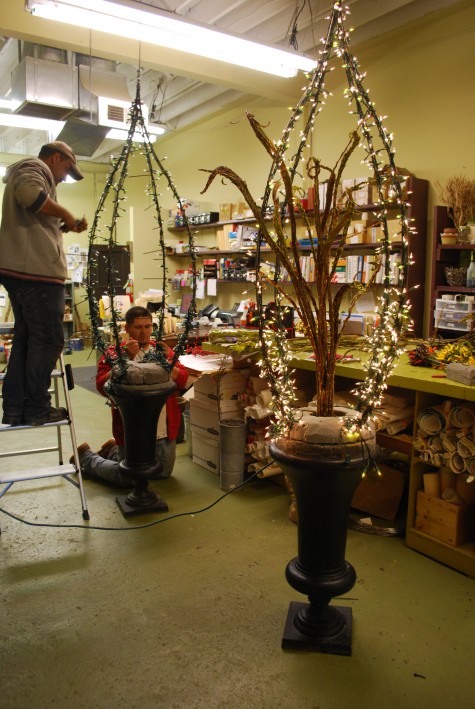 Winding the lights around a form is time consuming. It also makes the removal of the lights tedious. Zip ties make for an easy in and easy off. It’s also easy to spot in the above picture how close we space those zip ties; the closer, the better. Light string wires have strong kinks and curves when they come out of the package, but droop they will, given time. They do not hold a graceful curve on their own; we are generous with the fasteners. The centerpiece is set through a hole in the center of the form; a stout bamboo stake at the center of the arrangement goes far enough down into the pot to insure it stays vertical. There is something so wrenching about a listing centerpiece-who needs that in the winter?
 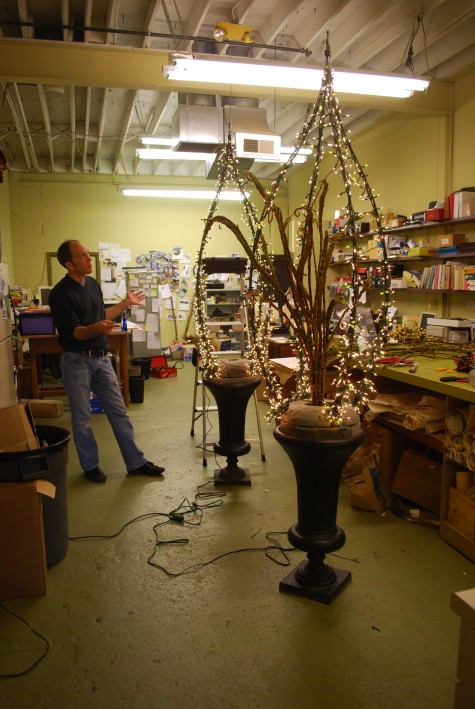 The fantail willow is set into the form based on a determination of the front elevation. When pots are placed such that they can be seen from all sides, we work in the round. As the form will be covered in a skin of lichen mat, the form is shaved into a rounded shape.
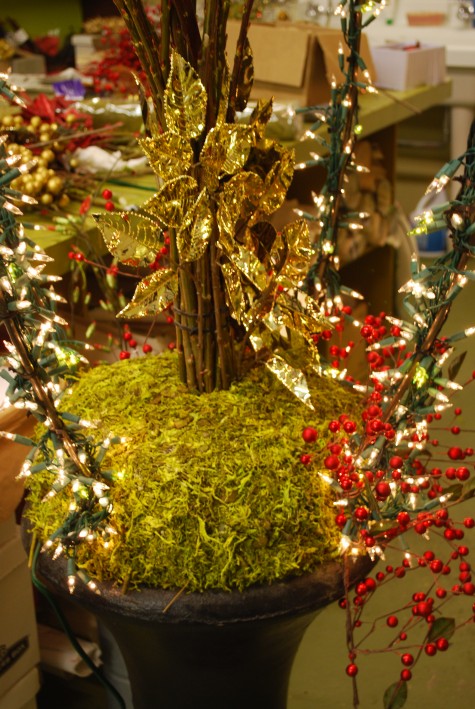 Once the form is covered in the lichen, we add a little icing to our lichen cake-just for the holidays. Gold leaves and a luminous red berry garland-yummy. These elements can be removed after the first of the year, so the pots look good throughout the winter. A client can use the lights in the winter-or not. The topiary form has a decidedly dressy look to it, with the added attraction of absolutely no maintenance. It will still look fine come next April, provided the construction is sound.
 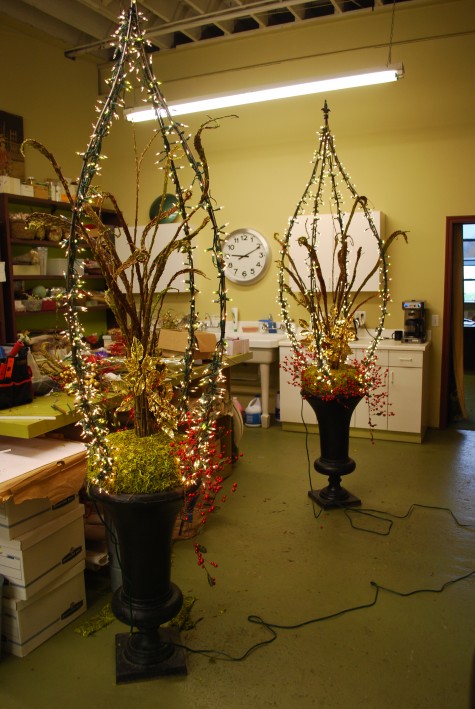 Getting the installation to match in a pair of pots is harder than you think. I try to work on pairs side by side. Some pairs of pots that demand a very formal arrangement, I make sure that one person does both. Everyone’s eye and hand is noticeably all their own. My rule of thumb-I work on the second pot, never taking my eyes off the first.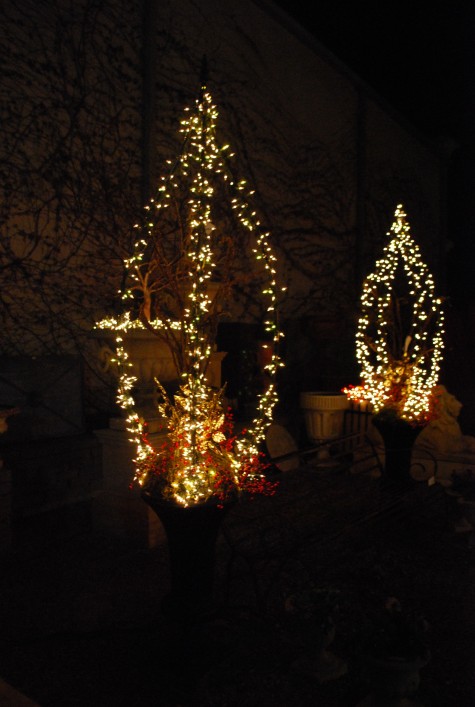
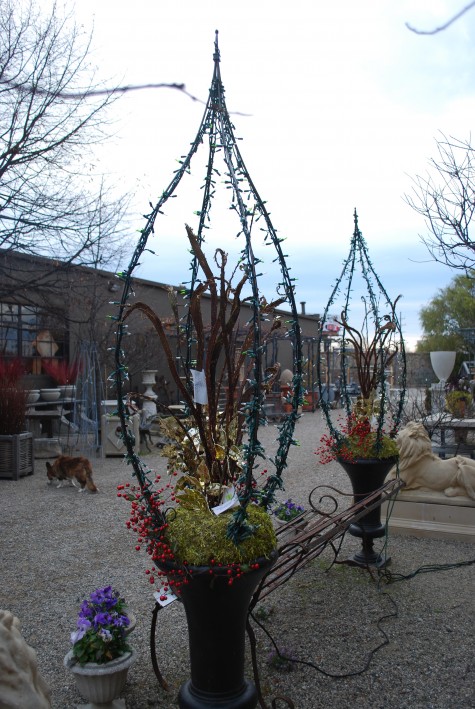 Your winter pots are the best they will ever be, the first day they are done. Unlike a landscape that fills out, and blossoms with age, there is no growing involved. They need to be constructed tall, wide, and robust from the beginning. The winter is a season that can handle a little unedited excess, with a dash of over the top sparkly, with aplomb.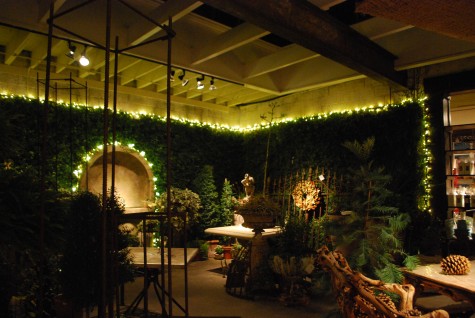
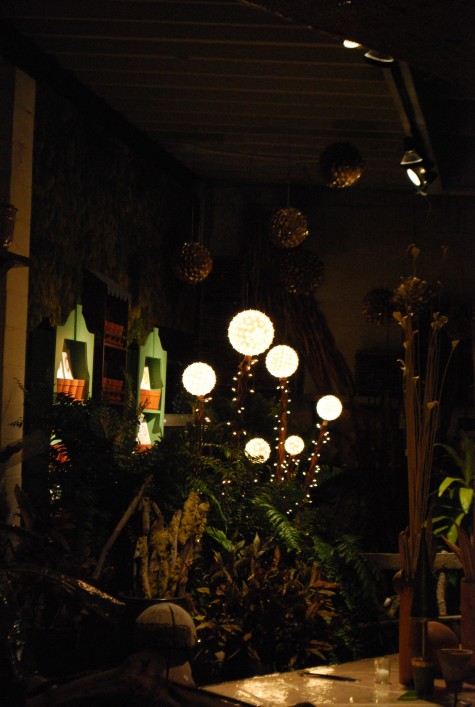 He spot lit certain elements in the room- the refreshment tables in the middle of the space for the sake of utility, and ornament on the walls, for drama. What he lights is balanced by what he keeps dim. He strongly lit the auricula theatres on the wall, so his forest stick and light orb sculptures would not throw them into harsh shadow.
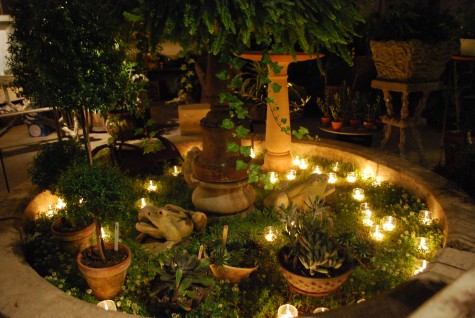 Simple votive candles can put light right where you need it. In this case, lighting the garden at the floor plane also lit the underside of our old French fountain planted with ferns. Natural candle light instantly romances anything it touches.
 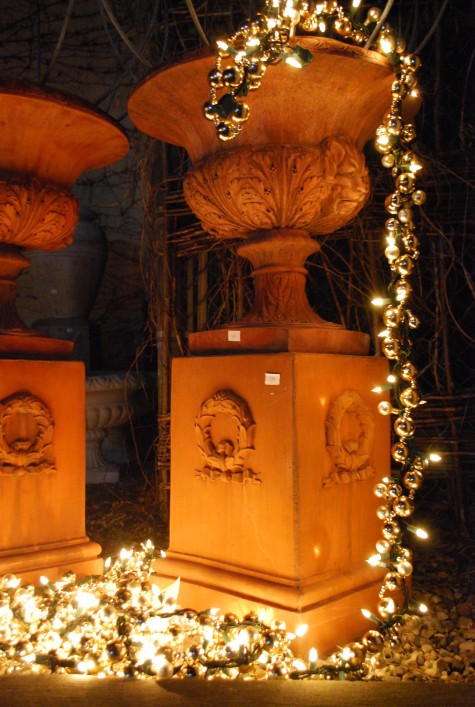 Some of Rob’s light garlands get another decorative element. Light cords are are an incredibly unnatural shade of green; I cannot understand why an olive/brown color is not an option. We do buy lights with brown cords for wrapping sticks or tree trunks. This garland has a weatherproof ball garland that gives the light a diaphanous quality. This is my idea of good garden jewelry.
 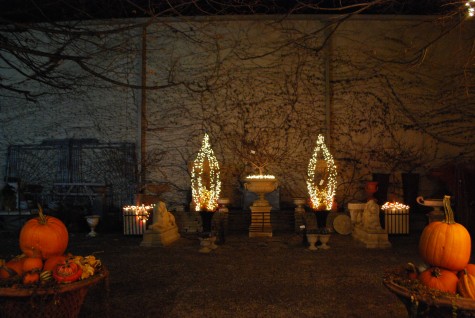 Large light fixtures on the wall of the shop subtly light the Boston ivy vines on the opposing wall; the intense light in the pots, and on the tuteurs bring the ornament into focus.
 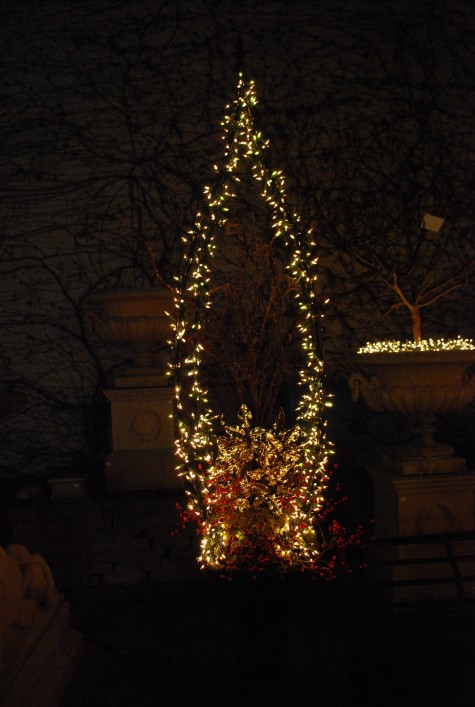 The chartruese lights repeat the color of the moss, and add dimension to the light. The light emphasizes the sparkle and sass of the holiday elements.
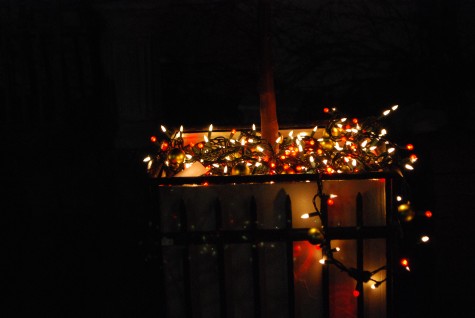 This is Rob’s winter berried vine light garland. The olive plastic holiday balls wired on every so often add texture and color that looks great even during the day.
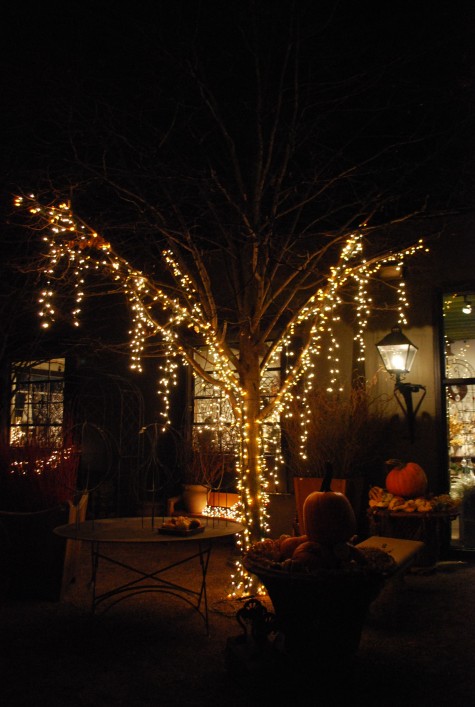 The linden is draped in his light rendition of spanish moss. The unseasonably warm weather we have had for the past few weeks has been favorable for outdoor installations. In years when the really cold weather comes early, this kind of work can be daunting. With the temperature at 57 today, it is a perfect day to dress a garden in light.
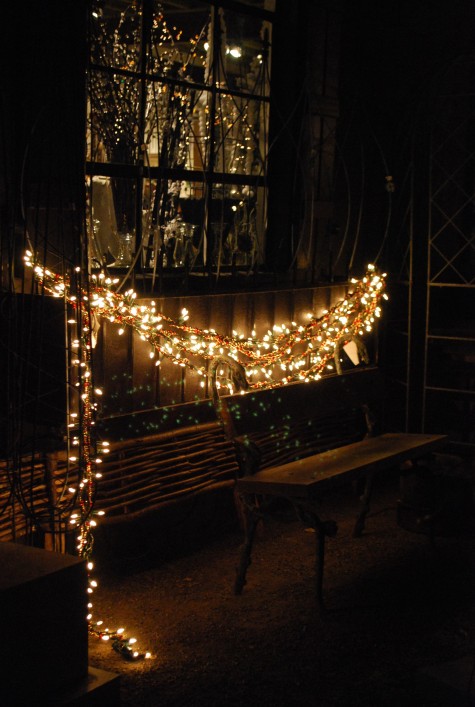 These commercial grade light strings have frosted bulbs; they produce a very soft light that is easy on the eye.
 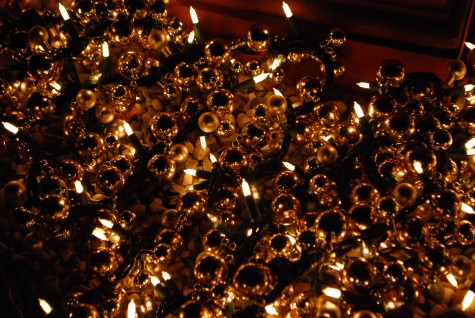 Though the ball garland in this strand is silver, the color of the terra cotta pot in which they are installed makes a richly colored night presentation vastly different than the day look.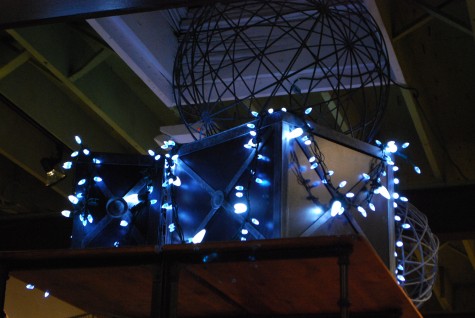
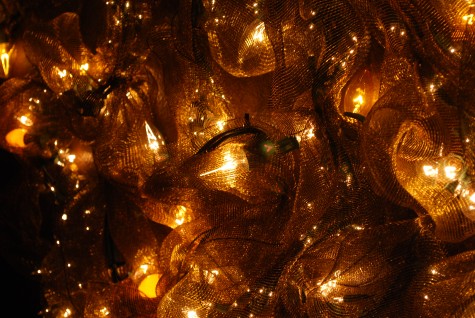
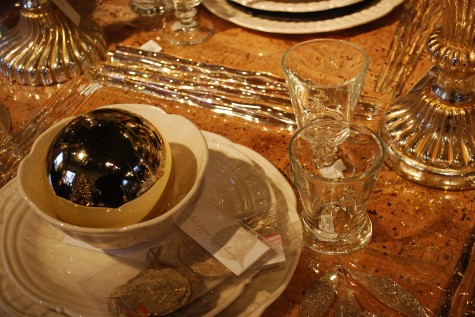
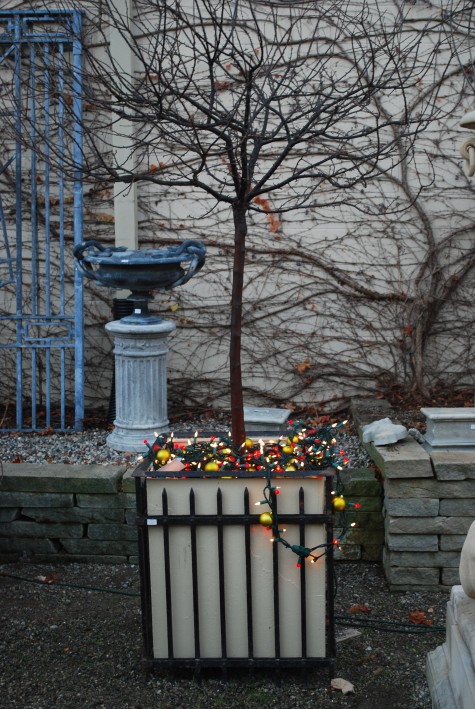
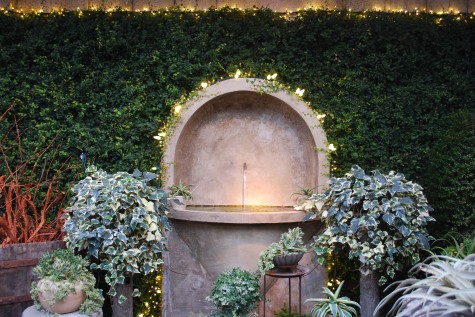
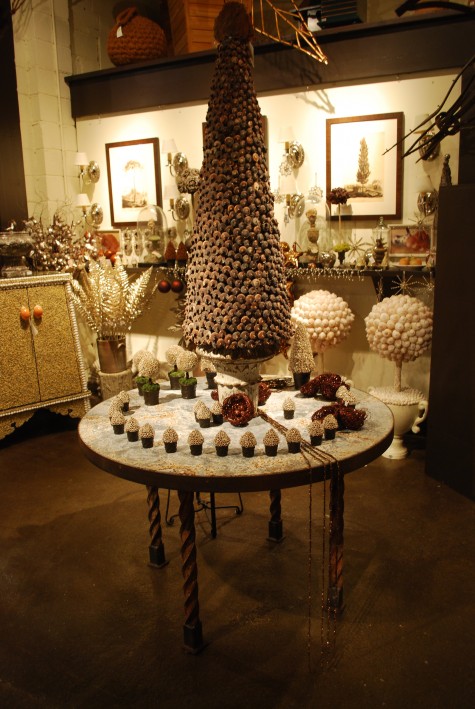
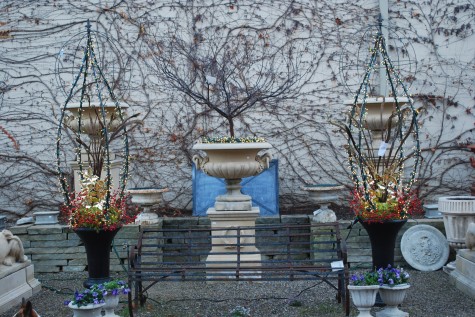
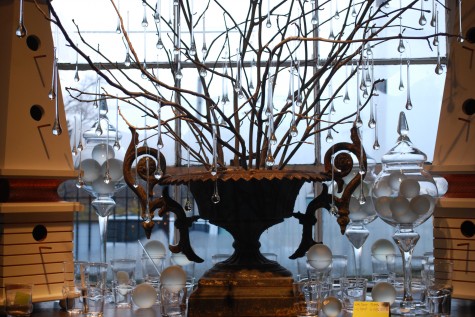
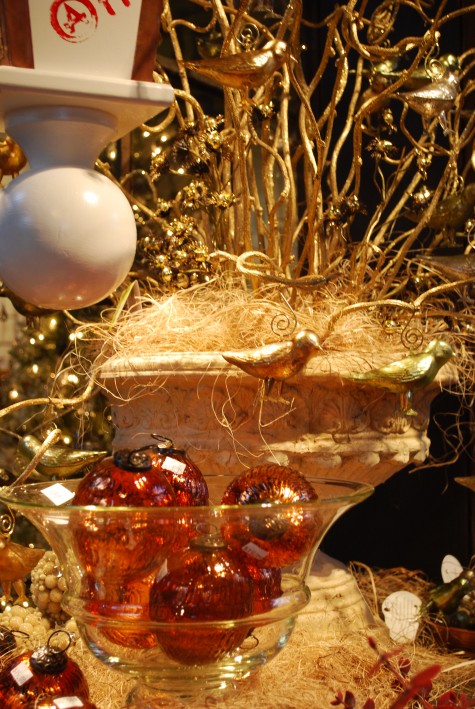 Anything that transmits or intensifies the available light I find hard to resist. Michigan is one of those states with mostly cloudy days in the winter.