Sunday Opinion: Keeping America Beautiful


Trees-for-fall.jpg

Keep America Beautiful is an organization which has been devoted to promoting the idea that a clean environment is a beautiful and healthy environment since 1953.  The original group of business people and public figures had the idea to link the private and public sector in a campaign to stamp out littering.  If you are any where near me in age, you will remember the public service announcements in the 1970’s featuring Chief Iron Eyes Cody and the tagline “People start pollution.  People can stop it”.  The Ad Council of America considers it one of the most successful public service campaigns ever mounted. It had to have been fairly successful-I still remember it vividly, some 40 years after the fact.  I would sooner stuff my lunch trash in my own coat pocket than throw it on the ground.  Their role in recent years has been to focus on the merits of recycling.  Both technology and human ingenuity have helped to create ways to transform trash into products that can be reused.
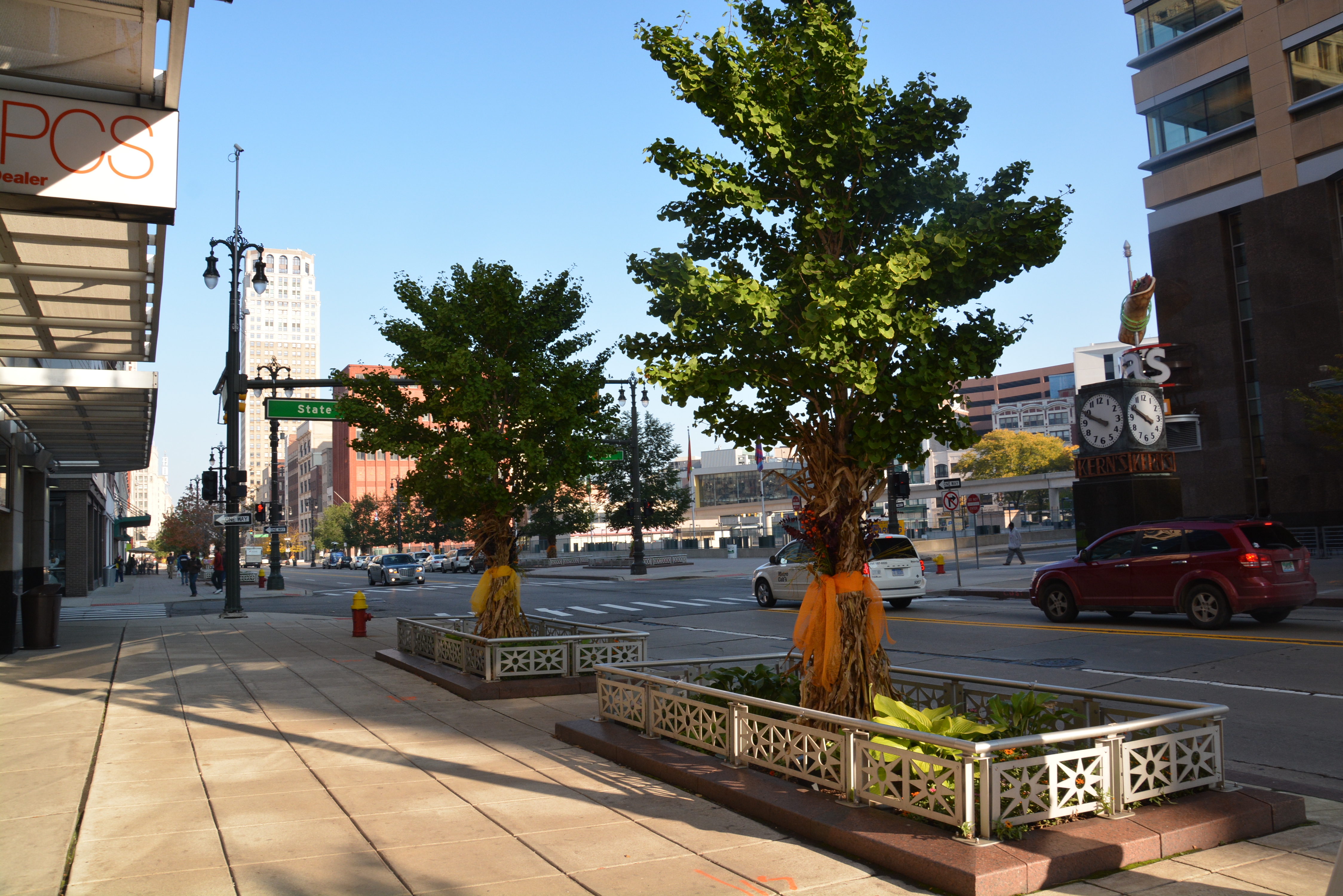
downtown-Detroit.jpg

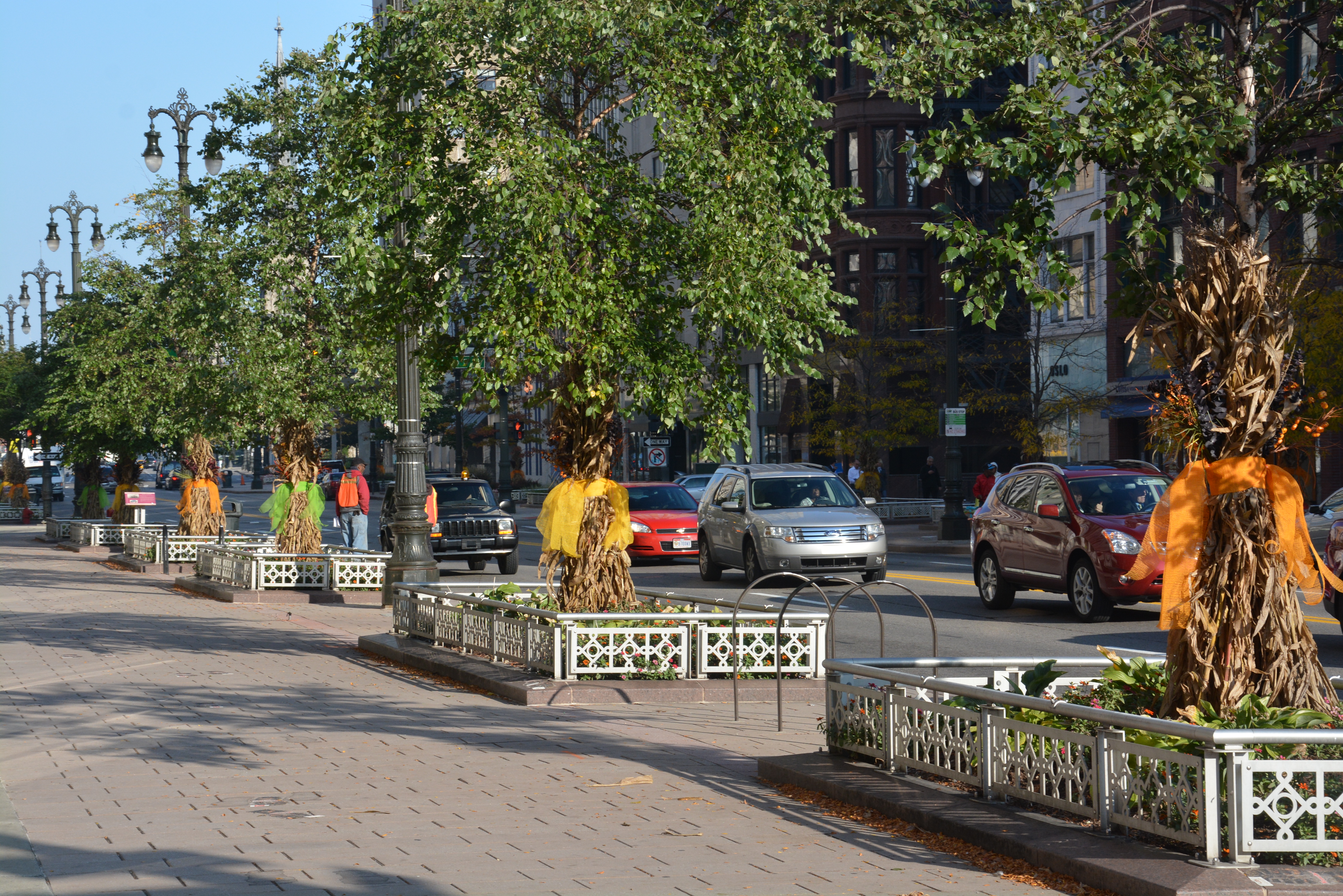
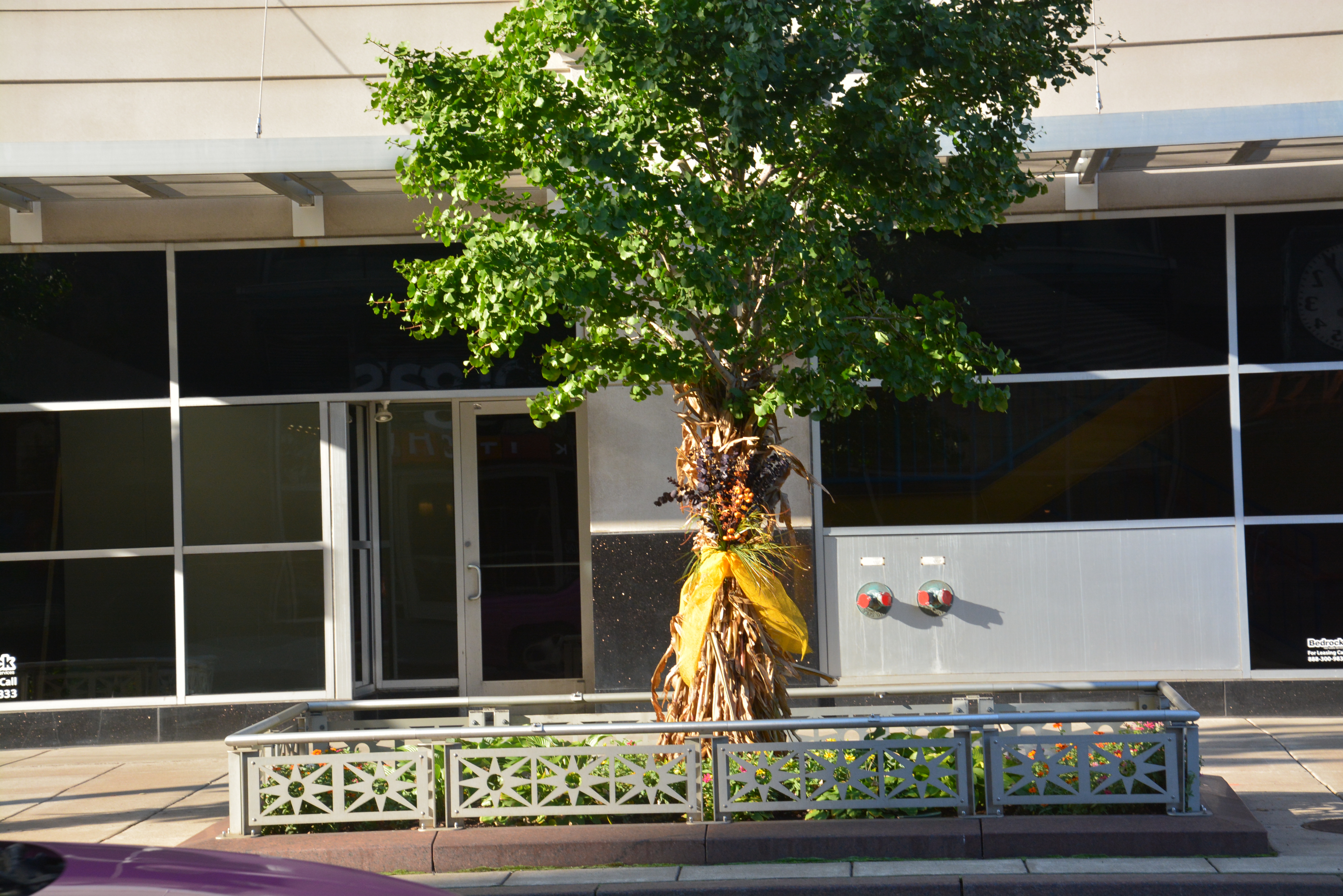
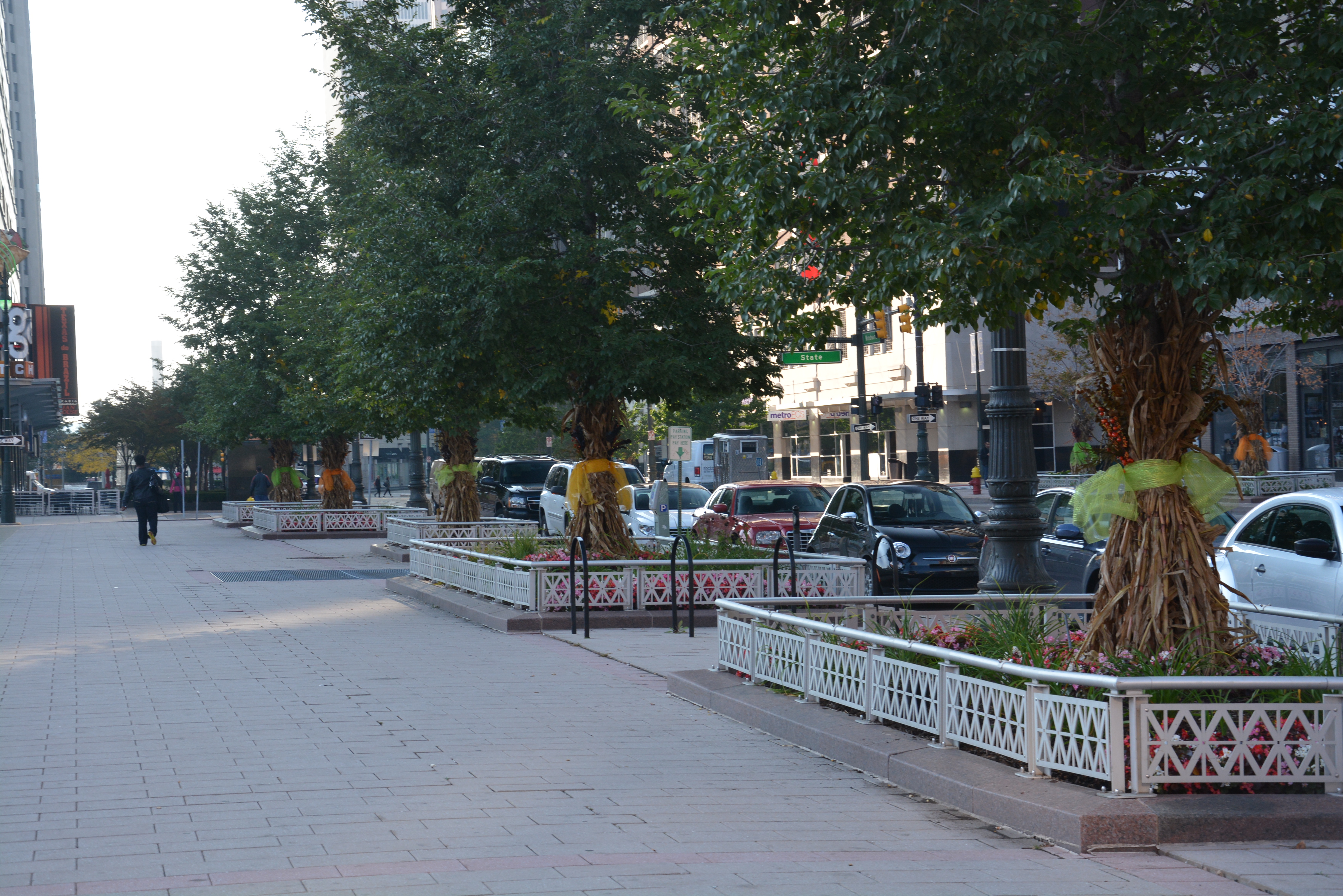
Why am I talking about litter?  We were downtown last week, decorating 50 planter boxes on Woodward Avenue that feature trees at the center.  As the aluminum fencing around each box is about 18 inches tall, I suggested decorating each tree truck with corn shocks, and other decor that suggested fall.  The result is a celebration of fall that can be seen from a car, or on foot.  So what does this have to do with litter?  The boxes themselves were littered.  Lots of litter.  I would guess that it takes an incredible amount of time and money to regularly clean them.  Though there’s no need to litter, it happens.
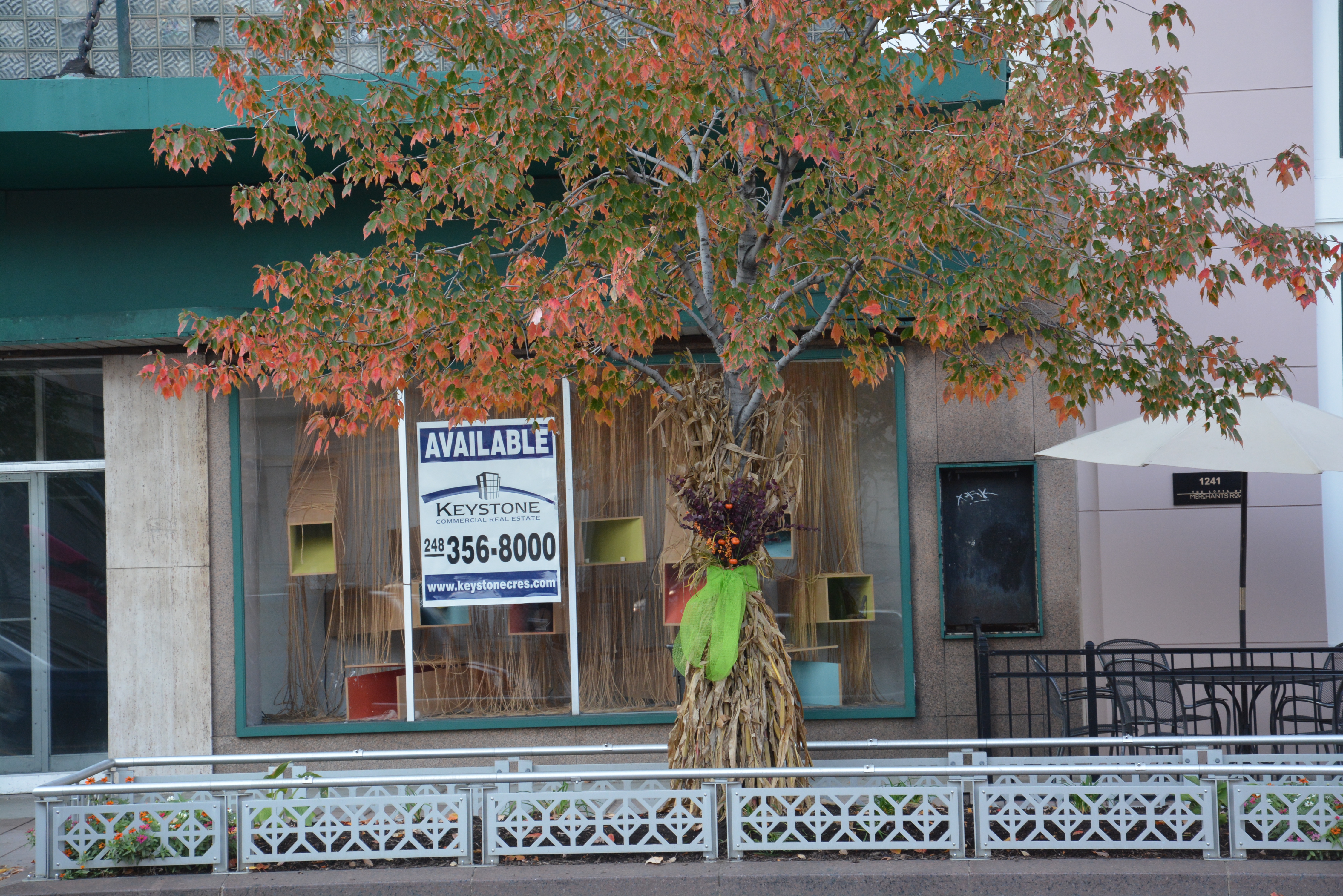
Woodweard-Avenue-Detroit.jpg While we were installing this fall display, a Detroit police officer pulled over to the curb near us, set off his siren, and turned on his lights. Yes, we were startled, and yes we watched.  The officer called out to a man on the side walk who had just thoughtlessly dumped his lunch trash and plastic bottle on the sidewalk to pick up his mess, and put it in the trash barrel not 10 feet away.  There was much discussion and lots of resistance, but the man finally picked up his mess and put it in the garbage can.  I admire that officer who treated littering and polluting as a crime against the environment.

Woodward-Avenue-planters.jpgThat officer let it be known loud and clear that he expects his city to be orderly, safe, friendly, busy, crime free-and clean. Pollution free-one trashy moment at a time. The incident made a big impression on me.  Obviously clean cities happen via groups of concerned people who bring their influence to bear.  Clean cities perhaps rely even more on those individuals who take the time and effort to protect the environment.  It also occurs to me that a clean and litter free city has much to do with a collective sense of ownership, and stewardship.  How can that pride of  ownership and stewardship be fostered?  One litter free block at a time.  One clean day at a time.  One proud person at a time.

downtown-Detroit.jpg

We were hired to make a statement about fall in the downtown Detroit area.  My thoughts regarding the design were as follows.  I wanted to celebrate those trees on Woodward Avenue that managed to grow in a thoroughly urbanized city.  I wanted to draw attention to the trees, and the planter boxes.  I wanted to make anyone who rode or walked down Woodward to be engaged by what we did.  I wanted to, for a brief moment, to draw attention to nature.  My hope was that attention would foster respect.
city-tree.jpgI may not get my wish-this go round. If you are a gardener, you understand that it can take a lot of time to develop a garden, or a landscape.  It can take more than a lifetime.  As for a litter free America, it may take many generations.  But I am happy to report that more people than not are informed and supportive of a clean, beautiful, and healthy America.  Gardeners have for generations been interested in a clean and beautiful environment.     Woodward-Avenue.jpg
Gardeners have homes that they choose to keep beautiful and clean.  Gardeners who move to another property have been stewards.  My idea?  I would encourage anyone and everyone to garden.  Once you garden, you understand the treasure inviolate that is nature. Would that everyone would be a gardener.

 

Sunday Opinion: A Life Span

Everything in the garden has a lifespan.  This is a polite way of saying that every living thing lives their life, and eventually dies.  The redwood trees in California, and the old yews in England, among other ancient plants, are prized by many not only for their size and shape, but their astonishing longevity.  The Wollemi pine trees-of which there are 40 trees in some unknown location in Australia-date back thousands of years.  The National Geographic has made a big issue of protecting first, and secondarily propagating these trees.  Their sales of new starts of Wollemi Pines helps to cover the cost of their protection. They grow no where else on this planet, but for a remote valley in Australia.  Yes, I did buy small starts some 8 years ago-why wouldn’t I?  Both of my Wollemi pines belong to my landscape superintendent-Steve Bernard.  They were a gift.  They are at this moment, thriving.  As is our relationship.  We work together.  But not every plant thrives.  Plants which have lustily grown for years eventually die.  Some plants die just days after they are planted.  Do I have an explanation for this-not really.  The life and death in a landscape is an issue both Steve and I deal with every day.

Landscape clients want me to guarantee that the plant material I put in the ground will live-for at least the warranty period.  For one year, I am asked to stave off death.  I oblige, in spite of the fact that the life of a landscape and garden depends more on nature than me.  I do what I can, but I am rarely in charge. Some plants thrive in spite of my skepticism.  Other robust plants inexplicably die, leaving me with lots of questions and not so much comfort.  Anyone who gardens knows that every plant has a lifespan.  Every gorgeous moment in a garden is just that-a moment.  And that which is treasured is ephemeral.

I have a few plants that are original to my garden from the day I moved in.  A magnolia, some dogwoods, a pair of picea mucrunulatum, some rhododendron, a norway spruce some 40 feet tall,  some azaleas, and some challenged maples in the tree lawn.  But these plants are not centuries old. They are at best 90 years old.  Ninety years old is a blip that one blink will miss, in the history of our planet.  Every gardener needs to realize that their influence is short.  And not necessarily what nature values.  Peonies and asparagus are very long lived.  Trees that have a good siting and thoughtful planting live a long time.  As in my lifetime.  Perennials live but a very short time.  Foxgloves are beautiful, and short lived.

The lifetime of the planet-vastly more years than mine.  I understand that eventually, and sooner rather than later, I will wear out and die.  The numbers of perennials and annuals in my garden that will wear out and die before me-considerable.  Lots.  The trees that will mature and finally die-they will be much older than me on the day of their demise. My gardening is but a brief moment in a scheme that is long, substantial, and just about impossible to predict.

Does the prospect of a limited lifespan to my landscape worry me?  Not really.  A beginning and an end to anything significant in the landscape is beyond my grasp to orchestrate.  I spend an extraordinary amount of time in an effort to keep every plant in my landscape happy and healthy.   Every gardener, just like me, learns, and leans into the natural demands of a life span.  Leaning in-what every gardener knows how to do.

Monday Opinion: Sharing

Gardener/readers write me on and off, astonished about the degree to which I am willing to share my knowledge and process.  Why wouldn’t I?  I was raised to believe that sharing with others was good.  If you are like me, you grew up with a Mom who encouraged sharing.  Share a toy.  Share you seat on the bus.  Loan your sister your prized sweater. Share the letter your teacher sent home with you with your Mom – this would be a Mom talking.  Share your questions, hopes, fears, and aspirations.  That call to share had another call attached to it.  Share, with the idea that you might help.  If you are able to share such that you can help others, help them.  I arrived on this earth endowed with plenty of infantile selfishness-it took a Mom to temper that.  Did I really want to share my prized baloney and mustard sandwich on white bread with a classmate who had no lunch?  Not until I was instructed that sharing was a very special kind of giving.  A kind of giving that was part and parcel of being a decent human being.  My Mom assured me I would feel good about it.  And that what I got out of the giving was in the end,  irrelevant. This also from my Mom.   I may have had no relationship whatsoever with that kid who had no lunch.  I may not even have known her name.  But if I could get by with a half a sandwich, which of course I could, it was incumbent upon me to share the half I could do without with another.  It was the right thing to do.  And it did, incidentally,  feel good.  Now, the sharing seems effortless.  I am by no means the exception.  I believe that people come by the instinct to give and share, naturally-don’t you?

The right thing to do-what is that?  Every gardener, and landscape designer, comes face to face with this question over the course of a project.   I like to share the design process with a client, just like nature reveals herself to me.  In a genuine design relationship, lots of things are shared.  Needs, dreams, concerns, budgets-there are lots of topics to cover.  The client’s issues are invariably more important than mine.  A beautiful design that does not work for a client is not necessarily a beautiful design.  It is a design the heart of which fails to engage a client.  This is a polite way of describing a dust bin.  Just my opinion, this.

In the shop, we try to share the best advice we have available.  A client with whom we do not share our knowledge is a client who has not gotten from us what they should.  No matter my willingness to share, there are those times where we fail. I take that failure personally.  We should be able to give timely and sound advice.  That given, there are those times when what gets said doesn’t get heard-or what was heard bears no resemblance to what was said.  This happens all the time.  Communication is the art of life, is it not?  Some things that go wrong in the garden can be squarely attributed to the nature of the season.  Other things that go wrong might be attributed to a casual share, without any depth, or an insincere communication.

I have this communication problem on occasion with my garden.  I may plant what I want, without listening to what has been shared with me by nature-about my weather, my zone, my seasons, my soil-you get the drift.  I am eminently capable of being insincere with nature, as I don’t really want to answer to her.  What I do not hear can come back to haunt me.  Yes, usual sharing implies another who is engaged, and listening.  Nature does neither.  Nature has no need for a relationship with me. I am a small part of a much bigger scheme.  She has no time for me.  The entire burden of a successful relationship with nature depends on me.  How tiresome is this?  A gardener of the true sort establishes a fluid truce with nature-this is a kind of sharing.  Sharing, with the primary responsibility clear from the start.   Sharing as I usually experience it as a designer is a person to person pursuit.  That sharing works some times-other times, not.   Most people have shared something at one time or another that has not been heard.  Operas have been written and performed for centuries about this.  It is tougher than it appears, sharing in a real and thoughtful way.

The most difficult moment in the landscape design process comes at the beginning.  You have a design to present.  You have a conceptual plan to share.  Taking enough time with this part is essential. The design is a collaboration-there is the sharing of information that goes back and forth across the table.  That sharing may take a lot of time to transform into a final plan.  Once there is agreement on the big issues, there are lots of details to share.  Secondary but so essential to sharing-patience.  Patience is not my long suit, but I try.  Patience can also be overrated.  Knowing how to bring an unfounded worry to a close is a way of sharing that is caring.

The second most difficult moment is that moment when a project is done.  You will no longer be there every day, working on this part, but watering and tending that other part that is finished.  Some clients can see instantly that moment when an installation becomes their garden-they say thank you much, and push off on their own.  Bye Bye.  Other clients are less confident.  You may need to drive by, regularly.  Sometimes it’s important to keep on sharing until there is no more need.  Am I good at this?  Sometimes.  Other times, I call the memories of my Mom in- to give me a hand.

I would share anything I know about horticulture or design with anyone.  What I know is just my experience-nothing more, and nothing less.  Is my knowledge special?  Not particularly.  What works for me is different than what works for lots of other gardeners.  As much as things in the garden fail, lots of things work.  Designers would do well to keep that in mind.  There is no one way.  There are lots of ways.  Do I worry that someone else might duplicate my work from something I shared with them?  No.  My eye is my eye-this part of me is not transferable, nor can it be replicated in every detail.  Lucky, this-for everyone involved.  Anyone who might try to replicate my work will eventually be frustrated and unsatisfied.  Hungry.  Every person with a sincere interest in the landscape needs to rely on their own vision to finish a garden, or a landscape, or a moment.  Every landscape I design and install needs a client to eventually sweep the scene with what is all their own.  Having had good advice and design help, eventually being left on one’s own is a very good place to be.    There is so much satisfaction to be had from one’s own invention.  Some create gardens on their own.  Some create landscapes via a relationship with a designer. All sincere paths to good design are good paths.

Whether you are a landscape designer, or landscape architect, or a passionate gardener,  I will respect you enough to assume that you are a creative person whose job it is to imagine a project, and research anything you need to bring that project to fruition.  I assume you are able. There are no shortcuts.  Take the time, and do the work you need to do.  The work you put to any project will, in the end, reward you.  What someone has shared with you is not necessarily the gardening gospel.  It is a point of view.  And not necessarily your point of view.  Trust your eye.  If you cannot trust your eye,  look outward.  Most importantly, look inward.

I have a big interest in good gardening outcomes.  World wide, there are so many beautiful landscapes and gardens that support that idea.  Your computer is a means by which you can learn.  What is out there being shared?  Garden Design by Carolyn Mullet-I read her facebook page every day.  The time she takes to share-extraordinary.  Her editing, and choices of a topic to share-equally extraordinary.

What comes of your exposure to the work of others is that germ of an idea that might inform your own garden.  Respond honestly and passionately to the work the work of your designer.  In the interest of a better outcome-share what you can.  Listen when you have a mind to.  The aura created by that sharing all around – beautiful.

Leaves Other Than Green

coleus.jpgLeaves other than the the color green can be cause for excitement. The vast majority of garden plants in my zone are green, as in garden variety green.  Not that I object to that.  Green leaves are not simply green.  They have size, mass, texture, contrast, surface, shape and form.  An all green scheme explores all of these design issues.  But leaves other than green are a magnet for the eye, and the gardener.  My knowledge of how certain leaves are other than green is very sketchy.  Some color seems like it is laid over green.  The leaves of this shocking pink and carmine coleus seem clear, and not at all muddied by a green layer underneath.  Wasabi coleus is a lime version of green.  Somewhere in the color mix of this leaf is lots of yellow.

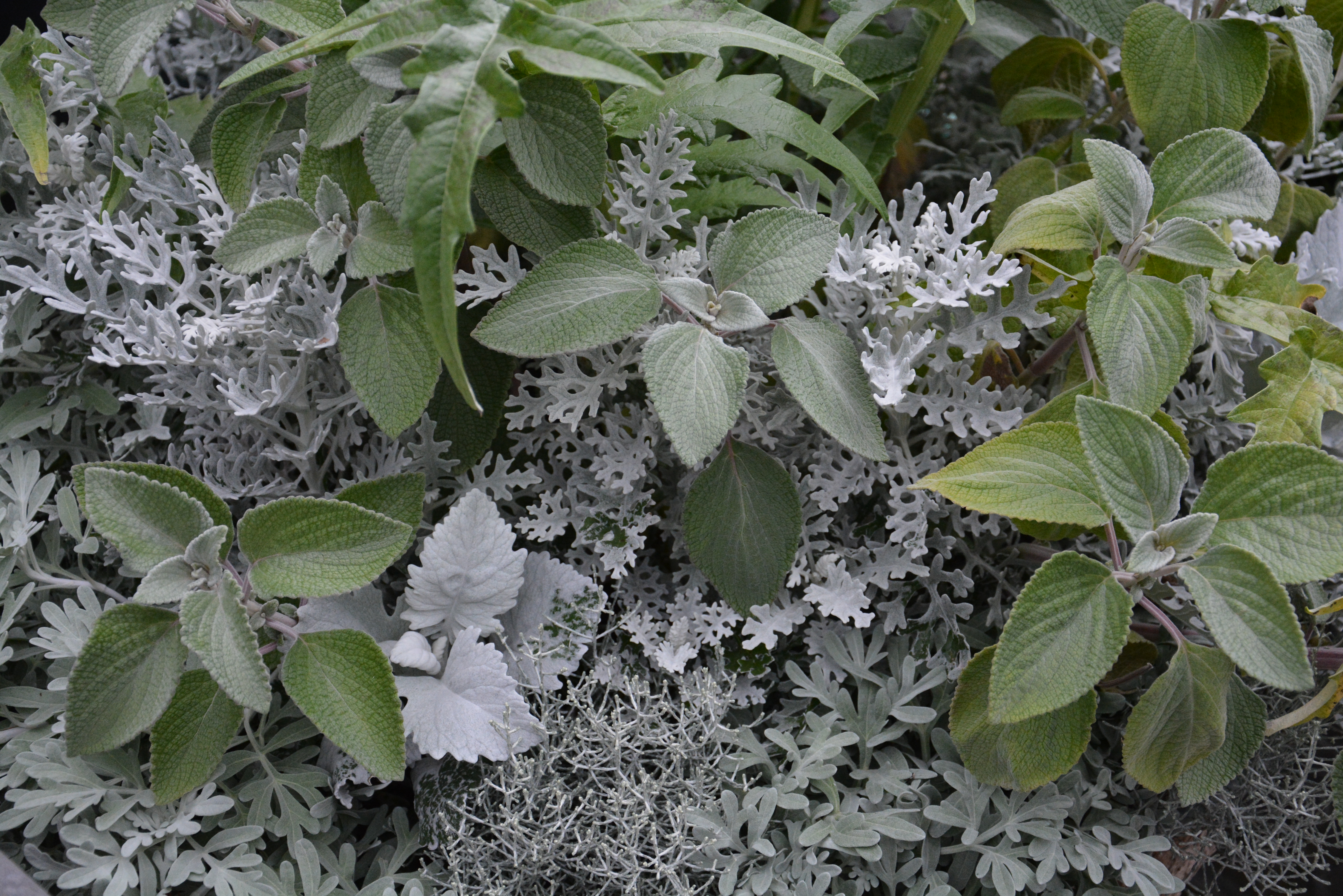
gray-leaves.jpgSome gray leaves have a green base to them-as in this Silver Shield plectranthus.  Other gray leaves, as pictured above, show no hint of green.  Where am I going with this?  Color as a container, garden, or landscape design element is as personal as it is complicated.

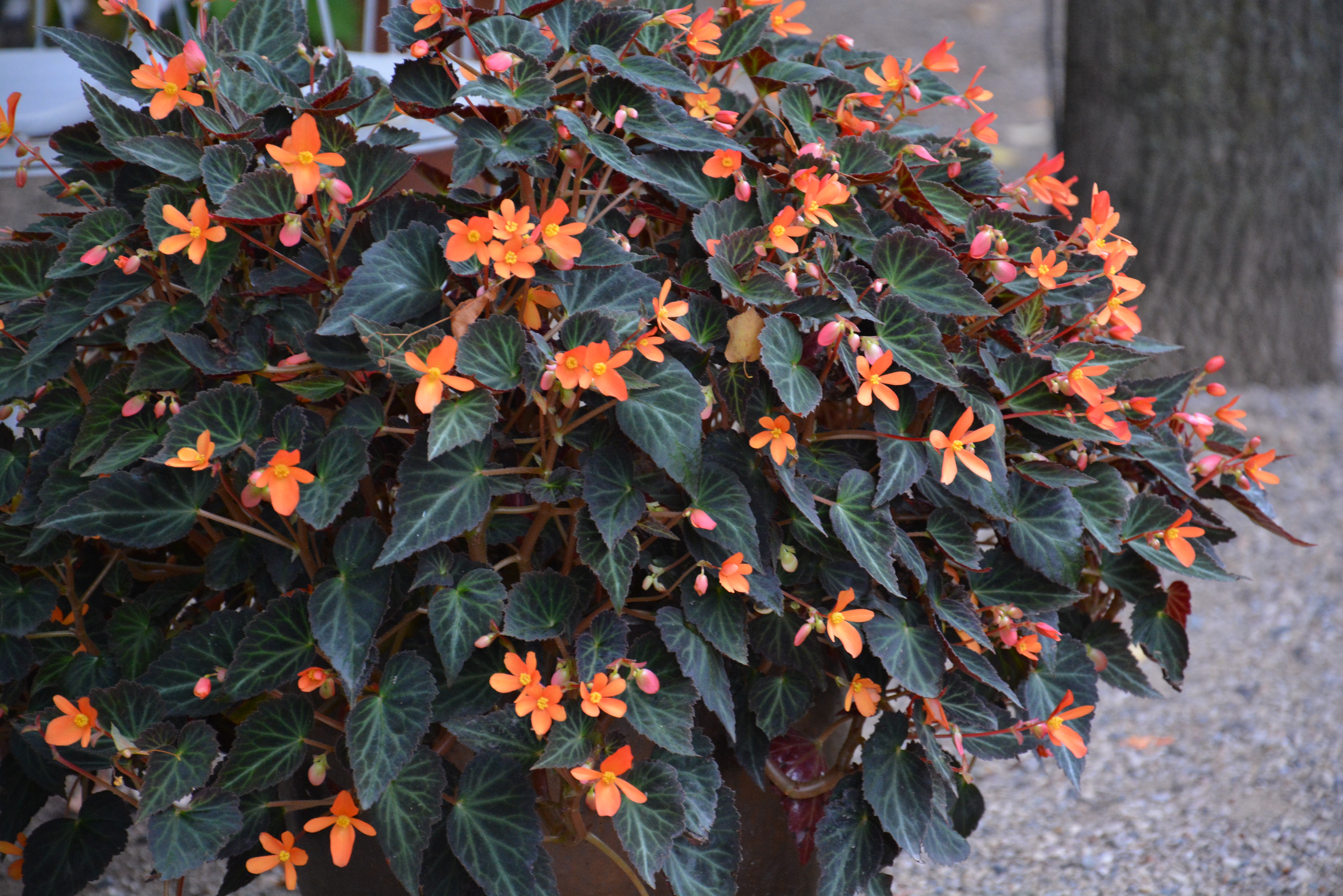
dark-leaved-begonia.jpgI find that everyone sees color differently.  The perception of color is much about the science of vision, but it is equally about perception.  I like every color.  I respond to the absence of color, and the combination of all colors.  I respond to certain color combinations more strongly than others.  The orange flowers of this begonia, by contrast, bring the black green leaves to life.

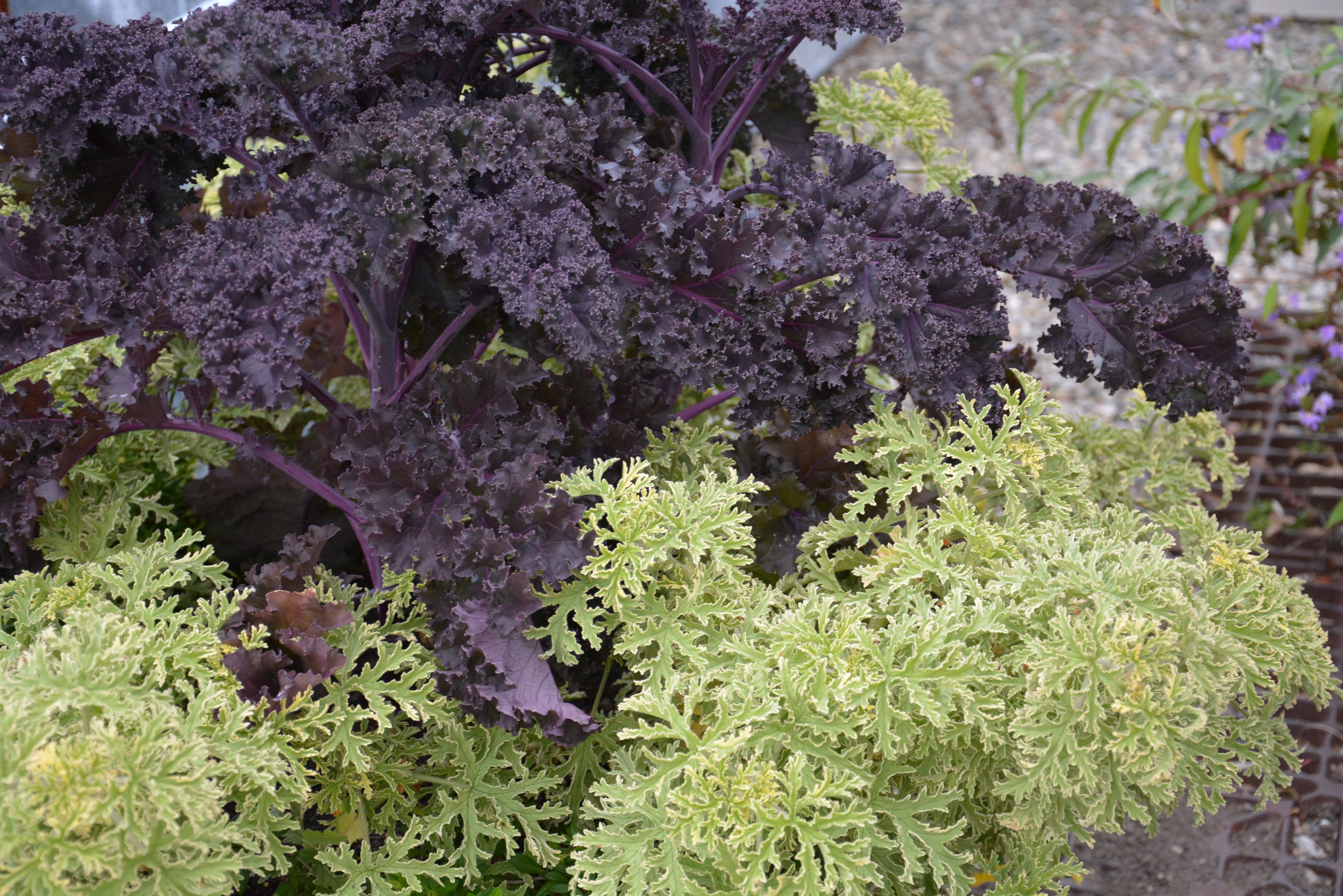
red-bor-kale.jpgThe color of Red Bor kale is black, under laid by carmine pink. Dusky purple in color, if you will.  This dark gray purple asks for a companion that will play off of, or feature that color.  The yellow green scented geranium is a perfect companion.  Chocolate sweet potato vine would be an interesting combination.  A garden variety green leaf would be neither here nor there.

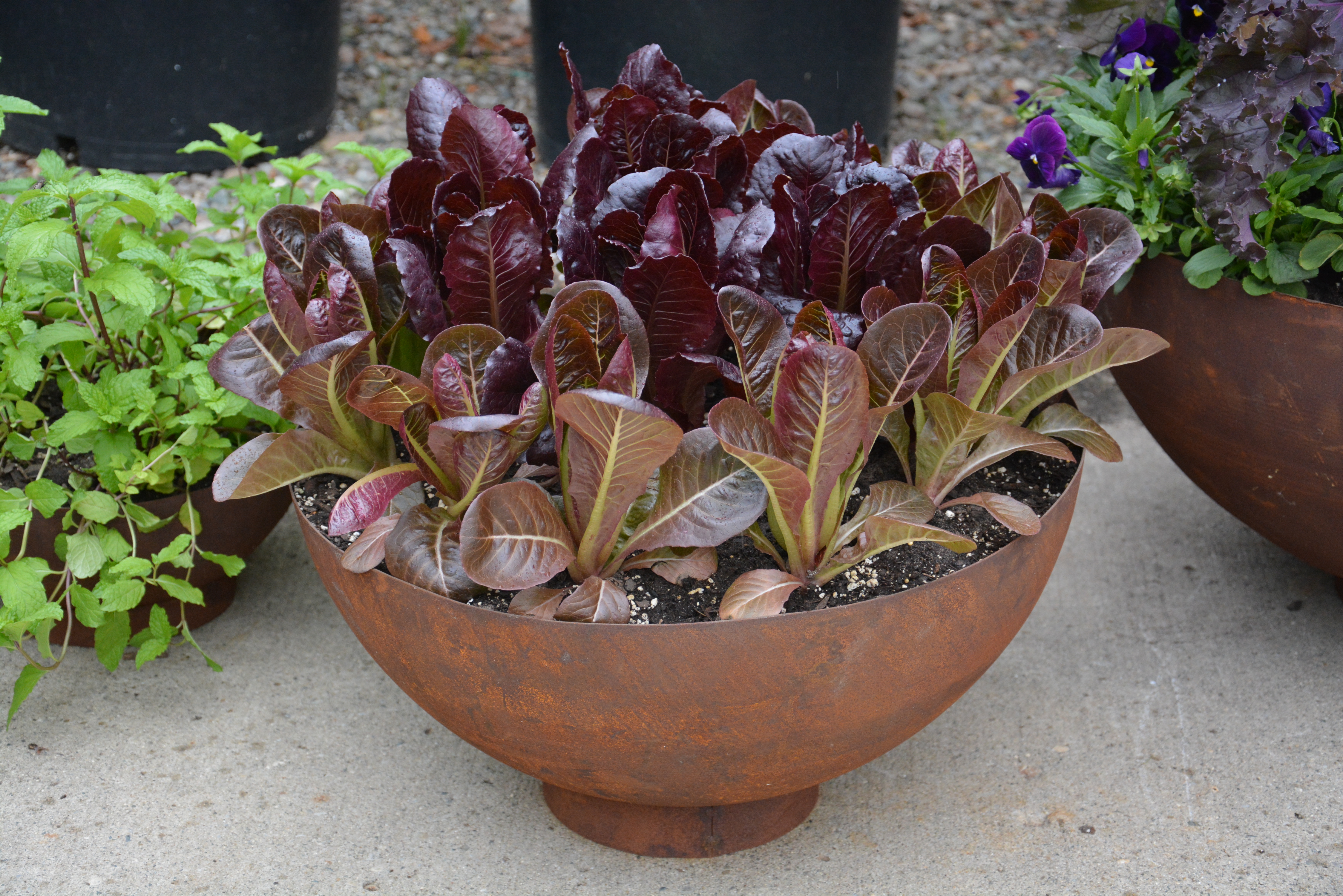
lettuce-bowl.jpgI have a very tough time designing with red foliage.  Red leaved Japanese maples are gorgeous on their own, but I do not see them integrated into a color whole successfully very often.  I find the landscape with blue spruce, red Japanese maples, and burning bush (a very dull medium green) jarring, and unsatisfying.  Blue in the landscape looks good far away from the eye.  Red in the landscape looks good up close.  Dull gray green-where does that color belong?

wild-lime-coleus.jpgThe coleus that are available now have strikingly beautiful other than green color.  Wild lime coleus permits the placement of the color yellow in the shade.  Sum and Substance hosta, and creeping jenny are lime green.  Wild Lime has a yellow center.  This plant has great color potential for a seasonal planting.

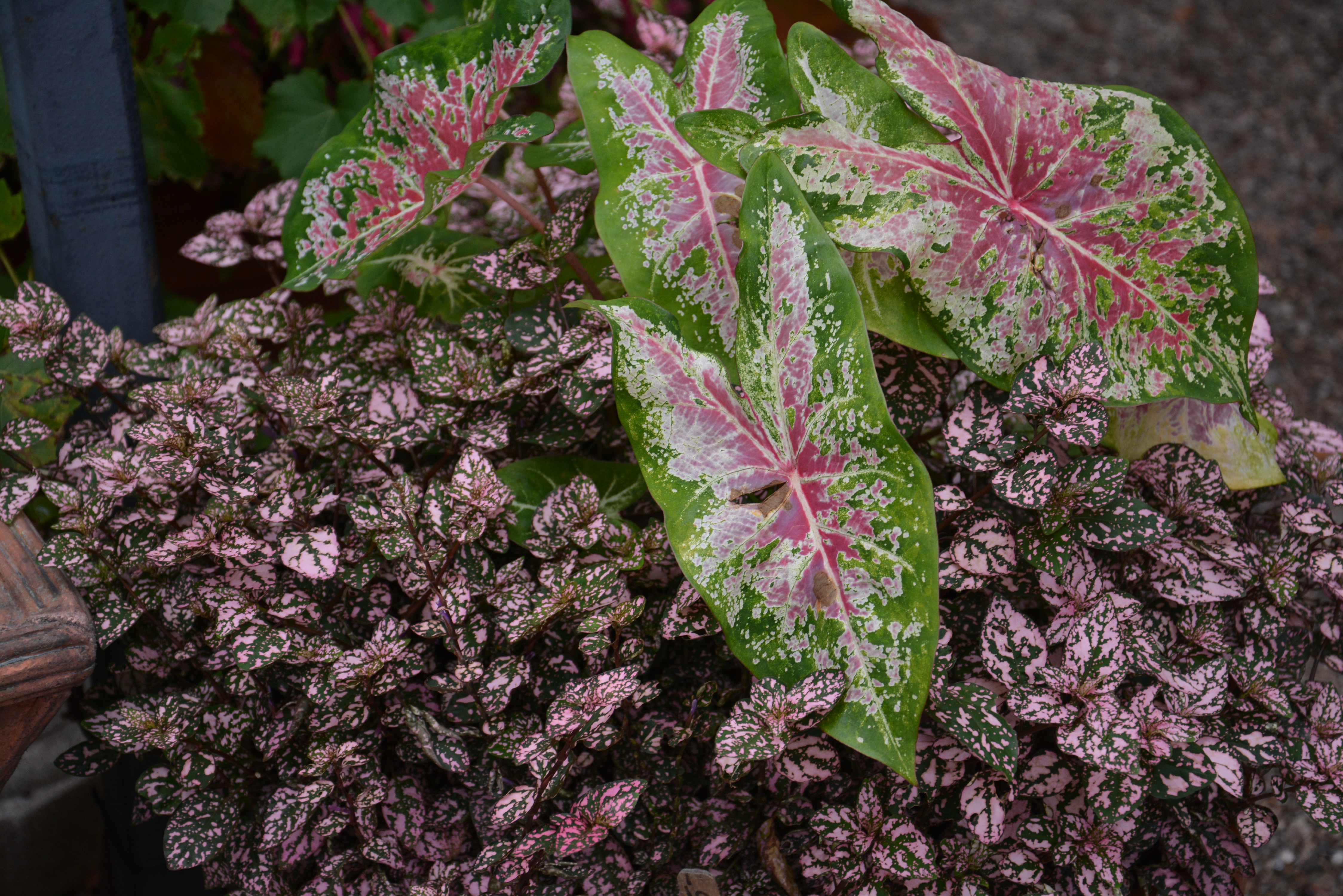
caladiums-and-polka-dot-plant.jpgSome leaves are not completely other than green.  They are mixed.  This mixed pink and green color caladium is good with the mixed color polka dot plant. How so?  The caladium has green in its leaf, as does the polka dot plant.  There is common ground.

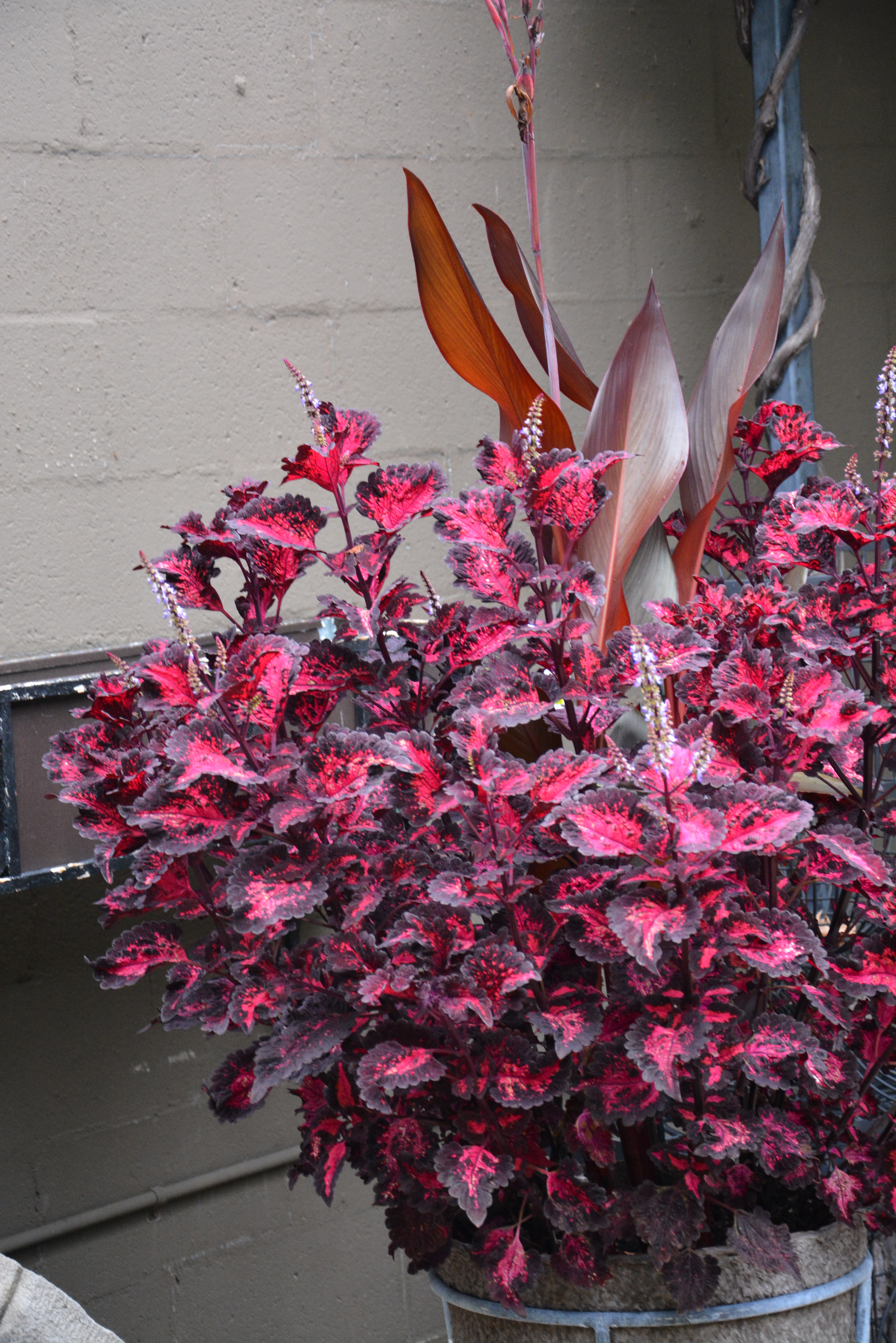
coleus.jpgThis black edged pink/red coleus is a striking color.  I could see planting it with a companionable other than green leaf.  As in black oxalis. Or red alteranthera.

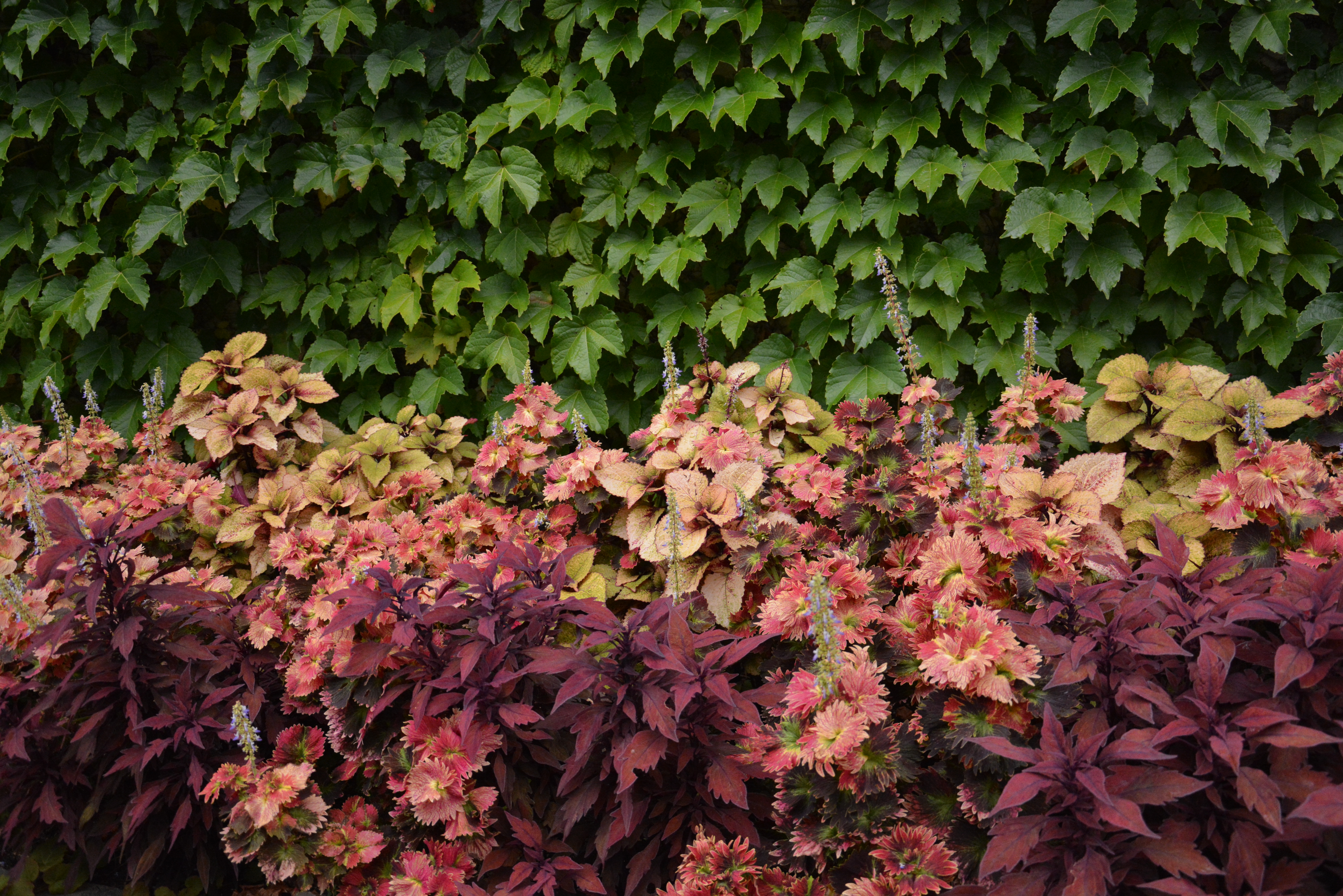
coleus-and-Boston-ivy.jpgLeaves other than green are not so color friendly to green leaves.  Do I like this combination? Not so much.  I like color relationships that provoke or relate.  Color relationships that are standoffish make me uneasy.

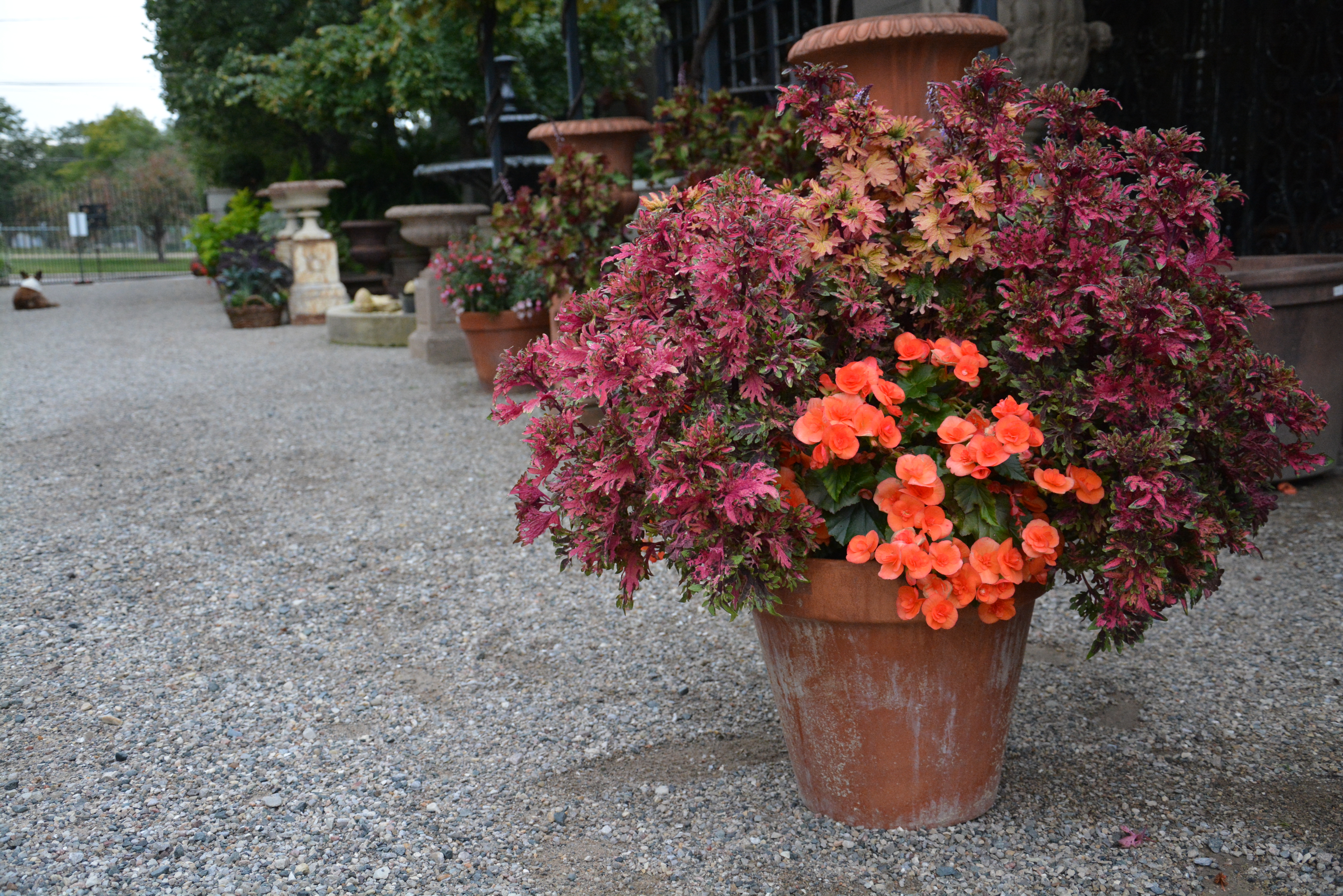
coleus-and-begonias.jpgThere are those green leaved plants that bloom so generously that their green leaves are not a color issue.  The begonia leaves in this pot are a secondary visual issue.  This container combination takes nothing for granted. The coleus in this pot is edged with green.  The green leaves of the begonia, and the green edges of the coleus are in partnership.  The orange flowers, and those leaves other than green make a partnership of another kind.  The terra cotta pot-there is another color adding to the whole.   A visual discussion of color in the garden-interesting.