A Bit More Box Talk

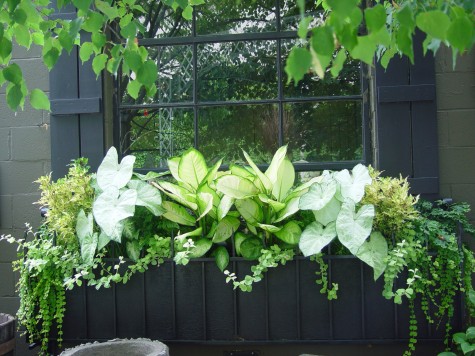
The east side of my shop is heavily shaded by a row of 15 year old lindens.  The shop landscape is mostly about displaying our collection, and pots we plant.  Given that the lindens are the only in ground element, there is plenty of additional visual interest.  The window boxes light up that heavy shade, especially if I concentrate on pale colors.  The lime and white in this box put plants at eye level, and out of the way of foot traffic.  These iron boxes have galvanized steel liners that I paint whenever the mood strikes me, and however that mood strikes me.   The color of the box is an important part of its appearance. I like the chance to change. 
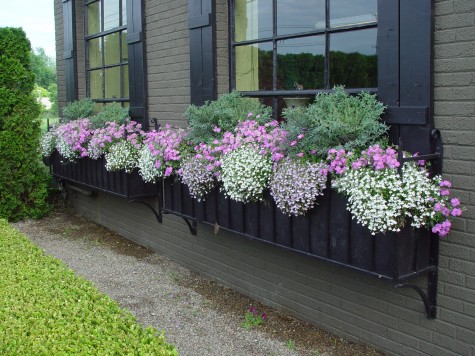
Spring plantings do not have the heft of the summer-the season is short and sweet.  Some plants definitely show better up off the ground-lobelia is a case in point.  The plant and its flowers are diminuitive and delicate; they need a seat up front and center.  Ornamental kale grows large, but its effect is lacy.  I like this type of planting up off the ground. 
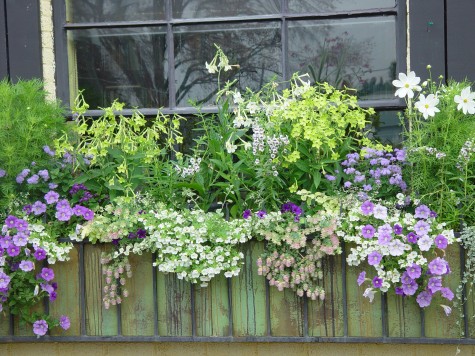
Summer for me is all about sumptuous-no matter what style of planting appeals. An austere and edited can be sumptuous-just think about it. This year, the liners of the boxes got a rustic, dribbled and worn paint surface that complimented the style of the planting I had in mind.    
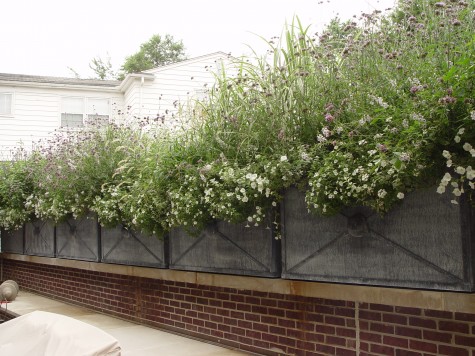
Not all boxes need to be under a window; this row of boxes provides welcome screening for a second floor condominium terrace, set squarely on top of a rail wall.  In an instant, this terrace became private. The planting-a graceful meadow two stories up. The client has since gone the route of arborvitae in the boxes; they have lived in them for squite a few years now.   
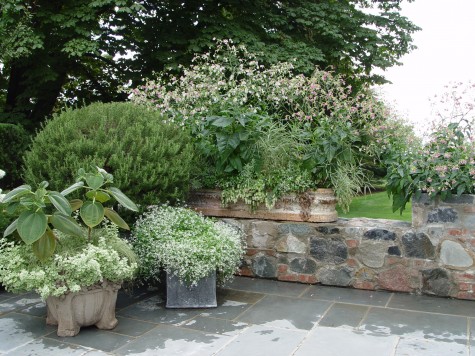
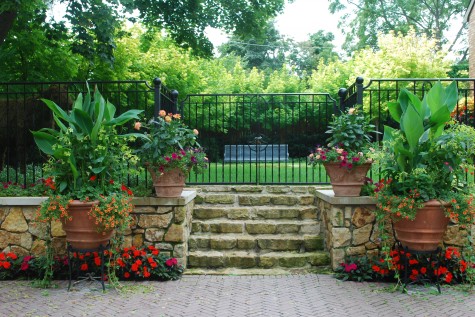
This old French iron box also sits on a wall enclosing a terrace, and adds another level of planting that makes the space cozy.  The wall was built with an integral box, seen in the right side of this picture. A gardener can vary the levels of planting by choosing plants that vary in their mature height. Window and wall boxes, containers on stands-this is an equally effective way of transforming a collection of pots into a beautifully styled vignette. What do you need, in the way of up and down?  Ask this question before you giving any arrangement your blessing.  Just as soil can be amended, an arrangement in your garden can be changed, modified, unexpectedly effective-given your visual study. 
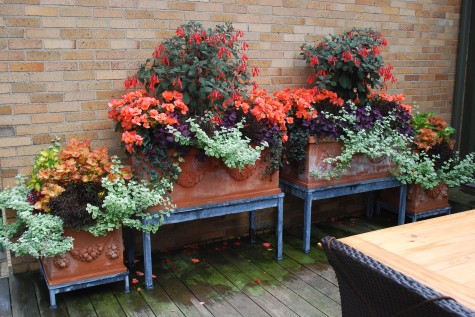
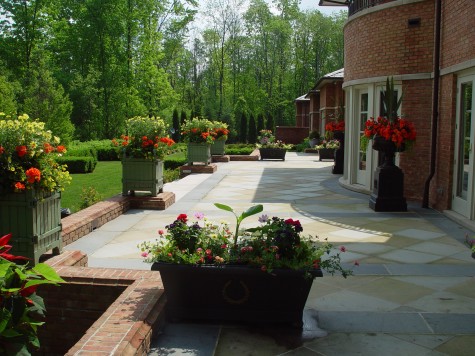
My boxes on stands make a strong statement on a large brick wall.  I could handle that wall differently to be sure-an iron panel, a series of shelves, trellises for the pots-I have options.  I chose the height of the stands to put the decoration of the pots at my eye level when I am sitting close by-I love my pots as much as the plants. The top half of this wall looms over me.  I have not forgotten this; whatever time it takes for me to figure a top to bottom solution, so be it.
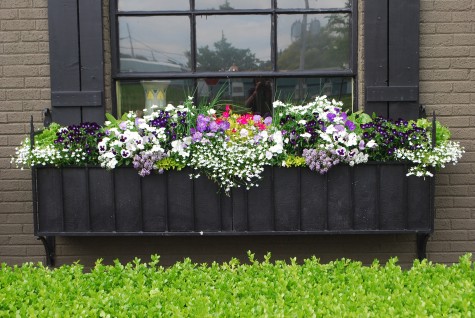
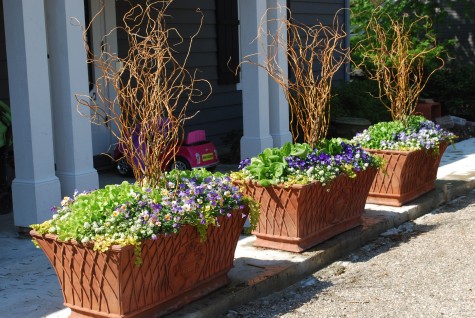
A window box is a big, stolidly rectangular object.  When planting them, I make every effort of vary the height of the plants-in contrast to the rigidity of the box.  This spring planting undulates softly, pleasingly.  The Persian Queen geranium color gets acknowledged with a few bits of lime marjoram in the front.  The white phlox is loose and open, compared to the uniformly cheery violas.  The lettuce bookends bring a smile to my face.  The most important part-give the time it takes to really enjoy your gardening. 
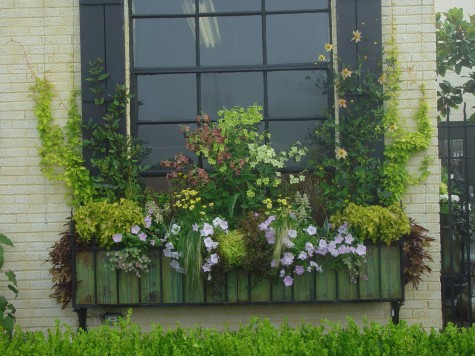
When the outside of the shop was in its yellow and whitewash phase, I thought my brown, lime and lavender window box scheme looked good.  The lime green hops went on to almost cover the walls on either side of the box.  The wispy Victorian era single dahlias-so subtle you can hardly see them. I refrain from grading my window box planting-who needs to be graded?  I appreciate history, change-the record of a given season. This is enough to keep me gardening.  

OK, I will choose a new topic, until the next great box comes along.
What Comes With A Box

What is not to love that comes in a box?  A birthday present, a book, a new fleece, a pair of Hunter muck boots or new pair of pruners, a working washing machine, a flat of sweet woodriff from Bluestone; the box creates all kind of excitement about what is inside.  Anyone who knows me has heard me wax eloquent on the subject of the box. I like to make them, and I love to plant them up.  Big planting spaces permit plenty of garden expression. The giant Tuscan planter box pictured above was a summer home for a giant and unwieldy agave. In its plastic pot, it looked dangerous and standoffish. In the box, plenty gorgeous.  This box of generous proportions visually organizes my entire side yard garden.  Anything planted inside a box reads as a present to the garden. 

We make these Egren boxes. I named this box after Michael and Karen; they were the first to order them.  I designed them to solidly reflect the history of the classical orangery box, in a shape and configuration of my own.  The classic French made orangery boxes have steel corners, but they are made of wood, and painted.  The mild French climate supports this material-I was after a gorgeous box that would persist.  Egren boxes-my idea of a box for our climate. 

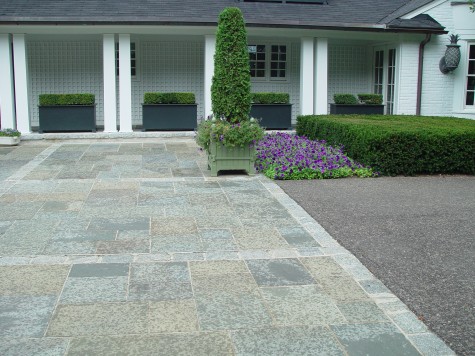
There are those landscapes that call for boxes.  These painted rectangles on the porch planted with boxwood are in support of four original Jardin du Soleil French orangery boxes placed at the four corners of the drivecourt.  That support is clean, and elegant. The trimmed boxwood in the generous boxes-a beautiful  and unexpected proportion. They separate the porch from the drive and walk. Box, boxed-a statement of very few words with big impact.  Should you be considering wood boxes, having a galvanized metal liner made to fit will confine the water in the soil to the soil.  Repeated soaking damages wood and paint.

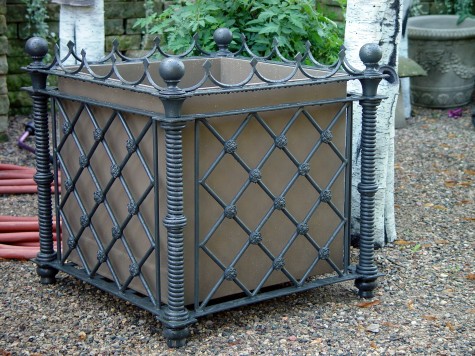
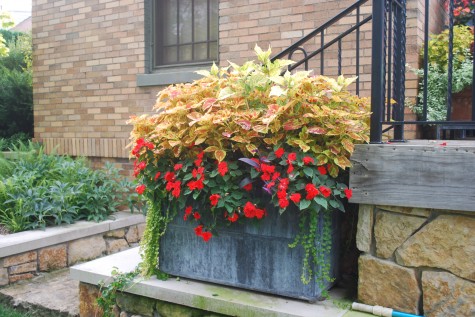
These English iron boxes have galvanized steel liners that have been painted.  The large square of soil they hold make them perfect for topiary evergreen plantings.  Evergreens planted with their roots above ground-consider a box.  A big box. Well-grown healthy evergreens have big rootballs.  Undersizing the planter is asking for trouble.  Big boxes are a good home-a home that has room for future growth.  There will be some space for an underplanting.  Most painted finishes on metal will require maintenance sooner or later, unless that rusty looky suits you. 

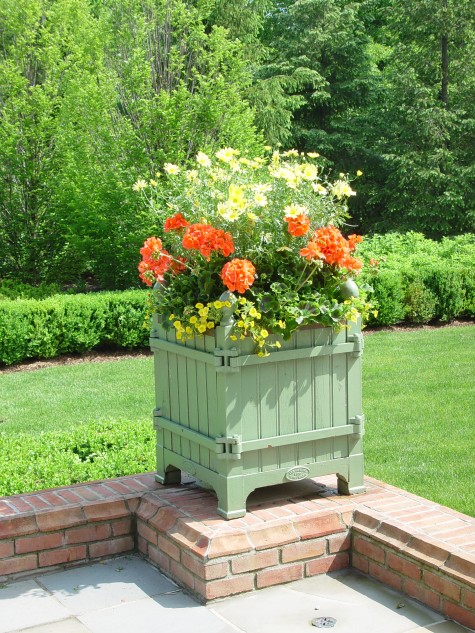
A beautiful box can anchor a driveway, a terrace-or in this case, a terrace.  These brick piers were designed specifically to hold these gorgeous French boxes.  If you are looking at boxes for your garden, pay mind to those designs that get that box up off the ground plane. Boxes glued to the ground-dowdy. If I am placing boxes without feet, I try to set them on gravel; this makes the box look dressed up. Set up a bit, a box can be quite elegant. The air space at the bottom also permits water to drain away freely.    

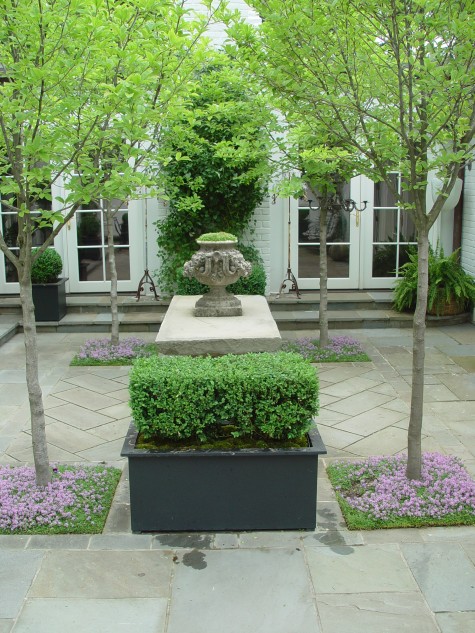
A box can make a big statement about a change of grade.  On the ground plane, bluestone, thyme, and magnolias. These boxes deliver visual delight at a different level.  This makes for a space all the the more interesting.  When you design, look at all the levels at your disposal; these boxwood are pruned to the height of the stone table, reinforcing the statment being made about this plane.  This small courtyard, completely enclosed by the home, was designed primarily for the views from inside, not so much for utility.  Should you need a little punctuation, consider a box. A small square, a giant square, a rectangle of note. 

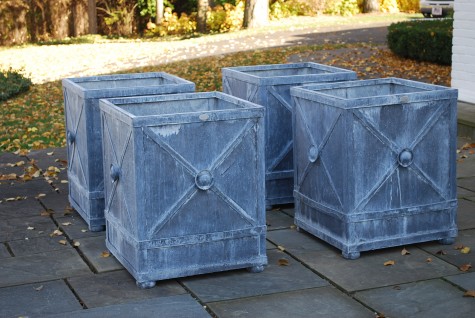
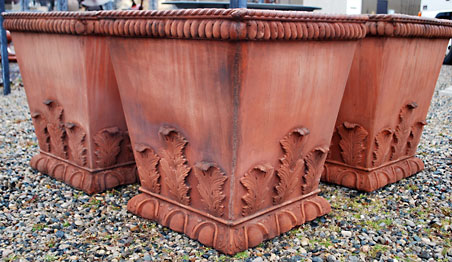
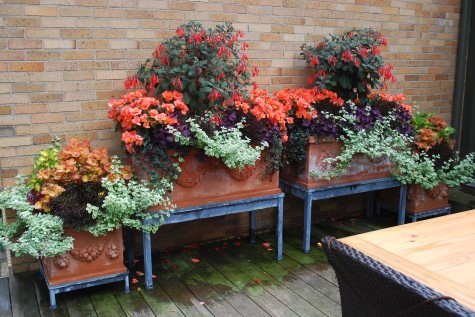
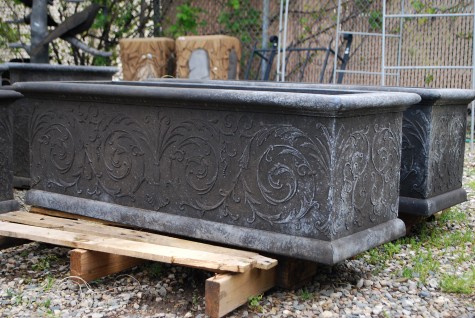
These English made concrete planters in the classical Italian style are not exactly boxy.  But for the purposes of this essay, they qualify.  These V-shaped squares would take any garden from the the sleepy to the sublime.   I so love their solid and understated shape and decoration-I could plant an entire garden in these squares.   No matter what I might engineer for my shop or my clients, I have a big love for classical Italian terra cotta.  Baked clay boxes figure prominently in my scheme of things.  Buck obligingly forged stands for my boxes.  Up off the ground given 17 inches or so, these boxes enchant whomever might be seated on the terrace. Choosing containers for a terrace has much to do with what you will see, seated.  These boxes have beautiful decoration on them. They are to my mind, a work of art.  I like to look at these boxes as much as the flowers. Elevating them on stands puts them within visual reach.       

A box may not immediately seem like an extraordinary garden feature.  That is a matter of placement; I will leave that to you to sort out.  For many years I had a pair of round Italian terra cotta pots in this spot.  They were beautiful, planted up-but the box makes much of the transition from the deck level to the ground.  It could be a box could do a similar thing for your garden.

Turning Loose


Fifteen years ago I engaged Madame Pellier from the Poterie de la Madeleine to make three number 0 classic anduze pots-for the front of my then new shop.  They number their pot sizes; the largest pot is a zero, the smallest, a number 8.  The 0 pot is their largest-plenty big enough for me to climb in, and be hidden from sight.  There might be room left over for the Corgis, and my most treasured possessions.  They are very big footed vases.   

Every six months or so, she would call.  She would tell me pots were breaking, during the cooking.  The third year after placing the order, Rob went to Anduze to select pots, and place an order. He told me the hillside above the pottery was littered with broken number 0’s-with my name on them.  At the end of the third year, she had three perfect pots.  Our shipper in London, Headlees, drove to Anduze, collected the pots, crated them in London, and sent them to me.

I remember the day they arrived vividly.  I thought they were surely the most beautiful three pots I had ever seen. They came with some 1’s, and 2’s of the same classic design, but those zeros were beautiful to the bone.  How I worried that I could never plant them beautifully enough.  The French-they edit everything in the garden in a way I could never hope to aspire to.  I imagine a French designer, placing them, and not planting them at all.  

I am an American designer through and through.  In my mind, I saw a garden in those pots, the shape of fireworks exploding.  Up, and out-graceful, lush-bigger than those beautiful vases.  The best dress that in my life I could ever design for those gorgeous dark green shapes.

After some years in front of the store, I took them home.  It could be I always wanted that. I placed two in the front of the house-dead center to the windows in my dining room, and our den. Having dinner, or relaxing with the dogs, they were right there-representing.  I placed the third vase in my side half lot.  This small garden came to life when this giant pot took the center; every other element revolved around it.    

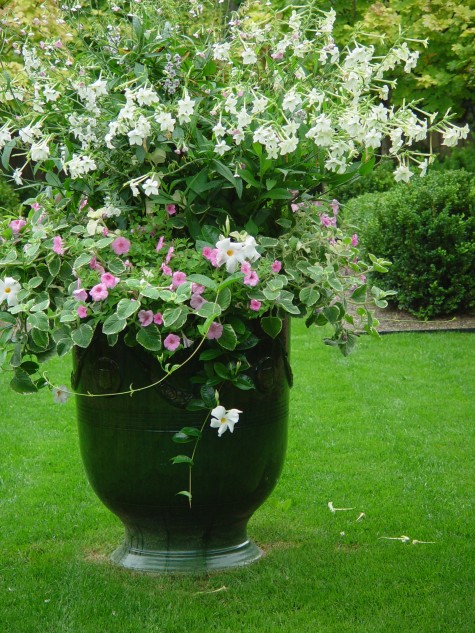
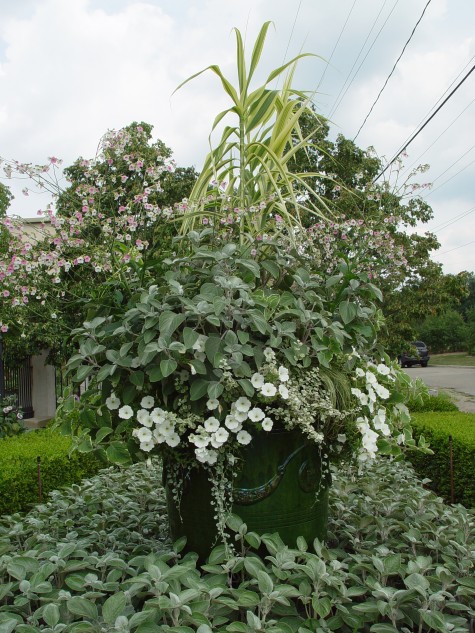
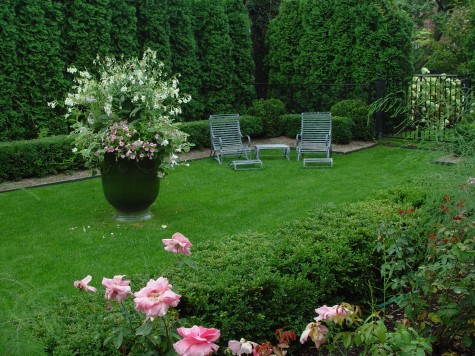
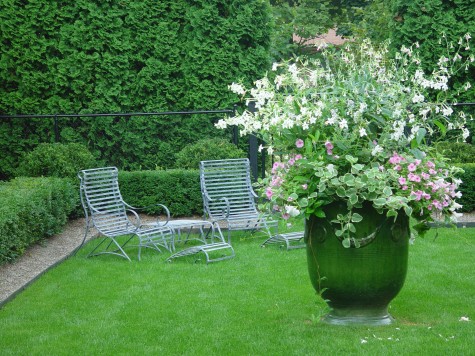
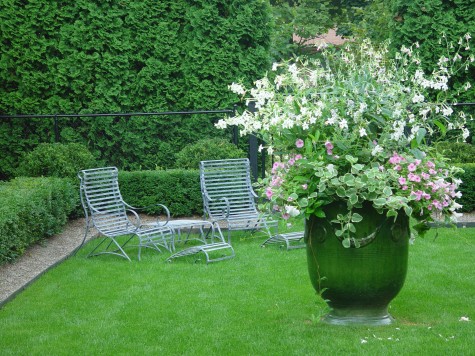
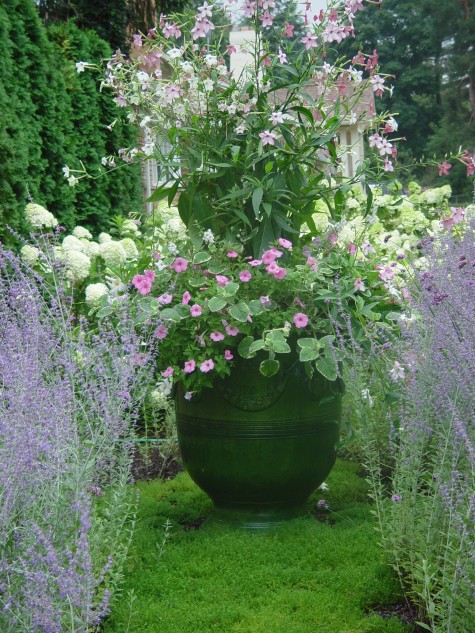
I stuffed it with giant nicotianas, white angelonia, a vigorously trailing white variegated plectranthus-and petunias.  It may not be so sophisticated, but petunias deliver the goods-great color, great scent, easy care, and exceptional vigor. Fireworks.  The early days, creating a shop devoted to fine objects for gardens-there were none. No precedents. Early visitors to the shop often demanded an explanation-a shop devoted solely to fine objects for gardens?  I had none. Just a fire burning inside-every gardener can understand that. My love for landscapes and all that entailed was a very powerful engine that powered my ideas.  I am much better able to explain years later.   The commission of these pots fifteen years ago-I am amazed, and so appreciative of whatever fueled that audacity.

I could see that stately vase from inside in the morning, from the lower terrace, from the street as I drove by on my way home.  A pair of chairs in that garden made it possible for Buck and I to talk about the day’s events; close by a party of the first order going on.

I planted a path of herniaria, rupturewort, up to, and all the way around those pots in the front.  The pot was every bit as important to my garden as what was planted in it.  I wanted to be sure to devote the space to the celebration of that 0.   The hedge of dwarf Russian sage framed my view-for those days when I was just too tired to walk up close and say hello.    


Two years ago I returned the Anduze pots, and this Madeleine Faune pot to the shop.  I could not leave them out in the winter, and I so wanted pots that could stay in place over the winter; I wanted pots I could dress for the winter season. This was not an easy decision. The Faune found a loving home straight away. The zero trio-this is the second season they have been in the shop.  Only a few days ago, a client for whom I had specified a completely different series of pots, spoke for a pair of the zeros.  They were the vases she had been looking for.  She told me today she could not imagine that it would not be difficult for me to give them up.  Indeed it is. Her question alone tells me they are going to the right home. She and her husband are both crazy about them.  I will place them, plant them, and visit regularly.  I am pleased that those vases that for so many years so enchanted me are due to be passed along to someone equally as impassioned about them as I have always been.  Today was a very good day.

Those Other Places

The next in my series about containers is about those other places that might ask for pots besides the front door.  I alluded to this in my last post; containers can be a vastly more civilized and interesting version of a road sign, bollard or directional symbol.  In this case, they say please do not park on the sidewalk.  They are also providing fresh lettuce for spring salads.

I do have a thing about driveways, and their landscape.  Those places that people drive out of, and up to, every day-it is a very important space.  I may not cruise my entire garden start to finish every day-but I drive out and up  that driveway-daily.  At the end of my driveway-a little garden punctuated with containers.  They say, welcome home Deborah. Those flags and brass band greet me every night.  In the summer, the corgis go right up those steps into the garden-no garage door entry for them.  Those pots make the transition from my day, to my garden, a pleasure.

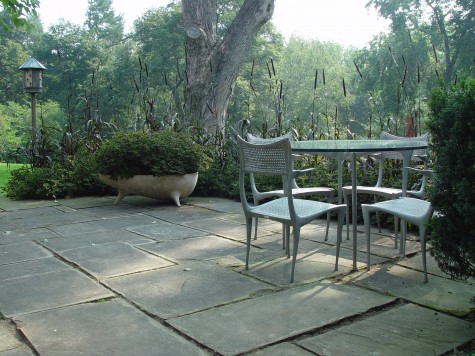
A terrace that is big enough to hold a dining table and chairs, lounge chairs and a coffee table, a chaise or two, the grill-a big space.  By this I mean that my deck terrace is bigger than my dining room.  A pool terrace might be three times this. Terraces ask for some punctuation, enclosure-some balance.  Great containers and beautiful plantings can transform a terrace into a garden. I am a lunatic gardener-my terrace is home to 14 containers-maybe more.  When I have dinner outdoors, I am in the garden.

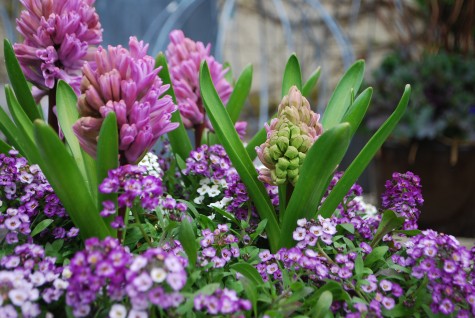
My shop has a very simple landscape.  Linden trees in the ground, and gravel.  That’s all.  This may sound sleepy, but Detroit Garden Workds is in fact a very lively place.  Containers, urns, pots, boxes-everywhere.  It is my idea to visually explain to people that a planted container is in fact a garden.  An alternative garden to those planted in ground-but a garden none the less. Should you have a spot that needs some punch without the dirt space and hoopla that a garden requires-consider a container.  Would you guess these hyacinths and alyssum were planted in a vintage collander?


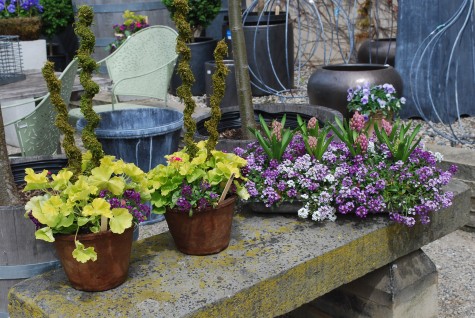
A few not at all fancy containers casually placed on this old bench -a good look.

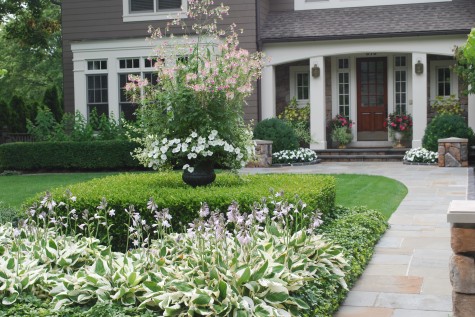
I put them at the road, next to the mailbox.  On the terrace.  At the end of the drive.  In the middle of the lawn.  In a bed of pachysandra-or in this case-boxwood.   On the terrace.  On the pool deck. On the outdoor dinner table.  Next to the back door. At the four corners of the rose garden.  Between the car bays.  At the entrance to a garden room. 

Containers mark the entrance to a space.  They enrich the terrace where you have dinner in the summer.  They advise guests how to get to the door.  They greet you when you get home.  Try some.