Pots And Boxes

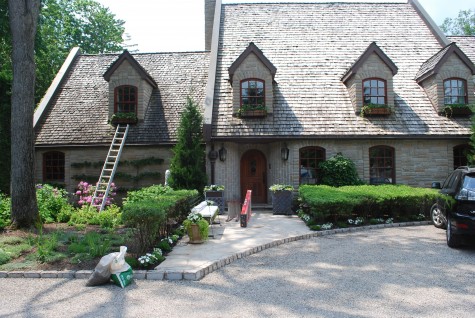
Pots and boxes-this client has plenty.  Sixteen window boxes on three sides, of the house, and close to thirty pots. It is the better part of the day start to finish to get then dressed for the summer.  The shopping and transport is time that doesn’t show here.  This plant comes from that place, and that plant from somewhere else miles from stop number one.  There is the loading, the driving and the unloading.  But the big story of this entire week’s planting-the heat.  I call 90 degrees since May 21st extremely unseasonably hot weather. Making sure the plants survive in spite of their very small rootballs, a time consuming challenge.    
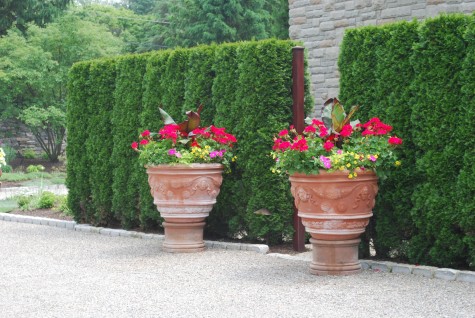
This gorgeous pair of Mital terra cotta pots handmade in Impruneta Italy on attending plinths are giant sized.  Placed outside a small side terrace, they add a lot of punch to a large drivecourt near the rear of the house.  The banana in the center will grow to a substantial size.  Fisdh and bananas have this in common-they will grow according to the size of their environment-whether that be water, or soil.  If the heat we are having persists, this pot will grow fast.
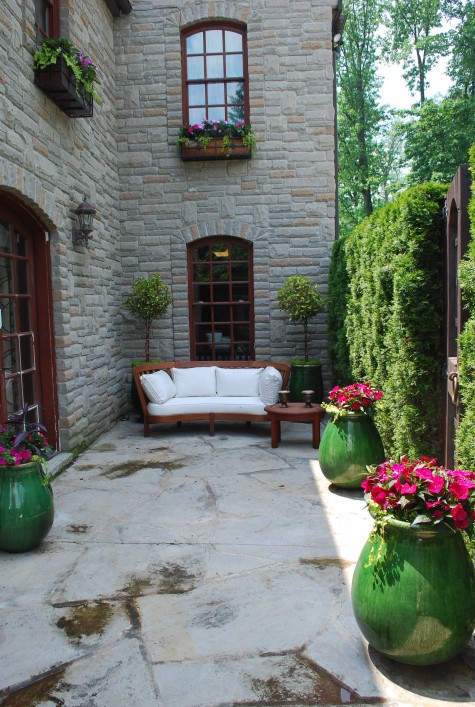
The side terrace is home to a collection of glazed French terra cotta pots.  Sonic New Guinea impatiens will thrive in this spot; the light is strong for 6 hours a day.  Flanking the couch, a pair of lime irisine grown in tree form.  Sporting green and lime leaves atop red voilet stems, they have a distinctly tropical feeling.  They will have to be pruned regularly, as they grow like weeds. 
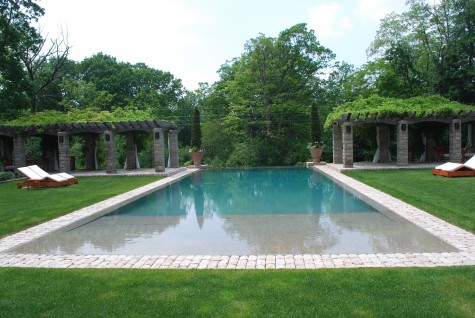
This is one of the most beautiful pools I have ever seen; the pergolas are stunning as well.  None of this was designed by me-I just plant the pots.  My client was the force behind the Italian pots-he likes them.  The DeGroot spire arborvitae spend the summer in the pots, and the winters in ground.  They are a reasonable approximation in shape to Italian cypress. If I could petition nature to let just one plant run around the hardiness zone rule, it would be the cypress.  As sculptural as they are stately, they bring Italy, and Italian gardens to mind. 
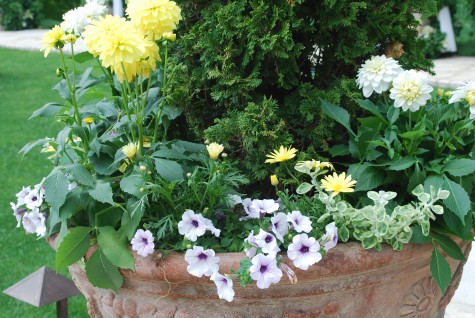
The color scheme this year-yellow, lavender, purple, white-and cool green.  The pots have lots of variegated licorice.  This green of course is a nod to the starring figures-those 6 Degroot Spires.  Most of the color is not so evident yet-the plants have a lot of growing to do.  Yellow and Vanilla Butterflies argyranthemum are lively, mixed. Popping up between them, yellow and white dahlias gallerys series dahlias. 
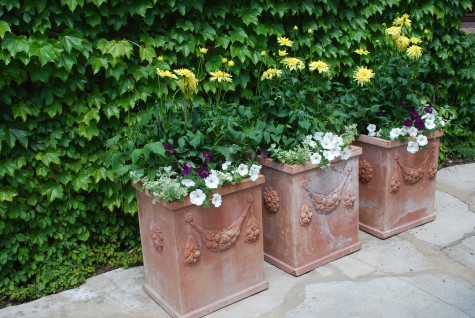
Pool decks tend to be very hot places; white in the composition keeps everything looking cool and fresh.  The trailing verbenas have shed their penchant for mildew; the Lanai series is particularly healthy growing.  If they are kept deadheaded, they bloom nonstop long into the fall.  This very dark purple reads well in the company of white petunias. 
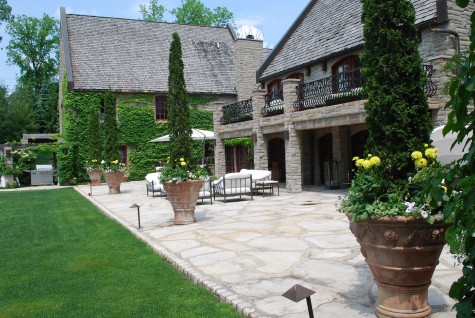
This picture in no way reveals that it was cooking hot on that terrace-you will have to take my word for it. The window boxes were especially challenging in that heat. All of the plant material had to be hauled up our extention ladder. This kind of planting is not for the faint of heart.  
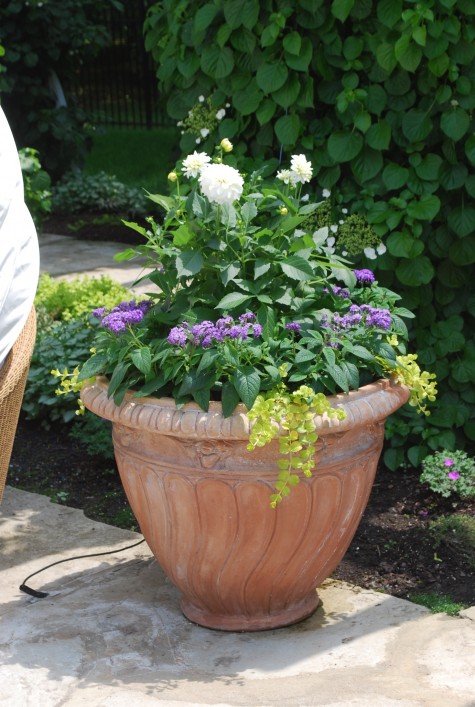
It is finally warm enough to bring the heliotrope out of the greenhouse.  This new lavender variety is especially attractive. I am sure you can tell that I like it-I used lots. 
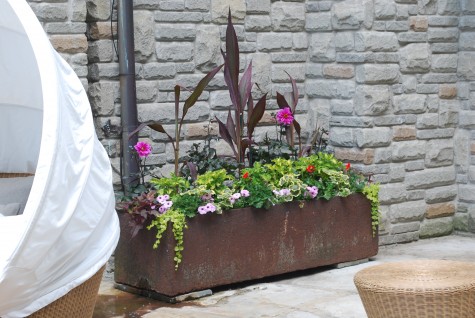
An old iron trough is planted with black leaved orange cannas, and black leaved Fascination dahlias. Wild Lime coleus, Tricolor and Caliente orange geraniums add an unexpected dose of hot color. These big individual cabanas could use it.  
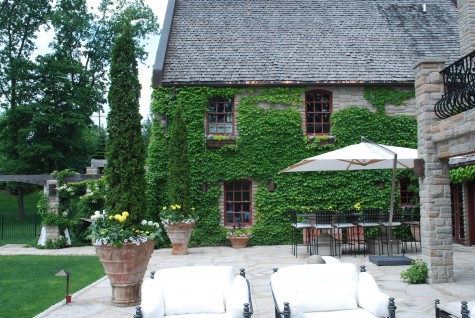
There is much that is yet to come for this terrace.  I can see the pots grown in, and people in the space.  Lovely.
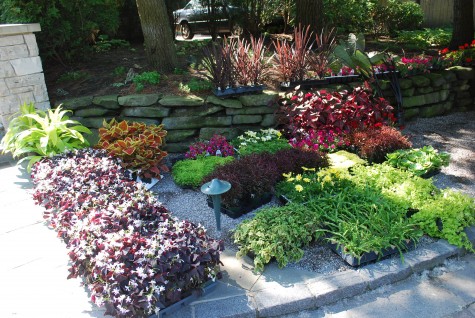
Black And White

Running crews is the perfect thing for my three month old titanium knee whatever apparatus.  As much as I am inclined to baby that thing, working demands that it be put to use-confidently.  This is not to say that the men on my crews do not cut me some slack-they do.  They get the plants to me; they make sure I get up and down, as needed.  But that knee is getting the workout it needs. This was a black and white day.  My morning installation-so many variations on black, chocolate, red and orange in the plants.  Seeing my palette of bananas, black oxalis, red irisine, lime selaginella and so on, my client asked if I were going traditonal on him.  Very very funny, this from him.  His planting-distinctly alternative.  Very much about spare, serene and modern design.  Much about visual challenges that hopefully represent his notions gardening.      

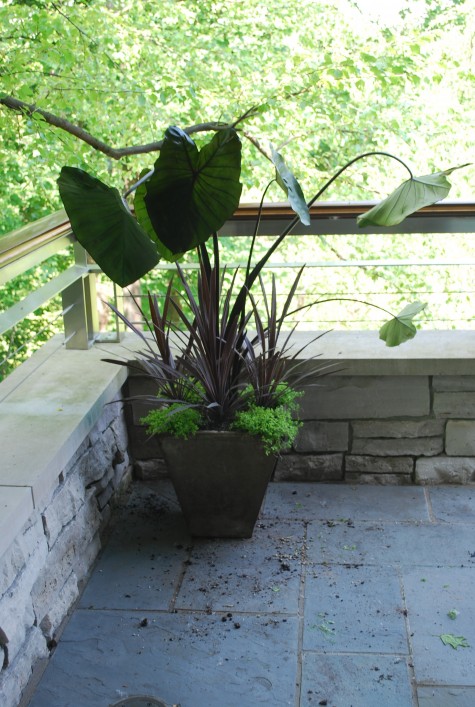
This quietly gorgeous Francesca del Re tapered pot got a green and black calocasia front and center.  The black red spikes-an unexpectedly tall underplanting. Lime selaginella energizes the entire discussion going on between that large leaved and curving voice, and the spiky and dark second fiddles-good music. 

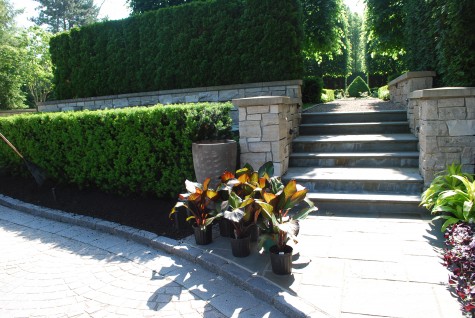
The centerpiece of these pots-bananas.  Banana plants-they grow  proportional to the pots/soil mass they are planted in.  In ground, 14 feet. In these pots-6-8 feet.  Green and brown leaved, with red violet midribs-a concert with a great opening, and and a dramatic finish.  All of the other plants in this pot will be in celebration of the bananas.  

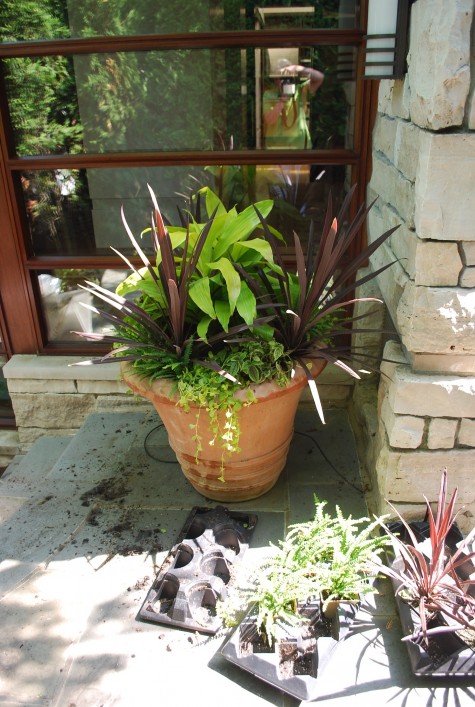
Lime and black is a dramatic combination.  That said, be sure to back up the black with a lime element that will showcase the subtleties of the black foliage. Consider the eventual size of each plant-growing up and growing out will tell everything about your understanding of maturity.   This lime dracaena will grown faster, and outdistance these black red spikes.  The green/black/red stemmed pepperomias are a transitional element.  The lime creeping jenny to trail- exquisitely lime. Contrasting colors is not enough.  Mass, texture, rhythm-consider these elements as well. 

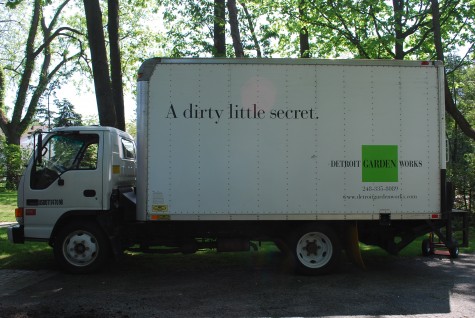
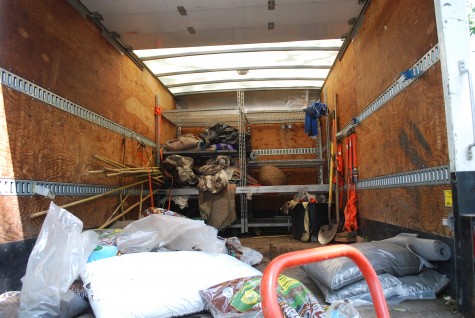
My box trucks-I haul soil, bark, tools, stakes-whatever.  All over.  My shop is located in an industrial park far off the beaten path.  This makes us a secret of sorts, and we certainly are all about being dirty.  Whenever I see this truck, it makes me laugh.  We like dirty-that dirty work makes a good garden possible.  

The box truck is home to all the tools of the trade-and then some.  The translucent roof makes it possible for me to see what is up there. The American companies that made this truck available to me-many thanks.  This roof-a dream come true for any designer looking at color.  Or for any crew person looking for a roll of bark wire.

My afternoon was all about a client who loves white.  She has no use for anything that even remotely resembles black, although her taste runs to clean lined and modern too. I am happy to oblige. When planngs are done in a single color, the visual emphasis changes.  Form, mass, texture and line become the important issue.   A black morning and a white afternoon made for an exciting day. 

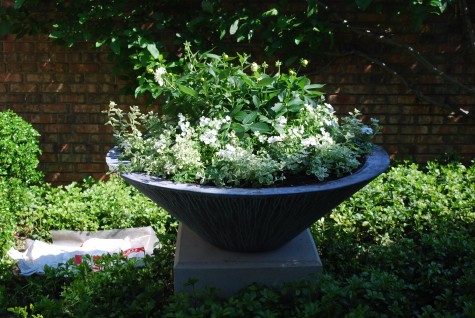
White dahlias, white trailing verbena, white annual phlox and variegated licorice-a very strong statement in white and green.  But not nearly as strong a statement as this steel break formed pot.  48 inches in diameter, there is room to plant plenty.  It would  be equally happy to be planted with loads of a single plant.  I am reluctant to plant one variety only-one never knows what the summer weather will be.  I  would rather replace a few things, than the entire planting. 


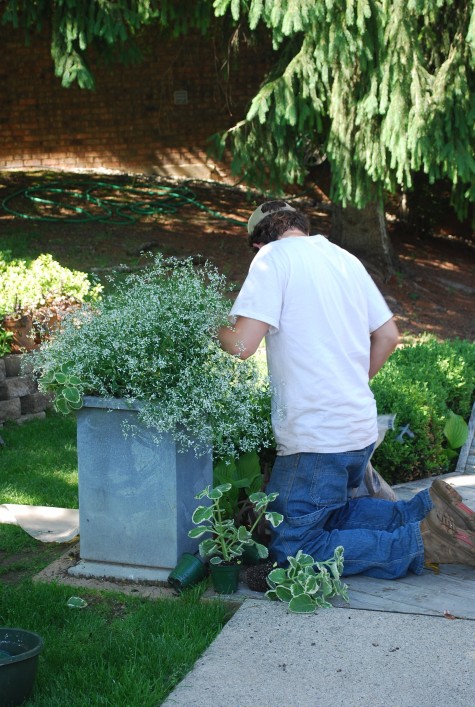
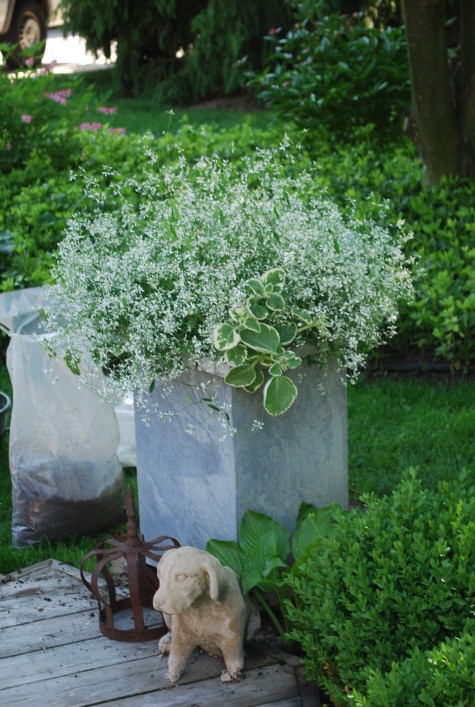
No matter the black or the white, the design issues are all the same. This airy euphorbia gets plenty of emphasis from the contrasting green and white large leaved plectranthus.  The relationship of these two plants enchants me.  The best part of my job is being party to lots of gardens, with very different points of view.  I have all kinds of music going on; I could not want for much more.

Carter

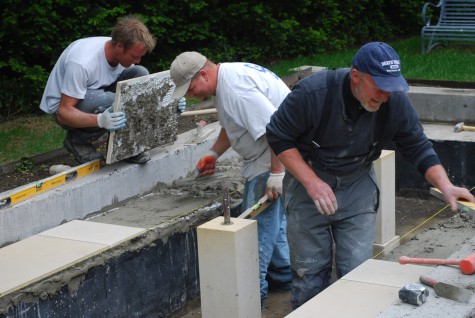
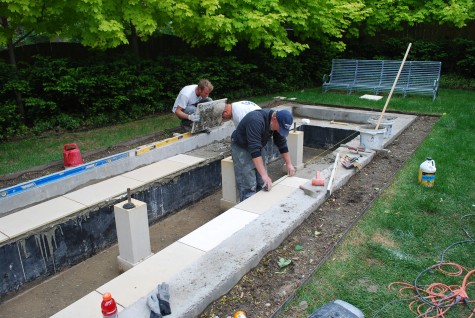
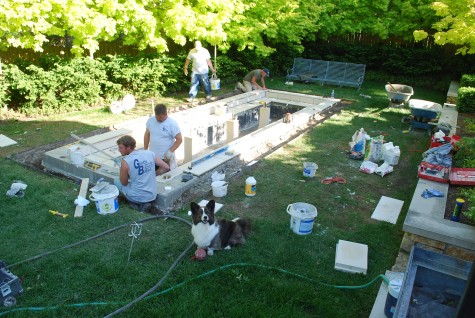
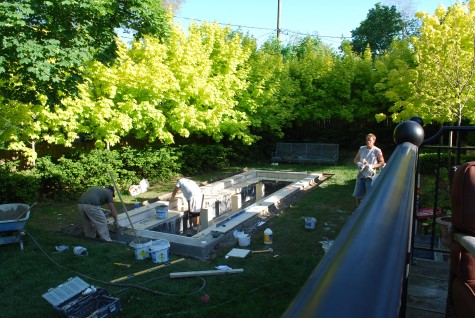
The saga of the rebuilding of my fountain begins and ends with Carter. The man with that short scruff of a white beard, the navy shirt, vest, and cap-that’s Carter.  A combination of considerable brains, even more experience, patience and exacting craftsmanship-he and his crew have been my pleasure to observe for the last three days.  They tore my leaking fountain apart, and rebuilt its foundation some three weeks ago.  The stone for the coping had not been delivered two days when he picked it up; time to finish.

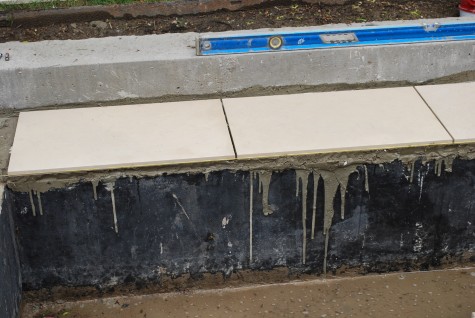
For pools and fountain stone, I specify a stone native to and quarried in Wisconsin.  This particular limestone is dense, and has few pores.  Indiana limestone is so porous, that pool copings and decks absorb too much water-a perfect medium for moss and algae.  Though I would as soon look at moss as anything nature provides, I do not want to walk on it around a pool-too slippery. This stone is as dense and smooth surfaced as marble-and weathers my climate without a problem. 

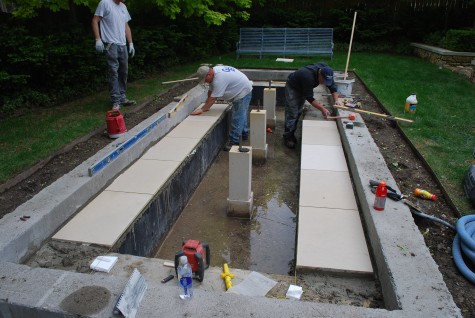
Buck did CAD-computer assisted design-drawings for the quarry-each piece was cut to his exact specification and dimension.  Communication is the art of life, a client once told me. I could tell Carter thought it was very cool that he did not need to cut or otherwise modify any piece of stone.  I do not think I have ever seen a crew of  four measure and remeasure like Carter’s group did; when a piece of stone was laid, it was laid in the right spot.   

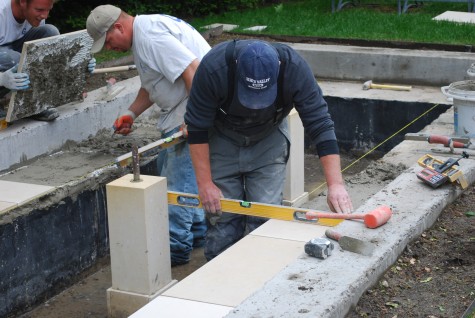
Each slab needed to be set in precisely the right location.  OK, once located, each slab needed to be set exactly level.  Watching Carter level a piece of stone is exactly like watching paint dry.  Each piece took an incredibly long time. My eyes were crossing, and I thought I might black out-watching him tinker and tap.   

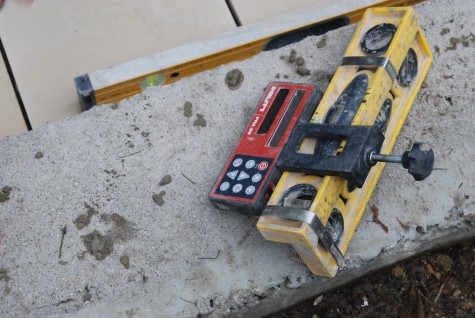
He has a tool-a gizmo-that helps him determine if a slab is set level.  The laser level-I could tell by looking at its battered casing that he uses it non stop.  But make no mistake-I could see him using, and trusting his eye.  I am very interested in the history and practice of fine craftsmanship.  I have been watching the real deal, in my own back yard, for three solid days. 

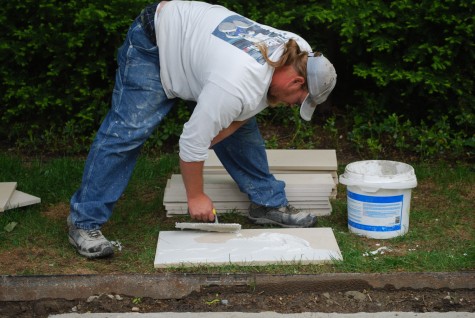
The Wisconsin limestone is so dense, Carter directed that each piece be buttered with thinset mortar before he placed it in the mortar bed.  The mortar bed was levelled and relevelled.  Think of the foundation, and finish stone as a cookie-the thinset, and the bulk mortar-the creme filling.  Unlike a sandwich cookie, the filling needs to grip both the foundation and the stone, and stay stubbornly stable in spite of stresses from up above, and underneath.   

A client remarked recently that small spaces need to be designed just so-there is little margin for error.  Any mistake in the layout or execution is all the more obvious in a small space. I did have occasion once to deal with a pool that had been dug, and shot with gunite-out of square.  Needless to say, the pool coping stone, and its pattern had to be modified.  Luckily, the pool terrace stone could be modified and recut in such a way that makes this mistake almost imperceptible.


We had quite the event going on.  I larned quite a bit about the technology and properties of concrete and mortar-not to mention the science of making something lay flat, and stick tight, for good. 

Last night at 7 they finished the last of the mortaring of all the stone joints.  I will need to wait 5 or 6 days before I can repaint the pool interior; all the work needs time to cure.  I should have running water in no time.

Wirework Planters

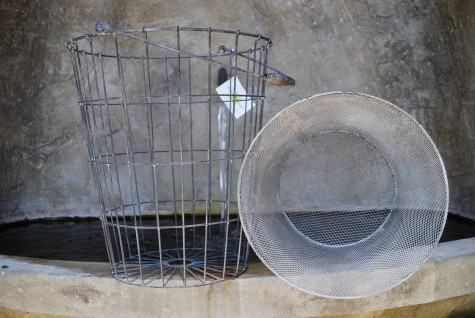
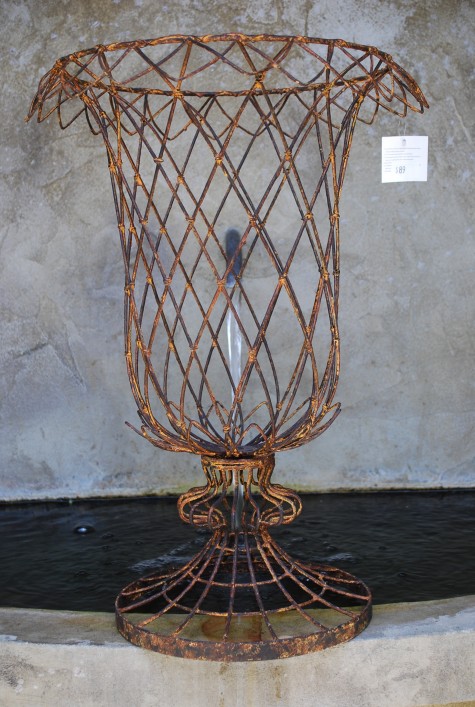
This photograph of a wirework planter and insert lowers my blood pressure considerably.  I am planting furiously-directing and following three crews.  My group-there are 16 of us.  I know there are celebrated CEO’s who manage many more than I-but I find what I can keep track of, instruct and help out-16 is a plenty big number. I do plant pots for the store-it is recreation of a sort.  I planted a few wirework planters yesterday; I have a big love for steel in any dimension. Steel wire, galvanized, painted, raw, faux finished- I find all the available forms of interest. Wire planters need lining-soil and wire need an intervening medium of some type.

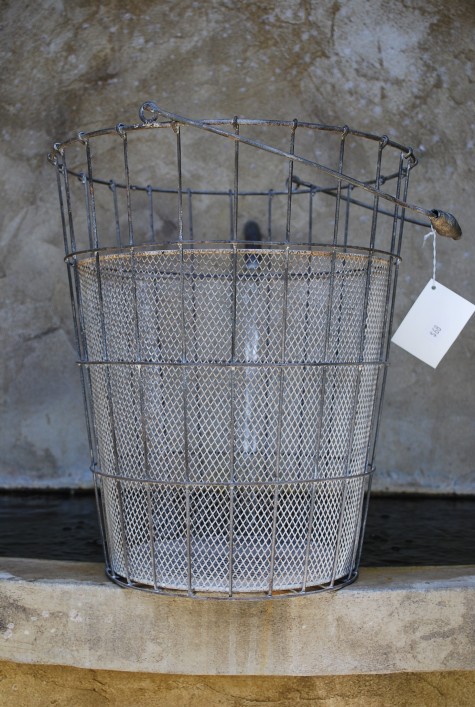
This galvanized steel basket came with a densely constructed liner.  Landscape fabric is all this bucket needs to keep the soil where it belongs.  The galvanized mesh is almost dense enough on its own to hold soil.  The fabric will not obstruct the pattern of the diamond mesh in any way. This basket could be planted in a loose, or very contemporary manner, but surely it asks for a very simple liner. 

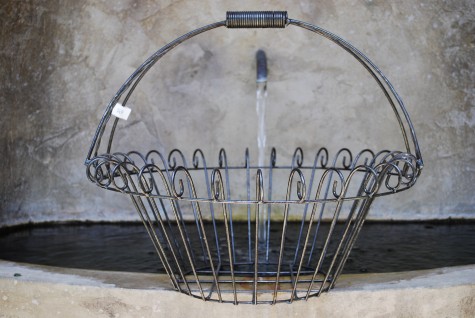
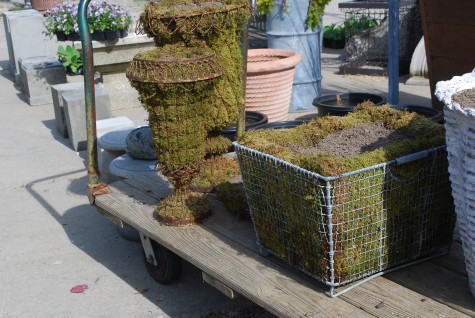
This round heavy wire basket-beautiful in its own right. To ready this basket for planting-any number of materials would work.  Florist’s moss, in giant sheets, is a good choice.  We call high quality florist’s moss “hides”- large intact sheets make easy work of lining wire.  Small pieces are a nuisance to handle, in addition to being an invitation to topiary erosion.  Wet soil running out the side of your basket-not so pretty.  If you must use smaller moss pieces, overlap them a good amount.  Well done moss makes a great presentation.  The moss in contrast to the steel wire-easy on the eye.  Alternative liners for wire baskets-you have choices., should florist’s moss not enchant you. The wiry coir mat-difficult to form, but eminently effective.   Landscape fabric-cool and easy.
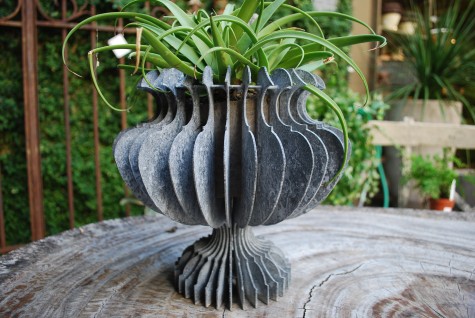
This small handmade laser cut steel pot is lined in grey landscape fabric.  This is a compatible pairing; the intricate steel work is the star of the show.  The wiry succulent completes the thought.

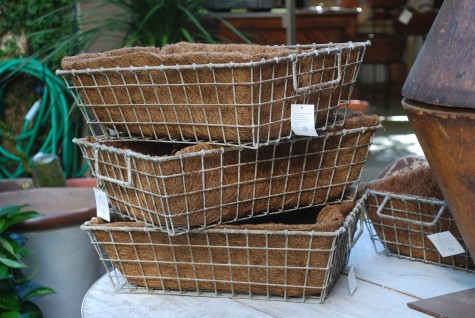
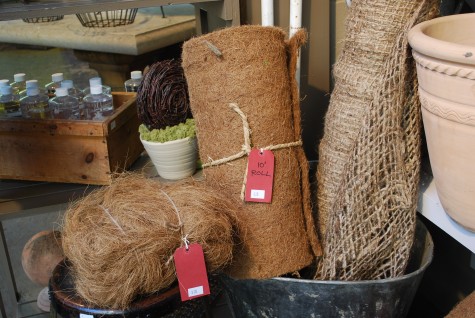
Coir is thick and difficult to handle-these wire baskets came with the liner already made.  The color and texture is a good contrast to the wirework.  Containers such as these are perfect for herbs, as they drain fast.  Succulents are likewise a good choice.  A small basket such as this may not be a good choice for those flowers needing regular moisture.  I will water once a day if I have to, but I like an every other day schedule the best.  As this suits my life, I plant large containers.

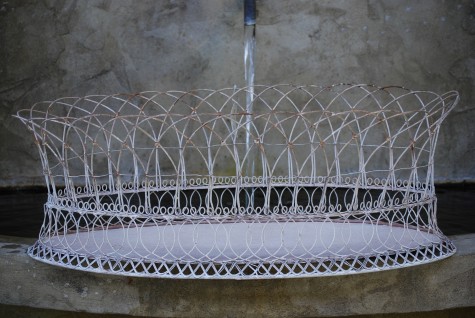
This fancy Nancy white wirework oval planter-I could line and plant this at least ten different ways. Should you be shopping, be clear in your own mind about what effect you are trying to achieve.  Something delicate like the wire-I would go there first.  Maidenhair ferns?  Miniature fuchsias? Thyme, variegated oregano, and alyssum?

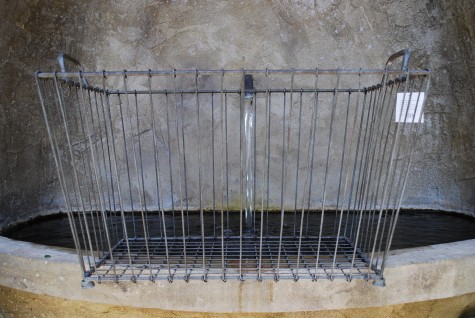
This geometric wire rectangle has plenty of space between the bars-so a bulkier liner material would work just fine.

Natural materials from jute, burlap, hemp fiber and the like make great liner material. They have great textural appeal, which looks great paired with a simple container. Once you pass by the moss option, there are plenty of things out there.  Fabrics-just that option alone could produce some stunning containers.  


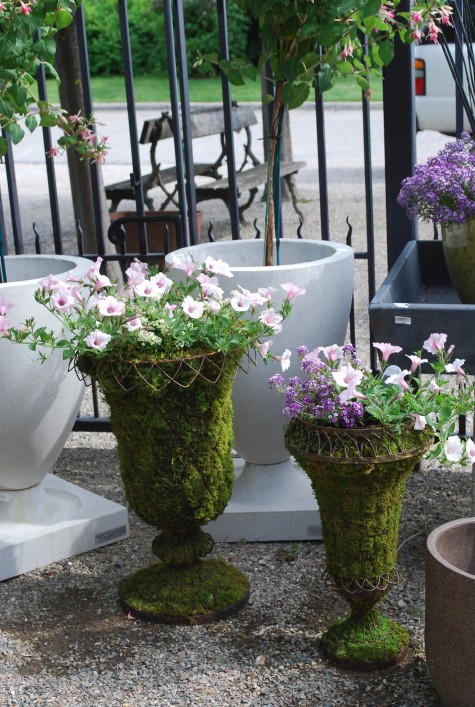
This faux finished wire urn is tall and elegant.  I stuffed the entire thing with moss.  The base-stuffed solid with moss.


Once the moss is in place, I trim off the wild hairs, and dye it with moss dye.  This helps a lot to keep the color better longer.


Twenty minutes this morning planting was the emotional equivalent of a cat nap. These vista silverberry mini petunias have a delightfully horizontal growth habit-very pretty.