How people respond to color is so individual. This person will like pastels only, that person can’t get enough red, yellow and fuchsia. I myself tried hard for a while to warm up to white-but without much success. Its chilly. I myself prefer saturated and intense colors-no matter what they might be.
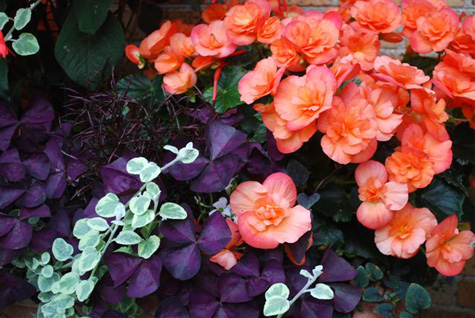
But I think the key aspect to designing with color is to look carefully at the relationship of one color to another. The black/purple oxalis and alternanthera in this combination makes the orange seem even more intensely orange. The green of variagated helicrysum is cooly contrasting.
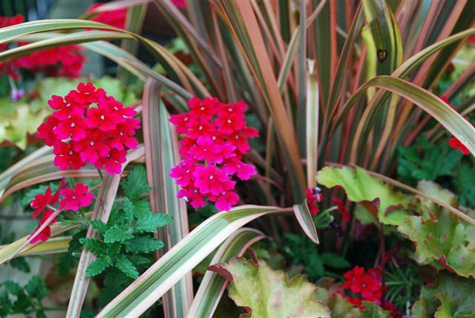
The pink leaning towards violet in this trailing verbena is subtly repeated in the phormium and the undersides of the heuchera leaf. I think pairing foliage that has color additional to green is hard to do. The green leaf of this vebena is so small, that it does not provide a jarring departure from the colors of the foliages.
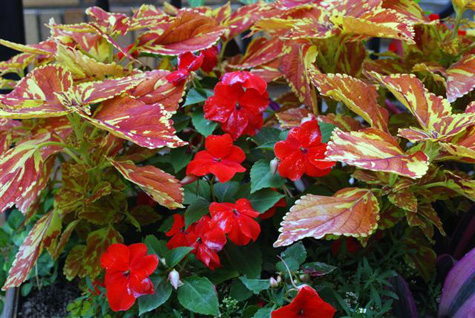 The burnt orange/carmine and chartreuse leaf of the coleus “Freckles” is a study in color contrast in and of itself. The orange impatiens does a good job of the harmony for this tune.
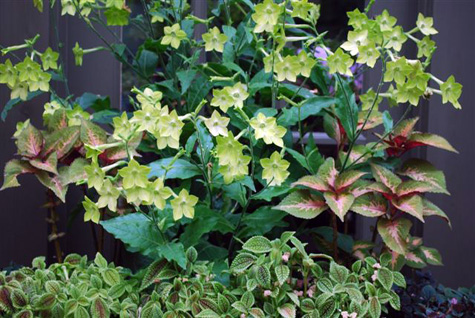 Every year I grow nicotiana alata lime. The color of the flower takes on a different aura, when paired with other colors. With other greens the flowers are soft and subtle. A little pale carmine in the coleus leaf, and pilea, is an echo, not a trumpet blast.
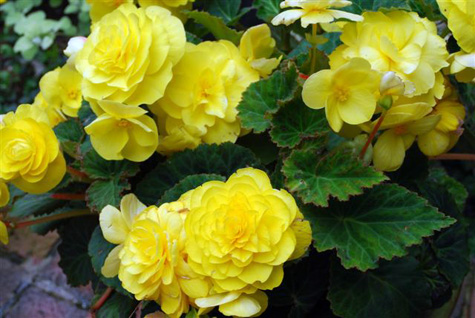
Yellow lights up a shady spot. For that reason, I like yellow begonias, lime irisine, wild lime coleus, and Sum and Substance hosta. Its the relationship of the yellow to the shade that creates the color interest. The shady green here is so rich looking.
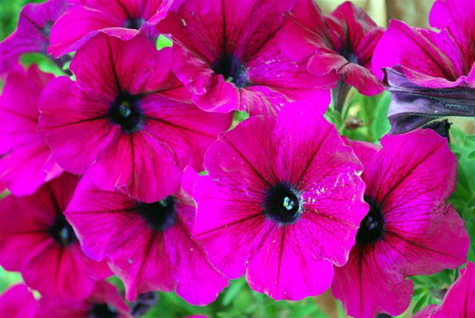 I am having a carmine and orange season, and enjoying it immensely. Carmine alone sometimes has the effect of setting one’s teeth on edge; the addition of the orange makes for a very warm pleasing glow. When I get home in the evening, the overcast light makes all the color appear even more saturated. The design idea here-figure out what time of day you will be in your garden, or what time of day you best like to be in your garden. You’ll have an idea of what the light will be; choose your color accordingly.
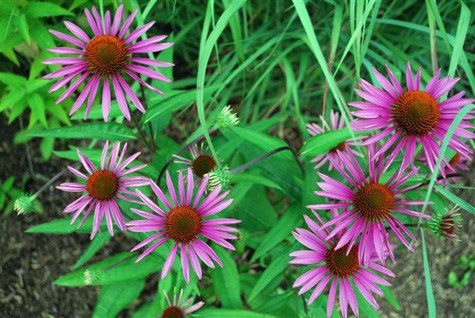
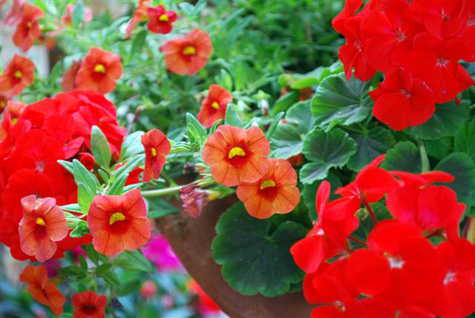 I like here the relationship of the green to the orange. Zesty!
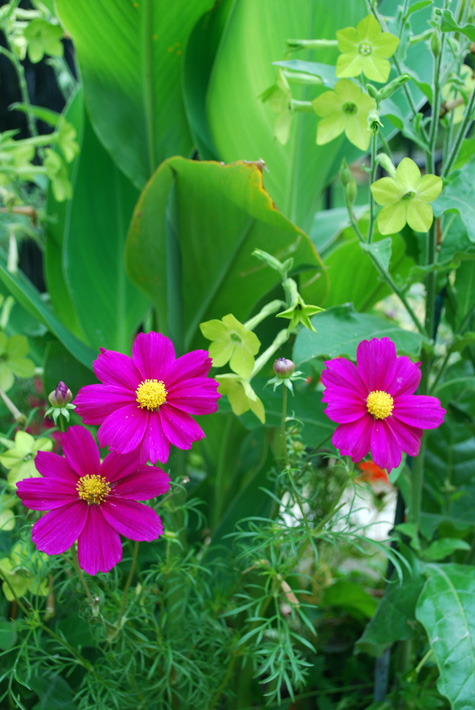 Lime and carmine together I simply find appealing-all understanding of the science of color aside. The color of live flowers or plants-they call this a special kind of color-living color. I wouldn’t be without it.
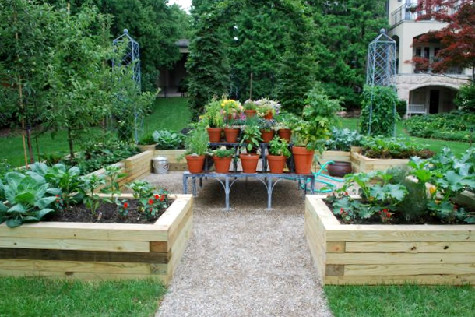
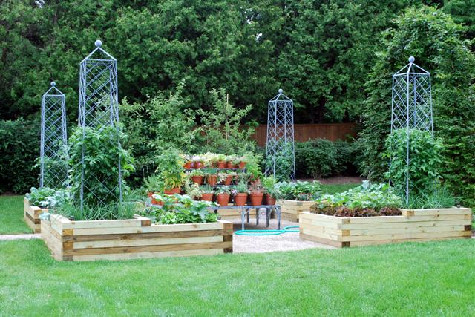
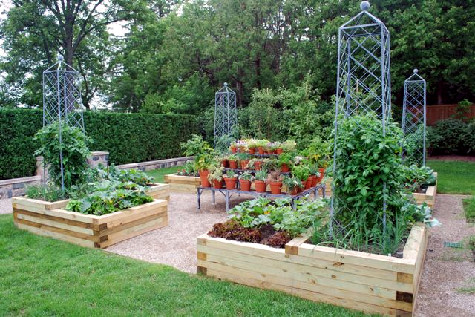
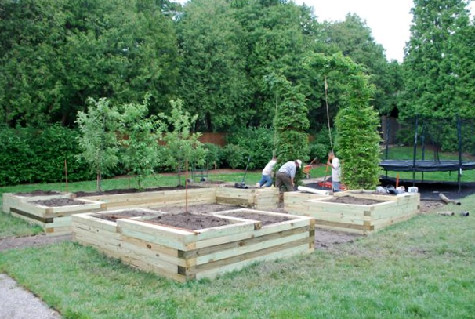 The last you knew, we were in the thick of building this vegetable garden with raised beds-doing drainage, leveling ground, adding soil, and building boxes, working out the irrigation. We did get this garden finished and planted; it is starting to come on.
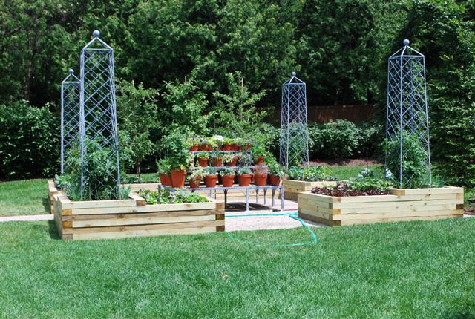 The tomatoes are growing furiously inside the steel obelisks. We planted three apples trees, pruned into a columnar shape, with rhubarb and strawberries as an underplanting. The twin beech trees, trained into an arbor, will connect this garden, with garden II-which is planned for next spring. The acid washed steel plant theatre centered in the garden holds pots of lettuce, herbs, and flowers. �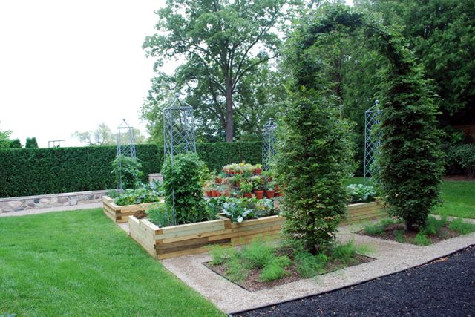
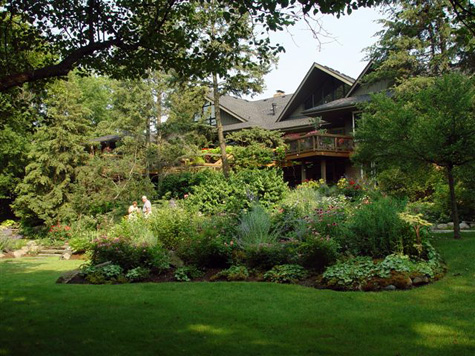
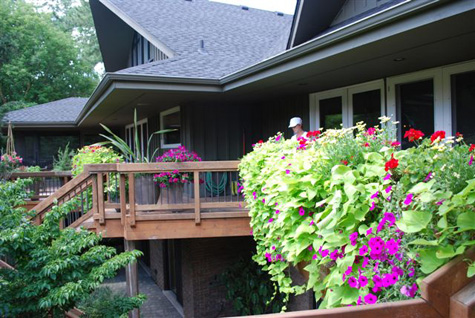
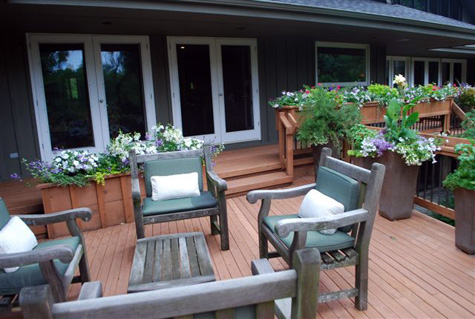
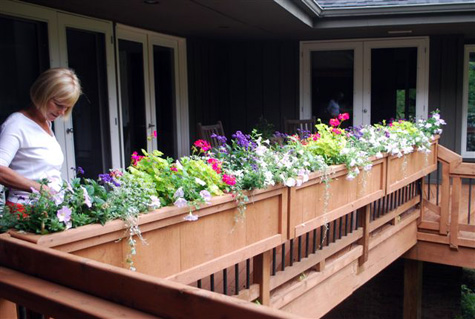 As I said, she is a client that encourages me to be the best I can be. I am a very lucky designer.
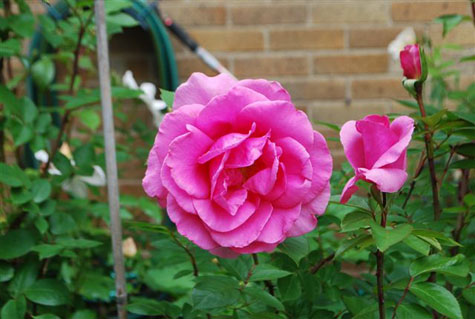 June 15th my roses are usually in full flush-anyone who loves and grows roses waits all year for this moment . These haughty queens of the garden do deliver. The smell is divine, the colors breathtaking-and their shapes are gorgeous. Carefree Beauty, looking good.
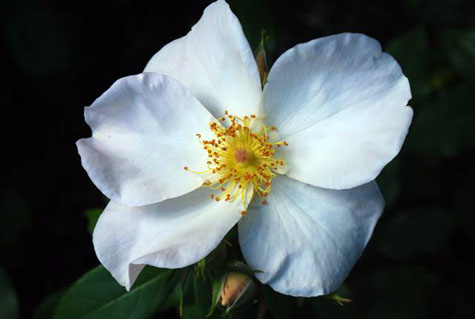 Sally Holmes, as graceful and lovely as any rose could be. It looks English bred, does it not?
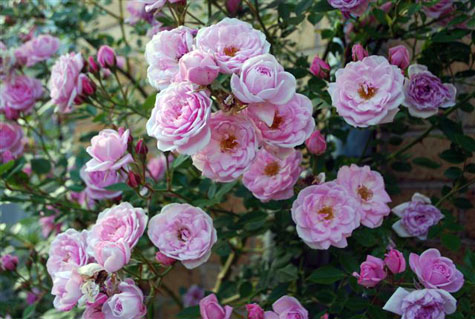 Jeanne LeJoie, the miniature climber, is covered with a thousand pink extra double buttons-from top to bottom. How it thrives is part of its charm.
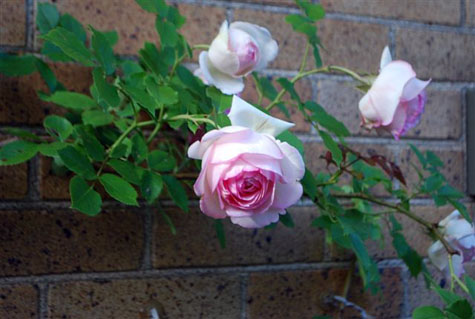 The big flowered Eden, with a classic double rose shape, is irresistable.
 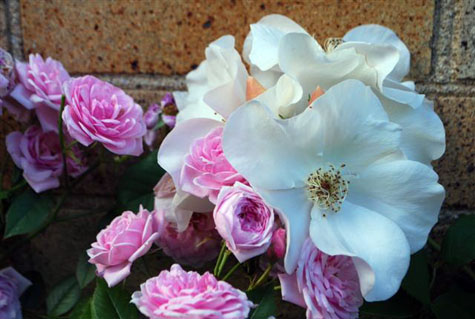 These roses all seem to live together companionably-in form and color. I like the idea of companionable. My garden is too small for this standoffish plant and that sulky one. Today the only thing on my mind are the roses.