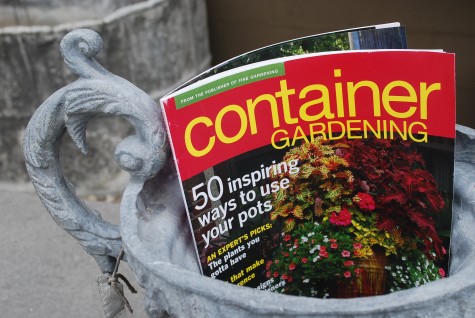
 Most gardeners like me are familiar with, and respect, Fine Gardening; it is indeed a fine publication featuring sound horticultural advice and great, beautifully detailed and illustrated ideas for gardeners. I myself was not aware that they published special issues-until I had occasion to meet their editor, Brandi Spade. She was in the area shooting photographs for an article for the magazine on container gardening with indoor tropicals last July, and called to see if she could take a look at some of my projects. Of course; I was thrilled she was interested. She spent the entire day, taking photographs, and talking gardens. Fast forward 8 months; my issue arrived a few days ago. It could not have been more perfectly timed; containers are on my mind. Who knew she remembered me? The lead article-50 inspiring ways to use your pots. Do not miss her letter from the editor about her life as a container gardener-it is terrific. Should you have a mind to pour over a print publication about container gardening-I recommend this issue.
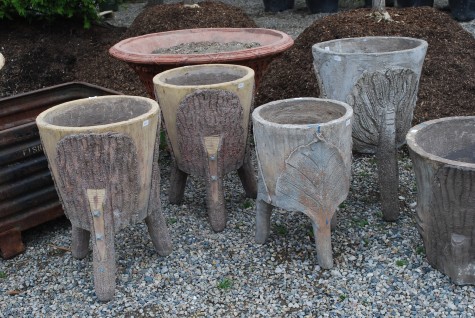 I plan to spend the next week or so addressing container plantings from my point of view-how to choose them, where to put them, how to insure container success-and ideas about how container gardens can enchant and satisfy. Whatever I write about has a way of making me sort through issues of my own; this is just one reason I so enjoy writing about gardening. I have a new annual planting season coming up that I plan to greet, meet, and forge new friends over. FG’s container issue covers everything from the relevant design tenets, to specific detail on plants; it is chock full o’ good advice and inspiration- sure to interest the heart of any container gardening afficianado. I admit I am inspired by what I read. As the time for decision making on pot gardens looms soon, I need to shift into drive right now. My starting point, inspired by the FG container issue- -50 inspired pots in which to grow your favorite plants. OK-just kidding. I promise not to make you roll your eyes and doze off as I detail 50 planters that makes my heart pound. I will comment on a few; I am counting on you to spread your wings. Some containers just ask for a green flag to be waved. These contemporary tripod faux bois planters-so fresh, woodsy and natural-what shade container gardener could resist them? If the idea of ferns, hardy or tropical, caladiums, club moss, baby tears-those tropicals that need steady shade to prosper outdoors-give these sassy tripod planters a look.
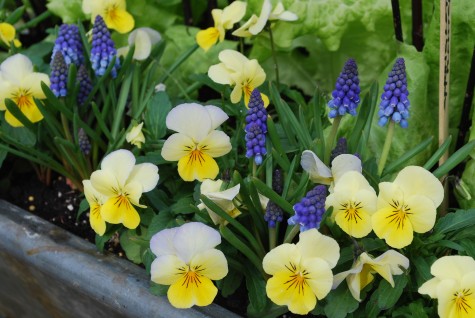
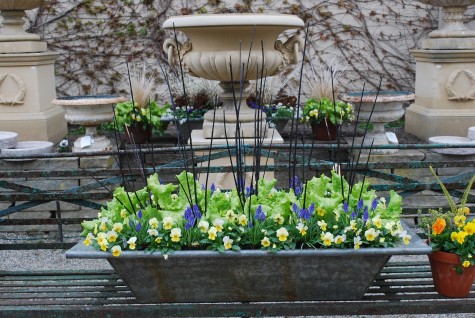 Who knows the original purpose of these galvanized v-shaped rectangles-should you know, please write me. Thanks! These look like giant baking tins. Vintage baking tins are just one of many possible objects that could conceivably hold soil and plants-what do you have in your shed, cupboard, or basement? Great containers are much about purpose and vision, and not so much about money- put some of this idea to work for you. This lettuce row, accented with grape hyacinth, violas and black willow-the hands down favorite no matter who comes through my door. The composition-Rob’s own.
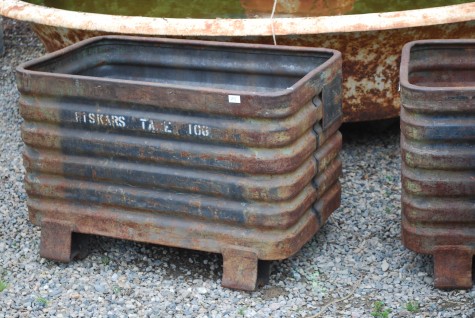 I only know the word Fiskars as it relates to scissors. But these chunky and texturally expressive industrial bins are just asking for a container garden of note; I had to buy them. People use containers of all kinds-to store, to bake, to ship, to organize, to stack. Container gardening-drop the gardening, and look at containers. Any good possibilities?
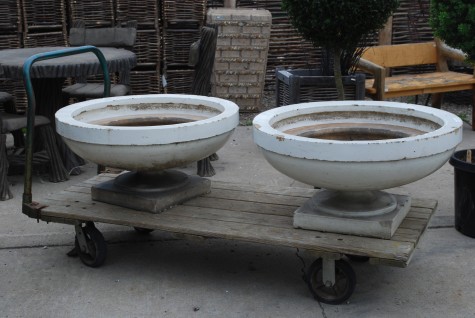 Regal and gorgeously proportioned-these glazed stoneware footed pots were manufactured in Chicago in the Arts and Crafts era. I could not specify a date, as they are unmarked-but I am guessing 1920-1940. They are unmistakeably early modern and midwest; I rarely see pots of this caliber. If the reproduction Frank Lloyd Wright planters seem chilly, and too widely distributed, these containers have an aura that could carry that same look with great style.
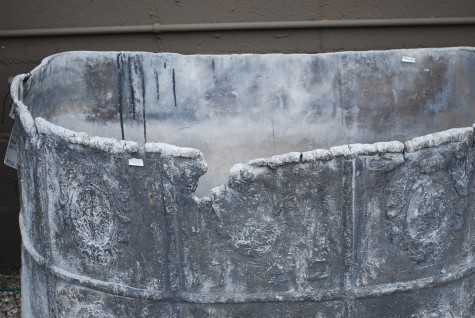 This ancient-and I mean very ancient-lead cistern might hold water or plants, or sit distinctly empty and sculptural. Old lead never comes perfectly shaped. Lead collapses on itself; it is incredibly dense and weighty, and incredibly soft. If great age draws you, lead is a good choice. This cistern might have seen the reign of Henry the Eighth-no kidding. A container choice has everything to do with you; trust your eye.
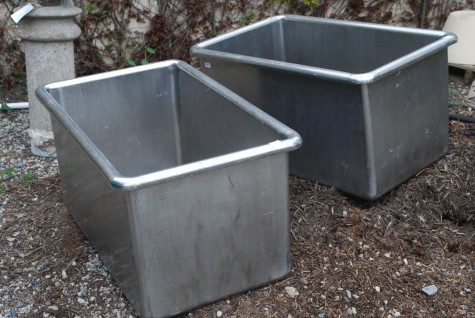
No age is involved in these stainless steel vats salvaged from a chocolate factory. I do not fault them for this; they will shine, filled with water, and planted with white lotus. This is Rob’s idea-ok, I am fine to get in line behind it. A lively and expressive life for these bins- a new look for your container garden.
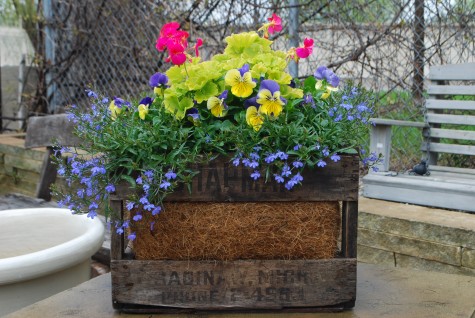
Any box can be lined with coir off the roll-we keep this in stock. By no means does every container need to come with a blue-bloom or blood pedigree. Some fabulous containers are just waiting for you to put your eye to them. Scour you garage, shed, kitchen, or favorite recycling venue. I am astonished and pleased at how much great style is fashioned from discarded bits. Should a container with great history be just the thing for you, Detroit Garden Works has a substantial collection. But if the cast off from the top shelf in the garage enchants you-stay your course.
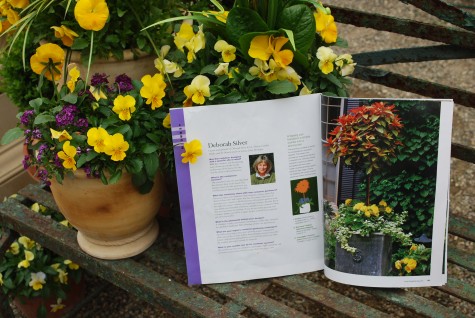
The Fine Gardening container special issue featured a designer or design group from all our country’s regions. It felt so great to be selected to represent the midwest. Many thanks, Fine Gardening.